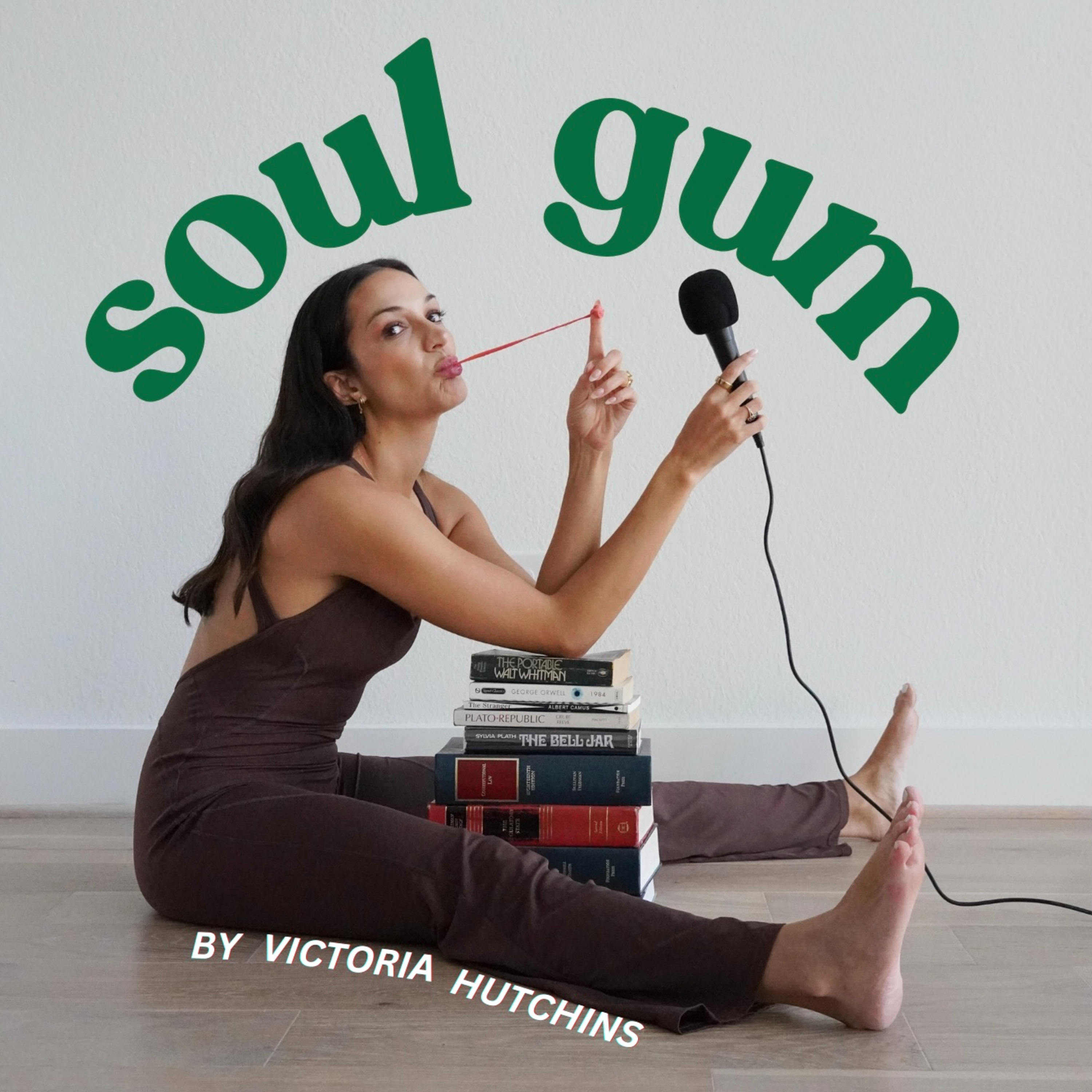
How I Rediscovered Discipline Post-Diet Culture & Hustle Culture
61m 21s
In this inaugural podcast episode, the host welcomes listeners to "SoulGam" and sets the stage for a conversation about rediscovering discipline after the peak of diet and hustle cultures. Acknowledging the current cultural shift in perceptions of work, success, and happiness, the host explains that discipline has become a contentious term. The discussion outlines the historical rise of discipline as a virtue, particularly between 2008 and 2019, linking it to the glorification of overwork, tech CEOs, and the "girl boss" movement, alongside intense pressures from diet culture. This period saw productivity and self-denial idealized, often at the cost of well-being. However, by 2019, signs of burnout and pushback emerged, exacerbated by the COVID-19 pandemic, which prompted a collective reevaluation of work-life balance. The host aims to explore whether discipline can be redefined and applied positively—toward joy and personal dreams—rather than as a weapon against oneself. Throughout, the host stresses the importance of individual reflection over adopting any single opinion, inviting listeners to form their own perspectives on discipline's place in modern life.
Hi, this is my first podcast ever. Welcome to SoulGam. Thank you for being here. I'm so excited. I also have no idea what I'm doing. I'm sitting in my closet right now because I realized that my entire apartment is extremely loud, except for in here. I hope it's not offensively background noisy right now. I was hoping we could just pretend this isn't my first podcast. If that's okay with you. Because I'm figuring you're here one of two ways. One you either know me from elsewhere on the internet, right? In which case why would I introduce myself? You know me? Good to see you. Hello. Or two if you just stumbled on this because you're interested in this topic, rediscovering discipline after diet culture and hustle culture. Then you don't really care who I am at this stage, right? You just want the info and I respect that. So let's get into it. So today I want to talk about discipline or willpower and how as we're moving into a new cultural era where we're thinking about work and success and happiness differently. So discipline has become kind of a dirty word. So we're going to talk about that. We're going to talk about the rise and fall of discipline as a benchmark of a worthy human, which we're going to track really closely to the rise and fall of hustle culture. And then we're going to explore whether in a time where we're waking up to the fact that things like diet culture and hustle culture and rising and grinding and girl bossing are not in our best interest. We're realizing I don't want to be a girl boss. I don't want to rise and grind grinding sounds unpleasant. I want to rise and eat a good breakfast and enjoy my life. In this time where we're realizing those things does discipline still have a place in our lives. And if so, what would that look like? What would it look like to take discipline back? How do we relearn how to apply discipline to our own joy towards pursuing our dreams when we've been using it as a weapon against ourselves for so long? And maybe to such an extent that we don't even remember what joy looks like on us. We don't even know what our dreams are at this point. Okay, so that's where we're going. The one little housekeeping thing I do want to say before we dive in other than that if this sounds like shit from an audio perspective, I promise I will improve. Please don't leave me. The other thing is that and this applies for this entire podcast. I don't want to persuade you of anything. Okay. I have no interest in evangelizing my world of view, my opinions, my spiritual beliefs. We're going to get into it on this podcast. And I really believe that a lot of the things we're going to be talking about, it's super important to have your own thought journey and to not just adopt any ones take on it. So I am going to be talking about my opinions and it might kind of sound like I'm making an argument for my opinion. But I want you to know that I don't care if you ultimately agree with my opinion about anything. So if you listen to this podcast, you don't agree with a single one of my opinions, but you come out of it with a little bit more flushed out, take yourself, even if it's super different from mine. I think that's fantastic. Okay. Okay. So discipline, what are we talking about here? So throughout this episode, I'm going to be using the terms discipline and willpower kind of interchangeably. But I actually think colloquially in conversation, we tend to use them slightly differently. And I want to explain what I mean. So I think of discipline and willpower as two sides of the same coin with that coin being self control. So Mariam Webster defines self control as restraint exercised over one's impulses, emotions or desires. And it defines discipline as an orderlier prescribed conduct or pattern of behavior. Britannica defines willpower as the ability to control yourself. And the sentence they use as an example is the dessert buffet tested my willpower. Okay. So Britannica is like Victoria. Cut the shit. Stop reading the dictionary. Let's talk about diet culture, baby. That's why we're here. We're not there yet. Okay. We'll get there. But my point in reading these definitions is that I think that discipline when we're talking about discipline, we're typically referring to using self control in order to do something we impulsively do not want to do. So my impulsive self did not want to wake up at 6 a.m. this morning, but I used discipline in order to do it anyway. I didn't actually do that. That's just an example. When we use the word willpower, I think we're generally referring to using self control in order to not do something that we impulsively do want to do. So sort of the opposite the other side of the coin, right? My impulsive self wanted to scroll TikTok for three hours yesterday, but I used willpower in order to only scroll for one hour. Okay. My impulsive self wanted to smoke a cigarette, but I used willpower in order to not smoke a cigarette, which mom and Catherine, if you're listening to this, I have never smoked a cigarette in my life genuinely. I haven't. I'm a loser. I'm a loser. Catherine is my sister. Okay. But you get the point discipline and willpower two sides of the same self control coin, right? But for purposes of this episode, let's just assume that I'm kind of talking about both no matter what I say. So I've previewed that I think there's been this unraveling, this turning away among young people from the idea of discipline as a virtue. But let's take it back a little bit, start at the beginning before it all started to unravel. And I say the beginning, but I don't really mean the beginning because this idea of labor and restraint and self denial as if her chooses old, old, old, like biblically old, probably prehistoricly old. You know, we've got Jesus in the desert fasting for 40 days. We've got the Spartan military only being allowed to wear that little tunic toga situation even in the winter because that built character. We've got elements of asceticism, which is ritualistic self denial with the aim of bringing oneself closer to God. I'm not sure if I'm saying that word right asceticism. I think that's how you say it. But that shows up in almost every major religion. So we've been about this discipline will power life for a while now. But when it comes to the current flavor of discipline that I think we're reacting to right now, I want to zoom in on the time period between the 2008 recession and the start of the pandemic, which I think is sort of the era that marks the rise of the girl boss as the dominant picture of what a successful woman looks like. And the last cry of unchallenged, unmitigated, diet culture and hustle culture. So before after and regardless of the 2008 recession, the American workforce has been on this study trajectory for a long time now towards increased hustle without increased quality of life. So according to the US Bureau of Labor Statistics productivity per American worker has increased 430% since 1950. So based on that, you would think we are either working one fourth of the amount we were working in 1950, so like 10 hours a week, or our standard of living should be over 4 times higher, which obviously neither of those things are the case. Even though we're working more and more our salaries adjusted for inflation and relative to the growth of the US economy are shrinking and have been shrinking since the 60s. And maybe you're hearing this and thinking, "Victoria, respectfully, I was 5 years old in 2008 and I'm not even in the workforce now. What does all this have to do with my relationship with discipline?" Which first of all, I was also not in the workforce in 2008 just for the record. And this wasn't just happening in the workforce.
also happening at school. So the number of high school sophomores who spent more than 10 hours a week on their homework jumped from 7% in 1980 to 37% by 2002. So heading into the 2008 recession, we're also seeing this increased level of hustling at school. So you know you think 10 hours of homework but then you also have eight hours daily at school. So that's 50 hours right there. And then maybe you have a job, you're probably doing extracurriculars. So there's just a lot of hustling already happening. And then the 2008 recession happened. So in the 2008 recession, nearly 9 million Americans lost their job and unemployment hit 10% in 2009. So you take this culture that's already abnormally skewed towards hustling and already on an upward trajectory with respect to hustling and you up the ante by adding in huge amounts of job insecurity. So in 2009, we're coming out of the recession and the economy is kicking back into gear. But as a culture, we're shaken up and we're feeling insecure, right? So over this next decade is when we start to see this glorification of overworking rise to even more of an intense degree than what's usual for Americans, especially on social media. So you're seeing discipline, the ground, if you will, being painted as the homework of a successful person. So think #motivation Monday. Think those inspirational speeches laid over videos of like people exercising and scowling and sweating and looking exhausted where there's like this deep disembodied male voice saying something like they want you to quit. They want you to turn around when it gets hard. They want you to fall down and not get back up. You know what I'm talking about. During this time, we're also seeing a growing fascination with and glorification of tech CEOs. So we're seeing a lot of movies come out about tech CEOs. Like in 2010, the social network came out, which is about Mark Zuckerberg and the other founders of Facebook and in 2013, jobs came out, which is a biopic about Steve Jobs in the founding of Apple. In the media, we're seeing Mark Zuckerberg very ceremoniously wearing the same shirt every day and giving an interview about it and saying, and I quote, "I really want to clear my life to make it so that I have to make as few decisions as possible about anything except how to best serve this community." Like babe, baby, Mark. If you're boring and profit hungry, just say that. You don't have to say all that like you're serving the community wearing the same shirt every day. Give me a break. All that to be said, we're seeing this dissection of the lives of past and current CEOs of institutional tech companies and the rendering of anything that they did as like a productivity hack. So we're hearing about how Bill Gates only eats cheeseburgers for lunch apparently and Steve Jobs was a fruitarian like freely the banana girl like shit you not, meaning he only ate fruit. And one of his justifications for that apparently was that he believed that eating only fruit made him not get body odor. So he only had to bathe once a week. So it was like efficient and a productivity hack. I don't even know what to say about that. So we have all that going on. Meanwhile, working to the point of exhaustion, bragging about how many hours you're working and how little you're sleeping is all being increasingly normalized and on some level and in some circles it's seen as cool. So for example, in 2018 Elon Musk said no one changes the world working 40 hours a week and in response to that someone asked him on Twitter, Elon, what is the correct number of hours a week to change the world? And he said, varies per person but about 80 sustained peaking above 100 at times. Pain level increases exponentially above 80, which this is a wild thing to say. For the obvious reasons, right, that lots of people change the world working 40 hours a week or less or not having a job like what disrespectful and ignorant thing to say to medical professionals and teachers and caregivers and just kind people in the world who make a difference outside of their profession. So that's obvious. But it's also wild to compare Elon Musk's personal work. Be that like walking around the Tesla factory floor or thinking in his office or whatever on a one-to-one basis in terms of pain level to what an hour of work looks like for lots of other people. All that to be said, we're being sold this story of glorifying productivity at all cost be it, working 100 hours a week or wearing the same clothes every day, eating only fruit or cheeseburgers, smelling bad, doesn't matter, discipline is king. So this tech CEO, I used two in one shampoo so I'm a god of efficiency hashtag no days off type persona is how we're seeing hustle culture sold to men. For women, we're seeing the birth and rise of the girl boss. So hashtag girl boss dates back to 2014 when Sophia Amaruso, I'm not sure if I'm saying her name right, she's the founder of the clothing grin nasty gal, published a memoir called hashtag girl boss, which told the story of her growth of nasty gal from a startup to a huge multinational business. This book was super popular. It was on the New York Times bestseller list for 18 weeks and it closely followed then Facebook CEO Cheryl Sandberg's 2013 publication of her New York Times bestselling book lean in, which the full title if you didn't know is lean in women work and the will to lead. So we're seeing this era of glorification of wealthy white women at the top in corporate America without much critical thought happening at a loud level about the labor practices within those companies that were led by those women and how that was affecting women who were not the CEO of those companies. So there's this growing narrative that the key to success is essentially trying really hard. And to be clear, I haven't read those books and I'm not saying that's the thesis of those books. I'm just saying across hustle culture and sort of what hashtag girl boss turned into as a sentiment outside of the book that was sort of the takeaway of this time. And we weren't just being pushed to max out our discipline at work. So the rise of the girl boss went hand in hand with women in particular facing an increased pressure to monetize their lives outside of work. So during this time there's a huge uptick in the popularity of MLMs. There's a rise in the career influencer and just generally women everywhere are kind of being pressured to ask themselves how can I grow and monetize my personal brand. Do I have friends and can I monetize that? Am I inspiring and can I monetize that? Am I pretty and can I monetize that? Am I fit and can I monetize that? Which brings us to Diet culture. So Diet culture has been steadily churning in the background throughout the 2010s and long before that and it's churning today. So so far we've talked about how we were driven to send our discipline into overdrive during the 2010s for professional reasons hustling reasons. But Diet culture is another area where we were being encouraged to weaponize our willpower against ourselves. And I don't really think I need to paint that picture on a granular level. I think most of us are aware of what it looked like and looks like. So just to give a little sample of the flavor of Diet culture that was happening in the 2010s, we have Gwen's Paltrow, saying she would rather die than let her kid eat a cup of soup. Let's start there. We have over two million people buying shake weights which is a dumbbell that was released as an attempt to capitalize on our nationwide obsession with Michelle Obama's arms that gyrates kind of as you shake it, hold it, touch it. I don't want to talk about it anymore. We have that going on. We have this weird obsession with bone broth which by 2016 was sold in cake cups, meaning you could make it in a curing. I wish I was kidding.
we have a slew of diuretic teas that influencers and celebrities are spawning to the masses. And we have the Victoria Secret Fashion Show adding size to Barbara Pellvin to their roster of angels in an effort to be more size-inclusive. That's like the most shocking one to me, but you get it, right? You already got it. People and particularly women have faced intense pressure to use their willpower to change their bodies for centuries and diet culture is obviously nowhere near dead. What it looked like during the 2010s is just one chapter in a long and ongoing story, but suffice it to say that during the 2010s things were bizarre and unchecked and in addition to being made to feel like shit about ourselves for not girl-bossing hard enough, we were also being made to feel like shit for not being small enough as unusual. Okay, so 2008 to 2019, that was the rise. That was how discipline got so high on its high horse. So now let's get into the fall. So by 2019, things are really reaching a fever pitch. We're trying to listen to Elon and Cheryl and work 80 hours a week and lean in, but we haven't bathed in a week and all we've consumed today is our curic bone broth. And when you all you've had is your curic bone broth leaning in, it makes you dizzy. Things are untenable. So there has started to be some cultural recognition of the harms of all of this girl-bossing, rising and grinding bone broth, things shake, waiting, business. In May 2019, the World Health Organization included burnout in its 11th revision of the International Classification of Diseases. And it was included as an occupational phenomenon, so no, not a disease, but a thing they acknowledge is happening on a wide scale. And even Michelle Obama is getting fed up. So on her book tour for her memoir Becoming in December 2019, she told the crowd, I tell women that whole you can have it all. No, not at the same time. That's a lie. And it's not always enough to lean in because that shit doesn't work all the time, which she really went there. Cheryl was quaking surely. So in schools, we're also seeing this huge uptick in students with anxiety. I'm going to read you this quote from a school administrator who's talking about this issue in a 2019 article from the Association for Supervision and Curriculum Development. They say, it wasn't this bad just a few years ago. They, they the students, are so driven, they want to be in all these activities and take all these AP classes. And then they get stressed out because they're over-scheduled. They act like they've got it all together. Then the smallest thing has them in tears and leads to a meltdown. We have a lot of students who are perfectionists, especially girls. I give a simple homework assignment that shouldn't take longer than 30 minutes. They come back with something way beyond what they needed to do. There's this hyper competitiveness. This idea that if you're not the best, you're nothing. If their paper isn't better than everyone else's, they feel like they failed. And heaven forbid they get a B on something. To them, it may as well be an F. We're seeing this teen epidemic of what I call rudderless box checkers. For AP classes check, debate team check, two sports check, honor roll check. These students are joylessly going through the motions. Not sure why, except that they've been told this is what successful, but not necessarily happy people have to do. So in schools and in the workforce, things are kind of getting out of control, right? And then the pandemic happened. And I'm not going to try to get into the detail at all here when it comes to the impact of COVID on how we look at work. Because this is all very fresh and still ongoing. And I think we're all really painfully aware of it. But in short, COVID obviously led to extreme physical, mental and emotional burnout in essential worker industries and extreme job insecurity and mass layoffs in non essential worker industries, which similar to the 2008 recession created this call to action to overwork or lose your job. But as a collective, we responded differently this time. And maybe that's because we were working remotely. And it's easier to say no to a screen than to a human. Or maybe that's because there are younger millennials and Gen Z people in the workforce this time around. And these people are intrinsically less loyal to systems and corporations and less likely to be lifers at any company. Maybe it's because this time around social media or something made other people being fed up and not willing to hustle more visible to us. Maybe it's because we were coming face to face daily with health, fragile and finite human life. It's probably a combination of all of those things, right? I also think COVID forced a speed up of our reckoning with diet culture. Like at a societal level, we definitely saw and are seeing this. We're seeing growing anti-diet culture sentiment among consumers shift the market towards more body inclusive advertising, the Victoria Secret fashion show was canceled, etc. But I think many of us are also experiencing this on an individual really personal level. When the pandemic hit, I think a lot of us went through and are still going through this journey where we are increasingly aware that hey, I could quite literally die tomorrow. And so many people are dying every day. And my body does so much for me. And it's this amazing brilliant vessel that is constantly working to keep me alive. And I'm mistreating it and criticizing it because it doesn't look the way I want it to. When the pandemic hit, I think for a lot of us, it just suddenly became very hard to justify stressing out about a cup of soup. You know what I mean? Like let me put down the shake weight and make my body some banana bread and apologize to it and calm down and refocus on, I don't know, my joy, maybe enjoying my life, maybe. And this is when we start to see this trending mentality of striving for slow living or a soft life. And there's this one TikTok post in particular that was very popular during this time that encapsulates what I'm talking about here. So in December 2021, TikTok user Mia in moments made a post that said, and I quote, I don't want to be a girl boss. I don't want to hustle. I simply want to live my life slowly and lay down in a bed of moss with my lover and enjoy the rest of my existence, reading books, creating art, and loving myself and the people in my life. So following the pandemic, we're starting to see this shift of, hey, maybe goals and accomplishment are not the cat's pajamas. Maybe I don't need to be productive. Maybe I should just focus on maximizing joy and love. So this soft life mentality is sort of an anti hustle culture way of thinking. And it's very explicitly focused towards women. And it quickly starts to merge with ideas on the internet about what it means to live in your femininity and very gendered notions of ways of being. For example, hustling is masculine and receiving is feminine, which I have a lot of thoughts about that, but I'm not going to get into it because I could truly derail this whole episode if I start getting into the whole divine masculine, divine feminine thing. Suffice it to say, this soft living way of thinking is rejecting the virtue of productivity and discipline and willpower. And painting this picture of life where you avoid applying discipline or willpower whenever possible because that is not in line with this idea of just letting your life slow. It paints this picture of spending your life sitting in the sun and rolling in the grass and lack of basically painting a watercolor painting and eating a picnic under a tree wearing
a billowy dress, reading a few pages of a book, you get it, right? So we've reached this moment where it seems like lots of young people and women in particular think it's cringe or sell outie or a waste of your life to have direction or goals or a purpose that requires willpower and discipline. And I don't mean to sound critical of the picture of a soft life. I think rolling in the grass and sitting in the sun sounds lovely. And I also think it's a really natural symptom and over correction following intense burnout and intense pressure to use discipline and willpower as a weapon against yourself in every area of your life to then say, "Hey, we'll actually discipline isn't valuable." But I also think that this type of thinking isn't in our best interest ultimately. And I think that this soft life picture that we're seeing actually would take a lot of discipline to implement. So let's get into that. Let's start getting into following this rise and fall of discipline as a virtue. Where does it stand? Can discipline and willpower fit into our lives in a healthy way that isn't just fueling the economy and burning us out and making us hate our bodies and is instead fueling our own joy and life satisfaction? I think the answer is yes. So I'm going to talk a little bit about my personal experiences and trajectory with discipline here because I think I'm actually a really good example of someone who followed this societal arc pretty closely. I have propped up discipline and willpower in my life for as long as I can remember. And until at least college and honestly probably a lot longer than that, my identity and self-worth was almost exclusively based on my perception of myself as smart and high performing. And that's embarrassing to admit. I think particularly until college, I really based my value on my ability to be a good example to be a high performer. That panned out for me. I guess I experienced academic success. I was the valedictorian of my high school, which feels so cringed to talk about that at 30. But I was sending my discipline into overdrive on a constant basis for almost the sole purpose of achieving externally facing accomplishments. So I was not really learning and I don't blame my high school for that. I had no intention to learn. I had the intention to excel. And I was not positioning myself to have bandwidth to learn. And I actually think I would have learned a lot more effectively if I had unloaded my plate. Went from high school to Columbia, Ivy League school, really competitive, straight from Columbia to law school, straight from law school to an intense big law firm where I stayed for three years. And that's where I was when the pandemic hit. So if you know anything about the legal industry, then you may know that big law firms are called big law. They have a reputation for like atrocious work life balance, wild hours, very, very consuming cutthroat jobs. And I wouldn't necessarily say that my experience in big law was cutthroat because I made really incredible relationships while I was there. And inner personally on balance, I would say I had an amazing experience. I'm speaking carefully right now because I really value my relationships still with my former colleagues who are now my friends and I truly think that out of all of the big law firms I could have gone to. I'm so glad I went to that one. So the last thing I want to do in the world is like speak ill of this firm. But I will say that the hours in big law in general are brutal. And for me, it was not sustainable long term. And I think this is partially because I had been coming off a decade of burning myself out since the beginning of high school and never having a break. We don't really talk about enough how we have deleted this concept of a summer break for high school and college students because there is this demand now to spend your summers doing something that will look good on your resume. But I think that burnout culture is also a response to that to young people entering the workforce coming off of a decade without breaks that used to be baked into the academic system. Going into the pandemic, I was approaching pretty intense burnout. I was regularly having big meltdowns and a big inflection point for me was having a really intense panic attack while on a conference call at work. And I've never to this day experienced a panic attack like that. And I'm so grateful for my colleagues who are my close friends who jumped in to help me. I'm leaving my law firm job right in line with the time frame that's now the great resignation so summer 2021. I left my job to go to another position, also a corporate law position, but an in-house position for a company, not a law firm, which in the legal industry is thought of as like notoriously better in terms of work life balance. And I remember when I left my law firm job, I thought I'm going to have so much more time to live out my hobbies and make friends. I've been in Houston for three years and I barely have any friends because I never have any time. And I just had all these plans about what I would do with all my time. And I did have more time when I started my new job. But I found myself surprisingly in this place where I was unable or didn't want to use my time in all the ways that I had been dreaming about. I didn't want to spend more time on my yoga mat. I didn't want to work on social media and content creation even though I love that. I didn't want to socialize. I was so burnt out that I really just wanted to vegetate. Meanwhile I'm spending a lot of time on the internet and I'm seeing all these trends, soft living, slow living, anti-productivity. And I'm sort of going with it saying, yeah, I like the sound of that. Let me just make this inability to do what I want to do. Let me just make that a value system because really I was too burnt out to apply discipline at all regardless of to what end. Regardless of to whether it was to hustling in my job or to doing something I loved. And I think subconsciously I just said, well, maybe discipline just isn't that valuable a thing. And I think that's really reasonable. I totally understand how that arc happened to a lot of us. But what I've learned from writing that wave is that life without discipline and willpower. For me, does not look like that slow living life that TikTok shows. It does not look like lying in a bed of moss with my lover and having a picnic in the sun. I'm wearing a beautiful dress and rolling in the grass. For me, it looks like sleeping all day every weekend, scrolling TikTok for hours daily, consistently eating whatever is quickest in there, not what I actually want or what would feel satisfying to eat. And I want to be clear, I'm not talking about eating unhealthy versus eating healthy. I'm talking about during a night where I would love to make myself a big elaborate, beautiful dinner, but I just can't motivate myself to do something like that. I can't motivate myself to do anything that takes time. Not socializing with new people because I don't have the energy to put myself out there. These are examples of what a life without discipline and willpower looks like for me. Going down this road of rejecting discipline has made me realize that the impulsive part of my brain is not concerned with maximizing my jaw.
The impulsive part of your brain wants to do whatever thing is going to exert the least energy and keep it alive and keep it safe. And that doesn't mean that side of our brains and ourselves sucks and we're doing a disservice to ourselves if we let it drive the bus sometimes. But I think it's important to remember that your impulses aren't always in your best interest. They don't necessarily care about your long-term trajectory. They don't care if we would feel better if we put down our phone and went for a walk or folded our laundry or cleaned our room or called our friend because continuing to scroll tick talk or watch Netflix or whatever the thing is will exert less energy and keep us alive. And I think that honoring our impulses like everything else in the world is healthy and good in moderation. So sometimes you do need to just have a day where you don't get up from the couch and you're just watching Netflix all day. But in a time where many of us are rejecting discipline and almost forgetting or losing the desire to apply discipline and willpower to anything, not just things that are not in our best interest to apply it to like overworking and restricting food, I think it's easy to end up in a place where you are feeding your impulses almost all the time. And that picture generally doesn't look good for you. At least for me, it doesn't look good for me. I do not want to be the person that I would be without discipline. And so maybe you're wondering what would it look like to apply discipline to my joy? And I think it's a really personal question that only you can answer. But for me, it looks like being more intentional and reliable in the context of my relationships. It looks like limiting screen time. It looks like being productive when I'm working my job so that I am only in front of my computer for the hours that I need to be. It looks like prioritizing movement because I know that makes me feel my best. It looks like spending time and being regimented with my passions. It looks like not letting myself sleep all day as an avoidant behavior and only sleeping in if I'm tired and need sleep. It looks like sticking to a schedule of volunteering for causes that I'm passionate about. It looks like spending the time and effort to be a good partner and friend and family member. It looks like keeping a dedicated focus on my spiritual journey and my connection with God. These are just some of my examples and I don't at all mean to imply that I'm doing these things perfectly. These are just sort of the areas in my life where I'm trying to apply discipline to the best of my ability. And this is a little caveat that I maybe should have said at the beginning of this, but I talked about this a little bit on TikTok and somebody reframed it as rather than discipline thinking about it as devotion, devotion as an act of love for yourself and others. And I think that that can be a really helpful framework to start thinking about what would discipline and willpower look like outside of these contexts of hustling and diet culture and anti-self interest behavior. And maybe you're hearing all this and you're thinking, well, Victoria, this all sounds great. But what if I have a job or other circumstances in my life where I'm using up all my discipline? I'm hustling. And I don't have any way out of that. I don't have any way to free up discipline bandwidth to like make an elaborate dinner or whatever. You quit your intense job, Victoria. I can't do that. And it's a really good point. It's a really good point. I think that one of the blind spots of this soft living mindset is that most of us still do have to work. And I still do have to work. I still have a corporate law job. I still have to apply discipline in the context of my job. And so maybe a more productive conversation is how can I effectively place some boundaries around application of my discipline and willpower at work so that I do have some bandwidth to apply discipline elsewhere in my life. And if you are in a job or another circumstance where you are continuously burnt out and you're either not willing or not able to leave that circumstance, then I think it's important to recognize that prioritizing discipline elsewhere in your life is going to be really hard. And this is not me telling you to quit your job because I know it's almost never that simple. But I will say it might be a good idea to spend some time re-evaluating whether the extra energy and discipline and time you're pouring into that area of your life above and beyond the amounts that you need to in order to meet expectations are being met with additional benefits. And maybe the answer to that question is yes. So for example, if you're a college student listening to this and you're busting your ass to make straighties and you could expand less time and energy and discipline and willpower, but you would make worse grades. And that would not be worth it to you. Then maybe you just need to make peace with how you're spending your time and what you're getting out of it. And know that this is not going to be the era in your life where you're making elaborate dinners frequently or whatever it is. And in that case, maybe the best bet is to prioritize spending your limited downtime in ways that feel genuinely restful and recharging to you. In other words, when you are able to catch a little break, trying not to just do that impulsive path of least resistance behavior and instead do whatever it is that is genuinely going to make you feel good, which sometimes will be that path of least resistance behavior, but not all the time. But on the other hand, if you ask yourself, is my extra effort and discipline here yielding benefits and the answer is no, maybe you reconsider going above and beyond. So particularly in corporate jobs and particularly with women, I think we have this tendency to go above and beyond even when we're not being rewarded in any meaningful way for our extra time and effort. Because we have been told our whole lives that it's really important to be likeable, right? And we've been brought up by society in a way that makes us feel less self assured, maybe than men and creates this perceived but not actual inferiority that drives us to do more just to make sure we seem like we're doing as much as everyone else. When you have an inferiority complex imposter syndrome, you're going to feel like you need to do 150% just to make sure it doesn't look like you're doing 75%. So if that's what's going on, maybe now is a good time to consider what would happen if you stopped forcing yourself to constantly go above and beyond so that you could free up some mental bandwidth to apply your discipline to other things. Because realistically, what is going to happen if you do that? Are you going to get fired? Probably not. You're probably not going to get fired. Will your boss be surprised maybe to see that you're offline at seven instead of nine maybe is the world going to end if your boss notices you're not online and is surprised by that? Probably not. You know, this doesn't have to be an all-or-nothing build-room in a day journey. It doesn't have to be unplugged from the matrix 100% or just go on and lean in to be a good boss.
being Elon Musk and Steve Jobs with the fruit. You can slowly and gradually reevaluate where you're applying discipline without getting anything out of it and consider what it would feel like to reallocate that energy to something that would benefit you and your joy and your dreams and your life satisfaction more. And I think the last thing I wanna quickly address, someone else asked me, "Well, what if I don't know what my passions are? What if I'm so burnt out that I have no idea what maximizing my joy would look like? I have no idea how to spend time joyfully." I think this is a really relatable experience. So I wanna talk about Nietzsche for a second who is an 18th century German philosopher who is most known for his philosophies around nihilism. I'm planning to do an episode about how nihilism is trending right now and whether that's a good or bad thing or both. Nietzsche talks about this concept of discovering your passions by exploring your envy, your jealousy. And I think that might sound kind of odd to many of us because jealousy is thought of as a negative emotion, right? So why would we wanna consciously dwell in that headspace? But Nietzsche really pushes back on this idea that any virtue or emotion or way of being is inherently and fully good or inherently and fully bad. He argues that morality is inherently unstable and whether anything you're doing or feeling is good or bad is situational. So in the case of jealousy, we've been told that that's an unproductive and bad feeling, right? But actually, I think jealousy can be a really useful tool in identifying what it is we see as valuable and desirable in life. And I think that approaching examination of your own passions and interests and joy from this angle can be really helpful following burnout and the disembodiment from ourselves that happens as a result of burnout. Because I think when you're really burnt out and you have been for years, it can be hard to picture yourself living out a joyful life. Your brain hasn't lived in a state of consistent happiness and fulfillment for a long time. And I think there's this subconscious skepticism that we experience about our ability to get there and our brain wants to protect itself from disappointment and pain. And so it won't even let itself picture. It won't even allow itself to hope for a more joy driven existence, right? I've definitely experienced that. But I find that it takes a lot more for our brains to lose the impulse of jealousy of other people's joy than hope for our own joy. Jealousy is a much less vulnerable feeling than hope. So it's less fragile, it's harder to stomp out. So a practical tip on how to do this is to start keeping track of what you're seeing in real life on the internet anywhere that is making you feel jealous. So on the internet, you can create a folder on TikTok and Instagram. In real life, maybe you're just noticing anything where you see something that makes you feel jealous, that looks aspirational to you. Take notice that, save it in that folder, whatever it is. To be clear, we're not talking about like people's clothes, their bodies, their material things. This is not Regina George or Army Pants and Flips Lops, so I bought Army Pants and Flips Lops, that's not what we're doing here. Rather try to notice what intrinsic things about people be it their personality, maybe they're funny, and you find that aspirational, maybe they're really intelligent or informed about something in particular, and you find that aspirational, maybe they have certain skills that you find interesting, whatever it is. Just start to track that and notice what qualities make you feel that way. And then take some time and reflect on what those qualities would look like and feel like on you. And what would it look like to apply discipline to work towards embodying them? And you might be thinking Victoria, are you essentially telling me to find a personality and hobbies on TikTok and copy that? And honestly, yeah, a little bit, okay? I think that there is this salicy of originality and this unwarranted drive to have a hot take, to have niche interests. And especially if you're feeling burn out and lost and you're looking to rediscover your joy, that is just not a thing that you should be engaging with. You should not be worried about whether your interests or sources of joy are original. That does not matter. What matters is that they're authentic to you. And by the way, we've been doing that since the dawn of time, okay, this whole drawing inspiration from other people and qualities of other people that we find aspirational and incorporating those into our identity, that is literally the human experience of finding yourself. That's what we're all doing here. So there's just no need to feel any shame about that, okay? With the caveat that I do think it's important to make sure that you're considering, hey, am I drawn to this way of being this skill, whatever it is, because it intrinsically sparks something in me, or is it because I'm seeing other people doing it and getting validation for it? So maybe just be aware of that as you're navigating this. But otherwise, there's kind of no such thing as being original, at least in my opinion. So I wouldn't worry about that personally. So paying attention to what you're in VSF, that's one way to kind of find your passions and interests. Another thing that I think can be helpful is to ask yourself, what did you enjoy as a kid, or during times in your life where you weren't burnt out? So for example, for me personally, I was a voracious reader when I was a little kid, like to the point where I would get in trouble in school for reading during class, hiding my books under my desk. And during law school and the years at my law firm, I almost completely lost interest in reading for pleasure. Reflecting on during childhood, during times in your life where you weren't burnt out, what did joy look like for you? What did you feel passionate about? What were the things that you could do for hours and hours and days and days and never get bored? And what would it look like to revisit those activities or interests now? One last tip, it can be really helpful to pay attention to, and maybe even log or journal about what behaviors you're engaging in that are making you not feel good. So maybe at the end of every day this week, you take a few minutes and reflect on, if I could go back and do this day again, how would I reallocate my time differently to max out my joy a little bit more than I actually did? And in doing that, when you notice the behaviors where the time you're spending on them is more than the time you think would max out your joy, asking yourself what would it look like to apply willpower to limit those behaviors. So for example, maybe you notice, hey, I'm scrolling TikTok or Instagram a lot. And I think it's important to not villainize that behavior. You wanna give yourself permission to enjoy the internet that's not a crime or whatever it is. But also say, hey, it seems like the amount of time I'm spending scrolling is not in line with the amount of time that would maximize my joy. So what would it apply and discipline to limit that look like? So what am I am VSF? What has sparked joy during times when I wasn't burnt out? And what do I know isn't making me feel good? I think that can be a good place to start to find your passions. And the very last thing I'll say is I think it's so important to have a ton of grace for yourself during this process. I do not want this to be taken as like, this is my rule book to become a God of discipline and be Elon Musk, except for your gear to enjoy. And now you're job.
like that's not what we're doing because that's never going to happen. You're never going to become a god of discipline in any area of life. The battle between the impulsive brain and the ego and the soul that is just the nature of being a live baby. That's going to happen forever. And so you've got to have grace for that experience because it's not going anywhere. Okay. Okay. I think I'm done. And I'm so excited. This was so much fun. If you're still here, I thank you from the bottom of my heart. Like, genuinely, that is amazing to me. And I really appreciate you. I think that's it. I have a yoga class online that starts in eight minutes and I finished just in time. I'm really happy about that. If you would be willing to leave me a review or give me feedback at any capacity, I would be so grateful. I would be so grateful. And if you liked this and want to share it with someone who you think could benefit from hearing it, that would mean the world to me. Okay. I don't know how to end a podcast yet. I got to figure that out. Thank you for listening. And I'm really excited to see where this goes. And I'll see you next time.
Podcast Summary
Key Points:
The podcast introduces a discussion on redefining discipline and willpower in the context of moving away from harmful diet and hustle cultures.
It traces the rise of discipline as a cultural ideal linked to overwork, tech CEO idolization, and the "girl boss" era from 2008 to 2019, highlighting increased pressures in work, school, and body image.
The fall of this ideal is marked by widespread burnout, pandemic-induced reflection, and a collective shift toward questioning whether discipline can be reclaimed for personal joy rather than self-punishment.
The host emphasizes exploring discipline's potential role in pursuing dreams and happiness without evangelizing a specific viewpoint.
Summary:
In this inaugural podcast episode, the host welcomes listeners to "SoulGam" and sets the stage for a conversation about rediscovering discipline after the peak of diet and hustle cultures. Acknowledging the current cultural shift in perceptions of work, success, and happiness, the host explains that discipline has become a contentious term. The discussion outlines the historical rise of discipline as a virtue, particularly between 2008 and 2019, linking it to the glorification of overwork, tech CEOs, and the "girl boss" movement, alongside intense pressures from diet culture.
This period saw productivity and self-denial idealized, often at the cost of well-being. However, by 2019, signs of burnout and pushback emerged, exacerbated by the COVID-19 pandemic, which prompted a collective reevaluation of work-life balance. The host aims to explore whether discipline can be redefined and applied positively—toward joy and personal dreams—rather than as a weapon against oneself.
Throughout, the host stresses the importance of individual reflection over adopting any single opinion, inviting listeners to form their own perspectives on discipline's place in modern life.
FAQs
The episode explores the concept of discipline and willpower, particularly in the context of moving away from diet culture and hustle culture, and examines whether discipline still has a place in pursuing joy and dreams.
The host defines discipline and willpower as two sides of the same self-control coin: discipline is using self-control to do something you don't want to do, while willpower is using self-control to avoid doing something you do want to do.
The host focuses on the period between the 2008 recession and the start of the pandemic, highlighting how job insecurity and social media glorified overworking, especially through trends like #girlboss and tech CEO idolization.
The 2008 recession increased job insecurity, which, combined with an already hustle-oriented culture, led to a glorification of overworking, long hours, and productivity hacks as markers of success.
The host critiques the 'girlboss' trend for promoting the monetization of women's lives and pressuring them to hustle excessively, often without critical examination of labor practices or impacts on well-being.
Diet culture is presented as another area where willpower was weaponized against oneself, with societal pressures encouraging extreme dietary restrictions and body changes, particularly during the 2010s.
Chat with AI
Loading...
Pro features
Go deeper with this episode
Unlock creator-grade tools that turn any transcript into show notes and subtitle files.
 PodcastTranscript AI