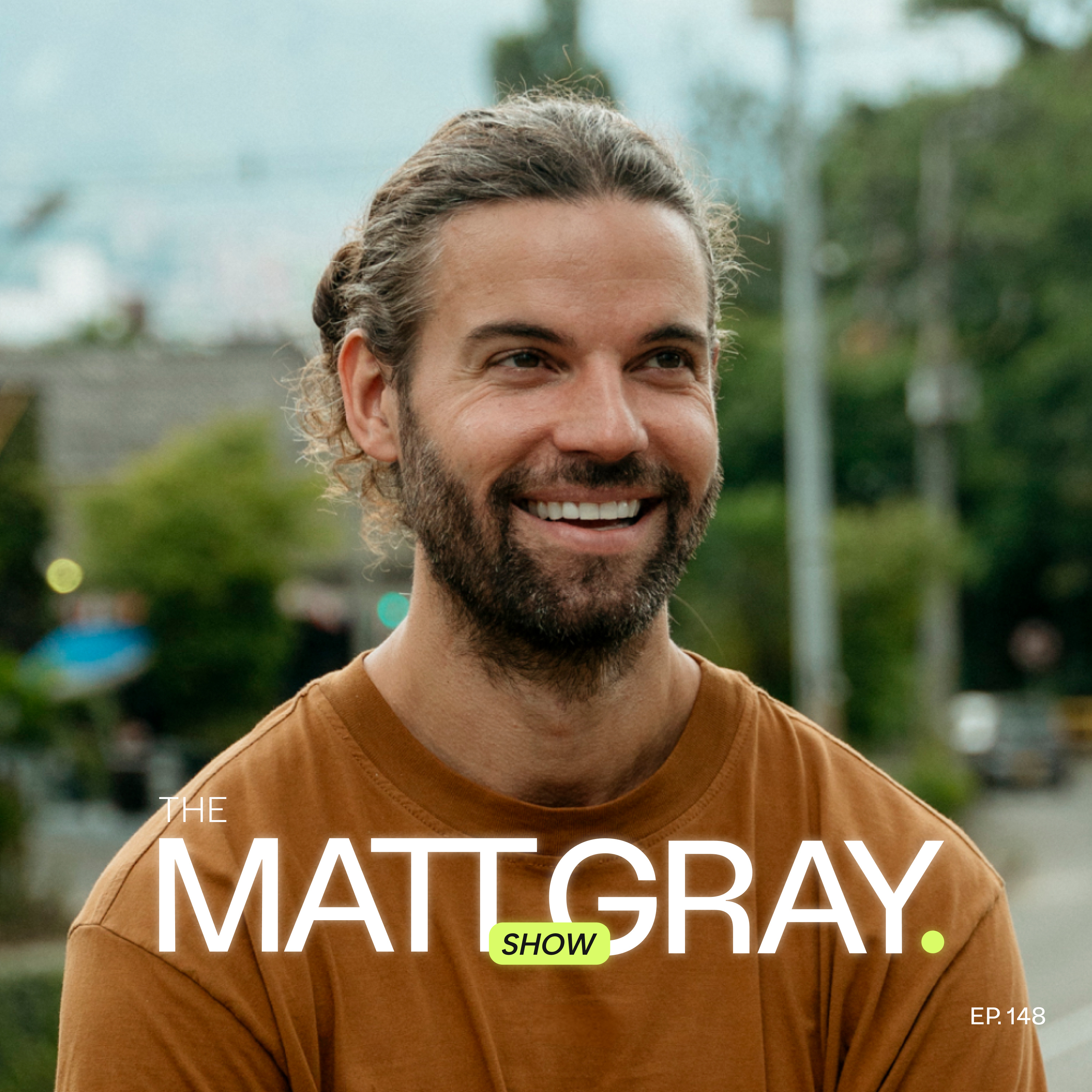
how i'd start and scale a profitable business in 2026 I EP 148
from The Matt Gray Show
18m 6s
The speaker argues that most businesses fail due to self-created traps, not bad ideas. Based on personal experience bootstrapping successful ventures, they outline six critical decisions for building a sustainable and freeing business. First, founders must select an "easy mode" business model—like digital products or consulting—that aligns with their passions and promises quick profitability, using a personal filter to ensure the work feels like play. Second, they advise against taking on co-founders to avoid conflicts and loss of control. Third, the goal should be optimizing for peace, profit, and purpose simultaneously, not just revenue, to prevent burnout. Fourth, distribution requires both scalable organic content creation and hands-on, unscalable outreach to secure the first customers. Fifth, the business must be systemized like a franchise to operate independently, allowing the founder to step away. Finally, founders must consistently enforce high standards in every aspect to avoid mediocrity and ensure compound growth. The core message is to build a business that generates wealth without enslaving the founder.
Most businesses fail not because the idea was bad, but because the founder built a trap. Over the last four years, I bootstrapped a portfolio of businesses doing over $15 million a year combined. No co-founders, and I get to take a full month off every single year. None of that was luck. It came from a framework I built before I ever launched. Today, I'm going to walk you through six decisions that make the same thing possible for you. Miss one and the whole thing falls apart. And to make this video 99% more useful, I've included a free founder dependency test. Link below so you can go and use this once you finish the video to understand your results. Let's get into it. Decision number one, play the right game. The very first decision you make as a founder will determine whether the next five to ten years of your life feel like freedom or a prison sentence. Here's what nobody tells you. 90% of founders who fail were actually doomed the second they chose their business model. They never had a chance. I know because well, I was one of them. My first business was a brick and mortar technology school in Toronto. Co-founders, harsh winners, and me babysitting a teen that I honestly didn't want anything to do it. Every single morning, I woke up dreading it. Not because I was lazy, not because I didn't care, but because everything about the business was both around things that I genuinely hated. I hate managing people I didn't choose. I hate being locked into a single location. I hate the way to fix costs when revenue isn't flowing right. And I built an entire business on top of all of that. I exited, but not before wasting years being miserable from day one. And let me tell you, you don't get those years back. That's the part nobody talks about in the startup highlight reel, right? Years that you waste, making mistakes when really if you had just taken a step back, you could have avoided things that really you knew in the heart of hearts that weren't just right for you. You know, when I was building BitMaker, I had co-founders and I'd later learned that I want nothing to do with co-founders. You know, I was running a business in one location and I've come to learn that, you know what, I want to be location independent. You know the work from anywhere, whenever I want, with whoever I want, on the things that I love to do. And I learned too that the business itself that I want to build, I want to build it around stuff that I genuinely love. You know, work shouldn't feel like work. It should feel fun. It should feel like play. And I want to make sure that the stuff that I'm focused on every day is stuff that I would do even if I was retired. That experience taught me something I now called hard mode versus easy mode businesses. Hard mode is building an app from scratch, launching deep tech, opening a physical location, running complex e-commerce with real logistics. I'm not saying never go that route, but some incredible businesses were built on hard mode, right? I get it. But knowing what you're signing up for, right? Heavy capital, early hires, months of starting at zero revenue while you figure it out. It's like your first day on skis and you drop straight down a double black diamond. Most people don't make it down that hill. Easy mode on the other side of things like digital products, courses, communities, newsletters, consulting, you know, no massive upfront capital, no raising money, no six month runway of silence, wandering, and wondering if this thing's ever going to work. If you're starting out default to easy mode businesses, give yourself a real shot. You see hard mode businesses, they can work, right? But the thing is I see so many founders that are looking to get going with something that will give them peace and common and joyability. And essentially, they end up picking some really hard business when they have all this expertise, this knowledge, and they could have just built something a lot easier that would allow them to get cash flowing. So here's the thing. Easy mode alone isn't enough. You need a filter. Here mine. One, the business has to feel like play. If it feels heavy from day one, it's a hard no. I need to love the problem, and I need to love the customer. Obsession beats opportunity every single time. Two, I want distribution product fit, meaning I can grow it through organic content, not burn cash on ads, just to stay alive. Three, I need a clear path of profitability within 90 days, not six months, not eventually three months. Because I want to be able to build this thing and get it going, get it into the market and start cash flowing it. I don't want to be waiting nine months, two years to try and see if I can ever get a customer. That's just not how my brain works, and I know it's not going to be an enjoyable journey if it looks like that. And here's the test that I use. 15 paying customers is product market fit. 15, right? Not 100. So if you can get a product to 15 core customers, you have product market fit and you've done it, right? You built something now that can likely scale to 100, 200, 2000 customers. If you've been grinding for six months and still don't have 15 people willing to pay, I don't think that's a marketing problem, right? It's the wrong business. Before you build anything, right? Go and write down your criteria to find your non-negotiables upfront, so you're not negotiating with yourself later on. And if something doesn't fit, walk away no matter how good the numbers look on paper. Decision number two, kill the co-founder fantasy. Now you're ready to build, but this is exactly the moment where most founders make a decision that guarantees they'll burn out. More businesses are destroyed by this one decision than bad ideas, bad timing and bad luck combined. And the startup world won't stop telling you to make it. I got into two businesses early on with co-founders and I hated it both times. And I know this is a little bit of a controversial opinion because most people will tell you otherwise, but I'm just giving you my own experience here. You see, the first one, it felt great on day one, right? Shared enthusiasm, someone to bounce ideas off of, we were going to take over the world. Within six months, we were fighting over every decision. Nothing moved without a two hour argument. Everything I wanted to do had to clear someone else's filter. If you're anything like me, that gets really frustrating, really fast. I eventually realized I wasn't building a business. I was just managing this co-founder relationship. MJ DeMarco talks about this in the book The Millionaire Fastlane. He wrote an entire book about accelerating your path to wealth, designing control, leverage and scale. Do you know how often he talks about having a co-founder? Almost never. You know what most founders don't think through is the five to ten year reality. You bring on a co-founder and day one, it feels great. But five years in that same co-founder becomes a leash around your neck. And now you're not just losing a partner, you're going through a custody crisis over years of hard work. Just like you wouldn't marry someone who you met at a bar five minutes ago, you also wouldn't entrust years of building a future to just anyone. So here's what I tell you. You don't need a co-founder. You need a clear goal and the discipline to achieve it. If you're starting out and aiming for a few million in revenue, a couple million a year in profit, just keep it simple and keep control. Build something you can steer without fighting over the wheel with someone. Because without you, there's no business to build. Decision number three, the piece profit purpose trifecta. The third decision is what you're actually optimizing for. And this is where most ambitious founders unknowingly sabotage themselves, even if they got the model right, it made decision to right. They're still optimizing for the wrong thing. I once worked on a business, I knew could make a lot of money. Okay, objectively, the numbers were there. This was easily going to be a $200 million business. And I was tolerating a life that was slowly destroying me. I was using distant different substances, I drank, and I told myself it was just the cost of building something. But that's what real entrepreneurs do, right? That's kind of how it looks. Well, that went on for years. I've learned that staying in the wrong business doesn't just drain you financially. It changes you on like a soul level. It drains you. It slowly kills you. The habits you pick up, the standards you start lowering and tolerating, the way you begin justifying things you once saw you'd never tolerate. What starts as a revenue problem becomes this deeper identity problem. You stop recognizing yourself in the mirror. And here's the hard truth. Most founders who think they'll sell in three years and up running their business for seven. So the real question isn't, can I make money with this? The real question is, can I keep doing this for seven years without losing my mind? So do you enjoy your week? Do you love the problems? Do you love who you're serving? Those questions matter more than your revenue projections. That's why I think about business as a trifecta. Peace, profit, and purpose. Making money isn't that hard. Building something that gives you peace where you can control your time, where you actually enjoy your week and don't need to escape your own life. That to me, that is real wealth. The business you love, even if it takes three years to hit its stride, will outperform the one you hate and spiked in year one. Because the spike is usually just fueled by ego, pressure, and an unsustainable grind. It looks great early, right? But then a few years later, it just completely burns out and fizzles away. But peace and freedom and calmness, they compound. And that's the wealth that I want, right? Because that's a wealth that lasts. So before you go and just start building something, right? Run every decision through that trifecta. If any one of those three legs is missing, well, the whole thing's just going to fall over eventually. Decision number four, build your distribution engine. Once you've locked in the right business, the fourth decision separates founders who grow from founders who stall out completely. And here's something that's going to sound counterintuitive, okay? But work with me here. First time founders are obsessed with their product. And that's exactly why they fail. Today, I talk about organic content all the time, right? You guys see me on YouTube, X, LinkedIn, Instagram. You got my newsletters. You know, you've seen my personal brand. And you know that I think that building a personal brand is the most valuable asset you can build over the next decade. Okay, and don't get me wrong. Those things are all powerful. YouTube is driving 60% of my leads right now. And the highest quality ones I get, that shouldn't overshadow the reality that sometimes you need to get your hands dirty and hand-to-hand combat first. Okay? Too many people want to skip that part, right? They want all these scalable strategies. But oftentimes when you get going, you got to
to do this stuff that's not scalable. You gotta be willing to do the things that other people are unwilling to do. How I see it is that your personal branding content are kind of one piston of a two piston engine to driving demand. That's your inbound engine. On the other side, a little bit of elbow grease and hand-to-hand combat reaching out to people early on is that other piece of the equation, your outbound engine to help get that initial traction going and to get you to those first 15 customers. If you're not willing to do what others won, well, you're probably not gonna get the outcomes that others don't. So here's my simple playbook if you're starting from zero right now. Two channels, YouTube and a newsletter. That's it. For the next three months, just start with those, okay? You wanna focus on doing less, but better. So you're gonna grab a simple camera, it could even be your iPhone. You're talking, you can just even get a $20 lav mic off Amazon. Higher an editor for a few hundred bucks of video and put something out once a week. If you genuinely hate picking up a camera, no worries, right? Pick another platform that's maybe more writing based like LinkedIn, X, Substack, you name it. Don't over-complicate it. The goal is simple here, right? Make your business findable. Then make it magnetic. Decision number five, McDonaldize your business. Everything I've laid out so far can get you started and get you growing. But there's a fifth wall that nearly every founder hits and most don't see it coming until they're already drowning in the business they built to set them free. If your business can't survive 30 days, okay? 30 days without you, you've built yourself the most effective stress simulator on the planet. Here's what happens. You build and then you keep building and then soon everything becomes dependent on you, which is not the goal, right? We wanna be able to take a week or two weeks off from our business and come back to a business that's stronger than when we left, right? But you can't have that if every lever requires you personally pulling it. And three of years in, if you build it like this, right? You're drowning working 80 hours a week inside a machine you own, but you don't control. This is not founder freedom. What we're really after here are the four W's, working where you want on what you want with who you want whenever you want, right? But the opposite of that is founder chaos. The business that was supposed to create freedom but then just becomes a trap. The fix is actually simple. Build a little, then systemize what's working, build more, systemize again, and that cycle is everything. Now, when I talk to founders, most founders, myself included, right? I'm not just some systems guy that likes to just build systems all the time for the sake of building systems. I'm not building systems to build systems. I'm building systems to build freedom. When I go and talk to founders, right? They say, "Oh, I don't want to document or it seems so hard or this is just, you're just able to do this because you've made all this money." It's like, no, no, no, I've made all this money because I built systems. And so I want you to think about why this is important, okay? Let's think about McDonald's, okay? And how it became a global empire. It wasn't the burgers, right? Ray Crock built a system so repeatable, okay? That anyone anywhere could run a location. Ray removed himself from the outcome. The business didn't need him. It needed the system. You need to franchise your own business the same way. Documented, systemize it, and then make it run without you. I take a full month off every single year, okay? Like, every year. That means my business has to be built so that my absence, it doesn't break anything. And more importantly, again, I want to come back to a business that's stronger than what I left, right? More profitable, more cash, and just more peace, okay? With the right systems in place. Team empowered and no single point of failure. And here's the leadership shift that makes it click. Stop asking what should I do and start asking what's best for the enterprise? This is the golden question. So someone comes to me and says, Matt, I'm not sure what content we should put out. What do you think? I say, no, no, no, once I act. What do you think is best for the enterprise and what's your recommendation? That thing gets people to gradually ingrain this question in their minds. And so when someone on my team comes to me with a question, I don't answer it. I ask, what do you think is best for the enterprise? They won't get it the first time. In my experience, even with A-Players, it probably takes me 20 repetitions back in Afghan before it really sticks. Coaching means hammering the same principle until it becomes how your team thinks. Your team stops asking what you want and starts figuring out what the business needs. You know, you don't have to have all the answers. Great leaders ask the right questions. What's the biggest constraint? What's your plan? Where could it fail? What's best for the enterprise? That forces people to think for themselves. And the whole point, right? We want to help you step back from the business without it crumbling in your absence. Decision number six, hold the bar. If the first five decisions are the foundation, this one is the keystone. Pull it out and everything collapses. This is what separates founders who build empires from founders who plateau for years and never figure out why. Right, imagine two founders who both hit the same milestone in year two. The first one keeps raising the bar, every system, every hire, every piece of content held to a higher standard than last quarter. Compound growth, compound quality, the business just keeps getting better. Now let's go to the second founder. They got comfortable. They started cutting corners. Small little mistakes started going through. Barely noticeable, okay? But they were tolerating these mistakes, accepting good enough instead of pushing towards excellence. Their systems stayed the same while their ambitions grew and those outdated systems, while trying to run new situations they were never built for, well that really became hard because things were kind of defaulting to mediocrity. It really started to bring down everything. A business that looked fine from the outside started to kind of rot within. What I see concy with first time founders is that the bar is just way too low. Not because they're lazy because they got there slowly by tolerating small things. The bar for outreach too low. The bar for quality of work too low. The bar for the people they hire too low. And that low bar will drag even the most promising business into the ground. You know, I get it. Being a founder is lonely. You're holding a vision that most people around you don't share. Your team isn't the founder, right? And that isolation makes you second guess everything. Some days giving up looks tempting. I've been there. It looks rational, but that is not a cue to cave. That's a cue to hold a higher bar. You get comfortable making others uncomfortable. That's the key. You got to sit in that tension between where the company is right now and where it needs to go. And maybe sometimes even be the only one in your company that can see that bar. You make the hard calls with the vision in mind even when you're doubting it yourself. I fire people when the standards demand it. I don't enjoy it, but I do it because anything less than the bar that we've set is unacceptable. And my team knows that. Sometimes being the one who holds the standard means being the difficult one in the room. I've made peace with that. Being a CEO is on a popularity contest, right? It's about doing what's bright for the enterprise. Because the alternative is just letting things slide, being liked in the moment, tolerating mediocrity, and one thing leads to another, and your business just slowly degrades. It hurts your team and it hurts your customers and eventually just hurts you. Now here's the uncomfortable question. If you stepped away from your business for 30 days, would it survive? If the answer makes you nervous, I'd build something for you. It's called the Founder Dependency Test and it's linked below. It'll show you exactly where your business still depends on you, what function is the bottleneck, and whether you've built a company or just some high-paying job. Fill it out, and if you realize you're still the constraint, book a call with my team. We'll tell you what needs to change structurally to extract you from operations. You came here wondering how to build something that doesn't burn you out. Well, this is how. Play the right game, kill the co-founder fantasy, build through the trifecta of peace, profit, and purpose, build your distribution engine, McDonaldize your business so it runs without you, and hold the bar even when it's hard, even when it's lonely, even when you doubt it yourself. Do all that and success stops being something you chase? It's just what happens. If you want to see a more detailed blueprint of how I build a business all around these elements, check out this next video. Let's wind together, be sure to like and subscribe and I'll see you in this next one.
Podcast Summary
Key Points:
Choose an "easy mode" business model aligned with personal passion and a clear path to profitability, avoiding complex, capital-intensive ventures.
Avoid co-founders to maintain control and prevent relationship management from overshadowing business building.
Optimize for a trifecta of peace, profit, and purpose, not just revenue, to ensure long-term sustainability and personal fulfillment.
Build a dual distribution engine combining organic content creation (like YouTube/newsletters) and direct, unscalable outreach to acquire initial customers.
Systemize operations to create a business that can run independently, enabling founder freedom and absence without collapse.
Relentlessly hold high standards in all areas to prevent mediocrity and ensure continuous improvement and quality.
Summary:
The speaker argues that most businesses fail due to self-created traps, not bad ideas. Based on personal experience bootstrapping successful ventures, they outline six critical decisions for building a sustainable and freeing business. First, founders must select an "easy mode" business model—like digital products or consulting—that aligns with their passions and promises quick profitability, using a personal filter to ensure the work feels like play.
Second, they advise against taking on co-founders to avoid conflicts and loss of control. Third, the goal should be optimizing for peace, profit, and purpose simultaneously, not just revenue, to prevent burnout. Fourth, distribution requires both scalable organic content creation and hands-on, unscalable outreach to secure the first customers.
Fifth, the business must be systemized like a franchise to operate independently, allowing the founder to step away. Finally, founders must consistently enforce high standards in every aspect to avoid mediocrity and ensure compound growth. The core message is to build a business that generates wealth without enslaving the founder.
FAQs
Hard mode businesses involve complex ventures like building apps from scratch or opening physical locations, requiring heavy capital and long revenue runways. Easy mode businesses include digital products, courses, or consulting, which need less upfront investment and allow faster profitability.
Co-founders can lead to conflicts, slow decision-making, and eventually become a constraint on your freedom. The speaker recommends building solo to maintain control and avoid the complexities of managing a partnership over the long term.
The trifecta emphasizes optimizing for peace (enjoying your work and controlling your time), profit (making money), and purpose (loving the problems and customers). Missing any one of these can lead to burnout and business failure.
Focus on two channels, such as YouTube and a newsletter, to create organic content that makes your business findable and magnetic. Combine inbound efforts like personal branding with outbound tactics like direct outreach to gain initial traction.
It means systemizing your business operations so it can run without you, similar to how McDonald's franchises operate. This involves documenting processes, empowering your team, and removing yourself as a single point of failure to achieve true freedom.
Maintaining high standards in every aspect of your business prevents mediocrity and ensures continuous growth. It involves making tough decisions, like firing underperformers, to uphold quality and avoid the slow decline of the business.
Chat with AI
Loading...
Pro features
Go deeper with this episode
Unlock creator-grade tools that turn any transcript into show notes and subtitle files.
 PodcastTranscript AI