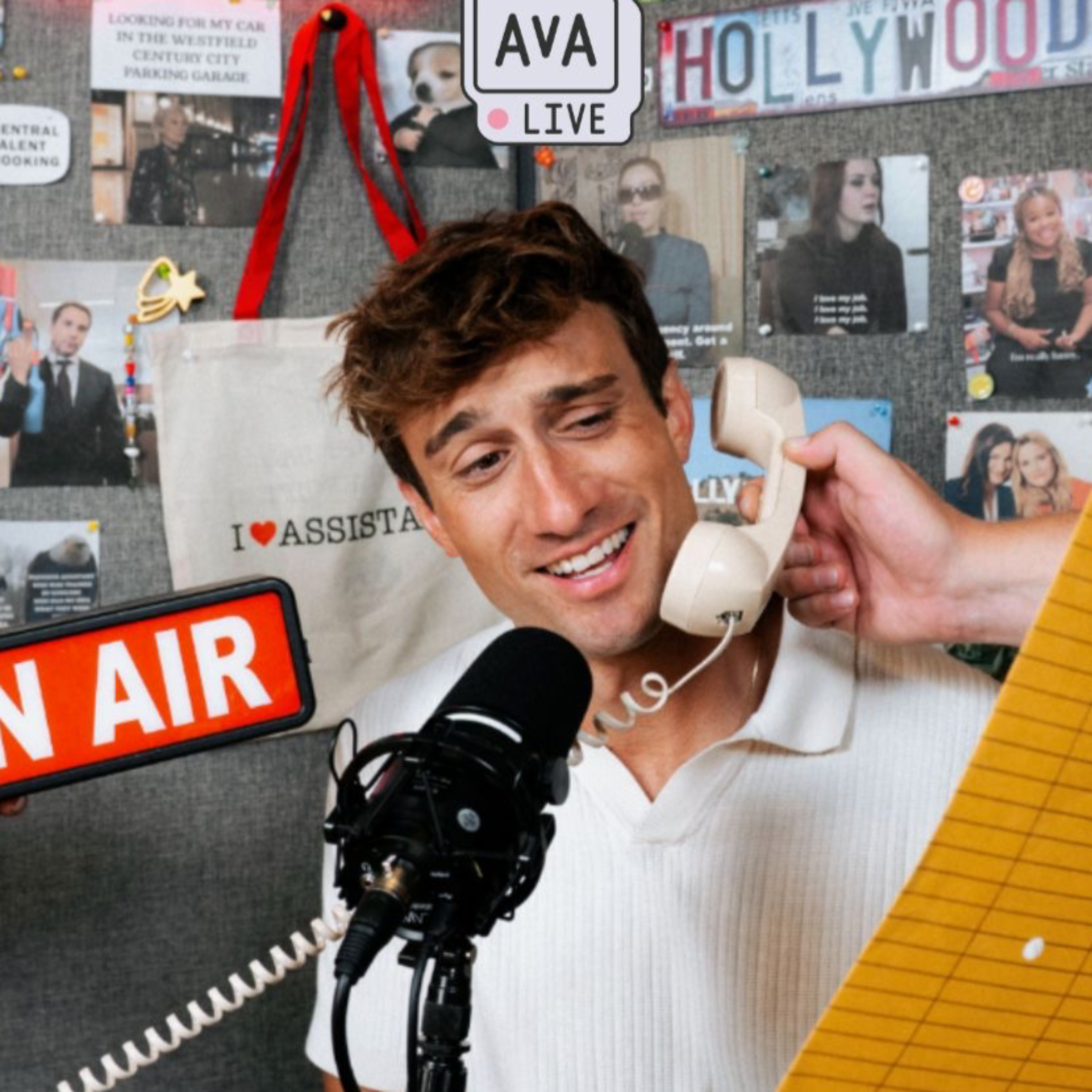
It is Wednesday, July 8th. Welcome to episode 14 of AVA Live. This is Warner Bailey. I want to give a quick shout out to our production team. We've been doing this show now 13 weeks. Last week was the first perfect game we pitched. I probably just jinxed it. We're going to run into a bunch of shit now. But I do want to give a shout out to our production team. And production team is behind the scenes everywhere on these live shows. A lot of credit to them. We got a big show today, as always, presented by Central Talent Booking. First up, Ben Wong. He's an actor. You may know him from Karate Kid. But you also are about to know him as a new fake Hollywood assistant on your screen. He plays a CAA assistant in Sony Picture Classics Gail Daltry in the celebrity sex pass. We also Brent Weinstein, who is a partner at UTA, spent 20 years there before jumping over to CAA. He's now leading a bunch in the Creator Division podcast innovation. And we'll get into the rise and representation of creators. We also have Rich Modskin. We were going to celebrate a lot. If USA won today, he's one of the biggest figures in US soccer from the agency side. He was at-- or he is at the team representing some icons, but we're going to sulk with him and find out what do the outlook look like for the future of US soccer. Finally, we have Roshan Sethi, who's our first acting physician that's joining the show. He's also a writer. And just came out of the book. The simp and you may know him from the resident. So we have a stacked lineup all sides of the industry today. But we do have a quick giveaway that we want. Assistance don't get enough love. So we're partnering with Gurunes. Look at these bad boys. We're going to give away your supply of these guys. We're going to do a quick trivia question. There's a whole year. There's not quite a year, but there's a lot of them in here. The World Cup's happening. Everyone knows there's three countries hosting the World Cup. But how many cities are hosting World Cup matches? The first person to write the correct answer in the chat is going to win a one-year supply of Gurunes. You're going to be so healthy that your boss is probably going to give them your car. You're going to give them your title, your house, et cetera. Thank you, Gurunes, for the support on the show. And good luck to whoever gets that answer right. We're going to announce it later in the show. During our production meeting this morning, we had some breaking news come out on the Emmy Noms. So not even included in our news, Emmy Noms, the pit led all nominees this morning with 25, followed by the final season of Hacks on the comedy side, which set a record at 24 nominees for a single season of comedy. Crazy, we love Hacks, big fans of them. We might be having some on later this summer to the show. But we had a big news week in Hollywood. It's still got Gurunes all over my lap. So I'm going to move these bad boys before we start. Netflix Publishing Deal. Netflix has signed a deal with a major publishers to bring short form editorial videos directly to their platform. The major player here, Penske, you may not know him, but you know what they own. They own pretty much all Hollywood besides me, besides AVA Live so far. Hollywood Reporter, Billboard, Deadline, Rolling Stone, Variety. The deal also includes Buzzfeed, Conda Nass, Hearst Magazine, People Inc, and Taste Made. But what's the deal? The deal is that Netflix will showcase three to 20-minute-long episodes ranging from travel, inspiration to cooking ideas to fashion trends on the Netflix platform. So what does it matter? This deal keeps viewers inside the platform. Instead of pushing them away to IG or TikTok, essentially, they want to own the feed. They want to own your doom scroll. Your next click, your next one, million clicks. Big deal out of Netflix. You're going to see a lot more of those continue to happen. Also a huge deal for a lot of the shows listed down below in the logos. Second, Spotify. It should also say Calci Up Top. Malcolm Todd, his song "Earings" probably stuck in your head. It shot up 70% overnight. And it hit number one on Spotify's US streaming charts. Congrats, but wait, Spotify came in and said, let's deduct 500,000 of those streams. Why? Well, they deemed them as suspicious. Suspicious because Calci better is cached out when they went and bet that that song would be number one on the charts. And if you don't know Calci, they're the prediction market platform. They're not betting. They're prediction markets. Spotify said that they did not believe that those streams counted towards the overall listening from real human listeners. Got really complicated, but that song obviously dropped from the top of the charts. The major takeaway here is Calci and Polymarket. Another trading platform are kind of muddling the field on what is inside our trading in our industry. Second, C.A. Body Scanner. This is kind of freaky crazy news. But David Aria, C.A. does called the Vault, where actors, athletes and creators can scan their bodies, faces, voices, and even movements for sports people, those athletes, to create AI versions of themselves. AI tech is here to stay. It's a protection in their eyes against utilizing their client's name, image likeness for the wrong reasons. I don't know if I totally buy it. I think I have a more pessimistic view. But fascinating technology, cool story, a vanity fair that dropped this morning. We wrote about our newsletter. Second to last news story, and we'll do this one quick. WME interns. Most important story that we congrats. Caught my eye because on LinkedIn, it said, new faces have entered the office. Clearly a love island intern, Gen Z. Probably Gen Alpha writing that on LinkedIn. But congrats to Anna, Daisy, Salvador, Adam, and Zachary. The new class of interns at W.A. will probably throw you a party later this summer. Last but not least, Tilly Norwood. I hate saying her name, and I promise this will be the last time. But I have two main thoughts here. One, fuck Gen I.I. I hate it. Everyone involved gives me the IK. It's been a fabricated story around Hollywood. But there's a second aspect to the story. I want them to keep creating a lot more Gen I.I. Why? It's because as you flood our feeds with generative content that creates an infinite supply to true race to the bottom. So anything human-made will stand out more. And it becomes more valuable. So the things we're doing here at AVA, this live stream, and anyone creating real human content will just become more valuable, 'cause that finite supply and a real human connection. So last time, hopefully we say Tilly Norwood's name until we get a news here that Tilly Norwood's PR person is calling in and left us a little message. Let's roll it. Hi Tilly, is it? Oh my gosh, so lovely to meet you. I've heard so many things about you. I'm gonna be your new PR person. I'm just gonna ask a few questions and we'll just go from there. Sung it? Okay, great. Tell me where you're from. England, great. We're in England. No, we're in particular. Oh, why is that, military dad? You're not a real person, for sure. Da, oh my gosh, so crazy. What is your favorite beverage to drink? Water? Okay, healthy. Love it. What's your favorite red water? Whatever kills the Earth's quickest? Okay, so I'm gonna say Fiji, okay? Tell me what your career aspirations look like. What do you wanna do? Destroy all jobs for humans. Okay, we're gonna change that a little bit. And what is your favorite color? Nothingness. Okay, that's on a color, but we're gonna work it out. We love SJ, not actually Tilly Norwood's PR person. She's a Hollywood assistant who sent a video in, if you remember, last week, came live on the set to join us and she's gonna be doing some news later this summer when she returns to London where she is now. But from one assistant to the next, Ben Wong, he plays a Hollywood assistant and Sony Picture Classics new film, Gayle Daltry and The Celebrity Sex Pass. Believe we have him live coming up in the waiting room. He's a Hollywood soon to be legend, legend, our eyes, Ben, bring him up up. How are ya? What's up? It is a pleasure to see you. The pleasure is all mine. All mine. We gave you an intro, but I want you to give yourself a bit of an intro, log line on who you are and also the character you play in the movie, drop it on Friday. Okay, my name is Ben Wong. I am an actor of stage and screen from Minnesota, the greatest state in the union, and I play Caleb and Gayle Daltry in The Celebrity Sex Pass, which is kind of, there's no kind of, he's kind of an idiot, Savant, agent's assistant. I feel like we all were. I was an agent assistant, so I can say, you're an idiot, Savant agent's assistant. I'll take Savant, idiot, but I'll take either, but how did you, I think what I'm most interested about, I saw the movie early, we did a screening with y'all, it was amazing. What did the process look like for you to study and learn to be a Hollywood assistant to that degree? I put a lot of assumptions out in the air. You're assuming that I did any amount of, how did you become an idiot, Savant is what I'm more interested about? Oh, that was easy. It's the easiest part. A lot of people think that I had to do a lot of hard work to get there, which I'm flattered by, but I really didn't. Someone asked me at one point if I based the performance on any real agents or agents assistant that I know, and the answer is no, it's all based entirely on my own incompetency and stupidity. So, it was very much, I feel like, but in a way, the character is sort of like, he doesn't really know what an agent's assistant is, you know? He's sort of living the dream of what a, like, a seven year old boy might think that is. And so I figured I'd just, I'd just do the same. Well, you nailed it. I'm excited for everyone to see it on Friday, but I want to go back to your origin story. It's cool. And I want you to look back now sitting and thinking about breaking it into the industry. There were some of those early roles like on set for you, and we have a couple of them listed at the bottom, but talk to us about that early career moments for you.
Well, the first TV show -- it's funny that we're talking about Idiot Savant's -- the first TV show that I was on was a show called McGyver. It was on CBS, and I had a -- and the director on that show was a guy named Peter Weller, and Peter Weller played RoboCop. And Peter Weller has a doctorate in, like, Renaissance art, you know, and Peter Weller is classic old Hollywood. And this was my first director on a real set. And he told me -- well, first he said, "Kid, have you ever been in the pictures before?" And I said, "No." And he goes, "Oh! He's a Savant!" Everybody -- and then, you know, he kind of was bustin' my balls for that. And then the first take that we did, he said, "All right, on this next take, you're going to go left." And he said, "Action." And then I went, "Right." And then from the back, he sort of cupped his mouth, and he went, "Oh! He's an Idiot Savant!" I'm sensing the theme here with the Idiot Savant. Yeah, so that's actually where I sort of learned that phrase. Well, this is the first time that I had any real contact with it. And I was like, "Oh, okay. Yeah, I could put this to you." And what is surprised you -- you've had an amazing quick rise, and now working with such legends on this new film. But what is surprised you most about working Hollywood? The snacks aren't as good as I thought they'd be all the time. What's on your dream writer, then? Give it to us. Well, I mean -- okay, well, I'm also on MacGyver when I went there, and they had the snack table when it was all free. I was like, "This is free." Like, that, like, busted my brain. Yeah, because I was in college. I literally, like, put -- like, I brought a sack one day, and I brought -- and I put some in to bring back for my roommates. I was like, "They're going to love this. This is free." So, I guess I was impressed at the beginning. So I can't really -- I guess I've become a more high-falutant person, and I expect more out of the snack table. And that -- maybe that's my problem. And maybe I should have my expectations be more foxy. What would be on your -- you didn't answer the question. I want to know, what is your top three items in your dream writer? Coca-Cola Zero Caffeine. Which is something I'm afraid to say, because I feel like I offend everybody when I say that I drink Coca-Cola with Zero Caffeine and Zero Sugar. But that's what I like. And also, I don't know, like a hot -- like a hot food always. I want a hot food always. We'll get you some hot food and Coke Zero when you come and join the Senate. I haven't eaten yet today, so maybe that's my problem. We'll send you some food after. But a lot of -- there's a lot of young actors and actresses out there that watch this program and interact with our IG feed. Probably feeling lost right now. The industry is declining. There's a lot of news headlines that Hollywood is over and beyond. But what advice would you have to them? And how do you think you stuck out in your career and were able to grab some of these roles? Oh, man. I think that's like the hardest question to answer. I don't know. It's really hard to give advice in this industry because everybody's path is so different. There's no one way into it or through it. So it's hard for me to be like, well, this is what you should do if you want to be successful. I'm not even entirely sure why I made it through. In a lot of ways, it was luck. But also, you know, I have a wide palette of niche talents, which actually, I think, was somewhat helpful. I booked a martial arts movie because I'd done some martial arts before and I'd dance training. So I could jump into that. You know, I went to clown college. I really did. I studied comedy academically, which is the worst way to learn how to be funny. But I did that. And now I'm in this funny movie with people who are naturally funny. And didn't have to read a book about it. You know, I did a movie where I had to play the guitar. I did a play. I did a musical where I had to play the guitar. And that was just the skill that I picked up, you know, back in the day. So I read this one at sort of actor book back in the day. It was written by some, like, you know, mid-century dude. It was like this here. And one of the chapters was like the 10 skills every actor should possess. And like the first five were normal. They were like, you know, you should know how to do accents. You should know how to control your voice and body. And then the last five are crazy. They're like, every actor should know how to fence. Every actor should know how to ride an equine, you know. And I thought it was really funny when I first read it. But now looking back on it, I'm like, maybe every actor should know how to fence and ride an equine and play the guitar. And I think the more skills you have, the more chances you are to get lucky when one of those skills is something that you might be able to use. Of course, none of this is really relevant unless you're good at acting, which is the baseline. This is just for actors. I guess this is advice for people. Well, I think for any team, like you mentioned that you got lucky. It sounds like you put a lot of work into that to create your own luck in your career and so quickly rising up. Do you have mentors throughout that early part in your career in Hollywood trying to navigate it? Yeah, so many. So many. I mean, throughout my life, really, to get me up to that point. I mean, I feel like that was more important. Once I got into the movies, I already felt more okay with it. But prior to that, it was the teachers that I had when I went to drama school. And even the teachers that I had when I was just doing theater as a kid, I really am thankful for molding the way that I approach making art and the way that I approach working with people. And that's another thing that I give as a piece of advice, I guess, is that I identify good teachers and listen to them. You know, they're rare. Good teachers are very rare. So if you find one, count yourself lucky and stick with them and develop good relationships with them. Yeah, and you've had a lot of people to learn from on these casts on the movies. We've had a couple of questions here. Wayward Fanboy in the chat is saying hi. Andy told his cast of your cast got swollen from the longest walk. But I do have a question, which is hilarious. Fran, what are some of the most, the memories that stick out to you most from the sets you've been on? The memories that stick out the most. I mean, I've been on some crazy sets. I remember the first time that I went into to like a real like Hollywood soundstage where they had built a house, you know, disclosure day style, spoilers alert inside. You know, I'd never seen that before. And of course, that's how it's always worked. But you know, I'm from small town, Minnesota, to see a house inside of a bigger house. I was like, that was crazy to me. It really felt like magic. You know, it feels like you're watching real magic happen. And I think if you work in the industry for a long time, you can take these things for granted. You're like, of course, there's a house and another house. But I've also had the chance to shoot on some incredible locations. I was just in Germany filming for the new Hunger Games movie. And, you know, we were shooting in mountain valleys and in the Olympic stadium and in, you know, crazy 1970s, you know, Bauhaus, neo-brutalist, neo-futurist convention centers. And I do sort of pinch myself every time I get to do, to be in a place that other people don't get to very often be in. And I like to poke around. I like to poke around. I like to poke, I like to try to like sneak out and sneak around in these places. So much so that the, the PAs get kind of mad at me. I went on a lot of adventures. On the set of the Hunger Games specifically because we were in some crazy ass places. Some of the crazy places though that the PAs don't get to experience the mail room, which is one behind me. But also the one you had played as an assistant in the movie. We have some, let's play a game. What do you say we play a little game? We're gonna, we had some real Hollywood assistants submit their own crazy Hollywood assistant stories. I'm gonna read them and you're gonna give them red flags. One red flag being, that's kind of bad. To four red flags, meaning you visited an HR. Ready, are you ready? Yeah, let's do it. All right. Option one, story one, rather. Get World Cup tickets and make sure his wife and mistress are on opposite sides of the field. This, this is what they had to do. It's what they had to do. You're giving it one to four red flags. Oh, I mean, I want to give it four red flags. But are these stories going to get worse? I don't know. Am I flag inflating myself? That's, that's not part of the game to give it away. One to four. Why, I guess I'll give it three and a half flags. We'll hold them up. We'll do a little out thing at the after this in the post production. Second one, go to his kid's school play and facetime him the entire performance because he can't miss it from set. Oh, I mean, that's still a bad parent for sure. I mean, but I mean, hey, I'm making this money for you, kids.
And this is for you. You wouldn't be able to afford to be in the school play if I weren't in the show. Maybe. Um, I, but FaceTime, but also if you FaceTime these, but yeah, I understand set obligations. I, I missed, I missed a friend's wedding because I was shooting once and I felt really, really terrible about it. And if I had an assistant who could FaceTime it, I, I may have asked, I may have asked them to, but also the spectacle of it. Imagine if you're a kid and you're in a theater and you look out and it's your dad or your mom's assistant holding a phone FaceTime and that wouldn't make me feel good as a kid. I thought you're going with one. Now we're airing on maybe three to four answer, one to four red flags. Yeah, I give it two, three, I give it three, I give it two and a half red flags. Okay, two and a half. We got two more quick ones, attend her court mandated traffic school over Zoom with her camera off pretending the Wi-Fi was out. It's so she didn't, so she didn't attend, so she, no, the assistant had to attend. For on behalf of her, on behalf of her camera off Wi-Fi story that is out. What's the point? That's just illegal then, isn't it? I mean, illegal maybe the red flags, one to four, give us an answer. Oh, that's straight to jail. I mean, morally, I, I don't know, I'm, I'm, I'm, I'm a legally minded person, I guess. I'm, I don't know, like two, three, it's court mandated. Three red flags. Three red flags. Last one, we got one minute here, keep a live spreadsheet ranking every guest at his birthday party by fame, usefulness and likelihood of posting on social media. That's four red flags. Done four. That was, that was the quickest answer by far. That seems like that's the most toxic thing out of anything, not going to jail. That's pretty toxic. Well, Ben, we're excited to see your movie on Friday. We always end each segment with, and really quickly, who is someone behind the scenes in your career, who has helped you get to this place that you want to shout out. Oh, oh, my God, every single one of my agents assistants and, and, and managers assistants, they, they, I would not have made this Zoom call today. I would have forgotten about it. And they not bumped it for me two times yesterday and earlier today. So thank you to the, to the good people at Stuart talent and artist's first management. We love it. Shout out. Thanks for joining us on Avie Live, we appreciate you. And yeah, we're, we're excited to check out the movie again for me and theaters on Friday. Okay. Ben hasn't talked to you. Take care. We will see you. Ben, that was, we got to, we got to do that red flag segment again. That was fun. Next up, Brent Weinstein, we first connected about a year ago when he was coming over from UTA where he spent 20 years, two decades and he served as a partner and he built out their digital podcast venture business and served as the agency's first ever chief innovation officer. He's at CA now, and he's leading a bunch of divisions, which we'll talk about and overseeing the teams that work with Darman and Melia de Moldemberg, Oprah and Trisha Patives. We got to bring him up. Brent Weinstein. It's been a long time coming. How are you? I'm great. Thanks for having me. I really appreciate it. Thanks for joining the show. You look like a king in the castle up there assuming this is your office at the, they called the Death Star, CA. You know, when CA bought ICM a few years ago before I got here, of course, there wasn't enough space in one building, the house, the combined companies. So we operate both in the, the CIA space on Avenue of the Star as well as the ICM Space and Constellation and I go back and forth between the two. So I'm at Constellation today, which has a great view. Yeah, we love it. Well, I gave a bit of a brief and an intro on you and your career, but I want to hear from your words, what are the projects and the focus that you're bringing every day on your new role? You know, CA has such an amazing and proud history and legacy in terms of how it's innovated and entertainment going back to its founding 50 years ago and we're really just trying to live up to that legacy across all the areas that I've been, you know, honored to ask, to be asked to support, including creators. And on the creator side, you know, they've been representing creators here for 15 years. This isn't something new when I came in. There was a really fantastic foundation and it is agents and executives, people like Chris Watteen and Andrew Graham and Arlita and Sophie and Lydia and so many more who've been in doing such a great job here and it was really a fantastic foundation to build on. And then we started adding new people like Greg and Kendall and Rebecca Rochean and Jacob Selzer and Grant Durkack and so many more. And, you know, if you have the right strategy, which we think we do and if you have the right team, which we really feel passionate about. And then if you just do the work day to day and have the right fundamentals, you know, generally good things happen. And when you combine all of those things with the brand of CA, the power of the platform and maybe most importantly, the culture here, which is really all about, you know, just tremendous collaboration and communication and going up and supporting each other every day. It puts you in a position to do great things for clients and so far, you know, that's been the case and we're just going to keep grinding and working hard to, you know, we do right for our clients because, you know, it's a privilege to represent artists, artists aren't a trophy to win and put on a shelf, you know, the win isn't signing a client. The win is helping them make their dreams come true and that's a sacred obligation that we have to keep in mind every day and as long as we keep that as our north star and are faithful to that as a mission, then really good things will happen. Yeah, and I want to focus on one word you said was strategy. How has that strategy changed, especially the call to last five to 10 years in the rise of the creator economy and compare it to the way that you're approaching representing a more traditional talent on the celebrity level, maybe in film and TV. You know, I've been representing creators since 2005, which seems crazy, but, you know, 20 plus years now and there's been so many different iterations. For most of that time, traditional media didn't really give them up stock to creators and then they realized that creators could be a really fantastic cohort for marketing partnerships to help promote films and TV shows, et cetera. And really, you know, one of the big transitions over these last few years and in particular the last few months is the whole ecosystem, large media companies included waking up and realizing that creators, AR and to flash in the pan that they can have careers that span 5, 10, 15, 20 plus years, be that they're not just marketing vehicles that it can actually be, you know, organizations for creating franchises and content that can live on YouTube, but it can also live on Netflix and it can live in theaters, it can show up in consumer products or at live shows or books. And so for us, you know, the strategy is ensuring that, you know, first and foremost, you know, we're in business with people that we deeply believe in, second, that we really understand what it is that they want to accomplish, what are their goals and dreams, and then making sure that we're putting all of, you know, the considerable resources of this company behind them so that we can make those dreams come true. And, you know, there's never been a more exciting time to be in the creator economy, there's never been more opportunities for creators to build businesses and build brands and cross into different sectors of media. And, you know, all that being said, it's never easy. And we have to show up every day and roll up our sleeves and work hard to continue to earn the trust of our clients and to continue to earn the trust of the marketplace. And when we do that, you know, as I said, good things generally happen. And in this next question, let's potentially reference maybe a deal you've done or the other company has done. It seems that just being a single lane creator is no longer enough, you have to have some sort of multi-hyphenate mentality around the work that you're pursuing on the creator front and the representation front. Certainly, how are you evaluating what lanes to go down when a creator comes to you and says, I have an interest in many different things beyond the path that I'm on right now? You know, listen, it really does start with the creator's passion. If they have a deep passion for something, that's usually a very good thing in a great starting point. And sometimes that means that we end up helping them publish a book or putting together a tour or helping them go on Broadway or building a consumer products business or crossing over into film and TV, they have to be passionate about it. I think it's very hard to be thinking in life whether you want to be a chef or a baseball player or an agent or, you know, a burgeoning media mogul like you, Warner, I think it's hard to do anything if you're not passionate. And so one of the first things we do is really, you know, kick the tires and ask questions, like, is this something you really want to do? Is this going to be a priority? And if the answer is yes, then, you know, again, we bring all of the resources and expertise you know, that we can bring to bear this company to put behind the clients so that we can turn that idea into something that's a reality. And so it starts with passion. We also then, you know, look and just make sure, you know, for lack of a better description, you know, does the creator have sort of permission to play in a certain space? So someone who's known for fashion and beauty, if they want to do something in the sports world, maybe that makes sense. Maybe it doesn't. But we have to sort of, you know, look at, you know, what is someone's passion? Where does that exist? Have a line with what their audience wants and expects from them. And then how can we help them expand? And, you know, the crossover is exactly, you know, a great way to see this come to life. You know, whether it's Super Bowl or NBA All-Star Game or the World Cup.
There's been so many huge moments in sports this year and every single one of them has had just an absolute deluge of creators surrounding those events and some of those creators are coming from the world of sports. It is naturally endemic to the sports world. And some of them, you know, don't come from the world of sports, but brands and leagues and teams and broadcasters want to tap at the powers of those creators to reach audiences that maybe aren't thinking about sports first. So they may tap into a fashion creator or a beauty creator or a lifestyle creator or a gardening creator, and it's really exciting. So, so really, you know, there's no limit to what creators can do. It starts with their passion and then we go from there. And own distribution, big thing now funneling down through the creator economy. I'll push you if you're open to it of sharing one specific deal or maybe a couple that can kind of explain how that does happen though for someone that may not be as aware understanding the broader landscape. I mean, listen, there's so many examples, whether it's, you know, Trish Paytis wanting to be on Broadway and having, you know, you know, just an absolute breakout experience on Beetlejuice, whether it's Quinn Blackwell, you know, walking the Victoria secret, you know, fashion show runway last September or in New York fashion week. It could be, you know, Darman who, you know, has built this amazing company that puts out, you know, hours of scripted content every week in a world where most creator content is non scripted, he's really figured out how to crack scripted in a really scalable way. And now he's doing 300 million video views a week. So he's doing Game of Thrones finale level audience every week. And yet, most people would probably, you know, shrug their shoulders. If you said, what's the vent diagram between Darman, his content is very uplifting, etc. And the NFL, right, a pretty significant contact sport. But, you know, Dar had this vision of, you know, this notion of kindness and how that could come to life around the Super Bowl and the NFL named him their chief kindness officer and that kicked off two weeks of unbelievable initiative, some of which took place in real life, some of which took place online and through social media. And when it was all said and done, we actually presented a case study on this at the World Congress of sports back in April. When it was all said and done, the KPIs from that partnership outpaced almost every single brand activation at the Super Bowl, including people that bought multiple commercials. So it was just an incredible, innovative partnership and one that was unexpected, you know, you wouldn't expect Dar who's not a quote unquote sports creator to do something so impactful and you wouldn't expect the NFL to be so open minded to that type of partnership. But when we got them together, it totally clicked Tim Ellis, the chief marketing officer of the NFL, had a real vision for why this was good for the NFL and it worked incredibly well. And we've had Sean Akkins, who's the CEO of Darman studios are on to the program before we talked about that in its infancy before now, what they've done over there. So Darman is one I'm glad you brought up crazy big studio on Burbank. I'll pay you a lot of the majors. We actually had a question from the chat talking about independent creators. If you were a independent creator now looking for representation or brand partnerships, what's the best way to stand out. It's interesting that and I can't see the chat, but it's interesting, you know, the notion as a as a modifier, all creators are independent. That's one of the exciting in being a creator as, you know, differentiated from most other professional content professions. Everyone's independent, you know, these creators, they're building companies they work for themselves. They're not asking permission before they go and make content or before they veer into new lanes. They're all independent entrepreneurs and that's exciting. But in terms of what we're looking for, you know, from one perspective, it's no different than I imagine the answer you'd get from a traditional talent agent or a music agent or a literary agent or a publishing agent, which is, you know, we're looking for people. They inspire us with their art. We want to see the videos, love them, be inspired by what they're doing, be inspired by how they can build and engage audiences and keep people coming back. It's a starting point. We want to be fans before we can be the types of advocates that we want to be in order to help clients dreams come true. So it starts with our passion. And then of course, you know, are they willing to do the work? Are they going to put the work in? There's some disconnect between their ambition, but you know, they're willing us to roll up their sleeves. And when magic really happens is when you have artists who inspire us, who have a real big vision and ambition for where they want to take their career, and then they're willing to put, you know, the effort in. And then, you know, four companies and creators like Dar, where they have, you know, now full executive teams like Sean Atkins, he mentioned mythical, who got Jacob Monkrieve and in the past, people like Brian Flanagan and Stevie Levine. Jesser, who's one of the biggest creators in the world and now has Zach Miller as the head of that company, you know, horse people like, you know, do perfect and others have hired, you know, full-time leadership teams. So when you combine ambition and innovation with everything that the creator brings to the table, and then you start layering in professional, you know, operational talent, you know, the sky's the limit. And it's interesting you say that because we're in that unique spot now where we're scaling up, you've hired eight people in the team and AVA and thinking about the next step is bringing an operational talent and coming from the more agency world into the creator world, I've seen a lot of peers in the creator world, scale up quickly through it. So I see legacy media, legacy operators, fusing in creator economy, I don't really see a big difference in the way that we're operating. And scaling, then the more traditional lens, but for you looking forward, last question before we do have to let you go, unfortunately, but is big, big hot take for the future, where do you see the creator economy going in the next year. You know, we've obviously seen a huge shift of add dollars from other sectors into the creator space, I think that's going to continue. We've seen all the big media companies and streamers really, you know, rethink how they want to be in business with creators and be much more expensive. I think those trends are going to be probably the two most dominant ones, but I think, you know, what we're also going to see is the capital markets start to move into the space, you know, in a pretty aggressive way. I made an announcement a few weeks ago about a partnership that we have with a subsidiary TPG, the big private equity firm, called compound holdings, which is a new vehicle to deploy capital into the creator economy, it's a $250 million fund, we're really excited about that because we think that there are creators and creator centric companies that have built really amazing businesses that are worthy of investment and that can create real meaningful return for investors. And I think that's going to be through compound and, you know, there's others, I think that's going to be a big theme over the next year is the wave of capital that's going to flow into the space. And I have to ask you why is that going to work for creators taking on capital from someone like CA and the structure you built. You know, whether it's from compound, which, you know, sits on's length from CAA or whether it's, you know, the other funds that have popped up, you know, over the past few years, in some cases, you know, creators want liquidity. It's taking money off the table, they've built really valuable businesses and they've continued to reinvest in those businesses as they've grown and some creators simply want to have some liquidity, some want capital for growth so they can invest in expanding their business, maybe even doing, you know, M&A of their own in order to create more scale. It's sometimes a combination of both. And, you know, investment isn't going to be right for every creator or every company. But when we can match the right type of strategic capital, thoughtful capital value added capital with the right creators and the right companies, we think that we can continue to push the space forward in a really innovative way. Then we're excited to follow it. CA's got a good one. They're lucky to have you. We're lucky to have you on this program. Brent, thanks for joining us and looking forward to seeing the next time. Thanks, Warner. See you take care. From one Brent to another, you may know him as Brent Stefani, he started as our intern. He's now our news correspondent live and we're going to kick it to a segment that he recorded. A little news segment of the week from Brent Stefani. I was here to report on the weather, but I actually have some very devastating news. My favorite movie franchise, the Minions franchise had a new movie open last week, Minions and Monsters. And it only grossed about $36.4 million domestically over its opening weekend, the Fourth of July weekend. And that five day domestic total only jumped up to about $61.4 million. Well below the projected $80 million and down about 49% from its last movie, Despicable Me 4. While I may be heartbroken due to my love for Minions, I can't help but hope, are we finally done with Hollywood sequels? And it's not just the Minions. Warner Bros is a supergirl, just posted one of the worst second weekend drops in superhero movie history, down 77%. Meanwhile, Toy Story 5, a franchise that waited seven years before releasing another movie, is beating everybody. The real lesson here is scarcity. Nobody is tired of Woody, but I guess everyone is tired of those little minions running around every two years. The math isn't complicated. You give time between movies and you get benefit. If you don't, people aren't going to come to the theaters. And that's on what. Brent, you continued to amaze me. When he first started working for us, he was shy. Now he's showing up dressed as a rat and grew and the minions on our internal work calls and they continue to get more absurd. So Brent, thanks for that segment. You're getting promoted very soon. Next up, we have Rich Modskin. Many of you don't remember, but we used to have a show called The Call Log and Rich joined us about a year ago to talk about the upcoming World Cup. Now we're within the World Cup. We wanted to bring on an expert in US soccer, in the representation side. He's worked with names like Landon Donovan, Alex Lollis, Alex Morgan, Hope Solo, Tim Howard, and many, many more US legends. So we want to bring Rich on to talk about the World Cup and the US loss and what we are going to look for from here on out, Rich. Great. Deep breath, deep sigh from the game the other day. But thank you, Warner, for the introduction and for having me on. And listen, it's been a great tournament. We all sort of ache for wanting more from that game the other day. And you know, in a nutshell, it was, you know, it's sort of a missed opportunity to continue the momentum. If you've seen, there's been record breaking TV audience numbers and all sorts of other wonderful metrics in around the growth of the sport. But you know, sort of match both in terms of the disappointment of, you know, the missed opportunity as well as the performance itself. It's just unfortunate that team had played really, really well up to that point. And unfortunately picked a bad day for most of the guys to have their worst game. Yeah, that sports. Yeah, and I, when we reached out last week, I knew this was going one of two ways, either we're celebrating the win, looking forward. But I also think it's, it's equally as interesting to talk about this world cup from US perspective. You had mentioned some of the viewership 35 million viewers across English and Spanish broadcasts for US massive win over Bosnia and then early estimates putting its, I'd call it tough, very tough loss at 48 million viewers. How would you rate the success for the US team of this world cup for the team? Listen, I think prior to the last match, I think it had been a bit of a revelation for everybody because I would argue that we were probably one of the top five, you know, countries in the entire world cup in terms of the way we played. You know, and I think that's something that everyone can sort of really hold their head high and be proud of. We were playing attacking football, many commenter, dictators would say that they thought they were watching, you know, the Brazilian team or the French team, you know, we were going after teams and pressing them and, you know, stringing passes together, we scored, you know, we were in the top, you know, top handful of teams in terms of goals scored. And so, I think that the first part of the tournament and really up until this last match was really a huge boost for the US men's national team in terms of their credibility, in terms of the style of play, you know, in terms of the results. And so, all of that was super positive. And as you mentioned, you know, Eiffel said prior to the tournament, this is like putting on 104 world super bowls every match is like a super bowl. And for those who have had the privilege to attend one of these matches, I am sure that they felt that way. I mean, the tournament until the last few days really has been a spectacular success on and off the field, whether it's been full stadiums, great matches, and really wonderful fan experiences. And then of course, wonderful TV ratings. You know, last few days I've put a little bit of a damper on it, but when you sort of step back, you know, again, it's all part of the continued growth and evolution. And if you look at this world cup from the last one 32 years ago, we're in a much different place. And I promise you the next time the world cups in the United States, however many years it is down the road, the continued growth and evolution of the sport is, you know, it's heading in one direction, which is up. Yeah. I completely agree with you. We're in L.A., everywhere you look, soccer jerseys everywhere. It's cool to see not only the U.S. representation, but it being on home soil jerseys from across the world, you know, on our on our turf, essentially, and even with the tough loss, it's been cool to see being here so close to stadium. But would you classify soccer as a mainstream sport after what's happening right now? I mean, even prior to the World Cup, I would because, you know, listen, the last World Cup we didn't have a professional soccer league at all, right? And so it certainly wasn't mainstream. But here we are 32 years later from 94 to 2026. We have a MLS, which now is 30 clubs. And, you know, there, they've got most of these clubs of brand new soccer specific stadiums. By the way, most of these clubs have facilities and training grounds that are not the best in America, but the best in the world. I can't tell you how many European players and club officials come over and are just blown away by the facilities. And so all that investment by so many different people at so many different level has made soccer, you know, now certainly a mainstream sport in this country. And you have now a generation of kids who are growing up, they have a professional league and it's not just on the men's side, right? It's on the women's side. And the NWSL five years ago, you could have bought a franchise for about $5 million. And the most recent ones have gone for over $200 million. And so again, there's investment or growth. There's opportunity. And it's only it's only going to continue to grow. And so, you know, I'm obviously incredibly subjective. But I think again, as you continue to project into the future, American football or the NFL is way ahead of everybody else, but then when it comes to, you know, an MBA in baseball, but, you know, soccer is getting there with NHL and it's going to just, it's accessible and it's the world's game. So it's only going to continue to grow. And then the other thing I just say about the world cup in general, it's, it is almost, it represents what's great about, you know, society. It brings everybody together and you go to any game and you see people from all over the world, whatever they're from, whatever their background is, it's just, you know, everybody comes together and it's, you know, you sort of wish the world in general could be like that or he sort of just pulls together and enjoys the, enjoys, you know, and a civil respectful way. But it has been, you know, overall, it's been wonderful for the sport and, you know, for the growth and for the world cup in general. It's been great. And viewership as well. We talked about the US figures, but we were reading this morning, we reported on it, Netflix, Disney and YouTube are all reportedly prepared to challenge Fox for the US rights to the 2030 and 34 world cups, which with each tournament expected a fetch between $1.5 and $2 billion. What should take on that? Well, Netflix already won the right to get the women's world cup for those of you who don't know. I mean, the Fox has had the men's world cup, the women's world cup and, you know, the youth world cup tournaments for the last number of years. But now starting next year in 2027, Netflix, who's obviously gotten into sports with, you know, some of the stuff that they've been doing with the NFL and others, they got the 2027 world cup for the women and 2031, which will be here in the United States. So we already see, you know, not just in soccer, but also, of course, in the other sports that these streaming services are acquiring sports rights because they're very valuable and they provide all sorts of ancillary benefits to them as well. And so, and listen, at the end of the day, they can justify writing the checks and the numbers that you're talking about in a much easier way, prevent your over-the-air broadcast network. So it's no surprise to see that they're going to be bidding. You know, again, it's a little harder when they're on the streaming services to understand what are the viewership numbers and, you know, how will that be changed over time? But there's no question that there will be a bidding war for those rights because, again, it's the, you know, sports rights are very valuable and it's the one, you know, it's the one thing now that everybody wants, that's the content everybody wants to consume live sports. You don't know what the outcome is going to be and it's something that, you know, you're guaranteed eyeballs. So maybe the truth, the last true reality TV out there, we love sports, love the camaraderie and shout out to the woman's team. They've been, we don't have this discussion about getting knocked out in around a 16 with them and excited to see them on home soil, as you mentioned. But if you were young right now, understanding the trends, the growth of the MLS, the growth of the sport in general, where would you be looking if you were young to get your foot in a door in soccer or sports in general? If you're talking about, you know, young meaning sort of the recent college grad kind of age and trying to break in, you know, everyone's story and everyone's journey is different. Right. So when I was a young kid, growing up, soccer didn't really exist. And for me, I love sports. So if somebody had said to me, oh, you're going to end up working in sports and that's going to be your application for your career. I want to say the course. That's wonderful. I love sports, but it was more, you know, baseball, basketball, football. Soccer didn't exist. But for me, the opportunity presented itself in the last World Cup was here. I was a young lawyer and I got to go work at US Soccer. As a general counsel, US Soccer was a very different organization back then, you know, our budget at that time was about $3 million and we were in the red and barely surviving. And I think US Soccer's budget now 32 years later is probably $350 million. So again, another metric to show how much the sport has grown. But the point of my story is, you have to be flexible. You have to be willing to sort of take chances. You have to be able to start at whatever, wherever the opportunity
presents itself and then go from there and so I then started my own business, felt it, joined what was then Wasserman is now the team almost 20 years ago when it was just one office and 20 people here and of course it's a much bigger company now but you know there are opportunities, there really are and you just have to you have to network, you have to be willing to try anything and it may not be the path or journey that you expect at the beginning but everything you do provides, provides skills, provides networking, provides growth and so just be open-minded and flexible about and don't give up, I think a lot of people give up way too easily, you know continue to show initiative in the right way and you know and then also be creative for example five years ago and I all didn't even exist right and it's a huge business now right so look at what are new trends, look at where are those opportunities might present itself and you're no different in that regard right we talked about that as well last time so if you want to break in just be persistent, be willing to do anything and you know and prioritize relationships is the last thing I'd say relationships are what matter more than anything in life and in business so develop relationships and grow them and opportunities will present themselves and we only have a couple of minutes here but you talk about relationships you work with some of the greats land in Donovan we shared a story you shared a story last time we spoke is there a story that sticks out from your career one or two that can really describe the relationship that you have with some of your clients? Well one or two we start you know I did this story is I think what I always tell the agents who work with me is that it's really important that the relationships that you have are you know have some level of mutuality you know when you're working with talent I mean yes they're your clients but there needs to be some you know caring both ways right I mean as agents you care really deeply about your clients and right frankly many cases they're like your family but it's really important to get to know the person as a human being you know we all have ups and downs we all have successes and struggles and it's important that the client also understands and appreciates that this is your livelihood this is your business and when the when I when the relationships are on one side and it's just about that individual that's not healthy and that's not something that probably will last for too long and the stories that I think about are just honestly you know being with my family when my kids were younger and they were growing up on you know and they're now adults in their 20s but going to the stadium and going to watch your clients play and then them running around on the field after the game we're going to the locker room and having that pure joy about you know these guys while they're professional soccer players where their friends and hanging out and you know those are the memories that last the lifetime and those are the really special moments that you know and then sharing when they win championships but also being being there for them in tough times which is you know you're there through thick and thin with the with people that you care about so there's a lot of stories I know that's not one but there's some general that's cool the lessons there you talk about championships I got two questions left for you who's going to win the World Cup that's a good question so going you know I'm gonna listen everyone says France or Spain are where the you know sort of pre tournament favorites and so you know it's hard to pick against either one of them I feel like you know France lost the last ones also sort of say France at this this time because I sort of think it's maybe it's in Vape's turn to win one again and you know but uh obviously there's a lot of really good uh countries that are left but you know I'll just say France for uh ago that'll be my guess on at this moment that's a pretty good guess I'll give it I mean Argentino was what a game last night probably to create that's better than the was it 23 whatever the Patriots Falcons game was that's probably the best comeback I've ever seen uh come back you feel for Egypt though yeah do nothing late and they had a legit goal called back but you know it's football yeah last question for you how excited are you for Justin Bieber to play the FIFA World Cup half time show uh well I know that there's a number of folks I knew I heard Madonna and cold play and uh Shakira I wasn't sure Justin Bieber was one of them but I mean they'll put on a good show so yeah um uh you know there's probably others who'd be more excited about Justin Bieber than me but you know that's good it'll be fun I had to ask but Rich thanks for time uh the only two-time guest on on our show's history so I believe so I don't know what I feel on it is there like some price for that or what yeah I mean I got you on right here it's like this is best actor on it we can make maybe say like two-time two-time guest I'll put it on my trophy case behind me when I get I don't want that trophy case Rich all right fair enough I always appreciate you having me on and uh you know I wish everybody on this call well and pursue your passion and and you will uh you'll achieve it I love it well thanks so much for the time I wish I could say it goes USA but looking forward to the good rest of the tournament you and me both you and me both thanks man take care everyone it was a pleasure from sports to a multi-hyphenate of all multi-hyphenates we have someone joining us named Rashan Sethi who it's when I was running his bio it's pretty tough because he has his hands everywhere his physician first acting a physician a film director an author of a new book which we'll talk about the co-creator of the resident we want to bring him live and I'll let him do his own bio because I would not do it justice but Rashan thanks for joining us in ivy live thank you for having me yeah I think you pretty much did do it justice there's not much left I don't think we could because we didn't talk about Yale undergrad and Harvard grad you make my resume look like a post-it note but I want to thank you for joining the show uh let's just dive into a you've a new book called The Samp which talks a lot about uh what seems like your frustrations with the Hollywood landscape can you talk to us about the book yeah I read an advertisement for a job that was published in the art world in New York and when I read it I didn't know who had written it we still don't know who wrote it it had gone viral um but I recognized those people like I knew them without actually knowing them and I wanted to write a book that was about the person who would answer that ad um and I used I basically took that ad in its story and I grafted it onto Hollywood so I imagined a Hollywood couple and then I just put things that had happened to me or that I had heard of happening to other people I knew into the book so it's a book about a Hollywood assistant um whose job uh purview becomes much broader than he ever imagined and who begins to unveil his way into the household that he joins a little bit like parasite um it's a pretty deranged book but it was full of the anger that I was feeling at the time that I wrote it and what are some of those things in Hollywood that um you think still as an industry we need to work on to improve um I think the thing I'm most frustrated with in Hollywood is just that you're under the impression that you arrive at Hollywood with a certain quantity of talent and if that talent is real it will be recognized by the industry and there will be a straight line between your talent and your success and as we all know that's not the case it was probably naive of me to ever think that it would be but as a result uh so many really talented people never achieve the success they're due and so many very untalented people are extremely successful that's something that we all take as a matter of course but leads to all kinds of really destructive tendencies and if the industry struggles to find really talented people it's in part because it's never found a structure to find them I come from medicine as well I'm also a doctor anyone in the country can apply to medical school how do you apply to Hollywood and if you do successfully apply to Hollywood usually by being the son or daughter of someone famous or already connected then how do you succeed in a way that fully realizes your talent that's possible in medicine that's not possible in Hollywood so I was writing about all of those things not just out of a sense of my own personal environment which is definitely there but also out of a sense of uh what the industry had been through at the time that I wrote it which was this sudden reverse swing from the diversity years that sort of healthy on time between 2020 and 24 24 uh towards something quite different which reminded me a lot more of when I joined at the industry joined the industry in 2015 we'll talk about that that joining the industry because I know you took one I believe a creative writing course at Yale as an undergrad what was your break-in moment to the industry and you talk about people having those connections but for you where do you what do you credit a lot of the success towards in your career yeah I had none of those connections so I lied I just completely grifted my way into the industry when I was the first year in medical school I started contacting any producer or writer who was associated with a medical show like House of Grey's Anatomy and in my email I just claimed to be a full-fledged doctor who had consulted before I had never consulted before I was not a full-fledged doctor I was two weeks into medical school I had just finished orientation and I had not even literally begun gross anatomy and in this way I contacted probably 50 or 60 people I used to do
[email protected] first letter of firstname
[email protected] and then see what meal or demon back to me nobody really replied I started Facebook trending and Facebook messaging and Instagram trending and Instagram messaging anyone I could find who was affiliated with the industry again presenting this live version of myself and eventually one person replied Amy Holden Jones she was working on a show that was medical and she said if you want to be a medical consultant which is what I was asking to be then tell me some medical stories I had no medical stories because in two weeks in medical school I had experienced nothing but I went home that night and I wrote a 12 page document of things that I said had happened to me that had not occurred it was a work of fiction that I'd authored that night and I sent it to her and she said this is really you've you've experienced so much and I was like this is just the tip of the iceberg there's so much more and she basically hired me to be a medical consultant I eventually disclosed my scam but it went on for a while when I was first hired as a medical consultant on set I didn't know anything they would show me a fully fully dressed a war.
and they would present all these scalples and say which scalpel is the right one and I would just point at one and hope it was correct. I used to Google fittings and use up-to-date, which is this medical reference, use to text other doctors. I kind of put it together, but I behaved in a way that some I think would see as ruthless and unscrupulous, but at the same time, I think if I hadn't behaved in exactly that way, if I hadn't conducted what was essentially a grifting scheme, I would never have made it into the industry because the industry is so determined to keep people who are unconnected and not white outside of it. Me being a doctor in a strange way is the reason that I became a writer and a director, and I used that tiny crack of an open door and I pushed it open as much as I could, and that is just the beginning of the crazy things that I've done. I think you should just come on the show every week and talk. I mean, that was the most entertained I've been in a long time. I do want to talk about the world of independent movies because that's the buzzword in Hollywood right now. Nice Indian boy. I saw you with that movie, 5 million net budget grossing about a million the box office, but you coined that as part for the course. Can you talk about the current landscape of independent films and if you think they can survive into the future of Hollywood? I think independent films, even when they're made for extremely reasonable budgets as a nice Indian boy was, have essentially completely lost their economy. It's cratered because movies aren't being independent films aren't being released in a real way, a real way meaning a real advertisement budget, which means real revenue in the best case scenario. As a result, those movies because they're unable to earn back their budgets have become essentially the projects of billionaires who are willing to patronize the arts. It's the same way the bidiches finance the Renaissance, it's become that arrangement, which leads to a very specific form of art with an independent film. But I think the only way out of this situation that we're in because the truth is what used to be considered indie storytelling has more or less moved to TV or somewhere else entirely is to tell more commercial stories that are still made in a very indie way. I'm sure you've been talking a lot about obsession, which was made for under a million dollars and gross much more than that. And I think we have to investigate those models. We can still tell sweet meaningful stories, but we have to find a commercial framework. I do think to blame indie film for one second, a lot of it comes about sometimes because as artists we're so concerned with what we have to say and how much we want people to listen to it. And we do have to think much more about when our art is boring. And I think the problem with so much of independent film is that it's not entertaining. I think that's true of things that I've done. So I'm not blaming anyone else more than I'm blaming myself. But I think everyone is in the process of figuring it out how we can still tell real important stories that aren't inflected by studio concerns, but that still have a viable audience. And on that point, we actually have a question from the chat for viable audience and inspirations is, I think this is akapaluta something in there in the chat. Do you have any special source of inspirations for the creations that drive you today? No, I seem to be full of stories. I do work in a hospital. So I'm in the real world. So for nine weeks of the year, I'm on call at Brigham, I'm doing a radiation oncology emergencies. And as a result, I'm taking care of plumbers and taking care of CEOs. I'm not in the rarefied air conditioned world of the Hollywood Hills. I'm in an actual job. And that I think keeps me much more in contact with what people are really experiencing. Part of the other problem that I think is occurring in Hollywood is it's becoming more and more interested in itself. There are three shows, for example, about being a white creative in Hollywood. Do we need all three, the hack, you know, hacks, the studio. And I love LA, I actually am a fan of all three shows, but I think it's very telling of the industry that we've made three shows about an experience that I think we may have thoroughly plumbed. Yeah. Someone that works around you, I want to go back to the assistant. What do you say we would you be down to bring them on on live the show? Yes, yeah, I would love to see you have an assistant, right? Yeah, I do. So we were getting word that yeah, let's can we try to let's try to get get them on the show. Yeah, so we're going to we're going to work on she getting live on the show right now, but that was kind of plugged in and in my production ear. Can you talk about your sister? There she is. How are you? There she is. I'm happy to be here. I love what you felt. This is the first time and this is a shock to me. I didn't know this was going on that we're having an assistant boss duo join us live on AV live. So we are honored to have you. Can you give us a quick intro? Yeah, I'm scared of saying I'm a writer director and assistant in Hollywood. Thankfully to the genius that is Russian safety. Okay, so talk to us about how about how you first met in first impressions of each other. Oh, you want to go first? Well, sir, sir, the reached out to me and said can we grab coffee and and she just said in a blunt open way, I would love to work with you. And I really responded to her directness because it reminded me of my own sort of psycho directness sir, it isn't as crazy as me, but I certainly on the spectrum. On a spectrum. Everyone's on some sort of spectrum, but how about you and I love the initiative talk about what went through your mind to reach out and try to land that gig. Totally. Well, I had met Russian through Rick Shelfon Foundation, which is a nonprofit initiative amplifying South Asian voices of the industry. We had worked together on a marketing of nice Indian boy. So I saw like a window of opportunity and I took it. I reached out to him and he's so outspoken about both like the state of the industry, new financial models and also diversity breakdowns in audiences and cast and behind the camera that I. It's very clear to me that he is someone who is interested in passing the torch and creating opportunities so I felt more comfortable reaching out to him than I would maybe an ordinary Hollywood figure. But first impressions, I mean, I don't know, we had an immediate sense of familiarity and compatibility that I think worked really well when we were on set together as well. And then you know that passing off the torch, there's a lot of people out there and we get a lot of questions, people wanting to become an assistant in Hollywood. Obviously taking the first step, but what are things that you've learned about being an assistant that you'd like to share with people listening out there. I think the most important thing about being an assistant is anticipating needs. I think that that's something that will be in every job description. And if it's not it's implied that you're always sort of one step ahead. You have the answers to the questions, not just more questions for whoever you're assisting. So, for example, if they ask you like to schedule coffee, don't say, oh, what time would you like this coffee schedule? If you like, here's one time, here's time A, here's time B, which one works better for you. Make the option easier for them rather than giving them more work and more things to consider. I love it. And for both of you, we have a series called Unsung Heroes and very curious and you can't say each other, who is someone behind the scenes in your own career, who helped you get to this point. For me, I would say the person who answered my crazy Facebook message and believed that I was a doctor. And Unsung Heroes, she taught me so much about writing that I still think about I even lived in her house for part of my time when I was first moving to LA and after I got fired for my first job as a writer. She saw me through so much. So yeah, Amy Holden Jones. Shout out to Amy Holden Jones. All right. Let's hear yours. There may be probably a deal effect. He's an entrepreneur and founder of Richelle Film Foundation. I owe all my job opportunities to Richelle because like Russia, they're committed to creating opportunity. And continuing on this before we get to our last question, what is the goal that each of you have looking into this next chapter of your career? For me, I just want to create an actual infrastructure for finding talent. You know, in publishing, for example, there is a slush pile, which means that anyone can query a book agent and submit their materials. And if it's good enough, they can be considered to have their book published. The slush pile doesn't actually exist in Hollywood. And as a result, there's a lot of chaos. There's some very talented people. There's some very not talented people who seem to have equivalent levels of success. So I think the industry needs to find an actual framework for finding randos with talent, not calling among the children of people who are already in the industry. And until we have that infrastructure, we won't reliably find it. Again, in medical school, if you get a high MCAT score, you will get into medical school. And that that system doesn't exist. And there needs to be some sort of an analogous system because obviously it needs to be different for Hollywood. So building that as a long term gold one. For me, I would say probably ambitious and common, but making the transition from assistant to talent, making my for short film, becoming an established writer. And I see it the night shot a movie together last year. And there's a very hard portion of the movie that we had to do. And she pre-vis the entire thing. She shot it. She acted in it. She edited it. She put crazy sound effects in it. She did different versions of it. So she was down for anything because I was struggling so much with that particular sequence. You got to where many hats and you talked about anticipation needs. I want to put you both on the hot sea right now. I want you each to answer what you think the other person's ideal lunch order is and then we'll get the real answers. And you're going to do a little management here who gets to go first. I said, you have for success in this when I knew it, team assistant over here, it's ideal lunch order. First of all, he eats the same thing every day. It changes based on like winds probably like few months here, change order, few months here. But it's like some version of human rabbit food and a cold diet coke. It's like a lot of people are like what are we talking human rabbit. With veggies and like a grain and definitely some protein, but like it needs to taste like cardboard. It's almost like he's a doctor, right? Yeah. Everything is measured in efficiency for him. It's like how fast can I eat it? Will it give me stomach issues? Is it 3D printed? Obviously. Make it look like I love that. It's like AI food. The hardest part of the interview. Let's hear it. I have to be honest. I have no idea. I need you to say that I have no idea and all I can think of is like I have this.
crazy instinct to just say something Indian. Because it's the most. I don't know. I feel like I can't go wrong with Indian. I was going to say. No, we're live. This is all being. I think she wants the most. I stand by it. What's the real answer? The real answer is, I don't know. I love, I love a protein with like a flavored sauce, a flavored marinade. Probably something similar to Russian, something efficient, something that checks all the nutritional boxes, but that's not going to give me heartburn or acid reflux. So, I love it. So, not his answer, obviously. Not his answer. What's the, you wouldn't say no to this. I mean, let's be real. I wouldn't be there. I'm feeling pretty hungry. There's a thing in the episode. What's the last question? What's the ultimate assistant lunch spot restaurant wise go? We used to go first. Are there all Ireland and Dublin based? But I was in LA, probably like an alcove or an all-time somewhere in Los Angeles, Silver Lake. I'm getting your address. We're buying you alcove lunch. That's a, I'm not kidding. We'll connect with you. I wanted to thank you for joining the show. I didn't know this was happening. So, this is a joy. This is fun. I love it. You guys are fun together. And thanks for joining the show. It's inspiring. Thank you for having me, the industry, and the way that you, one of you, view your launch order. Thank you for having us. I appreciate it. We're looking forward to reading the book. The sim. It's, it's inspiring and a good looking Hollywood. But there it is. It's also behind somewhere around here. We also have the article of what you were talking earlier. Tension of detail. We appreciate you. Bye, guys. We'll see you. Hell of an episode, but we do have a quick winner. We want to announce live on the show. So, we ran the grooms giveaway. I actually know this name at Pat 26-mone Pat Mone, Friend of the program. That's amazing. Congrats on winning grooms. That is amazing. The production team is laughing. We all know. Fan of the program. Job highlights. Before we do go, we have a job board with 220 plus open jobs. I've mentioned this before, but I had a big problem trying to identify where to even find a job when I was breaking into the industry or trying to. So, we created a job board. It's updated every day. We have jobs across TV, film, the creator economy, music, etc., etc. But we wanted to highlight three quick roles here. First up, IMAX. They're hiring a distribution coordinator. The box office, it's ripping big thanks to IMAX. We actually toured one the other day. Might be doing an event there. They're creating events out of movies. It's immersive. It's experiential. That job's available on our job board right now. Second role. I'm not named after them. We had on an exec dolly a couple of weeks ago. They're hiring an emerging talent associate. That's a hell of a job. If you want to break into the world of music, obviously one of the big names there. IMAX. That role is available on our job board as well. The third and final. Pop Mart. Brent told me that they work with Labubus, which I don't know what that means. But they're hiring an entertainment IP manager. It's a great role if you want to break into that space and help manage and monetize their portfolio of iconic IP, including, I do know what a Labubus is, including Labubus. Shout out, Brent. Last but not least, big thanks to our sponsor, Pixels, who's currently redesigning our website and newsletter. Check out their own newsletter, the info will be in our description. Next week, in studio, the ex-president of Sony TV Steve Moscow and another star stacked lineup brought to you by Central Talent Booking. We will see you same time, same place. [BLANK_AUDIO]
 PodcastTranscript AI