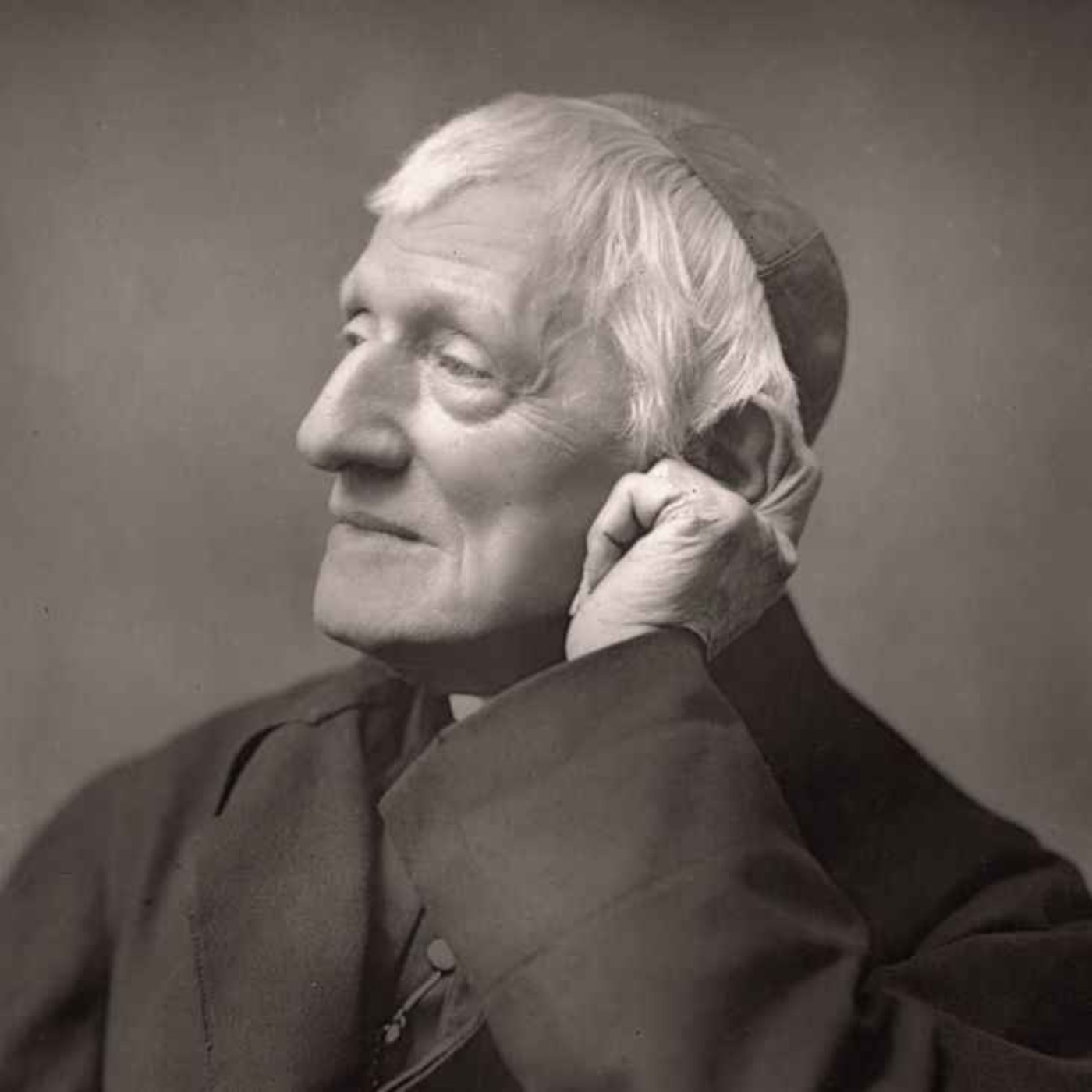
The transcription discusses the declaration of St. John Henry Newman as a doctor of the church by Pope Leo XIV. It explores Newman's legacy, emphasizing his views on dogma, development of doctrine, miracles, conscience, and church reform. The text delves into how Newman's ideas, such as the Hermann Nüncek of continuity, contrast with certain actions of Pope Francis regarding the Second Vatican Council, causing debates within the church. The dialogue reflects on how Newman's nuanced perspectives on conscience and tradition could offer insights and guidance in current church affairs.
Transcription
4423 Words, 24615 Characters
subscribe to the spectator and get 12 weeks of Britain's most incisive politics coverage, unrivaled books and arts reviews, and so much more all for just 12 pounds. Not only that, but we'll also send you a 20 pounds Amazon gift card absolutely free. As a subscriber, you'll also be able to listen to all our other podcasts, add free. Go to www.spectator.co.uk/voucher to claim this offer now, Terms Apply. Welcome to Holy Smoke, the spectator's religion podcast. I'm Damien Thompson. Last month in the first major decision of his reign, Pope Leo XIV declared that St. John Henry Newman would become a doctor of the church. He would be the 38th doctor of the church out of Bourbon, 10,000, recognised by the Catholic Church, and he'll join figures such as St. Augustine, John Chrysostom, Gregory the Great, Thomas Aquinas, Tree the Ravola, Theresa the Visier, Bill the Guard of Bingham, and, as I've written, article the other day, he'll be the first native Bourne English doctor of the church since Bede, who was born in Northumbria in 672. I am joined today by one of the world's leading authorities of St. John Henry Newman, Father Rod Strange, author of many books on the subject of many articles on the subject of John Henry Newman, who did his doctorate on the subject of Newman at Newman's Old College or Old College Oxford, whom I first encountered many, many, many years ago when he was assistant chapter number and chapter number box university, so it's a nice see again, Father, and I'm keen to ask you this question. Newman, it strikes me, is a divisive fit but not in the way that you might imagine. He's almost universally admired, actually by many anglicans, as well as the vast majority of Catholics, and Pope Leo's announcement was warmly welcomed from different quarters of the church. The reason I say he's a divisive figure is that Catholics don't seem to be able to agree on the nature of Newman's legacy, so that a conservative point out is unswerving orthodoxy on various topics and his furious denunciations of liberalism both in the Church of England that he left and in the Catholic Church. And liberals point out that we owe to him the notion of the development of doctrine, or at least his is the most famous exposition of that idea, and many Catholics believe that the Second Vatican Council wouldn't have happened at least in the way that it did without the influence of Saint John Henry Newman. So it's as if there's a battle for Newman's legacy, even though he's, as I say, almost universally might figure what do you think Father? I think it's very important to recognize the context in which Newman was speaking, and that of course varied at different times of his life. As an anglicer, he was fiercely opposed to what he saw as weakness in the teachings of the Church of England. That's what the Oxford moment was about to restore to the Church of England the Catholic tradition, which was often claimed to be a part of the broad legacy of Anglicanism, part of its comprehensiveness needed to include the Catholic tradition. But there were those who were within the Church of England who were much more interested in what touches the heart, and that became a kind of criterion of what you should believe. If it moved you, that was what you should do, but you needn't be worried about the technical details of doctrines. And in different ways, both liberals within the Church of England and evangelicals within the Church of England, put an emphasis upon what touches the heart as really what matters. Newman was really impressing, was emphasising the importance of dogma. So he says in the Apollo, from the age of 15, dogma has been the principle of my religion, but not dogmatism. And of course you might say, well, it's rather ironical that somebody whose cardinal's motto as heart speaks to heart should have been so critical of people who were placing emphasis on the heart in the Church of England. But in fact, Newman was doing this in a completely different way, whereas the liberals and the evangelicals in the Church of England were saying, it's what touches the heart that matters. And what does not touch the heart, say some of the the details of dogmas, then you didn't need to bother about that. You can be dismissive of that. Newman believed firmly and throughout his life, he'd be important to dogma, one of the great principles of his position. But when he, as a cardinal, chosen some other heart speak to heart, that was indicating the fact that the way in which dogma was being proposed, was should be in a way that touched the heart, so that you couldn't make the heart to sort of criterion of whether you liked it or not. And if you didn't like it, you could not bother about it. No, you needed to be convinced about the importance of what dogma was revealing, the importance of revelation, in other words, the full suite of revelation, but it needs to be presented in a way that touches the heart that people can engage with. And one of the things that, one of the ways in which the context, so to speak, changed for Newman when he became a Catholic, was that he found in Roman Catholicism a commitment to dogma, but in a rather narrow kind of way, and therefore a failure, as he saw it, to recognize the complexity of the theology that underpinned dogma. And one of the areas of dogma where he famously disagreed with, let's just say, the way dogma was expressed by the church, they're not with a dogma itself, I suppose, was papal and infallibility. Newman was dismayed by the idea that the First Vatican Council was going to set it in stone, dismayed by the tone of the pronouncement, and the accompanying and so to call just as he'd been dismayed by the syllabus of error. So he's sometimes claimed by Catholics as part of the sort of cis-alpine, it's sometimes called, those Catholics who resist too much centralisation of people authority. Is that fair? I feel, I think one of the things to recognize about papal infallibility, for us, we've grown up when it was being proposed, particularly as the First Vatican Council was approaching. Nobody knew that quite what would be the terms of this pronouncement if it came to be made. And I think that's something that we don't always rip, perhaps it understandably, imaginatively, hasn't occurred to us. What must it have been like? What is going to be imposed upon us? And there were some people who at that time spoke about papal infallibility. I had an extreme view that it could touch almost anything. The Pope said it, that was the end of the matter. Nothing more needed to be said. There were people, Newman heard, who were going to confession, and they were being asked by their priest, do you believe this or not? And what, being refused absolution, almost if they did not accept an extreme view of what was being proposed. What actually was prepared, just I think, and what was something about which Newman had no difficulty. And I think his understanding of papal infallibility is the understanding that we share today. But that only emerged after the council, because after any council where the statements are made, it takes time for the implications of what has been proposed to emerge. Perhaps you could unpack for us the notion of the development of doctrine, which is one of the concepts over which Catholics from different wings of the church. And I think, increasingly, there are different wings of the church, more perhaps than there were 15, 20 years ago. They tend to squabble over what Newman meant by the development of doctrine. Traditionalists see arch liberals advancing all sorts of theological notions that to them are abhorrent and invoking the name of Newman in doing so. But the rules would argue that the development of doctrine is, I suppose everybody would argue that the development of doctrine, like so many of Newman's ideas, is a very subtle one. You have to kind of concentrate to grasp it, and even then scholars can't agree precisely what it means. But what it means in the present day, you know, for us now, you can say that Newman was fairly clear about it in his own time. One way to begin to answer that is to remember that what Newman wrote is it was not a book called the development of Christian doctrine, that an essay on the development of Christian doctrine, another way it was he was exploring what development might mean. Remember that as an Anglican, he had held that view that Anglicanism, the Anglicanism that he cherished was an Anglicanism of the middle way between, as he saw it, Protestant era and Roman excess. That's to say, things which at that time, as an Anglican, he felt the Church of Rome had added to the deposit of faith. When he became disillusioned with the Church of England, because it seemed to him that his idea of the Church of England charting a golden mean, a via media, between era and excess, was when he saw that there was a precedent for that, for example, in semi-Arenism, Arenism, the heresy that denied that the sun was fully divine as the Father. But there was a sort of diluted version of that, semi-Arenism. But that also was inadequate. Well, if the golden mean of this via media, he had been following, couldn't be followed, and obviously, what was he to do? He couldn't become Protestant, he wouldn't have done that. He would never have done that. That was not an option for him. Well, he'd been through his Protestant phases. A young man had a very young man, haven't he? I mean, he was a very young man and very brief. I mean, one of the fascinating things about living in snow, when he was in his very early sort of earnest evangelical, wasn't classic evangelicalism, evangelical trade space. And part of that was thinking, you know, most people go to hell, and it's only a few who are saved and go to heaven. And that's the sort of thing that he believed, when he was ordained a deacon in 1824. By the time he became an Anglican priest in 1925, he had changed his view on that. Why? Because he'd asked him to a remarkable degree that was uncharacteristic in those times. He had been visiting his parishioners, and he found that while they got things wrong, these were not bad people, and he could no longer hold up most of them, were going to be damned rather than saved. So, I mean, that was very early stage of his life. And as I say, therefore, what it was he to do, if he couldn't become a Protestant, he wouldn't be a Protestant, but if the the idea of the Church of England as a middle path, where else could he go? And it was then particularly that he started to think, well, perhaps what I have seen as Roman excess, the things that Rome has added to the deposit of faith. Perhaps these things are not additions so much as evidence of these truths that we hold to being living truths. And as such, we come to understand them more deeply, and certain things develop from that. That was the sort of, that was his approach. That's the development of the dog. Yes. So, it's like a seed. Yes. The groves. But groovoo into what we would now consider to be some of the most traditional, and perhaps individual circles quite unfashionable doctrines, relating to the Blessed Virgin Mary, for example. But Neiman also had a great belief in miracle, didn't he? Yes. I mean, now perhaps, regarding him as rather credulous in his acceptance of the liquefocation of the blood of this or that saint, but he believed wholeheartedly in these things. Ohheartedly, in miracles such as the liquefocation of the blood of a saint, when he visited Italy, for example, this is not 20th or 21st century fashionable Catholicism. But do miracles occur? Can miracles happen? I mean, that's the essentially whether a specific incidence is miraculous or not. It is another matter. But the fact that there may be some miraculous intervention, some miraculous event, he was convinced of that. And I think we should be open to that and affirm it. I wanted to ask you about Neiman and the question of conscience. I would have thought that his thinking on the surface of conscience might well be one of the themes that inspired hopefully to declare him a doctor of the church. If you could sum up for us, well, the Neiman famously said, I'll drink to the Pope, but to conscience first, or what was, and that's quite easy to misinterpret, I think, as I was saying. But Neiman had a very subtle understanding of the relationship between conscience and moral duty, didn't he? But he had an understanding of we have a conscience that everyone has a conscience and that when we are attentive to conscience, then what we're listening to or listening out for is the voice of God speaking to us. That was his understanding of conscience. That was the heart of. So it's not just, oh, it's my bright idea, but that there is, that it does relate to our relationship with God and that it is the Lord's voice for which we are listening out. Well, Catholics today in listening out for the Lord's voice, I suppose they always have done, but particularly today, I think they hear different things, I mean, we look at, you know, for example, dramatic, quite heterodox developments in the pastoral guidance of the German bishops. We come across all sorts of ideas floating around, which are more or less irreconcilable with each other within the wider Catholic world. And I wonder John Henry Newman, if you were around today, would have drawn the boundaries of acceptable belief or acceptable pastoral practice. I mean, let's say belief, for example, with a relation to women's ordination, or which I assume I'm talking to be absolutely certain he would have rejected outright then or now, but you know, this tremendous controversy over blessings of same-sex couples or what sorts of blessings of same-sex couples are acceptable. This is the Catholic spell I am the German church of a moment. And I wonder where Newman would have stood in relation to various hot-button issues. Well, I think one can really really wonder on, David, as it were, because I think it's very difficult to, I mean, I don't think I want to be giving a decision on or expressing this too much of your, oh, Newman would have been supporting this line or that line today on some of these issues. I mean, Newman died in a very different world, 145 years ago. Now, what would he say about this or that today? I think, you know, when runs it being very specific about particular issues, I think it's very hard to give an answer to. And presumptuous. I do wonder, have wondered, an article I wrote recently, Newman would have made of the pontificate of Pope Francis, who it seems to many Catholics while talking about sonorality, centralised authority to a remarkable degree, issuing more motor-properies than any other pope in that period of time. And issuing many sort of contradictory and confusing and sometimes incoherent statements, sometimes in informal inflight interviews, and all of that strikes me as very much in contrast to the extreme meticulousness of Newman in expounding his ideas. Newman seems to me much more like Pope Benedict, at least into of course, the leading huge baron of Newman, who beatified him in terms of the precision of his thought. I would, I think that's a fair comment indeed, you know, that different popes have different styles. And in many ways, you might say that Newman's style was much more in tune with the ratzinger style than with the Belolio style. But Benedict also talked in that famous Christmas allocation to the, to the Curia in 2005, when he was talking about the fact that it was 40 years since the end of the Second Vatican Council, reflecting with them upon the difficulties that have been, the struggles that have been in implementing the teaching of the council. And he spoke about sort of the relationship between continuity and discontinuity. And it's getting that relationship right, he said, which is the essence of true reform. So he was in favor of what I'm talking about Benedict. He was in favor of reform, but it was fascinating that he should have described it in that way, because there were some people saying, I hope the council was about a break with the past to be everything now is such the spirit of the council is where there is newness, newness, newness, no, he said, no, it's not that. It's, it's, it's renewable. It's not rupture. But in the renewal, there is a need to see where continuity and change how, how they have to be related, continuity and discontinuity. Well, Benedict famously developed a Hermann Nutec of continuity, which is bound to be imperfect given the radicalism of the changes to liturgy that followed the Second Vatican Council. But he did develop a Hermann Nutec continuity and expressed it in his, in his, in his document, some more of them difficult. And this was then torn out by Pope Francis while Benedict was still alive. And my own view is that this is an act that would have absolutely horrified John Henry Newman. Not least because of the, you know, the cool disrespect that showed to Pope Benedict, who we now know was profoundly distracted. Well, I don't know quite what we know about what Benedict was thinking. I think we do know, I think we do know. Well, we certainly have people expressing views about what he was thinking, but what is it actually? So we have, we do have people you know, reporting Benedict's, on what hardly expect him to think anything else, given the care with which he constructed this Hermann Nutec continuity under the suddenness of its dismantling. Yes. Right, me very new men ask. I think, but I don't think Newman would have been happy with the notion, which that was what prompted Pope Francis to act as he did, with the way in which some people were using that decision of Benedict's as a way, gradually, of dismissing the work of the second Vatican Council. That's true. That's absolutely true. And so he would have been on a couple without a devil. I mean, it's not as though nothing has exacerbated the reaction against the council more than traditionally in his custodies. I mean, I've watched it closely and hostility towards the council has been hugely increased by not just ridiculous custodies, but the very clumsy and arbitrary way it was implemented by not the rich and other people. You know, it's a terrific problem. I suggested in this article that, hopefully, it's awful. It's a terrible fate to wait anybody in the Catholic Church, or the Indian Church who tries to construct a via media and Newman to discover this in the Church of England, when he was trying to find a middle way between the reforms of the reformation and the Catholicism of the Holy Church, and then he basically decided to wait for time when there was a Rome. And then he tried to find a via media between the ultra-montonists, being the sort of colorful mannings of this world, who wanted people authority to be maximized as much as possible on those Catholics, particularly the old English family, to reject it. And in a way, I think that the channel facing Pope Leo, who clearly is looking for a via media between the liberals and the traditionalists, is to, well, it probably won't make him popular with anyone, but they do think he will have to move away from the sort of arbitrary cruelty of which, you know, traditionalists have been treated in the darses of Charlotte, for example, or in their archdiocese of Detroit at the moment. It's just, and Cardinal After Cardinal had gone on to see Pope Leo. I mean, you have the ridiculous situation where the Archbishop of San Francisco is celebrating a right, which is restricted, virtually forbidden, in the archdiocese of Detroit. So Pope Leo has quite a mess to sort out. I think, probably wouldn't be, I think it's a mess, or, you know, largely created by Pope Francis, but I wonder how, hopefully, it might be inspired by Saint John Henry Newman in his stewardship of the church, which we all, you know, have great, nearly all of us, I think, have great expectations, because he's, you know, the new Pope has created such a favorable impression. I wonder how he might be. He's a deep thinker. I wonder how he might specifically be inspired by Newman. Well, I, I would hope that, I mean, as you say, though he's, though, they were always struttled. So the via media that Newman follows an Anglican, he no longer followed in that way, as once he'd become a Catholic, but he did continue to seek a middle way between what he thought was era and what he saw as excess in the controversies with Pusy and with Gladstone in different ways. That was the line that he took, yes, correcting them where he thought they had gone wrong, but in a way that was also, as you just mentioned, sort of restraining some of the more extreme views that he found within Catholics. And I would hope that, that Leo will, will follow that same path, might not find encouragement. I agree. Yeah. It's never going to be easy. It's never going to be easy, and you're never going to please everybody. No, but, uh, but I would hope that he will follow or seek to follow that path in a way that is between era and excess, which shows a real care for people, that's sort of a pastoral care, I mean, he's not going to please everybody, but, but, but, but might, in fact, help people to, to explore, you know, what the council was truly saying, truly saying. Well, I hear Catholics, often traditions, Catholics, is pressing their impatience with Pope Leo for, you know, not, not making this all that change, but my feeling is that just in his personal witnesses and appearances, and in his, and in his, um, then I asked him that you know, we made a doctor to the church, the sort of pacification of the church by Pope Leo has actually, I hope, already begun. Yes, I think so. I do, I do, you know, I see that certainly very clearly, and I, and applaud it. I mean, small gestures, even, that, that just makes such a difference. He is an extraordinary man, I think. He, I, I can't think of any Pope, certainly of the ones that I know more about, I wouldn't pretend, I'm having read the histories of the Pope's nor rest of it, but the Pope, as I suppose I know, most of the, uh, the Pope's of the last 150, 60, 70 years, from past the night onwards, and there's nobody who has had, who has become Pope, who has had the range of varied experience, that Pope Leo has, has had so far. You have to be an American, but also to be Peruvian, to have been a pastor, to be an academic, to have been elected, whatever the phrase is within the Augustinians, that's superior, let's say a superior general of, of the, of the, of the order, and re-elected, so that he's been around all those Augustinian communities in the world, being around them twice, come back, gone to Peru, found myself made, uh, the Bishop of the Diasis, run that Diasis for what in a while, six or seven years, then brought Peruvian to have a senior place in the, in the, in the Curia. I mean, that's an extraordinary range of experience. Can you think of any Pope who's had anything comparable to that? Well, he's unique in, in, in so many ways. Yeah. Each Pope in living memory has been remarkable in one way or another, but it may be that the range of gifts that Pope Leo has are exactly what the church needs at the moment. That's my feeling, I suspect it's yours as well. It is. Yes, it is. I think the speed with which, I mean, I think, also, I think that in paper elections, it's, there's eight, nine days of plenary discussions before, when I'm told that it's not names that are mentioned, but more it just has what is it for the church needs, that that many were aces were, um, where the, a lot of the serious work takes place. And then when they go into the conclave itself, the electives, that first vote on the, the evening when they have gone into the conclave is when they realize who has been, who, what are the names? And then, of course, the following morning is also fascinating. It must be fascinating. I'm not speaking from any inside knowledge. This is just another, but I think it's, this is what makes best sense. The, the, the next morning, you see, which names have, have gained further traction, which names have lost support. And then the speed with which Leo was actually elected, indicates that, that, that, that the, the support for him must have been rapid and vast. So please God, we're both right, Nathan, and that he is the bound that the church needs for this time. I couldn't agree more. But Father Rodstrange, great pleasure speaking to you. Thank you so much for joining Holy Span. Damien, thank you for the invitation. God bless. [Music]
Podcast Summary
Key Points:
Pope Leo XIV declared St. John Henry Newman as the 38th doctor of the church.
Newman is admired by both Anglicans and Catholics, but his legacy is debated within the Catholic Church.
Newman emphasized the importance of dogma and the development of doctrine.
Newman believed in miracles, had a subtle understanding of conscience, and focused on the relationship between continuity and change in church reform.
Pope Francis' actions regarding the Second Vatican Council have raised debates and concerns within the Catholic Church.
Summary:
The transcription discusses the declaration of St. John Henry Newman as a doctor of the church by Pope Leo XIV. It explores Newman's legacy, emphasizing his views on dogma, development of doctrine, miracles, conscience, and church reform.
The text delves into how Newman's ideas, such as the Hermann Nüncek of continuity, contrast with certain actions of Pope Francis regarding the Second Vatican Council, causing debates within the church. The dialogue reflects on how Newman's nuanced perspectives on conscience and tradition could offer insights and guidance in current church affairs.
FAQs
Subscribing to The Spectator provides access to incisive politics coverage, books and arts reviews, and more for just 12 pounds, along with a free 20 pounds Amazon gift card.
Pope Leo XIV declared St. John Henry Newman as the 38th doctor of the church.
Catholics debated Newman's legacy, with conservatives focusing on his orthodoxy and denunciations of liberalism, while liberals highlighted his notion of the development of doctrine.
Newman believed that doctrine should be presented in a way that engages the heart while emphasizing the importance of dogma.
Newman believed that conscience is the voice of God speaking to individuals, emphasizing the importance of listening to one's conscience.
Newman wholeheartedly believed in miracles, such as the liquefaction of saints' blood, emphasizing the possibility of miraculous events.
Chat with AI
Loading...
Pro features
Go deeper with this episode
Unlock creator-grade tools that turn any transcript into show notes and subtitle files.
 PodcastTranscript AI