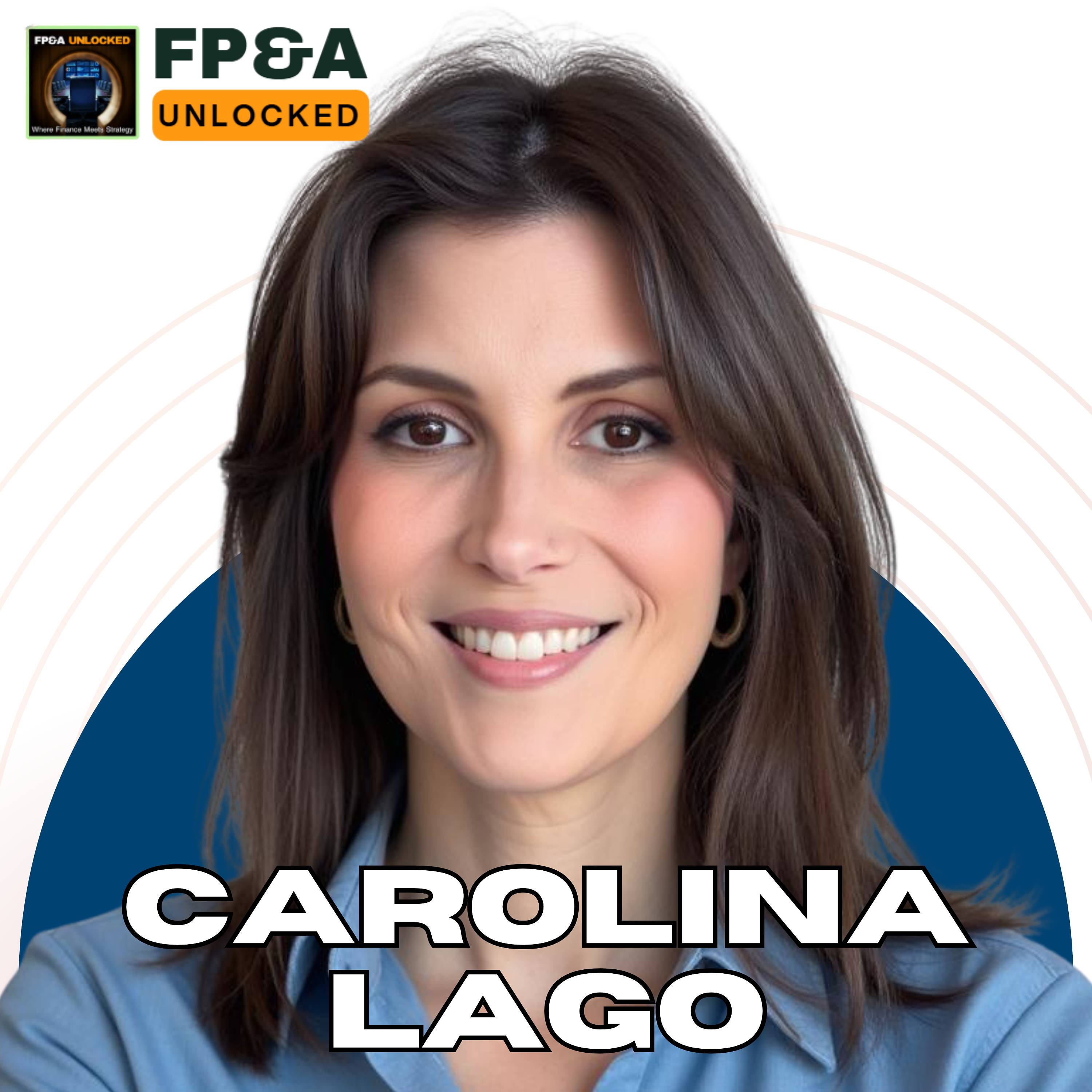
How FP&A Professionals Use AI to Move from Reporting to Strategy with Carolina Lago
from FP&A Unlocked
58m 44s
In this podcast episode, the host and guest Carolina Lago discuss the transformative role of AI in FP&A, emphasizing that the key to success lies not in the AI model itself—which is becoming a commodity—but in how humans interact with it. Carolina shares her experience building a personalized AI agent that serves as a thinking partner, managing her schedule and notes while prompting her to reflect and improve her strategic thinking. She contrasts two approaches: one where AI executes instructions autonomously, and another where it pauses for human judgment mid-task. The latter yields far superior outcomes by forcing deeper analysis. She also describes a recent project where she automated the creation of an interactive HTML presentation from a financial report, discovering new possibilities through AI collaboration. Carolina argues that AI will not replace humans but will elevate their roles if used correctly. However, she acknowledges a risk: many people delegate tasks to AI without engaging critically, which could dull cognitive abilities over time. She advocates for workflows that continuously challenge both the human and the AI, ensuring mutual growth. The conversation underscores that competitive advantage in the future will come from the human factor—how we embed our judgment and creativity into AI systems, rather than simply relying on automation.
I've been doing some tests and doing different skills on a way that is just technical and I'm just telling AI what to do and AI will do it, okay? And then I have the same skill, doing the same task, but on the middle of the way I'm asking for human judgment. So it's stopping on the middle of the way and it's pushing me to think more about certain topic, for example. And that changes the way he's going to respond after. The results from the second one is incredibly higher, incredibly better. Then the first one that is just, okay, here's the instructions, do it. And it's the same, the technical part is exactly the same. - Are you tired of being seen as just a spreadsheet person while others get a seat at the table? Well then welcome to FPNA Unlocked, where Finance meets strategy. I'm your host, Paul Barnhurst, aka the bearded wonder. I mean, the FPNA guy. Each week we bring you conversations and practical advice from thought leaders, industry experts, and practitioners who are helping shape the role of FPNA in today's business world. Together we'll uncover the strategies and experiences that separate good FPNA professionals from great ones, helping you elevate your career and drive strategic impact. Today's guest is someone who's been on the show several times Carolina, Lago, Carolina. Welcome to the show. - Thank you for having me. - And everybody will laugh. I've had her on the show and how many times have we shouted now? Probably 10. - Maybe, maybe a little more. - And on the first of the week, probably-- - And had you meet her for two years and you didn't correct me. How did this happen? - I never noticed. But I have to say that to Lord also gets wrong. So I try to correct, because whenever he says my name, he says Carolina. And they try to correct. And then he started writing Carolina with double ease. So I gave up. I gave up. It's over long. There's a lot of people that get it wrong. So, but it's Carolina actually. - Well, there you go. Secrets out of the bag got it wrong for two years. What I really took away from that is she said, Claude made a mistake and she made sure to mention that Claude was a man. It's a he. Did anyone notice that? I did. - He has a main over man. But I have to say, when I'm talking, I have one agent. Let me say that. I have one agent that is my thinking partner. This is the one that I talk about strategy and I put up strategy together. And that's access to my calendar, which my Gmail, to my tasks, my notes, on my second brain, which for me, it's very important. I am a second brain adopter from Thiago Forte, if you'd ever heard about, it's the second brain methodology. And I docked it like seven years ago. And so I have a whole second brain on the ocean. So I gave access to this Claude agent. That one is a woman. I call her she, whenever I talk about her, I say, I'm going to give, I'm going to ask her, I'm going to ask my Claude, I'm going to ask her, if I can do this today, maybe it's better next week or she manages my schedule. All of that, that one, that specific one is a woman. I don't know why, don't ask me why. Maybe because of the an extension from my brain, I don't know. So there you have it. We'd love to hear from you, Claude, man, woman, it, pet, what are you treated as? I try to do it sometimes it comes he, but this one, this is a specific agent is a one, for sure. This one that is my extension of my brain, my thinking partner, which I highly recommend. Speaking of partner and man. So we interviewed somebody the other day for future finance, one of my other shows, I'm going to cross promote for a minute. You'll want to listen to this episode. The guest, his hot take was one day in the future, agents will have the right to vote. Wow, never thought of this. Yeah, I hadn't thought about it either. I'm like, I don't see that, but it was very interesting. And he had his reasoning and logic behind it. So there you go. I've never thought about this. I've seen people vote as a man or a woman if they can vote. True. All right, probably not what people came to the show for, but hopefully they got a little enjoyment of our fun little conversation there. So Carolina, getting a little bit of background and we'll jump into some questions here. And she's the founder of Tactic Financial, where she helps FPNA professionals integrate AI into their workflows through hands-on training and practical tools. She has over 20 years experience in FPNA and modeling across multiple industries and continents. Well, yeah, South American, North America, and Europe. Do we have Asian there yet? No, you haven't done Antarctica, but it's on her list. She brings a unique perspective on how technology can amplify, not replace the work of finance teams. She partners with organizations like the Financial Modeling Institute, FMI, highly recommend them, and speaks regularly at global events, including the FPNA guys podcasts. She talks on AI agents, financial modeling, and the future of FPNA. She also runs the Tactical Room, a newsletter and community for finance professionals navigating the intersection of AI and finance. And her brain, her AI brain is a woman. Did I cover it? Yeah, you did. Exactly. Alrighty. So first question I ask every guest, before we jump into AI. And I know we're going to go deep there and try to get really some give some hands-on practical advice today. What does great FPNA look like? When you think of what great FPNA is, how would you define it? What comes to mind? I think FPNA is the through line from strategy to operations. It's the one thing that connects this strategy and operations, and that's financial planning and analysis. That didn't change. It's going to continue to be like this, and it's just going to get stronger now, because now we have more tools to make that happen. Doesn't make sense that probably before we are already entitled to have that to be that through line, to be that connection between strategy and operations. But to be honest, we were overloaded. It's so much analysis that we had to do that it was almost impossible to cover everything. What AI brings to the story now is that now it's possible. Now we can amplify what we can do. And I'll get you that later, but it's actually the essence of what AI is bringing to the table right now. Yeah, so the big thing is you talk about as FPNA really should be that strategic connector from a financial perspective between operations and finance for the broader business. But historically, we've struggled because there's so many tasks that have taken up our time. Too many analysis, too many possibilities, too many decision taking on the bit of the way. And most of the time, more FPNA was doing is reporting. Because once we finish reporting, it's already time for another cycle. So I think I spent most of my career cleaning data, but probably just from one day. Running data, yeah, running data and then reporting and then explaining. And when you see it, there is another cycle coming up. And you had no time to influence. You had no time to decision making. So having a seat on the table, having your voice heard. Most of the time, finance professionals, FPNA teams are small. And we just don't have time to cover everything that we should be covering. And that's where AI gets so interesting. - You've leaned very heavily into AI in a particular cloud. What's motivated that? What's forced you to spend so much time learning it? Because I know you've spent hundreds of hours there. - I have a heavy user of AI, CISECAIMA. The thing is between what AI could do back then and between what AI can do right now, there was a huge difference, a huge gap. So now I see more possibility. Ever since, Cloud became the system, Cloud code, Cloud code work, ever since they started to lean heavily on finance as well. I've seen a lot more possibilities of using AI in real work. So it's not only a chat box that you're just talking to and getting instructions on how to do things. It's actually doing things for you the way you could do. You would instruct AI and using intelligence of AI to do things for you. So now there is actually a good use for it. So I see many possibilities. - When do you think that kind of changes? Is it really with the latest release of Cloud that you feel like there is that big leap forward? - I don't think it's about the motto itself because if you notice, I'm traffic will launch on motto and then Open AI will launch a stronger one and then the other one will launch, Gemini will launch a very good one and everybody's talking about, it's not about the motto, but the way the topic is setting up as a system on the way that you can actually implement this in the real life and it's not just talking to a motto. It becomes much possible to do that on workflows. When you set up AI on, I was working.
working before with NAN, which was basically a workflow and I was using many types of models. Sometimes different models in the same workflow, I had a tool I think it was OpenRouter, the name of the tool that would choose, I could choose the model that I wanted. So I would pay openRouter and then I would choose the model that I wanted to use. So it was good, Gemini was good for images, for black city is good for reasoning or for research. And then Cloder would be better for financing things like calculations and whatever. So I would choose the model, that would be something, but the workflow was there on NAN, on topic with Cloder was the first one to bring that, bring the possibility of having the workflow of using that as a workflow as a system. So I think that was a big, the big change in, it was not about the model itself, the model, for me it's the best one, it's the one day hallucinations less and it does a better job, you can tell that it does a better job, but it's not only about that because the model, it's a race, so now it's opposites, the best one, tomorrow it might be one from OpenAI, the day after Gemini or perplexery or whatever, it's not about the LMO in the model, it's about the system, they're on topic created. And you can see that by the MCPs, there was the first thing that they did, they created the MCPs, now all of them is adopting the MCPs. So, they've done a good job with their ecosystem and I agree with you, the models are gonna be a commodity. Everybody's gonna take different approaches of how they implement them, Google it's really right now about the consumer and their existing products, similar to Microsoft, a lot of what they're doing, but they're letting others build the hard part of the models and putting their own layer on top of it. Right, you know, Cloud is very much enterprise. I think ChatGPT has leaned harder in the consumer side, even though they want the enterprise as well. And so there's just different ways you build and you put those tools around it. But the models themselves, yes, there are certain things all models are better at, but to a certain extent, the models are gonna become a commodity, right? How they're all trained on a ton of data, they're all using very similar probabilistic things on the backend, you know, they'll be breakthroughs from time to time where one will be a lot better, but I don't see, I don't think that seeing the differentiator in this AI race, which obviously isn't the goal of the podcast, but I don't see that as the differentiator. - So, what is the differentiator when you look at the whole thing? Is the human factor? The differentiator for the companies, and that's, it's already happening. All companies will have access to some type of LOM. That's, and it becomes a commodity. The differentiator is how humans are inserted in the workflows on a way that they can improve the model, the model inside, not the, not the LOM model, but the model that is being implemented in the company. And the model can improve the human factor as well. So, with that exchange, with that interaction of the human and model, that becomes a better workflow. So, that's going to be the differentiator. I think in the future, competitiveness is going to come all from the human factor. - Interesting, it'll be interesting to watch. I get what you're saying, and I think there's some technical as well, but yes, the human factor is huge, no question. So, what's been the most surprising part of your learning journey? As you've leaned into AI over these last few years. - Most surprises that exactly what I just said, if you think that AI is not going to replace humans, and just think that if AI replaces all humans, everybody's going to have the same system, the same look and the same opinion and the same model to take from. It's just like as you have the same employee working in all companies. If you don't have a human guiding AI, if you don't have a human interaction with AI, you're just going to have the same model, the same responses that everybody, all your competitors are having. So, that was my biggest surprise. There's a lot of people thinking, I don't want to rely so much on AI because if I teach it how to do my job, it's going to replace me, and then I'm going to be dispensable. I think this is the biggest mistake. This is the biggest mistake that people are making is thinking that you cannot imprint your knowledge in your thought into the AI, and you cannot take more from that by imprinting their knowledge. Yeah, there are a lot of people scared of it and worried about the job. I also saw something today. There's a study they recently did whether showing people who rely too much on AI, they're actually seeing impacts to their brain. There's a way to interact. So, that's the thing. 100% agreed. And they were specifically talking. Yeah, I have been doing some tests. I have been doing some tests and doing different skills on a way that is just technical and I'm just telling AI what to do and AI will do it. Okay. And then I have the same skill doing the same task, but on the middle of the way, I'm asking for human judgment. So, it's stopping on the middle of the way and it's pushing me to think more about certain topic, for example. The results from the second one is incredibly higher, incredibly better than the first one that is just, okay, here's instructions, do it. It's just the interaction in the middle of the process in the middle of the workflow. That's a change. That's the, that's what changes from wanted to the other. So, I have been developing this, how to create skills that will improve the employee as the employee improves the skill because this is also something that I'm implementing on every skill that I'm creating and every workflow especially is on every mistake, I will have like a session of rewriting this skill, like not on every mistake, but every now and then. rewriting this skill and improving the skills so it doesn't get over, you know, like not updated. So you have to keep it up to date all the time. So that's the best way as you are interacting with this skill it gets better and you get better as well because it's pushing you to think a little bit more about everything. - Sure, the more you use it as a thought partner and the more it challenges you to think, a better, but that's not how a lot of people are using it. And so that's, it's interesting to watch. What's the coolest thing you've automated so far? The coolest thing I've automated so far, why I just did this week, I thought it was really cool, really cool experiment. I just did this week, this, I'm very bad in visuals. I am not good at all. I am good with numbers, I can analyze the numbers, I can extract what is the message that I need to bring here, but then when it comes to the storytelling, it's not even the visuals, it's a storytelling and translating that from the report to the board deck, that's where I get stuck. And what I don't get stuck, but it takes so much of my time because I keep thinking about what is the story that I want to tell and what is the what, so what, now what, and all of that, all of those frameworks. So I create a full workflow that goes from the report all the way to the deck, but then I was struggling with the visuals and then I tried something different, instead of just doing a PowerPoint, I did HTML. So at the end, it comes presentation in HTML and some people were already suggesting instead of a presentation, it will be clickable and so you can deliver the results on an interactive way. And I just discover the whole word of HTML. And then I have to challenge what you just said, that people get number the more they use AI. I don't think so, because this is something that I didn't know was possible and you start to find out if you have an AI, that you interact the right way, you start to find possibilities. And once you know the possibilities, you don't have to know everything, coding, for example, you don't have to know how to code, but you have to know what is possible with coding. Once you know what's possible, then you know how to get that from AI. So that's a big secret. So you always learning something if you are interacting the right way. - I mean, who's to define right way? What I will say is I agree you can use AI to improve learning and you can learn with it, 100% agree. All I'm saying is the studies are showing and these are scientific study that the way many people are using AI is changing their brain. That's a scientific. I'm not saying that's how people should use AI. There's a difference and I get that that hey, depending on how you're using it, it can help you learn just like how you use the internet, how you use a computer. There's obviously different ways, but there is a role-concerned and I think it will, I personally believe the average person will be dumber because of AI, 20 years from now. Not saying that people can't be smarter, but I think the average of
out the people will delegate AI will make us dumber as a society in the long run. There's a huge difference between working with AI and delegating to AI. 100% agree. I'm not disagreeing at all. I'm just saying what I think will happen because I know how most people, the average person works in my opinion. We shall see. So I get what you're saying. Yeah, but that's what I'm developing this method of workflow because it keeps pushing people up. So people keep saying, oh, it's going to replace jobs. It's not going to replace jobs. Maybe it's going to push employees or professionals to go to a higher level. It will be a mix. It will replace new jobs, the internet replace jobs, the typewriter replace jobs. Every technology changes and shape jobs. Do I think we'll get rid of most jobs? No, if we go to AGI, all bets are off when we hit that. But then I will worry about that when it happens. So I agree with you for the most part, it will change jobs, but it will definitely displace a lot of people. We've already started to see it. There's no question that people will lose their job because of AI, but that shouldn't change the fear because on the whole, the economy will adjust. It's not like everybody's going to be out of work. Yeah, exactly. Yeah, I don't believe that either. So I think people should take as a vantage of it instead of just waiting because they're scared. 100% agree. People have to lean in. What I say is, let's assume it could even do 50% of people's jobs. Let's just say it can and they displace 50% of people who's going to buy the AI tools. Nobody has money if everybody has a job. The money all goes to a few wealthy and you're much broader discussion than for FPNA, but you're going to have some huge problems throughout civilization if that happens to deal with. We shall see. I mean, right, we're all guessing to a certain extent. Nobody knows how this all ends. And if you do, let's go to Vegas. So what would you say are the top FPNA use cases? Everywhere. I see it now, every on every position, on everywhere I see it's advantages. So it's really hard to say, I think it would be easier to say what it's not, maybe not even that. I see it. I see some use case, a good use case on everything, everything from FPNA to all of because the way I'm seeing AI, it's not replacing. It's not just doing manual tests. It's doing as it's doing the manual tests, but it's also working as a thinking partner. And when you do that, when you put intelligence, it's like you have the workflow that does a right at the job and you're already have the people doing that. And then you put intelligence, X-ray intelligence on top of that. So a lot of people thinking of, let's give that way, I so we don't need one person there, but maybe they want person, they're going to do something that they didn't have time to do before. So it's going to be another level of thinking enough processing the information. Okay, so where do you think AI is not good? Let's start there. Probably in different levels, I would say on medicine probably does help, but used to need a lot of human judgment, more human judgment than artificial intelligence. I would say that probably. So there any FPNA task you think it shouldn't be used for or that it would struggle with? In FPNA. I'm yet to see something that AI cannot be used at. Let's go back to this. I am not saying replacing. I'm saying using. So I have seen for now up to now, I have seen a good use for AI in almost everything we do in FPNA. And I have to remind you that I'm yet to see, I don't know if you know any, and you tell me if you know any, any FPNA team that is capable of doing everything they should do. I haven't seen it. I haven't worked in a company that would say, okay, we are done. We can go home. All our tasks are done. I haven't seen that. I worked for a year where I had a company where I did 40 hours a week, but that's different than saying everything done. But I mean, you could say that of any role. There's always more to be done. That's life. There's more to be done in your personal life. I mean, there's always more you can do. And AI doesn't change that. No matter how much you're using AI, you know, you can always find more opportunity. It's going to bring you up. It's going to bring everything up. You can do more with less time. So once you can do more and better quality with less time, you can, when I say more, it's not more just in quantity, but understanding more of the business. Being able to analyze more of the business, being able to take action on more things of the business. Once you have that possibility, you just go higher, you just go up and the companies are going to be more and more efficient with the user AI. And it's not like at Rainbow, everything is weather-focused. It's not like that. It's not paradise. Of course, there are problems and it's to be solved and they're going to be issues anyway. But the way it's going to work, it's just going to take people to another level. And it doesn't matter what level of the company they are. Let's say during your analyst, they used to be only filling up like cleaning data, let's say. Now he doesn't need to clean data anymore. He's going to get the data cleaned in like 50 minutes, 30 minutes so. And then now he's going to be able to put together reports. But then with AI, maybe he's going to have an agent that does the report for them. Now he's going to look up and he's going to start analyzing the report. So he's going to work with AI to the first draft of the analysis. Then that analysis will go to a senior analyst. And then it's already taking care a little bit of. It's not like before he was doing the cleaning and then I don't know what medium analyst would do. The reporting and in a senior analyst would do the analysis. It's not like that. It's going to be requested early on that they come in and they understand the business and the analyze as well. And that's what the use of AI. That comes with the interaction of AI. He's going to be supervising AI more than just doing the manual things. FPNA guy here, Agentic AI is one of the biggest shifts in finance ever. And most FPNA leaders are still struggling to figure it out. On May 21st, I'm hosting the FPNA and AI software showcase with two of the leading AI agents in the marketplace, Concourse and Sapien, plus leading planning tools, drivetrain and Una AI. One sitting real demos. Register at the FPNA guy dot com backslash FPA dash software dash showcase. That's FPNA guy dot com backslash FPA dash software dash showcase. See you on the 21st. I think it's going to be much slower adoption than most people think. I think there's a lot of issues that still need to be resolved. I'm not going to disagree that it can be used in a lot of different places. I think the data cleaning on an individual level on a foundational level AI is not there to clean your data, which is going to impact results. If you're dealing with large multi-dimensional data, AI breaks apart context windows, bunch of other things, there's still a lot of challenges. Doesn't mean you can't use it throughout. There's energy challenges. There's a lot of things that have to be resolved before we see this idea mass adoption at the level. A lot of people think that doesn't mean you can't use it. Everybody should benefit with it. I'm with you, but I think it's going to be much slower adoption than most people think. Yeah, but like I say, for clean data, the context and everything, that's the way you stroke for everything. If you know how to store them that. I was talking to a guy who's an engineer who's a ran multiple cart one of the smartest people in the world dealing with very large data sets. AI is bad for very large data sets. It's not just structure. You're dealing with tens of billions and hundreds of billions of calculations. You should not be using Gen AI. It does not work well, but his customers all want it, but he has to tell them every single one asked for it. He's like, it's not good. There's other things I should be doing. So what I'm saying is there are limitations that are beyond how you think there are exactly, exactly, but AI will help you create the tools to do that. So it's I turn, well, what's going to help you that I'm not going to disagree there? I agree. There are things you can have you use it to do. Yeah, I'm not talking about large data. A junior analyst, he's going to clean data for his report. He's not going to clean a large set of data. I'm not going to agree for junior analysts. I'm not going to disagree at all. What I'm saying is now he can use tools with the help of AI like Python, SQL, and all of that to just bring the data that he needs without having that need to call IT and ask for a new project and wait for I don't know. We're not speaking from experience there. You have never had to do that, right? No. Until I become the FPNA of IT and then it was much easier because now they needed me. See, I worked in a business analyst role where I wrote IT. I was technically called a finance analyst and I switched into FPNA.
and they never took away my access. So my boss loved it 'cause I could pull all the reports from the database for it and put it together. So it was very valuable in my career. So here's the question. I was a thought tool and I'm curious to get your take 'cause I think this is a fascinating discussion. I love the, you know, differing opinions in the back and forth. And then we'll get into some use cases 'cause people are like, "All right, stop talking about all this theoretical stuff." What is gonna say? What's your take on how well people need to learn the technical skills with AI? My view is AI is a magnifier. If you don't know them well, it's just a matter of time to magnify that. If you know them well, it will magnify that. Your thoughts. - Yeah, I totally agree with you, but I have a take on this. The same way I'm doing HTML now. And of course, I'm very basic on this, but I learned something. So what I'm saying is, if you do a proper use of AI, you can magnify your errors if you don't know it. You can get a very good process if you know that field already because you can amplify that, but you can also learn. So-- - How do you percent? - My take is you start, understand that you don't know, understand like I'm doing HTML presentations now, websites and whatever. I am not a web designer, I'm not a coder, but I am using AI to help me with that. But the way I am approaching this, I am getting it step by step and piece by piece. AI is doing for me, but I'm understanding where it's changing, what it's doing, what it's capable of doing. And that is the first step of learning something. When you know what is the capabilities of that tool for you. So once you learn that, then you start exploring those capabilities. And that's the basics of learning. That's how we learned Excel, that's how we learned everything. So I am not an expert in web designing, no I'm not of course, but I have an expert by my side. And if I'm curious enough, I can just watch what he's doing. And then when I ask for changes, I can see where they change, what he changed and how. It's going to be much faster for me to ask to get what I wanted to do. The next time, if I know where he's going to change in what he did wrong. 100% the more you can use the tool to help you learn, asking a question following along versus using it to just augment a task, the more you're going to learn it. Could I ask, could I have Claude teach me Excel, teach me Power Query, 100% HTML, Python, whatever. Or any of the LLMs, right? They're all capable of putting together a plan. I've had it put together a running plan for me. Now, I'm a, you know, I'm a writer so I could review it and I may change it. But even if you don't know what topic well, it can get you started. And it's all about how you learn just like you can learn from a ball. You can learn from a video, but you have an expert that can go much deeper. Now you have to know when, because they are going to hallucinate, they're going to make mistakes. You have to, that's where the human judgment. And a lot of judgment comes in. And that's where you have to have the judgment to know whatever you're doing. Let's talk FPNA. You have to have the judgment to know when it makes sense to use the LLM to return the answer versus using it to code something that returns the answer. I think that's an area enough people don't realize like, well, it's no good. Well, yes, but this should be done deterministic. AI can help code the deterministic piece. And it's good on everything that is deterministic. Everything that you need to get a code or to get formulas or to get all of that. And that's when Python's and data structures like JSON comes in place, because that's why AI understands better, then just asking them to calculate something, to give me, give me the chart. Probably give me the formula, like we're talking before, give me the formula, put it there, what is the chart that you're going to use, what formula, where it's going to get that information. Then it becomes the deterministic, then just having it create something. 100%. And so let's step back. We've had a great discussion here, but I want to leave people with some very practical advice. So first one, I think many people are still struggling where to start. You know, we see on LinkedIn is a whole different world, but the reality is, numbers show less than 10% of companies in finance have really productionized what they're doing with that DNA. Most are testing. So what's your advice there? Where should people, what should people be doing right now to get better at AI? Give me two or three practical steps of what you'd recommend they do. I would say diving, that would be my first thing to say, but it takes time. What does that look like when you say dive in? Elaborate, give me an example. Install, install, and start testing, but it takes time. So that's what my second recommendation would be. Find somebody that already got the way, already found the way and the knows what they're doing, especially on your feet, on your niche. And I have to say I'm about to put a program that is very complete. It's coming up end of May, but I won't say just wait for this. It's coming up in the month and a month or so, but I won't say just wait for this. Just get the first steps, get the subscription. I think everybody, and that's the first resistance. A lot of people get is I don't want to pay for it. My company doesn't pay for it. My company has to go pilot. Oh my god, I'm so sorry for the people that have to go pilot. Because if you stuck, they cannot experiment without the things. It's getting a lot better, but it's way behind in race. So for those people, especially I'd recommend try on your own. Don't wait for your company. Because when your company gets everything figured out in terms of security, in terms of governance, policies, all of that backend that the companies have to figure out. And that's why they stuck on copilot because it's safer, because it's Microsoft. But when they get a figure out, when on topic, coworker gets to copilot finally, and it's for everybody, it's going to be the professionals that are waiting, got this, are going to be more valuable. I often hear finance leaders say, I know I need FPNA software, but I don't even know where to start. That's why I created the FPNA software suitcase. So you could see top tools in action. This year, we're featuring DriveTrain and Una AI on the planning side. And for the first time ever, we're adding two leading AI analyst agents on the market, Concourse and Sapien. These tools are already being deployed at public companies. You will get to see actual demos without the pressure of a formal sales pitch. Ask your questions and compare tools all from the comfort of your chair. Join me on May 21st for the showcase. Register for free at the fpnaguy.com/fpa-software-showcase. That's the fpnaguy.com/fpa-software-showcase. See you there. I want to follow up on this, because I think it's important. Let's just say my company uses copilot. Are you recommending they go out and get a different tool and learn that tool instead of trying to learn copilot deep? Is that the recommendation here? I would recommend that you go out and learn on yourself by yourself. Don't worry about the company, if your company is not waiting to do that yet. Because at some point, I think all of the tools are going to be following the same structure that Claude is doing now. So you think everybody should learn Claude right now? That's my opinion. Okay, I would disagree, but I can understand the logic. And that's why I wanted to ask, because I think it's fun to see. It's just like everything, right? Modeling. When I ask people, should you do circular references? Shouldn't you? What I want to draw out of this for people, and then we'll keep going, 'cause I love the perspective is, look, there's going to be a lot of different opinions here. You all have to jump in and decide what makes sense for you. I think we can both agree, number one is learning. So thank you. I just wanted to make sure that was your position, 'cause that's what it sounded like. When you think Claude makes it easier for you to actually have a workflow that you can see from beginning to end, it just makes it makes it much easier. So when you learn Claude, you can apply that to other tools, because you can get a skill and put on a project in chat-ypeet. It's not going to work so fine, but you can do that. But when you learn your own chat-ypeet, you cannot transfer that. It's just limited for now. And I think it's going to get there. All of them. I think all of them are going to get there. Just like the MCPs, the MCPs started with them traffic, and now it's open source, and everybody's using it. All of them are using just like the MCPs. And we already see skills for codecs. We already see skills for other tools. So it is the same methodology. Yet what I'm hearing is your opinion is, if you're going to learn the most complete tool to learn on his Claude. Six months from now, a year from now, they may all be the same.
same. So you're going to get benefit to help you in the long run. Is that a fair statement? Exactly. Yeah. Exactly. I come from, for my angle is you can go really deep and learn a ton of stuff on chat, DPPT or co-pilot or whatever your work does. I think you'll be better served doing that and you can pick up the rest later. I don't think there's one necessarily right methodology. I haven't gone as deep as you though, but that's my initial thinking. So interesting. Yeah, I just think we can do much more and that's why I was quiet about AI before I experienced Claude because I could check for hours on chat, DPPT and then just told me what to do and even co-dex was not that good. It was like just coding. It was not like, okay, there's vibe coding. There's a lot of prejudice around this, but I think with Claude in the way it's set up, the way the ecosystem is set up, it's much easier to make something that actually you can use. It's not only talking to AI and giving prompts. I just think people sharing prompts and copying and wasting prompts. And I'm like, this is such a waste of time, but that's what works for the other tools. There's no other way. There's no skills on the other tools. There's no plugins on the other tools. Maybe there is a way to get in. There is. They added quite a bit with the latest rollout at chat, DPPT. I mean, you can create agents, you can do instructions. I think Claude's the most complete tool. I use it 80% of the time. So I'm challenging you mostly because I think it will help people with the conversation and to dry out those differences, I think it's it's really helpful. I get what you're saying. And it's just fun to disagree. Ask my wife. I'm just kidding. I'm going to get my open trouble. She listens to this episode. She does listen from time to time. Rana Smith doesn't listen to anything I do. We might have to put that in the trailer. Yeah. He's co-pilot also. He's company's co-pilot. And he watches me doing stuff and he sees sometimes you watch my YouTube videos. And then he goes like, how do I do that? Come here, come here show me. I cannot show you. It's not co-pilot. It's not Claude. You have to do the personal computer. Just go on your personal computer. I'll pay for your subscription. And he's like, no, I need to learn this. I don't need a micro personal computer. I just watch movies on there. I need I work here on this computer. But I strongly advise everybody to go on your own and try yourself. Even for your personal life, if you don't want to do it, work stuff just do for your personal life. I like to cook. Just create an agent to go find recipes and create your menu and things like that. Organize your life, organize your computer. I don't know if you have a hobby, maybe use for that. Like you did, you're running stuff. Do for your personal life because this is the skill. It's when you, this skill, what I'm saying, not the skill, not the AI skill, but your skill is to learn how this ecosystem works. The sooner you learn that, you start to see the patterns. You start to see this, how it applies to real life and to work and to how your job is going to be done. Once you do that, that's a big shift. So one of the companies all bring this ecosystem because it's inevitable if they want to automate stuff and they will automate stuff. Even if all of the other tools become something similar, you already know the concepts. So you start, it's much quicker for you to pick up the knowledge and pick up the way things work. I want to get into something specific here in a minute, but I was having a conversation with a guy who's an AI expert. He studied at Harvard. He's worked in deep in AI and it was really interesting. We were talking about how much of it should be clawed versus companies that provide tools because to go really deep to get really good takes up a substantial amount of time. I think we can both agree to that when you start really building agents and the more and more you try to automate things. So I think there'll be an interesting balance. There'll always be those do it yourself. There's a go really deep and I agree everybody should be using it. A minimum is a thought part and there's workflow. There's going to be this interesting balance. And I think most companies will settle on, we want someone to come in and build a lot of the workflow and different things and people will be using it as well as a thought partner. But I don't think most people will go deep into the coding and the co-work in their jobs. I think it's too much to ask for every F-P&A professional to be able to do that on top of everything else. So I think we'll see the ecosystem pick that up more by developing the agents and building a lot of that stuff for us. That doesn't say people shouldn't learn. I think there's two different sides to that coin. Yeah, for F-P&A specifically, that's a discussion that I have way before AI. It's how much F-P&A need to know tools like SQL or Python or whatever other tool we have. Databases, Power BI, whatever. Instead of being users, they get a little bit of developing. Get a little bit of the side of developers. How much of this is actually the function of F-P&A? And I have my opinion is that the F-P&A is then know a little bit of every tool, a little bit of something on every tool. They are more capable. Because they know what the tools capable of doing. It's much more likely that in F-P&A the knows a little bit of SQL. They'll be able to extract better the data from a bigger database and they'll be able to go straight to the point. If they know a little bit of Python, they will know what is the stuff that they will be able to do in Python that Excel cannot do. Either way, in a month, I'm going to be in London. Let me do the commercial. I'll be in London. Go ahead. Do your commercial. You got 30 seconds. I put in Excel. In the global Excel Summit, I'll be in London in six weeks, teaching Python, Excel six weeks. I don't know how when this this episode is going to go live. But in a few weeks, I'll be there teaching Python Excel, which is something cool to learn to other than AI. AI can help you learn that, too. But it's something cool to have Python inside the grades, which is something that we all love in Excel. So yeah. So back to the tool. I think everybody should learn the capabilities of each tool and that will prove your job identically. It's just so much improvement when you know what a twist capable capable of doing. And that's that comes to closing as well. When you design the workflow, you understand the workflow. So you're not a player anymore. You're now the orchestrator of all of the ZI. And I think the good of PNA, the higher level of FPNA, the ones that are able to analyze and have an opinion and have a good say on everything. There will be the ones that are able to orchestrate AI. And for that, they each understand how to create workflows. I would challenge that. I think for some, I wouldn't go that far. I'm more in the middle on that. But interesting. But I want to I want to keep going beyond that. But so I love I love the the back of fourth here. We've talked about what people should do in the sense of, hey, everybody should get accounts, start learning things. So in your opinion, learning obviously prompting is the start. You need to really figure out how to manage it with workflows. People should learn you think everybody should learn skills. Everybody, if I'm if I'm hearing here, should figure out how to build an agent. Is that kind of the minimum? What would you say are the kind of the minimum things that you think everybody in FPNA should learn when it comes to AI? What's your kind of minimum level that people need? I think learning workflows and learning how system works. It's not for just for AI. It's something FPNA's should know already because if you're a business partner, you should know how the workflows throughout the company. You should know how the money flows throughout the company. Otherwise, how you can advise your business partners. But there's a limit to how many workflows you need to learn. You need to know the operations of the business. And you need to understand the idea behind workflows and be able to look at something and figure out the flow. 100% agree. But you're not going to know every single workflow in a business. But if you are going to talk about one workflow, if you're going to analyze something that touches a workflow, you should have the same where this comes from and where it's going. Sure, if you're working on a workflow or you have to have some understanding if you're analyzing the workflow, if you're just analyzing, yes, agree. You need to understand process in the business. No question. Yeah, that's a great knowledge for FPNA. What's your personal processes? You can learn the workflows. It's not that technical. It's not as technical as it seems to be. It's basically natural language. It says the person who knows Python and SQL and has a much higher technical level than the algorithm. I know the curious level. I'm not a coder. I get saying that I'm not a coder. I refuse to be a fool. You know Python, you're a coder. Sorry. I'm going to you're going to lose that battle. Yeah, I just know SQL. So I call myself not a coder, but SQL is cold as well. No script, so scripting language. You're not going to write a program with it. That's where I draw. If it's something you're not writing a program with, I would not call it coding. Now it's close, but I would, that's where I draw the line for me. In a sense, X service code is in a sense. Sure. I mean, depending on how you want to define it, you know, VBA. I don't, I, I had almost no VBA, but I agree VBA is coding. That's why I don't consider myself a coder. Lambdas as well. I all do. I think I outside of a couple testing, I've written one lambda. I don't write lambdas. I don't think someone who does
He was doing a lot of VBA extensive lambdas. I will call them a coder. I would agree with that. But I think, boom, someone is doing SQL, DAX, Power Query. I don't consider him a coder. I really, I say a coder needs to be able to write a program. - It's true. I don't use Python to write programs. I use Python to write charts and to use for analysis and to the forecast. So I'm not a coder. - Yeah, but you could write a program. Anyway, we better stop. People are like, where are these guys going? - I can, with, with, with, Claude, I can do anything. It's my superpower now. - I would challenge anything. I could find some things you couldn't do with Claude, but we'll leave that alone. So how do you see the FPNA role changing over the next few years? And what, beyond just learning Claude, what are, you know, or LLMs, what are the other things people should be doing to prepare themselves for the future? What would you tell the, someone's starting their career? What's the advice you're gonna give them? Just in general. I think the FPNA profession are going to be able to do so much more and on a higher level. So it's finally going to be able to do what it was supposed to do on the beginning, because we never had, have time. So I think it's going to be another level of understanding of the business. We're going to be able to do that. And it's going to be requested that we do that, because as you know, it's, it's anymore, that we don't have time. I mean, there's two ways, but in the future, I think that's very near future. There won't be excuses anymore. Anything is possible. So it's just a matter of orchestrating all of the resources and AI is one of the resources. People is another one. So it's just a matter of orchestrating everything together and knowing what to take the best of each one, the best of AI, the best of the intelligence of AI, and the best of the judgment from people. And trying to combine them together to elevate the team's to another level and getting a better understanding of the business. And now it's going to be possible, because now we're not going to be burning out during the close and pulling numbers. AI can help with all of that. Got it. All right. So we're going to wrap up here in the next couple of minutes. I'm going to move into our FPNA section. I'm going to limit it. I think I'm going to ask two questions here. We've talked a lot on the technical. So what's the number one soft scale FPNA professionals to master? Communication, I think. It's just too common. It was back then now even more, because now we have still to communicate with AI as well. And your communication skill is going to be requested more than ever. All right. If Excel removed one feature tomorrow, which one would cause you the most panic? I think if Excel removes the grid, that's going to be a huge problem. Everybody's screwed if Excel removes the grid. That's the big advantage of Excel. There's no other-- I would be using Python for everything, if it wasn't for the grid. And that's why I love Python and Excel so much. Yeah. The grid form factor, whether it's Excel, whether it's Google Sheets, whether it's one of 20 other spreadsheet products, is incredibly valuable to be able to see that and work with it. It's decor to a spreadsheet. So if it goes away, I would argue you don't have a spreadsheet. So I'm not sure if that's a feature. That might be the core functionality, but I'll give it to you. I like it. I haven't had that one before. All right. Well, we're going to move into our Get to Know You section. I'm going to ask two questions. We already covered whether Claude's a male or female. So we don't have to do that one. If you could have anyone's superpower in the world, what superpower are you going to have? I think managing time, extending, going back, you know, like-- if you want to be able to time travel or just do whatever you want with time. I'll put some rules on that, but I could do whatever I want with my time. You're going to be really rich if you can do whatever you want. Go back and make a few plates, a few bets. That's why I'm saying I would put some rules to it. So I don't abuse. But yeah, I think I would love to have someone-- I would love to be one. No, I get it. I like that answer. All right. Last one. If you could have any job in the world for one week, other than mine, of course, what job would you have and why? Dasting wine. Can you imagine being paid to be tasting wine? I'm not a wine drinker, so I can't. OK. My husband says he would be a judge because he didn't know when he was going to college. There was a profession called Judge. And he would be paid to judge people because now he does that for free. So he's judging everybody anyway. And he might as well get paid to do it. But I'd love to test wine. Like taste wine. And I don't understand anything about wine, but I leave different, so that's enough. And I love wine, so. 10.30 for you right now on a Friday. And you're talking to me instead of tasting wine. So when we hang up here, I'm not a drinker, but go have a glass for me. Before we hang up, I have a joke. And I have to tell because I've been saving this one for you. All right, let's hear it. OK. What is the difference between an accountant and FBNA and AI? Counting FPNA and an AI. Well, I know accountant and FPNA. So this has to be different. I don't know. You're going to have to tell me this one. I haven't heard this one. OK. An accountant gets creative. It goes to jail. You know that I-- All right. You're using my same one, all right? The FPNA gets creative. It gets promoted. And then AI gets creative. It goes to the psych ward for hallucination. Is that a good one? I'll have to use that one. That one's bad. I love it, though, because all my humor is bad. It wasn't bad, but it was not as bad as yours. And it came from chloride. So that's what's amazing. It came from chloride himself. I'm not surprised. That came from clot. Can you see now that I have a superpower? I can do whatever I want now. Does it make sense? Let's not go too far. You can tell jokes. Paul, come on. I can tell jokes. And I can. I can tell jokes. How can I say-- Also, most jokes are the AI are pretty bad when it creates. So that one was better than a lot I've seen it create. It is. I think it's very clever. I think it's very clever, because it's tailored to the audience. Well done. All right. Before we wrap up, because I do have to wrap up here, if people want to learn more about you, what's the best way? LinkedIn, YouTube, and my website, if you want to reach out to me, collaborate somehow. I have the course on AI coming up. I still have my financial modeling course, which I still think it's the best technical thing to know about a company is financial modeling. So I didn't give up that because of AI. But anyway, so it's-- my course on AI is coming up. It's very complete. It's going to be very comprehensive. You're going to learn from zero to hero. And you're going to know everything about AI, especially on cloud. And you're going to be able to apply to other ones. So just look up to me and try to find in a few weeks. It's coming up. Thank you so much for joining me. I enjoyed the conversation, loved the back and forth. I appreciate being able to have some different opinions. And the audience can tell we're very comfortable, because we've chatted enough that we just-- we get talking. They're probably like, where are these two going? That's probably what they were thinking. But thank you so much for joining me. I love the work you're doing in AI and keep it up. Thank you so much for having me, Paul. That's it for today's episode of F-P-N-A Unlocked. If you enjoy F-P-N-A Unlocked, please take a moment to leave a five-star rating and review. It's the best way to support the F-P-N-A guy and help more F-P-N-A professionals discover the show. Remember, you can earn CPE credit for this episode by visiting earmarkcpe.com downloading the app and completing the quiz. If you need continuing education credits for the F-PAC certification, complete the quiz, and reach out to me directly. Thanks for listening. I'm Paul Barnhurst, the F-P-N-A guy, and I'll see you next time. [MUSIC PLAYING] [BLANK_AUDIO]
Podcast Summary
Key Points:
The speaker compares two AI workflows
She describes creating a custom AI agent (named "Claude," gendered as female) that acts as a thinking partner, integrated with her calendar, email, tasks, and second brain notes.
She argues that the true differentiator in the AI era is not the model itself but the human-AI interaction—how humans guide and improve workflows, and how the workflow in turn challenges humans to think more deeply.
She shares a recent automation project
She warns against simply delegating tasks to AI without human engagement, as studies suggest over-reliance can negatively impact cognitive skills; instead, she advocates for collaborative workflows that push both the human and the AI to improve.
Summary:
In this podcast episode, the host and guest Carolina Lago discuss the transformative role of AI in FP&A, emphasizing that the key to success lies not in the AI model itself—which is becoming a commodity—but in how humans interact with it. Carolina shares her experience building a personalized AI agent that serves as a thinking partner, managing her schedule and notes while prompting her to reflect and improve her strategic thinking. She contrasts two approaches: one where AI executes instructions autonomously, and another where it pauses for human judgment mid-task.
The latter yields far superior outcomes by forcing deeper analysis. She also describes a recent project where she automated the creation of an interactive HTML presentation from a financial report, discovering new possibilities through AI collaboration. Carolina argues that AI will not replace humans but will elevate their roles if used correctly.
However, she acknowledges a risk: many people delegate tasks to AI without engaging critically, which could dull cognitive abilities over time. She advocates for workflows that continuously challenge both the human and the AI, ensuring mutual growth. The conversation underscores that competitive advantage in the future will come from the human factor—how we embed our judgment and creativity into AI systems, rather than simply relying on automation.
FAQs
In tests, purely technical AI instructions produced lower results, while workflows that pause and ask for human judgment in the middle led to significantly better outcomes, as the interaction improves both the AI and the user's thinking.
Great FP&A is the through line from strategy to operations, connecting financial planning and analysis with business decisions. AI now makes it possible to focus on this strategic role instead of being overloaded with reporting and data cleaning.
She saw a huge difference in what AI could do when Claude became a system that could actually perform real work, not just chat. The ability to set up workflows and use AI as a thinking partner made it practical for finance tasks.
The differentiator is the human factor—how humans are inserted into workflows to improve AI models and be improved by them. Without human interaction, all companies would have the same AI outputs and no competitive edge.
She created a workflow that transforms a report into an interactive HTML presentation, solving her struggle with storytelling and visuals. This opened up new possibilities without needing to know coding herself.
She develops skills and workflows that force human judgment and reflection mid-process, pushing users to think more. This interaction keeps both the AI and the user improving, rather than just delegating tasks.
Chat with AI
Loading...
Pro features
Go deeper with this episode
Unlock creator-grade tools that turn any transcript into show notes and subtitle files.
 PodcastTranscript AI