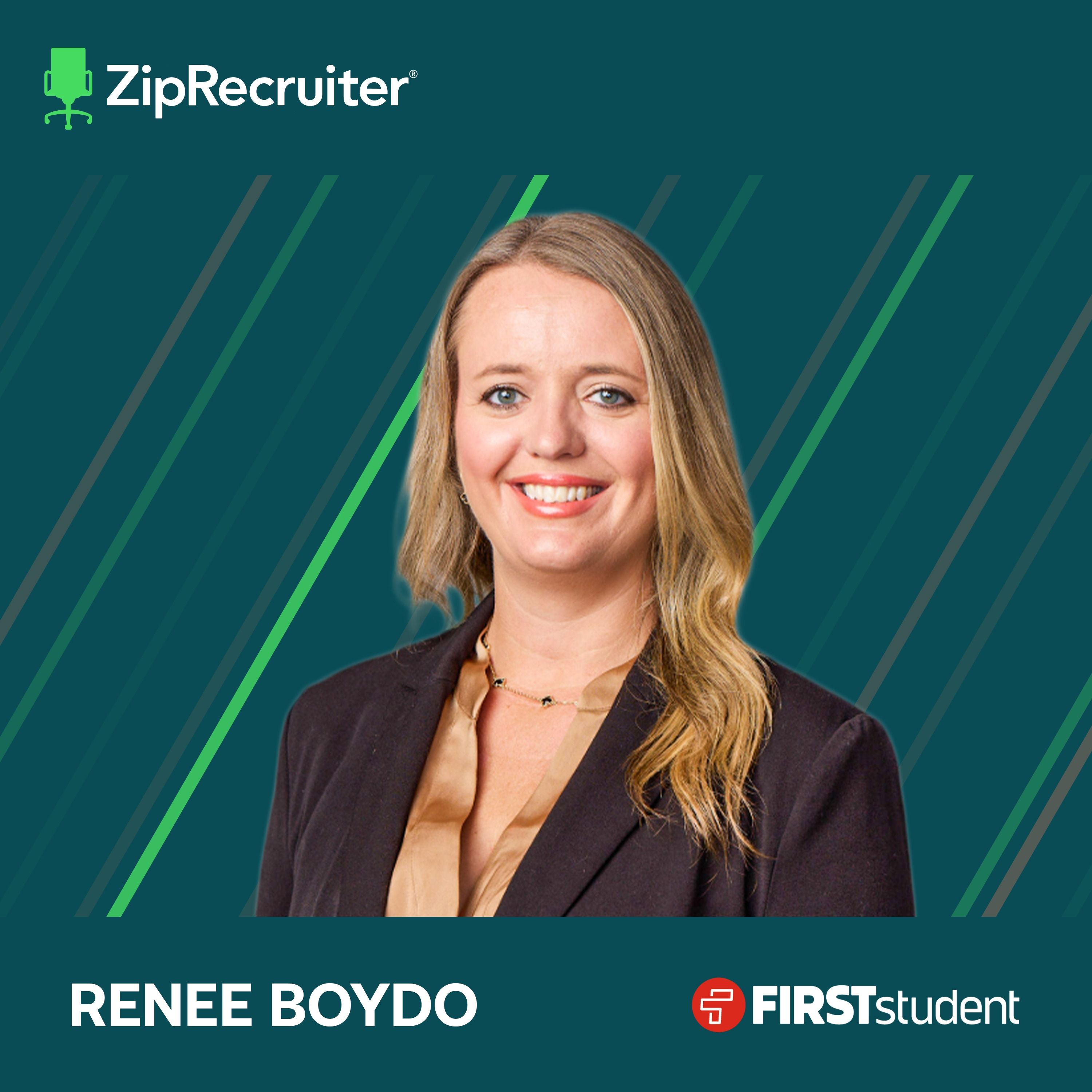
These are the most precious cargo that we have in the world. And so we've got to make sure that it's scalable and that it's personal. So what does it really take for your business to attract world class talent today? I'm Dave Travers, president of Zippercruder. And on talent all stars, we shine a light on the people and the day-to-day processes behind recruitment and retention at some of the world's most influential businesses. Our guest today is Renee Boydow, VP of HR experience at first student. North America's largest provider of school transportation. Every week day, first student brings millions of students, including my daughter, two and from school. Pulling that off requires a huge talent acquisition operation, a lot of technology, and an all-out focus on safety. Today, Renee shares how first student does all of that and how she shifted from early roles in customer service and training into HR leadership. So let's bring in Renee Boydow. Welcome to Talent All Stars. Well, hello, Dave. Thanks for having me. So excited to have you, so much to talk about. And you are in an industry that a lot of parents really care about, because you help kids and others get the places they need to go, including getting my daughter to school every day. So thank you for that and providing the drivers and everybody else who makes that possible. But before we dive in to that and for student, I want to talk a little bit about how you got here. So when in your journey as an individual contributor and then a leader, when did this recruiting and talent acquisition thing start to feel to you like something that could really be a career? Yeah, absolutely, Dave. So interestingly, I really didn't start my career here in HR. I come from the safety side of things. I spent my early part of the career kind of in safety in the pipeline industry and then in transportation. But it's an environment where, you know, precision, accountability and protecting people were really kind of non-negotiable. And I think over time I realized that safety really just isn't about protocols. It's a people business and the people business is really, it's about culture and it's about communication. And that's where leadership really impacts outcomes. And that's where I knew I really wanted to be part about shaping other leaders, shaping the full employee experience and not just one piece of it. So that's really where making the jump into leadership and into HR really was a purposeful driven decision for me. Do you remember a particular moment along the way when you were like, wow, this people thing is really kind of cool. Like I might wander over in that direction even though I didn't start there. Yeah. So you know, there's an old story about NASA where someone walks into a building and they hear about the janitor talking about, well, what do you do for a living? And he goes, why put people in space? Well, that's what safety and HR is for me. It's leadership is about every single person really is there to do the same thing. And I think for me it's that pivotal moment of going into every single room that I'm in and knowing that everybody is there to be part of that same team. And there was a moment one time working at Koch Industries where I really noticed that every single person, no matter what role that they had, they all really wanted that same end result. And that was safety. And then once moving into the transportation world, being part of the communities, that was something that I think everybody here, it's just part of our daily world. Absolutely. And so you are one of those people who didn't just, as you said, go straight up from starting in recruiting specifically and then work your way up. You made some lateral moves and some changes from safety and working in other areas into talent acquisition. What advice would you give for somebody who's taking the leap into talent acquisition for the first time coming from another area? Like how would you advise someone to start? What's the first day? What's before the first day? How do you think about the first 100 days? How do you approach that? I would say don't underestimate the value of your lived experience. I think when I moved from safety to HR, I didn't leave my school set behind. I really kind of brought it with me. I understood risk and accountability and how to build trust in any kind of high stakes environment. And that's what all leadership really is. So I think that translated really, really well into the talent and people leadership business. So my advice is lean into what you're really good at and what you know. And be open to what you don't ask questions and build relationships. That's a great piece of advice. One, have the confidence of knowing even if you don't come from talent acquisition, you've been hired before. You've had done an interview before. So you bring some different experience from the hiring manager and candidate side of things. And in that, have the guts to ask the curious question and see where that leads you. That's, I think, great. Do you remember like a really good question that you asked along the way or that you would encourage someone else to ask if they're joining your team from some other function? I would say a really, really good question to always ask is why. And I know that that's something that we kind of think about is cliche, but the why behind everything is what keeps us moving. And so when we ask the why, it also challenges the things that are always kind of stale in our business as well. Yeah. Amen to that. There's always another layer to uncover. And you really can figure out who knows what they're talking about when you ask them why two or three times a row. You really figure out third why, right? Yeah. Now you're really talking like if you really thought this through. I love that. Okay. One of the things, speaking of why, why is the world changing so rapidly around us in every single business, including in transportation, is technology. And so that is affecting your industry and somewhat different ways. Some of the talent acquisition changes in technology are the same for a lot of people who listen to this podcast. But for you and for student, how does that impact you and how are you approaching? Where should we use technology? And where does that human element that you referenced earlier being so important come in? I think my mindset on technology, especially AI, which is obviously the buzz word in every industry, but especially ours. I think my mindset on that is it's got to be intentional and it's got to be human centered. I think AI and technology is incredibly powerful and it can streamline your processes. It's going to surface a lot of insights and you're going to learn from things and it's going to help you move a lot faster. But it's not a magic wand and an HR in particular, especially in high volume environments like ours and the TA space, it's easy to get caught up in those shiny tools and you can forget the people behind the process. So I'm always going to ask everybody on our team, will this technology help us care for our employees better? Is it going to make the experience better and will it make our teams feel more supported? I love that and I think the two things you've said so far are super interesting to think about in tandem. One is you've talked about safety and how important that is your background in the mission of your company, et cetera. And two is using technology to move faster. I think intuitively for a lot of us, those two things could be in conflict or those two things moving faster in safety or those two things that you are balancing all the time or there actually ways to make them work together. Yeah, I think especially in our industry because here's a fun nugget for you that we have to think about every day is here at first student, we transport more daily student trips every day than all of the major airlines do on a daily basis. Wow. Yeah, wow is right. So when you think about that volume and you think about that speed and you think about the technology coming in and you think about safety, you've got to balance all of that together because these are the most precious cargo that we have in the world. And I think our Halo platform does that and with our technology and the way that we've built it in, it is designed to meet our candidates and our employees where they are. So no matter where they're at if it's a rural town or a major metro, they get that same quality and consistent experience and I think that's where I feel like we've done a really good job about bringing that technology in. So I think the consistency that technology and the measure ability that technology provides to create candidate experience, which includes the human element of but being able to monitor and match experiences across different geographies and all that by using technology to ensure that all the elements of candidate experience is really powerful. I couldn't agree with that more. Another part of the piece of the the whole puzzle though is not just recruiting people. It's also retaining them. And I know that's something you've thought about, but when it comes to technology and people, how have you applied what you've learned to help out with retaining people as well? Yeah, you know, retention has got to start on day one. I think every single touch point that you have, whether it's that very first interview, in our case, the first day that they're driving or a bus to pick up your kids to school and in LA, it really is about how can we help them feel empowered to be part of the community. And so equipping drivers with not just the training, but the tools and the technology and the support that they need to actually serve the community safely. I think that's really where no pun intended, the rubber meets the road, right? Yeah, amen to that. Yeah, they really have to be, you know, supported to be able to have the autonomy to be able to use that technology in a way where they can do that in a safe way. Yes. And I think that having a great piece of technology that then isn't used by the end user is something all of us have seen as consumers and felt as people try and implement technology. So that is the critical thing. When you have such a dispersed workforce, these aren't people who are coming into the office for it all, and it's every day that you can look them in the eye. How do you make sure that the technology you're providing is actually going to be used? How do you even approach that? Yeah, well, and to your point, too, it has to be, you used a word a minute ago about consistency. I think every time you bring in technology, especially when you have such a dispersed workforce, it has to be consistent and predictable. So consistency and predictability are two words that we use a lot in our business and at our company because every touchpoint not just with our candidates, but every touchpoint with our employees, that builds and influences our trust and our culture and that in turn builds our retention of our employees when they have technology that they can use. So I think having an entire community of trainers and a great IT department that really, really, you know, Sean McCormick is our CIO and he is Donnie's one, all sorts of awards and done great jobs here at the organization. But I think it's because he goes out into the field and listens to our teams and talks about what they really want and what he can then do to help the teams to be more successful. If you're a fellow TA leader somewhere and you're hearing this and you think, I think the next big thing opportunity for us is to really upper game in terms of retention. Where would you start that process? Like how would you kick off a project if you're giving advice to someone else who's really digging into this for the first time? I would think through your process from start to finish and remember that AI isn't there to replace your recruiters. It's there to think about how you can use your recruiting team from being more transactional to being more strategic, right? AI might make you move faster, but you should never lose sight of the human side of the higher, so to speak, right? So I always tell my team, think of tech and AI as the engine, but the people are still the drivers. So we use innovation to kind of scale that care that we have for our communities. I love that. And I love thinking about how do you use technology to free people up to be more strategic? If a year from now your way ahead and enabling your team to be more strategic than they were a year ago, how would you measure that or how would you give confidence to your senior leadership that that is happening? What new things are we doing, right? We tend to always think about bringing in AI and it frees up our or even other technology and it frees up our people to do the things that they're doing now better. But I always challenge that a little bit because I think that it should mean that we're doing new things that we haven't even thought of. So what new things are we doing with our team that are uniquely human centered that we are only doing now because that transactional peace is being done and automated with the use of technology. Okay, we always end these episodes with a rapid fire ground. So I want you to think now about the scenario where you're getting in the elevator and the CEO is at headquarters, walks in, it's just the two of you and CEO says, "Hey, Renee, you know, I've been thinking you're the people expert in the interviewing expert. I interview people all the time and you do talent acquisition. Give me your one best piece of advice for making me a better interviewer." Good thing as I talk to my CEO John Kenning all the time, he's fantastic and I would tell him to listen for alignment and not just answers. I think a great candidate is going to echo you and your company's values and you want to listen for that alignment. I love that. How would I suss out that somebody has good alignment? Like give me a peek into the process to what what should I hear for? I think when their foundational answers are about the caring for your community or about the safety behind everything, right? Safety really transcends just the safety organization or the safety function. It really goes in every bit of your organization. I think you can hear that in every answer. So when you can hear those values kind of embedded in or when they bring those values to the table and you know that they've done that research for your organization, those are the things that we like to listen for. I love that. Let's do another rapid fire scenario, which is awesome since you have these conversations all the time anyways. CEO, same scenario walks in the elevator and says, hey Renee, so much is changing in the world of talent and what we need from our talent. How should we measure the effectiveness of the talent team over the next year or two? Oh, great question. I would say retention and compliance. If we're keeping our great people and we're getting them started out right, then everything else from safety to good service, I think all of that's going to follow. Okay, one more rapid fire scenario, but instead of thinking about the CEO, it's a colleague who's switching jobs and interviewing in new places and making a leap like you made. So they've been not have done talent acquisition before. And if you're going in to meet the talent acquisition team at a company for the first time, how would you assess, you know, if you had a day on site, how would you assess quickly? What's the state of the current talent acquisition team? How would you even approach that? I would be looking forward to they have a multifaceted approach. Do they have a good programmatic and job board function? Do they have an entire culture built around the different teams that they have? And from an experience standpoint, is the processes that they have? Are they focused around the experience of the candidate and the applicant and the experience of the employees? Because if the process is just process driven for efficiency and not about the experience, then that's not the kind of process that you want. I love that. So smart. I really appreciate you taking the time with us today, Renee Boydow. It is so clear why you were a talent-all-star. Thanks so much for taking the time. Thank you so much, David. It was a pleasure. That's Renee Boydow, Vice President of HR Experience at First Student, North America's largest provider of school transportation. We'll share Renee's LinkedIn profile in the episode description. And just a reminder, you can also watch the full video version of this conversation on YouTube, on the official Zippercrooter channel. And if you have feedback for us or ideas for future episodes, send us an email at
[email protected]. I'm Dave Travers, thanks for listening to talent All Stars, see you right back here next time.
 PodcastTranscript AI