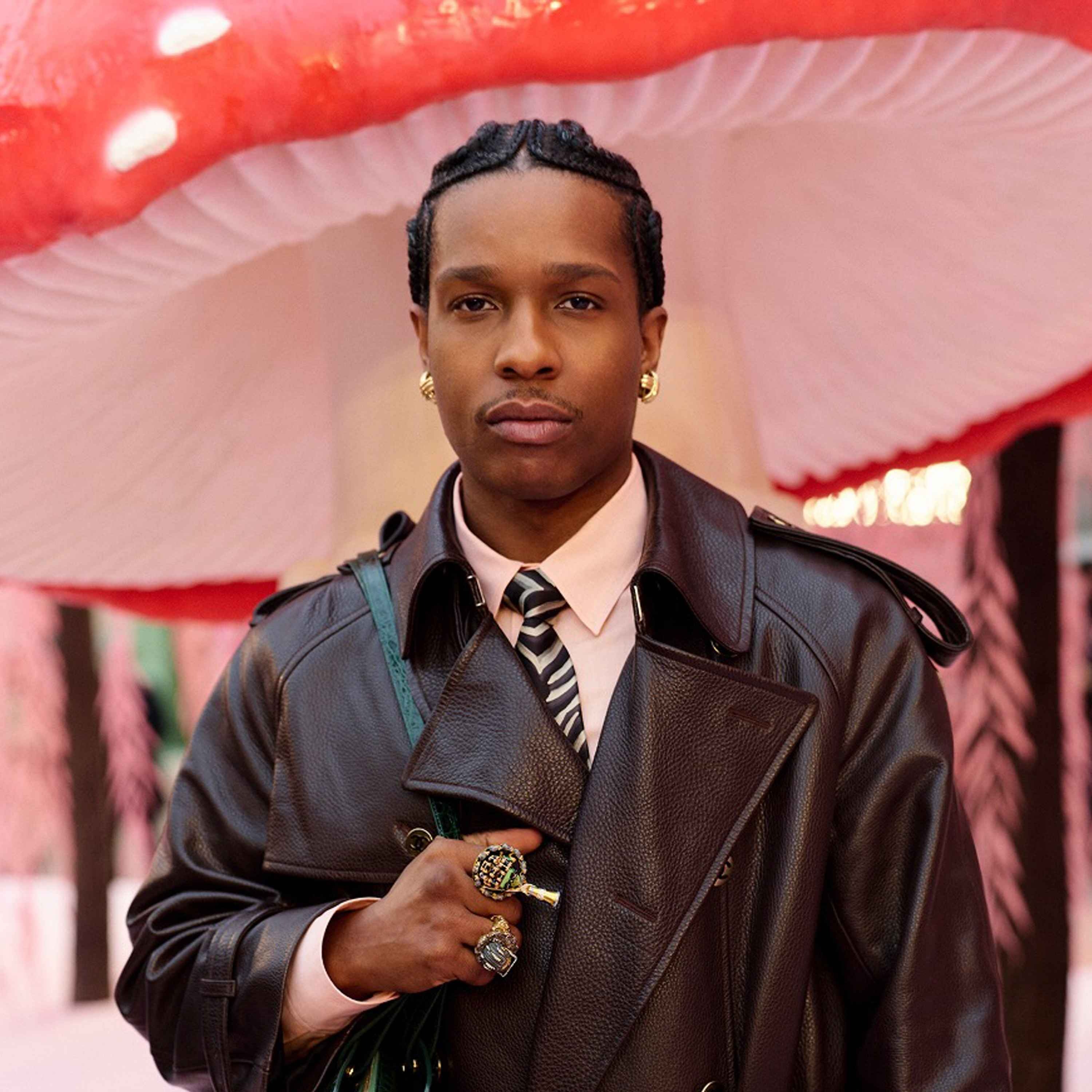
The discussion explores hip-hop's influential role in fashion, using ASAP Rocky as a prime example of an artist who authentically merged high fashion with street style from the start of his career. His early, unpaid advocacy for brands like Rick Owens and Raf Simons, combined with his distinct New York aesthetic, made him a sought-after collaborator for major labels. However, the fashion industry often defaults to established names like Rocky, Travis Scott, or Pharrell, potentially becoming risk-averse and repetitive. This over-reliance can dilute brand distinctiveness and fail to engage younger consumers. The conversation highlights the need for brands to cultivate emerging talents—such as Central Cee or Westside Gunn—who resonate with Gen Z and offer genuine cultural connections. While partnerships should balance commerce and authenticity, diversifying collaborations is essential to avoid stagnation and maintain relevance in a rapidly evolving cultural landscape.
(upbeat music) - Hello and welcome to the debrief from the Business of Fashion where each week we delve into our most popular B.O.F. professional stories with the correspondence we've created them. I'm Senior Correspondent, Shina Butler Young. - And I'm Executive Editor, Brian Baskin. Hip hop is one of fashion's most powerful pipelines into pop culture. From fragrance campaigns to sneaker drops and front row placements, brands have leaned heavily on a small group of superstar artists who mostly came up during the 2010s to drive visibility and relevance. - Nobody embodies this trend more than ASAP Rocky who is undeniably a cultural force. His collapse of run the gamut from Puma to Rayban to Marine Sair. But as Gen Z grows more disengaged with luxury and as music charts become less predictive of cultural influence, the industry is being forced to reconsider how it courts hip hop's biggest and rising stars. B.O.F. correspondent Leigh Takanashi joins us to unpack it all. Leigh, welcome to the debrief. - Thank you, Shina and Brian. I'm so excited to talk about this review both today. You know, hip hop's been something I've been actually covering even before I started running about fashion for B.O.F. I ended up writing a lot about it for Mass appeal or complex and I had some clips in young music magazines like Vader and Pitchwork. So it's definitely a topic I'm really passionate about. I'm just talking about it. - Awesome. So let's start with ASAP. Your story sort of frames ASAP as the case study for this. The case study of hip hop meets fashion and then icon emerges. Why was he a good choice? What was so special about ASAP? - Yeah, I think what makes ASAP Rocky so special is he's like this generation little talent who is just redefined, I guess, artists' relationship between hip hop and fashion, right? Like, I have thought this was this genre that's always had these style icons every decade. Or what are it some? Rakeem or Big Daddy Kane or someone like Kanye West in the 2000s and 2010s. But I think what made ASAP Rocky so different was he came out the gate as this rapper who really declared that he was into high fashion on this breakout single case. So he said that he was into Rick Goins and Raff Simmons. - Yeah. - He's on Sussmer R.A. - As a teenager growing up in New York City in the early 2010s, let's think to his music. That was actually how I got introduced to some of those brands. I never considered any of those designers before. I was mostly into sneakers and street wear brands. Like Supreme Rich has these really organic connections to that genre of music. But it wasn't like, I guess high fashion or runway fashion, right? And he's been committed to that since he came on. And I think that's what makes him such a attractive talent for just like all these brands today. He has this real organic love for just runway fashion, high fashion, and also just like, you know, street wear and like street style. So he was doing this not because the brands were paying him at least initially, but just because he liked the brands, right? - Yeah, it was just like real organic love. I mean, when he first came on to the scene which one in like the early 2010s, he built his whole fascist aground. He's like, "Goffesk fashion brands." It's just like, "Why free?" He would buy air, you know, buy gon' street wear labels like "Black scale." And you know, by the time released his debut album, he had a song called "Fashion Killer" that really just, he saw he just, he really used this track to just claim that he himself was like the best dresser, aperture, and merge from where we have it now referred to as the blog arrow that really 2010s. - I love that fashion killer video. Rihanna was in there who's now the mother of his three children and their partners. How would you otherwise, so that's assumed that some of our listeners have not seen "Day Saparake." I don't know how that's possible, but like, how would you characterize this aesthetic? Because you hinted at this earlier, it sort of ran counter to what the hip hop aesthetic was presumed to be at that time. Like he had something different. What does his look? - It's so tough to say because "A Saparake" to me, it's just a Saparake, but when I consider just like the history of like hip hop fashion icons, I always draw comparisons between him and Cameron. And I know this news you're probably aren't aware who Cameron is, but I say that because, you know, they're both from Harlem, but it feels like there's a regional undertone that runs for how a Saparake dresses. That feels like it's very true to New York fashion, New York style, New York street style, basically. The same way how like, you know, run DMC came out of 80s. Their whole look was basically inspired by New York City B-boys that, you know, had a dress in traxos, and they all laced this, a D-tasupist, or, it's like, "A Saparake" is sort of a challenge at the same energy. I think that's really distinguished him from someone like Ferrell or Kanye West. So like, yes, "A Saparake" love fashion, he love designer brands, and that's always been like, consistent with the best dresser appers, but I think what kind of send apart from everyone else is that, you know, even to this day, he still wear clothes that remind you exactly where he's from, you know, he'll come out, grand b from broccoli, Tim Belenz, you know. A really great example of this like hybrid style, he's sort of built for distinguished himself with is that, at the Met Gala last year, he arrived around a super dapper suit, but he layered it with like a very big coat that had these like, vocal straps on the cuffs. Anyone who grew up in New York in like, late 2000s or early 2010s, no, that's a reference to this jacket called a "Marmot Biggie." And there's a super long story behind that coat that I can't get into that encourage anyone who's interested to read an article that I wrote about it. For like, complex like five years ago, but it's like how Norfolk has got pop in the 90s. It's just a jacket that was embraced, but you have color in New York City, and kids in the uptown New York, the Bronx, you know. And Iraqi makes these like, authentic callbacks to just these regional New York style trends. And I think that's really distinguishes them in this space, you know. But today, it's more a mix of what he's wearing personally and then all these deals he signed. I mean, I may have started out organic, but now, you know, he's designing Rayban sunglasses and Montclair Puffer Codes and Puma sneakers. And he released a capsule with quince. I mean, I'm guessing quince was not like an organic expression of his love of fashion. No, nothing against quince, but it feels different than what we've been talking about. And I'm curious, I mean, has he maintained the authenticity and the general vision that you're talking about as he's also embraced the commerce side of it? I think he tries his best to, sometimes when I look at partnerships like really different quince, I do question like if it's really, you know, if I did collaboration, but I guess at the end of the day, it's like a white t-shirt, which is like also a staple to like just hip-hop style, growl lace. So I think he always finds ways to kind of like give it the twist that he's known for. And just try to tie it back to the NFL's offensive. Like, you know, he did a collaboration cash app where on paper, it kind of sounds ridiculous, right? Like why would you collaborate with like a payments services thing, but he ended up using as an opportunity also just like release a pair of his own designer collection, AWGE. So I think he tries his best to kind of make it seem authentic at the very least. I mean, I think one great example that came out there like yesterday was he did this ad for Rayba and that like basically referenced the 90s hip-hop movie, "Belly." He got nos in this campaign, they recreate a scene with him and his characters sincere from the movie. And I get a phone call from Flakko this evening. He want to meet in Hollywood. Funny thing is, it's the same restaurant where I last met with his pops before he passed. And like the glasses are actually inspired by the same ones he wore in this like 90s film that's become a very iconic reference point for a lot of designers or a lot of brands when he wanted just a reference 90s hip-hop culture. So even though the reference is kind of played out this point, I still respected that he did gold-towing that felt like authentic and real to the culture. So basically, ASAP Rocky is amazing, right? He's a star. We've just listed like the full gamut of brands that he's been able to collaborate with. But I think what we're getting at next is that what tends to happen in fashion but also elsewhere is that someone becomes a go-to. Brands start to get lazy. You become the easy pick for every collaboration that a brand is coming out with. Do you see that happening with an ASAP Rocky? I think that's the point of your article is that brands can start to over-reli on these iconic figures like ASAP Rocky, like a Ferrell, like a Travis Scott, some would say. Do you see that starting to happen and is there a pipeline building up? And before you answer, I also want to add that this goes way beyond hip-hop. I mean, one of my favorite headlines we ever ran was do Alipa again. That was just the headline. I love that. You definitely read it in that do Alipa again. I think that fashion has a tendency to glom on to certain familiar names that they know everyone's heard of and is interested in. But yeah, talk about specifically in the world of hip-hop how this has played out. Yeah, I think you're absolutely right. We've definitely relied on certain artists and crushed onto them like ASAP Rocky, Ferrell, Travis Scott. I think it's like we have a tendency to do that just because it's like these artists, they have just like such long resumes where a marketer can just point to like several exams they've done in the past and they can literally see the result of it, right? So yeah, I think it's a lot harder just in general to just sort of take your chance and something new, something different. And I think the ASAP Rocky specifically, I think he's so attractive to just consistently work with because outside of the music, he's just built this life that I think just engages just regular people like, you know, he's part of New York, Rihanna, he has like three kids, he's a family man and it's like, it's really I think hard to like dislike someone who just seems so wholesome and just so charming outside of music as well. A lot of his fan base, it basically grew up with him, right? So all these consumers, we teenagers when they first started getting to know are now adults who are probably experiencing the same things he's experiencing. They're probably half kids now, they probably have partners. And I think they almost see ASAP Rocky as like, this is like the coolest version of adulting or something like that. So I think that's also why some of your parents turn to him. So the other important thing I think we have to get into in your article, they does a really good job of threading the needle here. There is a subtext, there is a perception that maybe some fashion brands, especially the super high end ones, don't wanna do the legwork of reaching into the hip hop community and be in a, and make that association with these stars. So they easily reach for the safe bet, the one that their other peers have worked with, the one that is proven, not just because they can drive revenues but because they feel safe and maybe they don't wanna do that with other artists. How has that come up in your research when you were reporting this story? Did you get into that? - Yeah, I mean, I think that's almost like an issue with sort of like how generally fashion is a business that extracts culture but doesn't necessarily get back to it as much as we'd like for the industry too, right? Like I think, they put rappers in the front row and they put artists and campaigns, but I think you wonder if like who's making these decisions behind all this, right? And it's usually not people who are necessarily like truly invested in the culture as like others maybe. And I think, you know, firstly, I think those companies have to strive to just make their workplaces more diverse and bring more diverse perspectives who could probably argue that, okay, like, you know, someone like this name here is someone that is just as viable as like all these other talents every two years for years. And here's why because they have true just resonance within the culture. My question is why is fashion struggling to find new artists? I mean, there's nothing wrong with ASAP Rocky, obviously very beloved and effective brand spokesman, organic all in one, but I was looking at a list of lists put out in index in 2017 of the most influential rappers in fashion. I'm just gonna read it. So one and two are Kanye West, Nicki Minaj, I think we can strike those off. But then it goes for Elle, Cardi B, Drake, ASAP Rocky, Kendrick Lamar, Travis Scott. That's almost 10 years ago. And it's basically the people we've been talking about this entire episode about fashion in 2026. So where's the next generation? - It's so hard for us to like, detach ourselves from these names because, yeah, it's really like, when I was on the Maytown, I used these, they all mentioned how like this process of sort of shaping or molding these like, future-slug-ray ambassadors is a very, is very much a slow burn, right? Like you kind of have to one, oh, yeah, there's like a real organic connection. These artists have to brand. So like, yeah, Central C is like a much younger artist. He's very new. He's not necessarily like a household name yet. He just cracked the Billboard 200 like last year. Brand to die. I think his album plays in the top 10, which is, I think one of the biggest debuts for a British rap star in like history actually, which is pretty impressive in itself. But that's the thing. It's like, he's not someone I think who people are checking like ASAP Rocky, right? 'Cause he's so young, you know? And so I've never wanna talk into someone at Nike and Nick Schroenberger who kind of leads or kind of helps shape these partnerships. He was telling me what they really looked for first, it's just an organic connection, right? That's how their partnership with Drake started. That's how their partnership with Travis Scott started. There was this organic connection to the brand and I guess a lot of the sport as well. So with Central C specifically, you know, if you go to his earlier videos, he's wearing a lot of Nike tech. He's wearing Nike era maxes. He's very passionate about the brand's real connection to it. So I think you have to see that first. And from there, you have to just also just sort of, you know, go back and forth with it. It might just, my start, I'm just like, okay, for a luxury brand, my start just dressing the artist for a red carpet appearance, then I might go for, to like, cutting them in a front row to show and then seeing maybe how people react to those moments. Is there a danger though that fashion has just become too risk averse? I mean, it just seems looking at who the top artists were 10 years ago in today that sure they can dress, you know, an up and coming rapper for an award show, but every single major campaign, they're just going to default to Travis Scott or Asa Brochi or one of these safe names. They're known quantities and luxury fashion. I mean, this is why the Knox Against It is incredibly averse to change. And there's a danger in that, right, Leigh? Yeah, yeah, and I think every other world, just I think just moves a lot faster now, you know. And I think we got to consider how like, there are a lot of these like, you're emerging artists who I think people would like to just pan as like a TikTok, like, you know, one hit wonders, you know, but at the same time, it's like, with how fast people forget things, remember things, like it's like, why not just take that chance, you know, at end of the day, even just a social media pose, doesn't have to be like a global campaign. There are ways I think you could engage with emerging talent and it doesn't have to be like an insanely huge commitment, you know. And I think it would be nice to just see just like luxury brands kind of explore that 'cause I feel like they're kind of wanna engage with it, but it's engaging from like, a very far distance, you know. I was thinking about, you know, what Brian said around risk. There is a true cultural payoff that brands are missing when they don't take that risk, right? I think there's the headline of "Do Alipa" again is getting after the fact that like, is it moving the needle anymore when it's the same person? Like it's safe, but what does it actually do for your brand? Like what does a mass star like that actually do when they're used over and over again? Is anyone surprised to see ASAP Rocky and a red carpet in Gucci again? - Where do you even associate, even ASAP Rocky? I mean, do people associate the brand with ASAP Rocky or are they just releasing ASAP Rocky? I see ads all the time where it's such a flashy, well-done, clever ad and then I'm like, wait, that wasn't ad for mayonnaise. Like, you know, like, not the ASAP Rocky's doing a mayonnaise ad although, you know, but, you know what I mean? Like, I don't know how much it's doing for the brand when the ad is really for the star in the end at that point. - It becomes interchangeable, right? Like you look at the ad and I don't know if this is Rayban or Marinceir or if it's Puma, like I see him and he looks great, but like am I really, am I really take note of the brand and building any affinity? I think that's the real risk that brands may not be thinking about it's safe, but is it actually moving the needle? - Yeah, yeah, and also I think it's just like, are you engaging like just a new younger customer audience, right? Like, you know, I think I admire how brands like Vans and Mimiu have like, you know, I wouldn't say like, it was a rapper name like, that's been close to becoming like, any one ASAP Rocky, maybe yeah, like he's far from becoming a household name, but he has, he's like over indexed, amongst like Gen Z listeners. So like, to me, it catches my eye and makes sense when I see him on the Mimiu Runway where I see Gucci dressing. Same goes for just like playboy card being put on like a Supreme shirt, you know, it's like, that's our artist who almost for 10 years now is I think really shaped street style, street fashion and just shaped how an entire generation of hip hop listeners dress, right? And there's a whole TikTok trend that's dubbed opium cord that's basically based on how he dresses and how people within his own like artists roster dress. Yet it shocks me that one, the only brands that like collaborative and more not like, do not major brands thisarily, like the biggest one I could think of is like, Pellie Pellie, you know, it's like, we're just like, which makes sense 'cause it's like, Pellie Pellie is like a hip, it's a lighter jacket brand that's very in fact, had been invested in hip hop for like over 50 years. So of course they're looking at talent like him. And yeah, I don't know, it's just like, it is bizarre to me sometimes. - Maybe that's the point, right? Like maybe, like because then with West Side Gun or Action Bronson, some of the people that you mentioned that are up and coming, when they make the leap, whatever it requires from to make the leap from that to the next big star, then we'll be talking about them on the debrief about how they're the new low-hanging fruit. Like is that the point? - Yeah, talk about Action Bronson and New Balance 'cause I think it's, New Balance is a huge brand, but like when they went to hip hop artists, they did not go to ASEP Rocky, they went to Action Bronson. - Yeah, I think there's a lot of strength and just kind of collaborating with artists that aren't necessarily like charting, super high in the Billboard chart, but they have these really passionate niche fan bases, you know? Action Bronson's definitely someone who's like, he's not like a Kanye West, you know? He's not like a farrell, he's not, he's nowhere near that. And honestly, as if he's not, this is like a fashion icon even in that sense, but he's a personality and he's a vision TV show and all this stuff and like, he just built this niche fan base that really, really loves what he does. And I think they love his kind of quirkiness and his style. And then you have someone like West Side Gun who collaborating with Sockany recently. And I think that's also interesting 'cause it taps into the server. You know, it's like, he is perhaps like the biggest hip-hop surf in a niche of hip hop, which is like East Coast Boom Back Revival. I think another good example I could bring up is outside of Seager Space. It's like, you know, Polo Ralph Lauren, they recently like re-released his jacket called the Japan Iraq. And this is like a jacket that is super coveted by people like Polo. It's like a jacket that it re-sells for like $1,500, like $2,000 on the second hand market, right? It came out, I think the late 2000s, I believe, and how did jacket got popular with such a intriguing story? 'Cause it was actually an item that went on clearance at the time, like people didn't want this coat. But what happened was like, there was this rap dude from Queens in Timeless Truth. And this is a rap dude who, they're not, again, they're these are not like mainstream names at all, right? But there are Polo collectors who had this outsized influence on a larger Polo collecting community, a larger Polo collecting culture. And Wendy Wartus-Shack and one of their most popular music videos, we've already had less, to this day has less than 1,000 likes on YouTube, less than 40,000 views. Day turned as jacket that went on clearance into like a modern day Polo Ralflor and Grail. So when this jacket came out for collaboration with the Japanese people, beams like two weeks ago, it sold down seconds and it's the resell value has maintained. It's like people are literally flipping these jackets right now for like $1,500 to $2,000. So like as we speak, and it's just like, I think that just goes to share the power of working with artists who just aren't necessarily the flashiest names in the world, you know? And I mean, to clarify, this collaboration wasn't a collaboration with the artists, but these artists made the jacket what it was. - That's fascinating. So it sounds like we've ended on the fact that maybe fashion doesn't need to try to find hip-hop's next biggest. Or maybe there's two lanes here. And also by the way, Leigh and I talked about this a lot offline as you were working on the story. It's not that fashion needs to ordain someone in hip-hop as cool or fashionable anyway. But it sounds like you've described two distinct, but maybe equally potentially successful lanes that artists go down in terms of their fashion collaboration. - I think that it's so well put, Sheena and also a great note to end on. So Leigh, thank you so much for joining us today. - Yeah, thank you, Brian. Thank you, Sheena. Honestly, like I feel like I could talk all day about this and I really appreciate you asking me questions about it. - Please be sure to check out Leigh's article how fashion picks its hip-hop style icons at businessofashion.com. This and other stories are available to B-O-F professional subscribers only and you can find the links in the episode notes. You've been listening to the debrief, produced and edited by Olivia Davies and Aria. I'm Sheena Butler-Young. - And I'm Brian Vaskin. We'll be back next week with a new episode. Thanks so much for joining us and be sure to follow us wherever you get your podcasts. (upbeat music) (upbeat music)
Podcast Summary
Key Points:
Hip-hop has been a major pipeline for fashion brands to connect with pop culture, often relying on established stars like ASAP Rocky.
ASAP Rocky stands out for his organic, early embrace of high fashion and streetwear, blending New York regional style with designer brands.
Fashion brands risk over-relying on safe, familiar names, potentially missing opportunities with emerging artists and diluting brand identity.
Authenticity and cultural resonance are crucial for successful collaborations, but commercial partnerships can sometimes challenge an artist's genuine connection to fashion.
The industry is urged to diversify its approach by engaging newer, culturally relevant talents to stay fresh and connect with younger audiences.
Summary:
The discussion explores hip-hop's influential role in fashion, using ASAP Rocky as a prime example of an artist who authentically merged high fashion with street style from the start of his career. His early, unpaid advocacy for brands like Rick Owens and Raf Simons, combined with his distinct New York aesthetic, made him a sought-after collaborator for major labels. However, the fashion industry often defaults to established names like Rocky, Travis Scott, or Pharrell, potentially becoming risk-averse and repetitive.
This over-reliance can dilute brand distinctiveness and fail to engage younger consumers. The conversation highlights the need for brands to cultivate emerging talents—such as Central Cee or Westside Gunn—who resonate with Gen Z and offer genuine cultural connections. While partnerships should balance commerce and authenticity, diversifying collaborations is essential to avoid stagnation and maintain relevance in a rapidly evolving cultural landscape.
FAQs
ASAP Rocky redefined the relationship between hip-hop and fashion by openly embracing high fashion from the start of his career, blending runway styles with authentic New York streetwear. His organic love for brands and consistent aesthetic made him an attractive talent for collaborations.
He tries to tie collaborations back to his personal style and cultural roots, such as referencing 90s hip-hop films in campaigns. While some partnerships may seem less organic, he often adds his signature twist to align with his aesthetic.
Brands risk becoming interchangeable and failing to engage new audiences, as overuse of familiar faces can dilute brand identity and cultural relevance. It may also prevent them from discovering emerging talent that resonates with younger generations.
The industry tends to favor proven names with long resumes, making marketers risk-averse. Additionally, the slow process of building organic connections and the lack of diverse perspectives in decision-making hinder the discovery of fresh talent.
New Balance partnered with Action Bronson instead of bigger names, while brands like Vans and Miu Miu have featured artists like Westside Gunn, who resonate with Gen Z. These choices reflect a commitment to authentic cultural connections.
His aesthetic incorporates regional New York trends, such as references to Harlem fashion and iconic items like the Marmot Biggie jacket. This authenticity distinguishes him from other hip-hop fashion icons and grounds his look in local culture.
Chat with AI
Loading...
Pro features
Go deeper with this episode
Unlock creator-grade tools that turn any transcript into show notes and subtitle files.
 PodcastTranscript AI