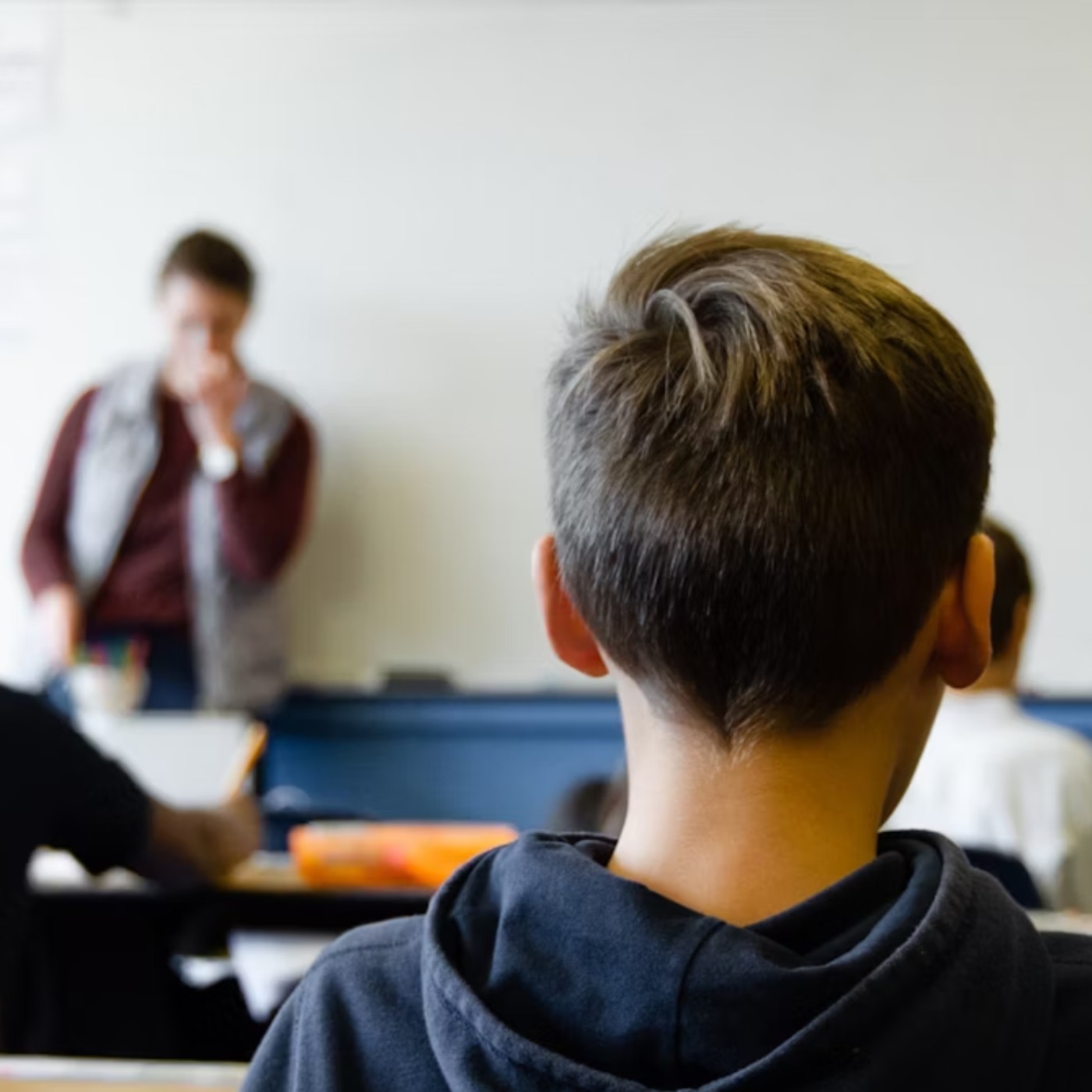
In this podcast interview, Alex Blower discusses his book "Lost Boys," which examines why working-class boys and young men are underserved by the education system. Drawing from his own difficult childhood, marked by anxiety, school absence, and eventual exclusion, Blower describes how he adopted anti-authoritarian behaviors to fit into his working-class school's social hierarchy. His transfer to a more middle-class school, while not enjoyable, granted him access to cultural capital and expectations of university progression, unlike his previous environment where vocational paths were the norm. This personal insight fuels his research, which challenges the political narrative that these young men suffer from a "poverty of aspiration." Blower contends this view individualizes a systemic problem, placing undue blame on the boys while ignoring structural inequalities. He emphasizes that the key is not to raise aspirations but to build realistic expectations through tangible support systems. Furthermore, he advocates for greater parity of esteem between academic and vocational qualifications, noting that the current system devalues the latter, which are disproportionately pursued by working-class students, thereby perpetuating inequality.
[Music] You're listening to the Transformers Society podcast? I'm Richard Kim, and on this episode I'm joined by Alex Blower, Research Fellow at Arts University Bournemouth and Founder of Boys Impact, a network that addresses the gap in educational outcomes for boys and young men who receive free school meals. Alex's new book, Lost Boys, how education is failing young working class men, published by Policy Press, challenges us to reconsider the ideas about the role of masculinity in the lives of working class boys and men. Those who are media and politics have so often characterized as misogynistic, aggressive, and unwilling to learn. But how true is any of this? Having faced challenges of his own related to mental ill health and school exclusion as a young man, Alex has first-hand knowledge of the working class experience. He understands intimately how so many boys and young men have been left behind, even targeted by the same systems that prop others up. And also how with the right support, things can so thoroughly change. With this new book, Alex uses research and real-life case studies to provide clear recommendations for how to better support the health, well-being, and vulnerabilities of working class boys and men, improving life for themselves, and also everyone around them. Alex Blower, welcome to the Transformers Society podcast. Hi, Rich. Thank you for having me. Absolutely pleasure. It's such an important book that you've written here. I'm really, I'm so looking forward to discussing this one with you. So, thanks so much for coming on today. Towards the end of your book, you write that for young working class men, decisions are predicated, not on chance of success, but on limiting how badly you lose. You say, "safety to the detriment of learning." Acceptance, however brief, at the expense of yourself worth. What were your own experiences at this? Could you tell us about your upbringing, the struggles, and how eventually everything changed? Yeah, sure. So, as a young man, I grew up in a small town adjacent to the Black Country in the West Midlands, and I experienced a lot of challenges during that time. I was a young career to a family member who had issues with mental health and addiction, and due to a significant event that happened, it resulted in me experiencing acute anxiety as a child, which meant that I missed three years of primary school, which kind of bridged primary school and secondary school during that time. My social interactions were very limited. I spent a lot of time in my bedroom, my dogmaik was my best friend, and when I got back into school, I very quickly learned that the kind of dispositions that I possessed as a young man were necessarily aligned with those that would keep me happy and safe in my local secondary schools, which in terms of those normative working class masculine expectations, if you like, it was very much "don't listen to teachers, don't put your hand up in class, be cheeky, be anti-authoritarian, get into fights, do things that you're not supposed to." As somebody that entered that world on the peripheries, because I missed that important transitional point of kind of forging friendships, when you first go into school in Year 7, then I started deploying things that I believed would ingratiate me into this peer group, because being outside of that peer group was quite a dangerous place to be, you know, and you got bullied, you'd get ridiculed, being low in the social hierarchy and the pecking order wasn't a place that was particularly comfortable to be. So very quickly, I started adopting these anti-authoritarian attitudes, being cheeky teachers, getting into fights, smoking and drinking and doing a whole host of things that were potentially legally questioned or balanced, not certainly not what I should be doing at the time. That resulted in a short time later, maybe an excluded from that school and moving to one that was about six miles down the road in a much, much more middle-class area, where the expectations surrounding my how-being a young man in education worked looked very different. The way that we dressed, you know, as blazers and ties and shirts in this new school, and my other one, it was a polo top, and it was trainers as long as they were black, and I have to get home from this new school, I'd very, very quickly run from the bus to my house, so no one saw me in the ridiculous outfit I had to wear at the school. What that did for me was, I'm not saying realise it was what it was doing at the time, but it opened up this whole range of access to forms of cultural, social capital that were previously unavailable to me in my other school. I could put up my hand and answer a question without risk of the consequences of that amongst my peer group, you know, you could be cool in this school for another better word, and still be educationally engaged here, which certainly wasn't the case at my own school. I didn't enjoy this new school, it wasn't a pleasure, it wasn't an experience for me, and I'd certainly say it was no better in terms of that experience in either my first school. It was just different, however, what it meant was that I had the opportunity to gain that objectified cultural capital, those skills and qualifications that enabled me to eventually progress to the University of Wolverhampton. It was then for me that I finally found that I had the chance to start developing my own identity that I could figure out what being a successful happy man looks like to me. I still wasn't very good at it at that time, and it's taken me a long, long time to get there, but it instilled this curiosity and passion about the world around me. So after a left university, where it's not hostile homeless young people for a while, and eventually got into educational outreach, and it was when I was working for universities and running the data on the post-codes, surrounding progression to higher education from my hometown in Birmingham, which is about 18%, and this school that I moved to in Lichfield, which is about 64%, that the injustice of that really struck me. The, you know, through no fault of their own friends of mine with more talent in their little finger than I've got in that whole body, were three times less likely to progress to higher education, just based on where they lived, and all of the kind of collective memory and social histories and, you know, intergenerational dispositions that come along with that. It felt like what we were trying to do with our educational outreach work at the time of the universities, this quest to raise aspirations, was just woistedly inadequate to the tasker hand. So I began my doctoral research in 2016, which was really the starting point for me of really getting onto this skin and building the depths of understanding surrounding what my own experience is meant, but also what the experience is, and the implications of those experiences mean for young men who might hold similar experiences or be similar backgrounds. Really hit home, from what you've said there, but also really big time in the book as well about the lack of opportunities that working class people have versus middle class people and your own personal experiences. I felt like reading this book, I was seeing the injustices through your eyes. Yeah, absolutely, and I think one of the key considerations in the book, but also in white debates and discourse surrounding young men and young working class men in education is we would be naive to think that socio-economic inequality isn't the most significant driver when it looks at these intersections of masculinity and the considerations for young working class women, those GCSE grades are only marginally higher than for young working class men. If you look at it for those that aren't eligible for free school meals, that's where those gaps, those significant gaps appear. So for me, what my experience is combined with the research and practice I've been doing has been able to shine a deep kind of insight into that particular intersection of experience. In you talk about how in 2023 to 2024, just 24% of UK boys eligible for free school meals, as you say, attained a grade of 9 to 5, which in old terms is a start to see in GCSE maths and English. This, naturally, it limited their chances of progressing to university. There was a rhetoric from Tony Blair's new Labour government pulling this down to working class boys suffering from a "pobity of aspiration". David Cameron's conservative leadership, they later continued this claim as well. What consequences have occurred from political leaders pointing to the boys themselves as the problem? What it serves to do is individualise an issue that is deeply connected to the systems and structures which perpetuate that issue. What it also does through that individualisation is heaps responsibility onto the shoulders of those who experience the socio-economic inequality. So if we look at that poverty of aspiration discourse and what the solution the answer was in terms of practice in education, in higher education outreach, it was okay, so we must raise aspiration, we must raise that hope or ambition of achieving something. Now if we look at the dictionary definition for aspiration, then it's anchoring a yearning. It's this was the idea that you can hope to do. Education in Dalmat Foundation and other very reputable researchers, think tanks, people working in policy for years have cited how little evidence there is to support the efficacy of that as a practice. There is no good evidence to suggest it has any impact. We're
really on raising attainment at GCSE level, but what it also serves to do, and for me, this is the penacious part, is it suggests that who these young people are and what they may hope to do in the future already is deficient. It's not enough. It's not reaching whatever this kind of taken for granted gold standard is surrounding the idea or trajectory into and through higher education and into work. I know the Doctoral Research and looking at kind of policy discourse surrounding a higher education participation, then that gold standard is framed as social and geographic mobility achieved through participation at a Russell Group University. Anything else is just a varying degree of Leskud essentially. So if you live at home and you're a commuter student, Leskud, if you are a student who studies a BTEC rather than the traditional A levels, Leskud, and so it goes on. So we've got these two sharp edges firstly, which is that the ambition that the policy makers have been perpetuating as this silver bullet or this way to solve the issue. There's no evidence of efficacy, but on the other side as well, what it is doing is actively driving these discourses surrounding deficiency that these young people somehow aren't worth anything unless they follow this particular route, which devalues their lives, communities, experiences, and you're in the book I talk about, you know, what a parent must feel. Other young person who comes home and being told that any of their lived experiences or hopes and dreams that might be aligned with familiar experiences aren't legitimate. Does what you've described there, does it have a direct effect on, for example, we're recording in the summer of 2025, we've seen a lot of anti-immigration marches and save our girls marches very recently. There have been people putting up flags in play in public areas, painting on the streets and on roundabouts, etc, etc. Does any of what you said there link to what we've got going on right now? I believe it absolutely links to discourses that are surrounding polarisation, division, narratives which other, in kind of the square coats, other communities, is something that we see, he peddled out in political discourse across the board, you know, this individualised notion that ignores the structures and systems which perpetuate inequalities. And if we look at political events like Brexit referendum or the rise in support and popularity for political parties from reform, often these people are talked about as individuals which float three of their social, historic, geographic conditions, which for a lot of them have been multiple generations of entrenched inequality and pathologisation, you know, people that have been characterised and framed as benefits grounders or, you know, benefits cheats, having TV programmes made about like benefit street or shameless, and all of that history and the implications of that historic kind of pathologisation seems to be, have ignored and instead in place what we get is the brain of this individual person who's doing something that as, near liberal, kind of in a liberal, left wing people, we don't approve of. And within the book, I think what it attempts to do is make very explicit the link between these structural mechanisms, whether it be in education, whether it be in health or other places, kind of within the economy and society, the pass on these issues and challenges through generations and it's through those relationships with those structures and systems that they are perpetuated and entrenched and passed down from father to son or grandfather to grandchild. Yeah, we don't appear to have the language within our public discourse to be able to address and talk about the issues in that way. You're looking again at poverty and aspiration. When you got moved from, or when you got taken out of your previous school, the more working class school, and you got moved to your new school, with the access to resources to the kind of teaching you were getting and the culture that was there, you said about for example, not being afraid to put your hand up anymore because it was actually encouraged or at least accepted. Can you recall that there was that your aspiration or your feelings of aspiration did they change by moving from one school to another? My hopes and dreams, to be honest with you, not really. I think what it was was something that was a lot more tangible than that. It was expectations. In my first school, I had all of the resources easily available to me if I was interested in joining any of the trades working in the service industry. I had friends and family members who did apprenticeships in those types of things, or who'd been through college courses and knew who you could talk to to get set up. Conversations were where are you going after you finished GCSEs? What are you going to do work wise? At this new school, people's parents were doctors, lawyers, working in the civil service or local government or teachers. Conversations were around where are you moving into employment after your GCSEs? Instead, what are you doing for A-levels? Have you had a look at kind of UCAS and how all of those things work? Do you know which university you're thinking of applying to? Are you staying at home or are you going to move away? It wasn't are you hoping to do any of this stuff? It was this stuff is laid out as the most likely trajectory for you to follow and all of those resources were wrapped around those particular trajectories to make them very, very real, very, very tangible at an expectation. With the difference between an aspiration and an expectation as well, going back to that individualised narrative surrounding aspiration, when you consider an expectation, then it shifts the responsibility. If you say how can we create a situation where this child can expect to get those 9 to 5 GCSEs, that's an English, then the owner is on the support systems and structures in place to facilitate that, with the additional tutoring, anything for that young person might need. If it's how do we get this young person to aspire to those, then it's all on that young person. That's really important to the nation and certainly with the work that I've been doing in education, surrounding the future orientations of young men and women, then it's the expectations that are the key things to focus on because without that access to those forms of capital, those social, cultural, economic resources, those aspirations are never going to be realised. But the moment reading that in your book and having a mind-blowing moment of just saying, "Oh yeah, when there are poor grades, poor results, we shouldn't be thinking what of these kids or what of these families are wrong. Of course, we should be thinking what support were they lacking? How did the support structures that we provided fail them?" That was a real turning moment for me reading your book. Should the school systems be providing more in a wider realm of teaching so that, because if you move to the better school and the better school said, "This is where everybody goes, everybody goes to the Gold Standard University yet, surely not everybody in that school wanted to go to the university. Some people wanted to get their BTEC and become a mechanic." Should schools be offering more classes, more courses for that sort of study as well? Firstly, I think just to pick up on something you said there, Rich, I want to say it was about a different school. Excuse me, yes, of course. That just shows my ignorance that gets perpetuated. Thank you for saying that. It's absolutely to do with societal framing and these unconscious kind of taken for granted, even the use of language and how we do it, it's constantly positioning and repositioning these young people or these systems and structures that make them very difficult to grapple and I think when you're talking about the types of curriculum provision that might need to be offered, the way that actually in an age of technologicalisation, of AI, growing at an exponential rate, the skills that we need to be equipping young people with that go beyond road learning, that go beyond kind of the chalk and torque teaching, the go beyond memorisation, for exams, that there's a huge piece of work to be done there across the board. The battle, I think, that will always take place is for the legitimacy of those qualifications. In the book I speak about, video I did for my YouTube channel whilst I was doing my PhD, they've got 65,000 views because it was BTEC versus 8-level and actually I was very transparent about the way that some universities, more in that it comes prestigious universities, treated applicants who had done BTEC qualifications because it's not transparent. You look on UCAS, you look on websites, they also expect them, but then put into place such significant barriers with regard to application and admission that nobody would be able to undertake the level of study that would be quite ideal doing a BTEC extended diploma, for example, to meet them. So whilst I think curriculum change in reform is absolutely needed, we also need, and this comes from policy, it comes from media, and it comes from the national conversation to give a greater parity of esteem to students who undertake those vocational qualifications and the value of them. It was one of the recent years that we're during COVID-19.
it and I remember that there was a significant delay for BTEC students even getting their results on Results Day and this went on for weeks and weeks and weeks. Had it had been A level students and A level results day that that had happened on, then I guarantee the media coverage of that would have looked significantly different and the pressure ramped upon worthwhile or Pearson or you know whoever the qualifications organizations were would have been more significant to and it's that that lack of that parity of esteem that I think or students from working class backgrounds who are disproportionately more likely to undertake these qualifications in colleges of further education that fill the cuts most sharply. Historically working class young people living in the industrial heartlands they were defined by their contributions to the industrial economy and enter their communities. Following that year's neoliberal overhaul and the 2008 financial crash Brexit plus some local industry being replaced by Uber, Amazon for film and sensors and TikTok etc. This identity has slipped away. What is the working class identity now? Who decides it and what effects has this had on working class communities? I think from a personal perspective there's a diversity and richness of working class experience. If you look and you alluded to there some of the areas that experience significant industrialisation in the late 1970s, 80s, which year, sheffields, you know if you look at the Welsh valleys, those types of areas and then the erosion of the mechanisms to to maintain an identity that was aligned with those level those types of employment. We ate this this this distinction and this sense of well firstly in terms of its material conditions you know significant poverty, deprivation, lack of opportunity but there wasn't necessarily anything to to to replace that and I think you know the service economy sprang up and then later we talked about the the gig economy. There wasn't that clear alignment with those types of employment and something that would be inherently valuable or deemed to be valuable and legitimate as as masculine. Those during that transition and the historical research Mike Ward has written a brilliant book on this Dr Richard Gators actually written a book called 21st Century Lads which is just out which is absolutely fantastic as well and the that talks to and discusses how those changes in the community in the Geography and Sociology Historical context have influenced that normative working class masculinity and that set of expectations but I think something that is incredibly important to highlight is they are not homogenous you know they are numerous and diverse the experiences of young working class men in London is going of course look significantly different to young working class men in in Newcastle or in Weymouth and you can gain an understanding surrounding the certainly the commonalities in terms of the implications of socioeconomic inequality but in terms of the the intergenerational experiences from family their interactions with community is going to look very different from place to place and I think with young working class men in education one of the key challenges that we've had for decades has been this a marginalization of the group this stereotypical assumption that all young working class men will firstly don't aspire with debunk that one earlier you know but but also that they're aggressive that they like competition that they all like football and this grouping together has eliminated the opportunity for us to see the richness and diversity and experience and the plurality of what it means to be a young man actually you know it's not fixed and cemented in one particular way of working classness or working class man and actually will look different from young man to young man under an umbrella of shared experience related socioeconomic inequality. Hi this is Richard Kemp from the Transformers Society podcast thanks so much for listening to this episode if you'd like to buy a copy of our explorer's book Lost Boys we have a 50% discount code for the paperback and ebook versions valid until the 20th of October just go to policy.bristeruniversitypress.co.uk search for Lost Boys select either the paperback or ebook version and enter a boy 50 at checkout that's B-O-Y-5-0 at checkout now back to the episode you spoke to many educators for the research in your book many many of them also having grown up working class themselves but even when teachers such as such as Marque a schoolteacher who you interview know this experience first hand even they can still end up perpetuating to their students the very same inequalities that had afflicted them previously what inequalities are these and how does this perpetuation happen? So there's a whole host of inequalities and they kind of present themselves in a range of different forms or if we look at say Marque for example as a young man in the book he talked about his experiences at school of the fact that he was incredibly bright but he didn't particularly engage largely due to his the pressure to align with masculine expectations and him being in a school where getting into fights was fairly commonplace and you know the place within that kind of masculine hierarchy but also familiar expectations surrounding while he the most legitimate trajectory into employment for him was at that particular time now for him to subvert that and enter into to to higher education took a very long time when it was in his 20s kind of before he did that he eventually became a teacher and what he noticed as a teacher was that his automatic instinctual kind of reaction was as a male teacher in a school to try and build trust and rapport relationships through engaging in those same kind of masculine practices that it's kind of I'd in our idea of having banter of being one of the the students mates almost and it took work for Marque to critically engage with that and disrupt that in his own thinking before he was able to move past it towards something that was more effective and equitable in terms of his approach for what he was passing on to these young men in the classroom what Marque also spoke a lot about was that you know the connection for all educators to these media discourses the messages that we receive throughout TVs at mobile phone screens on our radios in our books we're not immune to those and we don't actively critically reflect and engage with them necessarily when it comes to what it means for our perceptions of young men in education and you know those deficit kind of driven notions that might just be hidden in plain view but we speak a lot about boy heavy classes or teacher speak a lot about boy heavy classes you know in school we don't talk about girl heavy classes it's only you know boys in education boy heavy classes meaning yeah so it's if you if you say to a class is boy heavy then it is a class which has more boys than girls in so you know the representation in the classroom is that is a higher level of male students than female students if that a lot of the terminology and teaching in a lot of that is that's the case then all of a sudden that is a boy heavy class and if you think about those those connotations with the language again and you're thinking about this idea of heaviness being away it's going to be difficult to carry it through that terminology is only applied to the young men you know we don't have girl heavy classes and that is not described in that way when we're speaking about young women necessarily in education and there's a lot of research that well we've been conducting it more recently with some of the way we've been doing through boys' impact to teach perceptions of their relationships with young men in education but certainly if you look back to 20 years ago and there was studies by by my hair and jones that showed how a lot of the time teachers would hold without realizing it pretty systematically different views surrounding their perceptions of young men and young women in the class so so interesting how just like the use of the term boy heavy is such a yeah it's like when you were saying it kind of sounded like in a knock you was term but when you explained it by calling it a boy heavy class but not having the same for for girls then you are perpetuating the idea that oh no there are more boys in this class that's a problem or that's something I'm gonna have to deal with yeah absolutely you say that young adult carers are 38% less likely than non-carers to achieve a university degree those caring for 35 hours a week or more even less likely at 86% I was actually surprised at that number 86% because like carer with 35 hours a week and doing a degree I figured that would be you know zero people getting degrees so that that's incredible that anyone could even do that this this this inequality in care you say it's you say it's it almost always only affects working class families can you explain the caring roles that young working class people have to take on including including yourself as a young man and how much the education system is letting down young carers yeah so back to my experience. So I'll take that.
know it at the time, but I was a young garrer for a parent with significant challenges related to health. Now, if we look at the health statistics and related to socioeconomic inequality and IMD data, then what we see is a significant the increased chance of health challenges as an adult if you are from a background in which you experience those those economic inequalities and challenges. What that also means within the family home is if you are the child of a parent who experiences those those challenges, then you take on those caring roles and responsibilities to support them. Now, these can look very very different depending on the nature of that. If it is something related to mental health or addiction, then it might be an awful lot of psychological and emotional work and a lot of having to do things for yourself perhaps that a parent would usually do on your behalf whilst if it's a parent who might have MS or who might be going through treatment for cancer, then it could be a lot of personal care that you'd be delivering. So again, even within that group, it looks very very different from from a young person to a young person. We're in a position as a society where nationally we don't have the structures in place that we need to systematically identify those young people with caring responsibilities or those family members. So much of the work that has taken place so far has been on significant underestimates has been on guesswork and I drew on reports in the book from my time young carers that are national charity and the APPG for care isn't in young adult carers as well to kind of make the case. When it comes to the intersection of masculinity surrounding caring responsibility, then it becomes even more complex, you know, when we do think young carer, we don't think young man and young carer a lot of the time within the book I talk about how my role as a young carer enabled me to develop a level of emotional intelligence and maturity, ways of speaking and acting that perhaps went beyond my years at the time because I was dealing with health professionals, talking down family members who were in extreme states of emotional distress quite early on and having to be very empathetic and understanding of feelings within that context, stepping out of the door and going into school, those dispositions are the ones that place you at risk risk of bullying, psychological, emotional, physical injury because their sickness feminized and weak. Oh, it's certainly where in my context. So what I did to protect myself as this outside of going to that setting was part of this armor and that armor was adopt the dispositions of everybody around me that made me less of a target. Unfortunately, and I speak about this in the book that quite often meant moving that target onto someone else and then participating in those types of activities that I was trying my hardest to protect myself from from receiving, which had residual feelings of shame and guilt. It's only as I've developed into adulthood and had time to reflect on this journey and the experience is that I've come to to recognize the fact that those dispositions I developed as a male young care are some of the dispositions that I'm proudest of possessing now as an adult man and I can't help think what would be possible if we were able to celebrate and nurture those dispositions amongst all those amazing young men working class backgrounds or not that are undertaking those types of responsibilities in the home. You said that you didn't you didn't know it at the time that you were being a young career. Do you think that's the case for most young carers or at least a large portion of young carers? Yeah, absolutely. If you've got a dad or a parent, a dad or a mum who drinks an awful lot or has challenges with regards to them and to all of else, you're not going to automatically assume or know that what you are undertaking is caring responsibility, even if it's something that might be more visible, it may be the case as it's just something you've always done. So you don't know equally, if you do realise there might be, will we about other people find a doubt? I need to take a lot of care from my mum. I've got a little broader sister, what happens if they find out, if social services find out and what does that mean for our family unit who will love each other very, very much. So there's issues around that that disclosed yet but also we know that schools at the moment are proactive necessarily, all of the time or local authorities are proactive all of the time in finding that information out which creates these huge gaps in these. If we look at the classroom as well, it means that some of the things with regards to students, young men turning up retired because they've had to get up early to do everyone's breakfast and then sort out lunch, you know, they come into the school, they put their head on the desk, the teacher perception kicks in, "Oh, look at him, you know, so and so, he's disengaged, he's not listening to me." And within that space it's very easy to draw your own assumptions and conclusions surrounding the behaviour that that young person or that young man is exhibiting. When in actual fact he's just absolutely shattered because he's been in taking all of those things and you know, if there was that knowledge and that understanding and that they come to text, what would that do for that young man's relationship with teaching staff, their sense of belonging and education? So it's a huge significant issue which requires a lot more of a focus, I think, by upstead and politically. In 2022 you set up the Being a Boy project with author Ashley Hicks and Lovements, wherein young working classmen use creative writing, photography and dance to explore what being a boy meant to them. What did you learn from this project? Were there any surprises about what it means to be a boy, any aspects that sadly haven't changed? I think what we learned from the project, so it was out at the university that worked at our university, Bournemouth and myself and a colleague who's in the Access to Participation Team, Co-Fenabors, created this pilot which was designed to provide this platform for young men to be able to engage with the idea of masculinity in a different way. We know that these issues were articulated, re-articulated for ages and what was really missing was those young men's voices. So using these creative mechanisms we wanted to provide a platform for those voices to be heard. So creative writing with Ashley Hicks and Lovements was absolutely amazing and probably I think one of the ones that had the biggest impact on us in terms of the setting. The biggest learning that we took away from it is Chris it was with young men who had been excluded from school who were now in alternative provision and those individuals as well who were in mainstream education still but maybe heading in a simpler direction in terms of their relationship and engagement with school. And what we found was if you give space, time, a sense of safety, a sense of value to these young men's experiences, they will share and they will not stop sharing and they will take that opportunity. We had you men that were told wouldn't write for 20 minutes let alone all day, absolutely writing all day and then standing up and sharing their poetry in front of each other in the room and they created this real magic that would be invulnerable, they were talking about their thoughts and feelings and emotions. And we ran qualitative research around it as well. So we used the creative artefacts that they produced as a way to engage in follow-up conversations with them. We know that young men quite often don't necessarily have access to the tools to be able to express themselves in the way that they'd like to and confine to those one-to-one conversations about those things kind of difficult. What these artefacts did was provide a way into that conversation, a mechanism where they could take place. When we were about to alternative provision and spoke to a group of young men about their experiences kind of in one to one interviews using these artefacts and said, okay, you had a great experience, but what can you take from that? Can you apply to your day-to-day educational setting? Then pretty overwhelmingly, they said not much because we get beaten up if we did that here, which was a bit of a good punch, I'd say shock but not surprise. We know it, we know it, I knew from a doctoral research about the risks inherent in that day-to-day educational experience, but though that provided the spark to something which was a turning of the lens of focus towards mainstream education and the day-to-day educational experiences of the young men and where the opportunities lay within that to employ evidence-informed equitable approaches to better support young men on their journeys towards hopefully, you know, GCSE qualifications and that would. Following your involvement in being a boy and learning from other projects such as taking boy seriously, you started boy's impact. What is boy's impact and what changes in society, structurally, interpersonally, do you hope to achieve from this work? So boy's impact is a movement. It's a UK wide network of educators that are committed to roads, taking an evidence-based approach to closing the gap in educational outcomes for young men who are eligible for free school meals. We do that through a network of regional boys' impact hubs, so these are local partnerships of educators, youth and community practitioners, their sector organisations, representatives from the local authority that convene around the issue, bring the gifts that they possess to the table and you
use the evidence the boys' impact makes available through the taking boy seriously research. The principles alongside our approach to program design and evaluation to pilot new activities to try out new things. More equitable ways of working with young men in a context that is very local and has that flexibility to embrace the fact that it looks very different in East London than it just away, more thought or new castle. Over arching in terms of its structure and so boys' impact, it's kind of a hub and spoke model. You know, boys' impact is providing the capacity and the infrastructure to pilot and change things at scale. When we do those in three different ways, we work in policy, speaking with policymakers and Department of Education and any of those that will listen to us about the changes that need to happen at policy levels to facilitate these changes and this adoption of the relational educational approach that taking boys seriously, champions through its principles. We do it in practice, so supporting educators to design, deliver and evaluate interventions at school level. And we also do it with research, so we engage with research to deepen understanding of the issue. I mentioned earlier about Dibrami Hill and Jones is research that was in 2004 looking at teaching perceptions of their relationships in young men in education. That was the year that Facebook was co-founded as the Facebook in the marks on the birth group. You know, the world has changed significantly in the last 20 years and we can't afford for that to be the last time we've engaged with educators and the perceptions of young men in the classroom, especially given recently during political discourses surrounding the Netflix TV show, our lessons, once again, women and girls, misogyny in schools. But it's incredibly important that boys impact contributes towards that research and that depth of understanding as well. And it's our belief that we can close the gap that we see in educational outcomes for these young men by working in parallel across those three areas of research, policy and practice. Boys impact is committed to taking a strength based approach to championing the richness and diversity of these experiences of working in a way that recognizes the role of structural and systematic inequality in a patriarchal society that means these things get perpetuated and entrenched across generations. So it's something that is still very much at the start of its journey, but we're going rapidly. I've got a conference next week of in Manchester and we've got 300 school leaders, educators coming from right across the UK to join us in Manchester for two days to engage with this issue. We've got 50 workshops happening that are all actively engaged and contributed from people who have been inspired by the boys' impact work, you know, and the taking boys seriously principles and have used that knowledge to instigate change in their local setting. So we convened to bring all of that together in the understanding that our collective efforts will be far greater than some of our parts. Thank you so much Alex for coming on the Transform Society podcast today. He's been wonderful talking about your book and best of luck in your conference. In a moment, I'm going to let everyone know where they can find your book. But first, could you let us know where we can find you online? Yeah, I'm sure. So if you go onto YouTube, we've got a channel which is at Boys Impact, but also Dr Alex Blower on LinkedIn as well. Perfect. Lost Boys, how education is failing young working class men is published by Policy Press. You can find out more about the book by going to policy.brisseruniversitypress.co.uk and also Transforming Society.co.uk.
Podcast Summary
Key Points:
Alex Blower's book "Lost Boys" critiques how education systems fail working-class boys, challenging stereotypes of them as misogynistic and anti-learning.
His personal experience of school exclusion and moving from a working-class to a middle-class school revealed how environment and access to cultural capital drastically shape educational expectations and outcomes.
He argues that political rhetoric blaming a "poverty of aspiration" in individuals is flawed; systemic inequalities and lack of support structures are the real barriers.
The solution requires shifting focus from raising individual aspirations to building societal expectations and providing tangible support, while valuing vocational pathways equally with academic ones.
Summary:
In this podcast interview, Alex Blower discusses his book "Lost Boys," which examines why working-class boys and young men are underserved by the education system. Drawing from his own difficult childhood, marked by anxiety, school absence, and eventual exclusion, Blower describes how he adopted anti-authoritarian behaviors to fit into his working-class school's social hierarchy. His transfer to a more middle-class school, while not enjoyable, granted him access to cultural capital and expectations of university progression, unlike his previous environment where vocational paths were the norm.
" Blower contends this view individualizes a systemic problem, placing undue blame on the boys while ignoring structural inequalities. He emphasizes that the key is not to raise aspirations but to build realistic expectations through tangible support systems. Furthermore, he advocates for greater parity of esteem between academic and vocational qualifications, noting that the current system devalues the latter, which are disproportionately pursued by working-class students, thereby perpetuating inequality.
FAQs
The book examines how the education system is failing young working-class men, challenging stereotypes about masculinity and offering recommendations to better support their health, well-being, and vulnerabilities.
He grew up in a working-class area, faced mental health challenges and school exclusion, and later moved to a more middle-class school, giving him firsthand insight into the disparities in educational opportunities and support systems.
It's a political rhetoric that blames working-class boys for low educational outcomes by suggesting they lack ambition, which individualizes systemic issues and ignores structural inequalities.
Aspiration places the burden on the individual to hope for success, while expectation shifts responsibility to the support systems and structures that should make success a tangible reality for students.
They often lack parity of esteem compared to A-levels, with universities and media undervaluing them, creating barriers for working-class students who are more likely to pursue these paths.
It provided access to cultural and social capital, such as the ability to engage academically without social stigma, but also highlighted the stark differences in resources and expectations between schools.
Chat with AI
Loading...
Pro features
Go deeper with this episode
Unlock creator-grade tools that turn any transcript into show notes and subtitle files.
 PodcastTranscript AI