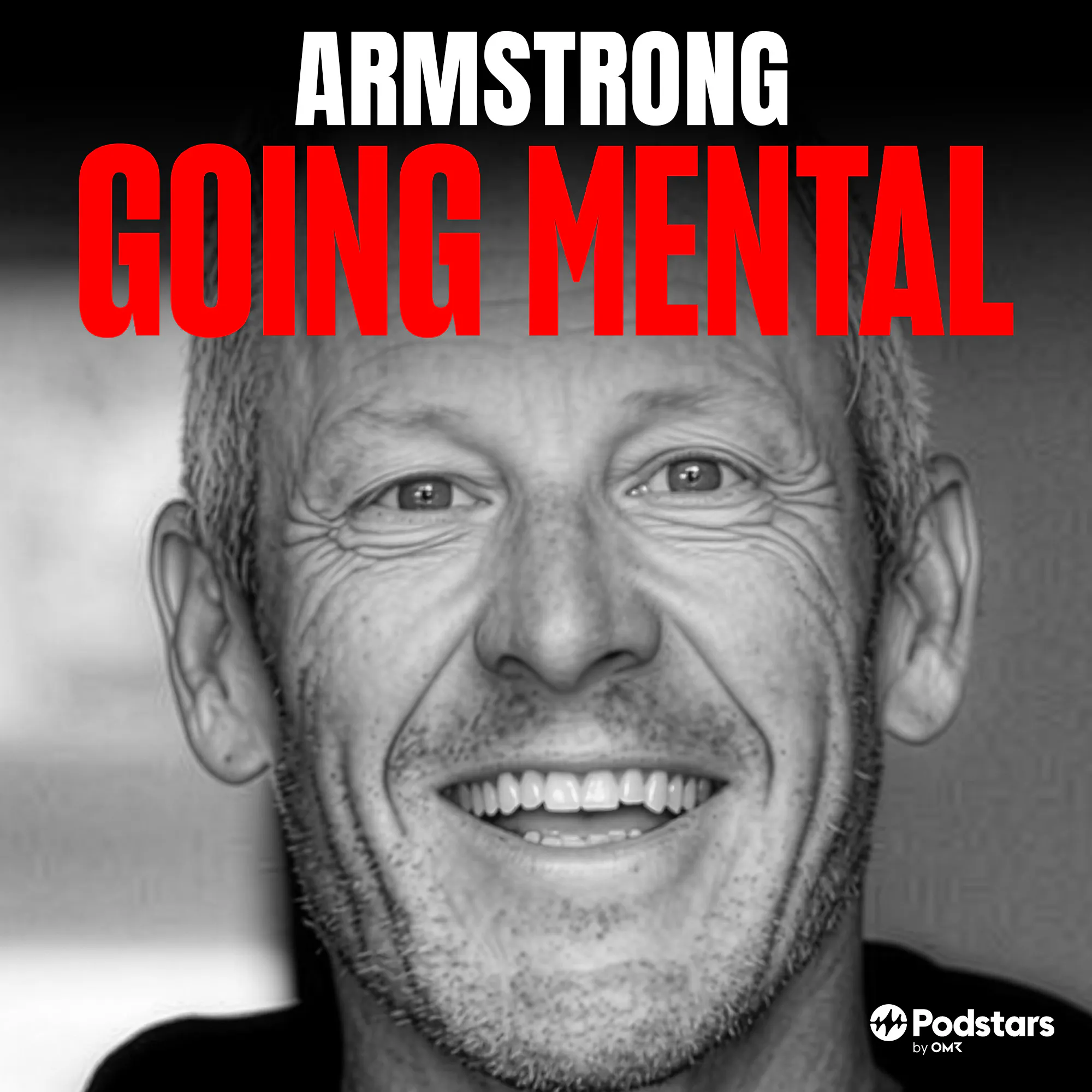
Now what I didn't understand at the time, I muscled my way and wheeled my way through everything. I never thought about mental health, I never thought about that aspect or therapy or truly understanding and unpacking these things. I didn't discover that part of the toolkit until probably six or seven years ago. And this has been the most transformative thing that I've ever done in my life in terms of rigorous process that I really pushed myself on. Can you take us into that process? [Music] So, when I was a teenager, sitting, this is August 2000, we're talking, Rainy Cape Town where I grew up. My parents had a last-ditch desperate attempt to get me to read. And they got me, it's not about the bike. And it was admittedly probably the first book I ever read covered to cover. And what had happened in the worst of all conditions, I borrowed my mum's stockings, went out and rode my bike. The story is a guy who'd beaten cancer with almost no chance of survival, went on to dominate the tour de France seven times. And yet for me, the book wasn't really about winning. It was about what drives someone to push past the limits of what most of us never even dare to approach. And that book planted a seed of mental resilience about going places in your head that kind of feel impossible. Years later, the story got a few more layers. The dominance was real. The cancer survival was real. But so were the choices that led to what I would say cost lands just about everything. Titles, reputations, hundreds of millions of dollars. And yet here he is still moving, building, helping old rivals find their next chapter. Today, I am proud to say we are talking Armstrong going mental, sitting down with a man himself, not to rehash what's already been discussed a thousand times. But I want to go a little bit deeper and figure out what it means to go all in. And whether you can ever stop. Lance, welcome to the show. Thank you. That was a good last question right there. I don't know. I don't know the answer to that. We'll see if we can figure it out in the next 60 minutes. The tradition on the show is for the guest to define what it means to go mental. When you hear going mental, what does it mean to you at this stage of life? Boy, I mean, look, my life has really, in many ways, been defined by some form of survival. And if I think back to, not survival, I mean, well, I guess there was a period obviously where I was truly fighting for survival. But I've led 54 years old, I've had a life of fighting and surviving. Right, going back to being born in Dallas, Texas to a 17-year-old girl. We spent the whole first part of our lives together, trying to overcome the odds. And then, of course, being diagnosed at 25, which you alluded to, they're truly there fighting for survival in the sense of life or death. Then from there, you fast-forward to 2012, 2013, when obviously the story came crashing down, as everybody knows, then I was put in a place of a different type of survival. I think it's also important to note that those first two things that I touched on probably prepared me for the third one. This was, in many ways, harder than the first two. To me, the pressure, look, the pressure of being diagnosed and really wanting to live as a 25-year-old man is high. But as a 40-something-year-old, with five children, a beautiful wife, a family to support, the pressure was even higher. And so, to me, going mental, it was just trying to figure it out. I think my situation is probably unique and probably extreme. But everybody goes through something. Everybody, at some point, in their lives, has to figure something out. And many times, it seems insurmountable. And so, in the games that we play, the tactics we use, the growth that we try to gain from it is what makes the difference. And so, look, there's different ways to define mental and mentality and mental health, mental fitness, mental fortitude. It's also really fun, simple, playful ways to think about it. People ask me all the time, "Do you still ride your bike?" Because they see that at my age, I still like to train and suffer a bit. So, the logical question, "Oh, you must be riding," or "How much do you ride?" or "Do you ride?" And I do ride. I do ride my bike. And I do love to ride my bike, as corny as that sounds. But the only reason I like to ride my bike now is just to get away. If there's something going on in my life, whether it's in my work life, or in just the rest of my life, there's nothing that will solve it quicker than me going for a bike ride by myself. And I don't need long. I don't need five, six hours to figure all this out. Give me two hours, all alone. And to me, that's a form of therapy and it's mental therapy for me. Been a wild ride. Needless to say. All my life, I have had Achilles problems. It is something I've spent months and years on trying to rehab and recover. And finally, in 2022, my wife introduced me to pillar performance. What really caught my attention was their athlete approach on clinical micronutrition for performance. Not just general health supplements, but evidence-based formulas designed specifically to support athletes under real load. And they're all tested for purity and bioavailability. When I spoke with Damian, the founder about my injury, he mentioned a specific collagen peptide called Tendo forte that they'd been testing. The team arranged to get me some samples. I introduced them to my daily rehab. And the rest is history. Now available as pillar collagen repair, it provides targeted support using Tendo forte, which has been shown in clinical research to support connective tissue repair and recovery. Collagen repair has in turn made it into my daily routine. First thing in the morning, in a warm glass of water, half a lemon of salt, I swear by it. If you want to give it a try, use code
[email protected] or for North American listeners on thefeed.com. That's code going mental for 15% off first time purchases. Yeah, I mean, I think very, you truly have a unique story. And I think you define that kind of in a way very few other people do. But the common element I see is that to this day, you have movement and you have getting out there and physical exercise as your therapy, as you go to. Perhaps it would be fitting to go to what I would say is a shared beginning. You learn to swim probably too late to be a full-time swimmer. I picked up swimming when I was 15 because my mom was scared I would drown off the shores of Cape Town. And then somehow we found a love for this weird sport called triathlon. A bunch of kind of weirdos swimming biking and running around the world. And you're a champion triathlete when I was still in kindergarten. You were 15, I think, when you finished six at the president's triathlon, which I mean, at the time, now it doesn't, it doesn't, it's not around me. It was one of the biggest triathlons in the world. That's right. It's something I called Mark Allen, great, so whole time. Kind of pats you on the back. What was it that grabs you about triathlon? You know, I initially what grabbed me is, is I had two of the three elements, right? I grew up swimming, age group swimming in here in the US, which is the serious version of swimming. I mean, in the United States we have age group swimming, which is what Michael Phelps and Katie Ledecki came up through. And then you have sort of summer league country club swimming, which a lot of kids just go down to the pool in the summer and they'll have a few meets and yeah, they're swimming and they're racing, which is great. Age group swimming is very serious. I started that when I was 12 and had that. And then at the same time I was running track and cross country in school. So I figured I have two of the three. I'm like, wow, the only thing I needed was a bike and finally got a bike and started, first thing I did was a kid's triathlon, called Iron Kids. And that immediately went well. But the thing in the reason I decided to actually race with the pros at that president's triathlon in 1987 was that I knew that I could get out of the water with the front group. I guess it's a different, if you're 15 years old and you're thinking, well, I could race with the pros, but I'm going to get out of the water two minutes behind the first group. I think that's different. So if you get out with the first group, which I knew that I could do and I did, you're in the race. And I thought, boy, this is something I'm looking around and yeah, Mark Allen was there. Andrew MacKnaughton took off on the bike. But I still hung tough. And then of course, you get to the run and a 15-year-old legs can't go like Mark Allen can. But nonetheless, I knew I would be in the race. So I like that. And of course, looking around at my buddies, a lot of brothers, so to speak, in high school and they're all working down at the fast food place or the grocery store. I'm like, wow, this is better. Definitely. And the sport has changed. I mean, this was a very different, it's wild to see the sort of the growth of the sport. Ironman was a thing. There was the iron man. And that was it. There was one. And most triathlons, whether it's, there was two big ones in Chicago, they were all over. But they were not Olympic distance triathlons as we know them today. So they were also very different. But fun times, met a lot of great people, got to travel the world as a 15-year-old. I wouldn't say all over the world, but certainly South America, all over North America, parts of the Caribbean. I mean, look, I watch this kind of a fun thing to think about. I was 16-year-old son. When I was 15, and of course we're watching everything that's going on here in the United States and this stuff with Venezuela, when I was 15, I went to Venezuela all alone without a computer, without a cell phone. And my mom drove me the airport said, "All right, good luck." So I oftentimes sit around and I'm like, "What happened? What would happen?" If my 16-year-old son rolled up tonight and said, "Hey, Dad, I think I'm going to cruise down to Venezuela tomorrow, but I'm going to leave my cell phone. Probably won't have any way to communicate." But it's okay. I would lay down in the road to stop him from going. So it was, look, my mom was, she was an amazing supporter. She trusted me. And I just, I didn't know any better. I just went and did those things. Yeah, you kind of figured it out along the way, right? And I think this very often, like as a parent, how nowadays I see so much over parenting offline, but no one cares what the kids do online. You've got a phone, you've got all these kind of things, but I think that's a different topic altogether. I just, I found an interview of yours back in the day, 1988, and 1988. And you basically came out and said, "I will be the best triathlete in the world in five years time." I mean, there's a look at your mindset. I totally love it. National champion at 18 and 19. You had the talent to probably go all the way. In a sport that, like you said, it had some traction. And correct me if I'm wrong, late 80s, early 90s. I'm imagining Texas cycling tight. I can't see it being thick. That was the other thing. Did you see yourself like winning the tour? Was it the Olympics where you just following your strongest discipline? No, I was, look, you're right. Cycling was, there was a scene as there would have been a scene in most, I was living in Dallas, but like most big cities, you had a, you had one of the prominent shops that had weekend rides, probably had a weekday race. You had good turnout, right? So I would show up for those. Look, the thing that really changes this whole story is a kid who had always had a dream of being an Olympian. So here we are in the late 80s. Trathlon is a perfectly logical and obvious Olympic sport. So you're thinking, well, you combine three of the most iconic Olympic sports into one. This is an Olympic sport. And they just couldn't get it together. As most people know, it was not an Olympic sport until 2000. But I always wanted to be an Olympian. And I had this opportunity. I was invited up to the Olympic Training Center to train with the cycling team and sort of audition or have a chance to be selected for the Junior World Championships in cycling in 1989, which that year was in Moscow. And this was before the wall came down. And I thought, boy, this is, I'm going to try this. And so I actually drove up there from Dallas and ended up making that team and going to the Worlds. And that was really, I still did triathlon a little bit after that, but that was the beginning of my shift into cycling. And then went to the Olympics in 1992. So fulfilled that dream. Yeah. Yeah, really, I didn't actually realize that was the dream that got me there because for me, that was my dream as well. I met a South African guy, and then I'm a Conrad Stoltz while I was a lifeguard on the beach. And he was the first ever guy I knew personally that had gone or was going to the Olympics at that stage. And I was like, yes, if this guy can do it, it just made it feel so much more relatable. Yeah. Going back to you taking over cycling as a cyclist, you were known to dig into the details and find that level of perfectionism. Is that something that you took from your early years? And was it maybe you really taking control over the many flying pieces that you had in your life at the time? I don't think it was because I wasn't that detailed or oriented when I was young. The diagnosis in a way really leveled me up. I became obsessed with the details. And those details are initially your treatment options, making hard, I had to make very hard decisions on where I chose to be treated. I was in Austin at the time. And Austin in 1996 is not the same as Austin in 2026. It's very different. I can imagine. Yeah, very, very different. If this all happened all over, I would have stayed in Austin. We were great medical school now. We have great doctors, great care. But in '96, it was a college town and a government. And there was nothing. And so I had to just look long and hard for my best options. Houston and MD Anderson was one. And then Indiana University was the other. And I ultimately chose that. But so it was just there you're starting to, you know, I think of everything in sort of sports terms. I was picking the best team. And even fast forwards today, what I do day in and day out. And the investing world is your picking teams, your picking people, your picking players. And so I was picking a team. And I picked the team at Indiana. And I just immersed myself in my disease, my particular cell type, how I could monitor that. In other words, where is the scoreboard? Where is the stopwatch? What am I looking at here? So I was just fully involved with tumor markers, chest X-rays, all of the stuff that doctors would look at. I said, no, no, no, I want to see them too. And so it, I learned, or maybe I was forced to learn, a level of detail that I never had before in my life. And that's, I suppose, I'm spending a ton of time thinking about this. But that's probably the thing that as I, you know, ultimately finished treatment and then realized I was going to live again and move back into cycling, it was that level of detail. And also selection of team and people around me that that I learned from the disease. I mean, there are so many things to unpack there. And I definitely want to get into your mindset of building that team and also questioning having the clarity to actually question where you went with all of that. But I do just want to finish off on the, on the just the sporting kind of chronological part of our conversation where you go through an incredible cycling career. You see the world, you dominate the world. I mean, for a while there, it's big and use. If you lose a race, then if you're, then if you're winning a race and you decided to come back to triathlon after cycling, 2011, 2012, for you, was that confrontation or liberation? No, it was, look, I, look, I still, I love the sport of triathlon. And I love, even if you just take that sport out of it, those three individual sports, I love. I still, I still love to swim. And I still love to run. And so, to me, it was, you know, I didn't have any. And of course, the sport had changed, right? There Ironman, there was no way I was going to, you know, international distance, Olympic distance, triathlons are now different types of events. It doesn't matter. The peak of my fitness, at the peak of my athletic ability, I never could have won an Olympic triathlon. I can't run that fast. I just can't run that fast. Period. End of discussion. And so, but now, Ironman had become this thing, right? And not just full Ironmans, but half Ironmans. And I thought, well, this is, and then of course, look, a lot of commercial interests there. Nike, who really is, I mean, you touched on Mark Allen was really, go back in the day. I mean, that that was the early days of Nike. And, and, and he was, in my, in my opinion, was integral in the growth of that brand. And so, they were interested, Trek was interested. There were plenty of people interested. And I also just, I just, you know, I loved the training. I wanted to stay fit. So, that was, there was no, you know, obviously the story, it did, there was not an ending to the story. And I actually have a view on that that it's probably best that there wasn't an ending to, to that story. Take me into that. Look, the, well, the, what was the story? The story was that I'm going back to triathlon. He's going to do these series of half Ironmans to qualify for an Ironman. Or, or, but the next step was, I was, and actually when everything went down, I was in France. I was just about to do, I was days away from doing Ironman France, a full Ironman, which is a perfect, you know, a course for me. It's a tough bike course and a flat run. Oh, man, my last little race, God, that course is brutal. Yeah. And technical, a technical bike course that I would have excelled on, open water, swim, you know, things that, that, that, it checked all the boxes. And so, but, but this is not so easy, right? And I found out really quickly that triathlon that that, as it had evolved, wasn't just a three sport, it wasn't a three discipline sport. It was a four discipline sport. And the fourth discipline was nutrition. And so it took me race after race after race. I'm like, what is my gut was a mess? I couldn't figure it out until I finally did. And the solution for that was just less. Right? I was, I was working off this, the math in my head that I'm, that I need to consume calories and energy. That wasn't working for me. So when I just did nothing, then it finally worked. Nonetheless, this would have all culminated in Kona. With me curled up on the side of the road, not knowing what to do. I would not have been able to, to, to manage the fourth discipline. For sure. And so, they're plenty of days, most days where I say, boy, I'm glad, I'm kind of glad that didn't work out. It would have been all this hope, all this hype, all this expectation. It would have started great. I would have come out in the front group. Yeah, I would have been great on the bike. I would have been parked on the side of the road in the run. Yeah, but that race that year was one with a 305 marathon and you were picking up some pace. And I tell you what, I don't think the likes of who was it? Craig Alexander, there was Chris McCormack, Luke Bentley, of those guys. I don't think they were quite as confident that you were going to be curled up on the side of the road. Well, I, we don't know. I mean, I look, I, exactly. That's right. That's why they have the event, right? And so we can find out. But it didn't happen. And, and, hey, here we are. I was excited for France, but that's, that's, that's, there was a lot going on. I mean, I was literally there. I was in France. And, and when, when I realized I need to start packing my bags and fly home. Today's episode is supported by a Ryzen. And for those who don't know the brand yet, Ryzen creates high quality performance sportswear for everybody who loves endurance sports, triathlon, cycling, running, swimming. Technical product development combined with a clean, timeless design, responsibly produced in Europe. My personal connection to Ryzen goes way back. As a co-founder, we built this brand out of pure passion for the sport and design. A lot of trial and error, testing, refining, starting over. And we have shared many wins and some losses too. The most outstanding one, for sure, was the Ironman World Championship race in 2019. In a highly technical suit that we developed together. And it made a difference. But Ryzen was never meant to be a brand just for the elites. Everything we learn at the highest level flows into the entire collection. What we refine back then and have continued since is now part of every tri suit, every cycling piece and every running product. Discover Ryzen at Ryzen.net. And for listeners of the podcast, use the code mental10 for 10% off the full collection valid until the end of May, excluding limited and already reduced pieces. You'll also find the link and the code in the show notes. That's Ryzen, RyZON. Yeah, that's quite something. I mean, what does something. What does winning mean to land some strong? Look, winning is. I don't have a. maybe even still to this day. And this is. I spend a lot of time trying to understand and unpack many parts of my life. And my relationship to winning is still one of them. Because when I think back to those seven tours, yes, I won all those tours. But in my mind, the whole time I'm thinking, just don't lose. So then it's a conversation of what are we doing here? Are we trying to win? And just be over the moon ecstatic, emotional, just in disbelief that you won, or pure joy, or you just go, "Fuck, I got it and lose." Because I hate. I hated losing and I hate losing to this day. And so then you say, "Well, where does that come from?" Right? Does that come from. I have theories. And this again, just this is just a constant body of work, me trying to understand these things. But when you're sick and you're diagnosed and you're fighting for your life and you're comparing everything to a sports match and you're looking at a scoreboard, well, winning is survival and losing is death. So it doesn't come from that. But if I look back to those seven years and come into Paris seven years in a row, I was just ready to go home. Like, it was no part of me. It was like, "Fuck yeah, let's get out here. Let's let's pop some champagne. Let's see a bunch of people. Let's. " No, no. I was like, "Hey, man, I did my job." And I ran this process that I loved and we could talk more about process because to me process is everything. But that's what I loved the most. And I would have done that for free. The racing I did is a job and they wanted me to win and so I did. But looking back on it, I don't think that's healthy to not accomplish something like that and just stand there and be like, "Wow, I did this." And so that's a shame, honestly. But hey, life's messy. And we move on. And as I said, try to unpack and figure these things out. It's a recently, late to the party, finished Andrea Gassi's autobiography. And the sentence that stood out to me was, "Winning is never as much joy as losing his pain." Right. Yeah. I mean, I think that's right. I didn't read that book entirely. I'm like you had to read a ton of these books. But the parts of it were, because I grew up a huge, of course we were in Europe at the same time and winning European events at the same time he and I. But this idea or what he wrote that he really hate, I hate tennis. So that I hated tennis. That's very different. Like I loved cycling. And I still to this day love it. Now, did I prefer training in the Alps and the Pyrenees in June all alone when there was nobody there versus July where there was a million people there? Of course. Like that was, I was like, wow, this is awesome. Look at this. I got this all to myself. And I'm running this process. And you get to the race and you're like, wow, put all these people here. That's different. But you did. I did. Yeah. We did. There was a lot of great characters in that generation. But I still loved. I loved. And even within the race, I loved, really, really loved. And if there's anything I miss, I miss the training, I miss the process and I miss the camaraderie. The hours and our days, weeks of time with those guys. And I mean the real guys, right? The real, the real warriors who in, and if I have many, many regrets, but it's just such a shame that the true characters and the true warriors in this story have almost been overshadowed, unfortunately. And I'm talking about Torchink Gappy, Betjes Loveckimov, Chetju Rubier, Tricky Beltran, Pablo Padrenos, Benoit Joachim. I mean, these guys that were there day and day out and the vibe that we had within that team, whether it's the team bus, the dinner table, yeah, and we, I mean, fuck man, we would show up every day in the bus. I'd crack the window and say, look at these motherfuckers. I said, we're, we're taking them all down today, boys. Yeah. And these guys were like, I mean, I grew up in America. That's the way they talk in locker rooms. Right? I mean, if you watch, if you're a fan, I'm a love football, some a fan, and then I fell, if the team's down 20 at half time, you, I guarantee you what the coach is saying. Guarantee what he's saying in the locker room. We're nobody's listening. He said, "Boys, we're going to roll out here in the second half, and we are going to fucking destroy these guys." That's what we're going to do. He has to say that. So I grew up loving these sports and appreciating that sort of call it what you will, call it trash talk, call it camaraderie, call it brotherhood, but these guys didn't grow up with that. So they would be like, "What?" But they believed. They believed. And so it was such a magical time, and I still love those guys so deeply. I mean, they're just amazing. Every one of them, the ones I've mentioned, are just incredible. We're incredible teammates. So swearing your team in, and I would say making it personal, right? Making it about one person, about the other team, about whoever was Ulrich Bassa. Yeah, I made them hate all of them. Is that part of your process? It was part of the process at the time. And look, I sit here now at 54 years old, and these people that I manufactured rivalries with, John Ulrich being the best example. But another great example. Those years, John had by his side every year, Andreas Clodon. Yeah. I hated Andreas Clodon so much. I said, "This guy, this guy, and then fast forward to whatever 2009 I come back, and guess who's on the team with me in 2009?" Clodie. Andreas Clodon. Clodie. And let me tell you something. It took me about 30 seconds to fall in love with him. I was like, "And I told him, to my defense." I said, "You know what? I fucking hated you forever." But I was wrong. He's another one. I'd just this guy. So we would make the… And John, obviously, is who I've become incredibly close to and been on just a while journey with. I wanted everything, every fiber of my being wanted to beat him. And now I really… It's just been such an interesting timeline and experience with these guys. But yeah, we used that. And look, Johann, who was really the architect of everything, shared that attitude and that style. And he also had Clodie on the team. He was like, "Wow, this guy is an amazing teammate." So that sport… Whoops. But that sport. I mean, I would have hoped that they were talking shit about me too. I mean, honestly, I think Jordan pointed it out in his documentary. You decide to take things personal. You decide to take the avenue of whatever they said and twist it in a way that kind of fires you up. Do you think it's part of the Champions mindset to have that jekyll and hide personality? Of course. That you're kind of in there not allowing? Yeah, I think all the best have that. I don't think there's a lot of nice guys at the top. I don't… I mean, look, even in the sport of try, I mean, think back to the rivalry of Dave Scott and Mark Allen. Imagine the things they were making up about each other. This is… Mark comes off as portrays this sort of Zen Buddha master. I got it now. Yeah. And there was some of that. Let me take something. Mark Allen wanted to rip people's legs off. That's not very Zen Buddha. But he did. And so, look, it can also go to extremes. And I'll be the first to admit that I took it to an extreme. And so, I paid for that and worked on the bike, but didn't work off the bike. And that's a lesson that I learned hard and clear. And, you know, try to move on, so to speak. Yeah, I mean, it's kind of what I find so remarkable is that you have this rivalry with Jan O'Rick. I had a similar thing with… if I could compare with Alistair Brownlee, who was, you know, a two-time Olympic champion. And he absolutely… like, he literally he destroyed me. When he came onto the scene, he was just this cocky, brash, British kid. And he just absolutely destroyed me. And afterwards, we sat down for the first time a chat on this episode. And he's like, "Yeah, man, for me, it was just about odds. Like, I was just trying to increase the odds and you were part of the odds." And, you know, that was it. And by the way, do you want to go and write a mountain bike race around South Africa for a week together? You move on. The same way that you're going and now, you know, helping Jan move along, you're helping Bradley Wiggins move along, giving them a lease of life. It's that messy humanist you kind of speak to, right? Yeah. Yeah. Yeah. I mean, those there's… for me, there's… I think there's more to it, especially with Jan. But I never hesitated. I mean, I know. Look, I like to help people when I can. I'm not the total monster or total machine. And he needed help. He made me the writer that I was day-in-and-day out. Not just in the race. I was always worried about Jan Ulrich. And furthermore, he was the only one that I was worried about. Really? Yeah. No, but none of these guys scared me. None of them. What was it about? Jan that made him feel special. Well, I mean, Jan is a tremendous talent. He could do everything. He could climb. He could time trial. He had a good team around him. But just in pure talent, he was far more talented than any of the others. And you think he just… Well, I mean, he could… You should have him on the show. He can speak to this better than really anybody. I mean, Jan's had a wild life and is not wired the same as most people. Jan's very simple. It's very, very simple. And he's also very sweet. I am not simple. And I am not sweet. And so we're just very, very different. As I've come to know him so well over the last really decade, there are parts of me. There are parts of me. And I have told him this that in getting to know him, I didn't need to worry. Yes, he had the physical talent, but this was… We were wired differently. But that's neither here nor there. I was worried. And he motivated me and scared me and inspired me. And he also went through a very similar fall from grace. And this is what really motivated me to help him. I can't tolerate it. When a hero like him is just destroyed in his home country and all over the world. And meanwhile, others get passes. That's very hard. It's unbelievably hard on him. It'd be hard on anybody, but it's much harder on him. And so I wanted to help him. And, you know, fortunately, he's sitting here today. It's funny when I read it before I came on. I got a WhatsApp from his manager. There's some event. So he's… Look, it's one foot in front of the other. And he's as we say to today, he's healthy, which is all it matters. Yeah, I met him on a bike ride in the summer, actually, on Amayoka. Him and his manager who make this incredibly funny duo. But yeah, it's about my falling. I mean, this guy's so lovely. He is, but they just make this almost comical duo, right? Like just sitting at dinner table. And the story is that come off. My chest is full gas. And he's lovely. And he has, you know, athletes oftentimes have people around them that really don't have the athletes or the person's best interest at heart. Mike Baldinger cares deeply about Yan. And just wants the best for him. It doesn't. That's it. And so I love, love Mike. And I think they're fully invested. If I compare the two of you, I look at you side by side. Do you know the sport of ski jumping? You know where they have this massive two… Well, I mean, I'm not saying it on TV. Yeah. I was at a year ago. I was at a… I gave a speech in Slovenia of all places at the ski jumping world championships. And so I was… I got to… Oh, there you go. Yes, stand there. And I'm looking at this thing going, okay. No way, dude. No. No way. There's no way. There is no way. But you know what reminds me of you is because these guys need a headwind to fly. They need a headwind. Anything with wing. Yeah, airplanes have to… Yeah, you have to take off into the wind. Have to. 100%. And like, symbolically speaking, I feel like you almost need a headwind to thrive. You are somebody, a headfirst through the wall. Do you think that leads you to a process of risk taking of resilience of persistence that someone like Jan could never face? Almost people for that matter? Yeah, I mean, I said it at the top of the show when I touched on sort of that first phase of my life where my mom had me at a young age. We were fighting. And I was fighting before I even knew that I was fighting, right? My mom was 16 when she got pregnant. 17 when she had me. And so you can imagine a 16-year-old girl in Dallas, Texas in 1970, what everybody around her was saying. And so that for her was a fight, right? And also very traumatic. Let's we can talk about sports. We can talk about international sporting glory. We can talk all these things. It sounds so cool and glamorous and iconic and sexy. And when it doesn't go right, and people fall from grace like myself, like Jan, there's also a ton of trauma associated with that. And that's a fact, right? And so… But my mom was dealing with that as she was pregnant. And so I am absorbing that, right? And so we are learning to fight. Hey, we're going to prove my mom's to no, no, no, no, no, I'm having this child. I don't care what anybody says. I'm going to prove you wrong. And so I am absorbing this, whether it's in the womb or as a little boy. And so yeah, I was raised as a fighter. Now, I'm 54 years old now. And I understand what you just said in the reference or the analogy or the idea of headwind. Yeah, I like a good fight every now and again. You also too get to my age and you're also really comfortable with some with some crosswind, maybe even an occasional tailwind. But for sure, nothing gets me riled up as much as a good fight. But you get older. You don't have the same endurance and the same energy that you once had. And my days of really truly fighting are done, right? And I'm happy about that. I'm glad I'm not in a different position. I'm glad I made the choices that I made 13 years ago. And that's when I really had to figure out a way how to survive and provide the most important thing for me. And all of this was how do I provide for my family? This is all I care about in life is my family. And so I had to say, look, I am done. I am finished. The world I was, I think time will tell or show that I was sort of in this cancel culture that America has gone through. I was one of the first. And so then you say, how am I going to feed my family? It's all I care about. Yeah. And so I had to figure that out. And there's different tools that people can use. And my toolkit has changed over the years, certainly changed. But early on, I mean, the number one thing in that toolkit going back to the day after, the day after I did that interview in the world said, okay, yesterday you were a hero. And today you're a zero. The only thing I had in my toolkit was I am not going to let my health slip. I am going to maintain my health. I'm not going to get addicted to anything. I'm not going to curl up in the corner and cry. I am going to move. And I'm not going to let my health slip. And I'm the, that's right. Well, that's another story. And I'm talking about physical health. Yeah. Now what I didn't understand at the time, because I was never a big, I muscled my way and wheeled my way through everything. I never thought about mental health. I never thought about that aspect or therapy or truly understanding and unpacking these things. I didn't, I didn't discover that part of the toolkit until probably six or seven years ago. And this was, this has been the most transformative thing that I've ever done in my life in terms of a rigorous process that I really pushed myself on. And so can you take us into that process? Well, would you mind? Would you? Yeah, I mean, look, yeah, of course, I absolutely. I, um, I mean, I talk about it all the time. So I, I am a big fan of, um, some form of, of therapy. And there are different forms, right? There is sort of the stuff that we all know. Most people know where you've got a therapist, you go see them, whatever it is. Once a week or once a month, and you sit on the couch and you can you hash some stuff out, which is great. In many ways, those are, but those are band dates. And, but there's also a different form of therapy that's more like surgery. And so that's what I elected to do, um, you know, fully intensive five day sessions, one on one, 10 hours a day, unpacking everything. Just talking? Oh, well, there's, you, you're doing a lot of talking. There's different tools and modalities and methods. In some of it seems almost, almost corny. I mean, there's, there's role playing, there's dress up, there's drawing, there's journaling. Um, and then there's more scientific stuff. I really resonated. There was a method called brain spotting, which really resonated with me and helped me push through a lot of things, but it's hard to sit with somebody. No matter how much you trust them, and I really, really trusted, uh, my sort of guru on this, his name is Mark Pemzler, uh, to guide me through this. And I, so I told him, I knew that, that this, and this goes forever, anybody listening, that if, no matter what it is, whether you're sitting on the couch once a month, or you're going to go somewhere for five days or 30 days, it doesn't work if you don't surrender. If you don't surrender, it will not work. And I surrendered. I surrendered to this process. And you get there. You know, I got there because here's, here's, here's, I'll take exactly how I got there and I just alluded to it. My whole life. And so now I'm, so I've probably started on this at 47, 48 years old. So for that whole 47 years, I knew that I, I knew that I had muscles. I knew that I had lungs. I knew that I had will and grit. Those were my energy systems. Those stopped working. I had to find a new energy system. And so my, that energy system, as I had imagined it, and I think to be right, is, is, is, is a heart. And it's in a, it's a soul and it's a central nervous system. And if you can't identify those energy systems in those muscles, those are also muscles. And you can't access those. I would have been, it would have been like prison. And so, but on every level as, as a husband, as a father, as a teammate, as a member of society, I just needed help. And I, and I, I was crying for help. In other words, I surrender. Now, my whole sporting career, if somebody was, I said, well, gosh, Lance, why don't you just surrender? I would have said, are you fucking out of your mind? That's one word I will never say. So it was, it was, it was empowering for me to say, you know what? I need help. And it's not, the reason I love talking about it is because, you know, and I think this is not that it has a stigma, but I think some of this is faded people see that they need help and, and, and help is there. And so I, I just, if I can do it, then anybody can do it. Because I'm the most hard-headed stubborn, non-surrender person, probably ever, or one of. And, and I just said, I need more help here. And I found the right person, and I completely committed myself. My first experience, Mark, was at an amazing facility outside a Nashville called Onsite. And, boy, it just worked, it worked for me, and, and I was scared as hell. I was so scared. And, and nervous. And I got through it, and now I crave it. I talk to Mark all the time, and it's, it's probably been a year and a half since since he and I have done a session together. And there is big parts of me. It's like, boy, I feel like it just, just a tune up. I mean, just give me a few days with Mark. And, and it can be anybody, right? You got to obviously know them and trust them and, and commit to the process. And trust the process. But it was, it was transformative. I find, you know, going through this episode and preparing and, you know, just touching up on a few of the things and listening, I did actually wonder whether going mental in the sense of, you know, finding that courage, finding the strength to flick the switch for you would be in the quiet, in the silence. Yeah. Because I totally noticed like, I am addicted to sports. I genuinely have an addiction. If I don't do any exercise by 5 p.m., I fall off a cliff. And I realize, like it's right. You go to a doctorate and your wife is like, honey, could you please just go out in the garage and I don't care. Do some pushups. Right. Right. Right. Right. Gers-Wift. Just do anything. Yeah. Of course. Yeah. The thing is my wife and I share this addiction. So we kind of know, you know, this is our sneakers moment when you know what I'm feeling. So we just go out and we kind of, we know how to take it. But yeah, do you ever other than with Mark actually sit still? I mean, you say you're going out on a bike ride, but that's not sitting still. Well, look, I think that's one of the keys to and I am by no means a black belt when it comes to this. But I might be an orange belt. I understand that I have a central nervous system and I understand what it needs rest. And so it's it's it's it's I mean, if there has been one change in me, the well, there's been several significant changes first and foremost in and around alcohol. That has just been wild. I mean, incredibly transformative as well. But there are times where I just and I first of all, I love to be alone. I don't know if that's weird. If that's strong. I don't know what it is. Totally good. I love to be alone and there are times. I mean, I'm sitting here. You can't see, but I'm sitting at my desk in my office and straight across from me is a couch. And there's two chairs right here and the door is shut. And there may be other people in this office. But I can just get up and go sit and just sit alone and not not look at my computer. Not just and it's just I never knew that that I had that reset. But now I now I do and and you do yes, you get that on a bike ride all by yourself. But there's other there's other energy, right? You're trying to try to go in and but I'm very comfortable just sitting alone. And in fact, there are times where you just crave it. You're like, I just need to be alone right now. And yeah, and in some sort of recharge. Let me just plug this this thing in and and just rest for a second. Yeah. And in the beginning, right, you know, you've done the most cruel and by grace in the world, you've gone through all these kind of things. But you realize like that's it's very own kind of heart, like just sitting down and just not distracting yourself, just allowing to kind of be honest. I really well, I love it now. I don't know if I'd have been different in the in the 2000s. Yeah. Yeah, but that's all right. I mean, you develop you evolve and that's kind of the story you write. And that's that probably also gets you the points. I was listening to to Will Smith in an interview, how we were saying, you know, he's kind of he finds this Zen Buddhist way and he's got all these kind of mechanisms and I like to do this. There's no way you got to where you are being Zen and Buddhist. Like we all go through our face. And then, you know, same as Mark Allen, I don't think they've got has quite found it yet. Lance, before I let you go, it would be a miss of me to not touch on you as a risk taker. Like it's really fascinated me how, how throughout your career, you've leaned into risk when other people would just roll up in a fetal position and just crawl up. And is that because you think you've gotten this perspective, how you said, you know, you were raised, let's call them tough conditions, having cancer as a as a life perspective. But I mean, who goes and negotiates their cancer treatment? Like, I was just picking the team. But yeah, it, well, yeah, I mean, that's obviously that was high risk. But look, I, my base, that decision just on, and this was even, I was 25 years old, I didn't, I didn't really recognize or, or didn't want to recognize or listen to any sort of voice within. But there was a, we all have this voice within. That is something, that is another thing that I've just gotten so good at listening to. And so, but, but, but, but, but, but, I was in Houston and I just said, boy, this, this, this doesn't feel right. And, and then flew to Indiana and met with the team there. And I thought, this feels better. This feels more like home. And so, but it's just, it's just this, it's, it's a hunch, it's a vibe, it's a voice inside. However, you want to think about it or describe it. And, and look, I've, I've ignored that voice many, many times in my life. On many, many levels, not just a sporting level and a, you know, a doping level or a denial level, other times. And, and it, it never works. Right. And so, and I think to me the most and I touched on this, I mean, and I wasn't a, a raging alcoholic, but, but I, I just kept hearing this voice. I was, in fact, I wasn't an alcoholic at all. I just drank a lot. Yeah. But there was, and we were entertainers and we would have fun, have friends over and my older kids got older. So they would always drink wine. You know what I say? I mean, it was just fun. Yeah. Yeah. And social. But it got to this point where the voice just kept getting louder and louder. And I was like, you know, holy shit. And I, and I touched on this a year or or so ago when I went through one year that the voice is a whisper, it starts as a whisper. And then it's just a conversation and then it's a scream. And, and sometimes it takes that and, and I listened, finally listened to that scream. And those are really the two if I look back over the last seven or eight years and I, and I love numbers. I love data. I love charts. I love results. But if I just imagine my life and just sort of, if I was a spectator and watching, wow, from the outside going, what, what happened there? And, and what happened there? Because something in his life changed. You can see that first trip to onsite with Mark, you see the change. And if you're watching the line, the line is, is, is steeper up into the right. And then when I got sober, that line goes straight up into the right. And, and I believe that, right? And so, at least I'm choosing to believe that. And I'm going to lean into it. And it's been a, an amazing, well, it's been an amazing 54 years, but it's been a really cool seven or eight years. And certainly the last two, I just went through two years, two weeks ago. And so, fuck man, no looking back. And, you know, I guess the other thing I would tell you is, you know, you live a life like I've lived and life moves fast. And when it moves fast, and not just moving fast, it's, it's big, it's rich, it's colorful, it's, everything about it is shiny and special. But when it moves that fast, you can't capture these memories. And there are plenty of memories that I, that, that I, that we're not able, I was not able to capture. And at this point in my life, I just want to slow everything down. And I want to capture as many memories as I can. I don't want anything to get in the way. And so, whether that's a habit, a lifestyle, a person, a use of my time, I have no interest if it's going to get in the way of me slowing life down and capturing memories and cherishing the second half. Lance, all the more special that you chose to say yes to taking an hour out of your time and, and sharing the wealth of a journey that I think has no parallels in this world. I mean, you really and truly have written your own story and, and come through. I really, really appreciate the time. I appreciate the insights. And let's do it again. So, well, this is, this is our, our good friend, Jesse DeBae. We'd, we'd be remiss if we didn't give him a shout out because yeah, 100%. Jesse Jesse's, you know, not the, but I do want to talk about Jesse, we're just sick because he is, I, you asked me to do this. You probably heard this already. My first call was to Jesse going, should I do this? I hope you heard that from him. But, and he says, may have, he goes, hell yes, you should do it. And I was like, okay, I'll do it because I don't do these. I just don't for whatever reason. But the important thing about other than just acknowledging our connection really through Jesse is that, and I'll just leave the audience with this. You can't go through this story that I went through without figuring out completely who your friends are. Yeah. And there are many ways to, to say that, right? Who's on the bus? Who's off the bus? Who leaned in? Who leaned out? Who is a friend? Who pretended to be a friend? It is, it is the single most valuable lesson I learned through all of this. I know exactly who my friends are. And there is an unbelievable amount of power in that. And it's valuable. And so, and, and I bring this up because Jesse's been a great friend. This is a guy. Jesse could have said, you know what? There is too much smoke and fire. And in Contravers here, I'm out. He never left. Jesse DeBase stood in that room. And, you know, there are so many people that did, and look, there's others that left. And that's okay. I understand that. Yeah. But by golly, if you stood in that room and you said, hey, let's figure this out. In some, in some way, just led me to believe that they are here. And hey, let's figure it out. And Jesse is one of those guys. And so, I'd be remiss if we didn't acknowledge him, but also just acknowledge that part of the story and how special it was to me. Yeah, here's to more, here's to more Jesse's in life. Good people who can make the connection that you trust. And that's, yeah, I certainly can only agree, even though our history is not nearly as long as yours. Yeah. Well, look, we all go through stuff, right? And so you want people in your corner. And I can't imagine. And look, Yon's, Yon needs guys in his corner, right? And people in his corner. And I certainly was going to be in his corner. But let's do it again soon. You're great at this. And I'm glad I did it. Glad, glad Jesse said, yeah, you should wonder. Well, I have to say, I mean, the first introduction was actually through Jesse, you taking an hour out of your day just to kind of talk to me about this project. Yeah. So that's exactly what it is. I mean, you've got the logo on your cap, the forward. Yeah. I hope you keep moving forward and have a bit more tailwind for the next 54 years. I'm on the back nine. Thanks a lot. I really appreciate it. Yeah. Thanks.
 PodcastTranscript AI