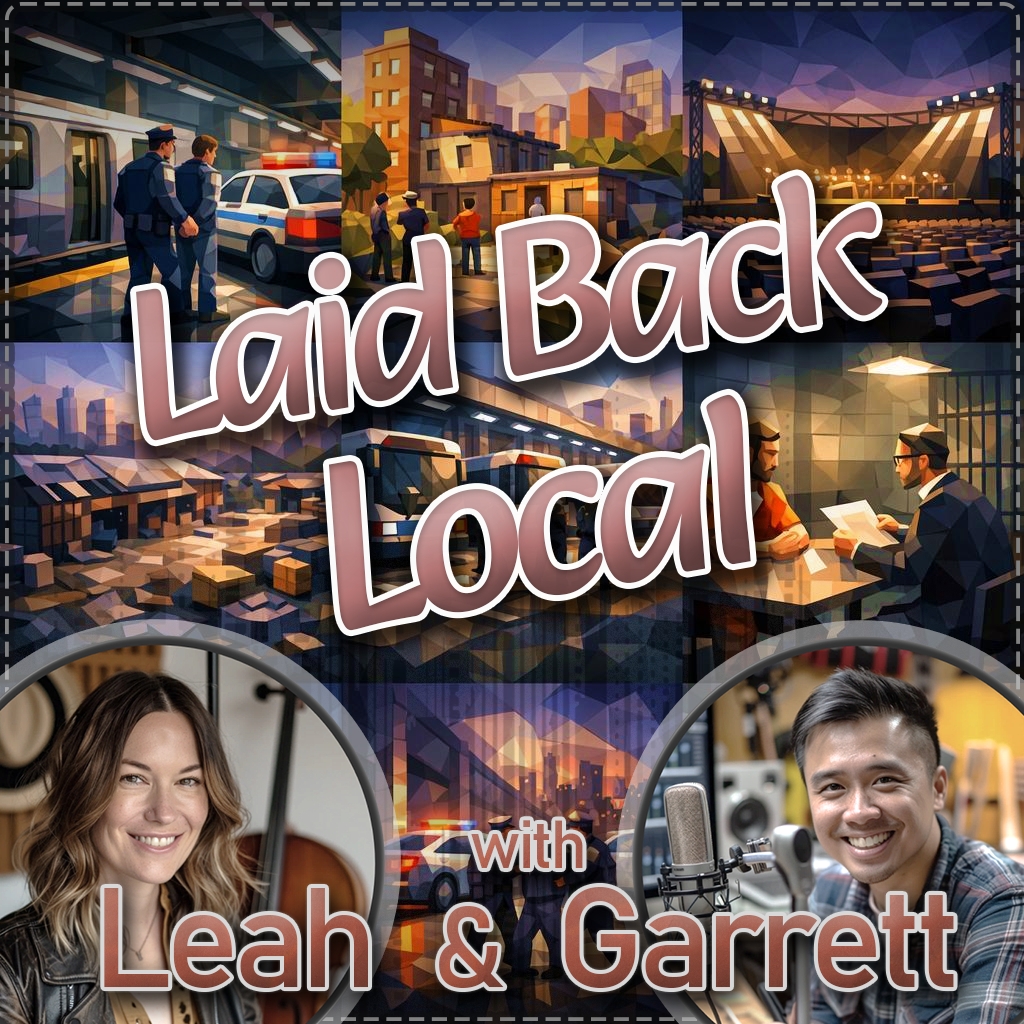
How did a detective go rogue? | New York, New York | October 22
9m 26s
A former NYPD detective, Victor Romero, faces a $1 million bail after a fatal road rage shooting on the George Washington Bridge, where surveillance captured a heated confrontation leading to the death of 26-year-old Koran Irvine. Romero, who had a commendable service record, was arrested with access to three handguns, sparking concerns about firearm access among former law enforcement officers. Irvine’s family is pursuing legal action, and a community fundraiser has raised over $175,000, underscoring public grief. Meanwhile, a 17-year-old is charged with murder in a subway shooting, part of a broader rise in transit violence that has eroded public trust. Another case involves former mayor’s aide Anthony Herbert, accused of taking over $120,000 in kickbacks from a nonprofit meant to support community programs, highlighting mismanagement of public funds. Additionally, the NYPD has been criticized for seizing personal property—such as children’s gifts and a shooting victim’s necklace containing ashes—without return, prompting a class-action lawsuit over due process violations. The MTA has suspended its fare enforcement teams after video evidence revealed violent altercations, including an injury to a school dean, calling for safer, transparent, and de-escalation-focused protocols. These interconnected incidents reveal deep systemic issues in accountability, oversight, and public safety across law enforcement, transit, and public funding.
Today in New York, a former NYPD detective is facing a million dollar bail after a deadly
road rage shooting on the George Washington Bridge.
Let's dive right in.
I'm Leah.
And I'm Garrett.
Welcome to "Lade Back Local," the news of the day with Leigh Ann Garrett in New York.
First up, ex-detective faces a $1 million bail in a road rage shooting on the George Washington
Bridge.
Police say Victor Romero, a former NYPD detective with a previously commendable service record,
is charged with manslaughter after a confrontation that followed a near crash on the span.
Manslaughter means causing someone's death without premeditation.
Investigators say surveillance video captured the moments leading up to the shooting.
Romero was arrested the next day at his workplace in Manhattan, where police recovered a revolver.
The victim was 26-year-old Koran Irvine, who worked at Con Edison.
Con Ed called the shooting a senseless act of violence.
Irvine's family is now pursuing legal action against Romero and a security company tied
to him.
Prosecutors argued bail should be high.
The defense pushed back, saying his past service and family ties should count for leniency,
but that's disputed.
Two details jump out.
Police say Romero was arrested with access to three handguns, which raises big questions
about how former law enforcement officers access and store firearms.
And a go-fund me for Irvine's family quickly raised more than $175,000, showing a lot
of community support in the wake of this loss.
This case spotlights something tough.
When someone leaves law enforcement, where's the line between training, responsibility, and
access to weapons in stressful public spaces?
You also feel the ripple effect here, a family grieving, a city processing, yet another
violent encounter on our roads.
I'm with you.
Why would anyone, former detective or not, have quick access to multiple handguns during
a commute?
That's a lot of firepower for a heated moment on a crowded bridge and the human cost is
what sticks.
A family lost their son, his co-workers lost a friend.
I totally get why they're seeking accountability through the courts.
Bale, by the way, just means cash or collateral to ensure a defendant returns to court.
A million dollars sends a clear message that the court sees this as very serious.
Switching gears just a little, Tina rested for a fatal shooting on a Midtown subway
platform.
Police say a 17-year-old turned himself in and was charged with murder and weapons
possession in the death of 26-year-old Darryl Rodriguez of the Bronx.
This happened at the 53rd Street 7th Avenue Station on the northbound E platform during
a dispute between two men.
After the shooting, the suspect fled north on 7th Avenue.
Later, he surrendered around noon that Thursday.
The NYPD hasn't released his name because he's a minor.
Earlier, they had put out images of a person of interest in a red tracksuit, though police
haven't said if it's the same person.
This comes as transit crime trends are moving the wrong way.
Murders in the system are up from four to seven compared to the same point last year,
and felony assaults, serious violent crimes, rose from 480-535.
And just weeks earlier, there was an unprovoked fatal stabbing on a subway in Queens.
It all shapes perception.
When people feel trains aren't safe, ridership and trust take a hit.
It's a hard urban challenge, stopping gun violence and making sure everyday riders
feel protected while they just try to get home.
Yeah, that hits different.
We've got to keep the system moving and make it feel safe.
I'm not going to lie, the numbers are a gut check.
Why aren't we better at interrupting these disputes before they turn deadly?
I'm down for solutions that work fast and last.
More presence where it matters, better station design, and cameras that deter, plus real
investment in youth programs that keep teenagers out of these spirals.
That's something to chew on, huh?
Next up, former mayor's aide Anthony Herbert is facing new federal charges in a kickback
scheme tied to community program funds.
Quick definitions here.
A kickback is illegal, pay someone gets in return for steering business.
Wire fraud is using electronic communications like email or bank transfers to commit a
crime.
Prosecutors say Herbert took more than $120,000 in kickbacks from a nonprofit that was supposed
to support community programs, and they say he tried to steer city-related work for
his own gain.
The new charge, conspiracy to commit wire fraud, connects to his time working as a community
relations specialist for a queen's power plant, where he allegedly helped funnel money to
a nonprofit in exchange for compensation.
Herbert worked in Eric Adams administration between 2022 and 2025, including on community
affairs and as a liaison to public housing residents.
He's also accused of trying to exploit the COVID era Paycheck Protection Program, which
was intended to keep workers employed through loans and grants, and he was fired in 2025
after controversial social media activity.
Big picture.
This highlights weak spots in how public money and nonprofit partnerships are monitored.
When the guardrails are loose, it's easier for bad actors to siphon off cash meant for
neighborhoods.
Abusing public trust to skim from community funds.
That's a no-go for me.
Non-profits, groups that exist to serve public or community needs, run on tight budgets.
If dollars meant for youth programs or housing help get diverted, the damage is direct and
personal.
Why aren't oversight systems catching this faster?
Until talk, I want stricter audits, clear conflict of interest rules, and quick suspension
of contracts when red flags pop up, people depend on these programs.
Next up, a mom's kids' Christmas gifts were seized by the NYPD and never returned, even
after her charges were dismissed.
This is Andrea Smith Taylor.
She was arrested in December 2024 while staying at a domestic violence shelter.
Police took her children's gifts and about $3,500 in cash.
She never got them back.
Now her case is part of a class-action lawsuit, meaning a group of people bringing a case
together, filed by Brooklyn Defender Services, accusing the city of unconstitutional property
seizure practices.
The suit argues the NYPD runs a confusing, drawn-out process for getting belongings returned,
and that it violates due process, which is your right to fare procedures before the
government takes your property.
Two details that stick.
In 2025, the NYPD held more than $5 million in unclaimed property, and in another case
officers seized a shooting victim's necklace that held his son's ashes while he was unconscious.
The NYPD says it reviews incidents listed in the lawsuit, but the ethical concern is clear.
If the system makes it hard to reclaim your property and the city benefits by auctioning
unclaimed items, that's a conflict that needs sunlight.
Yeah, that's one for the memory bank.
We need a clean, simple path to get your stuff back when charges are dropped or cases close.
A digital claim system with deadlines, clear contacts, and automatic notifications would
help.
Also, independent tracking, so there's no incentive to delay or deny returns.
Because for families, these aren't just items, they're memories, and sometimes basic
survival cash.
Let's not make a hard season even harder.
Next up, the MTA is halting its bus fare enforcement teams, known as Eagle teams, after videos
showed agents in heated altercations with riders.
In one Brooklyn case, a school dean was injured in a confrontation over a fair dispute.
MTA Chair John O'Leber says teams are suspended while they review safety protocols.
Basically, the step-by-step rules that guide how staff handle situations and to ensure incidents
are properly reported, the agents involved have been suspended pending investigation.
Context here.
Fair evasion on buses is estimated as high as 50 percent, and the Eagle teams are meant
to curb that by issuing fines.
But the MTA says it didn't even know about a second incident for months, and in one case,
video appeared to contradict an officer's report.
That's a trust problem.
Balancing enforcement with dignity is tough, but it's the job.
You've got to keep buses moving, protect riders and workers, and make sure accountability
is real when things go sideways.
Let's get to the heart of it.
If enforcement is going to exist, it has to be safe, trained, and transparent.
Body worn cameras, immediate incident reviews, and reporting that matches the video.
Also, conflict deescalation training, how to calm a situation before it erupts, should
be standard.
Why were some incidents not promptly flagged?
That breakdown hurts riders and the agency.
Fix the protocols, then bring back teams only if they can do it without harm.
That's all for today on Laidback Local, the news of the day, with Leah and Garrett in New
York, New York.
Stay informed, and join us again tomorrow.
Podcast Summary
Key Points:
Former NYPD detective Victor Romero faces a $1 million bail for manslaughter in a road rage shooting on the George Washington Bridge, where surveillance footage shows a confrontation that led to the death of 26-year-old Koran Irvine.
Romero was arrested with access to three handguns, raising concerns about former law enforcement officers' access to firearms in public spaces.
Irvine’s family is pursuing legal action against Romero and a security company linked to him, while a go-fund-me campaign raised over $175,000, reflecting community grief and support.
A 17-year-old suspect is charged with murder and weapons possession after a subway shooting in Midtown, amid rising transit violence and declining public trust in safety.
Former mayor’s aide Anthony Herbert faces federal charges for kickbacks and wire fraud in a scheme involving diverted community program funds.
The NYPD is under scrutiny for seizing children’s gifts and personal property without return, with a class-action lawsuit citing violations of due process and property rights.
The MTA has suspended its Eagle fare enforcement teams after videos show violent confrontations, including an injury to a school dean, highlighting a need for safer, transparent enforcement.
These cases collectively expose systemic flaws in accountability, oversight, and public trust in law enforcement and transit agencies.
Summary:
A former NYPD detective, Victor Romero, faces a $1 million bail after a fatal road rage shooting on the George Washington Bridge, where surveillance captured a heated confrontation leading to the death of 26-year-old Koran Irvine. Romero, who had a commendable service record, was arrested with access to three handguns, sparking concerns about firearm access among former law enforcement officers. Irvine’s family is pursuing legal action, and a community fundraiser has raised over $175,000, underscoring public grief.
Meanwhile, a 17-year-old is charged with murder in a subway shooting, part of a broader rise in transit violence that has eroded public trust. Another case involves former mayor’s aide Anthony Herbert, accused of taking over $120,000 in kickbacks from a nonprofit meant to support community programs, highlighting mismanagement of public funds. Additionally, the NYPD has been criticized for seizing personal property—such as children’s gifts and a shooting victim’s necklace containing ashes—without return, prompting a class-action lawsuit over due process violations.
The MTA has suspended its fare enforcement teams after video evidence revealed violent altercations, including an injury to a school dean, calling for safer, transparent, and de-escalation-focused protocols. These interconnected incidents reveal deep systemic issues in accountability, oversight, and public safety across law enforcement, transit, and public funding.
FAQs
Former NYPD detective Victor Romero was charged with manslaughter after a confrontation that followed a near crash. Surveillance footage captured the incident, and he was arrested the next day with access to three handguns.
The high bail reflects the seriousness of the charges, as prosecutors argue the incident involved a deadly act of violence without premeditation, and Romero's access to multiple firearms raises significant concerns.
The family of 26-year-old Koran Irvine is pursuing legal action against Romero and a security company linked to him, seeking accountability for the senseless loss of life.
The case raises questions about how former officers access and store firearms, especially in high-stress public environments, and whether such access increases the risk of violence.
A 17-year-old was charged with murder and weapons possession after a shooting at the 53rd Street 7th Avenue subway station. The suspect turned himself in and remains unidentified due to age.
Murder and violent crimes on subway platforms have increased, raising fears about rider safety and eroding public trust, especially after recent unprovoked attacks on trains.
Chat with AI
Loading...
Pro features
Go deeper with this episode
Unlock creator-grade tools that turn any transcript into show notes and subtitle files.
 PodcastTranscript AI