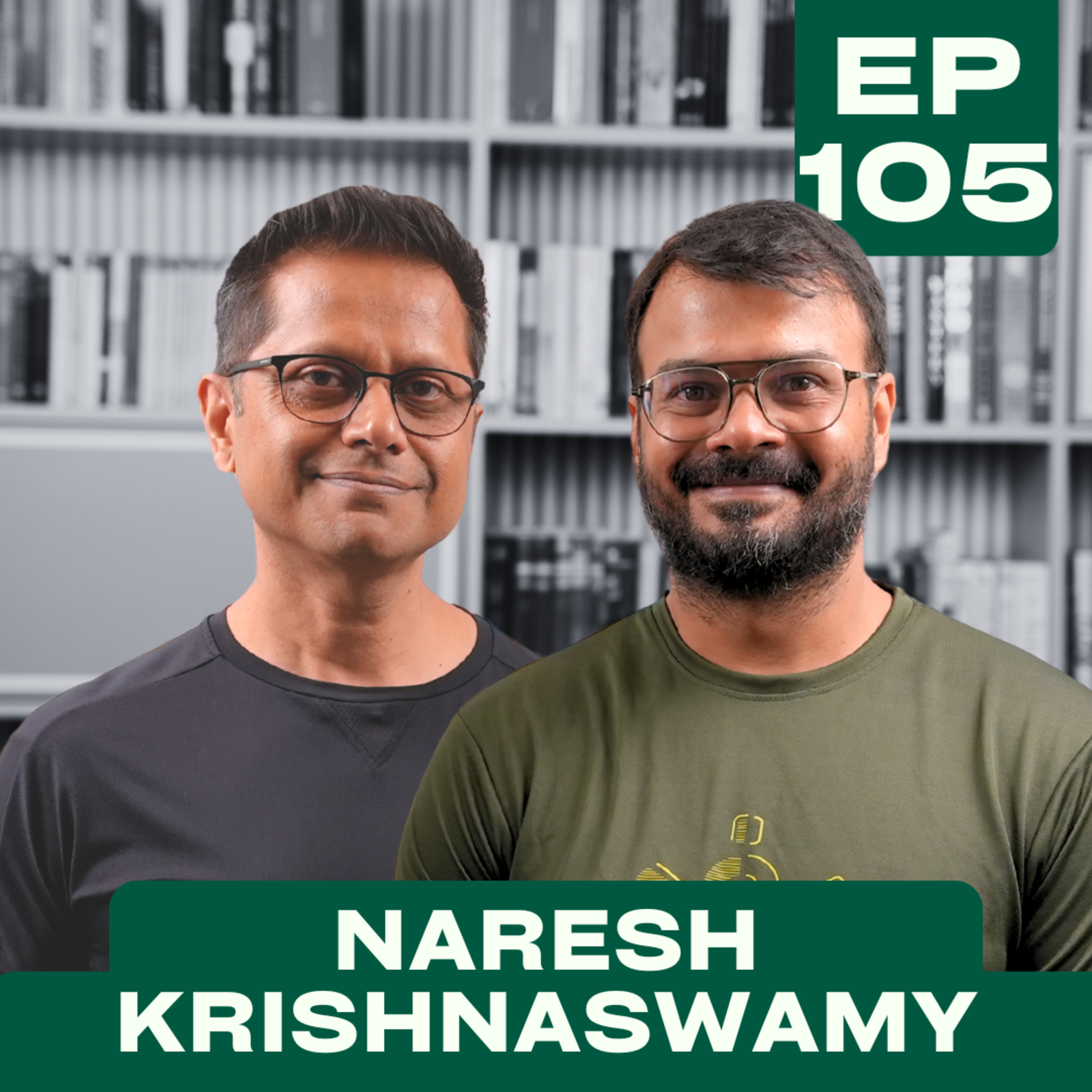
How Cult Plans to Scale India’s Fitness Revolution | Naresh Krishnaswamy | SparX
from SparX by Mukesh Bansal
62m 33s
The discussion centers on Cult's journey and philosophy in promoting fitness. The company's survival through severe crises, particularly the pandemic, is credited with building resilience, operational precision, and a sense of gratitude. A core part of Cult's identity is its internal culture of fitness, which it considers a unique offering to employees, aiming to leave them healthier than when they joined and fostering community through sports and group activities. The conversation highlights the explosive popularity of dance classes for their inclusive, high-energy format that makes exercise enjoyable, contrasting with traditional, repetitive gym routines. A major concern is the low penetration of fitness in India's population. Addressing this requires a multi-stakeholder approach involving more competition, corporate wellness programs, government initiatives, and celebrity influence. Cult is actively developing its corporate wellness offerings into a scalable, productized solution to help other companies implement similar active cultures, though this work is still in progress.
Jensen Huang recently said, "I wish there was a freeing upon you. You cannot be developed but unfit country." Fitness adoption has always been a challenge in any country. It's honestly boring. The repetitive motion of lifting a mask up and down, I did not think that it should be the most popular format to be very honest. What can cult do to become better? What can cult do that nobody else can do? Today there isn't competition. There is cult and then there is a lot of unorganized players. Yeah, adoption is going to make me. Nanish, welcome to Sparks. Thank you. You realize this has a potential turning into on your performance video for a new. Cos you know, I'm obviously happy with the current contes but I keep thinking about the things which are not there. I'm worried that it might come up in the conversation. So, V4 warned. But I want to start with, you know, I was just thinking about this conversation and we'll talk about culture of fitness in India, the role that cult is playing. I just realized that it is, if you go back to January 22, it's just over three years. So let's start there. You know, there was an entire 2021. It was continuously on the verge of near death. And last three years have been phenomenal. I think, you know, everything is firing on all cylinders. How do you think, you know, those couple of years shaped? You know, do you think, like, how we operate today? There was something, you know, that near death, multiple near death experience. Did they change? How we operate today? Yeah, I'm for sure. I think it made us greater. It also made us more thankful for where we stand today because we have seen worst days. You know, while it was a time of crisis, I think I remember most of the time still feeling excited. And that was what I think we successfully managed to do in the company at that time. Of course, digital fitness was really taking off. We had a very fortuitous position that we had a very good product out there that customers were loving. So most of that time, I remember being extremely excited that something is changing in the world and something might change in a big way in fitness and we could be at the forefront of that. So I think while the crisis, you know, is a time to show grit, it's a time to show, like, you know, mental fortitude, I think what we were able to do very well is, you know, break away from that and actually create genuine excitement in the company. So I think that held us through for a long period of time. And then, I think it also taught us, you know, to be a lot more frugal, to be a lot more precise with what we're trying to do after that. And just be grateful for the opportunity that we have in front of us. So for sure, I think you know, most of the folks that, you know, were there before COVID, at least in senior management still stuck around. So they all have, you know, good story to tell, I guess, about how those times were. Yeah, I think this is reminding me of Jensen Hwang, recently in one of the his talks, he said, you know, something along the lines of, "I wish terrible misery upon you." Or "I wish terrible suffering upon you." And which sounds bizarre, but his point was that some learnings can only be had that way when you go through, you know, those, so while you can't really wish, you know, those kind of catastrophic crisis. But sometime, yeah, they are almost like God said, and if you can manage to survive and reinvent, which I think we did, you know, called it is very different company, now, Majya's, the Omr company, as a result of that experience. Whether I'll still wish one more year or a day, because I'm not sure. But I guess we can be ready, at least, you know, if you, it will do happen and with the most of it. I'm Nresh, I know you are like, ever soccer player, or I guess football, you don't like. (laughs) I guess I'd say soccer, I guess I'd say to ever football player. Somewhere, you know, it's also related to this culture of sports and fitness in the company. That in some ways, I think, forms the backbone of what called it is, you know, one of our core values always been nurture, your mind and body. Yeah. How are things on that front? And why, as I'm saying the question, I'm recalling, you know, you know, I mean, you and I worked together at Winter as well. And I think we went out of our way during Winter days to really encourage people to experience the joy of fashion. Yeah. Looking good, getting their personal, starting showed down in all of that. How do you think, you know, where are we in terms of the culture of being active within, you know, discolid employee base? I think it's very prevalent. I think the first thing is that, you know, employee join us, young. So they're typically, you know, not unfit to end their join us. And there's just a lot of inspiration around, you know, it's, you know, we may think it's a corporate headquarters, but we have a bunch of trainers that work out of there. We have, you know, fitness experts, et cetera. So just the access to those kind of experts is number one. The second thing is, I think it is one of the primary HR in us for us, right? I think what can we be unique at with respect to culture? Like, you know, people can build, you know, high performance cultures, you know, culture of frugality, all of these things. You know, what can culture do that nobody else can do? Which is foster a culture of movement, a community within the company that encourages each other. You join the company. No one's going to spend, you know, I mean, the average tenure in any startup will be somewhere in that two to four year mark, right? And what lasting impression legacy can the company leave on an employee? I always believe that for us, it has to be fitness. If somebody leaves in a better health state, then when they join, I think that's a great job than by the company. Second is, I think I find, you know, sports teams and work teams fairly similar, you know, it's both are goal oriented, both require hard work, it requires teamwork. So I feel, you know, when an employee is engaged in activities outside of office, which is not drinking or things like that, it does build bonds. People meet each other, meet folks from departments that they probably never work with. So we have a very active culture. We have a bunch of sports clubs, religiously practice every week, you know, the company, you know, books facilities, books trainers for those sessions. We have, you know, communities that go to the gym together, that work out together, do classes together, et cetera. I think it's been a huge, huge plus. It is something that employees really look forward to. They feel that, you know, with the organization pushing so much on this, they find it just very easy to live a certain lifestyle. And it's not about saying, you know, you have to work out, you have to do this, right? There's a bunch of different things you can play sports. There's a group that runs every Sunday morning, there's a group that the 10,000 steps group that just is tracking every day, how many people are getting close to that, et cetera. It's something that, you know, I personally, you know, gain a lot of joy out of it. And I think it's just one of those unique things that only we can do. Yeah. And I think that's the direction. Eventually, I feel a lot of corporates do need to take, you know, the inordinate amounts of, you know, resources, go in companies and organizing, you know, off one off off sides, these, you know, the valley gift hampers, et cetera. I think that money and that effort is better spent when you get employees to do something together. Fitness is one of them. It doesn't have to always be fitness for a company, but I feel, you know, that's the direction that, I feel eventually what we're doing in the company, we can take to the corporate world. So it's something that like I draw a lot of pride out. No, it's amazing. I think as you're saying, you know, this is very unique thing that cult can offer to its employees. I think most places, you know, you can learn something, you know, you can get a promotion and what not, maybe good colleagues. Yeah. But usually it comes at the expense of good health. Yeah. So we enable that for the people who work here, you know, they grow in career, but shed some kilos by that end. They have the company as well as acquire the habit of fitness for their life. I think it's going to be phenomenal contribution. I think you're point about corporates. I know a lot of CEOs, these days think a lot about employee wellness, fitness, trying to promote a culture of activity. What can cult do like this whole program? I mean, we call internally org fit. Are they in place to take it like if let's say, I'm a CEO of a large company, 5,000 employees, 10,000 employees. Yeah. I really want people in my company to become active, become fit. Yeah. How can I partner with cult to get these programs implemented within my company and get participation from employees? Yeah. I think we do a lot of this with corporates as is. So there are certain corporates that engage us here around to just organize events, to keep participation going among employees, create these clubs, so to speak. I think more and more, as you said, CEOs and senior executives are themselves experiencing fitness, they're seeing improved performance, improved mental health from it. And they want this. But it's also not easy. I think we managed to do it because there is the identity of cult as a fitness company. There are many, many evangelists and me being number one. So it's not very easy to do it. It needs to get productized a lot more. It's not just as simple as CEO is coming out and saying something in the company and just things will just fall off suit. A lot of things need to be productized, the whole creation of communities, tracking of activities across employees, booking facilities, all of these. We're really attempting to productize this, make it easy so that it's something that can be plug and play in other companies. I wouldn't say we're there yet.
I think today it does take a lot of intent from senior management to get this done in the company. But for this to just become ingrained and happen like clockwork, I think needs some work. And as that happens, I have no doubt that. Is this an active program for us in thinking I'm putting my product head on and thinking if all this is packaged well and if a company signs up and there's a whole year around program for participation from all the way from the senior management to grassroots and active encouragement, motivation, competition. We have this very popular fit games. I'll come to that in a second. This whole thing, I think a lot of companies will find it very interesting and everything you're saying about building teams where it's getting to know people from other departments and just being active and understanding the joy of being active. A lot of people, nearly everywhere, play sports till their college years. Yeah, slowly feels this out, but these things allow you to get back to into some of the sports that you may like. Absolutely. So like I said, I think no one will say that this is not useful. I think the complexity of executing this year around and having it, having held the amount of participation is the challenge, which is where I think we can come in. But again, conveying the product manager's hat, it's not just going to be sending five people to a company and then having them just new activities with brute force, it has to become in some way productized. So I think that's the journey we are in. And I hope to be able to launch this in a big way to cooperate soon. We do a lot today, but I think the intensity with which it happens in cult is something that today executing it in a bunch of cooperatives is non-trivial. So I think that's something that, I think we do need. Yeah, has the internal culture of sports and fitness in the environment into the annual fit games. I know last two years I've seen after fit games pretty much. We were walking around with a cast and rules. It's like extremely competitive. And yes, that's fine. I guess there's a part of fitness and sports journey to really push yourself and see how far you can go. So probably a good thing. And injuries, I guess, part and parcel of sports journey. In preparation of this episode, narration of either team air asked a bunch of questions online from generally people who are cult users, cult fans, some other questions they want to cover. So one of the ones that are top of the list was why are dance classes always completely full? Why there's like three or four days deeper? What can we do about that? You know, is this one, one, one, one, one, dance class, they have incredible energy, I think they are the most popular format. Yeah. And people have a brass, but looks like there's an insatiable demand for more people want to go to dance. Yeah. I mean, the only answer is just keep opening more and more supply, keep adding more and more classes. I think, unfortunately, we constantly be in on that when supply always trails demand, but it's just the energy is so infectious and a dance class. When I joined cult, I did not think dance would be the most popular format to be very honest, but having experience at first hand, it's a great kind of, you know, lowest common denominator, a really fit person can do it, a really not fit person can do it, men can do it, women can do it, old people can do it, young people can do it. And especially with Bollywood music, it just unlocks a sense of energy among customers that I have honestly not seen before inside a gym. It is just feverish. Sometimes the members take over the class that is like, I'm trying to give instructions here, they are doing their own steps sometimes, they're hooting, it's a scene. Yeah, I mean, availability in those classes is a problem to be solved, but I think indeed, bless that, it's things like these, eventually Mukeshad, I think, will build fitness, right? The repetitive motion of lifting a mass up and down, it's honestly boring and we all do it because we see functional benefits from it, but that's not what we wake up in the morning, we'll be looking forward to doing the day, right? It's things like this, sports, even our strength classes are done in a super sort of engaging and fun way. I think the future lies there, I would you just make fitness something that the thing is fun while doing it, which historically hasn't been the case, which is why, you know, fitness adoption has always been a challenge in any country or any demographic that you see. I think it's things like these that really unlock the joy in fitness and it's, yeah, it's a side to behold. Yeah, I think outside of, you know, all the Shadi celebrations, like these are only socially acceptable way for people to dance their heart out and, you know, without alcohol, without alcohol, yeah. Yeah, even that also, not that easily accessible and you could order hours and all of that, you know, correct, love, yeah, but this is a very well, all day, and pretty good also part of gender mix as well. I think it's almost 60, 40 between men and women. 60 women, 40 men in dance classes, but that's still, you know, good 15, 20 men in every class. I actually experienced that, you know, they just let go of all inhibitions, you know, some steps can look a little weird when you're doing it. I mean, people just don't care. They don't care what they look like when they're doing it. They don't care like that the other person is doing it a lot better than them. They just let go. And I think that's a beautiful site and sometimes, you know, just to feel better about what I'm doing on a bad day at work, like, you know, I just walk into a dance class and it just tears me up immediately and that's, that's the joy of, maybe I should listen to the team, you know, they were saying that maybe it's part of this episode. You and I should attend a dance class and get some footage from that. Yeah, maybe you still have time, you know, in a couple of other people who called it as well. Sure. Yeah. Why not, you know, we have, so when his enters in the just a layout, you know, near our office, you're maybe we'll talk about it. Might struggle to speak with a mic on while you're doing it. That is a job. No, no, no, no, that, you know, we'll just participate in the dance class. Sure. And let's see, let's see, you know, it's been a while since I've done one, yeah, but maybe there's a good urge, yeah, to get back to that. I think you mentioned, you know, fitness, penetration, India, and that's something, you know, that has bothered me from the early days of cult. I think when we started, I think my numbers are correct. There were maybe about two and a half, three million fitness courses in India at the time, 2016, which is obviously, obviously low. And even right now, the number is somewhere between seven, eight million, if you push it, maybe 10 million, yeah, in that range, right? Which is, you know, just to do the translation numbers, you know, 10 million, one crore, our population is now the world's coolest, population is 145 crores. And I think I think almost one and a half crores people every year. So that, you know, one crore number is just just, abysmally small. I also think, you know, cult has definitely played his role in growing that number. Yeah. I don't know how much to attribute it, but if it's 10 million, I'm willing to say at least, you know, 15, 20% increases because of what we have done in terms of increasing supply footprint, evangelization, formatting, innovation. Yeah. But whatever thoughts now, like, you know, what can, I mean, on one hand, I think demand is so much, you know, whatever gym is available to build, we keep getting their demand, which is great for business. But what can we do to dramatically, actually, how do you go from one crore to five crore people who are at the gym, which by the still, what a very small number, you know, will be a start? Yeah. I think one path is, you know, we continue doing what we're doing, right? I mean, that, that will take the number somewhere, but I don't think that will dramatically change the equation. You know, one thing which probably we don't want given that we are vested in our company is competition. Today, there isn't competition. There is, there is cult. And then there is a lot of unorganized players, right? Eventually, competition does need to come in. It'll be good for us to have competition and it'll be good for customers to have a lot more choice as well. You know, the number of gyms India has, you know, across two players in the US, they have that many gyms in the US. So I think competition coming in will help. And I think the entire ecosystem, there are many actors here, right? I think there is the government. I mean, government talks about fit India, yoga is something that, you know, the PM endorses. But can the government do something really substantive over here and and and contribute to the increase in just good quality gyms or, you know, just, you know, the financially incentivized customers to be healthier. That is one, I think we spoke about corporates. Copperates can play a significant role. I mean, you spend eight hours of the day in a company. So that organization has a large influence on what you do in the day. So the influence corporates can have through programs or through, you know, there are certain companies right now that have created part of their performance incentive as, you know, whether you're reaching a health goals or not. That that can be significant. I think the role that I think, you know, celebrities are playing is significant. You know, sportsman, actors and other people even even executives now are becoming role models for for fitness. I think all of these things need to come together and there has to be someone championing this this cause for decades, right? Again, to be able to do that, it needs to be in a position where we can think decade longer, two decades long, which is which is the which is the right that we need to earn for ourselves, which I think we are doing. So I think all of these things need to need to come together, but I have no doubt that it will happen. I cannot envision a future where it doesn't happen. Why will 15 years down the line, India's
fitness penetration remain under 1% when many countries are well in the double digits. I don't see a reason why there's nothing else that you know have no other global trend that India has just not a got caught on. So it will happen. I think it's a question of being patient. I think I don't think this is a this is a you know, hyper scale industry. It is not something that can just turn around in a in a few years, but it will happen over time and the role technology can play in this right. I think all things said and done having even today machines are just mass and gravity. You know, where is the is mechanical engineering largely right? I don't think computer scientists come into it. I don't think electronics engineering is coming to it. A lot of technology you know influence into fitness can play a large role here as well. I know you are you know, obviously you know, the intersection of both. I think I would love to hear your thoughts as well on where do you think technology can really disrupt, you know, disrupt the you know, just the wave of adoption. I think you know the way he is growing. I feel like even the word disruption doesn't do justice to us anymore. And so I am just some days I literally get goosebumps about the peso progress and I feel like you know, I don't know what's a fright phrase like kind of like positive form in some ways. Yeah, I feel like you know, this is a time where we just need to all call time out. You know, it's like you know, using bad analogy. Let's say there is a nuclear bomb somewhere. Then I'm pretty sure all of us stop what we are doing. Absolutely. And take stop what is going on when pandemic happened. We did stop everything we were doing. Yeah. I think AI is getting better at that fast pace. But somehow, you know, a lot of us are not getting the memo yet that how profound it is, how radically it is going to change pretty much everything about society, about personal productivity, about how businesses are run. And it applies to health and fitness and starting, you know, just few top of mind, top mind thoughts is I think today GPT is probably or equivalent in LMSR. Best possible health coach. Yeah. One can have. Yeah. Health, Constance R. I just go have a conversation and ask lots of questions recently what I did. You know, I measure a lot of my blood parameters for last 10 years. So I just, you know, uploaded all of the GPT and select, help me understand trends. You know, what has improved? You know, what has not improved? What could I do over my life? So it comes up with a recommendation, which honestly better than what I can get from a nutritionist or a wellness coach or whoever. Just one example on a personal front, but the current either work I'm doing at New Rakes on the enterprise front. You know, again, I am convinced that five, six years from now, the companies will be undercognizable. Yeah. There is, you know, we sit today, you know, both even I have faced in the last 10, 12 years that whatever you want to do sooner or later, it comes down to bandwidth issues. We don't have people. Now with AI agent, which you can do the job as good as a human, you know, I think very soon better than what human you can do. And see, there's no limit, you know, if you can hire 100 agents, 1000 agents, 10,000 agents, you know, not expensive. What will you do with that? No, all this abundance of intelligence that are available to work in the company. I don't think you know, we are really starting to think very deeply. I know like we have been discussing, you know, for last many months among the leadership team. And maybe you can share some of the initiatives that we have started to build down at Colt to really transform the company to be truly AI first company. Yeah. I think one of the things that you did mention is, you know, working on creating this kind of health coach. The beautiful thing about AI is it's not just going to be a conduit for information. It's not just, okay, what is this and it gets it back. But it can play the role of a motivator. Yeah. It can use the right language, the right voice, the right tone. It can understand your personality and accordingly tailor the kind of recommendations that's giving. So that's one thing. We have a huge workforce of trainers and center managers who on a daily basis are serving customers. And ultimately they are the ones that are delivering the value of the product to customers. So we're building a lot of tools where we can make their life easier. Can they call in to a service that helps them with, you know, information about the gym about, you know, what, how they can pitch to customers, live evaluate how they're doing with their work and give them feedback, etc. That's another piece. Just gym management overall is also an area. This, you know, it looks like just a space with machines, but there's plenty of work that goes in in the back end to maintain a standard level of experience, temperature, humidity, gym opening at the clockwork at the same time, closing at the same time, etc. So all of that, I think we see a big opportunity in how it can, you know, it can be automated as I think a really old word now with AI, but it can be just done more intelligently. So honestly, I think we are also in that phase where we are trying to just create this high sense of urgency around AI. You know, it is something that, you know, like you said, it's not a disruptor. It's just a new way of doing everything. Everything from just meetings in the office to ultimately, you know, what customers seek and can change in a big way. And yeah, fortunate to have obviously a founder of an AI company guiding us, but I think it's something that, you know, all leaders today have to sit up and take notice. This could be defining if you are slow to the race, what you've done in your career so far could all be turned to not and somebody else could get a 10 year head start on you just because they're acting more proactively right now. Right. And this will require people to almost develop a new way of thinking about it because we are leadership in mostly strategy has been about thinking within constraints. Yeah. The constraints you want to optimize, they are certain trade-offs, you know, you're in a certain vector and people who have done well, you know, become good at doing that. Yeah. But in this case, you know, in the at least the availability of cheap intelligence, there is no constraint. Yeah. Now, how do you think about that? You know, there is, you know, you can have as much intelligence deployed as much your imagination and able to apply that to your real world. And I think change management is also probably, you know, again, the most coming, the quality is also reasonably large company. We are still growing rapidly. You know, click on 30, 35%, but that is not, you know, 300%. So in some ways, you know, we start thinking somewhat incrementally. It's like in their extrapolation and just thinking in a very different way where pretty much anything is possible. Yeah. You know, you require and how do you change for that? You know, if like both you and I know if for magically, if you grow 100%, I think we'll fall apart. Yeah. Right. But how do we know adjust for what? Maybe it is possible to grow 100% and maybe for for collecting, given that we still have physical footwear, maybe not, but there are companies who have much lesser physical footprint. Yeah. The whole change management around here, I think it's self is going to be very powerful. Leadership skill that people have to really embrace. Absolutely. And what I have noticed is when someone actually sees something live in practice is when the aha moment really happens, right? So I think it has to start with, you know, some, some magic that some engineers develop quietly in the back and just demo it to the whole company. And I think that will be the first eye opening movement. I think, yeah, also has a tendency to create some insecurities, right? Like today, I think people, you think, yeah, you think job loss. The other insecurity it is creating is that you feel that it is a leveler right now, right? 15 years of experience doing something was worth more pre AI than it is post AI. So you have to embrace that like it is not, you know, things like, you know, tribal knowledge. I have been there, done that. I'm going to mean less than what they did before. So it's going to need a big mindset shift. I mean, these are, you know, regardless of how goal oriented you are as a professional, you know, your self insecurity will always take over. If you think, okay, AI adoption is going to make me less valuable as a professional, it's going to be a problem. If you think that if I talk too much about AI in the company, people over here spoke that they're going to lose their job. That mindset is, I think what first you have to break and then and then create some real, like, you know, real magical things that you can, you can show to your employees that, hey, this is what this is what is possible. And I think that's where, that's where, you know, I think the technology leaders in the, in the companies right now, along with the senior management have to really, you know, it's again, one of those things that, you know, you can go and shout from the rooftops. You can just keep doing town halls and keep re-itrating it, but those will just hit blind spots soon. So I think, you know, focusing on getting some high quality demos out is what we're trying to do in Kult and I think that's what most companies right now should be doing. The beautiful thing is cheap, it doesn't, it's not like it takes some millions of dollars of investment, right? It actually reduces your needs for engineers. It makes, you know, co-dwriting faster. It just makes production faster. So I think you're just getting some good quality demos out would be a ring for a sport of call. Yeah, one of the tools in I'm excited about that we're building in Kult is this, you know, kind of, Oracle like AI agent, which is present in every meeting and you can ask any question. Yeah. And we, you know, what I envision is that and sometime today struggle that we are discussing something and we want to get a
access, certain data for a certain way and the data is not available. Yeah. The conversation which can be informed by data analysis becomes more opinion, perception driven. Correct. So just imagine having that, you know, agent always available in every meeting. You can ask any question. Yeah. About really big picture, you know, starting with, you know, where do you think footness is going to be in the world in 10 years from now? Two, you know, what was the footfall for dance class at our HSR layout? Correct. 19 minutes enter at 8 a.m. Correct. And the reading of that, right? Or show me the performance of this particular trainer over last and correct, not anything extrappler from that to any company. I feel this is a, like, absolute must have in every company should think about having this tool available in every meeting. Yeah. So that meeting is informed by as much context as possible, as much synthesized, you know, analysis of what has happened and the quality of dialogue will go up. Correct. So much better. And this, I think, he's just V1. I think V2, I hope, you know, there is this voice agent listening. And we say, look, I want this analysis. And I want to immediately, you know, either plot it and project on the screen. So we literally start to begin to look like minority reporting. So I'm not science fiction. I hope, you know, we should have it in six months or less. You know, it demands something and let it create a chart and project. Maybe even create a dynamic video or animation and the quality of conversation we can have about what's going on business. Absolutely. It's very automatic. I mean, one of the things I'm doing this podcast is actually bring some AI here. So let's just, you know, let's just ask GP to something and see how it can assist our conversation. Usually does a pretty good job. Let's see, and it's also moody. See, I am Mukesh Bansar. I'm founder of Cult. And with me, I have my friend, Nareesh, who is currently CEO of Cult. We have worked together for last 12 years. We are doing a podcast shoot. One of the things I would like to ask Nareesh about, you know, what can Cult do better as a fitness company over the next few years? Can you based on your understanding of where Cult is at? You know, just share some of the suggestions of what can we do better? And maybe if you have a question for Nareesh, that sounds like such a cool conversation. Nareesh, I'd love to hear your thoughts on that. It's always interesting to see how a company can evolve and grow, especially in the fitness space. If there's something you're curious about or something you want to dive deeper into, let me know. No, do you have any question for Nareesh? Like, you know, from what can Cult do to become better? Your recommendations or a question you think Nareesh can answer about Cult. You know, fun, interesting question about what we're doing in fitness. Oh, absolutely. One question that could be interesting for Nareesh is how Cult is planning to integrate new technology or trends like where are the fitness tech or AI driven fitness plans to keep members engaged. And also maybe what are some of the challenges he sees in the fitness industry right now that Cult could tend into opportunities? Okay. Nice. Well, it's a good question. Yeah, I think Austin answered right. I think AI fitness coach is something that we are most certainly working on. I think, you know, again, I see it playing both the role of information, given as well as motivator, which is, I think, a super important part of of just any health journey. In terms of what challenges I see, I think, you know, the standard challenge in fitness is always going to be how do you get just locations at scale? We are, we are a company that's pretty well penetrated in the top three or four cities as we go into multiple more cities. How do you firstly keep attention on so many different cities in the country? And how do you maintain the same level of rigor on getting the right location, understanding the market very deeply? Again, I think that's a place where AI is already changing the game. I think there are tools available these days, which will tell you exactly how many people live in a certain vicinity, what income brackets, they're in, what are traffic patterns, you know, what is, you know, the visibility of a certain, you know, certain shop, etc. So I think that will be, I think for me, always be the number one challenge. If you ask me four or five years ago, I would have also said, you know, maintaining quality and customer experience. But I think it's 700. We have demonstrated that I don't worry too much about 700 going to, you know, 2000, 3000 and us being able to maintain quality. What I do, worry about is as, you know, cult expands from being a three to four city business. Are we able to, you know, just execute as sharply across all of these cities as we, as we do here. And there's always new nuances to learn new, new, new customer insights to learn whenever we go into any new market and can be. Can we be as precise about it and as well execute as well as we have done in the top few cities is is probably the one thing. The opportunity there is, I think, fitness can grow faster if these cities are well served by a top brand. I've seen it numerous times in cities like Bangalore, Hyderabad and Delhi that there are for sure more gym goers in HSR layout today than they were 10 years ago. There is no two ways about it. There are three X number of gyms in HSR layout. Then they were pre-cult. So I think the opportunity there is to really accelerate fitness growth in the country by reaching a lot more customers than just today the Metro that we will do. So today, you know, we have I think what are 750 centers or so footprint and mostly in big cities. Yeah, I'm long tail as well. Why don't you talk about, you know, just Bangalore penetration because that's pretty eye opening. I think most people don't realize. Yeah, that we're probably the largest retail chain in Bangalore when it comes to number of outlets here. What is your sum? Yeah, we have about 250 don't 50 gyms in Bangalore, which is a honestly anyone I say give this number to the jaw drops and like 250 that's that's insane. You know, I'm really proud of Bangalore. I believe Bangalore is the fitness and sports capital of the country. It's not just fitness even sports facilities. Why is Bangalore is number one? There are most number of bad badminton courts, the most number of swimming pools, organized sports facilities like, you know, CSE, luck, sin. So Bangalore is is firstly having culturally probably the most advanced city in the country when it comes to fitness and sports. What we have been able to successfully do, of course, we were we were conceived here. We started our all of our operations here. So obviously we have a head start, but Bangalore, first of all offers very favorable commercial rent, which I love about Bangalore, unit economics, easy to do. It's a very multicultural city now with with the boom of startups and it you just get a lot of people from different parts of the country settling in in Bangalore at one time. So for a lot of people, you know, coming to cult is a way of meeting new people. It is the thing that introduces them to a lot of new people. It's their kind of people tend to move for their job here and pretty soon join join cult. So that's another unique thing about Bangalore. You see a lot of markets in different parts of the country were very very homogeneous type of people come here. If you go to a cult, cult center, this first thing, you know, other than English and Hindi, there is no one common language that you can speak. So I think this Bangalore is for me, you know, the penetration Bangalore is about four and a half the 5%. So look at 0.6% Pan India, look at four and a half 5% in Bangalore. So and that's not very large. My calculations as New York City is 335% Jim penetration. So Bangalore can totally get there. It has all the making spirit. There's a lot of development happening in the periphery. So I don't think 250 is constrained. We can we can go higher as you pointed out very aptly our gyms are crowded. So we can open more gyms. I think just Bangalore is I think for me perfect as a city to you know, start your fitness journey and we're seeing that many times. Which is which is excellent for Bangalore, excellent for cult as well. And I also think this our footprint can easily double here on next 3, 4 years. But going back to this now, you know, we are currently opening about 200 centers here over 5, 6 years. They'll take us to 2000 centers. Yeah. Again, which is good for, you know, good for for cult. I think that it's lost into almost 2 million subscribers and so on. So I think it's very tiny in the overall scheme of things, which is speculative. You know, right now, I know this thing we don't discuss in the company strategy. But if you were to say 2000 not enough, we want to have you know gun for 10,000 years. What according to needs to happen like where do we need to start to have a really credible plan. I don't know maybe we five or just two aggressive maybe 10 years. Let's say 10,000 centers in 10 years. Yeah. Going back to earlier numbers that is still transferred to 10 million users. And if cult has 10 million, maybe the country may have 30, 40 million that's still very tiny when the population is we would add more people by the time anyway. Yeah, the rate of the population growth. Yeah. How should we think about you know, like really think about what will it take for you to have 10,000 footprint. Yeah, I think few axes, right. I think one is, you know, what is the long pole in opening 10,000 gems. It's capital. It's time finding the right locations and it takes a good time.
to four months after that. How can this whole thing be disrupted? We just spoke about the AI coach. Firstly, I mean, being fit does not necessarily mean going to a gym. We need to recognize that. Today, our business model depends on that, but I don't think being fit in India needs to be constrained to, okay, there is a space that we want a lot of people to come to, right? So, so the AI coach, for example, can we take fitness to people, apartment complexes? I mean, they're booming. Most of them, I'm a gym. This runs empty, not well managed. How can cult, you know, partner with many developers to really start a gym from day one, right? That's one access. Coverage. Again, you have the attention of your employees for eight to 10 hours in the day. You have a lot of influence. Can corporate secondaries that you are one of the big actors in the entire health and wellness journey of India government? Again, you know, keep keep saying this, but there are plenty of things that the government can do to accelerate fitness and it can go beyond just, you know, you know, PM, of course, like, you know, promoting yoga, having it, it has to be through the chain, like, you know, given us a real mandate to various state governments, etc. So, and I mean, I do believe this. It's not probably something that our investors want to hear, but competition. I mean, we do need to see players enter the market. I really hope, you know, this section of the partners reaches, you know, the policymakers, politicians, anyone who's interested in health and wellness. Yeah. No, there is a lot of business more health, but when people talk about health, they talk about shortage of doctors, nurses, hospitals, hospitals, but it's fine. That infrastructure is needed, but this is needed also. Applied. Good health is preferable over surgery or have spent in your month in hospital any given day. People really, really, really need to take this seriously that, you know, while fitness infrastructure is going a some pace, all the bad things about lifestyle are growing at much faster pace, so, okay, availability of junk, food, sedentary lifestyle, yeah, social media addiction, you know, just continuous content, consumption, pollution, bad air and so on. Absolutely. And as a result, all the lifestyle disease numbers are just continuously on their eyes. Yeah. So like anyone who is well-meaning, really cares about, you know, right, which for the country, especially for younger people coming up now, has to take this dimension seriously. Yeah. And I think this is also somewhat related to what you are saying. You know, fitness is obviously not gym. Let's talk about that in general. For anyone in who is some interest in active lifestyle, like forgetting gym for a second, what do you think, or what are all the other avenues? Why should consider? Yeah, I think walking on a daily business right not, you know, not designing your offices in a way where, you know, you have to sit at one desk and keep working on one laptop. That is a big factor. You know, the way our cult offices have designed, I steadfastly hit 10,000 steps a week without trying. It's not like I'm forcing myself to go out for a walk or anything like that. I'm just walking between meeting rooms because there is no fixed space for anyone working. You're just saying, well, they're elevator also. So I think so as well. Yeah, I think we should, I mean, anyway, the number of people in the elevator, anyway, you don't get the elevator when you want it. So, so I think they are walking is is important. Sleep is so important, right? I think when you're young, you have a tendency and I used to be a very late sleeper back in the day. And then as I grew older, I could see the direct correlation between sleep and recovery, right? Like if you know, just going to a football game in the evening on good seven eight hours of sleep versus, you know, bachy sleep, quality of sleep. I don't think I consciously thought about quality of sleep. I just thought sleep equals number of hours you have slept. The quality of sleep is so important. Nutrition, of course. So I think the word active lifestyle is super important. I think the gyms can be intimidating. And it can be, you know, something that puts off a large number of people. And you may think, okay, this is this one hour in the day that I'm dedicating the fitness on the other 23 hours, you know, I can do whatever else I want. I think it's not the case. You can do a lot in the 23 hours and not even need that one hour in the gym, right? So I think, yeah, I think just enough tools available enough trackers available right now, where you can just do micro changes to your daily habits and and see a lot of benefit. And let's talk about newer trends also. I think a lot of these long-distance and running groups, etc. growing in the country. Yeah. These obstacle course type of games. I know like we had, very successful cult, unbound, even recently. Yeah. High rocks, you know, came from nowhere. Absolutely. How does extremely popular, what role do you think, you know, these community-oriented activities have massive roles. So I mean, it would without question, marathons have changed, you know, running in the world and in India, right? And, you know, the beautiful thing about a marathon is that you set your, you have your own goal. It is not really a race. A 5K, a 10K, a half marathon, a full marathon, doing a full marathon in four hours is like the pinnacle, but doing it in four hours, 15 minutes, 30 minutes, also very commendable. So I think those events have led to a big change in culture and running, right? And sweetness has never had that. The activities are quite fun as well. You do a wide range of things. And even since the like, Rauraki will might not have heard about high rocks. Yeah. What exactly happened, what happens in a few days? So, high rocks is a circuit. There are about 10 different stations, which you have to go through. So the stations could look like this. You start with a run of maybe a kilometer or two kilometers, then you get to a station where you probably do a, you know, a shoulder press or something else. You do a certain number of repetitions of a certain weight. Then you move on to a next station where you probably do X number of burpees or X number of jumping jacks or jumping on a block. Then you move to another station where you flip a tire and X number of times. So there are a bunch of different stations like this. And it's, you know, you have to do it a certain number of times and at a certain weight at each station, right? So it's quite attritional. I mean, it is, it's tough because, you know, your body is getting no rest. It's, it's not like any workout you probably have would have done in the gym. You need to be able to do a variety of movements. You have to have full body fitness and you have to have, you know, your muscles, your cardio vascular ability, everything needs to be trained and it's very strong. And, you know, and you're doing it in a group. So again, you keep seeing people at different stations. They're struggling. They're taking breaks. They're taking sips of water. There's somebody at each station motivating them. So that makes you feel good as well. In the end, it's a time thing. You have to complete it. There's no spits. Just a week of time. You need to complete it in, but the time becomes your marker and being able to do it in a certain time, you know, give you whatever, bragging rights and doing it better the next time makes it better, etc. It's typically an indoor event. So it happens in like a big kind of auditorium. And, you know, there are a lot of people around usually cheering you on as you do it. Yeah, it just makes for a great spectacle even for a viewer. And for someone who's participating, you know, it's it's, you know, again, a marathon is it's just doing the same thing for like two hours. Here, you're doing different things. Some you may ace, some you may struggle at. So it's just it's it's it's very engaging. I think I would encourage people to watch videos of, you know, either called tongue bound or high rocks. People usually have a smile while doing it. That's the best part. It doesn't feel like drudgery because it's fun. You overcome one challenge and then the next one is in front of you. Then you get past that and then the next one. It's it's it's super fun. I think I did it for the first time in in unbound and then I went and saw a high rocks live. And for me, it was like, you know, this beats any any marathon. This is what I'm going to train for now. It's very cool. Yeah, maybe maybe I hope, you know, in the coming years, these formats also take off and create this whole community participation. Yeah, around this, you know, the idea of everyday fitness. Yeah. Let's let's also talk about trainers. Now, lot of, you know, what we do at called in the gym or group classes are very heavily powered by the trainers who come from all parts of the country. Yeah. And in some ways, the reason we've been able to scale like there's a whole machine to be able to get right people train and all of that. Just talk a little bit more about, you know, who are these trainers? Where do they come from? What is the process for someone to become a trainer at called excel in that career as a trainer here? Absolutely. I mean, you know it because you set it up way back then. But like you said, our trainers come from all part of the all parts of the country. Just taking a step back. I think training before cult was not really a profession that you would look forward to. There weren't enough job opportunities to be a trainer. There weren't enough academies where you can train to become a trainer. And for the lay person, you don't really understand how you progress as a trainer. Okay, start doing training. What happens 10 years later? What happens 15 years later when my body is not capable of training anymore? What happens in it? And I think we had to systematically address all of those issues, right? So typically who are our trainers? I think we like to focus on, you know, people that have represented either, you know, their state or their district or sometimes even university at some sport and are towards the end of the, you know, are there are with sports.
So, they're typically early to mid-20s when the opportunity to represent the nation or to, you know, compete in, you know, the Olympics or Commonwealth games has passed them, right? And now is the time when they are thinking, okay, this, this sport has gotten me here, but now I need to really think about a career and what I'm going to do for the next 20-30 years. And we, we focus on those people because for them, the body is fit. The mind is fit. The discipline of training is still there. And, and also one of the fears that they have is that, you know, okay, I'm going to go from being this person who was a best runner in the state to a clerk in a bank where like, you know, I'm going to be told what to do. I'm going to hardly going to get any respect, etc. So for them, becoming a trainer is a beautiful next step because I am in front of customers. They look up to me. I am making a real difference in their lives, etc. So firstly, I think that profile of people is, is who we focus on. Secondly, wherever you are in the country, I think you can apply to cult and you can, if you sort of pass some initial parameters, we put you through a training course, right? A lot of this training can happen remotely. And, you know, for some part of the training, we slide these people down to either Bangalore or Delhi or Hyderabad, etc. So, so that and typically this training involves, you know, it's not a whole lot of science because these guys know the basics of movement, they know, you know, form, etc. We need to teach them, you know, just certain communication skills, how to address customers, how to command presence in a room, etc. And that's something that our training focuses a lot on. Once they complete that, they of course hit the floor. And in their early days, a lot of them shadow existing trainers or start small with smaller classes or smaller number of members. But there's a massive feedback loop that happens most of that. As you meant, as you know, a lot of all of our classes are rated by customers immediately. So there is regular feedback that closing, we have a very set mechanism of how to transmit feedback to a trainer, right from customer feedback to what other senior trainers are observing about that trainer, what we ourselves are observing about that trainer, etc. So getting the person, or, you know, to learn on the job over the first, I would say, a few months is, is I think probably the most important, or important step here. I think finally, I think trainers are the product. I think there's no doubt about it. I think more than anything else, you know, the customers are the most attached to trainers and especially dance trainers, right? Like if we change a trainer for whatever reason in any center, I mean, the sum of them would, right? Because riots and really be just granted it. So I think recognizing that was, I think, the first step that these guys are probably the most important actors in the entire entire system and, you know, designing their life. The good thing is you can see progression as well. I mean, a lot of our trainers start taking classes, do that for five to seven years, then go into management positions within the entire trainer ecosystem and eventually graduate to designing the format itself for one day. So I think being able to provide that kind of progression, ensures at least you have a good 10, 15 year career that you can look for. After that, there are avenues like becoming a personal trainer, opening your own gym, opening your own studio, etc. So I think, really legitimizing that profession, I think is one of the biggest contributions I think we've had to that. This is excellent. I think, you know, the, I think for the first time in the country, fitness trainer at scale is a very credible, you know, job option for people, especially as you're saying the people who pursue sports because sometime, you know, when you are really trying to compete at national level beyond, you know, you are not able to pay attention to your studies or other, and a lot of other paths kind of get shut down. But this really opens up, and we already have many thousand trainers and if you really get close to the 10,000 gym, there's almost transferred to 100,000 jobs, which is very, very, very minimally on your country level. So hopefully, we continue on that path. What about innovation and new formats? I recently finally tried, you know, the Pilates Circle offering, which is phenomenal. I was blown away with the, like, the quality of equipment, training, ambience, and so on. So that is part of innovation charter. What are some of the other interesting things in the works you think you will be able to try out in terms of creating more variety and interesting, you know, things for people to try? Yeah, I think this, the hierarchy thing that you mentioned, right? I think there is a, there's a real possibility of creating kind of performance centers for that. And that's, you know, the next thing that I'm exploring and I'm really fairly excited about. Again, it is, it's pretty engaging because again, you're going to a gym, it's kind of going to look like CrossFit, but again, with the, with a certain goal that you're kind of training for. I think that is interesting. Even a lot of formats, I mean, there's, you know, a hundred thousand varieties of yoga itself. I think that that's going around the world. But I think this, this one is the one that I'm most excited about. I think like gym for women only and so on. What does it mean? Yeah, I think definitely, yeah, definitely worth considering. There are some in Hyderabad that I know, women only gyms. But I would rather create an environment in the existing gym that is, that is conducive for women because, you know, ultimately, I think, you know, women also will tell you that, you know, we also do want to go to a gym where there is, there are, there are men, but I think today, a lot of the gyms are, you know, intimidating or smelly or whatever it is that holds them. So, I'd rather solve that problem than really focus on women only gyms. But, you know, Pilates circle that you're going to, I think it's 80% of the members there are women. Like, I don't think I've been in a class there, whereas I've not been the only male. So I think there are formats like that that I think are, you know, ripe for women to take one as well. Yeah. Excellent. And just what are, you know, some of the next few years, what are things, you know, you are excited about what are you looking forward to and that happens in the gym? Yeah, I think not exactly in the culture, but one thing, I'm not sure right now to feel excited about it or to be fearful about it is GLP drugs. I think this is something that it's again undeniable it is coming. I mean, we can all sit back and say, you know, it's not good for you. The research is not sound, but either it is sound or it will get sound, right? Like, it is going to happen. So I think weight loss through, through the through, you know, medicine, which was something again, back then we would have thought like minority report. The science fiction is a reality. I'd love to get your thoughts about it. I think I am not too, I don't know too much about the science. What I do know is that you do need to work out once you take a GLP drug and which is where I think, you know, the real opportunity for gyms are because people will take these on and hopefully that will lead them to a gym, but I don't know how you think about it. No, I think, I think overall the rise of GLP is very exciting. I think I'm pretty, I'm also going to do one full episode on GLP at some point because with the so much interest in awareness is increasing. There's so much to also learn about science as well as right way to approach it. I want to share one interesting fact. I just found out that the very first GLPs were invented in 90s. And at that time, you know, this was seen as a undesirable side effect that you lose so much weight. And it was mostly shared known paid attention for almost 20 years. And only in the last decade, you know, people started to realize the potential of weight loss and pretty, you know, branded drugs out of it. And now this is the biggest blogbuster drug of I think last 10, 15 years. It's coming to India in a big way. Everything I've seen so far is quite effective. Yeah. Like people obviously lose blood of weight. The few caveats, one is we still don't have very long term studies. Most of side effects are actually positive. Your sleep improves, focus goes the blood pressure and so on. So it's almost seems like one of those miracle drug, you know, everything in a box. The two things to watch out for is one is when you start the GLP journey. You pretty much have to be on that like starting some like metformin. So that's something people will have to realize because other there was most people who stop taking GLP. They end up regaining most of it sometime even more. Okay. So that is one big pitfall. And second is if you don't work out, if you're not doing strength training, then you lose weight, but that is both through fat and muscle loss. And you can become very weak and chance of getting injured. So today, every GLP prescription comes with a fitness prescription that doctor reminds the patient multiple times that this you lose weight is great for you, but make sure you go to gym. Make sure you work out three times a week. Otherwise, your chance of losing muscle is very high, which is not going to be on the whole. So from everything I've seen, I'm more positive. I think a lot of people really struggle with obesity itself due to so many other downstream issues. And here is a clinically proven solution that's available. Costs are getting faster, some patterns are going to expire in a year or so. Yeah. And cost feel like, you know, going to fall even more dramatically. So overall, it's very exciting, but a little new development. I want you to watch with caution. Yeah. So no, I just closing not right. And so One can say that we are still at a very nice and stage when it comes to
fitness journey for the country as a whole. - Yeah. - And Courage has managed to in last, you know, nine years now in a position where, we're in somewhere driving, we are the agenda for fitness in the country. There's of course a lot more we can do, we'll keep pushing ourselves. One of these, like, some of the top of the mind things, you know, for you for next few years, to what can we do to like very actively, beyond what we're already doing, to keep promoting this in culture of fitness. - Yeah, I think, obviously we spoke, spoken about how AI can, can disrupt. So again, how can we break out of this? Okay, we need to go to a city, open a gym, like, you know, spend time, et cetera. So what is a faster expansion path than what we know today, I think is one? - No, I agree, I think it's just a problem. It's, that is one is just, how do we inspire a lot more people? - Yeah. - And fitness is such an amazing thing. You know, I've been fitness pretty much all my life. I know you've been very, no fit in active. So our many people, I think we're discovering a joy of being fit and how many other things, you know, become better in your life. So I think really inspiring people about you. And then continue to remove the barrier, like we can as easy as welcoming, as possible, help people in habit building, which is hard. Even just all of us struggle building new habits. So if we keep doing that, overall, I think as you were saying, globally fitness penetration, at least in the 10 to 20% range, and given all the other aspirations in the hands of being a developer country by 2047 and so on, you cannot be a developer country, but unfit country. Yeah, you have to also simultaneously drive that journey and I'm pretty sure, it will pay its roll. So, great, great termed generation. Thanks, boys. - Thanks a lot. - Thanks, guys. (upbeat music) - At Sparks, we aim to bring to you stories of exponential impact. We share in depth analysis of what goes behind success stories. If you find our conversations interesting, you can join us by subscribing to our YouTube channel. You can also listen to Sparks or Spotify, Apple Podcast, or any other audio platform of your choice. If you have any suggestions on who we should invite, or what topics we need to cover, just let us know in the comments. We are always listening, looking for ways to improve, and keep getting better as we go along. (upbeat music)
Podcast Summary
Key Points:
Cult's near-death experiences during the COVID-19 pandemic fostered resilience, frugality, and excitement, shaping its current operational mindset.
The company has a strong internal culture of fitness and sports, viewing it as a unique employee benefit that improves health and builds team bonds.
Cult sees dance classes as a highly popular, inclusive format that makes fitness fun and is key to driving broader adoption.
There is a significant gap in fitness penetration in India, and increasing it requires ecosystem efforts from competition, corporations, government, and celebrities.
Cult is working to productize its corporate wellness programs ("org fit") to make them scalable for other companies.
Summary:
The discussion centers on Cult's journey and philosophy in promoting fitness. The company's survival through severe crises, particularly the pandemic, is credited with building resilience, operational precision, and a sense of gratitude. A core part of Cult's identity is its internal culture of fitness, which it considers a unique offering to employees, aiming to leave them healthier than when they joined and fostering community through sports and group activities.
The conversation highlights the explosive popularity of dance classes for their inclusive, high-energy format that makes exercise enjoyable, contrasting with traditional, repetitive gym routines. A major concern is the low penetration of fitness in India's population. Addressing this requires a multi-stakeholder approach involving more competition, corporate wellness programs, government initiatives, and celebrity influence.
Cult is actively developing its corporate wellness offerings into a scalable, productized solution to help other companies implement similar active cultures, though this work is still in progress.
FAQs
Cult focuses on formats like dance classes and sports that are enjoyable and accessible to all fitness levels, moving beyond repetitive gym routines to unlock the joy in fitness.
Cult encourages employee fitness through sports clubs, group activities, and access to trainers, aiming to leave employees in better health when they leave the company.
The crisis taught Cult to be more frugal, precise, and grateful, while maintaining excitement and innovation to survive and reinvent itself.
Cult works with corporates to organize events and clubs, and is productizing these programs to make them plug-and-play for easier implementation in other companies.
Dance classes are highly popular due to their infectious energy and inclusivity; Cult addresses demand by continuously adding more classes, though supply often trails demand.
Cult believes competition is needed to grow the market, as it currently faces mostly unorganized players, and more choice will benefit customers and the ecosystem.
Chat with AI
Loading...
Pro features
Go deeper with this episode
Unlock creator-grade tools that turn any transcript into show notes and subtitle files.
 PodcastTranscript AI