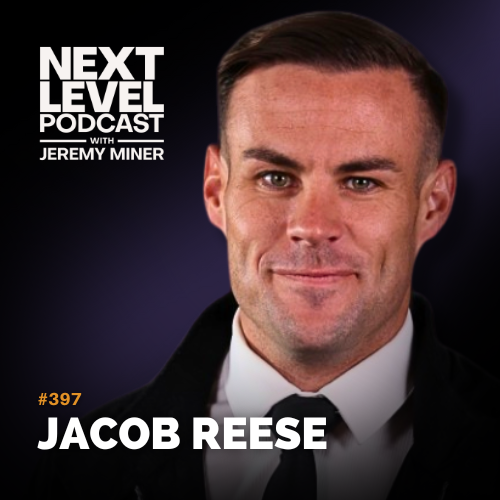
How Communication Drives Profit in the Trades with Jacob Reese | EP 397
35m 30s
Standard Plumbing Supply, led by Jacob Breese, emphasizes principles of stewardship and customer service to maintain success. They offer innovative programs like Vendor Managed Inventory to assist clients in saving time and resources. The company's decision-making process is centered around long-term sustainability rather than short-term gains, reflecting their commitment to employees and customers. Despite frequent acquisition offers, their goal is to continue growing and benefiting those associated with the company. Jacob Breese's vision for the company is rooted in legacy and making a positive impact on the lives of employees and customers, focusing on fulfillment rather than just financial success.
Transcription
7171 Words, 38531 Characters
Plumbers and electricians, and HVAC contractors are just stuck in this mindset. Jacob, I can never charge that price. Jacob Breese, the vice president of Standard Plumbing Supply, is one of the largest home services companies in the United States. He can go over some principles and some things they have incorporated into their business has elevated them to the integral of success in that industry that you can apply to your business. One of our competitors had a very good program. Started calling on a few of the customers. I'd walk in and say, "Sorry, I can't buy from you because I'm buying from this competitor." And I went to my father and I was like, "Hey, we gotta do this." He's like, "You'll never figure it out." If you create, you'll never compete another day of your life. I look at my business and everything that we sell, you can buy online. Your pay is not directly tied to your skills, but how well you can work with others. Communication is so important whether you're selling a toilet or a piano or a water heater, you know? Okay, so in your mind, I want to ask you this question first. Before we get into your company and stand up plumbing and all those great things, the culture, which, listen, you want to watch what we're talking about and listen to what we're talking about because whether you're sales manager, VP of sales, business owner, whether you're an individual salesperson, you want to learn what this guy can bring the tables for your leadership and your persuasive ability. So in your mind, why does everybody need to really learn how to sell, how to persuade? It's a great question. Yeah. Can we start off with good questions? Yeah. You mentioned one out of every eight professions is sales. One of the people that walk on the planet is in some type of sales job. Yeah, I think everything that we do involves some blood to look selling. Learning how to work with people is something that I really learned from your sales training. Yeah. It's very impactful to know, hey, if you create and remove that resistance, you can actually get to the point of finding out what that person needs and helping them and connecting on a higher level. Yeah, I mean, everything is persuasion. In your offices, let's say somebody's on sales, somebody in ops, would they maybe need to learn how to persuade or influence? Yeah. Yeah, 100% in operations, right? We sell toilets from the most glamorous thing you can sell in the industry. Yeah. In operations, you have your ideas, you have supply chain, and we need to go to our sales team and say, hey, you need to be selling it this way, or you need to be communicating with your customers that, hey, this has a lead time, or, hey, this is the process. Yeah. And if you're not able to communicate that effectively, it can cause real issues. They don't buy in. Yeah. Right? That's a really brilliant move. What you just said there, even like an ops or finance or anything, it's like, how do you present your ideas to be accepted by other people? Because if they don't know how to persuade or influence the sales people about changes they need to make, the sales persons don't buy into it. And then that could cause people in ops problems down the road because they have issues from customers not understanding it. Right? Or let's say you have the COO there, and there's, he tasked, he actually tasked them with like, hey, I want four of you to come in here with like the best idea to solve this problem. They'll come with great ideas, but which of those ideas is going to win? Not necessarily the best idea, but the person who could best communicate their idea is going to win. The perception of that value. So it might not be the best idea, but the person who knows how to get the COO to perceive it as the best idea will usually get that. Yes. That's sales resolution influence. Deadly one should really learn it. Okay. So let's talk about your company. So standard, you've been around since 1952, your third generation owner, you've got your dad, your grandfather started it. What was your grandfather's name? Dale. Okay. Yeah, he actually fought in World War II. And really came back and went to New York University and got a master's degree in retail merchandising. And the Europe side or the Pacific side? Europe side. Really interesting. I have some stories there. My grandfather landed on Normandy, Utah Beach. Yeah. My grandfather. Maybe they're right next to each other as well. I like that. Okay. So what are some lessons that you have learned from your dad that you've maybe learned from your grandfather that have really helped you in business and life? Yeah. Well, there's a lot of lessons. I think one that really hits home for me is the lesson about stewardship. Yeah. We stewardship more way. You know, so much in God and what we do, a very religious family. And a lot of the things that we've been given in life have come from God. And having that stewardship of saying, yeah, I'm going to take this whatever it might be. I mentioned selling toilets. You know, we're going to need the best at selling toilets and the best at helping our customers get what they need. Yeah. That we can be. I think when your motivation is specifically around being a good steward, it changes your desires. It changes what you're trying to do, who you're trying to be. And ultimately your mission as a company. Well, you said something really remarkable there. You talked about being that steward. And that's the reason why your brand is here when it started from 1952, right? Because you took care. Not only did you sell all these toilets, right? Which is it, you know, we need a toilet. But you took care of that clientele. And because you took care of that clientele, you fulfilled what you said you would do. That's why your brand is still here. You're talking what, 75 years later. Yeah. Yeah, could you imagine if you had not taken care of the customers? Nobody would know who you were, right? Yeah. Because you wouldn't be here. And I think a lot of companies don't understand that. They're more about just, you know, we want to make as much money, much profit as we can. But they don't understand how you'll never last long term with that type of mindset. It's got to be a balance, right? You have to have profit. You have to be able to pay your people. You have to make a profit to keep the business running that stuff. But most importantly, you have to fill with your clients what you said you could do. And you guys have done an excellent job on them. What are some other, like, what are some principles that maybe you're a dad or your grandfather's taught you that's really helped the culture of the company stay so intact? Yeah. Going back to talking about the customers. Yeah. Besides just the customers. Yeah. So we have a saying it's that the customer is the boss and that actually comes from Sam Walton, the founder of Walmart. Yeah. Says, you know, there's only one boss and it's the customer. Yeah. If you can fire anyone in the company from the CEO, all the way down to the guy taking the trash out simply by spending his money somewhere else. That's true. That's true. And everything that we do is focused on our customers. We want to make them. Give them an example. Yeah. What do you, what do you guys do? Maybe differently than because you guys are the industry leader with what you guys do. What do you guys maybe do differently than pretty much everybody else? Yeah. Yeah. I think we really try to put ourselves in their shoes. We take their feet back. One of the particular programs that we offer VMI, it's an acronym for vendor managed inventory. Okay. If you go to a typical contractor plumber, HVAC electrician. Yeah. You know, they're going to say they're overworked, Thunderpaid. They're extremely inefficient. Yeah. And we go into their business. We take all of their inventory. Take it out of their books. We organize our operations to give them a very clear process for their hearts. Okay. And we're able to buy them back anywhere from 150 to up to 500 hours a year per tech who uses this program with us. Oh, so you go into these companies that buy from you to help them out in that way. And a lot of our competitors will look at it and say, what are you doing? Yeah. Right. You're going to have theft in there. It costs a lot of money. How are you going to have a full time person? How do you afford that? Yeah. We look at it and it's like, Hey, we are here for our customers and that's our whole motivation. How is that helped you like retention with all these clients like being able to do that? Yeah. Well, first and foremost, we keep a very, very good line of communication with them. We have somebody in their warehouse. Right. That individual is going to all their company meetings, their company parties. Right. And he's working with them every day. And we have very clear key indicators that we track. We can give them back to the customers and say, Hey, here's some opportunities where you're able to sell your team. Yeah. And why you should use this. Yeah. It can really affect your bottom line. And interesting. You know, most of these companies in the trades, they're so small that you can pull a small lever. And immediately they'll go double, double the revenue, double the profit. What did you guys implement something like that? And what caused you guys to have this idea to do that? And it was actually right when I started into the business after BYU. Okay. I started calling on a few of the customers. You know, they had some of them known my family for 30 years. Yeah. And I'd walk in and say, Sorry, I can't buy from you because I'm buying from this competitor. And I went to my father. I was like, Hey, we got to do this. He's like, you'll never figure it out. And that's kind of what he said. And then it got to the point where one of my best friends, actually, he ran a plumbing company. Yeah. And he called me and said, Hey, Jacob, we want to do this via my program. About to sign with XYZ competitor. Okay. And he goes, Do you want to do this? Just give me 10 minutes. So I called my dad back. And I was like, Hey, here's the opportunity. We love to do it. And he just goes figured out and don't lose money. Yeah. And we went in. I made a whole lot of mistakes. I still think one of the worst days of my life was going in and sweeping it up about six months after we got in there. Sure. But that was also, you always have those failures in your life. Yeah. And that's really those pivotal moments where you can learn from your mistakes. Yeah. And you want to do things you can learn or you can go the opposite way and victim mindset. I mean, it sounds like you're the type of person that never gives up. You know, in the guys like, Hey, you're never going to figure your dad never going to figure it out. What triggered in your mind of like, I am going to figure it out. That probably goes back to maybe the program and my childhood, right? Sure. I have a late birthday and August birthday. And so, you know, graduating, I was like the last one to drive a car, right? The last one to go on a mission out of all my friends. Yeah. And, you know, because I was younger, you know, I was the light. I would think I weighed like a hundred pounds and ninth grade. And so I couldn't really rely upon a lot of, you know, my size or strength that had to come from, hey, we're going to figure this out. And so I think I've always just had a mindset. There's no such thing as losing. It's either winning or learning. And as long as you continue to work at it, you can typically find a way through. How many children does your mom and dad have? One or seven. Where are you at in that order? The right in the middle. You're right in the middle. Interesting. That told me everything. Yeah. That's really good. Yeah, because your older siblings had a little bit different upbringing, especially the first one for sure. The oldest one compared to the last one. And the one's kind of in the middle kind of feel sometimes that they're in the middle. They're just kind of there. So sometimes that kids, that's good because they give you a chip on your shoulder that like you want to prove yourself or like do something to like stand out when a larger family. It's really good. Like that you wouldn't be here. You might not be here doing what you're doing. Had you been born at very first or last? You just never know. Yeah. It's very interesting. I love that. Oh, there's so much stuff in there. I love that. Okay. So let's talk about it because you guys, you guys have obviously been very successful, huge company. How do you maintain that? Because a lot of companies get to where you guys are, but they don't stay there. You know, maybe they stay there for five years or ten years and then something happens and they start to go down. How have you guys been able to maintain that besides the things you talked about? Yeah. I think a lot to my father. He's been such an example to all of us and really trying to be a good steward. And I think that principle carries through to our managers and our people. We entrust them to be a good steward. We give them the numbers, the indicators, and it's essentially their own little business inside of what we do as a company. And allowing our people that trust, right? Those people who run the VMI's forest, that's their job. Hey, your job is to make sure that that customer's happy. How many of those do you have, those type of people that you hire? For the VMI's or for stores? Well, for the VMI's. Like they go into each of these. Yeah. They have. We got about 60 locations within that program, you know, about 80 employees. Oh, amazing. That's interesting. And how many total employees do you have? Just a little over a thousand. Okay. And where do you guys, where do you want to go? I mean, you're already at this level. Like, where do you guys see like future improvements on where you, where you can actually go? You know, there's in the industry right now, the adoption of AI. And everyone's saying, AI is crazy. But AI doesn't care at 2 a.m. when your water blows up, right? And your toilet blows up. And so starts going everywhere. Yeah. And the reality that there's a shortage in the trades, right? The CEO of BlackRock just came out and said there's 500,000 jobs short. Really? The CEO of NVIDIA is saying that the next billionaires will be plumbers, electricians, HVAC technicians. The trades. And the trades. What do they feel is causing that? Well, everybody says go to school and we get a degree. Yeah. Okay. So not as many people are doing it. That pipe was a few years ago. Was it the keystone pipeline? Yeah. Yeah. That shut down. Like the start to code or something. Sort of something. Yeah. You know, they wrote this article. Like, all these tradesmen are going to be out of a job and you need to go to school. Yeah. Right? And the irony there is, you know, the person who wrote that article, I don't know if they have a job anymore. Because AI can write that article. Yeah. Exactly. And so you ask, where are we going? And I would say it's right towards our customers. Yeah. And if we can help them and provide them solutions, systems that make their companies better. I believe there's always going to be a place for plumbing wholesaler. Oh, for sure. In their business. 100%. I mean, AI is a tool. It's going to replace certain jobs. But just like anything, humans adapt. Like humans are the most adaptable beings that have ever existed in my mind. Because if you look at the industrial revolution. If you look at the writings in, they literally said that we won't need humans. We're just machines will make everything. There's not going to be the jobs, blah, blah, blah. And all it did was create more jobs. And industries that didn't exist. I can go on and on and on. Like every, you know, three, four generations. Same thing. Like internet came out. What did they say? We're not going to eat sales people. People are just going to wear our line. All it did was create more industries. Like hundreds of more industries. Same thing's going to have with AI. It will replace some jobs. But what it'll do, it will create more industries that do not exist right now. And I think there'll be millions of more jobs because of AI actually. And different maybe trades and some other areas as well. So it's kind of fascinating. Okay. I want to talk to you a little bit about decision making. How do you guys make? You got a big company. How do you guys make high level decisions as an organization? Focus through how that looks like. A lot of people probably want to know. Yeah. Well, if you look at our industry, there's a few very dominant players that are owned. They're publicly traded. Yeah. And they have a lot of systems and processes. And a lot of the time it can be short-term thinking. Hey, we've got to hit this quarter's profits. We've got to make this decision. Yeah. So let go to customers and race prices overnight. Yeah. And so to go and say what we do. It goes back to that customer. It goes back to being a good steward and saying, hey, we want to be here in 50 years from now. This decision to do blank, right? We might win in the short term, but in the long term, it's probably a bad decision. Yeah. And so I think a lot of our decision processes involve the people on the front lines of saying, hey, what's going on? And then how do we make a decision that will not only help us succeed today, but also in the future? That's a really good mindset. How often have other companies try to come in and acquire you or offer to acquire you? I could get an email once a week. Okay. And what is your guys' mindset on that? The answer to the question is what would we do? Yeah. You know, where would the thousand employees go? I've watched a lot of my customers sell their businesses to private equity. Yeah. And some of them have gone very well. Right? Others have had mass layoffs and mass changes of the culture and the people. And if your motivation is to be here today and in the future. And for those thousand employees that depend on you every single day, it's not about so much the money. It's about trying to continue this forward. Yeah. That's our goal to continue moving. What do you, Jacob? What do you want your guys to be at the end of the day? That's a really good question. Yeah. I looked to how my grandfather gave standard plumbing to my father. He didn't charge him for it. Let me give it to him. And I view myself in that same situation. Graduating from BYU, you have watched a lot of my friends going out of their industries and doing really incredible things. But I've just felt this sense of need to bless those. The work is standard to bless the customers that buy from us. And so the legacy is that I made everybody's life who was around me better by being the best dude that I could be. What does that do for you, though? When your motivation changes from trying to make money to helping others, you know, Tony Robbins says the secret to living is giving. And I think so much, you know, everyone's looking for the next, the next greatest thing and the next AI thing. Yeah. There are all the same principles that are just wrapped up in a different look or a different vehicle, just a different vehicle to get there. I, you know, what you just said is brilliant because I don't, like I have a personal opinion that I don't believe like the most successful people in life are necessarily happy. I believe they're fulfilled. I believe there's a big difference of being happy and fulfilled. I believe to be happy sometimes we almost subtle. Well, we don't keep striving to get better. We don't keep striving to serve the customer. We don't keep striving to have a better business. We don't keep striving to help more people. But I believe that we can be fulfilled in that. Because if we become happy, it's almost like we become complacent where we're at. And we stop trying, it's good enough, right? And it sounds like you're the type of person that's not willing to say it's good enough. And that's, I'm assuming a big reason why you guys have gotten to where you're at. Yeah, you're, you're, they're always, you're growing or you're shrinking. Yeah. In every, every aspect of your life. And I, yeah. Going back to God, I think when you're in line with God, there'll be very specific thoughts, very specific impressions. We're all entitled to them every single day. Yeah. And if we act on them, they'll continue that noise will get louder. And if we ignore it, it'll kind of get turned down. And I think to those people who, I think they're doing their very best, they might just be lost, distracted. And that's really where, I mean, I sell toilets. But how do you sell problems for things? Yeah. And how do you help them? Is, is just trying to be the very best that you can be? Yeah. Well, you seem fulfilled. That's really good. What I want to know is, so you hosting events now. So how long have you been hosting events? I know we're doing a event together. We partnered on an event. I think coming up here in February and Utah, Utah is my favorite state, by the way. So I have to go scheme one up there. Yeah. I went to school there. What caused you to want to partner with companies like mine or other companies on these events? Yeah, it's something out of the ordinary for your industry. Yeah, yeah. My father has come to with a lot of questions about why we're doing events. You know, we're at a wholesaler, but what are we doing? Yeah. A mentor of mine told me that when you, if you create, you'll never compete another day of your life. And the adoption of online, and how is that going to take away a whole bunch of jobs? Well, people still buy from people that they like, and as you say, trust. Trust to give them the best result. Yeah. If they like you, that's just a bonus. Yeah. And that's, you know, going to our events, it's a level of helping our contractors. You know, it's most of my customers, you know, when they're outside of the very large private equity groups and the very large companies, it's just kind of the chuck in a truck. They just got to do the same thing. You know, remember. I had a customer, a couple of examples I'll share. One of them, I was, I was out on a trip with him, and it was a few day trip. And about halfway through, he just became extremely aloof. And immediately I began to look into it and say, what if I do wrong? What's going on? Well, it wasn't until the end of the trip. And I said, hey, it's a real bouquet. Yeah. And his eyes, you know, welted up a little bit. And he goes, hey, you know, Javis has been a lot of fun, but he goes, I just got a text from my wife. She said, I hope you're having fun. But when you get home, I've got divorce papers on the counter. Oh, wow. Yeah. And, you know, this guy has given his life for his customers. He's built an incredible business. Yeah. But one of the most important responsibilities in his life was, was kind of in shambles. Yeah. And I think a lot of the time, you know, looking at the industry, how do you sell more toilets? But if your customers aren't right, they're not going to be able to buy more toilets. If they're not a profitable business, if they're not paying their bills, that's really hard. And so I've noticed in scene, right? They don't know how to price right. They don't know how to market themselves. They don't know how to organize their operations and their teams. Yeah. And, you know, the prices today, people are complaining that plumbers and electricians and HVAC contractors are charging as much as doctors. But they go to school for that. There's a shortage they should. And a lot of them are just stuck in this mindset of saying, Jacob, I can never charge that price to my and customer. And they keep their customers in price-based thinking rather than the results-based thinking. Yeah. People will pay for more if they feel like they're going to get a better result. So what would you say to, when a contractor comes to me and says, Jacob, I could never charge that. And the irony there is that he's struggling to pay his bills. More to ask him. And, well, it depends on how you view selling. Is selling something you do to people or selling something you do for people. Do you do it to them or for them? So I've got to reframe their way of thinking of what selling is. Yeah. Because if they believe they're doing it to them, like selling is a bad thing, like you're manipulating them, like it's something bad. Anytime they go to race prices or anything, they're going to feel like they're going to have a lot of anxiety and they're going to be nervous. That's what's going on in the nervous system. But if I can reframe their way of thinking where, because that's what selling is, you're doing it for them. Why are you doing it for them? Because you're solving their problems and getting them the result they want. And if you don't do that, their problems stay the same. Nothing ever changes or they go to somewhere else. So that would be the first question I would ask to get them reframed into what selling actually is. Because if I can reframe them that I'm doing it for them, then it makes sense that I can raise my prices. But if I feel like I'm doing it to them, like it's bad, I'm going to feel nervous about that. I like that a lot. There's more to that, but that's where it needs to start. Yeah. Yeah, simple reframe right there. And a long way to answer your question, you know, the most fragmented industries. There's new plumbing HVAC electricians that are popping up every day. But they don't have the help, the tools and the resources to run. Maybe they don't know how to communicate. Yeah. They don't know how to scale with SOPs. They don't know how to manage their finances, right? They're good with what they do. They just don't know how to do the business stuff. I think that's brilliant that you guys go in there and help them with the business stuff. So this is why you do the events. So like we're a sales training company, you want these guys to be able to feel comfortable in communicating their message. Because here's what I was saying. It's always the POV, the perception of the value. And you probably heard me talk about that at sales column when I did the Q out there a couple months ago. It's not necessarily who has the most valuable thing. That's the reason why the process is going to buy. It's just how they perceive the value of your thing. That's what they're causing to buy. So you could have something really, really crappy, right? And people will buy it like hotcakes because they perceive the value much differently. Because the person communicating is, they just know how to frame that better. Whereas you might have the best thing in the world that nobody's buying. Even though it's the best thing, because the person communicating, it does not frame it well. And that's why they don't buy. So it's not necessarily the thing, like how valuable a thing is, it's how the prospect perceives the value of that thing. And whose responsibility is that? The person talking to them. So, you know, as a, we say a contractor, they might think I'm not in sales. But are they trying to get more clients? That means they're in sales, right? So, you know, even if we're not getting paid like a commission on something, what are we trying to do? We're trying to persuade, influence, and move other people to our way of thinking every day. So if I'm a business owner trying to get more clients, what am I trying to do? I'm trying to persuade, I'm trying to influence, or I'm trying to move others, right? So everybody's really in sales now. If I'm an employee trying to convince my boss to give me a pay raise, what am I doing? I'm trying to persuade, influence, move others, right? I mean, you can go on. And everybody's in sales, no matter if we get, you know, if I'm a mom trying to get my kids to go and vent all time, what am I doing? I'm trying to persuade, I'm trying to influence, I'm trying to move others. Everybody's really, so if I'm an officer trying to convince my boss to accept my idea, what am I doing? Persuasion, influence, moving others, that's all there is. Everybody's in persuasion. If I'm a bishop at the church, and I'm trying to help a couple, you know, stay together, what am I trying to do? Persuade, influence, move others, everything's communication. So I love it. So this event, tell them about the event, come over again, an event in February that we are doing with you guys. I'm really excited about it. You have like five, six hundred people there. If they're in your industry, what would be a reason why they might want to go there to that event? Yeah, was, as you shared, sales is everything that we do, and especially when it comes to a home service company, communicating that value is incredibly important in the front of the homeowner. You know, why should they go with them versus the next guy down the street? Yeah. And learning an actual tried true process that they can give to their people and train, they can change their entire company. If they're priced right, if they sell and close those deals, providing the value to the customers, it will change everything. Yeah, like Anthony was saying out there in the hallway, I think I believe it's our fifth biggest industry we train now, home services, home improvement. So when we go in there, we will teach them like different questions that they might not be asking now. And really how they're asking the questions, the tone that can quite literally change their business overnight. I mean, we've seen it with, well, we've seen it with hundreds of thousands of clients on industries, but especially industry, it's a big space for us. When is the event? Do we have the event details all of a sudden, where would they go to? Yeah, so it's February 9th and 10th in Sandy, Utah. Sandy, Utah, baby. Yeah, home town. Yeah. And really excited for the event, excited for our contractors to learn, learn more. Yeah. And it's what I love about the any any PQ processes, you can immediately apply it into your sales and. It was actually, it was like right after the event I went to you earlier this year, we were moving. That's like 10 months ago, isn't it? Yeah, 10 months ago. I had to sell my piano. Yeah. And I'd actually, so we were in our new place, we're going back at the piano still there. And they just kind of let themselves in, but it was like the, the lady's mom and dad. And they were in there like looking at it and they were taking all these pictures. And by the time I got there, they already made up their mind that it's like, it's not a good idea. Yeah. And so they went outside, like give us a minute and then this girl calls me and my parents say, this is terrible. And I had, you know, in that situation before, I don't know what I would have said. But I said, hey, what? You know, what was it that kind of made you like the piano in the first place? Yeah. And immediately she started telling me everything that she liked. Yeah. And I said, well, what made you change your mind? And she's like, well, there's a little bit of dirt on it. I had a little rag and I wiped it off, right? Yeah. And meanwhile, my wife is pregnant and she's, you got to sell this piano. And so anyways, I ended up asking the right questions. And it totally changed the conversation. And next day they brought their truck. Hey, flip the frame. You took her from, you know, negative base think into the, in result of why she even liked it in the first of a minute. So it's on back of reframe to get her back into that mindset of why she was even looking at it. And then it all starts from there. It's just an easy reframe that you did right there. And that's, you know, that's why it doesn't really matter what you're doing. Because you're not, you know, obviously you're not selling to a contractor right there. You're selling to a lady that by a piano. But I can take the same principle as that we're teaching your sales people and apply it to anything. My personal life, anything. It's just a way of communication. It's not just like I'm just using it for sales. Yeah. Well done. I think of how to win friends and influence people. And in the interaction of the book, it talks about how your pay is not typically directly tied to your skills. But how well you can work with others. Yeah. Communication is so important. Whether you're selling a toilet or a piano or a water heater, you know, or a sewer repipe. Whatever that might be, communicating and learning how to work with those work with others is incredibly important. That's life or death. The ones who get good at communicating will never have financial problems. Let's just put it that way. The ones who don't get into communicating or tipping the ones that have problems because they're controlled by outside factors. They're controlled by the economy. They're controlled by prices. The ones who know how to communicate and frame, none of that really affects them because they're up here with their communication skills. And those are required skills, right? You know, were you born with advanced questioning skills? Anybody? Absolutely not. Were you born with advanced tonality skills or advanced objection handling skills? Unlikely, right? Those are skills that we acquired that we learn. And that's why I'm so glad that you're here. And yeah, I think we've, we've started training your sales people here a while ago. Yeah. How long was that? Been about six months. Six months? How's it going? Really well. Good. Yeah. We had, there's a situation just like two weeks ago where one of our largest customers came to us with a big pricing objection. And typically when those things happen, I've been buying for you for 10 years and I need to credit on all these things. Right. And immediately it's straight on the defense. And the crazy part about it is that the sales, one of the sales girls on my team, typically something like this would, would, you know, spin, spin her up and she calls. I don't know what to do. And we call a meeting. I'd have to go see the customer and manager. Yeah. And, you know, she was able to sit down with the customer and say, well, tell me more about this, this part number. Right. And end up being the wrong item. And so she was able to sit down with them. And she's like, oh, is that the same one as, you know, this one that we're talking about. And she didn't tell the customer, she asked them the questions and immediately it changed the entire conversation. We love you anyways. We're so grateful. Thanks for coming in. Disarmed her. Disarmed the person. Yeah. That's what your sales training has able to do for us. And it's not a level of deception. It's not something you're doing to them. It's selling something you're doing for them. Yeah. Because if she hadn't learned from us how to get that person's guard down, how much money would you guys have lost? Yeah. Well, and the industry is full of how much would that have impacted them? Because maybe they went through somebody else that doesn't do what you do and how they don't get the same service. All because she learned how to disarm that person. Yeah. Yeah. So I mean, that's one example I could give you a dozen more. But it goes back to one of our our national sales manager. He was my family's enemy for four years. Oh, well, and somehow some way I convinced him to come work for us. They say hire your enemies. It's one of the best things. Do you know why? Because psychologically, they'll be more low to you than your friends. Wow. Yeah. Psychologically, it's been proven science. So if somebody's your enemy and then you disarm them, where they now become your friend, they'll be your most powerful ally, even over your best friend who works for you. A lot of it, most of the time, you hire your best friend because they know your weaknesses, the typically sometimes they do bad stuff. Wow. Well, it's changed the way we do. You know, his dad and my father, you know, and even my grandfather, right? They enemies. Yeah. 40 years. Like I did not like the guy when I started. It's like the wild dog best families. It was everything I did was was on price. Yeah. It's like you're either going to create or you're going to compete. Yeah. And one of the things he would always say is, you know, go slow and drink a lot of water. Only first said that, you know, I'm always trying to go and change and do great things. But he says it to me like every day. But on a lot of the sales things, you hear something and immediately begin to buy into that story. And you go straight into trying to to solve the stepping back and saying, hey, what's going on and actually learning what's happening. Yeah, your process is really helped myself and my sales team. Good. Know what those issues are. You guys are only six months in. Once you guys get 12, 18, 24 months, three years in, you'll be on a three levels up. Then you're where you are now. It takes a while to master those skills. Yeah. You guys are doing well. Congratulations. All right, where would they go to the event? Where would they go to learn about what you guys do? It's go.standardplumbing.com. Okay, for a bit. We'll put that in the show notes. Look, if you're in the home services industry, you want to be there because we are going to train you out. You're going to train you how to disarm your prospects to get their guard down. If you're having problems with people like trying to, you know, ask for discounts or you feel commoditized. You're always lowering your prices just to get the deal and your profit margins are shrinking. You probably want to be there because we're going to show you how to take your people from price or cost-based thinking to results-based thinking. Typically within the first three or four questions, we're going to teach you how to ask for your industry. A lot of other things, we're going to show you some objection prevention techniques. And if you do get some objections, how do you help the prospect overcome them themselves? So you're not like that pushy salesperson nobody likes. So it's going to be a lot of fun. Jake, it's been a pleasure having you on the show. Yeah. And you guys are crushing it. Congratulations on your results. And looking forward to doing the training there in February, it's going to be a lot of fun. Thank you. All right. All right, guys. That's a wrap. Until next time, and Jeremy Minor. We'll see you soon.
Podcast Summary
Key Points:
Standard Plumbing Supply is a successful home services company in the United States.
The company focuses on principles like stewardship and customer service.
They offer programs like Vendor Managed Inventory to help clients save time and money.
Summary:
Standard Plumbing Supply, led by Jacob Breese, emphasizes principles of stewardship and customer service to maintain success. They offer innovative programs like Vendor Managed Inventory to assist clients in saving time and resources. The company's decision-making process is centered around long-term sustainability rather than short-term gains, reflecting their commitment to employees and customers.
Despite frequent acquisition offers, their goal is to continue growing and benefiting those associated with the company. Jacob Breese's vision for the company is rooted in legacy and making a positive impact on the lives of employees and customers, focusing on fulfillment rather than just financial success.
FAQs
Learning how to sell and persuade is crucial because one out of every eight professions is sales, and persuasion skills are essential in various roles and industries.
Effective communication is vital in operations as well as sales to ensure smooth processes, avoid misunderstandings, and maintain customer satisfaction.
At Standard Plumbing Supply, the principle that 'the customer is the boss' is emphasized, highlighting the importance of customer-centric focus and building long-term relationships.
Standard Plumbing Supply stands out by offering programs like VMI (vendor managed inventory) to help clients improve efficiency, save time, and enhance their operations.
Standard Plumbing Supply attributes its sustained success to principles of stewardship, customer focus, and making decisions based on long-term sustainability rather than short-term gains.
Chat with AI
Loading...
Pro features
Go deeper with this episode
Unlock creator-grade tools that turn any transcript into show notes and subtitle files.
 PodcastTranscript AI