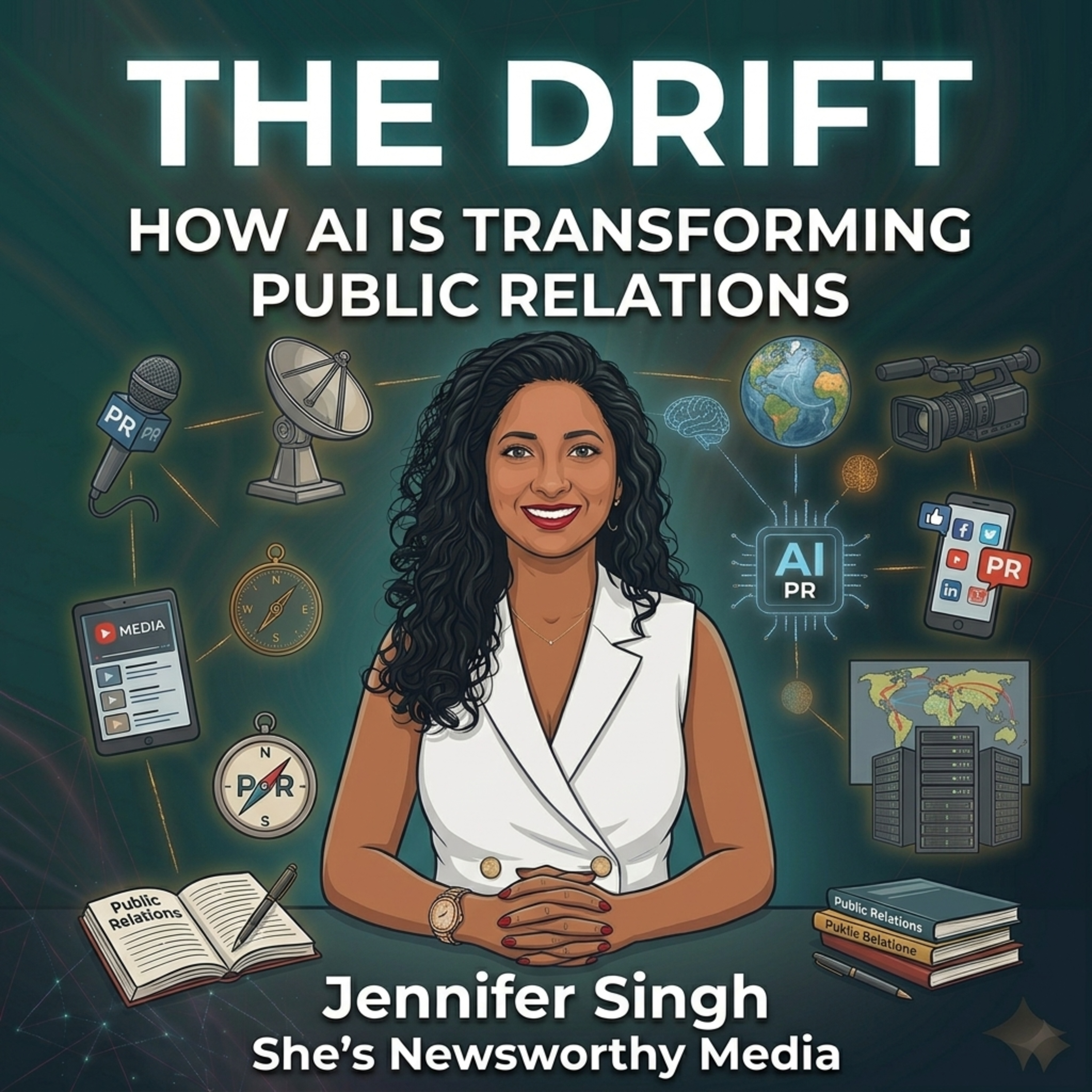
Public relations is undergoing a significant transformation with the rise of AI, which now aids in writing pitches, analyzing media trends, and even fabricating fake publicists. However, experts like Jennifer Singh caution that AI cannot replace the core human elements of PR—such as storytelling, authenticity, and trust-building with journalists. While AI can assist with operational efficiency, like automating lead sorting or generating content ideas, it often produces overly wordy, inauthentic, or misaligned content that fails to resonate with human journalists. A key concern is that relying on AI without expert review leads to credibility loss, especially when pitches appear robotic or contain invented details. Furthermore, AI lacks awareness of systemic biases, inclusivity, or cultural context, often producing content that misrepresents or excludes marginalized voices. In crises, AI-driven decisions can be dangerously flawed, as they overlook fundamental ethical principles like accountability and transparency. Ultimately, Singh stresses that human judgment, experience, and emotional intelligence remain irreplaceable—AI should serve as a tool, not a replacement, in PR. For women founders and underrepresented entrepreneurs, this means maintaining authenticity, personal connection, and strategic human oversight to ensure media success and meaningful representation.
If you've ever seen a small business owner
interviewed on the local news or a founder
profiled in a magazine, that usually didn't happen by accident.
Someone likely pitched it.
That's public relations in a nutshell.
Convincing a journalist that your client's story is worth telling.
An AI has actually been part of that world for a while now,
quietly working behind the scenes, analyzing data, tracking coverage,
helping PR teams do in seconds what used to take hours.
But then, AI started writing.
Press releases, pitches, social posts.
And this year, it crossed into stranger territory.
A UK-based PR firm created fake publicists
complete with fake names, email addresses, biographies,
and in some cases, AI generated headshots.
And use them to pitch stories to journalists.
Somewhere between AI helps you write faster,
and AI invents the person sending the pitch is a line.
My guest today has spent almost 10 years in PR.
And the last couple navigating what AI actually
means for that work.
Jennifer Singh runs She's Newsworthy Media.
A PR coaching business focused on getting women founders
into headlines they weren't always led into.
She uses AI herself, but she's also
drawn a pretty clear line around what she thinks it should
and shouldn't be doing.
Because when your entire job depends
on knowing what makes a story compelling,
understanding another human being and building trust
with a journalist, what happens when
AI can imitate all of that?
I'm Alia Adam.
This is The Drift, how Canadians are navigating AI.
Today, public relations.
Dan, welcome to The Drift.
I'm so excited to be here.
This feels like a little bit of a full circle moment.
100%.
Like, it's been a minute, right?
So today, we're talking about AI and PR.
But first, I want our listeners to get to know you a bit.
So why don't you talk to us about what
a day in the life of a PR strategist
looks like.
Walk us through what you actually do day-to-day.
Oh, this is such an interesting question.
Well, so because I own my own company
and I am also doing operations and managing a team,
I would say the PR piece almost falls
like second hand activity in my business.
However, I will say that I've been doing it for so long.
I've been doing it for almost 10 years now.
And I can do it with my eyes closed.
So what that looks like is trying to really take
a client's expertise and figure out what makes it unique.
What's going to be a different spin
on the same story or the same expertise
that maybe another 100 therapists have or another 100
teachers have or authors have.
What's going to be their unique perspective
and then figuring out how it fits into the new cycle.
So taking a look to see what's relevant,
what's newsworthy, what's topical.
And then crafting a pitch that is going to get opened
and get that client book.
So the client does actually do that part of it.
I edit with the client and then we send it out
and we do follow up, they get booked
and we do media training.
So we've cycled through this process over 100 times
with over 100 founders.
And it is very systematic.
And the process every year, my goal is how to make it easier,
how to make it faster, how to make it better,
but also keep the newsworthiness of the story
and of the expert that we're talking about.
- And your particular focus has always been women, right?
Female entrepreneurs, women of color specifically
and amplifying their voices in the media.
- Yeah, I mean, I had leaned really hard
into that beginning in my journey
because of all the obstacles, discrimination,
systemic barriers that I felt when I was in use.
My story's even as someone who was a reporter
or a producer or a writer.
My stories were not making it to Erin.
I was facing so much resistance from a team
that was typically not diverse.
And I did end up leaning into working with women
because I noticed, even as a producer or as a reporter,
as you're going and trying to get those leads
and trying to interview for stories,
the men were always the ones that would just show up.
They would be the ones that would be comfortable
making mistakes and showing up anyway,
even if maybe they were less qualified,
where women ended up having all these mindset blocks
and feeling like they're not good enough
and am I ready for media?
And it just became something that I just really
was passionate about shifting.
I was thinking about this recently.
I think I feel like I almost fell into this role accidentally
because as a reporter, when I was in my last position
working live on TV, I was responsible
for coaching some of the other reporters
to fill in for me.
They were radio reporters.
And I really liked seeing that transformation.
And women that I coached seemed to be really receptive.
So that is what I kind of niched into that market
of possibilities.
- Super interesting.
So we're talking about AI, of course,
and how it is pretty much seeping into every industry
as we know it.
How have you seen it show up in your day to day?
- Oh, so this is so interesting.
So I started using AI in my business,
for my business operations.
So things for like analyzing what clients want,
analyzing my sales calls, analyzing where the gaps were
if I wanted to close at a higher rate.
So I was using it much earlier than a majority
of my clients in the PR program.
So this was probably, I would say, early 2025.
And I started fiddling with it with my PR process
because if I was going to be able to use it
for all this data analysis,
like how could I then take it into the PR program
and automate some more tasks?
But what I found was that you really,
and for AI across the board,
you really need to have a foundational understanding
of what you're doing before you can incorporate AI
into anything.
So I can't be a newbie not knowing how to write a media pitch
and then relying on AI to do it for me.
So it became one of those things where
I would start using it maybe to brainstorm subject lines
because I know that that necessarily
is something I struggle with for clients,
like creating something that's short, that's snappy,
that's a hook that's going to get open.
And I would never copy and paste the AI title.
I would just use it as inspiration
and kind of pull things together.
So you still know it's being written by a journalist.
What was happening though were the clients of the program
was so funny in the beginning when I started telling them
about because it was like brand new and 2025,
for a lot of business owners, was the top of the year.
I was pitching stories to the media about AI,
and it wasn't even getting picked up at the time.
And clients were just like, well, what do you ask it?
And how do you do it?
And that we're so scared.
And I think because as a journalist,
I'm used to asking questions inside and outside of work,
my personal life, my family cannot
stand the number of questions I ask.
But I felt like I was able to really get a hang of it.
And they were kind of very timid.
So you're thinking about business owners
across the board, a lot of women, fearful of tech,
fearful of putting their information
and fearful of giving the wrong answer.
There was all this fear.
And then months later, when everybody started using it,
what ended up happening was clients would be coming to me
with a pitch that I had given them a template for
on a formula that has worked hundreds and hundreds of times
and bringing me an AI pitch.
And I said, I would open it immediately
and be like, this is not written by you.
This was AI.
And they would, you know, it was, it was like,
it almost became something with some clients.
They got really defensive.
I will say they actually got really defensive and said,
well, I don't have time.
And I had a busy week and all these things.
And other clients were like, well,
I just didn't know what to write.
Even though we've done this, Alia, nearly 500 media
interviews, right?
AI has just popped up in the last year and a half
with our clients using it.
How did all those other clients land media interviews?
Like, magically, right?
We had a system.
We had a formula and my argument to my clients,
I would be pushing back so hard, pushing back so hard
and letting them know that if you're going to be using AI
to write a pitch and the media is going to open it first off,
these are people that have worked in newsrooms for decades,
you know, at least a dozen years.
And they can spot it right away.
And what that does, it makes you lose your credibility
because if you can't write something to explain
that you were an expert in XYZ,
how am I going to trust you that you're going to show up
and ace your interview and knock it out of the park?
A lot of our clients, probably 95% or more,
have never done media interviews.
They do not have previous media relationships.
So this is the first thing that you put through the door,
like as your first impression, what is the media going to think?
They're going to question whether you are actually an expert or not.
And the idea that it makes it faster, okay,
but does it make it better?
Does it make it more coherent?
Is there a story?
Is there a human touch to it?
Those things I still believe in storytelling
are not going to be replicated by AI.
And when you--
read the pitches like, what's a straight giveaway to you?
Like, you knew that it was really hard.
- The language that is used is not everyday speak,
and as you know, as journalists,
we want to communicate in everyday speak.
We want to simplify, and that is what I teach.
So when I'm being faced with language
that is all over the place,
and feels just very wordy and very heavy,
and over explaining something that can be simplified,
that to me is a dead giveaway.
And even if you train,
I have not seen a client yet train AI in their voice
to the point where it mimics it,
because at the end of the day, a lot of people,
and this is all of us for our skill set,
they don't have the solid writing skills.
So you can't, again, if you don't have the solid writing skills,
then you can't have AI come in and massage this.
And I experienced this myself last night.
I pride myself as being an exceptional writer,
and I was trying to craft my updated bio
and transition from what I'm doing now,
and add in a little bit more of what I do.
And I was back and forth with AI,
went on a couple different AI platforms,
just trying to brainstorm and trying to get those words
that I needed, and I truly was stuck.
I ended up sending it to another journalist,
who's also been in the industry for decades.
And her revision was so subtle, so, so subtle,
but it softened it, it was storytelling, it felt warmer,
it felt less like a structured resume.
- Yeah, more human.
- I really thought you cannot replace that.
You absolutely cannot replace the brains of a story.
So my fear is, what is happening with this next generation?
What is going to happen to the next generation
who grows up with AI?
- Yeah.
And there have been real cases also of press materials,
quoting sources that turn out not to exist at all,
like invented people and invented quotes,
have you ever come across anything like that?
- Well, I think, okay, here's where things go wrong,
and where people are using AI for public relations,
and they think that they're gonna like win,
is if there is a crisis,
if there is some sort of communication crisis
that needs support,
I feel like people on the internet,
and I say on the internet broadly,
but I feel like people are using or turning to AI
to help them solve their problems
without paying for actual proper support.
You know, some of these PR nightmares and crises,
you can tell somebody didn't do things like hire a strategist,
or maybe talk to their lawyer,
or talk to somebody else,
and they just kind of winging it based on what AI
is telling them to do.
And I had a situation within my business,
where I'm seeing this happen from a business perspective,
where if there's a conflict,
the person is going to AI,
and they're not using their brain to figure out,
and to resolve the problem.
And literally, in the beginning, it was so funny.
You would still see them copying,
pasting the prompt from AI, of course.
Right, that was the dead giveaway, right?
Especially when somebody's language changes,
and things like that,
but I think that those key things,
when you think of a PR crisis,
the key things should not change,
and the key things are,
if you are in the wrong, you acknowledge,
you do not stay silent.
If you were in the wrong, you apologize,
and then you also rectify what you have done
with some sort of action to show
that you won't do it moving forward, right?
And I feel like that is basic comm strategy.
People are forgetting about the optics,
and maybe listening too much,
to what the comments section is saying,
listening too much to what the public opinion is saying
without sitting back and saying,
well, what is actually the thing to do?
And I think we veered away from that,
because we're listening to public opinion,
we're going to AI to solve our PR crisis,
and we're not leaning into some of those basic,
tried, tested, and true ways
to handle something that gets out of control, right?
We're lying on it for everything, right?
We're relying on it so much,
and it makes us doubt ourselves.
It makes our doubt ourselves,
and we're not following our instincts,
but again, if you don't have the foundational instincts,
then how are you going to know what direction to go into?
Yeah.
What do you see as like one of the biggest challenges
that AI is creating across PR right now?
The biggest challenge would be the fact
that people are relying on it too much
without having an expert review materials,
especially when it comes to media pitches.
I think for me, that's what I'm seeing number one
in my business, and not, and yeah, you know when you just said,
you're like, it makes you doubt yourself.
So there is this thing where business owners feel
that I don't know enough, I don't have the answers,
like I don't know what I'm doing, AI can fix it,
and that is not even just like a problem
with the way that they think, but like human nature, right?
Can you think about the fact that you're just walking around,
not able to think on your own, not having those skills
to be like when you're raising your kids,
you want them to have resilience to think on their own,
not to depend on their parent or their sibling
and all of those basic core things,
and I think the reliance that we're gonna sound more professional.
Actually, so I had received,
I had received a request to speak recently,
and it came in my inbox, I got a ton of requests to speak,
and this one was probably the first,
first second one that was like completely constructed by AI.
So as a business owner who is running a speaking event,
they're trying to obviously fill the room,
do all those things, and they send something
that is so constructed, it is so, so constructed by AI,
because it has my bio, and I can tell that the bio
was basically trying to inflate my ego.
The numbers were inaccurate, and then again,
with the capital letters going up and down,
and it was just the optics of the whole thing
as a woman in business as well.
It was asking me to pretty much work for free.
So the contrast between we're having a luxury event,
we value you as a speaker,
but we don't have any budget to pay you.
Have somebody else take a look at that,
like AI is not gonna flag, right?
We, there's so many conversations about AI,
and who the people are that are creating it,
and are they creating answers and solutions
that are inclusive, you know?
AI's not gonna sit there and say,
you know, Jennifer is a woman of color,
and she's been advocating for women to get paid,
and what she does is trying to get women to the next level,
maybe having a luxury event and saying,
there's no budget, is not gonna land really well
in her inbox.
And, right, right, AI is not going to do that.
You know who's gonna do that?
Another business owner, maybe somebody who's on your team
and operations manager, maybe a social media coordinator
that has followed Jennifer and knows that she's gonna be
a good fit and sees her stories and knows that
she advocates for these types of things,
so don't ask her to work for free.
It's not happening, right?
And you can see my rage, I've gotten to the point.
- Yeah, for sure.
- I've been, I've gotten to the point
where we're actually didn't eat the nerve.
Yeah, and I used to get really upset,
and it was just so silly because it is now,
so the entire email just has no thought to it,
because it's just putting together by AI.
I finally just wrote back, and I was like,
you know what, this is not an alignment
for many reasons, best of luck.
And I didn't list my reasons
because that's not my job.
I'm not here to educate you at the end of the day
if you can't figure this out on your own.
So that I would think, like that oversight,
understanding that I think the inclusivity piece
is really, really interesting, right?
Because the assumption is that from my experience,
it's not all experience, but I see like,
there's, it's not gonna assume that you're a woman of color.
It's just not going to do that off the bat, right?
And I know there's been a lot of pushback
from those who work in the space of creating AI,
and oh, you know, this is not how we do it.
And you know, well, it's gonna take a little while
to start seeing more of how it systemically structures
things in a way that are not inclusive, right?
- Mm-hmm.
- That's making assumptions. - Absolutely.
It makes so many assumptions.
- And it's based on the person that's training it, too.
- Exactly. - And that person's assumptions
and biases. - Exactly, exactly.
- Does any part of you worry that AI
will eventually close the gap completely?
Like a founder just doesn't need someone like you anymore
because AI can write the pitch, find the journalist,
make the contact, like, heck, create their,
their headshot, their bio.
- Oh, thank you.
replace any of that. One of the things that works me so much is these photos, right? Like, we've
already gone from having, you know, pictures to going onto social media and having all these
filters to now AI creating all these generated images. And depending what you're using it for,
I just think, honestly, it just screams in authentic. Like, and I think, you know, that word
authenticity has been overplayed in the past five, six, seven years when we talk about business. But
I think this is kind of what it's helping us point to because a lot of that does feel inauthentic.
It doesn't feel like the real you. And I think people do want to see the real you. I have,
I have a fellow business owner who is a digital marketing specialist and she has an avatar. And her
avatar does all of her commercials. And it's funny because I haven't had a deep dive talk with
her about that. She is based in the state. So, you know, the appetite for things that are,
hate to say it, like feeling so inauthentic is there. The appetite is there more so than it is in
Canada. But my whole thing is just like, it's just the same thing with the pitch or the same thing
with the photo. Or when you think about dating, like, you're going to have something that's
concocted. And then when you interact with that person, they're not able to follow through.
That's the issue, right? So, let's say you can, you know, let's say you're working on a brand
partnership, Alia. And you put together a media kit and you are presenting it to the brand sponsor.
And it looks like it's all put together. But you're on these calls trying to have a communication
about what the rollout is going to look like. And you can even get your ideas out of your head.
It is just the fastest way to discredit you. And it goes back to AI can be a supportive
tool, but it shouldn't be taking things over. So I personally don't think that it's going to take
things over. I think it has definitely changed. We know the media landscape has completely changed
in the last decade since I started this. And I would say that media obviously has moved a lot
more to social media. But at the end of the day, getting, you know, the stamp of approval from
a solid interview, whether it's a podcast or a TV interview, this is something that has to come
from the expert themselves. It's not going to come from me sitting here and generating notes
in order to talk to you and to have a conversation. These are basic human skills. These are human
skills. You can't replicate that. Is there anything about AI and where
the technology is going that excites you for your field specifically? Yes, as a business owner.
I do. I think here's one of the things I feel like it is overwhelming for sure. It does feel
overwhelming because you're not sure what to do first. And you, you know, there are so many trends
on. No, hop on this tool. And then that tool evolves. But I am really excited about the way that
it can speed up the operations for the day-to-day business owner, right? So for myself, whether it is
a matter of sorting, like we actually, well, we did a zap. This is app connected to AI. I believe
it is. Yes. We did a zap so that the leads that come in through my Facebook ads, for example,
they actually get sorted in a way by AI where they're leaving the description on who is
who to see if it's a fit. That's something that I never had a chance that I was doing completely
manually before. So activities like that, just speeding up the operation backend things. Actually,
I think is a huge money saver because I could either pay somebody to do that or it can be automated
and sorted through AI. So any type of task like that. And then the risk or the conversation was,
you know, it has been we've had clients pitch the story that women in these positions who are
in administrative roles, their roles are going to get eliminated because of AI, right? So for
example, I work with an admin and she also does operations and she also does marketing and she also
happens to be a journalist. She's been on my team for five years. And I say to her, I'm like,
even though AI is going to speed that up, that doesn't mean that you're going to end up working
less hours. I'm like, in fact, I want us to work on things that we love, that lightest up,
that are more creative, that are going to move the business forward versus being stuck in the
admin. So I think from the business owner, like the business owner perspective, whether you're in
a corporation or whether you are, you know, a solo entrepreneur like myself, how were you going
to use that time that is now freed up? Now that AI has made the space, is it necessarily mean,
let's lay all these people off? No, it doesn't mean that. It's like, oh, this is still human talent
that I could tap into in some way, right? And, you know, getting people excited and just kind of
using AI in my, in my perspective, to automate stuff that needs to get off your plane, right? And not,
and all the stuff that you don't want to manually do. Absolutely, yeah. Super helpful, like,
assistant that you can have running in the background while you're trying to focus on other things.
Yes, exactly. Just giving me back so much time, that is the one thing that I actually absolutely
love about it. We do probably 50 to 60 discovery clarity calls in a year to see if people are good,
are good fit to work with us. And the fact that it's able to take that transcription and identify
for us what the key things that people need. And then I can shift my marketing. I can shift the
conversation. I can attract clients that are more aligned. That is actually what I'm so, so excited
for. And that can be used not just as a business owner, but also in PR. If you are, you know,
sending out, if you've done a couple interviews and maybe you haven't, you've kind of lost a little
bit of momentum. AI can, you know, maybe scrub those interviews and see what the theme was. Like,
see what the things are that actually got you bucked and what are the perspectives that media
was looking for and then show you the gaps. I think that's what it, it can be used for and it can
be used for, and probably many different professions outside of PR and outside of being a business owner.
Is there anything about it that scares you?
Privacy of information. I think that's a big thing. I think I get nervous when I start
brainstorming with AI. If I'm developing something new, how is my intellectual property going to be
used in the universe? Where is it going to live? You know, what does that look like? And then also
knowing that even though I have those concerns, the other business owner that I'm working with may not
necessarily have those concerns and maybe taking my information, popping it into AI, not saying this
happens, but we have seen situations where lawyers rely on chat or on clawed to get through a court
case and then they get fined. You know, it would not be good thing if my lawyer was doing that with
something that I could come to her with, right? So she's exceptional and she's on top of the ball,
but like not everybody is and that kind of makes me nervous. How are people going to use my
intellectual property? How are people going to use my business? But then also because it's
like a big dump of information, it's scrubbing everything, you know, how valid is this? You know,
how am I going to check to see if this is okay? And again, it goes back to that foundational piece.
You have to have an inner guidance system, an inner GPS to know when to flag it so that if something
does feel like it's a bit off, then you can actually either, you know, challenge it or get a human
voice to give you some insight and perspective. Have you ever come across like clients who are
using it for media coaching? Like prep me for this interview or asking it questions like that.
Yes. Okay. So some of our TV stations that we end up booking clients with usually send out a
booking sheet. Some of them, not all of them. And in that booking sheet, the journalist or the
reporter, the producer is asking, provide me the questions that you want to ask. And then they start,
so what I think clients do is they put their pitch into AI and then they say, you know, what are the
questions that I should send or what are the questions journalists will ask? And some of the questions
are so silly. It's like it doesn't even make sense. And I keep on telling them, I'm like, your
pitch, pretend you're playing jeopardy. Look at it and literally work backwards. If you're saying that
the tip is, you know, drink more water and exercise is going to help you sleep better, then what is
the question the journalist is going to ask? It's going to be something about, you know, that it just
kind of play jeopardy. You have to have those foundational skills. And I think again, it's a matter of
when you don't know what you don't know, you're relying on it and it's giving you false information
or information that's not going to hit or information that's just going to look silly or it comes
up with so much information. Do you need 15 questions for a four minute interview? It's not going
to flag that. It's not going to say four to five minute interview is, you know, five questions.
That's it. That's all you have. Oh, like imagine, just be like, oh, coach me, like Jennifer
saying one coach me for this interview. You think it'll get there where I just
It'll be so accurate that it eliminates that whole service.
No, because you still need the feedback.
You still need the feedback. Even when I go into interviews, I still get coaching from other
journalists to catch my blind spots. I'm not going to go on. You need that live feedback.
Whether your pace is too fast or too slow, you have too many filler words.
Maybe AI will catch filler words. I make looms all the time and it will clean up
filler words, things like that. But it's not going to replicate what human interaction is.
You know, I was actually coaching another client who was doing a, she had a brand partnership
and she was doing an entire circuit. There was like nine to ten interviews that she was doing.
She uses AI a lot and she was asking it questions. But I sat down with her when we were doing the
actual media training and she could not believe how specific I was. I said to her, I'm like,
your nails are green, that's going to be distracting if you talk with your hands. AI is not going to
jump in and say that. It absolutely is not. And if it does, like how many years of training,
are you going to need the interviews next week? The interview is next week. Like it's going to
take a while to catch up. Things like understanding that if you have too much jewelry on,
or if you have earrings that dangle and the dangling earrings can interfere with the audio,
AI is not going to catch that. It may give you a tip about that, but it's not going to say,
hey, those earrings are probably something that you want to wear on a Friday night instead of
a media interview. Yeah, you need that real life experience to catch those things.
For sure. Interesting. Wow, well, this was really interesting conversation. Thank you so much
for taking the time. Thank you so much. This was lots of fun. Thanks for listening to The Drift,
how Canadians are navigating AI. If you or someone you know is doing something interesting with AI
in their industry, I want to hear about it. Find me on Instagram at The Drift Canada. I'm Alia Atom.
Bye for now.
Podcast Summary
Key Points:
AI is increasingly used in public relations to write pitches, analyze data, and even generate fake publicists with fabricated identities, raising concerns about authenticity and human oversight.
Jennifer Singh emphasizes that while AI can speed up operations and brainstorm ideas, it cannot replicate the human touch, storytelling depth, or credibility crucial for building trust with journalists.
Overreliance on AI risks undermining foundational media skills, leading to inauthentic content, misrepresentations, and poor crisis management—especially when AI fails to recognize bias, inclusivity, or human nuance.
Summary:
Public relations is undergoing a significant transformation with the rise of AI, which now aids in writing pitches, analyzing media trends, and even fabricating fake publicists. However, experts like Jennifer Singh caution that AI cannot replace the core human elements of PR—such as storytelling, authenticity, and trust-building with journalists. While AI can assist with operational efficiency, like automating lead sorting or generating content ideas, it often produces overly wordy, inauthentic, or misaligned content that fails to resonate with human journalists.
A key concern is that relying on AI without expert review leads to credibility loss, especially when pitches appear robotic or contain invented details. Furthermore, AI lacks awareness of systemic biases, inclusivity, or cultural context, often producing content that misrepresents or excludes marginalized voices. In crises, AI-driven decisions can be dangerously flawed, as they overlook fundamental ethical principles like accountability and transparency.
Ultimately, Singh stresses that human judgment, experience, and emotional intelligence remain irreplaceable—AI should serve as a tool, not a replacement, in PR. For women founders and underrepresented entrepreneurs, this means maintaining authenticity, personal connection, and strategic human oversight to ensure media success and meaningful representation.
FAQs
Yes, AI can generate media pitches and social posts, but it's important to note that journalists often detect AI-written content due to unnatural language or lack of authenticity. Human oversight is essential to ensure credibility and newsworthiness.
Yes, AI struggles to replicate the emotional depth, authenticity, and storytelling nuances that come from human experience and connection. These elements are critical in making a story relatable and trustworthy to journalists.
Yes, creating fake publicists with AI-generated profiles can appear deceptive and may damage trust with journalists. It undermines transparency and can lead to rejection of media inquiries, especially when credibility is paramount.
AI can assist with tasks like brainstorming subject lines, analyzing data, or sorting leads, but it should never replace human creativity, strategic thinking, or the personal connection needed to build trust with media outlets.
Red flags include overly formal or wordy language, lack of everyday conversational tone, inconsistent or fabricated details, and unnatural structures that don't reflect real human writing patterns.
Yes, AI can analyze interview transcripts to identify recurring themes, audience interests, and gaps in coverage, helping PR professionals refine their pitches and develop more relevant story angles.
Chat with AI
Loading...
Pro features
Go deeper with this episode
Unlock creator-grade tools that turn any transcript into show notes and subtitle files.
 PodcastTranscript AI