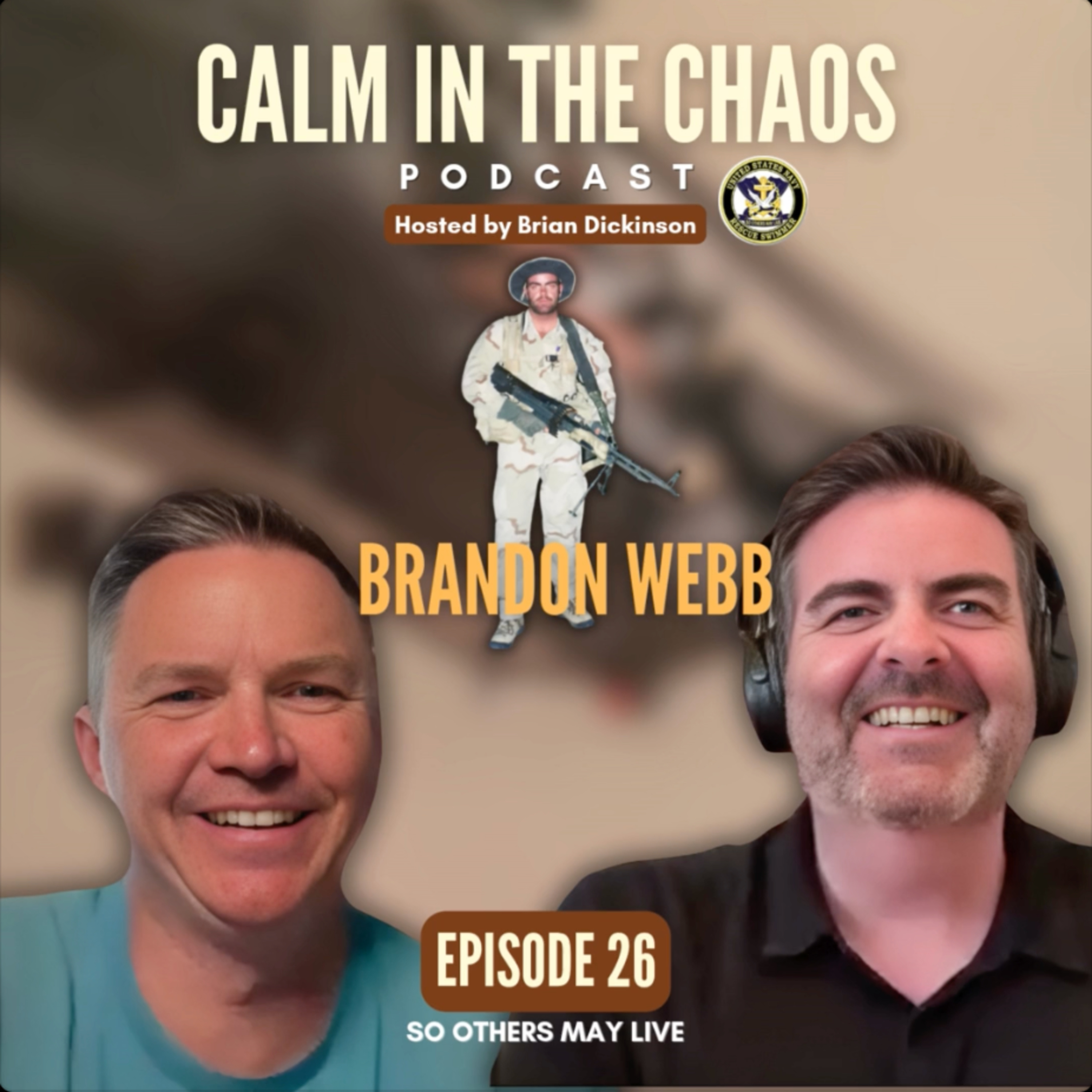
How a Navy Rescue Swimmer Became a SEAL Sniper & NYT Bestselling Author
1h 17m 34s
Brandon Webb’s journey from a childhood spent diving and sailing to becoming a Navy aviation rescue swimmer and special operations sniper is defined by resilience, adaptability, and a deep commitment to service. His early experiences in the water shaped his career path, while his time in the Navy exposed him to extreme combat environments, including ship boarding missions in Yemen and high-risk operations in Afghanistan. He recalls a harrowing incident on the USS Abraham Lincoln where a helicopter nearly capsized due to a water leak, highlighting the dangers of aviation missions and the importance of leadership and quick decision-making. Webb underscores how psychological endurance and self-advocacy were critical in overcoming training challenges and interpersonal conflicts. He reflects on the emotional toll of prolonged deployments, particularly the disorientation and trauma experienced by service members in chaotic, mission-unclear environments. A major insight from his experience is the damaging effect of internalized conflict within special operations communities, where personal grievances and competition overshadow camaraderie. Webb calls for a professional, supportive veteran alumni network to promote healing, mentorship, and positive leadership. His story blends personal bravery with deeper reflections on trauma, purpose, and the need for mental and emotional well-being in military service. Ultimately, Webb’s journey exemplifies how overcoming adversity through self-awareness and integrity can transform not only individual lives but also the culture of elite service communities.
I went to three, got a really good platoon, and deployed, we're doing shift warnings,
and then we, the USS Colgate bomb, and we got tasked with a special boat team to go
down to Yemen, and set a perimeter, I was a sniper at the time, and I set a sniper
overwatch, and a special boat team had a perimeter around the boat, and it was like, look, anybody
comes within 500 meters, you shoot up. Welcome to the calm in the chaos podcast where
we discuss untold heroic experiences, and dive into the mindset of the Navy's elite rescue
swimmers, hosted by former U.S. Navy aviation rescue swimmer Mount Everest Solosumeteer,
and best-selling author Brian Dickinson.
Hey everyone, it's Brian Dickinson. If you're enjoying these stories, please take a second
to like, subscribe, and share the podcast. It helps more people find these conversations
and it keeps the mission alive. And if you want early access to new episodes and to
support what we're building, consider becoming a Spotify paid subscriber. Your support means
everything. Now let's jump in so others may live.
Brandon Webb, it's been, how long's it been? 30 years?
Yeah, at least, at least 30 years, right? Well, maybe not four, that's 98.
Yeah, I guess, okay. But it's a long time. It's been decades. It's nuts. Yeah, it's so
cool just to see where you've had such an honor to have you on the show. So Brandon Webb
is, man, I'm just going to look at your Wikipedia because it is overwhelming. Yeah, I went
snow blind again, just staring at it. Starts with what's interesting to me is Born June
12th, 1974. That means you're four years older than me. So you'll always be older than
me. So that's good. Where are you? You were born June 16th. I read up in your bio, right?
Yeah, 1974. That's crazy. But yeah, your aviation rescue swimmer to start Navy SEAL,
SEAL sniper course, head instructor, multiple combat tours, founder of hurricane group LLC,
New York Times, best selling author. You're a media commentator on snipers and special
ops. You got the software, blah, blah, man, blah, blah, blah, you covered it off. You covered
it off. Check out Brandon Webb. I know as people know who you are and what you've done.
But it's amazing, man, overachiever is not even saying even close. I mean, you're just,
you do that guy. You just, you just keep hammering. And now you're like a pilot, living in
Lisbon, interior decorator. Is that's what I saw recently? Yeah, yeah, yeah. No, I, I don't
know why. I think maybe because it's on my mom's side, my mom's like super creative,
her whole career and an entrepreneur in her own right. But I just had this like, I've
always had this like creative gene. And I think really what brought it out for me was what
I was living in New York for almost nine years, just being around that world. And I had
a ex-girlfriend who turned into really good friend of mine. He was a stylist for Victoria
Beckham and just kind of surrounded in that creative environment. I just started reading
up on interior design and started, I did my last three places and my friends were like,
man, you should like start a business. I was like, I really just do it for myself. But
it's fun. It's why I enjoy fiction. Even though I consider myself probably a stronger
and nonfiction writer, because I, you know, I started the media business back in 2012.
And I think I've written, I mean, I've written several thousand articles for software and
a few other sites. But the fiction is, it's challenging. It's a totally different
style writing, but you can be incredibly creative and just kind of, you know, paint yourself
out of a corner. So that's me. But yeah, I like being creative and my daughter's, she's
in design school and London right now. So she's carrying a torch.
Yeah, that's so cool. And I agree. So my first couple bucks were nonfiction and it's one
thing to be able to tell the story that, you know, exists because it's, you know, it's
easier because, you know, the hard, it can be traumatic, but it's, the content is there.
UTA has my, my first fiction. You know, it was kind of based on something that occurred
on my second deployment that, you know, ASW-wise, it couldn't necessarily talk about, but using
that kind of as a not, you know, historical fiction starting point. And from there, the
creativeness, it's, it's just fun, but it's also, it's difficult because there's a lot
of directions, you know, names and you do so much research in those scenarios to make
it as real as possible because you want to make it believable. But yeah, the creative part,
I could, I could see writing, you know, definitely a series in fiction. And it's, you know,
you can do anything. You could have a, you know, a third arm coming out of your forehead
if you want to go with nuts, but yeah. Yeah, it's, well, for me, the most challenging part
was realizing that generally you want to explain things in a nonfiction book, first person,
but in fiction, typically it's better done through dialogue. So just getting a habit of like
talking in dialogue with multiple characters. That's, and it's, you feel like it gets
a frowning at times. Yeah, I don't, I don't like to talk much. So, I can remember that
about it. Well, yeah, let's go back in time. So I know the red circle really paints a
good picture of your childhood, but for those that are going to pick up the book now, anyone
who's listening to this, definitely pick it up. And all your books, you're a great author.
But tell us about your childhood. I mean, it's very, very unique. But it's, I think it,
it makes you who you are, for sure. Yeah. Okay. I will try and keep it brief as possible,
but yeah, I was born in Canada. My parents met in Malibu, California. My father was
Canadian, had moved to Malibu because he got kicked out of the house. My grandfather's
just like really tough, kind of, was a career electrician for Canada Electric, kind of
blue collar to white collar, retired, became an entrepreneur, he owned a big, big resort
trailer park outside of Toronto on the lake. And, and kicked my dad out for not cutting his
hair. And then my dad was like, you know, 17 year old Toronto and like getting into trouble.
I think there is some type of drug dealing involved. But he had to like, did we just get
an exclusive? Yeah, he had to get the hell out of, or out of Canada and he moved to Malibu,
started a landscaping business, picked my mom up. That's a big, that's a big change,
Toronto, Malibu, that's, that's the long ways. Yeah, I think because my dad was also, he,
he was an amazing hockey player. Like he, he probably could have went pro, but just, you know,
things happen, life happens. And I think because of that, the era of his time, right? This was,
this would have been like the late late 60s, early 70s. It was, you know, Laurel Canyon,
Crosby Sills & Nash, although like music, and my dad was also a musician, and he played the drums.
And I think that's what brought him out to California. And then, you know, he's driving his old
50, 57 Chevy and picked my mom and her girlfriend up. They were hitchhiking back from the,
from the beach, and he asked her out. And long story, he's like, oh, come to Canada with me.
And my grandmother was like, no way. Unless you put a ring on that finger. And so they got married. We
with the Canada had me and my sister back in Toronto. No, this was actually BC. So we're,
nice. So you upgraded. Yeah, yeah. We're up in Kimberly, British Columbia, which is still a,
a ski, really great ski resort. The local town nearby was just booming because the, the mining
and construction, and my dad got in construction, started a company. And I was kind of just a real
terror of a kid. I think probably a lot of us have similar backgrounds, just, just high energy,
probably AD, some form of ADHD. My mom is driving my mom crazy. Like, I have a drink and gasoline,
bleach. You know, she'd left me alone in the bathtub. I took her razor blades and like,
cutting all my fingers. And she came back like it's seen to the shining, the whole tub of the
blood. Yeah, I was just like, I'm horrible. Yeah, I know. My mom was like, oh, my God, she actually
called shout services on herself. Like, hey, I'm like, I want to hurt my son. Like, you need to help
me drive it. He's driving me crazy stuff, man. Yeah. But anyway, my dad ended up losing his
company during this big financial crisis in Canada. And him and my mom had always had this dream
to sail around the world. So they bought a boat and Vancouver, 47-foot catch, moved the family
on the boat. And off we went to, we sailed for Vancouver to Ventura Harbor in California.
and I might die.
work in construction, he was working tilt up construction in L.A., making good money and saving
up, saving up. Then we took a year off when I was I think 11 and went to Mexico for almost a year,
like homeschooled. And it was that time that age was incredible. I was running around Cobbos and
Lucas before there was any hotels or anything, there was a donkey's room in the harbor. And it was
incredible. You know, I was spearfishing, sailing, I had a little Sabbath on the boat. It was incredible.
And I came back and probably one of the pivotal times in my childhood when you think back was
my mom. I was back in school and I was kind of surfing and getting in little trouble with the
kind of surf escape kids. And my mom and dad were like, you should really get a job. And I had
this shitty job working on a boat store cleaning, basically as a janitor every day after school.
And then my mom came home one day and she said, hey, the scuba diving boat wants a young kid to
work tips for weekends and summers. And you can they'll teach you how to dive, they'll certify you
to scuba dive. And it's for tips, but the tips are really good. And they're willing to give you a
try out. So I did a one day trip on the dive boat piece out of Enter Harbor. Is it beautiful? I think
almost 70 foot boat had a hot tub private chef. And yeah, I worked that that summer at turn 13.
And the captain Roger taught me on a scuba dive. And and it was mostly all ocean dives. And I
remember being scared shitless, especially at the end of that first summer I've written about it
before and a couple of my books. But it was the first time I remember really being scared because
I had I was becoming a competent diver. And you were diving alone like typically,
you know, the crew would one of the crew would take a turn. We would just, okay, we'll cover for you,
you go on the dive and we'd rotate. And we'd dive like three to four dives a day for all the
passengers. They usually get like one dive or two if you're lucky. But I remember we're at San Miguel
Island, which is the further the northernmost of the channel islands, right by point conception,
it's super stormy. And it's really hard to get to because it's usually the weather's rough and
the passengers don't like rough weather. But we were out there. And we're on the back side
of San Miguel and had amazing dive as a big seal and sealine ruckery on the back of the island.
So it's amazing to dive in all these sealions. And we anchored up for the night. We had the
passengers went to sleep. And then the captain wakes me up two in the morning. This guy, Mike Roach.
And he shines at red lens in my face. He's like, he's like, hey, well, Brandon, get up. You need to
go dive on the anchor. It's stuck. And I had done this before in the daylight. Because it's just
faster to send a diver down if the anchor chain gets wrapped around the reef or something.
Because we needed the weather was picking up and we needed to move to calmer water. So he's like,
hey, the anchor stuck, you know, get your ass up. And I was like, what do you mean? And I started
thinking, man, it's like, and then this captain is crazy. Mike had actually got sponsors and did a
great white shark hunt at San Miguel Island. It's exactly where we're anchored up for the night.
Like a chumming blood just hoping this great white would show up so he could spear it. Like this guy
was like crazy. And he's like, you know, now he's telling me to suit up and go get the anchor
and stuck. And I'm like, all I can think about is this great white shark hunt. It's fucking dark.
It's 50 feet down. I'm by myself. And I was like terrified. And I was like, I was 13. I just
turned 13. Yeah, this is fucking great. And you know, I was like, all right, I got my suit on.
It was just like one step at a time. I was like, okay, my suit's on, you know, James the decan
shoves his big fat waterproof dive light in my hand. They open, I walk up to the bow and they open
the bow and then boom, I jump in. And I was like, I'm going as fast. I can't down the bottom.
I remember seeing the biology sea lions like zip the bimy. And that actually was comforting because
I knew if they're around, there's no sharks in the water. So, but anyway, I get down there and
this chain's wrapped around. It's like vulc wagon bug size for refrock. And the technique was
you take the regular out. You blast a bunch of bubbles and that lets them know to like pay out the
chain and then I swam it around. Anyway, I did it all and got up to the surface. And then I was
like, okay, that wasn't as bad as it thought it was going to be. And I think that, I mean, you know
this because you've written about it as well. We always make this much worse story in our head
about fear than it actually is. And that was my first, I really good lesson in fear. I was like, okay.
I had a young age. Yeah, super young age. And I was like, okay, it's just not as bad as I thought
it was going to be. And take small steps. You know, you don't have, you know, I'm like, okay, I'm
just going to get my suit on. I'm not going to get my tank out. It's like just one thing at a time.
And then at the end of that summer, I think the second year, I worked another big lesson
for me that I'm extremely grateful for. I mean, I worked my ass off on this boat. And I mean,
I was doing tanks, drying people's towels and the dryer and swimsuits at night, cleaning the toilets.
But I had a freaking blast. Now, like, I remember thinking to myself at 14, I said to myself, like,
I don't ever want to, like, I don't ever want to not have a job like this where I'm having fun
and enjoying it where it really doesn't feel like work. And so anyway, that was, that was my
childhood on the Thai boat. And then about a year and a half later, my father was like, hey, we're,
you know, we've been talking about sailing around the world and we're definitely going to sail to
to Australia. We've got our, we actually immigrated. They got all our papers to immigrate to Australia.
And, you know, we're going to take this trip. And by this time, I'm, I'm still counting in half
years, like you do as a teenager, like I'm 15 and a half from about there at 16. The last thing
I wanted to do was go on this trip because I'm like, now I'm actually making, I'm in high school,
I'm getting paid like a, a deck end wage, living at home. So I have no bills. I'm getting
selling my, like, trading my lobster to the sushi restaurant and my fish and getting food credit
and making great money. And I was like, I want to do it every other, you know, 15 year old wants to
do is hang with the buddies and like chase girls, get my driver's license. But my dad's like,
now we're going on this trip. So off we went. And this is my junior year. You know, we sailed from
Ventura, did our typical Baja, down the coast of Baja to Cabo, then over to the mainland of Mexico,
hit ports all the way down to Acapoco. And Acapoco is a, is a destination for people going to
South Pacific because you can sail straight across with one tack with the trade winds. And so we
had spent 30 days at sea, no land until we hit the Marquesa Islands, which was the first chain
in the, in the South Pacific or the French Polynesia. And I'd done my entire junior year and about
a month and a half. So it was done and mailed back, you know, we had to, this is not going to like
send it to be a post. And I remember getting to Heva, Oh Island and in the bottom composition and
Tahiti's all reef. And I was, I had this huge argument with my dad, because I was the kid diving
on the anchors, like I know what holds and what type of bottom conditions. And I said, Dad, we need
to switch out the anchor, the bow anchor, which is a plow type for mud and sand. We need to put the
bruise up there because it'll hold better and rock and reef. And he just was like, look at me,
like you little punk ass kid, you know, know it all. And the first night we drug the bow hook,
because in, in the South Pacific, he set a bow anchor and a stern anchor riding up against the,
the beach practically. And we had dug the bow anchor and being the humble, humble 16 year old,
I was, I turned 16 in Akarpoka. I told my, I got up that morning and basically told my dad,
fucking told you so. You know, we in strong with this one. Yeah, yeah. And we were just like this.
I made it, we went to the two emotes. And I was just like, not happy. And by the time I got to Tahiti,
we had another big blow up. And that's when my dad was like, look, I think you should leave the boat.
You know, I think it's, you don't want to be here. Just a couple of years over, why don't you call
the owner of the dive boat and see if you can just like go back and, you know, and, and it was like,
we had a huge fight. It almost got physical. And then we just kind of things calm down and we had
to, we had to talk because he was talk. And I was like, yeah, I'm ready. So I found a boat that was,
they needed help sailing to Hilo Hawaii on a catamaran. And got crew on the boat, grabbed the backpack,
and yeah, I had a few hundred dollars. My parents gave me a little money, I think, too. And I sailed
away. And, and I remember like, once we were on the boat, we were like, you know, we were on the boat.
We got we sell the Mariah and then we started selling the Hawaii and I I was terrified like I I'm not gonna lie
I probably I'm gonna sell the sleep first three nights. I bet your mom it is really hard for your mom to
Yeah, my mom. Yeah, my sister they're in tears
But my mom said after I left she's like it was very peaceful
Like we missed we missed you and they would write me postcards and stuff
but I was on my own and and I
flew back commercial air to LA my grandmother
Was still alive then she met me and dropped me at drove me to Ventura drop me at the dive boat and
I was on my own and and I remember ever since I was a kid. I wanted the pilot
I could I just I wanted to fly jets and then top gun came out of even more
But I had this moment of clarity where I realized you know
This is back before the the internet
I was like just reading and asking people and I realized I went to the recruiter
And they're like look your grades are kind of up and down and like I just
You're not gonna get into any of the academies and probably not gonna get a RTC scholarship
So you're kind of screw you can join you know
You know I took the azab and they're like you scored high enough on the azab. You can you know
You can pick a really good job
But you're not gonna be you can't go right in the pilot and they were pushing me
I think at the time that was that that enlisted the aviation program they had I forget what it was called
But then I read a book. I don't know if that's real or not
Yeah, I still the listed and you'll get to yeah, yeah, it's like the classic recruiter line then
I read a friend on that one of the passengers
gave me a book
Rogue war by Dick Marceco about the founder of silt and silt and I wrote rogue where and then I was like you know
What I can do this
This I'm really good in the water like I've got this and I'm gonna like
Just I think you know
People have that people that don't serve have this idea like wow, you know
You're you're just like gave up everything to serve your country. I was like that's actually like that was part of it
But I was like just more like selfish right like I just want to prove to myself that I can do something really hard
But it's all about just me
So I joined the Navy and at the time you couldn't get a direct contract the buds. You had to pick a job and right and first go for
Yeah, and I remember being at Sacramento and the Filipino recruiter or the guy this PN whatever he's like
Hey, he was with my recruiter. I'm like hey, you can do this air crew star contract E4 bonus
Balala and my recruiter $1,000. Don't forget that
And my recruiter rightfully so he was a boson mate like a ABH
And he was like dude, this is a great job. So I took it. I signed up
But what I didn't realize it was gonna be super challenging for me to get orders to buds once
I was in this the specialty as you know
So anyway, I joined and you know, we were we're probably like right same cohort, right?
Yeah, I was gonna ask when did you go through Sar
Oh, man, well, I went to boot camp in 93 so as February 93
Yeah, I was March so I think I think I was like one class behind you an air crew and Sar school
Yeah, I remember I was
roommates and air crew for a while they were J to group. I don't know if you remember the group
But he so anyway, we I went through air crew star and then you had to pick a rate and I was like
Well, I don't want to be a mechanic, so I chose a W and then you know like we have this amazing time in Florida
And then we go to jail and Memphis, Tennessee
Now it's all in Pensacola, so I don't know if they just moved jail or if it's like cooler
a school now, I mean Tennessee as you know, it's just I mean the the base the town everything about it was
Well, and coming from
Pensacola and like air crew and like the the galley and everything there was just because it was all officers except
That's five star resort to like one star
Making you march and everything. Yeah, yeah, that was crazy
And then yeah, so I went I got to I
Ended up getting I don't know if we got us. Yeah, I think we did get our squadron at the end of a school
So I got HS6. I wanted West Coast and then you know went to the whole pipeline in San Diego, Sears school
Advanced whatever there was that advanced sonar school
HS10 which which you're at as well and then it got to HS6
did a deployment
How to how to really good chief but the chief left and then the chief that we got in after him was just not a very good chief
I can say that having become a chief myself later. He was just a jerk. He played favorites
Did he was the East Coast guy hated all the West Coast guys
And he was your attitude
Well, my attitude was I'm just gonna kick ass and get the most calls I can so they let me go
Like I'm gonna do an amazing job and what happened was my chief used it as excuse to keep me and he great
You do a good job. They give you more work like we can call the go. Yeah, he called the detailer and nuke my package
I found out later. He told them to deny it
And I was like the young I think I said I was a senior E4 at this time
But I was a natops check guy like the only E4. It was a natop certified
And I was like man this really sucks
But then I was getting on my my term was coming up and then I actually
They let me go to after that deployment. They let me go to mini buds and then I passed that and then they kind of had to let me go and then
Um, I talk about it in the red circle. I got a
Um, this chief really had it in for me and a few guys and
And I had a friend in admin
Um, I forget this guy's name if you really looked out for me. He called me in. He's like, hey, man
I just want to let you know like you're getting totally fucked on your e-vow
And I'm like, what do you mean? He's like, well
This like new you're getting the same e-vow is like the new new bee E4 and I was like, what?
I was like, that's crazy man like I've got all these calls and
And so I remember the chief gave me my e-vow I read it and I was like, oh, this really sucks
And so I checked the little box that said
That I'm going to submit a statement and he didn't even notice it because the next day I I was taking English class on a boat too
And I turned in my I handed him like my one page
Um, like letter to accompany my e-vow it was basically
Um, I think I had some help too, but I it was like unemotional
And it was like look, this is what military bearing says this is what this says
And I have all these calls and I should have been ranked a 4-0
back when we're on the 4-0 system
And it was just the facts
You know and
And our new commanding officer Rosa called me into the and the chief when I handed this letter he turned white because he knew he'd fuck me and he got like
Yeah, really no accountability
Yeah, and I remember the commanding officer we had a meeting
next day for that week
And he calls me in chief carnaly
And he sits us down he's like, well chief, I've read pet officer web statement
He's like, you know, I'd like to hear from you and he starts to stammer in and stutter in
And this this the CEO of Rosa just turns fucking red and he was like a really good CEO
And like a kind of guy you want to go to war with
And he just says chief he's like, none of what you're saying make sense
And he looked at me and he slid me a freaking fresh e-mail form and he's like, pet officer web, I'll tell you what
Just write your own e-mail and the fucking chief the fucking lost he turns fucking shades of purple and red
And walk we walked out of there and I fucking wrote my own e-mail and that's awesome
I had the next
Flight out of here to Buds like he was like could not wait. I went under like the early to early back
He was like just yet he wanted me fucking out of there so fast as chief
Yeah, but it was a lesson
It was a lesson on like sticking up for yourself, right? Yeah, that's gonna say that and that's that goes so far beyond the military because you're
Yeah, in in life you'll find those people
Those mentors, three managers, whatever if you're in business that they are looking out for you
But there's a lot more that are looking out for themselves
And if you stick up for yourself
You know, you see it all the time and people they'll get stuck in abusive relationships because they know what to expect
Yeah, they're willing to defend themselves and it's just a horrible way to live
Yeah, and it's something I really try and teach my kids is exactly that like look there are these people in life that
You know
They're gonna cause a we're gonna put up roadblocks and you gotta just figure out how to go around it in a way that doesn't
You know, you still have to play the game especially in the Navy yet
Yeah, I couldn't just I could have gotten real emotional and threw a tantrum that wouldn't solve anything
And I just like, okay, these are the rules.
I know the rules, so I'm just gonna use the rules
to advocate for myself.
And yeah, so thankfully that was also a lesson I learned.
Myself, which came in, which really came in handy
right before I made chief as a seal, which I get to.
I know we're taking a long time on the old intro, but it's all good.
- No, actually I want to pause if you're good.
Like there are, there's a few rescue swimmers that listen
to this, I guess it's an aviation rescue swimmer podcast.
But I'd love to hear about your experiences
through RSS, like how was that for you?
'Cause you're clearly, you're doing, you were well prepped
beyond probably most that, that go through the program,
but there's still a high attrition rate.
There's a, the mental aspect, you know,
and most people don't work well in oxygen deprived
situations and, you know, they try to teeter you on panic
and who's gonna make it, who's not.
We these people out that aren't gonna cut it.
So how was it?
- Yeah, no, I had a, I had a great experience.
I went through with a Coast Guard guy.
He was already a Coast Guard rescue swimmer.
And I could just tell, just by going through training
with him that the Coast Guard has a world class course.
And yeah, it was tough though, like, Sarschool was tough.
It was the first kind of probably the toughest thing
I'd done for sure.
Like, Air Crew, I didn't really think was that difficult.
Sarschool, yeah, Sarschool was tough.
I mean, you had, it was kind of a great, you know,
set up for buzz because you had inspections,
you had to do all this stuff and then get up early
and perform physically and mentally
and you put in these challenging situations.
And it's very similar environment.
Buds is just, it's much longer.
But yeah, it was, I remember I did relatively okay
'cause I had so much experience in the water.
You know, the running was probably challenging for me
even in Buds.
I ended up becoming a good runner,
but I was never like one of the fastest guys, excuse me.
The, and I remember, you know, even the final test
for the, you know, throwing everything at you,
the spray and the first aid.
I struggled with the first aid a bit
and I think I got a little bit of a pass.
I remember they pulled me aside and like lecture me
but they let me through.
But I had a great experience and I will say this.
I was thinking about the show this morning
about coming on the interview.
The one, I really still keep in touch with like,
guys from the community Chris Rower, Eddie,
who's a tech, he's in Texas, I forget his last name.
It's a total character.
A few of the guys I still keep in touch with
but one of the things I really enjoyed
about this, the SAR communities, it's a good guys.
Like it's a, it's an honorable community
with a bunch of really good, good people.
And I think the one of the things that in my experience
and I don't have a, I would say I have a very unusual
seal experience in that I was one of the,
I got out that about almost 10 years of being a seal
and with Chris Kyle, Marcus, the Trellum,
we were the first guys to really put ourselves out there
and write books and we got destroyed, man, by the community.
Like, really destroyed in a very, just a pointing way
because I remember feeling like, really?
Like, you know, I was, I was a meritoriously promoted E6.
I was promoted to chief, put in charge of like,
one of the top sniper programs.
And now I'm out and I'm, I'm just getting shit on
by my own community and you would,
you don't see that in the SAR community.
And it's one thing I've written about it on software
many times.
And I wish our seal community had a professional alumni
association that could kind of serve as a bridge
between the active duty community and the,
and the guys who are out and just get, like,
provide some exemplary leadership.
And like, guys, this is the way to conduct yourself
on the outside.
Don't go after each other and the media on social media.
And, and it's a brutal, man.
I got, I don't even, I don't know if you've,
you've seen it or not, because you're not in the seal
community, but it is nasty, man.
Yeah, yeah, it's super nasty outside.
Looking at it as it is, and it's, it's weird.
It's because there's a brotherhood.
But then I don't know if it's greed.
If it's, you never know what's driving these behaviors.
I think it's, like, I watched that, like, I got really into
that F1 driver survive series.
And you see a little bit of it there, like, just,
it's hyper competitive, alpha male.
And to be honest, a lot of seals that make it,
I would say the majority of seals that make it through buds
have some type of childhood trauma.
Because you've kind of learned to deal with this adversity.
And so I think that all plays into it.
But I just wish that there was an adult in the room,
like, guys, this is the way to behave.
Because it does, it really--
Maybe that needs to be you.
I've tried-- I mean, I've written and tried and advocated
for this professional alumni association.
But it's just super frustrating to have, like, this piece
of my military career that I'm extremely proud of.
Just feel like-- because I don't even go to the reunion.
I don't even stand touch with guys.
And like, maybe three guys I still talk to,
because it's just too nasty, man.
It's like a snake pit.
And that's a shame.
It's a real, real bummer to me as a veteran in the seals.
Because I had a great career.
I had a good memories in the seals.
I had amazing experiences.
But compared to the SAR community,
you just don't see that.
You see guys that are just rooting for each other.
And it's just much different.
And that's why I'm really proud of my experience
as a SAR swimmer.
I'm too proud of you.
And you're always welcome.
Because you're a SAR swimmer.
Never not.
So yeah, I'm sorry that you're going through.
I hopefully that'll change over time.
But you can't change other people.
You can just change yourself and be consistent,
which I've been watching you.
I'm a fan and you've been consistent over time.
So yeah, it just sucks.
And you're right.
So what I've noticed as well--
I mean, I get attacked too.
From being in the military doing what we do, climbing Everest,
just every no matter what, you put yourself out there,
try to do good, have experiences.
Everyone's brave behind a keyboard.
But you're right, that so many people
they get into special ops.
First responders, there's a shared trauma
that a lot of us come from, childhood trauma.
That we're then chasing that trauma
to then have a different result, to have control over it
unconsciously.
And I know I did that with SAR swimmer
to climb the highest peaks on seven continents,
so in Mount Everest, everything, it took me 40 some years
to realize, holy crap, I'm in a vicious circle here.
And I need to, on me, I need to be healthy for me.
So that I can represent the community
and to bring other people in, and to maybe be a little bit
of a light to help others in their journey.
But again, it's each individual in their own journey.
So I think that it helps me when I know people are attacking me.
It's like, man, I don't know what you're going through.
I know you're projecting that on me.
Yeah.
Sorry about that.
Yeah, that was--
I remember-- because I got viciously attacked
by a former teammate, who--
this is the guy that actually quit buds in third phase.
And got kind of like, he quit.
He ran out of the water, and then they blew the whistle.
And they thought he was like first out of the water,
so he got to sit next to the fire.
But he was getting out to quit.
He was locked arms with me.
And this is the guy that I'd always
kind of like just kind of like stuck up for because he got washed
out of-- he was in a platoon, and he got washed out
of the platoon dive training, and he got put in our platoon.
And my chief was like, dude, this guy's shitbag.
I'm going to-- I'm going to chief board him and pull his trident.
He's like, what do you think, Webb?
And you went to bud to them, and I was like, oh, he's an all right guy.
I think I'll always stuck up for this guy.
And then, given the first opportunity,
this guy's like trying to tear me down
and discredit my combat experience.
Maybe it was just like a terrible experience.
But you know, and I remember going through this at the time,
and I was-- I got to be friends with Mark Harman, who's
an actor, and CIS.
And his dad was a-- his father was a Heisman trophy winner
for Michigan.
He was a running back.
Gave up a professional career in NFL
to join the Army Air Corps in World War II.
Was a bomber pilot lost his plane
as whole crew flying over to Africa.
They hit a storm.
South America and then he ended up going on to fly P-38 lightnings in China and
like his dad was an ace it's just a great guy and Mark was a UCLA quarterback
the quarterback for UCLA first string and he told me he's like Brandon he's
like I'm gonna tell you a story because I was like man how can people be this
way he's like I was quarterback he's like I was like my like maybe sophomore year
quarterback and one of the guys in the sideline yelled at me your dad's a
fucking coward he left his crew to die because his dad his dad had was flying
the flying fortress and they got to hit this like huge thunderstorm and the
plane started shaking up and breaking apart and he gave the bailout and he
held he was the last guy out and well they really spent three days hiking
out of the freaking jungle but he was the sole survivor so now you know Mark's
you know playing for UCLA and this guy's like your dad's a coward he let his
whole crew die and Mark was just like I'm like a young man and my dad's gone
now and like how can people say this shit but he told me he's like to your point
he said nobody that's personally in a really good place has time to shit on
other people like they just they're projecting all their own issues on other
people because he's like if you're successful and happy you don't have like
time to go troll people on the internet yeah like go way out go way out of
your way like shit on somebody and that really like helped me out and you see
I got like Mark who he went on to be he had a he could have been drafted into
NFL but he said he was really wanted to be an actor yeah yeah I mean he was
summer school he was like and I think NCS is the longest running TV show in
history of television like he yeah he's crossing it yeah he's an amazing guy
and I remember having lunch at his house he showed me this Heisman his dad's
Heisman trophy and I was sitting in his living room because we were doing a TV
show together now we're pitching a TV show that to CBS and he had me over to his
house an LA for lunch and it marks super look he drives a shitty bronco and
it's like unmarked old police cruiser he's super flight this guy like a
private thing he wants and I'm like man his wife looks so familiar to me and then
I realized it's it's Pam she was the actress on Morkin Mindy she was Mindy
opposite Robin Williams yeah and I'm like Mindy's making me a tuna sandwich for
a while because I watch Morkin Mindy as a kid I can't it's awesome I was just
like I was like why does she look so familiar and I was like don't of me but yeah
Mark Mark is a great great guy and it really helped me through that
period because I was like dealing with a lot like trauma losing friends in the
war lost my best friend in Benghazi then you're out with a family and I'm
just getting shit on by you know yeah a couple guys in the community and and it
is what it is but that really helped me kind of get centered and and just be
like you know what and he told me to just be consistent just you know steady
ahead you know and it'll just kind of work yourself on but yeah given that
perspective of like you said if no one that's in a good place has time to be
throwing darts and just sometimes that perspective because you realize you
know sticks and stones right but the words will hurt if you allow them to so
that's a choice don't read you know who's at Mercy Me's manager Brickle
Scott Brickle when I first got back from Everest he said don't don't read the
good or the bad comments one can like inflate your head but the bad can really
take you down and none of that stuff matters it's like just just don't read
it and when my mom was alive she was my biggest fan she'd go on Amazon go
after people because my mom is the same way mom it's okay time out yeah she's
like she's my mom's thankful it's still live but she yeah she it took me a
couple years to just like teacher like they just stay out of it you know it's
just you're just making it worse but she's still like she's she's still
watching my back like there's a couple things I've written she's like you got
to take that down yeah you got to take that down yeah that's not gonna help
you find a partner in life well cool we're just talking this is great a lot
a lot of wisdom all interspersed here as well when you were sorry did you have
any any unique experiences you did did you do one or two deployments I did
too I did a deployment on the Abraham Lincoln that was my first kind of new
guy deployment then and that was I did have a crazy experience on that because I
had this is when I was like head down studying and I was studying to be a
natops examiner and I was doing my check ride at night in the Persian Gulf and
we had we were doing some we had fun maybe like an hour of night vision and then
we went off goggles and then we're flying back to the to the Lincoln and we had
to get gas on one of the destroyers and you know this like the kind of
protocol was the crewman would spot the deck you know especially at night you
know look for the vasi yeah so we'd slow down I slowed the cabin door open I was
in a gunner's belt and I remember looking for the vasi and I saw no lights
and I was like that's so weird and I remember like looking up like even with
the the front of the helicopter and I could see the ship's lights and I was
like fuck that's not good and I look down and we hit the water oh well hey
everyone this podcast doesn't pay for itself which is why I launched kick ass
keep calm in the chaos merch line it's not just about a slogan it's a mindset
a mission for way of life plus it's an attention getter as random people see
and ask about your dope gear it provides an opportunity to share your unique
story with others to help spread some calm across humanity every shirt pat or
sticker you buy goes straight into keeping this podcast alive the incredible
guests and stories and the impact of their experiences tap the link or visit
shop.com and the chaos podcast.com to gear up today thank you so much for
helping support the mission so others may live yeah we but it very slow speed
yeah and water started pouring in the cabin and I was like I'm fucked and and I
started screaming for altitude and rich freeze was the first class that was
giving my check run he started screaming for altitude and not only that but he he
had the foresight and experience to start talking to the guys up front the two
pilots this guy Bennett and Kennedy Bennett was the pilot everyone no one liked
this guy Bennett he was just a fucking arrogant jerk like talk down to all the
enlisted guys. Kennedy was opposite Kennedy was this like goofy guy like really
into like world of warcraft that kind of guy but he would everyone loved him
because he was always like I think because he didn't fit in with a lot of the
the the pilots he'd always like hang out the crew and play spades with us the
air crew guys but everyone loved Kennedy would Kennedy actually what what
happened was Bennett got vertigo and didn't say anything and basically flew
the plane in the water and a Kennedy is the one that took the controls and pulled
us out but I don't know how the hell we survived this because I mean when I tell
you that water was coming in I was like I looked at my he's bottle and I was
like okay I have a chance but you know it happens the plane the helicopter was
gonna go flip upside down yeah violently the rotor will break apart and and I'm
on a gunner's doll I'm not going to see it I'm probably trying to just go on
yeah yeah and that all went through my head but anyway Kennedy pulled it out of
the water because we're just slow thank thankfully and water I remember like
gushing out of the cabin and everyone was so shook up I think it took us three
more approaches maybe on the fourth one we actually landed and know it and even
the destroyer lost us on radar they thought we were done and so we ended up we
got gas we made it back to the carrier and nobody believed us and I think at
the time that Juan John was the CEO he didn't want any heat you know because it
looked bad on the CEO right yeah we all had to write reports and and I think it
was freezing and I both you know wrote our reports and that kind of forced them to
do an investigation they both pilots lost the hack papers but what happened was
they didn't they didn't have enough they didn't leave enough time like we all
were at fault said to light adapt like to dark adapt right from going to night
night vision back to the flying naked eye in the night that was what really
happened and in the maintenance chief he's like no
You know, he was a great maness you forget his name. He's like snow away, you know, you fucking guys loose in the water
But I remember they unscrew the tail section and like five gallons of seawater poured out and they're like, oh
How about get there? Yeah, they're like, oh my god
But that was an experience
You know my it's funny today. I was just on a pod
Into the breach podcast and today I just got a collaboration of like a highlight of it
And I'm talking about the same thing my first flight at HS 10 we hit the water
We're doing just like the whatever, you know, it's your first flight and junior pilot hits my feet are just hanging out
I'm gunners bell and my altitude out to you
Oh, and I've talked to so many people and it's it's crazy because we go on you know in ICS and it's like this never happened
You know cuz just that you don't want to get your wings pulled or whatever
We didn't have that point, but still it's it's nuts just I mean, it's a game of inches, right?
And we we both know people who didn't make it out of those situations, you know, yeah, this was this was that year
I remember I don't know if you remember Gunther. He was it was it was it it just
What was a squadron in Japan? He was at that squadron and they 14 yeah
They had they were flying at night a long approach to the carrier deck and they flew it into the water
Yeah, yeah, it wasn't him, but it was it was his squadron, but they lost everybody like that was a that was the same time period that
this happened and
I remembered that
That I've I became a lot more proactive as a crew member in the back at this point and I became not I wasn't a dick
But I was hard on junior pilots like I was just like look, you know, we're we're all in this together
You can't just treat us like the health back here like and and to the point where now
Fast forward and we had a couple rescues. I wasn't involved in any any rescues. We had an ejection
Lincoln had the worst safety record in the fleet. We lost that woman pilot
Yeah, they have 14. Yeah, the 14 and I think another 14
Cadden off the bow right in the water, but
Then I was I was on the kitty hawk my second appointment and
This is more like a talk about leadership. I thought going from a
Nuclear carrier to conventional carrier was like going to be a super downgrade because the Lincoln was wasn't was just a nasty ship and it was just like
You just tell like the environment was not very positive and everything was everybody's morale was low
We had a collision at sea. We lost two planes like no one heard from the captain at all
And then I'm on and I'm thinking man the kitty hawk is conventional
It's gonna be even worse and it was ten times better because the cat it had an amazing captain
It was cleaner the crew was happy and the captain came on the one and see probably two three tons a day telling everybody what's going on
It was a stark difference and it was all
From leadership like one captain was poor leader this guy was amazing, and it made such a difference
But yeah, I got my this was when I protested at Eval so I got I came home after the kitty hawk I cost up with
With buds class two fifteen. I was
Not in shape, but I remember in the from the Sarc community
I don't know if you remember Kurslack
He was he was a senior guy. He was an instructor when we were at HS 10 and he he came to my squadder and
Or no, he went to buds. He was an instructor at HS 10 went to buds and then he was my replacement after he quit
He got shipped to HS 6 and I was out we like crossed paths and
You know to his credit. He's like, yeah, I just wasn't motivated
I was you know in the cold water looking a helicopter flying over my head
He's like, yeah
So he he did not respect he owned it, but I went off and I was
Not in bud shape because I'd just come off at deployment
That stuff I could I could pass the PRT, but I was in nowhere in bud shape and the first six weeks
I got destroyed like I was at a 220 plus guys like I was on a first-name basis with all the instructors
Oh, no, oh, yeah, which is not a good thing every doing squad
Every remedial PT like 5 amp T. I'm up at 4 am to get an extra half hour with the rest of the fuck-ups
and
It was brutal. I had all my calluses tore off my hands
It was it was so bad like up to heli
There was a Friday before Sunday before heli could start it
The meanest instructors in first phase pulled me aside and psyched with me for an hour by myself
I remember Ensign Matthew is my boat crew leader and he's like hey, we're taking web and he's like we
Were you taking him in it? And they're like none of your fucking business sir?
And I was like oh, this can't be good for me
I'm out on the beach by the rope climb and these guys now I know because I was an instructor later
They were just trying to get rid of me. They're like okay, this is webs a weak link
And we're just gonna wash him out right now like he's no way he's gonna make it through heli
for an hour they had me
and
Finally, I don't know I said something like basically like you just kind of have to get like I'm not going anywhere
Unless it's in a body bag and then they let me be and from that moment on they knew they couldn't break me
I breeze through heli I had no no issues all the psychological games. I've already lived through
You know with these guys like picking on me. I'm like, man, this is like I've been dealing with this shit for six weeks
Like you guys are just getting it now, but all these little games where they do a two mile ocean swim and then
Lying us up on the beach to do it over again. I was like I just knew as a psychological game
God you're quitting but yeah after that
I and then I got I healed up after heli and then became a very good
Good runner like good performer and and after that. I became the gray man like no
I had no issues second phase third phase and then I yeah, I made it to team three
I chose team three because I had a friend there that and it was only the two teams that are actually doing work before
9/11 was team three because they were
Responsible for middle east and doing the ship ship boarding
Non-compliant boardings because synonymous smuggling oil out of Iraq and
Anting four was doing counter drug stuff in South America. I went to three
Got a really good platoon and
deployed
We're doing ship boarding
And then we the USS Colga Bob and we got tasked with a special boat team to go
down to Yemen and set a perimeter. I was a sniper at the time and
I set a sniper overwatch and the special boat team had a perimeter around the boat and it was like look
Anybody comes within 500 meters. You shoot it because this this was like a
Billion dollar worship that two guys and a dinghy almost saying like it almost sank twice in the harbor afterwards because they're constantly pumping the bilge
But it was a that was to me it was the first time I was like wow like two guys and of this crappy boat
It's explosive just took out almost took out this entire ship killed 17 sailors
and I could still smell the like rotting food and the bodies because they they hit the the galley wherever it's just
Bad luck for the crew. They were eating lunch and the right where the
The small boat hit and blew up was right at the galley where everyone's like in line waiting waiting to eat and
That was like a really interesting
Experience I was like okay the nature of warfare is totally changed like this is something is changing and then that's when you know
This whole way we fight wars changed from then on especially up behind all of it
But I came home. I was married married young which a lot of Navy guys do I think which is a bad it
It's a bad incentive maybe like to pay someone more money if they're married
But came back was my wife at the time was pregnant with our oldest son Hunter and
She was like
Seven months and then I was I got switched to a different put in because I wanted to reenlist tack three
And I had I knew I had a kid coming and I I didn't want to leave my put in because it was a really good put in and they sent me to
The the fuck up put in of shielding three it was echo and they'd failed their operational readiness exam
You have to take this final mission test to certify that you're ready to deploy and they had failed it
They fired everybody and we're rebuilding and the ops officer said hey
Well, you know, you want to reenlist you got to go to echo and I was like really like you're really gonna make me go to echo
He's like we need good guys there so
And you know ironically now I'm in the same platoon with that teammate that came after me and that I stood up for
And end up going to work with these guys because then 9/11 happened
deployed to Afghanistan
It did over 20 missions in Afghanistan a lot a lot of like reki missions
It was people asked me this like
Because they're I I get asked a lot like oh, I have to meet you don't seem like you're on hinge or having a
much trauma I think because and I had a sketchy deployment to Afghanistan like we
did a lot of good work but it was like I probably had two or three near-death
experiences enough in that deployment from Parking on a landmine to getting I
was on a it was a QRF team that got spun up with the Danish we were like on the
helicopter going to rescue these guys and they're like no get off the helicopter
the rangers are gonna go we got off 15-minute helicopter to get shot down everyone
dead yeah just crazy crazy stuff but that that deployment our our mission and
rules of engagement were very clear it was okay we're gonna eliminate the
training camps the terrorist training camps that were like prolific across
Afghanistan we're gonna put the Taliban out of power and we're gonna try and kill
this guy been lotter very simple and we did like most of that except that
been lotted in the first 10-11 months and then we should have packed it up and
went home which is a whole another story but but this deployment for me felt
very purposeful I had a my son was born when I was in Afghanistan Hunter was
November 30 2001 and I came back and I went and instructor instructor duty
but I I remember like I read Victor Franco's man search for meaning and it's a
big thing is like purpose and and I think that I look at guys fast forward to
2010 I had friends in Afghanistan that were getting coming back from a combat
action mission like a direct action mission reloading magazines to go out again
for another hit and NCIS is like grilling like why this guy gets shot what
we do what you go around this corner and that's when it got really weird my
friends like we don't even know what we're doing over here like the rules of
engagement got funky and that's where I think a guys have a lot of trauma when
they come back from like a Vietnam style deployment where it doesn't make
sense it's a total shit show and guys have a lot of trauma because they're
seeing bad things happen doing bad things other people and I can't really
attach a solid purpose behind it and and I think guys have a lot of trauma and
hard times with with with that and unfortunately in my opinion we stayed in
Afghanistan 19 years too long and then you see what happens you know with with
the withdrawal and then not to mention Iraq which is another mess but but
anyway that I finished my I was an advanced sniper instructor and I got
meritoriously promoted E6 I switched my raid actually this is something that I
think I mentioned the book I because it was really hard for me to study for
the AW exam I would be yeah I switched to ABH I like I was E6 AW I switched to
ABH so I'm like reading about like studying about non-skid paint on the
aircraft flight day you know what is it what is an ABH it's an aviation bosons
made it's literally the yeah the guys that are like painting non-skid on the
flight deck and among other like non oh yeah that's genius I'm like okay I'm
just gonna like take an easy raid and and so I made chief my first time up not
funny because that was your recruiter right wasn't that yeah yeah yeah
I've been recruited down to the sniper course the basic course from advanced
training and then the guy that recruited me was a Seal Team 6 guy Bob he's like
hey I feel like it's in good hands I'm gonna promote you and I'm retiring and I'm
like what I just got here and I gave up my short duty I was gonna go get a
finish my degree and be a buds instructor because it was like a great
basically part-time job and he convinced me to do this which was a short
tour this is extremely high off-tempo even as an instructor but it was
incredibly rewarding time because I got to work with as we're redoing our
whole course modernizing it and learning how to teach better we pulled in
like the best performance coaches in the world so I had access to like tiger
woods mental management coach you know this guy Laney Bashin that was
Olympic gold medalist it developed the mental management program is all
about visualization positive teaching over negative we're a simple example of
that as if you're teaching kid how to like hit a ball if you tell him hey don't
miss whatever you do don't miss now he's all he's thinking about is missing
right or as you say hey look I on the ball and hit it out of the park like those
are two very different pictures you're painting in this kids head even watch
that the reds turn you know just yeah just their focus yeah and so we we
realize we had a negative teaching style and the sniper course and I'm like
guys we're already these are already qualified seals why are we running it
like bootcamp the standards are high and stressful as it is let's just teach
better so we changed the way we taught we took a 30% failure rate almost to
1% overnight with the new curriculum and the course of anything was even
harder but that really made an impact on me and how how that mental
management because I use it probably the biggest thing I applied outside of
my transition was to help me through a lot of a lot of issues divorce losing
my first business that that stuff all was extremely helpful so I'm like
really grateful for that but I got I decided to get out because I just hit
burnout total burnout and my marriage was struggling my kids are younger and I
was like I just want to and then I saw like guys that had done 25 30 years their
bodies were complete wrecked they had no relationship with their family and
I was like I don't want to be this guy and so I said it was in back to my first
time on the scuba diving boat I was like okay I'm not having fun anymore I need
to do something different so I got out I did a little bit of contracting for
the intel community and then started going to start up and then writing which
got me into blogging and media and that's yeah that's how I guys saw my first
book right when Chris Kyle and my book came out like a couple weeks after his
did and and it was like just that was good timing and yeah I never never kind of
looked back and you know now I have a great relationship with my kids even I
get along with with my ex and the inner new husband even a fricollity dinner for
them than both twice up and they live in that important organ oh nice I'm in
Seattle yeah I love the world but yeah that I know we're probably over time but
that's kind of my story I you know I just kind of reinvented myself and after
COVID I cited a travel I went back to I sold the ecommerce company and I I
went back it was a success in a lot of like pain because it grew too fast and I
learned a lot of lessons and I went back to business school I went to a special
program at HBS for entrepreneurs yeah so that's amazing for two years and that
was incredible and then I decided okay I I'm gonna like where do I want to live
and fly my plane and I thought about Miami I bought a place in Miami and then
it's like yeah the flying is really boring there because you're up and you're
looking down at swamp all day and it's like the great fun and so I had a couple
friends moved to Portugal and it's very much like California climate and they
make it really easy for us expats to live here and then that's when I
decided I'm gonna give Portugal a try so yeah I've been here two years I have my
plane over here I created it over on a shipping container took the wings off
oh wow and yeah I'm still okay yeah yeah I had a US mechanic help me put it
back together and it's been really fun I haven't really fully explored flying
Europe but I've flown to Spain and all over Portugal and this summer I want to
do like a whole southern kind of Europe tour France South of France Switzerland
Italy even Croatia yeah for comfort of that and yeah my kids are doing
amazing my son has a these 23 as a successful tech startup he's a AI with
kids you know yeah all the kids are great and yeah I'm just yeah like as you
know like there's always ups and downs in life but you really you know you can't
have like enjoy the happiness without the fellow crappy stuff you know it's
required too you need you need that contrast yeah now they're not life life's
pretty good that's amazing thanks for sharing all that a couple things so with
all the guests I have them jump back into the helicopter as a rescue swimmer I
give you a scenario and you just take me through your mindset you want to play
yeah okay I got I chat GPT a bunch of different scenarios so to do a submerged
aircraft rescue and enemy waters okay so here's the scenario and Navy jet
crashes into the ocean near a hostile zone the pilots eat the pilot ejects but
is trapped in the sinking fuse
so large. You're the rescue swimmer. You're doing starboard day, you get the call. What's going
through your head? Um, I'm really not concerned about the hostile like waters because you're kind of
got the whole battle group protecting you. Um, I'm concerned like, hey, what? And I'm like, I
don't know, am I the swimmer or the crew chief? Oh, yeah, swimmer. Okay. So I'm the swimmer. I'm thinking
okay, like, how is he trapped in the fuselage? Is the parachute lines wrapped around the fuselage
of the body? Like, what's like, what's what's that look like? Because that's kind of a mess, right?
As you know, you have the shroud lines. Um, but I mean, in this day or night.
Um, yeah, I mean, yeah, I mean, I'm thinking, okay, see stayed in this, I'm like, I got to get
this guy out of here super fast, right? This fuselage is going to sink at some point. It's going to
go down. And when it does, it's going to go down fast. So yeah, just thinking about
that mental picture, um, and getting over there and getting this guy out. And I think the key
thing is, do you cut the shroud lines or you do get them out of the harness? And that's just
something you're going to have to like, wait and see what it looks like underwater. Yeah, but,
but um, yeah, that's a good one. But I don't, like, I jump into that all day long.
That's crazy. When you, when you talk about like shroud lines and when we went through our assesses,
the equipment they use compared to like what they use now, I think even when we went through,
we were, we were probably going through like Vietnam era harnesses and, you know, none of the,
one of those things called were these fires. Yeah, we'd have to, you know, manually do all of those
every day and then we wrap in shroud lines around their neck and everything. Like worst case scenario,
right? Yeah, you still try. No, it's kind of fun. Just a, it's been, you know, decades since you've
been in that role, but it's still fun. Just kind of like jog the memory and go back to that place
because it's, it's a fun job. It's exciting. Yeah. I mean, injection is brutal too. Like,
a lot of these guys has fine injuries, so that's a consideration as well. Yeah, nowadays, I mean,
everyone's going in a litter. So yeah, I think it's still like at the discrepancy and I know
our naïtops. That was definitely the case when we went through, but yeah, nah, nice job. You saved
everybody. Well, cool, Brandon. Before we go, so you've had just crazy amounts of experiences,
you're, and you're not even started, you know, there's so many, so many more things that you're
going to do, but just based on everything that you've done and just the experiences that most
people will never understand because they're just not in these roles. What is one bit of wisdom
that you would leave the listeners with, something you've cleaned along the way? I would, I think
something we talked about earlier was just the importance of being consistent, I think, is
super valuable. And that doesn't just apply to career. I'm very proud, father of three, and my
kids are, I have people in my business community that meet my kids. And I actually, my next book,
I'm going to write a book on parenting, because they ask me like, what did you do with your kids?
And I think just, I was very consistent as a father. I'm always like, very focused on my time
with them when I did have them, because they live with their mom that decision we made was they
would live full time with her, and I would get them on all the big holidays, and then I would take
them on individual trips throughout the year. But I was extremely consistent at that, and they would
say that, you know, today, my kids would all say the same. And in career as well, like consistency,
and I would also say when you think about a professional career, I think it's important to,
to really, like, I don't know, it's just my opinion, but I think people who are successful are always,
always have goals in mind, right? I run into people that are like, I don't plan for anything,
I just live my day, one day at a time, yeah, they just kind of flounder around. And as a career,
like, there's people that have different jobs, and then there's this culmination of
experiences and jobs that actually make a career, and those two are very different, right? And so,
I would just say, you know, make a habit of setting goals and achieving them, even small goals,
and being very consistent, and in over time, you'll end up with this, this career, like a successful,
probably successful career, but, but, yeah, goal setting, being consistent, being, like, to have
good kids, you got to be a good parent, to have good friends, you have to actually be a good
friend and show up for your friends, and then also realize when some people don't reciprocate,
you know, I've, I've had to leave a lot of people behind just because, you know, they're,
they're not putting forward the effort as I am, so, but anyway, that that's kind of what comes
in mind. No, that's great, so much, so much wisdom bundled in, and in your right, that consistency,
I'd say even the goal setting, you know, it's not just in career, it's in your relationships,
and having all these little micro goals, and before you know, every, every year, I'm, I mean,
I took a, I read Bill Gates' biography, and he does this one week, a year, and I, I basically
do the same now, I, I this year I went to kids' philosophy, I skied by myself for a week,
and then I sat two days to just do my goals, and it was personal family business. Okay, what are my
one-year goals? What does the five years look like, but every year I do that, and yeah, I mean,
I hit all of them, but generally I'm going in the right direction. Right, and it's okay to
course correct, because you're, you're spending that time making goals based on whatever's in your
head or experiences, the life changes, right? So, I mean, that's okay, I think it's just not okay
to not have goals, because that's, that's a sad life. Yeah, that's awesome. Well, Brandon,
thanks so much for spending a lot of time, and it's great to have you on your.
Yeah, anytime, so when I get that parenting book, I love to come back,
when I get that one finished. Yeah, yeah, for sure, definitely have you back on, you have
lots of experiences in wisdom, and just, well spoken, and have a great smile, and
thanks. That's all my hair. I have all my hair. I know, uh, amazing.
And for everyone else, we will see you next time.
Thank you for listening to The Calm in the Chaos Podcast. Please subscribe to be notified
of future episodes, and if you enjoyed what you just heard, please leave a five star review on
whatever platform you listen to podcasts. Until next time, get out there and make a difference,
so others may live.
Podcast Summary
Key Points:
Brandon Webb joined the Navy as an aviation rescue swimmer after a formative childhood experience diving at sea, which sparked his passion for water and service.
He faced significant challenges in military training, including physical and psychological pressure, but overcame adversity by standing up for himself and asserting his capabilities.
Webb served in multiple combat zones, including Yemen and Afghanistan, where he conducted shipboard boardings and sniper operations in high-risk environments.
His time in special operations exposed him to the brutal realities of modern warfare, including the destruction of a ship in Yemen due to a small boat explosion, which had a lasting impact on his understanding of conflict.
He observed how leadership profoundly affects mission success, noting that a strong, transparent captain transformed the culture of a conventional carrier compared to a struggling one.
Webb experienced a traumatic incident during a night flight on the USS Abraham Lincoln, where water flooded the cabin and the plane nearly capsized, but was saved by a skilled pilot.
He emphasized the importance of mental resilience, trauma awareness, and community support, especially among veterans in special operations.
Webb advocates for a professional, positive veteran alumni community to foster healing, reduce internal conflict, and provide leadership and mentorship to future service members.
Summary:
Brandon Webb’s journey from a childhood spent diving and sailing to becoming a Navy aviation rescue swimmer and special operations sniper is defined by resilience, adaptability, and a deep commitment to service. His early experiences in the water shaped his career path, while his time in the Navy exposed him to extreme combat environments, including ship boarding missions in Yemen and high-risk operations in Afghanistan. He recalls a harrowing incident on the USS Abraham Lincoln where a helicopter nearly capsized due to a water leak, highlighting the dangers of aviation missions and the importance of leadership and quick decision-making.
Webb underscores how psychological endurance and self-advocacy were critical in overcoming training challenges and interpersonal conflicts. He reflects on the emotional toll of prolonged deployments, particularly the disorientation and trauma experienced by service members in chaotic, mission-unclear environments. A major insight from his experience is the damaging effect of internalized conflict within special operations communities, where personal grievances and competition overshadow camaraderie.
Webb calls for a professional, supportive veteran alumni network to promote healing, mentorship, and positive leadership. His story blends personal bravery with deeper reflections on trauma, purpose, and the need for mental and emotional well-being in military service. Ultimately, Webb’s journey exemplifies how overcoming adversity through self-awareness and integrity can transform not only individual lives but also the culture of elite service communities.
FAQs
Brandon worked as a 13-year-old on a dive boat in California, where he learned to scuba dive. His first real challenge was diving at night at San Miguel Island when the anchor was stuck, which terrified him but taught him to take small, controlled steps. This experience instilled in him confidence and a deep understanding of fear, shaping his resilience and love for the water.
After working on a dive boat, Brandon realized his passion for flying jets and serving his country. He was discouraged from joining flight school due to his grades, but after reading a book about a Navy SEAL founder, he decided to join the Navy, choosing the aviation rescue swimmer program as a path to serve and prove his capabilities.
Brandon struggled with the physical demands of training, especially in the early phases, and faced psychological pressure from instructors who tried to break him down. He overcame this by staying focused, taking small steps, and eventually proving his resilience through consistent performance and leadership.
While on a check ride in the Persian Gulf, Brandon's helicopter hit the water due to a pilot's error. He survived after being rescued by a fellow pilot, Kennedy, who took control. The incident highlighted the dangers of aviation and the importance of mental focus and teamwork under pressure.
In Yemen, Brandon served as a sniper with a special boat team tasked with setting up a perimeter around a vessel. He provided overwatch and was on high alert, with the rule that anyone within 500 meters would be shot. The mission exposed him to the brutal nature of modern warfare and the devastating impact of explosive attacks on civilian vessels.
Brandon faced personal attacks from former teammates, which he viewed as projections of their own trauma. He found strength in stories from people like Mark Harman, whose father had a heroic but tragic WWII experience, which helped him understand that personal attacks often stem from unresolved trauma, not malice.
Chat with AI
Loading...
Pro features
Go deeper with this episode
Unlock creator-grade tools that turn any transcript into show notes and subtitle files.
 PodcastTranscript AI