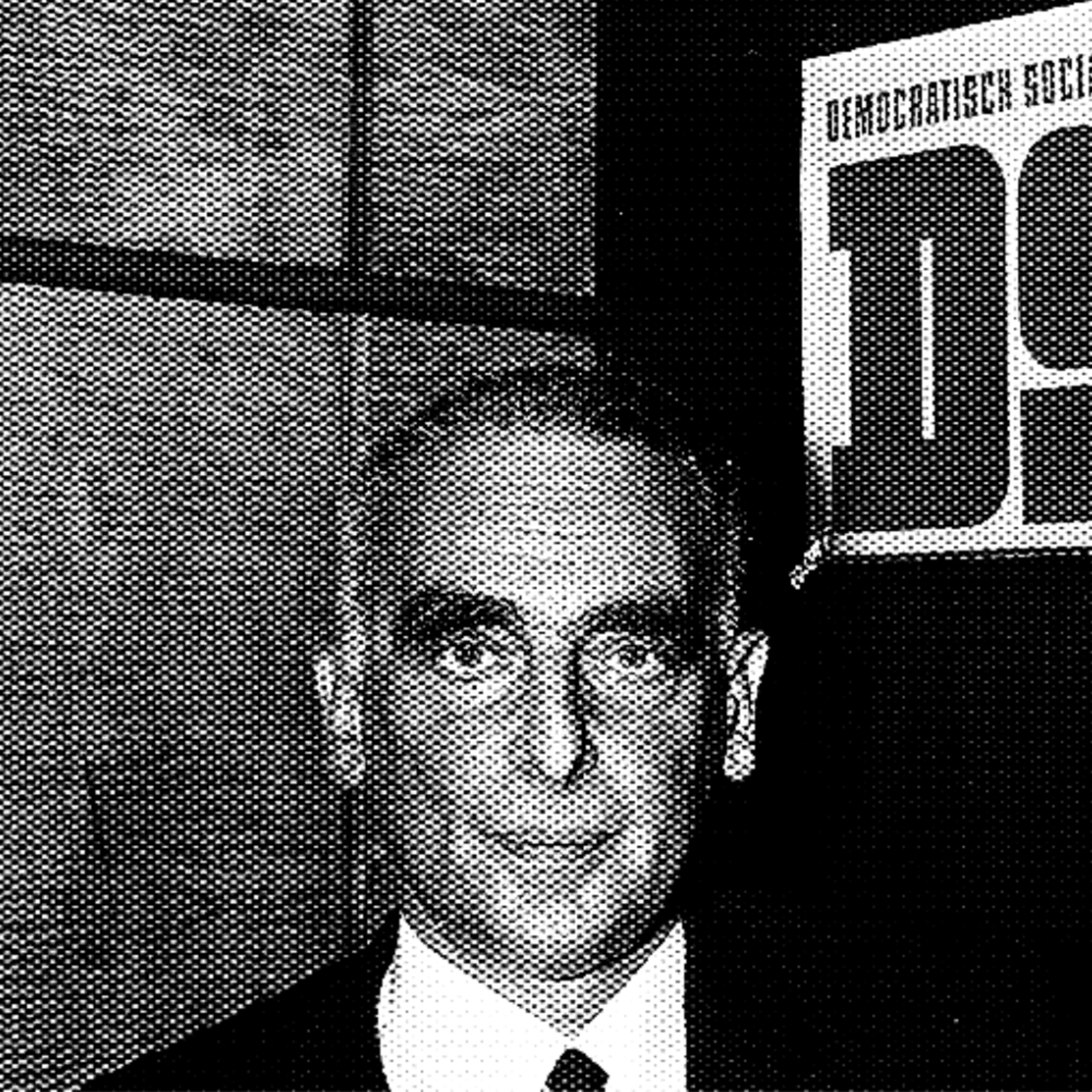
This podcast episode from Farsight, hosted by Casper Skoga-Petersen, August Lullianberg, and Tula Richards, focuses on Fred Polak, a mid-20th-century Dutch futurist. Polak is best known for the "Polak Game," a matrix that categorizes views on the future based on two axes: essence (whether reality is getting better or worse) and influence (whether humans can affect it). He argued that "images of the future" are not mere visions but productive forces that drive history, motivating people toward collective goals. Polak critiqued both Marxist determinism and existentialism for fostering cultural pessimism and a lack of forward momentum, which he saw as detrimental to Western civilization. The hosts connect Polak’s ideas to contemporary sentiments of doom and paralysis, noting that while his idealist, anti-materialist stance feels dated, his emphasis on agency and visionary thinking remains relevant. They place themselves as essence pessimists (seeing negative trends) but influence optimists (believing in human action). Polak’s biography—from a business career to hiding during WWII to writing a PhD critiquing Max Weber’s value-free science—shaped his belief that social sciences must be value-laden and goal-directed. His later work with the Dutch central planning bureau and his role in social democratic welfare states underscore his technocratic, planning-oriented futurism. The episode explores how Polak’s framework helps analyze current discourse on agency and future outlooks.
Now looking for alternative fusion, but utopian and distant. I can now open the door, I am showing intelligence, 'cause that will be the end of the new roof. It is impossible for cars to reach, and it is foolish to buy goods. You are listening to Farsight, from the Copenhagen Institute for Future Studies. Welcome to Farsight, I am your co-host, Casper Skoga-Petersen. I am August Lullianberg. And I'm Tula Richards. And today we'll be talking about Fred Pollack, Dutch futurist. How was you doing some accents before I left? I was doing some accents because I am, you know, topical for today's podcast. I am in the NATO rounds, I'm in Utrecht right now. In a very Pollackian building. Very Pollackian building, yeah. My building is called Casper Confetti. It's a, you know, ten-floor tall modernist, health scape, 2000s, kind of inspired building in the Utrecht Science Park. And I'm sitting in my friend's dorm, student dorm, common room, because my room didn't have good enough internet. And we tried recording this on Friday, but it didn't work. An emblem of cultural exhaustion. Exactly, yeah. I like the Hadnard's Pollackian, it's very like primary school environment science park. Yeah, I have like a finger paintings behind me on the walls. Maybe some future creativity there, who knows. I don't know how my, you know, if I was playing the Pollack game right now, I would be feeling giving on kind of the state of internet access in this country. Maybe we should play a little Pollack game. I guess we will. We will get into the session on the essence influence scale, right? Yeah, today we'll be talking about, about a Frederick Lodvike Pollack, or more commonly known as Fred Pollack, a Dutch futurist, mostly prominent during the 1950s, '60s, and listed by Alvin Toffler, a futurist that many of our listeners will know as one of these kind of pioneering futurists, along with people like Daniel Bell and Kenneth Bolding, during the mid-20th century. And a lot of our listeners who are in the foresight field or future studies field, they'll know his name from the Pollack game, which we just referenced before. And he's, so we've been in France for a few episodes. Pierre-Vac and Bethe-Tandes-Sjubin, now we are in the Netherlands. And Pollack game, of course, also the notion of images of the future as a thing that is sort of productive, is a motivating force for creating alternative futures. And for Pollack, these images are extremely important. It's sort of the cornerstone of his thinking. They're not only visions of potential futures, they are productive forces in their own right. They're transgressive future projects that create history through the way that they motivate people into pursuing these future projects. Think profits, think revolutionaries. There's a lot to unpack in these images and we'll get into around sort and due time. We'll be spending quite a bit of this episode on this idea. Perhaps we can talk about why he's interesting to those who don't know of him already or know about his images of the future or his game. Yeah, so we were talking about before we started the podcast, whether we should explain the Pollack game and then try to line ourselves with how we perceive ourselves on the axis. So essentially, the Pollack game is a matrix by which you have the pessimism and impolism, one of two by two matrix with the vertical axis is essence optimism and the horizontal is influence. So the upper left would be things are good and getting better. We can't do anything about it, but why worry things are okay? And then the upper right would be things are good and getting better and we can act to make things even better. And then the lower side of it is the worse. Yeah, so what is the nature of existence or of reality? Is it getting better or is it getting worse? Is everything crap? Is everything great? And then in addition to that, well, what can we do about it? Can we not really do anything? Is it fatalistic? Or can we actually do something about that? And I think the reason why the Pollack game and this influence essence axis that you just articulated to Lula is interesting today is because it really mimics a lot of discourse occurring right now in the future sphere. I mean, take, for example, Silicon Valley where terms such as being a doomer, specifically this is usually about AI, but it's been extended to general kind of images of the future as well, being a doomer versus conversations about how much agency we can exert over the future. These are things which are also being spoken about today. And they kind of find there, I guess, home, or at least the systematic exposition in Fred Pollack's thought in this matrix. Yeah, so essentially it's the extent to which you believe the future is trending in a positive or negative direction. And the extent to which you believe humans or individuals have anything to do about it. So to what extent can we direct the flow of the future? I think one thing that's interesting to talk about with the Pollack game and its roots in Pollack's work is that he believed that both the influence and the essence are incredibly important for creating this bleak outlook in the world. So he accuses historic determinism, so the useless of the human endeavor and human extensionism, like life is itself meaningless, and creating this idea of the image of what's possible and then the future creation from a person. Yeah, so there it would be on the one hand side. I mean, he's very obvious day, right? So he's writing this during the 1960s and we'll get into his biography in a short moment. But he has these two oppositions, which are he's got Marxism, Leninism on the one side and the historical materialism of that, the teleological nature of it, the predetermined nature of it. Versus also the existentialist current of people like Jean-Paul Sartre, Thomas Mann, who are writing about, you know, you can't really live in the future. You're always stuck in a perpetual presence and present and that present is inherently meaningless as well. And he found those two currents during the post-war era being quite damaging for these images of the future, which he thought was really what pushed culture and civilization forwards. Yeah, and I think this is also one of the ideas that brings Pollock up to our present moment is the sense that he believed that the Western world of his time in the 1950s, 60s, was steeped in this kind of cultural pessimism due to the fact, as you mentioned, August, and that as a result, we have lost our sort of civilizational momentum and he wanted to find a way out of it. I think today, as in the post-war era, when he's writing, there is a sense of paralysis and pessimism, at least in Europe, maybe for different reasons that then Pollock expresses in the 1950s, expressed in slightly different terms. I think we can document this today. At some of the work we do at SIFS has documented how widespread this pessimism about the futurist. There's also a sense that productive visions about the future are lacking. This is also something we've examined in our research and population surveys here at SIFS. So his thoughts are, at least to some extent, expressed, I think, today in public attitudes to the future. So Fred Pollock's ideas have a lot to offer today, even if some of it feels a bit dated and antiquated. I mean, personally speaking, I find it a bit too much on the idealist side. I mean, he is an outspoken idealist. He's upfront about it. He's an honest anti-materialist, so we can work with that. But I think that's an interesting point we should take up during the cause of this conversation as well. When we say idealists, we mean it in both senses, I think, both in the common sense, which is that things are going to get better. The future has good things and stores, but also that fundamentally, Fred Pollock thinks that ideas are the motor of history. That is what moves things forward rather than material circumstances like economic circumstances. And he says it explicitly. He says, "I am concerned with the role of ideas in pushing societies and pushing history forwards." It's ideas that captivate people. It's ideas that have momentum, that push people, that motivate people, that organize people. That's what he's interested in. And that's what he sees as lacking in today's world. And we would say today's world. It's really in 1950s. But I wonder if he wouldn't make the similar analysis if he were alive today. We talked about this that he lays the blame for this feeling of degeneration of spiritual Western culture. And we see that quite a lot in a lot of discourse, especially from the far right, that there's this moral decay that's happening in the West. And I think it's quite like an interesting comparison that this Pollock was talking about this in the 1950s. There are obviously different motivations and different goals behind this accusation of spiritual decay and for different reasons. But I think it's quite an interesting comparison. Yeah. And in comparison to today, Fred Pollock is a Dutch social Democrat. Yeah. You hear these critiques today from people like Jordan Peterson, people on the alt. They come from sort of the, you know, it's a different motivation altogether. It's like a proto-fascist or mystical right wing critique of, you know, decaying Western civilization. And some of that was in the air at Pollock's time too. People like Oswald Spengler, who wrote a decline narrative about the end of Western civilization, which also, you know, was part of the intellectual baggage for fascism in Europe in the 30s and 40s. But it's really coming from a different time. His critique is not coming from, say, the end of the century.
a critique of, you know, decadent and weak and feminized Western culture as in some of these new people today on the right. It's coming from an entirely different point of you, which I think makes it interesting and quite novel also from today's perspective. I think Smell was really interesting about his analysis of image of the future and what he lays the blame for this decay is more temporal than political. So he accuses existentialism as creating these like moment bound men. He's, I think this is phrase, that everyone's focused on their daily life and on like introspection rather than thinking about culture or like a macro scale and progress. That's quite, I think that's quite an interesting distinction. Yeah, the existentialist claim, you cannot escape your own cage of flesh, you are in a perpetual present, you know, it's kind of vat. Okay, so we are, so we have this essence influence scale, right? There is, you can be either optimistic or pessimistic on the count of essence, the way of the world, the way history is moving and influence the extent to which we human beings can have an influence on that. Where are you guys on the essence? Yeah, it's good, good question. It's good to do that before we get into who the guy was. I think to Lula and I were talking about this right before the call and we're fearing that we all align in the same quadrant. I think it depends on the day stuff like this. Like you do a lot of human scrolling, you're not going to feel that the world is amazing, right? And you definitely don't feel like you can do anything about it. I can go first. I think I'm essence pessimist. I think the world is trending in a terrible direction. I mean, I think it's hard not to be. There's a 50% chance that the 50% risk that the AMOC stream will collapse by 2050. If you're in Northern Europe as we are, how can you be an essence optimist in the face of that prospect? I think in terms of politics and the social world, I'm more, I think things are more chaotic and can swing both directions. So I lean influence optimist. You have to believe human beings can do something to change the world, right? So I would say I'm leaning essence, pessimist, influence optimist. I mean, it kind of feels like there's an element of Pascal's wager to this quadrant. Like why not be a essence pessimist, influence optimist. As in, I don't see the value to choosing the influence pessimist option. So you mean if you're an essence pessimist, influence pessimist? Yeah, I don't see why you would kind of resign yourself to that. It feels like Pascal's wager, you know, like you might not. Yeah. Wait, so Pascal's wager, you have that's the thing about, you know, belief, disbelief in God, that the consequence of each is, you know, one, you go to heaven, if you believe in God, if you don't believe in God, you don't go to heaven. If God doesn't exist and you believe in God, then nothing happens. If God doesn't exist, you don't believe in it. But you know, in this circumstance, you may as well believe in God because the consequence is going to happen. I mean, you know, the image of original sin is one of Paul acts, foundation images, right? That is pessimistic on both the essence and influence scale because you believe man is already a sinful being. That's been decided for you. There's not much you can do about it. And by the way, God decides everything and the end of the world is coming. So, you know, all you can do is be a good Christian and we'll see what happens. Yeah. Perhaps it would be good. This is a good segue to get to his biographical details. Who is this person and why does he harbor these beliefs? Yeah. So let's start with it. And then you guys can just chime in whenever you have a comment about a certain biographical event because there is actually a lot of interesting stuff despite Fred Pollack, not being someone who is as covered in the future studies literature as people who have previously been featured on the podcast like Bertrand is Juvenile, Hermann Khan and Pierre Vac. So go on. Yeah. I guess. It's going to say, supposedly even his age of death is just a matter of time, which is, which is an interesting fact for a quite prominent 20th century thing. You know, we know when he was born, he was born in 1907 in Amsterdam to a Jewish family. So his father was a very well-known violin player and concertmaster and his mother had founded the Home Economics Budget Bureau in the Netherlands at the time. In 1929 at the age of 22, he graduates in law and economics with a thesis on French monetary, economic and population problems. He's really, at this point, he doesn't have any, doesn't indicate any scholarly ambitions within philosophy or future studies. I mean, future studies isn't a discipline at this point, but let's say philosophy or intellectual history is mainly focused on business and economics. Between 1929 and 1939, after having graduated with his law and economics degree, he pursues and has a very successful career in commercial business, working for Amsterdam Bank and he rises to a position in the managerial board of the largest Dutch department store just by the age of 32. And like I said, that was from 1929 to 1939. We all know what happens in 1939. Fred Pollack, having been born to a Jewish family, I'm still unsure whether it was a secular Jewish family or whether he was really just growing up. That's uncertain based on the stuff we have read. But between 39 and 45 during the Second World War, he goes into hiding and while he does that, he starts to prepare a PhD thesis in philosophy, critiquing the value-free science of Max Weber. So what is this? Well, Max Weber, the father of sociology in the early 20th century, wanted to set up certain conditions for what science should strive towards. And one of those was objectivity. Science should be a value-free endeavor. And as the founder of sociology, Max Weber also believed that sociology should strive toward this value-free nature. It should follow the, it should mimic the disciplines of the natural sciences. Sociology should and one day would become like physics, like chemistry, like biology. Now, during the Second World War, when he's writing his PhD thesis, Pollack is critiquing this idea and will later see inklings of this in his thought are in things like the image of the future that he believes that, you know, the social sciences, such as sociology, which in some sense, future studies kind of grew out of, is inherently concerned with values, with social values at its core. And therefore, it can only be value-laden and it should inherently be gold-directed. So Fred Pollack, in the image of the future later on written and prognostics, another book he wrote, the two most famous, and the only English translated ones, he really pays a lot of credence towards normativity and desirable futures. So after the Second World War, he then passes his PhD with cum laude at Leiden University, which by the way is the oldest university in the Netherlands and also kind of, I guess like the fanciest one, it's considered like the Oxbridge of the Netherlands. And it's also interesting to note some connections to some of the previous future, future, who we've spoken about on the podcast, because they also had interesting events occur to them during the Second World War, whether that be the French futurist and father of scenario planning, Pierre Vac, who during the Second World War was in Paris, speaking to mystics and suddenly being told through mystics like George Gordychev that it was his eventual plan to become a clairvoyant, who would work with futures, or it was Bertrand de Jouvent-Nale, who was hiding in Switzerland and mingling with the Frederick Hayek of the Austrian economists. It seems to be that during the Second World War people's desires and what they think is important to work on really changes, because here he really switches, I'm going to only be focusing on philosophy. And it's here where his belief that there was a crisis in the contemporary social sciences with this search for universal truths. Yeah, also I think it's really interesting in terms of the connection to the cultural called "Wallwich Connects to the Dujvent-L" podcast. He believed that social scientists had to play a central role in the solution of contemporary problems. And Pollux image of the future as well, it sustained these efforts in offering like a historical analysis of the rise and fall of civilizations which benefited America in propelling its idea of its own civilization. He believed that crossing frontiers is both a man's heritage and man's task, the image of the future is in his repelling power. And this is seen as beneficial to the kind of American idea of crossing frontiers and the birth of the American civilization. So it was beneficial for the Ford Foundation to invest in Pollux work. And that was a massive part of his ideological trajectory in the 1950s as well. Yeah, all of this stuff has to be viewed in the context of the post-war, kind of Cold War tensions emerging. And also from what I remember from reading about Pollux, he was heavily steeped in social democratic planning and the emergence of the welfare stays in Europe. And also how that was tied to the Marshall Plan, things, these big economic spending projects and what they could bring forth in nations like the Netherlands. And this comes to fruition just a few years after the war in 1948 where Pollux gets a championship of sociology at Rotterdam University and also becomes the deputy.
managing director of the Dutch central planning bureau under the Nobel Prize winner Jan Tingberren. And here he's writing a lot about welfare planning, you know, the plan society in lights of things like the Marshall Plan. I also think there's an interesting connection here in that at first his segue Pollack to future studies was first due to the emergence of the welfare state of social democracy in the post-war era, kind of like the founder of SIFS. Am I not right, Casper? Yeah, a talkal Christensen, former OECD chairman and Danish finance minister talkal Christensen founded our institute. So it's kind of a similar journey, technocrat, planner, politician, turn futurist. Yeah, absolutely. I think it's worth talking about what planning means at the time also and how planning is this key concept we should be, we should include in this narrative because it kind of stands in contrast with his intellectual journey that he began during the war in hiding, writing his PhD. But planning was a big deal at the time in both the communist east and the capitalist west that was at the time a drive towards a planned society. So I was you mentioned the Marshall Plan in Europe rebuilding European society after the devastations of World War II. We have the development and expansion of the welfare society, we have planned urban development. Here in Denmark we had the five finger plan, the S train lines connecting Copenhagen with the suburban environment to bring all the suburban workers into the city and so on. So these grand infrastructure planning projects as well and in Stalinist Russia, of course, you have communism, you have the five years plan, you have all this stuff which is inherently planning for the long term. And then there's the other part of of Pollack, which is his you know his philosophy of history, his futurism, which is essentially an anti-planning exercise because planning crucially is not necessarily to Pollack the same as having a bold transformative vision for the future. In fact, it's quite the opposite. It's a way of projecting the present into the future and it's not as we'll get into later on a fundamental driver of history. In fact, it can almost be interpreted as a symptom of status quo decline, decay. And I think it's interesting because politically he's not a radical utopianist, but you know, kind of a conservative social Democrat. He's even the chairman of a political party in the early 70s, the DS 70, which was a Dutch breakout of the Labour Party that took a more pro-American stance to things like the Vietnam War. I read that initially he wanted that party DS 70 or socialist Democrats 1970 to be called the party for the future. That's incredible. I didn't know that. It's a good political slogan. The part of the future based on a platform of support for the Vietnam War. The Americans were fighting in Southeast Asia. It's kind of a strange hill for Dutch social Democrats to stand on from today's point of view. I don't entirely get it, but that's how it was apparently. I think we noticed this a lot with a lot of his biography is there's a lot of different elements to his thought that seem to be sometimes a bit incoherent or there's not a lot of context behind why he believes that or how it matches up with other segments of his belief. So for example, he was also really against technology and believed that cultural and social consequences of mechanization was particularly prevalent in the United States. He also believed that technology had to be paired with something like a forward inspired look of the future rather than just accepting technology passively. I think that's quite an interesting proposition that it has to be connected to some vision of something to make sense and also connects to a lot of conversations going around to technology and AI in the current day. And technology and visions of the future go hand in hand, but in this in the sense that for for for set social democratic central planning in the post war years, it's, you know, it's a technocratic project. It's a it's projecting that the present into the future. What he's looking for with his images are transgressive subversive images and I guess uses of technology could could fold under that that stand in opposition to the present. I think that's so interesting that he sort of embodies both the status quo and the opposition to it at the same time. So here we have, you know, Pollack, the central planner, the social democratic party leader, doesn't fundamentally believe in the longevity of the social democratic project apparently, right? No, and it's funny because while this is happening and he's at the central planning bureau in the Netherlands, in 1949 he visits the US for the first time. He does it for six months and this is way the ideas which you just articulated to Lula is kind of concern or hesitation about automations and technological progress are kind of planted. He both realizes that you know the second industrial revolution is like a blessing, but it's also a curse and this isn't the last time that he goes to the United States either will see that in a few years time after he's published the image of the future in Dutch at least. He visits Stanford and meets a lot of very influential people who has a subsequent influence on his thought too. But perhaps before that we should talk about the image of the future. It's not his, I don't know, is it his magnum opus? It's his most famous book because it's one of the only two that's translated to English, but it's published in 1953. And I guess it's the first systematic treatment of images of the future in the literature. And perhaps we can talk a bit about this book and the ideas in it now. It's a really good quote from a critic called Rudwander Helm regarding images of the future that I think is worth saying Fred Pollack's work can be described by four major elements in cyclopedic in cyclopedic. That's a hard word to say in content, Baroque in style, elitism, position and against the grain as his major major approach. And I think this summarizes the experience of reading the book pretty well. There's very laden with ideas and different types of images and how there's like grand narratives about society and history and civilizations to climb and fall. So how would you guys think about that? Yeah, I totally agree. It was very, it was a very dense read and I we should tell our listeners we read the abridged English 300 page version. So the Dutch on a bridge once supposedly is 800 pages. So we hope not to disappoint any Dutch listeners who might have read the full thing. I checked the numbers and they're going to come for me the close by 2% of our listeners apparently. So to all of you, please bear with us. You're getting the abridged story version from us. We're very sorry. Are you going to do some more accents August or was that really going to get some of that right? Oh, I got. First off, I think it's important to understand that Pollack a future is yes, but he is first and foremost a philosopher of history and his futurism is a product of his historical analysis. He builds on macro historians like Oswald Spingler, Arnold Toin B, Sorokin and he he similarly offers a prognosis of the future Western society sometimes with a pessimistic overtones as in the case of someone like Oswald Spingler. From some of the other macro historians, notably Toin B, he takes this idea that civilization moves forward in a process of challenge and response. So societies evolve through responses to historic challenges and the solutions then create new challenges which necessitate new solutions and so on and so on. That's the engine of history and his image of the future function slightly in the same way. So for him for Pollack history is a product of these sweeping ideas that motivate societies to push forward in a certain direction. Again, he's an idealist as we talked about in the beginning, meaning that it is the world of ideas that interests him and how ideas shape actions and realities. And so his main point is really that social change we should understand it as this push pull process in which society is at once pulled towards what he calls its own magnetic images of an idealized future but also pushed from behind by his realized past and he calls this completed and uncompleted time. So what's interesting is that the preface in the original Dutch work has been removed in the translated and abridged version which we read. And so in the original version it says quote, our century has been ripped open and lies down in a depressing agony. The much celebrated and proudly named new era has brutally come to a standstill being split and broken and even newer newest and possibly for us occidentals last era has arrived with increasing violence. It's a really dramatic opener to this book has been removed from the abridged and translated version and this kind of shows that from what Tolulu said earlier that Pollack has got a really dramatic style to him that actually put off a loss of readers at the time. And contributed also to I guess you could say his academic downfall in the 70s and 80s later on. But yeah, this this work is really concerned with cultural pessimism and lamenting the the influence of existentialists and Marxists.
in having images of the future comes to a standstill, but it has kind of, it has a heavy tone. - Yeah, it does. - Another thing as well that runs through a lot of the criticism of his work is that there are these grand narratives that he uses as examples of how civilizations have fallen if they haven't produced a staining image of the future. So he like cites the success of ancient Greece as a civilization and culture that keeps being referred back to as such a powerful example. And he argues that this is because of their powerful images of the future. And he also uses the example of Judaism and argues that there's this future image that's ingrained in the religion itself, which is why it's so sustaining. So he used these kind of grand narratives about these cultures and just argue that it's about certain images of the future that has propelled, it removes any nuance. - Yeah, that's sort of the Achilles heel of these types of macrohistory and grand sweeping narratives, right? In a sense-- - Yeah, he's been charged with cherry picking by some critics. - Yeah, yeah, for sure. In a sense, it's a grand narrative about the death of grand narratives, you could say. 'Cause he's saying there are no most sweeping histories of the future, where are they? Look at all these past examples. It's ending now, how can we bring it back? But maybe it's never coming back. Maybe it's of its time. Maybe we can talk about that towards the end. But I think, you know, exactly as you say to Lula, it's, he finds examples of these images all throughout history from the Greeks, the Jews, the Christians, onwards onto the Enlightenment, the Utopian Socialists of the 1800s and so on. And for all of these images, they act as this, you know, the strong motor of civilizational progress. And you know, it cultures capacity to project these aspirational images of the future is what indicates it's strengthened vitality as a civilisation. And it's a very old process. He says it began prehistory with magic and religion, which he says probably arose from the same drive to appropriate the powers of the future to avoid catastrophe and to secure the blessing of the gods and so on. So it's a very old process. It's endemic to human civilisation, but for 3,000 years, it's been here and now it's no longer there. And that's the great tragedy of our time to Pollock. Maybe we should get into how the images are actually made. So what, you know, we can talk about images. What is an image? Because he has quite a elaborate process for how images are created, almost like a step-by-step. First, it involves the splitting of time, as he calls it, into now and the other. He has some really interesting examples of what the other has meant to pass civilisations. So in mythologies, the other could sit below us as in, you know, Hades or Hell. It could be above us as in heaven, the Christian heaven, or Olympus and Greek mythology. It could be before us as in Eden, the lost paradise. It could be outside this world. You know, we have Atlantis, other mystical places. It could be after this world, after life, while Hala and so on, or you could even have like an other that sits beyond all worlds. You have infinity or you have the Buddhist Nirvana. So these are all mythical, religious images of the other. And then there are obviously, in modern times, more secular, utopian visions, that's, but ultimately, these spring from the same source of human creativity by splitting time from between now and this other time that either sits in the future or below us or above us and so on. And so what this does is it carves out an ideal future, which means that we have something to aim for. And in this future, there's also a blueprint for how to bring it about. So how should human beings act in the present in order to achieve this idealized future? I mean, this is certainly true for a lot of religious imagery. You have not only the promise of transcendent future, but also a prescription for how human behavior, how we should behave in the present to bring this about, to bring us closer to heaven, to Nirvana, to the afterlife, and so on. But you also obviously have prescriptions in these more secular utopian images because they function as political projects. And when you have a political project, you have a set of stated goals and also embedded in those a process for how to get their revolution, whatever. So the important point here, I think, is to collect these images have always existed. In all social groups, religious or secular, they concern the grand scope of change. So it's God, it's humanity, it's morality, it's social institutions, the meaning of history, reason, justice, that's sort of the scope that Pollack's images operate on. And importantly, they are not just the bottom-up concepts. They are created, they're engineered almost by a creative minority, he calls it. These are prophets, they're philosophers, authors, revolutionaries, and so on. And then perhaps the most important point, which explains why in Pollack's time, the future is everywhere in planning and so on in science fiction, but images are nowhere to be found. It's this point that they have to stand in opposition to the present in order to be truly productive engines of history. So they're not products of long-term planning, extrapolation of the present. Rather, they have a utopian or a uses its word, it's catalogical characteristic. So you have the secular utopian images or in religion, you have it's catalogical images concerning the end of time or the grand future of humanity. And so in it, in this opposition, you have a productive critique of the present with the promise of bringing about something radically new and different. And that's a Pollack is how things happen in this world. That's how civilisations rise and fall. That's how we move forward. And that's the great crisis we've lost disability. That's his diagnosis here. - I think he points specifically as well at Christianity by arguing that Christianity was the most powerful institution sustaining this dualistic structure. So the dualistic mind, as you said, the capacity to perceive both this world and the other world simultaneously. And his belief that the increasing secularization, but also he lays blame at the demithologisation of Christianity. So liberal theologians stripping away supernatural elements to make Christianity more scientifically acceptable. So he argues that like by removing away this, the idea is about resurrection, about heaven, hell, divine intervention, et cetera, you're moving, you're removing the elements that gave Christianity the image of the future that is integral to the religion. So without this eschatological content, Christianity, it doesn't have this other world. And therefore your result is like a moment bound man without a ability to reach this kind of other world. And he lays that blame about the lack of the images of the future as kind of integral to Christianity and therefore Western society. Exactly. And that's also how you can arrive at this on the surface counterintuitive intuition that religious images and secular images are really one of the same because it's about creating the opposition image, the transgressive image that stands in opposition to the status quo and the state of things currently. Whether that's a supernatural image or whether that's a secular utopian image, that's really not really the point here. The important point is that it's an image that is productive because it stands outside the status quo. That's what he wants, that's what he's looking for. So he has this point in the book that utopianists and Christian religious eschatology is gets, okay, I'm not gonna say that word, eschatology. You were all struggling. Yeah, eschatology. These are the same class of people. These both belong to the creative minority and we need them back. We've all become social democrats, it will not do. We need something else. But I also read that this idea that images of the future of radical alternatives has existed for the past 3000 years. This has also been critique by more contemporary futurists. So we read someone called Dennis Morgan who wrote a critique of Pollock's image of the future specifically that civilization's during antiquity had an image of the future. So Pollock points to the ancient Greeks and to ancient Roman civilization and says that, yeah, they had certain images of the future, whether that be in Plato's Republic, a utopian paradise where everything was solved and the philosophic king. But the criticism is that these futures weren't actually radically different. In the view of the ancient Greeks under Aristotle's natural philosophy, the cosmos was a fixed entity. Everything had its place. And therefore, there wasn't actually the possibility to birth radical difference in the future. The birth of contingency really occurs in during the Renaissance and during the scientific revolution. And some scholars would I think contest quite strongly what Pollock is saying. At least if we are to take the interpretation of images of the future that many contemporary futures have, which is about envisioning radical alternatives to the present. No Pollock.
Mike might have said, no, it's about this distinction between the now and the now and the other. And then maybe this kind of more elementary distinction between now, the present and the future can work if it's just about a question of othering. But if it's about envisioning radical alternative to the present, well, I think some critics would argue that in ancient Greece and in Rome, you just didn't have this cosmology to actually engage with the future in that kind of manner. I think it's a fair critique and I think he puts the bar quite high for what an image needs to be. And I think his strongest historical examples are more recent. So he has this point about the period from the French Revolution to the mid 1800s, the revolutions across Europe and how they were pushing for this image of a classless society and equal society. This pulled history forwards across generations. You talk about the enlightenment philosophers or all the way up to somewhere like Karl Marx. You obviously had a radical utopianist different vision of what history in the future could be. But how many times in history do we actually find images that how about this revolutionary potential? I think I would agree with the critique you make there out was that I think it's more rare than Paulic maybe makes it out to be, which would also explain how maybe we live in a time of cultural exhaustion, but maybe there's a regrouping going on. Maybe we need to gather steam and the new image will be produced. I think we should talk about in the end of the show whether these images exist, whether they're on their way back, whether coming from and so on. But I do think he sets the bar quite high, you know, for what an image should be and what it could be. And just to go back to what Talueless said earlier, connecting Pollack's thought to American frontier thinking, it becomes very clear here, right? I mean, it aligns well with that of the American dream. You can imagine Pollack visiting the US in the late 40s and during the 50s and feeling wow, okay, America, which for Europeans at the time was traditionally associated with quite like a, you know, feet on the ground, traditionalism, a bit, a bit being a bit conservative. Suddenly they had really, they had catapulted themselves from the late 19th to the early 20th century to becoming the global superpower. Through sheer, you know, manifestation alone. And so I think that that really appealed to Pollack. Just vibes, sheer manifestations. Just vibes, right? Yeah, it was images are just vibes and some kind of way. I think mind mapping. Yeah. Yeah, but I mean, he does address the American example, right? It has parts of the equation for him. It has the vitality. It has to the experimental feel. It has to frontier drive, but it also has what he calls crass materialism. It has inequality. It has regressive elements too. So that's not really it. You know, he looks to Russia too. Stalinism at the time, communist Russia, which to him is just a complete, he calls it a fundamental misunderstanding of social reality, which is Stalinism. It's not only that he disagrees with that as a political system, but also as we spoke about earlier, how Pollack is an idealist. It's a society built on a understanding of history that is fundamentally materialist. It's historical materialism. It's Marxism. History moves through class struggle. It's all about who owns the means of production and so on. It's not Napoleon. It's not these powerful individuals who are able to move history on their own. That has a place as well, but it's fundamentally about material drivers and structural forces. So that's not it as well for him. And he's sitting in Europe, of course. And Europe is sort of squeezed in between where we're mired and existentialist thought. Apparently existentialism was big at the time. I don't know. Is that who are these? Yeah, I mean, he's talking about it. It's Jean-Posatre who is mostly directing his criticisms toward. Okay. So all the kids at university at the time, they were reading existentialism. They're reading the reading nausea. They're reading being and nothingness. Yeah. You know. Okay. And there's a whole slew of authors. You can take someone like Walter Benjamin as well. He's being read. And Johanna Arendt, people wrestling with the fact that this atrocity has occurred during the Second World War and what to make of Europe then. So there is a cultural nihilism that sets in during the post-war era. So 1953, image of the future is published. That's what we've just been speaking about now. The following year, "Polite goes on a sabbatical and Stanford visiting the newly established centre for advanced studies in the behavioral sciences in Palo Alto. And if you'd listened to our previous podcast on Bertrand de Juvenile, you would know that the Ford Foundation, which was, I'm guessing it was the wealthiest foundation at the time in the United States, provided Bertrand de Juvenile's future reblas work with a large grant. And likewise, here, this centre for advanced studies in the behavioral sciences in Stanford also received a very large Ford Foundation grant. So there's also a connection between Pollack and these large American foundations that were trying to investigate how can we map out and model and predict social dynamics better in the post-war era. And he's there with 35 other research fellows, including the later famous Kenneth Bolding, I'll admit that I didn't know much about Kenneth Bolding's work before reading about Pollack. But he was also instrumental in the foundation of future studies. The famous later futurist, Alventoffler, mentions Fred Pollack with Kenneth Bolding and Daniel Bell. Pollack is living Kenneth Bolding's family's shed in Stanford. And during that time, has a lot of impactful conversations with these other futurists and sociologists. And it's during this time that Kenneth Bolding's wife, Elise Bolding, took sympathy with Fred Pollack and his, I guess, refuge during the Second World War and decided to translate the entire of the image of the future into English. She learnt Dutch specifically to translate Pollack's work. And later on, the image of the future translated became instrumental in aiding both Daniel Bell's work and Kenneth Bolding's work. I believe it won a council of Europe award as well. Yeah, it did. It won a council of Europe award as well. And it's also during this trip where he meets some people at Rand. And he's introduced to this new scientific discipline called cybernetics pioneered by Norbert Viener. And the influence of Norbert Viener isn't to be understated. So in one of his later works, which is only in Dutch, so I'm not going to bother pronouncing it, but it's, I will actually, it's ho Verroven wei de dolkomst. That's pretty good. Yeah, nice work. Anyway. So at the very start, he's got pictures of four influential people in his thinking. He's got Zarathustra, Moses, Hurt Gilles and then Norbert Viener, the founder of cybernetics. Cybernetics is this discipline which has kind of fallen out of vogue now, but in the 40s and 50s, it was massively popular and tied up with a lot of the futures thinking going on at Rand. And it basically is the study of recursive causal processes, systems where an output then becomes a systems input and influence the subsequent behavior. So you can think about like, you know, societies, social dynamics are full of these inputs and outputs. And you know, making a model of that would be way too complex compared to models and physics or in chemistry, because there are so many different variables to keep in track of that influence one another. And so scientists were trying to figure out how to do this. And Pollack saw this as a really interesting contribution to creating a science of, social science or featuring. So because this would be less, I guess you could say, crude and linear in its modeling, it would allow for more variation. So he did find that really interesting. I read about Pollack specifically. The only real piece of information I could find on his character and his personality that he was not, he was very self-conscious of his qualities. He liked to be in the centre of the tension. And most importantly, he really felt he needed to participate in public forums and debates because he believed that scientists and scholars had to be more involved in society and leave the ivory tower in order to preach the word about their research so that they could improve the human condition. And he really believed and approached his works engagement with people in that way. Yeah. He also had really bushy eyebrows. I wonder if there's any, you talk about cybernetic's, I was, if there's any trace of the cybernetic idea and image of the future, well, the one interesting way enough I could think of is this idea, which he probably took from Arnold Toin B of Challenge and Response, Push Poll, that time does not flow linearly from the presence of the future, but the future also acts as an input to the present. And then there's a circular motion there, right? But if we were to construct a cybernetic system of that, it would look fairly simple. You know, these are two nodes impacting each other and put out. Yeah. And he's hoping that we can do this on the global societal level. That's his hope. Yeah. So you ask, okay, can we find elements of this cybernetic thinking in images of the future? Not really, but I think we can in prognostics, which is next work. Yeah. So he's published two works that have been published.
translated into English. And prognostics is published in 1968. So there's quite a while in between the image of the future in 1953 and 1968. But that's the translation, right? So the translation is in '68, but it's published in '50s, I think. So, okay, it is. Okay, this is the thing about his translations and his publications. It's so difficult to be truckable. It is confusing and to our listeners, information is all over the place in terms of what was published when in what language, and it's all we're dealing with, a bridge, an abridged versions and so on. So please excuse some confusion there in the years. Yeah, and it's in prognostics where, so yeah, Casper and Tolulu, you both said that in the image of the future, he goes back to antiquity and talks about these images of the future. But in prognostics, it's specifically about how has this science of future been latent throughout the history of civilization? What kind of, I know, inklings of this science of the future can we find? And he traces it from the early Christian philosophers through Heraclitus, who is like, you know, a pre-secretic philosopher who theorized change a lot. He's the guy who said you can never step in the same river twice. To people like Jordana Bruno, Kant, Hagle, Marx, Comete, Nietzsche, Bergson, Shadan. He really goes through everyone. Like Casper said earlier, he's a philosopher of history at the end of the day. And in doing so, he kind of lays the claim to being one of the most erudite, active, futurists at the time, one of the ones who's really trying to be most expansive in scope. And it's in prognostics where he outlines his vision for a science of the future. So in prognostics, he also describes why he's using the word prognostics and not futureology, because at the time, futureology was already a word that had been coined. And like many of the people who are in the foresight, the future studies field, listening will know, futureology was discounted later on because of its association with pseudoscience, with astrology or scientology. And instead prognostics, he believed captured what's, yeah, futureology didn't. But also in his introduction to prognostics, he says at the end of the day, even though he's outlined all these reasons for why he thinks it should be called prognostics, he says at the end of the day, I really don't care what it's called. We just need it. That's it. Yeah, I think it's a good name as well. And he also, I didn't read the whole of prognostics because it's extremely long, it's 600 pages long. So I read the introduction and the conclusion. I read the conclusion, which is called the future of the future, which I think is a good note to segue towards the conclusion of this podcast and some of our later reflections. He says, quote, "I believe that the number, size and speed of such applications, i.e. prognostics or future studies, will increase within the foreseeable future to such a degree that this alone will mark a clear dividing line with our present civilization." The future is a prognosis of the future. Future exploration will come to be the most commonplace thing in the world, much more so and much sooner than the continued exploration of space. Okay, very interesting. Which is interesting because, I mean, yeah, this was English translation was published in 1968. So in one way, even though there's not much future studies going on now compared to the heyday of the 60s and the 70s, I mean, there's not much space exploration compared to the late 60s either. It's all gone the wrong way. The remind of this famous David Graber essay called "A Flying Cars and the Clining Rate of Profits," which is this idea that we were promised Jetson, flying cars, spacecraft, bases on the moon, teleportation parts, and instead we got Twitter and you know, imagine showing LinkedIn to a science fiction author in the 1950s and saying, "This is your future." Just pick up on the word space. It's a bit of a segue to talk about how he believed that utopias are inherently non-spatial. So he argues that once the utopias move from an imaginary somewhere, sorry, imaginary sometime into imaginary somewhere, they begin to degenerate. And this is what he, this is why he believes that nationalism is a corrupted image of the future. So he believes that future images sometimes are often manifest through nationalism. So taking the emotional and spiritual energy of the image of the future, the specific destiny, the special striving towards that is present in nationalism and that directs it inward and downward towards the glorification and domination of particular people. And this is why he believes that nationalism and utopias should never be spatial. However, it's quite interesting that he talks about this belief that nothing should be spatial when he seems to purely focus on Western culture and Europe. He obviously mentions Russia and America, but he kind of does it through the lens of Europe of having these two superpowers encroaching on Europe. So I think that that's a quite common critique of his work, that he rejects the idea of spatial analysis of images of the future, but then he uses them himself maybe unconsciously. Yeah. In his sources, kind of, right, in what he's writing. Yeah. He's very geographically kind of. He's a very small world. This is, you know, in the 50s, the Cold War, you used to refer to Western Europe and the US as the first world, Soviet Russia, was the second world, and then all the unaligned countries, third world, you know, we don't really care. It's outside the great engine of history. And it really shows, like you say, to Lula in in part like you. I also think if we bring, if we try to bring it up to the present here towards the end, what would Pollack say to the fact that today we have a new capitalist communist hybrid system, which is not America, it's not the Soviet Union. It's something new. It's China. And he is coming. Yeah, because China is not only a successful model. It's also, I think, a state that has a very powerful image of the future propelling them, right? So I mean, you'll see it if you tune into Xi Jinping's New Year's speech. It's full of the future. Which you often do, Casper, which I do every year. And they're at top of that. I told you in the beginning, I'm a, I'm a essence pessimist, right? Because I think climate change is a great, unaddressed challenge of our time. It's being addressed, but slowly, and there are tipping points on the horizon, which are potentially catastrophic for civilization, especially if you're living here in northern Europe, and you might be facing a new isolation a few hundred years. But this is, you know, in China, you had to, you had to green energy boom. So you have actually an attempt at addressing these things, which you don't in, in America, for instance, I don't think he would like the Chinese model much. I think he would dislike it for the same reasons he would dislike, he dislikes this Soviet model. I don't think he would say we should copy it in Europe. I also think he would, he would say it's, you know, a kind of nostalgia projected forwards in that, you know, the Chinese future is also a return to a past golden age, right? So for Pollack, that's a, that's a fundamentally flawed category of future images, you know, the nostalgia driven once. And when you hear Sishing Pink talk, it's also about restoration of a glorious Chinese past, right? So, and I think perhaps the most important point here would be that again, these are top-down state images. They don't stand in opposition to the existing there. So they, they, they lose their rebelliousness, their productive power and so on. So it's not a productive image that creates a new future. It extends the current state. But I do wonder to your point, Zalula, what would he make of the fact that the most dynamic and forward looking society in the world today is not Western, but in fact Asian because Asia lies outside of his worldview. It's not a site for images that concern him. I wonder if he would recognize that as significant. Even in the 1950s, though, the future was not like this one world synoptic vision of like Western. So it seems like a massive emission and something that I think to generate this argument quite significantly. Yeah, do you think? I wonder if it's just, it's outside his, you know, if he were to, because he goes back throughout Western, the Western canon from the Greeks to, you know, from the Greeks to the socialists and the 1800s and he, he derives their images at the future. Maybe it's simply a product of him not being able to read Mandarin, not being able to read the ancient Indian text or whatever and deriving the future images from there. I don't know. Or maybe he was simply uninterested. Or maybe it, it's a deeper cultural showinism at play that, you know, whatever is outside the first and second world doesn't really concern us because no real change or no real vitality comes from there. I wonder if you should have taken some, I think you should have taken some advice from P. Avak. Maybe. P. Avak shows you do not need to, to be able to read ancient Indian scriptures to be influenced by, you know, Eastern mysticism in your future thinking. It can be valuable for creating returns on a profit on oil ventures, you know, you can see Eastern mysticism, exactly. That's the P. Avak way. I think that's interesting. It's the meditation. But it is striking how absent the world outside the European cosmology is. Yeah, it is. I just briefly want to go over just sort of the essential thesis and conclusion in prognostics from Polak because I think it's good to do before we wrap up the podcast. In the conclusion, he outlines the essentials of both main components.
of a modern prognostic science. And these consist of, and these are some really, I think, fun terms for people in the foresight and future studies field to hear of. 'Cause you often won't hear someone being so, I guess, creative about the establishment of future studies. So there's two things, there's two concepts. There's a futureography and then futopology. Now, futureography, in a cast by earlier, you asked, I wonder if Polak writes of anything concerning cybernetics and images of the future, 'cause otherwise it's very idealist, like you said, history is driven forth by ideas and images. There's little credence or attention paid to demographics or economics. These kind of fixed circumstances, which seem to us at least, have a very obvious influence on future circumstances. And this is actually where Polak introduces the possibility of this. He says that prognostics is divided into two parts. The first is charting as fully as possible alternative autonomous developments likely to occur without human intervention. And that is futureography, it's a kind of like cartography, right, but for the future. And then on the other hand, he has futopology. Now, this is where his notion of desirable futures and his rejection of that verbarian notion of value-free science comes in. At the start of prognostics, Polak says that he's inspired by the philosopher Emmanuel Kant's three central questions, which are, "What can I know? What may I believe? And what ought I do?" We can say that, "What can I know?" Concerns, "Futurography, the fixed elements that will, that are likely to occur without human intervention, but then influence possible alternative futures." The second, "What may I believe?" is kind of like what we're talking about with the Polak game, right? And then what ought I do is that normative element. And he actually criticizes the contemporary futurist Bertrand de Juvenile, who we did a podcast on, for not articulating desirable, an account of how to deal with desirable futures enough. If listeners will remember, or for those who didn't listen, Bertrand de Juvenile categorized possible futures into the term of future rebless. So a future rebless is a possible future. And then these possible futures go to a for-hunt previsionnel, a provisional for-on-mory, surmising for-hum, where future futurist technocrats would have a sort of warning system of potential futures ahead, and then thereby select them. But De Juvenile, Polak says, "Didn't articulate a science for how to choose these futures. There wasn't normativity to it. It was still this value-free science, which he associated with Max Weber." So that's what futopology is about. And then futopology is getting really wacky now, but bear with me. Futopology is divided into two different terms. We have utopo-logi, i.e. the word utopo-utopia is emphasized. And then we have futopology, topology being a term from mathematics. And so futopo-logi, focusing on utopias, is about, is that concerning utopias? But there isn't really this scientific coping stone, as he calls it. This is all about imagination and creativity. And then the one concerning topology, futopology, is a quantitative element hinging on mathematics. And this is something in which he says will be answered by computers, systems analysis, feedback loops, i.e. the cybernetics, which he was inspired by when meeting Norbert Vena. So that is kind of how he outlines his science. We have a creative element, and then we also have a mathematical element, modeling, potential futures, and aiding that creative element. And then we have the fixed elements in fut geography. And I think it's quite a nicely systematic account of how prognostics or future studies might evolve. Yeah, I can imagine future apology in a Dutch accent. Yeah, futopology. Futopology. Futopology. All right. I just like to say one thing as well. Yeah. To kind of summarize a bit about the images of the future. The argument has been made that in the current era and the contemporary, with the contemporary challenges by Pollack, that people have less capacity to imagine our preferred future. However, there is an opposing argument to that, is that on the contrary, we are experiencing actually an overload of imagery. And we have too much information and too many different images of the preferred future. And this is creating the fragmentation and regionalization of different societal images of the future that's creating more conflict rather than society devoid of images of the future. What do you guys think about that? I think it's a good point, really good point. Yeah. Maybe the point is not that we were lacking images. Maybe the point is that we're lacking mechanisms by which we can rally around the same images, because there are the too many or were too fragmented. Or that project is simply impossible in today's political climate. I don't know. I think it's a good fair critique. Yeah. I think that it's a completely fair critique. And we are surrounded by images. I mean, we live in-- I mean, you think about the decline of literacy and reading. And its substitution with images, we live in an image-based platform economy through obsession with TikTok and Reels. Affect is that which channels political beliefs nowadays, more so than literacy and media literacy and reading the news. I think maybe the problem is then for Pollack that, yes, OK, we might be more surrounded by images, but do people have the political agency to come up with new images? Or are we just regurgitating the images of others? Yeah. Are these images truly subversive, truly novel, truly pointing to a different direction? Or are they just noise in the system? I think that one of the strongest ideas here is-- but that's also where he sets the bar quite high-- is that the images have to stand in opposition to something in order to be productive. Because then you rally people. You create emotional attachment and intellectual attachment. You don't want to just appeal to, wouldn't be great if we had more trains. Vote for me, and I'll make it happen. That's not an image that's sufficiently subversive. You need-- wouldn't it be great if robots could also vote? And your pets could also vote. And we expand the circle of sentience to include nature as well. Nature is represented in our-- that's an image of the future that is subversive, right? And building on that, I have one question for you guys. Do you think that the long-termist movement, as it is formulated today, is a sufficiently polacky image of the future. And let me just draw out the points of the long-termism movement. So it's more clear what I mean. Long-termism is about humanity's distant future. It's about longevity. It's about superhuman AI. It's about settling humanity in space. It's about all these things. So grand narratives. It's also formulated by a creative elite. It's a very top-down project. It's people like Willie Makasco, Iligessa Yudkowski. I think it has a built-in moral project and a built-in political project that it prescribes what future value is, how we should build towards future value in that it says we should safeguard the lives of humans in the far future, just as much as we safeguard the lives of humanity today. And it also is a civilizational project in that it tries to steer us around existential risks, human extinction and so on. Does it fulfill the criteria? What do you think? I don't know. That same group, the long-termists, and also the opposite, the effective accelerationists, those who are like, let's-- we just need to accelerate things as fast as possible to achieve techno-utopia. They operate on a certain assumption of techno-determinism, which I don't know if it bodes well with polacks images of the future. He did say that technology creates a forward-looking vision of the future if it's paired with the correct ideology or the correct ability to mediate it correctly to give agency. So if technology was used, was utilized in this long-termist way to give humans more agency to have humans master technology in this Promethean way, then-- I was going to use that word, so I'll be-- [LAUGHTER] It's right above the past. I think, however, though some of the long-termist figures, it's still this kind of reactionary Western civilization and threat we must consolidate our culture argument, which I'm not-- which I think aligns with him to some extent, yes, but then also goes against a lot of his humanist principles. Yeah. In a way, it's a essence pessimist influence pessimist image of the future, right? Yeah, yeah. I think so. But then the-- I'm getting confused by all the pessimists. Yeah, but the long-termist are like things are getting worse. Yeah, there's not much-- We're going to do it now, though. --and it all selfs up. And also, we should make decisions because maybe it's influence optimists to assume that-- I don't know, because for the long-termist, for some of them, at least, it's kind of-- there's not much we can do about it, but we need to do what we can, simply just to reduce suffering. Yeah. Right? It's not really like, it doesn't really implement a positive.
vision as much of we need to reduce the amount of suffering from this inevitable kind of catastrophic future which is in store for us Alternatively the effective accelerationists those who coined the term technological Prometheanism is like that's the CEO and founder of one of the largest venture capital firms in the US mark in Dreson and his day and is a technological manifesto he said I think we kind of aligns with technological Prometheanism Prometheus who stole fire from the gods and gave it to the people but that also sits somewhat Yeah, strange with me. Yeah, because I think that whole movement's also really fraught with anxiety They seem to be in a rush and they're really anxious about this at the same time. I don't know if any of these movements really align with Pollack's Yeah And it feels to me that the images need sort of a progressive element to them just because no, I guess they don't they don't But is it a progressive image or is it using imagery in order to serve a personal enrichment goal? I would argue that that's correct, but I think it still ticks all the boxes of It's quite utilitarian like utilitarian. I'm sure that I'm not sure I would describe Pollack as particularly utilitarian or belief that For example, there's this trend in long-termism where it's there's this kind of Gold food the greater good so you can Sacrifice the current people who are living now or make allow their lives to be worse in the short term in order to Look into two centuries in the future and make sure those humans lives are better. I'm not sure I think that's missing from Pollack Yeah, yeah, ultimately he is a humanist and he believes yeah, yeah I don't know he might associate those ends to justifying the means trade-offs with at the time with Marxism Lennism I mean that is like a Lennist concept, right? He'll five-year plan yeah marching towards some Tealiology, I definitely don't think he would like it or agree with it, but maybe he would say this isn't you know You know Nazi Germany wasn't a very strong image of the future as well, but a twisted one. I think Pollack would recognize as well So after he's published after he's published prognostics in the in the 50s and with the English translation in 68 People scholars seem to agree that there's a certain decline in his scholarly work It seems to also have been a notoriously difficult person to work with both in his position as chair of sociology and Rotterdam and also just in his In his writings on future studies and he stops kind of writing about prognostics in the 70s as well and is more concerned with matters of reconciling science with God and gets becomes more mystical And then in 1985 he eventually dies and Authoritative sources actually differ about the states so Lislav's actually known about how he died or when exactly he died But we'll leave with one With one note which is his epitaph so I've got the the text from his epitaph his gravestone which is Eternal spirit of the chainless mind will prophets live forever which is a line taken from a Lord Byron Sonnet. What does that mean? I don't know Apparently it comes from like a biblical book in which God asks like the prophet Did the prophets live forever and then he had asked that same question on his epitaph so he sees himself? Maybe this is connects back to the long-termism Yeah, and then also in his in his final book he apparently mentions that he's most indebted to H. G. Wells the great science fiction author Okay, and then he does I don't know when this is August Maybe you can tell me but at some point he He speculates that humanity has about 10,000 years left and then yes, that's in the final years as well. Yes It's that it's mostly come up with that number is that in the bracket of less less rigorous scholarly work That's late 70s early 80s Okay, and it's something like the decay of social institutions or what what's the I don't remember no, but that's quite long-termist as well. Yeah, I think so yeah, 10,000 years. I think we lucky if we have 10,000 years All right, let's wrap it up guys. Thanks for listening everyone This thing yeah, yeah, we love recording these historical podcasts. Let us know if you have any Yeah figures from the history of future studies that you would like us to cover next yeah, or topics. Yeah, not necessarily Anyone with really interesting biographical details we can all that. That's most important to us. Yes. Yes. Yes. Absolutely. All right. Thank you for listening and see you soon See you [BLANK_AUDIO]
Podcast Summary
Key Points:
Fred Polak, a Dutch futurist, is known for his "Polak Game," a 2x2 matrix mapping essence (optimism/pessimism about reality) and influence (agency to change the future).
Polak emphasized "images of the future" as productive forces that motivate societies, criticizing post-war existentialism and historical determinism for fostering cultural pessimism and paralysis.
His work, rooted in social democratic planning and the welfare state, argued that ideas, not material conditions, drive history, and that Western civilization lost momentum due to a lack of visionary futures.
The podcast hosts discuss their own positions on the Polak Game (essence pessimist, influence optimist) and relate Polak’s ideas to contemporary discourse on doomerism and agency.
Polak’s biography includes a shift from business to philosophy during WWII, critiquing Max Weber’s value-free science, and later roles in sociology and central planning.
Summary:
This podcast episode from Farsight, hosted by Casper Skoga-Petersen, August Lullianberg, and Tula Richards, focuses on Fred Polak, a mid-20th-century Dutch futurist. Polak is best known for the "Polak Game," a matrix that categorizes views on the future based on two axes: essence (whether reality is getting better or worse) and influence (whether humans can affect it). He argued that "images of the future" are not mere visions but productive forces that drive history, motivating people toward collective goals.
Polak critiqued both Marxist determinism and existentialism for fostering cultural pessimism and a lack of forward momentum, which he saw as detrimental to Western civilization. The hosts connect Polak’s ideas to contemporary sentiments of doom and paralysis, noting that while his idealist, anti-materialist stance feels dated, his emphasis on agency and visionary thinking remains relevant. They place themselves as essence pessimists (seeing negative trends) but influence optimists (believing in human action).
Polak’s biography—from a business career to hiding during WWII to writing a PhD critiquing Max Weber’s value-free science—shaped his belief that social sciences must be value-laden and goal-directed. His later work with the Dutch central planning bureau and his role in social democratic welfare states underscore his technocratic, planning-oriented futurism. The episode explores how Polak’s framework helps analyze current discourse on agency and future outlooks.
FAQs
The Pollack game is a 2x2 matrix with vertical axis 'essence' (optimism vs. pessimism about reality's direction) and horizontal axis 'influence' (fatalism vs. agency). It helps analyze attitudes toward the future.
Fred Pollack was a Dutch futurist, prominent in the 1950s-60s, known for his ideas on images of the future and the Pollack game. He was a social democrat who critiqued value-free science and emphasized normative futures.
Images of the future are productive visions that motivate people to create history. They are transgressive future projects, not just predictions, but forces that drive cultural and civilizational progress.
He criticized existentialism for trapping people in a meaningless present and Marxism for its historical determinism, both of which he believed undermined the motivating power of images of the future.
It mirrors current debates, like AI doomerism versus agency, by mapping whether people see the future as positive/negative and whether they believe humans can influence it.
He graduated in law and economics in 1929, had a successful business career, then went into hiding during WWII to write a PhD critiquing Max Weber's value-free science, later becoming a sociology professor and deputy director of the Dutch central planning bureau.
Chat with AI
Loading...
Pro features
Go deeper with this episode
Unlock creator-grade tools that turn any transcript into show notes and subtitle files.
 PodcastTranscript AI