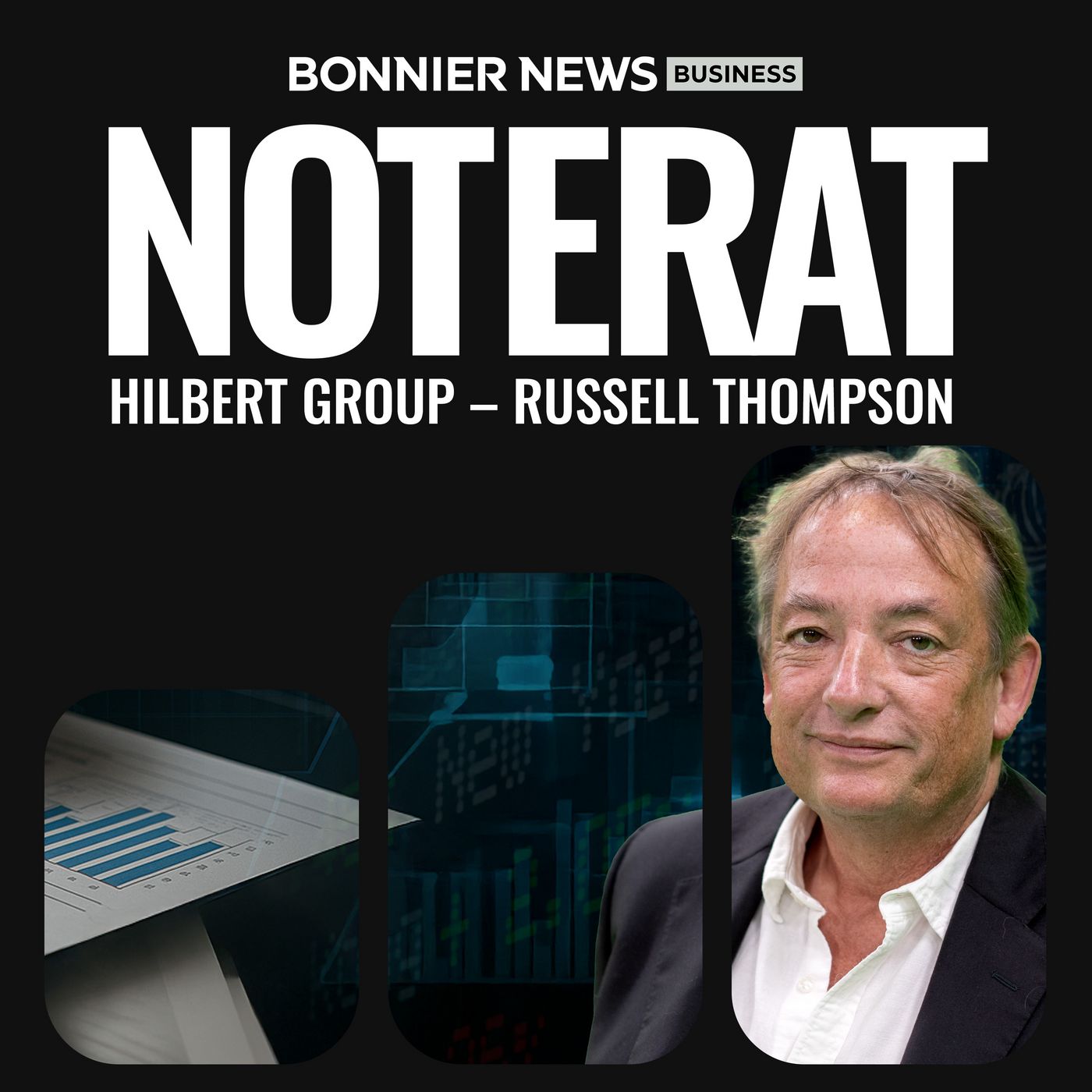
I poddavsnittet intervjuas Russell Thompson, VD för Hilbert, som förklarar företagets affärsmodell som en aktiv förvaltare (alpha-generator) inom digitala tillgångar, med fokus på avkastning oavsett marknadsriktning. Han betonar att Hilbert inte är en hävstångsinvestering i Bitcoin, utan ett fullservice-förvaltningsbolag som använder AI och maskininlärning för att hantera risk och generera avkastning. Thompson diskuterar ambitionen att bli Europas ledande digitala förvaltare, vikten av stark företagsstyrning inför en planerad NASDAQ-notering 2026, och hur ett listat bolag ger investerarförtroende.
Makroekonomiskt förutspår han en kommande korrektion i risk tillgångar på grund av höga värderingar och skattenivåer, vilket kan påverka Bitcoin negativt på kort sikt eftersom det är likviditetskänsligt. Han ser dock en mycket positiv långsiktig utsikt för kryptotillgångar från 2026, särskilt med ett förändrat regulatoriskt klimat i USA. Slutligen lyfter han fram den potentiellt revolutionerande effekten av USD-baserade stablecoins, som kan leda till en ökad dollarisering av världsekonomin och ha djupa konsekvenser för det globala finansiella systemet.
3. Skruva loss fästningarna på ställerna i ställerna. 3. Skruva loss fästningarna på ställerna. Hej det här är på den noterat som är platsen där börjens bolag får prata till punkt. Jag heter Pelleastborn och jag hälser er varmt välkomna till podden. Här är det en Niklas Sandström och VD en barnali bishvall som gästade podden. Här är Russell Thompson, CEO till Hillebotten till podden. Tack för att du har en plötslig tillbaka. Jag har inte fått någon att se mig, men jag är inte så bra att jag kommer till Asia på en daglig dag. Vi har varit i hälv om jag är i den här tända sista dag. Det är en plötslig tillbaka på en kold, kray, rejni, Stockholme. Ja, hur har du haft 40 hårsflöts? Jag kom från en lilla i land och då hade jag en minilla och då hade jag en minilla och då hade jag en lunda och hade 6 hårsflötslig tillbaka. Det var en av de spärrningar. Men du säger också, det är det första året som du har gjort i Stockholme. Är du ju här i den här springen? Ja, jag har märkt att hälv om det är tillbaka på en av de senaste sämre. Vi har ju dansing på en lilla i denna sista dag. Vi har skitat med en av de tända sista dag. Det har varit en av de tända sista dag. Vi har bara gått för två korta. Jag vet att vi har kommit tillbaka på en av de tända sista dag. Det är ett bra förra mål i den här två tända sista dag. Vi har ju tjockat med en av de tända sista dag. Det är väldigt fast för en av de tända sista dag. Jag hade en av de tända sista dag. Det är ju här i denna sista dag. Det är en av de tända sista dag. Det är två år. Det är två år. Vi har en libererat kaptor och en hälbet att ha en av de tända sista dag. Ja, det är ju här. Så kan du ta oss på en av de tända sista dag. Varför var det en av de tända sista dag? Ja, det är ju här. Ja, det är ju här. Ja, det är ju här. Jag tycker att jag är väldigt god i det. Cambridge var topp 1 % performa över 16 år. Vi har 3,5 billian dollars av assets, som vi grufer från zero. Och det var en väldigt väl respektive fund, particularly om hur vi har mannit risk. Så jag är en av de flera som jag tänkte att jag har en exterst. Ja, det är ju här. Det är ju här. Och också hur det är att göra en av de flera asset-management-busnis. För att man ska starta av. Vi har att få en av de asset-uppgörs som är väldigt viktigt. Och vi har också att få en av de asset-uppgörs som är väldigt viktigt. Och i de två två som är väldigt viktigt att få en av de asset-management-busnis. Men det är ju här i denna 20 år. Det är ju här i denna 20 år. Och så är det ju här i denna 20 år. done and the fact there was a listed business, it does give people comfort. So what would you say is the biggest difference between traditional as had managed method now working so focused on crypto? I don't know if there's a great deal of difference. The reality is that you know I get asked the same couple of questions all the time, one of which is where's Bitcoin going? You know what's the price doing, what's the market cap, where's it going to go to next year, where's the top, can it get to a million dollars, etc, etc, etc. I promise I won't that. And people quite quite often Bitcoin with digital gold. And Bitcoin has some of the characteristics of gold but it is not digital gold. Gold is thousands of years old. Bitcoin is not even 20 years old and it is a periphery risk on asset that trades very much like a commodity. It's very interest rate sensitive and I'm sure one question that you'll ask me down the line is what are the risks to the scenario, the biggest risk to Bitcoin and to the crypto ecosystem is not a thing of being going under or a big hack or anything like that. It is the global macro environment where we sit. So it is an asset like any other asset and and I am not, I'm sure a number of your listeners will hate to hear this but I'm not a Bitcoin Maxi. You know I am a dispassionate trader and I trade the realities of where I think Bitcoin is going. So right now I'm short Bitcoin and I'm comfortable being short Bitcoin. So I'm not sitting here and praying to the gods of Bitcoin every night. It's an investment decision that I review every day and I decide whether we want to be long or short with the help of all our AI and our machine learning and algorithms and all of the signals that that I'm getting. That being said I am one of those poor saps that bought my first Bitcoin in 2013 and lost the keys to the wallet. 350 Bitcoin. So you know listeners can do the economic calculation of that was a very expensive. You wouldn't be sitting here working. If you had that too. It was an expensive bit. Well in fact it wasn't my fault. It was my head of IT. He reformatted my hard drive while I was away climbing one summer and came back with no Bitcoin in my wallet. But those were very early days back then you had to download the entire, it was all peer-to-peer and you had to download the entire blockchain to your wallet. So I've been in and around the industry for longer than most to be honest. It's 12, 13 years I've been aware and I have been investing in Bitcoin. So I know the market pretty well. I'm just not very visible in it because I just can't be bothered with that in general. So your role as a chief investment officer here, what does that mean in a firm like Hilbert? So I run all risk taking my team. We have a number of products. So we run and manage all the risk to portfolios and then I interact in liais with a number of people, primarily the business development guides but obviously the upside. So we generate risk reports and we make sure there's no out trades and so all the traditional stuff. But basically the buck stops with me in terms of risk and return and making sure the portfolios are well-run, well-managed and that we can react to a day like October the 10th. You know where you have to know what you're doing and be quite proactive in terms of running your risk. But we're not a high frequency trading outfit at all. So we have AI which generates trade signals, machine learning that back tests are success rate of those signals and then we put the positions on and it's really much more of a portfolio management process at that point. And we have some very, we utilize something called extreme value at risk which is based on extreme value theory. So that can be quite proactive in spotting movements in risks and that can help you. So myself and my team are responsible for like generating the alpha on the products and making sure that we keep any drawdowns to a minimum. So what is the advantage of investing in Hilbert as a stock compared to just investing in some crypto? Yeah it's a good question. I think Hilbert is a very misunderstood story. I won't name them but a research paper came out last month from a Swedish research firm which is in Angie in my toilet. The sort of the ending byline on that was there are much better ways of generating exposure to Bitcoin. Well you know no shit Sherlock. You know we are not a leveraged bet on Bitcoin. So strategy in Michael Sala is these passive and you have plenty in Sweden. These passive Bitcoin treasury companies are leveraged bets on Bitcoin. And if you want a leveraged bet on Bitcoin you're much better off investing in them in those types of strategies. We are a full service alpha asset manager and we are expected myself and my team are expected to make money in down markets as well as up markets. And I see this that if Bitcoin is down and the Hilbert stock opens it's always weak and people associate Hilbert with the price of Bitcoin and it does not do us like just this in terms of understanding what our business model is which is generating yield when Bitcoin goes down as well as when it goes up. Now if you have a view that Bitcoin goes to zero then of course Bitcoin falling and falling and falling is detrimental to Hilbert for that reason. But if Bitcoin going from 120,000 what we're at 87,000 today as we speak if it goes to 60,000 so it halves in value. It shouldn't have a material impact on Hilbert per se apart from any sort of withdrawal of investor interest into the entire asset class but we're not a leveraged directional bet on Bitcoin. And so back to your question there are not many people that run alpha on top of Bitcoin to the level of sophistication that we do with the level of IT and AI and machine learning that we employ. And our goal which I've said on numerous occasions is to become the biggest digital asset manager in Europe. And I'm not talking about people like 21 shares. Those are passive index guys. We're at 2 and 20 hedge fund alpha generator and there are not many that do or I don't think there's anybody in Europe that does a job that's as good as ours. And so you know we're beginning to now get really significant pipeline and some world class investors, one of which I mentioned you off air before we started. One of the best investors in the world is going live today with us. Whether at some point in the future we'll be able to name that investor I would love to. We're in negotiations on that one but they're very private. When my old hedge fund considering Cambridge had three and a half billion dollars I knocked on the door of these guys for 14 years and never even got through the door and we've got an allocation out of them. They're notoriously hard to get money out of and the compliance and the due diligence that they go through is extremely long and arduous and tough and it says something to Bernali and the ops team and the lawyers and our compliance team that we're able to get through that process and get an allocation which I'm really hoping will grow significantly over time and that goes back to my earlier point that I think getting in the door the fact that we were listed gave them immediate comfort that they can look at our financials and they know they're accurate. What is the stamp that you personally will put on Hilbert? This is quite new in the company. Well obviously I'm born and bred as it managed her trader so I myself and my team bring alpha with us and product but over and above that as I mentioned before I've been there and done it and I'm not and I didn't get involved in Hilbert to do something that was similar to Cambridge. I think Hilbert can be multiples of where Cambridge was and Cambridge was three and a half billion so that's my ambitions here that I want this to be multi-multi-billion and you need to have a culture and you need to tick a lot of boxes and you need to have the right people in the right roles. That was one thing I really really loved about when I met Banali that CEO she's ex-Goldman and she's a deliverer. She gets stuff done and she knows how to get from A to C utilizing B and a lot of people don't know that that's a rare skill and so I work very closely with her in terms of how do we shape the overall culture and the department so they work together their cooperative and there's compatibility between you know both the departments that they interlink well but also the culture and the people and things like that. Also a number of other things I'm on the board of Hilbert.
but as well. And I have to say when I join the board, I think that or thought that the board and the governance in the business needed to get better. We are actively looking at a US NASDAQ listing for 2026. It is imperative that it's a requirement for the NASDAQ in the US, that the governance in the business has to be absolutely top notch. And so with Nicholas's help as well, we have been gradually reforming the board and bringing in, we've got a new chairman who's an old friend of mine. He used to, I met him when the Brunei Soffin-Wilfen tried to buy Cambridge, so I met him 15 years ago. So he's an old friend, he's now joined the board of Hilbert as the new chairman, which was confirmed at our recent AGM. And I'd like to think that everybody that's on the board and all the senior management bring something to the table. We don't want board members that just sit there and they rubber stamp. Bring some critique, bring some introductions, bring some experience. And so I've helped on that side and I am really, as is Benali, I'm a real believer that governance is crucial in a business. And you need to have accountability. And we're getting much better at that as well. And I think next year we'll see sort of the fruits of that being delivered as well. So yeah, I've got sort of entrepreneurial experience of building an asset management business, which is very relevant here. So if we take a little bit of a wider look on a macro level of the global market and everything that's happening in the world, that affects the crypto market, I spoke to Barnali and Nicholas lost summer. And what would you say are the biggest things that have affected the crypto market and in that way also affected Hilbert's business since then? Obviously Trump. Yeah. The freeing up of the crypto sort of this hand coughs that it was in in the US. Trump has freed that up. And now the regulatory framework is very crypto friendly. What does that mean for you as an investor? Well, it means number one that we would be warmly received listing on the NASDAQ. You know, we've been myself and Benali went to New York a couple of months ago, met with a number of investors and investment banks that could do the listing for us. And they were very enthusiastic. So the people have not really had the ability to invest in what I would call world class crypto businesses. And we were quite different because we're European. Yeah. So that opens up a huge, the biggest capital market in the world to Hilbert. There's two points I would make on the global macro backdrop. The first one is sort of related to Bitcoin as I say, you know, I'm not a Bitcoin Maxi. I do think that Bitcoin will go up. I personally in my family office, I have a trading book, which I'm sure Bitcoin, but I also have a portfolio of assets, which I add to from time to time without leverage. And obviously I hold Bitcoin in that probably a higher percentage of Bitcoin than your sort of typical one to five percent that institutions talk about. Yeah. But I think that the backdrop for Bitcoin and crypto assets in general for 2026 is very positive. But I really think that we have got a black swan around the corner, you know, the level of debt, the tail risk and the valuations of where we are. If you look at the NADS stack, if you look at where AI companies are valuing, there is an accident waiting to happen. And quite honestly, I think Trump would quite like a little bit of an accident and a pullback because it will allow him to turn the liquidity pipes on. Do you mean that the companies are too high valued? Yes, definitely. Definitely. The NADS stack is just under all time highs. It's insane with the risks that are in the global market. And so that was my very original point that I made to you in that I think that the global macro backdrop is not supportive to Bitcoin. The overall ecosystem and infrastructure, if you look how digital assets space survived October the 10th compared to what happened with FTX. FTX was a very good thing in retrospect for the whole ecosystem because it made got rid of the weak hands and it made the people that survived that stronger. So October 10th, while it was the biggest liquidation event in history for crypto, we didn't get anything like the knock or follow through in assets. Now people say, well, look, we were at 120 or wherever we were when that happened and we're now at 87 and Bitcoin's fallen 30%, which is quite typical for a bare market drawdown in Bitcoin. So that doesn't particularly worry me. And there's all these sort of things about strategy. You're going to start sending Bitcoin and issues along those lines. The reality is that you have had a hawkish-fed cut and Bitcoin, as I said at the beginning, is not a digital gold and it trades very much like a global macro commodity. It is less than 20 years old and it is very highly correlated to liquidity. And so if someone put a gun to my head and said, okay, what's the what's coming? What is the environment? I think we are going to get a pullback in risk assets. It could be larger. It could be smaller, but I think it's coming. And I think that that will necessitate a change of governor at the Fed. And we will see the liquidity taps turned on. QT ended yesterday. And we will see quantitative easing come back. And so once we get through that in the first or second quarter of 2026, I think 2026 could be a monster year for crypto assets in general. But right now, I don't particularly like them and we need to get through, you know, what we're experiencing. But one thing on the sort of the global stage is not really talked about, which is I find very interesting. Much more interesting than is Bitcoin going to 300,000 or is it going to a million? Or you know, Bitcoin is a $1.7 trillion market. If it goes to 300,000, it's going to be 5 plus, 5 plus trillion. That doesn't really matter. Gold is 30 trillion. You know, the Euro dollar market is $16 trillion. Bitcoin goes to 300,000. That's going to be great. It won't change my life as much as the impact that that could potentially have on the hill, but stock price. But what is really under looked and very interesting sort of area of discussion is this massive rise in US back asset stablecoins. You've got a market now, which has got $300 billion for market cap. Just a little bit over that. The third, fourth and fifth out of the top five in terms of market cap coins are all US back, asset back stablecoins. And I don't think that people have any idea of the implications that is going to have in the next 10 years. And I don't know. I can see some that are going to come over to the horizon. But there is really, really significant change coming to the global financial system from this. The major one, quite honestly, is going to be the dollarisation of the world. If you look at the Genius Act, Trump and peasant clearly are looking at the Genius Act and the rise of asset back stablecoin issuance in the US as basically generating dollarisation in the world. And they are five years ahead of anybody else. The ECB doesn't even want asset back stablecoin. They're going ahead with this ridiculous plan to do central bank digital currencies. Nobody wants them. It's programmable money, which you can turn people off or on or you can target you. The bank can, people don't want to have that. And they won't even issue CBDCs until 2029, the earliest. You've got a five year head start here. And the bank of England is the same. They're going to be 60% in central bank digital currencies. 40% I believe are going to be in some form of asset back. But they are very, very regulated in terms of what you can assets you can use. Vast majority are going to be zero yield. And so you are going to have some really profound implications that are going to knock through in the world. And I don't think anybody knows what they are. If you look at the if you look at the Fisher Accuration, which is sort of one of the fundamental, like the MV equals PT, there's meant to be a couple of constants in that. That really looks at the money supply and the impact that it has on price on inflation. And V, the velocity of money until the transaction number are generally constants or they're thought to be constants. They're not in reality. But they're much more constant than the movement in the money supply and in the price. Well, asset back to US stablecoins are going to start moving V. And that is going to have profound implications on the US current account deficit. It's going to have really significant implications on the Euro dollar market. It's going to have massive implications on bank deposits. You know, you could start seeing stablecoins could have the the law of unintended consequences. You could start seeing a run on a stablecoin generates a run on a bank. You're also going to get probably the money supply could fall with stablecoins because as money comes out of the banking system, that is a fraction
or reserve banking system, that generates through a multiple-of-multiplier effect, that generates loan growth and business. You can't do that with US stablecoins. If money's coming out of banks and going to stablecoins, that has really profound implications on the quantity theory of money. And then we're not even talking about the dollarization and the impact that US economic policy is going to start having on foreign governments, economic policy. You know, there is 16 trillion in the Eurodollar market. The Eurodollar market started after the Marshall Plan in the Second World War and then Russian banks like access it. I think that stablecoins are the new Eurodollar market. And that is where we're going. From 300 billion to 16 trillion, over the next 10 years, and people talk about Trump is going to get the Nobel Peace Prize, etc., etc. The biggest implication of what this Trump presidency might leave with the world is the dollarization of the global financial economy. And it's going to be really interesting how that plays out. And it's hardly talked about. But the Genius Act, very profound implications. And five-year head start. And you, you know, China and miles behind. And the European Union with the Euro are five years behind. And they're still not on board with doing it in the way that the Americans are doing it and in a way that people want. So we'll see. So me as an ordinary Joe, small-time investor, how should I tackle all of this macro events that you were talking about? How should I manage this myself? Don't use leverage. Leverage kills. Unless you know what you're doing. I would, I have this with my children. I have an account set up where I buy a little bit of Bitcoin, come hell of high water every month and it goes into their account. And in ten years time, I think that will be very, very valuable. No leverage just accumulating on a, what they call a VWAP basis. I think that any asset that has limited supply in the world where we are at the moment, whether that's Bitcoin or gold or art or foraries, watches, great wine, whiskey, all of those things are very good, solid investments in this world where we are just printing money. The UK government, a couple of months ago did a 20 billion sterling guilt issuance. 16 billion of that went towards interest payments. This is not a way that is sustainable. And we are in American parlance, we could be bottom of the seventh beginning of the eighth beginning, but we're close to the end game. You know, this is not sustainable. And part of the problem here is we have completely abandoned moral hazard. You know, we had, you look at Iceland for example, or Greece, Iceland is now a tiger. You have to go through pain and come out the other side. It reforms your financial institutions. It happened in Iceland. And we haven't had that for a long time now because politicians are getting younger and younger and they become in career politicians in the West. And they are not willing to do what is necessary and take the pain. They'll do anything to avoid it. And that is not healthy. Sometimes pain, you know, short, sharp, sharp has happened in Iceland, can be ultimately very beneficial down the line. And so we've been kicking this can down the road now for two decades. And we're getting, I really hoped that Trump, not that I'm a huge fan of Trump the man, but the economic policies of the Republicans and the Democrats. He was the only person talking about this unsustainable path that the US are on in terms of their debt mountain. But you know, his big, great badass bill, whatever he called it, was just more the same. And it will take something to mark it's always winning the end. And it will take something that some sort of either geopolitical or economic shock event, which will give us a reset of some form, whether a large one or a smaller one. So if we round up a little bit here, so in one year from now, when you've been in Hilbert for one and a half year then started making a little bit of my mark and you know, getting one year more of this business. Where do you think that Hilbert is then? I'm super bullish on Hilbert. What we've got, we've got a great pipeline in the traditional markets. As I said, you know, this investor that we've got two big investors come in today. And so we've got a great team headed up by one of my other co-founders in Liberty Road, Anna Dinescu, who runs our business development and she does a great job with that. And so we've got really good pipeline flowing in. But really interestingly, we have St. Etica. And there is huge on-chain demand for Bitcoin yield. And nowhere near as punchy as what traditional investors are looking for. So five, six percent in terms of yield on-chain for Bitcoin is very attractive to people that are sitting on large amounts of Bitcoin. And our pipeline there is potentially stratospheric. And we've got a great team that are doing that, which is very unusual for an asset manager in that we've got both sides of the coin. We've got the on-chain side, which is really moving forward. We've got the token generation event in St. Etica in January. We've done one raise for a back a few months ago, which I invested in. There'll be another one in January or February in other St. Etica second round raise. And I think that is going to be a monster. And we've got now the track record and the team and the pipeline to build on the traditional side as well. So as I say, I'm very, very confident that by this time next year I'll come back and see you. And I think it'll be a good story that I'll be telling. Let's make it a Christmas tradition. You'll have to get some good red wine there. Invest in that. Thank you very much Russell Thompson for coming to Noterat Podcast. What's a nice conversation with you. More than welcome. Thank you so much for having me. You have listened to a day of Snitav, noterat a podcast that gets out of the investor relations in the same arbiter with Cortalong, analyst poden from the I. Will you be able to get more of Hilbert Group? So go in to Hilbert. Group or you'll find Hilbert Group on D.C. from the news news of the Börskursk. Hilbert Group is noterat on Nastac First North. Lysna Janna, on the time of the interviewer in the series here in this field. There you find the different interviews with Russell's colleague Niklas Sandström and Barna Li-Bershwal. And the presentation on the topic that makes you come to New Year's Eve. We take a break now over in July and New Year, but I'm back again in January. I'm Peter Pelleast, and I thank you for listening. Bye so long.
Podcast Summary
Key Points:
Podden introducerar gästen Russell Thompson, VD för Hilbert, som diskuterar företagets roll som en aktiv förvaltare av digitala tillgångar snarare än ett passivt exponeringsverktyg för Bitcoin.
Thompson betonar vikten av företagsstyrning, ambitionen att bli Europas största digitala förvaltare och planerna på en notering på NASDAQ 2026.
Han ger en makroekonomisk analys där han förutser en korrektion i risk tillgångar, följt av en positiv långsiktig utsikt för kryptomarknaden från 2026, och lyfter fram den potentiella omvälvande effekten av USD-baserade stablecoins.
Summary:
I poddavsnittet intervjuas Russell Thompson, VD för Hilbert, som förklarar företagets affärsmodell som en aktiv förvaltare (alpha-generator) inom digitala tillgångar, med fokus på avkastning oavsett marknadsriktning. Han betonar att Hilbert inte är en hävstångsinvestering i Bitcoin, utan ett fullservice-förvaltningsbolag som använder AI och maskininlärning för att hantera risk och generera avkastning. Thompson diskuterar ambitionen att bli Europas ledande digitala förvaltare, vikten av stark företagsstyrning inför en planerad NASDAQ-notering 2026, och hur ett listat bolag ger investerarförtroende.
Makroekonomiskt förutspår han en kommande korrektion i risk tillgångar på grund av höga värderingar och skattenivåer, vilket kan påverka Bitcoin negativt på kort sikt eftersom det är likviditetskänsligt. Han ser dock en mycket positiv långsiktig utsikt för kryptotillgångar från 2026, särskilt med ett förändrat regulatoriskt klimat i USA. Slutligen lyfter han fram den potentiellt revolutionerande effekten av USD-baserade stablecoins, som kan leda till en ökad dollarisering av världsekonomin och ha djupa konsekvenser för det globala finansiella systemet.
FAQs
Hilbert är en fullservice-alpha-förvaltare som genererar avkastning oavsett om Bitcoin går upp eller ner, till skillnad från passiva kryptoföretag som är riktade satsningar på Bitcoin.
Russell Thompson är Chief Investment Officer och ansvarar för all riskhantering samt att hans team genererar alpha på produkterna och minimerar nedgångar.
Den största risken är den globala makromiljön, inte hack eller liknande händelser. Bitcoin är en tillgång som är känslig för räntor och liknar en råvara.
Hilbert planerar en notering på NASDAQ 2026 och strävar efter att bli den största digitala förvaltaren i Europa med en multi-miljardomsättning.
Bitcoin är mycket korrelerat med likviditet och den globala makron är inte stödjande just nu. En återgång i risk tillgångar förväntas, följt av ökad likviditet som kan gynna krypto 2026.
Stabila mynt, särskilt USD-säkrade, kommer att ha djupa implikationer för det globala finansiella systemet, inklusive ökad dollarisering och potentiella effekter på bankinsättningar och penningmängd.
Chat with AI
Loading...
Pro features
Go deeper with this episode
Unlock creator-grade tools that turn any transcript into show notes and subtitle files.
 PodcastTranscript AI