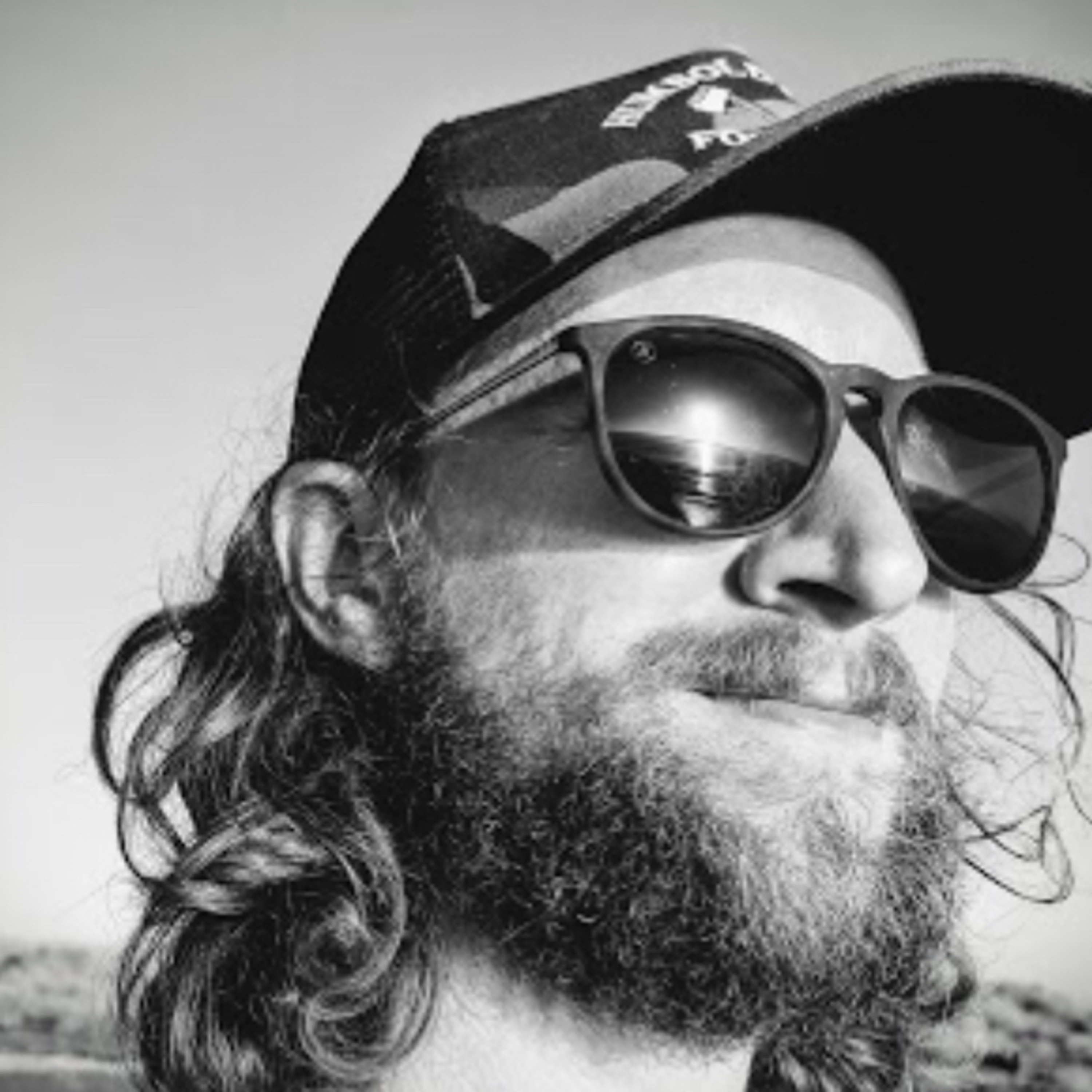
High as I climb, only as far as I reach | Dylan Leonard, Forester
26m 54s
Dylan Leonard recounts his transition from growing up in Indianapolis to studying forestry at Humboldt State University. His journey involved exploring various classes such as organic farming and botany, ultimately leading him to discover his passion for forestry. As a consulting forester, Dylan assists small landowners in achieving their goals, especially in post-fire landscapes. He emphasizes the importance of safety in forestry work, including cautious driving in remote areas. Dylan shares career advice received from Professor Baker, highlighting the diverse opportunities in the forestry field and the need to stay proactive in pursuing one's goals. Through his experiences, Dylan underscores the significance of being open to various opportunities and striving towards personal and professional growth in the forestry industry.
Transcription
3874 Words, 21410 Characters
This is the College of the Redwoods Forestry Natural Resources Career Seminar Podcast,
and I'm your host, Valerie Elder.
My name is Dylan Leonard.
I'm a registered professional forester.
My story began in Indianapolis, Indiana.
I grew up in a pretty metropolitan area close to the city, but in a fairly wooded area as
well.
So, being outside was always a big part of my life.
Growing up, I had a lot of opportunities to go camping and go boating and things like
that.
It really fostered my appreciation for the outdoors.
Throughout that time, living in Indianapolis, I felt like I needed to get away from Indiana.
So when I graduated high school, I got accepted to Humboldt State University and I moved to
Arcada.
After a year or so of being in school, I realized I really wasn't sure what I wanted to do with
my time in Arcada and at Humboldt State, so I took a year off and I started working at
the mall and tried to get more involved with the community.
After that year, I applied for a college at the Redwoods and started taking as many electives
as I could.
Good approach.
I ended up taking the organic farming class and worked at the shyly farm and that same
semester, I was in a plant propagation class working in a greenhouse.
I really enjoyed working with plants and so that next semester, I took a botany course
and a forestry dendrology class and after that semester, I really had this reckoning
that forestry was what I was most interested in.
So I started loading my schedule with forestry classes and got on the path to do my forestry.
That's awesome.
I think that's just an important perspective to share because oftentimes, as a high school
student, you're expected to go to college and pick what your degree is and for a lot
of us, it takes a winding, twisting road to get there.
On top of that, through studying forestry, you ended up going down this path of getting
your registered professional forest or license, which there's still a lot of options after
you study forestry to go different paths after that.
So I just think that's a cool story.
So thanks for...
I'm glad you came from Indianapolis here.
I am too.
The more I lived there, the more I knew I kind of wanted something different and for those
of us that lived in this area a year, five, ten years, I grew to love what this place offers
from the ocean, which I never had by me in Indiana, to the mountains in the forest and
winding up in forestry allowed me to explore a lot of those areas.
So what was your first kind of forestry-related job experience then?
You had some work at the organic farm, you worked at the mall, you went to Humboldt, I
mean, you graduated with a forestry degree, is that correct?
That is.
I got my associate's degree from CR and with that I transferred back to HSU to study forestry
with an emphasis in resource conservation.
And while I was there, I got a GIS minor in geospatial studies.
Great.
My first job was in that same year, the summer before transferring back to HSU, I got a job
with Natural Resources Management Consulting firm out of Eureka to do a timber-marking
job in the Plumis National Forest.
That whole summer, we lived like dirtbags camping in the woods on a landing, ten days
at a time, not having the best diet, but we worked all summer long like dogs in an area
that I never would have gone to.
And during that time, we were marking trees for harvest for the National Forest with a
target of getting rid of the dead and dying trees.
And for me, a green, young forester at that point in time, I really felt like I was having
a positive impact on the landscape for years to come.
We were painting the future forest, and that summer, I fell in love with it.
I was able to keep working through the spring, I started doing temper inventory, and the
firm decided to keep me on doing owl hooting that next year as well.
So I just got to tackle all these different jobs, and it really helped me grow that love
for working in the woods.
So through that summer experience, you sort of proved yourself to the employer, you're
a hard worker, you're camping on that landing like a dirtbag, and they kept you on while
you're still attending Humboldt State, is that correct?
They did, yeah.
Not to say that there was any sort of cut, but you know, forestry work is obviously much
busier during the summer, access can be limiting during certain times of the year.
But I had dedicated myself that summer, and when fall came around and it was time to go
back to school, they found a place for me to keep working on weekends, or whenever I
had the time.
And so during that summer, I was out in the Sierras, in the foothills, in a beautiful
part of the country.
And when I came back to Humboldt, I got to experience and explore other parts of this
county that are behind blocked gates that you never would have seen, and just learning
more about this surrounding area and the landscape and nature was just exciting and fulfilling,
and well, it's what's kept me in consultant.
Yeah, that explore tendency about you.
Yeah, and the ability to always go somewhere new.
Yeah.
And I think that story is interesting too, because I think it can be tough as a student
to quit some other type of employment that you have to take a summer seasonal position.
Even though that experience is so pivotal, and it was for you, it's risky, right?
You got to pay your bills and pay your rent when you get back.
So it's nice to know that not in all cases, you'll get hired on to continue working part
time.
But in some cases, they are looking for people.
So don't rule it out as an option per se.
Absolutely.
At the time, I was actually working as a dishwasher when I first got my forestry job, and I had
to take it.
Everyone was understanding, and I knew at that point in time that I was either going to enjoy
my summer working in the woods, or realize it wasn't what I wanted to do, and I worked
out for the best.
Life can seem so important and be so top-heavy when you're in the moment, but there are so
many endless opportunities out there, and seizing them, taking them, is, I think, very
important.
Everyone should always remember it.
Yeah, think about what's best for you.
I guess you have to think about what's best for you in the short term, but also think
long term.
Sure.
So with that decision, you're thinking kind of long term, this is going to be, do I keep
studying forestry?
Is this what I want to do, or not, right?
Right.
Yeah.
We're in this class, we're working on resumes, and so if a student is kind of in that position
you're at, working as a dishwasher, you don't feel like you maybe have this field experience
for the job you're applying to, can you think back on sort of what you did to sort of set
yourself apart, to apply for that job, or how did you talk about the experience you
had before and make it relevant so that they hired you to take on this job that you took?
So when I first got that job, I had met a friend at CR who was working for this company,
and in talking with him, I told him, "That sounds awesome, how do I do that?"
And as I mentioned a moment ago, when summer comes around, there's a lot of forestry jobs
open up, and the job that I first was hired to do is a fairly entry level position that
doesn't require a lot of experience.
If you are motivated, hardworking, and willing to put in the time and effort, most firms
want that sort of work, want that sort of person.
And so, I would say forestry is a fairly easy enough industry to get into, considering the
experience required for entry level positions, and that could be anything from tree marking
to field layout, flagging creek buffers, timber inventory, I was trained in that, that wasn't
something that the knowledge I'd already had, and on the biological side, a lot of surveys
are great entry level positions.
Northern Spotted Elk Surveys is a great way to get your foot in the door on some forestry
jobs.
Yeah, and so, you kind of mentioned this role where your first job, you felt like you're
really making a difference, kind of planning this future of the forest, I feel like from
talking to you, you're almost in this role again, now working on some of these sort of
post-fire environments, can you talk a little bit about, you know, the fires been on all
of our radar this year, and there's a lot, a lot to unpack on that, and I don't expect
you to do that, but kind of what does your work look like in this sort of post-fire environment
in the field?
A lot of what I do now, as a consulting forester, is to work with small land owners and help
them achieve the objectives they have on their property, and that's going to be really diverse,
you know, depending on who you're talking to, who you're working for.
In instances of these post-fire situations, these are landowners that might have something
like 20 acres or 20,000 that they've had their resources and assets destroyed.
That might have been a long-term investment, it might have been a nest egg, and so the
ability to do a project for them to recoup some of their losses means a lot to these
landowners, and it can help sort of promote the recovery of these landscapes by dealing
with this burnt material and ultimately replanting it.
For small landowners, you don't want to have that investment just being lost, and so if
you can do something to recoup your losses and replant, you're helping the landowner,
you're helping the land recover in a way that wouldn't naturally be occurring.
Some of these fires do exactly what they should, and they burn in patches in Mosaic, and not
everything is destroyed.
In other areas, it's far worse and helping the landscape recover.
Well, it's important to me, and so it's rewarding to be on the ground doing that sort of thing.
Yeah, I think that's a good point.
We're managing land at micro and macro scales, and for a small landowner, their 20 acres
is really important for them, and their contribution to this world and their interest in reforestation,
and so if their 20 acres totally burned, you're trying to help them kind of make that impact.
Rather, regardless of how it burned kind of across the landscape, we're always sort of
managing for these human objectives.
100%, and that's a lot of what forest management is, and has always been.
We live with these landscapes and these environments, and that's as nice of a concept as it is to
think the forest for the trees, when we're living around them, we need to help ensure
their health and their resiliency to different disturbances, which helps ensure our own safety
and ability to manage these resources, whether that's for a commodity, maybe that's for
wildlife habitat, late-serral, old-growth forest structure, which has its own ecological
benefits, carbon sequestration, all of these things we're managing before really do relate
back to us.
When you're not working kind of in these post-burn areas, and I know it varies a lot, we've talked
about you're going to have some office days, and you're able to kind of plan that around
the rain that's coming up this week, your schedule is sort of changing a lot, but kind
of what is a typical day in the life of Dylan, if you can summarize it down, or sort of what's
a typical week look for you working in this field?
Yeah, so a typical week is a little easier to hold in.
For every job, there's kind of these different phases from the start to finish.
You know, initially you're meeting with a landowner and finding out what their objective
is, something that they would like to achieve on their property.
Kind of the next phase is doing a preliminary reconnaissance of that area, finding out,
okay, what's actually growing here, what's going on, how many creeks are around, are there
any instability issues, how's the forest doing, what is the snapshot in time that this area
looks like, and so that requires a bit of on the ground work, hiking around that might
entail an inventory, where you're systematically looking at a property, or kind of just trying
to travel roads and look around and see as much as you can.
Following that initial recon, you kind of begin strategizing how to meet the objectives
that the landowner has, and so determining the most suitable project for these areas,
and then kind of that transitions into plan writing.
And so at any point in time, I'm usually working on a few projects at once, and so my week
might have a mix of field days from initially meeting landowners and seeing their project
or seeing their properties to finishing touches, flagging creeks, marking trees, working on
the layout of a project, and then through plan writing and implementation and supervision.
Consulting I really like because everything is always different, if you work on these
projects maybe a week, maybe six months, and you're usually juggling a few things at one
time, so every day is different in and out of the office and working on different projects,
and it can be challenging to do all that at once, but at the end of the day you're working
for small landowners and helping them achieve their goals, so that's what I love about these
areas.
And Dylan works for somewhat of a typical consulting agency, right?
So in his work, he isn't responsible for map making, he's responsible for doing the
inventory, possibly the wildlife might be handled by Jack in-house, but essentially
Dylan is responsible for all the different roles in the process, and so that's kind of
compared to a larger company where you might kind of work specifically on timber harvest
layout as a technician, although I guess there's your NRPF right now, so that might be different
if you're working as a technician, but you're sort of a well-rounded forester, you're like
a classical dirt forester, you're doing all different roles in the step of the process,
right?
Exactly right.
You know, foresters I think we kind of have to be expert generalists, and so we're working
with hydrology and water courses, we're working with their biological components, geology
is something here in the north coast that is very active and so being familiar with indicators
of unstable areas or sensitive soils and slopes is something we have to be familiar
with, and then, you know, knowing how to implement the different silviculture strategies available
to you, you know, what is best for the landscape, how is this forest going to respond if I come
in here and do a certain treatment, what's going to grow after it, what's going to be
left, and so you're constantly kind of thinking about all these different things and trying
to manage them all.
Yeah, it's the art and the science, and I bet you didn't know you're going to be doing
so much customer service as a consulting forester when you're studying forestery, did you?
No, you know, I think a lot of us get into this profession, you know, we're into these
classes because we like being outside, we like camping and backpacking and all that,
and that's why we chose natural resources, but the human connection and dealing with
clients and working with, you know, colleagues and other agency members is a really important
part of that process as well, fostering those relationships and a greater understanding
of what we're all trying to protect while we say, you know, same team, so we're dealing
with these regulatory agencies, but we're all trying to achieve the same goal at the
end of the day, which is managing forest sustainably and protecting the resources around them.
Yeah, I like that, it's good.
So kind of thinking about this whole same team environment, maybe I'm asking a leading
question here, but we have this section of this talk called tailgate safety.
So regardless of if you're working on your own, because you do that most of the time,
or working as a team, which sometimes you're getting to do, what is your sort of top safety
tips that you want this class to hear?
So safety first, kind of have a saying for cruising, you know, when you're out there
working in the woods, and it applies to all scenarios.
Safety first, quality data, have a little fun out there and get shit done.
You know, you're working hard, it's a great office to be in working outside, but always
you're working in different scenarios, and protecting yourself is really important.
Not walking with your hands in your pocket in the woods is one thing.
Remembering to look up and around you, obviously, you know, having a good, having good footwear
can be important.
I've worked with people that don't have a good pair of boots, and in this country it
is kind of important.
I think the biggest safety tip I could say, though, is when you're driving in and out
of units, or in these areas, safety and precaution is vital.
I had a boss at NRM who would instruct, you know, only drive as fast to where you can
stop and half the distance to what you see.
So if you can only see 40 feet in front of you, you should be able to stop in 20 if something
comes around that turn.
That's easier said than done, right?
I mean, you're ...
It is.
You know, a lot of these jobs are far away, so you're driving a long time, and maybe you're
agreeing to get home, but you're also pretty remote in these areas.
A lot of times I don't have cell service, and I would say the biggest variable or safety
variable would be driving.
Yeah, I think that's important, and I think that's something we take for granted.
We're driving everywhere.
We're driving to school.
We're driving to work, but really thinking about this as a daily choice that we're making,
and those decisions we're making behind the wheel, this fast-moving chunk of metal, it's
getting home safe at night or not.
Absolutely, yeah.
You know, I've worked in the woods on a variety of different crews since 2013, so we're rolling
around seven into the eighth year, and I've had friends get an accident, and it's not
to say it's anyone's fault, but it occurs, and likely a lot of these things are avoidable.
Accidents always happen when you least expect them to.
That's why they're called accidents and not on-purposes, so do what you can to protect
yourself and be safe.
Okay, well, that was some good safety advice, Dylan, I appreciate you sharing that.
Have you gotten any super stellar career advice, or is there advice you wish you'd been given
that you would like to share with the class?
So when I was at CR, Professor Baker almost every day would pull up USA Jobs, and he had
a big binder full of job resources, and he would always stress, you know, make sure you're
taking advantage of these resources.
Forestry can take you anywhere.
We have a lot of jobs here in Humboldt County.
We have some pretty big industry players, there's a variety of consulting firms.
You can go the route as a self-employed contractor and do your own work.
Additionally, there's, you know, the whole Northwest, and across the country there's
forestry jobs available too, so always keeping an open eye and ear to what's out there.
And then something that stuck with me recently on a backpacking trip, in an old cabin someone
had carved into the wood in the '80s, high as I climb, only as far as I reach, and I
think that's great advice and a number of applications, but career-wise, you know, this
life is yours.
It's your one shot, and you can make it happen, but you got to apply yourself and go for it.
I would just say, keep an open eye, be accepting of, you know, not the answer you want all
the time, and don't let it affect you personally.
It's a competitive field, keep working at it.
Is there anything else you wanted to add?
You know, when I got into this, when I first started doing forestry, here in California
we were required to practice forestry on a professional level to have our license, and
I remember at a certain point thinking, "Well, I've gotten this far, I might as well, I'll
try to get my license someday," and back to kind of the last advice I had, I went for
it, and I did get my license, and it's opened up quite a world to me.
I'm not saying you have to get your RPF license, you can practice forestry almost anywhere
without one, but continuing to stay up to date, learn the newest regulations and tricks,
how people are innovating in this industry, and you know, kind of breaking the mold of
what old forestry was.
There's a lot of new, exciting ideas out there, and trying to be on the forefront of
that, I think this is a good place to be.
Yeah, I was talking to somebody on the phone today about something, a deadline for February,
and I said, "Well, you know, it'll probably be done in December, but I just want to leave
it open.
I don't know what this world's going to bring before February," and she said, "How about
until 4 p.m. today?"
And I think kind of this concept of resilience, and it's easy to kind of get down on the
world that we live in today.
There's a lot of stresses, but think about this, your future is in your own hands, so
that advice Dylan gave is amazing.
I think, you know, it's that dream big, climb high, and kind of make decisions that are
good for you, think about what's good for you now, and think about what's good for you
in the future.
And wear a hard hat.
Podcast Summary
Key Points:
Dylan Leonard shares his journey from Indianapolis to pursuing a career in forestry at Humboldt State University.
After taking various classes and working in forestry, he became interested in the field and pursued a career in it.
Dylan's work as a consulting forester involves helping small landowners achieve their objectives, especially in post-fire environments.
Safety tips for working in forestry include prioritizing safety, being cautious while driving in remote areas, and focusing on quality data collection.
Career advice includes staying open to opportunities in the forestry field and being proactive in pursuing one's goals.
Summary:
Dylan Leonard recounts his transition from growing up in Indianapolis to studying forestry at Humboldt State University. His journey involved exploring various classes such as organic farming and botany, ultimately leading him to discover his passion for forestry. As a consulting forester, Dylan assists small landowners in achieving their goals, especially in post-fire landscapes.
He emphasizes the importance of safety in forestry work, including cautious driving in remote areas. Dylan shares career advice received from Professor Baker, highlighting the diverse opportunities in the forestry field and the need to stay proactive in pursuing one's goals. Through his experiences, Dylan underscores the significance of being open to various opportunities and striving towards personal and professional growth in the forestry industry.
FAQs
Growing up in a wooded area fostered my appreciation for the outdoors, leading me to pursue forestry classes and eventually a career in the field.
I started with electives like organic farming and plant propagation, then shifted to forestry and dendrology classes, eventually earning a forestry degree with an emphasis on resource conservation.
My first job involved timber marking in the Plumis National Forest, where I felt a positive impact on the landscape and later continued with timber inventory and owl hooting.
I help small landowners recover from fires by planning projects to replant burnt areas, aiming to recoup their losses and promote landscape recovery.
A typical week involves meeting landowners, conducting field work for project planning, strategizing, plan writing, and juggling multiple projects at once.
Prioritize safety first, pay attention to surroundings, wear appropriate footwear, and practice caution while driving in remote areas to prevent accidents.
Chat with AI
Loading...
Pro features
Go deeper with this episode
Unlock creator-grade tools that turn any transcript into show notes and subtitle files.
 PodcastTranscript AI