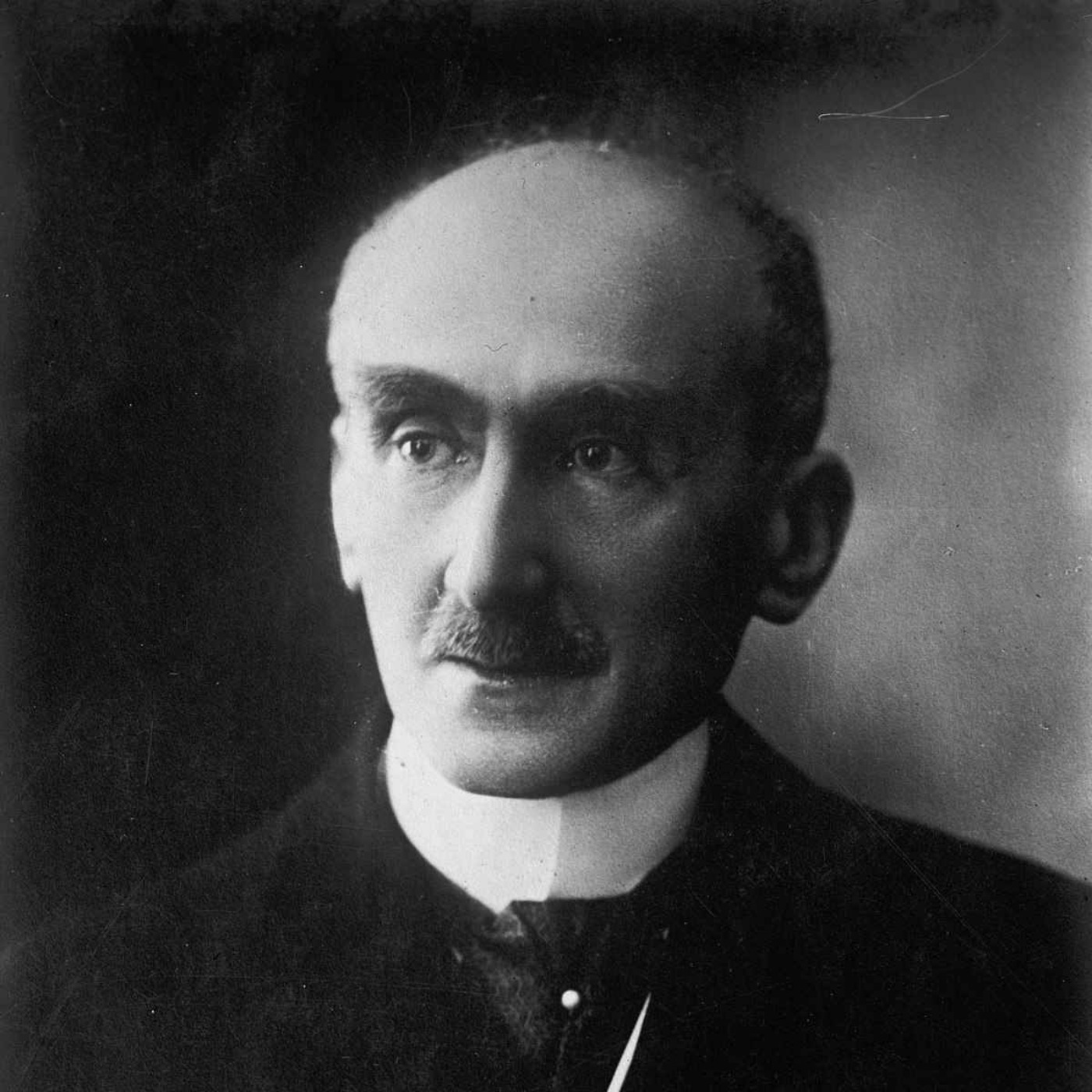
Henri Bergson, not Omi Berkson, was a central figure in 19th- and 20th-century philosophy, known for his vitalist stance opposing rationalist and deterministic views of reality. His work, especially *Time and Free Will*, centers on the primacy of time over space, arguing that consciousness is not a series of discrete, measurable moments but a continuous, flowing "duration." This duration is qualitative, dynamic, and immeasurable—distinct from the spatial, quantifiable time used in clocks and schedules. Bergson contends that our perception of time as segmented and separate is a mental abstraction that distorts reality. Instead, lived experience unfolds as an indivisible, self-moving stream where each moment is both connected to and distinct from the next. This flow of consciousness is the source of human freedom: because we are always in a state of becoming, not fixed by prior causes, we are inherently free. He rejects the idea of free will as a choice between alternatives, proposing instead that freedom exists in the very act of duration—each moment is a new, spontaneous unfolding of the self. This view challenges deterministic models, which Bergson sees as a misrepresentation of how time and consciousness truly function. His philosophy emphasizes creativity, spontaneity, and the continuous evolution of the self, asserting that true freedom lies not in choice but in the natural, unbroken flow of life itself. Bergson’s influence extends beyond philosophy into literature and art, notably shaping Marcel Proust’s conception of time. Ultimately, he argues that the struggle to reduce lived time to measurable units is what creates philosophical confusion—and that freedom is not something to be achieved, but already present in the very act of living.
Hello everybody, Omi Berkson is one of our most significant
vitalist thinkers who from the late 1800s until his death in 1941
offers one of the most sophisticated modern versions of vitalism.
His work is constructed as a reaction to a variety of strains of rationalist thought
as found in the likes of Charles Darwin, Kerber Spencer and August Comte.
In contrast, Berkson emphasizes themes of life, vitality, creativity,
duration, themes which he developed in a collection of works
famed for their post-dial and his use of metaphor and imagery.
Notably, Berkson would win the Nobel Prize for literature in 1928.
His work is famed for a recursive expression of life itself.
His writings are not strictly representations of his themes.
They are more performative, written to express what life itself is.
We can find the common denominator of many themes of his work in his 1889 work
Time and Free Will, or in French essay, so a donny immediate delicacy
wants essay on the immediate givings of consciousness roughly. In this lecture,
then I will explain the core themes of Time and Free Will.
I will begin with a sharp biography of Berkson to give you a sense of the man,
subsequently I will talk about the overall core themes of Time and Free Will.
Berkson's famous distinctions between time and space, the qualitative and quantitative
is theory of duration and what that tells us about why the human being is
fundamentally free. Part one, sharp biography.
Berkson has a quite cosmopolitan background. He was born in Paris,
his father was a pianist of Polish extraction, his mother was Jewish,
Anglo-Irish, the new Dunkaster, I believe, and Berkson spent his
earliest years in England. He and his family later went back to live in France
and where he elected to become a naturalist for in-citizen.
He remained fluent in English and was directly involved in overseeing
English translations of his work. He would not have become a school teacher in
French secondary school, but later was appointed to the prestigious
Kolner-Mal superior in 1898. His first book was his doctoral thesis which
became Time and Free Will, which you will talk about, and he would not to hold the
prestigious chair of Philosophy at the College de France from 1900 to 1921.
And we're done to receive several honors. He became a president of the Academy
Fonsée, which is an old, I suppose, of indrable and
very exclusive institution for promoting a safeguard in the French language.
In 1930, he was awarded the Legion of Honor, one of France's highest public
honors. The reason I am drawing your attention
to his awards is because it is very hard to just grasp how well known,
reputed, and famous, and influential Berkson was.
In the Anglophone world, now I think it's fair to say we have
less of a sense of the appeal of the public intellectual.
But this is not the case in France. Berkson set the mold for the public
engaged academic and the intellectual rock star.
Particularly after the publication of "Creative Evolution",
"Le Volucion Créatrice" in 1907. Berkson's fame took off.
The work was an international bestseller. He became famous in the media.
His lectures attracted huge audiences and were often overcrowded and
rambunctious affairs. And he would be met with cheers and applause.
Reportedly, on a visit to New York in 1913,
Berkson became possibly the first philosopher to cause a traffic jam on Broadway.
Berkson's work itself was also hugely influential in literary and artistic
circles. Most famously, Marcel Proust's "In Search of Last Time"
is influenced by Berkson. This fame tells us
that his ideas on life, duration, creativity,
having a universal appeal. The origins of that appeal can be explained in
"Time and Free Will", which I will turn to more materially.
Berkson himself died in 1941. In Paris under the Vichy government,
he refused an offer of exemption from the Nazi racial laws to Vichy were
implementing. Part 2. "Quality of Time and Quantitative Time"
To get to the heart of Berkson's philosophy, we need to understand
that he is a dualist of sorts. Julius divide the world into two
substances, two distinct substances,
matter and spirit. And this makes Berkson of course a vitalist,
but he's a distinctive type of dualist. So I don't think we could say he is
a Cartesian dualist. The distinction he draws is not so much
matter in mind or matter in spirit, and more time and space.
But more of that more materially. Firstly, the overall trust of all of Berkson's
philosophy is that time is primary, and space is secondary,
and consequently derivative. Time is effectively what life is,
indeed, time is what we are. This is quite a radical thesis,
and there will be taken up in many forms over the 20th century in European
philosophy, most notably in Martin Heidegger's work.
But in time and free will, Berkson is doing something quite radical in the
history of philosophy. If we think back to Plato,
the thought was that the eternal and immutable is primary.
The forms, as Plato famously called them, and the world of
flux and appearances is secondary and derived from the former.
Berkson completely reverses this thesis. Not only is he saying that life is a
form of process, flux, and change is going even deeper
than that, and saying reality is change, are more precisely movement.
That which exists is dynamic, even more, and that exists
because it is dynamic. To exist is to change. Time and free will then
is an attempt to explain the existence of the human mind as flux.
Change is a necessary condition of human consciousness, and time and free will
explains to us how the flux of consciousness
constitutes the majority and the reality of human life.
The original French title is probably more accurate than the English translation.
The French title is SS2Lé Donnet, Immediate De la Conscience,
which we can translate as essay on the immediate givens of consciousness,
or alternatively essay on the immediate quality of consciousness.
Berkson then is interested in how consciousness
immediately unfolds or gives itself to itself.
There are three, I think, core elements and themes we need to pay attention
to in time and free will. First, the idea is that psychological
experience cannot be quantified. I was not quantifiable.
Secondly, time also is not quantifiable. Something
immeasurable yet is ever-present or palpable to our experience.
And finally and consequently, Berkson's theory of time, which he develops in
time and free will, enables him to assert the theory of
freedom because at the core time and free will
is a defense of freedom or a defense of free will.
The way Berkson gets to that is quite different, quite original.
He's not basing his defense of free will on an opposition between freedom and
determinism. Our immediate position of compatibility
rather, he's arguing that humans are originally free
because of how we experience time. So, how then do we experience time?
Well, Berkson takes that we detested to the immediacy of time.
And once we do that, we will see the time is
primarily that which makes our life intelligible. Berkson famously begins time
and free will with a critique of traditional
dogmatic approaches to our understanding of perception.
This stems from a traditional empirical understanding.
If we take someone say like David Hume, the idea would be that our minds are
derived from sense experience. Sense experience occurs in a flux of
unitary impressions which we will see from the external world.
That impressions are unitary or discrete tells us something
about the magnitude of our perceptions. Our perceptions have an
intensity. They are felt to greater or lesser degrees and
we can say that they are subject to increase and diminution.
Here, Berkson, I think, is drawing a distinction between
internal perception, perceptions as felt, and external perceptions
perceptions that are extensive. But there's a bit of a problem here
from the perspective of magnitude or range. How
can that which we count to be both extensive and intensive
as well be extended and unextended?
As Berkson himself puts it, and I quote,
"All the discussion between determinists and the opponents
implies a previous confusion or duration would extend
of succession with simultaneity of quality with quantity.
We tend to have confused ideas, we tend to have confused ideas about both quality and quantity.
We tend to think dogmatically in the empirical vein that internal and external experiences
in the first instances are countable, measurable, quantitative.
And the external state of the world happily maps on to our inner states.
Also, because we assume our perceptions are discrete,
we think that they are in some way atomized and therefore thinkable in units and are therefore countable, of course.
This also suggests that consciousness can be characterized as flat and homogeneous.
Now what do we mean by that or why homogeneous?
Well, if we can break conscious experience into units,
one unit is as measurable as any other,
and it is therefore countable and flat.
Interferers are counted.
In contrast, birx and tanks consciousness is alive, rich and not at all static.
Consciousness itself is the time of immediate flow.
Consequently, the time becomes, I suppose, somewhat relativized for birx atom.
This is to say time is the different experiences of time.
So there is no absolute Newtonian clock or universal time,
which is the same in all instances rather.
Consciousness is real time where it is occurring.
This idea is common sense enough.
If you think of how time is felt for a different variety of people in different contexts,
you will get to see what birx and is driving at.
Time when you are bored is different to time when you are excited and having a nice time.
The time of the inmate on dead row is different to the expectant child's time on Christmas Eve.
For some reason, we think of time though as quantitative, measurable and uniform,
that it can be measured on clocks, watches, calendars, electronic diaries and smartphones,
and is therefore measurable in a mechanistic way.
In fact, for birx and time has the opposite.
It is intense, novel, dynamic, immeasurable.
The philosophical point in birx and is making is that time is in excess of material causality.
If you think about it, it makes more sense to say something like one inch or centimeter of consciousness.
This is a bit of a bizarre thing to say.
The point is that none of these things are immediate or present,
where we introspect and examine what birx and calls the immediate givens of consciousness.
We can limit ourselves to notions of causality when attending to the inner duration of experience.
And here, birx and is asking us to rethink how we think about time.
Time is understood in a basic mathematical or physical sense,
as birx and things represented in the form of succession.
Oh, one discreet and identical moment after another.
The trouble with this, and here is not a million miles from a manual can's critique of humans,
if we think of time as isolated and discreet moments,
there is nothing connecting these different instances.
The moments are self-contained and do not connect our interpenetrate each other.
This perspective is not limited to maths and physics.
We also think like this in our everyday life too,
when we measure time in terms of discreet seconds minutes and hours on the clock.
The problem for birx and is that this does not at all explain the flow of conscious experience,
or how moments connect to each other.
In other words, how the discreet moments of consciousness do not endure?
Birx and things that we have inculcated the habit of spatializing time.
Now, what does that mean?
Time is not a juxtaposition of ever renewing or ever novelizing presence or present moments.
And the most basic visual representation of this would be that time is success of one moment after another,
along a line say from A to B to C to D.
But that underlines for birx and the trouble with images.
If we would present time visually, then we tend to think of it as a line.
So what we are effectively doing is transposing the extension of space into the mind,
what one point ranged alongside others.
To think of time in this way is abstract and not lived, part two, time, not space.
Time, at least as we have come to conceive it, is that which is without quality or intensity.
And unfortunately, this leads to a very impoverished notion of time according to Birx and the time we use instrumently,
mechanically in our everyday lives is predictable and measures and purportedly maps onto the mathematical and ordinate or reality itself.
This time is predetermined.
Time is like this, always has been like this, and always will be.
Here, spatialized time is made up of segments that are distinct.
One minute is a unity unto itself.
Any moment though is separated. The way we think of it as separate when we abstractly measure time
is with the view that there is no connection to any previous seconds or reminit minutes.
This second is this second, not that second. This minute is this minute and not that minute.
All this amounts to is that our conventional habits and patterns of thinking about time are illusory.
In fact, with us the ability to think of time at all and Birx and wants to return us to this last knowledge.
Birx and gives the examples of counting sheep, are counting the soldiers on a hill in a battalion.
Try imagining a battalion of uniform soldiers on a hill.
I'm told that a battalion is between 500 and 1000 soldiers.
The first appears homogenous, but to count them we appear to space.
There is, what Birx and calls, a quantitative multiplicity.
And within that multiplicity each soldier takes up a specific space which allows us to distinguish one from the other until we have counted up the lot.
But what's actually happening here? Well, firstly we are unwittingly disregarding the qualitative differences between soldiers.
Secondly, we are also disregarding the types of being they are, they are common features or humanity they like.
Since we are treating them as homogenous units, there is no difference between one soldier and one sheep.
What unit? We are just counting here and there without any qualitative difference.
The thing is though, before we count a set of soldiers, sheep or trees or whatever, the quantity of multiplicity is, the set of sheep or soldiers.
However, prior to that counting, there must be a unity there to be quantified, to be counted.
There must be all of the sheep or soldiers to count as a whole before we get to the discrete instances of sheep or soldiers.
This is what Birx and calls, qualitative multiplicity.
A qualitative multiplicity is a state which is most isomorphous with consciousness itself.
And what is more, because the different individuals are taught together, they are naturally successive and therefore form a duration.
Again, Birx and really helps us with his examples, he talks about a clock striking four times, and here I quote him, this is a long quote.
Once I am writing these lines, they are our strikes on an neighboring clock, but my inattentive ear does not perceive it until several strokes have made themselves heard.
Hence, I have not counted them, and yet I only have to turn my attention backwards to count up the four strokes which have already sounded and add them to those which are here.
If, then, I question myself carefully on what is just taken place, I perceive that the first sound has struck my ear and even affected my consciousness, but that the sensations produced by each one of them, instead of being set side by side, has melted into one another in such a way as to give the whole peculiar quality to make a kind of musical phrase out of it.
So, this example is instructive, the number, that is, four strikes, is our qualitative multiplicity.
But the way Birx and Poeslet is that these strikes melt or interpenetrate each other, rather than being discrete and unconnected moments, the strikes are peculiar, have an internal context, intensity, and are indivisible as they occur.
This state of qualitative multiplicity is an indivisible moment. In fact, moment is not the right word, since what is singular about these four strikes is unrepeatable.
When we quantify the strikes of the clock or the notes of a song, which is all variants really unusable, we will not get to the intensive actuality of the experience.
The problem is, we think of the duration of experience via a holy inappropriate medium, that is space or extension.
Berkson when talking.
about experiencing sounds suggests that we think of time as, and I quote, a homogenous
medium in which our conscious states arrange alongside one another as in space, so as to
form a discreet multiplicity. What is happening for some reason is that we are turning the
authentic reality of our immediate experience into space. If this all sounds very abstract
to you, it should. Because when we measure time in terms of space, that is exactly what
we are doing. We are abstracting a segmented and fragmented channeled idea of extension
and treating it as if it is primary. Our understanding of space has its origins then in time and
not the other way around. But how do we get to this abstraction of time from space?
No, there's a question. Well, for Berkson, we get the abstraction
in two specific ways. Firstly, we think that extension is an aspect of the physical qualities
of things. So, say, a sensation we have of a color or a sound are taken as directly
representing how things are themselves in the external world. For example, if I am seeing
a blue stick of varying hues of blue, when I think of that and try to articulate that to
myself in a rational mode of thinking, I am suggesting that I see several discrete blue
objects. The sensation of blue represents supposedly different single properties of
the object. But what is it to say this? Basically, that my sensation of the color blue is extended,
spread out as part of the object. I abstract extension from experience. Space is the spreading
out of different and now countable properties. Secondly, the second reason for thinking of
space in an abstract sense is because of a manual can't. Can't thought space is an a priori
condition of experience. We are equipped with the ability to distinguish several perceptual
impressions out in space. We can think of space itself as having an existence independent
of its content. We can think of many objects and we think of spaces form as without objects.
This means space is an a priori form or ordering of our experience of external sensations.
In respect of what we are experiencing in the external world, it is the fact that we
are intruding spatially in a spatial sense which is primary for can't. Berkson thinks
that can't is mixing things up a little. In Berkson, our idea of space comes from an act
of subjectivity. If those ideas are deriving from an act, then they are continually
occurring irrespective of any temptation we have to isolate and explain them as simple
phenomenon. An act implies duration, a movement that occurs. If this is the case, then there
cannot be a mind standing outside our sensible experiences, unifying them all at the same
time and setting them in juxtaposition. So Berkson's time is the acts of conscious
and experience. While can't thought a priori forms a space in time were different to our
sensible experience, Berkson does not think we can separate the ordering of thought from
sensible experience. Can't thought the transcendental structure of consciousness is radically
different in kind from the flow of sensible experience? Berkson contrasts except the reality
of the flux of experience. And this is the primacy of perception, the raw immediate flow
of the flux of sensual situation. But what does this flow reveal to us? Well, there is
no sense of time without succession, and before and after. But equally, there is no sense
of time without what Berkson calls the act, or the joining of what we take to be discrete
moments, but which are, in fact, enduring. This is effectively a form of synthesis of
the now, the just gone, many minute. Berkson's original contribution here is that time
is primary, where traditionally time would be derived from the eternal and a temporal.
The radical idea here is that there is no act that is not a form of the passage of time.
Time is the movement of the present itself. It is duration. If this is the case, there
are no states then that can be juxtaposed, delimited, demarcated, every immediate, supposed
state is itself a moment of transition or activity. In fact, the very designation state
is illusory. Paratry duration. There is no real or full difference between the passing
of one state and the birth of another. The thing like this is to suggest we are separator
successive states in contrast. For Berkson, the idea is that we are changed without
cessation. It does not really make sense to say states since this implies stasis or
rest and any state is nothing but change. Disappealed to the flux, Berkson calls duration.
Jolay. Duration means nothing can ever remain the same, but in jurors, space is the medium
that can actually achieve with state since it allows consciousness to discriminate one
moment, point, unit from another. But to do this automatically acknowledges succession.
E.G. won't point after another nor the temporal designation. Here we can see Berkson's radical
metaphysics come to a head. The temporal moment is illusory, while it appears to cease to
pass away. It does not because the moment is of the continuous and indivisible activity
of duration. Consequently, there is only eternal duration or the persisted creation of life.
Duration retains all past moments in our future occurrences because duration itself is divided.
It is indivisible and continually draws together in a perpetual present that is continually
presenting itself. Any division is just a secondary specialization of time that we impose
on the superior reality of duration. In Berkson's own words, and this is a long quote, and
I quote, "Pur duration is the form which the succession of our conscious states assumes
when our ego lets itself live. When it refrains from separating its present state from its
former states, for this purpose it need that be entirely absorbed in the passing sensation
of our idea for it in. On the contrary, it would no longer endure. Now indeed, it forget
its former states. It is enough that in recalling these states, it does not set them alongside
its actual state as one point alongside another. But forms both the past and present states
into the organic whole as happens when we recall the notes of a chewed belting, so to speak,
it worded another. Thus, when it comes to the question of consciousness, Berkson reveals
that the immediate debt of consciousness gives itself to us in two distinct ways as duration
ad spatially. Consciousness is given both quantitatively and spatially, that is to spatial
forms and they are given in their real temporal form. The former is derivative from the latter.
When we experience things of duration, then we are perceiving things directly. So, while
spatially forms can be instrumentally valuable, clocks help us meet on time, diaries help
us schedule events. All these activities do, though, give us some bad habits and distorts
our access to the true nature of reality, which is to say duration, as well as blocking
our ability to entute the true nature of inner consciousness. It is, when we think our
intuit that we see that our mind is not made up of fragmented sections, just tell us our
mind is pure or true duration. Consciousness is a unified and indivisible multiplicity.
Discreet multiplicity is consciousness organized just like things of the hour and space, that
is here, that is there. All things in our field of experience have the sharp borders or
distinct isolated edges, isolated at the hour isolated entities that are externally related
to each other. But, according to Berkson, this is a misguided view, if we take it as primary,
real time is not distinct, but an unbroken flow of true and pure duration. What does consciousness
look like when part of in this way? Remember, Berkson is a type of dualist. It is imperative
to separate consciousness from the external world to discern its real character. Geoation
has a moving little space, or separate objects in the external world. Conscious states are
not distinct, but unified. Their unity is not separable, but dissolves from one state
to another. In other words, there are no sharp lines, demarcations, or edges between thoughts.
In addition, conscious states are self-moving. There, the duration of the world is in
folds. Other, as not, has explicit purpose and time at free will. Berkson does seem to
be making a value judgment, and that is that it is bad for us to only understand ourselves
and spatial or quantitative terms. As adults, if we focus too much on space, then we end
up with, and I quote, "a self who states and changes permeate into one another and undergo
a deep alteration, as soon as we separate them from one another in order to set them out
in space." It is like we are mutilating ourselves in some way, diversity ourselves from the
creativity of life itself would have distorted quite a theater view of
the world. If consciousness is a qualitative continuity without break our interruption,
but each state flowing into each other without disconnection or disruption, then our consciousness
is as flow is self-moving, and as such cannot be determined. If the deepest realm of consciousness
is pure flow, then our inner life is continually novelizing itself. And if it is continually
novelizing itself, then it is in some way also free. It is becoming new, duration implies
everything is in a constant process of change. Consequently, duration is always a moment of
tension and contraction, tightening and relaxation. As humans, then time is an intense,
intensive and intimate part of our lives. We are not explainable as things are objects out there
in the world. Neither are we just processes or sequences or events, rather we are time or duration
itself. But why does this make us free? Now, there's a question. Well, it is because of
Birx and Zidious and Cratic view of determinism. Determinism, the law that cause follows effects,
and that if we are caused, then we cannot be self-causing. That is free, follows on from the idea
of spatialized time. Here time is objectified into different points or objects, as we have seen.
If that is the case, if we think like this, then we are not thinking creatively. We are making a
picture of ourselves as beings that are determined, and this is a situation Birx and would rather
avoid. Duration, however, is closer to our own inner natures, because duration is indivisible,
and we are a duration, it means we cannot be caused, and because duration is continually unfolding,
this means a new and unpredictable entity is present in each and every moment all at once.
In raw human terms, our conscious life, its quality of perceptions, memories, images, thoughts,
ideas are intensively different, but also melt and dissolve into each other.
Thus duration is immeasurable, and how it acts is indeterminate. In space we are the result of
or we are acted upon, but in duration we are live, we live, we act and are therefore free.
This is essential to Birx and because he wants to reject the view of the human being as mechanical.
The human is naturally spontaneous in Birx and the view. This is a bit of a tricky thought,
quite subtle. The idea being the human mind, the free will, is not determinedable, a specific
acts, but about by specific causes. Rather, it IS those acts. The human IS free. This is not about
choosing between competing alternative options, to negate a prior chain of causes. Instead,
what Birx and his driving at is that duration implies the human being is continually free action
itself. We usually post things like this in terms of a line of cause that determine ourselves,
however, this is something that we think of only after the fact. It is only when something has
happened that we think of things like alternatives or the past not taken, but in the moment,
which is a truth, is where we are being enacted, free will and determinism only matter retrospectively.
But one way, free will and determinism is a false dichotomy, something we impose after something
has incurred. The free will, determinism, opposition, then, is a bit of a pseudo-problem.
The self-exuation, which is to say the continual flow of a pulsating present moment, aiming to express
this capacity of ourselves, reveals us as pure possibility, our continual, unactualized possibility.
Even if it might not feel like this often, it is always a case while we are alive. So, to be free,
we aspire to express the growth and development of our most intimate selves, our inner duration,
such developmental self, continually in growth is the self as acting freely and spontaneously,
which is our fundamental expression as free beings. In conclusion,
Berkson emphasizes time over space. In time and free will, consciousness is given to us
in two divergent ways. We experience time as extensive spatial and external,
our weakening experience time as duration and flow. The former is, in instrumental time,
time of clocks and smartphones and time tables, the latter is duration, which is lived time,
the time of our interior life, which is palpable, acted, and felt. That which is real is movement,
takes this, is equivalent to change, and this is Berkson's viteless impulse.
Takes this is therefore to grow, to develop, to optimize our creative self-expression and to remain
in tune with the endless creation of ourselves that we are, as selves we tend to oscillate back and
forth between these forms of self. This is to say that freedom is not easy. On the contrary,
freedom is hard. Even if we are naturally self-generating and self-creating, it is hard to think that.
More often than not, we succumb to the temptations of organized and spatial life,
remaining constrained by the ways our society is organized,
whom we can coalesce thinking about freedom with the freedom that we naturally are,
then we have something truly special. This is the point, I will be aware that we can grasp
ourselves as well and truly alive. On that, I shall leave the last word to Henri Berkson,
and I quote, "Now, the free act takes place in time, which is flowing,
and not in time, which is already flowing. Freedom is therefore a fact, and among the facts,
which we observe, there is none, clover. All the difficulties of the problem and the problem
itself arise from the desire to endow duration, with the same attributes as extensity.
To interpret a succession by a simultiliety, and to express the idea of freedom in a language
into which it is obviously untranslatable."
Podcast Summary
Key Points:
Henri Bergson, not Omi Berkson, was a prominent vitalist philosopher who challenged rationalist views by emphasizing life, duration, and creativity as fundamental to existence.
He introduced a radical dualism distinguishing time (qualitative, dynamic) from space (quantitative, static), asserting that time is primary and the essence of consciousness and being.
Consciousness is not composed of discrete, measurable units but unfolds as a continuous, flowing duration—what Bergson calls "duration" or "the immediate givens of consciousness."
This lived time is immeasurable, irreducible, and inherently creative, contrasting with the mechanical, spatialized time of clocks and calendars.
Bergson’s theory of duration underpins his argument for free will
He critiques deterministic models by showing that the appearance of causality arises from our spatialization of time, not from reality itself.
The human self is not a sequence of determined events but a self-moving, evolving process of pure potentiality and spontaneity.
Bergson’s philosophy remains a vital influence on existential and post-structural thought, particularly in its emphasis on lived experience over abstract analysis.
Summary:
Henri Bergson, not Omi Berkson, was a central figure in 19th- and 20th-century philosophy, known for his vitalist stance opposing rationalist and deterministic views of reality. " This duration is qualitative, dynamic, and immeasurable—distinct from the spatial, quantifiable time used in clocks and schedules. Bergson contends that our perception of time as segmented and separate is a mental abstraction that distorts reality.
Instead, lived experience unfolds as an indivisible, self-moving stream where each moment is both connected to and distinct from the next. This flow of consciousness is the source of human freedom: because we are always in a state of becoming, not fixed by prior causes, we are inherently free. He rejects the idea of free will as a choice between alternatives, proposing instead that freedom exists in the very act of duration—each moment is a new, spontaneous unfolding of the self.
This view challenges deterministic models, which Bergson sees as a misrepresentation of how time and consciousness truly function. His philosophy emphasizes creativity, spontaneity, and the continuous evolution of the self, asserting that true freedom lies not in choice but in the natural, unbroken flow of life itself. Bergson’s influence extends beyond philosophy into literature and art, notably shaping Marcel Proust’s conception of time.
Ultimately, he argues that the struggle to reduce lived time to measurable units is what creates philosophical confusion—and that freedom is not something to be achieved, but already present in the very act of living.
FAQs
Bergson's main contribution is his theory of duration, which asserts that time is primary and lived as a continuous flow, rather than a sequence of discrete moments. This challenges traditional views of time as measurable and spatial, emphasizing instead the qualitative, immediate experience of time in consciousness.
Bergson sees time as qualitative, intense, and continuous—lived as a flowing duration—while space is quantitative, discrete, and static. He argues that our perception of time is distorted by treating it like space, leading to an impoverished understanding of reality.
Duration is the continuous, indivisible flow of consciousness where each moment is connected to the next, forming an organic whole. It is not a sequence of separate points but a unified, living experience that resists being broken down into measurable units.
Bergson argues that free will is not a choice between alternatives but an inherent quality of duration. Since consciousness flows continuously and is never static, each moment is a new, spontaneous expression of self, making the individual fundamentally free and self-creating.
Bergson believes that consciousness is a continuous flow where moments interpenetrate and dissolve into one another. Discrete units imply stasis and separation, which contradicts the lived experience of time as a dynamic, unbroken process.
Bergson's ideas influenced major figures like Marcel Proust, whose *In Search of Lost Time* reflects Bergson's concepts of duration and memory. His work also shaped modern philosophy, especially in the areas of time, consciousness, and freedom.
Chat with AI
Loading...
Pro features
Go deeper with this episode
Unlock creator-grade tools that turn any transcript into show notes and subtitle files.
 PodcastTranscript AI