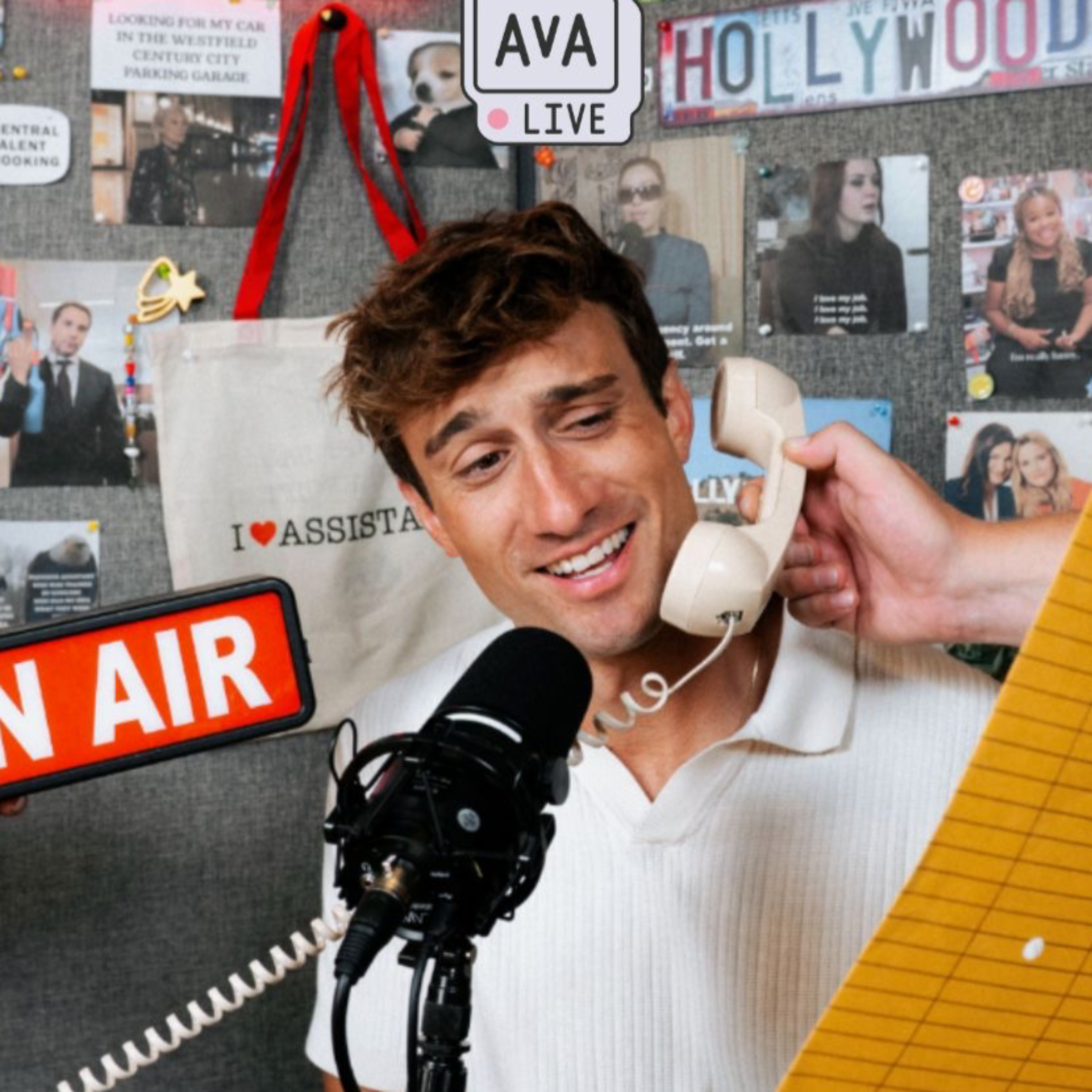
Head of Entertainment @ TikTok, Inside Streamer University With Kai Cenat’s Manager + BTS of SNL
1h 22m 18s
This episode of AVA Live explores key trends in entertainment and the creator economy, anchored by interviews with industry leaders like Don Yang of TikTok, Reed from Knight, and Stan William Stanford Davis. Central themes include TikTok’s strategic expansion into micro-series storytelling through partnerships like Sundance, emphasizing creator autonomy and two-way audience engagement. The show highlights a major legal dispute over media monopolies involving Penske Media and the Hollywood Foreign Press Association, underscoring growing tensions in award show control. A significant cultural debate arises over the Grammys’ new Asian pop music category, with BTS threatening a boycott due to language restrictions. Meanwhile, Peacock’s pivot to YouTube Premium reflects shifting audience habits, while streamer University emerges as a major training ground for aspiring creators. The conversation also delves into AI’s role in content creation, stressing the need for human creativity, and examines how streaming platforms and traditional studios are learning from each other in marketing and content strategy. Creators are increasingly forming collaborative networks to produce accessible, viral content, with vertical video and micro-series gaining traction. The episode concludes with a broader insight: the future of entertainment lies in hybrid ecosystems where digital innovation and traditional storytelling converge, driven by creator empowerment and evolving audience expectations.
It is Wednesday, July 29th. Welcome to episode 17 of AVA Live. We are here. We are live. If you missed last week, we got a news bar at the bottom of your screen covering 20 top stories happening in entertainment this week. We're about to get into the top five of them that caught our eye. But first, we have a stacked line up as always that shows some range this week. Sponsored and co-booked with our partners, Central Talent Booking, shout out to 'em. First up, we have Don Yang. She's the global head of entertainment at TikTok. We have Reid, who's the first two-time guest of AVA Live in the history. He's the founder and CEO of Knight. He reps some of the biggest creators in the planet. We have an icon, Stan William Stanford Davis, known for his role in Abbott Elementary. We Brianna Jacobson. She started as a script or as a Q-coordinate on SNL, and now she's just script coordinators. We're gonna get the BTS of what goes down on set of SNL. We also have an intern joining us live in the show later. This episode, but we wanted to start with five of the top news stories. Every week is a crazy week in Hollywood, but we picked five of 'em for ya. It's a show up smarter work today. First up, the Globes. We partnered with 'em before. We were on site last year. We got a big lawsuit coming. The Hollywood Foreign Press Association, they're suing Jay Penske in Penske Media for $150 million, accusing them of monopoly over the entire words ecosystem. Let's break it down. Who is Penske Media? They own a lot of stuff. They own Variety. They own the Hollywood Reporter. They own Deadline and Billboard. So those are the trades covering the award season. When you get into Gold Derby, they're the ones predicting the award season. The OG, Kalshi, Polymarket, to the world. You got Luminate. They're the data machine. They're measuring it. And then you've FYC campaigns are for your consideration, which are advertising those studio campaigns throughout those publications. Then the award shows themselves. So they own the Golden Globes. They own American Music Awards, as well as the Billboard Music Awards through their production company, Dick Clark. It's going to be interesting to see what shakes out with that lawsuit. Next, BTS, the boycott in the Grammys, 2027Y. They're saying that music should be heard for what it is instead of split by a regional language. So let's get into it. The group was widely expected to compete in major categories with its comeback album. It's one of the year's best-selling records as well as the US number one single Swim. But the recording Academy's newly introduced best Asian pop music performance category requires songs to feature the meaningful use of at least one Asian language. Because Swim is primarily performed in English, may not qualify. So they're boycotting it, and we'll track that as it develops. Peacock, we covered this in our newsletter the last couple of days. But NBCU is moving Peacock directly into YouTube premium. YouTube is dominating TV viewing right now. We wrote about it from-- actually, Neil said this morning, 13.8% of all viewing on TV for streaming is YouTube, next up 10% of Disney. So NBCU sees an opportunity to meet their audience where they are. No one knows this better than Reed from a night who's going to be on later in the show, and we'll get into it with him. We've already manual. One of the biggest icons in Hollywood. He was my boss's boss when I worked at WME. Long time head of endeavor is now at Mari. He dropped in our bed today in the Wall Street Journal, supporting the Paramount Warner Bros. discovery merger, saying it could save Hollywood. There's a little vested interest there. His company, TKO, sold Paramount, $7.7 billion in media rights for their property, the UFC. Good read. We'll drop it down in the description. Hi, I'm Kira Jo. I'm an ABA student ambassador. And today, I'm going to tell you about this week's leading ladies in the business of entertainment. I want to start with some rapid fire music industry updates. The first label to sign with the UTA and this covers touring, media, film, and brand partnerships. And this just shows how modern artists are really able to put themselves out there in so much more than just music. Next, a Lily Allen documentary is set, Prime Video, which will explore her career of music and overall cultural impact. And lastly, in music, Gracie Abrams just earned her first number one album in the Billboard 200 with daughter from hell. She's also launching a 64-day international arena tour. And I think that her career progression really just shows the power of Gen Z fan communities and digital momentum. Next, over at Amazon MGM, Pia Barlow just joined as head of original series marketing. She's a former HBO Max exec. She led campaigns for Euphoria, The Pit, and Hacks. And Amazon MGM seems to be hoping that she can turn their shows into really big cultural moments and also build long-term franchises. Also, Jamie Stevens just left her role as Sony Pictures EVP of Worldwide Consumer Products. She led their consumer product strategy for 10 years and expanded franchises like Ghostbusters, Shuman, Jean-Cobra Kai. She's also a former employee of Universal Disney, NFL, Hasbro, and Reebok. So she's been a busy girl. And she's now stepping down to focus on family and passion projects. See you next week, AVA. - We're back. We got it fixed. I want to give a big shout out to our production team for figuring that in real time. We have Don Yang joining us on the show. She is the global head of entertainment at TikTok. One of the biggest names in all of social media itself. We have a lot of micro-series to get into verticals, social media usage. And we're gonna bring Don live onto the show. We got her in the lobby. Don, how are you? - Hi, Warner. Nice to meet you. Excited to be here. - How's your day going? What's top of mind for you right now? You guys have your hands in a million different things. - We've been having a busy day, but yeah. Micro-series, entertainment partnerships here. We're excited for our Spider-Man release. We have a huge in-app campaign going on TikTok. So check it out. Let's hear more about that Spider-Man release. What are the, let's take us behind the scenes on what goes into something like that? - Well, months and months of work. So we work very closely with Sony, a great partner of ours to launch an in-app campaign around a Spider-Man. We have a lot of gamification going on. You can collect cards and questions. So people are posting a lot of great remixes and videos around the film. So yeah, excited for this new release in this weekend. - Excited as well. Before we get into a lot of what's going on, I think the burning question that everyone has is what's on your for you page? Let's break it down. Give us some things that are always on that for you page of years. - Well, of course I have a lot of edits around movies and TV shows. I am a personally a film person. So I have a lot of filmmaker edits that is about the past works with great music remixes. And then I'm into fashion. So I like watching people's outfits of the day, spring, some dating stories in New York. I like watching people sharing about their personal dating history and how they're meeting new people. So a bit of mix of everything, but I usually don't have that much time. So I'm actually under the 90 minute average, about 30 minutes a day. - That's your screen time, 30 minutes a day or app of your time. - Yeah. - That is shocking. I was going to say my for you page is a lot of capybarras and planes and random stuff. That's a bit more high brow than what goes on in mind. But can you define your role before we jump into some of the stories that we're going to cover? For those out there who may not be as familiar, what your day-to-day really looks like? - Yeah, of course. So I looked after entertainment vertical here at TikTok on the content side. So I have a majority relationship with a lot of studio partners, of course, and creators that work within the film TV verticals. So they are our lifeblood of our ecosystem where they post content around film and TV. Of course, our public figures, you know, a lot talent within industry that are team also managed. And then we also have a great programs team that look after big campaigns. So we work with the Oscars, for example, we're going to all the festivals season soon. So across the board, very integrated in the industry, across both the user side, creator side, and also the major players. - And one of the partners and festival seasons that pretty relevant topical conversation Sundance, you announced a micro-series storytelling program. Can you walk us through what that entails? - Yes, so we're excited to tap into the micro-series business in a big way. We are a discovery platform for many micro-series already. We are also now actively working with producers and or creators who are interested in bringing that content to us. The Sundance partnership is an institutional partnership to help creators and/or emergent talent who wants to write scripts for micro-series to have this formalized education. We've had great partnerships with a few producers already who are bringing their directors and producers to the educational kind of course. So that we have applicants who can speak to them directly get guidance and also submit their scripts. - What are you evaluating when you're looking at partners? 'Cause it seems that a lot in the traditional media world are looking to the social platforms to reach new audiences. So from a TikTok side, what are you evaluating from the partners say Sundance and others that make you want to, you move forward with something like that? - This is a great question. I think a lot of what we look for is just a vision alignment because understanding TikTok is different from the other platforms is a crucial signal for us. We are a discovery platform. Like I mentioned, we're also a platform that embraces creators uniquely and differently. We want them to be continued to create great videos on the platform but also have avenues to the industry. It's really tough to get into the more traditional film and TV space these days. these days, so I really. We look for partners who understand where our creators could go in the future and foster that process. And we also look for partners who really understand our ability to amplify what they do. So, you know, we have, let's say the Odyssey in theaters, but you have a great fandom around the movie on TikTok. So our creators are not diving into the history of the actual story, but also the cast. Obviously, the amazing pop culture around it as well, but also the story lines, the remixes I talk about as a unique format. So we really want partners who understand the diversity and the power that we bring into the industry. Are you finding that traditional media, college studios, streamers are opening up and giving creators more autonomy over the types of things that they're posting versus handing a script for certain partnerships and saying this is what we need, you know, in terms of deliverables? Absolutely. I think that's probably one of the most proudest achievements our team has made in the last few years is to really help foster this ecosystem and embrace the creators in a way and have studio partners really also jumping in and saying, "Hey, here are, you know, the movie, here are the movie and here are the assets, and you go, create content that you deem to be creative and joyful for your fans and audience." I think that creative freedom is really what they give to their talent pool, the filmmakers and showrunners they work with, and now they understand that it's a similar treatment that they should be giving to our creators as well. Do you, I feel like the, I come from a more traditional sense, I was at WME, and we've covered traditional Hollywood, you know, at length. What do you think traditional Hollywood call at the industry is learning the most from social, and what are you learning the most from traditional industry players? I think the studio partners and of industry have learned that right now in order to resonate with their audience, it's not a one-way conversation, so it's not just about putting a couple trailers out and, you know, a junket and hopefully that generates eyeballs. It's really about the two-way conversation, so as you create assets, as you have access to talent or promoting your content, they should be also listening to the fan and audience feedback. I know some of the studio partners are very active in our comments section and interacting with the fans in real time, I think that is great, but also seeing the data come through and really jumping on those conversations actively to drive a more of a relevance is a huge evolution of how movies are marketed, and then also just to amplify what creators are doing, it's not really about just sharing your assets again, right, it's really about embracing creators who are speaking for you and, and managing that with the filmmakers, so we've done events with Ryan Kugler and the fans that made all the edits around centers, we've done the same with Universal, with Disclosure Day and Spielberg, so bringing creators closer to the studio, and the filmmakers behind the scenes is really important because our creators see themselves as maybe emerging talent the way that they see themselves when they were, you know, emerging filmmakers. So, connection between the two authentically is very important, and I think our creator team is not only a marketing channel, our creator at CoHor is not only the marketing channel, but they're actually an important part of the business style. And how much do you think, or I guess the better question is, what do you think both sides still have to learn from each other to adapt, to continue to close the loop and, and strengthen the relationships? I think there's elements of the studio business that TikTok can also, or just like streaming platforms, social media platforms can also learn from, one of the elements that I really appreciate is the way in which studios allow creative community to be thoughtful about what they create. They give time, right? There's studios that sits on scripts for many, many years and perfect the process, and they bring different aspects of creative to discuss what they want to create. I think that time and the freedom that they give to these creative to allow them to create exactly what they envisioned is quite different from the business of social media, which everything is about content-producing, the metrics, doing better the next quarter. That is a quite of a different process and I think there's a lot to learn from each other. Again, when it comes to how we can learn, or how studios can learn from the TikTok platform is the robustness of data to draw their decisions. There's not a thing that we don't do until we have a test, a pilot, or ABE testing with the users, and then we decide to roll out to a larger cohort of users, and that is why we make very good bets and say bets that generates a lot of success in reach and in scale. That is something that I think the traditional media companies are still struggling with in some regards. Yeah, and let's go from struggling with into something they're launching full headfirst into, which is vertical video. I've struggled to define this for a long time. What is the difference between a vertical video and a micro-series in your eyes? Well, in TikTok's definition, micro-series is a scripted content series, so we're working on anything between 60 to 90 minutes in runtime and 40 plus episodes, and it is a story that is scripted with a beginning middle end, probably many different hooks throughout. So to us, it is storytelling. There is a narrative, there's character building, and then there is, hopefully, a really great ending that surprise and realizes our users. And vertical video, of course, could be in other type of formats and doesn't have to be scripted, and it could be serialized. And if you were a young creator right now, where would you, and just seeing where the brand dollars are going, seeing where the IP sell through to a lot of these streamers is happening? Where would you be putting all of your emphasis time and energy on if you were a young creator right now? I would say, creators typically are individuals that create on their own. A lot of them start in their living rooms this way on TikTok, but over time, as they build it following, there is a strong need for a lot of them to connect with each other. And I think that's kind of like in the early days of when you think of a writer's room, right? Different writers come together and talk about their development process, their writing process, and get each other's input. And if I were a young creator today, I would be building my own network of supporters and other creators with like-minded goals to just iterate on your creative process. And to, if they're interested in writing scripted content, they should do that with a group of people and produce together. Micro-series, for example, is quite low cost in terms of production budgets. So it's not hard to get a whole bunch of, you know, create a community together and your friends together to write something. I would do that as a test. And of course, if it becomes successful on a platform like ours, you could take it to the studios as well and you could adapt it. And one of those partnerships you just had, we only have a couple of minutes here, is with the ESA race screen time, which has more than 150 million views. Take us through the BTS of that deal unfolding and how it's, how you see it evolving into the future. Yeah, we've reached screen time in two parts in April and in May. We actually surpassed 500 million within two months. So it's incredible. I was way off there. Wow. Okay. So it's, it got 150 very, very fast. But, you know, in terms of how it came together, we, first of all, believe in ESA. She's someone who has had such an amazing career from YouTube to TV to film. And now, micro series with us, she understands the format before we even approached her. You know, she came from a place of creative mind and creative storytelling. And for, you know, I can't speak for her and her team and to why she wants to work with us. But I think in terms of what we offered was really around the reach that, you know, took her off cap. Currently, micro series lives on many different platforms, but TikTok as a platform is very native for short form content. Each episode is its own discovery point. So you can jump on any episode of screen time in your, for you page and then you get really hooked and you want to continue to watch. So for her, that is really compelling. The ability to reach to, you know, billion plus users. And also if you look at the comments section, people from all over the world, not just you us are watching and commenting. So the community that the show has built across these regions and communities is really interesting. It's funny. People are discussing plots. People are sharing with each other. Some people are even making videos around the show as it's released. So for her, I think it's just getting that real time audience feedback and her for her team to understand how
users are engaging differently with this particular new emerging format and to also learn from it and to do another one that may be better. So this process is very critical to kind of grow this industry and to diversify the content that we currently see in microseries when we're really excited to continue to work there. Yes, she's one of the best, one of our fan favorites but also AVA favorites. We got to get around the show at some point but maybe you knew this was coming, maybe not but the buzzword in Hollywood right now and socials is AI. How do you as a company, you individually and you as a department view AI right now on the platform of TikTok and where do you see it going and how can you put up guardrails to essentially ensure that human creation remains paramount? Yeah, great question. So for us, we see AI as a great tool for production. There's elements of the creative process where AI can support and then also around the production process as well, right? So for us, we still believe in the element of creativity that only humans can deliver on a story. There's elements that are so native and so resonating with individual that's watching the story that you can replace with AI. But the same time AI is such a powerful tool that if there are content that could be made at a lower cost or better visuals, we absolutely want to embrace that whether it's partially a holy. So for us, we want to work with, you know, partners that are interested in bringing AI content to us. But we also really interested in live action and stories that like ESA did with swing time actors in the house and just doing their thing and it's wonderful to see that diversity coming in in this way. Yep. Good answer. I appreciate you being a good sport about that. I know it's a tough thing to be tackling right now. We'll leave you with the last question here. What is one big creator economy prediction you have for the rest of this year and moving into 2027? I'm interested to see. I'm sure a lot of people talk about this, but creators who came from a space of YouTube and TikTok and now being able to produce for the traditional business of movies and TV. I believe we've seen that with back rooms and everything, but for us, it's seeing more of that becoming more more common and seeing other creators quickly understanding that there is a bigger stage that they can go to. Yep. Well, don't appreciate taking the time. It's great having you on the show. Hope to see you back here at some point and good luck with all the rollouts and thanks for filling us in on what's going on at TikTok. Appreciate it. Thank you for having me. We'll see you soon. From TikTok to the managing side, as I said on the start of this episode, the first two-time guest in AVLive Histories names, Reed is the founder and CEO of Knight. If you're not sure what night is, it's one of the biggest creator management companies on the planet. He's the OG manager behind Mr. Beast and now manages a large number of big-time creators. We're going to talk through some of the top stories in the creator economy today. Reed, welcome back to the show. Yeah, how are you? Same place you were last time. What is new since we spoke probably 10 weeks ago at this point? I feel like we spoke pre-World Cup, and so we spoke a lot about what to potentially look at going into World Cup. We were pre-streamer University, which was definitely a whirlwind of a lot of stuff going on. So it feels like my world moves 1,000 miles an hour. I don't know. It's kind of all a blip in my mind, but those are the two things that we discussed last time. Yeah, so streamer you, let's go right into it. Can you break it down for someone not as familiar of what streamer University is and talk about the real scale of what's happening? So it started the year ago, kind of this idea to launch his own university as a basically a curriculum that he would live stream and have other live streamers come. Some of the Twitch streamers became teachers along the way, teaching people how to click farm and teaching people how to get brand deals. And it obviously like year one did very well. And so this was year two. I think that a lot of momentum happened during the auditions. Like we did he did three different cities. He did Atlanta, New York, LA. People came in. They auditioned. There was 150 individuals that showed up to become students of streamer University. And so yeah, this is the second year. He also announced next year. He'll be doing Europe. So on the nouns of what location that's going to be at, but I don't you you probably saw like if you didn't see any clips from streamer University on TikTok, you probably weren't scrolling that weekend. I don't even know we're trying to quantify how many impressions happened across TikTok over a three to four day period, but it's almost impossible. How many people just were going back to something now? How many people applied to be on? I don't know the exact number. I would guess like hundreds of thousands of people applied. And then it has to be combed down to about 150 and so kinds of very hard job. And this year, people probably saw something very different this year. There was bigger streamers that were also invited to become students. And a lot of that is because you have to have bigger streamers there who have an audience to then put on smaller streamers. We're streaming for the first time or who don't have a built-in audience yet. So a lot of it was to help some of those smaller streamers gain momentum stream of people like Lacey and Marlin and Ron or whoever that is. And so I think that works really well when you have other large streamers there that are students kind of putting people on. What's the business behind it for him? So he's one of the biggest critters on the planet. He has endless opportunities. Why did you all and him decide to do it? And what is the growth plan for it? You mentioned Europe but beyond that. One, I mean, just as a way to support the community. I think if you think about Twitch as a platform, they really struggle with discoverability. You have to have an audience like a predetermined audience kind of going into Twitch to be able to build some type of a streaming distribution. And so it's like just going on the platform and going live doesn't really help. It's hard for people to find you. And so I think one thing that he was trying to solve was like how do you fix the discoverability problem for someone who is a streamer that streams with three people? But we think is entertaining. We think has longevity on the platform. They just have not been put on yet. And so that was one, two, it makes for amazing content. If you're a live streamer like Kai, you continually have to like up the bar of what the content is. And Twitch streaming in the past used to just be kids playing video games, which you know, a lot of people still do to this day. But it's become an area of the internet where you have to put on events and you have to do something like big that people want to tune into watch. And so I think Kai has always been that creator that's live stream that's like up to the content bar every single time. And I think streaming university was like a good way for him to bring something new and innovative into the fold that like no other creator had ever done before. So let's go to the World Cup. You had mentioned it at the top. I should speed creators the World Cup. Again, 10 weeks ago, you were saying that big things were going to happen in the creator front. Give us a breakdown of what happened. And also I want to know how those essentially how they were able to navigate in live stream from events of that scale. I don't know how you feel about it. I feel like creators completely took over the World Cup. They were what whether it was individuals who were just in boxes, taking pictures on Instagram or whether you were live streaming in the actual audience. Creators were everywhere at almost every single game. I think I mentioned this last time there that if you're a creator who's live streaming the game, there is some things that you have to navigate around rights issues. You can't really play the playing field. If you show the pitch, you could potentially like get cut off from Twitch and you lose that live stream. And so let's just take like Marlin as an example, like he showed his face most of the time. Obviously he was very dressed up, depending on who he was watching. They were live streaming the whole process of getting into the stadium, all the cheering. And then they would do live commentary of the game. Like what was going on. And so it was almost a wash along. I think for a viewer consuming that content, you would probably have it up on your phone. And then you'd be watching the game on the TV while also watching Marlin or Lacey or whoever that is on your phone. I don't know. I feel like leagues, NFL, NBA, major league baseball, they have to figure out how to navigate this. And it's going to have to be negotiations that they have in their new rights deals. I would anticipate going into college football season in a couple of months that Twitch streamers will be on sidelines of college football games. And they're going to have the same rights issues where they can't show the field. We have to figure that out where we actually like let live streamers commentate live on the game. And then they can just burn in the actual like broadcasts from whoever is broadcasting the game. Sure, they can show the commercials, the advertisers get their their rights. But I don't know. It's it's something that I I think I'm seeing happening. And it still hasn't really formulated itself into where it should be. But I think a lot of that is just right. It's rights issues for not being able to show the field. Yeah, it's moving in the right direction. Actually, past life worked on a project with live golf. And we looked at what the PGA did. They are a cake. They're finally allowing some players to post a certain number of images. I think there's a big movement after seeing what happened with the World Cup. Previously in the Olympics scale, they had creators there. It's moving in the right direction if you're a creator in the creator economy as well as sports to grab attention. We just had on Don Yang ahead of entertainment partnerships that ticked talk. We talked about porting over traditional to to new media. We should have a couple questions in the chat that we're going to break it up quick. Question question from Ariana. I'd like to hear how we think creator management differs from talent management and what can be learned or adopted from both sides. Creator management.
been in the talent management of each of your talent magic traditional have a lot of thoughts on this. What's here? Creators in general are more entrepreneurial in nature. They had to build these businesses from their basement or a camera that they then had to post and learn how to edit and be a producer. Like there's no system that they can come into similar to Hollywood where it's like the casting directors, agents, the studios are like the gatekeepers of that world. I think the managers in talent management in traditional Hollywood do a good job of like navigating the gatekeepers and how to be close to all of them to make sure that like when you do sign or represent a traditional talent, like you have those relationships and systems, the internet is a completely different paradigm of talent becoming popular. It's like the people kind of choose who is popular. It's a lot of like growth hacking through making viral videos, thumbnails, editing. And so I have found and I've never also never represented a traditional talent in my career. I've only represented digital creators, but just from talking with traditional managers and digital talent managers. I've found that this side of the house is you're also representing an artist, but they're much more entrepreneurial because they've had to build it from nothing. And they've had no help and they've had to figure it out through growth hacking and all these different things. And so I think there's there's a definite difference. I do think on the traditional side. I don't want to say it's it's more like assistant work, but a lot of it is like making sure they show up on time, making sure they read a script. But giving them to potential feedback on roles that they should take on my side of the house, it's like you're working with a lot of brands, you're building businesses, you're hiring production managers and editors. Some of the work is similar, but the career paths are just so different. Yeah. Second question from the chat, I agree with you completely. I think just before we move on, I think the traditional agencies and we work a lot with them. You have a lot to learn from from the management side of the business and the speed at which things change and adopt and adapt. A lot of new world things happening that are exciting to follow and we'll see what happens. And second question here is, how is clipping change the way creators think about making content from Jocelyn? Is it negative or positive? I'm not sure yet. I think it changes the way you think about how you have to what you have to do to go viral, like clip farming is a real thing. Like I think a lot of creators go into certain situations, thinking about what moments can I create that then can be clip to the internet that will perform well on either reels or tick talks. I think it's had a little bit of a negative effect on how people think about creating it, especially live content. Because they're going into those moments, just thinking about clips. They're not necessarily thinking about storytelling or any of those things. They're just like what ridiculous clip is going to make for a tick talk that gets 10 million views. But it also has been an amazing way for creators to get discovered. You know, I think before clipping was a thing, you really had to just focus on the type of content that you were creating and making the video and allowing for like this YouTube algorithm to push you and suggested and then hopefully you have people that click and watch your video. In clipping, if you're spending a lot of money and thinking about this like strategically, you can have a thousand tick talk accounts posting a thousand different tick talks about your content. It's like throwing it like darks at the wall. You have no idea which one is going to stick, but one of them will hit and that will get 5 million views and then that will start this like engine of discoverability. And I think the creators that don't have to pay for clipping are the ones that have it the best because they're just lightning rods. They make great content already. They're great storytellers. They have good clips that just like come from whether Kai is live streaming with Drew Ski or Kevin Hart like clips just appear because of what that content is. I haven't been a fan of this whole like paying meta, like of like having to pay clippers to become viral and clavicular, I think has been at the helm of that of like being very upfront that he's paying a lot of money to have all of his stuff clip. What it works and we know about clavicular because he was all over our tick talk feeds. Yeah, I mean a lot of times look what we're doing here is live we're going to go and clip we do about 10 clips in episode I'm here to have a conversation make it roll, but I think the optimization of shows becoming I guess clips becoming the show I see as a negative thing for true conversations and and authentic real. You know, peer to peer ideas shared versus I could ask you what's the craziest thing you've ever seen your life and bring on something crazy. I do want to know about that store behind you at one point, but but I think there it has taken away a lot from the human creativity level, but you have to compete at some point. Who do you think is doing it the best right now in the ecosystem of of balancing those two. Oh, man, who is doing it the best four months ago, I probably would have said clavicular. You know, I think the core boys, you know, once was phase now they're the core boys are doing a really good job of just thinking about creating clip moments through the content. I'm sure most of them kind of go into a live stream with a list of ideas that they know that are going to get clipped and that to me is like the thing you have to be prepared. And already have been crafting some of the moments because it only it only does well if it's good content like you can clip bad content all day and it's going to use like you need good content to be able to clip and a lot of brands have tried this. You can't clip a Taco Bell commercial, no one cares, but you can clip people trying random tacos on the street and saying the Taco Bell has the best tacos in the world. And so I think at brands are going to start to get into clipping, but they're going to have to be very creative with the content that they're creating and they're going to have to think about like what are these moments is going to create like good clips on tick talk. So necessarily let's create a high fidelity high production ad and then go pay $5,000 to get it clipped like no one's going to watch that green. Well, let's try some clipable moments here first up. What is that sword behind you give us a story. The chat is blowing up, by the way, we've had four questions about it. So yeah, if you've ever seen Lord of the Rings, it's Andrew also stored from Lord of the Rings. It's a replica that I was given by one of my employees a long time ago and it is of all the things in the background. That is the one thing that is the biggest question point is, well, I mean, it's sitting behind you a four foot sword. I think it's pretty. It's pretty sharp. It's dangerous. Have you ever had to use it on an assistant that acts up yet? Not yet. I mean, that doesn't have to ever happen. So it's more nor if they had to use it on me. I mean, it's pretty easy to access if someone comes to my office. That's almost more important. We'll take the next question from the chat from Aaron. What are some white spaces you're currently seeing on Twitch that you think is going somewhere? I'm opportunistically thinking about music on Twitch. So rolling loud live streamed their whole festival on Twitch three or four months ago. It did incredibly well. We're now seeing creators attending music festivals similar to how they how they're attending sports events. And these streams are doing really well. I think you have to put yourself in environments that people want to see you in that environment. I think if you think about things like rolling loud, Coachella, like some of these big temple festivals that, you know, the normal individual from Iowa, like I'm from North Dakota. Like when I grew up in North Dakota, I didn't even imagine I would ever go to Coachella. It feels so so far removed from my lifestyle. And so I think you have to put yourself as a live streamer in situations where people want to see that experience. I think it's why sports is so interesting. But I am pretty opportunistic in thinking about how music can be live streamed. Whether you're a DJ live streamer, your show, whether you're live streaming from the studio, like Placoin Max. I do think it's underserved and undervalued on Twitch currently. And there is a whole music category. So also play to your strengths. You have to play to the categories that exist. You don't want to start playing. You don't want to start live streaming something where there's no category yet. You're just like kind of acting in a separate other category that nobody's going to discover you in, which is a big problem on Twitch because discoverability is not existed. And what about the other platform? So if you were a young creator right now, I asked on this question earlier, trying to get noticed, say on on TikTok or IG. How with no following, where would you start? I would be making TikToks of things that I know can gain momentum and go viral, like maybe it's funny ideas, maybe it's something else, there's a ton of stuff on TikTok that gets daily views. But I think you have to think about as you're doing this, like how do you as a person or a personality become the focal point of the content. I think where people get in a little dangerous spot is they create TikToks that gain a lot of momentum and a lot of virality, but no one remembers who you are and don't remembers the person from that TikTok. That's a dangerous place to be in. You want to start from a point of like make me the center point of the TikTok. So people not only are falling in love with me, but they're also wanting to watch me create more TikToks. From the creator lens, we'll continue this, try to clip all of these here, question from Juan, what is one piece of advice you'd give to a talent manager just starting out today that you wish someone had told you when you were sitting in Austin starting this company in 2015. Man, be patient. I'm like the most impatient person. And when I started out as a talent manager in 2015, you know, I entered the space when it was still relatively early, I was representing a lot of the kids that were playing video games on Twitch and on YouTube. And at the time 400 concurrence was like that you're a massive live streamer. You know, I think I like I wanted everything quickly. You know, I think that like if you're a talent manager starting out right now, I'm guessing every.
and the worst at Brawlstein 3 Arts, E360, whatever. If you're young, you're like, damn, I need to represent digitally native talent, especially after the success of backrooms and obsession and the filmmakers and those being content creators. Focus on the internet. It is an ever-evolving landscape of talent that come in every single day. And also, you can just scroll on TikTok and find a plethora of amazing people, not to mention YouTube is just this vast system of new creators that are coming up every single day. I think there is like, be patient and also just like, find people that you enjoy watching their content, find them early, help them out. All the creators have the same issues, which is like, how do I get a good talent representative? How do I find a good editor? How do I continually come up with good ideas? And I think you have to entrench yourself in the world. But if I'm a 22-year-old right now that wants to work in talent representation, it's like pretty clear that you're gonna have to represent some internet native talent. Because I think like 10 years from now, everyone comes from the internet. Musicians, actors, actresses, that the internet is the place where people like find their momentum. - And you were the potentially earliest on it. We talked when you were on the show, the first time around Mr. Beast and some of the others you've signed. What is one bet you made early in your career that may have made sense on paper, but panned out well for you? - Early on like on YouTube, it was unclear if brands had a way to spend with digital creators. They had a way to buy advertising on YouTube because AdSense existed and they could buy into advertising. It was very unclear how a brand could pay a creator directly and have that video be sponsored by whoever. That was something that was very unclear to me in 2014 when I started working with Dude Perfect is how, like what is the mechanism to sell a Dude Perfect video? How does this even work? How do I get brands to understand like attribution? Is there attribution? That was like a big bet that I made that I thought that not only would brands continue to spend on YouTube directly, but a lot of those brands would figure out how to spend directly with the creators and the analogy that I would give back in 2014. And I think it still makes sense today is imagine you're watching an NFL football game and you're a big Aaron Rogers fan and you're watching the Packers play and a commercial hits and instead of you watching a blood light ad, like it's Aaron Rogers who's on the field who's talking to you about a brand that he is supporting. I was like, that is like kind of how I was contextualizing paying a YouTuber directly to talk about your ad. And it started to resonate with people, but at the time 2014, '15, '16, it felt so far-fetched for some brand to spend directly with the YouTuber. - Amazing, and to finish up this interview, give me one hot take where the creator economy's headed rest of 20, 26 into 20, 27. - One hot take or three? I know you got a lot of them. - I mean, I'll give you a few hot takes. I don't think micro dramas is as big of an opportunity as people think it is, especially if you're on the production filmmaking creative side. I think the platform's kind of just like hub all the power. That's my hot take. And I know a lot of people are talking about it and focusing a lot of time and energy there. I just have a hard time seeing how that continues to grow if you're not on the platform side and how you take advantage of that. And then I think the second one is AI will not disrupt how content creators make content over the next two to three years. - You heard it here first. Those are some refreshing takes, I'll be honest with you. We hear the full gambit here. Read, thanks for joining us. Maybe we'll make it three times. If you want to come on the show and cut-- - I was down. I gotta get in person. Next time I'll-- - There's a seat over here with your name on it. I was kind of bummed, you're like, let's do virtual, I was like, all right. - I'll bring the sword, we'll do this in person. - We'll do the sword if I get knighted by read. I think that would, that could be a clip right there and we'll clip it next time. - Let's do it. - Great seeing you, read, thanks. - Read, we'll drop some of his LinkedIn articles that he posted this morning about the World Cup down in the description from the creator economy to a creator himself, Stan. William Stanford Davis, he's an icon. You may know him from Abbot Elementary, he's a long career with over 100 credits on IMDB. We're numbering him live onto the show. William Stanford Davis, how are you? - I'm good man, how about yourself? - It is great seeing you. Thank you for joining. First we got to do a fit check. You're one of a fashion icon right now. What's the, what's the shirt right now? - Oh, this is an intro right now. You know, my wife bought this for me a couple of years ago. - I love it. I know you guys have a business relationship as well and management side. So she chose well, but I think I'd love to give our guests the chance to get to know you better. What do you say we do a couple of quick hits with you? - Sure. - Let's do it. So what is on your artist's writer? - My artist. - Or your talent writer? - Wow man. So many things. Definitely the green M&Ms. No, you know, I wanted to have some really good water in the room, you know, a little fruit. And you know, that's pretty much it. I'm pretty simple. - What is a song that gets you in the right mind space to attack a role? - Oh, there's several, man. I listen to everyone from all Marvin Gaye. There's a song called "That's the Way Love This" and it has this beat to it. Then I listen to some Whitney Houston. It depends on the role too. It depends on the mood I need to be in for the role. One of my mentors, the guy named Martin Landau, I'm sure most people know who that is, I hope so. All right. He told me the music really creates a new, not just the mood, but it gets you into a mindset for the character and I use it quite a bit. - Amazing. What's your favorite TV show of all time? - Oh, "Aven't Over Mentures." - Of course. It can't be, I should have promised. It can't be something you're in. - Oh, wow, man, that's another great question because I like comedy and I like drama. I am a home man. I go way, way, way back to a, ooh, ooh. Ooh, that's a good one because there's so many. I love "Sanford and Son" because I love the character, believe it or not. A lot of people are like, really "Sanford and Son" but red fox was such, you know, he was 42 years old, I think, and he played the role of a seven year old man and I believe everything he did. I laughed at it, but they're dramatic. You know, I love, I love "Ray Darlington." I love the sopranos, man, that's a thought. That's like "Ason, who is your favorite child?" - That's fair, that's fair, I love it. Well, we'll give you, this might be a hard one as well, but you're a dream collaborator. But that's another go, man. - I work with a cast of characters that, you know, I work with all of them and I collaborate with them on just about everything that has to do with the show. But we also work together way from the show on, you know, and they're just a great group to work with. But I, you know, my wife is one of my top collaborators in terms of decision-making, things that I do. - Amazing, we'll give you some easier ones here. I want to hear about your story, one of the most inspiring in Hollywood. We've a lot of young actors, talent reps out there listening. Can you talk to us about what inspired you to pursue acting early on? - I was just talking, you know, I'm working on a book and I was just talking to young ladies helping me write this book. When I was a kid, man, I played talent show on the front stoop. And my aunt, who's a teacher, I apologize to her for not growing up to be a teacher or to be a doctor or whatever she said, we knew that you were gonna do this, when you were a kid, this is all you ever wanted to do. I, once I saw Cindy Portier in the movies and my grandmother would take me out of school and tell them I had a doctor's appointment or a dentist appointment and she would take me to the movies, she would take me to the opera, she would take me to the symphony, you know, she just wanted me to have what she called a cultural experience. That's where it got started for me. I don't give you these long-winded answers, but that's pretty much where it started when I was a child. - That's why you're here at Storytime. You're one of the best at telling them, one of my other favorite stories in our deep research was about a certain car you had when you moved to LA. And some of the hurdles you had to overcome when you made the move. Can you talk to us about this? - The second day that I arrived in LA, well I arrived in LA, it was on January 2nd, 1984. I mean, we were like it was just today. And I'm just learning the area. I hadn't taken all of my belongings out of the car yet. And I stopped at, and it was a Louisiana chicken. I believe it wasn't on a crinshaw and Martin Luther King. And you know, I don't know anything about Los Angeles. I'm just here and I go in and I come out and my car's smoking up under the hood. Open the hood and the car's on fire. By the time I can get to the phone, there were no cell phones at the time get a phone and call the fire department, the car burned up with all of my belongings in it. And that was like an omen for me. That was like, okay, what are you gonna do? Are you gonna go home? You're gonna call it quits, is that it? Or is this an omen saying that you can't go home? - What allowed you to then overcome that? 'Cause that's a big thing, obviously to happen right when you're in a new city, new environment. That is a striking thing to happen to someone. What do you think was inside of you that caused you then to say, you know what, I'm gonna continue and pursue it. - This was my dream. You know, first of all, how was I gonna get to Los Angeles? Cause it, okay, I'm gonna get you to Los Angeles. But from this point on, it's on you. This was my dream to come here. I didn't know anything about how to become an actor. I just think that I wanted to be an actor. I made a check.
step of the crap. But this car burning up, saying, okay, man, this is your point of no return. What are you going to do? And I decided, I can't just why I came over 2,000 miles to get here. And there was no turning back now. I'm here to stay. Yeah, and so what would advice take that lesson, right? There's a lot of young actors, as I said, are watching now overcoming things, you know, maybe they didn't get the role they had hoped for. What advice would you have for them? There's going to be a lot of hurdles, a lot of detours, a lot of bumps in the road. If you stay on the journey and don't quit, you'll make it. The only thing, the only way you won't make it, or have successes, if you give up rule number one, don't give up rule number two, as you remember rule number one. And I share this with young people all the time. Study your craft, study your craft, and don't quit. That's if you want to be a doctor, a school teacher, a mechanic, you study your craft, and you keep doing it, and you keep doing it. You do it over and over and over again, no matter how many times you're doing slamming your face, you didn't get more nose than yeses. You're going to get more nose than yeses in this particular business. But you might get that one yesterday changes everything. One of those nose early on, we'll get to a lot of the yeses, because Abbott Elementary has been an unbelievable head, is the time that you were going for the show, friends. Can you talk to us about that? It was just, you know, it was a day player, man. One line I think it was. And I thought I did a great audition. And I'm at a friend's office, who we haven't had the same agent. And they had, you know, speaker phone, but the agent didn't know that I was on the speaker. And my friend said, "Stand in hand, there's audition for friends." And he thought he did great. And, you know, one line on friends, man, back then, that was like a big, big deal, you know. And the phone went silent. And the agent told my friend, he said, they thought he was terrible that maybe he should, you know, try doing something else. Maybe he should, I think he's telling Mark, maybe she continued doing that. And it kind of was like a joke between them in a little, in a way, but I'm listening to everything. And I made a decision in my head in that moment, no one will ever, ever, ever give that type of feedback about me again. And, you know, you're not going to book all the auditions. You should see everyone knows that. But I just had that particular feedback. No one's ever going to say that about me. I got in the classes. I learned every aspect of the craft that I could at that time. Then I became a member of the Actor Studio, which took my work to a whole level. I learned about human behavior. I learned about sensory work. I learned everything that I had learned in other classes, but it really, it was a marriage between what I learned before and what the Actor Studio had taught me. And everything started to change for me after that. And you had mentioned really quickly there that you were a telemarketer. Is that something you were doing to make ends meet while you were auditioning? And what did you learn from that role? Because there's a lot of communication that goes involved, obviously. I was a telemarketer and I was so good at telemarketing. In fact, I had a job that I made enough money to buy me a car, but they made me a telemarketing manager. They made me a supervisor. And that was good because I was making more money, but it was bad because it was taken all my time. I wasn't able to go out on auditions. I was doing stand-up at the time. I wasn't able to work in the club because I get there 10 in the morning. I beat at a 10 at night. And once again, it was just a roadblock. It wasn't like, okay, this is it. Stop. It was just a roadblock and I had to figure it out. I had to figure out, okay, how can I keep this job? Because I got to pay rent. And how can I make this work? And so if I got an audition, I talked to the owners of the company, look, I got to run out full-moment. And they granted me that in that sway. That particular time in my life was then I became a limo driver. I would take my audition clothes and put them in the trunk of the car and in between drops. If I had an audition, I would change in the back of the car. I'm talking about down, stripped down and changed clothes in the back of the car. Get out, go to my audition, come back, put on my limo driving clothes. She continued to work. I found a way to make it work. Yeah. And that's what I encourage you. If this is what you really want to do, you'll find a way to make it work. You got to have a job, you got to pay your bills, you got to pay your rent, you got to eat. So you got to have a square, what I call a square job. And with your square job and your dream, you got to figure out a way to make it work. Yeah, and one of the biggest yeses in an audition you ever received was on Abbott Elementary. I believe it was over Zoom, some of what we're doing here. Yes. What was the expectation going in and how much has that changed your life? You know, you get to a place in your career, which I hope all actors can get to where you just need to be auditioned there. You audition and you don't even wait by the phone and I got into that place where okay, I left it there and plus it was during COVID. And so my wife who happens to be my manager, she said you booked the job. I said what job? She said the job about the school. I'm like what school because it was like two, maybe two and a half, three weeks to be auditioned from the original audition, I should say. And I said okay, she said they want to see a wardrobe tomorrow. So much wardrobe and you know, we're figuring out what this guy's going to wear and there's a call from the director. And the lady at wardrobe, she says the director's on the phone. He wants to see you dance. I'm like that's weird, why aren't you calling, you know, wardrobe and then costumes. And he wants to see me dancing. He said he wants to see you dance with a broom. So I took the broom and I started washing with it and dancing with it and then he said see you see you on the set. And that's basically how I went. That, you know, it may have been more to it that I'm saying, but that's basically the nuts and bolts of it. And I, you know, I did an episode, we did the pilot and when I saw the trailer of the pilot, I said this looks kind of special, but I'm still like a star. And the rest is kind of history. They bought me back for the second episode, third, they bought me back for seven episodes in a row. And then I got put the sheet towards the side. She said, you know, we're thinking about making you a series regular. And I kind of walked away from her because I thought maybe she might have pulled her my leg or something. And she said, no, we're thinking about it. Don't say anything to anyone. And I never said anything to anybody who would say anything to my wife. And so it kind of became the real deal. And that's kind of how I started. And I, you know, they, like the character, we said that in the focus groups, everyone, every time this character show up at the, the need to go almost blow off the instrument. And I'm just so glad that it did. When did you know it was going to be the hit that it is? Like I said, seeing that first trailer, with me saying this a little illuminati, but seeing all the other components with the other castmates, I'm like, this is really special. But it wasn't until probably maybe episode four, that said, man, this has really, really got some legs. We didn't know it until, you know, to the audience, the fans really started, you know, commenting online about how they love the show, how they love teaching the digital character. And it was probably mid-season one that we said that, you know, I think we got to hit on our hands, you know. What has been given some BTS? I said, I was just glad to be a part of it, because at that time, I still didn't know that they liked me that much, you know, that I was going to be the part of it that I am now, you know, but, uh, man, if it, it seemed very, very special from the beginning. It was funny, it had heart, and it talked about an issue that's going on as we speak, you know, how teachers are underpaid, and how some schools have more privilege than others, and get more attention than others. And I thought the subject matter of it was right on time. It is, and that's why it's resonated with such a wide audience, important cultural residence-wide spread. Last question here. I want to hear some story that has stuck out to you being on set that you may not, may have not shared before, from being on set about Evan Elementary. Wow, um, story that has been shared with me about something that's stuck out to you. A moment, relationship. I've become so close with my classmates. Uh, the moment that, that, there are two moments, there's a moment for me where I do this thing where I said, "What's the respect on my name?" You know, and they were giving me all types of different reads, different things. For me, that was one of the moments that really took this character to another level. As a group, Cheryl Lee Ralph, who I've become very close friends with, she had lived the line, sweet baby Jesus in the wrong one too, and she is such a sophisticated person. The way she came in has said it. I almost lost it. I almost lost it right in front of the camera because it was so funny, and I think the rest of the cast, it, too, and that was one of those moments in season one that really stuck out for me in terms of this show is really going up, got to, you know, be super, super funny, and down to earth.
that so many guest stars and different people have come on that I wow this person's here but that moment for me was one of the moments I always remember. I love it thanks so much for joining talk about guest star I think I see a dog by you that looks like it's a hand in over there. We got that in Carbo when someone came up to me in the restaurant I had a mouthful of food and I said oh you Mr. Johnson from Appetite and I'm like anyway we got the dog in Carbo. There you go there you go shout out dog in Carbo what's his name? His name well we got a dog named Winnie so we call him Winston. Love it shout out Winston that's your guest star right there. Stan thanks for joining us appreciate the stories appreciate the advice and inspiration I hope to see you soon we'll see you on screen soon. Okay brother thank you so much for having me man. Appreciate you. October 7th new season of Abbott Elementary hidden the screens we're going to kick it to a quick video from an icon and a recurring cast member of AVA Live Sarah Jane Ross taking away. So how's work been going? Dude it's actually insane at the moment like the literally they're crazy. So I just check in to see if there's any ops around. Any of you are literally in a different country. Dude you never even know I swear like they're literally listening to you I'm pretty sure they put a microchip in my mosque the other day and they're like listening to my thoughts. What the fuck are you talking about? I'm on my life. SJ I got some breaking news on AV live SJ will be back domestic in LA and I think a week and a half she'll be in studio doing some new segments on the show. To end the episode we talk about range so we go from the head of entertainment a tick tock a CEO a night an actor has been in the game for a long time but we want to bring on more people who are really in the nitty gritty of it Brianna Jacobson is someone who's a script coordinator of SNL she's been on there for 18 seasons and we're going to learn a lot about the role of what she's done and what she currently does on the talk show to bring her life. How are you? Hey there how are you today? It is great senior where are you right now because that looks iconic. I am actually at my day job. I work at LinkedIn original productions so this is our studio. They were nice enough to let me do this very official interview in our very official studio. I love it. Talk about the day job the night job side jobs. What are you balancing right now between all of them? So I would say the running through line of this now going into 19 years at SNL has been I was always someone that knew I wanted to be creative knew I wanted to work in TV but I'm also someone without family connections or wealth so I always knew that part of this career would have to be figuring out how to support myself well I did it. So what's been the beauty of working at SNL is regardless of what's happening in my nine to five life I've always had what I call my restaurant job on the weekends at SNL so when I would go through the abs and flows of different production projects I work my way up from PA to write a producer at MTV and Viacom and Fuse and a lot of other places and as many people know those gigs it'll be six weeks and then you have to find your next one or you have a job for three months and then you don't know and SNL has always been that great sense of security for me that no matter what's going on in the full-time land I have something that not only helps me pay the bills but something I love something that gives me energy drives my creativity gives me that adrenaline hit I transitioned about 10 years ago into corporate and brand marketing I work as a copywriter and it's been so nice to sort of do my corporate cosplay during the week and then you know get my sort of silly side in at the show. I love it I feel like you get a silly side in all the time but you yeah you talked about and you you briefly had mentioned the fact that you don't come from wealth and not family connections how did you effectively break into the industry. So something I always sort of tell people is you got to embrace your cringe like having to ask people for favors or introduce yourself to strangers or walk into a room where you know nobody it can feel really scary and cringey and embarrassing and it'd be so easy just to run away from that but what's worked for me is I'm okay with doing all those things and move to New York from Indiana and when I was a teenager watching TRL in Indiana I was obviously watching in sync and loving them but I was honestly more interested in all the people in the bumper shots and like I wanted to be the next curt loader if anyone's still I'm old so if anyone knows who that is and so the second I moved here I'm like I am in New York City I studied writing at Pratt and I was ready to make the most of that so I just started at that time internet wasn't really much of a thing so I was literally looking people up in the phone book I was watching the credits to my favorite shows and writing the name down we didn't have social media yet I was faxing people I was cold emailing people I was writing letters to people that the summer before MTV had come to Indiana for Lollapalooza and I literally made a resume that just had my one job at Panera Bread on it shout out to Mother Bread and I found every single person at that shoot in Indiana who worked for MTV and I gave them my resume I've just always been that kind of person so the key to my success has always been trying to be that person that people want to be around be nice to everyone because a lot of working in TV especially at SNL is spending super long hours in tiny spaces with the same people and you want to be someone that other people want to be around you can teach someone skills and process but you can't teach someone demeanor so that was something I picked up on right away I also always said yes whenever an opportunity would come my way I would grab it because even if that opportunity was unrelated to the overall goal you find a way to make it related somebody knows somebody somebody has a friend somebody sees you working hard and having a good attitude and places you somebody else you know with somebody else and that's sort of what started that train for me I interned at MTV 2 at a show called Best Week Ever at the Onion so and I started working at and performing and studying at a bright citizen's brigade while I was in college so the combination of all that really set me up when I graduated with a couple of contacts and those a couple of contacts is and just working hard I was sleeping in bars because New Jersey Transit wasn't running to make my early call times you just do what you have to do and eventually if you have the right attitude one thing leads to another and you like I said embrace that cringe to ask people for help or you see somebody doing something cool you say to them hey that's interesting can I talk to you more about it or if you have a compliment you just give it and you don't expect anything from return and that really is the key to building that network that won't get you places incredible advice all around I think there's like 20 clips that we're going to take from that beautifully sad in your journeys inspiring I want to talk about SNL in these last couple minutes yes what is something that would surprise people from the outside about what actually goes on day to day on set it is a chaotic place but there's beauty in the chaos and I think whenever I talk about SNL the number one thing that surprises people is how analog it is so I did my first 14 seasons in q cards and my most recent four seasons as a script coordinator in the script department and both departments run on pens and paper in cards the pens are in papers a little bigger but it's the same thing in script something unique about our script process is we call our changes dirty changes which means the writers expected to literally take a pen and write their changes by hand on the script because we don't have time to review that black and white typed up paper for the changes we need to recognize the changes quick not just for us but every single person on the show is looking at those dirty pieces of script pages so that they know as they're working exactly what's different and they don't have to do any research and our job as the script department is to take all that information in from the writers the producers the control room updated on the script and get it up to the rest of the show just as quickly as possible I'm sure every day there's crazy moments but have there been any specific crazy moments that have stood out to you during your career on SNL? yeah like the one story that I just aside from like on a personal note anytime the food fighters come to SNL it's like the best days of my life and I'm sort of like pinching myself because they're my favorite but on the work level the craziest experience I had I would say I was stolen Q cards and it was the 2020 COVID season so things worked a little bit differently than and Q cards this is This is important for the rest of us.
the story, but at that time QCards wasn't on in the studio, we were downstairs. And so it was the Bilber Jack White episode. And we got a big fat stack of changes to an upcoming sketch, the show had already started. So I'm leading these changes to the QCard team. And as I'm going through them, I'm looking at the clock, looking at the rundown and looking at the feed, I'm like, there's no way we're going to get all these changes done by the time these have to get upstairs on set and be live. So I quickly pick up the phone and I call Leslie, who's now the script supervisor and my boss. And she, she has the most level head of anyone you've met. And she's like, do what you can. And we'll make it happen. I was like, okay, so I'm shouting the changes to my team. Next thing I know I turn around and staring at me are Steve Higgins, Michael Che and Kenny A Monk, who Kenny is one of our, like, he is the producer that makes everything happen. He is one of the unsung heroes of our show, one of the most talented producers in the business. And I say to Kenny, I'm like, can you give me a two minute warning of when these cards have to go upstairs and he said, absolutely. So I'm just screaming at this point, like, cut this word, change this, tape this out, add this. And by some grace, we get those cards done, write us Kenny's like two minutes. We raise them upstairs. They get upstairs right as, you know, the band is playing into that sketch. And we're all just holding our breath because none of us know what we wrote on those cards. And it certainly, like, was not easy to read. And I turn around to Kenny. And I'm like, that two minutes was clutch. And he is such a good producer that he's like, I gave you three minutes because I wanted to pat us. And to this day in my 18 years on the show, that is one of my most proud moments, because it just represents, like, the teamwork and the high level of competency at every level in every department, because the only way for that show to make it to air is to have the most haunted people knowing exactly what their job is, so that when things go wrong, or there's an obstacle, we know exactly who needs to jump in and how to solve it. I love it. That's the beauty of live. Yes, about a minute here. And by far, the most question asked from the chat right now is, what is the best way to get into that audience? Oh, well, it is lottery season. I just saw the post just like everybody else that it opens. I was an NBC page, so like that was 2008, and I was very familiar with the process then, but now with the internet of it, all the process has changed. Do the lottery, but also here's the tip, I'll share. I do have a lot of tips. I would encourage you to go for standby tickets. I know you have to hang out on the street, and it's uncomfortable, whatever. Try for standby tickets. And when they ask you whether you want to go to live or dress, choose dress. Everybody chooses air, but in my opinion, dress is better because you get two hours worth of show. You get to see the sketches that don't make it to air, and you get to then watch air and compare and contrast. Like what happened? So in my opinion, dress is a cooler experience, and you know, I don't have any data to back this up. I feel like it's easier to get into dress. So really committed, go standby. You'll be seeing me out there signing up for dress, and I'll be in that audience, cheering you on. But thanks so much. Now I'm not walking. Brianna, thanks so much for joining us. Congrats on everything, and thanks for sharing some wisdom. My pleasure. Thank you. We'll see you soon. Close the episode. We do have one surprise guest right now. We make this interactive. It's live. We're going to bring on an avian ambassador. We have ambassadors on 200 campuses now in many cities around the world. And what is going to join us live to be pepper me with questions that I have no idea what's about to be asked. And we'll see if she is joining. Her name is Lily. Yep, she's coming on. How's it going? How are you? I'm good. I'm a little scared. I have no idea what you're about to ask. I'm now in the other chair, the other side of it. But how are you and would love for you to introduce yourself as well? Yeah, totally. Don't worry, I'm not going to hit you with any hard questions. But I recently graduated from CU Boulder. I've been working in talent facing roles for a bit of time now. Most recently, I was just at Cannes Film Festival, interning there, which was great. I'd really love to be an agent and I'd love to land a spot in an agency mail room. So with that, I just wanted to ask if you're a recent college graduate trying to break into Hollywood today, what would your first three steps be? You're hitting me with three steps. Okay, now let's go through process. Click. I'm going to process this is my brain, but great question. For me, I've shared this on the show a couple times in the past, but I'm from Philly, went to school in DC, had zero industry connections. And about six months after graduating, I decided I'm going to do whatever it takes to get into that mail room at any of the agencies. I applied to all of them, got rejected a bunch of times. So the three steps that I would take, the first would be do as much research as you possibly can. So understand the landscape. There's the big agencies, the three letter names, the UTAs, the WMEs, the C.A. But there's a ton of other ones, and amazing ones that don't have to be in LA proper. The second, what I would do, what the second thing I would do is then go and try and talk to every single person you can possibly imagine at that assistant level. I think where people fail in networking oftentimes early on is trying to go up to the agents themselves or to people in executive positions, go in network more horizontally so that people one step removed from where you are and where and in the rules where you want to be. They'll have the best tips. They'll have the best tricks to get a spot of an agency. I got mine through a current assistant at WME. And the second, or the third step would be once you do land that interview, really think about what makes you different than everyone else. And why are you uniquely positioned to be successful in that mail room to become an agent one day and start to move up the ladder at an agency? I think generic answers are where a lot of people fail. Come in and be memorable. It's not like we're in a bright shirt or those things, but come in with a POV and ideas for where the agency could head or the types of clients maybe they want to sign. So really try and leave that interview and leave a lasting impression for the person sitting on the other side to be like, I remember her and I want to give her a shot here. So those would be a three step process that I just made up on the fly. That was great. I'm really helpful. And I just want to say, know that you started at WME. What was one lesson from your career that you wish everyone entering entertainment understood? It's all about your network. Again, that's a cliche thing. Your network is your net worth, but I focused so much once I got that role to be the best assistant I possibly could. I wanted to be the best at redlining contracts, the best at making sure the Excel files were exactly updated. But the people that are the most successful in entertainment are the ones with the best network and those almost outside of the role that are willing to go to bat for you. So I was promoted because someone at Live Nation or external promoter, which I ended up going to work at, work up back to my boss that I had done something in their eyes that was worthy of it. So build a network outside of your company and also build the network to those around you. And that was that first piece of advice. So network wins every time over skill. Totally. And I want to ask you, when you're actually in the mail room, what is it really like? All right, amazing. It is not. But it was, I will say like it was a an eye-opening experience. It is very competitive. And it weeds out the people who really want to be there. And so I think a lot of people see entourage I grew up on and want to jump into an industry and have the glitz and glamour. But it's a really challenging time in many people's lives because you start at the bottom wrong. You're not making a lot of money. You're often navigating a new city. I've never been in LA when I first took that job. But you know, it's somewhere where you walk in those doors and you now have an opportunity to control your destiny. And that's very rare. So if you do land that spot in the mail room, there's things that we were doing. I worked on the music side that are really specific to music. We had to read a book a week about the music industry. We were doing ticket counts. We were reaching out to everyone. How many tickets were really sold. But what really happens there is they want to see are you serious about working in this business. And those are the ones that will be promoted to assistant. A lot of people drop out because they realize, wow, this is way more serious than what I thought. But it was the best experience in my life. It gave me an opportunity in the industry that I love and then gave me, I started the Instagram account when I was out of the mail room. But you know, it gave me an understanding that all the sacrifices I had made to get to that point. We're going to be worth it. So yeah, best of luck with it. What's your dream job? Sounds like an agent. What's the department? Definitely talent. Motion picture, television, really whatever. I'm happy to be a part of it. But I'm really excited. And thank you for having me on. Thanks so much for joining. I appreciate the questions. Hopefully they were helpful. And yeah, that's, you know, best of luck with everything. I'm rooting for it. If you need anything, let us know. Yeah, of course. Thank you so much. All right. We'll see you. Yeah. And for those who are looking for jobs, I do want to point out that we have a job board. And we're going to end the segment with a couple of highlights from what's going on right now.
in our job board. We have over 220 live jobs that get updated daily on our job board and we're going to highlight a couple of them here. First up, Central Talent Booking. You know them well. They're a partner on this show. They're hiring for sales and marketing in turn. An amazing role if you're looking to be on the booking side of the industry and get exposure across podcast TV film, more traditional world. The second, CAA, they're hiring for receptionists. Why am I highlighting this? We talked about it before on this show and I've written about it. The most important thing that you can do is get a foot in the door. A lot of incredible execs, talented people in the industry, started off as receptionist. We've covered them and that's a role. It's in London. If you're looking to break in, take that role. Do whatever you can to get it and then work your way up once you're in. Next up, we got 2B. 2B. Original content coordinator. So they're hiring right now. Fast channels are booming. 2B is acquiring IP like never before. A lot of IP from TikTok and socials are headed to the platform and it's a good opportunity to work on the new slate that crosses creative economy and traditional. In the last, create music group. It's hiring a studio in turn. In L.A. they represent some, they work with some of the biggest talent. They're an L.A. company. They make sure that artists actually get paid across YouTube and streaming. They've probably become one of the most aggressive players in hiring. I feel like we have 20 of their jobs in our job board. I feel like they're always hiring but great place to be as you look for a career in the music industry. One in that end this episode with a heartfelt rest and piece to French DJ, The Vinsky. He saw a night call and lost a good one, 50 years old, young, sad to see. On a happier note, we started a series called Unsung Heroes a year ago where we highlight people behind the scenes in the industry. We've worked with everyone from Disney to the Golden Globes. We asked the question a lot in the show. So we actually are going to La La Paloza this weekend and outside lands next weekend to sit down with some of your favorite artists. But more importantly, the Unsung here on their team. So look out for that content on our Instagram page and assistance first agents. And we will see you here same time, same place next week on Evie Love.
Podcast Summary
Key Points:
TikTok’s global entertainment head, Don Yang, highlights the platform’s shift toward creator autonomy, emphasizing creative freedom and two-way audience engagement in film and TV partnerships.
TikTok is launching a micro-series storytelling program in partnership with Sundance, offering creators formal education and script development support to bridge traditional and social media content ecosystems.
A major lawsuit is unfolding between the Hollywood Foreign Press Association and Penske Media, alleging monopolistic control over award show content and media coverage, raising concerns about industry consolidation.
The BTS (Boycott) in the Grammys 2027 over the "best Asian pop music performance" category stems from the exclusion of English-dominant music, sparking debate on cultural representation and language in global music awards.
Peacock is shifting content strategy to YouTube Premium to align with streaming trends, reflecting a broader industry move to meet audiences where they consume content.
Reed from Knight shares insights on streamer University, a live-streamed education platform for aspiring streamers, which has grown rapidly with hundreds of thousands of applicants and global expansion plans.
Creator economy dynamics show a shift toward vertical video and micro-series as low-cost, high-impact formats, with creators increasingly forming collaborative networks for content development.
AI is seen as a supportive tool in content production, but human creativity remains central; both platforms and studios must learn from each other in terms of content strategy, data use, and creative process.
Summary:
This episode of AVA Live explores key trends in entertainment and the creator economy, anchored by interviews with industry leaders like Don Yang of TikTok, Reed from Knight, and Stan William Stanford Davis. Central themes include TikTok’s strategic expansion into micro-series storytelling through partnerships like Sundance, emphasizing creator autonomy and two-way audience engagement. The show highlights a major legal dispute over media monopolies involving Penske Media and the Hollywood Foreign Press Association, underscoring growing tensions in award show control.
A significant cultural debate arises over the Grammys’ new Asian pop music category, with BTS threatening a boycott due to language restrictions. Meanwhile, Peacock’s pivot to YouTube Premium reflects shifting audience habits, while streamer University emerges as a major training ground for aspiring creators. The conversation also delves into AI’s role in content creation, stressing the need for human creativity, and examines how streaming platforms and traditional studios are learning from each other in marketing and content strategy.
Creators are increasingly forming collaborative networks to produce accessible, viral content, with vertical video and micro-series gaining traction. The episode concludes with a broader insight: the future of entertainment lies in hybrid ecosystems where digital innovation and traditional storytelling converge, driven by creator empowerment and evolving audience expectations.
FAQs
TikTok has launched a micro-series storytelling program in partnership with Sundance to support creators and emerging talent. The program offers formalized education, script development guidance, and direct access to producers. Creators can submit scripts and receive mentorship, with the goal of fostering new narrative content that leverages TikTok’s discovery platform and audience engagement.
The Hollywood Foreign Press Association is suing Penske Media for $150 million, accusing it of monopolizing the award season content ecosystem. Penske owns major entertainment publications like Variety, The Hollywood Reporter, and Deadline, as well as award shows such as the Golden Globes and American Music Awards, raising concerns about market dominance and anti-competitive practices.
BTS is boycotting the 2027 Grammy Awards because their song 'Swim' is primarily in English, while the new best Asian pop music category requires meaningful use of an Asian language. The group believes this rule undermines the authenticity of music and cultural representation, and they are advocating for a more inclusive approach to genre classification.
NBCUniversal is moving Peacock directly into YouTube Premium to better reach audiences who are already consuming TV content on YouTube. With 13.8% of all TV streaming viewing on YouTube, the move reflects a strategic shift to align with audience habits and expand reach in a competitive streaming landscape.
As TikTok’s global head of entertainment, Don Yang oversees content partnerships with studios and creators in film and TV. She emphasizes creator autonomy, two-way fan engagement, and the platform’s role as a discovery engine, helping bridge traditional media with social content creation and audience interaction.
Studios are learning from social platforms about audience feedback and two-way engagement, while social platforms are adopting studio practices like long-term script development and creative vision. This mutual exchange fosters more authentic, community-driven content that blends creative freedom with data-driven insights.
Chat with AI
Loading...
Pro features
Go deeper with this episode
Unlock creator-grade tools that turn any transcript into show notes and subtitle files.
 PodcastTranscript AI