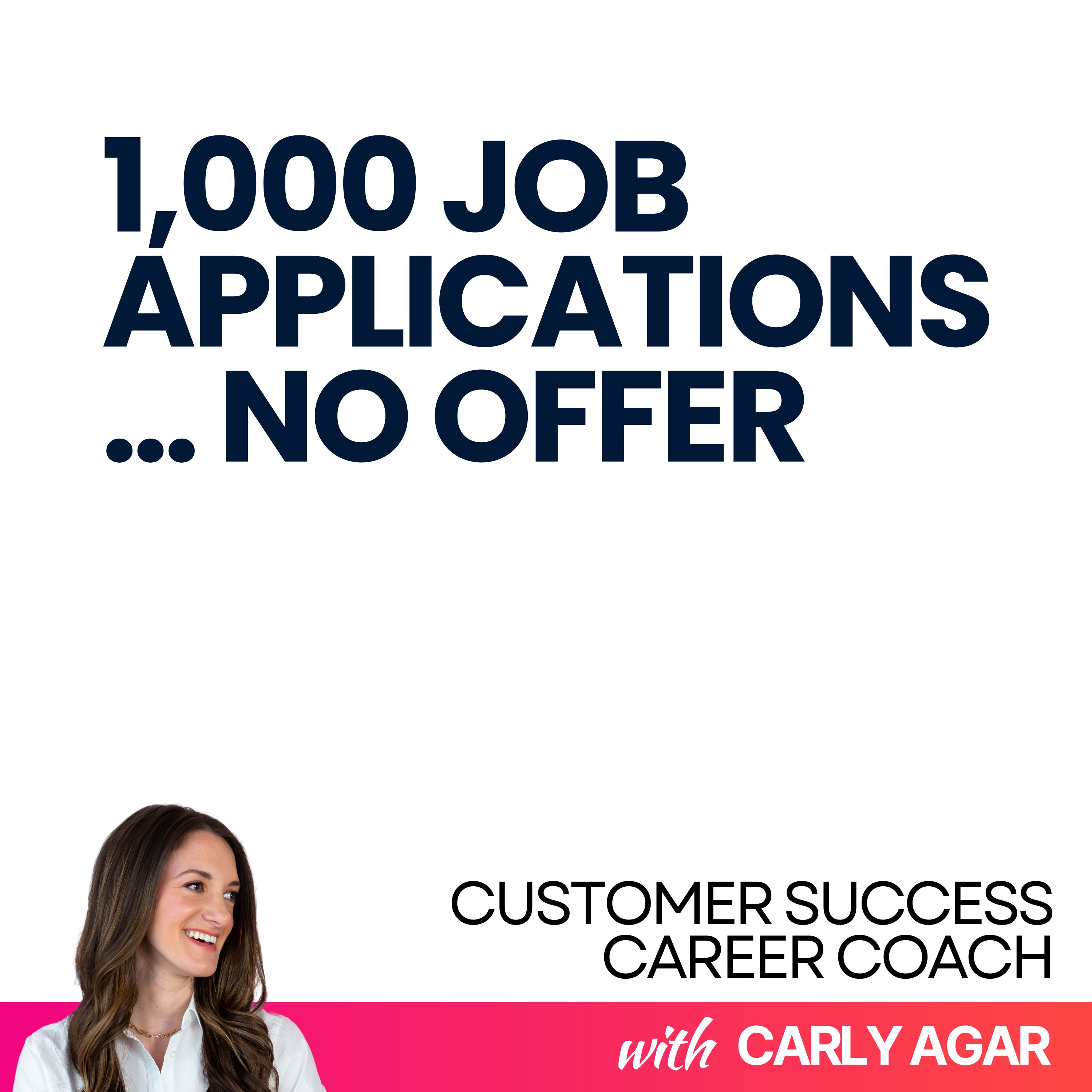
112. He Spent 2.5 Years Applying to Jobs the Wrong Way. Here's What Finally Worked | Client Spotlight
29m 6s
The discussion centers on a career transformation case study. Junior, an experienced Customer Success Manager laid off in 2023, struggled in his job search for over two years. He applied to over a thousand jobs using a generic "spray and pray" method and AI tools, resulting in only about 20 interviews and no offers, which led to frustration and a negative mindset. His situation changed dramatically after enrolling in a specialized coaching program in late 2025. The intervention focused on three core areas: a complete resume overhaul to better sell his experience, a strategic shift from mass applications to targeted outreach—applying for a job and then directly emailing hiring managers and directors—and intensive interview preparation. This new approach yielded six to seven interviews in his first six weeks, a drastic increase from one per month, and he accepted a job offer within about 90 days. The episode underscores that for skilled professionals, the barrier to success is often not a lack of experience but not knowing how to market it effectively, requiring both strategic and mental shifts in the job search process.
Real quick, we talked to 1,500 customer success professionals about why they're leaving their jobs and the results were surprising. Turns out the vast majority are leaving because they're unhappy. Not because of money, not because of layoffs, they're unhappy. So if you're a CS leader worried about keeping your top CSMs or if you're a CSM feeling stuck and wondering if it's just you, we just released a free report called why CSMs leave the growth crisis in customer success. Go to CarlyAgar.com/towentreport to get your free copy right now. Here's a number that's going to make you feel something. 1,000. That's how many jobs today's guest applied to over two and a half years with nothing to show for it really except for a handful of interviews. In fact, he was averaging about one interview a month. His name is Junior. He's a CSM with seven years of experience before he got laid off in 2023. And when I say he tried everything, I mean it. A.I.R. in resumes, LinkedIn premium, resume writers, spray and prey applying, all of it, and none of it worked. But here's the thing that I really want you to grasp before we even get into Junior's story. When he joined our coaching program in September of 2025, he got six to seven interviews in his first six weeks. With a new resume and a completely different strategy, he went from one interview a month to one a week. And he signed his offer on December 23rd, just about 90 days after working with us. Today's episode is about what has to shift, both mentally and strategically, for you to get new results in your job search. Junior had the experience. He had the skills. He just did not know how to sell it. And there is a massive difference. Let's get into it. What if the only thing standing between you and your next big career milestone is just a strategy you haven't heard yet? I'm Carly A.Gar, Customer Success Veteran Award-winning career coach and you're go to for getting hired and promoted in customer success. Whether you're breaking into the field or ready to level up into leadership, this podcast is your shortcut to real career growth. Every episode is packed with practical takeaways, data-back strategies, and zero fluff advice that actually works. So you can start making moves towards your goals immediately. If you're ready to take control of your career, well then you're in the right place. Welcome to the Customer Success Career Coach Podcast. Take those all the way back. Like, why were you looking for work in the first place? I was looking for work starting April 1st, 2023. I was laid off from indeed.com where I was working there for, I was approaching seven years. Started in a small business, moved to mid market, being promoted, promoted to the enterprise level, then promoted to being a senior on the enterprise level. Indeed had some large layoffs and I was unfortunately part of the first round. I mean, being laid off always sucks. But having been at a company for seven years, that's a really long time. Do you remember how you felt in that moment? Like, did you see it coming? Were you totally shocked? What was your mindset in that moment? I was really angry. Didn't speak to anyone when I left. I didn't want to see anyone. And I think that was the start of a trickle down effect of like a downward spiral, I would say. So you're laid off. I'm sure like so many emotions, just a complete roller coaster. Like you said, you were angry. Probably feeling bitter, disappointed. I know that from talking to so many folks who get laid off, it's really hard not to take it a little bit personally or at least question if that was part of the reason. So like, what did your job search look like? If you remember, because now this is almost three years ago, like, what was your approach? What were you doing? Yeah, so I think in the very beginning of the job search, I used AI just like everyone else was using chat GPT at the time. I figured it was a good time to learn it. And I applied it to my resume with no direction. I think I started applying to jobs using that resume and all the experience I had. And you know what? It didn't help. I had no direction going into job searches. No directions going into interviews. Because I thought the company I was going to be at, I thought I was going to be there for some time. I had gotten promoted. I was a senior on the team and you know, I was looking for more at the company. So going into the job search, I wasn't prepared. I applied to hundreds and thousands of jobs at a time. I did get some interviews early on, but I wasn't performing well because I wasn't prepared for interviews. I didn't know how to prepare for interview. I thought I was doing it correctly, but I apparently wasn't a lot of companies were being, we're laying off people at the time. So they weren't hiring. And if they were hiring, it was in small companies or small markets. And then you're going into a job search with thousands or millions of people looking for jobs. And how do you stand out? Something that I wasn't doing. Okay, so you're using AI, you're deploying what I would refer to as like a spray and pray approach, which is just basically you buy into this idea that the job searches and numbers game. It's like, well, if I applied a more jobs than the likelihood of me getting an interview goes up and a lot of people think and feel that way. So do you remember if you can ballpark estimate like I applied to X, you know, hundreds of jobs and got X amount of interviews from it. Yep. So I would say between being laid off so say April 1st, 2023 to before I started program. I applied to over a thousand jobs and that was you started working with us in September of 2025. Yes, about two and a half years. So it's a five over a thousand jobs. And I might have gotten maybe 20 interviews. Let's say 20 interviews out of a thousand. That's tough. Do you remember if they were interviews for jobs that you were excited about? Yeah, somewhere some really good companies I want to work at and then somewhere just throwing applications at jobs that I didn't really care for. I don't know more. I really didn't see myself working there, but I was jobless and I was struggling. So you're applying to you said about a thousand jobs. You got about 20 interviews getting maybe one interview a month. When was the moment when you decided like enough is enough I need to get help. I can't keep doing what I'm doing. Was there a breaking point? I think I started to do better summer 2025. Okay. So that would have been right before you start you reach out to us. Yeah, I started to there were two or three interviews. I made it to the very end and I didn't get the jobs and something clicked. I received good feedback from those interviews, but I said to myself the other 17 or so interviews I've had I've never gotten this far. So I'm missing something and I need to adjust whether it's my resume because I need to get more interviews to prep or I need to adjust my interviewing style. So it was really just a moment of self reflection of I'm not seeing the results I want to see. I'm at a point where now I'm ready to say I need help. I talk to a lot of folks who obviously are thinking about working with us and I think what a lot of people are surprised by is especially a CSM. We've never really been on the buying side of the decision making process. We're always the ones guiding that decision making process as the vendor. But just as individuals and as customers, it's rare that we're out in a market comparing all these different products and services for ourselves. So it's a very different feeling. Do you remember some of the things that you invested in before? Maybe some cheaper really cheaper programs. A lot of you will do your resume for you. LinkedIn premium, of course, I think everyone does that right. Try to learn from classes, I'm some Google classes. I was pretty much trying everything again myself better. I just really had no direction. And I got really fed up one day and I woke up and I was like, I need to do need to adjust something. People were liking your post on LinkedIn and I was seeing and I was reading it and I was following you for some time prior to that. After watching your video, I was like, I felt like this was the place I had to be. So you explore all these options. You decide to work with us. Great decision making skills. Clearly. You sign up and then what happened? Do you remember the first like milestone that you achieved? Or do you remember the first thing where you like felt a sigh of relief and like, okay, I made the right decision or, oh my gosh, things are starting to change. Do you remember what that first moment was for you? So I remember coming out of an interview and I was really upset and one part of it was that I wouldn't listen to questions or I would say I was and I wouldn't. I think my listening skills listening skills were comprehended by being so angry about not getting interviews. So I think you were the trickle down. I remember early in the interview processes when I first got laid off, I would make it pretty decent, but because you wouldn't get a job, you would kind of like take it like, oh, they don't want me and you'd really get angry. Not that the interviewer or the process, you would just get angry at everything because there was so much pent up aggression. Yeah. I'm not listening because I'm angry. I'm going to interview as angry like an interview just trying to rip me down.
so they could give their job to their friend or someone else that's a friend of their colleague or someone that was given to them. But I have to take steps to get myself better and I didn't realize it. When you're struggling with something that is innately so vulnerable, like a job search, because you're constantly putting yourself out there and getting rejected. It's like a guaranteed part of the job search. And it can lead to a lot of feelings of anger and bitterness. Like you said, you were walking to every interview already angry. Just like at the situation. And I think what happens for a lot of people is like in order to protect ourselves, we put up a like a defense mechanism, which is just like, I can't hear that I need help or like I can't admit that I need help or that I'm doing something wrong. It's a lot easier for me to blame external things. Like the job market or my situation or the fact that I got laid off, it's so much harder to say, I'm screwing up because I don't have the skills or like the skills that I have or not where they need to be for me to be competitive and I need help. And that can be really, really difficult. Was there something more tactical where you were like, oh my gosh, this is working? I think starting at resume, right? Like I said, I think I had somewhere between 17 and 20 interviews in the first two years of being laid off, averaging one per month, roughly. I would say I updated my resume that first month. I started using the resume. I would say around the end of September, I would say by November to December, I'd already been in program two months now, approaching the third in November. I had about six interviews in the first sort of seven interviews in the first two months. Wow. With the new resume, but that resume changed my life. So we have 20 interviews over 24 months. It's like just under one a month to six or seven in a matter of weeks. Correct. Which is absolutely insane. Some were smaller companies, some were larger companies, some were companies that I thought I'd never get to have interview at. And I was getting interviews. Hell yeah. See, that is a testament to something I always say, which is to any job seeker, especially in customer success. Like you have the experience that companies want to see. You just don't know how to sell it, because that's a really weird skill set. Like knowing how to write an amazing resume is a super niche skill set that CSM's don't have, because why would you have that skill set? You've never had to really use that before. And your strategy was different at this point too, right? Because obviously we're very against spraying and praying. I know that some folks still kind of like sneakily do it. They're working with us, but I know you were super committed to the process that we laid out for you. So can you give us a look into just how your overall job search strategy changed from this like spray and pray apply to everything I can to then how it looked once you got your new resume from Kate? Absolutely. What I did was one thing I learned in program, apply and send outreach something I was not doing. I was scared to open up to people. You're embarrassed about being unemployed. You're embarrassed and upset about the job market. And you forget how to sell yourself. So what I started doing, I started applying. Apala.io changed my life. I would apply to jobs all over the place and email people who I could possibly get an interview with at that company that I applied at. And it was working. There were people who even responded to me that said, hey, we're not opening right now, but something my open next year, I'm going to keep your resume on file. I was getting interviews with companies that I never thought I would get to get interviews at. I was also getting rejected and getting non responses. And that was okay because when you see that one email come back from someone who says, hey, we can touch base down the line. That makes you feel so much better compared to not hearing anything at all. Yeah. If anyone's selling anybody this dream that you can have a job search where you face an rejection, they're obviously a liar because that's just literally impossible. Your judgment is pretty much the only guarantee in any job search. For anyone who's not used to this strategy of apply to a job and then do outreach, you mentioned apala.io. Can you paint a picture so you sit down at your computer, you apply to a job, and then what were the next couple of steps that you took? I was applying to maybe four or five jobs. After I get those applications on, I would put them into our spreadsheet that we were tracking or pretty much our job tracker, right? Then from there, I would go research someone at the company, someone high level on apala.io. And then I would shoot them an email if they looked active, shoot them an email, introducing myself, letting them know I applied to a job and would love to connect with them. And I would also attach my resume to that email. Very likely that they open up that attachment once they see that it's a resume. I would also give it a day or two, shoot them a connection invite in a message on LinkedIn. It was just a shot in the dark just trying to build a relationship, build a connection. Remember I was only in program for a few weeks or maybe a month or two up to this point and something started working like I mentioned? What surprised you the most about that outreach? Because I think for a lot of folks, like when they hear us talk about it, whether it's us talking about the strategy or approach outreach, a lot of folks come into it thinking like, I've already done this. I've already sent messages to recruiters. I've sent messages to hiring managers. It doesn't work. I've learned that people are busy. You have to understand, as hard as we're trying to find a job, there are other people actually doing their job and then they have to interview, right? That's a great point. It's just something to think about. That's one thing I've learned and I understand it. Another thing too is you have to message the right people. You have to get in touch with the right people. I think I was doing it before recruiters on LinkedIn. A lot of people I realize and learned. They don't check their LinkedIn and I understand it. Probably getting thousands of messages once they put a job on it, especially in this market. Something I did was, and I learned from program, I reached out to hiring managers, people who are in CSM, hiring managers, or directors, or VPs, or someone high level within the company. This way, once I'm applying, it's going through the person who's doing a hiring, who's signing things off. It's about my approach and how tactical I am, as opposed to just, like you said, doing that, that's bringing and praying method. We've talked a lot about what I consider to be the first phase of the job search, which is all the things you have to do to get interviews. But then there's still another, I would say even much taller mountain to climb, which is all the interviews. We know how companies love to throw four rounds at you, six rounds, sometimes eight rounds, presentations. There's still a whole other mountain to climb here. Earlier in our conversation, you said, you made it to some later stage interviews. Certainly had a lot where you didn't make it to later stages. You were just feeling angry about interviewing in general. So what changed if you can remember with regards to your approach to interviewing? I would say the number one thing was practice. After being laid off, I didn't want to practice. I thought I had everything figured out. I would get a job and go about and do whatever I wanted to do. Problem was, I wasn't versed on a job because I haven't had an interview in so long. So I wasn't interviewing properly. So joining program fast forward fall 2025, I started practicing. The first time I did my interview prep, it went really bad. I got really good feedback, but it went really bad. It really took time. I was doing so poorly that you have to remember that you can't fix things overnight. I think it was important having a good coaching, which you guys provide. Throwing hard questions at me. But also, you know, you kind of prefer hard questions because when you're going through those tougher questions, when you're in the actual interview and you're dealing with questions, it's night and day. You're like, oh, I was well prepared for this. I have all the examples for this. I have all the scenarios for this. And that's what the good coaching was able to have me recognize about myself. I'm glad you mentioned that because I think a lot of people, well, pretty much everyone that comes to us is like, I need help with interviewing. It's very rare that I talk to someone that says, I know I'm perfect at interviewing. Certainly, some folks are more confident than others. However, interviewing, I think, is just intimidating for everyone. There's a lot of pressure around it. And I think a lot of people are surprised at how quickly you can up level your interview skills. And something you said that just jumped out at me is something I'm always telling people, which is it sounded like you said you felt overprepared for interviews, which is our goal. It's like, I want you to always feel so overprepared for interviews that when you get off the call, you're like, we just say that. That was almost like too easy. So I rewind when I was first interviewing before joining a program, I would say, I'd have a million tabs open, flipping between a million things, different examples, this, that, and the first, like, I don't need all of that. I have that all up here. Joining program now going back to it, I felt overrepared because I had everything consolidated. I had questions that I prepared for. I had negative examples, good feedback examples, positive relationships, negative relationships, our upsell clients, which I
I did, you know, how I solved the technical issue, how I implemented something. I was just prepared for all of that. I just, again, mentally, I was pretty much all over the place. I think my main problem was focusing, I think, going back to an interview prep, really practicing my interviews, slowing down when I speak, listening to the question, not going into interviews, angry, and that practice really opened my eyes with everything. You just mentioned a couple things that you worked on, like talking a little bit slower, having examples ready. Was there anything else that you worked on with Olivia and Preet in those interview sessions that you remember specifically? - Really good interview questions that they gave to me that helped allow me to practice outside of our interview times. Even though you guys were proponents of not to practice too much on outside, 'cause you can, you know, make yourself crazy, I hope, because I really wanted to land a job. - There is absolutely a point. We have to correct this often, which is like you are over-prepared for interviews in the wrong way to where you just sound extremely rehearsed and that can have a severe, severe negative impact on how you're perceived in an interview, because especially in our line of work, like if you go into, I don't know, I've never interviewed an engineer before, software engineer, but if you go into a software engineer interview and you're extremely rehearsed, maybe that works, but for CSMs, that doesn't work, because the whole time they're interviewing you, they're just thinking, how is junior gonna show up in front of a CIO at our biggest customer when they're pissed at us and their renewals coming up in six weeks? Like, 'cause if he's gonna sound extremely rehearsed like this, that's not gonna get our customer to let his guard down and open up and be vulnerable and open with us, and that's not gonna move this relationship forward. So, the interview is you walking the wall, 'cause this is how I'm going to show up in front of your most important accounts. So if you are too rehearsed, it does the opposite. It does not help you. - The job I have now, I love it. I interviewed, was four rounds, started the week before Thanksgiving. They told me that we're gonna call me back. Got a little nervous when my boss didn't call me back right away, but I had to remember it was the holidays. - Yeah. - She called me back, told me to go on the interview, the next round, I did the round after that and it was a presentation on a project that I created myself, and then I interviewed for that the Thursday before Christmas and then on Christmas Eve Eve, I had to go for an in-person interview. When I left, I felt really confident. I see a weird number pop up and I come to Atlanta, Georgia and I remember the first interview I had with my boss. She was in Atlanta, Georgia, or Savannah, Georgia, I should say. And I got the call and she told me, we would love to hire you and she sent me the offer letter. I got home, I signed it. Christmas Eve was a really good day. - That's amazing. I mean, that's literally September to just some three months. It's like 90 days. I think it ends up being 90 and some change 'cause technically you started with us mid September and you signed this on Christmas Eve Eve. So, a little over 90 days, but considering that it had been two and a half years prior, I mean, that's freaking awesome. (laughs) - Great feeling. And 90 days, I think, I would have did this the first day I got laid off if I learned what I'm learning now. I mean, good things come to you when it's supposed to, right, I've learned, but I would have did this April 1st, 2023 without a doubt and I recommend it to anyone. - Thank you for saying that. Is this something that I always like to ask people because I've been a part of so many coaching programs myself as a student. I've hired many mentors, I've done many courses, like I've done all this stuff. I am like, obviously very into coaching from every angle. And I think it's something that everyone should do. But what I always like to do, like when I wrap up and engage in it with a coach or a mentor or whatever it is, is just reflect on like, of course, did I get the thing I set out to get out of this, but what else am I taking from this experience that maybe I can carry into some other aspect of my life or like something that surprised me or something I learned about myself. So putting like career stuff aside, like forget, job search, tactic, skills, all of that good stuff. Is there anything that you're taking away from this experience just like into some other chapter of your life, whether it be something you learned about yourself or a skill that you learned? - So I would say there are a few things. I don't wanna say it's just one. One, it was just like rebuilding my character. I think group really helped me rebuild my character being around different people that are going to struggles. You learn like you're not the only one to have struggle. And I think for a long time, I felt like that. Number two, I would say practice. Look over your resume, you know, if you've got any feedback, if not, you know, you practice any feedback you receive from coaching, I think that's really, really important. 'Cause you can apply to and get a lot of interviews. But what happens is you have to perform well in those interviews. And I had to open up and I had to, you know, realize the world is changing and I have to change. I had to adjust. As we go through life, we always have to be adjusting and that's something I wasn't doing. I was doing the same things over and over again. It wasn't healthy, but you don't know that when you're going through it, it takes some time to recognize it. - Anyone who has paid attention to any of this episode will now know. You are a testament to just being an owner, like truly owning your destiny and just saying, "You know what? I'm having a crappy F in time right now, but I'm not gonna let that keep happening. Like I'm just gonna do something about it." And yeah, you had shitty days, but you're also incredibly optimistic and realistic and just such an action taker. And so, I mean, that's why everyone loves you and is so inspired by you. And I can't wait for everyone to hear this because, you know, I can sit on my soapbox all day long and say, "Do this, do that, do this." But you just went through it. Like you are the perfect example of you can be in the pittiest of pits and get yourself out of it. If you just like take some steps, take action, have low ego, be intentional, all these things. So, I cannot thank you enough for sharing your story and just continuing to be vulnerable and open and have no ego because you're gonna help so many people with your story. - Well, thank you for having me. Happy if anyone ever wants to reach out, just have a conversation with me about program, how can benefit them, you know, happy to do that. It's important you work on yourself as important. You recognize what you do wrong and it's important to keep practicing and try to get better at everything you do. - I hope Junior's story hit you the way that it hits me every single time I hear it because he is genuinely one of the most real self-aware people I've ever cross paths with. And the thing that I really want you to walk away with is Junior didn't get a job in 90 days because he got lucky. He got a job in 90 days because he finally stopped doing the same thing over and over again, expecting different results. He fixed his resume, he changed his whole strategy to applying to jobs, he practiced interviewing, he got feedback from experts, and maybe most importantly, he showed up, yes, in our coaching program, but showed up every single day for himself with zero ego. He actually let people help him. If you're in the middle of a job search right now and something about Junior's story felt uncomfortably familiar, then maybe this is your sign. Whether it's that you keep spraying and prying your resume out there, you feel angry every time you walk into an interview or just that overwhelming feeling of doing everything and getting nothing in return. All of that is fixable. That's literally what my team does every single day. If you want to learn more about working with my team, the link is in the show notes as usual. And if you want to connect with Junior directly by all means, his LinkedIn is also linked in the show notes. He offered to talk to anyone who reaches out because that's just how awesome he is. Thanks for listening, and again, Junior, thank you for being so damn open about your journey. I know you're gonna help a lot of people with this one.
Podcast Summary
Key Points:
A survey of 1,500 customer success professionals found that most leave their jobs due to unhappiness, not money or layoffs.
Junior, a CSM with 7 years of experience, was laid off in 2023 and applied to over 1,000 jobs over 2.5 years, securing only about 20 interviews (roughly one per month).
After joining a career coaching program in September 2025, he revamped his strategy, securing 6-7 interviews in six weeks and landing a job offer by December 23rd.
Key changes included a professionally rewritten resume, a targeted outreach strategy to hiring managers (instead of recruiters), and dedicated interview practice to improve skills and mindset.
The shift from a "spray and pray" application approach to a strategic, relationship-focused process was crucial to his success.
Summary:
The discussion centers on a career transformation case study. Junior, an experienced Customer Success Manager laid off in 2023, struggled in his job search for over two years. He applied to over a thousand jobs using a generic "spray and pray" method and AI tools, resulting in only about 20 interviews and no offers, which led to frustration and a negative mindset.
His situation changed dramatically after enrolling in a specialized coaching program in late 2025. The intervention focused on three core areas: a complete resume overhaul to better sell his experience, a strategic shift from mass applications to targeted outreach—applying for a job and then directly emailing hiring managers and directors—and intensive interview preparation. This new approach yielded six to seven interviews in his first six weeks, a drastic increase from one per month, and he accepted a job offer within about 90 days.
The episode underscores that for skilled professionals, the barrier to success is often not a lack of experience but not knowing how to market it effectively, requiring both strategic and mental shifts in the job search process.
FAQs
The vast majority are leaving because they are unhappy, not due to money or layoffs.
You can download the free report titled 'Why CSMs Leave: The Growth Crisis in Customer Success' at CarlyAgar.com/towentreport.
He applied to over 1,000 jobs in about two and a half years, averaging only one interview per month, despite using AI, resume writers, and LinkedIn Premium.
With a new resume and strategy, he went from one interview a month to six or seven interviews in his first six weeks, and secured a job offer in about 90 days.
He shifted from a 'spray and pray' approach to applying and then doing targeted outreach to hiring managers or senior leaders at the companies, using tools like Apollo.io.
He focused on practicing interviews thoroughly, preparing examples for various scenarios, slowing down his speech, and listening carefully to questions instead of approaching interviews with anger.
Chat with AI
Loading...
Pro features
Go deeper with this episode
Unlock creator-grade tools that turn any transcript into show notes and subtitle files.
 PodcastTranscript AI