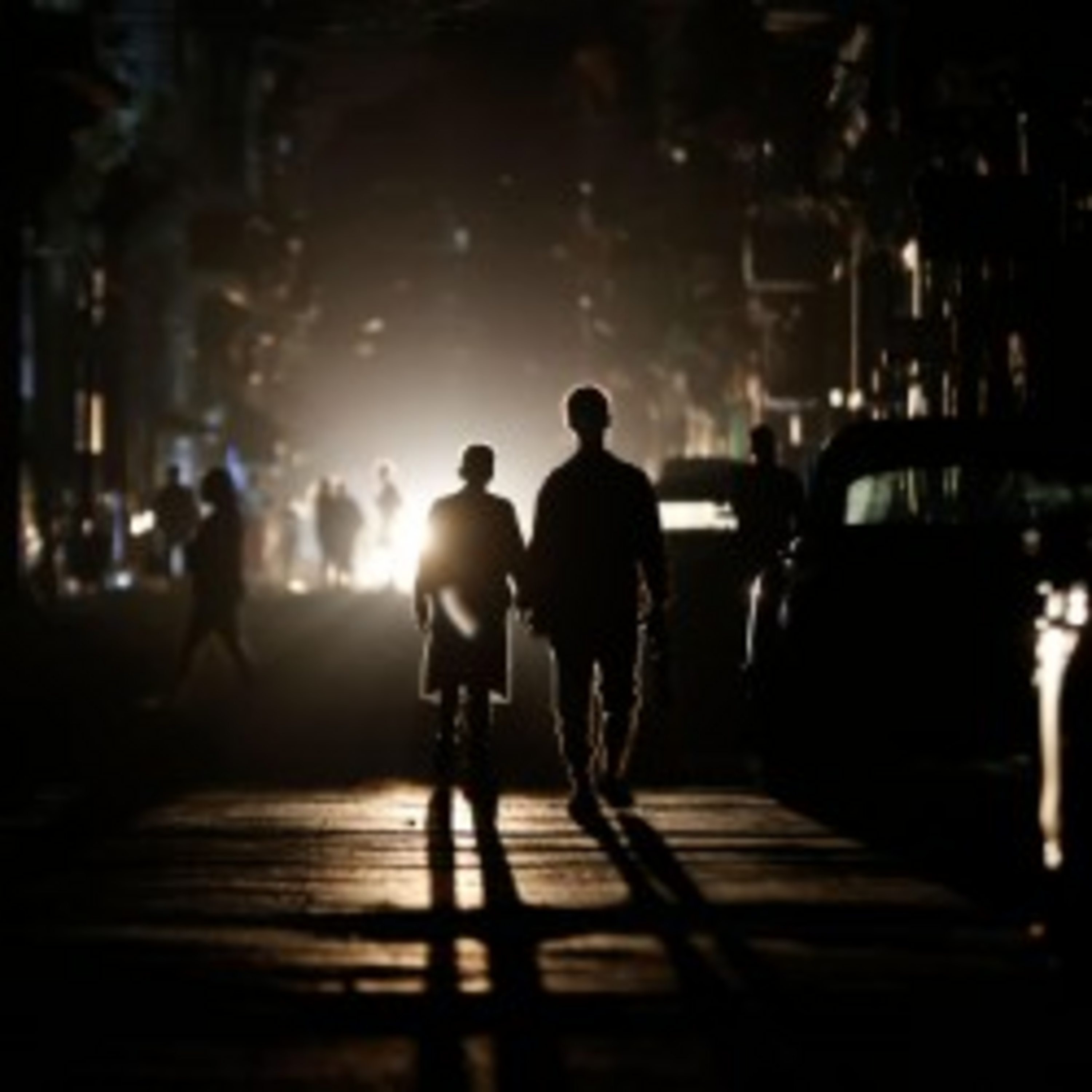
Pipsy podcast on suomalainen suomalainen. Nyt näitä viiltäämä mainoksen, nopassiita kuuerkodi ja käytässä akkea. Nopäin voittaa viiltäämä tuotteen ja se voit olla sima. It's a failing country. It's gonna be next, within a short period of time it's gonna fail. And we will be there to help it out. We'll be there to help our great Cuban Americans out. Who were thrown out of cuba, in many cases their family members were mutilated and killed by Castro. Elk cuba is gonna be next. From the BBC, I'm Asma Khaled in Langley. And I'm Tristan Redmond in Paris. And today on the global story, what does Donald Trump actually want with Cuba? And is this the end of the Caribbean island's almost 70 year old communist revolution? Asma Khaled, you're in Europe, you're in London. I'm in this swanky studio, yes. But Tristan, you're not here. It's really strange to be in London. Whether my London British co-host is not here. Well, I know I do apologise. I'm in Paris for a couple of days. But it's good to have you on the, I won't say the right side of the Atlantic, because there is no right and wrong. And as soon we will be in the same place, which will be great. So faster this British and American special relationship, you know. 100%. And I'm pleased to say that our guest today is another good friend of our show, Will Grant, the BBC's central and Latin America correspondent, and sometime Cuba correspondent, who's here to talk to us about Cuba. Yeah, it's really nice to be back with you guys. I always enjoy coming on. And you've just been in Cuba, Will, which is not something I can say for a lot of people. What was it like for you there in Cuba? This was my third trip since Nicholas Maddordel was removed from power in Venezuela on the third of January. And each one has been ten days or so. With each trip, one in January, one in February, now one in March, I've seen things get progressively worse. And we were starting from a very, very low base. We were starting from a base in which this was already the biggest energy and economic crisis the island has experienced since the end of the Cold War. And so it is the most acute crisis the island has ever seen. And you now see that so vividly in Cuba in every way imaginable. The obvious ones I think are just the lack of traffic on the streets. You know, the sense of a ghost town as you drive past completely empty closed petrol stations. There's no fuel being pumped pretty much anywhere. And people can't fill up their cars. And more importantly, those who have generators can't fill up their generators. And are having to turn to the black market, which is eye-wateringly expensive. So ten litres of fuel, the quarter of a tank of petrol in a saloon car, is $100. So it is really expensive. We've been hearing a lot about the blackouts, the power shortages. What does that mean for people's lives? Rubbish on the street corners because the garbage trucks can't come around and pick it up. The generalized sense of sort of desperation in that people spend their days trying to track down. Food with no public transport. Food prices, rising price, gouging, every which way you turn. In terms of the visuals, I feel like the most obvious thing is an emptiness, a quietness to a city that would normally have bustle. And of course, once the full nationwide island-wide blackout struck. And I was there when it happened. There's not a light on at all. It's just dark. It's completely dark. So there's a few places that have generators here and there. Few big hotels, obviously, are still running. Few private businesses and the constant word of generators. But the rest of the island is just completely. And then hospitals were on one of my recent trips I did go to hospital because a friend had a health emergency. So I helped with the car and we drove and I was in a hospital that was largely in the dark. They were able to take the case partly because it was an emergency. But it's a very surreal situation. The hospitals are struggling to keep the lights on. The hospitals are struggling to cope quite frankly. Well, the last time we spoke to you was back in January. And it was sort of in the aftermath of the US intervention in Venezuela when the crisis with Cuba was really kind of getting underway. And I just want to quote you back to you if you don't mind. There was a thing you said to us on January the 26th in our last episode. You said if Washington is successful in turning off the supply of Venezuela in oil to Cuba, then the island is in deep, deep trouble. Now, the oil supply is not completely turned off, but almost completely is Cuba now in deep, deep trouble. Yes, is the very short answer daily life for ordinary Cubans remains almost unbearable. Because there simply isn't enough fuel that was true even before Donald Trump imposed this near total fuel blockade. And that's the line that we've been calling it near total fuel blockade. We've seen reports this week of a Russian oil tank are reaching Cuba that the first since January. And this came after President Trump said over the weekend that he doesn't have a problem with other countries sending oil to Cuba. If a country wants to send some oil into Cuba right now, I have no problem. What is this really about? Because previously Trump has had a problem with other countries sending oil to Cuba. It certainly has. He's threatened tariffs against all of Cuba's energy partners if they sent crude oil to the island. So it seems very strange. It's a hard thing to answer. I feel like on one hand, President Trump is simply saying, look, one fuel shipment doesn't make any odds. This country is still in dire straits and I still have the upper hand. And in that analysis, he is actually right. One fuel shipment doesn't do much more than provide a very short term fix. It's about 730,000 barrels of oil on this tanker. And that represents roughly in a normal period of life, a week's worth of energy consumption on the island. I think his take is that this doesn't represent a meaningful lifeline. So it's fine. He can continue with his strategy. But it is strange. It did take me by surprise that they that they had softened on this particular issue when all of the noise up until this point was that none of that was negotiable that nobody should be sending fuel. Even if this Russian oil tanker comes through, I imagine some people listening to this conversation might wonder, you know, isn't the oil embargo in and of itself, which has been causing a huge strain on Cuba? Isn't it a sort of collective punishment on the entire Cuban population? What is your reporting suggest? It's very close to collective punishment. It feels hard to describe it as much else. It is policy that has been painted as designed to hurt the top leadership and designed to force regime, change or at least weaken the government so much that when it comes to the table to talk to the Trump administration, it does so from a position of weakness. But anecdotally, it's hurting ordinary Cubans more than anybody else. They are suffering. The retired nurse said to me, we're not living with surviving. But certainly the Cuban government is painting it as unjust as cruel as illegal. The Trump administration, as we know, doesn't see it that way. They see this as the consequence of the fact that Cuba paid for its oil to Venezuela through security services and that the actions of the Cuban government themselves have been illegal over the years and that they are justified in squeezing the island when it's down. We've heard Pete Hegset in terms of the Iran example talk about. We are punching them while they're down, which is exactly how it should be. I would say that the same thing extends to Cuba as one person put it to me. The place is drowning and the Trump administration has put its boot on their head. It's being squeezed in ways that I don't think any other president or any other administration has done to this degree. What did you see when you were there in Cuba? Are there protests and who are people protesting?
There's two things that I find fascinating. One is purely as a journalist. People are now talking to speaking out. For someone who's been there, you know, for two decades working as a journalist and always had to kind of try and tease people around just the government's talking points. Suddenly you're getting ordinary people who you stop in the street, you know. And one guy said to me, "I see no light at the end of the tunnel. This is getting worse and worse." It's beyond bad, says Raffa and Suarez. It's a political, economic and social crisis. But this has been decades in the making through bad policies. You just didn't used to hear that. And here he was, stopped in the street with a camera, pointing at him, and others as well have said these things. It's another headache, Adzi Daliya Mataran. Neither the old or the younger working, everything's on hold or coming to an end. So that's number one that people seem to have lost all fear of speaking out publicly. Or many people have lost fear of speaking out publicly and posting things to social media as well. The other thing is that by and large, the anger is directed more at the authorities in Havana than the Trump administration in Washington. Now I think that is because they don't see just the last three months and blame Donald Trump. I think there are people who do, obviously, and certainly the Cuban government, blame Donald Trump. But I think lots of people are saying, we were already in this boat because of the way that the economy has been managed, because of the lack of investment, because of the decision to build large hotels and not invest in the energy infrastructure, because the model's no longer working for us and they simply won't accept it. They won't change. They just tell us to double down. And it's easy for them who still have access to fuel, who still have lights on in their homes, their big homes, their air conditioned homes, et cetera. While we are the front, cold face of all of this are going under. So that frustration at the double standard of the political classes in Cuba is annoying people, is infuriating people. Did you witness protests, will? Are there protests? No. OK. There have been. I got there just after a protest in a central Cuban town of Modón on the island. In the town of Modón in central Cuba, tempas have already flared. 10 days ago, protesters set fire to the Communist Party headquarters following 26 hours without power. Several demonstrators were arrested. That's very, very rare. And we have seen a smaller protests, what are called "cassar olassos", which is where people bang their pots and pans in a show of defiance, because the whole neighborhood does it. So no one person is guilty. But it hasn't gone from cassar olassos to street protests. And I think, as and when we see that, then we'll see it really ramping up. And of course, the government has been in a way and of course, there'll be plenty of people who listen to this from the left position and say, that's simply not the case that the anger is just being directed at the Cuban authorities and not the Trump administration. Don't get me wrong, there is plenty of people very, very angry at the Trump administration. They see this policy, they see it as cruel, unjust, unnecessary and hurting the poorest. But there have been angry at Washington for the US economic embargo for six and a half decades. And this just feels like the worst possible expression of it. And what you do find is that there are those people who turn around and say, well, at least something's being forced, you know, at least this now has to get to the next level. Politics is confusing, governing is messy. But talking to each other about all this stuff, it should be easier. And that's where we come in. I'm David Green, the host of Left Right and Center, where we gather each week to talk about what's happening in politics from every angle. Listen to Left Right and Center from KCRW every Friday, wherever you get your podcasts. Available now on the documentary from the BBC World Service. For years Nadia Mersinko is Jeffrey Epstein's girlfriend. Prosecutors called her a potential co-conspirator. But she says she's a victim, and she's never been accused of any crime. I'm Tim Huehl, and as US lawmakers investigate women close to Epstein, I'm telling her story. Listen now by searching for the documentary, wherever you get to your BBC podcasts. Well, will, I mean, admirers of Donald Trump's negotiating prowess would say that what's going on here is classic Trump, turning the screw, ratcheting up the pressure and forcing your adversary to the negotiating table. And earlier this month, the Cuban president confirmed that Cuba is in talks with the United States. What can you tell us about the talks? Well, certainly we know that there are talks now happening. As you say, they've been recognized by the Cuban government. The person on the Cuban side who is the go-to contact for the Trump administration, we understand, is Raul Castro's grandson, Raul Lietdon, Gonzalez Castro. Now his father was very important in the commercial wing of the Cuban military, a group called Gayessa. And he is the trusted confidant of his grandfather, 94-year-old Raul Castro, who remains on this kind of issue, the final decision maker, even at his age, as at his advanced age and lack of a public role anymore. He was his grandfather's bodyguard and is very clearly trusted by Raul Castro. Raul Lietdon, who's known on the island as a Kangraeco, because he had a sick digit on one hand. So Kangraeco means crab. I love these details, I can't get enough of it. It's the sort of, it's very Cuban. If you're overweight, they call you Gordon directly. Very blunt. It's very blunt, very, very Cuban. So he's got an extra finger. He's El Kangrajo. Raul Castro has a son who's also been involved in negotiation. We understand who has a lazy eye and it's called the Twerco. So he's a Twerco and El Kangrajo. What does El Twerco mean? It means lazy eye. Oh yes. Wait, so these are all Castro member families who are leading the talks on the Cuban side, not the president himself. Well, that's crucial. But my question is whether or not they're leading the talks or they're simply messengers. If Raul Lietdon is simply relaying messengers between Raul Castro and Marco Ruyo, and that is the route that is happening. El Kangrajo isn't seen as anybody who could really be a major negotiator here. He's almost seen as a bit of a playboy, actually. He's interested in private business and he hasn't had a political role. He's been his grandfather's bodyguard. And now here suddenly he is an important figure in terms of the negotiation in this extremely complicated moment. But you're right. It is coming directly from the Castro's and not through President Miguel de las Canelas, as far as we know. The suggestion has been from some reporting in the New York Times and elsewhere that Miguel de las Canelas seen as an obstacle and that Donald Trump wants him removed. Have you heard that, Will? Only in broader reporting. If you speak to the Cuban government on this sort of stuff, they'll deny it because they need to show as united a front as possible. The truth of the matter is the civilian government at the front of the Cuban regime is not the decision-making body. It still goes back to Rao Castro, even now on something this sensitive. And joining me now is Deputy Foreign Minister of Cuba, Carlos Fernandez de Coseo. Welcome to Meet the Press, Mr. Foreign Minister. Thank you for having me. Now, the Deputy Foreign Minister Carlos Fernandez de Coseo was on U.S. television network recently. And he denied that President Trump's suggestion that he could take Cuba and that he could do whatever he wanted with it was in any way on the table. I can tell you in conversation with the United States and in dialogue with the United States, the nature of the Cuban government, the structure of the Cuban government, and the members of the Cuban government are not part of the negotiation. That is something that no sovereign country negotiates. He laid out a bunch of red lines, including the idea that the personnel or the structure, the political direction of the Cuban government, was on the table in any shape or form. He was asked, "Are you saying that regime changes off the table?" Absolutely. Will, when I saw the reports that the Trump administration was in talks with Cuba, it was confusing to me, in part because I don't have a clear sense of what the Trump administration wants out of these talks. If we look at Iran, for example, we knew that there was talks
on the nuclear program and later became about the ballistic missiles. I am not clear what the Trump administration wants out of the talks with Cuba. I mean, I still don't really have a clear sense of what he wants to do in Cuba. I second that because we spent quite a lot of time on the program talking about, you know, the lead up to the Venezuela intervention. And there, you know, there are the world's largest oil reserves, which is obviously going to be kind of an elephant in the room if not the actual direct reason. But what is the attraction? What's the interest in Cuba? I think it goes something like this that Donald Trump wants to be able to show victory or a form of victory, a win to Florida. He does that potentially by removing Miguel Diaz Canal from power. That would look very similar. If he holds up Venezuela as a successful model, what did it involve a sort of surgical removal of a president only to be able to work very well with his replacement and therefore complete control of a very profitable industry supposedly towards a point where there'll be elections would be enough to saint, if you like, the Cuban American population in Florida. But if the quid pro quo is therefore control of something key in Cuba, the only one, it's not nickel anymore, it's not sugar, it's not tobacco, it is tourism, beachfront properties along the Caribbean in Valedero, the main beach resort. Now, that is the motor of the Cuban economy. It's currently very depressed and of course, everything is very, very difficult at the moment. So tourism has had a huge hit. Nevertheless, it is the thing that generates foreign currency reserves and I struggle to see how Raul Castro would sort of hand that over to the Trump administration after 65 years of a revolution built on resistance to Washington. It would be such a sort of capitulation that I can't see how that is negotiated. So I agree, I don't know what Donald Trump wants out of this in terms of a final result, unless that final result is the one that they've talked about publicly, which is basically the total unwholesale change of the Cuban government and the economy, which is exactly what I mean, but that's wild because then you're in talks to essentially negotiate yourself out of existence. Why would the Cuban government be in talks to do that? How can you really talk yourself out of that? Exactly. Turkey's voting for Christmas and I don't understand how the Cuban government can find some kind of third way of doing this that would be acceptable in the other direction. Now, they could put on the table some kind of major economic changes and then the removal of certain key characters that might be sufficient for at least the oil to start flowing. But we'd have to be talking about kind of a Vietnam style model where basically communism is in name only and not in practice. Well you mentioned Marco Rubio and he's an important player in all of this as neat because he's of Cuban heritage. He's leading the negotiations on the US side if I'm not mistaken. Will Marco Rubio insist on regime change in Cuba? Even if that's not what Donald Trump necessarily wants or has a huge interest in, even if that's not Donald Trump's principal priority. This is why I like coming on the global story. You ask the proper questions that truly matter and we don't have space elsewhere in short conversations to ask around it. That really is crucial and I really think it is important. I can't tell because of the way that he has built his DNA, his political DNA on nothing but complete regime change was being acceptable. I'll tell you the problem with the Cuban government is not just a communist dictatorship, it is an anti-American communist dictatorship. Those are his red lines. Those were always his red lines as a senator. America is prepared to outstretch its hand and work with the people of Cuba, but we will not. We will not empower their oppressors. As they head of the Foreign Affairs Committee, the Senate Foreign Affairs Committee, whether it's in six months or six years, Cuba will be free. And now here he is in the most important Foreign Affairs position in the United States with the opportunity to not just shape policy but to make policy. And he seems to have been okay for now in the Venezuelan example with the plan to work with Delciro Rodriguez at least for the time being we understand they talk. He apparently sees a bigger picture there and is happy enough to go along with that and is clearly not about to cross Donald Trump when he has presidential aspirations of his own we understand. So I think there is a difference with Cuba because of the personal nature of it that he might push harder, but we've already seen a slight softening of his language saying there must be change I think he said, but he doesn't have to come from us. Will you make a public commitment today to rule out US regime change in Cuba? Regime change? Oh no, I think we would like to see the regime change. We would like to say that's a mean that we're going to make a change, but we would love to see a change. There's no doubt about the fact that it would be of great benefit to the United States if Cuba was no longer governed by an autocratic regime. Which is an odd line to see mean that they can create the conditions whereby the Cuban people would rise up. Will they be creating a situation where there's such a humanitarian catastrophe that it's sort of beginning to get comparisons with Haiti and things like this where there's cholera outbreaks and things really get very, very bad. And then Washington is forced as it were to step in because they have no alternative. I don't know what his red lines are. I would have previously said nothing except the decapitation of a Castro government, a complete removal and working with something that simply doesn't recognize that. But they've shown themselves to be more pragmatic because they don't want to inherit these basket case situations where Washington has to sort of run it for years and years and years and years and years. And I think they're hopeful that that won't be the case in Venezuela if they sort of ease into it with like-minded people of whatever kind of political persuasion they are if they can plot a path with people who are prepared to work for them for the betterment of their own wealth and with making things better under a Trumpian vision, then that's fine. Will that apply to Cuba with that much history of a revolution? It's that much older. It's that much more of a personal question to Marco Rubio himself. It's going to be fascinating to find out, but I think we won't be that far away now from finding out that, you know, that there has to be some kind of movement in due course. I think everything's been sort of pushed away because of Iran, but if Iran ends on some level, then I wouldn't be too surprised if we see Trump's attention turn back to Cuba. Will, thank you so much. Will, thank you. It's always a pleasure. I'm always happy to come on. Thanks for having me. That was the BBC's Will Grant who recently got back from a reporting trip to Cuba. If you appreciated our episode today, then I've got a favorite ask. Could you take a moment to review the show or read us wherever you listen? It really helps other people find us. We love hearing from you all. So if you have any questions or ideas for future episodes, you can drop us a line by emailing us at the
[email protected]. And a quick recope where we go. Here at the global story, we bring you one story every day where the world in America meet. And for the very latest news headlines, listen to our sister show, the global news podcast, you can find it wherever you listen. And that's it for today's episode. Our show today was produced by Viv Jones and Aaron Keller. It was edited by Penny Murphy and mixed by Travis Evans. Our digital producers are Matt Pintis and Tom Beige. Our senior news editor is China Collins. And I'm Asma Khaled. And I'm Tristan Redmond. Thanks as always for joining us. We'll see you again tomorrow. Cheerio. Politics is confusing. Governing is messy. I'm David Green, the host of Left, Right and Center, where we gather each week to talk about what's happening in politics from every angle. Listen to Left, Right and Center from KCRW every Friday, wherever you get your podcasts.
 PodcastTranscript AI