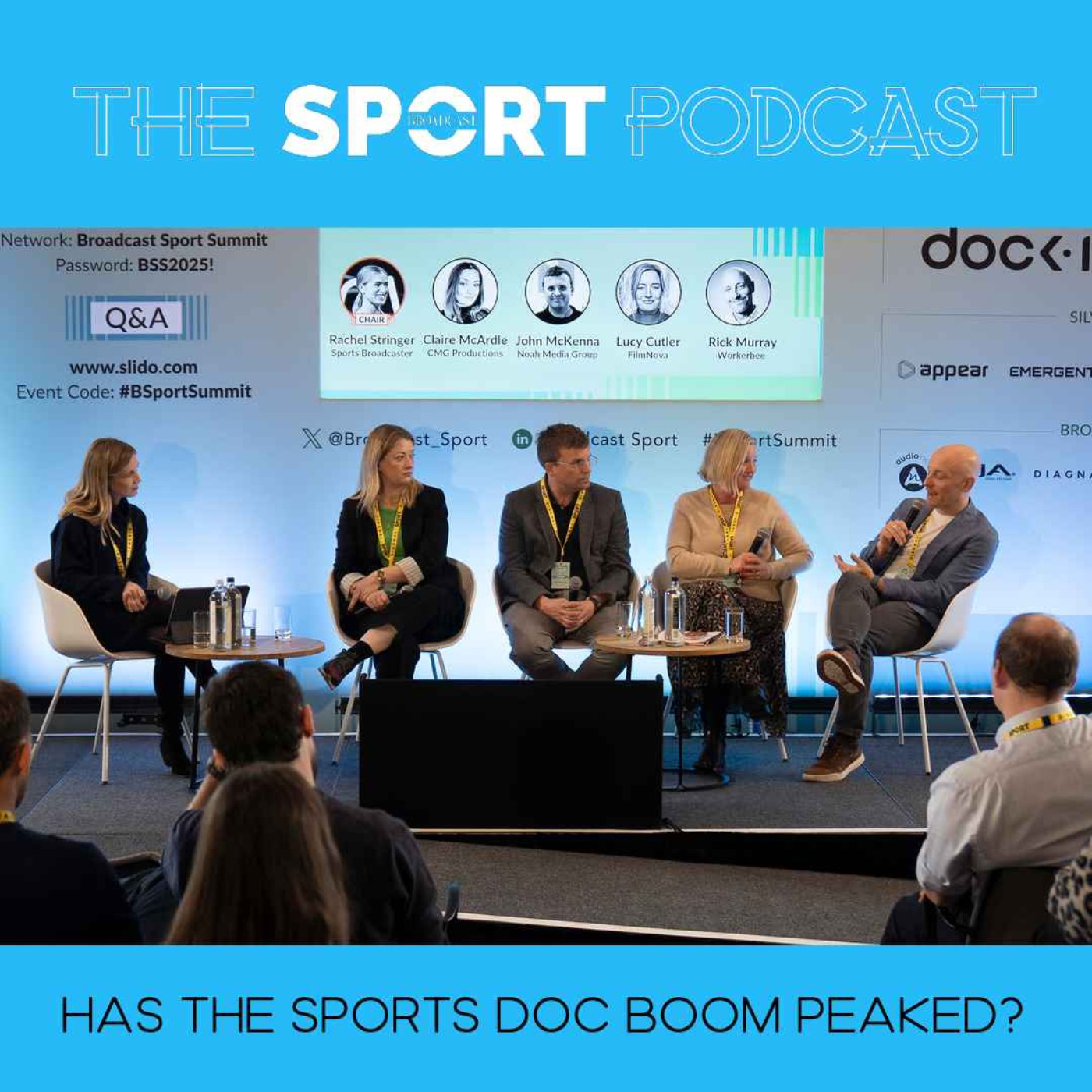
The transcription captures a panel discussion on sports documentaries, focusing on authenticity, originality, and the evolving nature of the genre. Panelists expressed concerns about the risk of sports documentaries becoming formulaic and emphasized the importance of telling compelling stories. They discussed the challenges of getting documentaries commissioned, including the preference for big names and the struggle to maintain editorial control when dealing with high-profile subjects. The conversation also touched on the nostalgia and escapism provided by well-crafted sports documentaries, highlighting the value of authenticity and raw storytelling. Overall, the panelists acknowledged the changing landscape of sports documentaries and the need to continue innovating to engage audiences while staying true to the essence of storytelling.
Transcription
7279 Words, 38379 Characters
You asked what are the documentaries that have stood out in the last few years. It's documentaries that feel really authentic, that feel like people are telling their true story, that are revealing something new, and just trying something different being original. That was no immediate John McKenna, talking on the Has the Sports.Boom Peak session at the broadcast sports summit 2025, which was held at the Emirates Stadium in November. You can now hear recording of the full speaker session from this event. This is Has the Sports.Boom Peak fatigue versus demand, where we're going to explore sports documentaries, of course, and discuss has the golden era of sports documentaries run their course as formats start becoming maybe a little bit formulaic, or is the genre just still evolving? And we'll also be looking at how to stay relevant and looking towards the future in terms of sports documentaries. A lot of them have been made by our expert panel here who are introduced to you now, and I'm going to introduce each individual and some of their prized documentaries as well. First up we have Claire McCartle, co-CEO of CMG productions, and a few productions that CMG have made are Brazil 2002, the story of the Penta winning Brazil World Cup team for Netflix Brazil, the award-winning, the footballer, his wife, and the crash, and death in the heartlands, investigating the murder of three female runners in the elite Kenyan running community of Itan. We've got John McKenna, co-founder and CEO of NOAA Media Group, NOAA have produced so many award winning documentaries, and I'm going to just name a few of them. Fourteen peaks, nothing is impossible, Emmy nominated, and Netflix most watched sports documentary ever on its release, Hatton, the documentary on the incredible and so tragically recently passed Boxing Legend Ricky Hatton for Sky documentaries which was BAFTA nominated, Finding Jack Charlton won the Broadcast Award for Documentary of the Year in all genres for the BBC, and most recently football's financial shame, the story of the V11 which has a prime time slot on BBC 2 this Autumn, and was raised in the Prime Minister's questions the morning after its broadcast. Now we've got Lucy Cutler, creative director from Film Nova, whose latest commission I actually got a little peek at, it's earlier on in the year, Torval and Dean, the last dance, which will be streamed on ITVX and broadcast in their prime time slot on 9 p.m. on Christmas Eve, so set you kind of that one, and Rick Murray, CEO of Worker B, one of, actually I'm going to say two, because recently ones come out last night, two documentaries that Rick has produced, one is about the golden age of British Boxing, four Kings which is on Amazon Prime, that Peter Crouch film for Amazon, plus the U-Banks, like Father, like Son for BBC 3, which came out, Rick just last night, and it did pretty well, didn't it? It's rated Doc on BBC 3 this year, which is great, low threshold, but it beat it. Don't say that, so we just kind of mentioned how popular sports documentaries are at the moment, and how many we have, so Claire, I'll kind of start with you, but this is open to the entire stage here, have we heat, hit, I'm going to say the peak of documentaries, are they becoming too formulaic? I think that in certain areas of sports docs, I think we have seen a huge amount of follow-dogs. I think that definitely drives us to survive, set a standard, and that has maybe now across the board become slightly more formulaic in terms of the follow-dogs. I think last dance is as well, interesting, because I think that was, in terms of the golden age of sports docs, and that was five years ago now, I think that set a real standard that a lot of us who make sports documentaries, we're looking to replicate. But I think we have reached a point where we're maybe not asking the right questions around why are we making this sports documentary? Is this an interesting enough story? Is there an audience there more broadly? Excuse me, I'm coming back at the cold. Is there an audience there for this? Are we asking sort of deeper, more broad questions? Are we applying the rigor that we would apply to any other kind of documentary to the sports documentaries that we're looking to make? I mean, I think sports documentary, the golden age of sports documentary, which was the panels that I was on three, four, five years ago, I would say we've moved through that. I think it's my own mystery response to that. But I think there's still an opportunity for brilliant stories to be made. I think the genre has changed massively in the last few years. I mean, I'm sort of repeating a little bit what Clare said, but I think there's been a lot of quite similar follow documentaries in the last few years, which obviously are successful. So there being commissioned, because there's such competition for eyeballs and so many platforms, I think. And I understand why commissioners are going for big names. And so that automatically brings an audience. And so there's been a combination of follow docs and big names. And around that, trying to get a story made that's just a really good story is really difficult. So I think that's been the challenge for the last few years, I think. So my answer would be, has it peaked probably in terms of the scale of it? But I still think the quality stories are out there. And I think it's about fighting to get those stories made. And I think that I think with the changing landscape, I think there will be less, there has been less made. And I think actually that might be a good thing. Because I think quality will come to the top again. And I think actually in the coming years, what I hope will happen is that there will be a move back towards actually, it's not just about big name, it's not just about access to a league and not any depth. Actually, people want to tell really, really good stories. And I read an article yesterday, one of the commissioners on, I think it was a Disney plus commissioner said that they want actually to start looking at ordinary people, normal people again. I don't think it's going to be the end of the celebrity dog. But actually, I believe it when we see it, but hopefully that allows filmmakers to actually get just really good sport stories told again. Because I think that's what sports documentary peaked. And I think maybe hopefully that those opportunities will come again. I think just to carry on from what you were saying there, as long as there's still sport, there's always going to be a sport documentary of some kind. There's always a narrative going on around sport and there are always interesting subjects. But the Golden Age you were referencing five years ago, that was COVID, like last dance came out in COVID and it was a different audience and it's so so much evolved today from where it was then. I don't think they've peaked, I think, like you were saying, they've evolved. And I think it's just the beginning of that evolution. I think everyone sitting on this stage hopes that it will return to the days where you can have a really strong story narrative. That has, in my experience, been harder out there with commissions at the moment. Sort of the story you thought, oh, well, no one's heard that and I was told that that's fascinating. Has had a few responses of, yeah, it is fascinating, but it's not such a well-known person and we're not sure that's right for what's on our sort of current slate. So I think it'll be interesting to see where that goes in the next few years and also with the sports stars themselves having a lot of their own content. I mean, half of them are followed around by a content team or for their own. So I think there's a big job for everyone who wants to make sport documentaries to really think about which direction it can go into. I think understanding why there was a peak. If there was a peak is, is a good exercise? Do you think there was a peak? Has it been the peak? Yeah, I remember I was at the BBC like 12 years ago when Senna came out and I was on the development team there and I remember saying to my bosses, this is really great. This is really good quality feature doc. It's got a universal story about a perfectionist who died in the pursuit perfection. That's what Senna is about. It's not about everyone racing. Is there something we can learn with that? Maybe we should be doing more sport stocks and they're like, no, two niches. No one wants you sports stocks. That's not two sports stocks. And then fast forward a few years at a combination of, as Lucy said, we hit lockdown. Everyone had a thirst for sport and some more great quality doc series came out like the last dance. But at the same time you had Netflix and Amazon wanted to get young audiences on their platforms and probably the hardest to reach young audiences, young men. They watched less TV than anyone. They game and they watch sport. That's about it. So suddenly you had this value placed on sports stocks that no matter what the story or that it was just access to people that could maybe get some young men on to a paid platform and get them paid in a subscription that just inflated this moment with a confluence of lockdown and the streamer wars and and everybody wanting to get this young audience to start subscribing. And then I think there was just one point in oversupply. It just saturated it and pretty much anything would get not anything. I mean that's ridiculous. I wouldn't be here if it was anything out of like, you know, cashed out ages ago. But a lot of things were getting commissioned during that time and that's when when we first moved into, you know, doing proper sports stocks with Bruno versus Tyson just on the launch of sky document trees. It's like the perfect first stock for them to launch the channel with. And then kind of things just escalated from there, but I think our heart in our hearts we're just dot makers. So you could rename this like have docs peaked because for us it's just we just want to sell docs. Beckham's a love story. It's not it's not it's not football doc. It's a doc about about David and Victoria and their trials and tribulations and what it's like when one of them is super famous and you know, we all know the ups and downs. So so we're always looking for that and like the U-banks that we put out last night on BBC three, it's about a fight. It's called light farther light son. It's about a father and son relationship and it got a really strong young male audience and hopefully they saw something even though it's a bit of a bizarre relationship formed around box at two professional boxes. There's something in there for everyone that's about parenting. So I think that going forward now that's sort now things have sort of softened a bit. Just finding great stories within sport and sport gives you that little bit of caches like people know the characters. They follow the stories already because they read sports news and they watch live sport. It gives you that little leg up when you're selling the project basically. And actually the U-banks documentary Rick is maybe unique the fact that we're building up to the fight week as well. So it's come out at the perfect time and you were talking to me earlier actually longevity wise question mark because it didn't get to go on a streamer but this week everyone's now really excited about that story heading into a fight week. Well BBC get five TXs and they're using them all this week. So we delivered it at two o'clock in the morning on Sunday and it was out last night on BBC three it's out tonight on BBC one it's on BBC three again and BBC one after match the day on Saturday so that people can watch it again after the fight. So they clearly saw a moment in the schedule there to capitalise on something but again it's not it's not a doc about boxing it there's about 30 seconds of boxing in the 59 minutes. We're all basically really nosy and want to get into people's relationships and see the back stories and that's what all these documentaries basically do. I want to carry on from what actually I think Lucy mentioned how difficult it is it now to get commissioned and what are the commissioners looking for and maybe over this year 2025 what documentaries have been successful in your guy's opinion and haven't been too formulaic we're talking about the follow on docs the formula kind of what stood out as a few questions. I think to the first question around how hard is it to get commissioned I think across the board again with as a documentary maker it's probably the most difficult it's ever been and sports docs aren't in any way you know sort of cuddled away from what's happening broadly in the industry where you know at the top level a whole series of mergers and acquisitions and uncertainty that's flowing down a chain and you know you might be talking to somebody about a documentary on Thursday and you wake up on Friday to the email from the US to say it's been lovely working with you and I've packed my box and left the building so I think it remains very difficult I think they're at the moment still very much leaning into wanting the most famous face the most famous character without maybe the depth of questioning around whether the full story is there I think I think it's really difficult to get those maybe documentaries that hold power to account or and I think John can probably talk more to that at the moment than I can with with the V11 but but those docs are increasingly difficult at the moment and I think part of that is because we've had this whole slew of docs where where maybe those people at the top of sports are very much involved or the characters are very much involved have a degree of sort of creative input that's for example well not necessarily Beckham I'm thinking more in terms of how do you how do you take a doc that's exposing something that's happening within an industry to a streamer who is very closely tied in with that industry and those questions that as sort of pure documentary makers you want to be able to ask that are difficult questions we found that with death in the heartlands in terms of where it ended up sitting that was an international doc that we that we made it didn't find a home in the UK but it went out and sort of you know internationally and did very well so yes I think I think it is I'd be lying if I said this is a really easy time period to get sports documentary away do they just want big names John is that what when you go and sell a documentary now or try to sell a documentary as a commissioner if they're not global American superstars do they just say a no he's looking at me as if yes sorry that has been a response or two if it's a UK name it needs to be front and back page known or appear and also appeal into the US which is difficult right there's there's not a big list that take that box so you have to be more creative about it we've got a couple of films in production at the moment which we've got a UK we've got some UK money and we've sold it into territories around the world so then you so then you go right okay we still need to try and get a budget that's decent to make it quality so a UK sale and then maybe two or three of the European territories come in as a pre-buy and then you know you can still get tax credits for films and maybe a little bit of equity but if you retain the US and you retain all the territories then there's a business model it hopefully will be quite attractive but the but the big big name just still I think you know the easy route to get a commission if you can secure those big names but then as Claire says then then then there's that balance of editorial control you know do you want what you asked what are the documentaries that have stood out in the last few years and I always feel like it's documentaries that feel really authentic that feel like people are telling their true story that are revealing something new and just trying something different being original like it being vulnerable and maybe there's part there's elements in the film that you know you have to fight to get in the film and you have to have a relationship with the with the sports star to go this is in the film and it's important it's in the film because it shows you as a vulnerable person or it shows you as a there's a real person and people relate to you more so I think I think again it's about trying to find big names trying to find good stories and then and then also I think today just going out and saying I want a commission for X amount straight away from one streamer or one broadcaster it's still possible but often it's not that easy so you have to go and be a little bit more creative about how you fund your project I guess authenticity is key I'm going to mention you guys both in this in terms of Tovelandine and probably Peter Crouch as well you can't get more authentic than Peter Crouch and Tovelandine got this authentic kind of heartwarming story that we've all kind of grown up knowing about yeah and I think that what you have when you've got two people as well known as Tovelandine you've you've got to offer something more than I think people know them but maybe don't know as that they have a very professional image so that was our battle with that particular documentary it's finding those I mean we were talking before that there's a moment in John's Jack Charlton documentary where he's fishing and it's an incredible moment where you feel that's what documentaries are you know that's why they'll always be the most superior form of content creation because you spend all that time leading up to a moment like that and with Tovelandine we were there for hours and hours following them they've got had alive their skills skating well into their 60s and we followed that tour and it was only through putting in all those hours of relationship building that we were able to get to that point with them and you know the the extra content capture that we were talking about is has its place and is fantastic but perhaps that's why documentaries I don't think will ever die because I think the skill of a documentary maker is to find those those parts that maybe they didn't even know they wanted to talk about and it would Toveland something like Tovelandine and Crouch there's a sort of nostalgia that there is a type of sports doc but when you get it right it's nostalgic and it's escapist and you know the world's pretty shit at the moment so spending time with people that you love and see and seeing their lives at the first time we worked with Peter was a doc series for Discovery called Save Our Beautiful Game where he was he was installed as director of football at Delic Hamlet they were on the verge of bankruptcy and he tried to help them and I remember when I first met him I was like oh my god he's actually just the same person when the cameras are off well I was I don't know what I was expecting but but the panel will know that and you guys in the room will know that there are a few people who don't kind of at least like you know sit up a bit when the camera starts rolling or change change that just give you a slightly more polished version of themselves but he's just literally the same the same guy and I think that authenticity that comes across and that that just rawness and I like to think as well that in any of you please watch the U-Banks film we'd need need need the views but they are just completely raw and honest in in that film they are they just go there and that no no stone is left and turned in terms of what what they talk about and I think that that is so important and and that is why we find ourselves on panels about has the sports doc market peaked it's because some some docs don't don't do that they're too polished they give too much control to the to the people in the doc perhaps or the producers haven't had that fight that John's talking about to keep things in and then you end up with something a little bit watered down and then here we are discussing the potential demise of the genre and just to add to that I think I think authenticity and that relationship that Lucy talked about is really important but I also think originality at times and I think like in the last few years that the docs that you know maybe are not uber like important human subjects but when I remember when Rex and landed and it felt so different and it was a follow doc and it was you know we've seen drivers survive and we've seen all different sports Rex and landed on which Hamlet series came before that by the way copy does there you go there you go policies but I thought for me that felt so fresh and it felt so different and and and I got recommended to watch this weekend which I watched it for the first time was it there's a Jerry Jones Dallas Cowboys documentary on Netflix and and again and just the way that shot right at the studio and this is tech this screens with like the Texas background behind it and and for me like there's someone who's trying to make films and trying to bring new things it's it there's also like it's been original it's like like let's try and do something different but get access but then with that access let's not just copy what's been done before let's like let's do something that's really fresh and like the Jerry Jones thing it's like I haven't seen interviews shot like that before I'd literally love that I was like oh my god yeah I'm going to watch it I mean someone's trying something different it's brilliant I think I that's where I do think there is there is about to be a shift I think because things have got quite formulaic and and and for a long long time the message was always you don't want to see just a little talking heads and a little of archives like how you don't nobody wants to tell and then and then and then documentary you want to think about how can you do something as John said really creative with with what you have with the access you have the brilliant way that you used Jack Charlton's archive of notes in in in the Jack Charlton film that so it does feel that there's a moment now to make it to make a bit of a shift and the next person or the next documentary that that delivers on that and so that's what Senna did 15 years ago was we didn't see any we didn't see any of the talk you were entirely constructed from archive and then we had lots of films that were entirely constructed from archive but I but I do think we're at a moment now where we can and it's sort of push on that creativity and think about how we tell the story in a different way in a more creative way whether that is to do with how it's short or how archive is used or but but it does fail if we if we don't start making those shifts we we are going to sort of see more of a decline if we're just doing the sort of ad nauseam approach to it we'd say that one of the problems so a bit close is that the commissioners being maybe commissioning a bit less or having more ideas about what they want on their channels can sometimes do you think it might come to a point where we're sort of almost condensing down the creative that we've gone with and we wanted to do in order to just get it over the line and therefore it's like I'll attach the name or you know attach the the access and I think it I don't think it's quite right yet because I think you're right that's what we want to go out and make something really original but it's hard to get you fit in the door with that sometimes still and this is the problem is the whole industry you know the traditional TV industry and I include the streamers in that is is shrinking it's not growing but sport and live sport is pretty much the only thing that people still sit down and watch on on their good old fashioned TV so it feels to me like that that is an opportunity for us to keep making great you know companion documentaries but that open up your eyes to the work like we're always asking ourselves what is this actually about you know if the answer comes about oh it's about boxing though it's not it's not about boxing it's not about football and that's good for documentary in general you know they they they're good bedfellows documentary in sport and I think they they always always will be but when when we're asked for big names that is because all these networks are struggling and a sport star with 10 million Instagram followers is going to give them a good night no matter how bland the documentary might be if we get to see their as you were saying something before clag get to see their beige kitchen then then you know they will they will get a certain amount of guaranteed viewers so that it's our job then to combat that and go well let's let if we've got this opportunity let's make sure that it's good Claire I'm actually in the come to you on this one because you were talking about the shift and you think there's going to be a shift happening I think a lot of the time in this industry we talk about a shift you go our content creators is it get happen on YouTube is social media going to take over in terms of sports documentaries is this going to be the case and I also wanted you to mention a little bit of how social media is actually elevated some of your documentaries and so so I am a huge believer in you make what's right for a particular platform I don't you know I think the type of long form whether it's archive led or retrospective docs very much have a place on your streamers on your TV channels but how an audience on on TikTok or on I mean YouTube is now also a long form platform it's you know that's that's just that's just sort of fact but how you know if those are places for fandom or more niche interactions or so there is a I don't think there's it's necessarily sort of a binary one of the one of the other but I think if you go into it thinking I can take what I make over here and shoehorn it into this platform or force my way into a fandom that's doing that's doing its own content creation you're you know you're you're onto a loser so so I think I think that that interaction with sports will be led by what an audience wants on those platforms and we have certainly seen on so to two of our documentaries that there that sort of were I think commissioners called them sport adjacent which is a slightly annoying phrase but but the the J. Lloyd Samuel doc football wife crash and then also football fraudster both both of those generated a huge amount of discussion on TikTok with people cutting up the clips putting them on to having a conversation around them then a conversation in the comments then there was a question about where can I watch this then it was sort of driving an audience sort of to sort to view on the long form version we had to do a take down on football of fraudster because somebody cut the entire thing up into chunks and put it on TikTok and I kind of wanted to leave it on there but our distributor was like that's going to be an issue because I'm trying to sell it to streamers internationally but the viewing numbers were like off the scale in terms of the numbers of people who were who so I think there is a way to think about for the right sort of content what does that look like on those platforms but not trying that was that was a natural thing that we did not seed those clips I wish I could claim that I had we didn't see that that was an audience going I want to I know this is something that my community that I have on TikTok are going to want to discuss and share and this is going to get me views a lot of clear documentaries have the shock factor I'm just going to say that's why I think they get clipped up and go viral big fanically yes um Rick I'll actually come to you about this one um we know a lot of athletes themselves are trying to come and create their own documentaries is this proving difficult and problematic for yourself resisting something you're actually actually actively embracing now because they are the names and you just have to facilitate that I think it's good I think any any success with content is good for us because we can then try and replicate it in TV we just announced a deal this morning with yards who are talent agency who look after athletes and help them with their own content and the the reason we've done that deal is to try and get first dibs really on people who are really growing in this space so as I say you know within a time where lots of content is shrinking online content athlete driven or created content is also growing and of course there's there's a whole exciting part of all sport which is their women's sport as well which is exponentially year on year we're seeing growth in football in rugby and so getting in at the ground floor with some of those talent relationships that in in two three four years time are going to be the next you bank so the next Peter Crouches is is is something that we just have to do because as I as I said a minute ago there is always going to be demand for for sport stocks and we've just got to keep looking out for the next generation of talent and that probably is going to be talent that's already making their own content in this day and age Lucy you know this is like film Nova a kind of working with now it's actually a new appointment that maybe is helping with these really active relationships yeah well repeat us with us here so we joined us from channel four just to help you know well lots of parts of our business but partnerships and brand associate associations were really important for us going forward with funding you know looking for you know we are still doing a lot of work with the threshold channels and often we need to go there with some plans around funding so yeah that's definitely part of our business model going forward that's that's really important and we we do we're not a specifically just a document makes documentaries we have a lot of life sports so then what we're trying to do is think about being clever about just exactly what you were talking about so we've just won some work recently it's not been announced yet but it is in women's sports and so the first thing we've done is sit down and go well how can we maximise the excellent people that we're going to be working with as talent you know what they've all got ideas every one of them and they're all fascinating people so that's how we approach it really it's kind of like let's maximise what we've already got and then try to sort of push out into longer form content with them in terms of I'm just looking at the clock in terms of sports documentaries and the next step for athletes broadcasters production companies like yourself where are we looking obviously Claire you said you know we feel there's this shift coming but what do you need to do to stay ahead of this curve and you know other formats are going to change drastically all of you this question is what should we be looking for for the future because I feel like we've mentioned 2019 was an all kind of really kicked off and now we're going into 2026 and I'm sure it'll look very different from the last dance I think there's one of the points that that John made earlier about you know from a business perspective looking at sort of internationally how you tell stories I would say about 70% of what we we make originates from outside of the outside of the UK or as for international partners and I think there's a whole sort of wealth of stories there to be told in audiences that will engage with them so I think sort of that's certainly an area that we look to and look to grow as well and I can't help but sort of be on an optimistic side be a believer in the fact that a good story will land if you're telling it in the right way and and you know we have I'm sure we all have some of those like sitting on our development slates that were like do you know what I'm not I'm not I'm just going to sit on this because it's time it's time will come and often and often it does but I think as as as documentary makers as far as we can while also commercially still be able to run a company is is is is trusting our instincts around what a good story is and but also not not being forced into a place where we we feel we have to we have to see done on what what the core tenants of making a good documentary are which is what is as Rick said what's what's the actual story here and sort of be and and carrying that real objectivity through because that then gets you to the authenticity piece and that's what always connects with an audience. I think yeah I'm optimistic and quite I think you've got to be excited about about where it's all going I think I think I'm one of the real beauties about documentary and especially when you get the access and the trust and that you spend time with the subject that you're that you're documenting is you you get a lot of material and and a lot of it doesn't make the edit and I've always always thought this about films and like like years ago when we made our Bobby Robson film we went out and and and made a load of content and we I went out to meet Newcastle and Ipswich in the FA and Barcelona and went to meet them all and said right we're going to make we're going to make content for you to put on your platforms and drive people to the film and we did it and it went really well and then we stopped because the streamers came in and it all became about the big deal and trying to get the big deal and 14 peaks was our biggest film on Netflix and and and the distributors are often hold the material hold the material don't see it out and I think that's changing now and I think that's what's really exciting about about the future is that I know with our library of films we've got like you mentioned the Jack Charlton notes we've got all these notes that Jack wrote throughout his career we've got all these interviews with the Bobby Robson film we spent an hour with Pep Guardiolo we spent an hour with Ronaldo R9 we spent 45 minutes with Merino, Gaza, Linnaker, Shira like those interviews have never been seen and like they're sitting 30 seconds here and there sitting on a shelf right so so I think that I think that for me and it's working out the commercials which obviously you've got to do but I think embracing where where the different platforms are going where you choose going where social media is gone and and capturing for those platforms as you're making films obviously but I think I think you can be really creative in terms of the assets you you you have and you can actually drive people to your film and I think that for me is a bit obsessed with it at the moment in terms of what that might look like but I think that's what's really exciting about about documentary in the future because you are not just going to shoot in like a drama you're shooting a lot of material and a lot of it doesn't make the film but oh my gosh if you've got that access and you've looked after that access you've got some unbelievable material you can use yeah I'd say the same I'd say be creative about your assets and be creative about opportunity sports are incredible vessel and it's a never ending narrative so I don't think the sports that will ever die I totally agree I mean there's been times over the last couple years I've actually just thought that will thank God for sport because it does just create those stories and this is just storytelling at the end of the day and going into the future it's going to keep creating amazing stories and when you look at what you know as you can criticise it as much as you want for being very commercial but drive to survive I did a heap of viewers to form you the one and a huge extra value on to it as a result of that access documentary and so you can see there that the two sport and doc can live together in in in quite great harmony actually going forward and so we just need to be on the cutting edge of getting those stories when they happen and offering them to commissioners I know when we're talking before as well you mentioned that you feel like documentaries go in cycles and I I want you to mention well that meant because you said we're kind of waiting for the next cycle of stories come out which I find quite interesting as well yeah I'm trying remember what point did I make I said it sounds good because you said we've got the great stories now but we can't tell them for another 10 15 years this was last week I remembered that point and I loved it yeah but it's too but there's a certain there's a certain sweet spot where things become like pure nostalgia and I think one of the reasons we saw the boom as well is that we had all this amazing footage of the noughties and that's what the last dances isn't it and it just matured into this moment where it was like oh everybody wants to go back to that ear and remember it enough time has passed and obviously stuff is happening now that in five or 10 years time we'll get huge audiences as a documentary story because we'll all want to go back to the heady days of 2025 when Trump was president of the US and the Labour Party were in full swing BBC had all of it shit together and remember those fond memories and that's what sport does is it transports you back to a time but I think that's so true I think that we all get really invested in oh we've got to try and have an idea now actually the idea might come in five 10 years time the kind of killer idea because of the stories happening in sport now and that's I wanted you to finish on that Rick and you kind of did it in the way so I'm probably got myself into trouble in the process I know I didn't get on to the questions because I wanted these guys to speak so I think they speak so brilliantly if anyone does have a burning question my slide is now logged itself out as well do come and talk to them or if you really want to ask me now she's going no without time so guys thank you very much I'm gonna see all of our great panelists are here today Claire John Lucy and Rick thank you so much I hope you enjoyed this episode of the broadcast sport podcast please like and subscribe and we'll see you on the next one we'll be adding more sessions from the broadcast sport summit to this podcast series over the coming weeks see you then
Podcast Summary
Key Points:
The discussion highlighted the authenticity and originality of documentaries as key factors for success.
The panelists emphasized the need for sports documentaries to evolve and avoid becoming formulaic.
Challenges in getting sports documentaries commissioned were discussed, including the emphasis on big names and the difficulty in maintaining editorial control.
Summary:
The transcription captures a panel discussion on sports documentaries, focusing on authenticity, originality, and the evolving nature of the genre. Panelists expressed concerns about the risk of sports documentaries becoming formulaic and emphasized the importance of telling compelling stories. They discussed the challenges of getting documentaries commissioned, including the preference for big names and the struggle to maintain editorial control when dealing with high-profile subjects.
The conversation also touched on the nostalgia and escapism provided by well-crafted sports documentaries, highlighting the value of authenticity and raw storytelling. Overall, the panelists acknowledged the changing landscape of sports documentaries and the need to continue innovating to engage audiences while staying true to the essence of storytelling.
FAQs
Authenticity, revealing new information, trying something different, being original, and telling a true story.
While the genre has evolved and faced challenges like formulaic content, there are still opportunities for brilliant stories to be made.
There has been a shift towards more formulaic and follow-up documentaries due to competition for audience attention, leading to challenges in getting unique stories made.
Authenticity is key in connecting with audiences, showcasing vulnerability, and offering a genuine portrayal of sports stars and their stories.
The current environment is challenging, with a focus on big names and famous faces, making it difficult to pitch stories that hold power to account or offer in-depth perspectives.
Nostalgia and escapism provide viewers with a sense of comfort and enjoyment, especially during challenging times, by revisiting beloved sports personalities and their stories.
Chat with AI
Loading...
Pro features
Go deeper with this episode
Unlock creator-grade tools that turn any transcript into show notes and subtitle files.
 PodcastTranscript AI