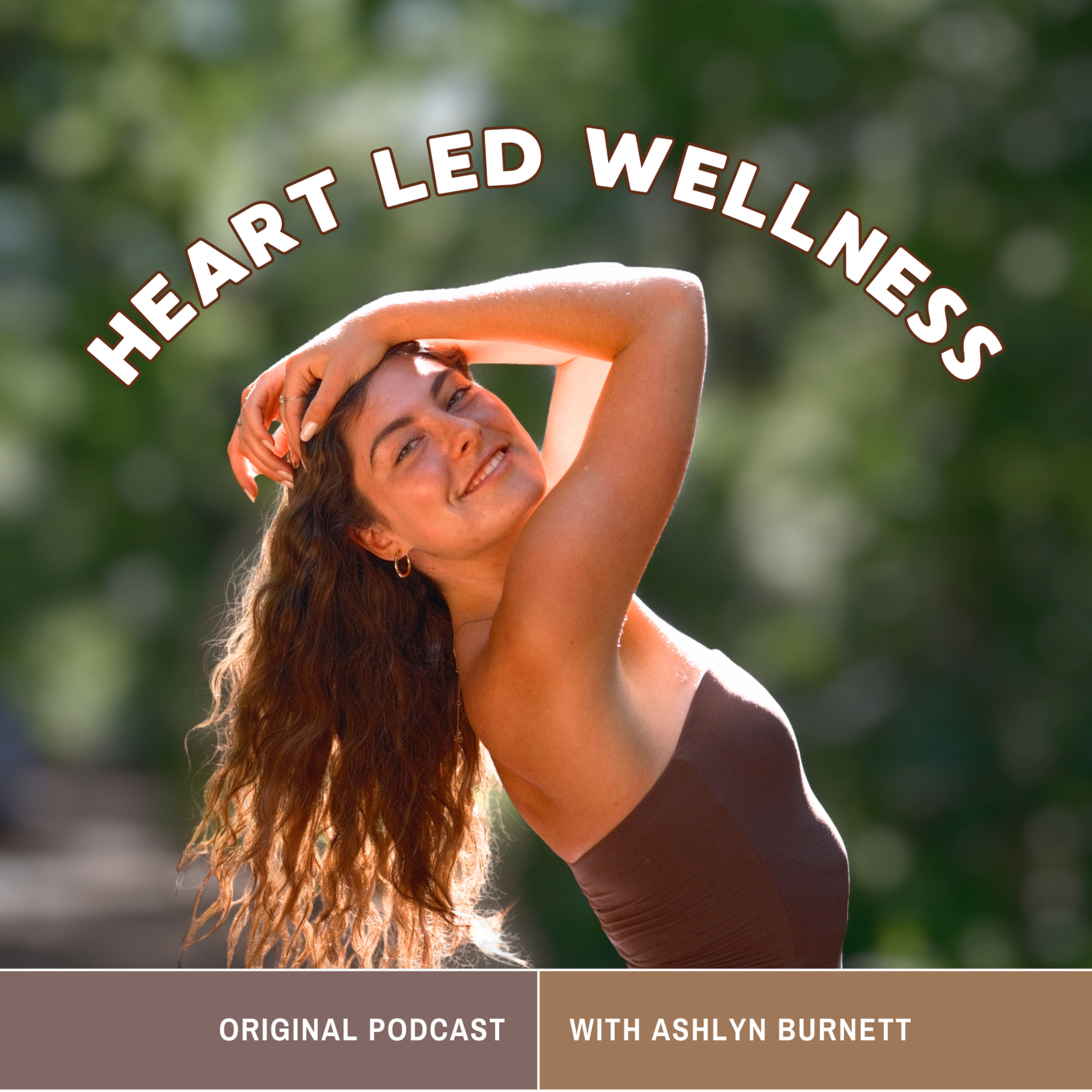
166: Habits I stole from my naturally thin friends that made the weight MELT off
from Heart Led Wellness
32m 27s
The speaker shares her journey from obsessive food tracking to becoming "naturally thin" by studying and copying the habits of women who effortlessly maintain a healthy weight. She emphasizes that these women’s thinness stems not from metabolism or genetics, but from a fundamentally different relationship with food—one that is body-led rather than brain-led. She outlines six key habits she adopted: eating only when the physical stomach is hungry, leaving space in the stomach to avoid feeling overly full, eating the most desired foods first, stopping all forms of tracking (calories, protein, etc.), eating only when regulated (calm and safe), and decentralizing food in life so it isn’t the main source of joy or comfort.
She explains that naturally thin people use their body’s built-in "calorie calculator" and internal cues to guide eating, whereas others often override these signals due to nervous system dysregulation, stress, or using food as a buffer for emotions. The speaker stresses the importance of nervous system work to strengthen interoception and reconnect to these cues, even for those who have never experienced this connection. She also notes that food should not be the highlight of life; instead, filling one’s life with relationships, purpose, and play reduces the need to overuse food. Ultimately, she argues that these habits are learnable and can lead to weight loss, improved digestion, and mental freedom, as demonstrated by her own 20-pound weight loss and client success stories. She concludes by inviting listeners to join her program, HeartLead Eating, for deeper guidance on this process.
I spent years trying to figure out what naturally thin women were doing differently.
I thought it was their metabolism, or their genes, or they were just blessed by God, or they had good luck.
But when I started to actually pay attention to these people and became friends with them, and started interviewing them, and asking them questions, and studying them,
I realized that they actually just had a very different relationship with food than I did, and when I started copying them, and eating like them, everything changed.
I lost 20 pounds. My food noise went away. My digestion improved. My hormones balanced out. I got my period back, and today I'm going to share with you exactly what I copied from them, the habits that I noticed, the things that I pasted into my own life, so that way you can also become naturally thin yourself.
I'm Ashlyn, the host of Heartlead Wellness, the creator of Heartlead Eating.
Thank you for being here with me once again. Let's dive into this episode right now.
This is one of those episodes I wish existed when I was deep in the tracking and obsessing about food, rabbit hole, because when I was struggling with food, I couldn't find anybody talking about eating and recovering your relationship with food in the way that I talk about it, which is literally why I created Heartlead Eating,
because I couldn't find the resource that I was looking for. But I remember moments where I would be laying in bed at night, adding up the calories in my head, trying to fall asleep, but obsessing about how much food I had eaten that day, and then planning what I was going to eat the next day.
I was constantly researching different diets to try and lose weight. In my free time, I wish I was making this up, but I'm serious. In my free time, I would watch what I eat in the day videos. I would listen to hours and hours and hours of podcasts about nutrition and eating, and not necessarily because I just thought it was interesting, but because I wanted to be thin, and I thought if I could study and learn and gather all of the data that somehow I could figure it out and crack the code.
And I think this is why a lot of my clients come to me having the same background, and I have a lot of clients who are nutritionists and health coaches and even eating disorder practitioners, because if you've gotten into that field or into that space, you may have gotten there because you were trying to find some way of eating that worked for you to be thin, and then it turned into your hobby and your passion and your career.
But deep down, you just want to feel good, you want to be thin, and there's so many podcasts out there about weight loss and nutrition and biohacks, but nobody is talking about what naturally then people do.
No one's talking about those girls that you know who seem to just eat whatever whenever they never gain weight. They usually actually have a hard time keeping weight on their body. They don't have any issues with food, they're not thinking about calories.
I wanted to understand what are these people doing, because that's how I want to be around food. I don't want to be this influencer who has cracked the code to the amount of protein she needs in a day, and that's why I'm thin.
I want to be one of those girls who is just enjoying my life and living in a thin body is effortless and easy to me.
And so if you're not new here, you know that I started studying these people, I started observing them and interviewing them, and I realized that their specific habits and behaviors and patterns around food are the reason why they're thin.
It's not their genetics, it's not their metabolism, it's actually their relationship to food.
And I know that sometimes people push back on me when I say that, they're like no, these people actually do have fast metabolism, like there's something different about their metabolic rate.
And the research is actually pretty clear on this, that metabolic rate varies a lot less between people than diet culture might want you to believe.
It's not like there's this thousands and thousands of calories difference between someone who has a quote unquote slow metabolism and someone who has a fast metabolism.
And the truth is you can be thin even if you have a slow metabolism.
We could find naturally thin people out there who might actually have quote unquote slow metabolic rates, but they're still thin because of what I'm going to explain in this episode.
And I can say for myself that I was quote unquote diagnosed with a slow metabolism from blood work, from working with a functional practitioner, a holistic practitioner, and I was still able to lose 20 pounds, just like I share all the time, even with that metabolic rate.
Because when you learn how to eat like a naturally thin person and you read your built in calorie calculator, you will eat the amount you need, whether that's a slow metabolic rate, a fast metabolic rate, you can still be thin.
So what naturally thin women have is a different relationship with food, and these are learnable habits. You can actually learn from these people, you can start to eat like one of them yourself, and you can become naturally thin too.
So I would even argue that you were born eating like a naturally thin person, you came into this world, really connected to your body and your built in calorie calculator, and naturally thin people, they never lost that connection, they were connected from day one on and they remained connected.
But for all of my clients, and probably for most of you listening, you have disconnected from that internal wisdom, you've buried the body wisdom underneath all the wellness noise and the diet culture, and your mom probably having a bad relationship with food that she modeled to you, and all of the chaos on social media that has made you confused about eating and how much to eat and when to eat and what to eat.
But right now, what we can do is actually just plug you back in to the original brilliant design of your body that you came here with, and parse through all of the noise and all of the misinformation that you've collected that's on top of that wisdom that's blocking you from hearing those internal cues.
I do also want to say, because I know I get this question sometimes from clients, that even if you didn't have a single day of eating like a naturally thin person as a child, I know some of my clients actually had trauma and things with food that happened on literally day one of their life as an infant, and they maybe never had a deep connection to food.
Even if that's the case, you can still learn how to eat like a naturally thin person. Now your body came with the hardware with the wisdom inside, and it's not broken, it's not missing, we can always reconnect to it no matter how long it's been.
Okay, so let's get into some of these specific habits that I copied from my naturally thin friends that allowed me to lose weight and these can allow you to lose excess if you have excess as well.
First one, I started only eating when my physical stomach organ was actually hungry, not when it was noon and I eat lunch at noon, so I'm just going to eat no matter if I'm hungry or not, not when I was just bored and thinking about food, not when somebody offered me food, and I felt bad for saying no, those are all instances where I used to eat in the past, but now I eat when my body signals to me that it's ready to receive food, and then it's ready to eat.
I also remember a time in my life where I was tracking my calories in my protein, and I would get to the end of the day, and I would look at my fitness pal and I would see, oh, I have like 200 calories left over, so that means I can eat something, and I would like go to the pantry and find something because I was so excited that I had extra calories left over, I wasn't making that choice to eat something based on hunger.
I was literally just deciding to eat something based off of the app that I was listening to, or if I was trying to hit 120 grams of protein in a day, get to the end of the day, maybe I haven't hit that amount, I would go and eat something with protein in it to try and hit my protein goal, even if I wasn't hungry, you will never find naturally thin people doing this sort of stuff.
This is non-natural eating, that is brain-led eating, as I call it, you're eating from your head, you're eating from rules, you're eating from the wrong organ from your brain instead of your stomach.
But I also want to talk about other things that can get confused for hunger, because sometimes when I say, only eat when you're truly hungry, the first thing is we might think we're hungry, but we're not actually hungry, because we're experiencing something called phantom hunger, brain hunger, these are concepts that I've created.
And I teach inside our lid eating, where we have the lines get kind of blurred and crossed, and certain sensations in the body that are not actual hunger, we start to associate them as hunger, and we think that we need food when we really need something else, or you're just mentally logically thinking about food, and then you can kind of convince yourself that you're hungry, but it's not actual body hunger.
And the other thing that I see happen often is that we might have missing hunger cues or confusing hunger cues if we have background nervous system dysregulation going on.
This is why we always have to talk about the nervous system, we can't talk about eating normally without talking about the nervous system.
If you're living in a chronic state of fight or flight or freeze or fawn or flop, your nervous system is going to blunt and make your hunger and fullness cues more blurry.
And you might think you're hungry when you're not really hungry, you might be missing hunger cues and be going long periods of time without actually feeling hunger, because your nervous system is activated.
And so it might seem simple of like, okay, practice only eating when you're hungry, but in order to do that, we need to bring some nervous system safety online, so your cues get really obvious and clear.
We need to understand the difference between brain hunger and phantom.
hunger and body hunger so you can eat with body hunger, not those other types of hunger.
And also you need to learn the specific type of hunger to start eating at because hunger
is a spectrum, it's not an honor off switch, there is varying degrees and levels of hunger.
And if you want to be somebody who is thin, we want to learn how to eat at a specific
type of hunger, the hunger point that naturally thin people start eating at.
And I developed a system to help my clients understand this specific starting point and
I teach all of that inside heart-led eating.
So if you're wanting to know more about that, join heart-led eating and I can support
you there.
So that's habit number one.
Eating when the physical stomach organ is actually hungry.
Habit number two, I stopped filling every inch of my stomach and started leaving space.
Naturally thin women get the ick from a crowded stomach.
I said this in a reel this week and now every time I open up Instagram, I see all these
other people making real saying the exact same thing.
And I like, I saw this girl on Instagram saying that naturally thin people get the ick from
overeating and then they start talking about it.
Yes, this is the case, this is the truth.
Naturally thin people hate feeling crowded with food, they hate feeling overly stuffed.
It feels physically uncomfortable, it's physically painful.
The body never wants to be stretched and full of food, but your brain and your nervous
system might want that excess food for regulation.
So naturally thin people, they eat only what they need to take care of hunger.
They're not eating all this extra food for regulation as a buffer, as a relief.
If you have excess on your body excess storage, you're eating what your body needs and you're
eating what your nervous system wants or your brain wants because it tastes so good and
you can't stop or because you don't want to feel all of the feelings that are underneath
or because you're bored or because you're anxious.
You're using food outside of hunger, a past hunger, you're using food outside of the boundaries
of your body for regulation.
But if you look at naturally thin people, they don't have these neurological pathways where
they use food as a buffer.
And so once they feel fullness settling in and they get to that stopping point that I teach
inside HLE that naturally thin people stop at, they get to that point and they don't
want to keep eating.
They get the ick over filling their stomach feels bad and so they naturally want to stop.
They're not telling themselves that they have to stop or they're using willpower to force
themselves to stop.
They just naturally choose to stop because they want to feel good.
And when I started to save space in my stomach organ at the end of my meal for digestion
to happen for life, for God to feel that is when everything changed not only in my physical
body but also my emotional body because as I always say hunger is an amplifier of our
emotions and the opposite crowding our stomach is a absorber of our emotions.
It's like soaking up all of the energetic information in your body with food.
You're using food as like a sponge to absorb it all but when you save space in your stomach
you actually increase the sensitivity in your nervous system and you're able to feel
your feelings more deeply.
You're able to be in your life, be in your body more deeply and that can increase your
connection to God, to the universe, to the spiritual realms of this world.
It is going to change the way that you process feelings through your body and that's all
beautiful and exciting and like yes sign me up I want that but if you have a small nervous
system capacity that's actually going to feel terrifying to your nervous system.
Stopping at that comfortable fullness point and saving space is going to feel bad to somebody
who has a small nervous system capacity because you're stripping away that excess food that's
acting as a buffer and if you're not ready or feeling safe enough to be with your feelings
and to be with life it's going to be honestly traumatizing to do that.
So once again this goes back to why we have to do nervous system work in order to become
naturally thin, we need to grow our capacity to feel and to feel safe in our body and
safe with our feelings so that way we're not using food to do that for us.
Habit number three, this is a good one.
I started eating the best bites first.
This one sounds small but it completely changed how I eat because I started noticing with
these naturally thin friends that they would the first bite that they would pick on their
plate would be the one that they wanted the most like it would be like the most tasty
thing.
So let's say you have a plate with some vegetables and maybe a cheeseburger and some fruit they're
going to like take a bite of that cheeseburger probably first and they might have some vegetables
kind of sprinkled in throughout the meal or they might even end with the vegetables.
I noticed that a lot in these naturally thin people that they would have like the salad
at the end or they would have the vegetables at the end and you know they are wanting to
enjoy their food we only have a certain amount of space in our bodies and if you really
want something you might as well eat that thing first and then if you have extra space
at the end yeah I put in some salad but in some vegetables but what I was doing beforehand
is I would eat the gross stuff first to like get it over with you know I'd eat all my
vegetables first because I was trying to follow all the blood sugar balancing hacks or
because I thought oh I want to end on like a good note I want to just like eat the kind
of bland stuff first and then I'll end on the best bite and that would lead to me overeating
because I would eat the quote unquote mundane stuff and then the stuff I really wanted I
might not even be that hungry for it anymore but I would eat it anyways because that's
what I actually wanted but naturally thin people don't do this they eat the food they actually
want first and in general this is a bonus habit they only eat food they actually like these
people don't ever force themselves to eat foods they don't like foods they think are gross
even if they're healthy there's a lot of naturally thin people who are picky eaters and won't
eat certain vegetables or certain foods that they don't enjoy and that's intentional it's
like I want to spend my hunger on food I actually love I'm not going to waste my space
in my stomach with food that's gross because that's just going to lead to me feeling not
satisfied and have a desire to overeat before I get to habit number four I'm excited for
these last few because they're really good but I want to dedicate this episode to my client Laura
who posted this in the community she said my relationship with food in my body and myself has
changed in ways I never imagined possible I now feel completely connected to my feelings again
after years of emotional numbness I have so much more mental freedom now that food no longer consumes
my thoughts or dictates my daily decisions I no longer obsessed about tracking measuring and
planning food life feels easier and freer in practical ways I no longer worry about going to
restaurants or packing safe foods quote unquote everywhere I go just in case quote unquote
everything is now an option I trust myself to eat until I feel the fullness point that I talk
about in HLE and simply take the rest home if I need to I feel more present during eating experiences
less tired throughout the day and I no longer think about food when I'm not eating
Laura I'm so proud of you I love you so much and I know how far you've come and I'm just amazed
at your journey it's been an honor to witness you and I wanted to share this win in this episode
specifically because I love how you're talking about not tracking not measuring not planning but
actually listening to the wisdom within you eating your favorite foods at restaurants and being
able to know exactly when to stop eating so huge habit number four I stopped tracking everything
just like Laura shared I right now in this moment have no idea how many calories I eat on a daily
basis I have no idea how many grams of protein I just had it lunch I just had a sandwich and some
avocado I have no idea how many calories were in that sandwich and I'm thinner and healthier
than I've ever been I used to think that in order to be thin or in order to lose weight I needed to
double down on the control and meticulously measure my food even more and that actually just led
to me feeling even more out of control with food in the long run but right now I have the least
amount of logical mental control over my food and I've never felt better because when you track
your food in an app or with a food scale you're essentially making your brain do a job that your
body was already designed to handle you're trying to play god over your body you're thinking I
can't trust my body some things wrong with my body I need to be the one to step in and do it
it's like my way or the highway I can't trust anybody else if you do this you probably have this
issue in your life in other areas or you feel like you don't want to trust other people to do it with
you you were probably the girl in the in school where you did a group project and you just wanted
to do it all yourself because you knew you could do it better than everybody else and now you're
doing the same thing with your body you're telling yourself I can't trust my body my body isn't
reliable and I need to play god over my body and try and hack and manipulate the system versus
trusting the built-in calorie calculator that you came with naturally thin women do not have my
fitness pal on their phone they do not have chronometer on their phone they're not using these
new AI apps where you take a photo of your food and it predicts the calories in it
they have a built-in my fitness pal they have a built-in chronometer they have a built-in protein
calculator and they're really connected to that built-in guide and so they know exactly when
to start eating when to stop eating how much food to eat
what types of food see based on how they're feeling. And if you ask them this, they're
going to, they're not going to be able to explain it to you because it's just so second
nature to them. They don't even know they're doing it. But I really dug in to my natural
good friends and figured out how they're figuring it out, which is now what I, what I do personally
and what I teach inside HLE. If you're scared of stopping tracking and you're scared to delete
the app because you think that if you stop tracking, then you're going to gain a bunch of weight.
It's because you have a weak internal calculator. Your connection to your internal calculator
is weak. And we need to strengthen that connection. So your internal cues feel even more
reliable and trustworthy than any app out there than any food scale out there. And the reason why
your cues have gotten so weak is because you have disconnected from them. You've chosen to override
them. You've jumped into your head instead of your body. And you probably have a lot of nervous
system dysregulation going on that is keeping you from landing more safely in your body. It's
like you're walking around as a floating head. You're journaling. You're going to talk therapy.
You're super aware of all your problems. You've probably done so much work on yourself.
You're an extreme personal development person. But you don't know how to be in your body. You're
not going to feeling and expressing and emoting and existing from the neck down where all of
your built in calculator information is held. This is something in the nervous system world called
interoception. It's our ability to sense into internal cues in our organs and different
needs from within the body. And this is something that we can strengthen through nervous system
work and releasing trapped pain and stored trauma from the body and helping you feel safer in
your body. Your interoception can strengthen and your internal calculator can feel really loud,
really clear and really reliable. And you'll get to the point. This is how I feel now where you trust
your internal built in calculator so much more than any app out there that it's not even worth
thinking about it. It's like why would I even consider adding up the calories in my head or why
would I even look at the calories on the package because I feel so connected to my internal guide
that external information is practically useless. This is what we do in Heartlet Eating.
If you want to do that, click the link in the doughnuts and I will personally support you through
that process. Two more left. I hope you're loving this episode because I'm loving recording it.
Habit number five. I started only eating when I was regulated. You know how naturally thin people
often lose weight when they get really stressed. Like when they go through stressful seasons,
they will end up looking even thinner and you ask them about it and they say, I'm just having
a hard time eating like I can't keep weight on my body. This is because it's natural as humans
to lose our appetite when we are stressed or when we're experiencing nervous system dysregulation.
When we are dysregulated, our digestion naturally shuts down. We don't have as much enzymes available
and the acidity in the stomach isn't at the proper pH. The body is not in a state to digest,
which is why we call a safety, ventral vagal. We call it rest and digest because that's when the
body is primed to actually digest food and you can be hungry but have a low appetite. Hunger and
appetite are two different things and so when naturally thin people get stressed, they might be hungry
but their appetite is low because they're stressed and their body is not ready to receive food and
they're aware of that and so they stop eating and food feels bad and they don't really even have
desire or drive to eat. If we look at people who aren't naturally thin, this used to be me in the
past, they often do the opposite when they're stressed. They end up eating more when they're stressed
because they're using food as a buffer from the stress, as a regulator, as something to try and
absorb the stress or calm them down. Have you ever overeaten or binged when you felt really peaceful
and calm? I'm not saying excited because I know sometimes we've been when we're like excited but
that's still like an intense emotion. I'm just saying when you felt like just a sense of calmness
and not any intense emotion in any direction, nothing super negative, nothing super positive,
just like internal peace, have you ever binged from that state? I would guess no because most people
are binging from either intense excitement and joy or anxiety or stress or boredom like there's
some emotion that is leading to the overeating but when naturally thin people feel these intense
emotions, their appetite shuts down and they don't even have a desire to eat at all. For you,
your appetite increases when you're feeling intensity and you have more drive to eat food.
The reason why this is happening is because you've created neurological pathways in your brain,
linking eating to regulation. So you you had an experience maybe it was one time or several times
in your past where you ate for regulation and your brain realized wow this works, this calms me
down, this helps me feel better. Let's do that again and you create this little link in your brain
and every time you do it you reinforce it and over time it gets stronger and stronger and stronger
just like with any coping mechanism and then you get to the point where your brain just naturally
offers up food as a solution when you're feeling dysregulated and we have to unlink these neurological
pathways so you can have the brain of a naturally thin person. Your brain's desire for food
needs to match your body's desire. If you have excess on your body your brain is wanting more
food than your body actually needs because you're using it as a regulator and as a buffer.
But when you prune away these neurological pathways and you learn how to feel safe in your body
and in your nervous system you can get to the point where you also don't like eating unless
you're regulated. Your appetite shuts off when you're dysregulated because that's not how you
exist around food anymore. This has started happening to me in my life and it still just
blows me away like when I go through super stressful seasons in my life I sometimes feel like I'm
losing more weight than I want to or I don't have desire to eat and I'm just like what is happening
like this is not how I used to be but I know why it's happening it's because of heart-led eating
and because of all the work that I've done on my subconscious and my nervous system and rewiring
those pathways in my own brain. Habit number six last one for today is ID centralized food.
When we look at naturally thin people food is not the highlight of their life. I'm not saying
they don't like food because a lot of times these people actually really do love food and they
eat tasty delicious food all the time but it is not the central point of their life. When food
is the most exciting part of your day or the most like most thing you're looking for to them to
the most of course you're going to overuse it. Your life needs to be more exciting than eating.
I literally used to fall asleep planning what I was going to eat the next day like I would wake up
so excited to have breakfast which is crazy like going on vacation the best part of it for me was
the food like I couldn't wait for lunch I was like thinking about what I was going to have for lunch
thinking about food all the time watching what I eat in a day videos for fun like food was like
the center of my life it was giving me purpose it was like I am a health and wellness girl I am
someone who researches food I am someone who thinks about food all the time naturally thin women
don't really care about food they're living their lives they probably don't love it when everybody's
talking about food at dinner this bothers me now sometimes when I'm with people and all they're
talking about is the food like it's normal to bring it up a little bit like oh this is good do you
like this but it's just like the whole conversation is talking about eating and the food how boring
like we're not here on this planet to literally just eat I want to experience other sources of
joy and connection and pleasure in my life and when you have your pleasure cup full when you're
doing things in your life that are bringing you joy and connection and rest and stimulation then
you're not going to need to get all of that from food a lot of times we have food problems because
we have life problems there's things that are out of order in our life and of course we're
going to be using food inappropriately or out of order to make up for that or to try and fill the
gaps that we're not getting in life food is a pleasurable break when we're hungry but it's not
supposed to be the main event of life yes you can enjoy food when you're hungry and it's normal
to want to eat tasty delicious food and to be excited about it but it shouldn't be the thing
that you're waking up thinking about every single day and looking forward to the most that's a
sign that something is off in your life you need more friends you need community you need
relationships you need purpose you need rest you need time to just lay and do nothing you need
pleasure you need joy you need play like a kid things that you did when you were younger you need
that in your life so that way food doesn't have to carry the burden of giving all of that to you
when it's not meant to do that that's way too much pressure on poor little foods shoulders I hope
you can see the through line through all of these habits is that naturally thin women are living
in their bodies they're not doing brain led eating where they're tracking and scheduling and
planning and calculating and controlling they're doing body led eating I call it heart led eating
because we're also including the soul and our intuition here and they're connected to their
feelings and they're sensing and they're listening and they're responding you cannot get to that
place of body led eating by adding in more rules you're not going to get there by listening to
another podcast about how to close your carbs so your blood sugar is balanced or to start a
GLP1 or an olympic that is only going to disconnect you further from your body you need to get
there by actually bringing regulation and safety into your nervous system so you can hear your
Your internal guide more clearly and then actually relearn.
the nuances of that guide, so you are super connected and trusting that wisdom that you were born with. It makes me emotional. It gives me goosebumps to talk about it because it's so crazy that we literally came into this world with everything we need inside of our bodies and somewhere along the way we've forgotten that and we've thought that we needed to play got ourselves and try and hack the system ourselves when all along the answer has been lying within you within me within you.
And you can absolutely get there if you get everything that I shared in this episode mentally you're like yeah that makes sense but I still can't do it like I'm still overeating or I'm still binging or I can't hear hunger or I can't trust my body etc it's because you need to actually do the deeper nervous system work and the subconscious rewiring work and learning the nuances of your built-in calorie calculator and this is exactly what we do inside heartletting this is why I made heartletting to walk you through all of these things.
Heartletting is the place where I share the actual details I know I share so much on this podcast as much as I can but I'm not actually giving you the road map to healing it's inside heartletting and that's by design because I want to be there to guide you through it I don't want you to have to go about this alone I want you to have a space where it's all laid out for you step by step you can ask questions you can receive support from me I don't have any other coaches it's literally just me running this whole thing so if you join heartletting you and I are going to become best friends.
I'm going to learn a lot about you and I can't wait to do that and so this is something that feels aligned to you or you're feeling called consider this your sign to join us click the link in the show notes and I would love to support you inside thank you for being here please feel free to give this show a rating and a review if it's supporting you it helps it reach other women who may also benefit from this information and I will chat with you next week.
[Music]
Podcast Summary
Key Points:
Naturally thin women have a different relationship with food, not a faster metabolism or better genetics.
Key habits include eating only when physically hungry, leaving space in the stomach, eating preferred foods first, and avoiding calorie or protein tracking.
Eating should be body-led, not brain-led, meaning listening to internal cues instead of external rules or apps.
Nervous system regulation is crucial, as stress or dysregulation can distort hunger cues and lead to emotional eating.
Food should not be the center of life; joy, community, and purpose are needed to reduce overreliance on food.
These habits are learnable, even for those with past trauma or disconnection, by reconnecting to the body’s built-in "calorie calculator."
Summary:
The speaker shares her journey from obsessive food tracking to becoming "naturally thin" by studying and copying the habits of women who effortlessly maintain a healthy weight. She emphasizes that these women’s thinness stems not from metabolism or genetics, but from a fundamentally different relationship with food—one that is body-led rather than brain-led. She outlines six key habits she adopted: eating only when the physical stomach is hungry, leaving space in the stomach to avoid feeling overly full, eating the most desired foods first, stopping all forms of tracking (calories, protein, etc.), eating only when regulated (calm and safe), and decentralizing food in life so it isn’t the main source of joy or comfort.
She explains that naturally thin people use their body’s built-in "calorie calculator" and internal cues to guide eating, whereas others often override these signals due to nervous system dysregulation, stress, or using food as a buffer for emotions. The speaker stresses the importance of nervous system work to strengthen interoception and reconnect to these cues, even for those who have never experienced this connection. She also notes that food should not be the highlight of life; instead, filling one’s life with relationships, purpose, and play reduces the need to overuse food. Ultimately, she argues that these habits are learnable and can lead to weight loss, improved digestion, and mental freedom, as demonstrated by her own 20-pound weight loss and client success stories. She concludes by inviting listeners to join her program, HeartLead Eating, for deeper guidance on this process.
FAQs
It's not genetics or metabolism but their relationship with food. They have learnable habits, like eating only when physically hungry and stopping at comfortable fullness, which can be adopted by anyone.
Begin by eating only when your physical stomach is hungry, not due to time or emotions. Also, eat the foods you truly want first and stop when you feel comfortably full, leaving space in your stomach.
Nervous system dysregulation can blunt these cues. Working on feeling safe and regulated in your body can strengthen your interoception, making your internal signals clearer and more reliable.
No, naturally thin women don't track. Your body has a built-in calorie calculator that works better when you trust it, and tracking can disconnect you from your internal wisdom.
You may have neurological pathways linking food to regulation. Naturally thin people lose appetite when stressed, but you might use food as a buffer. Rewiring these pathways through nervous system work can help.
Fill your life with other sources of joy, connection, and purpose, like hobbies or relationships. When your pleasure cup is full, you won't rely on food as the main event, reducing overeating.
Chat with AI
Loading...
Pro features
Go deeper with this episode
Unlock creator-grade tools that turn any transcript into show notes and subtitle files.
 PodcastTranscript AI