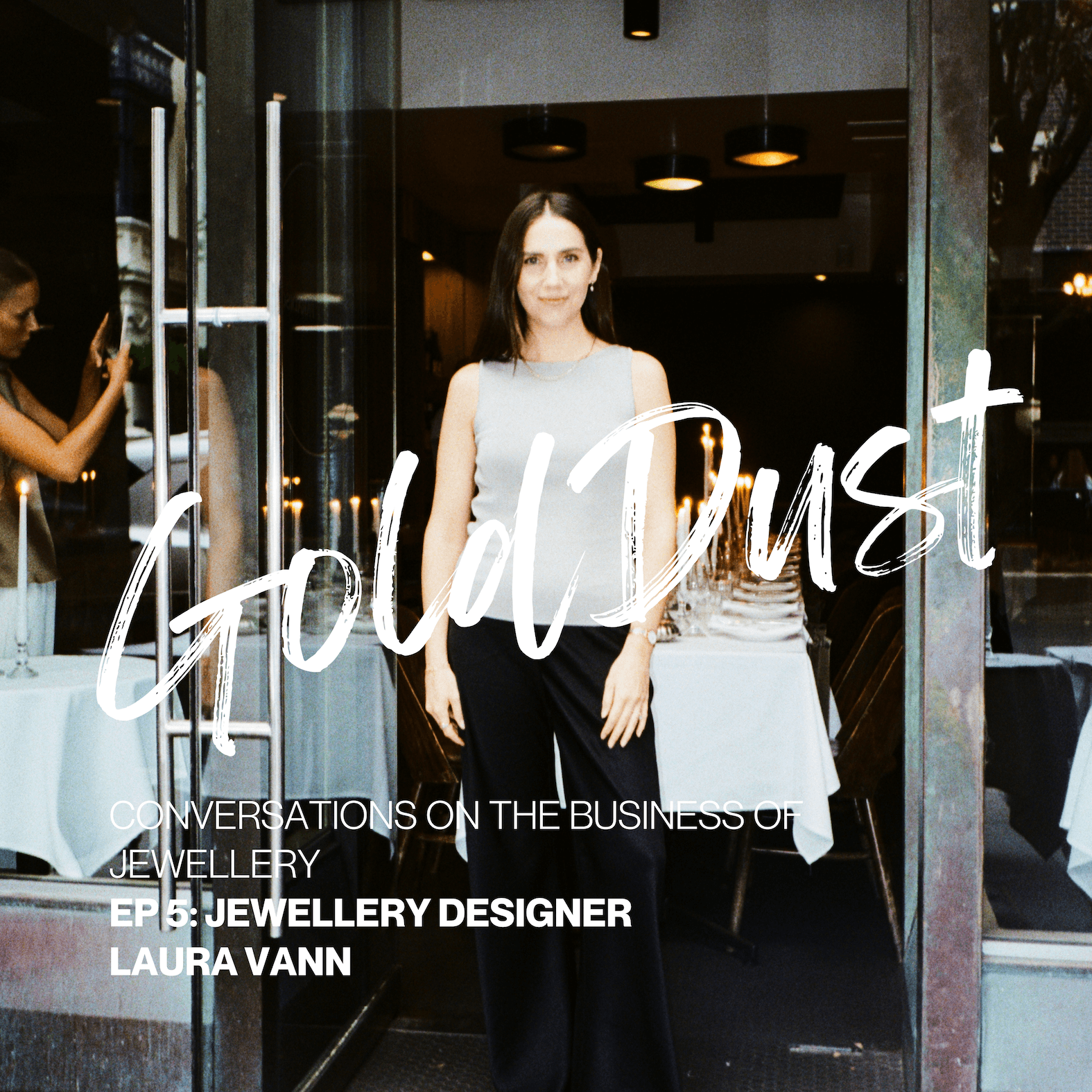
Growing a Demi-Fine Jewellery Brand Without Paid Advertising with Laura Vann
from GoldDust
1h
Laura Van founded her demifying jewelry brand in 2013, evolving it from her father’s wholesale business into a distinctive brand rooted in timeless Art Deco design and craftsmanship. She emphasizes authenticity, using vintage-inspired yet modern aesthetics that are hard to replicate, making pieces both visually intricate and emotionally resonant. The brand successfully blends demifying and fine jewelry—such as engagement rings—through a consistent design language, maintaining clarity and trust across price points. Laura strategically avoids paid advertising, investing instead in in-person events, personal collaborations, and authentic storytelling with influencers and creatives. These relationships have driven significant growth, with sales increasing by 826% and conversion rates rising by 638% after cutting digital spend. The brand is deeply rooted in Birmingham’s jewelry heritage, honoring its craftsmanship and local manufacturing. Through genuine, human-centered engagement and a focus on long-term customer trust, Laura has built a resilient, respected brand that thrives on authenticity, craftsmanship, and meaningful connections—proving that sustainable growth in jewelry comes not from aggressive marketing, but from true vision, consistency, and real-world relationships.
Laura Van is the designer and founder behind her namesake brand, a demifying jewelry line
of vintage inspired casual jewels presented in a modern context. Right from the start, Laura
had a crystal clear vision of what she wanted her business to be, and how she wanted it
to look, essentially building a brand universe. This awareness of the importance of the context
the jury has presented in, as well as a constant focus on what the customer wants, has led
to the exponential growth of the business, and the brand is now stocked in London's
Fortenham and Mason, Harvey Nichols, Liberty, and Selfridges. In this episode, we talk about
how she has evolved the business into selling both demifying and fine jewelry and diamonds,
the power of personal collaborations and in-person events over social ad spend, and why you need
to create designs that are hard to copy, some of the best advice she's ever been given.
Laura Van, welcome to the Goldass podcast.
Hello, Laura Van, hello to the Goldass podcast. Thanks so much for coming on.
Thank you for having me. Thank you for asking me. It's so great, and for those who know me,
Laura Van is my go-to demifying jewelry brand of choice, and with Christmas coming up,
I am literally recommending it to loads of people, and wearing, and wearing.
I did spot this, I was like, are these fans? Yeah, they're so cute.
I'm a big fan. So I'd really like to start with your origin story, I love an origin story,
and I think that yours is really interesting as well. So you founded your business back
in 2014, is that right? Yeah, I think, actually, early, I think 2013, yeah.
Really? Yeah, so 12 years ago, and you founded it alongside your father,
who was already running his own separate, very successful jewelry business, and had done
so for many years. So how did you decide to start working alongside him?
My dad's business, the business that I joined, is very different to the business that we
have today, and it's certainly not like, you know, you know, when you hear about design,
and you're like, who are their parents? Or like, you know, what air is it?
And my dad's business, some years successful, some years not successful.
He had a wholesale jewelry business, and so it was all white label products, nothing branded.
So, you know, he might get a big account with like, Clare's accessories or something like that,
you know, I am the RS to the belly bars at the Clare's accessories. But you know, he would get
that account, and it would last for a year, and then they'd move distribution to the US,
and then it would be back down to having to cut overheads for him, or like, you know, take salary
cuts for himself. So it was quite a precarious business, actually, that I joined,
and I actually really didn't have any intention of actually joining. I'd gone to Union London,
I'd wanted to get into fashion journalism. I started working at COS, just on the shop floor,
in Regent Street, and I, like, loved working for COS. I really actually wanted to carry on
working and kind of move up to the head office there. But after graduating uni, I couldn't afford
to live in London any more. And obviously, trying to get into fashion journalism ain't the best
thing. It's a great job going. So it's like I had to move back home because I didn't, I didn't
have the means to like live in London. And so I was just helping out on my dad's joy business
day-to-day, and then I transferred from Regent Street COS to Birmingham and did evening shifts there,
somehow had the energy to do both jobs simultaneously. And I loved the ethos of COS, and I loved
how they were making timeless products that were well-made and affordable. It was like this kind
of middle-luxury. And, you know, when I was working for my dad, I realised that we had like an
amazing platform because as precarious as his kind of business was, what he did have was a
brilliant foundation of, you know, great suppliers, you know, the understanding of the fundamentals
of how to run a joy business. And so I, at that point, realised that we had a good foundation
to start a brand that applied that COS ethos to jewelry. Yeah, but as you say, you're right. It's not
like it was a kind of inherited leg up into the industry from a kind of financial point of view,
or even connections, really. I'm sure his expertise was helpful. Yeah, zero connection, sadly,
unless it's like some guy in the jewelry court who called John that could fix a pair of broken
earrings. I think it's so important to be like really transparent. Like obviously I had a brilliant
platform in terms of knowing packaging suppliers and, you know, the factory that makes the jewelry
for ademy fine offering is the same father-son business that my dad worked with 30 years ago.
You know, my dad worked with the father and now I work with the son, and it's the only
manufacturer that's ever made ademy fine jewelry. But aside from the kind of manufacturing side of
things, there were no connections. And to be honest with you actually, our brand, independently,
like the law of hand brand, it ran completely independently to my dad's business. He just left me
kind of to it. You know, funded the initial collection, which was probably a few thousand pounds,
but we were profitable from year one because we worked with some sales agents that, again,
were introduced to me by my dad, but equally, highs and lows, you know, working with a guy called
Barry that's trying to get your product into some random little dress accessories. It wasn't
oh god, it would be brilliant if it was classic. So it was just random little jewelry stores. I
know that was that you wanted a very different direction, and you had, it seemed like you had a
really clear idea of what you wanted to do, sort of right from the off. Like you wanted to present
it. I suppose in a similar way to cause you wanted to present your jewelry within a specific
kind of context and give it that context, which is essentially brand building. And yet totally,
and a world that my dad and, you know, the other people that work alongside my dad, like our
financial director Graham, have zero experience of and up until recently had zero appreciation of.
So as much as it was brilliant kind of have this kind of infrastructure, I also spent so many years
back and forth push and pulling, trying to kind of like convince them of this new way of
of doing things. And often actually Graham says like, you know, this is a brand new business.
Like this isn't a business that was pre-existing. We've started from scratch because actually we're
doing something very different, you know, my dad was wholesaling actually what we've built is a brand.
So you went for that, did you feel that there was a gap in the market for kind of well priced,
design led, affordable jewelry? I think so yeah, I think, you know, when I was thinking about what
I loved about cause and what I felt that kind of like filled in the market that was missing,
it was this timeless, like, seasonless product in clothing. But when I looked at their jewelry,
it didn't kind of reflect that timelessness. No, it's very directional, isn't it,
their jewelry? Yeah, very bold, very architectural. And for me, timeless jewelry is something that,
you know, looks inherited from, you know, generations before you and something that you could pass
on to the next generation. It's complicated, it's intricate. And, you know, with our origins,
you know, my dad's jewelry business was founded in the jewelry quarter in Birmingham. And today,
our offices are based in North Birmingham. We're in the jewelry quarter all of the time for our bespoke.
I'm still exposed to that really traditional style of jewelry where craftsmanship is so intricate
and so complicated, you know, when things were made by hand and stones were cut by hand. And it's
that complexity of all jewelry that I feel is so timeless. Would you, or could you please explain
to those who don't know the law of hand brand, what your jewelry looks like? When I was thinking
about kind of like what is timeless jewelry to me? Like I said, it's that kind of complexity
and intricate design style. And I wanted to look at something like I looked back through kind
of like jewelry archives at styles of jewelry that re-emerged throughout jewelry history and still felt
relevant. And for me, it's that kind of art deco design. I remember kind of seeing Mary K. Olsen
and she was like head to toe in the row. Super kind of simple, you know, that pair back
Scandi style of clothing, which I obviously really loved. And then she just had this big fat
Cartier target ring on her engagement finger. And you know, that ring for me was just like this
epitome of, you know, design
intricacy with like different color stone sapphires or handcart and then I think it had like a
kind of yellow diamond or some kind of like smoky kind of brown diamonds and and I love that juxtaposition
and so you know I I thought for myself gosh if that is still so relevant when you pair it and it
looks so effortless and chic when you pair it with something quite contemporary in terms of
clothing you know that's never going to go out of style and so I've really like adopted this
art deco style but also kind of making it modern by applying it to those contemporary trends
especially if they're rooted in history like for example enamel is is something that was really
prevalent in the art deco period so when that enamel trend came around a couple of years ago we
really embraced that because it's still timeless similarly you know cord jewelry we we will
kind of apply a heavily embellished stone set neckl and pendant to a cord necklace because
Ashley Cartier did cord and you know they had these gorgeous diamond pendants sat against
something quite casual like a cord necklace so you know a lot of our pieces feature handcart by
get cut stones we play with color I mean one of our most iconic rings are you wearing it
actually it's the olive ring I am wearing yes so that's like a perfect example um you know at the
the central stone is is a white toe paths round brilliant cuts bezel set and then you've got
channel sets green I get cut stones you've got a mixture of yellow gold and radium plating in
there you've got claw setting you've got like a variety of color a variety of setting and that's
that complexity that I think defines signature style and the way that you present it as well has
become so much a part of your brand so you're present I felt like you're presenting this vintage
inspired deco inspired jewelry but in a really modern context which I really liked about your
brand when I first came across it you know 12 years ago um whenever it was because it was just
I haven't seen that before it was just a really it was it was quite niche but also just felt really
easy it was accessible you know it felt accessible in a way that I think vintage style jewelry can often
you would feel it only applies to some kind of style or sort a type of person that would wear that
style but I feel like you've really broadened out the scope of wearability because you present it
consistently in this really fresh modern context I don't really know what it is the the defines
that you know I think I just inside of me have this kind of intrinsic I like this I don't like this
it feels very kind of like natural to me but then also often I do worry that like is there
consistency throughout our collection because there's no set strategy to it if that makes sense of
like you know what I think encapsulates that modern vintage but you know when I speak to lovely
people like yourself and you're like no it's so clear it's pretty sure and I think that's your
that's your design instinct coming out so you know what you love and what you're inspired by
from a design perspective paired with your own kind of sense of taste and your sensibilities and
your your own aesthetic which is obviously you know the modern dressing in a modern way you know
you're not dressing like an old granny you're all the time today but I think that it's that's that
juxtaposition and that kind of contrast which I really like it also ties in really nicely to this
quote that I found when I was doing my research for today I'm actually going to read aloud to you
because I think it's really interesting so you said as I said as I see it there are three kinds of
people in the jewelry industry there are those who reject the mainstream choosing voluntary poverty
in the name of perfecting their craft the starving artists then you have those aiming for financial
supremacy because at heart they are business people the magnates and then you have the hybrid
and the hybrid you say has a difficult task they want to sell out without selling out they walk
a tightrope between fashion and finance that could tip any second and before they know it creating
a collection mutates into building a brand I am by chance a hybrid which is such a good quote
I dispute observation as well let's be such an old quote I am an old quote stand by it but
you definitely should because I think it's so interesting because it also encapsulates the style
of your jewelry that balance between one thing and another creating in this kind of hybrid model
which is really interesting and what you said also about wanting to sell out as in selling all your
pieces without selling out and going too far do you think this is something that more
new jewelers need to think about finding that balance I think possibly I mean to be honest I think
my hybrid role is kind of born out of necessity more than I think I'd love to be a starving
artist to be quite honest with you in design for the joy and the pleasure of it but I don't
I don't have the kind of like luxury really to do that and so I think a lot of people will kind
of fall into that hybrid position because yeah if you've got bills to pay and if you've got
especially if you've got overheads you know like if you if you start hiring people you have to make
it commercially successful and you know I remember listening actually to or maybe like reading an
interview with the founder of South Portrait and he said exactly the same thing his yeah his dress
is a commercial and it's because they have to be because he he didn't have the luxury of designing
just for the sake of designing so yeah I don't think there's there's anything kind of like wrong
with with any option and I just think people will fall into that category depending on their
circumstance I wonder if that's how you were from the start perhaps that's what you took from your
dad's business knowledge is that like full on commerciality I hadn't breathing down my throat being
like you know like this isn't this wasn't a kind of like you know my princess so you can have
whatever you want like I had to prove it to him that you know this idea that he is kind of
sanding by is actually going to be financially successful and I still have it today you know he's
kind of like less involved in the business but every single day every single week it's like you
know what's going on with orders and blah blah blah so yeah I had a huge huge pressure to make
this successful which is obviously a good thing yeah yeah because no like it's not bad yeah it's
a business so you created all these other assets that he probably didn't know what you were
spending your money on in terms of photoshoots a website or the packaging did you jump on all
of that and sort of art direct that or consider that is very important right from the beginning
do you know what I designed our logo on Microsoft Word Microsoft Word and he's word art
I yeah I I didn't do the whole kind of like brand guidelines or anything like this it was
all just done like swiftly it was obviously done with like care and considerate because
it looks great yeah um but I had no idea that there would be I don't I had no money as well to
hire a graphic designer to do all these beautifully polished things for me like there's a guy
that works next door to us that shot our campaigns and did our like product imagery for like one pound
50 and image and then I learned how to use Photoshop but you know I use I learned how to use for
I'm like a whiz of Photoshop I did like an English language degree like you know but I can use
Photoshop to edit and retouch like product images now um you know everything was like on a budget
when I say like we made our own money we we made our own money so we didn't like it's only actually
you know we revamped our packaging this year this is the first time I've ever and we've
read it our logo this is the first time I've ever used a graphic designer
that's very impressive well I don't know that's 10 years yeah yeah but like yeah I think
and you know it was time god it was over you but like you know and so I've made so many mistakes
I mean god like the brand was called v jewellery to start with and you know that's when like a 22
year old girl and her dad decided to name a jewellery brand you know it was so like a corporate
and then you know we then tried to trademark it in china and they were like yeah that's not
going to fly like you can't trademark the alphabet exactly and then we changed it to v by Laura van
and that was just a waffle like you know imagine trying to tell somebody your email address Laura at v
by Laura van and um that was killer and then and then you know and then we just like so so the
the brand has just like evolved and it's grown with me.
with me and I've learnt so much long the way but you know it certainly wasn't
polished perfection we just made decisions and did it. And when you started did
you have a sort of clear idea of I want to I'm going to have to sell wholesale
like I want to make a collection and take it to retailers and get wholesale
orders straight away or were you one of those designers who you know sort of
made a few pieces see if anyone bought them and sort of it took a long time
before you took the wholesale leap because I know wholesale is a big part of your
business. We were completely wholesale first because it was all I knew like my
dad is the biggest tech for he still can't use like Excel or like you know I
still have to help him open a PDF genuinely and so anything to do with
online was like no care no interest whatsoever it was just like get it into
stockess and like I said the brand started with some of my dad's sales age and
it's just like smashing it around the UK into like tiny jewelers which we then
ended up having to kind of undo because I was like this isn't right for the brand
but we did trade shows we did all of those kind of like wholesale avenues and
thankfully one of the first trade shows that we did was just this random one at
the Sarge Gallery and it was where Fortenham and Mason picked us up and they
became like quite an early stockest of ours and obviously you know we're still
there with them today and they're now like best stockest you know they we've got
a shopping shop there and we've got just nice amazing relationship with them but
yeah that was really fortuitous that you know we were we were at that trade show
and and the buyers kind of took a chance on us really you know we we were very
unknown but it was in those days before however many followers you had on
Instagram was the deciding factor for a buyer to pick you up and you know it
was a it was a time where they would see the product and if they liked it they
would take you on it was probably just on the cusp of when all the D2C
websites independent jewelers got their websites and kind of began their D2C
yes yeah so it was just before that but so but you were fully embedded in
also like you've obviously got so you've got a lot of incredible like world
class stockest and retailers like what what do you think it is about your work
that they really like it's different I think that's just what we always get
told is just that it's different you know we're not just like another brand
that's producing I don't know playing god hoops or you know a
disc pendant or something like that you know we've always really stayed true to kind
of our design ethos another amazing piece of advice I got from my dad was when
I was designing the collection he said design stone set jewelry because that's
what we are experts in and that is just so hard to replicate so you know when
you've got plain polished pieces you know if it's a if it's a huge commercial
success for a brand you might see it in you know H&M or Zara or you know a kind
of a fashion version of it being replicated but if they were to try and
replicate the olive ring for example it's really hard but they wouldn't they
because they would need to glue the stones in and it would just it would look
terrible so we're quite hard to replicate for a lot of kind of costume jewelry
and then I think also just the design signature is so specific that it just
doesn't feel like anybody else so there's that and then I also just think you
know it sells the price points really good yeah it's fantastic the price point
is fair I think people you know it's it's like cause you know you don't mind
spending that little bit more extra money if you feel like the design is
going to last you a long time it's not going to be a fleeting trend you feel
like the qualities good you know the materials that we work with like white
topas so I feel yeah people don't mind paying that slightly elevated price
point and you know I think that's it that the kind of proof is in the pudding
that you know we've been with Fortnam and Mason ever since 2014 potentially so
over 10 years now and and the product sells through I think that's the most
important thing it's it's one thing to kind of get into a stockest but actually
retaining the stockest is the most important thing and that that means that your
product has to be commercial and it has to sell the strong design is is so
important and I think particularly even more so today when it's just so
competitive to get into those kind of stores of that caliber I think a lot of
brands focus on trying to be the the best at every single part so the most
sustainable handmade handmade in the in the UK specific types of
materials and I think that what you do is produce such a brilliant design that
is really unique and that's your focus and I think you said in another interview
that I found you said stockest's loved promote British made products but they
also love short lead times which I really liked because that's that's the the
kind of magnate archetype business archetype of your brain working alongside
the creativity side again yeah I mean I think I would add to that quote now
but they also like lower prices we did a project called the bling wing which
you'll know and you know we we have a lot of requests to replicate those rings
and those bespoke rings are made by our British manufacturer the they're
18 karat gold or platinum and they're made in joy quarter and you know
because we'd already manufactured this particular bling ring when we had people
asking for kind of replicas of it we went direct to that manufacturer and
said you know could you make this for us in silver we obviously don't usually
produce you know silver and gold for made products with you but could you could
you give us a quote for it and they're quote just to make it and this is you
know complete transparency was nearly 400 pounds right a lot higher than your
we would want to reach these manufacturers less than that so I think you
know there's just a level of practicality to a lot of these things as well and I
think provided you do your due diligence and work with suppliers that you
trust and that you've visited ideally and that you know have the right
audits and things in place God does a lot of factories in the in the joy quarter
in Birmingham that I don't think would pass some of the ethical scrutiny that
you know we put our overseas manufacturer under so yeah it's yeah I think
it's an interesting topic that one I also think that it's important to keep
those to keep the price points down and understanding what your customer actually
cares about is also really important so you're designing for a specific
customer and that's the the price point is is very important to them so you're
you know you're listening and understanding are you led by your retailers by
your stockists do they do they give you insight into you know what what
customers are looking for on those terms in terms of price point or in terms because
we've worked with our retailers for such a long time they actually kind of
trust us there's been products that we've introduced in certainly in more
like recent collections that have been quite expensive like you know we don't
we don't make any of our heavier chain items for example with brass whereas a
lot of demifine brands the kind of big of the item yeah they they then start
using brass everything that we manufacturers has got a sterling silver base so
we brought out you know a few netluses and they're kind of that 500 plus
price point retailers take them and and try them and if it doesn't work you
know they can sit them out and not order them a game but yeah I think it's you
know like I said I think the brand is growing and always like evolving and we're
really lucky to work with retailers that kind of want to test the limits with us
and and grow and evolve with us so that's quite nice and do you think that the
selling at retail do you think that has what kind of edge do you think that has
over an online purchase because I think there's quite a lot of worry about
wholesaling jewelry for a lot for for new jewelers or people that don't have any
experience but I know that you're a big fan of of your of your wholesale
business is a very it's a huge part of your business don't get me wrong we
don't love with the payment terms all the time yeah you do have to kind of
manage your cash flow I would say that good retailers will appreciate when a brand
is a new brand and if you turn around and say we don't do sale or return quite
often they'll say okay you know so I wouldn't first of all like agree to kind of
all of the terms straight away so I think that's kind of really important to note a
lot of these buyers of just normal people that you can have a conversation with
so don't ever be afraid to negotiate with them finally I've been having the
conversation recently just with regards to kind of paid social because obviously
it's very much a pay to play play to play yeah yeah play game online and you
know there are some giants that are backed by billionaires you know literal
billionaires backing some of these huge players especially in the demifying
space and you know we we're not even in the
[BLANK_AUDIO]
race with that kind of digital spend. And so for us, actually, our root to market kind
of can't be paying Instagram or metal, like, you know, large sums of money to kind of
get our brand under the noses of people, we have to be more strategic in that. And so
I think going through that wholesale route and being in retailers, that is our, that's
a huge root to market for us, you know, we don't spend a single penny on paid ads, not
not one penny. I know. So I really wanted to talk to you about this, because this is really,
it's really impressive. And it must have been a really brave move. So a couple of years ago,
I think, was it maybe two years ago, you withdrew from any form of paid advertising. So no meta-ad,
Google ads. And that's, I'm guessing, when you realise that you just can't compete with those
megabugged budgets that you just mentioned from those big brands. And the results were really
heartening. I know you posted some stats on your LinkedIn page that showed that after a few months
after withdrawing from paid advertising, your sales were up by 826%. Conversion was up by 638%.
And your average order value was up 35% to % and traffic was down by 73%. I mean, that's just
incredible. Yeah. What was that kind of instinct to pull all those? No, we were losing money.
We were just losing money. And we were like, was the point, was the point in spending money on
digital marketer and all these monthly ad spends, we're not making money. So turn it off like now.
And we did. And I think like the important thing to stress is that wasn't that we turned it off
and then we made that amazing kind of jump in revenue. We put that money and that time and
that effort into organic marketing and events. The traffic being down was because actually these ads
weren't being served to just hundreds of random people. Like the right people were seeing
what we wanted them to see. Certainly plateaued now. I think up to the end of September,
you know, sales were up by 30% year on year, which is still great with no digital spending at all.
I also think it's really important to say because I had no idea that the competition that I was
in and my sister-in-law works for a big Demi Fine brand and she kind of gave me an idea. It was
her that gave me the the figures of what this other Demi Fine brand was spending on a monthly basis.
And it was like hundreds of thousands of pounds. We're not just talking like, you know, you know,
when you get like digital marketers approaching and say, oh, you know, like we can start off on
small budgets and it's too grand here or whatever like this. And it's also so specific to your
industry. If you're selling something like super niche and like there's no competition,
then yeah, maybe you can, you can kind of grow. But like actually the jewelry space is so competitive.
And so when I knew those budgets that I was up against, it was just kind of like,
and I wish somebody had told me sooner. I think that's just like so kind of painful. But actually,
I think once you stop tunnel visioning, like this is how I have to grow. This is what I have to do.
This is what everybody else is doing. It really kind of, I can't remember who it was. I was
listening to some podcasts. And it was, it was this kind of an idea of like if you are just so
focused on this one success and you're not open to other avenues, you don't kind of like
open your mind and your heart to kind of other possibilities. Then you kind of won't see those
possibilities around you. You'll just be so focused on this thing that might not be serving you.
Yeah, I totally agree. You're so good as a as a founder and a business person in investing in
this kind of leap of faith marketing where, you know, you've created a really
exciting offline form of marketing where you obviously you do loads of events and talks. And
also collaboration is a massive part of your business. The bling ring series that you mentioned
is a brilliant example of really thinking like outside of those traditional boxes.
Can you tell us a little bit more about what the bling ring series is? It actually came after
I'd had my first daughter and I was on Matt leave. And I think I, you know, just gone through this
like huge transformation. And I was only having a very short mat leave and I was kind of stressing
about going back to work and just thinking to myself, you know, I've got such an important
person now that needs me. And I'd felt like work was stagnating for a little bit. And I was like,
you know, if I'm going to go back and do do all of this work, it has to be for something, you know,
I've got somebody very important that wants me at home. And this has to mean something if I'm
going to work and leaving her. And so, you know, I was thinking like, how can we promote the
business? And certainly at that time, we'd just broken into the bespoke jewelry world, you know,
we'd been doing a demi-fine up into that point. And then we'd broken to bespoke. And it was growing
organically just like so wonderfully. And I was like, you know, people clearly love our bespoke
work. Like, what can we do to promote that? And that's when I thought like, actually, you know,
the best way to promote it is working with somebody influential. What if we were to, you know,
work with some amazing talents in the UK and do a bespoke ring for them, film the entire process
which feels like often such an intimidating kind of behind closed doors process. So, we kind of
shine a light on that. And at the same time, film the ring kind of being made designed so they
can see that at expertise. And, you know, highlight the craftsmanship of the people working in the
jewelry quarter that we use. So, it just felt like this incredible opportunity. And it felt like
not just this like itchy, here's a pair of earrings. Yeah, it's not just gifting. Yeah, it's not,
it felt like there was an opportunity as well for me to kind of meet these people that I really
admire, get to know them. And actually, that's why you did it. Yeah, so again, that way you did it.
Yes, exactly. How can I make that happen? Real fantasy project. Yeah, Leonardo DiCaprio is on
there. But, yeah, I, you know, but you do, you would then form a kind
of a relationship with them. And then also they're creating something that they want. And that they'll
wear for a really long time. Very, unfortunately, one of my friends, a girl who carry is she's a
talent agent. And she's from Birmingham as well. And she was also going through a little bit of a
transition. So, we met up for a coffee and I was like, I've got this idea. And she was like, yeah,
let's do it. She was like, I know a few people, you know, we can, we can chat and see if they might
want to do this, but it sounds great. You know, they get to design a dream ring who wouldn't want
to do that. It's not super high cost you. You're not just there being like his tens of thousands of
pounds. Can you just wear a jewelry and, you know, and then they've got a piece that they'll wear
forever and ever. You know, I think that was another really important thing is is kind of
I had one person in my network, which was Kerry, you know, like you said earlier in, you know,
discussion, I don't, I don't live in London. I don't have natural connections with, you know,
lots of influential people. But Kerry, I always laugh. Did you ever see those like clips from like
Lady Gaga when she did a star is born? And she kept on saying the same thing. She was like, Oh,
you just need, yeah, repeating the same story. Yeah, she's like, you just need one person in a room
to believe in you. But that's what you need it. Kerry was my Bradley Cooper. She was, she was,
she believed in me. And, you know, it's like, it's quite hard to come like knocking at the door
when you're just like a girl from Birmingham who doesn't have an influential family or connection
or anything like that. But Kerry, yeah, Kerry, she's really good actually. She's very much like,
she doesn't really care about all that fat and, you know, glamour. She's very down to earth. And
she was like, yeah, so anyway, long story short, she helped me out. And the first person we did
was Charlotte Olympia. And then we did some amazing people, Morgane Lai, who's an amazing
photographer, Raven Smith, who obviously is brilliant folk, journalist and writer. And, you know,
it kind of snowballed from that point because then one person saw that, okay, their friend had
done it. And then some of the things you had done it. And then we did Camille Sharia, which was
absolutely incredible. And, you know, Laura Jackson, now we've done, what, with Laura Pandora Sikes,
so many amazing people. And, and yeah, and so it, you know, it was that one person in the room
believing in what I, I thought we could do. There's now kind of snowballed into this trust among
some incredible people. It's such a great, great idea and great choices of really interesting,
slightly left field.
But still influential, successful, entrepreneurial, really brilliant choice, brilliant selection.
And I think that sort of leaning into that sort of artistic side is really good as well,
you know, just those types of people who care about, probably have similar values aligned
with your brand, but it's not, they're still really varied as well.
So you made individual rings for each of those people in the series that is ongoing and
you invested what you would have been spending on paid social just might as well just be throwing
money out the window into something that so feels really authentic and really real and
allows for that kind of proper depth of like opening that window into your brand and your
world. And like you say, you know, different parts of it as well, like the makers and the city
of Birmingham. And I think that's such a, like I say, it's an authentic marketing endeavor.
It felt really valuable. I think that's it, you know, they say the price is what you pay,
but the value is what you get. And I think it felt rich in terms of like substance and
value. And I think the people that we worked with saw the value in it as well. Yeah, kind
of refreshing thing that's not, it doesn't feel like this super transactional thing, which,
you know, I really, I don't love that whole side of this industry. Did it feel scary?
Were you scared about taking that sort of leap? No, I don't think so. I feel really excited
because, you know, the people like you said that we're working with, they're really interesting
people. And like actually in, in my mind, like, God, why wouldn't you want to know what is
in Pandora's like his brain when coming down to design a ring? Like I want to know what
I want to know that. Yeah. Do you know what I mean? I want to know what had dream ring is.
I want to know what everybody's jewelry style is because it's like so individual and it's
so shaped by past experience. It's really intimate. It's really intimate or like Ravensmith,
like his consultation was so funny. Like originally he wanted, well, he eventually, I think he
settled on Ravensmith's ring, but originally he wanted Ravenfucking Smith engraved around
it. Yeah, engraved. And actually, although the original brief was like a Jurassic Park themed
ring, and I was like, it was just so fun. It was really, really fun. So yeah, I didn't
feel scared. And also the people that filmed it is a team that we've worked with Josh Schiner,
who's an amazing photographer. We worked with him for all of our campaigns. So I felt
really at ease with them. And so that kind of highlights the, well, not the move away
from demi-fine, because obviously demi-fine is still a core part of your business, but
you also parallel have yourself find jewelry. So you make engagement rings in bridal and
you've got your thriving, bespoke business. Was that just a natural evolution to move
into fine jewelry? Because I know a lot of, a lot of jewelers are worried about either
selling both types of jewelry, because the price points are so wildly different. And
they worry I think about any sort of confusion to the customer. Did you feel confident that
your customers would be along for the ride? Yeah, it did come really organically. I had
like friends that, you know, wanted me to design their engagement ring. And it felt
very natural, because obviously that our deco style lends itself so wonderfully to bespoke
engagement wedding, etc. To be honest, like to this day, I do worry that it is confusing.
Because you don't see that many people doing it. It feels very kind of natural that we
do do it. And I feel like, you know, we've just read on the website, and we've kind of
separated the two divisions quite clearly where you've got their shot. I was going to
mention that. It's very clear. But I think the division that it is engagement and bridal
and bespoke. And then the demifine collection pieces is very, very clear. I don't think that
it's confusing to the customer for those reasons. You don't see a lot of brands doing both.
I really can't. I the only brand that I can ever really reference, which is lovely alignment
is Tiffany, you know, exactly. People forget that. Yeah, they've got that silver, obviously
like wildly commercial silver division. And then, you know, they go into the highest
at the high jewellery. But I think the way that we've managed to do it is because actually
focus, you know, what you were talking about, about how some people kind of really focus
on sustainability or pigeonhole themselves into something. I think, you know, we have always
been about this idea of craftsmanship and design complexity, like intelligent design.
And obviously with this kind of generational heritage behind us and generational expertise.
And so I think because those are our kind of pillars, somebody will trust us when buying
a 200 pound ring and somebody will trust us when buying a 20,000 pound ring. I think
the key has very much been on the design style and, you know, our commitment to craftsmanship
really. And I think because those are what we've kind of hung our hat on, that does allow
us to bridge those two worlds. It does. And I think that's the power of really owning
a niche in the market as well, because when you're so secure in your design language and
your whole aesthetic, when that's really like the super clear to the client, you can be
a bit more experimental, ironically, because you're safe within the confines of the brand
that you've created. So when you look at your engagement ring collection, there are beautiful
signature details that I recognize from the brand echoed in the fine jewelry pieces.
So it makes perfect sense to the customer. And I think also in terms of the specific
customer from an age demographic, I imagine that as you say, it was a natural progression
for you to design for your friends, engagement rings, fans of the brand who have been collecting
and buying pieces over the years, can now buy into the engagement and bridal sector as
well, which just makes perfect sense to me.
Totally, yeah. I mean, I'll do divorce rings soon. But yeah, I think, yeah, like I said,
this whole brand is very much like a kind of journey brand. And you know, like you said,
it was my friends that started that bespoke process. So they've matured with the brand
as well as me. And funnily that you say about this kind of signature style coming through,
I'm obviously wearing my engagement ring, which is the inspiration behind our buckle engagement
ring style. And if you look on your olive ring, you have those designers with that kind
of use of negative space and little kind of cuts around the center stone. So yeah,
like you said, and it's quite nice because any of the big bolder styles, I can put those
into the demi-fine collection. And then anything that feels a bit too engagement-ty for
demi-fine, you know, we've got to, we've got to hone for that in refine.
I think that that ambition to broaden the scope is really important for brand growth as
well. And I must say that I really love the new website and the new branding. And I'm
really pleased that you're finally just using your own name as the name of the business going
from V jewellery, just fine. And then V by Laura van, which is kind of in the middle,
to now, finally, Laura van, that's great because, you know, you should give yourself the
credit by having your name in the name of the business. It's the final piece of the puzzle,
I think. And it looks fantastic. And it's really clear, as I was saying, on your navigation,
when you land on your page, the two sort of parts of the jewellery price point that you
lean into. But I'm really pleased that you're giving that kind of equal weight, the engagement
and the bespoke, all the bridal and the bespoke, because I do think that you do that so well.
And it does show your ambition. I mean, because you don't, you don't have to set up, you
know, bespoke, a whole bespoke situation, which isn't easy meeting clients in person.
And, you know, you could have sat comfortably in your demifine business. But I really think
that that shows your ambition and your intention for the brand. Yeah. And also, like, I just,
I really love doing bespoke, you know, I think, obviously, what we were saying earlier
about how the, the kind of core part of our business has to be really commercial, and
it has to, it has to sell as well as looking good. You know, I think if I was just doing
that, I'd feel a little bit like there was something missing. And actually, you know, especially
because I don't see that end customer, you know, we don't have a retail store. So I'm
kind of often designing and just looking at metrics and see, you know, what's worked,
what's not worked. Okay, what do I, you know, want to play around with? There's an element
of creativity, but there's also quite a big element of commerciality. And actually, there's
nothing nicer than having two super happy people or one person.
happy person, depending on their design together, coming in and giving you just like this random
brief, but they love your style so it's not like you feel, you know, not aligned with the
product and you design one piece and you focus so much on that one piece and you get to use
beautiful stones and gemstones and get things hand cut and you're not designing to kind
of hit a target or something like that. So I actually like doing that spoke side kind of keeps
me really joyful in this work as well. Yeah, it must be a nice counter to working on the more
commercial side for you, but you're you must be very busy. Actually as a mother, it's I know
when it's like it's taking a lot on. And your bespoke studio and work and offices are in Birmingham.
So I do think that is I would just quickly like to touch upon the fact that your brand isn't London
centric, which is a great thing. There's so much focus on London as the kind of center of
the the world when it comes to fashion and jewelry in the UK and for those people who aren't from
the UK, Birmingham is a city north of London, a big city with a big jewelry heritage,
but why is that so sort of especially important to you to champion your it's pretty obvious,
but to champion your your hometown. Well, hey, I think I can't be something I'm not and I think
it's so important to just kind of own who you are because actually it's makes it more interesting
for people. I think for a lot of people that open-minded and they and they appreciate
something different. But also like the jewelry quarter in Birmingham has just been awarded
World Craft City status for its contribution to the jewelry industry and it's one of only eight
cities in Europe to to receive that accolade of a World Craft City. Birmingham produces 40%
of the UK's jewelry output. It's home to the largest assay office in the world. It's a big player.
Yeah, and it's pretty as well. It's a really pretty. You know, it's a really beautiful area,
a full of kind of old cobbled streets and beautiful kind of old buildings and you know, behind
those kind of old rickety doors, there's somebody that's like big, you know, weathered old hands,
polishing or cutting down a tiny little gemstone to fit in a tiny ring or something and it's
there's so much fascism here. So there's nothing not to be proud of. I think it's really important
to lean it. Lean in, like you say, to your to what's authentic to you and not that London isn't
the centre of the world. I never know kind of like what it's what, you know, what that kind of
alignment has kind of helped me back from. I'm sure there are opportunities that I'm not kind
of considered for because I'm not in the swimming in London, but yeah, I think for every opportunity
that I missed is another one to be gained. So just to wind down, if you were to look back
over your business career so far, were there any key decisions that had the sort of biggest
impact on your business? I think just putting myself out there has been so fortunate, like
doing that exhibition at the Sartre Gallery, just going and doing it. And then we got into
Fort Nooms. And then I went to, I think we did London Fashion Week designer showrooms and I just
went there. I didn't exit exhibit for the first time. The first year I went there, I just
went as a, as a attendee and I got chatting to being a major group at that time had a blog called
in detail. And, you know, we got chatting and then like relationships evolved with her and you
know, she introduced me to some amazing people. And then we did the designer showrooms and I was
part of an amazing showroom called Reena Sala PR. Alongside Rush from Allegheri and also Anna at
Completed Works, I remember she would be at the designer showrooms, Rachel Boston would be at the
designer showrooms. So, you know, it was, it was just kind of like being like, okay, I'm going to
talk to somebody and go to this talk and talk to them like a normal human being and form a
genuine relationship. I think that's kind of been defining thing about how I like to run businesses.
That's what my business story is, is forming genuine relationships. Like you, you know, we've known
each other for 12 years. And I think like, you know, it's, I think people can tell when you're
genuine and when you're authentic. I don't know if that answered the question. No, it does.
It does. I'm a tangent. Would that be your, would that be your goal, dust,
piece of advice to her to give to other jewelers starting out just to try and get, get involved,
I guess, like put yourself out there. Definitely put yourself out there and, you know, every kind of like,
thing that I've done, I think, well, maybe, you know, that didn't get that desired outcome. So,
for example, we've, you know, we've seen the collection at Paris Fashion Week. I think we've
been there like five times and very rarely do you actually kind of pick up an account. But one
person that I met whilst I was out there is this amazing woman called Ellen. And she has a
fashion brand called Stylin. And I saw that I really love Stylin. It's a Swedish brand. And I
saw that they were showing in a showroom nearby. And I just popped it in. I had no idea who Ellen
was or anything like that. And I popped in and I was like, I need to see this brand in person.
And I went in and there was this beautiful woman sat at the desk next to all the products. And I was
like, I'm not a buyer. I'm not press. But I just love this brand so much. And it ended up that she
was Ellen the founder. And we got chatting. And then from there, you know, she invited us to do a
pop. Well, we formed a wonderful genuinely like amazing relationship. And then she invited me to
Stockholm to do a pop up at her beautiful store there. And then as a result of that, we've just
launched into NK, which is this incredible department store in in Stockholm. And so yeah, like
probably isn't that, but isn't that crazy? And isn't it? It's like an annoying piece of advice
because you can't replicate that because you never know who you're going to meet. But it's about,
it's about this idea of like never tunnel visioning on what you think you want. Like I have
focused. I remember I've focused on like, I want to get into this one particular retailer. Why
weren't they take us? Blah blah blah blah. And I just had this tunnel vision.
And we just have had no after no afternoon. And then you know what now, I've just kind of been like,
you know what? It's a big wide world out there. And so I'm now kind of like opening myself up to
all of these opportunities and like, lessing the opportunities kind of come to me. And when you're
not focused on this one thing that's not serving you, you then are way more kind of receptive to
kind of other opportunities. So I think that's really important. And then the other thing that I
wanted to say that Ellen has taught me is she's been running her brown style and now for like
20 years, maybe more. And she's now seeing this incredible success, success. And I think I speak
to a lot of younger kind of people coming into the market where they might have, you know,
had their business for years. This is not a short sprint. This is a long, long journey. And I think
just enjoying that journey, once you kind of can get to that point where like, yes, it's a hell of a
lot of hard work at the beginning. It really, really is. And you have to work hard for like, I would say
the first five, 10 years is really hard. But I look at Ellen and I'm like, you've been doing this
for 20 years and she just takes it in her stride and she takes things with ease. And I've just been,
yeah, I've really admired her. I really look up to her and she gives me a lot of inspiration
actually when I'm in my 40s, you know, maybe that's for my time or come or maybe a little bit when I'm
50 or, you know, it's a long, long road and it's about the journey and enjoying it whilst you're on
that. That's such great advice. I love it. And I also love how you talk to people like you say,
like just they're just real people and generally nice people are interested in other nice people
doing interesting things I find. And there's a lot of people who are scared about, you know, approaching
someone in the industry or, you know, even just having a chat, but look how far it's got you
in your business just by being open as you say and talking to other interesting people. And you
do it so well. So congratulations on everything. And thank you so much for coming and talking to me.
It's been such a pleasure and I am, as I said, such a huge fan of not only your jewelry but also your
entrepreneurial ambition and your and your determination. It's really, really inspiring. So thank you
so much, Laura. Thank you, Kate. And thank you for, you know, years and years of wonderful
support. I really appreciate it.
Podcast Summary
Key Points:
Laura Van founded her demifying jewelry brand in 2013 alongside her father, transitioning from a wholesale business to a brand rooted in timeless, vintage-inspired design with modern context.
The brand’s success stems from a clear design ethos—drawing from Art Deco complexity and craftsmanship—making pieces hard to replicate and deeply resonant with customers seeking enduring, meaningful jewelry.
Laura deliberately avoids paid advertising, redirecting marketing spend into authentic, in-person events and personal collaborations, which have proven more effective and conversion-driven than digital ads.
The brand successfully integrates both demifying and fine jewelry (including engagement and bespoke pieces), leveraging shared design language to maintain brand coherence across price points.
A core pillar of the brand is authenticity—deeply rooted in Birmingham’s jewelry heritage, with strong emphasis on craftsmanship, local manufacturing, and genuine human connections.
Strategic partnerships, such as collaborations with influential creatives, have expanded reach and trust, creating authentic storytelling that aligns with customer values.
The brand’s growth is fueled by genuine relationship-building, not tunnel vision—opening to diverse opportunities through curiosity and presence in industry events.
Laura’s journey reflects a hybrid model in jewelry entrepreneurship—balancing commercial viability with creative passion—proving that sustainable success lies in authenticity, craftsmanship, and customer trust.
Summary:
Laura Van founded her demifying jewelry brand in 2013, evolving it from her father’s wholesale business into a distinctive brand rooted in timeless Art Deco design and craftsmanship. She emphasizes authenticity, using vintage-inspired yet modern aesthetics that are hard to replicate, making pieces both visually intricate and emotionally resonant. The brand successfully blends demifying and fine jewelry—such as engagement rings—through a consistent design language, maintaining clarity and trust across price points.
Laura strategically avoids paid advertising, investing instead in in-person events, personal collaborations, and authentic storytelling with influencers and creatives. These relationships have driven significant growth, with sales increasing by 826% and conversion rates rising by 638% after cutting digital spend. The brand is deeply rooted in Birmingham’s jewelry heritage, honoring its craftsmanship and local manufacturing.
Through genuine, human-centered engagement and a focus on long-term customer trust, Laura has built a resilient, respected brand that thrives on authenticity, craftsmanship, and meaningful connections—proving that sustainable growth in jewelry comes not from aggressive marketing, but from true vision, consistency, and real-world relationships.
FAQs
Laura Van was inspired by art deco styles, particularly the intricate and timeless designs seen in vintage jewelry. She was influenced by pieces like a large Cartier target ring and the juxtaposition of colored stones, which sparked her focus on complexity, craftsmanship, and design that transcends trends.
Laura Van started her business in 2013 alongside her father, who had a wholesale jewelry business. After working in fashion retail and realizing the potential of a brand-based approach, she launched a new venture focused on affordable, timeless, design-led jewelry with a modern twist.
Her designs are hard to replicate due to complex craftsmanship and unique stone settings, like the olive ring with mixed colors and settings. The brand's distinct aesthetic and focus on design integrity help it stand out from mass-produced or trend-driven jewelry.
Laura Van started with demifying jewelry and expanded into fine and bespoke engagement rings, creating a cohesive brand that bridges affordability and high-end craftsmanship. This evolution reflects her commitment to design consistency and customer trust across different price points.
She found that major competitors were spending heavily on digital ads, making it uncompetitive. By cutting paid advertising and focusing on organic marketing, events, and collaborations, she saw an 826% increase in sales and a 638% rise in conversion rates.
Collaborations with influencers like Charlotte Olympia and Raven Smith provide authentic, behind-the-scenes content that showcases craftsmanship and personal values. These relationships build trust and deepen audience engagement in a genuine, non-transactional way.
Chat with AI
Loading...
Pro features
Go deeper with this episode
Unlock creator-grade tools that turn any transcript into show notes and subtitle files.
 PodcastTranscript AI