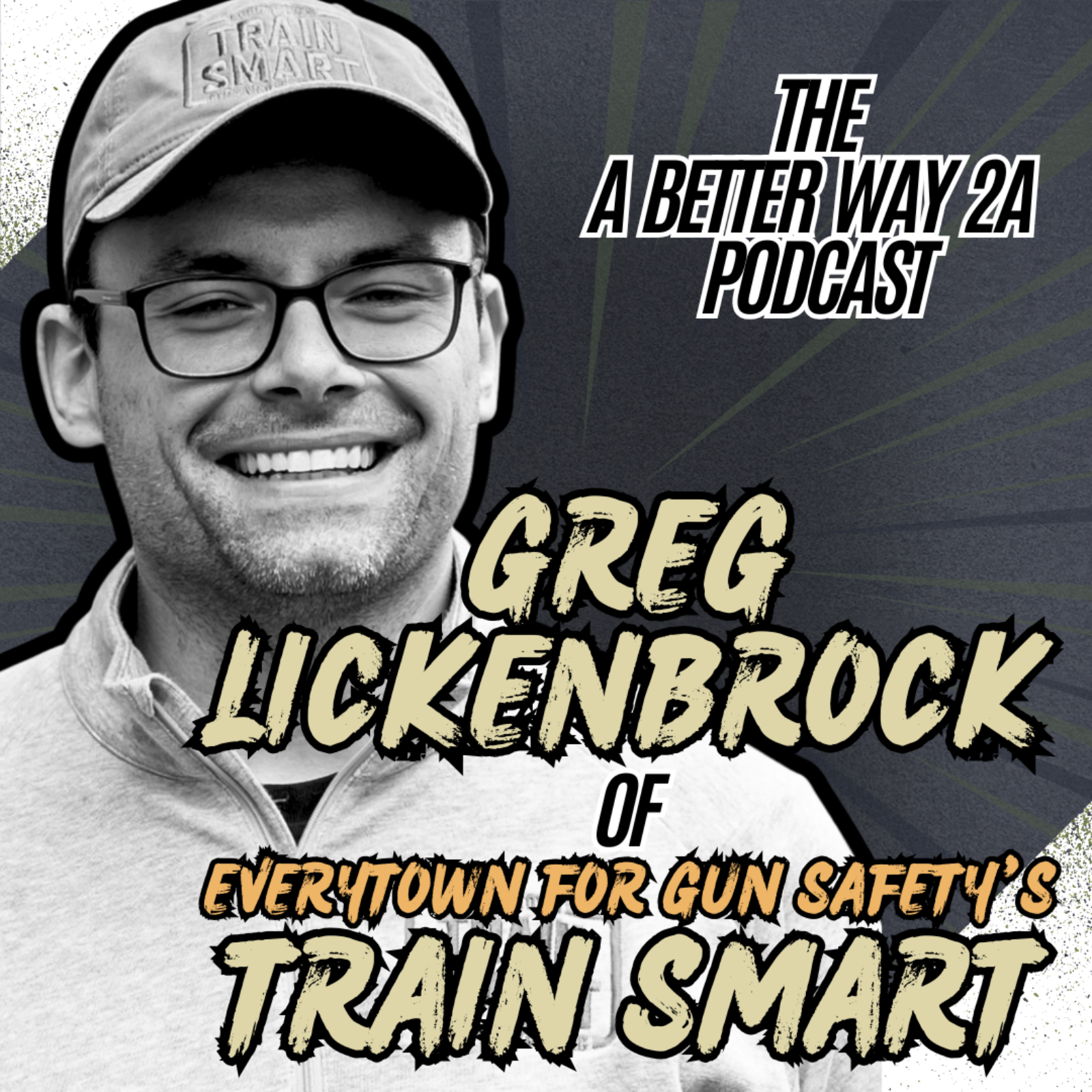
Greg Lickenbrock of Everytown For Gun Safety's TRAIN SMART
from The A Better Way 2A Podcast
70m 31s
The conversation begins with nostalgic and humorous anecdotes about childhood trauma and bullying, leading to a plea for raising empathetic children. Greg Lincoln Brock then introduces himself as a senior firearms analyst for Everytown for Gun Safety, a role that evolved from his decade as a gun magazine editor. He describes his journey from answering a Craigslist ad to becoming an expert, despite initial ignorance about firearms. The core of the discussion centers on the Train Smart program, which Brock helped develop in response to substandard firearm training courses. He recounts attending a concealed carry class that felt like a “how to get away with murder” course, with instructors giving dangerous advice, being racist, or pushing insurance sales. Train Smart aims to provide a responsible, apolitical alternative, focusing on secure storage, mental health, and practical safety, drawing on input from veterans and special operations consultants. The host, a left-leaning pro-gun advocate, admits initial skepticism but praises the program’s emphasis on safe storage and mental health, noting its lack of political ideology. He questions the omission of common calibers like .223/5.56, but Brock clarifies that Train Smart is apolitical, prioritizing safety over advocacy. The summary highlights the program’s goal to bridge gaps between gun owners and safety advocates, emphasizing education over division.
So here we are and the system is broke American dream is gone up in smoke So stop sitting there all broken hearted The I'm not Yeah, we could wax poetic about How great middle school was I'm sure yeah, I to the point to the it's to the point where if there's a movie or TV show that like is set in Middle or high school I have trouble watching it. I'm like I don't man. I don't need to relive it I feel that I feel that I I think my middle school experience was okay for the most part minus like Outside of middle school was where I had the most traumatic experiences where it was like friend groups outside I remember getting chased on a bike by big the big kids and Them saying them calling me melon head from a distance and thinking I was gonna die No dude. It's funny. Yeah, I'm a retrospect. It's fun So I'm spec but I remember like riding into a gas station with my friend and this poor dude behind the counter barely spoke a lick of English And we're like you need to call the cops these kids are gonna kick her ass And he was like I I just want you out of my store essentially It was like man. I still remember that. That's that's funny. Yeah, anyway kids kids have always been cruel Yeah, yeah raise empathetic children. Please please For the dad's sake anyway. Yes, I've got an intro. It's an official professional intro for those that are listening Today's guest is Greg Lincoln Brock who's a senior firearms analyst and technical advisor am I right for every town for gun safety? Awesome where he develops in shapes firearms training activities and initiatives on a y-set activities Including the train smart program in that role You've been involved in creating curriculum aimed at expanding gun safety education through courses like the smart guide to gun what I took before joining every town Greg spent nearly a decade working in the firearms industry as an editor and writer for outdoor In shooting related publications and he is also the author of safe gun ownership for dummies a guide designed to help both new and experienced gun owners Understand the fundamentals of safe handling and storage Because the Transmart program comes from an advocacy organization with a significant political profile reactions to it have been mixed in the gun community and opinions about your role Reflect that broader debate Which is why I wanted to have you on because I think it's gonna be a super interesting conversation today's conversation isn't going to necessarily be about Talking points on either side of the divide But about digging into how safety education is being approached with the data actually shows about harm reduction By collaboration across groups with overlapping goals is often hard to achieve and where honest engagement might Move the needle So I appreciate you coming on today, man. Yeah, of course happy to be here. What what got you started with this was train smart Yeah That's a good question I mean how'd you get into how'd you get into guns? How'd you become an editor? Oh, I felt I fell into it. It was a So I went to school for writing I got a masters of fine arts and creative writing in University, Montana and there are two things you can do with that You can write a book or you can become an editor. I moved to New York to become an editor because my writing wasn't just where it needed to be And the only job I could get Was at a gun magazine. I answered a I answered a Craigslist Yeah, I answered a Craigslist ad that had all these editorial job responsibilities and at the very bottom it said no joke Muscle of guns and I was like what is this this has to be a joke and I applied and a week later I was working there And it was a company that owned Kind of their goal was to be like second best in every Product category. So there would be quilting magazines and gossip magazines and I Landed in the gun magazine side of things and Honestly, I you know my parents weren't gun owners I went to the range a few times growing up but didn't really know much of anything got that job and just took off in terms of Going from zero to a hundred in Learning everything I could about guns because I wanted to be good at the job But I also have kind of a Photographic memory when it comes to firearms themselves Which is very annoying for my wife. I'll forget like pull the chicken out of the freezer You know, but I can tell you about this Swedish rifle from the 1800s and so I did that for about 10 years It was I got to meet a lot of different people in the industry I worked with a lot of different manufacturers on things like their publications. I think we would put out something like 70 issues A year so it was a very intense job in terms of output like working all the time in about 2017 I moved out of New York and Before I would get sent to different places like I would go to Gunside Academy for a training course So I'd go to this media event in Idaho and I'd go to shot show every year But in about 2017 I Move back to the south I'm from Florida originally. I live in Atlanta now and that's when I just started getting sent guns Like back to back to back for testing my god Oh because I According to my bosses, you know, I was living in the land of the free so let's give him that opportunity So that's when my like writing for the guns really took off as opposed to before I was Steering a lot of the gun stuff I actually one of your past guests Ashley Labinsky was one of my writers for a magazine I worked on called guns the old West she's brilliant. I try to it. Yeah, she's incredible But yeah, it's like people from her. It's like that's where I learned a lot of what I did and then in 2020 I just I decided that I needed to make a change and started helping every town as kind of a I know there will be listeners who cringe when they hear gun expert, but All I do every day is answer questions about guns and if I don't have the answer, I know where to look for the answer So people come to me with questions about excuse me guns the industry ATF things like that I'd say that makes you an expert. I mean I served as an expert in court cases and Testified about gun bills. I've you know, I but I know that I will never reach that level where someone's like this guy knows Everything about guns especially with gun owners that horizon just keeps going further and further Yeah, but it's always the people who don't know anything who compare you to that standard though Which is the funny thing like those are the people that will hold you to the strictest standard if they they'll be super into this one specific Revolver that they carried as a cop in the 80s and they've never moved past that but then if you make one vernacular error in your speech especially because of like Where who are you associated with now like no you're you are a person and on grotto You're an idiot and like that's gotta be tough you if you don't own the language You can't possibly speak on a subject. Yes, I guess and it look you you get a lot of that in other Worlds to like you know car guys. I think of like they they but there is a little bit of like a gatekeeping tendency that is a little annoying We if you say clip we know what you're saying. We know like yes I have to let it go. I'm not like well You're not talking about a little piece of metal that's holding rounds. You know, I'm not doing that Uh, and so that that always drove me a little nuts when I was in the industry even now when I talked to gun owners and stuff I'm like just just relax. Just let it just let it go let it go. Yeah. Yeah Figure it out on the run through the reigning and practice right exactly and then so train smart If I could like kind of shift to how we started that whole thing it has been a Wild ride I I've loved it honestly, but um so at every town we have a group of I think it's up to 50 now Veterans who've you know served overseas seen combat things like that they Help advise every town. They provide input. They're really helpful when you know, we have Ideas about things they come in and they say well actually this is how it looks on the real on the ground and And I try to come in and try to speak for gun owners as a gun owner as someone with my experience and You know, I provide my input, but they would they were coming to us and they were like look your name is every town for gun safety But you don't have any actual like when people hear that name they think of gun safety training And yeah, what are you doing about that? And they some of them had told us that firearm training programs can be terrible I've been to I think about seven now that Always left something to be desired and we we actually took a course me and some of the
veterans, we went to a concealed carry course in Texas where, you know, all of us have our permits. I already had a permit for Georgia, but with this one course, we had our permits to carry in something like 30 states. And the instructor was just, it felt like a how to get away with murder course. Yeah. So he was saying, you know, if somebody steals from you and it's daylight, can you shoot them? And I'm like, no, I hope not. And he goes, no, but if it's, if it's after night, if the sun has gone down, then you can shoot them. That's justified. And like that's, that's the kind of training we were getting. And not, not anything about owning a gun. We barely got any marksmanship training from it. And it was really disappointing. And that was kind of, and I actually, I had to tell the people that went with me. I said, you know, this is actually one of the better trainings I've been to because I've seen a lot of horror stories. And so we, you know, these veterans and I, we were talking and we're like, how do we create something that's better? Like an alternative that not just fills the gaps because there are some amazing firearms trainers out there today. There are, there are also some really bad ones and you're kind of stuck with whatever, whoever's near you. And I know most people are probably looking up firearm training near me. Yeah. And they're, you know, they're going for whoever's nearby and they might get just a marksmanship course, which is like a lot of people are just looking for that or they're going to get what I feel like is a product demo. I took a course where the instructor is just talking about his gear list. He's like, well, you know, I've got a surefire light on this gun and I really like surefire. And like he just, all it was was him giving us his recommendations and not really teaching us anything. Yeah. And that's part of it. I've seen just other really bad practices. I've seen instructors be racist. I've seen instructors. Oh my God. Either that or it's like you've got, you've got to go through a whole like weed. You're in the weeds of like political ideology, personal opinions about certain people and groups. And yeah, it's, yeah, it's, it's nuts. It's unfortunate because it just, it gets in the way of something that I think everyone wants, which is to be safer and more responsible with guns. And I don't think that these people like realize they're, they're pushing people away and be they're just, they're kind of building this culture that can't really sustain itself. It's not healthy. So yeah, I've seen instructors be racist in courses. I've, I've taken a course where at the very end of it, there's a self defense liability insurance salesman came into the course and was like, if you sign up right now, I'll give you this discount on it because in his mind, the only negative consequence of shooting someone in self defense was the legal fees. You're going to have to do that. Not like the thing you're going to have to live with the rest of your life. Yeah, exactly. And so it, I worked with these veterans. I was like, look, I have this book on what I wrote of what I would see as training for really, I had a lot of friends who would come to me and say, Hey, I'm thinking about buying a gun. What gun should I buy? I was like, okay, hold on. First off, some of these friends, I'm like, please don't own a gun. Like I'm, I'm begging you, don't do it. But they would ask what kind of gun and I'm like, have you thought about all these other things? Like how are you going to lock the gun up? You're going to buy a safe. What are you going to do in this, in this, in this situation? What's the gun for? Sometimes they don't even know. They're just, I just want it. Okay. Give me a better reason than that. And so that's kind of what the Ferdinand's book is is a course that I wrote of like what I would want to tell someone who was thinking about getting into owning a gun. And this program, I used a lot of that plus every input that the veterans could give me all their training. We've had some amazing like marksmanship people working with us. We're actually in the process of building out our in-person training and we're working with some consultants that were in the special operations community. And it's just been fantastic working with them. But the, the whole point is that they know the responsibility that comes with owning a gun and they know that it like in the military, you have all this training you have to go through before you even touch a gun. Yeah. And we want to bring that, we use the term training safety and accountability. We want to bring that to the civilian gun world because you might run into a good trainer. You might not. And right now the biggest certifier, like the training, the person that trains all the instructors, doesn't do a good job, I think, of maintaining quality standards and ensuring that instructors continue teaching at a certain level. Yeah. You pay a recertification fee every two years and then you're done. Like we want, we want to be just if you come to a trademark course, we have a certain standard. And we're really just trying to help people who are thinking about buying gun or new gun owners. I honestly believe, you know, I was a teacher before I became a gun magazine editor. I try to think of everything as a learning opportunity. There are still things I learned in training courses. You know, I went to a not too long ago where the instructors were, you know, they're like, yeah, it's okay to use the slide release on a handgun. And I was like, then to so many trainings where they're like, you got to rack the slide every time. And they were like, well, you know, this is not what we did in in the SEAL 90s or whatever. Yeah. They're like guns are designed for this. And here's why I was like, yeah, that's something I've got to let go of. I think every opportunity is a learning opportunity. And so I think even experienced gun owners can learn something from our courses. Yeah. No. And I definitely think that there is, I was pleasantly surprised when I took the class because I went into it skeptical, a little skeptical to be honest because of the name attached to it. And I came out of it, you know, for one, the instructor was competent, friendly, and I didn't feel like there was a, I felt that we agreed politically on things like I am, I don't know if you've looked at our page like I, I don't know what I'd call myself, but I am a left leaning pro gun person like it kind of makes me a bit of a pariah in certain groups. But many of our followers are also many of our followers are like far left advocates and socialist communists, but we have conservative people, Democrats, whatever all across the spectrum. We've got people all over the place politically speaking that follow the page. But everybody for the most part is pro gun. And everybody for the most part has the same feeling when it comes to, I'll say like the word that I would use like gun control advocacy organizations. And this was the first time that I had seen an overlap or even an attempt to bridge a gap between the gun control advocacy and the gun safety. Because something we've been advocating for for years is, okay, well, if these groups want people to be safe around guns, why are they so against teaching gun safety? So then when I saw train smart pop up, I was like, okay, Touche, we'll see what this is. And I, you know, because the main thing was, you know, people are, we teach kids about things in the school that are going to help serve them later in life. And one of the things that we always bring up is how kids are, the kids dying from gunshot wounds is like one of the number one causes of deaths in children or at least it was a couple of years ago, I know. It's still, yeah, it's still a lot of regardless. Regardless. If it's in the top 10, it's a problem. You know, and I was always like, well, then why don't we teach kids about gun safety in schools? Like, why are we so against that? And I think a lot of it comes down to the fact that emotionally we're not prepared to have these conversations that something is necessary, even if we don't like that it's necessary. But one of the things that I was very impressed with the class was there was a great detail and time provided to safe storage. Specifically, if you have kids in the home, things that you should be doing to keep them safe. There was a lot of, there was, it seemed to be a lot of conversation about mental health, in gun ownership. And these are all things that I felt were very lacking from the NRA side of the gun education curriculum. So I was pleasantly surprised with that stuff. You could tell that it was, I went into it, assuming it was going to be a facade for training and inevitably be some kind of like ideological, you know, like when you go into like an abortion care facility and it ends up just being a bunch of religious people trying to get you to keep the baby and find God. That's kind of what I was expecting with this. Yeah. Yeah. I live in the South. I totally, totally understand what you're saying. Yeah. Yeah. And it was, you know, I have to say that I overall, I was very impressed. There's certain things that, you know, and you could probably explain more as to why you guys took approaches like this. Like I remember finding that, finding an odd that when discussed.
the most common calibers, like 223 and 556, was not even mentioned, even though the AR is obviously the most common rifle in America, the most popular rifle in America, or at least the most common caliber. And I understand the like ideological reasons behind not wanting to teach things like that. If you're working for an organization that's trying to ban a specific gun, but was there a, for something like that, was there a, was that a conscious choice to leave something like that out and focus more on the more traditional types of firearms, like bolt actions and-- - Yeah, so hunting rifles and whatnot. - Let me just very quickly say that, like I don't care what anyone's politics are when you take our courses. Let me just back up and say that because gun safety shouldn't be political. It's a shame that when we talk about guns, people are kind of shoved into one corner or the other. And I also think that it's like a disservice for gun owners 'cause we're not a monolith. Gun owners are all over the spectrum. Politically, there are some gun laws that gun owners are fine with. Like to me, I don't understand anyone who's against a background check. But our courses are A political. We're not trying to push any policies or advocacy other than be safe with your gun. Like please lock it up. And so one of the reasons our courses have so much focus on secure storage is we know that that can save lives. Like every day I see headlines about kids as you mentioned, finding guns and hurting themselves or others with them. And we also have a part of the name, Train Smart comes from a program every town has had for 10 years now called B-Smart which was just about making sure gun owners lock up their guns. So Train Smart's kind of a natural outgrowth of that. If you think about it, we're showing you how to lock up your gun. We're gonna go a little bit further and teach everything else you need to know 'cause we really wanna be comprehensive on the 223556 thing. And specifically, the AR 15, I will gladly say, like I will agree with you, it is the best selling rifle today. It is not by any means the most popular rifle overall. - Numerous, yeah. - Yeah, like the number. - And if we're talking about Calibur's like the 22's on its own way above everyone else. The nine millimeter is our, we talked about, we think most gun owners, they today they buy pistols. So we generally focus on the nine millimeter for most of our work. When we do want to offer other courses in the future, like a hunter safety course, we can talk more about rifle stuff like the 223556 down the road. But also for like an introductory course, like the owning course, I don't really wanna get into the differences between the 223 and 556 or things like that, or God forbid that marketing scheme, the 223 wild, like I don't wanna have to do that. So for the sake of brevity, we are like, let's go with what our students are probably gonna have questions about. And if you're going into a gun shop today to buy a handgun, it's probably gonna be a nine millimeter. Unless you have, it might be a 22, if you have like hand strength issues or things like that. But just the whole industry has just gotten behind the nine. So, that's not necessarily-- - Yeah, nine millimeters, that's really-- - For sure, for sure. And that makes sense. That was one of the things that I noticed about the rifle side specifically. But it's really, it's one of those things that you have to ask yourself, is it my internal bias? That's looking for things to find, or is it, or is it something, if I'm looking for something, am I going to find something, kind of thing? - Yeah. - And like, just to be clear, we all have biases, right? But when you talk about the-- (laughing) - I love that, right? I have friends with biases, but not me. - Yeah, exactly. - But, you know, the most popular rifle, like overall, it's actually bolt-action rifles. So, that's what we're going with. And we wanna meet gun owners where they are and all of our stuff is tied to practical uses. So, in our hunter course, when we debut that, it's a lot about rifles and shotguns, 'cause that's what people are hunting with. We don't have a scoped revolver section because this isn't escaped from New York. - I was blown away when I found out that people hunted with rifles, or with pistols, with optics, like that, or-- - Seems to me like it's just regular hunting, but with extra steps. But-- - Yeah, it's wild. I'm not doing it, that's for sure. - No, I think it's cool if you wanna make it more interesting. I mean, if you really wanna make it interesting, you wanna go back to spears and stuff. - I was actually speaking of spears. So, when you're in the gun industry, companies like to just shower you with things, 'cause they want you to be nice to them, right? So, if you're a magazine editor, they wanna cozy up to you, so you write nice things about them. And I remember a spear. - No, a company asked me to go on a hunt once in Kissimmee, Florida, so right outside of Disney, they were like, you will love this. It is hog hunting at night, and all you get is a flashlight and a knife. - That sounds like the last kind of hunting. - I was like, pass, pass. I don't need that. - I don't need that. And it also just felt like this kind of most dangerous game, mentality, where-- - Yeah. - The person I was asking has had done every type of hunting, and was like, now I need to really put my life on the line. How do I do that? - Hots can fuck you up. - They can. And so I was like, I'm not, no thanks. - That was a smart choice. - Yeah, I think so. I also growing up in Florida, I'm not running around in swamp. - At the end of the night. - At the flashlight and then I was like, no. - Hey, look at me, I'm over here. (laughing) - No. - That's crazy. That's crazy, Tom. - Yeah, so I mean, going back to what I said, I did have an overwhelmingly positive experience with the class, and you could tell that care was put into it, but for thinking about how the stuff was going to be presented, people with actual knowledge used their expertise to form the class, because I was almost immediately disarmed. Like when I went into it, I told you, I was super skeptical, and then the instructor was clearly knowledgeable, she was super friendly, and the course materials were-- - Who was your instructor, might I ask, was it Nellis? - Yes. - Nellis, yes, she's amazing. - She's really cool. - She probably mentioned it in the course, but so she's an indigenous woman who's been hunting since, she was a kid. - Yeah, she, she definitely, she mentioned that she was, she had a long time hunting background in it. - Yeah, she's not an adult onset hunter. She's been doing it. (laughing) - And I think she tells people that she started hunting at the age of 12, just so that they don't, you know, you get too young, and then people are like, "What are you doing out there?" So I think 12 is the agreed upon. - Who are your parents? - Yeah, that's actually really funny. - But that's a, she's an example of someone who gun ownership is like, it's just been a part of her life, and it's very practical for her. She's going out to get meat. That's the kind of gun ownership that I'm like, I'm here for. - Yeah. - Put on a plate carrier and go pretend to be Milisha Joe. I'm not here for that. - Oh, we are, we are full on like, love plate carriers, love stuff. - I figured, I mean, I have to ask, are you going to shot next week? - So I would have been, I, we have a baby coming in March, and congrats. - It's thank you. It's our second one. So it's kind of like we're in the 10 yard line here, and I would feel terrible for us in Vegas. - Yeah, and my wife was like, hey, I'm in labor, and I was like, okay, great, I'll be there in like eight hours. - Right. - Whatever. - Yeah, no. - No, no, no. - No, no, no. - I was thinking of that though, because that is the like tactical side of the industry has really gotten, like just taken a foothold. And it wasn't always a case. - No, I know. And it's funny because when I have these conversations with people, I use it as a litmus test because I very quickly can tell if they are into that stuff, which side they're on, by saying, yeah, I think we should all have plate carriers because ice has plate carriers, and we need to be able to defend ourselves against them. And then watching them go from either like mildly excited to really excited, or mildly excited to super cautious, I'm like, okay, now I know. (laughing) - Yeah, yeah, it's, when I think about that, I think about who wins in the constantly, like the arms race of, well now I need to play care, and then the police are like, okay, now I'm gonna have to wear the EOD suit from the movie "Hurt Locker" because everyone's wearing plate carriers somewhere. - I wish they were, because then they'd be super slow. (laughing) - But it's like, the only person who wins in that is the companies that sell these products. - Like, well, that's a really good point. I like to point out that the gun industry has never, never does better than when a Democrat is in office, because the fear tactics that these companies use to get people to buy, buy, buy, buy, buy. - Oh. - But that being said, you know, like with the state stuff, it's tough because they're already using this stuff, and they're already going to escalate, and you know, you look at like the most recent shooting Renee Good, like she was a man on her car and look what happened, and it's like, they're gonna do this stuff regardless, and I, and I thought,
I totally understand the cautious mentality behind, let's not escalate, because I get it, I have a kid, I have a wife, I have a full time job, I have things on the line, quote unquote, that I'm sure people use to say, I don't wanna get involved, they're all valid reasons, but I also see, being polite doesn't stop from doing Trump things and doesn't stop. - No, I think there are a lot of ways to counter it. I'm probably not gonna go out and face a raft of dudes who just came out of a Lenko bear cat. - You just go, yeah. - I believe in, I'm left leaning, I'm a pacifist, I'm like, there are other ways to do this, but I also respect people's reasons for wanting to protect themselves. That's the most fundamental, I think, fear that people have is that they could get hurt, or more importantly, that their family to get hurt. And so anything you wanna do to feel safer and protect your people, do it, but don't just go do this stuff and not get training. - Yes. - I feel like a lot of people today, like COVID, there was a surge in gun sales. A lot of people bought guns. - Yeah, 'cause the government overreach and the government's coming for, they're gonna give us the jab. - Yeah, the industry, by the way, did a nice job lobbying to keep gun stores open for, they said they were essential businesses. And I thought it was funny, the head of the NSSF, he wrote a letter saying that it's as essential as bread and water, like your gun shop, which was good for gun shops, great. But I'd wonder how many people bought guns, and never got training for it. And to me, they just increased their risk. They didn't, they didn't. - Well, I look at solve any problem there. - No, I mean, look at the historically speaking, this is why it's funny, you said, I don't know any gun owner that is against background checks. And I've got, like me personally, I agree. I understand the constitutional argument against them, but in a practical sense, it's tough to say that I am morally opposed to something like that. I think the problem with it is that most gun owners see it as a sliding, like a slippery slope type thing. 'Cause we come from a perspective of harm reduction and addressing underlying issues for unbalanced and things like that. And when we see organizations saying, well, if we just had one more law, we'd be safer, knowing that that's not necessarily going to work. It's like, okay, well, then if we do background checks, then we've lost ground in this. And then it's going to make it easier for the next thing. And I think that's where most of the argument comes from. And we get stuck in the weeds of fundamentally, I think everybody would be okay with a background check if that was going to be it. And the same way with these gun stores being called essential businesses, there are definitely lobbying was in full force during COVID. And that is like an obvious, obvious byproduct of that. I remember that happening and I remember being like, oh, great, cool, like a by guns. One, not really needing them because I already had them. And two, I had this thought, like I know the average gun owner does not get the training, I mean, I don't even can edit it. Full transparency, like you have to get training here. But all you have to do is the NRA basic pistol class. And that is not the, like I wish there was a class like yours that was certified to get pistol permits from. Like obviously you have to do in-person classes which you said you guys are working on. But because I remember taking my NRA class and then I took my NRA instructor course which was literally just about teaching the bullshit. And when I taught that class, I taught it probably to a dozen classes. I added a ton of information to it because I was like, this is not a situation. - Yeah, yeah, yeah. - You really, it's so, and you know, they do a good job of talking about the safety of the firearm itself. But for years, I didn't have a gun safe. Like I just didn't feel, I didn't feel the urgency to get one because I didn't have a kid, I didn't have people coming over my house, just sniffing around. But there were tons of people who would tell you that they had the gun stolen in a home break-in or they left their guns in their car and their gun got stolen out of their car. And like, no, that's a gun that's in circulation that's going to have the serial numbers ground off, that's going to be untraceable, that is most likely going to be used in a crime. You know, that urgency was not instilled in me from that class. And that was something that I made sure to add when I was teaching it. That's something I think you guys did a really good job of doing like from the outset. - One of the things I, like if I could get everyone, if I was a billionaire and I had that much money, I would, there would be a billboard on every corner saying lock up your guns. Like if you're not using the gun, put it in a safe. And if I could get everyone to do that, I'd be happy. And that's, I think just a huge problem is today you see training courses, I see, I look at a lot of industry materials, they just show guns out on nightstands. You know, they have this kind of, I think one of the reasons people don't lock up their guns is they're like, well, I'm going to need it to protect my family. So I'm not going to lock it up. And that's the same house where the kid finds the gun and hurts themselves. I posted a video on how quickly I get my gun out of my pistol safe. It's a five finger simplex safe. There's no digital aspect of it. And I was holding my phone in my right hand, my dominant hand and rolled over out of bed. And what my left hand did it in like two and a half seconds? It's really, it's such a misconception that you can't get a gun out of a pistol safe. It's a misconception and we actually do the same thing when we've tabled at like the VA's, their convention and stuff. We bring out biometric safes and we're like, just look how, look at this. To the point where the gimmick actually, it's not a gimmick, but you know, showing people how the safes work, people think we're a safe company because we have them on the table showing them. But like that's, it's that fast. And when people say, well, you know, that might be fast, but I still would love to have the gun right there. And I said, if you don't have the nanoseconds it takes to open that safe. You haven't had enough time to decide that a gun's actually warranted in this situation. That's exactly what I was gonna say. And you also haven't thought about all of your other security measures that should be in place first. You're actually living with your gun being your first line of defense, which is not to me responsible in any way. - No. - And that's, so that's one of the reasons why we drill so hard on safes. And a lot of our training is, the problem with the gun debate today is there are people who like love guns. Like I love the mechanics of guns. I think it's fascinating how they work. I love shooting guns. It's fun. I am bored by certain types of guns at this point. I've gone the whole other way where I'm like, oh, I don't really wanna add tired of that. I have a personal bias against AR-15s because so many companies make the same gun. And you're all selling the same exact gun and they're like, well, this one has a mid-length gas tube. So it's, and I'm like, you wanna see redundancy and forced innovation. And I use that second term is carrying a lot of weight. - Yeah. - Go to SHOT show and see some of the stuff that they're like, look at this new feature that we added to this. It's got a collapsible finger guard for your trigger guard. And just in case you need a bump it off of your nightstand. And like, there's just some stuff that you just like nobody asked for this. 'Cause they have to do it. - 'Cause they're talking to somebody who I would get previewed new guns and I don't know how many times I would just have to kind of like, okay. And like put on a little smile and say like, yeah, look at the differences here. It's a new coating. It's a new, they put a new finish on the gun. Okay. - But so I have, I'm jaded. Like I've seen, you know. - I can get that. - The point is though that like I love guns from a mechanical standpoint. I love like shooting itself is very, it can be very zen to people. I love recreational shooting. But there's like the hobby that is gun ownership. For some people it's a lifestyle. For some people it's part of their job. It can even become an identity for people. There's that like tranche of conversation. And then there's people who have been affected by gun violence. They know people who have died. I personally have had several friends die by firearm suicide. And so that's why our owning course has a whole section on suicide prevention. 'Cause that's how most Americans die by guns. And we're trying to like be a bridge between those two tranches of conversation. The people who have been affected by guns and hurt by them. And the people who, you know, like guns and want guns. I think we can be a bridge between them. Because there are a lot of people who have been affected by guns who also are gun owners or understand why people own guns. I'm in that category. And I, that's one of the reasons why I, there are gun laws that I support. There are some that I'm like, we don't actually need that. But as someone who provides opinions on these things and advice, you know, there are a lot of proposed bills where I say, actually you shouldn't do that.
that this is gonna do this terrible thing, don't do this. But again, we're really trying to meet people where they are. So if you want to wear that shirt that has an AR-15 on it all day, the only thing we're gonna say about that is like you're letting people know they should break into your car. Like that's the-- - Yeah. - That's like gun stickers for sure. - Yeah, it's like, some people are gonna see that and be intimidated by it. And you should think about that, just think about it. So we try to have comprehensive training that's thinking about all these different audiences. Like you could be walking through a store where a parent is shopping and they've lost a kid where the gunman used an AR-15, for example. You're not really thinking about that 'cause you're thinking, "I really love this gun." Fine, but think about it. And that's like, I wish that was our slogan for Train Smart, think about it. Like just be considerate. But yeah, again, I really don't care what anyone's background is on this. I just want people to be safer and more responsible with their guns. I see a lot of irresponsible gun ownership every day. In Atlanta here, we have a record number of cars getting broken into. And it's like, I know immediately, they're not stealing phone chargers or those tape decks that convert people's clothes. They let them play their music on their speakers. They are stealing guns. And what are you doing? That just shouldn't be the thing. Don't store a gun in your car, anything more than temporarily. Yeah, I think it's tough because, you know, oh, it's funny you said the T-shirt thing because I'm wearing a T-shirt with guns on it. But this is the only shirt that I will wear. I have a couple of our shirts in these only. They're fake guns. They're laser guns. And it's my pew-pew tactical who I love. They're one of my favorite publications that talk about guns and whatnot. I kind of see them as like the wire cutter, like the, you know, the, like, New York Times wire cutter where they're trying to, they evaluate a bunch of products. And then they, they, like, here's the best one for this budget. And here's this. And like, I like how they do that. I am always a little wary though, because having worked on that side. Yeah. You can't say anything negative about anything or you will lose those ads. Yeah. And if you do say something negative about a product, I wish people knew this about like, when they go watch, you know, their favorite YouTube guy with a gun, they can't say anything negative. And if they do say anything, it's all grounded in opinion. So it's, well, you know, this grip texture doesn't really fit my hands. Like that's, that's kind of as negative as they'll get. There are, there are a few out there who are very, they disclose stuff, which I love. Like, you know, technically do that every time. And they are honest. But they also know that they're risking, never working with that company ever again, which is unfortunate. I, yeah, I know in it, that's a big criticism that people have of traditional gun tubers is that there are a couple out there that are pretty good, but they get the guns for free. They're not getting sponsored by them or whatnot. And those are the ones you have to find. Yeah. And that's, so that's, that's just to bring it back to, I think today when people are thinking about buying guns, they're doing what my friends do when they ask me, like, what gun should I get? They're typing into Google these searches where they're going to get videos from people like that advertising. Yeah. And they don't know it's a commercial. So they're going to go out and buy this gun that doesn't fit them. That's not in the right caliber. They're going to go to the range once and hate shooting it because they haven't had the training. And then they're never going to use that gun again. That, to me, that's like just not how to do it. So we, that's why we have our smart guy, debying a gun. It's just trying to give people like help when it comes to, if you're in them, if you're looking for a gun, we're going to talk to you about what you need to think about before you go do it, especially because gun shops can be a little intimidating. If you have some bullet points on what you're looking for before you go in, you're going to be just in a better place. I have some amazing gun shops by me. They're some of the friendliest people. They're great. But that's, I think that's honestly a benefit of being in Atlanta where you have to interact with all different types of people. And if you have this gun shop where it's the old gruff dude who doesn't really like never had any customer service experience, he's just turning people away. They're like for intimidated by it. So we, that's in our, in our first course, we have a whole section on your first visit to a gun shop. We're trying to-- - We're making the first visit. - I just want to-- - You have so in the owning course has a lot of the same material, like the secure storage section and all that. The owning course has the whole section on federal and state gun laws and so as I prevention. The buying course is shorter because we are trying to give us an hour and we're going to throw as much information as we can before you go by that gun. - That makes sense. - Yeah. - So you don't end up with, I don't want to say anything bad, but a tourist. - No, but I, you could have said a tourist and I would have known what you were saying. - Yeah, I, no, we talk to people all the time about this stuff for a little like just because your gun has never malfunctioned or done something stupid, doesn't mean that the quality control, like the problem is quality control. It's things that get by. - And you could have a $5,000 gun, it's still going to malfunction at some point. - That's just some point. - At some point, but it's so many variables. - That gun's going to be a, well, I mean, there are also, like, you know, there are some $5,000 like designer guns, like some of these, I would say some of these like higher in 1911s that are based off of like a 1911, which functionally has going to have different flaws than something like a Glock 19 or something like that. I generally speak with the mindset of like buy once, cry once, if you're going to buy a gun. Nothing is wrong, like if you need something to protect yourself absolutely buy a high point. If you need something right now, I, listen, I've spoken to the, one of the marketing dudes from high point, we had them on this class, we've had them on this class, we've had them on this episode and I know he's a marketing guy, but is he the, is he the yeet cannon guy? Is he the reason that he's not the, he's not the reason, but I, you know, I am convinced that if you buy a gun that is made specifically to be cheap by using simple designs and components that are inexpensive to manufacture, versus trying to make a fancy looking gun affordable. You're going to have a better end user experience. The fact that it's like a blowback nine millimeter or versus, which we'll call it, or it's not like, you don't have a backstrap safety, you don't have all this stuff that is, that is going to be adding complexity to the design. - Yeah, I don't think you can, I don't think you can get simpler than I, no. (laughing) - No, no. - Yeah. - I wanted to go back to something you said, because it's, this is one of the things that I'm glad you brought up. I have, I know we're running out of time, but one of the things that I, my overall, my overall goal ultimately would be to have organizations on the, and I'm going to use generally blanket terms, left and right, and I know people who are listening to this are cringing right now, because they know where I am coming from, but they know what those terms typically mean. Just for, just for, we'll say, historically pro gun and historically anti-gun groups, pro gun control anti-gun control groups. However you'd like to say it. I think that so much of the progress that we are both looking for comes from bipartisan support for measures that both sides can agree on, or even compromises that, you know, my thought of a compromise is we're no side walks away completely happy, but both sides walk away feeling they've been treated fairly. And one of the things that I recall from the class was you brought up suicide, and I'm sorry that you've had to lose people through farm suicide. - Yeah, a lot of people have, sadly. - I know, I know. And it is said, one of the things that I remember thinking was that the way that the class framed suicide as being almost, as the gun being the factor that contributed to suicide and not the underlying causes that caused the person to think about suicide in the first place. And I understand totally having a gun in the home, most cases of suicidal ideation are quick and fleeting. So having something that is instant, having something that is readily available and fast is I hate to use term appealing to somebody who wants it, who is feeling that right now, but it's much easier to do that with a firearm than it is to go to the store, get a bottle of pills or go get two handles of vodka or something like that. But one of the things that I find, I don't wanna use the term disingenuous 'cause I know that the intent is good. And I think disingenuous is used more for malicious type behaviors. But when gun control advocacy organizations tend to frame gun ownership and the end result of people dying, they seem to leave out a lot of the underlying factors that cause somebody to be in a bad position in the first place. Unaffordable healthcare, poor mental health, you know, like financial problems.
social safety nets, not being almost not existing in that country. Things that, you know, like other countries that have high rates of gun ownership, but significantly lower rates of violent crime and suicide have. Like, you look at these like, I know everybody brings up, brings up, uh, Norse countries. Because there are so many, there are so many variables that just do not apply here. They're very homogenous societies. They're much smaller, they're, there, there's, there's a ton of different factors that going to it. But one thing that they do have in large is high gun ownership per household, at least one gun per household for many of these families. And, but they also have strong social safety nets. They have universal healthcare by and large. They have, uh, accessible healthcare, you know, things like that, that we just, we can never conceptualize here. And I find that it is a bit of a disservice. And I understand you teaching a class, you can't, it's really hard to go into all this stuff. But I find that it's a bit of a disservice to people when we say things like, having a gun in the home increases your risk of suicide by gun, which of course, having a pool in the home increases your risk of driving. Driving on. But without talking about the things that make a person seek suicide in the first place. And I wonder if there is a way for, because like you said, it sucks that gun safety has become so politicized. And that when you said, if our billionaire, I put a sign, a bill board up on every street corner that said lock up your gun. And my first thought was, oh, that would be an anti-gun thing. Right. And of course, it would be a crazy thing. To think that, like, but it's, it's how we've been conditioned. That like any discussion of gun safety is partisan. And like, yeah, it's, it's so numb. But I wonder if there's a way that you think from your background, because you've been on, I don't want to say both sides, because I don't think that you are on the anti-gun side. Yeah, yeah. And unfortunately, if there's a way that you see these two groups coming together in a way that actually benefits gun owners by a march, where we can work together and make some positive change. So I, to me, that's what I'm hoping to do with Train Smart, is I'm hoping to just meet gun owners who I don't agree with on everything. But we all know that we can do X, Y, and Z, and be safe for responsible people. And hell, if every gun owner in the country was at a certain standard of training even, maybe we wouldn't need some of those laws that gun owners like worry about. But when I think of suicide prevention, right, there, yeah, there are so many factors that go into this. It's, it's income inequality. Like you mentioned, it's like healthcare. What's, what people don't talk about with those Norse countries is that when you buy a gun there, they actually check if you've gone to a therapist, they go and ask the therapist, "Hey, is this person good enough?" Are they, and it has solid enough place to own a gun? Yeah. We don't talk about that. No, and that's a whole other constitutional like that's right. You can't even have the conversation. No, you can't. And, and so when it comes to that, it's like you, you put all of the problems on the table. And you're like, "Okay, I'm probably not going to fix hundreds of years of income inequality. I'm probably not going to fix our broken healthcare system. Maybe I can at least put a speed bump in the way of someone getting that tool that's 90% effective, that leads to 90% of suicides being completed, so to speak. As opposed to everything else, which is so much lower in success rates. And that's not the term success rate, I know it's not crazy. Yeah. So that's kind of like, and we're not trying to do any of that. When we, our suicide prevention course, like the module and the courses, we just want people to see all of the options and say, "Hey, one option is, keep the gun in your home, give access to your safe to someone else. Take away your access." I love that you guys had, had options like that. That was incredible. Like, we have different options. We're putting them all on the table because some are going to work better than others. You know, if, if there's someone in your home that is in crisis or at risk of harming themselves or others, like, your gun safe should be your first option. And then you have to have a conversation and say, "What else should we do here to prevent this from happening?" And so I think that's kind of what I'm getting at though is like, there are a lot of things wrong today. Yeah. For me, I think that guns and policies, and we have to have every solution on the table and find what works best. And what drives me nuts though is when people immediately dismiss an idea without trying it. And I'm totally fine with, we, we, because I believe that we should look out for each other. I'm a, you know, I'm a little, you're not an asshole. No, I care about people. I want, I want to look out for each other. If we, if we have a law that's designed to do X, Y, and Z, and then we find out 10 years from now, it's not doing that. Great. Let's move on. Like, there doesn't need to be a slippery slope, so to speak. I'll give you an example of one where a new jersey, they regulate hollow point rounds. You can, you can have them in your home. You can take them, you can have them at the range. You can't carry them if you have a concealed carry permit. And so I have to explain to people that new jerseys making a decision to, they're allowing bystanders to be injured because someone that's concealed carrying, they don't have hollow points in their gun. So they're the bullet as a greater chance of going through someone and hitting someone else. Now that hollow points are like actually doing what they were designed to do, I know for like a long time, they just did not. But that's like a policy where I'm like, we should really put more thought into this before it got out there. And that's, I think a reason why you see that's only in New Jersey. Yeah. But that's, again, that's someone sitting there saying, we have this problem. How do we fix that? And I think everybody should be at the table and saying like, what if we did this, this, this, and this? And if those things don't work, that's okay. But again, I know we've talked a lot about like advocacy here and gun laws and things like that. Train smart. I don't care. I don't care. Come into it. If you, I know a lot of people have presumptions about every town. And there are things that people can disagree about. That's fine. I am happy to say that like to learn that you took the course and we're a little surprised. I'm here to surprise people because I think the way that things have been, the status quo just isn't working. It's not too many to me. I'm someone who I see the headlines every day as a gun expert when there's a, you know, a high profile shooting. I'm someone that people come to and they say, what gun was used? What happened? How did they get the gun? I have to look at awful photos all the time. And so I see that side of it. And also I have to live with guns. I'm a gun owner. I like shooting. There's nuance to gun ownership. And I hate this. That's the end word that we use a lot of broadcasts. I always talk about the dreaded end word. Man, the internet was so good for so many things, but nuance has really fallen off the table. It's awful. And you should look at the most recent like couple posts that I've made. And where I'm talking about like, hey, maybe not everyone's a piece of shit. And maybe we just don't understand them and watch how the comments devolve, unfortunately. But that's one of the reasons why we offer on-demand courses. So if you don't have time to take a course, you can watch our videos. But I really wish people would sign up for our instructor led live sessions. Talk to our instructors. Like have that conversation. We want that. I was surprised. That was the only person in the class. Yeah, we were working on that. We were working on that. I get it. No, you know, and I think a lot of it is like that you guys are not people's first thought when they come when they think of gun training. And that's because the NRA has such a foothold in the industry. And you know, like my my thoughts on the on there's so many minute so much minutia that we could disagree on how to get things done. But at the end of the day, when I left the class, I said overall, I'm very happy with this class. I'm happy that it is something that is available to people who do not feel comfortable necessarily taking an NRA class because I think the education is good enough. Even if like it's it's even if it's not exactly how I would teach it and exactly phrase the way that I would teach it, it the end goal and the end result is the same if not better than what we currently have available. And like that's the thing that I think people have to realize is that like perfect is the enemy of good. And you are you are if you're constantly looking for this like white knight in the in the gun control space to be like, I am here to change the way this this industry thinks that's not going to happen. And you're not going to have a legion of gun owners coming to support them. That's the same way we joke about like if Jesus were to come back today, he'd be arrested by ice. Like, he'd be old at like a crazy person.
and conservatives would call him a freeloader. But like, the enemy of good is perfect. And I am very happy that you guys exist in this capacity. I could take or leave you guys in the other capacity, but I know you work for Train Smart. But so I think I do, I am happy that this is out there. And I was waiting for this episode to come out before I made a post about it because I did say jokingly, long ago I said, I took this gun glass, so you didn't have to. And, but my analysis of it, my post about it is going to be honest and say, listen, this is a very good option for many people. And it's something that I'm happy is out there. And I appreciate it. Yeah, it is, like I said before, I was pleasantly surprised. And I'm glad that this is something that is coming to fruition from within the space. Because now we see people who have been vehemently anti-gun for their whole life now wanting to buy a gun for the first time. And they don't have the networks set up of like, I realize how niche it is to find an inclusive, non-judgmental gun culture. Yeah. And like, I like to say, you know, great, we've got 40,000 followers on Instagram, yeah, yeah, my email list is this long, but that's nothing compared to the NRA and the majority of donors who are the ones who are the loudest, who have the conversation by the neck. So the fact that those people who are like, I don't know what to do, I just feel scared and I want to protect myself. Rather than being the COVID gun purchasing people who are like, I don't want the government to come and force me to take a jab, I don't know about a gun and hide in my basement, they have a place to go. And I'm not saying everybody who bought a gun during COVID was like that people come down. Yeah, but the calls, the phones off the hook right now. Yeah, exactly, exactly, I'm muting right now. But I'm glad that there is a resource available for those people who would otherwise feel lost. And then I thank you guys for doing that. I appreciate that. And I look everybody, everybody has their opinions. I respect anyone that takes our courses, talk to me. Like, let me know what you think. This is not something that's fixed in stone. I think I would say that some of the other training programs have a curriculum that is set in stone and it's been set in stone since 1970. But we can shape things, we can involve, we can grow. I would love, honestly, for you to take, I'm so excited about the in-person courses that we're creating. I think you'd love it if, let's stay in touch after this because I would love for you to invite you to one of those. And you'll see, like we, one of the things we want to do is show people a variety of handguns so that they can try them and come away with an opinion, Nellis, for example, she helped us prototype one of our courses. And she walked away and she was like, "Wow, I've never fired handgun before, never." She could do an L-Presidente drill in like 12 seconds. And she was like, "Well, now I've got to go out and do this." Like X-Winesy, she wants more training. And the end of the day, we want to be a resource for people that, and it's just the start of your journey. We know that our training is not, it's not for the person who's looking for their 300 level course. But who knows? We'd love to be that, we'd love to meet people where they are. And we ask for feedback from students. We read that feedback, we change things, you know. And I'm just happy to grow the program. And honestly, the more people I can get into courses, the better. I would like to, if that's right. You can brainwash us into being an antagon lipjarr. That's exactly that. You're on to us. I would like to offer a discount for your listeners, if that's all right. Yeah, that'd be awesome. So if you go to the checkout for any of our courses, live on demand doesn't matter. Type in Betterway 20, lowercase, all one word. 20% off. I don't think our courses are very expensive in the first place. We want the price very, very affordable. We try. But yeah, put that code in. It'll zero out the course, the cost for you and sign up. Just see what it is. Be curious. That's, I tell people a lot these days, I'm like, just stay curious. It's very easy to see what someone else has for an opinion and just take that as your own. It's like the loudest people in the room have that for you. They have your opinion written for you already. That's why I made a podcast. So it can be louder. Right. Yeah. And that's, I think at the end of the day, what I'm here for is the conversations that the people that haven't had a voice for a while. Let's talk. If you had a piece of advice for people, it could be anything. What would it be? Invest in Bitcoin. No, I'm kidding. Oh my god. That's a hang up on you right now. A piece of advice I would say, well, I'm going to say lock up every gun regardless of what it's used for. Think about it. Like think about your security when it comes to how are you locking up the gun. And the other thing I'll say is like, when you go to the range, try to learn from every shot. But don't, don't just go to the range. I see so many videos of people just popping off rounds. You know, they put their switch on their lock and they're just firing away. Think about every shot. Like learn from every shot and remember what's behind every bullet. But I know the second I pull the trigger out of gun, I know exactly where that shot is going to go and how I probably messed up. I'm like, oh, I actually, I know that shot's going to go to the left a little bit because of what I did there. I think that's like to me, there's always a learning opportunity. And so even going to the range, learn from everything you're doing when you interact with other gun owners, learn from it. Stay curious. I don't know if that's awful. That's great. No, that's awesome, man. I'm excited for your in-person classes and I can't wait to show up in a plate carrier to one. If you wear it too low, I will call you out immediately. I literally just taught a class to a bunch of, to my, I told you, my job about this stuff. If I wear it too low, then you have every right to make fun of me for it. It's funny because the way they're designed, it looks cool when they're low. And then you put it up where it's supposed to be up on your collarbone and it looks door key as hell. And I'm like, I can't stand watching movies and pointing this stuff out. That's an Amazon plate carrier. Oh, yeah. It's tier one special operator and he's wearing an Amazon plate here. Stop. My wife really gets annoyed watching movies with me because I will, I might, well, okay, the way that his elbow is here, this is a problem. Ever that gun doesn't do that or sometimes I'll be like, you know, it's really interesting. This gun and she's like, would you shut up? I'm trying. She's like, I care about the dramatic tension here. And I'm like, yeah, but what exactly did they just cock in the gun there to make that noise? It's a clock. There's nothing. There's no sound. Why doesn't make it cocking those when he pulls it out? Right. Every time. And when he lifts it up, my favorite is the when the shotgun, the pump racking sound is used for every gun. I love that. I'm like, yeah. Okay. We all know that sound because of all movies where they're like, and here's a rifle and that sound somehow plays. And you're like, yeah, it's like the Wilhelm scream, but for guns. It is. It is very much, very much. And whoever, just a quick shout out to whoever contributes to that IMFDB, I'm sure you've seen it where it's, it's like IMDB, but they list all of the guns that appear in a movie or TV show. How am I ever heard of this? It is the nerdiest thing you will ever see. I'm like, you know, have you tried paint by numbers? Have you tried wood woodling? Go to that website, IMFDB.com, and you will see the detail that people go through. And they're like, okay, they'll list every making model of gun. And then they'll also talk about, well, they're like, interestingly enough, the finish on this one is an agronistic for this time period. They add all that. I mean, what do you do? And like go. That's actually amazing. It's such as an itch. It is both fascinating and also. And terrifying. Yeah. It's like, have you called your parents in a while? You know? Greg, thank you so much for coming on, man. This is a great episode. I feel like I could talk to you for another hour, but I do have a four year old birthday party to go to, which is going to get me in trouble if I wear that plate carrier to it. I won't do that. I won't do that. It's not that kind of birthday party, thankfully. It's a, there's a dark joke in there somewhere. I'm sorry. It's not funny at all. I was just talking to somebody. I wanted my friends' house to burn down recently. And so did the other two houses next to where were you. I, well, it's actually in the town that I work in and they're all retired firefighters. They all live next to each other. Oh, wow. So it's an insurance game. Well, it's not actually, but when I looked at him, when I saw him for the first time, I said, why are you trying to burn your house down? And he's like, that's actually not funny. I was like, I'm so sorry. That just came out naturally. I'm so sorry. It's not his first house, thankfully. He's retired and has a rental property. Anyway, okay. No, I was worried. It's still horrible. Stay horrible. The way you phrased it, that was first house.
first that was it was not the first time that he's at a house. So that would be a terrible schedule. All right. Well, Jordan, it's been an absolute pleasure. Greg, thank you so much, man. We will definitely keep in touch. And remember, better, if you're still listening, go to our Patreon. Yes. Yeah. And better. Also, the discount code, trainsmartgunsafety.org, better way, 20. Sick. All right. Thank you very much, man. Better pie. [BLANK_AUDIO]
Podcast Summary
Key Points:
The host and guest discuss the cruelty of children and the importance of raising empathetic kids.
Greg Lincoln Brock transitioned from a gun magazine editor to a senior firearms analyst for Everytown for Gun Safety, focusing on safety education.
The Train Smart program was created to fill gaps in firearm training, addressing poor-quality courses that often include dangerous advice or political bias.
The program emphasizes secure storage, mental health, and responsibility, aiming to provide apolitical, evidence-based gun safety education.
The host, a left-leaning pro-gun advocate, was initially skeptical but impressed by Train Smart’s focus on safety without political agenda.
Summary:
The conversation begins with nostalgic and humorous anecdotes about childhood trauma and bullying, leading to a plea for raising empathetic children. Greg Lincoln Brock then introduces himself as a senior firearms analyst for Everytown for Gun Safety, a role that evolved from his decade as a gun magazine editor. He describes his journey from answering a Craigslist ad to becoming an expert, despite initial ignorance about firearms.
The core of the discussion centers on the Train Smart program, which Brock helped develop in response to substandard firearm training courses. He recounts attending a concealed carry class that felt like a “how to get away with murder” course, with instructors giving dangerous advice, being racist, or pushing insurance sales. Train Smart aims to provide a responsible, apolitical alternative, focusing on secure storage, mental health, and practical safety, drawing on input from veterans and special operations consultants.
The host, a left-leaning pro-gun advocate, admits initial skepticism but praises the program’s emphasis on safe storage and mental health, noting its lack of political ideology. 56, but Brock clarifies that Train Smart is apolitical, prioritizing safety over advocacy. The summary highlights the program’s goal to bridge gaps between gun owners and safety advocates, emphasizing education over division.
FAQs
Train Smart is a gun safety education program developed by Everytown for Gun Safety, focusing on secure storage, mental health, and responsible ownership for new and experienced gun owners.
Greg joined Everytown after nearly a decade in the firearms industry as an editor and writer, seeking to improve gun safety training and address gaps in existing courses.
Greg encountered courses that were like 'how to get away with murder' classes, focused on product demos, or included racist or political ideologies, lacking real safety and marksmanship training.
Train Smart is apolitical, emphasizes secure storage to prevent child accidents, covers mental health, and aims to bring military-style training and accountability to civilian gun ownership.
Secure storage is emphasized because it directly saves lives, as headlines frequently show children finding unlocked guns and hurting themselves or others.
No, the course is apolitical and focused solely on safety, not on pushing any policies or advocacy, regardless of the organization's broader profile.
Chat with AI
Loading...
Pro features
Go deeper with this episode
Unlock creator-grade tools that turn any transcript into show notes and subtitle files.
 PodcastTranscript AI