Great Environmental Shocks in History | How An Earthquake Splintered The World | 4
from Legacy
45m 27s
The transcription explores the psychological difference in how people perceive historical versus contemporary disasters. The speakers argue that distant events, like the Justinian Plague, are often romanticized or treated as "fun and juicy" due to emotional distance, while modern catastrophes evoke genuine shock and empathy because of media imagery and personal relatability. They acknowledge the need for greater sensitivity when discussing recent tragedies that may directly affect listeners.
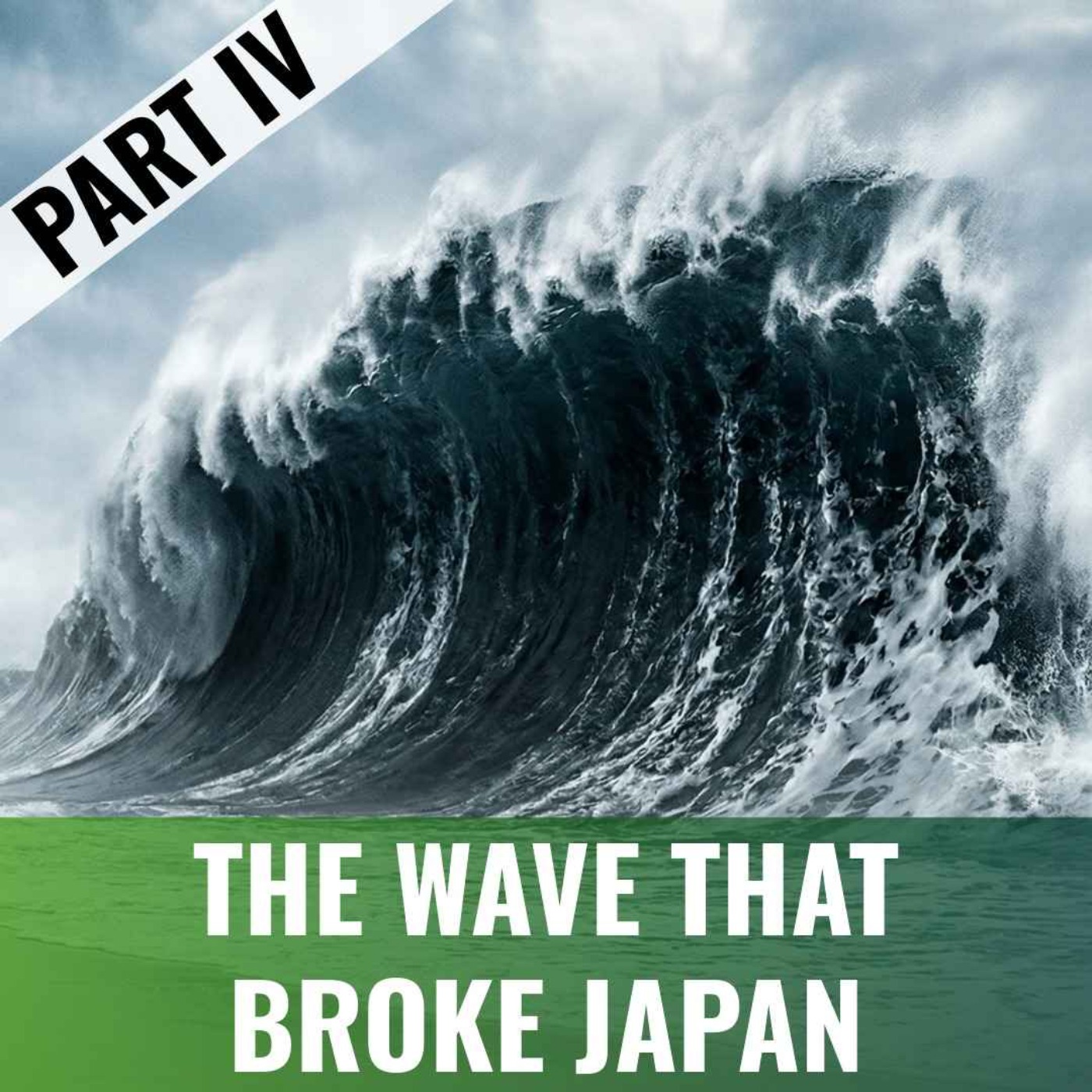
The conversation then focuses on the 2011 Tōhoku earthquake and tsunami in Japan. They explain its geological origins: the Pacific plate subducting beneath the North American plate, locked for centuries, accumulating immense strain. When it ruptured, the earthquake reached magnitude 9.0-9.1, displacing the seafloor by 50 meters vertically. This sudden rebound displaced hundreds of cubic kilometers of water, generating a tsunami traveling at jetliner speeds. Japan's jagged coastline funneled the waves, amplifying them to heights of 40 meters in some areas, overwhelming seawalls and flood defenses designed for smaller events. The speakers emphasize that while Japan was well-prepared, the scale of the disaster exceeded all predictions, highlighting the limits of hazard modeling. The aftermath included catastrophic human and infrastructural losses, with the tsunami penetrating up to 10 kilometers inland in some places.
So, Afro, we've been talking about natural disasters, environmental challenges, catastrophe. Do you think it's easier to talk about that in the distant past that feels further away? Is there something that's harder to talk about things that we've seen in our lifetime? Why does it feel worse to be talking about the modern age? I think about that all the time. How come Jack the Ripper Murder is like fun juicy, whereas a murder yesterday is horrible and upsetting. It's like we have this kind of cognitive dissonance that people lived in the past. We don't really have to apply the same empathy to them because we just so don't know them. And when we were talking about the Justinian play, my mind immediately went to scenes from movies I've watched about the Black Death or Game of Thrones where you seek kind of ancient bodies piling up in the street. But if we come and talk about contemporary disasters, I am connecting with the shock and trauma and distress of seeing things on the news and seeing children who could be your child or all the people who could be your parents and it just lands different. And I'm not saying that's great by the way. I don't like the way we talk about Jack the Ripper's victims or about terrible things that happen in the past as if they're kind of fun and juicy. But you can see how that distance does make it feel like a different kind of event. Do you think it's because of TV that we can see those images and we can see them again and again and they kind of see themselves in? Or do you think it's because these have happened in our own lifetime and therefore it feels that much more real and it's just the way which we think about history as kind of these guys are all dead anyway. So if there are tens of thousands of bodies piling up on the streets of a city a few hundred years ago, you know, it's all awful but I've got no way of connecting to it. Do you think it's about because we can see that it's part of our own lives? It's being dehumanized hasn't it? I mean we think about the agents as always dying these terrible premature deaths from famine and disease or gladiator battles. You know, we've been programmed through entertainment with this idea that life had a different value then because we only ever really see it in the context of it ending brutally. Whereas we know more than life to be complex and multifaceted and precious because we experience it. I mean, maybe there are people listening have a way better imagination than me be to but when we talk about the Justinian era, I'm going to the gladiator movie. I'm not thinking about things that I've seen but I that could say more about me than it does about us. Well, I just also wonder, you know, just conscious when we prepare in the script, you know, about being much more sensitive about how you talk about things that have happened recently or in our lifetimes, whether you need to be more solemn about what it's appropriate to describe as well, whereas you wouldn't necessarily think too much about that about things in the more more distance past. That's a fair point. You know, there are people listening who might have been personally affected by what we're talking about in this episode, whereas we can confidently say nobody listening was personally affected by the Justinian plague or at least, you know, if they know something about how their ancestors might have suffered, they're distant enough that nobody, they know will have any memory of them. So I think it's true that there's also a level of respect to the things that people have lived through that might be personally affected Peter. Well, at this time, we're going to be talking about something that I'm sure everybody listening to will have seen on the TV and know about, and it's about how an earthquake splintered the world. The date was the 11th March 2011, and the location was 30 kilometers below the sea floor around 130 kilometers east of Sendai on the eastern coast of Japan. Hello and welcome to a new episode of Legacy. I'm Peter Fraggapern. I'm F.W.H.H.H. And this is Legacy, the show that explores the lives of ants and ideas that have shaped our world, and asks if they have the reputations that they truly deserve. This is episode four in our series on the great environmental shocks in history. How an earthquake splintered the world. So, Afro, we've talked about volcanoes. We've done a plague foe chai. We've looked at bovine diseases. What about earthquakes? Have you ever been through an earthquake? Have you ever lived through an earthquake in LA? Where else? Yeah. The first time I ever went to LA with my family was the day we landed late at night, and the next morning was one of the biggest earthquakes in living memory in California. It was a point, something on the Richter scale. We were on the 30th floor of a high-rise building, I believe. And we were so green, we'd never experienced an earthquake before. We didn't know what to do. I think if you ask my daughter, what she remembers, she would probably say that the elevators were out of order for about two days afterwards, which when you're on the 30th floor. It's a long way up. It's a long way, but that is a very lucky escape compared to what some people suffered in it. And it is weird. It wasn't for us like how it looks on TV. Our building was just gently swaying. It was in the daytime. You knew what was happening. I'm embarrassed to say it took me longer than it probably should have to work out why our building was swaying, because it was just such an unfamiliar sensation. But I'm sure people who live in earthquake zones and are more used to it would immediately recognize that's what it was. But my senses went into a state of complete confusion. I struggled to match what I was feeling with what I was thinking for a good minute. Completely terrifying. Well, like you said, for people who live in earthquake zones, there are earthquake zones. So the reason we're talking about Japan is because Japan sits at the center of one of the most complex and dangerous junctions of tectonic plates on our whole planet. Off the country's north east coast, there are four major plates that interact. There's the Pacific plate. There's the North American plate, which is sometimes described locally as the aquasks micro plate. There's the Eurasian plate and there's the Philippine sea plate. And if 2011, the earthquake that we're going to talk about took place along the Japan trunch where the Pacific plate is forced underneath the aquasks or the North American plate in their classic subduction zone. If you remember geography, I think GCSE as well as A level, but anyway. And this is a particular place where the Pacific plate is old, it's cold and it's dense. And that geological setup has a particular impact. And in this particular case, has a particular resonance too. It's interesting to talk about a plate as old because as someone who didn't do geography at GCSE or A level, all plates seem pretty old to me. But the thing is, is that these plates are actually growing, moving things and they date from different eras in the formation of the earth, Peter. Yeah, this, but the Pacific plate moves westwards around about eight to nine centimeters a year, which is quite a lot. That's about as fast as your fingernails grow. Although I suspect no one listening will have ever managed to let those get through the full 12 months. But because it's dense, it means it's also sinking and it's sinking underneath Japan, dragging the sea floor down with it. That's a process that's been going on for tens of millions of years. And it's the reason why, in fact, Japan exists at all, but it's also the reason why the islands of Japan suffer from some of the most powerful earthquakes on the planet. So you didn't do geography GCSE, but you know, tell us a little bit about subduction and about strains and how things lock together because I know that you'll have been looking into this as well for today. And also, even though I didn't do geography, my dad is a geophysicist. So he's the kind of person that when you go on holiday, he will tell you how to do that your geography GCSE. Oh my gosh. I've had him probably more interesting education, going walking on mountains and cliffs and being told stories about their formation and the different ages. He's a really fun person to go and walk with. So my dad was a geologist. So I was told about tectonic plates when I was a little boy and I was less interested in them than I am now. But yeah, okay, so good to us. So you know, you'll know all about this from, it'll be thanks to your dad that you could tell us about strains, toilet pressures and subduction. He's a fan of the show shout out to my dad. We should have got him on to explain this to our. So the Pacific plate is constantly moving, as you said, and it's shifting westward and it's growing at the rate of fingernails. I'm not going to show you mine in their current state. But the boundary between two plates can become locked by friction. So when that happens, motion continues deep underground. But if you imagine something moving underneath and the shallow edge of the plate is stuck. So there's a pressure that builds between the motionless plate and the moving layers underground. And as the Pacific plate keeps pushing, that stress accumulates the overriding plate. Now that's the part on which Japan sits starts to bend and warp with that pressure. And it's a deformation that's not visible to the human eye or barely. You can measure it by GPS, but it has real world consequences, Peter. Well, it's measurable now by GPS. But in the years before 2011, parts in all these which are parallel being dragged several centimeters eastwards. It's a bit like it's a bit like imagining a rubber band about to snap. You know, it's in elastic energy. And when things snap, they bounce back to. And crucially, and again, it's something I've learned a lot about in the last few years is that actually lots of regular small tremors are quite good at unlocking that stress. And in fact, this region hadn't experienced a really big rupture for centuries. So although there had been some smaller ones, they hadn't released enough of that accumulated strain.
And so what happened on the 11th March in 2011 was that that broke. There was a massive rupture and at 1446 or 246 PM, local time, the lock section of the boundary plate fails catastrophically and produce this sudden sequence of events. Just before we talk about what happened next, how much can scientists predict when these events are going to occur? Because I'm thinking about whether or what can make activity, we usually have some kind of early warning system. It feels like with earthquakes, it's never been possible to know the moment that a plate like that is going to rupture. I'm not a seismologist. So there are lots of different ways, I think, in which you can be anticipating problems. But you know, if you're in an earthquake zone, that there are likelihoods, and you could build backwards, which is in this particular case, if you haven't had a very big tremor, you can assume that there's going to be an event at some point, but trying to guess where that might happen, you could be wronged by tens of thousands of years. So it's a very tricky thing to work out. Forkaneers have some signs of waking up a fall house, so you've got some idea that something's going on, but earthquakes can be literally bolts out of the blue, but you do know roughly where they might occur. It's just when and with what magnitude? I mean, a margin of error of 10,000 years is not very helpful for predicting. That's now a seismologist. I mean, you mentioned these plates, these were formed hundreds of millions billions of years ago. So in fact, the idea of trying to be predictive is really difficult. So a lot more time goes into thinking about mitigation and how do you deal with consequences rather than anticipating. But tell us half what about what happened on the number of the March. So this earthquake, which no one could have predicted with any degree of accuracy that could have really led to preventive measures, begun 30 kilometers beneath the sea floor, around 130 kilometers east of Sendai, and it rapidly propagated along the fault line. And what made this earthquake extraordinary was not just its magnitude, which was humongous, so 9 to 9.1 on the Richter scales, the largest ever earthquake recorded in Japan. So that shows just how much the fault moved. The Pacific plate lurched more than 50 meters relative to the overriding plate. And that's one of the biggest fault displacements ever measured on the earth. Remember we're talking about plates that are often moving in millimeters or centimeters a year. This is 50 meters in one movement. So that's a mega thrust earthquake, Peter. And that evolves a fault of hundreds of kilometers long. In this case, about 500 kilometers, a fault of 10 kilometers wide. And a slip-ex study all the way to the shallower part of the plate boundary. So the shaking lasted for over six minutes, which is unusually long, even for a great earthquake. And the vertical movement is what causes the tsunami and causes the tsunami. Earthquakes only generate tsunami when they displace water. That requires vertical movement of the sea floor. And in 2011, the sea floor above the fault was violently deformed. So parts of the sea bed were thrust upwards by several meters, other parts subsided. And the coastline in northern Northeastern Japan dropped by a meter permanently, affecting local sea levels. And near the Japan trench, the overriding plate, effectively sprang back after being bent downwards for centuries. And that sudden rebound pushed the ocean through upwards, lifting an enormous column of sea water above it. And this happened almost instantaneously, because the power of the earth's movement. So that's the rubber band you were describing earlier, which was gently bending, bending, bending. And now suddenly it's just snapped. It's a huge, violent movement. And it forms this tsunami, Peter. And this tsunami was not a wave in the ordinary sense or how we might imagine it when we see them in movies. It was the displacement of an entire water column from the sea bed to the surface. So you talked about how this was 30 kilometers underground. This water is springing all the way to the surface along this huge fault line. The ocean of other faults suddenly lifted and then lowered after a vast area, because gravity is immediately tried to restore balance. About generates a series of long wave length waves that radiate outwards in all directions. And in deep water, and some of you will remember that from reading about it at the time, these tsunami waves are traveling at literally the speed of jet liners. So up to 800 kilometers an hour. But with very low height, almost invisible to ships at sea. And as the waves start to approach the coast, the water shallows. And the energy compresses the waves vertically, causing wave heights to grow dramatically. And in some places, the tsunami exceeded 40 meters in height, which is amongst the largest ever recorded. And I wonder, Afro, if you could tell us what, why the tsunami was so devastating? Well, there are two main factors that made this particularly destructive. One, the shallow rupture near the trench. So because the fault rupture extended to the very edge of the seduction zone, it maximized the area of sea floor that could be displaced. So if you imagine that the water is all essentially available to this force, it's harnessing a huge amount of water and triggering it upwards into this kind of tower that is then spread out through these violent waves. This is, if you were to design the most efficient way to generate a tsunami of maximum destruction, this would be a shallow rupture near the trench. And then the second thing that was quite unique about this tsunami was the shape of Japan. So the north-eastern coast of Honshu is a coastline that's not at all linear. It has many narrow bays and inlets. So if you imagine these kind of little pieces going in, they act like funnels. And when the water goes in there, they help to amplify wave height and concentrate energy, which is now shooting the water inland. So if it had been a flat straight coast, it would have at least not been amplified from its already humongous power. So from a geological perspective, the earthquake and the tsunami were rare in their size and destruction, but they were also not anomalies when you look at the geographic factors. So they were the result of long-term plate motion, centuries of stored strain, locked subduction interface and the suddenly elastic rebound. What shocked scientists who've looked this afterwards wasn't that it took place, but just how much strain had accumulated without being released. So you know, rubber bands all break, but this one had just kept all going and going, being pulled, but also how earlier hazard models had underestimated the scale of possible seafloor movements. I mean, it was something specifically enormous. And you know, from a national point of view, the Earth reacted and did exactly what physics, geophysics, and geology would allow it to do, but from a human point of view, it turned out to be catastrophic. So when we come back, we're going to think about some of the consequences of what happened next. [MUSIC] So if you can imagine a seafloor that's now turned into a rollercoaster, it's being thrust upward, gravity's pulled it back downward. The ocean is instantly thrown off balance and into a state of turbulence. So a vast volume of water that we're talking hundreds of cubic kilometers, which is almost impossible to visualize, is displaced almost instantly, Peter, in a matter of seconds. So that's generating not one event, but a series of tsunami waves. And they begin racing at these lightning speeds as you were describing Peter like a jet outward from the Japan trench. And the first tsunami wave reached as the coast of Honshu about 20, 30 minutes after the earthquake is struck. In some areas, particularly along the San Rika coast, the sea first withdrew sharply, exposing harbours, sea beds, fish farms and so on. And that's often what one expects when you know that the tsunami's coming in. And again, you'll have seen that from the 2001 earthquake offbound at Achi. But what followed, there wasn't a single wave, but a sequence of powerful searches. And the first wasn't the largest. In several tales, later waves were much higher and more destructive, coming in tens of minutes after the initial impacts. And in those bays and to the narrow inlets that you mentioned, affwear this tsunami is being amplified by coastal geometry. So it's been funneled inwards, piling it up and rising it vertically, reaching in some places like Miyako and often onto water waves at heights of 30 to 40 meters, which is larger than really big skyscrapers. And those overwhelmed sea walls that have been designed for earthquake protection, tsunami protection, but anticipating much smaller scale damage. Because remember Japan is known for this plate movement. It's an earthquake zone. Japan has some of the most advanced coastal defenses in the world. We're talking concrete sea walls, break waters, floodgates, elevated evacuation routes. Japan was prepared for an earthquake, a tsunami, but nothing of this scale could really have been imagined. These defenses were designed around the maximum assumptions. And we heard earlier that scientists predicted that these kind of plate movements could take place, but no one predicted the scale and destructive force.
of what happened in 2011. It completely exceeded all of the defenses that Japan had. - So seawalls were overtopped or shattered. Flood gates told from the foundations. You know, ports and harbours, as we mentioned, became conduits for water to come in. And the astonishing power took some of these waves as far as 10 kilometers, it landed in the flat closed-door plains, such as around Sendai. And it went through fields over roads, rivers, and so on, smashing apart houses and turning cars into bashedrograms. The most moving and most terrible, I think, single moment was the destruction of Okawa Elementary School in Isshino-Maki, where teachers and pupils had survived the earthquake, but remained on school grounds as the tsunami approached. There was confusion and disagreement about the staff about whether to evacuate up here or to stay put, and no clear Kamal was given for nearly an hour. And because the school was just a few meters above sea level, a next to a river that was conduit for water to come in. When the evacuation finally began, it was too late. And it hit us just as the children were moving and tragically 74 pupils and 10 teachers were killed, and only a few survived by climbing trees or by nearby structures. But the investigations, again, concluded that the disaster was not unavoidable, and the earlier evacuation would almost certainly have saved lives. So that was the initial impact of the waves. But then, therefore, you got the worry about what happens when the water starts to retreat back out. That causes a second wave of disaster. So we always think about tsunamis as the ocean pushing in and invading the land with these huge waves. But what we don't think about is that when the waves reach their inland limit, gravity kicks in and pulls all the water back towards the sea. So this is essentially a reverse tsunami, and it can be just as destructive as the initial surge. So it was the water drains violently back to the ocean. It's dragging with it debris, collapse buildings, people who survived the first wave now being swept away back with the retreat. And the harbors are left choke with the wreckage while the river mouths become conduits for repeated flooding. Because as this retreat is happening, new waves are coming in as well. So it's a battery in both directions, and it can be incredibly difficult to withstand. And it doesn't end quickly. It just keeps on going. The waves keep coming for hours after the earthquake. Each one making the damage from the first or from the ones before even worse. And it's precarious, not just in Japan. Waves reach Hawaii after seven hours. They reach the US West Coast, not too long afterwards, Chile within a day. But along Japan's coast, the destruction is complete long before the oceans come. And the human landscape, you know, again, it's a fun, difficult to read about, watch, and think about again, because, you know, the destruction was totally catastrophic. And again, it doesn't just end when the waters can't out 'cause there are aftershocks, some exceeding magnitude seven that trigger landslides, damage, already weaker buildings, and keep populations in a almost constant state of fear. So the devastation is catastrophic from loss of life to crack roads, levees failing, rivers flooding unpredictably, and total instability. And by the end of the day, the oceans back to equilibrium and the waves are smaller, but it gets harder and more difficult after that, because the slow, grindy aftermath of cold, of exposure, of power outages, uncertainty now starts unfold on human timescales. Japan, heard by now, absorbed the largest earthquake in its recorded history, one of the most destructive tsunamis ever observed. But the thing that many people will remember associated with this crisis was actually not either of those in itself, but what happened as a result at the Fukushima nuclear power plant? This is a power plant that sat on Japan's northeast coast, and it was badly affected by the events of this earthquake, Peter. And that, I think, is the new story that really sent those who had already watched with horror, this destruction and loss of life on edge that it might affect them personally, no matter how many thousands of kilometers away they were. And I think it's one of the things that has legacies that we haven't really thought too much about that we're going to come to. But Fukushima Daiichi, or Fukushima we're going to call it, was home to six boiling water reactors, desired in the 1960s, late 1960s and 1970s. The site had been cut out of higher grounds during construction, leaving it close to sea level deliberately. It was built to supply electricity to the Tokyo metropolitan area, one of the most densely inhabited and conglomerates on Earth, that's about 200 kilometers away. And there's a reason to do that. You put reactors quite far from cities because there's perceived risk. You put them on the coast because they offer isolation from dense populations. You build transmission lines, of course. But there's a reason why you put them on the coast and it's because nuclear reactors were operating normally required huge amounts of water to help cool them down. And sea water provides basically an infinite heat sink. It allows heat to be carried away continuously and reliable. And coastal silting avoids dependence on rivers that could do the same thing, but they can dry up or they can flood. So it had been located somewhere specifically with a recognition that there might be a challenge at an issue around safety, but not anticipating anything around these kinds of what we were to later see. And of course, being in Japan, it was designed to withstand earthquakes and to a point it did. So when the magnitude nine earthquake struck on them at the March, the first three reactors were operating and reactors four, five, and six were already shut down. And that was part of the design that the operating reactors would shut down automatically within seconds. So the earthquake did not cause any disaster. The system was functioning as it was supposed to in the event of an earthquake. What happened was that after this automatic shutdown, reactors continued to produce decay heat. So roughly six to seven percent of its full power declining over time. But this was the heat that has to be continuously removed by cooling systems for the system to stay safe. - And as you mentioned, after the reactors shut down automatically, control rods inserted that stop the nuclear-efficient reaction, but the earthquake had damaged transmission lines which cut off external electricity to the plant, which also being expected, the backup systems activated, diesel generators came on automatically, and these powered the pumps to continue circulating the cooling water. So at this point, a Fukushima was stable, but obviously vulnerable. But about 40 to 50 minutes later, after the earthquake, the tsunami arrived. The plant had been designed to deal with a tsunami of around about five to six meters in height, and the actual wave was 13 to 15 meters. So the sea wall was over topped and water flooded into the site, and crucially, diesel generators were submerged, have disabled. Electrical switch gear was flooded, and fuel tanks of cabling were knocked out. And that caused the station blackouts, and no external power, no diesel power, and only limited battery power remaining. And that's where the decisive failure happened at this facility. - So this is where you get into disaster territory. And if you've seen Chernobyl, any of those movies about system failures and nuclear stations, this sounds familiar, because it's a step-by-step failure of all of the things that are designed to keep nuclear reactors, which are obviously inherently dangerous, completely safe. So there's no power now. That means the active cooling system stop. As a result of that, water levels inside the reactor pressure vessels decay and heat boils the water away. So now they're exposed. That means temperatures rise rapidly. So conium cladding, which is supposed to protect them, begins to react with steam, which isn't supposed to be there, because they're meant to be being cooled. That creates hydrogen gas, which is not a gas you want anywhere near a nuclear power system. - And so over the next few days, there's a core meltdown in reactor one. In fact, that happens in the first few hours. Reactor two and three, following the next couple of days. And fuel assemblies partially or fully melted and slum to the bottom of the reactor vessels, which is a lot of nuclear explosion. But it's a loss of coolant accident with severe fuel damage. And there's hydrogen gas buildup, as you mentioned, I thought it's highly explosive. So reactor one, explodes all the 12th of March, the next day. And it's reactor three, explodes all the 14th, and reactor four, the next day. And they're not completely breached, but they're very badly damaged. They're reactor containment vessels. And over the next weeks and months, a group of workers incredibly brave called the Fukushima 50, work in terrible conditions to try to stabilize the reactors. They do it with no lighting, with almost their instrumentation, with riding radiation, with the worry of aftershocks. And they do the best they can with minimal information to get sea water pumped into the reactors as a last resort measure to get them turned off. And they're successful in doing that. So I don't want to say disaster film ready. I mean, the dealing with this kind of pressure and with the stakes evolved was completely epic. So by the end of March 2011, the reactor temperatures are back onto control. Future explosions, further explosions have been prevented. And there's a fragile cooling system that's working. The problem is, though, these heroic workers managed to stop the system exploding, essentially, by cooling them with sea water. But by pumping sea water in, well, one,
it means that the system is written off, you know, which is kind of the least of people's worries at that moment, I think, but it also contaminates the site and the surrounding water. And that can have long-term environmental consequences. And in fact, for those workers, the Fukushima 50, it's actually a miracle Peter that none of them died from radiation sickness, you know, and as you know, from other instances, especially Chernobyl, the those workers that go in and try to stabilize the system under really unsafe emergency conditions are often the first to lose their lives as a result of exposure. And since then, we've had the last over the last 15 years or so, lots of debates that you're proud about what to do with the contaminated materials. And in 2023, since the beginning of 2023, we've had diluted and treated water being pushed back into the oceans, which is, you know, obviously not great. I mean, there, notionally, the tritium levels are being kept below international safety limits, but, you know, as you mentioned, I've heard the contamination, the pollution, etc. as well. And then, of course, there's still the hardest part of the deal with, which is the fuel debris. So fuel that's been melted and mixed with structural materials has formed highly radioactive debris, far too high for humans to deal with. And robotic pros have been used for years to map and sample the debris, but it's going to take decades to deal with that too. So at the moment, Fukushima Daiichi is officially going through a 40 to 50 year decommissioning process, the damaged reactors are going to be dismantled piece by piece, but it's never going to return, of course, to a power generation. But the long term consequences locally were not as bad as everybody thought. There were some evacuations at the time, obviously living close to the reactors is not sensible for the time being. It caused lots of psychological stress, but it had huge implications, the disaster in reshaping Japan's energy policy, public attitudes towards power, global safety standards. And when we come back, some of the consequences and the legacies that had, have had very dramatic and important implications for global geopolitics as well. The tragedy became a turning point in Japan's disaster education, leading to evacuation protocols, school responsibility, flight to high ground ideas, being reshaped and made much more fit for purpose after these major coastal earthquakes. And not just in Japan, because specific wide warning systems were given a much needed upgrade. Countries from the United States to Chile and New Zealand realized that they needed deep ocean pressure sensors, they're called dart boys, to speed up tsunami modelling, so that warnings could be issued within minutes. So as these big disasters often cause, there was a realization of the flaws and weaknesses in the existing system. And also coastal evacuation planning. We heard about the tragedy of the school that was unsure as to whether to evacuate. There has been a significant strengthening of evacuation protocols in countries like Chile and Indonesia so that if larger than expected waves hit, there are new ways of ensuring that people get out of danger in time. And Afro, I know you spend time on the West Coast. You'll know there too that there's been lots of discussion around how to improve a lot of warning systems, but to improve defenses, so reinforced towers, elevated shelters where high ground is distant, lots of parts of Indonesia are highly active, volcanic and earthquake prone zone as well. And then education drills going global. So organisations like UNESCO and national agencies promoting lessons like don't wait for warnings, move immediately. And that they've been incorporated into a school curriculum, New Zealand, Peru, Philippines, lots of South Pacific islands too. So there's been a really positive, I guess, legacy to learn from some of those lessons. And also about modeling, the things could be much worse than people had thought they would be. But it's also had impacts on energy more broadly, hasn't it? Well, Japan had this reactor for a reason. And as we heard, it was supplying energy to Tokyo, which is a huge and densely populated urban innovation. So instantly, 30% of Japan's electricity supply disappeared. So that creates a major supply gap. And to fill it, Japan ramped up imports of liquefied natural gas oil and coal, which obviously has an impact on global energy prices, but also, of course, on climate. And this is happening at a time when there is a very, very live conversation about whether to become more reliant on nuclear energy as a supposedly greener alternative to natural gas fossil fuels. But this is the fear that so many people have about increasing reliance on nuclear that it is disaster prone and that those disasters can be catastrophic. So any occurrence like this immediately sets not just policymakers, but ordinary people who sit and watch these kind of disasters take place on the news and have to worry about their own contaminated water in the ocean or in the air that they're breathing on edge, that this is an unsafe system that shouldn't be relied on. Well, so in Japan, all the nuclear facilities were shut down because people were anxious and worried. And of course, that meant, as you mentioned, after inflationary prices globally, paid for a hard currency, this is also coming not not quite the peak of the global financial crisis, but that does only happen a couple of years earlier. But then suddenly, Japan has to navigate geopolitics in a more substantial way. It's always seen itself as a global power, at least for the last century or so, but suddenly having to think about choke points in the Straits of Four Moors, in the Gulf, but also the South China Sea as well. So some of the reasons why Japan has been beefing up its defense spend is because it has much higher levels of exposure than it used to, but also those vulnerabilities that has for global energy prices too. But the consequences don't just end there. So I was very interested in the discussions in Europe that happened, literally immediately after the earthquake happened. In Germany, the Green Lobby has been by far the most successful in Europe in translating public support for its policies in two seats in Parliament. And public trust in nuclear energy already was very low in Germany. It collapses as a result of Fukushima. And there are widespread protests immediately afterwards, and it's been literally within days. So two weeks after the event, there's a demonstration of 250,000 people taking the streets in Germany demonstrating, although that we use a slogan, learn from Fukushima, shut off all nuclear power plants. And that was the largest anti-nuclear protest in Germany. Days after Fukushima, Chancellor Angela Merkel and remember, she's a physicist by training, announced a three-month moratorium on nuclear power and ordered the immediate shutdown of Germany's oldest reactors. So that's reversing not only her personal ideas about the reliability of nuclear, but her government's extension of its nuclear plans since 2010. So a complete policy reversal directly caused by what's happened in Japan. And in May 2011, the German Bundestag overwhelmingly voted to permanently phase out all 17 nuclear reactors in Germany by the end of 2022. So essentially a decade-long plan to phase out the countries nuclear reactors. An environment minister Norbert Rutgen said this marked the first time that a major industrial country has declared itself ready to carry through this technological and economic revolution. And Merkel tried to put a positive spin on this and she said it was part of Germany's broader energy turnaround, an energy vendor arguing that the risks of nuclear power ultimately unmanageable and saying that instead the country would invest more in renewables, which don't carry the same risks. And for those of you who are paying attention to global affairs, that data 2022 of when the last German nuclear actor was going to be taken offline gives you a clue to what might be coming next because although the Germans have invested a substantial in the renewable energy sector, there were other ways of them trying to replace their energy blends where they'd been getting so much for out of the nuclear power sector. Before those reactors were shut down, nuclear was responsible for about a quarter of all German electricity. The bulk of German reliance even by then was on Russia. Russia by 2012 was supplying almost 40% of Germany's natural gas. And as Germany announced its move away from nuclear, the dependence on Russian gas and oil kept going up and up and up. Those who were following at the time would have known about the Nord Stream 2 pipeline. It was built to double gas capacity from Russia to Germany, which was effectively completed just before the Russian invasion of Ukraine in 2022. And so the legacy of switching away from nuclear power meant a greater level dependency on Russia and must have played a factor in Bosco's decision to launch what Putin has called a special operation in Ukraine and what most of the rest of the world have called the annexation of sovereign territory. So by 2021, Russia is accounting for 34% of Germany's oil imports. The next year, February 24, 2022, Russia invades Ukraine. This puts Germany in a serious least.
strategic energy crisis. Chancellor Olaf Schultz acknowledged Germany as heavily dependent on Russian energy, nearly half of its total energy needs met by Moscow and publicly framed Germany's diversification strategy as requiring long-term partnerships with other states, like for example, Qatar, stating while Russian gas might still be needed in the short term. So here we have Germany wanting to take a stand against Russia, desperately fearing the destabilization of Europe on its doorstep as a result of Russia's invasion of Ukraine, but also unable to completely go cold turkey on Russian oil and gas because it's that dependent on its supply. And over the course of 2022, 2023, I spent quite a bit of time following Russian state TV and also newspapers. There was a lot of lampooning of the Germans for creating the self-inflicted wound of being totally dependent on Russia. Lots of things of discussions on TV about how people were going to freeze to death in Germany. Lots of jokes about how no one in Europe would be able to grow enough food or power their laptops. And I think, even Putin would joke about that at one conference in October 2022, he jokes about the pain that Germany's energy industry was under. Joke about the fact that, normally it was Russians who felt cold, but now it was the Germans who did so. So that sequence of events has a long legacy. And in fact, the Germans were a bit late shutting their nuclear power plants down, but they didn't stop it. So the final mass three reactors were closed in April 2023, which phase out that would be marked within days of Fukushima 2. This is an ongoing story because right at the end of 2025, the European Parliament voted to phase out Russian natural gas imports entirely by late 2027, reflecting a broader EU commitment to sever energy tires with Russia. A policy German he supports, as part of its reduction of geopolitical risk from Russian energy leverage. But it just goes to show how an accident caused by shifting tectonic plates in Japan has led to a total shift in the strategic energy needs, the leverage and the security of Europe, thousands of kilometers away, Peter. So look, I think all these four episodes we've done on disasters and thinking about how the natural world impacts human existence, fates, and also wider ecosystems around two. I think there's salibatory lessons that these kinds of things are not just random shocks, but in this particular case, it's the result of slow, measurable, geological processes, which means that risks can be understood even if the timing can't be predicted. So modern societies often build on top of active faults and co-slide their plenty of cities that do that, Mexico City, LA, and so on, making geological ignorance, a political and economic risk, and not just a scientific one. Typically, as we've spoken about many times before, I feel if you're wealthy enough to be able to forward infrastructure that can invest in earthquake-proof buildings, do you've got a better chance to be able to survive when you're on the 30th floor and you feel a big earthquake in California, but lots of societies on Earth are not so blessed. Earthquakes and tsunamis, for me, are one way we can reconnect with something that's an inconvenient fact in modern life when we've achieved such huge feats through science and engineering, that there is a limit to what humanity can do in the face of the power of the Earth. We can create structures that reduce damage, we can have protocols, revaccuation, and emergency stabilization measures, but we cannot cancel the movement of tectonic plates. And we remain at that mercy of the elements, Peter, and this is something that everybody in the world is affected by, because even if like us, you're sitting in the UK, which is relatively speaking, pretty immune from forest fires and earthquakes and tsunamis, we're still affected by global shifts in climate, of course, rising sea levels, rising temperatures, but also our politics and our energy sourcing is completely inseparable from the kinds of events that happen in places that sit right on top of fault lines, like Japan. So look, we're going to come back to the theme of environmental disasters later this year. Please do let us know if you've enjoyed these four episodes or whether you think we should be only thinking about happy, happy smiley things. I think it's been really interesting to think about the ways in which the world is connected and also, above all, as we tried to all this podcast, what their legacies are. Thanks for listening to Legacy. Don't forget to hit subscribe on your favourite podcast player and you can watch all our episodes on YouTube, so make sure you're subscribed there too. And of course, we're on all the socials, thanks to all of the show notes for this episode or just search for Legacy podcast. I'm Peter Frankenpan. I'm F.F.F. F.F. Hersch, and we'll see you on the next episode of Legacy. [MUSIC PLAYING]
Podcast Summary
Key Points:
The speakers discuss how people find it easier to engage with distant historical disasters (e.g., the Justinian Plague) than modern ones, due to emotional distance and lack of personal connection.
They note that contemporary disasters evoke stronger empathy because of media exposure and the ability to relate victims to people in one's own life.
The conversation shifts to the 2011 Tōhoku earthquake and tsunami in Japan, highlighting its geological causes: a locked subduction zone where the Pacific plate accumulated strain for centuries.
The earthquake had a magnitude of 9.0-9.1, lasted over six minutes, and caused a massive fault displacement of 50 meters, generating a tsunami.
The tsunami was amplified by Japan's coastal geography, with waves reaching up to 40 meters in height, overwhelming advanced defenses.
Scientists had underestimated the potential scale of the event, as earlier hazard models did not account for such extreme strain release.
Summary:
The transcription explores the psychological difference in how people perceive historical versus contemporary disasters. The speakers argue that distant events, like the Justinian Plague, are often romanticized or treated as "fun and juicy" due to emotional distance, while modern catastrophes evoke genuine shock and empathy because of media imagery and personal relatability. They acknowledge the need for greater sensitivity when discussing recent tragedies that may directly affect listeners.
The conversation then focuses on the 2011 Tōhoku earthquake and tsunami in Japan. They explain its geological origins: the Pacific plate subducting beneath the North American plate, locked for centuries, accumulating immense strain. When it ruptured, the earthquake reached magnitude 9.0-9.1, displacing the seafloor by 50 meters vertically. This sudden rebound displaced hundreds of cubic kilometers of water, generating a tsunami traveling at jetliner speeds. Japan's jagged coastline funneled the waves, amplifying them to heights of 40 meters in some areas, overwhelming seawalls and flood defenses designed for smaller events. The speakers emphasize that while Japan was well-prepared, the scale of the disaster exceeded all predictions, highlighting the limits of hazard modeling. The aftermath included catastrophic human and infrastructural losses, with the tsunami penetrating up to 10 kilometers inland in some places.
FAQs
Modern disasters feel more real and upsetting because we can connect with the victims through media and personal experience, whereas ancient events seem distant and less emotionally impactful.
The earthquake was caused by a massive rupture along the Japan Trench, where the Pacific plate subducts under the North American plate, releasing centuries of accumulated strain.
It had a magnitude of 9.0 to 9.1 on the Richter scale, making it the largest earthquake ever recorded in Japan, with a fault displacement of over 50 meters.
The tsunami was devastating due to the shallow rupture near the trench, which maximized water displacement, and the funnel-like shape of Japan's northeast coast, which amplified wave heights to over 40 meters.
Earthquakes are difficult to predict because strain accumulates over centuries, and the timing and magnitude can only be estimated with large margins of error, such as tens of thousands of years.
Japan had advanced defenses like seawalls and floodgates, but they were overwhelmed because the tsunami exceeded all anticipated scales, with waves overtopping or shattering the structures.
Chat with AI
Loading...
Pro features
Go deeper with this episode
Unlock creator-grade tools that turn any transcript into show notes and subtitle files.
 PodcastTranscript AI