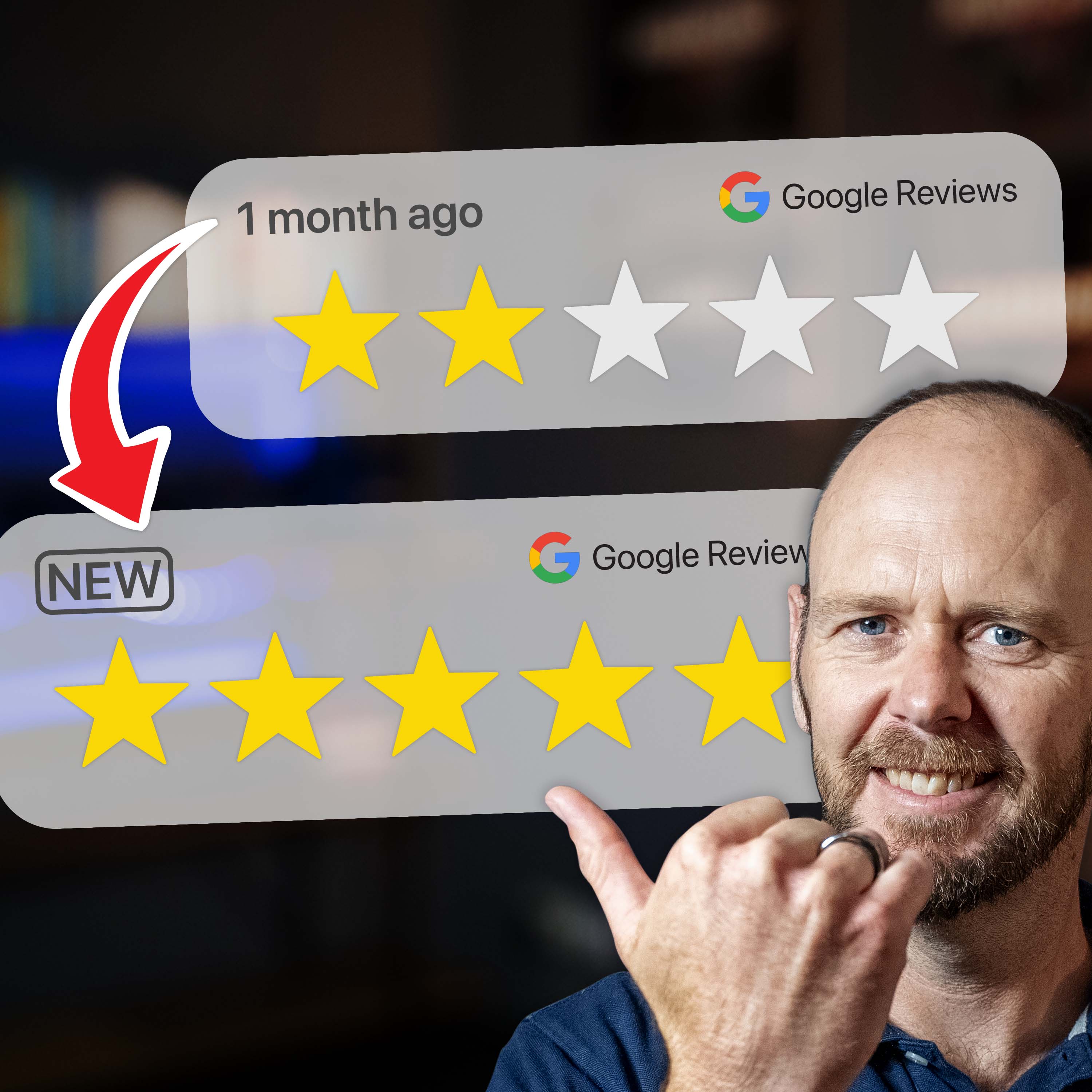
Google Reviews: Win More 5-Stars and Fix Poor Feedback
30m 8s
The podcast discusses the critical impact of online reviews on businesses, particularly in trades and services. A single negative review can disproportionately harm a company's reputation, potentially scaring away customers and job applicants who rely on this feedback. The hosts emphasize that in today's digital landscape, a business's online review profile acts as its primary shopfront. To combat this, they advise developing a proactive strategy. This involves not only professionally addressing negative feedback when it arises but, more importantly, systematically generating a flood of positive reviews. By building a strong base of positive social proof, businesses can bury the occasional bad review, control their online narrative, and create a powerful marketing engine that builds trust, attracts clients, and aids in recruitment. The goal is to turn online feedback from a vulnerability into a strategic asset that fuels growth.
Today on the profitable trading podcast, my dad used to say if you have something mean to say to someone write it down, leave it for a day, read it again the next morning and if you still want to say it you can but if not you should throw it away. It's good advice. Yeah, I never did it. One bad review can feel like a wrecking ball to your reputation, scaring off customs before they even call. Now you feel angry and powerless as you know buyers always check reviews these days. You feel angry either it's unfair and you're angry with the client or maybe your teams let you down you're angry with the team, even worse when you see one that's been there for like three weeks and you didn't realise and you're wondering, "Wow is the phone stopped ringing because of that review?" Your reputation just takes a hit. You need good reviews to cancel out a bad one. All people get is that one snapshot so it's actually even more brutal because it can't be contextualised as well and the worst part is that bad review sits there for ever unless you do something about it. But turn into this episode where we talk through how to fight back how to bury the negatives, flood your business with positive reviews and turn your online feedback into a sales and marketing weapon. You're listening to the profitable trading podcast. We will help you turn your business into a money making machine. We know you're busy so we'll make it worth your time. Thanks for tuning in and remember time is money and we're here to help you make more of both. So hit the follow button and let's get started. To the podcast. Welcome to the profitable trading podcast. Tony Fraser Jones here host with my good mate co-host Phil Smith. Get that mate. That's your cue to jump in. Yeah, jumping on in man. Did well. Yeah, yeah. Yeah, yeah. You're ready to go. You like a good jumping anyway. Always jumping jump in jump off. Let's go. All right. So well today we're talking about how you can work your absolute backside off to do a great job. But then someone just tortures you with a one star review and overnight your reputation just takes a hit. You feel angry either it's unfair and you're angry with the client or maybe your teams let you down. You're angry with the team. Start thinking we're going to stop getting jobs. You know, maybe people won't want to work here when they see the negative reviews and the worst part is that you know that bad review sits there for ever unless you do something about it. Yeah, it's a gut punch, isn't it? When you see that review, even worse, when you see one that's been there for like three weeks and you didn't realize and you're wondered, well, is the phone stop ringing because of that review? It really hurts. And as you said, it does make you very angry. One with the customer, how could that be so unreasonable? And two with your team who cocked things up. And so it does you head in. I mean, you stay awake worrying about these sort of things. This episode is all about how to flip the script because it's actually effective life now. I think it doesn't matter if your service delivery is exceptional. If you do enough jobs eventually, you're going to come across someone who's not happy. I don't know if it's impossible to avoid. I think it is. If you do enough enough jobs. So this is going to crop up. So the key is to have a strategy for it really and to deal with it and not let it put a hole in your boat as it were. So we're going to talk about how to actually bury the bad reviews, how to deal with them, how to get a bunch of good reviews because that's really helpful as well. And how to use a system or some automation. So you don't have to go around necessarily chasing reviews. And just how to get the best juice out of your marketing as well. Because the thing about reviews is not just about dealing with the one bad review. It's about how to build them up and lay them up so everything you do online seems better. Yeah, absolutely. We have a good strategy for this. You're going to crush your sales on marketing as well. So you'll take a negative and turn it into a positive, which is always a good thing. Yeah, build it into a strength and I'm sure you got a story to get. Oh, I love this story. I've often talked about this one. It's about United Airlines. Oh, things 2009, the musician Dave Carroll was flying United Airlines and he watched from the the window of the aircraft in horror as the baggage handlers through his his expensive guitar around like a toy. Oh, no, no, no, you don't want to break a guitar. No, I'm not a guitar expert. But I know it was worth thousands of dollars, obviously. Well, they don't like being thrown. That's something you tell you for free. No, and he could see it out of the other window on the tarmac. And so he complained and for months he complained but United didn't care. So he wrote the song United Brakes guitars. Great song, by the way. Anyway, he uploaded it to YouTube and it went completely viral like over 22 million views. It was all over the beginnings of social media back then and and within four days United stock price had dropped 10% wiping out like 180, 200 million worth of value all from one customer, one bad experience and one brutal review. Yeah, well, I mean, if you're going to do it, do it right. Make a make a YouTube hit sensation song out of it. And you know, get max publicity. It's kind of it's the ultimate gut punch worse than just the Facebook drop. It is and obviously that was a pretty bad one from United Airlines. And you know, probably deserved a little bit of blowback from that one. But it shows you, you know, the impact of reviews when you know, you know, manage this right. So we've got to make sure that we do that if and when it happens to us. Yeah, absolutely. And I should have umbanked on the fact that you'd take a review story and find a way to weave in an airline into there. I mean, you're just a nut for planes. It wasn't quite a crash. So that was good. No, no, no, no, no. It wasn't crash of sorts. I guess crash for their stock price. But, anyway, that was really good, mate. Yeah, you like that. Yeah, yeah, yeah. It was a, you know, we could get it on your crash investigation. Anyway, pointers is if you don't have a good strategy around online reviews, you can really run into some problems. And particular dates, more and more important because, you know, when we shop online, basically we all check reviews. It's part of the buy behavior now. So we need to be really aware of it. And if you're not managing it, well, you're actually going to lose a lot of work and you're not going to know why. Like, it'll be kind of hidden to you. There's just not as many jobs coming through as many as you think. And that's because your potential customers or even potential employees, for example, they're going to check your reviews out before they call or before they say yes to a quote or a bid. And if they see this, it's going to make them think twice about actually doing business with you. And if you've got a lot of them, obviously that's a big problem. So they might just move on without ever giving you a shot to actually put it right. And so that's a big problem. And because we're so wide to focus on the negative as people, I don't know what this is, but, you know, one bad review can actually dominate the whole review landscape if you like. You know, if you've got one bad review and you've got 10 good ones, well, they're probably going to put as much stock in the one bad one as 10 or so good ones. I think there's some math on that actually, which we might dig into, but I don't know about you, but I know when I look at reviews and I see it's like a, I don't know, it's a four and a half star. And it must be some bad ones and you're like, you go searching. You're scrolling through all these reviews looking for the bad ones to figure it out. You can actually filter it, man. So like I know the stuff's all brand new to you. But you can go straight to the bad ones if you want to. And then you can find them. So yeah, that is so funny. Yeah. She's only to get out more. Anyway, and you know, even worse, maybe if you have no reviews like you might be a reasonable business, but you've put no effort into reviews, that's as bad as bad reviews because it's like, well, people don't think, well, you know, not trustworthy, haven't been tested, it's not legit. Because, you know, for contracting businesses and trade businesses, trust is really important. Yeah. And silence is suspicious. Absolutely. So if you don't have a strategy for managing this, you know, because you're most likely going to get them from time to time, you're going to be very reactive instead of proactive. So you might get blindsided. It might sit there for a few weeks or even a few months before you even realise. And this happens. We have to see it with our members like they're like, I didn't realise that these negative reviews have never really looked. That's definitely a problem. All you're so reactive, like one pops up and you just get sent into a tailspin because they're like, no, what do I do? You know, I've got no idea and you start, you know, racking your brains and asking people, what should I say and you don't have a plan. So you eat a miss it or maybe you're just sent into, like I said, a bit of a tailspin. Do a bad job of dealing with it. Your phone's going to stop ringing. Other competitors are going to get the jump on you because they are proactive and they're actually stealing your lunch. And another thing here that you probably don't think about, you know, if you're listening, obviously this is important for getting jobs and projects. It's actually important for getting employees as well because you're good employees are going to go vet you online. They're going to look at everything. You know, they'll look at your socials in terms of the jobs you've done. But if you're on online directories for hiring, they're going to look at the reviews you get there as well. And if you've got a couple of bad ones or whatever, that's not going to be good. That could really scare away good people. So you've got to think about this from, you know, from all angles, not only getting clients, but also the marketing you do for getting team members because that's obviously the most important marketing that happens in your business. Yeah, absolutely. But on the other hand, if we do have a strategy for, you know, dealing with and driving positive reviews, you know, we can get some pretty good upsides. You know, honestly, you can actually win work before you even do the quote of the bit really because your potential clients are seeing a wall of five star reviews and they, there's a high level of trust before you even open your mouth, but they even talk to you or your business. So in a sense, they come largely pre-sold. They're easy to close. Potentially the least price sensitive. I mean, if you think about they're looking at two competitors online and one has got 300 reviews at 4.9 stars and the other one's got six reviews and it's 3.8 stars like, you know, it's a no brainer really right there. Well, even the 300 reviews at 4.9 or 4.7 or even 4.5, like that might be more powerful than having three reviews, you know, with a five star rating because my first thought is, well, cool. So your mum, your sister and your dad reviewed you. Well done, man. Yeah. Nice faking it. That's real cool. I mean, like three's not really telling me much. It's kind of, yeah, a little bit unbelievable at that point. It is. It does feel like some mates reviews anywhere. I doubt someone's got 300 odd mates that are all chipped in. Well, some of us are well connected, bro, but you know what? So the next one is you control the story. I think this is important. So bad reviews, they stick around, like you said, but when they're buried under a flood of positive ones, they become less relevant. So you can actually change the narrative. You know, you can build real no-like and trusted scale. And that's what this is about, really, you know, getting people to know you like you and trust you, so they'll do business with you. And obviously online is the window now to the shopfront, so that's how we do it. You can create a marketing engine as well that works largely on autopilot. So you can put some systems in place to automate reviews, automate the alerts of when you get bad reviews as [BLANK_AUDIO]
bunch of tech you can use here, which is going to help. And you're going to help your hire people as well. Like if you look mean from the outside, great reviews on your job sites and on obviously that we are marketing for work, then that's a really attractive feature to potential employees because they want to work somewhere good. Yeah. Yeah. And if they can see that, I mean across all your channels, I mean, again, it's not uncommon for someone when you're hiring, not just to look you up on the job sites, but also to check out your Google reviews, your Facebook reviews. You know, hey, look, as this company is good as they say, they are, am I stepping into a difficult situation myself or is this going to be working well for me? So I think that's all pretty normal these days. So should we jump into where we start with this? Yeah. There's a couple of strategies here that I think we want to jump into. And one is how to actually deal with bad reviews when you get them. And then two, which is part of dealing with bad reviews is how to actually build a good presence online. So there's two parts of the same approach. But before we dig into that, I think there's a couple of things to think about here just to understand why this is important. And the first thing is, you know, back in the day, you have a shop window or a showroom. And, you know, you'd always make sure that looked good because people walking past would look at it and people judge a book by its cover. It's the same with your online presence. That's kind of like the showroom now. And in particular, the comments and the reviews that people make about your business, they really, really, really count now. And so this is important. And I know when you're out in the field, you're doing jobs, you're chasing up money, you're frustrated with your team and trying to get them to do stuff. Sometimes this reviews feels like, well, that's just something I'll do for another day. But that's probably a mistake. Yeah, it is a mistake. I think we really underestimate that shop front mentality because it is very easy to say, yeah, but everyone that I spoke to, everyone I actually deal with, everyone that comes into contact with me, they love it. They're great. They're always very positive. People say a lot of great stuff about me. I'm like, yeah, but if all I can see online is bad, or even nothing, or even there's just enough bad that it doesn't get out weighed by the good, all of this is actually the stuff that's doing the most damage, because word of mouth's only going to go so far. Like your online presence is everywhere and so accessible. And the amount of people that are actually looking at that is out the gate compared to the amount of people that are listening or being exposed to the word of mouth. So this is, I think, very underrated. And like, in a day like I said, people do business with people that they know, like, and trust. So your reviews are absolutely crucial to building up that trust. There's nothing quite like social capital or social proof, because you can say to your blue in the face, in your website it might say a whole bunch of stuff about all the quality that you're doing, all the great customer service, but then the reviews, if they say something different, that's actually what we'll be listened to. Because whatever you say is sales, but whatever your customers say, that's facts in the mind of someone looking. So I think it's really, really crucial you get this right. Builds up the trust. It's like the rocket fuel on your marketing and sales activities. You know, strong reviews are just going to make everything go better. That's the thing, cross over. And we set with our members often, they work hard on this strategy. And all of a sudden, they're really getting some good bite and traction with their sales and marketing. And it's no accident that the online presence has been built up. And it is, like you said, just like rocket fuel on all the other activities you do. So I think that's massive and bi-behaviour as you said. It does involve checking out reviews. I mean, you a book, you go on Amazon or download some music, all that stuff, we just look to see what everyone else says like this. It's very, very powerful. So I think we need to be aware of that and understand how important it is to our business. And you might think, oh, well, I don't, you know, like I'm doing, okay, I'm quite busy at the moment. But if you want to grow, you're going to have to get new customers. And even if you want to stay the same, you're going to have to get new customers because you will eventually lose some customers. And new customers who have senior reviews and can see that no like and trust through your powerful online presence, it'll just make everything much easier. So I think it's important for everything. And the thing with this is understanding this negativity by us, which is, you know, something we touched on. One bad review is not offset by one good review. And there is some research on this that people have done and it shows that you need 20 plus good reviews to cancel out a bad one. Yep, absolutely. And I think that's actually really important to understand. You know, it's actually, it's the same across everything. Like even when you're hanging out with people, there's been studies done where like, they have a bunch of people in a room and they're all trying to solve problems together. Now, insert an actor who's a really negative person. And that will really drag everybody down into a space and negativity. If they introduce an actor with a really positive outlook, that will actually bring everybody up. Now, if they introduce one of each, everyone still goes negative. It took four, five positive people to outweigh the negative one. And even then, the negative one still swayed a percentage of the group. So it's just the same thing really with your reviews in the online presence. Only difference is that all people get is that one snapshot. So it's actually even more brutal because it can't be contextualized as well. And so it's, this is really important. You have to have a lot of positivity in there because you will get bad ones. You know, if you're in business long enough and you serve enough people, it's, it's not avoidable, like you said. And even if it's not a client, we've seen members get reviews from people who have never done a job for just, there's just idiots out there who like to go online and write stupid stuff. They get their kicks out of it. Absolutely. And so you might even get a bad review from that. You could get a bad review from someone who, you know, you're an electrician, they call you up and ask you, are you a plumber? And you say, oh, sorry, we're an electrician. And that person leaves a bad review because you wouldn't do the plumbing work. You know, like that stuff happens. And so if you can't get those positives in there, you will get the negatives eventually. So you really have to deal with the negatives, but building those positives is such an important thing. Yeah. And look, let's be honest, it is super frustrating. It feels like, you know, kicking the teeth. But it's not the end of the world. No. It's not the end of the world. The sky's not falling, but it is important to deal with it. And sometimes, let's be honest, you need to take the feedback that may be coming because you are coming up short in a particular area. I can, I know a service provider that I've used is our local GP. Oh, call them out. I'm not going to do that. But flip and heck, like the reviews on that place are terrible for the people at the front desk. There's heaps of them scathing reviews and it's like, I can see why because they are. Yeah. So that might be a lesson to them to actually sort it out. So, you know, sometimes there's a lesson there, but also don't, you know, don't kill yourself about the fact that you've got a bad review. It's just how we deal with it. And really there's two ways to deal with this. Yeah, well, shall we start with the, how to react to the bad ones? Let's do that. I think that's-- You know, very calm person, you never ever react. So there's probably your thing, mate. Well, if you know me, you know, I never ever react. Yeah, so look, I think the first one is, when you get a bad one, you really need to have a system that's actually going to alert you to when that reviews give. And so I think right at the start, you need to know what happened. And so like, either you can do manual checking, which is time consuming and actually it can be a little bit of a slippery slope, almost like checking Facebook to see if you've got likes, Tony. No, mate, I'm secure in myself. We're good. But either way, my point is that you don't want to be jumping on every day and having to look at that. You can do that, it can work, but you can also use software for it. So things like podium or reputation.com, you know, these can help alert you and just say, hey, by the way, you've got to review and you can check it at the time. So if you have a system that's going to notify you that you've got to review, it means you can stay on top of it and not have too much lag between your-- Yeah, because you do want to deal with these things quickly. And some people have systems outside Google that they use for reviews like review use and examples. Better bunch now. Better bunch there you go. They'll send you an email and it's like a smiley face or a flat face or an unhappy face. And if they click an unhappy face, it sends it to you rather than Google. Yeah, and you can deal with it. You can deal with it. Yeah, so-- The positive one takes the review. So, you know, there's some ways of doing this. You can try and hit people off before they hit Google and make it right. So that's a proactive strategy. But first thing is to stay calm, take a few deep breaths. It's really, really important because it's easy to just for the red mist that they send in you to lose your marbles, either trying to call the person up or write something that you regret. Yeah, my dad used to say if you have something mean to say to someone write it down, leave it for a day, read it again the next morning and if you still want to say it, you can, but if not, you should throw it away. It's good advice. Yeah, well, you should have used it a little bit. Maybe I should, yeah. Sparky dad is a good man. Yeah, let's Sparky dad is a clever guy. I can't, but you do want to respond quickly. Ideally, if you can respond offline and try and deal with the issue in a way that you can turn the client around, that's a great strategy because we've seen lots of members do it. They've been able to turn one star, two stars and two five stars, but actually dealing with it offline, person changes the review. So that requires you to get the facts, obviously. Hear the person out and acknowledge the problem and sort of talk through it with them in a calm way, talk about how you could fix it with them and that's a great way of doing it. If you can do that. If you can turn them around, those actually become really, really powerful reviews as well because they change the review and it turns from this person had a really bad experience. So this person had a bad experience, but you solved it in such a satisfactory way and actually turn that whole thing around. They got the result they wanted and they feel really good about it. They write that in the review and actually what that proves to potential clients is that it's like if you have an issue you deal with it and you make sure that the customer's happy at the end. So actually that looks really, really good because everyone knows that you're going to make mistakes from time to time or have an issue or something won't go perfect. But the way that you deal with that, if that's always going to provide a great experience, then that's really good. That actually looks better than just having now at the first time sometimes. So I think that's a really good way to go. That's right. So if you can do that and hit it off at the past as it were, get it changed, talk to them, fix their problem, clarify any misunderstandings which can happen. That's a great strategy. But sometimes you're not going to be able to do that. Maybe you can't get hold of them. I mean, you should be able to get hold of them because you will have had a fine number to do that.
the job. That's a hardest strategy for people to have online businesses and that sort of thing. Anyway but if you can't do that then it's important to respond promptly online and acknowledge the problem. So yeah, appreciate you putting the review. Talk through how you try to fix it for the client, if you try to call them, explain it, we try to reach out, tell them how you've changed things for the future, so how you've changed your systems. And the key thing here is to remember that if they've left a bad review, really the person you're writing the response to, it's not your future clients. You're basically writing something there, so the future clients know that you took this seriously, you're a real person, you care about the results and you're trying to make things better and that this won't happen again in the future. That's who you're writing the response for. Obviously to acknowledge that person but the general theme is who's going to look at this next. And I think it is important to point out as well. It's like if you haven't done work for the person that's like say that in your response and if you have tried to reach out to the person you've been unsuccessful, it's like make that very clear in your response. Just so then that way everyone can see the effort that you've put into remedy the situation and again if it wasn't someone you've done work for then again everyone can see that it's like maybe this is an unjustified review. So I think with that you do want to help the person regardless but make it clear the steps that you've taken and the steps that you will take and then that way everyone can see not only are you very reasonable to deal with and that you're human and that you might make a mistake but also they can see that this is the way you deal with the problem when it comes up which builds a lot of credibility for you and the way that you operate. So I think that's really important. And you might be thinking hey I'm not very good with words and all that sort of thing and I get that. Well the great news is we have ChatGPT and so you can put in the person's negative review and you can suggest some things that you would want to have in the response and ask ChatGPT to write you a response to this Google review and it'll come out with a really solid response. With these things it pays to put a little bit of detail in here and rather than just one line, make it a paragraph or two so it makes it seem like you've really taken the time to think about this, that's super important. And to tie this in you do need someone who's responsible in your business to do this. So that might be you or if you've got a larger business maybe you've got 10, 15, 20 people out in the field whatever you've got a marketing person or office manager, make someone responsible for doing this. Either the reach outs to the client at the start and for following up on the review and writing a response. That's super important. Otherwise it tends to just fall through the cracks. Yeah well if it's nobody's job you can't be surprised it didn't get done so it's pretty simple in that regard so again can be you but in that case make it clear to yourself this is my job, this is part of what I do and then whether it's you or someone else at least someone's going to take ownership of that which is crucial. So that's important so that's the first thing we deal with the actual negative review. The second way is as we said you know it's a 1 to 20 plus relationship of negative positive reviews so we need to proactively build overwhelming positive online reviews so the impact of negative reviews is severely diminished. And this is a good strategy anyway even if you don't have negative reviews yet to put rocket fuel on your existing sales and marketing activity. So you really want to think about how can I look like the boss dog online that on the most trustworthy service provider in the area so you need to ring me straight away. That's what you're aiming to do. Yeah well those positive reviews it means kind of like that old Silvestis alone saying right and he's like rather have a gun and not need it then need a gun and not have it. Those positive reviews are that metaphorical gun. I mean if you don't get a bad review cool within you got heaps of positive ones that look great. Then when you get a bad one well you got heaps of positive ones so it's outweighed so either way you can't lose driving positive reviews it's a really important thing to do in your business. And once again I think when we're starting with this you need a process. You know if you don't have a process this is going to be ad hoc at best so you need a process and system for actually generating these reviews so you know you can make it part of your job completion process just like sending an invoices ask for a review. People are never going to be happier than when the job is immediately completed so that's really when you want to ask and again there's systems like like as we said you know review which now called better bunch which will prompt people immediately when you send the invoice hey how did you find our service, smiley face, medium face, negative face obviously if they click the smiley face it takes them straight through to do an online review and capture it right there can be automated. Otherwise just ask you know I mean it could be on a checklist for the tradesmen at the end it could be something that you know your office team does as they invoice they also ask in that email or they send a separate email or they call up or you know you could do an after sales call you know check in hey how did that go you know would you mind leaving a positive review you know if they're happy you know that stuff's all pretty easy to do but you need a system how is this going to happen how are we going to ask and then that way you make sure that you do ask and this actually happens you know consistently. Yeah real simple like said system you got to ask that's absolutely critical and you got to ask at the right time and you have to make it simple and by making it simple you need to send a clickable link or a QR code if it's more face to face or whatever but have a link that they can click that goes directly to where you want them to do you don't make them do any work because if they do honestly you'll basically get no reviews I can tell you that straight away so you make a clickable link send it and it's easy for them to do just like that. You don't want them to have to jump through hoops to help you. Yeah like have a link put it really right there and you know bring it out at the time don't let them go and find your page later and try to do it. They never do it so that's part of the system and you can automate this you know the ask as you said with software podium it's a whole bunch of things out there even some of the job in field software will do that for you now so that's part of your process and then lastly obviously you need someone responsible for this in the business and you need some KPIs and business measures that's really important so you measure how well you're doing this because if you don't measure it no one's really responsible or accountable nothing will happen so it might be now something like at least five reviews per month. It's get done and maybe that's your marketing person's KPI or your office teams KPI or your sales person's KPI whatever it is because what gets measured gets done that's absolutely critical. Yeah and I think one thing on those links as well just to circle back to that really quick is try to have options because like one thing that we do see a little bit of is you know someone will have a Google review link and the problem is is that in order to leave a Google review you need a Google account and there are people that don't have one and they click that and they go oh I've got a log in with a Google account don't have one as they just brush it and again if you had a Facebook link well people need to have a Facebook account now I would actually hazard a guess and say more people have a Facebook account than a Google account but if you have both there then it means that if someone doesn't have one hopefully they have the other you've got options I think only that's the key and I mean if they don't have either you could also have a link or reply to the email with your words and we'll publish them on our website like give them options because again if you've made it hard if they have to jump through hoops to leave the review they just won't and so you'll miss out on a lot of opportunity so you've got to make it easy to them and yeah respond to the reviews that you get the positive ones too I think that's crucial like you've got to thank them for their review like if someone leaves a good review and you can call them personally again respond offline really thank them make them feel great about having done it and then you know if you respond to the positive reviews as well so someone leaves a positive review online you can respond to that and say hey thanks it was awesome doing the work for you like really can't wait to do your next project or something like that again it just shows that you care and you appreciate the nature of that review that actually helps more people review in the future because they also see the reviews that are there and they go well you really do appreciate that and care this does matter to you and they're actually more likely to leave an even better review so it's yeah it's crucial. And we have members who also incentivize reviews with competitions you know with little offers when you give a review they can definitely help but if you get the system right that's going to do a lot of the heavy lifting to start with as well and we've talked about jobs obviously but I just want to reiterate how this principle applies to hiring employees as well and we have had members who have had ex employee you can think of one in particular had an ex employee who left a very dirty review a one star review and this particular member had hired some other people and a couple of them had given them feedback to say actually we almost didn't apply for this job because of that one star review when actual fact the person that left that review was a very poor employee was a bitter person who really needed to be exited from the business but they that's all they had that this one negative review and so that business now is worked hard on getting a bunch of positive reviews on indeed which is you know improved their ability to hire people as well so don't forget about that side of it because obviously hiring people is one of the most important things you do and you want to get that right again the no like and trust applies people you know want to do business with good people and employees want to work with good people so that's super super important all right man well I think we've got some good stuff in there man so shall we should we learn this plane let's do it so one star reviews are super frustrating but you can take control of your online presence by bearing those reviews with a positive proactive online review strategy it's going to make all your marketing and sales go better and also going to help you hire better people thanks for listening we'll catch you all again next time see you later next week on the profitable trading podcast cash is like oxygen for your business without cash you can't pay your bills in your business withers and dies basically you end up with stress overwhelmed you can't pay your bills you can't pay your staff and you just end up in a place you don't want to be tune into today's episode will be discussed the three pillars of cash flow and how to make sure that you don't end up with a cash flow symptom that will sink your business congratulations on being part of a select group of savvy business owners who are taking their businesses to the next level and to help you on your journey don't forget to check out our show notes for a copy of our free book the profitable trading and other valuable resources thanks for being a part of this special group and we'll show you guys a new video.
see you in the next episode of the Prophable Traiti Podcast.
Podcast Summary
Key Points:
Negative online reviews can severely damage a business's reputation and deter potential customers and employees, often having a disproportionate impact compared to positive feedback.
Proactively managing online reviews is essential; businesses should focus on generating a high volume of positive reviews to outweigh occasional negative ones and build trust.
A strategic approach includes having a system to promptly address bad reviews, automate the collection of positive feedback, and leverage strong reviews as a powerful marketing and sales tool.
Summary:
The podcast discusses the critical impact of online reviews on businesses, particularly in trades and services. A single negative review can disproportionately harm a company's reputation, potentially scaring away customers and job applicants who rely on this feedback. The hosts emphasize that in today's digital landscape, a business's online review profile acts as its primary shopfront.
To combat this, they advise developing a proactive strategy. This involves not only professionally addressing negative feedback when it arises but, more importantly, systematically generating a flood of positive reviews. By building a strong base of positive social proof, businesses can bury the occasional bad review, control their online narrative, and create a powerful marketing engine that builds trust, attracts clients, and aids in recruitment.
The goal is to turn online feedback from a vulnerability into a strategic asset that fuels growth.
FAQs
A single bad review can significantly damage your reputation, potentially scaring away customers and causing a drop in inquiries, as buyers often check reviews before contacting a business.
A proactive strategy helps you handle negative reviews effectively, build a flood of positive reviews to bury negatives, and turn your online feedback into a trust-building marketing tool.
Having no reviews can be as harmful as bad reviews, as it may make your business appear untrustworthy or unproven to potential customers and employees.
Research suggests it can take 20 or more positive reviews to effectively cancel out the impact of a single negative review due to human bias toward negativity.
Positive reviews not only attract customers but also help in hiring by making your business more appealing to potential employees who vet companies online.
Respond professionally, address the issue if valid, and focus on generating more positive reviews to dilute the negative impact and control the narrative.
Chat with AI
Loading...
Pro features
Go deeper with this episode
Unlock creator-grade tools that turn any transcript into show notes and subtitle files.
 PodcastTranscript AI