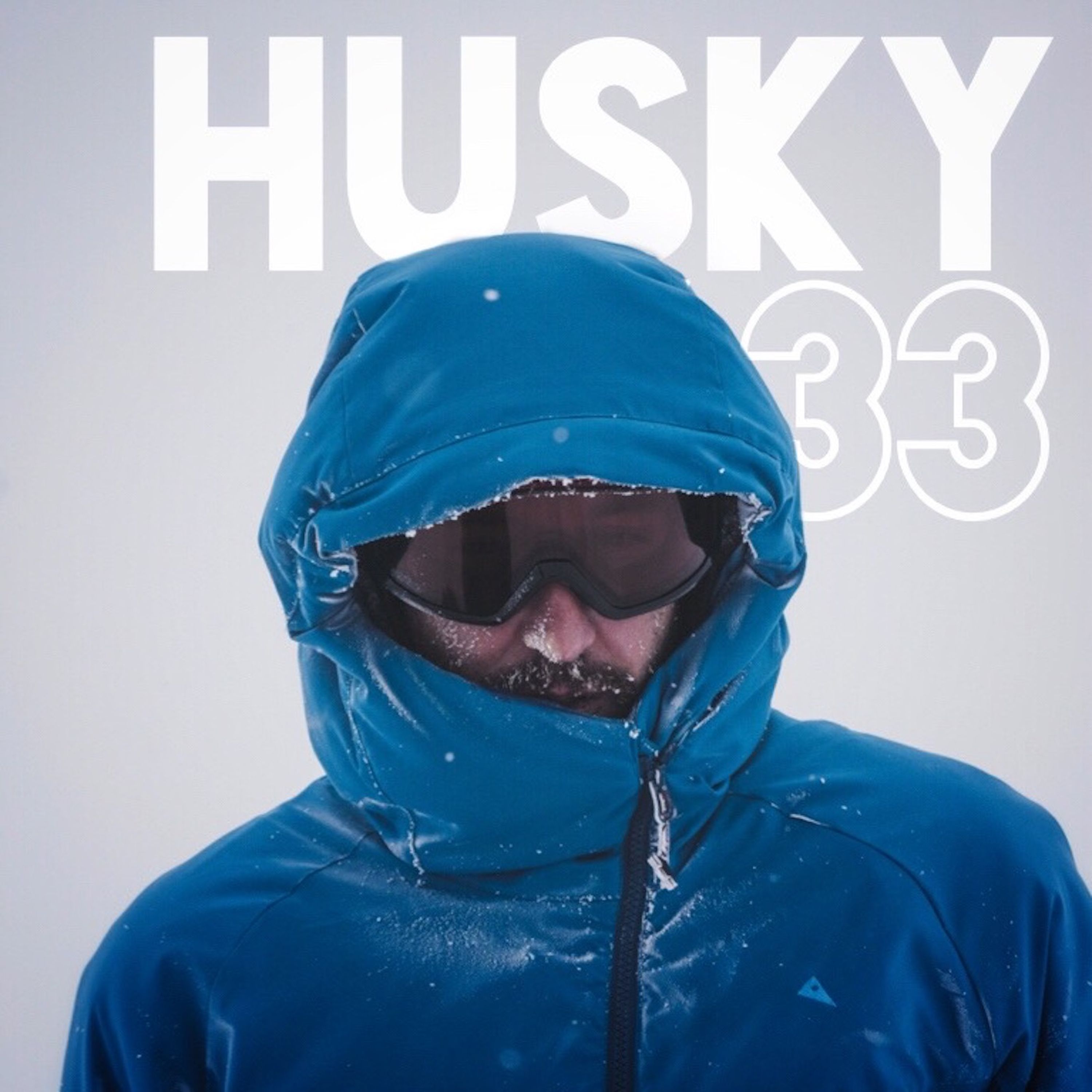
Gonz Ferrero, CEO of Klättermusen, tells his story: from Buenos Aires to Åre, #33
from Husky
87m 28s
I avsnitt 33 av podcasten Husky intervjuas Gons Ferreiro, VD för friluftsföretaget Klettermusen. Ferreiro berättar om sin bakgrund som uppvuxen i Buenos Aires, där friluftsliv inte var en del av kulturen, och hans senare väg till bergen och friluftslivet. Han beskriver sin karriär, från investment banking och solenergiprojekt i Spanien till att starta ett medieföretag i Shanghai och slutligen ta över ledningen för Klettermusen. Samtalet tar upp vikten av hållbarhet och ansvar i företagande, samt de utmaningar och lärdomar som Covid-19-pandemin medförde för verksamheten. Ferreiro diskuterar också sin tillvaro mellan London, Åre och Stockholm, och hur dessa platser påverkar hans liv och arbete. Podcasten, som fokuserar på friluftsliv och entreprenörskap, avslutas med en uppmaning till lyssnarna att stödja produktionen genom valfri donation.
Lskar du den här poten? Stötta den genom i kasniden supportefunktion. Det är helt upp till dig hur mycket vi bidrar med och det finns ingen bindningstid. Klika på länken på podbeskrivningen för att visa din uppskattning och stötta poten. Börn i spän med en spänningstid och en modell från Peru. Guns Ferreiro grew upp med den med Buenos Aires Argentina. Despite growing up in en höjlig urban area, he eventually found his way into the mountains. Fål av lången lyss interview, då vi ska ta ett förut för investementbanker och projektledning i Solarpark i spän. För att starta en stor media company i Shanghai. För att skapa en av den här avgängningen, så är det en av den här avgängningen. Vintor och älskar till att enda på en pizzeria i duvett åra. Gons Ferreiro är den CEO av den mest mest härstiden, Klettermusen, med en historie som spänns för 40 år. Jag är Magnus Ulmstad och det är episode 33 av den internationell serie av den Swedish outdoor podcast Husky. Husky är med på en avgängning till Naturkompanyat. Om du vill ha en av den här avgängningen, hoppas du på huskypodcast.com. Du kan också få husky på Facebook och Instagram på huskypodcast. Hur har du kommit till 2020 så mycket för en avgängning i Covid-19? Det har varit en rollkoster så mycket för sig. Med en slant 1968 голов locket som med en halv var taglet så nu alltsåella har 53 sedan merged och man börjar users från ett kanske vi är kanske lite av det andra enda. Jag tror med en bit av respektat. Det har varit educationala år. Försor. Humber att ha en annan. Som om vi har armat oss med en av de resten som vi har tagit. När vi var i januari, jag tror att vi har väntat i en av det. När vi var i februari, även när vi var i march. Vi har väntat det att vara här. Jag tror att vi är inte alldeles av bussor och årener. Vi ser oss i denna samt sätt. Vi har nogvis tillbaka. Det är en strängd som är för att operera. Det är en tröjning av att skapa. Vi är en relativt simpel av bussor. Det är två sysms. Det är en av det som vi har tagit. Och som av ordet är preordet och som är. Det är en element av surprise. Det är alltid en av det här. Men på den här syssen vi är nu av automatern 20. Vi har inte en idea. Om det är väl att vi ska vara öppnade, om vi ska vara öppnade. Det är bara en fråga om det är en bra vinter eller inte. Det kan vi mannit. Det är en av det här. Det är att vi ska inte ha ett bra kriser att ha väst. Det är lite äthos internally i den här komponierna. Det är en stor fråga. Men det är en av det här är en av det här. Det är ju en av det här. Du är ju en av det här. Du har en av det här. Men i den här samtidigt är vi också med en av det här. Vi är också med en av det här. Vi har varit väldigt ämstrakts. Min ögon är väldigt ämstrakts. De är så mycket av det. Fisikal prottet är väldigt ämstrakts, digitalt produkt. Det är mycket av våra interaktion och aktivitet. Det är också väldigt digital och väldigt ämstrakts. Nu har vi ju så mycket av de här andra personer som går till en stål som har en sandwich som är en fäst och en kopplad koffe. Det är väldigt bra. Jag var ju här för taxvist. Alla flytts jag kollar i år och alla sämre. Jag kan ju medlella dig vad jag kollar i år. Det var så mycket som är inte så mycket i ekologikopan. Men det är just från en livsvartag. Och jag tror att så många som har varit i en kallad kvar är inte. skrig är bara linjan löersonica saker doubling för moviesen här och voi mycket besöldstort ini watermelon år i enhete i nel晨 Ingen i ljuskvart har vi bättre perspektiv mu backedet skulle hazeniu Shock uttryck det när vi har enвар utpållsized nuestras vast kierent utveck索er en mer deixa stjuக objetoet när hela stycken är det man pays med våra kvittas i bakgrund och det var en stor nog även i sveterna och säger en år ago och nu är det standard standard med. Värsholm. My wife and I have a deal. That that I can only say that home is where we live together. Right. So home is London our house or home. My wife's work and our son and our daughter who's coming is our role in London. And I have a you know, klartmills and headquarters is in ORE and that's home for a different side of me and a special place where I manage to find everything that I don't have in London. And and then Stockholm which has become a very interesting place for us also from a company perspective really dynamic and so I'm in between but I think ORE and London are probably or London and ORE would I would have to say. But here I just thought of a thing that both London and ORE share poor weather and low visibility. Yeah, impossible to predict what weather will be the day. Yeah, absolutely. ORE is a fascinating place that I am still trying to figure out. And it has I realize it has very different connotations for a suite och det gör det för en nonsvillig.
right. When I first arrived in Ora, it was November 2015. It was cold and dark. Dark like really dark in a darker than I had ever been before. Like before the smells. Yeah and I remember thinking there's nothing nice about this place. And that was the really honest to God my first reaction. And it grows on you. And that's nice. I think London is similar in that way. You kind of have to grow on you because of course there's a tourist. You can have fantastic weekend, the theaters or in the restaurants. But if it's somewhere where you're actually going to spend time, you actually need to have a see the whole picture. But what is such a small community and a very small village but it's still because of course of the ski resort. It's still got kind of a cosmopolitan vibe to it. Not only because of tourists coming but they have the restaurants, they have the cafes and bars and so on. They had kind of another tradition that you would expect from a small mountain village in Sweden. I would say. Yeah. So one of the things that surprises me even today about Ores is that everyone looks up. Nobody looks to the river, to the legs. It's sort of strange because even in the summer now it's biking but a few years there was not such a big biking community and then you just wanted to go kayaking or swimming or even running on the beach and there is no such thing. It's you know Ores is, I think Ores is almost a bit of a twilight zone because it turns on and off and that's strange. If you live there and you have that sort of community and you know where things are and that routine and everything. But in my scenario where you're coming in and out, it's you know you're sort of almost feeling like you're in the wrong place at the wrong time and then people don't really know what to make of you, they don't really fit and it's become much younger, much more sort of open to this type of in the last two years. Yeah. Then it has before. And I think that's been very welcomed. There's a lot of things happening with, I mean from the business side as well with House B, like the business hub over there so it's you got that perspective that that part is growing as well. So yeah. I like the, I'm very excited about the plans I've been hearing for Dubet as well. I'm sort of expanding. Because Ores you know we talk about Ores commune and right when we talk about Ores. So I, the city itself is as you said the mountain village but I think most of the people in our company live outside and you know live in the mountains and things. Dubet is a fantastic place that I also are, I keep getting flashbacks to the first time I went in November 2015 I was looking for a place to have dinner and most of the restaurants were closed. Because the season wasn't open yet so I was driving around and I went to Dubet and there's a pizza place and Dubet. And I came in and I was you know with a bit of my latin charm was trying to be funny and I asked the guy is this is this is your pizza good and he's like oh yeah it's even people from Ores are coming here to eat pizza. I was like oh okay. I guess you know people are driving for five minutes. It's gotta be good. That's a good slogan for them to put both their door. Yeah. Even people from Ores. But you are not from London you are not from Ores. Where are you born and raised? I was born in Spain from a Peruvian mother and a Spanish father and we moved to Argentina when we were when I was about six. And I'm the oldest of three so we all grew up you know that that move caught us at different ages but I spent most of my young life in Argentina before going to university. But is it like was it like an urban life for our own countryside or apartment or house or? It was very much an urban life. Yeah we were based in downtown Buenos Aires. That's very urban. Very urban. Yeah. I mean the nature comes from being very humid very almost tropical so you get this incredible trees, incredible flora inside this sort of urban and the fact that the city you know was one of the most beautiful cities you know by World War Two and hasn't been you know touched since so it's almost you get it it has this contrast of old time machine type of you know but it was very urban yeah absolutely but you're I mean I think we all know what it's like to grow up for most people of course in Sweden with a with a free lift sleeve like the Swedish outdoor culture but what was it like how was your free lift sleeve like you're you're upbringing within when it comes to spending time in the outdoors. We didn't have that I didn't have that at all my parents were not very into outdoors in fact they weren't even into summer holidays and beaches and things like that so you know most of the nature growing up it's the football pitch and that's sort of where you saw green or in the TV watching football. No it certainly isn't a part of life it wasn't a part of life from me growing up occasionally we try to escape you know with school plans and do ski trips and things but because there is good skiing in Argentina right. There is. Pignotrolis, what's it called? Varyloce, Laslenias, there's a couple of good places in the and then there's actually better ones on the Chilean side. Okay and yeah and it's not uncommon for people in Buenos Aires to ski. But it's kind of a I mean compared to Sweden it's of course it's a matter of class and social like social class and an economy of course in Sweden as well but I think even more so probably in Argentina it's more the people are well off they go skiing I guess. I think for us the apart from the fact that my parents were just not really you know had not been raised like that I think we we being living in Argentina but with family in Peru with family in Spain most of our holidays were basically visiting relatives. Going back or going for you know and and doing that so it's been we we had a very social family we did everything that you you know in the Philosleefs context that you're doing outside but we were doing that you know in a Latin context and yeah I think yeah we didn't really appreciate I certainly didn't appreciate the value of nature growing up. But where did that come from? Did you have a did you dream of adventures? I think all all the young boys dream of adventures when you came time to go to university I didn't want to stay in an urban environment I don't know if I was conscious or subconscious but I purposely chose the university in the US I was in the Shenandoah Valley in Virginia sort of southern Virginia and that was the eye opening let's say the first eye opening and it was beautiful you know picture your beautiful wreck bricks type of US university campus lost inside a Shenandoah Valley with with lots of students from Portland and Washington State and then you know that that became you know hey those guys are cool and they're they're go hiking they go kayaking you go tubing you know so that did it what? tubing where you you go down the river in this tubes it was like tires okay okay okay okay okay so you grab a six pack of beer and you sit on top of the tube and then just float down float and get drunk drink drink it beer exactly and there was perhaps you know as university years are everything is exciting everything is so that was a romantic experience but then you know then you graduate university and you have to get a job
and somehow that romanticism fades away into, you know, you never have time. And so I lost that. I must say after university when I went into my career. But what was your career plan? What did you envision yourself like 10 years from university? What was your major and stuff? Yeah, I had a business administration major. Leverlards, you know, the education in the US you do two years where you are basically doing everything from philosophy, mathematics and then in the end you'd go for something. And I went for something practical, which was business. And then I graduated, wanted to go for a year as a gap student. And that was a fairly strange concept, going out of the US that, you know, there's more of a European concept, but I wanted to take a year. And the day before I was going to leave on a euro rail train, I got a job offer in Spain, in Madrid to work for an investment bank. And I had to make a choice. Do you go for this gap year or and I chose the job actually. So I stopped all my plans and ended up sitting in the day after in a desk. Selling your soul. Selling my soul, let's say. Yeah. A mix of, you know, one thing to, you know, prove yourself and you graduate from university. Everyone has a job. You don't have a job. And I, yeah, so I pull the trigger. And since then, I think that's, you know, that sort of has driven a little bit of the thinking we have, you know, I have to do something to set the record straight. Right. I didn't last so long in investment banking a couple of years. And I quickly started looking and thinking about the environment, you know, my first job after investment banking was developing, developing photo take parks, doing solar energy. Okay. So we had, we, we and a few friends have gotten together and project managed the development of two 50 megawatts solar parks in the Southwest of Spain. Yeah. A little bit of that mentality. Let's start, you know, it's the same thing that ties you to nature. Like, why, why are we here? You know, what is there? You know, what are we supposed to be doing with our time? Like the, the sustain, sustainability mindset has always been, or maybe not always, but it has been present with you for a long time. I think the sense of responsibility. And that may be that that's always come in first. Maybe it's from being an older sibling or from sort of being a bit, you know, multicultural or there's definitely always been a sense of, okay, why? Let's do the best we can. Let's do something that is not just the basics. And, and I think being in investment banking, especially, you know, that, you know, that can either dumb down that feeling, or it can actually make it come up to the surface. It's kind of a investment banking and that kind of raw sense of capitalism is kind of a untamed force sort of. So you can, of course, you can make it work for you in the sense that you can, you can summon the energy from it and do good. But that's not always the case, I guess. I mean, I have, my point of view on investment banking is that it's, you know, it's a fantastic platform to learn and to, you know, as you graduate, you, go into the workforce, you have no idea. And so investment banking is a place that has enough structure. You know, it's project-based, so you're in and out and you're learning and it's a hierarchical system of mentorship as well. So, you know, the MEMD mentors the VP, who mentors the associate and there's an easy progression, you know, you know, it's very, it's very performance-based, right? If you're good at your job, you advance and some meritocracy and, you know, it attracts very intelligent people. So it's a very stimulating, intellectually very stimulating place to work. Kind of problem, solution and everything. So it's very, right. And that's quite good to a certain extent then, you know, then it's a very project-based. So you start, you stop, you start, you stop. If you're someone who's thinking long-term or who likes the problem but then actually also likes implementing the solution, then that cycle is too short for you. Okay, okay. Yeah. And that's what happened in my case. And some of my friends who started together, you know, we started together still there and they are been very successful. And, you know, and other people like myself realized that that was a great place to start and then launch from. And I guess it's got to be extremely interesting to really get kind of a helicopter perspective of how business is made. What kind of makes up the economic system that we live in? It's got to be very interesting to have a. Yeah, absolutely. I agree. Overlook the flows and everything. A few years later when I was actually going to business school, I asked my old boss in investment bank to write me a recommendation. And his question was, why do you want to do business school? Why do you want to go to business school? And I said, well, I, you know, I realized that I have no idea about business. So I want to learn. And, you know, his response was, if you want to learn business, you have to do business. You can just. And I think that's true. It's applying a lot of these things, whether you've learned concepts about finance or about strategy or about you actually have to apply them. And when you come into that stage, I think it's a really valuable. But was it hearing Spain that you. And like is when you project led the solar park? Was that when you started connecting like what you want to work with, with a sense of responsibility? Like I want to do good things, not only do things, but I want to do good things. Actually, I think it was. I think that came one step later. I think at this point, I was very clear that I wanted to do something different, that I wanted to do something by myself, right? That I was built something. Yeah. Exactly. It was. Now we're calling it entrepreneurial. It wasn't called that before. It was Kamikaze. It's the word for it. But it was very much about. I think it was sort of the breaking point where, you know, I don't want to build a CV. I want to do things that are interesting and think more lateral and jump around. And solar power was something I had no idea about felt appropriate and felt like something that I. That will have a positive effect. But at the same time, I was very interested in music. And music was something that, you know, I was always being very passionate about. So I was trying to figure out ways in which to go to make that my job. Concealing music or also making music? Consuming and thinking about the business model part of music. And so we, you know, I started getting involved in a few projects with a few friends. We were trying to create merchandise stores for bands on Facebook. We ended up after business school, but I ended up launching a company out in Asia. So I went to business school in. In a place called Insead, which has one campus in Fontenbleu in France and one campus in Singapore. And at the end of the program, I stayed in Asia and worked with. Partnered up with two guys to launch media and entertainment company between Japan and China. And the idea was, there's all these incredible music and music rights. That's in Europe and in the US, how do we get those localized and in more and more? So into Japan and China beyond the standard way of the record labels or the film studios. How do you do things more exciting? And that was really. That was actually a lot of fun. It was the most intense job I've ever had in my life. The industry is very intense, but also working life in Japan and China is very intense. And I think that was four years of that. We were three partners, as I said. I was a junior partner, the Milo 2 Rick and John, where I had much more experience than I had much more senior. So you were always trying to catch up? I was the operations. Yeah, I was hands-on behind the curtain. And that meant Monday to Sunday, lunches and dinners and mornings. And all the time. I think
that four years of that, we took a business that we started with three to three hundred fifty people. That was what at the end of it was the catalyst. It's like, okay, this cannot go. This cannot be the way. Did you know that I used to live in Shanghai? No, I didn't know that. It was a long time ago though. I started there for one year, like early 2000s. Okay, early 2000s. So, a long time ago, almost 20 years ago. Were you in Jialtong? No, I was sure that. I did a summer in Jialtong. Okay, okay, okay. We had a place at Chongshan Park. Yeah, yeah, yeah. That was in the 2000s, that seemed to be the Lao Wei. A lot of expats and a lot of exchange students coming in. It was still, I mean, I've returned, been traveling quite a lot in China, but like the years after that, and I don't think I would recognize, well, of course, I would recognize French concessions and the bond, but apart from that, I don't think I would recognize Shanghai, but it's a happening place for good or worse. I do not regret my time there, but I don't feel the urge to go back at all. Yeah, I think like you. Actually, Saurav, who's our production manager at Clad Miss, and she was also living in Shanghai for a period we just overlapped when I, I don't think we would have met, but and we talk about this together a lot because it's a bittersweet feeling. Super happening place. Super exciting. At the same time, so close, even if you spend time there, if you sort of speak the language, get to know people, you're very much, it's very clear you're not from there. So it's never welcoming, but it's so happening that you can get caught in that energy and feel very electric. And all the restaurants and cafes and street foods and everything, it's full of life for sure. Yeah. But then again, the traffic and the combustion, congestion, what do you call it? The traffic. Yeah, traffic congestion and the pollution. No, I was talking about wearing masks now. That was the first time I was buying masks and we. I mean, the first thing you did when I left was 2014, and every morning, that was you were making breakfast at home, you're checking the pollution up to see if you're going to be able to bike or you're just going to try and think a taxi. Yeah, in that sense, underwater you can drink and that quality of life is, you know, not something you miss. No. But did that. because you ended up leaving, of course, after those four years? So that. exactly. But was that kind of the pendulum kind of. Yes. strictly opposite way? Like, okay, so now I need to. You know. Yes, that's exactly what happened. I. You know, the transition from downtown Shanghai to downtown Duvilde. Yeah. When you say it that way, it was. it's basically what happened was. We had the opportunity to sell part of the company. And I didn't want to leave, but my wife now, girl, for now at the time, said, you know, you should look at yourself in the mirror and figure out who you want to be. And so it was. it was for two days. I think it was not by me instigating it, but, you know, it was well timed because we. I definitely needed it. So we left Shanghai together on a one-way ticket out and we spent a year without a phone, without a computer, traveling. And that was my outdoor year. That's when I tried to catch up with normal sweets in terms of nature and outdoor experiences. But how were you able to travel without Instagram? Yeah, where did you stay? How did you find. Yeah, and even. How did you tell everyone that. Yeah. Where did you post all your selfies? Exactly. I was. it was so much fun. I mean, now that's a few years later, but you know, I have a kid, you know, and it just seems so inconceivable to travel so free. And of course, at the end of it, I was itching to work or to do something. You know, you're like. But it was an amazing, in amazing year. But how did you answer it? Because when I was traveling in. within China, I've been as far west as you can go, like in south, outside of Tibet, but in areas. Yeah. And did you go like the land way or did you like fly into like Nepal and stuff? Or did you go like Central Asia at all or. We did. We were for two months in Nepal. I actually had a good friend from business school. He was from Kuauska Mandu and he was getting married. Coincided with him, but we spent about a month and a half out in the mountains in the Arnappur, in Arrange. Then we went, you know, had family in Peru, so I wanted to do that. And then we crossed from Peru to Bolivia and then from Bolivia to Chile. And we did about two and a half months down there. We didn't make it down to Patagonia, but we were in the desert, in the jungle, in the mountains. Like backpacking and trucking and hiking and. Yeah. Yeah, we were trying to use as much land, transportation as possible, trying not to fly to too many places. We had also. We had done a project in my coffin and I, but we. I have an aunt, who's a nun in the mountains. No, really? Yeah, of the mountains of Peru. She's a missionary nun. And she had been telling me for a long time how it was very difficult for high school students to go to sort of advance to university in her community. So the idea that we had had. while we were traveling in a palace, is there a way that we can assist, not just financially, but somehow mentor these kids in some way. So we spent some time with my aunt in her region in Cajamarca in the mountains of Peru with the community there. And then from there we went. Where did we go from there? Then it was starting to be winter in Europe. So we actually spend about two and a half months in France in the Alps. And basically we. We were trying to power up as much outdoor experiences as possible. But what did you find in the activities? What did you find in the emotions and feelings and being cold and being warm, sweaty, tired? Like. What attracted you to it? I was surprised by how much gear there was. Now it sounds silly to be saying this as the CEO of an outdoor brand. But I really didn't know what to buy. I'm going into a store and we're about to go to Peru and believe me, and what are you looking for? Is it waterproof? Is it not? I found that experience very confusing. There was just so much stuff and it's not so clear and you can't really google it and there's reviews. But I found it the customer experience very difficult. And then by contrast I realized how important it was to have the right stuff because when you're there and we were in Nepal and you get cold or. A bit of broken zipper in the wrong place. I mean that can be potentially a problem. Yeah exactly. And you always like. There's always constraints in Nepal especially where you have the share paths wearing sandals and you wear these big things and then you donate everything at the end of the trip to them. But yeah it is incredibly important not just to keep you safe but also to just make you feel like you're safe. Don't underestimate that. Yeah, the feeling of. Yeah absolutely. So I am looking for adventures trying to do things. First of all I can't be the only person into the world. I can't be the one that's just been realizing that just has realized how important it is to balance stuff. Like what I was doing before, it wasn't sustainable. You have to find the right balance for things. And even if you have some of a balance, looking out for these kind of experiences is more and more people are doing that. So I thought there must be a trend here. It must be interesting. It must be more people who are trying to do what I've just realized that I should have been doing many years ago. Another same time the industry itself was a bit of a puzzle.
I actually did go that year, I went to Ispo as a visitor. And I just remember thinking, you know, all these brands that are, you know, when you're going into a store in Kathmandu or something, or you see a mountain guide, you immediately put all these brands in such a high pedestal. When you see them side by side in Ispo, you realize that they're all pretty much the same. So it's a bit disenchanting. And I thought, okay, so if we've got a customer journey that I just did as an ignorant customer, trying to figure out what to buy, and at the same time you have an industry that's doing all these things, and all these, there's something not working probably, right? I always say that, you know, it's like the industry, every brand, every single brand of outdoor, is spending so much time and energy developing products. There's so much R&D. But when it comes to the store as a customer, it's like just another, you know, H&M T-shirt. Every, you know, in the next season is another color, and then another color. So we're making new iPhone versions every, you know, twice a year, but then we are selling them as H&M T-shirts. So I thought that was an interesting challenge, an interesting problem to try and figure out. Had you then decided that I want to work within the outdoor industry somehow? Yeah. I had started thinking about it from, you know, the same drive that took me to work in the music industry, or sort of in the solar industry, right? It's okay. Here's an industry. Here's things. But I don't have a CV that's going to get me a job. So let's try and think about a creative way to get into this industry. How can I fool the right people? How can I take my way into. Classic. Absolutely. I admire that even now when we have candidates' supply and for jobs and things. Because, look, I have no idea. I've never been CEO of an outdoor company. But here's what I do know. And here's how I think it applies and could be useful. And don't trust me. Let me prove it. Right. And I think that attitude is actually quite important. But what did you think of Sweden and Scandinavia before. Of course, before coming here and before. And did. connected to that. I mean, we cletamos and. I mean, it's not the obvious big Scandinavian brand, I think. No. I mean, how did you go about finding cletamos? I mean, I can tell you what I thought about Sweden before. Actually, I had a Swedish friend in high school. There was a family of sweets living in Buenos Aires. And he was usually drunk. He was sort of like the one, you know, a group of friends who drank the most. I had a little bit of a vision of Sweden being a complete party animal, which is not right. But in the case of the. the outdoor industry, it was very. You know, what I did was something I had done when I met my two partners in Asia. I basically started calling brands. So I had met Simonispo, I had seen Simonispo, and then I just started. I picked up a phone and call. And one of the calls was to. cletamos. And my idea, and now when I look back at the plans that I had made for myself six years ago, was to find a small enough brand that can be molded. Right? That isn't quite stuck in the same business model, but a strong enough brand that can support. And I think of all the brands and all the owners and CEO that I spoke to in my call calls. I think cletamos and stood out by far. And it was for two days. Did you see it as kind of an uncut gem, sorry? It's. yeah, absolutely. I mean, it's a 45-year brand, with a heritage on product development, on product making, and sustainable thinking on the fabrics. And such a quirkiness, such a. It's sort of represented for me as a foreigner coming to Sweden. It represented everything that Sweden was. Right? I mean, it's non-commercial. It's performance, no compromises, it's stubbornness. It sort of stands for, you know, it's something that you can rely on. It's lasts a long time, and no one has heard of it. That's okay. It's the undisclign of outdoor brands. Yeah, exactly. It's the quintessentially Swedish. But is it. Because you can also. I can also say, if I were to explain cletamos, and it's also a brand that's very. But now I'm talking about the appearance, for instance. It's got a very peculiar style. I would say it's the brand that you can. Of course, I'm a nerd, but you can often. From a distance, you can see, okay, so that's a cletomism bag, for instance. And you have a special aesthetic, and a kind of a special technique, a kind of a special platform for everything. So, yes, I understand what you mean, like it's typical Swedish, but then again, it's kind of. Because it's not linear. If you understand what I mean. Yeah, absolutely. I think it takes. It took me longer than I expected to understand that. Actually, if I have to be honest, what I saw in cletomism before is product development, 150%. And that's our design, production team. It's really a product development machine. That starts with a fabric. That then says, "Okay, if we want to make something with this fabric, what can we make?" And then how can we make sure that fabric is bringing something new? Innovative, from sustainability, from adurability, from a function, then from the product. Okay, how can the product then provide something also new, whether it's the construction or the function or the usage. And then putting that. Those are very strong pillars, right? So, in order to have those two pillars supported, you need a third strong pillar. And that is the cletomism aesthetic. That's what sort of makes the whole package come together. Because you can have something that's very sustainable, or you can have something that's very functional. But in order to have both of those, then you need to give that something that really stands out. This maximum safety for you, minimum impact on nature. So, I like the fact that our aesthetic is something that blends those two things together in a very distinct way. And we have a philosophy that, in as a matter of fact, you need to hide. If you hide the logo, it should still look like a cletomism. Yeah, and it does. And just the name. I mean, the rumor has it that the founder, Pieter Askolov, he just chose a name that didn't sound cool. Yeah. And that is the mindset of us, I think every person that is working at cletomism now is a little bit of an underdog, right? It's sort of a bit of a tongue-in-cheek. You know, we don't. You shouldn't take ourselves to series. You know, the name doesn't need to sound intense, you know, mountainous. Or a north-face peak. Yeah, peak performance. You know, I like the fact that I didn't choose the name. I would never change it, because I think it's perfect. But it should be not about the name, but all about the name. You know, if that makes sense, you know, you need. It's not about the product, but it's only about the product. And I think that philosophy for our core customers, they get that immediately. And for our new customers, when you touch the product, you know, that's when you understand. But what was your. Like, how did you go about, like. What was your initial plan for Cletamusson? And how did you. Yeah, when you were in contact with them, and then you kind of applied for the position, or did you just. Actually, I was in touch with the Peter, and I told him, "Look, I love what you're. what the brand, what you're doing." And my pitch was very simple, "Hey, you're a great outdoor Swedish guy, and you work with the products." I'm not a great outdoor Swedish, but I know about business and Asia, and I've done that, so perhaps we could find a way. What I really wanted to do, and we're still doing at Cletamusson, is how can we figure out. How can we attract the customers?
that isn't your traditional outdoor customer, not because those customers are not important, but because that customer might not know, a customer might not know, it's a traditional outdoor customer. There's customers that care about the function, and then there's customers that care about looking great, and then there's customers that care about feeling like they look great. Those are different touch points, and I thought a brand like Platemuse, and that was so product specific, so product focused, was missing the bridge. I said, "I could bring that, I think," or "I could try and figure it out, at least." That sounds great, but actually he was already eyeing retirement. Then that came out at the right time, and he's still involved a little bit. And me and the new generation of people at Platemuse took the reins about five years ago, four and a half years ago. The vision was very simple. We said, "We want to do exactly what we're doing, but we want to be able to do it for the next 45 years." So it means not doing exactly what we're doing. But we've been trying. There are some buttons to be turned. Exactly. Respect for being clear what we are, what we're not. But at the same time, not being afraid of trying new things. We're doing for this autumn winter, 20s, and for the first time, ski wear, like ski mountaineering, which was even using the word "ski" for us, was very scary. That's right. Well, I think we've always seen ourselves as Nordic mountaineers. And that was perhaps you were assisted by skis, but it was very much in a horizontal way. We said the Nordic mountaineer goes to the mountain around the mountain and back from the mountain. Then using a ski, it was really more the ski collection is really like, "Okay, can we use these fabrics and this mindset of a Nordic mountaineer where you are basically out for ten days, but can we use it also to work in an environment where you're going up and you're going down with skis, not just up. Ice climbing, we had done that, but down with skis. And we had to draw, we had to be very clear where the line was drawn between, "Okay, this is not for the ski piece, this is not for the ski system. This is for when you're skimming up, going over and over and over again." And it worked, but it was very intimidating when you haven't done it before. But this, of course, that is what we're talking about now, like the balance between renewing and managing the legacy, of course. But what was the reactions from the true believers, long-time customers? Have you scared anyone off? Have you received any angry letters? No. You know, the real answer. I think we have, for sure. I mean, we went through a phase where we thought we were shooting straight, but we weren't. And customers felt it, some customers felt it. I'd say we felt it ourselves, but we also not, you know, creating a brand, developing products. It requires as much maturity as it does confidence, right? And if you don't have those two things, then it shows. It shows in the communication, it shows in the product. And we are a 45-year-old brand, but we are a four-year-old company. I mean, we are a startup in many ways, right? So we thought we were doing something right. We weren't. We fixed it. But in those times, the time gap between that is painful for our customers. And if it's painful for them, it's triple painful for us to see, right? For a brand like us that has such a almost cult following of people. You never want to disappoint anybody. But also you can't operate starting off by not wanting to pace off people. So, yeah, it happened. Sorry. If you're hearing this, if you're listening to this, I'm sorry. Please come back. Yeah, please come back, exactly. But, yeah, but also I'm not, I don't regret it. I think it was important for us as a team, I should say. And I mean, as with almost everything, I mean, culture or whatever, I mean, everything is in a constant state of progression. So deal with it. Yeah, I'm sorry. I also think that it's something that we learned more and more is how can we be closer to the customer without being too close to the customer. And what I mean by that is we are creating equipment to enable people to go out and live their adventures, see through their expeditions. And so that requires us to know a little bit better than what you're going to need or what you might need so that you are prepared. But at the same time, and it's something that has happened many times and it certainly has happened at Clatmuse and we're just over-engineered. And then we're almost like we're sitting a little bit in ivory tower. Yeah. We know best. And that's not right either. I mean, I've seen, I've seen, for instance, like your bigger, like backpacks, like the big ones. And I mean, looking at them and trying them, sometimes it's like, okay, so I'm going to need a manual for this. Yeah. You see all these probably very smart solutions and small straps and everything and it's like, okay, okay, it's not like your traditional Swedish backpack. Yeah. Yeah, everything that we, everything that exactly, and that's exactly the point. Everything that we do might be amazing, but if we haven't been able to explain it to you, then we failed. And that's sort of the biggest things we are working on now. Like, okay, it is about pushing the fabrics into new directions, but it's also about bringing the customer along because if we can do great things in the lab, but the customer isn't following it or it doesn't understand or then it doesn't matter. So that's always a bit the two-face of a product development heavy company like Vladimir. And I mean, a lot of your products, like, for instance, the backpack, I mean, you don't buy a new 80-liter backpack every year. I mean, you buy, hopefully, one time. And then you keep it for at least 10 years or so. So you have to be, you have to really convince that potential customer that this is the one you want. And this will. Exactly. With the collection we have today, like for Autumn, Winter, the collection that's in the shops, we won four Eastboro Gold Awards. So we more awards by industry, by a panel of industry judges than any other brand, which is a huge achievement. So we were very happy about it. But that is only part of the equation. Now we need to, you know, it's great that our peers think that this is great products. Can we make sure that it fits the customer needs today or if they doesn't, can we make sure that we start to educate them on that journey? And that's a challenge and we're working on it. I think all the brands are working on it. But it's especially difficult in the hardware when you're talking about backpacks. Because there's a lot of room for innovation. But you can innovate yourself silly. Exactly. I mean, that's actually one of my questions. Like how, to some extent, you know, after a while it seems almost silly. Like all the brands are trying to show off like, like honestly, like how many times can you reinvent the jacket, the shell jacket, the material, the backpack, what I mean. Yeah, I absolutely agree. Absolutely agree. Of course you can make it lighter. The technology allows you to create thinner fabric with more durability, of course, so understand that. But then again, it's like, it's not rocket science. I mean, it's not. It's very easy. You know, it's much easier, let's say I found in the last few years that it's much easier to say, you know, we need this in another color. We need this with a hood. When it's without a hood, we need this in the vest. You know, that's relatively easy. What's very difficult is to say, okay, we need to educate this. It's going to take time. Until we have created the demand, then there's no point pushing out.
products or creating variants of the products. It's a difficult thing to do because we're the whole industry somehow accidentally or over time been stuck in a bit of a fast moving consumer goods model. So it just feels like you have to keep feeding and keep feeding and keep feeding. And no one's going to be the first one to step out because that, you know, but I actually think talking going back to COVID and the impact of this, I think this has been positive. I think we're going to see more carryovers, we're going to see more colors that aren't seasonal. And that's going to make everyone's life a little bit easier. We've been talking about your customer, where your customers describe a typical kleptomers and customer. Now, good question. I think I would like to think that both you and I are typical customers. The customer we have today. Super extreme, very successful, great looking, great looking, funny, insanely rich, insanely insanely everything above. I think if you asked Eda or marketing manager, she would give you a very clear one-page profile of who that customer is. But it isn't moving targets. I think the customers that have known kleptomers and much longer than me, that would know products that better than me and they are there for sure. And then those customers like yourself or I who are not living necessarily in nature all the time, but it's an aspirational customer, it's also an inspirational customer and it's a functional customer. And if you put the three things together in a person, they're very multi-clatomers and customer. And then again, it's interesting with a brand such as kleptomersum because it's like you don't always get to choose your customer. Do you? Because you also have you make stuff for people that aspire to do great things within nature, expeditions and whatnot. But you can also go down to Nitegritti on Seldarmand which is a very very street-wise fashionable boutique and you can bike kleptomers. And you see hipster kids, I guess probably in Tokyo and London wearing kleptomersum. So how did that go about? And is that always interesting you but it's that always a good thing. I mean, could it be a bit problematic to have to cater for it to in many ways very different types of people? My my opinion, my personal view on this is that if you are not changing how you think about the product. So if the product development ethos, philosophy, methodologies is consistent, whoever is buying the product, whoever you are at Targeting, you can is a customer. Let's start with that. Then the question is why are they buying the product? Are they buying it because they really want to be warm when it's minus 30 degrees? Or are they buying it because they like the color or they're buying it because it was in the Nitegritti store next to Kondagasons? That's really a different question. But fundamentally, we don't have a problem with seeing, I don't have a problem with seeing one of our Adley jackets when someone wearing the dog, get taken the dog out for a walk. We're seeing it hanging in a in a in a small bar. So it doesn't, it's not a problem at all. If you start talking about, or do you do shoots or campaigns or I think we always want to make sure that we're inspiring the core customer who's going to use it when they go out in the expeditions. But it also, you know, the reality is that not everyone has that life, right? So you cannot just make it intimidating for everyone else. You have to make it inspirational. So that you can get people out there and really take the product out. So we try to strike balances. And today, you know, some people are called hipsters, some people are, you know, but in reality, if you're going into Nitegritti store, what I think that customer is looking for is something that looks different, something that feels different and something that is really authentic. And I think that those are very much the same things that our core customer looks for. So the design team in order, they mainly look out the window at the mountain when they design a new product. They don't look at what the fashion bloggers in LA or Tokyo are. No, yeah, absolutely. No, no, we don't. That's not, I mean, that's not who we designed for. Yeah, that's not who we developed for. Absolutely not. It wouldn't be a platinum product if it was, you know, to be used in downtown. Anyway, even in downtown Oreo, the product development team, the design is the production and certainly our testers. They are the ones that are in charge of making the product. You're like, I don't know if this comparison will fly at all, but you're like, I don't know any names of them, but you're like a shoemaker in some fancy street in London that makes the same type of leather shoe like from generation to generation, but all of a sudden rich hipster kids decides that, okay, so this is cool now, but they didn't make them for them. They made them for like old men to wear in, to wear with suits, but all of a sudden that's in fashion. Yeah, absolutely. Yeah, I think what then, you know, what nitty-gritty and that kind of customer likes is that we aren't cool. We are not a cool brand, but you know, when you look at the outdoor brands, we are also, we're like the brand that isn't a brand, right? So it sort of feels a little bit, as it has always been intended, I think it feels authentically different. I guess maybe it's kind of adds to the mystique. It kind of aludes you. It's a bit more difficult to kind of frame in. We say that, you know, you should find Kletmys and you shouldn't find Kletmys and everywhere, you should find Kletmys in the right place. So you know, you're in the right place if it's there, and our customer is also not everyone is our target customer. We're looking for, I remember in the old days when you had a mini Cooper, if you had a mini Cooper and you saw another one, you hung. That's a little bit like that. Whenever I bump into someone wearing Kletmys, and you know, you kind of winked at it. It was a secret signal. Yeah, exactly. It's a secret handshake. But I mean, why do you think, I mean, even before, before Corona, the outdoor, at least from a Swedish perspective, like outdoor activities, hiking and, you know, heading to the mountains, it was already a thing. And it's kind of exponentially gains momentum. Yeah. After Corona, for obvious reasons. But the fashion industry, like, high fashion has been for the, I don't know, the last five years or something. More and more gravitating to the outdoor scene, like, French, like, high fashion brands, making kind of hiking shoes and other wear and so on. Why do you think that is? My opinion is that the fashion brands, as you said, the luxury brands are very good at listening to customers. You know, they, you know, we call it trend-seeking or things, but they, fundamentally, they have their ear to the ground much more than we do as an outdoor. And it's a little bit easier for them. So I'll also give ourselves as outdoor brands more credit. But it's easier for them because they don't have to think about function. Right? So it's more and more of aesthetics to start with. So then it's like, okay, well, what are people doing? How are they, you know, what are kids doing these days? How are they acting? How do they? What are they? And nature has become more and more, and outdoor has become more and more of a trend. And they've been spotting that and trying to cater to it. And then, you know, in the meantime, we have been doing the same thing, you know, consistently doing the same thing from an outdoor brand perspective. And, yeah, and I think that's good for, from our perspective, that fashion brands are doing it.
it's, for example, we have a challenge that is really annoying that when we're working on a new fabric, we did co-develop this biobased nylon with a fabric supplier in Japan. And we wanted to implement it in all of our down jackets. We developed it together and said we can make a nylon, so we can make a synthetic material biobased. So we're not talking about recycled, fishing nets, etc. This is like, we're going to make synthetic materials with the best functionality, but we're going to make it from biosources. And we could do it 100% biobased, but it was incredibly expensive, based on our minimums, on the quantities we needed. So we said, okay, let's try with 60%. And we thought together with the fabric supplier, if we can launch this into the market together, we can push it to the products. And prove it, and more and more people are going to take on it, more brands will use it. But in a way, it was very disappointing to see that the outdoor brands, even the most recognized sustainable brands, struggled to do that. And instead, what we've seen recently is that it's this fashion brand that start to put their volumes and their muscle behind and help develop some of these biobased. Because it's not just outdoor, it's also sustainability that's taking a whole new energy within the industry, right? And that's encouraging very much. Speaking of sustainability, what does being sustainable mean to cleft the most as a brand? Like from the beginning, from early on to today, into the future. But I must say, I hate that word. Because it's so annoying. It's so frustrating that word. To me, it's. Okay. Maybe because everybody uses it. I mean, it's like everyone's talking about a movie, then I don't want to watch the movie anymore. It's not. We are not sustainable, right? We are not sustainable. We are a brand that's making products. And we are making textiles and we have backpacks and we have equipment. We call it equipment. We treat it as products and equipment. We develop it very carefully. But we are having a negative impact on the planets, no matter how hard we try, right? So what we try and do is not to think about sustainability, trying to make things last. You know, we are. We're trying to. Every product needs to be thought through as like, okay, can this last, right? And then we hope for the best. And we try to evolve things. So as I said, the bio-based fabric is okay. We still want to have the functionality of a nylon. And we're going to. If we use the nylon, it's going to last longer. So can we then just make that from a bio-based or instead of that kind of mentality? So for us, it comes at an initial product development point. Okay, if we're going to. If we're going to go through the whole domain of effect, how can we make sure that it doesn't start in. That it starts in the best possible way? And then at the end, how can we make sure it lasts as long as possible? Can we carry over for the next seasons? And we have good colors and things like that. We do our best, but we are not sustainable. And that's going back to your question earlier about the customer and the core customer. You just. You want to be respectful and you want to be sustainable, but you also need to. You need to have room to operate, right? And sometimes when you say like, "Are you sustainable?" Or not, it's like, "Well, I'm not, but I'm in the progress." Yeah, it's. I mean, the process of being in this area and in this area and in this area, we track those things, you know, from a company perspective, but we are not perfect and we're not sustainable. And I'm not sustainable myself. I mean, I. So we have a long way to go. And it's just. The reason I hate the word, I think, is because it's not a fair word for people who are trying to do their best. I mean, it's easy to fool a customer that's not very. Yeah, to misguide a customer. Like greenwash. Yeah. You put a fan's tag on the jacket where it says blah, blah, blah, green, less green that and that. We do every product in our collection is with the same mentality around sustainability. And many other brands do. And many other brands don't. And the ones that don't take the one product or the one capsule collection that is very sustainable and put a lot of PR around it because the balloon effect of that, the mushroom effect is that everything else gets a little bit of it. And it's fantastic because the more. In one way, I admire it because the more you do that, the more the consumer will become knowledgeable about it. But on the other hand, it's a. It's very different than our approach. So, you know, I think both. And I guess one problem is that it's no. I mean, honestly, like any brand can say whatever they want. Like this is. Just make up some numbers and fans your names. But if they are caught with a lie, like if people want to look them up and find out that wait a minute, this is not. I mean, you're lying. There is no kind of punishment for them. And the punishment could be kind of a backlash in social media and I mean, we all see what's happening with Oatley now these days, for instance. Like, customers losing faith and deciding to go for other brands. But apart from that, it's kind of a low risk to kind of full customers telling everyone that they're sustainable. Yeah, do you know what? You know what? Maybe one of our biggest struggles, but a struggle that we have is that a lot of the organizations that certify things like factories. And a lot of times they're all day themselves or two steps behind. So, you know, we could say, for example, the whole collection is using God certified fabrics. But actually that in itself is not so sustainable from what we could achieve if we don't. So then, as a brand, you have to make a choice. Are you going to use those third party certifications to make everything easy? Or are you going to go your own way and develop something and then even if it's not God certified? And then you have to choose how much you can push. But we're all brands are in different phases of development, let's say. And therefore you can do different things. I think if we were ten times the size we are now, we might find doing things we're doing now very challenging. So, I mean, do you want to become ten times the size? Tough question for you. Yeah. I think we have a very ambitious plan on why we want to go. And I think the market is there. We are there. Our mindset is there. But I don't know if that's ten times or more or less. But I think that question sort of answers itself over time if you just keep doing the right things. That's how we see it. I mean, you've been working with different types of industries and now you work within the auto industry. Like what's your, how would you describe the outdoor industry as a industry? If you know what I mean. Yes, it is a different people that you meet these days compared to the ones you met in the music media industry compared to the investment banking industry. The mentality, the jargon, the. I don't know if it's different people. I think we are in the, in the outdoor industry, you have very business-minded people and then you have very lifestyle-minded people. And the same thing in the music industry. You have people who know are there for the passion of music and then there's there who are there because selling more CDs is better for the business. I think what's interesting in the outdoor business is that it's such a, as you say, it's such a passion, you know, industry that you have a lot of people who are very dedicated to the missions and really believe in the brands they work for. I mean, they become, the brand needs to embody you in an outdoor, in order for you to really go for it. Yeah, yeah. So, I've made a point to always try to bring people into Clatmousen who come from other industries, not from other brands. Not because I don't admire or respect other brands because I want that sort of exchange of ideas and sort of questioning and sort of trying things. And it's difficult.
when it was in the industry, you know, so maybe that's the right way to think about it or the way I think about it. It's mid September as we record this and it's autumn is in the air, literally, the changing of seasons. What do you think of the changing of seasons in Sweden and what are you looking forward to at this point, like winter is behind the corner? This is my favorite season in the year, especially in Sweden. In the north and now it's starting to get yellow leaves and it's an amazing season, very magical. I'm hoping that we have a good winter. Certainly, for snow, I think the industry needs it. You know, the summer has been tough. We are not so much of a spring, summer brand, but I know that, you know, a lot of our peers have struggled, a lot of our customers have struggled. I'm really hoping that, you know, we get the weather shines on us during the winter. And the customer also needs a good, and me myself, I have to say I'm dying to go on the snow. Because you're a split-border? Yeah, that's right. It's a dying breed, it's like being a Jedi. That's good. I'm going to start using that as well. Are you a split-border? Oh, yeah, okay. Is there not the joy? I don't know, it's kind of a second coming, return of the sky-worker. It was split-border, so there's some interesting stuff going on. Nothing beats a good powder down at board, right? That's the thing. I mean, I've been, of course, over the years, more and more thinking of like, I really should get back to skis and learn how to ski tour in skis. But deep down, I know that even though I would take that step, even though I would master skis in some way, I know that when the day comes that I'm on top of a mountain or something, and I'm skiing down, and if it's good, I know what I will think, and I will think. I really wish that I would have had my snowboard now, because it's good. 100%. If you're used to ski touring on the split board, I think you learn to read the mountain so much better. I mean, the skier can always get out of something, but you've got to read the slopes, you've got to, and that's not to be underestimated. And it's also, you don't have to transition so fast all the time. The split board just like, you know what, it's more of an enjoyable experience. But that's really a good topic, because it's for me, for the most times that I've been ski touring, I've been like the one split boarder in a group of very good skiers. And that's not good for the self-confidence. But I should hang out more with other split boarders, because we share the same problems and strength. And another thing I've been less winter, I, oh no, two weeks ago, I started using my ski poles a bit more, actually having them in my hands on some of the slopes. Sometimes it helps. Yeah, it's, to your point of not being the only split boarder, I think there must be a break point, quote out there, like I don't think you can have too many split boards either in the same group. So to start canceling out each other, you kind of need to feel special. Yeah, maybe it's two or three max. But it's like, it's so annoying every time, like, if the, the guy that is a skier, like 99 times out of 100, and they, and they stopped the group and like, okay, so where are we going next? Okay, so, but if you would have stopped like 50 meters, that direction, instead, it would have made my day a lot better, because I could just, now I need you. You know, what they're working on, I know I've heard is hard boots, and that for a snowboard, or at least hard tips, and that would make the mountaineering part, you know, putting on crampons and getting a little bit more up there, that would make it more enjoyable. Because that's the one thing I feel, you know, on the snowboard boots, when you're going for a little bit of the tougher climbs at the summit, and you don't have quite the same group, same safety. But it's like we said, when it's good, it's good. And I mean, I must say, like in Scandinavia, you don't have to go into the, like you go to all of a sudden, and you go to the Sunmore Alps, where you go, and even in Sweden too, you have fantastic days, 1000 meters up, and 1000 meters down, and that's a great day. You don't have, yeah, and with good snow conditions, you jump on the train, you're there, you're back. Let's hope for many days like that this winter. Yeah, absolutely. Thank you for taking your time, is there anything you would like to add? Gosh, do you have any kleptominsin? No, I used to have, I used to have a jacket, I bought it like on a sale, like many years ago, like 10 years ago, something. Do you remember the name? Or was it down jacket? No, no, no, no, it was a shell jacket, a very simple, like very classic kleptominsin one. I had it, and I used it quite a lot for like three years. Hard shell. And it felt like bulletproof. And I sold it secondhand, and I think I got what I paid for it, like, honestly. That makes me happy to hear. Yeah. It's probably the bread there or something like that. Yeah, because it's, and I really, I'm not, I'm not only saying this, but the material, it was a very tear resistant. It was a bit of a pinch of zipper, not the, like the, the, the, the, the, the zipper. Yeah, the puller. Exactly. I had changed one of those. But, but the part from that, I mean, the material, it's, it, you know, it didn't get a mark. It was very durable, very durable. Yeah, that's great. That's great to hear. I will, um, yeah. I don't have any, that's a fantastic way to finish. I'm going to drop the mic. See you later. Thank you very much. We can, pleasure. Thank you. Husky is producing cooperation with Natur Company. The music is made by Joel Moll. [Music]
Podcast Summary
Key Points:
Gons Ferreiro, VD för Klettermusen, delar sin resa från att växa upp i Buenos Aires till att leda ett svenskt friluftsföretag.
Han diskuterar övergången från investment banking och solenergiprojekt till att starta ett medieföretag i Asien innan han anslöt sig till Klettermusen.
Samtalet utforskar betydelsen av hållbarhet, ansvar och personlig utveckling, samt utmaningar under Covid-19-pandemin.
Ferreiro reflekterar över livet i London, Åre och Stockholm, och hur dessa platser formar hans identitet och arbete.
Podcasten Husky fokuserar på friluftsliv och entreprenörskap, med uppmaning till lyssnare att stödja produktionen.
Summary:
I avsnitt 33 av podcasten Husky intervjuas Gons Ferreiro, VD för friluftsföretaget Klettermusen. Ferreiro berättar om sin bakgrund som uppvuxen i Buenos Aires, där friluftsliv inte var en del av kulturen, och hans senare väg till bergen och friluftslivet. Han beskriver sin karriär, från investment banking och solenergiprojekt i Spanien till att starta ett medieföretag i Shanghai och slutligen ta över ledningen för Klettermusen.
Samtalet tar upp vikten av hållbarhet och ansvar i företagande, samt de utmaningar och lärdomar som Covid-19-pandemin medförde för verksamheten. Ferreiro diskuterar också sin tillvaro mellan London, Åre och Stockholm, och hur dessa platser påverkar hans liv och arbete. Podcasten, som fokuserar på friluftsliv och entreprenörskap, avslutas med en uppmaning till lyssnarna att stödja produktionen genom valfri donation.
FAQs
Du kan stödja podden genom att använda supportfunktionen i appen eller via länken i poddbeskrivningen. Bidraget är helt valfritt och utan bindningstid.
Gästen är Gonzalo Ferreiro, VD för klädmärket Klättermusen. Han har en bakgrund som spänner över flera länder och branscher.
Klättermusen är ett svenskt utemärke med en historia som sträcker sig över 40 år. Företaget fokuserar på hållbar och funktionell utrustning för friluftsliv.
Pandemin innebar en omställning med ökad digitalisering och en förändring i kundinteraktioner. Det blev ett lärorikt år som krävde anpassning.
Han växte upp i Buenos Aires, Argentina, och har arbetat med investeringsbank, solenergiparker och ett medieföretag i Asien innan han blev VD för Klättermusen.
Han beskriver Åre som en fascinerande plats med en unik atmosfär. Det är en liten by med kosmopolitisk känsla tack vare skidort och växande affärsmiljö.
Chat with AI
Loading...
Pro features
Go deeper with this episode
Unlock creator-grade tools that turn any transcript into show notes and subtitle files.
 PodcastTranscript AI