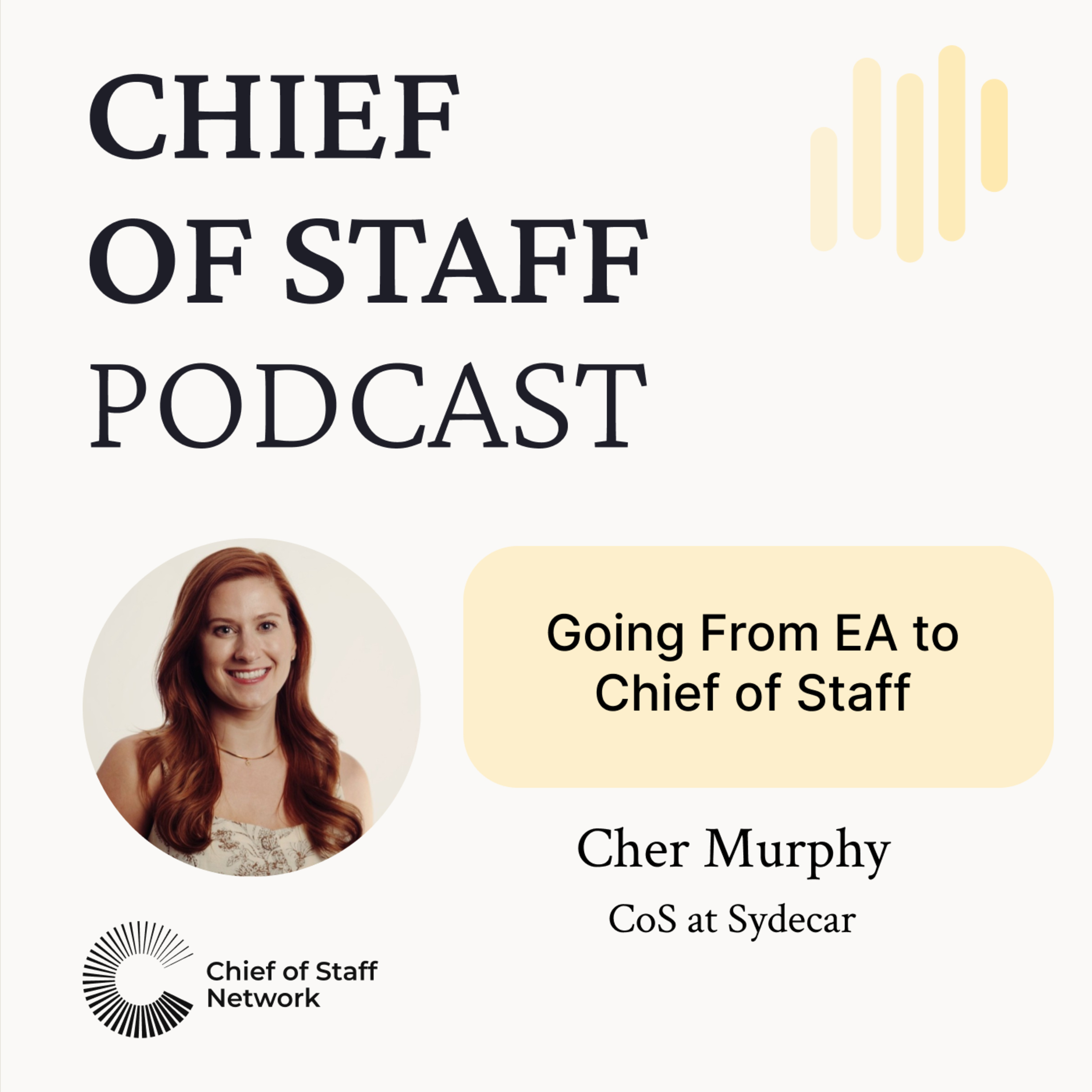
Cher Murphy recounts her career progression from managing department stores in Alabama to her current role as Chief of Staff at Sidecar. She describes how she got noticed and eventually hired by Sidecar while working on a consulting basis. Cher emphasizes the importance of work ethic and building relationships with leadership teams for career advancement. She reflects on the differences between her roles as an Executive Assistant and a Chief of Staff, mentioning the challenges of transitioning and gaining trust in a new environment. Cher also shares insights into the difficulties she faced in being recognized outside of her initial role and the impact of her background on how she was perceived. Overall, her journey underscores the significance of hard work, adaptability, and perseverance in navigating career transitions and proving oneself in challenging work environments.
Transcription
6787 Words, 35778 Characters
Hey friend, it's David Nabinski, the community lead here at the Chief of Staff Network.
We help Chief of Staff through the three C's, cohorts, curriculum, and community via Slack
with over 900 people in it.
You can learn more about our membership, events, and courses at chiefofstaff.network.
There you can learn about our upcoming in-person events and our Chief of Staff Connect conference
experiences with the next one in New York in October, followed by London in November.
Hope to see you there.
This episode of the podcast is with Cher Murphy.
She is currently Chief of Staff at Sidecar.
In this episode, you'll learn about how she got this role, her other Chief of Staff-like
experiences going from EA to Chief of Staff, moving from Alabama to New York City, and
so much more.
This episode was recorded at BambooX's NYC office and studio.
BambooX works with C to late-stage startups and their VCs, including Vercel, Hinge Health,
Cosa, and NEA, helping them hire top talent across software engineering, data, machine
learning, and AI, product management, and design.
You can learn more at bamboo-x.com.
So excited for you to level up as a Chief of Staff.
Here we go.
Sure.
We'd like to start off on how people got their Chief of Staff roles.
It's just kind of like a primer.
How would you describe how you got your current role?
Actually, it was a pretty interesting journey.
I started, I was helping out this other VC and planned this event, and it happened to
be that Sidecar was sponsoring it.
So that we actually were there with a bunch of other, like kind of VC, GP kind of professionals,
and yeah, the COO, Shree had come up to me and was very interested in my work ethic,
I think, and eventually reached out about doing some more consulting-type work, in contract
work, where they just like fill in some gaps that they needed, and very quickly I kind
of just like loved everything about it, and when it eventually came on full-time, and
yeah, haven't really looked back since.
So it was an interesting way, but yeah, it was while I was doing more like fractional
work.
Okay.
And then how did it go from, did like the work, like output and allocation just like
slowly start to increase until it was like inevitable that was full-time, or was there
something else?
Oh yeah, they loved that at first, they're like, "Oh, maybe 20 hours will be the perfect
amount for you to do all of these things," and I was doing a lot of work for the COO
and the CEO, and it quickly I was like, "All right, I think I'm going to need more than
20 hours," I was like, "Okay, now I need more than 25," and it was the point where
it was like over 30, and I was taking on a lot of big projects, and there was just like
a lot of need, and you know, they were growing pretty quick, and they were raising for the
Series A, and so it just became, kind of just fit in enough to where there was enough need,
and yeah, came on as chief of staff and officially in January, but I've been working with them
since September.
Okay.
And they liked your work ethic, and it sounded like you were excited about the opportunity.
How long have you been in New York for?
I've been in New York for over eight years.
Eight years, okay.
Yeah.
Where'd you move from?
Alabama.
Okay.
Mobile Alabama.
Yeah.
Were you doing chief of staff type of work in Alabama?
No.
Actually, I was managing department stores, so it was very different line of work than
I'm doing now, but still a lot of transferable skills, I'd say.
Yeah.
How are they transferable?
What's an example?
A lot of the hustle, I would say for sure, like it's always working very, really kind
of proven like having that kind of like rigor involved with the day-to-day is pretty similar.
So just being able to accomplish a lot with having large teams to kind of manage, and
I mean, in like a lot of right now, I'm doing a lot of stuff with like people operations,
and I think those skills actually transferred quite a bit.
So it kind of just, it got me ready for almost anything, I feel like in some ways.
And so you thought department store, chief of staff, logical progression, right?
Oh, yeah.
Well, when I moved to New York, actually, initially, I was like, maybe I can get some
kind of role in fashion for working in like Dillard's at Belk, and I had gotten a job
at Ralph Lauren and realized it was not what I expected at all, and the fashion industry
in New York is just incredibly different.
So I, and people kept wanting me, I couldn't get a job until I moved to New York.
Nobody would hire me from Alabama directly.
So then when I moved here, everyone assumed my last role was more like assistant-like because
I was the assistant to the regional manager.
Really I was doing the work, but I was like, all right, well, if you think I'm gonna feel
like executive assistant sounds fun, I mean, I'm type A enough.
So I gave it a shot and it was just like the easiest way to get a job really quick in New
York.
Okay.
And so that was kind of the initial start of it.
And then what were some of the next steps to like get you prepared for where or not?
Because like, I think the department stores in Alabama versus, you know, chief of staff
and talking about VCs and fundraising, like I can imagine some people think like, wow,
that's quite the progression and quite the journey, like how did that like, what would
you say to someone that's like, you know, wants to be a chief of staff that maybe is
in Alabama, or is like trying to break into this like field and stuff, like how do you
think you were able to really like do it?
Oh, well, I mean, I guess those are almost two different answers because I mean, would
I tell anybody coming from Alabama to New York again is gonna be, I mean, you're gonna
have to like really know that you love it.
I mean, so many people warned me and said like, I should do a step up city and do Atlanta
or Dallas or something.
And I was like, New York was only option.
I was like, that's where I just like knew I was kind of meant to be.
And yeah, so for me, it was like, I was just gonna figure it out and found a bunch of guys
to move into, into a apartment with and Bushwick and like much of, you know, there was with
one bathroom.
Yeah, it was like one of those like kind of, but I was like the most happy, I think I'd
ever been was just like, as soon as I got to New York during the 2017 blizzards, I was
just like, this is my place.
And yeah, I just, so for me for that, you'd have to really know that you're gonna like
want that kind of chaos in your life constantly.
If you're coming from someplace, I guess like Alabama, but also, you know, if I'm giving
advice to an EA, it's just, you know, making sure that you are expressing exactly like your
ambitions to your principles and actually building a lot of rapport with the whole leadership
team and just kind of from there, like working with them very closely.
And I think that really helps like build the trust and then people will kind of rely on
you in different ways and then understand the business, which is really hard as an executive
assistant.
Yeah, so wait, this 2017 blizzards, like it sounds like that was like a special moment
for you.
Like what, what did that like, was it because of the blizzards and like you said, it just
like felt so amazing like what about like that moment or how did it really like click
for you of like, okay, I'm meant to be here?
Well, I was actually racing against the storm because I was with my, I was in a budget truck
with my dog because I had sold my car and you know, so we were, I had to like race and
get there before the storm hit and it was, so yeah, it was, so I was trying to like kind
of race against it.
I didn't have a winter coat because it doesn't really get that cold and where I'm from in
Alabama and so yeah, I kind of had to like race against the clock and after the storm
hit and everything was like shut down for like a day and that's when I was like, all
right, well, I guess I got to like put a bunch of layers on and like go talk to these recruiters
and try and get a job in the city and I think I was like, my roommate also had to go in
for work and he was following me and he's like, I think you're the only person who's
smiling on the subway right now as we're like packed in, packed in on the like the M and
I'm just like sitting there smiling like it's just like the greatest day of my life, even
though I had like no shoes or coat ready for that winter at all and like had no job.
Yeah.
It was, it was fun.
You felt it.
Oh, 100%.
But like it was just like, it was amazing the kind of clarity I like had just been there
just felt so like this was my place.
Have you felt that feeling again recently?
There are moments.
I'm definitely more impatient and you know, New York will get to you in some ways.
So like I wouldn't say I still have the smile on the subway.
It's probably one of the things I do not like about New York probably now.
And I have some, you know, crazy roommate stories, you know, from the first couple years
and my like road and like everything that I kind of done with, you know, my career progressions
that like led me to get to the place where I am.
So I've had a lot of really interesting New York experiences, I'd say.
So I definitely lived the true like New York lifestyle as one.
So I do, but I do love it more than anywhere in the world.
So I really don't want to live anywhere else.
I'm glad you're here and I'm glad you, you know, kind of push past the doubters or the
people that were like concerned or second guessing your, your move here.
And yeah, I don't know exactly what they were projecting or what they were thinking, but
I'm glad that you pushed through and you're here and, and I'm trying to think back to
those 2017 blizzards.
I remember like a 2016 snowstorm for me, but it was like late.
It was in, it was March of 2017.
Okay.
Yeah.
It was, it was fun.
Yeah.
And then, so you also talked about the EA role and roles where like it was really important
to learn about the business and to build relationships and across like leadership team.
Do you want to talk to a little bit more about that?
Was that, was that an easy path as well or was that hard?
What is like the EA role like compared to the Chief of Staff role?
I mean, I think it's, it's pretty drastically different, but then some of the skills are
pretty useful in both directions.
So, you know, the first, the first like longterm, I guess, job I had in New York really are
the ones that I owe almost everything to that gave me that big chance and started as an
executive assistant with them supporting like three people and it quickly changed to five
when they realized that I was competent enough to handle it and it was, and it was a lot.
And I'm actually still close with almost all of those same principles then, even though
they definitely were very, very hard on me from the very beginning.
And then, then they almost became like family.
So I think that's really led and I think it had to like really build up trust.
And I mean, for me, I was like, all right, well, I can't go back to Alabama.
So I'm going to have to like fight through and like do everything they ask.
And I was like, this can't be any worse than, you know, managing department stores.
So I just kind of kept grinding through and they kept giving me more and more challenging
things to the point.
I started managing all the other EAs that kind of came after me.
And they started entrusting me with that and, you know, and then at one point we were taking
the fun public and I got to help, you know, project manage that whole process.
And I think that was my first like real feel of like kind of a more strategic, more strategic
initiatives kind of just kind of built in.
And, you know, I changed it from there to where I was only supporting like two people
at the end and then had assistance to kind of help with all the rest and they didn't
believe in the chief of staff title because they had been scarred with it from like what
the chief of staff means in banking because this was a real estate private equity firm.
So to them, chief of staff just like meant something totally different.
So I was administrative manager first.
Administrative manager.
Yes.
But it was more like a, you know, a chief of staff or project manager slash like kind
of role.
And after I kind of, and I mean, I would have stayed there probably forever if I didn't
dislike real estate as much as I did.
And dislike it as much.
Yeah.
Like I did not like real estate and it was kind of getting difficult for me to, you know,
fight through all of that every day.
And eventually when I did leave, it was like, all right, I'm going to try and find something
in tech.
I'm going to chase after this chief of staff role.
And so that's kind of how I got really into the like the true chief of staff, which had
its own challenges because then finding somebody who, when you've been executive assistant for
so long, it's really hard for people to see you outside of that, especially if you were
good at it almost.
It's almost like you get punished for being a good EA.
Like.
What do you mean by that?
So, you know, I would, I thought the best plan to get out was to, you know, show them
that I can do both, make it dual.
And then once they saw how good of an EA I was that then they would trust me to be a
chief of staff.
But almost in the beginning was like the opposite.
They would be like, oh, you're such a good EA, like you just do this all the time.
Like, that was all they wanted me to do and almost would not even give me, you know, those
kind of like really like meaty projects.
And so it was really hard to find somebody who would like value my opinions too, because
you get, they get so ingrained of like how necessary you are in the support role that's
like, all right, can you handle these, you know, these kind of stakeholders that are
going to be asking for, you know, the shut like for you to prove how smart you are.
And then someone who like, and then being in a room with a bunch of people who are from
like top universities and someone who came from a school that like nobody has heard of
except for in the South, it was a challenge to like show that, you know, I was smart enough
to be in that room with them, even if I didn't sound as intelligent as they did.
So how'd you do it?
Like, is there like more prep or is there more like, did you develop a certain type of
approach, which is like, I don't know, whenever you present ideas, is it like really, really
fleshing them out or de-risking them?
Like, is there a certain approach that you've like developed knowing that like, maybe people,
yeah, that people like look at it a little bit differently than someone that maybe has
like a Harvard or Stanford background.
I think for me, it was my work ethic, because I was like, that was one thing I always knew
that I could exceed above anyone else.
So I was like, I didn't care what school they went to.
I would work harder than anyone else.
So I think was like letting that kind of show through.
And just like really, I think when people letting people get to know you also, like
I think I am pretty good about being open and I mean, which sometimes to my detriment,
but you know, I think that kind of help people build more trust.
And then I would almost just like insert myself and I feel like having, you know, and then
having a lot of good like relationships with a lot of other managers, they'll kind of be
the start of it almost.
Like if your principal doesn't like totally see it all yet, the rest of management might
and they might have that value and they might bring you into more things or they might even
almost mentor you.
So it helps you just kind of have this other perspective or sort of, you know, just having
to show who you are through that.
And I think, I mean, there's so many people I had at that real estate private equity company.
I mean, they were phenomenal with that.
Like they, I mean, there were managers like who were like in charge of all capital markets
that would sit down and teach me everything about the IPO process.
And that was usually like, you know, left reserved for the like main, you know, the main stakeholders.
So it was having that kind of, you know, having people to like really trust and care about
your growth is so important, which is now it's almost, it ruined a couple of opportunities
after because I was like, you work for so many great amazing leaders who are like humble
and they're like also brilliant.
And then it's like, you have to go and finding that again is really, really difficult.
And so yeah, so I've been, I've been lucky a few times and unlucky and a few others,
but
You want to talk about the unlucky ones?
Well, I mean, even, you know, the ones that I love the most almost that I would still take
a bullet from from those, you know, almost five years with them, you know, in the beginning
they were so hard on me.
I mean, I wasn't even allowed to go by share.
It was I was, I would go by Cheryl because I couldn't answer the phones and be like,
Hey, this, you know, you know, good afternoon.
This is share was sounding, you know, too much.
But yet we had a chichi and a Mimi and everything else in between, but like I couldn't be share
for a while.
And I still gave him a hard time about it after, which I understand now, but I definitely
uh, you know, had to live that for a little bit and any mistake I made was like very much
just like thrown in my face.
So it was very hard.
So it was a lot of having to prove myself.
And it is, I mean, to the point where actually that's why I got rid of my Southern accent
when I first moved here, because then you'd have so many people like coming up to you
and being like, Oh, where are you from?
And I just was scared people wouldn't like take me seriously.
So yeah, there was, yeah, I mean, I could talk about that.
We need more, probably more time to talk about all of the like challenges that come with
just everything about proving yourself to these, you know, these very successful executives
who expect the best in whether it's in a tactical role or strategic chief of staff.
But it sounds like hard work gets noticed.
It sounds like your interest in learning and your curiosity, like those things go a long
way and that, I mean, that's all you could do, I guess, in that situation.
But wait, wait, but you said that you changed, how did you change your get rid of your accent?
Did you like intentionally do that?
Oh yeah.
I did change how my eyes sound because I started, I'd be like, Oh, it's so nice to
meet you.
Like, and I would notice that my eyes would just like, would be a little too pronounced.
So I just had to like correct that more than anything, like I still say, y'all, now it's
just my party trick.
So I kind of miss it a little bit, but you know, it's, it's still there deep down.
Yo, I think y'all, I like it when I hear it, it's like, it's kind of like a, we're in
this together, like we're like, we're friends, like as opposed to just like, Hey, you, you
want to come to this?
It's like, y'all, come on y'all, like, let's, let's get together.
Yeah.
I mean, it just makes more sense.
I mean, even in grammar, like it's just y'all should just exist to everybody, but that's
what it is.
Is there anything else about, I know you said that it should be like a whole nother
podcast episode, but is there anything else about that you learned that you still take
with you about how to like prove yourself for a developer poor with, you know, successful
accomplished executives?
I mean, I think it, I think having that constantly living in you anyways, like growing up very
poor and, and you know, and not from the Northeast too, it was like, I still feel like that even
now for no reason, like sometimes I feel like I have to work crazy long hours or make things
look perfect because I have this like constant like feeling of like, Oh, maybe if I don't
do this, then if I don't do this perfectly, and then I'll be fired and then I'll be back
in Alabama.
And so, um, and I have no reason to think that, but it's just that part of me that's
still just kind of like lives in there deep down that I, you know, probably will never
be able to shake, but, um, but you know, I have really, really amazing bosses now that
like appreciate sometimes my very like outspoken kind of, you know, get it done personality.
And you know, I have very strong opinions sometimes and they are wonderful about like
how they handle it and they like very much lead with empathy, which is very helpful.
So I don't, you know, worry about those things quite as much as I used to.
So yeah, and I've just have some, so much a better support system now in New York.
So that helps.
But you have that fear constantly that you might get fired and then have to go back to
Alabama.
Oh yeah.
It's like, all right, am I going to be homeless?
Am I going to go back to Alabama?
Like, oh, I mean, I had that even when I was doing really well.
Um, at now Mac, Mac realistic group was the place I was working at, um, before, I mean,
I didn't have anyone to be a guarantor for my apartment in New York.
It's, you know, you, it's almost required.
It doesn't matter if you make the money.
It's like, Oh, well, you've only been working in New York for a couple of years or something
and it's everywhere.
It was like, Oh, you need a guarantor.
I'm like, well, who am I going to find to do that?
And I mean, I even had bosses offered to do that for me.
So, um, it was, there was always that feeling because it was like, Oh my gosh, what am I
going to do?
Like I can't even get an apartment without like living with crazy, like, you know, crazy
roommates who throw your stuff out windows.
So that happened.
Yeah.
That did happen once.
And actually the general counsel of that company once had to, um, had to talk to her and, and
he had to basically scare her because she was just a little, you know, not all there
and had felt the need to do that because of like almost absolutely nothing like, yeah,
you just, sometimes you have to settle for having some interesting roommates in New York.
Grateful for my roommates, uh, for listening.
Thanks for, for being, you know, normal and special people to me.
Um, it's crazy.
Uh, it's crazy what out there, um, on the like operational like day to day perspective,
is there any like tools or workflows or processes that you've like developed that you've kind
of like taken with you?
Oh yeah.
Um, and being an EA really helps with that.
I feel like there's so much, there's so much that you have to track and kind of maintain
and what I love is when I meet, you know, other EAs or chief of staffs, they all have
like their special like cool technique and it's so, it's so much fun to listen to them.
Like, all right, what are your like, what are your ways of like tracking your organization?
But for me, it was like, I would create these like custom dashboards in different places,
depending on like what systems like my bosses used, like right now we use Notion a lot.
And so I've created these like custom dashboards are all like sync all these, you know, different
priorities and objectives for me, they're different one-on-ones that he might have with
different team members and that's kind of how I, I track most things.
And I just like live through these dashboards and like, and it kind of just keeps like everything
in one place so that I just like always have this just like almost control center at my
fingertips.
And that's kind of like what I live for now.
So let's talk more about this.
So you, you look at this dashboard like every day.
Oh yes.
And I have a special like a section for, you know, my CEO, and my CEO, and you know, any
just major projects that I'm tracking.
And right now we're hiring for, you know, a head of people up.
So I'm doing so many different projects and initiatives there as well.
So I just like kind of have everything in its own little place.
And then I have my own like kind of system and tracker of how I do everything.
But you know, my entire life I've suffered with ADHD and OCD.
And I've kind of, you know, over the years, I've figured out how to kind of make it like
a superpower.
So I don't have to track things quite as often as I used to because I, I mean, instead of,
you know, multitasking to my detriment, I've like figured out a way to kind of use both
of them to where I maybe am a little obsessive of some things, but like it kind of like always
lives in my head.
And it's great for an EA because like you always kind of want to be like reminding and
like making sure people are staying on top of things.
But as a chief of staff, it's like, I'm always thinking about what's next and I can do multiple
projects at once and I'm able to like kind of manage multiple things in different places.
And I like almost can remember exactly what I'm supposed to be doing at every single moment.
So it's, yeah, which comes with routine and time, but in the beginning, I don't always
feel like that.
But now I've gotten into my like speed and yeah, so I can kind of go through it pretty
quick, although when I train people, I realize that it can be a little bit much when I'm
like, oh, shadow me, like, let me show you what my flow is like, I get so excited to
do that.
And then I'm like, okay, unless you're as like obsessive as me, I think it may not be
the best way to train.
So besides these dashboards, is there anything else that you've really like brought over that
you really like use to be so effective?
Well, definitely AI.
One of the biggest initiatives that we're working on at Sidecar is, you know, making
us a more like AI native company and, you know, really bringing that throughout the
whole company.
So it's, you know, me and our, you know, ops and strategy lead have been working through
this like he's more focused on the product side and I'm really more focused on like implementing
different tools and systems and making us more productive as a company.
So I'm, we're heavily focused on that.
So like, yeah, I can live through like custom GPT's all day.
I can, yeah, I very much been intertwined with everything, um, involving AI.
So it's definitely a new tool and yeah, um, what are the, what are the custom GPT's have
you been making?
Oh, there's a great chief of staff one that I actually like screenshot it and send it
to one of our like Slack channels when I was like, Oh, here's an example of like, we're
trying to focus a lot on, um, how we're using AI instead of just being like, here's a cool
tool.
So I had this like really long prompt that I have with like a very special custom GPT
like not where I even just like M where I can actually, well, I should back up.
My favorite GPT is actually the one where I can, um, I had it totally trained to think
about how my CEO like things talks, everything like I trained it fully on like everything
he does.
Like I made it learn any like public speaking he's ever done.
I, so, and I make it to where it only talks back to me as it's him.
Wow.
So it's like, which, um, which is fun to do, but that's like my favorite one that I like
to teach EA is about, um, anyone who's like living in their inbox and like kind of helping
drafting in any kind of way or building out any kind of internal comms.
I think it's really helpful so that you're, you know, it's important to learn your principal's
voice anyways and just understand how they speak and like what kind of message you want
to convey.
But having AI now with it has been like amazing to have because that was definitely a struggle
for mine before, um,
Of trying to understand someone's voice and trying to understand.
And then now it's like saves months of time, I guess, so if like,
Absolutely.
Wow.
Because I wasn't always like the best writer, um, it definitely wasn't one of my best skills.
So for me to, when I first started doing that and you know, and that was like, you know,
Jatchubt and all these different tools didn't exist.
And so yeah, so from there, it was, uh, really fun to be like have something that just takes
off like so much time, like I get to focus so much more on projects and yeah, and I can
make it more creative.
And so now I've custom gpt's for, you know, very specific things now, um, when it comes
to, especially when it comes to like projects and I want to like think about my road, all
these different roadmaps that we have that's involved or intertwined within the company.
And I think it helps bring out a lot more creativity and how I think, and I had saved
all these, I'm a big resource person too, like systems and resources I've just like
build throughout the years and then putting them into, um, any kind of like Jatchubt or
Claude or anything.
And it's like, how can I make this like more functional for my company?
Like how can other different teams use this for different project tracking?
Like how can I make different teams better?
And I think that's one of my favorite things to do with, uh, with AI currently.
Those are the prompts?
Those are literally the prompts that you're putting in?
Um, my prompts are really developed, but you know, my favorite hack there is to like put
everything in and be like, help me write the best prompt that sounds the most effective
for my role.
If you ask it that and then ask it and be like, ask any also questions that you need to know.
That's like my favorite hack for prompting is like, you know, ask Jatchubt, ask Jatchubt
first, be like, how can I make this prompt the best where you'll understand it in reach
search mode, for example, or, um, and then ask me any follow-up questions to make sure
you have all the information you need.
And I think that's the best way to make it like a thought partner in the process.
So instead of you asking, you're not necessarily asking question, you're asking it to ask you
questions.
Yeah.
It is a really, really good hack.
If you have not tried that yet, like if you just put in all the things and sometimes I'll
just go on rant.
Like, all right.
I have to do this, this, this and this.
I'm probably not like sending the message, you know, we're right.
Make sure like ask, like ask me any clarifying questions and build me the perfect prompt so
that like you understand, like talking to it like, so you understand what I'm saying.
And it will build a beautiful prompt.
Wow.
Even for like the settings, if you're like, all right, based on all these projects that
I have and everything flowing, like help me write in the settings, like what, you know,
what my style is and everything in it will, it's very, very effective.
Wow.
Is there anything else on AI or processes or workflows that you definitely want to share
that we haven't talked about?
I'm probably forgetting probably quite a few different things, but I feel like it depends
on like the season.
Like at the end of the year, I'll probably have like a million different other workflows
that I go through when I'm, when we're thinking about, you know, budgeting or, you know, or
planning end of year reviews or different, you know, structures of things.
I think I have different workflows for different periods in time and the company I'm at.
Yeah.
It's kind of weird that I sometimes will like forget different things that I had done in
other places, but, but like currently, yeah, I mean, those are my main workflows that I'm
constantly thinking about and finding, and I'm constantly finding new ways to funnel
things through different systems, like linking or finding new ways of automating.
Like I'm testing Notion AI right now, just kind of seeing like how it can like interact
between like Slack and all of my different projects in Notion and just finding new ways
of what I think will be the best way to be productive.
Are you like creating meetings on your calendar, just to say like, this is like for strategic
thinking time or like, because I can imagine you're just getting like, you have a lot going
on, but like, how are you like creating space and time to like think big picture and like
test these different tools and.
Well, I mean, I definitely try and make time as much as I can.
A lot of my work day is in meetings.
Is in meetings.
Oh yeah.
A lot of my work day is, but I mean, my calendar is like kind of perfectly color coded and
organized and I had extra time during like an onboarding session.
I had for some new hires once and I decided to show them what my calendar looks like on
some days.
And I think it was a little bit much, I think unless you've been an EA before and you're
already used to that kind of behavior, it's, you know, and I love doing that in like art.
We have an EA who is remarkable at it too.
And I like love looking at their calendars and seeing how like perfect and colorized
and, and yeah, but to answer your question fully, um, I always try and make time because
that my favorite part is all the different strategic projects and I find my best thinking
is actually listening to you.
I mean, I promise I'm not saying this because I'm on your podcast, but like when I'm swimming
like at the gym and I play your podcast, I have like the water through headphones.
That's like, cause I do my best thinking when I'm swimming.
And so I've been listening to the podcast lately and some other like AI ones, but, um,
it like really like, I get, I feel like I get the most creative and then like immediately
when I'm done, I like have to like write it down cause I'll totally forget.
Wow.
And, um, it's cause it's fun to hear the new ideas and you know, I didn't, there's, I
didn't really have a network of people and similar roles before.
So it's, it's, it's exciting when I get to hear something new.
Well, I'm sure you're sharing some new stuff to, to someone who's swimming right now.
So, uh, let us know what resonates, what you're taking away from this episode, um, finished
swimming.
You know, if you got a couple more laps, like keep, keep doing that.
But then after that, then, then send us an email or message us, um, share, is there anything
else you want to share to existing or aspiring chooses of stuff?
Um, I think sharing your aspirations to your principle is another important thing that
I don't know if I fully mentioned before, but I think, you know, sharing your intentions
early on and like showing your ambition, I think you'll be given opportunities and projects
that will kind of help present and push you into that place.
And if you don't, then you have it on your resume.
So it's like, you'll have it on your resume that you did something at least.
And, you know, if, you know, if you're not able to do that in your current, like we're
not able to expand outside of your role, like then you will somewhere else that will appreciate
those kind of, you know, those skills.
I love it.
And if people want to reach out to you on LinkedIn, they can anything else you want to say, leave
us with.
Absolutely.
I mean, um, yeah, I think I appreciate the time being here and yeah, definitely feel
free.
I'm happy to talk to anybody or a mentor, anyone who's kind of going through those flows
emotions.
Cause I know I understand the challenge all too well.
So yeah, thanks for having me.
Thank you so much.
Really appreciate it.
Woo.
.
Podcast Summary
Key Points:
Cher Murphy shares her journey from being an Executive Assistant to becoming a Chief of Staff at Sidecar.
She highlights the transition from managing department stores in Alabama to working in New York City.
Cher discusses the challenges she faced in proving herself and transitioning to a Chief of Staff role.
Summary:
Cher Murphy recounts her career progression from managing department stores in Alabama to her current role as Chief of Staff at Sidecar. She describes how she got noticed and eventually hired by Sidecar while working on a consulting basis. Cher emphasizes the importance of work ethic and building relationships with leadership teams for career advancement.
She reflects on the differences between her roles as an Executive Assistant and a Chief of Staff, mentioning the challenges of transitioning and gaining trust in a new environment. Cher also shares insights into the difficulties she faced in being recognized outside of her initial role and the impact of her background on how she was perceived. Overall, her journey underscores the significance of hard work, adaptability, and perseverance in navigating career transitions and proving oneself in challenging work environments.
FAQs
Started with consulting-type work that led to a full-time position due to filling gaps and taking on big projects.
Transferable skills include hustle, managing large teams, and rigor in day-to-day operations.
Overcoming perceptions, proving capabilities beyond EA role, and gaining trust to handle strategic initiatives.
Focused on work ethic, building relationships, showing value through hard work, and seeking mentorship from other managers.
Yes, intentionally modified accent to be perceived more seriously professionally, but still retains some aspects for personal touch.
Chat with AI
Loading...
Pro features
Go deeper with this episode
Unlock creator-grade tools that turn any transcript into show notes and subtitle files.
 PodcastTranscript AI