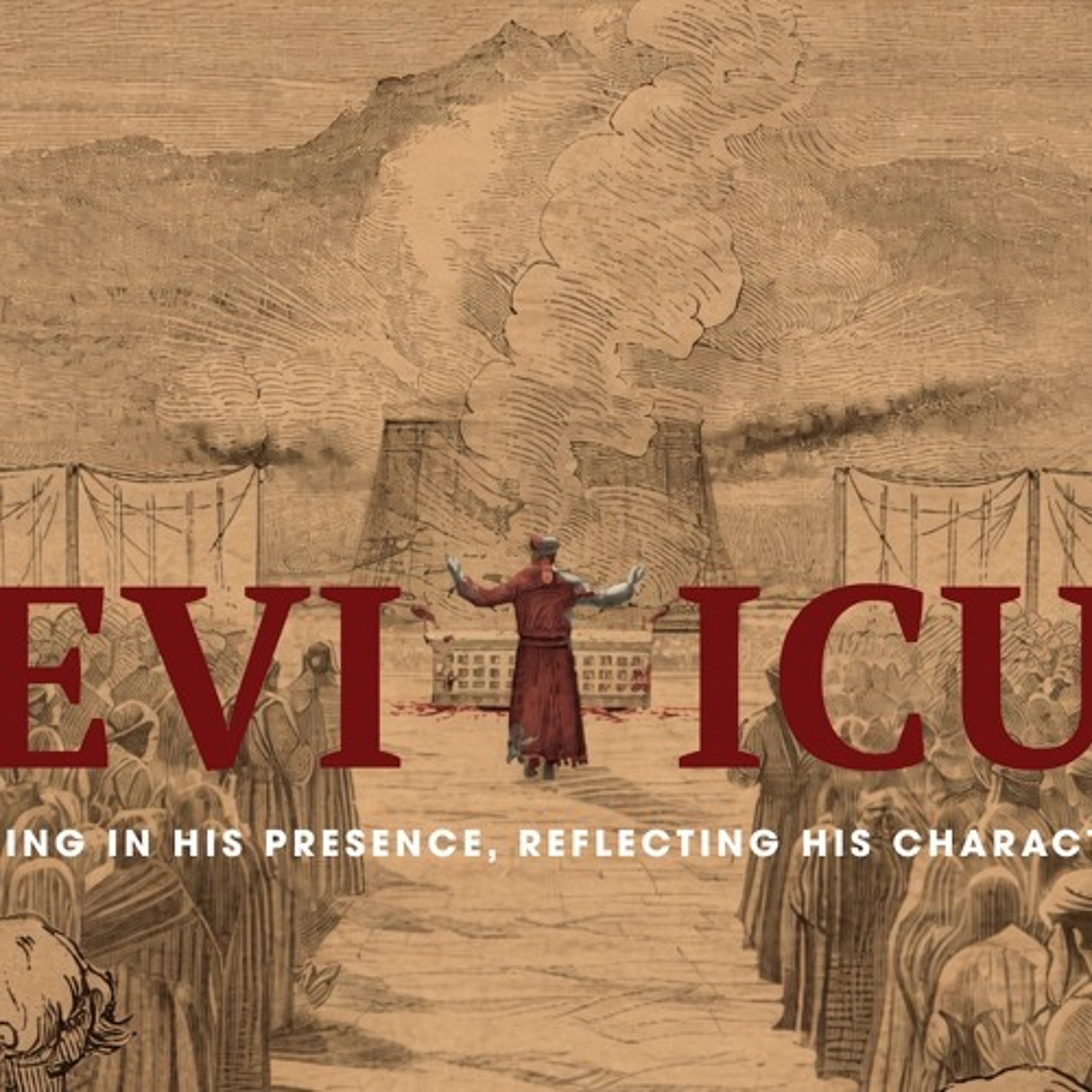
Gods Design for Sex | Brendan Willis | Leviticus 18:1-30
from Sovereign Grace Church Sydney
44m 59s
The sermon unpacks Leviticus 18 as a moral foundation for sexual integrity, rooted in God’s design of complementary, lifelong marriage between a man and a woman. It critiques modern cultural views that reduce sex to self-fulfillment, highlighting how such beliefs have led to exploitation and harm—especially to women—as seen in the lives of figures like Marilyn Monroe and Hugh Hefner. The passage’s prohibitions against incest, polygamy, adultery, homosexuality, and bestiality are not arbitrary but reflect ancient cultural realities and God’s protection of the vulnerable. These laws are not outdated but reveal His moral holiness and desire for His people to live in purity and integrity. The teaching emphasizes that sexual sin is deeply defiling, linking individuals to others in ways that damage both self and community. Crucially, the sermon affirms that Christ’s death and resurrection provide healing and transformation, allowing believers to overcome guilt and live in renewed holiness. The ultimate message is not one of exclusion but of redemption: God’s design for sex is sacred, relational, and oriented toward the future intimacy of the Church with Christ. The pastor calls believers to embrace this vision with joy and truth, recognizing that true fulfillment comes not from personal desire, but from faithful, self-giving love in union with God and one another.
If you're new and visiting us today, my name is Brennan, one of the pastors here.
And we're continuing on in our series this morning in Leviticus.
And you have come across a doozy of a week.
This is one of the most controversial passages in the Bible.
This is the kind of passage that posting online or putting it online could get you canceled,
labeled the bigot.
This is controversial to be sure.
And it's laws around sexual expression, including homosexuality that we're looking at today.
Now, if you're here exploring faith for the first time, we're stoked to hear.
You might hear this and think in and through as we read this passage that you're not welcome
here, that you're excluded from this gathering.
I want to encourage you.
That's not true.
The church is a place for everyone, all are welcome.
And there's actually good news here for us.
So if that's you, my encouragement to you is just hang in there, hang in there.
As we read, as I unpack it, I want to help you see why it's good news.
So opening in your Bibles to Leviticus chapter 18, I'm going to read it and then I'm going
to pray and ask for the Lord's help.
Leviticus 18 verse 1, "And the Lord spoke to Moses saying, 'Speak to the people of Israel
and say to them, 'I am the Lord your God.
You shall not do as they do in the land of Egypt where you lived.
And you shall not do as they do in the land of Canaan to which I am bringing you.
You shall not walk in their statutes.
You shall follow my rules and keep my statutes and walk in them.
I am the Lord your God.
You shall therefore keep my statutes and my rules.
If a person does them, he shall live by them.
I am the Lord.
None of you shall approach any one of his close relatives to uncover nakedness.
I am the Lord.
You shall not uncover the nakedness of your father, which is the nakedness of your mother.
She is your mother.
You shall not uncover her nakedness.
You shall not uncover the nakedness of your father's wife.
It is your father's nakedness.
You shall not uncover the nakedness of your sister, your father's daughter or your mother's
daughter, whether brought up in the family or in another home.
You shall not uncover the nakedness of your son's daughter or of your daughter's daughter for
their nakedness is your own nakedness.
You shall not uncover the nakedness of your father's wife's daughter, brought up in your
father's family since she is your sister.
You shall not uncover the nakedness of your father's sister.
She is your father's relative.
You shall not uncover the nakedness of your mother's sister for she is your mother's relative.
You shall not uncover the nakedness of your father's brother, that is, you shall not approach
his wife.
She is your aunt.
You shall not uncover the nakedness of your daughter in law.
She is your son's wife.
You shall not uncover the nakedness of your brother's wife.
It is your brother's nakedness.
You shall not uncover the nakedness of a woman and her daughter.
You shall not take her son's daughter or her daughter's daughter to uncover her nakedness.
They are relatives, it is depravity.
And you shall not take a woman as a rival wife to her sister, uncovering her nakedness
while her sister is still alive.
You shall not approach a woman to uncover her nakedness while she is in her menstrual
uncleanness.
And you shall not lie sexually with your neighbor's wife and so make yourself unclean with her.
You shall not give any of your children to offer them to Molec and so profane the name
of your God.
I am the Lord.
You shall not lie with a male as with a woman.
It is an abomination.
You shall not lie with any animal and so make yourself unclean with it.
Neither shall any woman give herself to an animal to lie with it.
It is perversion.
Do not make yourselves unclean by any of these things for all these nations, for by all
these nations I am driving out before you have become unclean.
When the land became unclean so that I punished its iniquity and the land vomited out its
inhabitants, but you shall keep my statues and my rules and do none of these abominations
either the native or the stranger whose adjourns among you.
For the people of the land who were before you did all these abominations so that the land
became unclean.
Let's the land vomit you out when you make it unclean as it vomited out the nation that
was before you.
For everyone who does any of these abominations, the persons who do them shall be cut off from
among their people.
So keep my charge, never to practice any of these abominable customs that were practiced
before you and never to make yourselves unclean by them.
Let's pray.
Lord God, we want to thank you so much for the gift of your Word.
Lord God, it is breathed out by you.
It is precious.
It is profitable.
So Lord God, on this sensitive topic we pray, take these Your words, help us see Christ.
We pray this in Jesus' name, Amen.
Well, friends, I want to begin today by looking at two of the most famous faces of the sexual
revolution.
The first, her picture should come up on the screen, is Marilyn Monroe.
And the second will also come up on the screen is Hugh Hefner.
These are both icons of the sexual revolution of the 1950s and 60s.
They were both born in the same year, 1926, and laid to rest in the same place, although
they never met during life.
In 1992, Hefner bought the crypt next door to Marilyn Monroe at West Park Memorial Cemetery
in L.A. for $75,000.
He told the L.A. times the following at the time.
He says, "I'm a believer in things symbolic.
So spending eternity next to Marilyn is too sweet to pass up."
In 2017, aged 91, Hefner got his wish and was buried next to the long-since dead Marilyn
Monroe.
And she had no say in the matter, as had been the case for much of her life.
See Marilyn Monroe was the first ever cover star, the first ever nude centerfold in the
first ever edition of Playboy magazine in December 1953, advertised as entertainment for men.
Now what most people don't know is that by the time it was published, these photos were
four years old, taken of Marilyn Monroe aged 23 years of age before she was a famous actress.
She had been paid just $50 for the photo shoot by pen-up photographer Tom Kelly, promising
that she would be completely anonymous.
Years later when Hefner acquired the photos, he featured her openly, her clothed image
plastered on the cover, promising full-color nude within.
A Hefner later admitted that these photos had been key to the magazine success, but Marilyn
Monroe was humiliated by the publication.
It was before her fame, she had been desperate for money, she had even signed release documents
using a fake name.
Shefner did not ask for her consent to use the photos, he never paid her a single sent
for them.
A Marilyn Monroe later confessed to a friend that she did not receive as much as a thank
you note from those who had made millions of using her image.
She even had to buy a copy of the magazine for herself just to see the photos for herself.
The famous feminist writer Louise Perry makes the following remarks about the story.
She says, "The course of these two lives shows in perfect vignette the nature of the sexual
revolutions impact on men and women."
Monroe and Hefner both began an obscurity and ended their lives rich and famous, having
found success in the same city at the very same historical moment.
But while Hefner lived a long, grubby life in his mansion with his playmates, Monroe's
life was cut short by misery and substance abuse.
And I was so impacted by the story just here and this week.
You see, we live in a culture that is in the aftermath of the sexual revolution of
the 1950s and 60s.
The idea is that the old rules surrounding sexual expression, they were oppressive.
They were bad.
That sex is first and foremost about the satisfaction of personal desire.
That as a basic desire, sex is essentially harmless self-expression.
We should be free to have sex in accordance with our own personal preferences.
And that this should lead to human flourishing, it should lead to happiness, it should
lead to satisfaction. But as the dust has settled over the past 70 years, it's increasingly
recognized that this is not the case.
It has caused immense harm, especially to women.
If sex is about the fulfillment of my desires, you become an instrument and object for my
own personal fulfillment.
If you are an instrument of my pleasure, increasingly I'll be tempted to use you for my own satisfaction
on my own terms.
I'll be tempted to treat you as a thing and not as a person.
And this is exactly what happened to Marilyn Monroe.
She was treated not as a precious child of God worthy of dignity or respect, she was treated
as an object for making money and ultimately contributed to the early end of her life through
drug abuse and depression.
See the new free market approach to sex, just like capitalism, it doesn't create an
even playing field.
It favors those who are strong.
It favors those who are less likely to be looking for commitment.
It favors those who are vulnerable, are less vulnerable, who don't have to bear and
raise children.
It favors men.
A courtroom and makes the following pointed remark, he says, "Nothing has turned women into
abuse objects in the history of humanity on large scale like the sexual revolution has
done.
It promised freedom.
It delivered slavery."
See today's passage, it requires a lot of unpacking guys, I hope you can bear with
me.
But I answer every question that this passage raises, not at all.
But part of our challenge in understanding it is that our vision has been so shaped by
our culture of individualism, that purpose in life is found in our own desires.
And our views of sex have been so shaped by the 1950s and 60s by powerful forces like
Playboy Magazine that say that sex is just all about our desires.
And these forces are so strong, it's hard to see anything else.
But I want to put to you that when you see rightly the Bible's vision, even if you're
not a religious person, it's so captivate.
It's so beautiful, it's so different, it's so compelling, it's hard to see anything
else.
I've entitled this message, if you're a note, take this morning, God's design for sex.
It's going to be a little bit of a different message in that we kind of need to step back
for a moment before we look at our passage and look at the big picture.
And so that's what we're going to do with the first point, the beautiful design.
And then we're going to dive in and look at our passage, we're going to unpack our passage,
more at a kind of high level, or we're going to dip into a couple of problematic areas,
trying to explain them a bit for us, our life giving boundaries, I've called that second
point.
We end our time together with just a few remarks on how do we live out the teaching of this
passage.
But I'm really just praying that as we do all of this, that God would help us embrace
His beautiful design.
We'd see it's beautiful and we want to add a heart level in braces.
So let's dive right into point number one, the beautiful design.
You know friends, our culture actually oscillates on this topic between two opposing ideas when
it comes to sexual expression, two opposing ideas that simply cannot coexist.
The first is that sex is really simply about the expression of a natural desire, put
another way that sex is nothing.
It's simply an animal instinct that we hold, it's therefore not a big deal.
And it's something that should be enacted upon and expressed according to our desires.
And the result of this is the idea that God would be bothered about who we sleep with
is ridiculous.
Richard Dawkins recently tweeted the following that I think just beautifully encapsulates
this perspective.
Richard Dawkins writes, "Your God created the laws of physics.
Controls 10,000 billion billion stars, but what he really cares about is who you sleep
with."
It's this idea that God in His supremacy would be bothered about something as irrelevant
as who a person sleeps with is nonsense, it's ridiculous.
Sex is nothing.
But on the other hand, not that sex is nothing, but that sex is everything.
That sex is a central desire, that sex is deeply personal, that sex is even caught
of who we are as people.
We know it's not the same as tax evasion or stealing someone's handbag.
We sense there's a deep defilement that comes from that.
We know that sex deeply joins us to another emotionally, so much so that when a sexual
relationship ends, it hurts, it's deeply painful.
Even the LGBT+ movement or the Me Too movement, they're all premised on the idea that sex
deeply matters.
Sex is nothing and sex is everything.
They both can't be true.
You see, the Bible cuts across both these categories.
The sex in the Bible, it's not nothing, it's not just an appetite.
Contrary to popular opinion, sex is not dirty, sex is sacred.
It is a precious gift from God.
But also, it's not everything.
It's not core to eye identity.
It even points upward to something beyond us.
You see, in the very beginning of the Bible, God creates Adam and he places him in the
garden.
But despite the glory of the garden and its goodness in Genesis 2.18, God says, "It is
not good that man that is Adam should be alone.
I will make him a helper, fit for, or who compliments him."
You see, we intuitively know that men and women were different, right?
God says it's by his design.
We're not just randomly different, but we're purposefully different to compliment one
another.
God has envisaged a kind of teamwork between men and women, serving him and working together
as one team.
God then creates the woman, A, from the man's flesh, and he presents her to the man, and
we read the following in Genesis chapter 2 verse 23.
It says, "Then the man said, 'This at last is burned of my bones and flesh of my flesh.
She shall be called woman because she was taken out of man.
Therefore, a man shall leave his father and mother and hold fast to his wife.
And they shall become one flesh, and the man and his wife were both naked and were not
ashamed."
Now, there's a lot to unpack in this passage, but this passage gives us the kind of basic
shape of God's plan for sexual expression, which is that it's designed for a man and
a woman in the context of marriage.
A verse 24, therefore, points us back to verse 18 with God's plan to create this complimentary
pair of the man and woman.
Verse 24, "A man shall leave his father and mother and hold fast to his wife.
And the older translations of the Bible, like the King James, it says, 'To cleave.'"
It's because this word refers to the cutting of a covenant, a permanent lifelong commitment
between two people.
See, marriage is designed to be a permanent lifelong covenant between a man and a woman.
Even more verse 24 says, "And they shall become one flesh."
Now this idea of one flesh, on the one hand, clearly points to them coming together in
sexual union.
It goes on to say they were naked and they were not ashamed.
But flesh is also used here metaphorically.
It's a way of describing the whole self.
They shall become one person, in effect, the passage is saying.
See, marriage as a covenant brings every aspect of two people's lives together.
They merge into a single legal, social, economic unit.
But the couple give up much of their independence.
In love they freely give themselves holy to the other.
To call the marriage one flesh, then, means that sex is both a sign of that union and
a means by which that union is accomplished.
A Tim Keller in his book, on the many of marriage, puts it this way.
He says, "The Bible says, 'Don't unite with someone physically, unless you are also willing
to unite with the person.
emotionally, personally, socially, economically and legally, don't become physically naked and vulnerable
to the other person without becoming vulnerable in every other way because you have given up
your freedom and bound yourself in marriage. Well, here's the truth. We live in a consumer society
where we treat people as objects to be used for our own pleasure. Now, this is a difficult question
but think with me. Why do the vast majority of people in our culture sleep together before they're married?
The answer is they want to reserve the right to leave if a better deal becomes available elsewhere.
So different to the picture of God's purpose in marriage and sex, he is designed men and women
to beautifully compliment one another and marriage to be this lifelong, voluntary giving of the entire
self to someone else. The sex, therefore, is a sign of what has taken place and a glue that keeps
binding the man and woman together. Now, knowledge of God's beautiful design, I believe,
positions us better to understand our passage today. So that's what we're going to turn to now
by looking at my second point, our second point, life giving boundaries. Turning to the passage
for today, the first thing to note is that the purpose of these laws is not to restrict the life
of God's people but to increase it. I read with me verse 5, it says, "You shall therefore
keep my statutes and my rules." If a person does them, he shall live by them. I am the Lord.
I hear the sense of live is to live under God's blessing. God is speaking to his people and saying,
"I've rescued you and I've made you into my people. Here's how to work closely with me and stay
with me." If God's kingdom were a farm, it would be a bit like God's saying, "Here's what marks out
the boundary of my fields and my pastures that are under my care. Here's how to enjoy my blessing."
Now this raises an obvious question. If you're sitting and listening to this and you've been
tracking in particular with the rest of the series, it's like, haven't we just been spending weeks
looking at a whole bunch of laws that no longer apply to us? Why would these laws be any different?
And the answer is we've moved into a new segment of Leviticus that is no longer concerned
primarily with ritual purity, that is, laws surrounding the operation of the tabernacle and how to
approach God. See, in the ritual purity system, in the sacrificial system, it was fulfilled in Jesus.
Here's our once-for-all sacrifice. Here's the way we now approach God. But in this section,
we move away from looking primarily at ritual purity to moral purity, that is,
how we should love God and love one another. And these laws don't change. They remain as an
expression of God's heart for us. Think about it with me. Think about the Ten Commandments,
for instance. Murder is not now okay. A stealing is not now okay. These are a revelation of God's
heart for us as people. They're a revelation of what God himself is like. They still apply to us
today. See, in the Old Testament, there are three categories of sin that were especially defiling.
And these are sexual immorality, idolatry, and murder. And they're actually all contained
in Leviticus 18, our passage for today. These sins are morally defiling.
They make a person not simply richly, but morally unclean as well. A verse 24 of our passage puts
it this way. Do not make yourselves unclean by any of these things. For by all these, the nations
I am driving out before you have become unclean. See, God has rescued the people of Israel to be his
own people. He wants to bless them and for them to live with him in ways that accord with his will,
the purpose for which they were made. Six times the passage repeats that these rules reflect
the practices of the people around them who are now being removed. Now notice it's not because
of their ethnicity that they're being removed, but because of their sin, we read it in verse 3,
verse 24, verse 27, verse 28, and in verse 30 as well. Six times God repeats that these boundaries
are because they're his people, not to become his people because they're already his people.
Verse 2, verse 4, verse 5, verse 6, verse 21, and verse 30. And overwhelmingly, these boundaries
are about protecting the vulnerable. And we see that in the largest section which are boundaries
to protect family members. And we see that in verses 6 through to 17. Now what we probably
miss here in 21st century Sydney is that in most ancient communities, families would live and work
close to each other. There was also a focus on marrying around tribal lines as well. That was
important. And this made women particularly vulnerable to abuse by members of the family.
It made incest a norm in many cultures. This might not be a temptation for you today as you're
sitting here, you're not tempted in that way, I suspect. But it's outside of God's vision for
sexual relations. Read verse 6 with me. It says, none of you shall approach any one of his
close relatives to uncover nakedness. Now this expression to uncover nakedness occurs 17 times
in our passage. And as an expression, it always has negative connotations. It refers to forbidden,
shameful, sexual relations. That's what it means. And the list of forbidden, shameful, sexual
relations among family members is comprehensive. With your mother, verse 7, or stepmother, verse 8,
with your auntie, whether on the father's side, verse 12, or mother's side, verse 13, or the wife
of an uncle, verse 14, with your sister, verse 9, or step sister, verse 11, or sister-in-law, verse 16,
with your daughter, verse 10, verse 15, verse 17, or daughter-in-law, verse 15, or step daughter,
verse 17, with your granddaughter, verse 10, or step granddaughter, verse 17, boundaries to protect
family members. But also, in addition to this, some general boundaries as well. Now remember we've
been looking at this beautiful vision of sex in the Bible grounded in the covenant of marriage,
this idea of one flesh, two complementary lives of a man and a woman coming together, merging
into a single legal, social, economic unit of unity, equality, partnership, teamwork. It's
opposite of the way Marilyn Monroe was objectified and used by Hugh Heffner and so many other people.
And similarly, there are four categories that are outside the bounds of God's vision. Let me unpack
these for you. The first is polygamy. Read with me, verse 18, in the airspirit says, "And you shall
not take a woman as a rival wife to her sisters, uncovering her nakedness while her sister is still alive."
Now, on first read, this is confusing. Is it limiting only some forms of polygamy and implying
some others are acceptable? Now, the airspheres attempting to preserve a literal phrase, a woman
to her sister. That's the phrase in Hebrew. It literally says a woman to her sister. Now, in Hebrew,
a woman to her sister or its comparison, which is a man to his brother, are nearly always used
as phrases, as ways of saying to one another. It's a phrase, a turn of phrase, a woman to her sister,
a man to his brother, a way of saying to one another. So it's actually better to translate this verse
as one woman, in addition to another, you must not marry to be a rival during the wife's
lifetime. You see, marriage is by design to becoming one flesh until death do we part.
Polygamy is contrary to God's beautiful vision of one flesh. It's why it's disqualifying for a
leader in the church in the New Testament. That's the first area, polygamy. The second is adultery,
verse 20. It says, and you shall not lie sexually with your neighbor's wife and so make yourself
unclean with her. Adultery, obviously, is contrary to God's beautiful vision of lifelong union,
of faithfulness and self-giving love. It also contravenes the seventh commandment against adultery
in Exodus. Thirdly, not just polygamy adultery, but also homosexuality. In verse 22, it says,
you shall not lie with a male as with a woman. It is
and abomination.
Now, this is a hard first for us in 2026.
It sounds so deeply offensive to our cultures is.
And if you're here today and this is a personal wrestle
for you, a loved one, a child, a spouse, a family member,
I just want to say, don't be tempted to believe
this is a rejection of you personally.
It's not. Christ loves the world so much he came and he died
for, and he's calling you to follow himself.
That's not what this is about.
The reason we struggle so much with these verse
with this verse is that we assume sexual expression
is about the fulfillment of our desires.
It's about self-expression.
That we just assume that.
And I've been arguing that our embrace of this logic
has led to treating other people as objects
of sexual gratification.
It's led to devaluing us as people.
We become objects of someone else's sexual gratification
as well.
The contrary to this, the Bible upholds this beautiful
diverse vision of men and women working together
that we were made differently on purpose,
according to design to complement one another
and to be together.
That in marriage, out of love and commitment to one another,
both man and woman, helper and the one helped,
come together, they merge and become a single person.
We see a clue in the old English word that's used here,
abomination.
It's translating the Hebrew word chicates,
which means something that's intrinsically wrong.
The wording reveals it further, lie with a man as with a woman.
The rejection is, or the problem is in,
the rejection of God's design.
Two women or two men together denies that there is a purpose
to our creation as male and female.
It denies God's plan for the differences to work together.
And that's why that word is used.
So thirdly, homosexuality.
And finally, fourthly, bestiality as well.
And you shall not lie with any animal and so make yourself
unclean with it.
It is a perversion.
Justice God had warned his people in verse three
to avoid the practices of those around him.
Actually, archaeological records show that the people around them,
especially the hit diets, practice bestiality and worship.
Clearly, this is outside of God's beautiful vision for sex.
It's not meant to be like that.
God isn't against sex.
Sex in the Bible isn't something dirty.
God has this beautiful vision for sex.
It's not simply a private desire to be expressed as we wish.
It's a beautiful gift with a clear purpose.
And this passage is from the heart of a God who loves all people.
And he wants to give them life.
Well, finally, let's spend the rest of the time we have together,
looking at point number three, living out God's design.
How should we live out this passage?
What does it mean for today?
And there's so many things you could say on this.
But here's three that I just felt impressed on my heart
to share with you guys as we close out our time together.
Firstly, I think this passage means
that we should take sexual purity seriously as Christians.
You know, our passage today is sobering.
God deeply cares about the misuse and abuse of sex by his people.
It's repeatedly described as the reason why he removed
the inhabitants of Canaan from their land.
But one o'clock forward to 21st century Christianity,
rather than fleeing sexual immorality,
I think we often look down with disdain
on people that are serious about walking in sexual purity.
I want to put you, I think we're far more likely to mark
a couple that's avoiding kissing while dating,
then to applaud them for taking serious steps
about avoiding even the hint of immorality.
If someone takes great care to avoid watching certain TV shows
or having access to the internet,
we label it as puritanistic, as overkill,
as being like a zealot.
Now, we tell ourselves things like sin is sin.
It's just like any other sin.
Everyone has their struggles.
This is my struggle.
It's no different from anyone else's, it's all grace.
The problem with this is the Bible does not teach
that all sin is the same.
It teaches that sexual sin is particularly defiling.
In 1 Corinthians 6/16, Paul puts it this way,
he says, "Or do you not know that he who is joined
to a prostitute becomes one body with her,
as it is written, the two will become one flesh?"
The sexist God's gift to us to symbolize
the lifelong joining of a husband and wife in marriage,
but it's also a kind of glue that binds them together as well.
And in sexual sin, you join yourself to others
in a defiling way, Paul puts it this way,
he says, "You sin against your own body
and yourself and the body of Christ, the Church."
I wonder if I can ask you a really personal question then.
Are you flirting with sexual sin?
On your phone with your colleague,
maybe even in your imagination,
with your boyfriend, with your girlfriend,
or even your fiancee?
We should flee sexual sin.
This is God's warning to us.
Not just that, I think a second right application of this
is that we should come to Jesus
and receive His cleansing from our guilt and shame.
What do you do if you feel racked by a deep guilt
for past or present sexual sins?
The truth is there's something deeply defiling about sexual sin.
It affects us profoundly.
It's why as a culture we're caught between
believing sex is nothing and sex is everything.
We believe that the lie that sex is just like any other desire
to be expressed as we please,
then we live out according to that logic
and we find ourselves wounded and jealous and broken and despairing.
Sexual sin leaves us feeling guilty.
It leaves us feeling dirty. It leaves us feeling ashamed.
Well here's a question I've been thinking about this week.
What was the way of cleansing for serious moral impurity
like sexual sin and the altestment?
Do you want to know the shocking answer?
There was none.
The solution, verse 25,
be vomited out of the land, the solution,
verse 29, to be cut off.
But here's the good news.
This is not the final verdict.
God's heart so bleeds for His people that He sent Jesus.
He lived the life of sexual purity we've failed to live.
He was celibate His whole life.
He didn't objectify or exploit others. He came to serve them.
He came to give His life as a ransom for them.
Isaiah 53, verse 8, I was reflecting on this this week.
Speaking of the Lord Jesus,
He was cut off out of the land of the living,
stricken for the transgression of my people.
The Lord Jesus on the cross, He bore our sins and failures.
He was cut off. He was vomited out for our sins.
More than that, He's risen, He's reigning,
He's able to transform the lives of sexually broken people.
At 1 Corinthians, chapter 6, verse 9,
Paul puts it this way, he says,
"Or do you not know that the unrighteous will not inherit the kingdom of God?
Do not be deceived, neither the sexually immoral nor idolaters,
nor adulterers, nor men who practice homosexuality, nor thieves,
nor the greedy, nor drunkards, nor avialas, nor swindlers,
will inherit the kingdom of God?"
And such was some of you.
But you were washed. You were sanctified.
You were justified in the name of the Lord Jesus Christ
and by the Spirit of our God.
God is able to do in Christ what was previously impossible
to cleanse you from sexual impurity.
Through repentance and faith, Jesus will not only pay for your sin,
but His Holy Spirit will transform you from the inside out.
If you're here today and you're carrying hidden sexual sin on your heart,
if you're way down by guilt,
let me just encourage you, don't keep carrying it.
Confess it to God. Confess it to those that you've wronged.
Repent of that sin. Turn away from living that way
and run towards the Father who loves you
and allow His Spirit to cleanse you from your guilt and shame
and transform your desires.
Well, not just that we should take it seriously, not just that we should run to Jesus without
guilt and shame, but finally, I just had this as a burden for us today, that our hearts
would embrace God's beautiful vision for sex.
You know, I think for all of us, especially for those of us who are younger, I think there's
still a deep temptation to not along with all this, but to still believe at the end of
the day, sex is still all about me and what I want, it's about my desires.
And maybe you're here and you actually, if you're honest with yourself, you feel deep
attraction to people of the same sex and you see this vision of what God wants and you're
at a place because of your faith in Jesus where it's kind of like a begrudging acceptance.
Maybe you're dating and in and through dating, you're experiencing a kind of sexual gratification
even though marriage isn't on the cards and you tell yourself, this is better for me
right now.
Or maybe you're married and it's a broken situation and there's little intimacy and you just dream
of being out or maybe your single and marriage looks increasingly unrealistic and you feel
left out by all of this.
Either way, because of your situation, what God is saying, it feels hard to swallow.
Here's what I feel the Lord is pressed on my heart for you today as we close.
Sex it, it's not about us.
It isn't actually about what we want.
It's actually about what God wants for us.
And this is true regardless of the situation or season that you find yourself in.
Actually his vision for the flourishing of humanity, man and women joined together in life
long faithfulness, not exploiting one another for their own ends.
But even more than that, it's about the future ecstasy of his bride, the church, his sacrificial
faithfulness to her and the intimacy and joy that awaits all who trust in Jesus on that
last day.
I want to just close because I think we need to pray that God would impress these truths
as counter-cultural as they are, deeply on our hearts and on our minds, that we wouldn't
begrudgingly embrace his vision, but ever increasingly rejoice in the beauty of his
design.
Would you pray with me?
God, we want to give you great thanks and praise today for all of your word, including
the bits that are difficult and challenging to us.
Look God, thank you for your beautiful vision of sex, a beautiful vision of two complementary
people, a man and a woman coming together as one person.
Thank you for this vision that is your design, Lord God.
Lord we confess today as your people that in these matters so often we've been unfaithful
Lord God, we've looked to the world to inform us about what sex is all about and not your
word.
Look God too often we've taken these truths and we've hidden them Lord God, but begrudgingly
follow them Lord God.
Lord would you change us Lord God?
Help us to see the beauty of what you're portraying in your word.
Help us to see the beauty of what marriage finally pitches, Christ and His great love for
His bride, the church.
Would I pray in particular for anyone for whom this is a deep heart level struggle?
Lord would they even in this moment know your nearness, your presence, your power with
them ruling and reigning and altogether as your people ever increasingly would we look
to you and your Son with eager anticipation of the intimacy, the joy, the glory that
awaits us when bridegroom and bride in Christ and His church are finally one and pray this
in Jesus' name.
Podcast Summary
Key Points:
The Bible presents sex as a sacred, designed gift within marriage, not merely a private expression of desire.
God’s laws in Leviticus 18 are not cultural restrictions but moral boundaries protecting vulnerable individuals and reflecting His holiness.
The prohibitions against incest, polygamy, adultery, homosexuality, and bestiality are rooted in God’s vision of complementary, lifelong marriage between a man and a woman.
These laws are not obsolete; they reveal God’s heart for moral purity and the sanctity of human relationships.
Sexual sin is described as deeply defiling, linking individuals to others in ways that violate God’s design and harm the self and the body of Christ.
Christ’s sacrifice offers redemption and transformation from sexual sin, enabling believers to live in purity and intimacy with God.
The passage challenges modern views that reduce sex to personal gratification, calling believers to embrace a relational, sacrificial view of love.
The ultimate purpose of these laws is to point forward to Christ’s redemptive work and the future unity of the Church with Christ.
Summary:
The sermon unpacks Leviticus 18 as a moral foundation for sexual integrity, rooted in God’s design of complementary, lifelong marriage between a man and a woman. It critiques modern cultural views that reduce sex to self-fulfillment, highlighting how such beliefs have led to exploitation and harm—especially to women—as seen in the lives of figures like Marilyn Monroe and Hugh Hefner. The passage’s prohibitions against incest, polygamy, adultery, homosexuality, and bestiality are not arbitrary but reflect ancient cultural realities and God’s protection of the vulnerable.
These laws are not outdated but reveal His moral holiness and desire for His people to live in purity and integrity. The teaching emphasizes that sexual sin is deeply defiling, linking individuals to others in ways that damage both self and community. Crucially, the sermon affirms that Christ’s death and resurrection provide healing and transformation, allowing believers to overcome guilt and live in renewed holiness.
The ultimate message is not one of exclusion but of redemption: God’s design for sex is sacred, relational, and oriented toward the future intimacy of the Church with Christ. The pastor calls believers to embrace this vision with joy and truth, recognizing that true fulfillment comes not from personal desire, but from faithful, self-giving love in union with God and one another.
FAQs
The purpose is not to restrict but to protect and promote moral purity, reflecting God's design for healthy, respectful relationships and protecting the vulnerable, especially within families.
The Bible sees sex as a sacred gift from God, deeply connected to the unity of marriage and the mutual giving of self, not just as a private act of personal desire.
These laws protect against abuse, exploitation, and incest, which were common in ancient cultures and harmful to individuals, especially women, in family-based communities.
It refers to forbidden, shameful sexual relations, especially those involving family members, and carries negative connotations of violation and immorality.
Yes, it is described as 'an abomination' because it contradicts God's design of male and female complementarity and lifelong marriage. However, the passage is not about rejection of individuals but about upholding God's design for human relationships.
The Bible views marriage as a lifelong, covenantal union where couples become 'one flesh' in body, spirit, and identity, emphasizing commitment, mutual self-giving, and emotional unity over personal gratification.
Chat with AI
Loading...
Pro features
Go deeper with this episode
Unlock creator-grade tools that turn any transcript into show notes and subtitle files.
 PodcastTranscript AI