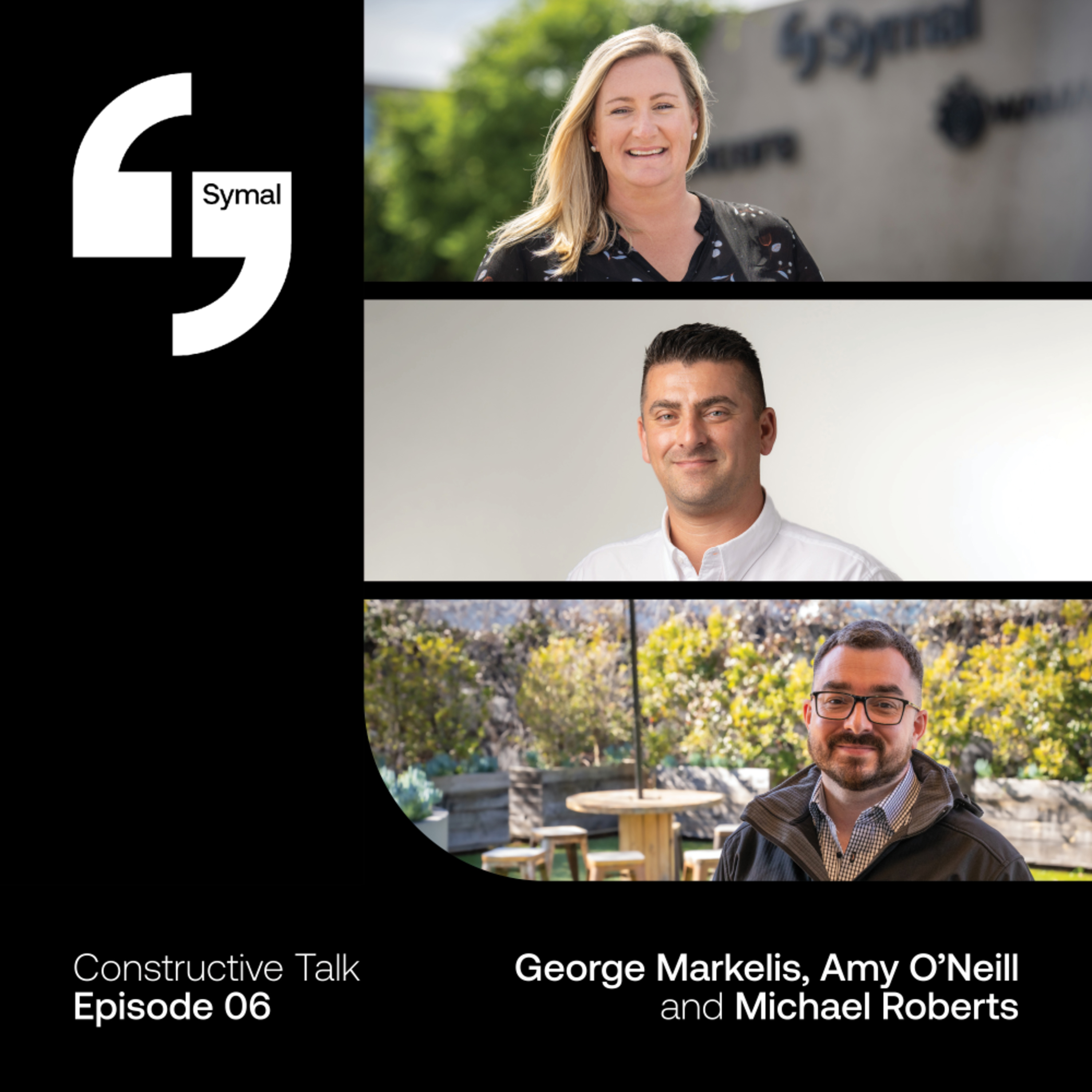
George Markelis, Amy O’Neill & Michael Roberts: Beyond the rush — Safety, focus and finishing the year strong
39m 56s
The podcast episode focuses on the challenges faced in the construction industry during December, known as the busy season. The heightened pressure, deadlines, distractions, and human factors like fatigue contribute to increased risks on construction sites. Strategies such as planning, campaigns, increased governance, and inspections are highlighted to address safety concerns during this critical period. Key themes discussed include the importance of communication, speaking up, and looking out for teammates to ensure a safe working environment. Emphasizing the need for leaders and crews to support each other, the episode underscores the significance of proactive risk management, adaptability to changing circumstances, and maintaining a culture of genuine care and safety awareness on construction sites.
Transcription
6821 Words, 36446 Characters
Welcome to Constructive Talk. The podcast where we have real conversations about the work we do and how we do it safely.
I'm Daniel Carroll and today we're talking about something that matters every single year.
Finishing the year strong through the silly season.
December's a time when the pressure amps up, everyone's juggling deadlines for teak starts creeping in and distractions are everywhere.
And that combination means the risks on site can rise quickly.
In this episode we're unpacking why this time of year is so challenging.
What we're seeing across the industry right now and the small actions that make a big difference in keeping each other safe on site.
We'll also share some personal stories and insights from our experience on the ground.
And because it's a silly season we'll finish with a few fun fire rapid questions for looking ahead to see what's exciting and safety in 2026.
So let's get into it. Here's how we can stay focused, look out for our mates and finish the year safely and strong.
Okay, welcome everybody. I'm really excited to welcome not one, not two, but three safety professionals to the episode today.
We've got George McAllister, the group HSEQ Manager for Symmel Group.
Amy O'Neill, the National Safety Manager for Symmel Infrastructure and Michael Roberts, the National HSEQ Manager for the United.
Welcome everybody. Thank you Dan.
I guess to start off, when I spoke to each of you about getting involved in a podcast I thought great time of year to be getting in front of our people and start talking about, you know, it's traditionally a pretty hectic time of year.
You guys will know the stats and figures and themes way better than I do, but can you tell us a little bit about why this time of year is important on site?
Absolutely, and you're right, and I think it's across many industries too, by way reflection, but, you know, it's the end of the year there's jobs to finish, there's programs, there's people feeling pressures around KPIs and, you know, all of that amounts to a level of pressure to get work done and finish it.
And then there's other human factors, there's fatigue setting in over the course of a challenging year, big year.
There's attention to the festive season, there's attention to other things that play out too that I guess exacerbate those combinations of things as you're identified in your intro.
So, things traditionally are seen to spike by way of incidents, injury rates, safety breaches come, you know, November, December in construction, but industries like transport and retail are also not immune to this sort of stuff because it's commonplace.
So, in regard to statistics across the industry, does anyone have any sort of little bit more insight than little of me into what that sort of looks like? I'm probably taking a punt in assuming that that's the way, but everyone I speak to around this says that it is one of the most important times of year, just because there's so much happening and there's so much on the line.
I think what we've found is that the incidents actually just hit that bit harder at this time of year, but what the trend that we've been seeing is this time of year, it doesn't necessarily just start in December, it's actually been starting earlier and earlier the last couple of years, and that's been reflected in our own internal stats as well.
And is there any sort of type of risk, I guess, that is sort of stacking up more than the others, or is it just sort of across the board, there's just doesn't matter where you look or what site you're on, they also need to be the same.
Every site would definitely be different in its own regard, but I wouldn't say there's any common themes that those external factors of the pressure from program and personal pressures as well in this time of the year.
I mean that any project for any scope really, you can't have issues, it's just around being able to pause and plan your jobs as you need to in this period of the year.
I feel like maybe one of the common themes is planning. It's really hard to compete with the end of year perceived pressure, most of the time it is perceived, let's be clear about that, because we know how in people are empowered to say no it's not right, let's not proceed, but I think sometimes the planning factor is really I think what I see is a consistent theme.
When the planning goes wrong, we don't necessarily plan changes, we don't necessarily stop and re-risk assess enough.
I suppose it's the biggest milestone on the calendar, it's very, very hard to ignore because 95% of people I'll hazard a guess to say heading off on some type of holiday, so they've got extra incentive to say I'm actually need to leave on this time, so XYZ need to be done, so I'll get there however I need to.
There's so many people tied into that plan, not only within our businesses, but across our supply and subcontract a base that all of them are linked to those, the plan, the program, and therefore the pressures that are felt as we move into this phase.
To cite some stats, to come back to your question, they for Australia, works AV, Queensland, talking about 10 to 25% increase, come the months of November and December, generally in the years that have been maintaining this data.
The theme areas, manual handling, slip trip injuries, fatigue related injuries, involving equipment and plant, and then there's vehicle accidents and that space is hovering around the transport and postal sectors, so there'd be the themes, and I guess when you sort of talk about those human factors that we started with, you start to connect them.
So are there any sort of key safety challenges or patterns that you've noticed, like you obviously see a lot that happen within the teams that you're directly responsible for, but I'm sure there'll be some of those that translate into the wide industry in this time of year, can you talk about any of those?
I think Amy hit the nail in the air, the planning is absolutely key, like the lack of planning or the changing plans in this time of year, there's less room to change plans or programs.
So if there is a time where there is that pressure that is felt from the project teams, they feel the need to just get it done.
Instead of having that sort of forethought to stop and plan and take the time to make sure they're doing it the right way the first time, and that pressure can come from all different angles for sure.
And it's not like our teams are not doing it on purpose, no one comes to purposely do that, but I guess my point to back that up is that it's just the competing pressures, like George mentioned right at the start, it's really heightened at this time of year.
But at other times of the year, say you have a project with 100 people on it, there might be five, 10% of people that are distracted at any one point in time, at this time of year, it's way higher.
It's most of the people on the job are distracted, they've got other things going on, there's family items going on, there's other work items going on as well.
So just that level of distraction is just another next step up.
We've got a little bit of flavour to it, we've got an unseasably wet November, so a lot of lost time on site due to bad weather, probably just adds to the pressure of making sure we're picking up on lost days.
Well said then, they are also factors, right environmental factors coming to play, climate weather, bad wet or high heat, right as well, starts to have an impact on how work can get done, how plans get executed and like we said things get compounded pretty quickly.
When you talk about obviously you guys are putting together some campaigns and you've got your processes and procedures that are helping to keep teams safe and obviously giving them a single focus rather than worrying about lots of things because already got a lot of noise happening upstairs.
So when you talk about fatigue and time pressure that starts to creep up, is there anything in particular you find seems to be working better than anything else?
I think general strategy across industries and our industry is the lead up to cruise skirmish campaign where we talk about the importance of that plan and you know refocusing people's minds to the plan, it's bringing the risks and all the issues and all the complexities of this time period, front of mind.
So that those competing interests, you know you bring it to the front of mind to remember to reset, remember to check and do that planning for self and for the task.
So we see lots of that play out to you know I think the way you said it is you know manage the noise you know bring bring the necessary noise to to front of mind is is important.
Governance, right auditing and inspections generally increase this time of the year as well the presence from agency teams leadership is really important and is what plays out because these this period is known to be dangerous and you know for the reasons we said so everyone gets behind it.
Not only through the campaigns and the discussions but there's an increased attention to how we're going to finish the year strong and what that messaging is I think there's a strategy to how that messaging plays out as well which you know is definitely about risk awareness following process and and also a preparatory piece that says you know this is how we want you to.
Enjoy your break and you know bring that human element to that so yeah we've we've actually added a couple of extras to our campaign this year and the two themes we've added our resilience and the well being factor around taking care of yourself and others so.
We all we all do every year sort of hover around the same themes of you know don't be a start be aware speak up you know and in and in very empowering topics but.
It's a really challenging thing to try come up with a new way of saying the same thing every year because just like social media and everything else you've got to disrupt somebody's day to get that information to them.
Yeah and and again just that's why it's so important that the leaders are getting out there at this time of year as well it's not just the same old people it's it's everyone our leadership teams out there walking the paddocks and having the chats with the team.
Funny mention leadership because I was actually on the phone to someone the other day I won't say who they are but they want an internal award for leadership and talking to them about what it meant to them to win the award and how they went about their day.
One of the things they mentioned to me that really caught my ear was about how they've got their team to a point where they're not just worried about what they're doing they're also got a really good.
Visibility on their teammates and checking in on them because in addition to being safe yourself it's easy to fall into a habit of okay doing the same thing over and over again if you got.
30 pairs of eyes watching 30 teammates as opposed to just worrying about what you're doing it's it goes a long way to keeping everyone safe as well because something might creep up from the side or I don't know what else happens on site but there's a variety of different ways that add risk to people working on site.
And I'm just thinking about something before we're talking about our people looking at keeping so safe themselves and clear of all the noise that's happening in their head and directly on sites and everything that relates to their role but I think there's another complexity with our some of the outsides without going into too much detail.
You have to worry about the external factors as well because if they're out working on roads and that type of thing everyone else has got the same sort of time pressures driving fast to get to the black Friday sales and all of that sort of stuff and there's also the heightened risk of external environment as well so is there anything that sort of goes into preparing teams for that as well.
I think it is just around that that same sort of vigilance piece getting involvement from senior leaders like George and Amy was saying is absolutely critical having that other set of eyes with a bit of experience or a different experience that might be coming to see a project with that fresh set of eyes can pick up something that like you sort of mentioned as well.
Or Dan a bit of complacency can creep in so having that extra set of eyes just to stop look and even just ask a question around how how that activity is being planned can make a big difference.
Our jobs are delivered with a team bigger than just the symbol team right we're relying on supplies and subcontractors so our messaging extends to them and checking in on them and helping them bring their teams front of mind as well.
There are a lot on our support partners traffic management would be particular in the environment that you describe to so having them part of planning part of our campaign discussions part of I guess that whole model of resilience well being workload check rostering is all part of how you make sure that those external factors and the people you're aligned to support that.
A well placed for it and just one final thing you're absolutely right that the roads are crazy let's put it black and white but that's why we're fixing them up.
Yeah there you go but I think the also the the thing to add there is projects have got to be specific where we place our energy in governance at this time of year two so you know we really want to make sure our high risk work inspections are done on in those environments that are live.
That are that are that have adjacent live traffic to them or are on roads with traffic management so you've got to be really.
Deliberate in your governance in this time of year as well like we don't we can't predict everything but all effort all energy is going to have an impact whether we think it's going to or not like we said a fresh set of eyes on those high risk work inspections is gold as well.
And talking to some of the team members out on some of those sites that have a couple of layers of complexity in particular with the life sites I just couldn't believe it how much extra work goes into.
Preparing for a piece of work in that type of environment is there any sort of sort of focus around those type of things that happens this time of year.
I think it stays with the theme of the discussion right it's it's increasing it's making sure that with that shut down period looming what what have we got set to do and.
Our regular those conversations happening to plan and making sure that all the comms associated for the teams the people that are delivering on the back of that.
Totally across it it may be just identifying that given the external.
Uncontrollable factors we need to ramp up our controls and I've seen examples of that on our jobs where we change an empty water barrier to a remote control boom gate to just.
Increase the communities awareness that we are working here and that no you cannot come into this area and don't speed and remind them that there's people behind the barriers as well so you know in this this time of year.
Like any any sort of project or opportunity that you're preparing for there's you'd love to be able to do one big thing and it fixes it all so I'm guessing the your campaigns and strategies revolve around a lot of small steps that can just change you know one percent of the time is is the best way of moving forward are there any small actions in particular that you think you're going to make a big difference on site at this time of year.
Yeah definitely I think what you're saying there's multiple for sure one thing that.
I do every year this in this lead up period is I start blocking our days and just not booking meetings in for days at a time sort of thing and making sure that I can spend.
Time on site that's where that's where the risk is so and trying to get as much as the planning done as I can prior to to that last few weeks and then spend as much time as possible on site.
Actually at the call face with the work groups it's very easy for a small thing like somebody not wearing glove somebody not wearing glasses to turn into a big incident in in those last couple of weeks when the pressures are high it becomes even easier again so just being out there on site with the work crews making sure that their feeling supported as well.
Yeah I think even without being an expert and being too much on site I could sense that you know there will be some people that are going to be reacting differently to the different situations and having someone like yourself as a little bit of leadership on site they can ask questions.
I'm assuming there's a lot of back and forth conversations that will help our night outign out any any creases on site.
Yeah we're even just working with the supervision and the engineering teams to to make sure that they understand where the risks are again that their heads are in a million spaces at this time of year things like the the external pressures as well as the internal program pressures so making sure that they're feeling supported as well.
Even something as simple as letting them know that risk exists in an area that they may not have seen is enough for them to address it and to move past it sometimes yeah for sure having the conversations on site with people can have a big impact as well.
Yeah I think what we do really well at Simul is that culture of genuine care really shines on our sites always but the thing that we ramp up is the communication and reminders about the care.
But then we also have the ramp up of everything else as well but it is a very much a back to basics type campaign as well and we do repeat it year on year because well there's nothing wildly you know fancy about what we do it we know it is just the basic reminders if we keep that up it will hopefully stay the course and keep us honest and and really thinking before we act.
At the top three of those basic reminders to put you on the spot I guess at this time of year the most safety the might seem a little bit simple but communication is it seems to always be one of the one of the top ones is.
Look for me I've got an answer for you I'm going to jump in it's just speak up if it's not right speak up like that is the number one yeah exactly so for me everyone should be empowered to not to make sure it is safe to proceed.
And they should also be empowered to pull their made up as well like yeah and really have that the chat and and you know we hopefully do have that I think we do have that culture of receiving that well.
Well we pride ourselves on building better together that's all that's all part and parcel of the way we like to build our culture and without going yay simple too much I can't attest for that more than the culture that's built across the business and it is a genuine care for everybody as well so.
I reckon the speaker message is fundamental for us as they are totally support that if you don't have that then when plans do change how are you getting back on the right course so yeah second that.
And when you're talking about speaking out there also a lot of that is driven by leadership on site and so how can leaders and crews on site look out for each other during this period where everything seems to be going.
A million miles an hour and it might seem a little bit sort of tough to keep up on top of your own stuff but you're also responsible for the team around you think sometimes understanding that.
Things aren't going to go the exact way that you plan them as well.
Having that in the back of your mind that the change management piece is so critical because change does happen all the time so making sure that you've got that in the front of your mind and you're working with the ground crews to.
Change their plans re planning their tasks and make sure they're still doing it safely.
I guess there'd be a little bit of fat built into the program used to worry about you know inclement weather and that type of stuff.
Yeah even in those scenarios you know a delivery is like for example all of a sudden you're switching to a different activity earlier than you expected.
And I totally agree and I'm sorry to jump in but I feel like the really important point to to marry with that is we want our leaders our supervisors our teams to anticipate risk and try and plan as best they can for different scenarios.
It's construction we know it's fast pace we know it's agile we know we get thrown a thousand different balls every day so it's just how well we can you anticipate plan for and stay true to the course if it does change.
Or having and having anticipated a plan B and C and potentially T because it all it all comes out of skies.
And when you said earlier as well aims around the resilience piece like that being the items that got added this year that ties into this as well right.
The resilience to that change and still sticking to the course and making sure that we're still stopping and planning and completing activity safely.
That's it a good plan has contingency and a good leader has you know I suppose the resolve to say this is you know a good place to end it.
So we've got a lot of positivity around the type of proactive measures we're taking to to keep people safe on site is there any sort of safety myths that you sort of encounter from time to time that you'd love to be able to set people straight on or actually you know tell them actually that's not quite true you should be doing something a little bit different.
We actually debated about this one in our little catch up the other day didn't we gents we did I think you know the industry is moved well past.
Do your productivity then do your safety then do your quality you know the industry is well on its way that you know a safe plan and a safe method of executing work is is a very productive a high performing operation.
So I guess you know those myths of safety being a barrier to production are passing us now.
If he's a little bit of a fine one if safety had a theme song for December what would it be.
One we debated firstly.
Staying alive.
We also searched to see if there was a Christmas safety song and and there is actually a song called the Christmas safety song which does talk about it's a lighthearted track created specifically to remind people about holiday safety.
Yeah well we might even play a little bit of that to let the listeners know what that sounds like and how they can get it into their ears.
I don't know what I mucked around with the couple the other day I'm still standing yeah survivor destiny's child you know come to mind then I get knocked down.
What's that tub something I'm sure if you if you really got to be a bit of an avalanche of sort of songs that fit that that mold but we might have to make a bit of a safety playlist for everyone on site to listen a bit of play list through Spotify.
We'll get that one up and go for next year maybe and looking ahead to next year what's what's something new or something exciting happening in safety.
Either in similar across the industry that you can see there's a lot of everywhere you look people want to talk about technology and you may have heard of this thing called AI that everyone's talking about but is there any way what that sort of stuff can integrate into safety solutions.
Of course we're seeing the tech side of things you know and like you say AI appear in in so many ways from traffic management platforms systems platforms that are monitoring and supporting risk awareness and response to ways to analyse data and information even quicker.
It's an exciting time about what those tech features bring to the way we work today so yeah we're seeing that come through and enjoying learning about it too and see what it brings to how we do our work.
I spoke to a few mates lately that I get a little bit excited about how data statistics relate to what I'm doing in comms and they're like oh it's just numbers how's that going to help what you're doing.
It might just be numbers but it's got a really good way of determining what's likely to happen next and if that's one of your best tools in your tool belt you'd be surprised at what sort of things it can help you prepare for.
Is there any sort of you know processes and that sort of stuff that you're working on for next year that some of these things take a little bit longer than a couple of months or even years to put together because a bit of big teens working behind some of these projects but is there anything you can share is it all top secret.
I will second what you said that data reform decision making is the play then absolutely and when you consider how much is that your fingertips working through how best to interpret it and then use it as powerful medium to communicate there's lots to that there's lots of opportunity to do that.
What to expect from you know safety at Simul next year I think what I'd like to share is you know the growth continues at Simul and with that growth the opportunity for the safety team to grow and be exposed to new challenges new work environments that continued diversification of what Simul brings to market.
It adds to the growth and development of all of our team so I think I'm really excited about that I'm excited about those you know sectors that we're involved in and and how we learn from each other across a broader team.
Have you noticed that going into new sectors is is modifying your approach to safety or is it just safety is safety regardless of what you're doing.
Now of course I think there is an influence from you know construction sector into our plant operation management sector to our recycling and resource recovery sector.
I think all of those experienced people in those areas are definitely sharing their insights I'm sure you'd be able to learn stuff from other sectors and bring it into.
What we do is day to day and say okay that works over there we might try to be definitely I feel like PPL a team that have a dedicated resource to plant innovation and I feel like you know we can collaborate with them really smartly that team does a great job in their research and trying to figure out what's best for Simul in terms of innovative plant products for us.
In terms of learning from the cohorts that they use the industry it's definitely something we have to we and we do keep our finger on the pulse because it would be remiss of us to not to not understand industry and not look outside our own industry to expand and challenge ourselves on growth.
Just the other day I was having chat to someone about safety culture programs and a thought that came to mind was you know we need to look at Australia post or someone like that who have a really mature culture program and they've done a lot of work and spend a lot of money on building that and why would we green invent the wheel in some of those in some of those things and there's probably little elements and snippets we can grab to learn from and yeah I think that's a big part of the strategy next year.
It's a network of people with people working in all sorts of corners of the country so yeah why not.
It's probably the most exciting part about it for me the growth is interacting with new people who have had their own experiences and have done unique or niche projects and activities.
It just really builds on the group's strength in delivering new activities and new projects as well every time we expand into a new market or into a new territory, new state.
Yeah it really just bolsters bolsters the group's knowledge in that space.
Yeah and looking forward to Christmas is there a particular message that you'd like to share to teams out on site or just people out there that are working in the industry?
Of course to the wider similar family thanks for all your hard efforts and really appreciate everything you do more specifically the HQ team you recognize for your efforts.
Thanks for what you do as well look forward to a strong 2026 with lots of opportunity come in your way.
I think going back to the culture symbol that's one of the things I've without continually talking up the culture symbol you know one of the things it does ring true to me is that what you just said was work hard and play hard.
You see people that you know whether be in the officer on site doing what they need to do to get the job done but we always make sure to take the opportunity to celebrate wins, congratulate people that have been found to be doing an amazing job.
I just had the luxury luxury and the problem that I would the privilege to make phone calls to people who are given awards this year and to just to hear how they respond to having somebody nominate or recognize the work that they do throughout the year and it's nothing to hear that feedback that you start to say
I'm letting people know that you appreciate what they do is can actually is a pretty powerful thing so being able to get around to wherever on site and just let them know you've got your back or you know.
Speaking of that privilege I was on the panel this quarter for choosing the award winners and yeah it was really good to see just how many nominations there were across the different categories it was really hard to go on top of the year.
Yeah it was really good there was so much between different divisions on the group as well different departments it was the nominations were flowing this year for this quarter so.
It is I've got to say I'm not great at it but it is hard to recognize and celebrate in particular I'm talking safety performance because there's the old all don't want to jinx ourselves you know celebrating all the efforts that's been put in through the year to and our stats are now reflective of that because you don't want to jinx yourself but it's it's it's almost and I'm not getting the violin out here Dan I promise you but it is it is a job that requires you to to walk the tight rope every day
because we're there to try and help safe production but we also need to help them investigate when it went wrong and there's accountable conversations that come with that so it's that real balance and that's why these roles in safety you know they're very people driven and you know yeah I just want to you know echo George and go yeah we've got a cracking team of safety professionals and they've had an amazing year with lots of change
so resilience you know is is a one thing for mine is the thing we mentioned earlier so it's always good to bring that one up yeah so I mean I'm sound a bit echo we hear but yeah really thank the team the broader team the HSEQ team yeah and it's pretty exciting what next year we'll look like I think
I'm glad you're touching with their names and and you know we take it from your words reflect it on our culture Dan you know it is that culture that is about care and how we care for our people
how we respond to the events how we take on lessons how we listen and learn intently and then you know that that's one side of it
but all the proactive work and that effort that all of our BU leaders are put in to hitting their next bar
right and and and continually striving to raise their own standards as each individual BU through the support of the HSE teams
is what ultimately has I guess put us in opposition where when we use the traditional means of measurement
that we're you know getting a sense that you know what we're investing in and the efforts we're putting into that that work you know can be measured to be being done well
it's a it's definitely something to be proud of it's a pretty big thing to keep in front of you too is like you want to consistently strive to be safer
better being able to continually raise the bar and make sure okay we've we've got ourselves to a certain level going back to actually
it brings up a good point I was talking to Bill on the about this podcast and he said don't forget to bring up the tripper
this is where I'm like I don't want to jinx ourselves
who wants who wants to dive into that one
I suppose it's what we're trying to message without sort of calling the numbers out and and
what we're talking about here when we're saying that the proactive work that we're doing that our leaders are doing is what is you know getting measured as a is a good position for a tripper
and for someone that doesn't know I don't hear the word tripper or the acronym tripper when when nabs mentioned it to me before
can you tell me what it is and why it's special tripper stands for total recordable injury frequency rate
and it's used as a rightly or wrongly it's used as a benchmark across the globe for industries industry
injury statistics so it's a calculation of all of the lost time injuries and the
medically treated injuries that a business has benched against work hours that are completed so it's a
industry standard and our result for this year tractors against previous years has been pretty good
yeah it's it's gone really well yeah and I guess that goes back to what we're talking before about continually
striving to be better you know it'd be nice to get that down to zero is that a possibility
we're all very no comment then
superstitious people we don't like talking about the numbers too much it would be good to get to zero yes
well that's I guess when you start out that is the the end goal and whether it's a reasonable thing to
achieve you know you try very best to get there but we're talking before about making sure we're continually
raising the bar to make sure that we've got a higher standards
and you know remaining vigilant on site it's a pretty it probably goes over the top of everything
of being the one of the most important things to consider at this time of year is in addition
to worrying about what you've got to do get the jobs finished and everything else you've all
also got that sort of thing in the back of your mind about you know continually striving to be better and
absolutely down now you know every BU is reflecting on its monthly safety performance and you know
all of our focuses on lead indicators you know those things that you do to prevent the activities you do
proactively to check and talk about and evaluate risk is where all of our energy goes
from all of our leaders and all of our project and facility teams
so when you're when you focus on that the lagging the catered metrics will demonstrate that
and and yeah so that's that's that's how we play it
I've got a couple of fun questions to finish off because we're just about at our time
but if we had you know a couple of words to keep in mind through this time of year
whether it's one two three words what are the things you want people out there focusing on to make sure they
get through to a safe and happy Christmas period
pause and plan for me pause and plan
Amy says you took hers
care care for each other do do what we do it seem all and look out for each other yeah vigilance
I'm going to be a little bit corny here and say resilience
resilience and yeah I can't I can't go past care and plan well like it's just so core
to what we do but I think yeah the added piece of resilience this year
you yeah is definitely one I want to say and one final one which is always on my mind at this time of year
diehard christmas movie yes or no with two young kids these days
I'm more of a home alone on repeat we'll we'll grow into the diehard but we're not the
yeah sorry got kids polar express it's a great movie
enough said thank you everyone for joining us thanks thank you thanks that
thanks for joining us on constructive talk as we head into the final stretch of the year let's remember the basics
slow down speak up check on your mates and take those extra few seconds to do things the right way
it's simple actions but they help every one of us get home safely
if this episode sparked a conversation for your team share it around and keep the momentum
going on site if you've got ideas or stories you want to explore in future episodes
we'd love to hear from you we'll be back in the new year with more voices more stories
practical insights to keep us safe and improving together on site
until then stay alert stay safe and finish strong
Podcast Summary
Key Points:
Discussion on finishing the year strong through the busy season in the construction industry.
The challenges faced during December due to increased pressure, deadlines, and distractions leading to heightened risks on-site.
Importance of planning and addressing human factors like fatigue and distractions.
Strategies implemented, such as campaigns, governance, and increased inspections, to ensure safety during this critical time.
Emphasis on communication, speaking up, and looking out for teammates to maintain safety.
Summary:
The podcast episode focuses on the challenges faced in the construction industry during December, known as the busy season. The heightened pressure, deadlines, distractions, and human factors like fatigue contribute to increased risks on construction sites. Strategies such as planning, campaigns, increased governance, and inspections are highlighted to address safety concerns during this critical period.
Key themes discussed include the importance of communication, speaking up, and looking out for teammates to ensure a safe working environment. Emphasizing the need for leaders and crews to support each other, the episode underscores the significance of proactive risk management, adaptability to changing circumstances, and maintaining a culture of genuine care and safety awareness on construction sites.
FAQs
The end of the year brings pressure to finish jobs, meet deadlines, and deal with personal and festive season distractions, leading to increased risks on site.
Incidents tend to increase during November and December, with themes like manual handling, slip trip injuries, fatigue-related incidents, equipment accidents, and vehicle accidents being prevalent.
Effective planning is crucial to address the pressure and distractions of the season, allowing teams to pause, re-risk assess, and execute tasks safely.
Campaigns focusing on planning, risk awareness, following procedures, and promoting well-being and resilience can help manage fatigue and time pressure effectively.
Engaging senior leaders, increasing governance, involving support partners, and ramping up controls are key strategies to address external factors and ensure safety.
Taking small steps like blocking days for site visits, promoting communication, speaking up about safety concerns, and maintaining a culture of care and support can significantly improve safety on site.
Chat with AI
Loading...
Pro features
Go deeper with this episode
Unlock creator-grade tools that turn any transcript into show notes and subtitle files.
 PodcastTranscript AI