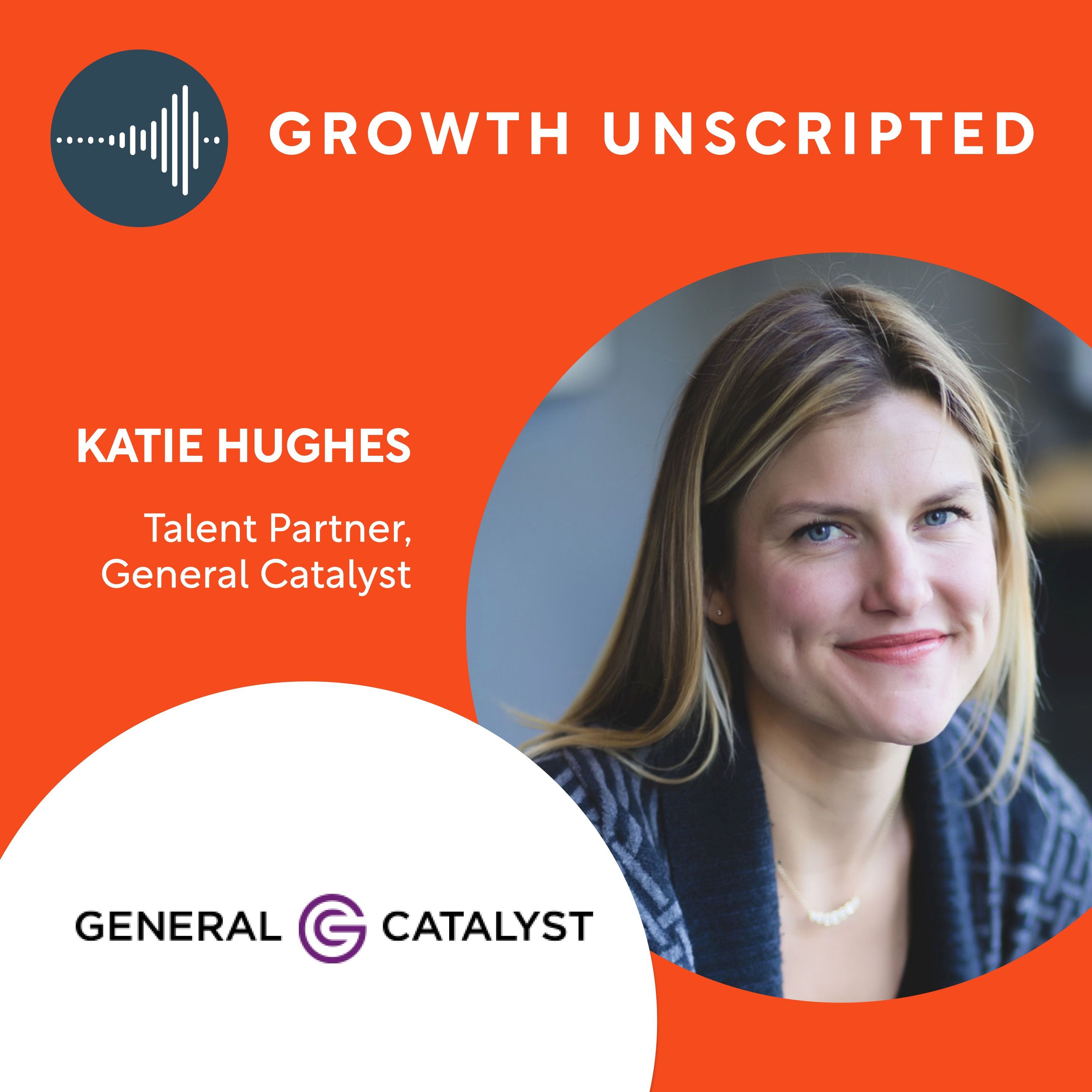
The conversation reflects on the evolution of founder needs, emphasizing fundraising and talent as top priorities. It traces Katie Hughes' career journey from being the first employee at Betts Recruiting to her role as a talent partner at General Catalyst, underscoring the value of networking and relationship-building in the tech industry. The discussion highlights how Betts Recruiting differentiated itself by prioritizing candidate-first relationships and deep client partnerships during the cloud/SaaS boom, rather than focusing on transactional placements. Personal connections, such as alumni networks, were instrumental in fostering opportunities and community support in the Bay Area. While the recruitment landscape has shifted toward virtual interactions, the core principle of building genuine relationships remains essential for trust and long-term success in talent acquisition and business growth.
the two things that founders ask for help with the most from their investors are fundraising and talent, right? Hiring and just managing their people. It's changed a lot though over the last decade that I've been looking in venture capital. >> Yeah, you're saying it. It's a thing. >> Okay, all right. [MUSIC] Welcome to Growth Unscripted. The bad-ass professionals. The real questions. The truth behind how top execs got to where they are and how you can follow in their footsteps. Now here's your host, Beth, CEO and founder, Carolyn Betts. Welcome back to Growth Unscripted. Today we have Katie Hughes, the talent partner at General Catalyst. Thanks for joining me, Katie. >> Thanks for having me, Carolyn. >> Absolutely. And people may or may not know this, but you were the first person that ever worked at Betts. >> I remember Erin Lovey saying, I don't think that Carolyn would like it if you call yourself the first employee of Betts recruiting because technically she was the first employee. And I was like, I don't think Carolyn would like it if we call it her employee of Betts recruiting. [LAUGH] >> So, yeah, I think you're probably cool with me saying I was the first employee of Betts recruiting. >> 100%. And it's so funny because I think back to those days, right? And just how different things are now. And how we just both were figuring things out together of what it's like to work somewhere. It was really your first real job for me. I had never had an employee before and figuring out how to be a good leader while actually having the lead was a really interesting journey. So now, you're from North Carolina. So we had met through the UNC Alumni Group. And remember Ellen Eason was the one that made the introduction. And we used to go watch those games. Gosh, at that bar in the heat. We had to do any coales. My God, that was so fun. And I actually, smart madness right now and I know Carolyn was in the tournament. But I couldn't even tell you if we are still in it or I have no, we lost, okay? >> No, I'm shaking my head. I actually don't even know if Carolyn had made it to the tournament this year. That's how bad we were. >> No, no, we made it. >> Okay, okay. >> I'm pretty sure we did because I saw it on some of these brackets that they put on Instagram. Like I have not been, I guess the point is, is back then I would go watch games and bars. >> At like 3 p.m., you know, we would like leave work. You and I would like leave the office to go get in line to watch the Duke game, the Duke UNC game. And then we'd watch the game. And then we would go back to work when we got home, you know? But it was like you made time to, in our 20s, we made time to go watch Carolyn at basketball. And the networking was amazing, you know? People were really, I think because, you know, Carolyn is a state school, people feel kind of strongly about it. There's a lot of affinity and loyalty. But then there aren't that many alumni that make their way to the Bay Area, you know? I just felt so supported by the whole community. Like, people were really excited and eager to hang out, to help, to make introductions. And that's how we met. And that's part of why I came to California because I felt like people were just so much more, and this, of course, this was during a recession. So, you know, things were not good in New York, but I just felt like people were really open to making intros and being just really generous with their time and their connections in California. And I think part of that is just because of the whole startup ecosystem, right? We kind of pay it forward here and there's multiple opportunities to collaborate and work with people over time. But yeah, that was first to kind of demonstrate it to me through the Carolina connection. Oh, yeah, absolutely. And I think you're right. I think it is one of those things where, but yeah, I think about Cal and how many introductions I've been made through, you know, Cal rugby and that. But I do think the Carolina ecosystem in the Bay Area was really special. And I imagine Virginia and other schools being the same way where it's not a lot of people, but the ones that did make their way out there. Clearly, we're there for a reason. And we're, you know, happy to, like you said, pay it forward and really make those connections. And, you know, one of the things that really stood out to me when we first met or wine was your just innate ability to build connections and to navigate relationships. And it really stood out to me because I asked you and I'm sure you remember this. I was like, so, you know, what have you been doing since you moved here? And, you know, I was 29, 30 at the time. You know, I lived in the Bay Area, I graduated at 03 and you had just graduated and you had like seriously figured out all the things that took me, you know, multiple, multiple, multiple years to find out all these various different groups. And that was why I hired you. And it's really cool to see how your career has progressed to really being a connector for a living. Yeah. We joke in my household that I'm the one responsible for doing all the vendor research. Like if we hire, you know, a handyman or a painter or a housekeeper or something, I am tasked with that because it's kind of what I do professionally to, right? And I think I feel so lucky to have met you and to have fallen into this career path of executive recruiting and working in this ecosystem, particularly venture backfounders because you can, you know, if that kind of the ability to make connections and bring people together is something that brings you joy and energy, you can build a career off of that here and doing what we do. And so I just feel so grateful. And I remember that meeting too. I mean, I grew up in a family, my dad's an entrepreneur and I've been around a lot of male entrepreneurs in my life, but I think you were the first female entrepreneur that I sat down with and really had, which is kind of sad, by the way. True. It's true, it's true, it's true. But I mean, I was still young, you know, and now fortunately, like I've gotten to work with so many amazing, strong women, but I was so impressed with your focus and your vision and your energy around building this business and your confidence, you know, because at the time, that's was being run out of your apartment. You had just started the company, right? Let me, six months in maybe. Less. Yeah. I think it was March. Exactly. You were working on a logo. You had a few clients. You were already seeing that your business was ramping faster than you expected, right? And you weren't planning to hire someone, but then again, they're just felt like there was good momentum and good traction. And so I was just so impressed with your boldness, too, of kind of taking the risk of starting the company and then continuing to take risks, you know, as you saw it moving in the right traction. Well, yeah, it was interesting, right? Because when I decided to hire you, I never hired anyone before. And so it was like, oh, I have to put together an offer letter. So anyway, I figured out how to write the offer letter. And I remember, oh, my God, remember when I decided to offer you the job we went and got Martinez at top of the mark. And it's just so funny how culture has shifted, right? We're like, I would never take somebody out for, yes, I'd meet them for coffee, but Martinez at top of the mark, that was 2010, was like, I thought a really lovely way to offer somebody a job and have them come work with me. Well, I'm pretty sure I bought a suit for the occasion. Like these are things that wouldn't happen now, you know, it's like times change, but it was so special. It was so special and getting to really build the business together and learn from you. I mean, I knew nothing, right? I mean, I knew nothing about technology or business or sales or entrepreneurship really. And it was just such an incredible lesson in the way the world worked, you know, and I didn't come to California with the intention of working in tech, but met you, was so impressed and, you know, it sounded really interesting. And I think recruiting is such a cool way to sort of get a mini MBA, right? And learning about the different sides of business. I remember we'd bring on a new client and the question would always be, okay, well, what existed before you, this technology that you offer, right? And why do your clients use you? What benefit did they get from it? And how do you go sell? Like, how are you building your company? And so all these different sort of case studies of business, you know, we got to see them play out live. And, you know, you work with five, 10 clients and all of a sudden you have a point of view because you have this pattern recognition across what companies have done and you have stories and war stories you can share with other clients. So the other thing that I was so grateful for and working with you was just my ability to get exposure to these incredible leaders so early in my career, you know, and not only that, but be valuable to them so early in my career. So that's, I think that's another really cool aspect of it. And building a business when you did, right, was such good timing to start that's recruiting because of all the things that were happening in technology at the time. Well, and I think about it, right? Like, I don't really even know who our competitors were back then. Like, they're just, what do we have them? I'm sure there were other, there were other recruiting companies that did sales. I guess on the AMO kind of, but they did a lot of different stuff. And, you know, it's really interesting to see how the industry has grown and really formed. And also just the number of companies that have popped up because of the success that we've had at best. I find it really interesting. Do you have more competitors now than you did then? Oh, yeah, I mean, do you, who were our competitors?
that's a serious question. I don't even really remember who we were up. I mean, the lions kind of came into play. No serious competitors. And certainly not the rate we were scaling, right? Yeah. Well, and then you know, like you think about it when like hired and battery and closer IQ and a lot of these tech play companies popped up and along the way. But I also found, and maybe there were more competitors and just kind of forgetting because it was so long ago. That you know, recency bias, I guess, is is a real thing. But I think back and we were able to get some really legitimate logos very early on being two people in like a, you know, 400 square foot office. That in our first office, we subletted from a woman who it started a handbag company, but then covered all the handbags up and like went back to business school, right? So we had it was like two desks and then like handbags. It was a first of I think four offices that we had in the three years that you and I worked together. Well, yeah, but I remember we started hiring people. And so it was Ausha to come first or Catherine. Similar timing, similar timing, right? Well, and then Andy came on board and we had five people in like less than 500 square in the handbag HQ. And that was when we realized we needed to get a bigger office. And it was so, you know, and I still remember one, we have this new woman who just started and she was mentioning that she's really good. You know, you share your fun facts when you start the company. And she said she was she's really good at setting up IKEA furniture. And it sent me down this memory lane. I said, well, you would have been very valuable at Betts in the early days because we literally got a U-Haul and moved the stuff ourselves like no, moveers like we didn't hire people because I wasn't about to pay for that. That sounded like a not a good use of company, not a good use of company resources packed up the U-Haul. I the I drove it, which is just like terrifying to think about me driving a truck anywhere and you know, moved all this stuff into the Montgomery Street. And that like that office, that was like when we really started taking office once we moved in that office. And we had brought on identified. And, you know, they I think they sold the work day and then glass door and box and Marocky. Those were our like early clients. And, you know, you think about it now. Those companies when you look at you know, box, glass door, identified Marocky were wildly successful. And I think when I when I look back at, you know, they were very, very committed to talent as part of their strategy. Yeah, totally. It was incredible the companies that we got to work with. And we think some of the stuff that was happening at the time was this massive cloud adoption. Right. So like Salesforce had gone public, I think in '09, maybe earlier. But the purification of Salesforce and companies adopting a cloud-based CRM solution that plugged into all these other companies gave businesses that wanted to revolutionize any sort of vertical or software technology gave them license and opportunity to do it. So that it was just this gold rush, right? Companies trying to build as fast as they could, higher sales people as fast as they could. And there was a strong bias that these companies had to hire salespeople that knew how to sell cloud-based software and sell SaaS. And so what we had done, I think the insight that you had was, okay, there are a few companies like Salesforce that train these salespeople really well. But, you know, these folks are on a long, slow career path forward at some of those companies. And so if we can really create a candidate first community, right? One that's really thinking about the candidate first and become the go-to place for these folks that have this highly kind of coveted skill set of SaaS sales, you know, if bets can become the place they go, the place they think about, and not as a handicap that candidates work with a recruiter, but as a benefit, right? You can introduce them to companies they haven't heard of. You can help them manage their process. You can help give them feedback via trusted partner in their search. I think that was the insight that all these other recruiting firms that have come after have said, I want to build a candidate brand like that's has. And so I think that that was really the moment in time. And that's why we got to work with all those incredible marquee companies because they knew we had the candidate brand. They knew that folks that they needed to hire were folks that respected you and respected what we were building. And it was hard work, you know, a lot of happy hours, a lot of networking, a lot of time spent with a really fun group of candidates. But we did it and you also had a rule, you had a rule and maybe you still do. I don't know how you would enforce this in COVID. We had to meet everybody in person. Oh yeah. Oh yes. I love that rule. Well, every time something bad happened, I still to this day, you know, and now you have to ask it differently with the virtual meetings and stuff. But to be fair, I'm not as involved in the day to day. It has been interesting since COVID because there's the things I would hear on the floor, even if that person, you know, I would just kind of be like, and every time something shady or weird would happen, my first question as I was hearing this bad beat story would be, did you meet them in person? And it was a rhetorical question because I knew the answer was no, because people don't do things like that to people that they have a relationship. And that's where, you know, our values and we've changed them over the years. But people first and it used to be we build genuine relationships was really at the core of what we did. And I think that recruitment industry in general has a reputation for being a very transactional body shop type of world. And I think one of the things that we did a really great job, if I, you know, and when I look back was we never cared about making the placement over building the relationship and doing the right thing by the client and by the person that we were working with. And that's why, you know, I'm looking at what's happening now. And I'm not even sure if this was the situation last time we spoke, but every day now, five plus intros, companies reaching out needing to like hire tons and tons and tons of people. And it's all from relationships. And, you know, because people over the years really trusted that we really want to, you know, help them build their company. And as opposed to we want to make some money up and getting them a job, which is I think what was very present in the industry at the time. Totally. One of the other things I loved about working with you and the type of business that you have is, you know, you get to work with companies for a long period of time. And so because they're always hiring salespeople, sales support marketing people, right? As the company grows. And so you really get to develop a long-term relationship with these folks and almost embed yourself with the client. And there's so much kind of learning and relationship development that you can do over that period of time. It's pretty cool. Well, and then I think the other cool thing is, you know, those people, right? Because it was really building relationships with people and not companies. And one of the biggest selling points for any company was always the person that they would go work for. And then those people would then go to other companies, right? Like that company would get to a certain scale and that, or they would move on, they would sell whatever it was that would happen. And then that new company. And it was almost not even anything really new because, you know, the technology or whatever it is. It's like, okay, it's a real state tech company. But you're going to get to work with Katie Hughes. And you would talk about why Katie is a great person to work for. And suppose the company, yeah, they raised X amount. But that was really what I realized as a differentiator in these all these companies, soundly, is acting. You know, like, they do. And, you know, obviously, you know, at General Catalyst now and having worked in venture for, you know, how many years have you been in term? Nine years, ten years. Yeah, I was thinking almost a decade, but I didn't want to age you. That does make me feel. But very serious too, you know, very serious. Very serious. Well, you're a venture capitalist. That's right. So you know, right? And I'm curious, right? With all the work that you're doing, like, how do you, as the talent partner, differentiate the companies that you're working for when you're talking, you know, when you're building that talent ecosystem? Yeah, it's a great question. And at General Catalyst, we have a huge and growing portfolio. So we're fortunate to partner with over 400 entrepreneurs to help and build their businesses. And so with that type of scale, you know, obviously it can be challenging. But we organize our investment work around sectors of investment. And we develop pretty deep DCs around those sectors. And so I'm always mapping our existing and new portfolio companies into those kind of market maps, right? I mean, very similar to what we did, the way we looked at the world at that's right, the way that we would characterize companies and help candidates get oriented too to like where does this company fit into the broader ecosystem right back to that question of, okay, what do you do? And how did your customer do this before you came around? You know, and so maybe that's personal to me, but that's also how we organize it at GC. And I think how we all kind of keep track, not just of our existing companies, but where there's opportunity in the market. So we can say, okay, like, you know, in this piece of the ecosystem, you know, how are these customers service, you know, and where is their opportunity for innovation? But
You know, I mean, very similar to what you said. A lot of it comes down to people. Like I talk to someone and I'm like, you need to meet these three founders 'cause you guys are just gonna connect. And I have a feeling there's some goodness here. Your experience and what you're saying you wanna do is directly accurate toward what this company is building. But I usually leave it to the founder to really talk about their business and why it's differentiated and what they're working on because you have two domain experts me trying to get in the middle of that and potentially debate someone on the merits of it just like that doesn't make sense. You know? Well, and that was always a huge strength of yours. Like I remember early days at Bets even where I mean, you learned so much through just asking questions and listening. And you realize too, like I still think this all the time. If the pitch for opportunities when you talk about when you call somebody and say, hey, you should check this out. It should be no longer than like 30 seconds because even that seems a little bit too long. I was gonna say 15 but some, (laughs) and it's really, you know, all you're trying to do is to make a connection and trust that even if it's not meant to be that it was still worthwhile use of both people's time. So, you know, we've talked a lot about, you know, that's kind of the early days. But I would love to hear about, and I know the story, but I think our listeners want to know, you know, how you ended up getting into venture. - Yeah, it's been a crazy non-linear path. It was definitely not my intention to be a talent partner, right? Like that wasn't a job when I was graduating. - It was not a job. Like, I don't even think there were any of them. - So the maybe quick kind of context around how the talent partner role came to be and sort of what it is was born from sort of two different industries. One was the private equity industry that hires operators and senior operators and operating partners to go work often in bed with their portfolio companies. And the other was actually the Hollywood talent agency model of, okay, so, you know, CAA, and these other kind of big talent agencies will often have folks on staff who will support their clients with a variety of different things, you know, and sort of become this one-stop shop for their clients, for their actors, for the folks they're representing. And, and recent horror wits, as they were really coming into prominence, they had this realization that, you know, the venture capital industry was becoming increasingly saturated with capital and the need to differentiate and to provide robust services that founders would find attractive became increasingly important, particularly for them as a newer firm. I mean, they have like, incredible founders, but still they were a startup venture capital firm across the sea of, you know, old established kind of white QVCs. And so in order to compete, they built out a whole team, not just of talent partners, but corporate development partners, marketing partners and others for functions that support their founders. And, you know, they changed the game. And so when, you know, you and I have been working together for about three years, I started to do business development for you for bets with venture capital firms, 'cause we started to recognize that they wanted to be able to make referrals to their founders for, you know, trusted partners. And so we go to them and we'd say, hey, venture capital A, we're working with these four companies of yours. You know, if you want to refer us in the future, now you kind of have the, this is what we do, this is how you can reach us. And this is, you know, here's how we've been successful with like companies, yeah. Totally. And that was super helpful for them to have. But many of them, most of them didn't have anyone who kind of was the central talent resource for their portfolio companies or across the partnership. And so I met DFJ doing that business development. And they said, you know, it's so interesting you called because we're thinking about building out, or hiring ahead of talent. And we'd love to talk to you about what you think that would look like and based on your experience and yada yada yada. So I spent time with them. We worked on a job description. You and I talked about it. We decided this would be a really interesting sort of extension of the Betz alumni network, right? To have someone in House of DC helping to sort of, helping these founders navigate the industry in the market, right? So I went over to DFJ. I was their first head of talent. I was one of the first 10 talent partners in general in venture capital. And now there's hundreds. I mean, I would say every venture capital firm, if they don't have one, they're hiring one. And most of them have more than one, or at least a talent team that's more than one person. And anyone that leads rounds for sure, right? And if you're gonna have members of the fund that take board seats, you're really not gonna be able to compete. Nowadays, here is that point in the market. If you're not offering, you know, to help think through the talent strategy and things to look at. And to be fair, right? Like, I think the partners also realized that they just didn't want to deal, right? Like with all these talent issues all the time. And it was just becoming, and I can see it, right? I mean, having recruited for thousands and thousands of companies that, and just hearing the bore stories out, there are even our comment earlier on about how everyone needs an employment attorney, right? (laughing) It's like, you know, it's true though, right? And I think that having a go-to person that can be the person that they call first, when, you know, there's issues or things that are happening is big weight off the partner shoulders to have a go-to person. - I think that's right. I think as I've grown in my career in venture capital, it's become increasingly important for me to work with partners who are also engaged on the stuff with their companies, you know? I think there are some firms that might put a lot of this work to the talent partner and not engage on it themselves as an investor. But I think the ones that are really loved and respected by their founders, they work with are the ones that say, we're gonna put our heads together with our talent team and come up with the right answer for you, you know? As often as my MDs call me for advisor guidance, I call them for advisor guidance on what they've seen recently, you know? 'Cause what you really need is you need recent perspective across a number of companies to be really valuable. I mean, I think we all assume that venture capitalists networks are what's really valuable for the founders, but I would say just as much if not more is actually the point of view that they carry based on that's informed by working with multiple companies, similar Carolyn to yours, right? And to the, yeah, that experience that I had at Bets of developing pattern recognition and insight and learning what questions to ask based on exposure, very similar in the investment space. And so, you know, this is the number one thing, the two things that founders ask for help with the most from their investors are fundraising and talent, right? It's changed a lot though over the last decade that I've been working in venture capitalists. Now you're saying it, it's a thing. Okay, all right. (laughs) Yeah, it's a thing. There's a lot that's changed in terms of the questions I get asked by founders and the expectation of the sort of value that we're gonna provide. And I'd be curious to hear too how your business has changed and how what founders are expecting from you guys has changed. I know I got a compensation survey from you last week, you know, I think there's a lot more being paid attention to on the HR side and the retention side and the culture side and the diversity and inclusion side. You know, when I started, it was all about Canada flow, right? Who do you know? Who can we talk to? Who's an interesting person? Can we avoid doing a search? You know, like, that was the coin of the realm and don't get me wrong. I talked to two founders today who were like, who do you know for the search? It's not like that's not important, but similarly, questions about, you know, can I mandate the COVID-19 vaccine for my employees? Or what are your companies doing about real estate, you know, coming out of the pandemic? Or really, we wanna do better at diversity. It's really hard. We've been here the ways we've tried. What else should we try? How can we think about this? We want to retain people through a robust equity refresh program, but we don't have a CHRO to help us think about it, you know? I mean, these are the types of questions that founders are asking, oh, do you have any executive coaches that you recommend that I work with for myself or my founders? I mean, the breadth of questions related to talent, culture, people, leadership development and has just exploded over the last five years. I think is wonderful, but it definitely changes the job of the talent partner and broadens it quite a bit. - Yeah, absolutely. And, you know, it's interesting because I had lunch today with another recruitment company and you know, very similar to what we've always done where they do CFOs, C-O-Os, that's not what we do. And so, I have a lot of these meetings and we were talking about you, they were asking me about assessments and what assessments, you know, and what I said was, and I hadn't really realized this, but now what we're trying to do and we haven't quite rolled this out yet, my intention is to start using assessments to screen people in instead of screen people out. And in this world where, you know, you mentioned diversity, equity and inclusion and there's a limited talent pool of people out there. So how can we give people confidence that people will be a good fit for the role if they don't necessarily have the experience? So between training and assessments, I think we might be able to, I don't know, I'm just kind of playing around with how we're going to widen the talent pool, but I think it has legs. And if there's some third party verification that this person has, you know, grit, and that's the ability.
to overcome adversity, et cetera, that they could be successful in sales. - If you find a good assessment tool to use for that, definitely let us know, and we'll share it with our founders, 'cause I think that's so, I love that. How can you opt people in instead of opting them out? Right, assessment has historically been about risk assessment, weeding out, right, evaluation. I think that's awesome. I mean, the other thing that makes a huge difference is location, you know, and where companies are willing to hire. And obviously, COVID's changing that a ton. What are you guys seeing in terms of how distributed companies are hiring at this point, and what are you thinking is gonna happen after COVID? - Well, it's so crazy, because we have this company, and they have a good name, they're paying very well, and they want experienced STRs and they're hiring eight people right now, like they're doing hiring classes, so this new class is eight STRs, but they need to be based in San Francisco. - I'm shaking my head. (laughs) I know, right? Yeah, 'cause this is not gonna be, nobody will be able to see the video, but I'm laughing because it's like, so they're using our connect platform. And the HR team basically like burned through, like almost 400 candidates. And of course our team, I'm like, okay, guys, we need to, once we see this happening, once they get to like 50 people, we should proactively reach out and kind of intervene and say, timeout, but that wasn't what happened, so obviously we're learning how to be better managers of our customers, you know, really proactively, but there's just not that many experience, they'll be able to do it, but they're gonna have to open up the spec for sure. And, you know, if you're really trying to address with these screen for experienced STRs, that can go into office in San Francisco, you're not gonna hit your hiring targets right now. And so your question was, what are we seeing in terms of distributed companies? And, you know, even us, like, I mean, I've completely changed how we do things at best, right? Like where you used to have to come into San Francisco, Austin, LA, Chicago, or New York. We had like one person that had kids, she's still with the company, that was allowed, quote, allowed to work from home, okay? And everyone else was, you know, but in seat every single day working from home. And then some people we would like allow them to work from home every other week if they were top performer. And then COVID happened. And so it's really open up for us. Now, I am preferring to hire people that could go to offices occasionally. But I would be open to hiring somebody anywhere. And, you know, we've hired people that are pretty far from offices that they wouldn't, you know, even once a week, you know, post COVID would be a lot to ask of them. But they're like, you know, close enough that they could train in from Connecticut to Manhattan or whatever is an example of somebody we hired. So what I'm seeing is very similar to that. Yes, some people are open to promote hiring people anywhere. But most people are really thinking and what I'm hearing is, I would say there's probably about 20% of the companies are this like remote always forever, you know, whatever. And then less than 10% are like, you know, we're going to be in person, culture. And everyone else is really kind of hiring people that could come to an office occasionally post COVID. Or, you know, a couple days a week and meet up, et cetera. But having some proximity to that. But more flexibility of hiring people remotely as well. Is what I'm saying. And I'm curious to what what yours. Yeah, the numbers are similar. We welcome our companies to the portfolio in groups. And we go around and we talk about, okay, how are you building your company? Where are you building your company? And, you know, these are companies that are getting started in COVID, right? So you think about kind of the entrepreneurial experience when it's like you've known and you're setting up processes and structures and documentation and everything to support that distributed work, you're much more likely to be open to doing it that way going forward. So I would say about 25 to 30% of companies are planning to stay fully virtual even after COVID. But everyone sort of most people, and I recommend this highly, don't commit to anything for more than a year. You know, we saw how much change throughout COVID and how, how much we all learned, how much everything, all of our working norms sort of seem to adjust. You know, you could imagine a year from now that things might feel very different. And so we're just telling companies, you know, don't give up your whole office or don't sort of commit to a long-term policy when we are the other, because, you know, you may want to change what you're going to do based on what you learn and how the company grows. Right. And I think it, this is going to be, you know, 2021 is this. And then we're going to reevaluate. And, you know, we'll let you know moving forward. And I think it's a much better strategy than these like blanket commitment statements and then changing your mind later, which really comes across as disingenuous. And, you know, even if it's like, I really strongly believe in this. Everyone reserves the right to change their mind mentality. And just because you feel one way, at one point, doesn't mean that you can't learn and grow and evolve. Right. I mean, remember people used to do the beer test. You know, you know, if you have an inner appropriated beer test, would be like, You want to explain the beer test for your listeners that may not know? No, no, explain it though. I like, I feel like I'm talking about, but yeah, first of all, before we explain it, when was the last time you remember somebody? Has somebody suggested it where you had to be like, I don't think that's a good idea. Or I haven't heard about the beer test in a while. But what I remember at being was basically similar to the airport test, right? Which is, how would I feel if I was stuck at a airport with this person or stuck on a airplane with this person? It was similar, but it was like actually going to test it in the wild and take someone out for a beer before you make an offer to like make sure that they feel like a good kind of cultural fit or addition. But honestly, even the concept, the cultural fit is fairly taboo these days. You know, that's changed over the last five, 10 years as folks have realized that diversity of experience, diversity of origin, diversity of just like where you come from, who you are, can lead to not the easiest kind of culture fit, but can really be a culture ad. So yeah, I think beer test probably wouldn't wouldn't work these days. Yeah, but like it needs to be a real step in the interview process. That's right. And like it was like, okay, like it was almost like a thing. I'm surprised we don't have a field in sales for his talent rover for it. It was like the step in the process. Beer test was like legit. One of them. And I mean, also, you know, the fact of like a beer test being for people that don't drink or whatever, like that's just a thing that just really would be inappropriate. And I have a question for you on this topic of, you know, Betz is obviously predominantly a sales organization, right? And you've shifted from having folks in the office to your point. It's a largely young population. And, you know, I'm sure for you, it felt like you could better train, encourage, manage, mentor people who are in the office, provide that kind of leadership development and training. What have you guys had to do to sort of approximate that in office learning culture for people in COVID? Yeah, it's interesting. And, you know, that the learning by osmosis hearing the person next to all of that, you know, has gone away. And so what we've done and how we've adopted is we've hired a full time internal recruiter and a full time trainer, both from outside the company. And so full time external trainer. And, you know, we're redoing our entire training now. Yes, like we've been a year, but we brought that person on. But now, you know, come 2021, that's when we're really starting to rebuild. So that's why this is happening now. Fortunately, I'm not all that in the weeds, but I think that, you know, recording calls, having people listen, role playing, etc. And trying to mimic a lot of these things virtually. And then, you know, once this is all a little bit behind us, I think we are going to fly people to Austin and do in person training classes where, you know, you come out for a couple of weeks, you know, you get to listen to the people that are in the office, etc. You know, on the days that they're going to be there, I don't know, but there's been, oh, and which I think is so incredibly sad Katie is, you know, you think about yourself right when I hired to. And all of the inexperienced young people that we hired over the years at that. But that we still are hiring a couple of them. But I mean, really, if you don't have a couple of years of real world life experience, we're not hiring you. And it's like that's kind of the minimum now where we used to take risks on on recent grads, risks like you know, we used to hire recent grads and give them an opportunity to shine or not, whatever, you know, and we just can't do that anymore. And I think, oh, God, I got it when I did I don't know what happened to me if that's a devolved to where you guys are today, you know, I feel like. Well, I'm not saying you necessarily I'm just saying I feel bad for the people that are coming out of college right now, where the junior level opportunities to come into a company and learn are fewer and further between because how do you like companies that the investment in that, you know, whatever the training and the rotational programs or just, you know, starting off as a super junior person that people just and we're saying that across the board that people are not hiring junior people right now that don't have experience. What are you seeing? I don't have great visibility to it candidly, but that's really interesting to know and I I think that's certainly a down.
outside of COVID. If that's a long-term effect, right? That SDR roles, that, you know, kind of entry-level sales and recruiting roles and marketing roles are increasingly hard to get for recent grads. You know, how do we bring them into Silicon Valley? How do we continue to expand its health pool and kind of cultivate that next generation of innovation and talent? You know, I feel like that's so much of what you facilitate. What that's is facilitated is bringing people into this ecosystem, plugging them into good companies, and at least people are now BPs of sales, BPs of marketing, CRO, CEO, COO, as a break company, is, you know, people that we placed that we worked with 10 years ago, 15 years ago. So, well, and I think it's going to be a short, you know, I think it's this year, you know, 2020, 2021. I think come all people will start. And what I also predict is going to happen in what I'm recommending to our clients is, you know, hiring SDRs in pockets and cities where you can eventually have an office and bringing people back. And I think that for those junior level roles, that there's going to be a much higher expectation of coming in in person to the office, then there will be for the experienced people. I think a lot of people look at the venture world and of your role as aspirational, right? I would love to be in VC. I really want to understand, you know, it seems like such a cool job. And it really is right. You get to work with 400 different companies on helping them build. So what advice do you have for people out there that are interested in, you know, getting into what you do? And it's changed, right? As the opportunities have expanded, it's really changed. So, first I'll say, I think the role is amazing. I think the work is amazing. I feel really grateful to be doing what I do and I learned something new constantly, you know, I'm challenged constantly. There are some pretty big differences between venture capital private equity, late-stage venture, early-stage venture in terms of the role you play with the founders. The first advice I often give to people who are thinking about investing or operating partner roles within VC is just think about what stage you want to work at. Do you want to be working with companies that are very early on, starting to establish product market fit? Do you want to be really hands on? Do you want to work with later-stage companies? What is your skill set in background? Lend itself forward on that dimension? And what gives you energy when it comes to the work? Because there's a huge difference if the companies that you're investing in are already pretty mature and have mature recruiting organizations versus if they're some founders and not much else. I have the good fortune of working with companies across that whole gamut because general catalyst invests really at all stages. And so that's an opportunity and a challenge for myself and my team in terms of how we build to support across that number of companies. But that's the advice I give is to think about what stage and then really the way that I got into venture. And we didn't talk about this too much, but after I met DFJ through business development with Bets, their first call was to the client that I worked with that was their portfolio company, which was box. And they said, "Do you know this KDH's person, is she legit? Should we spend more time with her?" Back channel reference, like probably between the first intro and the first meeting, right? And for better or worse, that is really how our industry operates. But I tell people is establishing relationships where you can add value to founders, no matter where you are and no matter what you're doing. I mean, I was in a job where I could do that as my day job, but that is so important. Establishing yourself as a resource for founders, a trusted partner for them and whatever you do will pay dividends in terms of networking into your next job. And certainly what venture capitalists in my experience put founder feedback above all else. So I think those are really the two kind of things. This figure out which founders you want to support and then go establish and build relationships with them around things that matter to them. And then, you know, I think from there, I was never really afraid to reach out to people to get on their calendar and networking ask them more about their job and what they did. And you know, that's what you saw in me and that's why I love this work. So I did that. I emailed tons of talent partners. They all spend time with me. It was incredible. They shared their worst stories and what worked and what didn't and they gave me advice and they made introductions and they were kind of my first of support. And so, you know, definitely just getting in front of people is important too. And you can't be shy to reach out. But, you know, recognize that it's definitely the kind of industry where, you know, if you want advice, ask for a job. If you want a job, ask for advice. So keep that in mind. It's a long career. It's a long journey. Like, looking valley. It's like, you know, we talked about at the top of the podcast. We come back around to people, you know, two years, five years, ten years out. So just establish those relationships and really think about, you know, creating value for the folks that you're networking with and then, you know, let your intentions be known. I think that's really good stuff. And yeah, thank you so much for joining me. It's always great to see you and catch up. And I can't wait to see you in real life. One of these days, I'll be making lots and lots of trips back to the Bay Area. You know, I'm staying in YPO there, actually. And I'm also joined here. So once a month, be out there. I can't say goodbye to my five women. No, you can't. It's incredible. You're an incredible YPO group. And it was just so much fun to do. I really appreciate you guys having me on. It was so fun chatting. Yeah. Thank you. It's really good. The sound was awesome. I appreciate you. Have a great weekend. I know. See, you're getting in the karaoke mode. I can tell you. You're going to do it. I know you're, you know, you're going to have a couple glasses of wine before you know it. Some, some really great songs going to be on and you're going to be on that microphone. I need to figure out how I can use this microphone to do karaoke. That's how I'm going to spend my free time this afternoon is figuring that out. Yeah, you might need a speaker's like, I don't know. You'll figure it out. You're a very tech savvy. You always have been. I am resourceful. Exactly. And I will talk to you down. Bye guys. Thanks. Growth unscripted is powered by bets from fully customizable end-to-end recruiting services to a platform featuring 15,000 vetted job seeking professionals. Bets connects the most extraordinary go to market talent with the most innovative companies in the world. Be sure to subscribe for more episodes with badass executives and check us out at FetsRecruiting.com for more information on how we build companies.
Podcast Summary
Key Points:
Founders most frequently seek help from investors with fundraising and talent management, particularly hiring.
The speaker's career evolved from being the first employee at Betts Recruiting to becoming a talent partner at General Catalyst, highlighting the importance of relationship-building and networking in the tech ecosystem.
Betts Recruiting succeeded by focusing on candidate-first relationships and deep client partnerships during a period of rapid cloud/SaaS adoption, rather than transactional placements.
Personal connections, such as alumni networks, played a significant role in career opportunities and business growth in the Bay Area startup community.
The recruitment industry has shifted from in-person interactions to more virtual engagements, but genuine relationships remain crucial for trust and long-term success.
Summary:
The conversation reflects on the evolution of founder needs, emphasizing fundraising and talent as top priorities. It traces Katie Hughes' career journey from being the first employee at Betts Recruiting to her role as a talent partner at General Catalyst, underscoring the value of networking and relationship-building in the tech industry. The discussion highlights how Betts Recruiting differentiated itself by prioritizing candidate-first relationships and deep client partnerships during the cloud/SaaS boom, rather than focusing on transactional placements.
Personal connections, such as alumni networks, were instrumental in fostering opportunities and community support in the Bay Area. While the recruitment landscape has shifted toward virtual interactions, the core principle of building genuine relationships remains essential for trust and long-term success in talent acquisition and business growth.
FAQs
Founders most frequently ask investors for assistance with fundraising and talent-related issues, such as hiring and managing their teams.
The support investors provide has changed significantly, with a growing emphasis on talent acquisition and management alongside traditional fundraising help.
Building genuine, long-term relationships is crucial in recruitment, as it fosters trust and reduces transactional interactions, leading to better outcomes for both candidates and clients.
A candidate-first approach helps recruiters become trusted partners, enabling them to introduce candidates to new opportunities, manage their search process, and provide valuable feedback.
Betts Recruiting focused on creating a strong candidate brand by building a community of SaaS sales professionals and prioritizing relationships over transactional placements.
The widespread adoption of cloud-based solutions like Salesforce created a high demand for salespeople with SaaS expertise, driving rapid growth for recruiting firms specializing in this niche.
Chat with AI
Loading...
Pro features
Go deeper with this episode
Unlock creator-grade tools that turn any transcript into show notes and subtitle files.
 PodcastTranscript AI