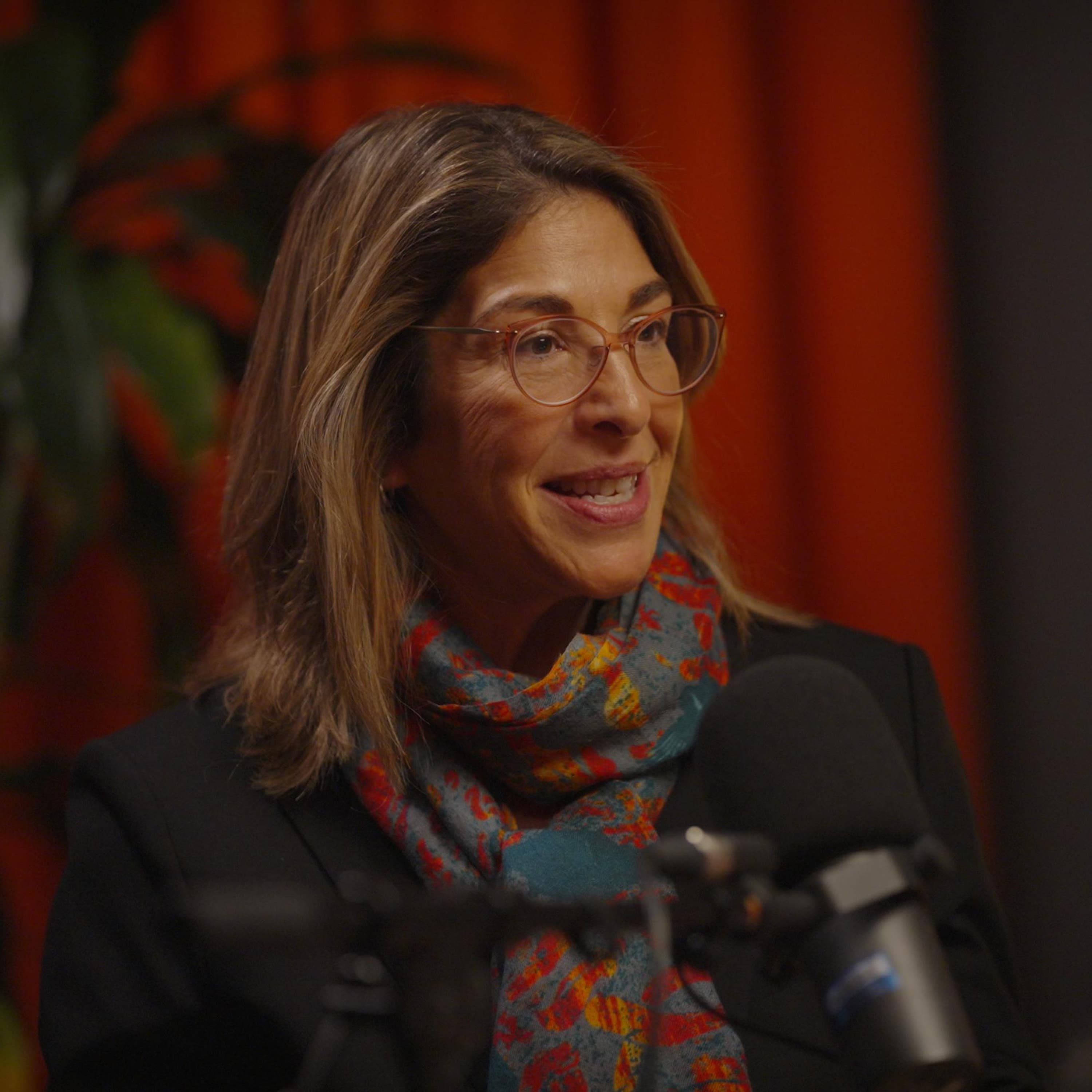
‘Gaza is a moral tear in the universe’: Naomi Klein and Astra Taylor | Radical Thinking with Aditya Chakrabortty
50m 16s
Naomi Klein and Astrotailer argue that the current political landscape under Donald Trump represents a new form of fascism — “end times fascism” — shaped by deep systemic crises like climate change, pandemic, and extreme inequality. Unlike traditional fascism rooted in national identity, this version is driven by a coalition of religious, tech-driven, and ethno-nationalist forces united by an apocalyptic worldview, emphasizing retreat into fortified, private enclaves. The administration and its allies systematically target immigrants, Palestinians, and left-wing activists through violence and surveillance, revealing a pattern of scapegoating and dehumanization. Yet, resistance is rising — from protests in Minnesota to grassroots campaigns by figures like Zora Mamdani, who engages communities by addressing real needs like rent control and housing repairs. The authors stress that the left must move beyond blaming individuals and instead build systemic alternatives: nationalizing tech, expanding social services, and enforcing international accountability. A key insight is that public sentiment has shifted decisively toward progressive values, with widespread opposition to AI expansion, data centers, and war crimes. This shift signifies that the political center has moved left, and the danger lies in inertia — elites, including some in the media, continue to downplay or evade the truth. The book calls for urgent, bold, and inclusive action to prevent the deepening of authoritarianism and to build a resilient, equitable future.
This is The Guardian.
We're almost two years into the second reign of Donald Trump and many of his opponents still
don't know how to respond. Established from Democrats, A-Wall, the big media still
trying to both sides the atrocities that come out at the White House and meanwhile protestors
are being gunned down by I-squads and migrants snatch off the streets. But what if Donald
Trump isn't the main character? Just a frontman for a new and sinister reconfiguration of
the world order led by techbrows. End times fascism. That's Naomi Klein and Astrotailer's
name for this new and dangerous moment. New face a choice to change the system or do
you just get with the program. People need to be bought in and at real level for changes
to stick. From The Guardian, this is Radical Thinking
with me, Edith Chakraborty.
Naomi Klein, Astrotailer, welcome. One of the things that really stands out about both of
you is that you're intellectuals but you are not afraid of writing with emotion. You're
not, you don't pretend to be brains in jars. Before we get into the arguments of End Times
fascism, is there a moment when you actually felt it, when you felt like we are living
in End Times fascism? Oh yeah. One moment. Many, many moments, many moments of real fear
and real despair while writing this book. We've both written a lot of books and written
about the right over the years and I think this was the first time we felt personally
as sort of implicated or at the center in the sense that, you know, the Trump administration
was and still is proudly declaring a war on the left and we are partisans, we are part
of that. Some prominent figures we write about actively calling for the detainment and
even death of leftists. So this was something that we felt really viscerally and I think
that's important. I think there were lists being made of groups that we were a part of that
we're going to be, you know, criminalized. Yeah. Listen to me, boy. Oh, there were a lot
of different like think tanks that were putting, that were adjacent to the Trump administration
that were coming up with lists of groups that should immediately be, be criminalized
this before they, even before inauguration. I mean, they had spent their off years trying
to figure out how to more effectively crush their opposition. And so it was clear that
this was not going to be a return of Trump one, that this was going to be a major escalation.
But for someone who doesn't live in America who's only experience of Trump is like through
their phone, the headlines they see, what's it, what's it like now to live under Trump
to? On the one hand, it's pretty devastating, right? I
describe it as writing from within a title. So we're seeing the decimation of key public
services. So right now there are major cuts to Medicaid that are going through kicking
people off their health insurance. You know, we're seeing attacks on higher education
that are having real effects. You know, people are losing their jobs, teachers are afraid
of teaching history of saying certain words. You know, there are ICE agents in the streets
of different cities. And so that is extremely overwhelming. And I think there's a lot
of fear and uncertainty about the future. But also, it's an incredibly inspiring time.
I mean, there's a certain point in the writing when the mood really shifted, right? And
it suddenly felt like instead of racing to keep up with all of the terrible things we're
racing to keep up with the resistance. A major turning point was the uprising in Minnesota
against ICE, but also, you know, the election of Zora Mombani, which has snowballed and
inspired so many other democratic socialist candidates. And so there's this amazing
sense of possibility as well. And also, you know, the right is fracturing and Trump is losing
support. And so we're very clear in the book that doesn't mean that things will necessarily
go great and that we can sort of bang on the right imploding. There are mixed emotions.
You know, there's real fear and that's legitimate. And then there's a real sense of fight
back.
But the end times piece in the book that the fact that we're saying that they aren't
just fascists, they're end times fascists. That is because we understand fascism to be
a response to crises. And it always is. It always emerges in moments of systemic crisis.
And moments of threat of a different model kind of emerging from below. We give a bunch
of examples of that in the book, not only the one that we're all really familiar with
about Europe after World War II and the Great Depression. And after the Russian Revolution,
where you have that pincer of like, okay, is socialism going to overthrow the system
or is fascism going to divert all of that rage at scapegoats and respond with mass violence.
But we're making the argument that it's the scale of the crises we're all living with,
right? The fact that we are in a time of climate breakdown that we've all lived through
a global pandemic that would have been impossible in a less globally interconnected world.
The level of wealth accumulation is unprecedented. And so the scale of those crises have changed
fascism and made it more apocalyptic because the story that they're telling is it's okay
if it all goes down. It is going down. But we have a strategy of bunkering the nation
or turning it into a fortress as Pete Higgseth is now openly saying is a policy of the United
States, the idea of the nation as an armed lifeboat, bringing in supplies, expelling the outgroups.
And then you have Elon Musk in his dreams of colonizing outer space and you have the billionaire
bunkers. The crises are not at a distance. We're feeling it. They're here and it's disrupting
our lives. And we really are facing a choice of, you know, are we going to build a kind of
society where everybody's life is valued. We're going to figure out how everyone can have enough.
We're going to figure out how to share. We're going to figure out how to prepare for these crises
together. Or are we going to triage and just be like, you count, you don't count. We saw glimpses
of this in the COVID wars, right? Where it was just like, well, why are we shutting down that
shopping mall? Maybe it's time for Granny to die. You know, I mean, there were Republicans going
on television saying that kind of thing. So the crises have changed us and radicalized us.
Listen to you talking about universal crises, but crises also pick on particular groups or
decide particular groups can be done away with. And just that's the fascist response.
Right. And just on the particular that you, you were saying that the Trump ecosystem
has already identified certain groups that they want to silence. They want to prescribe.
Absolutely. Do you and people that you know, do you actually feel in in personal danger?
I think that this is a dangerous moment for people who are part of social movements and on the
left. So, you know, we saw after or we saw during the ICE attack on Minnesota that, you know,
two nonviolent protesters were shot in cold blood. And now the Trump administration is going
after, I believe it's 15 protesters and, you know, elevating the danger they supposedly pose.
I mean, none of these people did anything that was remarkable. All they did was stand up against ICE.
And so, you know, we've seen, you know, just kind of random citizens get caught up in legal
attacks from the Trump regime or be arrested. There are different kinds of enemies.
And it's very clear that the people who were most targeted were, it was, it was racial profiling.
It was actually cleansing. It was, they were stopping anybody who was not white on the streets
and testing whether they had an accent. And, you know, deporting people, some of whom were
citizens. So, that I think the most visible and most front line attacks were in our immigrants.
Palestinians were some, you know, people, people of color who were part of the Palestine Solidarity
movement were some of the first people who were kidnapped off the streets, right? But they also
hate the left. They hate the left because the left presents the threat of an alternative response
to crisis. And so, that's why you have Marco Rubio assembling a summit of governments coming
together to talk about how they are going to unite against left-wing terrorism. And so,
there's different kinds of enemies. There's enemies that offer a kind of like red meat to the base.
And then it's just like, look, we're going to show you a video of us just beating up this brown
person because that's what's going to make you happy. And we've seen them engage in that kind of
sadism. But I think we sometimes underestimate how much they hate the left. And, you know,
somebody who's been involved in the Jewish wing of the Palestine Solidarity movement,
and I'm very involved in Jewish voice for peace, you know.
which organized protests recently when Netanyahu was being at the UN and was part of getting
a bunch of very high-profile people arrested, they don't like the debt collective.
I mean, they don't like people who are directing the anger at the systems as opposed to at
their scapegoats.
We are their competition and it should be serious about that.
Yeah, but we would also be misrepresenting things if we didn't acknowledge that, for example,
the crackdown on the solidarity and cannons on campus is across the U.S. began under the
Biden administration and there is a way that the stage was set for an intense sort of version
of that.
And so that's why, you know, we think, you know, what they're really worried about is
a left response that can support all of these causes, robustly and free speech in a very
real sense and the right to protest in a real sense.
Right now, I'm most materially worried about Jewish fascists.
Tell me more.
Well, I mean, at the Guardian, you've seen this with Naza, right?
I mean, there's a special kind of hatred that is reserved for Jews who are considered
to have betrayed the project.
What I think is that these people get more dangerous, it's a more threatened, they feel,
right?
I mean, this is when I say it's a threat response.
And so these moments where the resistance is rising can be some of those dangerous moments.
There is, however, an understanding that because of anti-Palestinian racism, Jewish voices
get more of a say.
And we're seeing that right now with Naza, we're seeing the angriot at Nileband and the
sort of losing of minds.
And you land out for them secretary is Jewish and the fact that he is Jewish and he is the
one talking about Jewish terrorists and sanctioning the West Bank, triggers a particular kind
of rage from the religious right.
And I actually think that there's a confluence of the fact that these are Israeli filmmakers
who are exposing war crimes to the world and that it is a Jewish foreign secretary and
that it is a Jewish group that let us protest in New York calling for Netanyahu's arrest.
I mean, we're serious.
These are war crimes.
We want accountability for genocide and they're scared.
And yes, and they understand that because of the injustice of anti-Palestinian racism
and the fact that Jewish voices are taken more seriously when we say this should not be
committed in our name, they're very angry at those Jewish voices.
You talked about the left, the left response trump too.
I want to talk about the response to your book because the reaction to it has been huge.
It strikes me that one of the signal achievements of your new book, End Times Fascism, is we're
halfway through Trump too.
And this is the first major book from the left which aims to say, no, take seriously what
you see in front of you, synthesises the various trans and then thinks of how to resist
that.
And the reception to it, you know, when I look at either the bestseller lists and congratulations,
the long lines people queuing up for your events, tells me not only that people obviously
want to hear what you two have to say, but also there's a sense of pent up demand that
people were waiting for something like this.
What's your take?
I mean, when Trump was reelected, the narrative in the US was that there was a vibe shift,
right?
And that this was the new national mood that he had not only won the election, but that
was symbolic of a profound shift in American sentiment, you know, and that there were for
example, there were articles in New York magazine about the cool kids, you know, instead
of the cool kids and how this was it like that progressives had lost young people, especially
younger men and, you know, get with the program and many elites, you know, people at the
homes of newspapers and law firms bent the knee and were, you know, ready to comply in advance
and quite, quite enthusiastically.
It's just, it's just a trend, right?
It's a trend that you have to spot and follow.
Yeah, it's very different than the hashtag resistance response to Trump one when they were
doing much less radical overtly, right, right, fascistic things.
Exactly.
And what we saw was that ordinary people were not actually on that wavelength.
Right.
So there were these massive no Kings demos that were historic inside of people, people coming
out and just saying, if nothing else, we do not agree.
We do not want to comply in advance.
And so I think part of what the book is doing is speaking to that, the fact that the
majority of people are actually not on board with the far right.
They want someone that helps them make sense of the barrage of bad news, the seeming
absurdity of what we're hearing from elites, the fact that you can have a president who
says, well, maybe I have to annihilate Iran, maybe an entire people will die, civilization
must be destroyed.
Civilization must be destroyed.
That you also have tech executive saying, yeah, there's a 25% chance we're going to wipe
out humanity.
The fact that so many people were unwilling to say the word genocide, I mean, what we're
talking about with the Israeli right is not disconnected from intimes fascism.
There's a reason that all of the elites we discuss in the book are united for various
reasons around a support of a bunkered Israeli ethno state.
And so I think that part of it's just a desire to name what's going on to be honest about
what we are seeing and hearing and the need to fight it.
And Naomi and I, again, as intellectuals, but we're not afraid to take a side.
We think that it's important to do that and to be partisan, right, because when the
choices bashism or the living world, barbarism, democratic socialism, call it what you want.
But I think you have to take a side.
People, well, we've heard from people is that it's interesting because we were afraid
that the book might be too scary, you know, and that even the title might be too scary.
And honestly, I was not sure that I think you were more sure than I was getting told
about the title, but as I saw it, like I was like, well, people read this on the subway,
like, well, people be afraid.
Like I honestly, like when I had galleries that I was holding it in public and I was like,
I mean, people would ask me what's your book about.
I'd be like, it's actually a novel.
I was just like afraid to tell strangers exactly because it's a big commitment.
But when I was printed, I was like, I have to own it, so you want to, like, a fits carado
thing that you could read with your tote bag.
I just, it's not just, I mean, do you think that things should feel a little bit dangerous
when you're reading?
It's like, I know life is already really hard and we're about to make it harder.
But I think, but that's not how people have responded.
They have said, it's so helpful.
We knew it was bad, but now we have like a framework, his foreign policy looked really
chaotic, but this idea that it's, that they're prepping, that it's a, that it's a bunker,
makes sense of what they're doing with Canada and Greenland event as well.
Okay, they're, they're super size preppers.
They want to bring this stuff in, they want, they want the out groups out.
A bunker makes more sense in a sense than just saying, this is old school colonialism.
The worst state to be in in a bad, in a crisis is, is confused, overwhelmed, unable to
think clearly.
So just having a bit of a map, right, a system, some language lets us, our heart rate lowers.
It's not that we shouldn't respond, it's just that you, you, you don't want to respond
in a state of panic.
It's not, it's not, keep calm and carry on.
We don't think we should carry on, but being a little bit calmer because we have a framework
is useful.
Being some of that clarity to, to, to what we're up against, what, what is the coalition
behind in times fascism?
Name the parts.
The religious end-timers, the tech accelerationist end-timers and the ethno-nationalist end-timers.
So fascism is always an unruly alliance.
I mean, politics is always coalition, right, but fascism even going back to the Latin
root means bundle.
It's like a bundle of, yeah, disparate parts and, and those are, we, we believe, the main
three parts of the coalition that Trump has brought together, but it's not a strictly
American project at this moment.
And they are united around some key elements that connect to the through line of fascism
through the ages, you know, supremacy, a belief that we are in, you know, a kind of Armageddon,
a war with the, of the in-group versus the out-group.
They want to fuse corporate power and state power.
So we look at how they're responding to climate change, how they're responding to the fact
that wealth is even more concentrated and connected globally.
The fact that we're now staring down the barrel of rogue, potentially rogue AI.
So that has shaped their apocalyptic imaginary and their, their in-times temperament.
Fascism is always a counter-revolution and it's always a response to crisis, but it is
a response to crisis from the injured strong, it is not like a proletarian revolution comes
from below.
It's the oppressed rising up.
These are, these, everybody in this coalition, relatively speaking, is doing well.
It doesn't mean that everybody is rich by any means, but, you know, it's, it's, it's
people who feel like they had something and then lost it, right?
And so that runs through it, even like from the tech executives who used to be venerated
as gods and now everybody is criticizing them and saying that they're evil, to. you know, a father who feels like he used to have respect from his children and his wife,
and now they're so disobedient and he has to learn new gender pronouns, and it's also terrible.
So it is conservative in that sense that it promises to reestablish the system. It protects,
it's protecting a system, but our system is kind of careening off the rails. So protecting
this system requires embracing these crises and saying it's okay. That apocalyptic quality,
there's always part of fascism, but isn't always its superstructure has kind of taken over.
But it's a coalition that hates each other, right? Because the thing about the tech barons
is they've got huge amount of contempt for the rest of us. We are absolutely surplus to requirements.
I know self-defined mega-voters who really lost it with Trump over the Epstein files,
had white eggs along to release them and the various U-turns. They're X-Vets and they can't
stand to see the stuff in Iran. Why has he been so careless with lives? So how does it keep
together? Is it Trump who's the glue? What's going on? It's not holding together very well.
It's already breaking apart. He's at 30%. This is why we wanted to write the book. We think
that there are more weaknesses. The more this is exposed to the light, the more the contradictions
become clear, both within the coalition and also people on the outside really realizing just how
nihilistic it is, believing what they say, believing what's right in front of us, should be
really galvanizing. What's clear from our research is that there was a process on the campaign trail
where he was persuaded that AI would basically save the fossil fuel sector and be China. He
liked that. He's become more evangelical about it as time has gone on, but that was such a betrayal
of everything he was saying before the election about fighting big tech. But I mean, people can
hate each other and still be in a political coalition. I think we really saw that in the recent
press conference where Trump is rounded by the tech executives who are all suing each other,
who are all denouncing each other, who despise one another. But ultimately, they despise regulation
more. They despise taxation more. They can move a long distance together. We also have to watch,
I mean, there's a lot of fractures and there are people who are turning on Trump explicitly,
but not necessarily in positive ways. One example is Steve Bannon, who was one of the most
vociferous against Elon Musk out of the gate. He understands that his base isn't in love with
big tech. In fact, we quote him in the book and he says there's more loathing in the mega base
for these tech executives than there is for the left. These fractures, what we're clear about,
is that the fractures are real. They're an opportunity for progressive organizing, but they're not a
guarantee because there are lots of political entrepreneurs who are also trying to capture that
disconnect and spin it out in very nefarious directions. We have to be alert to what's on the margins,
because the whole book is about how the margins become the mainstream and there's some margins right
now that are hankering for their day. We wanted to map the fractures so that people on the left,
hopefully, who have real solutions to the crises that this coalition is feeding off of,
can enter in and do what Zora Mamdani did. Go in, talk to people who voted for Trump. He did it
the day after the election. He went to the parts of New York that flipped most strongly for Trump.
Talked to many of them, or heavily immigrant neighborhoods, ask who they voted for and why
and people talked about not wanting their tax dollars, going to bomb people who look like them,
they talked about the cost of living, talked about not liking the Democrats. He said,
"Okay, well, what about if somebody was offered to freeze your rent and what about if somebody was
offering to have universal childcare?" I interviewed him shortly after that. He was still at one
percent in the polls. He spotted him early then. Well, honestly, I was doing a favor for a friend.
I was like, "I don't know who this guy is. Fine." A friend of mine asked me to talk to him. A friend
of mine in the DSA said, "I really had no idea." How did he strike you? It was clear that he was
absolutely brilliant. We talked for an hour, and it was really about the accumulation of wreckage
in the public infrastructure. He represents the largest housing project in New York City,
and he said, "The elevator has been broken for 10 months. Nothing is fixed." He was very clear
on this point that what centrist Democrats always want to do is just fix one thing for one group
of people. They're always looking to means tests. They're always looking so they'll have a
program and they'll be like, "Well, help this group of immigrants." They'll get debit cards to go
into this hotel. That seems like a good idea. But if you're in the housing project where the elevator
has been broken for 10 months, that looks unfair. He was saying, "We passed the point of these
band-aids. We have to raise the floor. We need universal programs." That is what he did. He was
absolutely right. That is how you fight vaches. People said, "That sounds good. I would like
free-and-fast buses, and I would like you to freeze the rent." We might not agree on everything,
but let's do that. That's the American tradition. That echoes FDR and the new deal. The US,
we like to forget it, but also had a rising fascist movement and fascists famously filled up
Madison Square Garden. Roosevelt said the problem is that when people are insecure,
they sometimes go for a dictator because they want their needs to be met. So Mamdani is renewing
that tradition. We argue though that our crises are bigger than the domestic sphere, so we need
us not just a new deal, but a global green new deal, something on that level. You were talking about
left-wing politicians who are using the local state or the national state. One thing I just wanted
to get from you was how the end times fascists see the state. When I think about fascism in
the 20th century, it's strong men, Hitler, Mussolini, Franco, and they run the state and the state
swallows up everything. But the picture you're describing in your book is not that at all. I mean,
the Trump is not a strong man. He's more of a front man. People behind him, who's in thought?
He himself, let's not forget, when he first ran for president, had no political experience,
and his whole pitch was, "I'm a businessman." So I think his project has been about the corporate
takeover of government from the start. And so no, I think the relationship to the state is
very extractive. They are things that the state has that they want. But again, this doesn't come
out of nowhere. So this is a fascism that emerges out of decades of neoliberalism and austerity
and democratic politicians saying, "You know what's great? Businessmen, right? We need to make
the public sector more efficient by privatizing it." And so we were primed to see someone who's
a successful businessman as somebody who's capable. So one difference between the fascists of
today and the fascists of yours, that they're more entrepreneurial on an individualistic level.
They are more kleptocratic. There's more opportunities for individuals to cash in. But with the goal,
ultimately, of creating these private zones. So the states of mind-site, but what they want is
they're gated community, whether it's in the clouds or it's on earth.
But what you're saying, and we've encountered this a lot about these things that we know about
20th century fascism. A lot of the literature warning about fascism takes a very kind of what we
call the checklist approach. Like this is what Mussolini did. And if you get 8 out of 10, you're a fascist.
And we don't think history works like that, right? No, but it's important because I think that there
is this idea, you know, even this idea of never again. It programs us, I mean, look, obviously never
again, but it programs us to be looking for an identical twin or repeat of history that is exact.
And it doesn't attune us to the ways in which, of course, it will be different because
history doesn't move in a loop. It moves more in a spiral, right? And if you're in a downward
spiral, what that means is that when it moves around, it looks familiar, but it's different.
You've moved somewhere deeper. You're carrying the weight of history. And it's getting tighter,
right? And in the same way that money accumulates, history accumulates. So, of course, the CEOs would be
in charge, not the presidents and prime ministers in general this time. That is where history has taken
us. That is true of everything about our democracies. So why wouldn't it be true of our fascism?
It's completely privatized fascism. Of course. Why wouldn't it be? That's our world.
I listened to this analysis. I've obviously read the book. It's really powerful. It's fresh.
I think you have analysed a kind of new super capitalist class, the kind of the AI Silicon Valley class
and they're different from the Wall Street class in terms of what they're willing to say, where they're
willing to go. Sometimes it's not the idea log. You have to wonder if you have to worry about
see enablers. It's not the CEO. It's the HR department that jumps the diversity
initiative says everyone must learn to put AI in their workflow. It's that kind of thing,
right? It's the journey. So you go along with this stuff. And so it's interesting this new trend
in the manuscript or whatever. The left has got the kind of rhetorical sense and say, look,
here is the enemy. It sees billionaires. We need a wealth tax. We need to take them on. But actually
the problem in reality is much wider. There are a whole bunch of people who complicit in the system,
even if they're not making out, even if they just hope they might get rich someday. How do we,
how do we talk about how do we accommodate for that? My response is that is the argument for
changing the system and the incentives, right? Instead of trying to persuade everyone or argue
them into a different worldview, it's, you know, people respond to the social conditions, right?
And if your job depends on being quiet or, you know, on towing a certain line, a lot of people
are going to do that. So there are ways in which people are conscripted into far-right politics,
into anti-democratic politics. And so I think by creating a society where people can have more
breathing room, where people can meet their needs easier, they'll be less susceptible to those
kind of compromises. And it's worth repeating. And it's something that we've been thinking as we've
been here in the UK is that, you know, Trump, if there is a, was a rupture, it's not Trump's
election, like a moral rupture. It was, it was, it was Gaza and the genocide. And a lot of people
stayed quiet, you know, a lot of people chose their, you know, not to rock the boat and their
jobs and, and the path of least resistance in the face of that. And that prepared the ground
for a lot of silence. And, and, and, and that's that, that was a moral rupture. It was a moral
tear and is in the moral universe. And, and, and once you can rationalize a genocide that you're
seeing live streamed, you can rationalize a whole hell of a lot. Yeah. Yeah. But there are people
who are more than enablers, right? I mean, who are, you know, I, I'm thinking about right now the
battle over the democratic party where we have a Mamdani wing, a democratic socialist wing,
winning elections, contesting for power, and a democratic establishment that is ferociously
fighting the left with a conviction that they are not deploying to fight the right. And so that
to me is more than passive enabling, right? It is a denial of the, the realities we're talking
about. If you are not naming the genocide, if you are not naming climate change, if you are not
naming the threat billionaires and trillionaires posted democracy, then you're doing more than
a newborn fascism. Okay, let's go down and give you the question. I feel you've been championing
to answer ever since we started. So, um, but I'll approach it kind of sideways. So let's talk a bit
about how we end end times fascism. And one of the things that really struck me, um, when you began
talking about your book is you did this big interview in New York Times. And they gave you quite,
you know, a lot of space. It was a lovely interview, a lovely shot interview. And afterwards,
but, but, but it was notable for one thing about half it was you being grilled at. Is this really
fascism? Are they really fascists? Is it really end times all of this stuff, right? And you're,
you're doesn't Elon Musk love babies. Yeah, he has a lot of them. Um, but you're your response
near me was to say, you, you, you were great to give us so much real estate. But why are you so
slow to, to pick up on the fascism? And it felt to me like that, that wasn't personal. That was
a political response. That was like, yeah, left wing Kendrick going up against liberal drake.
Although you're both Canadians, he probably liked Drake. But, but, but, but anyway, like it was a
sense of, um, we're not nationalism. It was a sense of, of the left's impatience with liberals
to stand up and actually join the coalition against fascism. You know what's interesting is if you,
if you go to that interview on YouTube, um, there are thousands of comments from New York Times
readers, you know, who are not the radical left, who are going get with the program New York Times.
And, and as soon as we walked out of that interview, I said to Astra, he just lost his readers.
Like, he doesn't know where the center is. He thinks the center is, he's defending the center
but the center's moved. I've honestly that that interview is very helpful to us. And I think it helped
put the book on the bestseller list. And I am grateful. And it's, it's not nothing to be given
that kind of real estate in the New York Times. And we did the best we could with that question.
But, you know, I tried to make a pretty passionate case for why I really do believe that, that they
will take this as far as they're able to take it. And that the reason it isn't worse is because
people have recognized it as fascism and organized with incredible courage, like in Minneapolis.
I was surprised by it and I wasn't prepared for, for, for that being the line of questioning.
And the reason for that is that the, during the first Trump administration in New York Times was,
you know, pitching itself as the, the front lines of the resistance. And there had been a lot of
books prior to ours that warned a fascism written by people like Timothy Snyder and Jason Stanley
that were not treated as if they were beyond the bail, you know. And so I think that something is
happening now that we're still trying to, to pick apart where then it was easier to treat Trump
as a rupture. But the fact that it's happening again and the fact that he won that election is forcing
the center to look at the fact that this is where the system has taken us. And then you face a
choice. Do you change the system? Or do you just get with a program? You just, I mean, what did I miss?
You said something, you said something really intriguing and that runs counter against the way
a lot of people think at this moment. You said that the guy at New York Times thought he was a
center, but the center's moved left. And we live in an era in which a lot of people think,
the window of possible political possibilities moved distinctly to the right. But you're saying
something different, you're saying it's moved to let it maybe move into the left as well.
I mean, I think that that is true in the United States where, you know, we were talking about the
supposed vibe shift and how progressives lost young people. I mean, the polling is unbelievable. I
mean, young people are jumping ship from the Republican Party, the, the, the present of them who
who voted for Trump. And moving in a more progressive direction and, you know, public sentiment is
on the side of Gaza, you know, public sentiment is against the data centers. I mean, you know,
the vast majority of Americans want regulations. They don't want data centers in their backyard.
So, you know, that, that is the reality. They do not like AI. And so I think that is, you know,
it's name. We said that's it. There was a period where you could use the effort and say, Trump's
a fascist, bad man fascist. We're also not just talking about bad man. We're talking about the
companies that are holding up the entire US economy. Right. But now we're now, now we're saying,
but argument is this is systemic, right? Like if you do not address the system, you'll have more
bad man. You'll have more bad companies. You'll have more in times fascism. How could he
almost be who he seems to be in all the ways that he has told us he is that person, you know,
from cutting programs that help the poorest and most vulnerable people in the world,
when he was a doge to zooming into AFD rallies and Tommy Robinson rallies to his pesky
arm gestures in stadiums. How could he be that and also be the richest man in the world and
also be the first trillionaire and have the system be okay? And we're here to say it's not okay.
It has taken us to a very radical place.
You talked about the economy just a second ago and we've obviously talked about how the
political coalition is fracturing, but there's also a kind of economic reality in my day job by
speaking a bit of economics. And one of the things I get every day now is emails from economists,
fund managers talking about the AI bubble being about to burst. And one of the notes I got yesterday
from a fund manager, a really brilliant, no very unusual from fund manager, just said,
when the AI bubble burst and it will do very soon, that will be a market failure, an economic failure
and a political failure, all three in one. And I don't and he said, I don't know what happens at
that point. I remember meeting you, Astra, at Occupy Wall Street and that was a response by the
left to the banking crash of 2008-9. And it was a weird moment because you had a barmer in the
White House and yet there was a left which also felt that rightly that this guy was not doing
enough against banks, not doing enough against inequality. If the entire house of cards comes down,
what do you think, what kind of state do you think the left is in? How does it respond to that
moment? It's such an important question and it took the left a long time to respond to the
financial crisis. So financial crisis started 2007-2008. It was actually the tea party that emerged first
in 2009 and then occupy only campus.
came into being in 2011, around the rallying cry was,
they got, bankers got bought, sorry, banks got bailed out,
we got sold out, and so no bankers went to jail.
In fact, Obama said we have to look forward not bank,
sorry, we have to bank, sorry.
- We have to make bank, I don't want to look back.
- Obama said we have to look forward not back,
which is the language of impunity.
But we've had to bank, look bank, we've had two,
we've had two other crises and two other bailouts
since then, first the COVID pandemic, right,
where they turned on the magic federal money,
spigot, and bought a bunch of corporate debt,
and also expanded the welfare state,
but really intensified inequality there.
And the more recent Silicon Valley bank bailout,
where crypto firms put a bunch of money into one bank
in Silicon Valley, and then we're like,
Biden bail us out, which he did not have to do,
because it was not a sort of economically essential bank,
and then David Sacks and other figures
who benefited from that went and joined
the Trump administration.
So I think they have lessons from all of these experiences.
So one is no impunity, bankers,
or in this case, the tech sector,
need to be held accountable for endangering the US economy.
From the COVID pandemic, what we can learn is,
you can actually expand the welfare state,
you can actually help people, right, and you didn't have,
you don't have to buy up all that corporate debt
and send all that money to the biggest corporations
on earth.
And the lesson from Silicon Valley bank is,
you should let some firms fail, right?
We didn't need to look on Valley bank.
And certainly, anyone who gets a bailout
shouldn't be allowed to then go and take those proceeds
and buy off elections, right?
So we have to be absolutely ready with robust demands
for when this bubble bursts,
and some of those demands need to be, you know,
help ordinary people whose lives, whose lives
and livelihoods have been endangered,
do not allow the tech executives to end up richer
because of their crimes, and maybe we need to nationalize
some of the tech, but also maybe we need to abolish
some of it, because there's real questions about
whether this AI infrastructure is needed at all,
to spite all of the myth making that's happening
in Silicon Valley.
So I think this is a critical moment we absolutely
have to be ready with real robust demands,
and with the power, the muscle, the organization,
to win those demands.
- The USA nationalized open AI, say it.
- Yeah, nationalized open AI, but also, you know,
maybe euthanized parts of it as well, right?
Because we're saying we don't want chatbots as doctors.
- And you already do human doctors.
- Yeah, and so I think we need to really have a reckoning
about this huge amounts of investment,
what should that be going into?
Let's build the social services we need
and employ human beings, and then if tech
can serve those people, well, so be it,
but it should be human first, not AI first.
- Can we talk a bit more about demands and kind of solutions
that you might put forward in its place?
One of the things that really stands out
about your book is one.
Unlike most left-wing books, you don't have a single chapter
which quickly skips through a bunch of solutions.
You've got a whole section which goes, you know,
a whole bunch of chapters.
- We did try to sprinkle the hope for that.
- Yes, but it follows on from a real,
I mean, you're not wrong when you use word scary, Nehemi.
It really, the world view of the people you're depicting
is so frightening, and at the same time,
it's so world-changing, you know?
They want to turn cars into a resort.
They want to put data centers in space.
It's universe-shaping.
Like these are the galares of our time.
What do we David's do in response?
- Well, one of the things that has struck us
throughout our research is that they really are afraid
that we might get our acts together,
we David's and organize to regulate them,
control them, potentially nationalize them,
tax them, there's an obsessive hatred
of the United Nations running through,
and you know, as you're at this wonderful book
called Democracy, it doesn't exist,
but we'll miss it when it's gone.
And we feel the same way about international law
and international humanitarian law,
which is, you know, it never existed in the first place.
There were always asterisks, galore and vetoes,
and it was rigged to not actually apply
to all the countries, particularly the most powerful ones,
but the ideas were really good.
If we actually were to apply these rules,
it would be completely transformational in our time of crisis,
it would force us to share.
And the promise of accountability that is embedded
in the ICC and the ICJ has the potential to hold
not just the governments that have committed
massive war crimes accountable, but the tech companies
that aided and abetted and indeed built
the infrastructure of those war crimes
as they become more and more automated.
I think they're terrified, you know?
- So you think is a case of Palantir going to the Hague?
- Oh, big time, and I think that's why they sanctioned
Francesca Albiniz and then went after the ICC,
the ICC judges with sanctions,
with severe economic sanctions.
So I think their fears are a bit of a map
for what we should do.
- And they're actually explicit about this.
The Trump administration actually told the ICC
that we will remove our sanctions
if you rewrite your sort of bylaws
and give Trump administration officials immunity
from future prosecution.
So this is not a conspiracy theory.
This is literally what they're saying.
- This is a spiral because the downward spiral
gets heavier and tighter at the more history accumulates.
You know, we talked to people and they feel so helpless.
They feel like the rich and powerful
will never be held to account,
but the rich and powerful are actually pretty afraid
that we might.
- One of the things we ask our guests is tomorrow morning,
you wake up and you're billionaires for the day.
What do you do with that money and power?
- I abolished billionaires.
(laughing)
What would I do?
Okay, if I had a billionaire, what would I do?
- I mean, I would move as much money
as I could to real social movements
and try to find real radical organizing infrastructure.
I mean, that's where I spend most of my time
when I'm not writing is trying to build
political power for ordinary people.
And so I'd get as much money out the door
to labor unions, to tenants unions, to candidates
and try to build, try to invest in some durable infrastructure.
Because the thing is, you know,
there's a real problem with this idea
that you can buy the kind of change you want
because I think you, people need to be bought in
and a real level for changes to stick.
And so I think I actually think waking up
and being a billionaire would be a bit of a nightmare.
That's my honest reaction to that.
Like I, when you say that, I actually feel a little bit. - Yeah, I'm sorry to show the light.
- Yeah, I was like, oh, I wouldn't want that.
I hope that doesn't happen.
(laughing)
- Name me.
- Oh gosh, I just give it to Astro.
She's so good at this stuff.
(laughing)
No, I would.
I mean, I think that that's. - Oh, I do so, I invest in some trust.
- That's why I like writing with a real level advisor.
- Like more journalism trusts would be good, right?
So investing in journalism would be good.
- What else would we do?
- I need a planning session.
I'd get my smartest minds together.
I'm warming up to it.
- We definitely need more infrastructure
for the bubble prep for when the bubble pops
and preparing for the instant response, right?
Because this is one of the things we know
is that these deep crises open up windows
where big changes can happen.
I mean, we often invoke the new deal,
which was a response to the market crash of 1929.
But we also saw have some examples of market crashes
leading to much greater inequality
and much more unfair rules.
So yeah, I think we need infrastructure to prepare
for the next crisis.
- Astro, Naomi, thank you so much.
- Thank you so much.
(soft music)
- One of the bits in that interview
that I found most revealing was in Naomi Klein said
she'd worried that the title 'End times fascism' might be,
well, a bit heavy, too much for readers.
As it turned out, she and her co-author,
Astro Taylor, need not have worried.
The readers were most ahead of them.
They may not be historians or political scientists,
but they know fascism when they see it.
And they see it in Trump 2.0.
This is part of what Klein and Taylor mean
when they talk about a new public mood,
born revulsion at what they see out in the Middle East
or out in Washington.
And if you notice, some of their biggest criticism
was reserved for the liberals at the New York Times
or the establishment Democrats who, as they see it,
refused to call a spade a spade
and still hide behind technicalities.
Which raises the bigger question?
Which politicians are going to capitalize
on this new public mood?
Thanks for listening.
That was radical thinking with me, a dit-check party.
We'd love to hear what you think.
So do get involved in the comments.
This episode was produced by Frankie Toby and Luke Smith.
The executive producers were Maz Ebtahage,
Kirstie Major, and James Tindell.
We'll see you next week.
Podcast Summary
Key Points:
Naomi Klein and Astrotailer argue that current U.S. politics under Trump represent "end times fascism" — a response to systemic crises like climate breakdown, pandemic, and extreme wealth inequality.
This fascism is not monolithic but a coalition of religious end-timers, tech accelerationists, and ethno-nationalists united by a belief in apocalyptic collapse and the need to create fortified, exclusive "bunkered" societies.
The Trump administration and its allies systematically target marginalized groups — immigrants, Palestinians, and leftists — through violence, surveillance, and racial profiling, demonstrating a pattern of scapegoating and dehumanization.
Despite ideological fractures within the far-right coalition (e.g., tech executives despising each other), they are united in their rejection of democratic norms, anti-regulation stance, and privatization of public systems.
The book highlights a growing public resistance, especially in movements like the Minnesota ICE protests and Zora Mamdani’s grassroots outreach, showing that people are ready for real, systemic change.
The left’s response must go beyond blaming individuals and instead focus on reimagining institutions — such as nationalizing tech, building universal social services, and enforcing international accountability.
A critical shift in public sentiment has occurred
The crisis of trust in institutions, especially when elites silence the truth about war crimes or climate collapse, creates fertile ground for fascistic ideologies to thrive — making clear, organized resistance essential.
Summary:
Naomi Klein and Astrotailer argue that the current political landscape under Donald Trump represents a new form of fascism — “end times fascism” — shaped by deep systemic crises like climate change, pandemic, and extreme inequality. Unlike traditional fascism rooted in national identity, this version is driven by a coalition of religious, tech-driven, and ethno-nationalist forces united by an apocalyptic worldview, emphasizing retreat into fortified, private enclaves. The administration and its allies systematically target immigrants, Palestinians, and left-wing activists through violence and surveillance, revealing a pattern of scapegoating and dehumanization.
Yet, resistance is rising — from protests in Minnesota to grassroots campaigns by figures like Zora Mamdani, who engages communities by addressing real needs like rent control and housing repairs. The authors stress that the left must move beyond blaming individuals and instead build systemic alternatives: nationalizing tech, expanding social services, and enforcing international accountability. A key insight is that public sentiment has shifted decisively toward progressive values, with widespread opposition to AI expansion, data centers, and war crimes.
This shift signifies that the political center has moved left, and the danger lies in inertia — elites, including some in the media, continue to downplay or evade the truth. The book calls for urgent, bold, and inclusive action to prevent the deepening of authoritarianism and to build a resilient, equitable future.
FAQs
They describe it as a new form of fascism emerging from systemic crises like climate change, pandemics, and extreme wealth concentration. Unlike traditional fascism, it's apocalyptic, driven by a belief that the world is ending and that a 'bunker' society—protecting the in-group while expelling out-groups—is necessary.
It's not led by strongmen but by a fragmented alliance of religious end-timers, tech accelerationists, and ethno-nationalists. It's more entrepreneurial, privatizing power and creating 'gated communities'—whether in space or cities—and is deeply connected to corporate and tech power rather than just state control.
Yes. There have been real attacks on protesters, such as the ICE-related shootings in Minnesota, and systemic targeting of immigrants, Palestinians, and people of color. The Trump administration and its allies have used racial profiling and legal attacks to silence dissent.
They are deeply invested in automation, AI, and privatized systems, which they see as solutions to crises. Their fear of being challenged by public resistance—especially from the left—fuels an obsession with control, data, and national security, often through militarized or automated means.
The movement is deeply hostile to international institutions like the UN, ICC, and humanitarian law. They fear that global rules would limit their power, especially in areas like AI, warfare, and climate policy, and actively try to undermine these systems.
By building inclusive, grassroots movements with real solutions—like universal childcare, rent control, or public services—rather than just criticizing the system. The focus should be on creating a society where everyone’s needs are met so people don’t turn to authoritarianism.
Chat with AI
Loading...
Pro features
Go deeper with this episode
Unlock creator-grade tools that turn any transcript into show notes and subtitle files.
 PodcastTranscript AI