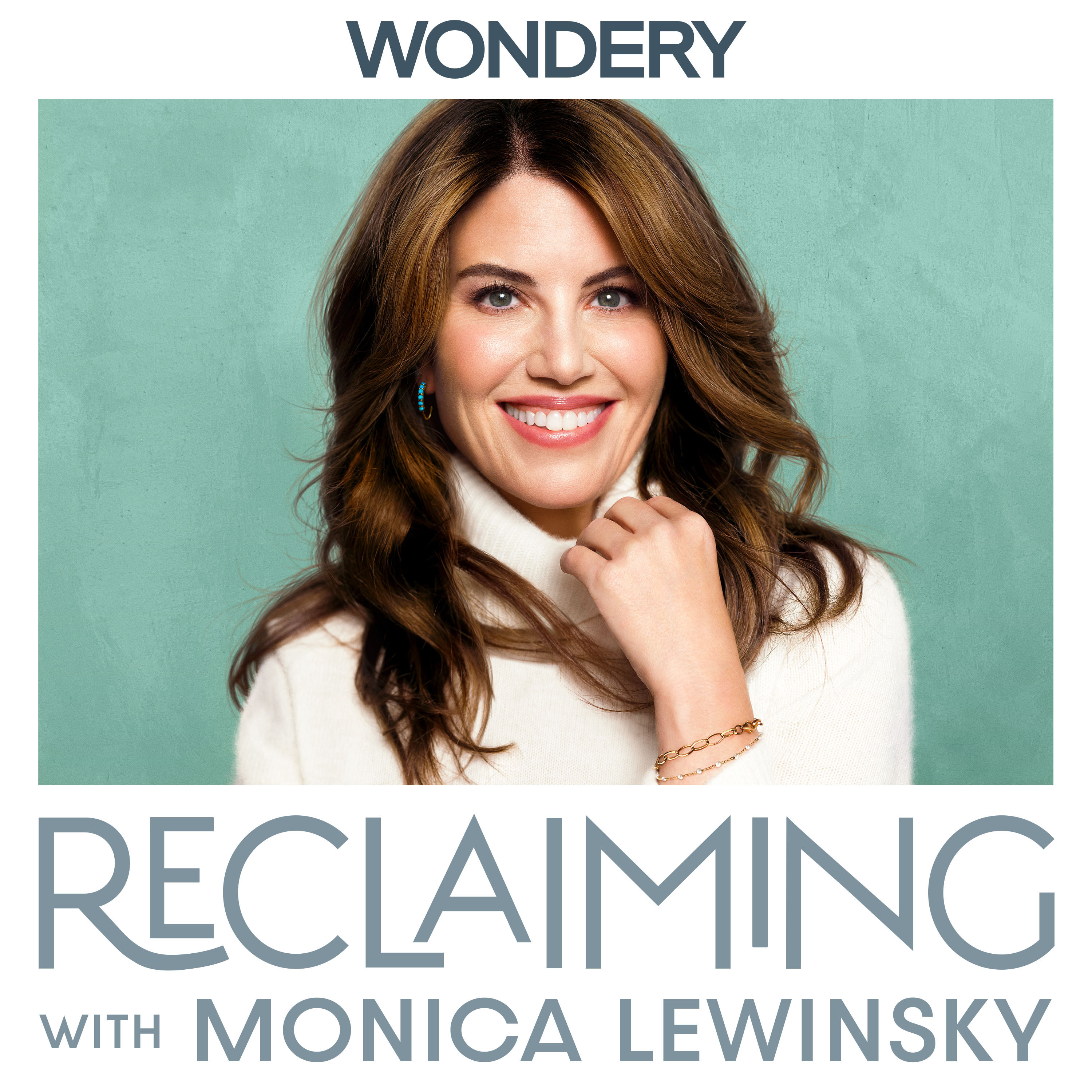
The transcription features a promotional segment for Monica Lewinsky's podcast, "Reclaiming," exclusive for Wondry Plus subscribers. Sponsorships from Peloton and Audible are included in the podcast. Gabrielle Union shares her profound experience traveling to Africa for her 50th birthday, focusing on reclaiming her roots and connecting with the history of her ancestors. She reflects on the transgenerational trauma and the importance of listening to the voices of the past. The conversation delves into the significance of understanding history to avoid repeating past mistakes and the impact of exploring one's heritage. Union's journey to Africa highlights themes of identity, connection, and healing from ancestral wounds.
Transcription
13797 Words, 73141 Characters
Wondry Plus subscribers can listen to reclaiming with Monica Lewinsky early and ad-free right now. Join Wondry Plus in the Wondry app or on Apple podcasts. Or you can listen for free wherever you get your podcasts. If I'm introducing the world to who I am, this is a part of who I am. And if you think you know me and you think you could put me in a box, you can't. There are layers and they're complex and they're not all easy to digest. But if you really see me, you need to see all of me. Thank you to our presenting sponsor, Peloton. Let yourself run, lift, flow, and go. Explore the new Peloton cross-training Tread Plus at 1peloton.com. Reclaiming is brought to you by Audible. EMEA Award winner, Carrie Washington, returns as Dr. Virginia Edwards in Audible's heart-pounding supernatural thriller, The Prophecy Season 2. Picture this. A mother on the run protecting her miracle child from a sinister cult leader who will stop at nothing to find them. But Virginia Edwards is no ordinary mom. Haunted by visions and guided by an ancient prophecy. She's about to discover her true power as both protector and chosen one. With an all-star cast, this supernatural thriller will keep you on the edge of your seat and wondering when everything's at stake, who can you really trust? Evil is rising, time is running out, don't miss Carrie Washington in Audible's mustless in event of the year. Some stories change you forever, this one just might save humanity. Start listening to The Prophecy Season 2 today at Audible.com/TheProphecy2 or wherever you get your podcasts. Welcome to ReclaimingGab. Thank you. I am so happy to have you here and I'm like just totally being reminded, you're smile. I think could like solve all the world's problems. Just you have one of those smiles that is just, I don't know, it's lifting me up right now. Oh, thank you. Yeah, I will tell my orthodontist that it all paid off. Did you have braces with that whole thing? I couldn't even close my mouth, I had buck teeth. I saw it. I was 12. Okay, I had what I called Asoska, which is a pacifier till I was eight. So, but I somehow, yeah, I still have a softy though. Yeah. My teeth are straight, but I got my softy. You know what? We need it sometime. It's actually a softy. Yeah. I was thinking about, so we met in 2019 at the Vanity Fair Oscar dinner and we had this like great connect with Regina Hall. I couldn't remember exactly what we talked about, but I was, but I was like, oh, yeah. It was a week's change number, so I know that meant it was a good, like, I remember that feeling. And I'm always happy when I see you and Dwayne there because I feel like, oh, okay, touchstone people that I. You have someone to go to in those rooms. Yeah, exactly, which is hard because because I don't, I, is my brother jokes, I get a plus zero. Well, I'm, listen, we used to not get plus one, and you had to hope that your friend also got invited. Exactly. And then when I started getting plus ones, I just brought like, you know, my friends who maybe didn't always get plus ones or invited at all. Yeah, exactly. So it's just, but it is. I always feel whenever I see you guys, I'm like, oh, okay. Good people. Exactly. Exactly. You do so much side from all your acting, but you do so much advocacy and activism work. And you and Dwayne have led so many important societal conversations that I think really have helped people see how to think about different things and talk about different things. And you've got a new, a new project that you are, what's the right way to say it? It's like, I guess it's a new message that you're helping to amplify. Yeah. I was thinking about there's that great. I'm going to read it because I'll mess it up and who wants to mess up Maya Angelou, right? But she said or wrote that as soon as healing takes place, go out and heal somebody else. And so you're now doing this in your partnership with Neema Health, right? Yes. So we're trying something new on the on the podcast today. We're later on Dr. Sophia Nore, it's from Neema Health is going to join the two of us. And since we're three girls with PTSD, we're going to chat it up. Yes. Yes. But I selfishly, I just I wanted to have a little bit of time with just you first. And I think there's so many things that we could chat on in terms of I was thinking about your acting that the 25th anniversary it bring it on was just now. And the Millennial producers on the show, we're telling me how how culturally important it is as a Gen Xer. Like I know and interestingly, you know, kind of, I don't know if it started, but cultural appropriation. Like that we really weren't talking about or calling out, right? Not at all. Was a big part. So I mean, how do you view that and your role and how do you see that now kind of 25 years on? I mean, I think it was such an important movie at the time. And now you have three generations who have touched it, right? And so you're seeing grandparents, you know, and their kids and their kids, like all watching it together and taking something away. And what I hear from, you know, the grandparents who, you know, were in the theaters back in the day is that they felt like finally someone was like shedding a light on the rape and pillage of culture and community and parts, body parts, thoughts, inventions. And finally giving credit where credit was due and that, you know, when you, when you steal someone else's intellectual property, you don't deserve to win. And there was always like at the time there was all this conversation about who should have really won, you know, and this cheerleading competition should have been the clover of the, or the toros. But in a morality tale, you should never win when you've done right, you know, you've had, when you've exhibited piss poor behavior, no matter how much you think you've learned, because the damage that has been done will never outweigh your acknowledgement or your apology. And I mean, so having the, the team of black and brown girls, when using their own work, felt so freeing and liberating and joyous for so many people, so many underdogs who've been in that position. And so it was, it was exciting then the reaction and it's exciting now because we created something that stands the test of time. Now some jokes didn't age that well, but, but unfortunately it's still relevant. And then also too was I was like, oh, we could also be talking about the fact I loved learning this about you that you had been interested in law, but then you had an internship that sort of took you into your, is that right? Yes, derailed my legal, my legal career before it even began. Yeah, and so then, yeah, I was like, I was thinking about, okay, well, I think you, you chose a much better internship than I did. So I was a little more lucrative, I guess, you know, worked out, exactly, exactly. Yeah, I got the short end of the stick there, but, but really since I'm, I'm sort of a junkie when it comes to self exploration, I, I hope you don't mind jumping into when you turned 50. Yeah. So like many people have parties or plastic surgery, and you didn't really unique thing of you went to Africa, right? Four countries in Africa, and you made a documentary, right? And it's Gabrielle Union, my journey to 50. Is that right? Okay, good. And so what, what were you hoping to explore and find there with that? Every time I set foot in the continent, I, I, I re-emerge. I, I am reborn. And I get little, little pieces of myself, I reclaim them. And I wanted my friends and my family to experience that same thing. And I wanted to hit a couple of countries that I'd never been to or spots that I'd never been to. And so I gathered, you know, some of the closest people to me that were able to, you know, fly. Yeah, fly to Africa. And we started in Tanzania. And we kicked off the big, like one of the big party celebrations there, with the Messiah. And then we went to Ghana. And I, I wanted to, to take my family to Elmina Castle, which was the last place our enslaved ancestors were held before they were put on ships. Oh, wow. You know, during the middle passage. Okay. On to their enslavement in various parts of the Americas. Yeah. For me, it is a very haunted, occupied space that is incredibly sacred. And if you're quiet enough, you, you can hear our ancestors speaking to us. And sometimes it feels like a warning. Sometimes it feels like protection. Sometimes it feels like encouragement. But they're speaking to us. And too many of us aren't listening. And I wanted my family and my friends to be able to have the opportunity to listen. And when you can hear them, you can really truly be in touch with yourself. And then we went to Namibia. My friend, Lewis Hamilton, had gone like a couple months before with a group of friends. And he was like, oh, Gabi, you have to go. It's life changing. And it's where the desert meets the ocean. And it's these beautiful red sand dunes. Oh, wow. It's just, it's just incredible. And we were able to randomly not a part of the, the schedule, meet the, the, the, the, the people. Okay. Wait, say that again. I didn't. Himba. Himba. Okay. I've not, I'm pronouncing that. No, no, I've never heard. I've never heard of that before. I heard of that group of people before. Before we, before we went. And they welcomed us in. And it was, because you know, it's usually it's like a tour guide or something. You know what I mean? And it was truly they saw us driving in didn't know us other than clearly they were probably westerners. And invited us in and and embraced us into their homes into their community. And we just got it had a chance to learn. And a couple of the younger people were trying to learn English. So it was just a, I think it was, you know, a chance to practice. But it was that was life affirming. Yeah. And gave, gave us a whole new world perspective. And then we ended in a sueto in South Africa. And, you know, I'd already been to Jobar before and I'd been all over Durban. But I'd never been to sueto and I'd never been to Cape Town. Okay. And it was just, it was just the trip of a lifetime and each spot brought our family closer. My friends, my ship friendships closer. And it was exactly what I wanted for my 50th to reclaim myself. Yeah. Yeah. No, I mean, it's amazing. It's so interesting what you're saying to journey. Smell that was on just a couple of weeks ago, me too. And we were talking about sort of transgenerational trauma and that, you know, and she was talking about where that connection to ancestry comes in for her in her work. And I just think what a beautiful thing that you did about and the way you talk about it too, of just the listening. Yeah. You know, I think it's so hard in today's world where there's so much noise. How do you cut through it? Yeah. You know, and that's a real, I'm going to give all my friends shit that they haven't taken me on a trip where I get to listen. I mean, normally we're doing keg stands. So it's not like, I wish I was, you know, I had thought about this before. But for my 50th, I just knew I wanted something different. Yeah, because we do like my birthdays around Halloween. So it's like we always do a theme party and it's always just got bigger and bigger and bigger and bigger and we were kind of took it around the world. And I was like, let's take it back to the motherland and back to ourselves back to the source. And and I think this could be a little bit more profound and meaningful and life changing and life affirming for all of us. And my mom, you know, my mom had never been to Africa and my mom's sister, my aunt Katie and we were, we were in Ghana at the river of no return where they would, you know, after basically marching our ancestors, the distance from New York to Florida. They would put them in this river to clean them up and they'd, you know, lather them in in Greece to create the appearance of good health to get the highest dollar. And as we were walking down towards this river, my mom falls out and my mom is late 70s and I'm thinking, oh, is it my mom, my mom, my mom just died. And everyone's any, and this is all they, you know, the cameras were rolling. So this is all being caught. And very clearly, I heard my grandmother's voice, who's been gone many, many years and she's alright, she's alright. And she, you know, she took a, she took a break, she came back, she came to, they brought her numbers, you know, within back to within reason and she was like, take me to the river. And it's like, at that point, I'm already crying. We're not even at the river yet. And we were, we get into the river and everyone's kind of in their own sort of spot. Yeah, meditating, praying, thinking, you know, whatever each individual was sort of doing in that moment. And I, I kind of had lost track of where my husband was. And I just, and it was this beautiful sunny day. It was hot, beautiful sunny day. And my husband's in the river. And I just hear him scream. And I look over in his arms are outstretched, like, like, Christ. And the sky opens up. And it is downpour out of nowhere. And it was the most cleanse. It was like something out of a movie. And I mean, luckily we caught it. And he's just standing there. And he's being like, yes, if you will. No, everyone was very, very emotional. And it was, it felt otherworldly. But again, it's like when you listen, the ancestors and you call upon them, they show up. Yeah. So I'm just really intrigued in myself right now because I'm feeling so much emotion from this. And this is not my history. And I don't know if it's just because, you know, just a couple of weeks ago, really in it, we're journeyed. But it just is, I just, I feel grateful for it. And I don't even know you that I'm like, we've just had that great connection and text and stuff. But I just, I feel grateful for you and your family that you were able to do that. And I'm just also, I'm so sorry for that history. Yeah. You know, I mean, it's just I'm Jewish. And so there's it's a very different history. But there's a transgenerational history that we carry of being othered and being devalued. And so it's, that's not what I'm, I'm just sort of feeling here. It's because there is such a shared history of oppression. Yeah. And degradation and violence. And what the ancestors have endured. I feel the spirit that I feel it truly is no more, no more, no more, no more. They want so much better and more for us. Yeah. They want us to know peace. There was a, I mean, this is a billion years ago, it was the bad boys to press tour. And we were in Munich. And you know, I'd never been to Germany. My dad had been going for, you know, forever since the Vietnam war, my dad somehow got sent to Europe instead of Vietnam. But always loved it. We always, if there was a half bra, we were at that half bra. But you know, like, bros, you know, we had the beer stands and the whole thing. And he would always go, he had to, he still had friends over there. And so when I was over there, I was like, I want to, you know, I want to go to October fest. We were in October. I want some leaderhose. And I want to say this whole thing. And I remember asking how far the how was, and I'm like, oh, it's like 45 minutes. I'm like, I'd like, I'd like to go with if we can fit that into the schedule. And I'm like, how much time do you think we would need, you know, and this young kid that was like our driver slash security was like, I don't know, like 45 minutes. I thought, I guess maybe it's smaller than, I had thought we're out there. It's massive. I'm like 45 minutes. Like, yeah. But when you speed through your history, you are, you are bound to repeat your history. When you, when you say that again, sorry. When you speed through your history, you're bound to repeat that history. And when you don't fully understand the enormity of the destruction of a whole people, you are bound to repeat that. Yeah. And we spent almost like six, seven hours. Wow. And you know, as you're walking through the space where the gas chambers, yeah, were. If you listen, if you quiet yourself, you can hear the horror, you can feel it. It's visceral. But then there's the people 45 minutes. Yeah. But thank you for witnessing. Thank you for going and witnessing. When it's never forget, it should be never forget. And that goes for all history, for all history. And, you know, what we see now is the erasure and the forgetting and the repetition. Yeah, it's, it's interesting because I think the, I know people in the medical and science community never doubted we'd have another pandemic. But as a lay person, even though my dad's a doctor, but I was like, oh, we'll never have another boy like science and medicine. And the fact that we had another pandemic after a hundred years, totally changed my landscape around like, oh, this other shit can happen again. It's not, there, there is no gone for good kind of a thing. And so it is, I just, I, I'm so inspired by, by what you did in your trips and I'm like, I do not vacation like that. No, we don't either, but it's like, I needed, I needed something more. Yeah, I needed a lot more. And like, there was one year we were going on vacation. And I was like, I want to retrace the migration of the moors. And everyone's like, what? I'm like, Portugal. I'm like, you know, we can, we can, you know, and yeah, that got voted down. But I still want to go, even if I have to go by myself, right. Tracey, I'll process inspired me to like, just travel by myself and be fabulous. It's so great. I like to, I mean, as a woman, I feel it's annoying. You have to be a little more cautious. So you can't quite do as much. But I like to travel on my own because then I don't have to do shit. I don't want to do. So, but are you, have you thought about, I mean, I know Tracey Ellis Ross is doing her show, but have you thought about doing a travel book or something? We had, I had been working with, was sunny from the view on a, on a travel show where we go around the world talking about like beauty and different ideas and techniques and theories about beauty and wellness and different parts of the world. Yeah, I'm very passionate about it, you know, so whether it's a TV show or just you see it on my social media, yeah, yeah, or it's just up here and we sit next to each other at the, at a chilies during happy hour and I'll share with you. I'll regal you with my exactly, exactly. I just, I love it. I love, I love being educated. I love walking into situations, very humble and quiet and just listening and observing and sitting at the feet of masters. Who can, you know, fill you with so much history and knowledge and yeah, I love that. Yeah, that's like my nerdy part. I like it. It's like all the people I really like and respect have a nerdy part. It's the, because that's passion, right? Welcome back for another month of our reclaiming listening club. I'm excited to unveil this month's pick. So let me introduce you to the Gilded Eris, a dazzling tale that whisks us away to the glittering world of 1890s New York society where ambition and old money collide. When Elizabeth Rothschild, a self-made woman with a mysterious past threatens the carefully guarded social hierarchy, Manhattan's elite families must decide whether to embrace change or cling to tradition. Trust me, the narrator's interpretation of these complex characters is absolutely masterful. Also, can you tell that I recently binged all seasons of the Gilded Age? For those of you who've been with us from the start, you know it's fun to listen along with your friends to the same great stories. And if you're just joining us now, you've picked the perfect moment. There's something special about knowing we're all hearing the same voices, sharing the same dramatic moments, and probably all gasping at the same plot twists. The best part? You can dive into a great title anywhere anytime. I actually listen to half of it while packing for a weekend trip. And let me tell you, folding laundry has never been more entertaining. I can't wait for you to listen to Elizabeth's journey and all the delicious drama of New York's high society. Ready to fall in love with more amazing stories together? Head to audible.com/reclaming and sign up for a free 30-day trial. That's audible.com/reclaming. I'm going to read this long quote if that's okay that I read from when you came back from your trip or maybe you said it on your trip, but it was everything up to 50 in my life has been centered around trauma. If my heart was here, trauma surrounded it. Something about this trip and learning about self has made me feel like the next 50 years, anything as possible. I can do anything. My birthday was in Zanzibar and it was the most full I felt in the absence of trauma in the past when people have rallied around me. It's been because of trauma, not having that trauma center stage. I was able to be loved fully differently. That really moved me. I know there's the connection to what you're doing with Neema Health 2. When Toronto Burke was on the show, she talked about when asking people about trauma to not always ask them to go back into it. I know you're very open with some of the trauma that's led you to who you are today, but I don't know how you're feeling today. Do you feel okay talking about it? Of course, of course. It's for so long. I thought I was no longer disassociated. A couple years ago, my girlfriend Octavia Spencer's show Truth Be Told and that season was about sex trafficking in the Bay Area. I'm gonna not give spoilers. I haven't watched it yet, but there is a very pivotal scene towards the end that takes place on the steps of the Alameda County Superior Court, which is where I gave my grand jury testimony against my rapist. And the five months that I was filming that show, I was coming home crying. I'm not a cryer. I'm pretty stoic. Turned out, I was disassociated. But I was crying. And with each episode, it was like some little piece got revealed that my mind had covered. So I could survive. And they're like, okay, girl, you are 50. I think it's time to give you a fuller picture. And it's like it just happened every day just felt like it was minutes seconds ago. And you were you were 19 when that was 19 when it right originally happened. So I was at a summer job in between my freshman and sophomore years of college. And I got a job at payless shoe source with my girlfriends. And because you don't actually have to help anybody. I worked in a toy store. And my girlfriends, there was a Garth Brooks concert. And we were all very much into Garth. But as the black girl, they were like, you don't really want to go do you? And I was like, really? That's how I interpreted it. Okay. Wow. I'm sorry. You know, I love friends in low places. I am the friend in low place. And so what I was like, I call cover for you guys. I'll all work for you guys. You guys can go. And while like while we were, you know, getting ready to close early because we were terrible employees. We had already done as all young people are we'd already done the the bank drop and everything. There was very little money. And as we're closing, I was vacuuming early. And I see this man come in and everything in my body said, run out the back. Run out the back. But he was a black man. And I was like, I'm not going to do this to this black man in front of this young white woman that I'm working with. I'm like, I'm not going to fall to, you know, for this terrible stereotype. This is stupid. These are my own people. So I ignored that thing in my body that said, run. And a short time later, I heard the woman I was working with yell for me to come to the front. And it was something about her voice. And again, my body was like, run. But I didn't want to be rude. And you know, how work condition. Don't be a good girl. Be a good girl. Be a nice girl. And I walked to the front and he's holding the gun on her. And in my head, it was just like, you go to just ran. But of course, he's angry because there was no money. And so he tells us to go into the back. And mind you about two weeks before Oprah had done a special on what to do in case you were a victim of a violent crime. And I had watched. I was religious about Oprah. And she had a law enforcement, a member of law enforcement talking about what to do. And one of the things that he said was don't let them take you to a second location. So as he's telling us to go into the stock room, I'm like, is this a second location? I remember like wondering. And I'm like, because the whole thing was if they take you to a second location, they're going to kill you. So we had there were all these boxes that were stacked up that we were supposed to put away, didn't put away. And the woman that I was working with had been robbed before at that store. And she's pissed. And she's knocking the boxes off. And she's, you know, she's cutting it. But the gun is on me. I'm closest to him. She's leading. And I'm like, oh, no, I'm really going to die. I'm really going to die. Oh, my God. So he takes us to the back room. And he tells us to get undressed. And I was like, oh, I guess we're just going to be naked and dead. And then he tells us to go into the bathroom. And I thought, okay, maybe he's going to let us live. He just wants time to get away, maybe. And we get into the bathroom. We didn't lock the door. We just, you know. Well, yeah. No, no, no, it's things. And a, you know, a little, like a couple of seconds later, he opens the door and he was like, no, you come out. And at that point, I was like, oh, shit. I'm about to get raped. Oh, okay. Oh, shit. Oh, shit. And at some point, he very calmly asked me to hand him his gun, because it's like, I'm watching the whole thing, like above myself. And I'm watching myself be raped on the, on the ground. And then when he was like, hey, can you hand me my gun? It was like the, the self up here and the self getting raped slammed into each other. And I grabbed the gun. And as best as I could, like I, I knew that I had to pop the clip in. And I, but I ended up shooting to the ground. I grabbed the gun and I tried to spin around and shoot him as I was like kind of falling away. And missed. I've literally shot into the ground next to me. And then in my brain, it's like, click at seven times, like it's a revolver. It was not a revolver. And my finger got caught in between the trigger. And I'm trying to turn it away from my face. And he's just pounding, he's just punching my face, just punching my face. And eventually he is able to get the gun away. And he's like, now I'm going to have to kill you bitch. And I had my boyfriend at the time's chain on. And I was like, here, take the chain. It's worth more than what you got. And Barry calmly asked me how to get out. And I pointed towards the back exit. And he left. But that whole time I was fighting for the gun, I'm screaming for the girl to come out like, you know, screaming for her. Obviously, we don't know what we're going to do in a traumatic situation. She did not come out. But when he left, I'm just, I don't even know what the right word is, hysterical would be a tiny piece of it. In shock, wrecked, wrecked, like nothing bad has ever happened to me. I'm like bigger, better, better. Like you have to be, you know, a AAA student to be, you know, so they don't think you're trash or stupid. But you had to be perfect. And I did a great job up until this point. And eventually she comes out, calls the police. And my sister, my dad had been at like the hardware store. That was across the way. And I guess they heard the or saw the sirens and whatever knew that I was at work. And they came over. Because it was like they, they were there right when the police were there. And I, my older sister was in college studying criminal justice. And she knew the police codes. And my dad was like embarrassed that I was hysterical. And he's like, and I watch my sister whisper to my dad and his face just like I died. And I, I mean, I had. And that just wrecked me again. And that was day one. And the rest of the next 33 years has been surviving and figuring out how to find peace consistently. And just knowing what that feels like in my body. Like real peace. I've had moments. And now I'm, I'm looking to string more moments together into a life for the next. You know, my grandma, my grandmother lived to be my great grandma lived to be 110. She was on Donahue. I'm like, I'm like, I'm like still in your story. And now I'm hearing you say 110. But I just want to know that there's so much more life. Yeah. And I know that I cannot, my body cannot sustain this kind of trauma and terror for another 60 years. I don't want to. But also it causes healthy problems. There's a toll. It's a, there is a, a steep, a steep toll. Yeah. I just, I'm so sorry. That happened to you. You know, as, as women were sort of always that like when you're a kid, it's don't take candy from the street, you know, you're afraid of being kidnapped. And as a woman, once you start to develop, you're afraid of being, it's hard to say the word right. And I've had unwanted sexual experiences, but they were not as traumatic as that. And I'm just, I'm so sorry. Like I'm so sorry you went through that. And it's just, it's, and I know it's so, I know from my own, you know, different chapters of, of trauma that the, you know, the ability to talk about it is important because it helps other people. And there's, you know, it's like you find your way of being able to talk about it. And for me, it's like disconnect from it in certain ways. But then there, there are the moments where you, you know, I'm sure you've had other people like reaffirmed that disassociating and dropping back in, you know, I had that, I was almost carjacked. And I had someone had a gun and then there were four people and, and it was that whole thing of like all of a sudden, you know, I, and I could see. And that was how I knew there were four people because when I started to do some of the healing work, I, I had had the memory file of like, seeing down. And it was, oh, the car doors are being pulled and it's four different people. And, and when they start pulling the car doors, I, I dropped in and was like, oh, I can drive away. You know, like, oh, be present. You know, and so it's just a, but that is not the same as the body violation and. But they're all violations. Yeah. And, and everyone's threshold for trauma is different. And I remember, I went to UCLA and when I got there, I went after this, I transferred. And I went to, you know, mental health services and I was in group therapy and individual therapy. And I remember in group once I told my story. There's so many other people, mainly women, but there were some, some guys in there as well felt like their stories of rape weren't. And I'm using my finger quotes, legitimate. Yeah, because mine was a stranger with a gun. Yeah. And I remember saying, no, no, no, no, no, all of our rapes are legitimate. Whether it's a stranger or someone you know, or there's a weapon or there's not a weapon. If something happens to you, that you do not want to happen to you. Yeah, that's it. Yeah. Or if there's a power inequity that there's, there's, but it's like there's so many. Yeah, sources where people are trying to rob folks of, of their experience and trying to place labels on, on an experience that they've never felt or have first person accounting of that makes you think you're crazy. And there's so much blame, which is why like when I first got microphones put in my face and I first became a little bit more known. I realized that I could use this time with a microphone in my face to talk about dumb shit. Or I could talk about this life changing event and how I'm surviving. So other people don't feel like you're alone because you very much feel like you're on an island with your trauma. And no one could possibly understand. And when the more you talk about it, the more literally the word the phrase was me too. Yeah. Before it became a hashtag, that's literally what people would say, hey girl, that happened to me too. You know, and it would, there were so many me twos that it just gave me wings to, you know, lobby state legislatures for more funding for rape crisis centers to, you know, clear the backlog of rape kids to, to be on President Obama's advisory committee for violence against women and women and children. It gave me what I needed to, while disassociated, talk about my trauma and try to find help for myself and other people. And I realized now that if I hadn't been disassociated, I probably wouldn't be here. It's too, it was too much. Same girl. It was too much. Yeah, it was too much. It's really interesting. You said something before that was exactly my experience of I had, I feel like I said this in this chair before, but it is relevant of the I had been with my current therapist for several years. And something come up, and I was like, you know, yeah, well, I was a virgin when I was 19, I was like, well, technically I was 14, but that didn't count, you know, and she was like, what do you mean that didn't, you know, and I was like, well, I was a camp, and it was a camp counselor, and I was 14, and he was 18, but then turned out he was actually 21. And I mean, the whole thing, but I was like, well, I wanted to be there. And she's like, did you want to have sex with him? Did you talk about having sex? And I said, no, and he stopped after I told him to stop, you know, but it had happened, you know, and she was like, well, that's, that's an unwanted sexual experience. And I was like, no, no, no, no, that's not that thing. And we didn't have language for that. And I think we are always, you know, that somehow we're not given permission to just own our trauma. And that is part of what's hard is until we're able to do that, we can't really heal all of it. But I, I, what was interesting to me and what you were saying before about it, coming at different points, like why I was just saying that story is because I was in my 40s. And that when that happened, and it had been a few years, like after things had started to change for me and people were seeing me differently, and I was beginning to reclaim my narrative. And I look at that now, and I realized there was no space for the other trauma until my big trauma started to heal. And that's what I think is complicated is like, everybody is walking around with trauma. Everybody, you know, and we're not all perfect victims. No, no, no. I think of it. I'm so curious. And we'll bring Dr. Norean soon. But I, I think of it all a, I consider it modern trauma. I think that's this era that we're in of like, this is now going to be something we talk about. This is now going to be something that people are able to address, you know, because people like you are talking about it, doing your advocacy work. I mean, it's, but I think it is and, and trying to strip away all the shame around it. I mean, you've been really brave in the way you've talked about it too, because you, you first shared this story right in an op-ed. Well, the first time I publicly talked about it, I was, gosh, like 27 or so. Okay. And I'd gotten the cover of this new magazine called Savoy Magazine. And in this cover story is my first time ever being on the cover of anything. And I, it was like my cover story. And it's like introducing, you know, Gabrielle Union. And that's, you know, towards the beginning of my career, certainly the beginning of my film career. And it just felt important to tell the story. Because I was working on a show called City of Angels. And one of the story lines was that there was a serial rapist targeting the women in the hospital. And I went to our showrunner and our writers. And I was like, I begged, am I, please, I can't, my character can't be raped. Because like, each week I'm looking at the script like, am I, is, is my character, and I'm like, I can't, I'm not there. I can't, I can't. And in the advocating for myself in terms of the story, I felt like it was, I could advocate for myself in print. And it's like, if I'm introducing the world to who I am, this is a part of who I am. There are layers. And they're complex. And they're not all easy to digest. And that's what I want. And so I first talked about it then. But it's like every time I've talked about it, it's like people decide that I'm not a rape survivor. And it's like, so every time I talk about it, it's like, I've never said it before. And so like, give me those people's names. And they're like, what? No, you're so. And I'm like, oh my gosh. And so over the years, as I, as you know, as the story comes up, or I went on Oprah and I talked about it then, or I mentioned it in a speech I gave and it comes up again. But I've never not talked about it. It's just as it comes in and out of the public consciousness. It's always a surprise because they've decided what victims look like. Yeah. And I don't fit handily into a victim box. And I'm like, girl, I am in the massive box. You have no idea. Yeah, like, you know, and I try to be, I try to talk about the journey to being a survivor. But there's many days I'm, I'm in a victim space. And I can't advocate for myself much less anyone else. And on those days, I look to other people to lead. And other people to give me the inspiration that I hope I give to someone. And, and Toronto's been amazing. Alyssa Milano, like, there's been so many very outspoken women and also men. But really, like, my main source are just regular people on the street, you know, and it's every race, age, ethnicity, religion, political affiliation. Right. It is a, yeah. It is a grand equalizer. Yeah. Yeah. Equal equal opportunity. Yeah. No, it's, um, it's really, I, I, if this feels like too personal, then I don't know. I'm just curious because I think, you know, I have, I think they're, I think I feel I'm in a different place now. But for a very long time, um, I think that I felt like my trauma was too big for someone else to ask someone else to try to hold it in relationship. And so I just wonder, like, what that's been like for you, how, how does Dwayne hold that for you? Does he hold that for you? I make that assumption just from the energy I felt between you two. But if that doesn't, I don't know if that's too personal. No, no, I mean, I had a boyfriend when this happened. And it happened to him, like rape happens to communities. It happens to families. It's one rape impacts a community. And he, I mean, we were kids and his, his instinct was to cuddle. My instinct was to rage. My instinct was violent. My instinct was fighting. My instinct, like physically I wanted to like hit people, not him necessarily, but like there was so much rage. And so that's a lot, you know, and I'm, and I'm still trying to go to college. I'm still trying to play sports. I'm still trying to become an actress. Only a few years post puberty. I'm like, you know, like a kid. I'm used to my dad telling me what to do. And so trying to go from that to living with a man who doesn't know what to do and his instinct is to, you know, baby or cuddle. And my instinct is to break free. It's hard to have a relationship when someone else's idea of recovery and care doesn't match where you're at. And that's been a kind of a reoccurring theme. And with, you know, by the time I met Duane, you know, so many people that he had, you know, been with, and, you know, very close relationships in his family had experienced sexual violence. Wow. So this wasn't new to him. And he would just ask, like, what, what do you need today? Because it changes. So by the time I was doing truth, be told, I would just come home and be crying. Like, and he would just be holding me. And I'm sure there's a lot of feelings of helplessness. You know, because you, you want to make it right. You want to, you know, fight somebody. You want to fix it. And there's not a quick fix. It's just being present. And he's been great. And my friends are, I have the best friends in the world. No, no, I have. Oh, my God. When I finally, when I finally wrapped on truth, be told they literally had a car waiting for me from Paramount to go out to Malibu. And they had this, like, they had a drum circle and spiritual folks and prayer warriors. And they did a rebirth like cleanse you. Yeah. Yeah. And I just, I tried to release it. It was such a, it's like it just happened. Yeah. You know, over time and a lot of therapy, like, so I mean, every different, every kind of therapeutic, you know, I've tried it from hypnotherapy to talk therapy to guided MDMA, like, whatever, like I've tried it all, it was very poignant, very helpful. And then, you know, my trauma didn't really go anywhere. So I needed something that would stick, you know, like again, I do, I firmly believe I got 60 more years. I need something that will, will stick for this, the PTSD that lives and breathes like alien in my, like in my body. For you. Yeah. Well, you think this is a good, a good place for us to, to pause and invite Dr. Norean. Yeah. Reclaiming is brought to you by Peloton. My friends were talking to me about that feeling when everything just clicks during a workout, that perfect moment when they're totally in the zone, I've had it before, but only on occasion. Now, the new Peloton cross-training thread plus was designed to help anyone reach that sweet spot faster. What makes this different? It's called Peloton IQ. Think of it as your personal fitness companion. It tracks form, counts reps, and suggests the perfect weights with intelligent strength coaching. No more second guessing your workout. But here's the thing. Peloton IQ learns and adapts to each person. It builds personalized workout plans and connects members with classes that help you reach your goals, not to mention instructors for every mood, personality, and vibe. It's like having someone who just cares for you during your workout. You can also enjoy other types of workouts on the Peloton cross-training thread plus. If you've been wanting to get back into Pilates like I have, but haven't had time, the thread plus screen actually swivels. So you could go from an energizing run straight into strength training or Pilates without missing a beat. Talk about endless possibilities. Explore the new Peloton cross-training thread plus at 1peloton.com. Sophia, Dr. Sophia Norey, welcome to Reclaiming. Thanks for joining our conversation now. Of course. Thank you for having me. Of course. No, you know what? We're really excited about being able to talk about this. I mean, there's probably something wrong with me that I like to talk about trauma. I do too. I think as we were chatting on before, I feel like it's been such an almost a silent sin in our society. But so, Dr. Norey, you're an advocate for women's health, and you are the co-founder of the Women's Mental Health Conference, the first academic and trainee-led conference focused on women's well-being in the nation. And Gav, you recently joined Neema Health as an advisor and an investor. So what drew you to wanting to both take your advocacy and activism this way and drew you to Neema Health? Specifically. I wanted a solution. I wanted a solution. My life had shrunk. Considerably, I wasn't an active participant in my life. And the things I was participating in, I had, like, fleeting memories of. You know, you go through a whole night and you're like, who was there? I was talking. And just like the idea of, like, an invitation comes in and I'm like, I love when people cancel plans. My world was just shrinking when it should be expanding. I have a six-year-old. And everything I tried, nothing was sticking. And I needed something to stick. I got 60 more years. And I'd heard about Neema Health. And A, I was like, well, where are you at in this process? I'd like to back this up with my wallet. And I want to be a client. I want to be someone who goes through the program. And it's really changing kind of everything. It's giving me different tools. I mean, I've been in therapy for 33 years. But it's giving me different tools and a different perspective that's giving me a lot more peace. You mentioned insomnia. I can't sleep because I'm thinking about everything that could possibly go wrong. I'm thinking about conversations that have never happened and will never happen. Well, someone says this and I got to be prepared with this. And then I'll start Googling facts. Yeah. So I'm prepared. I'm never caught unprepared. Like, I can't, you can't exhaust that. It's exhausting. And it's so exhausting. It robs me of the joys of motherhood. It robs me of the joys of being in this loving relationship. It robs me of my amazing friends. And I wanted to reclaim it. And it's been a massive, massive tool on this journey. It's interesting because I think we've both talked about trauma similarly of not being linear. And I think, and I'm so curious, you know, I mean, I experienced that and all really the practitioners I talked to. But my therapist is a trauma psychiatrist and she'll talk about trauma as being an echo. Like that the echo just kind of gets softer and softer, but it's, but that that process is visually for me. It always comes up as like a tilted spiral of that thing of that you sort of once you realize that it feels like you're going down, but you're actually going down to go up. Like you go backwards to go forwards in that way, but it is, it may feel like you're going backwards, but you are actually going forwards. I don't know if that resonates, you know, for depending on the day. Depending on the day, because there's days where it's like it didn't happen, never happened. This is not a part of my life. And then there's days, this is the only thing that's ever happened. I wanted to ask you something super basic, which is just like, how do you define PTSD? Great question. And you know, it's so funny because it's like I've like know the clinical definition, right? And I'm like constantly diagnosing people and like seeing patients. But this question kind of like takes me back for a second, because I want to think about it in like the most elemental way. PTSD is about what the trauma left you with, right? And the impact the trauma has had on you, right? Because not everyone who suffers from a traumatic event, which frankly like most Americans have actually develop PTSD, right? And it's about the meaning making, right? And how you relate to the trauma afterwards. And what happens with a lot of people is that they believe that the trauma is their entire book. They can't imagine another chapter in their book, right? And they start to think that the trauma defines who they are, right? And that's when people start to develop like the symptoms of PTSD. And they may not even know that that's what's happening, right? But generally when we talk about PTSD, we talk about the fact that after a trauma, almost everyone has post-traumatic stress symptoms. You're worried that, you know, you're going to get into another car accident again, that you're a terrible driver, right? That, you know, someone else is going to hit you or whatever it is, right? And what happens is people can't stop thinking that way. And so their lives become smaller and smaller. They stop driving, right? They only walk to work because they don't need to drive. And then what happens is they start to avoid, right? They can't stop thinking about what happens to them, right? And so that's how people develop PTSD. And for me, yeah, at the most elemental level, it's believing that you're not left with anything now that the trauma's happened. It's interesting because what you were just saying made me think about how, you know, that thing like when you have a physical injury, and if you don't get it healed, you start to accommodate, right? And other muscles take over and other, and then before you know it, you've, you've sort of, I mean, not that that muscle's at your feet, but it, yeah, have a different problem. Yes. Exactly. Exactly. Because of the consequence of the original problem that you weren't actually able to fully heal to begin with, right? There's four categories of symptoms that people develop after the trauma, right? And the first category is what we, what we call like re-experiencing symptoms. So everyone classically thinks about like flashbacks and like nightmares, right? But actually the most common type of re-experiencing symptom is having what we call like an emotional or physical flashback, right? Somebody treats you the way that, you know, and causes you to feel something that brings you back to the way you felt when the event happened, right? So when that happens, it's super distressing for people, right? So they have to check out. So the next category of symptoms is avoidance, right? Where you, you just tell people like, you know, you're not going to talk about it, right? Like when it comes into my head, I'm going to stop thinking about it. Like I'm just, this is where people think that they almost like, they don't have the memory anymore because they've like, they've locked it in a closet, right? And then other people use, you know, use substances like drink or smoke weed or whatever to kind of numb themselves, right? So that's the next category of symptoms. And then obviously people avoid people places things too. So that's like, I can't go into a crowd anymore. Like I can't go to a concert, right? And so your life becomes smaller and smaller and smaller. And then people start to develop what we call negative cognitions in mood. So when, you know when you think about complex trauma or CPTSD has been like a really common term, right? This category of symptoms is, is for that. So people just thinking that they're always to blame, right? So having these negative thoughts about yourself because this happened to you. Like if I had just done this, maybe it wouldn't have happened. It happened because I'm bad, right? And of course you're not going to feel good about yourself. You're not going to be joyous and happy, right? So people start to lose hope. And what I often hear too is that people just like don't feel creative anymore. Like they can't imagine. That's interesting. Yeah, yeah. So I'm, the last category of symptoms is what we call like hypervigilance or hyper arousal. And this is the nervous system. Yeah. Like you're always on 10, right? You're watching your back. Like you're on edge, guarded, right? And also the most common symptom and people don't realize this is insomnia. So that's actually the most common symptom. Okay. Yes, Steve. Yeah, it's just not being a little sweet. Yeah. And people often stop dreaming. I've noticed. Oh. And I think it goes back to this like you literally lose your ability to imagine. Yeah. Oh, that's interesting. Yeah. So if you two had sexual violence in college, right? And that led you on your path, right? Yeah, into wanting to understand PTSD more. I mean, talk to me about that. You don't have to go into all this. No, no worries. Well, I thank you. I appreciate also like how like how much we're like holding space as well for us to like share what we feel comfortable to share. So I just wanted to say thank you Monica for doing that. Trauma, trauma-sensitive podcast toast here girls with PTSD, right? So we get it. So yeah, I mean, and just going back to like this whole thing about like transgenerational trauma and like intergenerational trauma. I mean, you know, it's like for me, I always thought about my story like starting with the sexual violence group, you know, suffering sexual assault in college. And recently I've been thinking a lot more of that like it actually, you know, trauma started so much earlier like in my history. And it's why I wanted to like do this work. Right? So my family survived the Vietnam War and refugees here. Right? So I like grew up hearing about like, you know, how they were both people and they're both sank off the coast of Hong Kong. And then they swam to shore, right? Wow. And just like just grew up with that backdrop, which made me really interested in like psychology and mental health. And then, you know, my childhood was really fraught and then, you know, then was assaulted. And to be honest, I kept it together for six months. I got a 4.0 that semester, right? I took the MCAT the summer after and like, you know, aced it basically right because I'm here now. Exactly. Exactly. And then I like fell apart like six months later, right? And was always like really inquisitive, always wanted to like understand this better. And then, you know, started reading about trauma and and like learned that the traumas that are most likely to cause PTSD are actually sexual assault and domestic violence. Why doesn't anybody talk about that, right? And so I got super fired up, became a rape crisis counselor after college. And I think I basically exposed your therapy to myself in the great ways. But because I was literally like, you know, answering the hotline for calls from, you know, survivors in crisis. And then also I had a pager and they would page me when there was a survivor who needed to get a rape kit done like at the hospital. And we would literally go there, hold their hand, right? Like shepherd them through. And I would be literally crying like on my way because I was so triggered myself, frankly. But I was like, I need to do this. Like, and you need to help somebody else, right? And so that then, then I was like, I actually, I mean, it actually helped me so much to do it, frankly. Like, I don't necessarily recommend that people do that, but it was so, it was actually a very corrective experience for me. And then went on to med school, thought I wanted to be an OB-GYN, realized I could not cut up the genus. Like that was really, I could not get past that. So then, so then I started focusing on women's mental health, went to psychiatry residency. And then again, like in psychiatry residency too, it's like you learn the treatment guidelines for every condition, right? And like what therapies are going to best help, what medications are going to best help. And it was just wild to me that there are actually trauma therapies, like protocols of therapies that are designed to help people fully recover from PTSD, and nobody gets them. And then I was like, you know, if there's one thing that I'm going to do, it's going to be to start a clinic that helps get these types of therapies to people. So just, so tell me then specifically, like what the clinic is, like what I mean, the health is, you know, what, yeah, right. Yeah, for sure. So it's a, it's a, you know, clinic that only sees survivors of trauma. And we, again, because sort of survivorship and just traumas are so wide and varied, the people that we see have, like any and all kinds of traumas. So we see a first responders, we see sexual assault survivors, domestic violence survivors, like the whole gamut, right? And we do all of the first client therapies that help people recover from PTSD. So it's essentially like a trauma recovery clinic, right? So we spent about two years designing the care model, and then I was the first therapist. So I saw all the first patients, like the first several dozen patients, to make sure it actually worked, right? And so we do the first line therapies, but we do it a little bit differently. And so, you know, there's two cutting edges to PTSD treatment. One is, you know, psychedelics, right? But not fully legal, but like still kind of experimental, right? It can be promising. And then there's something called massing treatment, mass treatment. And what we're actually learning is that the dose of therapy matters. So not just the kind of therapy, right? But the amount of therapy that you get when you have PTSD can actually improve the outcome and the response. And so generally we see folks three times a week, two to five times per week. And we also add in a lot of support because, you know, again, it's a kind of condition where your life gets smaller. And so a couple of the other things that we do is like peer mentorship because people's lives are so like really constricting. Like they just need like a support or a shoulder, even as they're going through the therapy, right? And we also try to enlist their families and loved ones if they have them to also support them. So we'll do what we call support system sessions where we explain actually what PTSD is to the family or to the loved ones and how they can best support their loved one. And then we also explain how they can best support themselves. Because about I think about a quarter of all of our inquiries come from loved ones who say that their their their loved one is struggling, right? And wants them to get help. Yeah, how interesting. I mean, you Gabrielle, you threw yourself into like you were saying before you got to UCLA and you went straight into therapy. And do you looking back do you think that that sort of helps save you? Oh, yeah, I'm alive because of that. I got workman's comp kicked in really, really fast within days of my rape. And so maybe four days later, I had my first session, therapy session. And when those sessions like that group of sessions, I started going to therapy based on my parents insurance. And then when I was ready to go to go back to college and I went to UCLA, they had a huge mental health department or center. And yeah, and I just continued. I knew that I couldn't take a break. I wasn't in that space of being away from home, you know, living with a boyfriend. Yeah, I needed help. Yeah, and it was massive, massive, massive, massive. And since I've worked with UCLA rape crisis center and it's just such a great resource for the community, not just UCLA students. It's mainly not UCLA students. It's the surrounding community. And I've seen, I've seen the work that they do. And it's just necessary. You know, I wish it, I didn't sound so dun dun dun. But I would not be here if I, if I, if that didn't exist, I wouldn't have made it. Yeah, no, it is, I love so much what you, what you're doing with NEMA, because I like my, I hadn't heard of it. And my sort of life goal of like, okay, when I leave this plane, if I have somehow contributed to, like my vision was around trauma, emotional trauma, urgent care centers, like being, you know, them being as accessible as regular urgent care. And it sounds very much like this is kind of what you guys are doing. And I'm just curious around both your experience and what you see in this sort of compounded, compounded traumas, because you had your, you've had a difficult experience with infertility. And I've found for myself, I think, when I first did EMDR, basically, there were a lot of things that were coming up that I wasn't ready to see. And so I stopped. I was like, put the fuck, why am I having this fucked up dream about, you know, whatever, I'm not going to get into details here. But, you know, and so I now with my understanding of trying, I now understand, it's like, oh, all these, I put, I put all these things in the folder together. They're all interconnected for me in my body, in my psyche. They may not make sense to someone else that they're all connected, but that trauma. So how do you look at that kind of compounded? Yeah, I mean, it was a lack of control. I wanted my body to do something. It wouldn't do it. You know, things were happening to me that I didn't want to happen, that I had no control over. And I thought I could control my fertility, you know, whether that be-- Sure, we're pretty much taught that. Well, yeah, you know, like whether if I'm, if I'm, if we're using condoms, if we're, if I'm on the pill, I'm, I have control over what is going to happen to my body. Have I ever thought about it that way? You know, and then when it's like, now I'm ready. And then it's like, my body's like, no, girl, it's not going to work like that. And it's the loss of control. And it set me spiraling, you know, doing all of the things that I needed to do to, to put myself in a position to even have a child. I didn't want to do all of those things. Inside, I had to do them to get my child, but it was not a part of the dream, the planet, none of it was typical. And I fought it every step of the way, you know, all the way through surrogacy. It was very hard and very painful, and it was, because it's happening outside of my control, even my child's incubation is outside of my control, outside of my body. So it's, it's, it was definitely a mind-fuck, the whole thing. Do you feel like your experience would have been the same with that if you didn't have PTSD from the assault, the sexual assault, or do you think it exacerbated it? I think it exacerbates everything. Yeah, yeah, yeah, I mean, and I, I can find the challenge in every situation, right? So it just, it just makes you hyper-aware of every single thing, every twitch, you know, every, I'm hyper-aware of body language and tone. Yeah, so it, it impacts everything. And since it's been my whole adult life, I don't really, I wish. I hope it would be different. I'd like to think it would be, but I don't really know, because this is all I know. I've had this more than I've not had it. Yeah, I, I'm curious. I mean, do you feel like, I guess my, my hope or fantasy, what I feel like, I feel like I've, I've experienced it myself too, is that the, the healing is about there being more space between the triggers and the recovery being faster. But is there the philosophy at NEMA around sort of just long term, like how you look at trauma? Great question, Monica. It's something that I've spent, like, honestly, like, I mean, I've spent, like, time, like, first of all, I'm a survivor, right? So it's like, I'm thinking about this for myself too. And also, like, I am a physician and a researcher, so I want to look at the research and like see what it says. And honestly, actually, the research is way more optimistic than people are. Which is really interesting. Okay, that is it. Yeah, yeah. And so, and you know, it makes sense if you think about it because if you think about PTSD, it's the only mental health condition where there is a cost, right? Where you can actually name the day in which, like, you've sort of have symptoms, right? And, you know, the, the only sort of a group that that's not true for us, people who have child abuse, right? And even then, though, they often can tell that, like, this isn't me or like, there, there's something deeper to me, right? And so, if you think about it, it makes sense that you can actually recover from PTSD because you were, you were different at some other point. And most people don't develop PTSD after a trauma, right? Oh, okay. Wait, wait, wait, wait, wait, wait. Say that again, sorry. No worries. That's new to me. Yeah. So most people do not develop PTSD after a trauma. So, um, about 83% of people of, of, of, of Americans have actually suffered a trauma, but are somewhere around one in 10, one in 12 people will go on to develop PTSD. Okay. So, so we know actually that most people do not can like develop, develop symptoms forever, right? Uh-huh. So, so, um, when you look at the research, so the, the therapies that actually work the best for PTSD are these trauma-focused therapies that are structured therapies that essentially are, like, purpose built for epiphanies. Right. Um, and help you process through your trauma so that, again, you understand that you can write the rest of your book, right? The rest of the chapters of your book. And they generally take about 10 to 15 sessions to complete EMDR is one of them. Okay. The other two are cognitive processing therapy and prolonged exposure. And what is really powerful about the therapies that I wish I could just like shout this from the rooftop is that if you do, um, the first, the top two, which is cognitive processing therapy and prolonged exposure, if you do those therapies and you don't do any more therapy. Mm-hmm. If they, if they, if they visit Monica again after 10 years, um, the, the chances are you will not develop symptoms again. You will actually have, you'll be in permanent recovery, right? Okay. Because you can't unthink yourself back into the PTSD after you see it in a different light, right? And so I think it's like so interesting because we think that after you're traumatized, you wear a scarlet letter. And like we can make the scarlet letter smaller, but it's always on you, right? Yeah. And that's not necessarily like nobody can take away the fact that trauma happened to you, but the symptoms that you have. Right. Do not need to be there, right? And so, so actually the prognosis is actually really good for folks if they're able to get a trauma therapy. And so, you know, generally what happens, like back, you know, like the sort of practical answer to your question is that. And I've noticed this too is like, because I think about myself as being in recovery, is that like I honestly don't have days where I get triggered anymore. The only time where I get super triggered by something or like have a quote unquote bad day is if something is really unexpected and like really takes me back there, right? Then I have to like lay down and I have to I can feel it. I can like feel it coming back up, right? And I just have to like lay down and care for myself, but I know now like because I can't think the same way. So it just doesn't it doesn't come back up the same way too. That's interesting. I don't I don't know about you, but I find I've got I have they're sort of like the list of triggers or the kinds of things that could just totally like switch trigger me. But then I also find if too many little things are happening like the thing that would just wobble me a little normally. If there are too many of those in a condensed period of time, then I also just kind of lose it at maybe that's not the idea. Yes, some of this is being human and a lot of it is, you know, it could be too, right? Like there's something called a cognitive load too, right? Where it's like you can only do so much advanced calculus like in your brain basically, right? And then you just drop things or you become overwhelmed, right? And so like going back to what you were saying to Gabrielle about like just having to calculate the risk of everything. Like a lot of people with PTSD often get like think that they have that they have ADHD because they. Oh, well, I think that. But I yeah, I self-diagnosed myself. I self-diagnosed from Instagram. So funny. Naturally, naturally, yeah, because you have bigger fish to fry, you're thinking about your safety, right? So how how's a kid who's being abused at home, you know, and worried about like being harmed, going to be able to do math well, right? That's where we get into like complex trauma and all of those pieces too. Then don't add paramedic pauses. It's a lot. It's a lot. And it's also this age where women we get to this age where we start becoming dismissed and invisible. Yeah. And that you're going through so many things and you don't want to be just dismissed as a bitter bitch, right? As a bitter old bitch or whatever. Yeah, yeah, yeah. Because that's like the stereotype and you're fighting against all of these things while trying to just exist in society. And it just feels like the odds are stacked against so many days where you're like, too much. It's too much because the Ragey rage from PTSD plus the paramedic pauses. Oh my god, that zero to 60 is like, what? What just happened? Yeah, no, I mean, you know, so I really want women of our age range who are dealing with complex trauma to understand that there is there are exits. Yeah, yeah, to get off this. Yeah, and just one thing I wanted to bring up to that honestly, I just learned myself is that, you know, low estrogen, estrogen states actually increase PTSD symptoms. So essentially when you, yeah, so menopause, right? When your estrogen levels are going down, as the time when people actually have increased symptom, like trauma symptoms, right? And then the other time is after pregnancy because their estrogen is going lower. Yeah, exactly. So I just wanted to tell you all that because I felt that that would be valuable. Yeah, yeah, ladies. Yes, yes. Because it makes you feel like you're crazy and it leads to more isolation. Yeah, yeah, exactly. I always say the worst things happen when people are suffering in silence. That's so true. What's something that anybody who's listening to our chat, who might be a survivor, like what's something that you both want them to know? To take away from the conversation. There's help. There's help that will really change your life in a more permanent way. In the way that you think that your trauma is permanent, so can your healing be permanent? And this does not have to be your whole life. And there is joy on the other side. There's peace on the other side. And I'd love for you to get to know your real self, independent of this, independent of the trauma. Yeah, I mean, I couldn't say it better than Gabrielle. I mean, I think I just really hope that people understand that they can feel differently. I know that when I was going through it, I did not think I could. I truly believed that I was essentially damned and that I was never going to feel differently about myself. And so I think for me, it's just really helping people understand that they can feel different. This isn't their whole life. And what gives you both hope? I think for me, being in the program and having the family session and having my husband come and start to really understand in a way that I've never been able to explain it accurately. To feel after each session that, I don't have to leave the house. Mine is all via Zoom. I can do four in a week, like this week, there'll be four sessions. Last week it was two, but there's a finite number of sessions. I've been in therapy for 33 years. This isn't meant to go on and on and on and on and on. You can get help in a finite amount of time and a relatively shorter amount of time that can have an impact on the rest of your life, on the quality of the rest of your life. And I hope people take this opportunity. It's giving me a freedom that I have not known since I was 19. And it's exciting, a little bit scary, because who am I without this? That's a very. A billion-pound gorilla on my back, like who am I? Very complicated. And I'm excited to know her. Yeah. I guess for me, I think what gives me hope is just the experience on the actually the other side. When you're a therapist and you actually see someone who's been suffering for years and years and years, actually tell you that they finally feel happy again, right, or they feel hope again. It's like such an amazing experience as someone who wants to help people to actually see them get better. And to be honest, it happens faster than medication sometimes, because the program, if you're doing 10 to 15 sessions, it lasts four to six weeks. If I could just bottle up that feeling, that's what keeps me going. It might not work for everyone. We never know, you can never predict treatment response. But that feeling is what keeps me going and gives me hope. So the last question I ask my guess is if there's anything that you're currently. I mean, I feel like we've talked about it all the time, but if there's anything that you're currently working on reclaiming, and that could be an aspect of your identity or place or anything. I think for me, I want to be able to confidently drive my child. Sounds basic, but. - No, that's true. I don't do it. I just don't do it. It has to be like desperate situation. Yeah, finding that sort of center and that sense of calm and peace and that makes sense. Yeah, how about you? For me, so I just had a child. And I think for me, I'm trying to reclaim my sense of family too. And now that I'm building my own family, and I think this goes back to the intergenerational trauma piece where especially as a mixed race individual where a lot of my childhood was informed by the fact that everyone around me was so worried about security or safety or as refugees. I'm trying to reclaim a sense of security and also create that for my child too. Like a childhood that I didn't have necessarily so. Thank you both so much. And thank you for the work you're doing in the world and putting into it and trying to help. Reclaiming with Monica Lewinsky is hosted and executive produced by me, Monica Lewinsky. Production services by WTF Media Studios. Our theme song is by Ben Benjamin and our music supervisor is Scott Velasquez. Our story producer is Elna Baker and our senior producer is Megan Donnis. For Wondry, Eliza Mills is the development producer. Our managing producer is Taylor Sniffen. Nick Ryan is our senior managing producer. Senior producers are Candace Manriquez-Ren and Emily Feldbreak. And executive producers are Dave Easton, Aaron O'Flaherty and Marshall Lewy.
Podcast Summary
Key Points:
Monica Lewinsky's podcast, "Reclaiming," is available early and ad-free for Wondry Plus subscribers.
Sponsorships from Peloton and Audible are mentioned in the podcast.
Gabrielle Union discusses her journey to Africa for her 50th birthday and reflects on the transgenerational trauma.
Summary:
The transcription features a promotional segment for Monica Lewinsky's podcast, "Reclaiming," exclusive for Wondry Plus subscribers. Sponsorships from Peloton and Audible are included in the podcast. Gabrielle Union shares her profound experience traveling to Africa for her 50th birthday, focusing on reclaiming her roots and connecting with the history of her ancestors.
She reflects on the transgenerational trauma and the importance of listening to the voices of the past. The conversation delves into the significance of understanding history to avoid repeating past mistakes and the impact of exploring one's heritage. Union's journey to Africa highlights themes of identity, connection, and healing from ancestral wounds.
FAQs
The Reclaiming podcast features conversations about personal journeys, activism, advocacy, and societal issues.
Gabi Union's trip to Africa was a journey of self-reclamation and connection to her ancestry.
Gabi Union describes the experience at Elmina Castle as a sacred and haunting space where she felt a connection to her enslaved ancestors.
The movie 'Bring It On' sheds light on cultural appropriation and the importance of giving credit where it's due.
Gabi Union was inspired to explore different countries in Africa to reclaim herself and share the experience with her family and friends.
Gabi Union believes that listening to ancestors' voices is crucial for understanding shared histories, healing transgenerational trauma, and preventing repeated mistakes.
Chat with AI
Loading...
Pro features
Go deeper with this episode
Unlock creator-grade tools that turn any transcript into show notes and subtitle files.
 PodcastTranscript AI