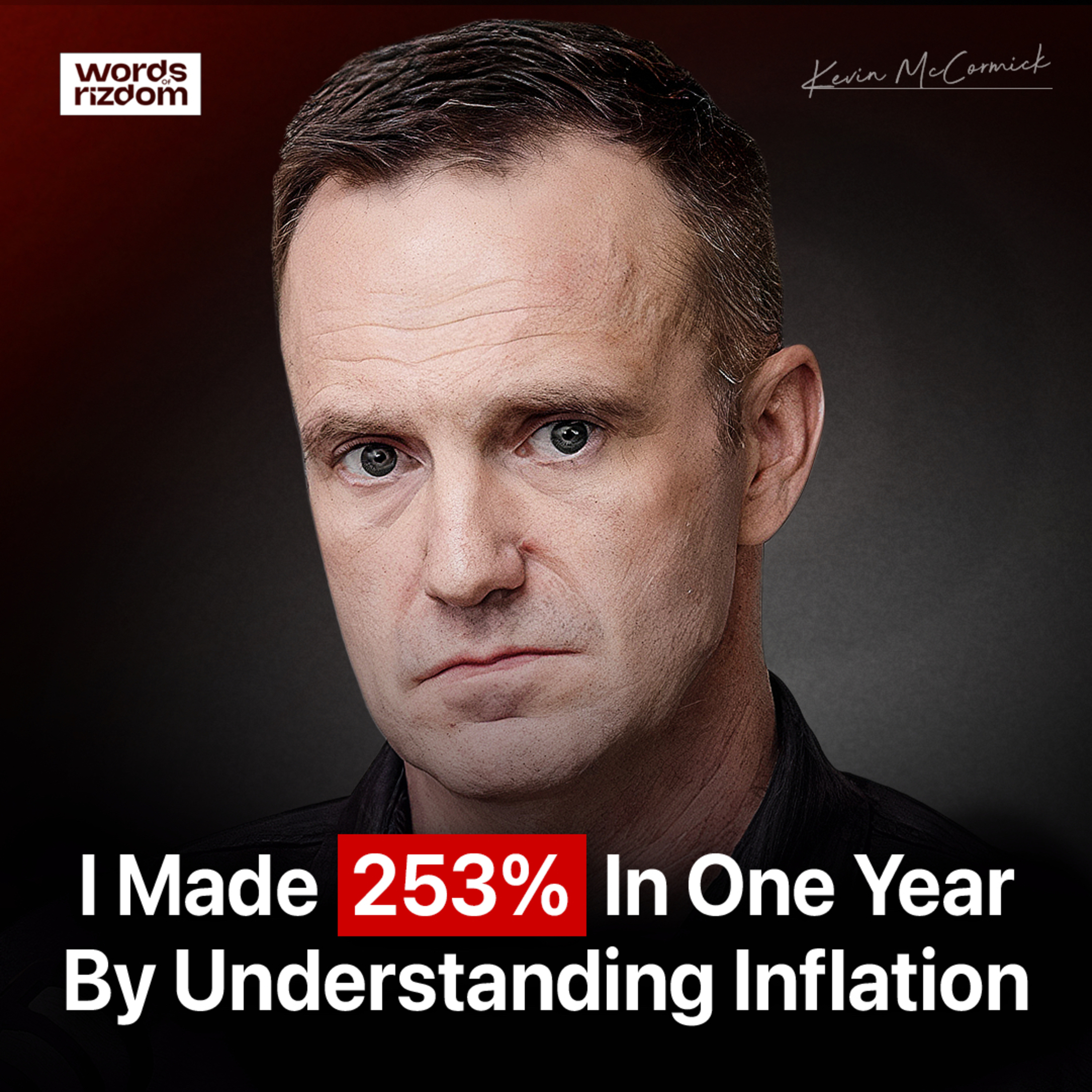
Futures TRADING Champion Trained by Larry Williams (253.8% Return)
71m 2s
In this podcast interview, Kevin Recormon, the 2021 futures trading world champion, discusses his approach to achieving a 253.8% return in a year. He attributes his success to identifying long-term fundamental trends, such as inflation, and trading around them in markets like commodities. Recormon emphasizes that retail traders have a unique edge over large institutions like hedge funds because they are more nimble and can access vast amounts of data to independently verify market narratives, avoiding media propaganda. He advises traders to set realistic expectations, as trading is not a quick path to wealth, and stresses the importance of financial education, debt management, and the power of compounding. Additionally, he highlights the value of maintaining a trading journal to review and reinforce successful strategies, while cautioning against following educators who do not trade themselves. The discussion underscores the need for discipline, continuous learning, and a focus on long-term trends rather than short-term speculation.
253.8% return in a single year. What is the one thing that you could point towards that allowed you to achieve such a result? I would say the one thing that allowed me to achieve that result and things that I've learned over the last probably five years in my trading is, if you would have just invested $1,000 every month into the QQQ for the last 20 years you'd have over a million dollars today. He is a futures trading world champion with a return of 250% in a single year and studied under the great Larry Williams who achieved the highest return in the trading championship is the one and only Kevin Recormon. It's very difficult to outperform the market on a billion dollars and that's where I see the opportunity for the retail traders they don't understand is you're more nimble you can get in and out. In this episode Kevin exposes the reality that hedge funds, Wall Street venture capitalists and money managers all face when it comes to trading. He reveals how retail traders just like you have a massive edge over Wall Street. The reality is most hedge funds venture capitalists and money managers underperform the market. Trillions of dollars, billions of dollars out there is being traded and they underperform the market every year. So what is the advantage for the retail trader? Let's be honest and realistic with each other because most people want to jump in and think it's going to be a get rich quick thing. That's not the reality because guess what if you get rich quick the hedge funds the venture capital guys would be doing that strategy. He also reveals the propaganda machine that is pointing traders in the wrong direction. If they're never talking about something on CMBC and then suddenly it's all they're talking about that happen with you know during the COVID stuff lumber. Oh my gosh I'm like no they need some suckers to come in and give them some more buying so they can sell because the lumber market's not very liquid and those big guys you know call up their reporter friends and get them to go on TV and start talking about it. It's it's once you identify and see what the propaganda machine and how it works for the media out there really helps you when you're trading to identify it also helps you to not scare yourself out of your beliefs in your trades. Not only that he shares the exact steps that he took that you can take to to achieve world class results. But do you feel like day trading in terms of longevity isn't really where the edges are? No I don't and it's one of those things if if the number one podcast in the trading space the fastest growing and that's thanks to every single one of you. Welcome everyone to the words of RISDOM a podcast we are back once again and still the number one trading podcast in the world and the fastest growing thanks to all of you and our incredible guests. We're still on the biggest US podcast tour in history and it's thanks to our sponsors trade Zeller the best trading tool for all traders out there for back testing journaling in-depth analytics you name it but thanks to them we've been able to make this happen and we're here on the tour and we've made it to Phoenix Arizona and we're here for an incredible trader who was the 2021 futures Robbins Cup world champion with a return of 250% 0.8 or 253.8% let's not leave that out there actually studied under Larry Williams which is obviously an incredible futures trader from the Robbins World Cup as well it's the one and only Kevin McCormick. Great thanks for having me it's my absolute pleasure thank you for being here today and one especially on a sunny day which I think isn't a rare thing here in Phoenix what I'm learning but Kevin 253.8% return in a single year what is the one thing that you could point towards that allowed you to achieve such a result? I would say the one thing that allowed me to achieve that result and things that I've learned over the last probably five years of my trading is to identify longer term trends and then trade around those trends so you can maximize your return. I have found that trading is much more easier and relaxed when I identify longer term trends in the marketplace that it could be either a generational inflation based technology based and then trade around that trend so you have more of a fundamental approach supporting the trading activity you're putting in place. So when you say trend are you referring to sort of a narrative at the time versus say just a trend in the markets like in the technical side more so a current narrative like it's a technology or inflation or maybe election or something along those lines? Yeah yeah so in 2021 the narrative that I identified in the marketplace and really the no one else out there was really believing except for myself and Larry Summers was the oncoming inflation and so when you're trading in the commodity markets that's a great place to be if you believe that there's going to be a generational shift in inflation coming based on something like you know government spending around the world and more specifically the spending we saw here in the United States so that year in 2021 I was able to identify those results because I believe that you know everyone in the marketplace in the media was misidentifying what's coming and really as I told people at the time it's that generational mismatch so the last time someone really felt inflation in the United States was the 70s so you have a good two generations of people who have no idea what inflation really is and so everyone in the market in the media was able to you know blow it off oh inflation is not a big deal you know things of that nature and you know I was like well there's ways for me to make money if I truly believe we are going to see a rapid increase in inflation and the futures market and commodity specific was the great place to be for that trend. Definitely and it's still to a degree on going maybe the volatility shifted ever so slightly compared to when it first started to play into the markets but we're still seeing it dictate you know interest rate decisions now and laughing the last FOMC meeting we saw some very large movements still off the back of inflation not quite slowing down or slowing down and the change in the the tonality when it comes to how many you know decisions we're going to have this year in terms of interest rates is that what's something that you're looking at as well the ongoing fundamental announcements. I look at it some but also when it comes to the markets and things that nature it's it's amazing to me how much intellectual dishonesty goes into these conversations. You saw you know we have the different gauges that everybody looks at and you had like the University of Michigan gauge recently came out about what people in this survey believed the future inflation would be and it shot up after the election you're like well how is this possible and there was people out there who broke it down by people's political beliefs and dependent republican democrat and oh man what a surprise the democrats all of a sudden that fell out the survey something thought their inflation is going to shoot through the roof. This has nothing to do with reality and this is where you really can find mismatches in the market where people are just not believing or following through on the data that's out there and I think that's where a retail trader has a huge advantage or an advantage that they didn't have in the past is we have access to unlimited amounts of data and you can go out there and look into things yourself and follow on and see where there might be that mismatch in the market because you'll see a lot of the same people coming out the same stories over and over again and you have the ability to look in and see the actual data and that's where I think the retail traders will have an edge in the market these days. It's because before previously they wouldn't have as much access to information compared to day especially at the speed of which that that information is available well before it would if they would get it would be trickled down over time could be a few days before they find out these sort of numbers well now it's almost instant so I couldn't agree more what do you think in terms of your retail independent or newer traders out there where do you think they should begin when it comes to learning these data points learning about these things. Well I think this is actually something that's really dear to my heart identifying and helping people build their wealth and I think for people who want to get out there and trade first you need to take a step back and level set expectations in reality. The reality is most hedge funds venture capitalists and money managers underperform the market vastly underperform the market some of them and when I say majority I'm about 51% I'm talking 70 80 depending on whose numbers you want to look at so because I see a lot of stuff and things out there for retail trying to pull people in this level set trillions of dollars billions of dollars out there is being traded and they underperform the market every year. So what is the advantage for the retail trader let's be honest and realistic with each other because most people want to jump in anything it's going to be a get rich quick thing that's not the reality because guess what if you get rich quick the hedge funds the venture capital guys would be doing that strategy. So there's not a strategy sitting out there on YouTube or a podcast unfortunately for the viewers that is going to suddenly make you millions of dollars people need to be realistic about their investment what they're trying to do you know as it just as a easy example if you would have just invested a thousand dollars every month into the QQQ for the last 20 years you'd have over a million dollars today. So what is your goal in life do you want to be half a million dollars do you want to have that nest egg because the reality is you need to build the habits to have wealth in the future because if I give you a million dollars today I can almost guarantee you you will not have a million dollars three years from now you might be broke you see it with the professional athletes everyone who quickly acquires wealth then quickly loses it as well. And so first people need a level set and understand the expectation learn what compounding interest means then your goals in the market
as you start off, should be, okay, I want to outperform the market. I'm going to set a realistic benchmark and put it out there. And that's where I think it's just a disservice to so many people who hand their money over to hedge funds and folks like that and pay huge fees to these groups and then underperformance. Because if the market, you know, disreturned 18%, like the, or 20, let's make the math easy, 20% this last year. And you gave money to somebody to invest it for you and they gave you a 10% return. Well, unless they tell you that they underperform by 10%, you don't realize that you just lost basically a year of returns, which is very important depending on what you're doing and you're trying to invest in the marketplace. So I always like to first level set with everybody. Are you going to be able to beat the market? You probably will not the first year. And when I had the opportunity to start learning from Larry Williams, I remember one of the people working with him. He's like, well, no, this is going to take some time. You know, I've been doing it for over six months. I'm really just starting to really understand how to use, you know, some of these capabilities. And I was like, that's, I'm a smart guy. I'm going to get it like that. You know, I am a smart guy, but also it took some time. And even today, I always have to go back and look at other things and go through the trading journal, which is one of the most important things that oddly enough that I learned from Larry is to go back and have that journal. Because you have to make sure you're reinforcing the correct behaviors because you could be placing winning trades and they may be wrong based on what you're supposed to be doing and setting up. And unless you go back and review it, you don't understand that you were getting the incorrect positive reinforcement for your trade. So the next thing you know, oh, this is working great. Well, you know, you just happen to be winning on one of those times when, hey, this strategy, maybe this strategy wins 70% of the time. You were doing it backwards and you happened to be on one of those 30%. You need to identify that. And I noticed that a lot with my trading as I tried to put the structure that I learned from Larry in place and on top of my 15 years of trading, it already done. It was very eye opening to me to discover, you know, you go back on the chart and be like, what was I even thinking? You know, with that trade, as I started to pick up on what I learned from Larry. What was the first 15 years? What was the beginning of sort of the trading side? Because I know you were, it started in tech and then transitioned into trading. What was it about trading? That's what caught your eye in the first place. And did you know when you started that it was such a hard industry? You know, it's one of those things. You know, it's not easy. Because if it's easy, someone quickly makes money. And that's also where I think a lot of times people will get caught up talking to people who have been traders for a long time. The market, the liquidity and the spreads are tiny compared to where they were just 20 years ago. And so I've always been fascinated by technology in the markets. And so, you know, I went out and got my background in tech and finance and took that initial, you know, you go to college or university for y'all in Europe. And no one ever does a simple personal finance class. And that was an eye opening experience for me. My university offered one a year for a college with 15,000 students, which I think is a complete disservice to everyone in the world, everyone should be taking a personal finance class. But that's where I first initially got to introduce the compounding. And then you look at it, you do a 5, 10, 20 year plan and you're finding it. Not basic, give you basic principles in that class. Yeah, yeah. But then because people will go get a finance degree and still know nothing about trading or investing. And so, you know, looking at that and understanding, okay, I want to be able to do this. So I came out of college right away to get it. And I was like, coming from tech and I was like, oh, it was go to.com at the time. I'm like, this company later got acquired by Google. They were the ones that actually had the bidding process that now is where Google makes all their money. And, you know, I didn't even know anything about option or anything at that time. And so, you know, I did what everyone shouldn't do and took a huge cash advance out of my credit cards and put it on there. And that was a very stressful experience and taught me some of those things I don't want to do. It worked out well for me, but I got out of it quickly because, you know, it was stressful knowing you just put yourself into a huge amount of debt and bad debt. Which is something that people always miss in those areas as well. If you're sitting on a pile of debt, credit card debt, we shouldn't be talking about trading. I like that. Yeah, because it's like I said, you know, your debt's a 15, 20% return. Anyone's going to be thrilled and investor in the market to get that return. So get rid of your debt, put the positive things in place. But then the jump into where I got into the trading, I started to learn about options. And that's where I got to also get introduced to some of the, the scum of the earth around there for retail traders as well. Because if you go back 20 years ago, options were still mostly at the professional trader piece. And you had the same people out there right now, which I know this is my strategy. This is it. And then you get in there and you know, I always say ask the person who's teaching you something what their trading results are like, how they trade. And it's amazing. So many people are teaching people out of trade who don't trade. That's why I always thought was funny with Larry Williams's websites. I really trade. Because he really does trade. Yeah, yeah, it is really. And I don't want to, you know, do a plug for a lot of the people. But that was just hilarious to me because I had experienced it early on that these people were just, they're there to collect fees for classes. And there's always another fee and another thing they want you to do next. But none of them are actually trading. Let's take a break for a minute there, guys. Because I want to tell you about our incredible sponsor, Alpha Prime, the first of its kind in the industry. Now, evaluation firms have been in the industry for the last few years and done absolutely phenomenal in terms of its impact for traders. As you can see here, through Alpha Capital and Futures, so many payouts to so many traders across the world. But now, for the first time, there is an incredible route for traders to become professionals and to trade live capital. And that's through Alpha Prime. So let me quickly tell you how it works. You can just buy a challenge on Alpha Capital, Alpha Futures. Does it matter which one? So, Alpha Capital, you have Phase One, Phase Two, Phase Three Challenges. On Alpha Futures, you have Standard and Advanced Plans, whichever one, purchase a challenge. Show consistency. Build your track record and then you can be invited to Alpha Prime. Alpha Prime, you will get access to live capital. You will get access to risk management and resources at a professional level. You will have a salary as a trader and access to trade on live trading floors starting here in London. This is the first of its kind, where a evaluation firm is finding talented traders and then backing them with live capital and creating a route to professional trading. I am very proud to be sponsored by Alpha Prime. The links for both will be in the description below. Alpha Capital and Alpha Futures use the code Riz, 20% off all challenges. Link is in the description below. Now let's go back to the episode. Do you feel like you know a good sort of question or two that people should be asking to maybe help them sort of have a filter? Yeah, yeah. Find out their trading history and how they trade themselves. You quickly find out that someone doesn't actually trade. There's also a day trade. There's a lot of people who think that's the way to go in trading. There's a lot of stuff out there, but you don't run into people who have been day traders for over 10 years. Really? I don't know how many of you have interviewed so far. I've interviewed quite a lot, but 10 years is an interesting one because a lot of them have done it say they've done it for a long period of time for sure. In terms of at a very high level, success, a lot of people to be fair at this point, they're doing it and then they're sort of transitioning out now because they made enough from the market. But there's different markets as well. So they're doing a lot of small caps, sorry, stocks and short selling. So it makes a bit more sense in terms of day trading, I think scalping. I think the markets really can dictate the style. No, I don't. And it's one of those things. If you go back to when the Algo Black box trading first started, that was kind of like that opportunity. There's opportunities to market. What people don't realize is the firms that were doing that heavily, they were changing their models every year. And that's what people forget is, first, when you're trading, you have to identify what kind of market you're trading in. And okay, I believe right now we're in a bull market. Okay, so it should be moving up. But every year is not the same. So the strategy that worked last year, probably not going to work the same this year and they saw it. I remember the interview when I got a care, we probably over 15 years ago, they're like, oh yeah, well last year our black box trading returned 35%. But if we did that same strategy on the market this year, it would only have been 20%. But we tweaked and made some changes and it got better. And that's what people don't understand what they're trading is. It's a continuous learning process and then identifying where you want to go next. And that's where early on I got into the options trading and even like 20 years ago, I went through that gambit of bad people out there. And then I also went through a lot of firms because nowadays you can go to any firm and you can trade options. That wasn't the case 20 years ago and I'd go through your major brokerages and I knew more than the person on the phone, they wouldn't even let me do my strategies put on something like a butterfly trade. They go, no, there's too much risk and I'm a guy, there is no risk here. And that's when I finally eventually ended up at thinkorswim with Tom Sawznaf.
trading who's not saying, "Hey, you're going to make a 100% return who's very realistic. You're out there trying to get an extra 10, 15, 20% from the market every year." His group at Thinkors Swim, I was probably one of their first 1000 people. Very early on because I kept looking for a platform that would allow a retail trader to actually do options trading. Now you can get good education around options trading from your brokerage firm, but they were early to that. That's where I went, learned a lot from Thinkors Swim, and also my key in my strategy. I think this is important for people out there is I always built strategies that let me work full time. Because until you have enough capital to actually trade and live off the capital, you need to be able to work full time as well. That's where I was really putting in strategies that allowed me. That's why I never got into the day trading side because you can't do a full time job and day trade at the same time unless you're working at night at a restaurant. You're going to wake up in the morning, not focused. That's where I really had that opportunity to go through it and slowly build up the correct processes and trading habits to be successful when the numbers get bigger. Because one of those things as well, I'm sure most of your audience is under 40. When you're younger, it might feel terrible losing a couple thousand dollars because it means a lot to you. But you got to remember your end goal in the future is to be a lot bigger accounts. You've got to feel that stress and that emotion when you do maybe blow out an account and be like, "Okay, I'm not going to do that again." I don't know how many times I have to teach myself to always leave a stop in place. I still make the mistake sometimes. I think I'm smarter than the market. No, no, it's like, no, follow your rules. Anytime I break the rules, it doesn't work well for me. But everyone has the same habit and everybody will tell you the same thing. I didn't follow my rules at one time and then boom. How important do you think it is to be able to learn from your mistakes quickly if you're going to be a consistent profitable trader versus say that example, if you're doing it seven eight times, it's not really, yes, someone could still change for sure. But I found or what your thoughts should I say in terms of how important is it to be able to learn quickly, observe that mistake and learn quickly, one, two, three times, and then making the change versus prolonging it over and over. It's learning quickly. It's also being honest with yourself about why it's not working and you'll always show people, oh, well, they came from my stops. All these, no, the market doesn't really care about you and your, the size of your trade. It's a very large market. You need to be putting your policies and things in place and learn from it. If you're not willing to accept your mistakes and also understand your strategy, that was one of the biggest things with one of the strategies I would run is like, hey, you know, something it's going to happen every year, I'm going to have five losers in a row, just if I look back at it. So it helps you when you hit the losing streak. And then you also understand, well, if I'm sizing my positions this much, then that's going to be this much of a drawdown because you know, you can pay per trade all you want, but until it's real money and you hit a 20% drawdown period, even though you know what's coming, you got to be, you know, ready and then get back in there and continue to put on the right trades because you know the losing streak is going to come to an end. But if you let yourself get down and then get off your system, well, then you come back, you know, a couple of weeks later, you're like, oh, I missed all the winner. Yeah, you know, it's going to even out. Yeah. You're going to have streaks through your up five, eight trades in a row, too. I mean, you feel like a genius and you're happy, but you got to remind yourself the drawdowns going to come as well. And you really, you know, it's the emotional part, I think, for retail traders that is really the more difficult place to be because most of us are sitting at home alone and you're just feeling that stress when things swing. And as you become more successful and the numbers get bigger, they're much larger swings. And you know, your emotions in your mental state will hurt you more than your trading strategies. What would you say your aha moment was, you know, the moment where you really started to see progress within your trading results? The aha moment came during 2020 when I really started to understand that I was seeing data and things in the market and identifying the trends. And I made the decision instead of, you know, trying to tell everybody in the world and online and arguing with people. I said, forget it. I can make money on this. And I'm just going to take care of myself. And that's where it was in 2018 when I did Larry's first course and really he helped me put some additional structure around the over 15 years of trading I already had in place. Because that was when I was hitting a point with the capital allocation where I knew I could make a switch to trading full time. It would be possible, but I knew if I was going to make that switch, I needed to have a little bit more that would give me, you know, a consistent income stream coming in and put some more of those strategies in place. So kind of like I said there, I mean, I took Larry's first course. I only did two of them, but Larry and I would talk in email afterwards end of 2018. So, you know, then in 2021. So you really, it's two and a half years later. So, at the beginning of 2021, so you say about two years before I really hit my stride with that. You know, I was beating the market with the futures trading consistently there along the way, but it was still more learning and like I said, finding out, hey, that was a fun winning trade, but it was a wrong trade and identify those and then have that confidence to go, you know, fool into it. How would you identify the wrong trade? Well, you know what your strategy is. And it was funny, like I have my notes and I'll say, oh, this is what I'm looking at. And then you go back and I'm like, the notes, you know, aren't even accurate. And that's, it's also the plus and the minus of working full time and doing it. So I was, my futures trading strategy is usually looking to capture a three to five day swing. Sometimes I will be in something two to three weeks around the futures trading strategy. But you know, you're, I was coming home. So I was always, I'd always enter orders when the futures market closed. And so you have that, you know, one hour time period and that's where I'm going through, but sometimes when you're working full time as well, guess what, there's other stuff going on. Life happens. Say you may not give it the full attention you need. And then you come back later and you're like, what chart were you even looking at? And you know, that's where being honest with yourself, big, you were wrong. Okay, it's great that we made money on it, but the trade was wrong. And then, you know, hopefully, you know, when you do have your losing trades, at least, you know, your setup is correct. You go back and you go, okay, we did set it up correctly here and go down that road. How important to be able to identify those wrong trades and be able to make those reflections? How important is it to collect good amount of data from your trades, be able to analyze them for them, not just did it when did it lose, but on different factors as well, taking more in-depth analytics from your trades? I think it's very important. Kind of like as I highly, that's where I was able to go back and say, look, you're going to have, if you want to do this strategy, understand that at least once a year, more likely, twice a year, you're going to lose five in a row. So be set up and ready for it. It's like they always say for the stock market, a correction is healthy and good for the market. But guess what? No one wants to buy it when you actually get a 10% correction. They're all, you know, on TV, screaming and upset about what's going on, but you know, that's your opportunity. Yeah. Get that pull back when you identify and you're ready for it. Okay, this is where, this is what I was waiting for. It's time to pull the trigger and do it. Just this, you know, we're filming this week in January and I just had a little trade that I posted online for some of my followers around one of my AI stocks coherent this week. I was like, wow, guys, we're following, you know, right back to this retracement level, great support entry level. We touched it perfectly and we're up 10% three days in the stock. Well, you know, you just got to watch and wait. You know, don't jump too early and then how you want to trade around it, you know, the different things. Obviously it's a stock. It's not part of my future strategy. But then you, once you identify what you think is an opportunity, but then you have to also then say, okay, how are we going to capitalize on it, you know, with the different trading strategies I have in place. So obviously stocks and things that nature, I have a different trade trading strategy than I do for the commodity markets. And that's a hits on something else that I think is important for people out there. You need to understand how each market operates and what it's truly therefore. And also, I think one of the mistakes that retail traders will make is they get into markets that aren't liquid. You can always get into a bad trade. Getting out of a bad trade now is another conversation and I've seen so many people get crushed. If it was, you know, the meme trades or, you know, during COVID, like one of my biggest tellers out there in the market is it's kind of just it's not technical. But if I watch CNBC all day, if they're never talking about something on CNBC and then suddenly it's all they're talking about the top 10. And like that happened with, you know, during a COVID stuff lumber. Oh my gosh. I'm like, no, this is so obvious. You got some big guys who came in big. They need to get out now. They need some suckers to come in and give them some more buying so they can sell because the lumber market's not very liquid. You need to understand the contracts rolling in four days and they don't have lumber to sell to somebody or they don't want to take on the lumber. So they need to get out and those big guys.
call up their reporter friends and get them to go on TV and start talking about it. It's once you identify and see what the propaganda machine and how it works for the media out there, really helps you when you're trading to identify it. It also helps you to not scare yourself out of your beliefs in your trades. I love that. So making informed decisions and informed decisions being keeping up to date with the things that are impacting the market, the narratives are being shared through media outlets. But then as you say panicking and reacting out of emotion, being able to take that step back and look at the bigger picture to then be able to either trade or not trade accordingly. Yeah. It's something you need to understand with most of the stuff you watch on TV is somebody has an agenda for the story. You need to identify what their background and agenda is and the traders and things that come on TV. They're either talking their book or trying to get out of a trade or different things. And especially when you have traders on TV, those guys could be out of the trade they're talking about at the end of the day or maybe even hours after the interview, whereas people come on and talk about longer term investments. So you need to know the people that are on there. That's also why I typically only watch the same channels for the finance news because I know the reporters, I know their leanings and things of that nature. Yeah, their tendencies. And I know what to expect from them from questions and also, you know, you can see people come on and they're like, okay, this is just a sound bite interview. This guy is going to say his four-minute spiel doesn't matter what the questions are. That's worthless, throw it away. But that's where podcasts like this and things out there. There are brilliant people in every industry who are doing long form interviews. And those are real opportunities for people to understand larger markets and things. If something interests you, go out there and find it because when you have people who are experts in brilliant and their industries who are willing to sit down and just talk for an hour, there's things you'll catch. And sometimes the important part is not what they're highlighting. It's the little piece that they say on the side. And that's how I've been with books and things out there. That's where I get into more of the Larry was about cycles and I've gotten into it more. And I really think there is, but I've seen out there, seasonals and trends and cycles that drive the market, a market on multiple levels. And if you understand those, it gives you some great opportunities. Don't know where the market is going next. Stop worrying about your trading. Just get informed on exactly what's happening in the markets and what to expect. On Forex, to Futures, to Stocks, to Crypto, be on top of it all. That's why tens of thousands of traders are subscribed to Market Journal. A free newsletter that allows traders to be up to date with the markets every single week. Remember, an informed trader is a profitable trader. It doesn't matter if Trump tweets, AI stocks are pumping or Bitcoin drops out of the sky. Market Journal has you covered. Join for free today using the link in the description below. Let's take a break for a minute there guys. Now I want to tell you about our sponsor, TradeZeller. TradeZeller is the number one trading tool for all traders. Doesn't matter whether you're a crypto trader, a futures trader or Forex trader, whatever trader you are, all you do is connect to your trading platform. Directly with TradeZeller, it automates and makes your trading journaling so easy. If you want to be a profitable trader, you need trading edge. And that is exactly what TradeZeller does. It allows you to identify edge, maintain your edge and optimize your edge by automating your trade journaling in-depth analytics, back testing, bar replay and so much more. Now, WOR gets you 20% off your yearly subscription with TradeZeller. So use WOR for 20% off your yearly subscription or risk 10% for 10% off your monthly subscription. The link is in the description below. Now let's get back to this episode. Do you feel like those cycles are like patterns and predictable or is it more so kind of what we talked about at the beginning, where one particular cycle begins, let's take AI stocks for example or tech stocks for example or now quantum computing stocks as an example. Is that what you mean by cycles? Or is it something more so within the markets that's more of a kind of like the Bitcoin harbinger as an example of fixed date that then has this fairy behind it, this application to what to do around those events? Yes. So the pattern recognition and things like that's some of the things I learned from some much older traders who had been doing it for a while because it just amazed me like they recognize the pattern because this is what's going to happen next. This market is identical to you know 1986 and it's like really and that's in your head. But there's there's different cycles out there to drive things. You have the generational cycles. So we have the millennial generation right now hitting their peak household formation and earnings, largest generation of the United States. So that's going to drive certain things. It's just going to happen. There's seven million more of them in the workforce forming houses. So you know there's things that occur with that and then like AI is where I've moved most of my trading capital to here recently because from my tech days going back 30 plus years I was early to tech and missed the larger opportunities to make a lot of money each time. I was involved and you know it would be like oh okay this is great and every time I was like oh well I just am better off doing this and that's where I see it now with AI too. So when it comes to technology or trends in the marketplace from a business opportunity anytime something is greenfield and when I say greenfield means there is nothing out there in the market today that fulfills that need. Everyone underestimates how much that is going to impact society and the upside potential for it. We talk about something that's more recent you look at the iPhone. Yeah. The iPhone came out. Well we all had cell phones or a lot of people had cell phones but I was on that early and I was like okay great you know I created a couple of the you know the early iPhone applications when it first came out but I've been much better off just buying Apple. Yeah. What I mean, hello a lot more money just buying Apple and that kind of hits on you know I mentioned earlier about the return of you know the Nasdaq the QQ and the index or the spy. Well it's my opinion the reason why those indices always outperform your money managers is they simply let their winners run. You know people talk about it now they're like oh there's only four stocks make up 20 30% of the market capitalization of the SMP 500. Yeah. And then you get upset money managers they're like well I can't I can't have 7% in video in my portfolio. Yeah and that's the big difference is you get caught up sometimes taking a quick win and missing the long-term win. Yeah. And I think you've seen it with some of the other traders you've interviewed you'll see those of us who you don't have a 254% return 253.8 unless you have some home runs and you don't have home runs if you cut profits early. And so you have to know ahead of time hey if this is going to be a possible home run like I think it is all right I'm going to size the position this way will we do other trades along the way and things of that nature to identify it. You know and to get in a little bit the AI right now is nobody has an accelerated data center today I don't want to get too much into tech for people out there but you know you've got old-style data centers nobody is going to keep an old data center instead of buying a new one you know everybody's focused on the AI applications and why the GPUs but the reality is in 2020 by 2028 most data centers will be accelerated data centers it's something nobody has today nobody's going into the meetings with their boards and saying hey let's buy an old slow compute instead of the faster one yeah and then you have the same thing coming up you've seen it a little with Jensen Wong CES just happened in Vegas in the robotics piece well no one owns a robot today but if I can have a robot in the future that maybe cleans my house and does my laundry well all of a sudden a $20,000 robot doesn't sound that expensive because many people if you just look at the United States there's 10 to 11 million households that make over $250,000 a year they're probably paying house cleaners and other people today yeah they're two working families well suddenly you can buy the robot and just not pay your cleaners anymore yeah and that's where no one thinks about that you know you put that out there well okay great just adding a robot to 10 million households in the US is 200 billion dollars yeah yeah in Fini first time I've ever seen it the driverless universe essentially it's not buy Uber it's some different company yeah it's Google and I saw it first time I was at the hotel I've seen that clips online and I was at the hotel and there was one to pull it up and as I said this is the mind boggling but as you say it's like they're the sort of thing you need to identify as things that a lot of people would assume it's kind of going back to what you said about the narrative once it's on TV once it's within the media space it's already happened like it's what the moves already take in place there might be some extra percentages there on the table but the vast majority of the opportunities already been got into that point and as you mentioned with AI data sensors data senders sorry there are many robots being another one like no and even to go backwards a bit as you mentioned iPhone is that Netflix everyone's just so used to blockbuster and renting DVDs that way then Netflix comes along with this revolution idea and I'm sure no doubt everyone who was in that industry probably looked at and goes why would anyone do that you know why would they pay a monthly subscription and you know and just use a streaming service but then something now.
That's all there is everyone's dreaming. Did you try out one of the way most yet? I haven't yet now you have to Because this is actually a great example of the adoption curve So it's in the media. It's out there people were talking about it But here in Phoenix were numb to it now because we've actually been testing the self-driving technology for five or six years on a road now They've had safety drivers up until and about 18 months ago. Yeah, they'd sit there But they were still driving themselves was there there to help with the disengagement and things But you know way more is here now and I can tell you you'll take it and you're The response for it. Well, that was boring And that's actually the biggest compliment you can give to being in a self-driving car. Yeah, yeah Yeah, it'll it'll stop at the light. It'll get up to the speed limit really quick They're nice quick, you know, actually they're actually electric jaguars here in Phoenix Yeah, so it's wonderful car to be in it's a great experience, but it's boring You get up to the speed limit. It does not do one mile over the speed limit I actually had posted a video before and this is where it gets to be obnoxious if you're some of the other drivers on a road We were a true lane road and both of us were ubers that pulled up to light and So because they will do the exact same speed the other one was like one car length ahead and we were just there and It did not move like an inch because they're programmed to do exactly the speed limit And so you know everyone in Phoenix speeds So you know that starts to annoy the other drivers around it But they they drive better than most drivers, and you know, and then like even this morning I looked in my rearview mirror and there's a guy in a Tesla behind me literally Reading a pamphlet. He is he's self-driving in his Tesla And so that's one of those things if you until you experience everything There's no way in hell you're putting me in a car with you know without a driver. Yeah, but then once you get in you're like That's it. That was really boring And that's actually a huge compliment to the technology and that yes, that's one of those examples to you start to see It's it's really going to displace a lot of things There was a story recently at San Francisco. They have them now too. Yeah, and now 22% of the they still call it ride shares Are waymas well in a matter of like six months. That is a very that's a lot Yeah, because once you do it, you're like I don't want the other one. You know what you're getting you know the product And you're getting in it's going to be clean nice experience great to go Very interesting and then so for example taking that as an example especially because You've got to experience it over many years here How do you even if you haven't gone you know and taken action upon that sort of experience But let's take that as an example. What would you then be looking to do when you've identified? Here's a future changer. Here's a different trend that as you mentioned earlier like a gap between the the mass knowledge and and the opportunity Well, what would you do from that point? Yeah, yeah, so this is this is a great example of why I made the transition in 2024 I still do some futures trading, but I moved to trading a a bundle of what I consider the AI infrastructure stocks and I'll probably continue to do that throughout this year until We have that kind of aha application that comes about And that's when you'll see that move from The actual hardware being important To the application and software yeah But most people don't understand is we've been experiencing AI for a long time You're creating podcasts you uploaded to youtube the entire checks and everything that youtube goes through completely AI They there it's tp used for them the admit it in 2018 build it out because YouTube would be a disaster of a human actually had to go through and watch every podcast look for copyright all the different things Boom now it's done in like five minutes and it's up and running that's purely AI that you didn't even realize you were Experiencing and that's where the application change will happen is when It's not going to be chat gbt and that stuff. It's going to be the application Experience that people don't even know they're experiencing it. Yeah, and so right now you look at it And this is where I talk about the greenfield everyone's going to underestimate what the market opportunity is Because no one can fully visualize and talk about yeah, you know And you know your analyst on the street. Sorry. I don't I don't love analysts Um because Reality is Google didn't used to give projections for their earnings and guess what the analysts were just all over the place and always wrong Yeah When do they start getting good at predicting earnings for Google and Google started telling you what they were going to be And it's the same thing for all the every company out there all the analysts do is plug stuff into their model No, oh well, I think it might be two or three percent better here And then they come out with their estimates completely worthless to you if you're trying to catch a larger trend If you look at like 2023 when Nvidia took off There's like 25 analysts covering Nvidia. Yeah, they were all wrong not even this a little wrong by over 80 percent wrong And that's because well Nvidia and come out and say hey guys we're gonna like you know Double revenue every quarter Uh, because of this AI thing Um, and so no one can see it but that's that's where I'm identifying trends earlier So the AI trend is not going to be a couple years. It's going to be a decade process And every generation has their new companies that come about You know for me um You know When through the 90s and the dot com and so you know out of that came Google Amazon and those companies. Yeah. Well a lot of them failed It's also why I'm not a big fan of the venture capital market because you can still make a ton of money in these companies once they they go public You're not missing out on you know the early returns You're just missing out on the 95% of companies that went under the venture capitalist invested in yeah That they don't talk about they only talk about their one winner And so that's where you got to identify those trends and then trade around it And that's what I'm saying right now, you know, I got my core AI and then I'm doing options trading selling premium around it You know, it's great to sit around and you know collect a thousand thousand data a day selling premium and then also have the upside You know things depending on what I want to do And you know, that's bringing in that that income in those returns definitely And one thing I did want to ask you I know you mentioned being a bit more of a longer term trader maybe did you say Free to five days maybe up to two weeks extension in terms of futures Like what sort of contracts are you are you going for then are you going for maybe a month or two out Or are you using the the most recent contract always the active contract always trading the active contract Um one. It's the most liquid contract liquidity I can't hit enough for retail traders do not play around with illiquid products This is the same thing with the options market Oh, you might lie, you know, there's stocks I really like but they're the options. There's like no one trading them Why don't want to be the only one in there Um, what everyone always seems to forget with trading is there's somebody on the other other side of every trade So you're short. Well, there's somebody long There's somebody on the other side So you know, that's that's what makes the market Uh, see you need to understand that but yeah, I always trade the front month contract and futures always stay in liquid markets Understand your sizing um and and your risk um in those markets and then like I said you I'm usually That those strategies as usually looking to the scalp, you know, uh, the scalp is not the right term Uh, you know a 1 to 3% move. Yeah, I think there's going to be a 1 to 3% move here And then you know you look at the leverage in futures and then all of a sudden that's real money Yeah, whereas you know if I'm just trading, you know the the spy A 1% move is not gonna Excite me at the end of the day But in the futures market, you know you get 10 EES contracts. That's a lot of leverage in terms of uh, you mentioned earlier about developing strategies to fit around your full-time job How would you go about that process because I know there's a lot of traders out there who face that same struggle with it Maybe trying to force a day trading strategy or a scalping strategy Uh, when they have a full-time job and it's not working well they're not getting results But also the building resentment towards probably their job because they blame the job for the lack of results. Yeah So what was your process of developing more longer term strategies that could fit around You know the full-time work? It took a long time Um, but it's something you have to be realistic about and it's about setting aside the time afterwards So work is over. Okay, this is when I'm going to sit down We're going to do the 1 to 2 hours of work every night Do that work make sure that there's nothing else out there in the marketplace that's you know um Quality information or data that would make me want to change my longer term belief But then also identify what the shorter term opportunities are in the market um Those are the key pieces there and then I I just slipped at another really Gem of information there, but I just slipped my mind for you, but yeah It happens just me yeah, but if it comes back or in the no problem In terms of when you did the the huge return in 2021 on the robinscope What was that like because I know with the robinscope I I didn't observe it fully But this year I was tracking sort of the futures and the and the forex there was a lot of updates on social media And it was very interesting to see how the art of competition Would kind of get to some traders, you know, so that you would see traders who Were coming into December and November December they were up They're on the leaderboard your first second fird and then suddenly you're seeing them drop off because they're By the looks of things trying to you know accelerate even higher returns So especially those who are in that second and third who want to get that first position You know, what's it like to trade within a competition and you know, what was the mindset of joining the competition in the first place? The first mindset around it was I thought I had developed a strategy. I'm going to try it out um And then I actually Got up in the contest early on yeah Um one of the big helps kind of we were talking about earlier when people on tv start talking about things and it's not right
So yeah, 2021 was awesome when we had a lot of meme trading going on. Yeah. And they started the game stop and then the idiots in Wall Street bets decided they wanted to go for the silver market. Not like I said earlier about, understand your markets. Oh, we're going to squeeze the silver market. You are not going to squeeze the silver market. And so that was one of my favorite trades that really got me going in it because they did get a spike in silver. They made spike, silver spike 5% by buying the silver ETF. Well, guess what? It's going right back to them. And so I said, this is ridiculous and shorted. And that was a very profitable return in the contest. Going short silver because guess what? That entire 5% return and even more disappeared. Because all those people who went along were, guess what, they're selling. Their money was gone within 48 hours. So it went back down. But it was funny when you talked about as December rolls around. The one thing, this is what I think is important. If anybody's looking at trading contests, the Robbins Williams cup is real money. It's not imaginary money. So one that stops just stupid trading because it's money. You got to put your capital in there, which then does add into the craziness that some people are reaching and coming for it. And so in 2021, I was in the top five most of the year. And I think going into December, I was in first by like 80, 90%. And so to that same point, people were gunning for me. And then I also, I got tight. I got tight in the contest because the contest was only part of my trading capital. And I was like, I'm not giving up the win. Kind of thing. So I did slow down my trading in December to hold on to it. And December is actually one of my most profitable, best trading months. And so for the contest, I was like, no, I want to win. So I still had my money in my main account that I was trading away and had a good December. The results could have been a little bit better, but not. Yeah, probably could have got myself up to over 300% in December with the trades back then. But I also didn't want to give those people gun in for me who are the opportunity. Yeah, it was just, it's funny. You saw that because I saw the same thing. Man, you see people just cycling through. And at that time, you could tell because the market was doing something and I knew what trade they were in. I could tell by the daily updates exactly what trade somebody had on. And I'm like, yep, you were, you were along the market today. Yeah, you know, it's like, okay, because you see it's an interesting pattern because you see it at the beginning, people come and then go off like people who've ran it up, but then maybe have used high risk or wherever it may be or maybe caught a lucky trade or the market was bullish and long for a good few days and they caught that and then changed. So you see them at the very beginning, there's lots of changes on the leaderboard. Then the middle is like pretty consistent with the same names and then the end, same again. Yeah. And it kind of just plays on that human psychology, I guess. But in terms of making such a return in a single year, what does that do for your trading in terms of your mindset? Going into the next year, are you looking to beat that return? Is it something where it's like, oh, here's the milestone, here's the, here's the bar. We've set it this high. We need to then make it set it to a higher limit this coming year or are you just resaying? It's a great question and the answer is probably going to surprise everybody. So you need to understand that I was going back earlier about, you know, compound interest and what you're actually returning the market you're expecting to be. So, you know, you get it at 250% year, 20 years of returns. It's a life changing return. And that was 2021 and I was at the time, you know, when I started looking, I was looking to make trading full time. Well that gave me the opportunity to take away some of the stress and emotions of trading. And I actually then diversified out of the futures trading, paid off whatever remaining debt the family had outside of just, you know, simple little mortgage, fully funded the kids, college funds, did some other things that also were investments outside of futures but also played into my, still my belief that inflation was going to shoot higher. And then after I was done doing all those things, I still had enough money to trade full time because you only need to get rich once in life. And that's also the difference that people don't get. You know, I can, I can rag on hedge funds and different people for missing market returns, but they'll also tell you, well, that's not what people are paying me to do. They're paying me for certain strategies. But it's also the downside of, you know, the two and 20 hedge fund, some of these people are raising, you know, half a billion billion dollars. Well now they're just making money off their management fees. Yeah. And they're not going to make money. Especially those substantial funds. Yeah, it's very difficult to outperform the market on a billion dollars. And that's where I see the opportunity for the retail traders. They don't understand is you're more nimble. You can get in and out. You're not trading a size some of the time. Do you want to win seven figures and challenges without having to do anything at all? Seems too good to be true, right? Well at propfernetrator.com that is exactly what is possible. You are buying propfern challenges anyway. Well at propfernetrator.com, not only will you get the best prices and be able to compare your propfernetrangers, but by automatically using the code PFT, you automatically get entered into this weekly giveaway where you can win over seven figures in challenges. All your favorite propfernes are on propfernetrator.com just like broker back to propfernetromm@moss-funded backed by Torrex. The fact that they are broker back means that you have stability and security when it comes to your payout. Once your payouts are approved, traders are receiving them in less than five minutes. They have instant funding, one step accounts and two step accounts meaning that whatever type of challenge you prefer, they have one for you. Thousands of traders over the last couple months have joined Atmos funded and over $200,000 have been paid out in just the last six weeks alone. You can get massive discounts on their 50 to 200K accounts and even bigger discounts on their 5 to 25K accounts. Use the code PFT on screen right now. Not only do we have Atmos, we also have Apex trader funding, the largest futures firm in the entire industry. We have up to 90% off using the code PFT, up to 20 accounts and up to 6 million in futures funding. You can also find Alpha Capital who also have one step challenges, two step challenges and three step challenges just for you. So no matter what type of challenge you prefer, they have an option. And not only that, we have funded next one of the top three CFD firms in the industry and again, exclusive offer through PFT. Check it out on screen. The link for prox from trader.com is in the description below. So make sure you check that out and remember, use code PFT at check out all your favorite firms and automatically be entered into the massive seven figure giveaway. Everything will be. Now let's go back into the episode. And you're also not stuck to rules that you would have to follow and, you know, compliance is that you'd have to follow when you're in the hedge fund. Because I find it interesting because a lot of retail traders are obsessed with, I want trade like the banks, I want trade like the hedge funds, but they don't nest and when they say that, I think it's the capital that they're more intrigued by versus strategies. I don't think they understand that, you know, for them to place a trade on, it has to go through 10 different steps before it can be approved to then be placed on. And therefore strategies are so widely different. While as a retail trader, you could take it as a positive or negative, but you have that freedom to have your analysis and then be able to execute accordingly. While if you worked as part of a hedge fund or fund, you have to get that ticked off. You have to get it, you know, okay, then approved. And then I've seen with risk like, you're not, you're not really in control of how much risk you can use. You're given a risk manager, given a risk allocation and then you have to, you know, stay within those boundaries while a retail trader again, you could see as a positive or negative, has the control to be able to beat and dynamic be able to choose their risk size. But how important is that in terms of being a trader? Are you someone, let's say with the, whether, did you trade the Robbins Club very differently to how do you trade normally trade the exact same? So what did that risk look like? Yeah, yeah. So, trade is the risk exactly the same. And I want to hit on some, you wrote up a really good point. Everybody wants to say, I want to trade like XYZ. And with the futures market, my favorite report out there is the commitments of trader report. And Larry was really big on the teaching of this and this is where different traders are trading for different reasons and people just don't understand. And the beauty of those markets is there's three people to give you on the report. They call it commercials, I'll just say hedge funds and then specs, which relate to little guys. But on that report, you need to understand, if I am a commercial trader and I am a producer of gold, what I'm trying to accomplish in the futures market is completely different than what I'm trying to accomplish. And you need to understand as those monies flow, because you can see it, you'll see in the oil market, you'll see it in the gold market. For them, they have certain earnings they've told the street they're going to produce, especially in the oil market. I don't want to misquote it, but let's just say a couple dollars in the oil is a significant difference in chevron earnings. And so those traders sitting on the trading desk at chevron are not there trying to maximize a swing in the market. They have people saying, hey guys, we want our average price that we sell oil at to be $60. If we can get more than that, that's great. So then when you get these swings, you'll see, because oil today is, I think, getting close to $80. Well, if you look at the Commitants Trader Report, when it comes out, which comes out every week now, we talk about data frequency, back in the day when they're restraining, he got it every month. Well.
and was still valuable, and you'll see, well, why are the commercial selling now at 80? Because they're gonna sell all the oil they want to you at 80. (laughing) And to the market. And they're gonna lock in a guaranteed 80% return, an 80 dollar barrel oil. 'Cause guess what, just 60 days ago it was 60, or 65. So that's an enormous swing for them, and that's where you need to know the different trades. So someone's like, oh, I want a trade like this guy, or when someone's like, well, this guy was a floor trader, they do not have the same goals that you have. And so their risk management is good to learn, how they manage the risk on those huge things. But if I want to trade like a floor trader, well, I'm not gonna have the same results that I may be looking for, because we have completely different goals. - And in terms of that, RISSI, what would you say to a beginner trader? 'Cause we've done a lot of talks with your traders, who have done really phenomenal returns, similarly yourself. A large portion of them are using dynamic risk. So changing the bet size dependent on the setup, and they have graded their setup. So the A-Star, highly confident setup, data, a big element of this, those are these edges and these playbooks are backed by data for them to be able to feel that way. But what do you think to the beginner trader coming in, or early on in their career anyway, and they're not quite seeing the result shape? When it comes to risk, should they be looking at that dynamic sizing, or should they be sticking to static? - 'Cause I'm doing dynamic things now, so this is a tough one. I would say good static, especially when you're learning, 'cause one, you need to learn the emotions of trading, but also, it's silly, and the one ever talks about it, the order entry process. I have lost a lot of money in our order strong. Everyone who trades has lost money in our order wrong. And so, first you gotta get in there and start doing it. It's also why I don't do the Robbins Trading Cup championship anymore, because I couldn't use the platform I wanted to use. I had to use somebody else's platform, and it was just a headache for me. I'm making money trading, okay, I won the contest, but now it's like, okay, I gotta go into your system every day. Well, I don't like how this set up. I enter one trade wrong. Well, that's just messed up my account. It was a loser, it wasn't supposed to be that. So get yourself comfortable with your platform and the habit of entering the orders. I'm not a paper trader. Never did it, 'cause I need the emotional side. I need to feel the pain with it. But paper trading is good for learning properly how to enter your orders correctly, because everyone who's a trader has lost money entering a trade wrong. What's your process when handling losing streaks? A wha is it that you do? How is it that, even at this point, how do you feel when you're experiencing one? Then what processes do you have if any to handle or take action upon when you find yourself in one? The first key was, as I mentioned earlier, when I whip, identifying that I will have a losing streak. Then when it starts to happen, be, okay, well, this hurts, but we know it's gonna happen. It's gonna happen every year. Yeah. I think that the worst losing streak I have was eight in a row. That was painful. Well, that would have been 2023. And that's, that was like a learning experience. 'Cause then you, I did get a little bit of, the emotions got a little heavy on it. And you gotta learn that this is part of the process. You can't yell at the screen, you can't yell at the market, it doesn't care. It's an instant feedback loop. But you just need to be ready and you know if you're sizing things correctly, you know what your possible drawdown is and you just live to fight another day. The key is to be able to live to fight another day. And that actually just made me think of another thing. So my worst year and over a decade was 2023 and that was the first year I went full-time trading. Well, and that was part of that. You know, people say, "Early, well, I'm losing a day trading "because I can't focus 'cause I have the full-time job." Well, I built a system that allowed me to have a full-time job. Well, then I didn't have the full-time job. So then I'm just staring at the screen all day. Well, that's not what I built myself out to do. You know, I built a process that's, you know, based on daily bars, not hour, not minute. Yeah. So then when you're staring at it too much, you're like, "Well, I got this extra eight hours a day," or whatever it is, and you start to do stupid things. And so that's when I did that reset with myself going into 2024 and that's when I got back, identified, "Hey, we're good at a futures trading market, "but right now, you understand what's going on here. "Let's change the strategy and go for something." Interesting. How, what was that like in terms of having that year, the full-first full-time year, having that year, you know, not be performing at your best? Was there any doubts at all? Was there any moments where you're thinking, "Maybe I should have gone full-time, "or maybe the strategy's not working anymore?" Oh yeah. Yeah, you go through all those thoughts. It was, it was humbling. And it's just tough to be like, "Okay, this is the year you're doing it." And you're down, and then also 2023 was a great year in the market. Like I said, I underperformed the market. It was still a positive year, but I underperformed. But, you know, I do that honest assessment of my returns. So you say, "Wow, the market was a, let's make Matthews "is easy here, 40%. "In your term is 20, well, you missed 20%. "You could have put this money into QQ and spy "and left it alone all year." And you would have done that. - Not having all this like turmoil and. - Yeah, you didn't have to deal with all this stress and everything, and you would have done that much better. And then, you know, not to get into exact numbers, but then you look at what your capital base is, and you're like, "That's a lot of frickin' money." And then you, you know, then it just builds up, and then you're like, "Wait a minute, no." Okay, and that's where, you know, I had that self-reflection. I'm like, "Let's get back on track. "What was I doing before?" Why I identified, you know, inflation, things that people were misidentifying in the market, and that's where I got into it now, and that's where I talk about people. If you go on X and Twitter and follow me, and then occasionally on my channel too, I talk about my core AI that I'm looking at right now, and it's not in video, for everybody, you know, despite in video, because what people don't realize is, for every GPU that sold their seven to $10 of other spend. So there's a lot of money being thrown around. But I readjusted, I looked at it, and then did the investment, and then actually went back to some of the old options trading strategies I did, and some of those other things, that you can do around capital and collecting premium, and, you know, catching those swings when they hit. - Do you think it's important as a trade, not to sort of just put yourself into only one marketplace? So only, let's say, futures are only options, is it important to be able to recognize more so where the opportunity is regardless of the industry, and regardless of which part of the market is? - I think it's more important to understand market correlations, and also that's very important to someone's risk management. Especially when you're in the futures market, you might be looking at everything, and you're like, "Oh man, there's a great setup in gold, "there's a great setup in silver too." Well, they're correlated, buddy. Don't take both trades, 'cause then if you look at your sizing, and you're like, "Oh, okay, well, this is my mask, "mask maximum risk." Well, no, you've doubled it, because odds are if your gold trades are loser, your silver trades are gonna be a loser. They're a correlated product. You know, the same thing when you go over on the energy side. So you need to understand those things, and see how they flow together in the marketplace, and it's amazing how the correlation flows to things that you don't think should be correlated as well. But the main thing for risk management is to understand that if you're in a certain area, especially in the futures market, these things are gonna trade together. So don't put on grains as a great example. It's really easy. There's a lot of different grains. And it's amazing. They all seem to get setups around the same time too. You do not take the setup in every one of them, because guess what? They're all correlated. And you're all of a sudden gonna blow your account out, 'cause you were like, "How did I lose 20% in three days?" Oh, well, this wasn't a losing streak. You did five identical trades, saying they're five independent trades. What would you say in terms of your number one advice to trade us out there, who are probably in that boom and bust cycle right now? So they haven't quite found their edge just yet or their consistency, but they've been in the markets sometimes. So they understand the basics, and they just need to find their feet. What would you say they need to do? One, you need to reflect and set realistic goals for people. Like I said before, most people who are running money out there under the form of the market every year, our goal is retail traders is to make a little bit more. And so what's your goal for your portfolio and your trading strategy? Do not be all in on one thing and have enough money to lose as well, to not feel too bad about it. And then it's just, I really can't hit enough on how valuable the trading journal was, 'cause my first 15 years, I never did something like that. - Really? - Yeah, I was just putting things on on my grade, and it's funny, you go back and you look in your portfolio, like why did I put that on? - Yeah. - You know, especially around options trading, when you're maybe, I sell premium a lot. And so, and then you're like, what was the reason around this? And now it's like you got your notes, you go back, you know, quick reminders, depending on how many trades you're doing. And then there's the other thing too, is if you're starting, I think people often go too broad. Narrow it down and understand the product or areas that you're trading. Start to have success there, then branch out. - Got it. - Big, oh, I've got this great technical strategy, and I'm gonna try it on 20 products right now. No, let's slow down, buddy. (laughing) 'Cause it really does, like I said, I'm not a day trader, but it kills me people who go out there and they set up their alerts and their scans, and they're like, okay, well here's my 40, I mean, you know,
about that product, those areas. Here's my opportunity. - Spreads of fin. - Yeah, I will tell you, the biggest mistake I see out there in the market is people over trade. You'll see with people who have been trading for a while and then make their way through, even like someone who's once successful at day trading for a while, it's amazing. Something moved to a strategy that's not as heavy on the day trading and then they go for bigger, longer term wins. Because I think all of us end up experiencing and seeing the same thing. The bigger trends and then maximize and then maximizing your trades around them is a better life as a trader. - Kevin, I'm sure we could go into so, so much more as well. - Yeah. - And hopefully we'll be able to do something in the future. We do like round table podcasts. I'd love to have you on one. We get like four traders and we discuss all sorts of various topics as well. But everyone at home links for Kevin will be in the description so make sure you check those out. Drop a comment with your biggest takeaway from this episode. There's other episodes on screen and until next time, everyone. Take care. [BLANK_AUDIO]
Podcast Summary
Key Points:
Retail traders have a significant advantage over large institutions like hedge funds due to their agility and access to real-time data.
Successful trading involves identifying long-term fundamental trends (e.g., inflation, technology) and trading around them, rather than relying on short-term strategies.
Realistic expectations are crucial; trading is not a get-rich-quick scheme, and building wealth requires discipline, proper education, and understanding compounding.
The media and financial propaganda can mislead traders; independent verification of data is essential to avoid being swayed by misinformation.
Maintaining a trading journal and continuously reviewing strategies are vital for reinforcing correct behaviors and improving performance.
Summary:
8% return in a year. He attributes his success to identifying long-term fundamental trends, such as inflation, and trading around them in markets like commodities. Recormon emphasizes that retail traders have a unique edge over large institutions like hedge funds because they are more nimble and can access vast amounts of data to independently verify market narratives, avoiding media propaganda.
He advises traders to set realistic expectations, as trading is not a quick path to wealth, and stresses the importance of financial education, debt management, and the power of compounding. Additionally, he highlights the value of maintaining a trading journal to review and reinforce successful strategies, while cautioning against following educators who do not trade themselves. The discussion underscores the need for discipline, continuous learning, and a focus on long-term trends rather than short-term speculation.
FAQs
Identify longer-term trends, such as generational shifts like inflation or technology, and trade around those trends to maximize returns with a fundamental approach.
Retail traders are more nimble, can enter and exit positions quickly, and have access to vast data to identify market mismatches that institutions may overlook.
Be skeptical of sudden media hype, like with lumber during COVID, and verify data independently to avoid being misled by coordinated narratives from large players.
Avoid get-rich-quick schemes; focus on building wealth through habits like consistent investing, such as monthly contributions to ETFs like QQQ, and aim to outperform the market over time.
A trading journal helps review and reinforce correct behaviors, identify mistakes in strategy execution, and avoid incorrect positive reinforcement from winning trades that were based on flawed reasoning.
Ask about their actual trading results and whether they trade themselves, as many educators collect fees without real trading experience, unlike genuine mentors like Larry Williams.
Chat with AI
Loading...
Pro features
Go deeper with this episode
Unlock creator-grade tools that turn any transcript into show notes and subtitle files.
 PodcastTranscript AI