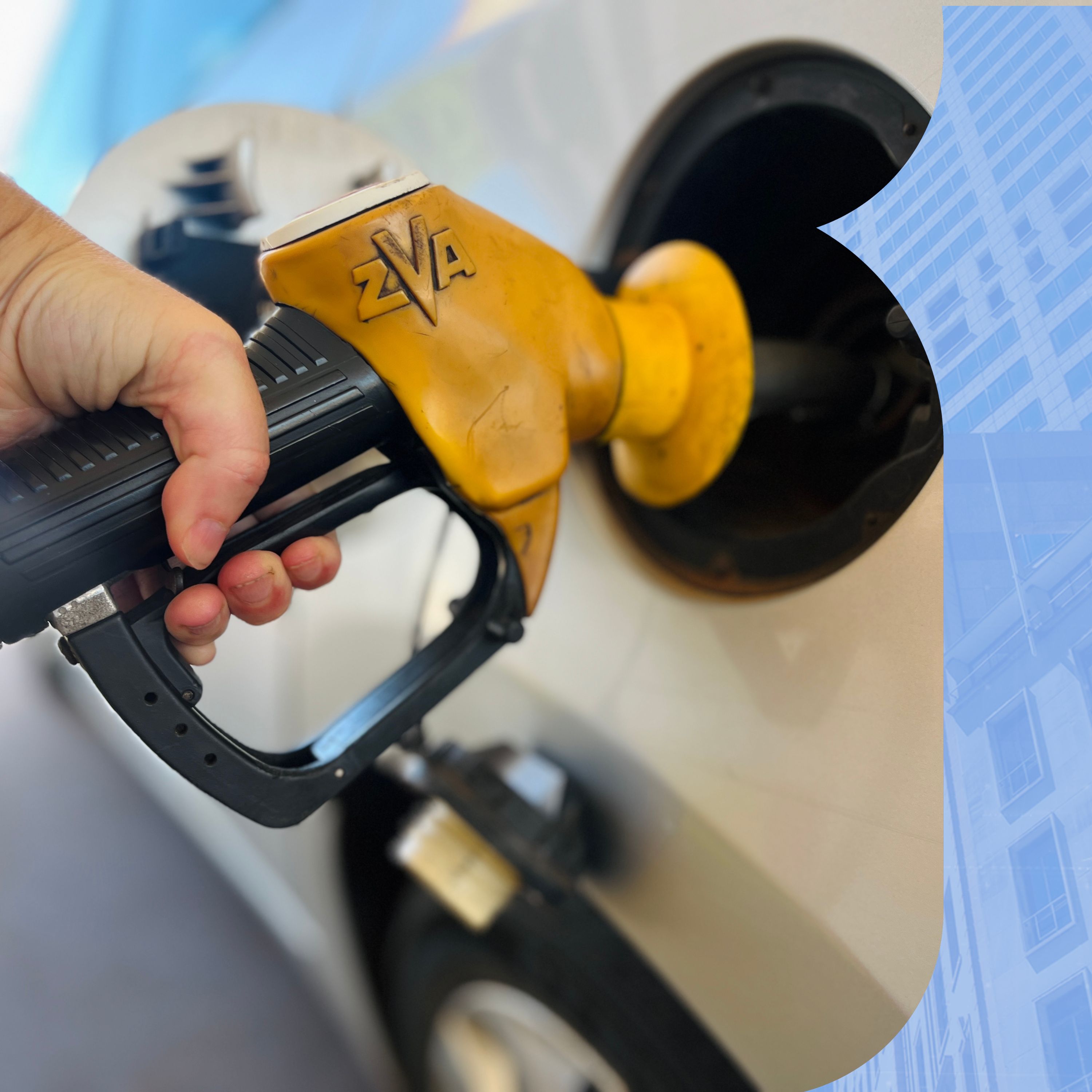
The podcast discusses two major economic issues: rising fuel costs and a spreading property downturn. The fuel excise discount has officially ended, increasing petrol prices by about 17 cents per liter, though a 5% drop in crude oil prices may soften the blow. Diesel prices are set to rise further due to supply disruptions, impacting business costs and inflation. Economists note that the excise cut muted price signals, delaying necessary demand adjustments. Meanwhile, property data shows price declines spreading from Sydney and Melbourne to Brisbane, Adelaide, and Perth, with national median prices falling to $928,000. Sydney and Melbourne have negative annual growth, with forecasts of significant corrections (up to 11% in Sydney). The downturn is driven by interest rate hikes reducing borrowing capacity, and it is hitting the top end of the market first, while the bottom quarter remains stable. The RBA does not target housing, but the slowdown reduces credit creation and economic activity, potentially lessening the need for further rate hikes. Overall, the episode highlights how these trends interact, with fuel prices adding inflationary pressure while property declines may help cool the economy, shaping the RBA's upcoming decision on rates.
ABC Listen, podcasts, radio, news, music and more. Hi, I'm Patricia Carvella's The Host of Politics Now. And sometimes it can be hard to cut through all the noise from the camera bubble. But on the Politics Now podcast, bursting at wide open is our core business. I'm joined by the brightest minds at the ABC to break down the poly speak and have a chat about what's actually going on behind the scenes. It's called Politics Now and you can find it on ABC Listen. Petrol and Property are two of the biggest buzzwords in the Australian economy and we've got plenty to unpack today on both. With the fuel excise cut officially over, our petrol price is about to skyrocket at the bowser. And fresh data shows the property price slump seems to be spreading. This Australia's property market headed for a correction. And what might this mean for the RBA just a week away from its decision to hike or hold rates? Welcome to ABC Business Daily. I'm Steph Charmers. And I'm ABC Business Editor, Mark Rihanda. Thanks for joining us, Mark. You're also my boss, so I'll try and keep it professional, do my best effort. But Dan's tossed over the car keys to the ABC Business Daily pod to me and you this week. This is getting more expensive than ever to drive this car unless it's an AV. Yeah, exactly. I know I was on a drive over the weekend outside of Sydney and not looking forward to filling up the fuel tank now that it's down to a quarter. Yeah, exactly. I think you haven't timed that very well, unfortunately, as we'll get into now. So fuels obviously being quite a hot topic over the past couple of months, a lot of talk about the fuel excised discount, which sort of cushioned the pain for motorists initially. We had that harving about a month ago. Now that has officially ended yesterday, so we're not getting the edge taken off any longer. What can people expect do you think when they, like you, potentially go and fill up in coming days? There's a lot of forces at work, Steph. So obviously from midnight, the fuel excise came back on in full, so that last 16 cents a liter of cut back on the excise, taking it up to about, I think it's 53.7 cents a liter. Yeah, that's right. I've got the tax office figures in front of me. That's actually gone up by an extra cent a liter or there about because of indexation. So it's a bit of a double whammy, which I was discussing with Dan a couple of weeks ago, the last time we spoke about oil prices. That's the countervailing force, though, because even though we've seen the excise come back on overnight, we've seen a big reduction in crude oil prices early this morning on market trading. We've seen another 5% fall in Brent crude, taking it back below $84 a barrel. So I think roughly as a rough rule for every dollar or a liter fall that you see in the crude oil price, you might see about a cent or later or there about knocked off the fuel prices we pay in Australia, depending on exchange rates, depending on the refiner margins. And I remember last week on our blog, Steve Letts, looked into ampoles latest results and they're refining margins have gone through the roof, up 250%. They've got energy as well, I think. Yeah, exactly. So the refiner, as I've said, well because of the supply constraints in global oil and fuel refining supplies, we've had to charge more on our margins. This is kind of our opportunity to make hay while the sun shines because they argue their margins are really low a lot of the time, sometimes even loss making. And now that they've got this global fuel shortage, they're really capitalised. And so that is a big part of why the fuel prices at the pump are sort of heading around $2.0 a liter now and expected to maybe hit about $2.20 again, depending what happens with the Middle Eastern crude oil prices. Yeah, so those seem to be the forecasts about 220. Having a look at the ABC's fuel tracker, that tracks the price of unleaded 91 since the start of the war. So before we headed into the conflict right at the end of February around $1.80 a liter, we spiked up to around $2.60 in April and then really came back down to even below where we were before the war began. So it seems like between July with the first part of the excise discount coming off, we have seen quite a sharp increase. So do we? Interesting to see if that happens again. I know you read a lot of notes from economists and even though it's been a good thing for households to see that little bit of a buffer, you know, cushioning the blow of higher fuel prices with this excise discount, there has been some concern that it kind of mixes the signals in the economy that should be coming through and affecting how people use fuel. Could you explain that kind of argument around the fuel excise to us? Yeah, so basically the argument is we do have a supply shock in fuel, like there is less oil coming out of the Middle East, about 20% of the world's oil pre-conflict was coming through the straight of homers and basically most of that isn't now and a lot of refined product as well comes from the Middle East through that straight. So the normal economic response when you've got a reduction in supply is that people bid up the price of the remaining available supply until some people either cut back on their use or drop out of the market altogether because of those price risers. It's called demand destruction and that rebalances demand back down to what the available supplies and of course on the supply side we've seen some countries that can like the US, Venezuela, other areas, bump up supplies but there's sort of limits on how much they can do that. What economists argue is if you do something like cut the normal taxes on fuel, the fuel excise, you're just reducing that price signal and stopping people making those cuts in their usage. So like I was saying, I drove down to the southern highlands on the weekend. Yeah, maybe, probably wouldn't have but maybe I would have thought twice about going for an overnight trip there if fuel was 17 cents a liter more expensive the last time I filled up. You know, those are the kind of marginal changes that economists think will get demand back closer to supply and also the government by cutting these taxes is effectively putting more money in our pockets collectively that we can spend on other things, the kind of things the reserve bank doesn't want to spend money on because again if we cut back on say, you know, going out for brunch, that cafe instead of passing on its increased costs might go, well, I can't because I'm not getting as many customers. So I've got to try and absorb it. Can't charge more here. Exactly. And that's how the RBA is trying to get inflation down across the economy. A message that Michelle Bullock is desperately trying to get out because their own survey shows that most people don't understand exactly how rising interest rates lower demand and therefore keep a lid on prices. A lot of people think rising interest rates actually make everything more expensive and contribute to inflation, which they do in some ways. But overall, they do actually get the price level down because they get us to spend less. And as you said, putting more money back in people's pockets because they're not having to spend it at the bowser, but obviously then less tax revenue coming to the government as well. So there's also that impact, which I'm sure they were considering when they were deciding is this politically palatable to end it here, not just economically sensible or whatever. And speaking of demand, we also had some stats over the weekend on EV sales and Australia recorded its biggest ever quarterly surge in electric vehicle sales. So I think that will be interesting to see how that plays out in terms of whereabouts going to reporting season as well. We'll get some updates from some of those fuel providers that we mentioned to see if there's any hint of that having a significant enough impact. They were actually seeing it in some company numbers now. Yeah, because of course you don't have to worry about whether to go out or see me on the weekend because you just have to plug in your own money. I have a smart EV owner. So and it look admittedly it's not as bad for me as it might have been because we were mentioning petrol prices before, but of course diesel is much higher and continues to be higher because of particularly the refined fuel disruptions. Middle East crudes particularly suited to making diesel, so that's an issue. The Middle East also refines a lot of diesel and also Russia has been hit hard by Ukrainian attacks and has stopped exporting diesel. So diesel prices, we're looking at potentially going back up to maybe $2.60 a liter. I used to have a diesel car. My brother in law now has that car, so his problem, not mine, but it's a problem for the broader economy because again, going back to the Reserve Bank, the diesel price is much more directly linked to business costs. And so on that cost push side of inflation, that is one of the things causing businesses to go, my prices are increasing, my cost of doing businesses increasing, can I pass this on? So on that end, the rise in the price of diesel is going to put more pressure on inflation. What the RBA is trying to do with interest rates is say, well, your consumers don't have as much money to spend. actually know you probably. can't pass that on and too bad you're just going to have to wear it in a lower profit. And of course then if businesses have lower profits they might look to cut back on staff hours, employment and you know that's the downward pressure the RBA is shooting for. Speaking of downward pressure let's turn to the property market. We've had some big news this morning out from Cotality they release the monthly dwelling values every month and we've seen major cities like Sydney and Melbourne continue their price declines and it appears to be spreading out as well. We've seen a drop in the national medium home price to $928,000. So that's about $19,000 below it's March peak. What was your take on the report this morning? You know continuing that trend we've really been seeing for a few months now. Yeah it's really interesting and also because we get the weekend auction figures also from Cotality. So an interesting play there where auction clearance rates kind of stabilized and actually Melbourne was reasonably solid getting closer to the 60% preliminary clearance rate and we've talked a lot of times on this podcast about how once you get to 60% that's sort of a balanced market above that price rises tend to be happening below that price falls. And we had sort of been more getting towards 50% below. Yeah 50% and below. I mean the national clearance rate was 53.6 and that's probably going to be revised back below 50% and Sydney was a big drag on that. So I think that's indicating continued price falls in Sydney. What we are seeing though is that the level of clearance rates have sort of come up off their lowest points in Sydney and Melbourne and are now sitting you know around those high 40s or low 50s for the final clearance rates. That's still going to indicate price falls but the price falls in Sydney and Melbourne seem to not be accelerating further and what's happening instead is that markets like Brisbane has flipped that had been rising in price quite aggressively. That was now down for the first time down 0.6% for the month and I think you can expect that to continue. There was also 0.6% fall for the quarter because it had been kind of flat lining before this month. We've seen Adelaide flip into a price fall for the month. Perth very slight 0.1% price increase but you could basically say the Perth market looks like it's topping out as well. So the price falls that started in Sydney and Melbourne seem to be spreading around the country even as they're sort of stabilising a bit in the two big capitals. This is not unusual for the Australian property market. Sydney and Melbourne often lead and particularly when it is an interest rate driven housing cycle as most of them really are. The cost of borrowing and the amount people can borrow has changed because of those three rate rises earlier this year. So a typical single person can probably borrow about $35,000 less than they could have if they were applying for a loan in January before the rate increases. So of course when they go to the auction that lowers how much they can bid with send prices falling. You add property tax changes to that and it just sort of cement the trend. We're now seeing that spread around the country and the question is how far it will go. Sydney and Melbourne aren't at a bottom yet and obviously Brisbane then Adelaide and Perth are behind still in the price cycle. So you could see a long way to go for those cities to even catch up with what's already happened. Yeah and I think it's worth always talking about the property price downturn as it's kind of being branded you know putting it in the context of the big rises we've had in recent years. So as you were talking about Brisbane there it's still an annual gain of 14.8% for dwelling values in Brisbane so 20.5% for Perth. So they're coming off these really high levels and if we look at the national property prices over the annual rate it's 5.3% higher than a year ago. So still you know we still haven't kind of turned around yet on a national level Sydney is negative. So I think it'll be interesting to see as you say how deep the falls get in some of the other cities and whether they spread out across even regional markets they seem to have started turning in regional markets. Yeah regional markets seem to be similar to some of those smaller capitals in where they are in the price cycle. They've just started to flip and starting to head down with a 0.2% for last month 0.1% over the quarter. We're also seeing as you say now negative prices year on year in Sydney and Melbourne which is a reflection of how much further into their downturn they are. It is also a reflection particularly in Sydney it's the nation's most expensive property market. Those rate rises hit proportionately harder in terms of the amount of money people have to pay you know when you're talking about a typical Sydney loan being much closer to a million dollars or potentially even more versus some of the other cities. Obviously that interest rate burden is that much higher in that downturn. Also where investors have been active and where negative gearing changes might be biting harder Sydney traditionally has had a pretty strong property investor segment because of the traditional capital gains in the market. I think Brisbane has had a pretty strong investment segment lately. I was going to say anecdotedly talking to people in Sydney when they're priced out of Sydney there was a lot of talk at looking at Queensland and Brisbane as a kind of rent vest option but then that obviously got crazily expensive as well. So yeah it's interesting that that's hitting Brisbane as well. AMP's chief economist Shane Oliver was running the rule over of a Cotality's numbers so he's thinking we'll see a top to bottom decline in national dwelling values of about 7%. Sydney he thinks it'll be about 11%. So that kind of goes over that threshold we talk about being a correction. You often hear that bandied around it's generally seen as a 10% fall and I guess quite a significant I guess recalibration of a market in this case the Sydney property market. Is that not what we really need to see in this affordability conversation? Don't you think and what perhaps the government was trying whether they'll ever admit it or not what they were probably trying to engineer with some of these changes? Yeah I mean no one wants to say it outright but if you want more affordable housing you need cheaper housing and that means housing prices have to fall at least relative to incomes and incomes aren't growing that much. So realistically if you want to address the issue in any reasonable timeframe you need property prices to fall moderately for a while. You don't want it to turn into a crash you don't want to become island or Spain during the global financial crisis where it destroys your banking system and your economy because your banks are broken, bailed out by the government and can't lend to businesses either and everything falls in a heap but you do need prices falling. I mean one of the interesting issues is that it is the more expensive properties that are falling. Actually the bottom quarter of the market rose 0.3% in the most recent three month period. It was the top end of the market, the top quarter that fell more than 3% in price. Again pretty typical of market cycles they often start with the most expensive end and they filter down through the market just as price increases when you're on an upward cycle often start at the top and then filter down to the bottom but clearly not yet good news for a lot of first home buyers because it's that bottom quarter that they want to get into as they're starting property. Better news if you want to upgrade and you already own one of those bottom quarter properties and you can sell it and maybe afford to get into one of the top half properties that you couldn't afford before but again the way cycles usually work in Australia you'd have to say likely to spread out from the two big capitals that's starting to happen likely to spread down from those expensive properties to the bottom end of the market and I think most economists would agree that we're likely to see property price falls nationally through to the end of the year and maybe into next year and the catalyst for reversing those falls is likely to be the reserve bank cutting interest rates. Yeah one of our colleagues David Taylor spoke to the former chief economist at NAB Alonoster now an independent economist and he said to him this is really an interest rate induced property downturn so perhaps we'll see incoming months when you know as the government obviously intended with the capital gains and negative gearing changes they're not having an immediate effect there's grandfathering elements and things like that so I think considering we've had three rate hikes this year it does seem like that is really affecting not only sentiment but also as you say just the affordability constraint when you go to actually get your loan approved at the bank you can borrow less. Speaking of the RBA you were listening to Michelle Bullock and her chief economist Sarah Hunter speaking in Sydney last week. You actually had a good chat with Sarah before her official fire side chat and with Peter Chulup about you know general conversation about housing nothing overly surprising or confidentially in that but you know I think the reserve bank as Sarah said in her fire side chat they don't target housing and Michelle Bullock said the same thing in her formal speech earlier in the week.
They don't target housing, but it does have an effect on the economy because of the wealth effect when house prices are going up, people feel like they're able to spend more. Also when the housing market's going up and people are borrowing more to buy housing and housing is more expensive, all of that credit that's coming in for people to buy houses goes to someone to the person selling the house. So that's money creation in the economy. So the volume of money that the private banking system is creating and pushing into the economy is slowing down now along with the property market slowdown because we're getting less transactions, fewer transactions, smaller loan sizes as property prices fall. So the amount of private sector money being injected into the economy is slowing down. And that should slow down the economy. It should what they call tighten financial conditions and do some of the reserve banks work for it. So we might not need another rate hike because we're seeing this slowdown in property. I think that's super interesting. I don't think we hear that a lot about the actual mechanics of the effect on money supply in the private sector. So yeah, that's. Just more money pushing, you know, pumped into the economy, chasing the same amount of goods and services and that's that supply, questions, supply can't keep up. Well, then you get inflation. The reserve bank can take some of that money out of the economy by raising interest rates, but the private sector can do it too just by lower demand for new credit, taking a bit of that new money and interest rates, of course, feed into that because the higher interest rates are, the less demand there is for credit. And that's exactly how the reserve bank tries to manage inflation and money in the economy. Well, we'll be hearing from them in about a week's time, probably around this time next week, they'll be getting into the boardroom and knuckling down for their two-day meeting and then Tuesday afternoon next week we'll hear the outcome of that. Market pricing is really on the side of no move from the reserve banks are keeping rates on hold. What was your sense sort of being in the room last week? And do you think, as you say, this property shift in sentiment might do some of the lifting for them in terms of just, you know, making households feel a little bit less wealthy? I outright asked Sarah Hunter whether she thought the money markets pricing of a virtually zero percent chance of a rate hike in August was a bit presumptuous. Unfortunately, she didn't buy it. She didn't buy it. No, doesn't talk about market speculation. I think it is a pretty low chance that they'll hike interest rates. The inflation figures, the housing downturn, it all gives them a bit of space to wait and see what's going to happen. As I discussed with the Baron Joey Chief Economist, they were the ones hosting Sarah Hunter and Joe Masters, their chief economist was the moderator for that fireside chat. I spoke to her afterwards. She still thinks they might raise rates in November, but which I think is a possibility, but I think they have that space now to wait and see how things go. They may or may not need to move again. Part of that may depend what the Federal Reserve does in the US and all these other moving parts, what's happening in the Middle East. I mean, there are a thousand moving parts to this, but I think they've got the space to wait and see now. Yeah, I'm happier to be at this table chatting about it rather than at the board table trying to figure out what to do. You've been paying more at the board table. True, true. Would it be worth it? I don't know, it's not really an option. So that's it for today's episode of ABC Business Daily. We'll be back with another episode tomorrow. Make sure you're following us on ABC Listen or wherever you get your podcasts. And if you'd like to send a question, email ABC Business Daily at abc.net.au. Catch you later.
Podcast Summary
Key Points:
The fuel excise cut has ended, raising petrol prices by about 17 cents per liter, including indexation, while crude oil prices fell 5% overnight, potentially offsetting some increases.
Diesel prices are expected to rise to around $2.60 per liter due to Middle East supply disruptions and Russian export cuts, directly increasing business costs and inflationary pressures.
Economists argue the fuel excise discount muted price signals, delaying demand reduction; ending it helps rebalance supply and demand, though it adds to household costs.
Australia’s property market downturn is spreading beyond Sydney and Melbourne, with Brisbane, Adelaide, and Perth seeing price falls or stagnation, while national median home prices dropped to $928,000.
Sydney and Melbourne have negative annual price growth, with forecasts of up to 11% declines in Sydney and 7% nationally, driven by interest rate hikes reducing borrowing capacity.
Property price falls are hitting the top end of the market first, while the bottom quarter rose slightly, offering limited relief for first-home buyers.
The RBA does not target housing, but the property slowdown reduces credit creation and economic activity, potentially reducing the need for further rate hikes.
Summary:
The podcast discusses two major economic issues: rising fuel costs and a spreading property downturn. The fuel excise discount has officially ended, increasing petrol prices by about 17 cents per liter, though a 5% drop in crude oil prices may soften the blow. Diesel prices are set to rise further due to supply disruptions, impacting business costs and inflation.
Economists note that the excise cut muted price signals, delaying necessary demand adjustments. Meanwhile, property data shows price declines spreading from Sydney and Melbourne to Brisbane, Adelaide, and Perth, with national median prices falling to $928,000. Sydney and Melbourne have negative annual growth, with forecasts of significant corrections (up to 11% in Sydney).
The downturn is driven by interest rate hikes reducing borrowing capacity, and it is hitting the top end of the market first, while the bottom quarter remains stable. The RBA does not target housing, but the slowdown reduces credit creation and economic activity, potentially lessening the need for further rate hikes. Overall, the episode highlights how these trends interact, with fuel prices adding inflationary pressure while property declines may help cool the economy, shaping the RBA's upcoming decision on rates.
FAQs
The fuel excise cut officially ended, bringing the excise back to about 53.7 cents per liter, with a slight increase due to indexation. This is expected to push petrol prices higher, potentially reaching around $2.20 per liter.
Petrol prices are rising due to the reinstated fuel excise and global factors like reduced crude oil supply and increased refiner margins. However, a recent drop in crude oil prices may partially offset these increases.
Economists argue that cutting fuel taxes reduces the price signal that encourages consumers to cut back on fuel usage during supply shortages. This can prevent demand destruction and may lead to higher spending in other areas, complicating efforts to control inflation.
National property prices have fallen, with the median home price dropping to $928,000, about $19,000 below its March peak. Sydney and Melbourne lead the declines, and the downturn is spreading to cities like Brisbane and Adelaide.
AMP's chief economist Shane Oliver predicts a national decline of about 7% from peak to trough, with Sydney potentially falling around 11%. The downturn is expected to continue through the end of the year and possibly into next year.
The slowdown reduces private sector money creation and tightens financial conditions, potentially doing some of the RBA's work. This could mean the RBA may not need to hike rates further, as the property downturn helps cool the economy.
Chat with AI
Loading...
Pro features
Go deeper with this episode
Unlock creator-grade tools that turn any transcript into show notes and subtitle files.
 PodcastTranscript AI