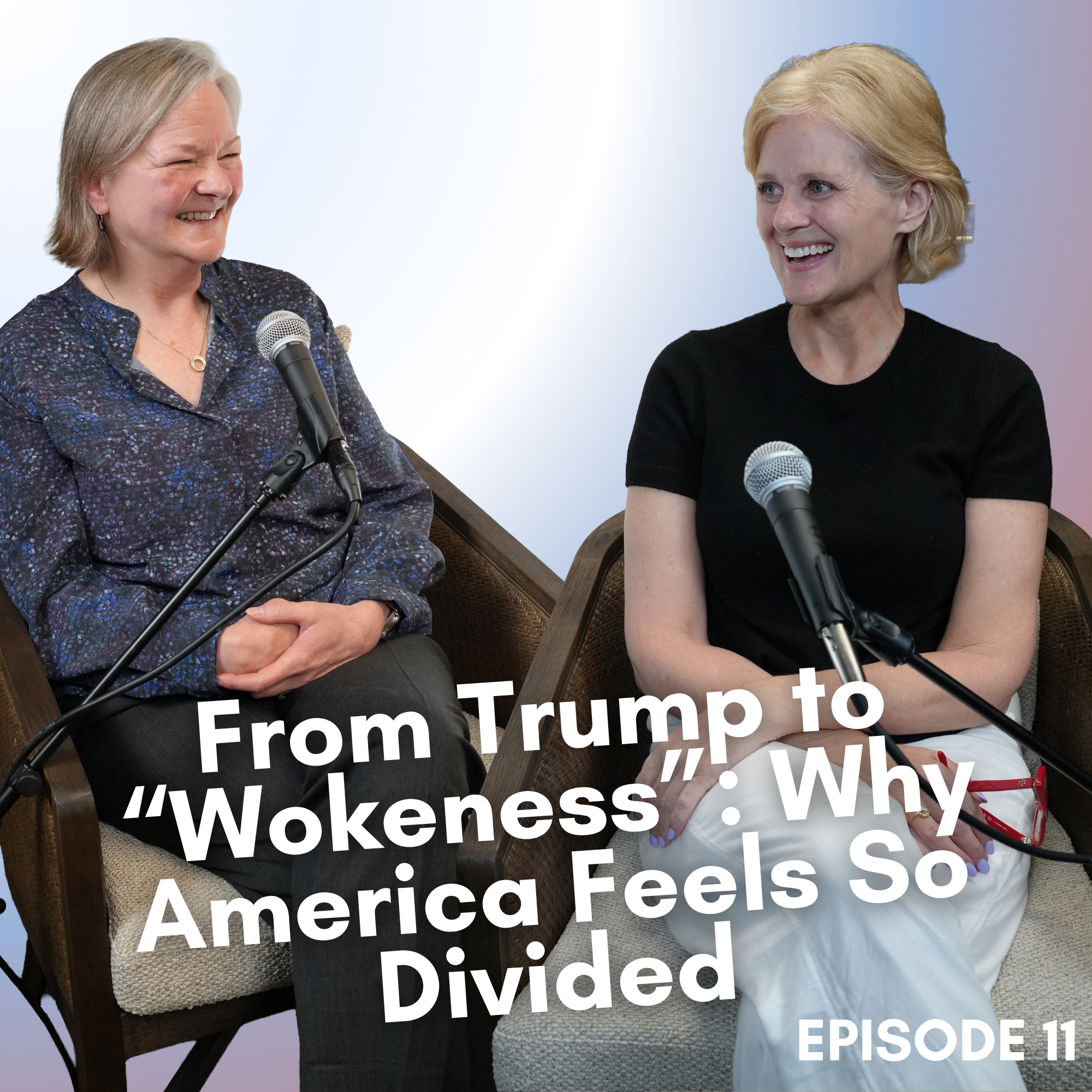
From Trump to “Wokeness”: Why America Feels So Divided
from Small Town Girl with Gwen Faulkenberry
79m 54s
The transcript features a dialogue between the host and Dr. Lisa Pruitt, a distinguished law professor at UC Davis with roots in Jasper, Arkansas. Pruitt shares her journey from a working-class family, where her mother pursued a degree in early childhood education through night school, to becoming a lawyer and academic. After facing gender-based harassment in law school at the University of Arkansas, she left for Europe, earning a PhD in London and working at the Hague and in Rwanda before returning to teach. Pruitt’s book manuscript, “Educated Arrogance,” examines the political divide between her and her mother, who shifted from a Democratic background to supporting Trump. Pruitt reflects on her own “educated arrogance” and explores how rural youth navigate class migration and political identity. Through interviews with the host’s students at Arkansas Tech Ozark, she found resilient individuals—some commuting for support, others overcoming addiction or pursuing military careers—highlighting the diverse paths and needs of rural youth. The conversation underscores the importance of understanding across political divides and the value of teaching as a relationship.
Welcome to Small Town Girl. I'm so thankful that you are here to be with us and to be a part of this conversation. Thank you for honoring us with your time and your engagement. I have dear friend with me as a guest today. I'm excited to bring her home. She's from Arkansas from Jasper, Arkansas, and has been all around lives in California now. Her name is Lisa Pruitt, Dr. Lisa Pruitt, jurors' doctor. And we're going to have a conversation kind of publicly today that's been ongoing between us for a few years now. Lisa actually contacted me over email, I think, a few years ago in response to a column. She reads the Democrat Gazette from her home in California and stays in touch with her home state. That's one of the ways. And she is a teacher at the law school University of California, Davis. And the Martin Luther King, junior chair, the department or? Well, I'm not a department chair, but I have a distinguished. I've been around long enough that they've given me the title distinguished professor and Brigida Bowdenheimer research scholar. So it's a mouthful, but our our law school is called the Martin Luther King Junior School of Law. Okay, I did not know that. And so I know I wanted to tell you more about her background because she's worked at the Hague and got a special special tea degree in London or work just a very, very distinguished mind. We're engaging here today. And I was so honored when she wrote me. She was interested in talking about something that's very near and dear to my heart. And hers, which is rural Arkansas and in rural America, really. We had both kind of watched this phenomenon of the rise of Trump and particularly, you know, a far-rider mega movement in rural Arkansas. And had had been, you know, kind of disillusioned with some of the people we felt very close to and feel like we know very well whose politics had diverged so far from what, you know, from how we felt. And from what we thought was the norm there. And so we started kind of talking about and trying to examine what had happened. And she wanted to come and meet some of my students and just talk to them and kind of see what what the students, you know, at a small university in Arkansas were like. And I was interested in doing that at her elite law school in California. Anyway, it's the friendship we have and the conversation that we have has been very enlightening to me and we'll talk about how we've sort of augmented each other's understanding. Southern law believes that your home should reflect your unique personality. That's why they offer a wide variety of stylish furniture pieces that are perfect for any taste. Whether you're looking for a new sofa for your living room or a sleek dining table for your kitchen, they have just what you need. So when looking for that piece of furniture that reflects you visit Southern loft at 31 55 North College in Fayetteville or call at 479 856 6100. First, I want to start Lisa and you just tell a little bit about your background. You're definitely a person Arkansas can be very proud of where you came from and what you've accomplished. And you just also have a very interesting story. So tell us about your childhood, your life and then kind of where you've been to now, where you are now. Okay, well, I'll try to keep it reasonably brief. No, that's a big question. As I often say in conversations to make a long story a little bit shorter because I am given to long stories. But yes, I grew up in Jasper. I often acknowledge that I am a product of a working class household. My father was a long distance truck driver and my mother started working at the school at Jasper school. When my sister and I were old enough to go to school and so she was a teacher's aid and I forget what title she has now. But she had an opportunity when my sister and I in the early 70s when my sister and I were like in the sixth to eight age range. And the first opportunity organization was setting up headstock programs and there were not enough people with degrees with credentials to start a headstock program in Jasper. And so my mom got identified as someone who would get a degree in early childhood education. And she did that over the course of several years going to night school. We called it night school in Valley Springs and Green Forest. And so she eventually got her associate's degree in early childhood education through a program. The degree granting institution, I guess, was a state teachers college at BB. But all the curriculum was delivered in little rooms in Green Forest, Arkansas and Valley Springs, Arkansas. And so I have some vivid memories of those years. Sometimes we got to go with her, but a lot of the times. I've looked, I think I've counted up in her journal that she had about a dozen different caregivers for us during that period of time. And I think about, you know, rural reliance on Kiffin Ken. That was how she got it done. And my mom, who's still living today is my mom's birthday. I'm going to see her this weekend. I'm really excited. You know, my mom really aspired for her daughters, for all her kids, to get an education so that we would have more opportunities than she had. And so, I think that was a very important thing. I think that was a very important thing. I think I had thought I was going to do the kind of journalism where you're like an anchor woman. Okay. Yes. But, you know, journalists weren't, weren't making much money in Arkansas then. And I didn't, and actually journalists aren't making enough money anywhere now. Let me say that. I often tell my students that I would love to be a journalist now. But, you know, because I just have the greatest admiration for journalists. And I think I have developed a personality now where I can, you know, go out and be a go-getter. But, my mom had long called me last word Lisa because I was so argumentative. And so, there was this kind of long-standing joke in the family that Lisa ought to be a lawyer. Yes. So, I'm finishing this degree in journalism. And I decided, yeah, well, this might as well go to law school. And so I did. And got disillusioned with being in Arkansas when I was in law school because I had naively believed, partly based on my mother's beliefs, that all the formal barriers for women were, I mean, and the formal barriers for women were down, you know, in law and in the professions. And, you know, in the workplace. But, the day that I was elected, editor in chief of the Arkansas Law Review, a couple of men in the, in my class, put up a poster in the Law Review Office that was like in the form of an election ballot. And it was Law Review, you know, Chief Coffee Maker, and it listed several women. And then it said, Chief Headgiver, and it listed several women, including me. And then it said, Head Slut. And I was the only candidate for Head Slut. So, this was the kind of harassment that came out. And I was really, you know, blindside.
and was extremely hurt. - And so when was that? - That was 1988. 'Cause I graduated from law school in '89. - Okay. - And I hadn't intended to tell this story so you can delete it if you want. - But it's just very interesting. - You're just a little ahead of me. - Right, because you started at the law school. - Right, 1995. - Yeah, yeah. - So I was there '86 to '89. And you know, the law school's response was not, let's just say it was not robust. It was not helpful. They kind of wanted to just ignore it. And that left me feeling very, you know, unprotected, really. - Really? - So there was a lot of harassment that ensued. You know, kind of good old boys refusing to do their share of the work and you know, that sort of thing. So it became clear that I was not going to be a tall building while you're in Little Rock, which is what I had always assumed. I would do. And I really felt the need to get the heck out of Dodge. So I was very fortunate I got a scholarship to do my PhD at the University of London. And so that's what I went off to do. And then I wound up spending about a decade in Europe. I came back for a year and clerked for Judge Morris Shepard Arnold on the 8th Circuit. And, but I had really fallen in love with Europe. So I was able to go get a job in the Hague working for an international organization. And then I did some work in Rwanda. And then I went back to London and worked for a law firm. But the thing that had, that had, the aspiration that had gotten hold of me when I was in law school. Because I just, I loved the law. I loved parsing, you know, the finer points of law and doing that appellate litigation type thing. But I also, you know, I often say smart rural girls. And you know this, Gwen. Smart rural girls are supposed to become teachers. And I had always thought that teaching was too ordinary. I was, I was going to do something bigger than that. Yes. But, you know, I looked at what my law professors did. And I thought, oh, that's, that's the perfect combination. Because you get to be a teacher. But it's also, you know, not, not an ordinary, not an ordinary thing. And I want to be clear now that, like with journalists, I have the highest, I'll teach, I'll, all teachers, all hardworking teachers in the highest esteem. But, and I don't think that it's an ordinary job. But I did do it. And so, I can really relate to that. I just ran as hard as I could that their direction. That's how I ended up at law school and doing, you know, different things and just kind of came kicking and screaming back into education and have found it, you know, to be like you're saying, just, well, I think you're saying it kind of a perfect fit. Because for me, talking about words, you know, great literature and writing, it's like a symbiotic relationship with what I do and, you know, the other, you know, with the other, the side of my life writing and, you know, communication like this. And, but, but, but you're right. There is an expectation. There is not, there's a, there's a, there's a connotation with it. But, you know, there's that saying, those who can do and those who can't teach. I've always hated that so much. But it is that kind of idea like this is the thing that, you know, it's a great job for a woman. It's a great job for a mom because you're off with your kids, which it is. But, but I understand the, you know, the, the, the prickling towards that of, you know, that doesn't mean that that is all I can do. Right. So, yes. So go on. Yeah. Well, that's how you ended up teaching. That's how I ended up teaching. I circled back. And, when I was, you know, on the teaching market, they call it the meat market because it's fairly brutal. I, California is where I got the job. I had, by the time I went to work at the University of California at Davis in 1999, having lived in Europe for, like I said, almost a decade. I think I had been to something approaching 50 countries. I had a law professor who told me once he had been to more countries than that, but he told me it is bad karma to count countries. And so I don't want to be, you know, too specific. But let's just say I had sort of been around the world. But I had never been west of Oklahoma City in the United States. I had always looked east. I had always looked to Europe. And, you know, ultimately to other places in the world. So when I got the opportunity to interview for this job at the University of California at Davis, it was like the first time I'd been in the state of California. But that's where I got the job. And so I moved there in 1999, met my husband, the man who's now my husband, the next year, and ultimately we were married. And so yeah, it's hard to believe that I am finishing my 27th year of teaching. And it is such a blessing to be able to teach. I was reading your recent column about the end of the semester. And, you know, it resonated with me in so many ways. I have had ups and downs with teaching. There have been times when I will admit my students were driving me crazy. The pandemic, as we all know, was very, very hard for educators. It's very hard for students. And, but I have really been enjoying teaching again the last few years. I'm so glad. And I think it's because I am once again leaning into teaching as relationship. And my teaching is really, if you can get to know your students. And they're all pretty darn interesting as individuals. Everybody has a story. And if you can lean into that and enjoy them as individuals. And, you know, with their quirks and their limitations. That's really where I want to start with kind of, you know, our exchange. Why did you want to, you know, interview some students from Arkansas? Well, I, the long story is I had written a manuscript, a book manuscript. And I had had a, and that manuscript I call "educated arrogance." And it was really telling the parallel stories of my mother and me and our politics. Because I was raised in a staunchly democratic household. But early in the pandemic, my mother revealed herself to my sister and to me in a root text. As being pro-Trump. And I had already been working on this concept of sort of our parallel trajectories, if you will. Because in some ways, because my mom, you know, had me when she was 20. And I was her second child, right? My mom married the day that she finished high school. And which happened to be the day that my father turned 19. And so, as my mom even has said, right, that that opportunity to get a degree in early childhood education when her kids were young, it really, it really changed her life, just that exposure, you know, to higher education and new ideas and, you know, so forth and so on. So, my mom says sometimes, you know, it taught her how to live, it changed her some of her expectations and so forth. But so in some ways, this may sound silly, but we were growing up together. And my mom sometimes expresses it that way, right? A child raising children in a way. And, but we had these very different opportunities. We had these very different life experiences. My mom was, my mom's parents got indoor plumbing after I finished law school. They got indoor plumbing in 1991, which is as people will appreciate, was very, very late in the game, right? And so, we just had very different opportunities. My mom would have loved to have gone to college. I love, I have, well, I have enjoyed, you know, talking to her and learning about what her aspirations were.
And also grappling with how sad it was that she couldn't go to Arkansas Tech. Her parents, as she often has said, obviously didn't have any money. And yeah, this was before there were the student loan opportunities and these federal programs and so forth. Anyway, I, you know, living abroad and then ultimately, you know, living the life of the mind as an academic, living in bright blue California, I became an even more left-leaning Democrat, probably a different type of Democrat, you know, than I had been raised by. But then, you know, my mom, who had been active in the Democratic Party in Newton County and had been a leader in the Democratic Party, this is when all of Arkansas was, yes, was Democrat. This was when, yes, exactly. This was before the red wave, you know, marched across the South and as your viewers will know, you know, Arkansas was one of the last states to fall, if you will, if you want to use that terminology. And so anyway, you know, the book really, the book manuscript really is about how we are both each of us as a product of our environment, right? And why she, you know, came to hold of use that she has now. So just processing that. And also the reason that I ultimately gave the book manuscript the title, "Educated Errogance" is because I realized that I had become an educated arrogant, right? And that I was the most, I was the educated arrogant who was most present in my mother's world, right? The elite. I'm the elite. Yeah. I'm the one using big words, talking in abstract terms, psychoanalyzing her and everybody else around me. And things like that. So I thought if I could tell this story in this way, it would cultivate understanding and empathy across the red blue divide. Because I often, you know, say, I'm a dual national, right? I grew up in what is now Ruby Red, Arkansas, but I live in bright blue. You know, the capital, I live in Sacramento, the capital of, you know, maybe the the bluest of the blue states. So why do you think talking to my students would help inform that? Yes. I'm glad you circled back to that. So I had a contract to publish this book with, with Norton. And at some point, a very junior editor got a hold of the manuscript and, and, and, and said, you've got to call your mother a racist and sort of called out all these things that she saw as, as, as racist. And, you know, I had people say to me, you, you're not giving a full-throated defensive wokeness. It was like, that's right. Because I, I can't give a full-throated defensive wokeness. I'm trying, that's not the, you know, if that's what it takes to get a book published, right? And so the commissioning editor, you know, said to me, as she was pulling the plug on the book, nobody can bear to hear another word about Trump. This was January of 2023. And the book was very much, you know, using the rise of Trump and, you know, so forth, right to, to, to, to make, to illustrate and, and sort of make the point of how this divide had emerged. So anyway, the editor said, well, you know, I, I want you to continue to have this book contract, but, but you have to come up with a different book. And so one of the ideas was, how are rural, and my expertise, we should, we should say, is in rural issues. Right. So, we thought, well, how about, you know, a book about rural youth? And so I, you know, just kind of switch gears and I came to Arkansas that spring. I guess that was two years ago. Was that two years ago or three years ago? And interviewed some of your students, chatted with some of your students. I am inherently interested in, you know, what I call class migration. Like how do kids do things? They don't have to be as dramatic as I've done. But this access to opportunity, you know, how does it, you know, how does it, how does it work? And then as a related matter, because I'm also a political junkie. You know, I wanted to talk to young people of, from a variety of backgrounds about, you know, their views on, their views on politics. I think at that point, maybe it was three years ago. I think a lot of people thought that the youth vote was, that the youth vote would never migrate to Trump to the extent that it has. Yes. So it was just, it was great. I met you in, in Ozark and met a bunch of your, just like, mind blowing students. I have mind blowing students too, but they're often mind blowing in different ways, right? Yes. So we talk about that a little bit. Like what did you find with my students? Well, the journeys of some of your students, I remember the student who had a history of, a very deep and tortured history of addiction, who had gotten clean and was training in, to be an IT professional. It was, it was, the details of history. And I know you know your students' stories because they're often writing about their lives in the exercises that they do for you, the writing exercises. So several Latina students, right? And how many, I was struck by how many of your students were commuting from Alma and from Fort Smith and Clarksville and all around. And I would say, well, why, you know, why did, why are you commuting? Why aren't you just going to, you know, you know, they're going to be working on their life? Because Arkansas Tech Ozark has more supportive, because we feel, we know that we'll get more support here. And a lot of the students really, really need support. You know, they were working a part time, if not full time, right? And you know, I remember one of your students, some of your students were planning to go into the military, one inspired to be a state trooper. So I just think it's super, I'm really interested in people. Yes, yes, yes. And so my students tend to be more privileged than yours, but we also have a lot of students at the law school who are the children of farm workers, right? Maybe they're, some of our students are not documented, but you know, many of our students, many of our Latino students and Asian American students and so forth, they are, you know, they are US citizens, but their parents were, you know, the first generation took to migrate. And so boy, they have worked and their parents have worked so hard to get them through university, to get them that bachelor's degree, and now they're in law school. And they often feel, you know, they often feel out of place because there's also a lot of rich kids at our law school. Yes. Well, that was one of the things I kind of want to get into because I think it will be interesting, particularly for my democratic friends and my more left-leaning friends here in Arkansas and readers to hear this part of our story because before I met you, I thought that all this talk about, you know, wokeness and indoctrination in schools and, you know, this mindset of universities being, you know, just sinners of elitism and far left, you know, ideas and indoctrination, but certainly like public schools being that way. I just thought that that was so ridiculous and so like a dishonest and also just, I thought it was made up. And I do think it is in Arkansas, you know, I several times have issued challenges to politicians who use that as talking points, you know, all this woken indoctrination happening. Show me where, one place where that's happening in a school in Arkansas and no one's ever taken me up on it. And I suspect that's because they can't. There's not, you know, it's not happening. [BLANK_AUDIO]
in schools in Arkansas. Largely, well, I mean, I'm not gonna speculate all the reasons why, but most of the teachers in Arkansas are not woke. We're also not indoctrinators. If you ever teach in a public school, you understand pretty quickly how hard it is just to survive and teach the math or the English or whatever the science, whatever skills your students are supposed to acquire so that they can then prove that on a test. And so the idea that there are teachers in Arkansas, teaching kids to feel bad about being white or to hate America, it's ludicrous. We have a very proud tradition, I think, in Arkansas of being patriotic Americans saying the Pledge of Allegiance at school, having a moment of silence, putting our hands on our heart to listen to the Star Spangled Banner. Someone singing it or are playing it in the band at ball games. And these things that were not considered Republican or Democrat or left or right, but just like Americans, just patriotic American, when I was growing up in part of a national pride, not nationalistic, but a point of pride. So like I said, in my experience as a student and then as a parent of public school students and then students in universities in my self-a-university teacher, that has just been a lie to me. It's been a talking point that unfortunately whips up the base here and scares people and they talk about teachers unions and all this, which we, Arkansas's a non-union state, like we do not have a teachers union here. But, and so the thing is they'll talk about these, politicians talk about these talking points and then people, voters, talk about it as if it's real, as if it's happening and no one can give me an example of it. And it's funny because nobody thinks it's happening like in their school, but it's gotta be happening in other places all over Arkansas. And so we have to elect these people here gonna safeguard it. And then I have students coming to me who, you know, don't know some very basic, you know, points of history involving, you know, black Americans or, you know, who haven't, haven't been exposed to say the letter from a Birmingham jail and things like that. So it's so completely obvious to me that they're not indoctrinated, right? You know, they haven't heard too much about the Civil Rights Movement if they have never read. Right. You know, and from my view, not enough, not a balanced view of, you know, a reality and so-- - And history, right? - Yes. And so, you know, don't know much about the Little Rock 9 and that's in our very own state, you know, things like that. And so-- - And by the way, those are things I was raised not knowing about, right? - Right. - Was not part of the curriculum. - Well, same here. - Yeah. - And so that's another reason why I've, you know, based on this, this is like not, you know, I've been there so I'm experienced and my kids are there right now. It's not their experience. So where's this happening? Well, it turns out, and that's the setup for all this, because really a lot of, you know, non-maga people here from center, right, all the way to the, you know, two or three far left people that may live in our house. - They can't have it all. - So, right. Have kind of this same idea that that is just, that's just a made up, like, you know, fairy tale that politicians say to scare people here, but it's not really happening. Then I talk to you and lo and behold, some of that is happening where you live, has happened. And you, you know, I want you to tell readers more about that, but there are a couple of things, you know, that have stood out to me. One is your story, even just recently, about not being able to ask someone where they're from. I want you to tell that story. But then particularly something, you know, that you told me about students, one time questioning your syllabus that it wasn't woke enough and kind of the virtues signaling that went on. Those are things that, they're laughable to me here because when politicians talk about 'em, I'm just like, that's not a thing. - Right. - But then to hear that it is a thing at some places and has been real in your experience, has been very eye opening for me. So, if you wouldn't mind, just talk a little bit about the, you know, just the culture where you can't ask someone where they're from and why, and then maybe move that to your experiences in the classroom. - Yeah, sure. So, well, you know, the first thing we learn in law school as you may remember, Gwen, is you got to define your, first thing you do is define your terms, right? And wokeness, right? Our terms that we would have to define if we were going to really pin down is a practice woke or is it not, right? And I have these conversations with my students and my seminars and, you know, I think we can all agree that different people would define the term differently. So, I want to acknowledge that right out of the gate. But, yeah, in California, if you ask someone, particularly someone who is not, you know, obviously, white, European, you know, where they're from, that is, that is a, that is a no-no. And one day, one of my colleagues expressed it as, if you ask, you know, if you ask me or you ask a non-white student where they're from, you're really asking them why aren't you white? And that's not why I ask it. - That's not why you would ask it. - Not why I would ask it. I mean, among other things, I'm a geography nut and I like, I love talking about place and it's just a, it's a data point about someone. And it's a part of their story, right? And it helps me, also helps me remember them, right? And you've got, you know, I know, okay, I forget your name, I may remember, you know, where you're from. And so, now when I do that, which I always do at the first day of class, I am careful to say, I'm just doing this because I'm a geography nut, right? Not because I'm saying, if you are a person of color or someone who has a non-US accent that you don't belong here. And I was shopping with a friend yesterday up in Rogers. (laughs) There was this really, really lovely and talented Latina salesperson who was helping us. And she was just so cheerful and so lovely and she had a slight accent. And I just, you know, I wanted to ask her where she was from. And, but I turned to my friend later and said, I really wanted to know where she was from and just compliment her on her, her, her, her wilt. - Yes. - And, but I said, you know, you can't do that in California. And my friend said, oh, you could do it here. She probably would have just grinned from ear to ear, right? And so, you know, I just think there's something that I kind of lost in that because I don't see it as, as again, you know, as it's suggesting in any way that this person doesn't belong here. - Right. - And then on the, yeah, the syllabus and-- - Well, just real quick, sure. - You know, I think something that we probably share in our polyannish personalities, which that's gotta have it's somewhere in rural. - So the one culture too. - But nice girls don't rock the boat or nice girls remaining to mystic or something. - Well, it's just, but I do think like even, you know, even psychologists will say, assume good intentions. And that's kind of a way of looking out at the world that is healthy. And it's not to be stupid, you know, and it's
and ignore when someone shows you their bad intentions, but assuming good intentions is a good approach to human relations. And it seems to me that in your experience in California, the assumption is that you're a racist. Your intention is mean or bad in some way, not that you're curious. And I would even go so far as to say an honoring of culture. Because what it reminds me, you know, your colleague who said, you know, that you're basically saying, why are you not why if you ask where you're from, that reminds me, you know, we hate this saying, I don't see color. Of course, because color is part of our diversity. It's part of, you know, that's an insult if I say that to, you know, a person of friend, you know, a person of color. But it's almost like that's what your colleague is saying. Is don't say it, ignore it. Act like it's not there instead of being curious about it. And I'm sure someone with bad intentions somewhere along the way has, could and has said, well, where are you from? You know, it's obviously not here. But it's a conversation in there when we cancel someone. That's cancel culture, right? When we say, you know, you're not allowed to say that. You're not allowed to have that question. Well, right. And it turns out there are lots of conversation stoppers. And lots of things people no longer have meaningful conversations about because, you know, we are afraid that something can be, you know, labeled, that we're going to be labeled racist. That there's going to be that presumption. And that, and yeah, then that you really do get, you do get shut down. And yeah, I like the way you're framing it. It's a conversation stopper. And it causes the person, you know, who may have asked what they see as an innocent and curious question to kind of, you know, slunk away with their tail between their legs. And then not, again, sort of seeks to have that kind of engagement with other people because you're so afraid of being smacked down. Yeah, well, hurting someone's feelings. Yeah, for sure. Or, you know, being sort of smacked down. Yeah, judged. Judged. Yeah. Yeah. You know, I think you use the word presumption, right? There's a presumption operating then that, you know, that you are racist. And I mean, and I will also say, you know, being an arcansen with a lingering Southern accent, right? Being a person who I still identify to my students, my students know how much I love Arkansas. Yeah, it's, you know, right? It's home. And, you know, I joke about being a dual national. And I'll find myself saying, because I teach about rural issues. So I have lots of opportunities to, you know, to reference Arkansas and things that are going on in Arkansas. And I'll say something like, well, we just did this in Arkansas. And I'll catch myself like, you know, and then I realize-- Right. --that you're a gay. Right. You're a gay. Yeah, I mean, yeah. You know, and then I'll make the dual national joke. But, you know, assumptions get made about people from the South, especially outside the South, especially if you are not rejecting. Yeah. You know, if you're not like making it very clear that you're not of that place or you've rejected that place. And I think that's a lot to ask of people who migrate from one place to another. Certainly in California, we don't expect it of immigrants. We don't expect them to reject the culture that they're coming from. So why do we expect it of southerners to just be out in the world acting like everything in the South is negative. And there's nothing redeeming. And, you know, all those people are retrograde. And, and behind and not looking for, you know, for the good in them. So tell, tell listeners what happened with your syllabus. I thought that this was so fascinating. Yeah. So, I teach two seminars. One is called Lawn Rural Lively Hoods. And the other is called the first gen experience in scholarly and popular literature. And both of these, in both of these classes, my syllabi have, you know, readings that are expressly about race, you know, blackness, African-Americanness, Native American experiences and issues, immigration. You know, there's been a massive Latina Latino influx into rural America, including here in Arkansas, including the rural south. And so we talk about all these issues. We talk about, you know, gender is explicitly on the syllabus and so forth. So, you know, I had some students complain a few years ago that they're, I had put some readings about missing and murdered indigenous women on the Native American part of the syllabus, but not on the gender part of the syllabus. So it's like, you know, they didn't see it on this part of the syllabus. You know, basically the message was, there's not enough, you're ignoring missing and murdered indigenous women. And I'm like, well, no, I'm not. It's over here. So there's sort of a, you know, students are much more, have much more of a consumer mentality, which in some ways is good, right? But there has been this trend towards students complaining. It hasn't only happened, you know, to me. It's happened to some of my, you know, some of my colleagues, people also who teach at other law schools, this sort of, you know, you're not, again, you're not adequately woke. You're not covering the stuff that we think you should be covering. And that input can be helpful, right? But again, you can't please all the people, right? Fascinated me because, you know, in my column, I kind of joked, but it is, you know, there are threats like this, you know, made from, you know, from government officials here, you better not be doing anything, woke in your classrooms, you know, or libraries, you know, you got to make sure you don't have certain kind of books and certain kind of information. And, you know, we don't want PBS because it might have this, you know, kind of programming. And so, you know, I don't ever remember a student complaining, you know, to my face, certainly about, you know, there's too much, you know, why are we reading, you know, this African-American writer, why are we, you know, talking about, you know, why are we reading this poetry about, you know, about Latinas or, or, you know, I don't remember anyone ever complaining about that. But I do have an awareness in my head that someone could or someone could ask me, I always do have like my reasons why we're reading this and ready. And usually I do explain to my students anyway because I think it's important to know why we do what we're doing and that helps you, you know, see the relevance and be interested in what you're doing in a class. But it's just juxtaposing that with like, you know, being afraid that someone would complain about or that, you know, I could get in trouble possibly for, you know, for teaching, letter from Birmingham Jail or whatever, I keep referring to it because I just think it's a masterpiece of American literature. And so it's just completely ludicrous to me that, you know, that anyone would not have it on their syllabus or would object to it. Yes. Like it should be. That's what I mean, it should be, I think, required reading like for every, you know, American who graduates from high school. And so to, you know, to come from that's my situation is this fear of, you know, woke indoctrination or I think this fake fear of it. And then to imagine a classroom where students are saying that your syllabus is not woke enough. And questioning your, you know, your political correctness or your, you know, your virtue, right? Because, and you're, you're their professor. I mean, you have your law degree in your PhD and you've been doing this along, like that's just so disrespectful. To me, that, that's someone, right? Like, do you, you know what your job is? Yeah. And you, you get to make the syllabus because you're qualified to do that, right? Right, right. And so there's that element you mentioned earlier.
the patriotism thing, right? The American, you know, the pledge of allegiance and so forth and so on. It reminds me of one of the conversations that I had with my students within the last few years in my law and rural livelihoods class and the students said they were uncomfortable, some students, I don't understand, like everybody in the past, but there was a critical mass of students who said that they would never display the American flag because basically it had been appropriated by MAGA and the right and I said, wow. And this has also come up in relation to religion, because religion can be seen as very anti-intellectual and I am a practicing Christian. And so for years I just definitely made sure I didn't let anybody know that in my workplace, right? Because again, it would feed into the middle age, white woman lingering southern accent, church goer, this person's got to be from the stone ages, right? And so, but I just kind of push back on that with my students like, wow, you know, I mean, I'm not willing to seed some things to the right. Like if I really, I love this country and this country makes mistakes, it's to me and my view, it's making a lot of mistakes right now. And I think I see Trump as a mistake, I won't, you know, I won't push you foot around that one too. Right. But, and historically we've made mistakes, right? You know, I mean, big ones, right? But I can still love my country and I can still be proud of the flag. And I'm not willing to seed that to the right. Like I'm gonna fight for that. I was really happy, I guess it was, one of the, was it maybe the first No Kings rally? Or, you know, one of the No Kings rally, a big deal was made about where your American flag can. And I'm like, yes, we gotta get back in there and claim these things. Why would we, you know, I'm repeating myself now, why would we see this thing to the other side? That is probably one of the things that one of the places we meet most strongly, you know, because that is exactly how I feel. You know, it's in a different way here because it's almost like if you do, if you're not MAGA here, certainly, you know, where I come from, then you're not patriotic. You're, you know, I mean, you don't love this country, right? Well, I mean, and you know, you know, if you speak out against, you know, Trump or our MAGA, you know, our governor or whoever, you're, you know, you're, you're a traitor or something. And, and of course, I experienced that when I ran for office, some of that, you know, you're assumed to be, you know, the calmness and a, you know, a baby killer and a demon, all that, right? But, you know, for me, it was important, it is important to not see those definitions, you know, like I don't own those definitions, you know, and I'm not gonna tell someone else like, you know, to be a Christian, you have to believe this way, but I'm also not gonna let somebody tell me if you don't believe this way, you're not a Christian. Right. Because I am. Right. And I'm, you know, not called to me as an American and the same thing as a patriot. In fact, I think there's an ongoing tension and there has been since the beginning. There's been a, a fight per se for who gets to define that. And a lot of times, you know, or sometimes it has gone in a direction where, you know, America was making certain choices that part of her citizens were not happy with. And then part of the time, you know, it's been the other way around. And there is this tension for the soul of America. And I think it is very important that we, you know, stand up and say, you know, for my part. Right. And, you know, I've been following James Talleriko pretty closely. Because when he says, you know, this is what a Christian is to me. I'm like, yes, you know, this is what I'm I mean, this is how right, right. So Lisa, I think, you know, you're, you're one of the great minds that we have access to, not only as our canons, but as Americans for, you know, you've studied, you've devoted a lot of your life to, to understanding and trying to heal this divide. What do you think, you know, practically speaking, our canzans who care, you know, like you do about, I mean, as your own family, you know, and you want to understand where they're coming from, what their needs are. How can we, you know, heal this, this political divide between us? What are some practical things that you say that we can do? Just even like, you know, in our own spheres of influence, to kind of meet people in the middle. Yeah. Well, I do think about this a lot. Yes, I know. I wrote that whole darn book about it. That's why I'm still going to try to get published at some point. I think we, we have to keep being in conversation with each other, right? And, you know, I find myself doing the, the psychotherapy practice of tell me more, you know, tell me, tell me more. I want to understand why you have reached this conclusion, you know, that you have. And like a curiosity rather than a judgment. Right. Yes. And also, you know, people talk about this in the political realm as deep canvassing, right? You know, you've got to, you've got to get in there and talk to people in a community and get to know what their concerns are and really let them know that you're, you're listening to them, right? It's very to understand. To understand like, why, you know, because, because sometimes we have the same like needs or, our goals or desires, but it, it drives some people to the far right. And then maybe some people away from the far right. I'm not saying to the far left. But for me, you know, I'll, I'll try to explain to people, you know, I wasn't, and you may feel different about this, but I was not a fan of, of, of Kamala Harris of the boss president. She wasn't someone that I was excited about as a president. But I would have voted for almost anyone else. Wasn't like for our governor here, we had this wonderful person. He's print him on a rocket scientist, a minister. Christian. I was real to vote for him and support him. And I would, you know, for anything that he was, was running for. But in the previous election, I don't, I don't, you know, I, or, or our previous governor, I didn't agree with ASAHUH, just in saying about everything, but I thought he was a good governor. And you know, I, for me, it's easy to, I don't necessarily, if you have, if we had a, you know, a, a good person, or a good, you know, someone I felt confident in, in, in any party, that's where I'm going to vote. For example, you know, this, uh, Colt Shelby, who's a libertarian running against, uh, uh, Sanders, um, and he's from, from my community, I'm, I'm so thrilled for, to vote for him. Um, but, and so, so, you know, I don't, I'm not, I don't want to do it either or side or like a, what about is him because my rejection of, you know, the far right, if they're, if I believed that someone was on the far, far left, I would reject that just as strongly. It's just that, you know, for instance, like, I know Chris Jones not to be that, right. Um, and, and, but I guess what I'm saying is, you know, my, my, my beliefs and my needs sort of
drive me to inhabit this space that's mostly middle, sometimes middle left. I'm sure two people in California would definitely be middle-right. And so it seems to me like what you're saying is you have to get deep enough in a conversation to see what it is, what is the. What's the common ground? Yes, but while I was thinking to you like what is the thing within someone that like turns then. Yeah, and sometimes I think people don't actually know what it is, right? I was going to ask if you've been able to do that like with your mom. Yeah, what is it you think that turned her from being this sort of progressive-minded woman? Well, I think it's a number of things and I think that's true of a lot of people, particularly I find myself really intrigued by the Obama Trump voters, right? The people who voted for Obama and then voted for Trump. And I think the data show that that's like 9%, which is like a lot of people, right? You know? And so I think there's a lot of factors, right? It's never one thing and for my mother, part of it is that she became cynical and lost trust in institutions. And I was listening to. I guess it was the NPR Politics Podcast the other day about how the left has now started doing this conspiracy theory thing. The left is falling into conspiracy theory. For example, around the recent shooting at the hotel where Trump was for the correspondence dinner, apparently there's a conspiracy theory on the left that was all contrived so that support can be garnered for Trump's ballroom, right? And I just was so disappointed to hear that this type of thinking is taking hold on the left because if you become that cynical, right? So one of the things you know I hear from my mother when I point out, you know, Trump's corruption and some of the things in his history that are very unsavory, obviously, on any number of fronts, right? She says, "Oh, everybody does it, right?" So if your view of institutions and politicians is they're all corrupt, then it's almost like a race to the bottom, right? And then voters aren't going to judge any politician for being corrupt. If your view is just, well, they're all on the make. And I do find the conspiracy theory phenomenon very, very disturbing. I think that, and I think there's a lot of misinformation out there, and I think a lot of people, speaking of conspiracy theories, there's a great deal of misinformation out there. And some people are more rigorous about vetting, right? But they take in as sources of information. My students have started teasing me recently because like apparently once a week in towards class of all things, I will point out that they should only be getting their news from legacy media. And we could define what we mean by legacy media. I personally am a huge devotee of the New York Times. And there are lots of reasons for that. I think they've tried to be balanced. I think they have been balanced. I hear people on the left saying, oh, the New York Times hasn't been hard enough on Trump. And I'm like, well, but if they were, it wouldn't do any good. Because if you're trying to convert MAGA, they already don't trust the New York Times, right? And among other things, I said to my students recently, you may, you may just, because the really progressive students, right? They don't like the New York Times. They don't, right? Or they've got their reasons. Again, not far enough to the left for those students. And I said, yeah, you can disagree with their editorial stance. But the New York Times does what, as far as I can tell, no other institution in the world does. Maybe the BBC, right? I mean, they have got journalists on the ground. And when I hear an intelligent person say something about something that they picked up from an intelligent or someone I don't consider to be intelligent, when I hear anyone say, and often people with a lot of formal education, I hear saying things now like, well, our troops in the Middle East are being told by generals that this is a holy war and invoking religion as a reason for this war. I say, well, that's very interesting. When the New York Times reports it, I said that if that's going on, the New York Times is going to find out and it's going to get reported. Now, since that time, the New York Times has, in fact, they haven't confirmed that exactly, but they have done a deep dive into this crusader mentality, if you will, right? So I think misinformation plays a huge role, so if you don't trust any of the institutions anymore, if you're cynical about all the institutions from the legacy media to all the politicians, then it's kind of a crapshoot, right? It's like, you know, it's whoever appeals to me. One of my preoccupations, as I think you know, is how to build cross-racial coalitions to enact progressive policies, right? And what I hear and see are two messages, two conflicting messages sent to white people. And there is a lot of focus on whiteness in California, in my bright blue liberal progressive bubble, right? One is, you know, this constant talk about, you know, white privilege and white fragility. And again, you know, white privilege can be defined a million different ways, right? You know, sometimes my students express it as, "You're white, you'll be all right." And that's, that's, well, no, actually I know a lot of white people who are not all right. They're struggling with any of a number of issues, including socioeconomic, you know, disadvantage, right? So white fragility, if you push back about anything that, if you push back about my definition of racism, then you are, you know, by definition racist. Some of these ideas, I think, conflict with, then saying to low-income white people, why do you vote against your own interests, right? Because on the one hand, we are saying white people are invulnerable because they have white skin. And on the other hand, we're saying, well, you're, you're vulnerable. So why are you voting against your own interests, right? And, and not sure that progressives are thinking through some of these things. So there's just all these buzz phrases that can get construed in ways that are hurtful to why I think they're actually hurtful. You know, I think in terms, a lot, in terms of my parents and even my own trajectory, I can see why my mother, I can see why something in an academic volume or a quasi-academic volume, you know, let's take the white fragility book or, you know, maybe something ebroom-kindy has written. And, and that can be used in ways that feel like, um, cudgles to, to, to, to low-income white people who are, who really are struggling. Right. And so, what is it, you know, what is it we're really trying to communicate to white people? And I don't think you can draw white people into, this isn't a slight, I'm making the statement too broad, but I think it's going to be very hard to draw many white people into a cross-racial coalition if we don't acknowledge their vulnerability and their disability. Really, but on income, our class. Yes. And it can be on other basis too. But yeah. Yeah. So, I think, I think, to some extent, I see the, the bubble bursting in California because there's already less talk in the last couple of years about, you know, I mean, white privilege just being kind of hurled. It's kind of constant refrain any time you can say it and I would just be thinking like, what? I'm not seeing, I'm not seeing why the phrase white privilege is relevant to that conversation. Right. So it just, it is relevant to some conversation.
Absolutely, absolutely. But again, you'd kind of need to define exactly, you know, we're going to define it really capaciously as, you know, and I think about the white privilege concept also in relation to agency, you know, moral agency. So you know, I've certainly had communicated to me before that I am, you know, for example, I am where I am because of white privilege. Well, I'm sure that being white has certainly been an advantage, but there's a lot more that's gone on besides my, you know, besides my white skin, that impacts where I am. So if I take that frame, that kind of way of thinking about it and I apply it to people like my mom, my father is long, long, long dad, or the, you know, but just the, just how hard they were. Yes. How very hard they worked, how close to the bone, everything was. And in many ways still is for my mom. Yes. She's 82 and she's still working at the Jasper school. Yes. And so don't we want to give people like that credit for their hard work? I sometimes think if we said something like, you know, going back to the deep canvassing and how do you have these conversations, you know, if you said something to a working class white person, I can see you've been working really hard. You know, you've been using, I mean, you wouldn't want to say to a working class white person because this would be, this would be a lapsing into academic talk. But basically you are exercising your human agency to try to bootstrap, right? Because just like their structural racism, there are structures that keep white, poor white people down as well. Sure. Right? And so what if we said, you know, gosh, you, I can see you've been working really hard and I can see how frustrated that is kind of what Trump said. Right. Yes. Okay. Well, that brings me to you. Yes. So, so that brings me to another point. I have started. I will just be perfectly honest. I am one of those people who finds Trump so repulsive. I can barely bear to listen to his voice or look at his photo, right? But I have tried really hard, I am trying really hard to find things that Trump has done that I can support. Ah, here's an example. Well, this isn't something Trump has done. But it is something that Republicans have done and I tend to be very partisan. I've met it. I tend to be just very hardcore Democrat. But in Mississippi, the New York Times recently did a daily podcast education in Mississippi. Yes. So like, let's get on the bandwagon. Yes. Please. Right? Yes. So let's not say that Republicans aren't doing anything. Well, there are Republicans in the pudding. In Mississippi, stood up against school vouchers. Said, no, we're not doing that. We're in our rural schools. Yeah. In Texas and Arkansas and exactly the opposite. Yeah. Why can't we do that? So I think we've got to, you know, California is notoriously soft on crime, right? And you know, something else that happens at the law school is the students who aspire to be prosecutors, self-sensor, and don't talk about one need to be prosecutors because that's considered a bad way to spend your career. That's kind of the vibe at my law school. My law school is so progressive. And I know this happens at some other law schools, not all law schools, right? A woman wrote about it a few years ago in the context of Stanford and, you know, the way she expressed it is, you know, the joke is or the thing that gets said behind the people's back is, you know, anybody who articulates a conservative viewpoint, well, that's a future prosecutor. You know, whatever your beliefs about the criminal justice system, prosecutors are part of the solution, right? Yes. You know, right? So it's a balance. It's a balance. Like we have to have a balance. And I feel, you know, you were saying earlier that you might see yourself as center, center left. I will say that some of the extremes that I have witnessed in California politics and policy making in recent years have pushed me more to the center. I mean, I think at one point I was out there maybe because I was virtue signaling, even though I might not want to admit it, but or maybe I was trying to fend off those assumptions that would be made about me as a middle-aged white woman with the lingering side of their next set. Right. Right. And I was chasing the vanguard of the left. But, you know, I'm rethinking a lot of things, right? So, you know, maybe another helpful example is, and this is related to the issue of agency and hard work, right? Is the phrase personal responsibility. So this came up in my class recently. And the, and I sort of used it as an example, I was being provocative. Like, when, when did, aren't we in favor of personal responsibility? Right. Like, how did, how did the Democrats, how did the left let that become this phrase that is, that how did we let them appropriate that phrase to mean something about whether you're on welfare or, you know, whatever, because this student yelled out, you know, well, that's a dog whistle, if you say personal responsibility. And I said, well, who gets to decide if it's a dog whistle, right? Who gets to decide if it's a dog whistle? Because it's kind of like our discussion earlier about the American flag. Like, no, I'm actually in favor of personal responsibility. It doesn't mean that I'm oblivious to, again, structural forces that work against people being able to succeed and achieve and, and, and pay their rent or, you know, have health care, right? I don't, I'm going to ignore that. But I certainly don't want to live in a world where we just all throw in the towel and say, you know, I must take personal responsibility. Nobody has to take personal responsibility. So, you know, a lot of things in California are, are, are, um, construed as dog whistles. And I'm sure in other more progressive, you know, places, Mill U. Um, and so I've started like having those kinds of conversations like, when did we, when did we, we see this concept? Right. You know, to the right, because I'm actually four personal responsibility. We better be. Yeah. So, you know, there's other, there's, there are these other factors as well that we need to, to grapple with when we talk about equity, when we talk about how people are not starting. It's not a level playing field. And I tell my students, it's, we're never going to have a level playing field. Is the playing field even more unlevel at sometimes than others? Like, has it become less level under Trump? Yes, it has. And I, but what are we going to do in the face of that? Right. We're going to do what we can. Right. We're going to keep pushing forward. You're here. You're getting a law degree. You're doing it. And I'm not saying don't feel your feelings, but, and seek a balance rather than, you know, for the pendulum to swing out. Right. One way or the other. We could just continue this conversation forever and I hope we will. We will. Private. Yes. But thank you so much for being here and for sharing your experience and your knowledge with us and your, your, your approach, you know, which is hard work. And, you know, I think that a lot of us want to quick fix or a magic bullet, but I think bridge building like you're talking about is hard work. But I also think it's worth it, you know, kind of like you're saying it's worth it. We don't have any choice to be. No, no. I don't think we have any choice. Well, it's been great to be here. Thank you for having me and I'm so value your friendship and your, your voice. I loved reading your columns and thank you. Thank you. I'm here. That's Lisa Prue. Thank you so much for being with us.
Podcast Summary
Key Points:
The conversation features Dr. Lisa Pruitt, a law professor from UC Davis who grew up in rural Arkansas, discussing her background and her friendship with the host.
Pruitt’s mother, a working-class woman, earned a degree in early childhood education through night school, inspiring Pruitt’s educational aspirations.
Pruitt faced gender-based harassment in law school, leading her to leave Arkansas for Europe, where she earned a PhD and worked internationally before becoming a law professor.
Pruitt’s book manuscript, “Educated Arrogance,” explores the political divide between her and her mother, who became pro-Trump, and how their different opportunities shaped their views.
Pruitt interviewed rural Arkansas students to understand class migration, political views, and the support they need, finding them resilient and diverse in their backgrounds.
Summary:
The transcript features a dialogue between the host and Dr. Lisa Pruitt, a distinguished law professor at UC Davis with roots in Jasper, Arkansas. Pruitt shares her journey from a working-class family, where her mother pursued a degree in early childhood education through night school, to becoming a lawyer and academic.
After facing gender-based harassment in law school at the University of Arkansas, she left for Europe, earning a PhD in London and working at the Hague and in Rwanda before returning to teach. Pruitt’s book manuscript, “Educated Arrogance,” examines the political divide between her and her mother, who shifted from a Democratic background to supporting Trump. Pruitt reflects on her own “educated arrogance” and explores how rural youth navigate class migration and political identity.
Through interviews with the host’s students at Arkansas Tech Ozark, she found resilient individuals—some commuting for support, others overcoming addiction or pursuing military careers—highlighting the diverse paths and needs of rural youth. The conversation underscores the importance of understanding across political divides and the value of teaching as a relationship.
FAQs
Dr. Lisa Pruitt is a distinguished professor at the University of California, Davis School of Law, originally from Jasper, Arkansas. She grew up in a working-class household, earned a journalism degree, a law degree from Arkansas, and a PhD from the University of London, and has worked at the Hague and in Rwanda.
They discuss the political divide in rural Arkansas and America, particularly the rise of Trump and the MAGA movement, and how it has affected personal relationships and understanding across the red-blue divide.
She was working on a book about rural youth and class migration, and wanted to understand their political views and life experiences, especially how they navigate opportunity and support systems.
The manuscript was titled 'Educated Arrogance,' reflecting her realization that she had become an elite, educated person who used big words and abstract concepts, which could create distance from her mother and others in rural Arkansas.
Her mother aspired for her children to get an education for more opportunities, and she earned an associate's degree in early childhood education through night school, which changed her life and inspired Dr. Pruitt.
In 1988, after being elected editor-in-chief of the Arkansas Law Review, she faced harassment, including a poster with offensive labels like 'Head Slut,' and the law school's response was not supportive.
Chat with AI
Loading...
Pro features
Go deeper with this episode
Unlock creator-grade tools that turn any transcript into show notes and subtitle files.
 PodcastTranscript AI