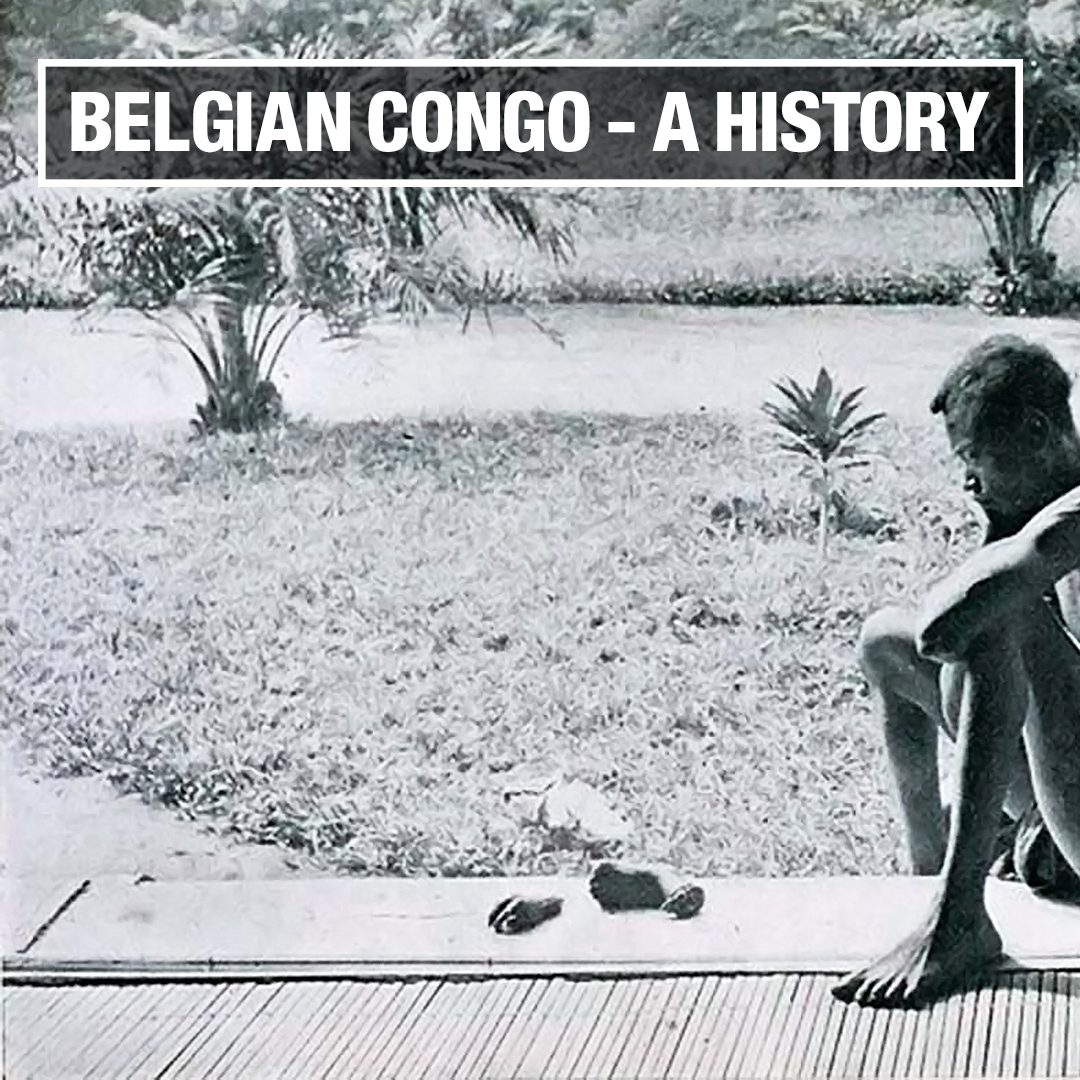
From Rubber Trade to Cultural Genocide: A History of Belgian Colonization in the Congo
102m 10s
The transcription delves into the colonial history of the Belgian Congo, highlighting King Leopold II's endeavors in the 19th century. The narrative discusses the economic and prestige-driven motives behind European colonial exploitation, emphasizing the role of missionary work and the Berlin Conference of 1884 in legitimizing colonization efforts. Leopold's strategic alliances, including with explorer Henry Morton Stanley and American Henry Shelton Sanford, aimed to secure support for his Congo colonization project. The transcription sheds light on the complexities of colonial enterprises, illustrating the intertwined dynamics of power, exploitation, and the quest for control over territories and resources in Africa.
Transcription
19328 Words, 106665 Characters
Welcome back to Revolution in Ideology. I'm Jared and today we are doing a deep dive in the colonial case study of the Belgian Congo. We've been doing a lot of case studies on colonialism. We think it's important to have a discussion on this, especially since increasingly we have been finding that this what used to be very popular case study that people were well aware about, like I said, it even made its way into like a Billy Joel song in the 80s, we didn't start the fire. The very popular case study has all and off the proverbial radar of big important 20th century events. So we are here to reinvigorate the conversation around it. So without further ado, we're going to dig into the history starting with the Congo free state. I do want to start with the disclaimer that we do have pages upon pages of research regarding what Congo looked like before the Belgian showed up. We don't necessarily have time to fit that into this episode and more importantly, if we did try and go through the entire history of the Congo, which goes back thousands and thousands and thousands of years includes diverse kingdoms and diverse groups and a whole bunch of different linguistic groups and cultures and traditions and rituals and things along those lines. We would actually probably be doing a great disservice to it. So we are going to just pick up with the colonial project in the 19th century. So without further ado, I'm going to dig straight in. We're going to pick up with the Belgians in the 1830s. They are a freshly born newly independent nation state as they freed themselves from the Dutch. They immediately set up a constitutional monarchy, which is going to play a role in the colonial exploitation. We're going to be talking about going forward here. In two countries, one of the things that they decided they need to do, and this is mostly under the auspices of the monarch that we're going to be talking about, King Leopold II, better known as the builder king, at least in Belgian history, one of the things they decide they need to do to legitimize their existence as a newly born country is to get into the colonial competition for exploitation of the global south. This is taking place in Southeast Asia. This has been taking place still in parts of Latin America at this point in time. This has been taking a place in the southern Pacific, and of course most notably in sub-Saharan, I mean not even just sub-Saharan, all of the African continent. Now, we must also preface this with the idea that this isn't just about creating legitimacy. There is going to be economic rationale for this, right? There are just a vast array of natural resources throughout the African continent, obviously it's huge. And one of the things that you can do to build your prestige as a fresh baby country is exploit the labor and the natural resources of the continent, take those resources back to your home nation state, create finished products, showcase them, which we'll talk about when we talk about his museums and zoos and things along those lines that he's able to create. And again, it's not just about like in this case building an economy, but it's building a prestige. It's almost like 19th century peacocking. Is there anything that you want to add to this both ideal material rationale for the wildly immoral practice of colonial enterprises? I wanted to point out just like you said, like the economic rationale, Belgium's a tiny country. And so if it, which it does, right, if it wants to have any kind of economic status on the global stage, it's going to have to find resources elsewhere. And as you mentioned, everyone else is already out colonizing African nations and other nations across the globe. So of course, just inevitably if they're seeking status and economic any kind of economic control on the world stage, they're going to have to seek something somewhere else. And the other layer that we need to add to this is by the 1830s and 1840s, 1850s, most of the European countries are padding themselves on the back at this point for abolishing the transatlantic slave trade first and then abolishing slavery within their own home country. So they're feeling that they're somewhat enlightened now. But that doesn't stop them from then just changing their discourse, mostly for again, prestigious or economic reasons to then create slave labor within Africa. So it's great that perhaps there are no more slaves in the United Kingdom at this point or within French borders. But there are going, they're going to still use slave labor tactics. They're just going to do it in Africa and hopefully away from the prying eyes of press or abolitionists or things along those lines. And we get that in the Americas, it takes a little longer for them to abolish slavery, but here in Europe, again, they're feeling very enlightened at this moment in time and King Leopold is going to use part of this rationale that he is going to help end slavery through this process to eventually gain control of the Congo by the 1800s though few European countries had gotten control of the central Congo, which is where a lot of this story is going to take place. Obviously, Europeans have been accessing it since the mid 1400s when the Portuguese more or less kick off the transatlantic slave trade with their travels around West Africa and then around the Cape of good hope and off to India and doing all the various things that they do. But the heart, the center, the heart of the Congo has not really been penetrated by the by the Europeans and that's for geographic reasons. It is dense mountainous jungle when you think of African jungle, you're thinking of the Congo and many people had, well, I just shouldn't say many people, many Europeans had not made it in there is very, very, I don't even know what the words I'm looking for. I guess I'll just say it's a vast jungle, right? It's a vast jungle and it's hard to penetrate. But it also plays into the question why the Congo, if you're a baby new country named Belgium and you're thinking we need to colonize something so that we can get the economic under upper hand, where should we go. The Congo was because of its geographical location and difficulty of navigating into its heart, like you mentioned, it was basically one of the only places left, so there were slim pickings at this point. But people knew there were natural resources there, the Congo River itself is one of the most important rivers in terms of human civilization going back again hundreds of thousands of years in human development, the Congo River itself played a huge role because of the vast things you could, it's for trade, you could fish. Obviously it is part of the reason why you have this rainforest in the center of the Congo, so Europeans had an idea. There's also obviously forays into this region because it goes far enough east that it might also show us the headwaters of another important river, the Nile. And again, it's a way to perhaps entertain taking over regions on east, on the East African coast, which the Belgians were thinking about, they were controlled by other European nations, they wanted to get in on trade there as well. Geographically it's important and it gave Belgium an opportunity to do a whole host of different things to try and get into this colonial game. This made me think of that, this is one of the few places that was left where Belgium could go where they wouldn't be stepping on other people's toes, right. At least in the center of Congo, that's true, but they did have designs to step on a few toes if they made it all the way to the east coast of Africa, which they did have some designs of. Regardless, this is unclaimed pickings for Leopold to get in the game and that's that's where we want to go this, go with this. By 1876, King Leopold II had established the International African Association to essentially game plan, missionary work and formal colonization, starting with the idea of missionary work is important. I don't want to try and get into the brain of King Leopold II and talk about how truly faithful he was to Christianity. But I do think that it is strategic for him to start conversations regarding colonization with missionary work among not only his own people, but other Europeans. Why? Why was that a strategy. Well, this is making me think of a much larger conversation that we clearly don't have time for here about how missionary work is so oftentimes even today connected to colonization, right. But it. It allows people to not even like mentally justify, but to economically justify, you know, spinning resources on these efforts under the auspices of, you know, religion. Well, and again, if you are other Europeans or even the US, who he really wants to gain favor with in this enterprise, this looks good that you are going to spread the word and save souls and quote unquote, eventually when we get to the white man's burden, which actually hasn't been authored yet, going to help quote unquote, civilize these other peoples. You're saving them, even though they never asked for this, right. You are helping them realize your level of spiritual and material guidance, right. Like that's that's what you're doing. He goes on to court the very famous Welsh explorer Henry Morton Stanley at the Brussels Geographic Conference, which of course he holds. And he argues there is a need to civilize the Congo, not just the peoples of the Congo, but of course this wild vast jungle that we were just talking about that very few Europeans had gone through. So all colonial enterprises isn't just the subjugation of the peoples of those places, but of the lands. There is this uniquely Western understanding that controlling nature is also part of the civilization process. We see this with numerous colonial enterprises to include right here in the United States, the idea to civilize the West, right. That was part of the romanticization of the frontier thesis that Frederick Jackson turners, right. It's not just about in this case, well, definitely cleansing of Native Americans or subduing Native Americans. It is this idea of more or less shaping the land to fit what you think is a civilized nature, anything to add there. No, you're okay. He gained fame through finding the lost, excuse me, Henry Morton Stanley gained fame through finding the lost missionary Dr Livingstone in 1871. So this was a big get for Leopold by more or less this Henry Morton Stanley free agent explorer. He basically signs Henry Morton Stanley to again to basically start to chart out a course for colonization in the Congo. And it was important. Stanley does sign on he ends up exploring, setting some treaties with local tribes as well as other European nations, and importantly, publishes about the possibilities. On treaties, this is what he had to say, basically, well, this is not what he had to say, but this is a report on the treaties that would be established with other African kingdoms. It says, and I quote, the treaties with these little African tyrants, which generally consist of four long pages of which they do not understand a word and to which they sign across in order to have a peace and receive gifts are really only serious matters for European powers. In the event of disputes over the over the territories, they do not concern the black sovereign, who signs them for a moment. The important part of this and this was written in 1892, another minion in the area, Bon Chomp is the one that writes this, but essentially what he's saying here is all of these treaties they're going to be set up by Europeans like Stanley at the behest of Leopold aren't necessarily about legitimacy for the African tribes or the African or the African kingdoms. They're about legitimacy for Europeans, right? And again, this isn't new. We see this with the numerous treaties that were signed by the British in Tasmania in an episode that we've already done or the treaties signed by the British in mainland Australia or, of course, by the Americans in their conquest of the West with Native Americans. These treaties don't necessarily apply to the societies they're meant to apply to. What do you think I mean? Yeah, I mean, like you said, it solely functions to legitimize the actions of the whites to the whites, right? No standing or bearing or even like it says here, understanding by the indigenous people of the lands, it's not for their sake, right? It's clearly just for the sake of the colonizers. Right, and then they can come back on these treaties and saying, well, you signed here and you signed here and you signed here by forcing this upon societies that don't even recognize the same type of legislation, right? They're completely different in terms of their society, what they view as legitimate. These things are completely different, but they can always point back to them and use this word that we really love in Western colonial enterprises law, like law and legislation. It's right here in writing, this is says x, y and z. And again, those of you that have been following our channel for a while, we could also argue that as good as we think laws might be, they also legitimize control, right? And they are part of power dynamics. And in this case, I have a lot of green none of these societies would have thought the no concept of like you could write words on a piece of paper that would signify ownership over the land. Right, that's not a thing. And more times than not in history, laws are written from the top down and rationalize inequitable power dynamics. Stanley himself is is is against slavery. So I should say that he's he's he's been an advocate against slavery for a long period of time, but he's not for equality, at least not racial equality is we would understand it now. And he's also OK because of this with the colonial projects in which he's basically speculating for he's also sort of OK with the horror treatment of the indigenous peoples of of the places that he's exploring. He's also kind of complicated in that he respected the culture he liked to learn about the culture and the languages and the rituals and traditions of all of the different peoples he was meeting for he's a very complicated figure essentially is what I want to say about about Stanley is that he is part of the colonial enterprise, but also have this romanticized almost orientalist notion of the peoples that he was helping colonize his most famous writing of the time period and it's his it's his work in 1885 and it was pretty popular because people like to read about these romanticized exploratory expeditions right like and it's called the Congo and the founding of its free state he wrote it in 1885 you can find it. It's now open source online so if you want to read a romanticized rendition of colonization from from a explorer himself it is available the Congo and the founding of its free state I don't have anything else to add to that, but anyway I thought I'd mention it. All of this leads up to a very important conference in 1884 it's a conference that most people will learn about in a history class and and obviously gloss right over it and not necessarily register it, but the 1884 Berlin conference is something that we have to talk about briefly. This is essentially European powers getting together and essentially setting the terms and conditions for their colonial projects in Africa, this is basically a bunch of and I'll say this is a bunch of white people getting together in Europe to decide the fate of Africa without inviting the Africans. Which is very interesting since they had all been padding themselves on the back at this point and by 1884 even the United States at abolish slavery they're all padding themselves on the back for being so forward thinking by getting rid of this horrible institution of slavery and yet they're now designing a plan in Berlin Germany about how they're going to basically move this labor system to Africa itself. 14 of nations show up at this Berlin conference and basically agree on terms and conditions now this will play a role later for some of the other nations to call out Belgium later for their exploitation of the region they will say that Belgium is violating terms and conditions of the Berlin conference so it does have big consequence here. The Congo itself at the Berlin conference would be dubbed a free jet free trade zone but Leopold's quote unquote corporation ends up receiving territorial preference as a campaign that through a campaign that he built with Stanley and it was sold on the idea that Leopold with the help of Stanley is going to complete missionary philanthropy within the Congo and obviously all of the other Europeans like to hear this they think this is important but. Leopold is less concerned with European support he's really hoping that the United States will approve this now United States is not the world power of the of the 19th century so why do you think Leopold was hoping for US approval much more so than maybe British or French or whatever what why why appeal so heavily to the United States in this case. I mean they definitely at this point have a unique economic situation with slavery you know just recently ending and not only that but their position in the textile globally right with cotton etc they're kind of like you said they're not a world power but they are uniquely positioned in many ways. And maybe he had some foresight that because of what was going on the United States they would eventually become a power maybe he had a little bit of foresight there and knew they would have a lot of influence also them being a relatively new country alongside Belgium maybe there was going to be the shared experience of trying to get into the colonial game competition the United States was trying right they had already waged a basically an uncalled for war against Mexico and seized about 55% of that they were well on their way in about a month. I want to say 1884 the at about 1314 years they will declare war on Spain and sees a bunch of territory that way Puerto Rico and Graham and so on and so forth the Philippines so on and so forth so yeah they were both engaged in this idea of how do we begin to compete with other European powers as new countries here on a colonial scale and win this economic prestige. Okay he does win us approval with the help of Henry Shelton Sanford who saw an opportunity to create a Liberia like work colony for freed men so he wins with the help of an American name Henry Shelton Sanford and essentially what they were hoping for is is is basically a cotton colony for freed men what do you mean by freed men what do I mean by freed men in the framing from Henry Shelton Sanford. These are recently freed slaves that were sent back to Africa without going through that entire history it probably deserve its own episode because I don't think we ever did one on it but we're not going to do that right now long story short there was a movement by some abolitionists who wanted to get rid of slavery in the United States for some moral and ethical reasons but also for some racial reasons and just ship the recently freed slaves back to Africa obviously this came to fruition to a small extent in the nation state of Liberia they thought they could do this as well with the Congo and still get. It resources like cotton out of it. I'm going to say like it wasn't like they were doing it out of the goodness of their heart they wanted to like transport the labor from the United States where it was now illegal back to Africa so they could exploit it there. Exactly what Leopold created with Stanley's help was a single shareholder operation known as the international associate association of the Congo it had been established actually slightly before the Berlin conference back in 1882 the idea is that this would create actually before I even dig into that single shareholder operation what do I mean by a single shareholder operation who's the shareholder. Yeah exactly the king it's video I mean this is basically a private enterprise by the king of a newly formed nation state hoping to be profit off of this a colonial enterprise. There nothing correct about that at all. No nothing the idea was that they were going to create the illusion of a semi liberal political structure within what was going to happen in the Congo after the Berlin conference Leopold was going to give himself the title of sovereign. He did assign puppets to three different departments so he can of course diversify what's going on there and if anyone comes looking for potential corruption which again it's it's already in the cards there will be corruption you can say well actually I have this administrative right here these three of these at this administration I should say three departments the department of the interior the department of foreign affairs and the department of finance all of this is under the international association of the Congo. All of this would be in Brussels though not necessarily in the Congo okay there was going to be represent representation of Belgium in the Congo that was going to come in the form of a vice governor general and a minister of justice in the town of Boma. 14 districts were then divided up in the Congo again Leopold's designing all of this 14 districts would be established with Europeans at the head of each they went on to buy elite Congolese aid for exploitation. And this is something we've talked about in numerous case studies on this channel why would certain Congolese willingly sell out some of their land and their own people to Europeans do you think they truly understood what they were doing or the level of exploitation that was about to hit the Congo where they just corrupt themselves what's in it for them to exploit again their own people in this case. And probably all of the above but I definitely they probably didn't foresee the tragedy that was coming for sure but even if they did I can't guarantee that they wouldn't have also done what they did anyways right it's the people that are looking to get a leg up on their. I say countryman at this point or whatever but in this case their fellow Congolese right and they take take a certain position in the colonized in process in order to do so that's a terrible position and it benefits the colonizer because they get to essentially outsource some of the domination or the actual work of doing this. We saw it with the Kenyans how they were able to buy out certain different tribes of Kenyans to suppress the cuckoo the cuckoo tribe specifically and eventually reward them with cuckoo lands that they of course did not earn we saw this in india with the creation of the Indian supply regiments that was suppress other Indians we see that we even saw this in southern plantations in the United States where overseers would often be just other slaves right we see this over and over again and unfortunately it was an effective strategy for oppression. It also creates this divide and rule so if you are worried about potential resistance rather than looking all the way up the proverbial hierarchy those at the very bottom will be looking to their immediate oppressor rather than looking at the entire picture right and that's one of the important things that I think the Belgians already understood right they come into the colonial game late they've seen these tried and true enterprises by the Brits of the French or the Americans or whoever else they've been looking to model after and they also implement this system so. Leopold during this time also decides he is going to serve assert that all quote unquote vacant lands in the congress will fall under the propriety of the state now obviously this is going to be wildly open to corruption what does one consider vacant right what could one consider vacant any commentary there. Yeah I mean you could consider anything you wanted to be vacant at that point right because if you're the white colonizer you can say oh well it doesn't really matter what they've done here right they're quote unquote uncivilized so none of this actually counts as improvement or occupied or whatever right. And these are mirror images to again what we see in the Aboriginal colonial project in Australia or the North American colonial project by the French and the British and the Spanish and so on and so forth. Lands that were actually used by people there but didn't have structures on them for lack of a better term but you're used and left pristine for various reasons maybe it's for hunting maybe it's for fishing maybe it's for gathering certain resources that only grow under certain conditions. We perceive those as vacant because again there's no structure on them they haven't been going back to this idea of essentially overhauling what the natural geography looks like to make it fit whatever are in light and world views are at a time under again a positivist lens check another episode for positivism whatever it looks like it doesn't fit what European lenses of the lens is at this time and consider it vacant. Or like this argument has been used by colonizers right before to justify and argue that the local indigenous population had no rights of ownership over the property right because they would look to their laws and say well ownership would be established by some kind of terraforming or improvement of the land or like rigid permanent structures so they'll go into like North America and say well. None of these tribes really have terraformed the land in the significant way or built permanent structures so they don't have any claim to ownership whatsoever it's free for our taking right which is obviously nonsense. The International Association of the Congo did and I will say did we will give them this this bit of credit they did liberate slaves under the old European and or traditional servitude conditions. So what little bits of slavery still existed in the Congo to other Europeans that had made brief little forays in there or even traditional servitude conditions were outlawed by the International Association of the Congo and I'm using the word servitude intentionally because oftentimes in history when we think about slavery one of the things apologist tend to do is they argue that ancient societies or African societies or other societies all around the world had a form of slavery and to an extent they did have servitude. But to compare it to like antebellum American slavery or what was going on with the transatlantic slave trade is just wildly incorrect right it's not it's not a apples to apples comparison. But the idea that you are liberating many of these servants makes you look very good again in an abolitionist era where many of the Europeans and again in this case the US as well who's going to be part of this process are patented for the first time. Or patten themselves in the back for finally abolishing slavery within their borders to essentially enforce what colonial rule will look like within the Belgian Congo the well leopold basically I want to say I was going to say the Belgian part but they don't even really get involved with his is really leopold creates something called the force public and of course this is he argues for the safety of the public of course I mean it's it's in the name. We see this over and over again and enforcing agency given some sort of nice name to make it to make the people that are going to have to deal with its enforcement and its oppression feel like this is for the greater good we see this over and over again with the committee for public safety in the French Revolution which ends up leading to like the the great the rain of terror almost of the great here the rain of terror we see this over and over again again it's a very clear strategy what is that strategy anything you want to add. Now the first question is my mind was the French Revolution that's exactly correct yeah. Patriot acts things along those lines these things that are named very nicely but are actually oppressive forces that cement power dynamics of inequity within these systems. So the force public which will play a huge role in some of the things I'm about to talk about is created again under the auspices of safety not just for the Belgians but of course for the Congolese themselves. Okay now one of the things that that we have pulled immediately realizes that colony or colonization as a private enterprises actually tough one of the things that had happened over time with these much more experienced colonial powers is many of them did start as private enterprises even dating back to the the Brits in Virginia those were private enterprises at first it wasn't all of the British it was the Virginia company it was the Massachusetts Bay company. Or if we want to talk about the British East India Company or the Dutch East India Company these are private enterprises that begin the colonial process but in almost every case because of the trials and tribulations they face oftentimes in the forms of resistance it becomes then more quote unquote national or royal enterprises they usually end up getting absorbed into a more state based form of colonization for a whole host of reasons we don't have time to get into. But one of the things that he realizes is very difficult as a private enterprise is rushing against the competition of more established players an example of that was competition coming up from South Africa in the form of Cecil Rhodes who was claiming lands from the South as well as another competitor that Leopold had to deal with was the Zanzibari Slavers on the east coast that were coming in east to west essentially they were holding sway in the eastern part of the Congo. I briefly want to mention Rhodes for those of you that don't know Cecil Rhodes is important he eventually had an entire region named after him in South Africa known as Rhodesia it is now the modern day nation state of Zimbabwe but Cecil Rhodes ends up being a very important player in what would become diamond exploitation in South Africa that is an issue we are still dealing with today everyone I think every one of our listeners probably going to be aware of the controversy around blood diamonds well we can thank Cecil Rhodes for starting that entire process he's one of the main players there. It's also not coincidental that the Belgians get involved to this day much of the diamond trade ends up being in Belgium in an important city known as Antwerp so all of this ends up getting tied together I don't have time to go deeper into that but it's important for us to understand that Cecil Rhodes and the Belgian connection takes place during this period of time in the late 19th century. Now one of the other things that Leopold finds as a problem for a private enterprise colony like like like the Congo is going to be is that he is in immediate debt right even though he is a royal and he's the king of Belgium this is a private enterprise so he had not been able necessarily to dip into like the public coffers for this this this project and so he had been taking out loans which feeling the pressure of being in debt some might argue this isn't letting him off the hook he is a horrible man but some might argue some of the oppression that is that we're about to talk about takes place because he is feeling the immediate pressure of being in debt debt obviously changes the game just a little bit. One of the things that he immediately changes upon realizing that he needs to start making revenue immediately was that vacant land policy that we already talked about he needs more land to extract more resources and eventually labor from i'm not going to try and say the policy's name in French I have it written here and I was about to try it but I've decided rather than butcher French i'll just say it's the vacant land policy. The other thing that that goes on regarding the vacant land policy is that newly freed slaves quote unquote freed slaves could garner commodities like ivory and rubber but only sell them to the free state so part of that vacant land policy was this idea that yes we've just liberated you from your indentured servitude under an African king or maybe slavery under a European home stutter or something along those lines and you can go out and you can maybe make a living through these new commodities that we've identified as valuable ivory, rubber etc. But you this is not a free market by any stretch of the imagination you can only sell it to the Belgian free state or the Congo free state here in this case and that means you can only sell it to basically leopold and his agents. This also meant that the state got to set prices on commodities and rather than pay Congolese or their newly newly freed slaves in this case in money they paid them in guns what might this motivate. One of the things modern westerners for lack of a better term tend to associate Africa with is constant civil war and violence and things along those lines and those things exist i'm not going to sit here on this podcast right now and say they don't exist. But one of the things that we fail to recognize is that it is the colonial policies that laid the groundwork for this constant state of violence and civil war based on control of lands and commodities and the Belgian example right here is clear as day it's not even just a Belgian example we know that the transatlantic slave trade was based on setting rivalries within African kingdoms paid in guns for them themselves to gather up slaves to buy more guns which led to more violence which led to more rational to need more guns. Thus getting more slaves and so on and so forth it was a vicious cycle and we're seeing that here again like this incentive is is set up just to create more violence by 1892 though leopold's debt was still soaring. And so he decided to create something called the Dominal system the Dominal system in the Belgian Congo or the Congo free state I should say was essentially the idea that private investors could pay state and annual pay the state and annual dividend to claim land on 10 to 15 year contracts which would essentially fund warlords who again paid in guns had to generate revenue by forcing their own subjects to work essentially re enslaving them. So that was the idea there that private investors could go into little parts of land so essentially the free state itself the Congo free state is no longer about extracting just resources it also becomes basically a land speculation and land holding company in which other private investors are buying little bits of land and basically becoming little dictators of those little bits of land. And and paying warlords are local warlords in guns to exploit labor so that they don't have to feel like they're the ones exploiting the labor right they're not the ones re enslaving Africans it's Africans re enslaving Africans and they get off feeling I don't know morally unchained by this this horrific system that they've put in place you have anything to add to that. I mean that's for sure the companies that were set up in this Dominal system also were granted the right to place in bondage any Congolese that they deemed were not working hard enough that is very vague language there. Essentially this is legalizing slavery under certain auspices this is not unlike what we see in things like the 13th Amendment in the United States right if you are accused of committing or excuse me I shouldn't say accused. If you are convicted of a crime right you can be placed back into bondage and forced to work for the state. Needless to say what is that motivating it motivates corruption you can look at any Congolese and say if you're not working 20 out of the 24 hours a day then you're not working hard enough and we can place you in bondage and there are numerous images of this time period of Africans being re-chained literally this is not hyperbole the the camera had been invented at this point in time you are seeing pictures of people with with with with with with with with I don't know if the thing around your net goes but like the middle thing around your neck and chains what does that thing call the collar yeah thank you. Anyway the remainder of the free trade zone at this point in time is declared a five of the crown where revenue all went straight to Leo himself and that is an interesting term here essentially we're going back to middle aged feudalism at this point in time where they are going to consider the Congo or anything not privately owned now in the Congo since he sold off some of that land a five of the crown and of course that means all of these individuals there within to include the Congolese will now be subjects of Leo himself of Leo pulled the second himself. Well this is also the first point where we see not like this is the first time there's corruption in this process but the blending of this corporation that the king had set up and now it's starting to become you know national policy. There are also going to be during this period of time wars of aggression by the bell chance in 1891 Leopold sent a Canadian mercenary named Williams stairs to the Patanga region to force a treaty on a kingdom that have very again a very rich history I said it in the intro I don't have time to get into the rich history of a lot of these places and I would probably do them a disservice myself but a a kingdom called the yiki kingdom. The results in this led to the murder and be heading of royalty in the yiki kingdom and then the fourth signing of a treaty which essentially acquiesce the land and resources of the yiki kingdom to the Belgian so this was just violence this was outright violence now that said I will say that that yiki kingdom also had a very rich history of indentured servitude and some might even argue sold slaves both way back during the transatlantic slave slave trade and to the Zanzibari slave traders of the 19th century. So some say this was a in the 1891 this could have been painted if anyone wanted to call bell drum out on this as a liberatory mission so I must I must preface this with that while it's not a preface I'm finishing with that regarding this this action by the mercenary Williams stairs. In 1892 the Belgian star a proxy war on with the Zanzibari slave or a very famous slave or named tipu tip both essentially used Congolese mercenaries to fight because well I mean of course they do but the Belgians do win this battle against the Zanzibaries and the victory is able to be sold back to Europeans as as great public relations this is and again it's undeniable that this individual tipu tip was a. The Zanzibari slave ends up being defeated by the Belgians this looks good and justifies other actions that they are going to do in the Belgian Congo in 1894 seeking expansion into southern Sudan essentially the Belgians begin a fight with what we're called the modest rebels in a region called the later enclave the reason this is important is because this would be a place that the British are also eyeing at first they're cool with the Belgians going in there. Aggressively and starting this fight with the modest rebels rebels but they are not going to be thrilled about this later when Belgium doesn't just leave the UK was essentially like all right we'll help we're having problems with the rep with these rebels will let the Belgians help us out a little bit later though the UK is going to force Belgium to give it back to them so control over this region back in 1909. Anyway the reason I mentioned this is this is three very clear cut examples that the Belgians aren't just there for missionary work they're there with a military force as well. That said the debt problems of Leo do not go away they pave the way for colonial abuse that I don't know is I mean it's legion at this point in time Belgium colonial issue officials would be paid in commissions rather than salaries that's the first thing first warning sign that we're going to have problems why would paying your colonial officials that are dictating the way things are going to run in the Congo free state. Rather than just giving them a salary like you make I don't know whatever I here's your salary every year this is what you're going to get no you get no salary you're only paid in commission why how could this lead to problems. It motivates them to be as oppressive as absolutely possible right to eat out as much as they possibly can and ring every bit of resource and labor they can out of their charges in their 14 various districts the Congolese eventually do not even are not even allowed to essentially sell to the state all surplus resources are all surplus commodities are now going to be considered state mandated and placed within a quota system. Essentially if you just happen to live in one of these 14 districts essentially comprising what would be the entire Congo free state you're you're now required to gather a certain amount of commodity depending on where you are eventually the main one's going to be rubber we all know I'm going to get to rubber here in just a second. But there's still ivory trade there's still things going on in that regard still probably some minerals a little bit of mining going on but it's all going to be state mandated quota used at least be able to sell this to the free state and like I said you were often paid in weaponry rather than then money or food or something more useful you were paid in weaponry but still this state mandated quota becomes part of free state policy at this moment in time. He also and again I keep using the term free state because that's what what Belgium called it in Leopold specifically called it but it's anything but free trade he began to limit free trade with tariffs and duties even on other Europeans that were seeking to make their fortunes in the Congo and that's what gets the rest of Europe's attention. This is where violations of the Berlin treaty start to take place limiting free trade within the quote unquote Congo free state goes against essentially what the Berlin treaty sought to sought to create in the Congo this place where all of the Europeans essentially can come and again exploit the resources and labor to make themselves vast amounts of wealth. There are also going to be some important expenses that Leopold is going to accrue during this period of time like many colonial projects of the late 19th century and early 20th century they're going to need to build infrastructure to essentially systematize and speed up the exploitation of resources and then distribution thereof. So a railroad is started in 1890 it is known as the Matadi Kinshasa railway it's a project that takes about eight years to complete 1890 to 98 needless to say the Belgians weren't going to build this who's going to be forced to build this the Congolese under horrible work conditions. At least 3500 Congolese end up dying in the construction of this railway under the leadership of man named Albert this when many Congolese refused after of course seeing these work conditions to work on this railway the Belgians began to recruit people from other parts of the world namely from China and the Barbados and Barbados I should say. These workers end up filling in people from our day Barbados were actually held at gunpoint while they worked to complete this railway and 300 to 500 Chinese end up dying building this railway which again it says a lot about these colonial projects there are copy and pasting from other colonial projects using the Chinese example one need look no further than what was taking place at about the exact same time in the United States regarding rail railways here I mean we even get later on because of xenophobia. The Chinese exclusion act in US legislation but again these are cut and paste examples and I suppose that's because other European especially Belgians in this case see them as effective for exploitation of land and resources and labor as well. The thing that's going to save Leah Poole's ass at least financially in terms of the resources that he is getting out of the Congo is the invention and then mass production of the automobile because the automobile is going to require well requires a whole host of resources we've done an entire episode on how what a horrible invention the automobile is in terms of ecologically economically sociologically. We've already done a whole episode on that but specifically for this it's going to require one resource nearly above all others I don't want to say above all others but it's very important it's rubber rubber the Congo has rubber rubber galore and again not just for tires but belts and hoses and all kinds of other things so the automobile and the advent of the automobile and the proliferation of the automobile as a primary source or primary source primary form of transportation is going to save Leo. Rubber demands sores and he takes this opportunity to create successive decrees mandating that all rubber within the Congo free state was actually property of the state i.e. him and to be harvested and turned into Belgian colonial officials at regular intervals this is a decree so essentially this is a top down decree almost like I mean it is it's an executive order saying if you live in the Congo free state and you are Congolese you will now at regular intervals deliver rubber. Under quota to a colonial official that is now part of your life you're not going to be compensated for it this is just the essentially this is the cost of living in the Congo this is the cost of living in your home rubber in the Congo though I must say this is an interesting side note is a little bit different than other other areas around the world where people were acquiring rubber rubber in the Congo was not from like taps elsewhere but from the vines of the rubber trees themselves and these trees needed to be slashed. The interesting part of this is this process itself was somewhat abusive you slash the vines you get all the rubber out of the vines and then you actually lather your whole body up with it let it dry and then you have to have it scraped off which is wildly painful later and that's how you acquire rubber in the Congo so even the process of getting the rubber. This is a human rights violation I would argue any thoughts on anything we've talked about regarding the automobile rubber and the acquisition thereof. Now I think that you know you can't have a conversation about the Congo without talking about sort of the global economic knew you surrounding the automobile right specifically the automobile and how it so quickly once it became mass produced proliferated. You know industrialized nations and then like you said just the demand for rubber that is just exponential as a result and like you said leopold is kind of locked out that he happened to be in the Congo where you could get rubber at this time. Otherwise who knows how this probably I believe that the colonial project in the Congo would have failed you know he kind of got quote unquote saved even though it's atrocious but like financially in his project by the automobile. So it's at this point that we get to what many would call the onset of genocide in the Congo and we'll get to like what we label this colonial project later but this is where I freely admit this is going to be the onset of basically a genocidal program. The force public which I'll pretty much be calling the fp from here on out begins focus more on enforcing the rubber quota system that anything else they're not there for public safety we already talked about that under Leo's new decrees their main job is to ensure that the Congolese are collecting their rubber quota. Leopold also secretly encourages Arab slave traders to enforce things on the eastern side because that's where they're coming from despite his rhetoric of being an abolitionist to essentially fill his ranks. The goal essentially was that the Arab slave traders themselves would pick up more Congolese and enslave them and then put them back into the Congo free state so that there so that there would be more labor to acquire this rubber. Which again it goes wholly against what what he had argued he was there for now as far as East African slaves they had already been conditioned in Catholic missions they were socialized to hate the Congolese they were given guns they were given whips and they were taught to let the frustration of their own plight under these Zanzibari. Slavers out on the Congolese themselves so what you have here and again this this this has been used over and over again one of the examples we brought up was was with Kenya where rival tribes there was divine and rule strategy they essentially created these programs or these conditions in which these rivalries would lead to more intense violence will here we have it as well you take slaves from a different part of Africa bring them into the Congo and essentially give them a little bit of authority of another group of people in this case the Congolese and it leads to even more violence. By the turn of the century there were 19,000 slaves engage in this type of activity mostly in the eastern part of the Congo at this point in time it was there was torture there was rape there were village birdings and the Belgians can kind of wash their hands of this saying this is like African on African crime. But in reality the stage was set by the Belgians themselves and this is where we get what is known as the red rubber system essentially it is a system with no oversight or legal protection for the Congolese labor systems the labor system itself was only in was to meet lia leopold's quotas on rubber where private companies within the Congo free state those ones I told you about that get 10 to 15 year contracts they are encouraged to get creative quote unquote creative to produce as. To produce as much rubber as possible and that's the funny part of this where free trade kind of like breaks down a little bit these private companies that bought into these 10 to 15 year contracts they're also going to be exploited a little bit by Leo because they are also right now subject to the quote which is kind of interesting but they're also getting wealthy themselves so I don't know that they mind as much as the Congolese. Regardless an example of this would be the beer Congo company which was notable for streamlining the process of exploitation when I say streamlining what they would do is they would take women and children captive in each village so that the men would be forced to work basically threatening the lives of these women and kids and again the men wanting to save the lives of their wives their children and so on and so forth would have to work. The problem with this is if you're holding the women and kids captive and the men are collecting rubber all day they leave that leaves literally nobody to grow and cultivate food in the village which once you're done working your 22 to 23 hour work day as a man and of course being held captive the women and children don't have time this led to mass famines mass famines throughout the Congo which of course called the deaths of hundreds of thousands if not millions of people in the Congo because there was no food being grown. All of the labor resources were being used to extract rubber there were even manuals created by the FP or the first force public to teach militias on how to take hostages the most effective way to take hostages the most effective way to threaten the men to force them to work literal manuals not unlike an owner's manual for setting up a VCR they had manuals on how to take African hostages what do you think of that. I don't know why I use the VCR example but yeah I was just about to comment that's an interesting one did dated yourself there yeah. The whole thing is just a tertiary right and I like. I don't even know what to say but. It's they're so dumb right like I don't know why I would expect me smarter than this but the whole thing about like clearly there's famine because you've imprisoned everyone that isn't getting rubber so what did you think was going to happen like the problem is they don't actually care because all the workers are expandable right there's in their minds more than enough to go around so they don't actually care if they're going to die by the hundreds of thousands as long as there's enough to get the rubber they need they're good right the whole thing is just absolutely outrageous. Another company the anversua company went on to literally recreate plantations based on the southern antebellum American model. I mean you have no more clear cut evidence that slavery came back that made a comeback slavery made a comeback they built plantations based on the model of the southern United States in the again again early 19th century. Because they saw that as effective workers who ended up refusing if you are a Congolese worker ended up refusing all of this as well as dissenters were initially beaten with something called the chicote I can't pronounce it correctly shouldn't even probably tried but regardless the hippo hide it's a bench essentially a hippo hide and you would be whipped. Consider continued resistance led to village burning by the force public so if you were in a village and initially you decided we're not going to play ball with these companies the beer congo company and the squad we're not going to play ball with them well initially they would then the force public would show up with hippo hide obviously a gunpoint and and whip everybody in the village. If you continue to resist they burnt the whole thing down. Which is a show of force and and and we must understand but as Nick said we must understand that that's actually kind of a dumb strategy be if you burn down the village and these people have nowhere to live eventually they're they're going to die and you lose your labor force this is just violence for the excuse of violence is it not. Private hired militias by the various companies were also encouraged by Leopold the second obviously because these militias will help enforce his policies but also save him a little bit of money on his fp's his force public. But there's a great example that comes to us from from one of the watershed historiographies on this that I haven't mentioned yet but I probably should now like the the go to secondary source based on primaries of this is a is a book and then eventually a documentary called king leopold ghost written by hot child. And it is it is like the main source on this on a lot of what happened in in the Belgian Congo but I want to read a quote from from king leopold's ghost here that kind of discusses this process here of the hired militias and the hippo hide beatings and the village burnings and things along those lines. So and I quote I'll start here one junior officer described a raid to punish a village that had protested the officer in command quote unquote ordered us to cut off the heads of the men and hang them on the village palisades. And hang the women and the children on the palisade in the form of a cross after seeing a Congolese person killed for the first time a Danish missionary wrote and I quote the soldier said don't take this to heart so much they kill us if we don't bring the rubber. The commissioner has promised us if we have plenty of hands he will shorten our service which is interesting to me I want to talk about this and I'm going to get to it here in just a second the hands is one of the most important like hallmark symbols of the free of the Congo free state. But what we see here is oftentimes these these very grotesque human sacrifices as an intimidation tactic by the Belgians themselves wildly in humane I don't even know that I need any more commentary on that I think the quote kind of does that. Initially though the failure to meet the quotas in these villages the rubber quotas meant death for individuals but this is important these idiots that are running these companies as well as the fp begin to realize that executing people immediately was actually hurting their labor pool. So they decide to try and scale back just a little bit they eventually decide that mutilation was the preferred form of oppression for both punishment and then eventually proof of death. So if you did end up executing anybody you would cut off their hand as proof of death now why would anyone want a proof of death this is what makes it so grotesque this is one of the most important parts of what makes it so grotesque to save money both the companies as well as leopold himself did not want wasted ammunition and to prove prove that you were not wasting ammunition when you executed somebody. You needed to have a hand brought back like a literal hand of a human being brought back for each bullet that was used it was basically a trading system and and I I must stress this it actually did become a trading system for a brief period of time among the fp that hands human hands hands of Congolese workers would become a currency what do you think of that. I don't even know what to say right this grotesque graphic you said terrible we have another quote from the time that comes from King leopold's ghost it's not it's not from the author himself it's primary source he uses a priest named swambe and he's speaking of a specific Belgian officer named Leon few few ves I want I want to say who ran a district north of a place called Stanley pool and I quote the priest had this to say. All black saw this man as the devil of the equator from all of the bodies killed in the field you had to cut off the hands he wanted to see the number of hands cut off by each shoulder who had to bring them in baskets a village what fruit refused to provide rubber would be completely swept clean as a young man I saw his name's Leon I saw Leon soldier Malili and then guarding the village of boyica take a net put ten arrested natives in it attach a big stone to the net and make it tumble another river rubber causes these torments that's why we no longer want to hear its name spoken soldiers made young men kill or rape their own mothers and sisters another example of this comes to us from a another source on it's called it's from Peter for bath in 1977 he wrote a book called the River Congo which also discusses the free Congo state or the Congo free state keep doing it backwards regardless and I quote the baskets of severed heads set down at severed hands I should say set down at the feet of the European post commanders became the symbol of the Congo free state the collection of hands became an end in a in and of itself force public soldiers brought them to the stations in place of rubber they we even went out to harvest them instead of rubber they became a sort of currency they came to be used to make up the shortfalls in rubber quotas to replace the people who were demanded for the forced labor gangs and the force public soldiers were paid their bonuses on the basis of how many hands they collected this was incentivizing human mutilation I mean let's clarify it just so we can paint this picture of what's going on so there's a certain rubber quota that must be met if that's not met then you must make up that gap by proving that you have executed the workers that did not meet the quota and you prove that by delivering their hands to demonstrate like Jared said earlier proof of death. So the the powers that be are going to get one way or another proof that you either here's the rubber that we have used to meet our quota or here's the workers that we have killed because they didn't meet the quota. Disgusting. Further incentivizing what we would just call african on african crime is the african slaves brought in from east african colonies or bought through these anzabari slave traders could actually shorten shorten their indentured servitude by collecting more hands than others so you know just don't have Belgians cutting off Congolese hands you have other africans cutting off Congolese hands because it would shorten their indentured service their indentured servitude terms. This led to of course even more mutilations and dismemberment though cutting off living hands was more rare than photos and sinew a oftentimes when I teach this in class many of the photos that I find or choose to use in class or people that are still alive just missing their hands a lot of the time it's children. Although that does mislead people to think that this mutilation was just mis mutilation of labor for the sake of mutilating labor and to motivate them to work harder more times than not if there was a hand in a basket it was off the dead person not a living person they were usually executed first and then the hand was removed. Leo, Leo reportedly, his quote essentially on this topic was cut off hands that's idiotic I'd cut off all the rest of them but not hands that's the one thing I need in the Congo this was after accusations of what was going on already started to come out he's essentially saying I would never order off the order the cutting off of hands that makes no sense I'm trying to I'm trying to gather as much rubber as possible and I need their hands for that this was of course his defense and I suppose it's an events that that makes sense. I guess if you're being asked why are there so many hands appearing in this now this as as currency within this economy because other Europeans would show up right missionaries are there that are perhaps like I would say genuine missionaries there to save souls or whatever they're trying to accomplish they're seeing this and they're going to start asking questions and that's his response. It's also during this period of time under Leo's watch that we have the creation of child colonies in the Congo because there were so many orphans well this is obvious death and destruction or rampant you have obviously mass executions taking place you have mutilation you have people dying of exhaustion because of labor you have mass famines you have entire villages being burned there are so many lives being lost you're creating obviously a lot of orphans that are going to be survivors. Leopold also sanctioned the kidnapping of many children and sending them against their will to Catholic to Catholic schools and when they were in these schools they would only give them two choices of the type of education they would receive they would either learn how to be laborers or they would learn how to be soldiers and these were the only schools funded by the Congo free state and I must stress that this whole enterprise back in the 1880s when Leo's trying to sell this to the 14 other countries at the Berlin conference that he's going to civilize and educate and make things better but by the time we get to this period in the 1890s the only schools fund by the state are turning the Congolese into either slaves or slave soldiers. What are your thoughts there. I mean there's a direct parallel I think to the Indian boarding schools that we see in the United States. The other thing that I think we need to make a connection to in this specific topic is one of the things that the West likes to vilify many African warlords for is using child soldiers as if that was an African invention I must stress right here is the idea that colonialism actually introduced the idea of the child soldier to the African continent. Not Africa itself and I want to stress that because again it's constantly vilified we we talk about it with what was it the the Coney thing back and when was that 20 20 20 20 I don't remember when it was we we we emphasize it here and we use it as a way through our lens to judge and we still do this. Whether the need the empathetic need to re imperialize Africa so that we can bring them up to our state state and standards and so on and so forth or to vilify it but in reality it is a Western introduction to the continent. 50% of these kids that end up in these Catholic boarding schools end up dying of disease and forced marches that they were forced to go on of course they were forced to go on these forced marches into remote districts for more exploratory purposes half of them die. Speaking of disease the other thing that is going to be a major killer of of Congolese at this point in time is disease because again you introduce these horrible conditions your burning villages down your causing famines you're working people literally to death this is ripe this is a ripe area where many where a pandemic is going to hit. Okay and we see this in other colonial case studies as well right disease becomes a major major player in the destruction of an indigenous population the major killer in the Congo with something called sleeping sickness but there were also additional bouts of smallpox. And I must stress this is it like the cute version of syphilis and gonorrhea that you can go to a clinic for and get cured they didn't have that in the Congo at this moment in time syphilis and gonorrhea were at times especially in a jungle in the middle of nowhere a death sentence believe it or not. We use those two as in a specific example to reveal that what else was going on in the Congo sexual predation by the Belgians. There actually was also a bout of swine flu that was going on at the time that also cost a number of people to die in fact in 1901 alone at least on Belgian records we have a we have on on on count or on record. And that's by disease alone in 1901 500,000 Congolese die in 191 1901 alone just from diseases this isn't from the mutilations this isn't from the village burning this isn't from from from from the executions this is from disease. So what does what does the world do while this is happening what does the world do well will actually give the world a little bit more credit than we would in other colonial enterprises even later colonial enterprises where people turn a blind eye to the executions taking place in Kenya is latest in the 1950s. But in this case the world cares and I'm not going to ask this question of Nick yet but I am curious as to why the world cares at this specific point in time and not for the countless other colonial enterprises that are going on between basically the 1400s and the 20th century right but they care about this one so I will give some people some credit here let's talk about it word gets out and an investigation will eventually ensue. Why does an investigation even occur well actually it's it's cash rules everything around me it's money despite the profits profitability of rubber because of the invention and then proliferation of the automobile Leo's debts persisted he was spending like a madman on on lavish colonial projects both in the Congo and back in Belgium. That's why he's known as the builder king a lot of this money was going right back into this idea of showing off my prestige peacocking about how awesome I am as a king and how great the Belgians are. Competitors from other colonies also begin to cut into Leo's profits i.e. rubber is starting to be cultivated in other parts of the world a good example of Southeast Asia under French colonial rule in what we call French Indochina Vietnam specifically there are competitors that are starting to cut into Leo's more or less monopoly on rubber production which which is going to cut into his profit margins as well. There's also of course the unsustainable colonial policies I just got done talking about for the last 20 30 minutes it's it's unsustainable to continue to kill your workforce at these levels right and cultivate more rubber than can be reproduced by the natural environment this led to some more international scrutiny on what was going on in Belgium. And some of the very missionaries that leopold had used as a cover for his economic exploitation of the region begin to turn on them even they could not turn they couldn't understand what was going on the wild abuses and many of them have been missionaries on other colonial projects that had abuses but what we're saying here is that the abuses of the Belgians in the Congo were so grotesque that even these missionaries started to turn on it. An example of people beginning to investigate what was going on actually are a couple of U.S.ers we'll talk about here a colonel George Washington Williams he was actually a colonel in the union army dating back to the civil war himself had started a black run newspaper in Washington DC known as the commoner. He later also started another another famous newspaper instance I wouldn't say famous but another newspaper in Cincinnati and he himself became a historian he probably deserves more of a bio here as a as a very important U.S.er that was fighting for abolition and so on and so forth but maybe we'll save that for the myth is America's theories if we ever bring that back regardless he ends up for his newspaper interviewing leopold and then he decided hey maybe I should fact check what leopold is saying about his colonial project in the Belgium. And when he does some fact checking and and does some some snooping around he is he is absolutely shocked at the horrors of what is going on in the Belgian Congo his findings would eventually be published in the New York Times itself. Unfortunately as with many quote unquote whistleblowers especially in the United States which has a very rich and detailed history of rampant racism which we've gone through over and over again in numerous episodes whites in the U.S. unleashed a complete defamation campaign of colonel George Washington Williams and again I must stress this is this guy is a civil war hero right a U.S. civil war hero and they do every they everything they can to defamate his character accusing them of adultery and corruption within the army and so on. And so on and so forth they go out of their way to make this person look like like essentially a liar and then in January of 1908 another example of this taking place in the United States is a man named William Henry Shepard. He published his report on the colonial abuses in the American Presbyterian Congo mission which was a newsletter he himself was a missionary. Excuse me once he publishes his findings in the newsletter for his missionary work hands up being sued for libel against specifically the cassai rubber company which is important he eventually like the charges are he's going to beat the charges but the fact that he goes through this whole process it ruins his name. It costs him a vast amount of time and money and resources to eventually beat these charges but the fact that he's being sued for libel against the cussai rubber company is absolutely absurd these two examples are just within the United States for a project that's actually Belgian but it's super interesting that these whistleblowers were there is there anything you'd like to add because again this is a history of the Belgians in the Congo for a predominantly U.S. audience I thought it was important to include these two whistleblowers. Yeah that's important to know like that like you said this is unique compared to a lot of the other colonial processes we discuss where like people actually cared once they figured out what was going on here you know what I mean. I should say that these are people of color that are there that are the whistleblowers of course but they're not going to be the only ones and I must stress like I said they're going to face repercussions not even wholly from the Belgians but from again whites here in the United States. Which again probably deserves commentary in a separate episode regarding myth is America so back to this though this is the onset of what many people call propaganda wars specific to the Congo free state so this period in the Congo free states history is known as like the propaganda period and the most famous part of this propaganda period is actually a work of fiction. It is Joseph Conrad's The Heart of Darkness published in 1899 it is also at this point now open source you can find it anywhere no copyright issues you can read the whole thing it is a work of fiction though it was released originally in a series of three novellas in the Blackwoods magazine. And it is a watershed moment in anti imperial writing I must stress even though it is a work of fiction Joseph Conrad wrote it based on his own experience as a steamer along the Congo and when I say a steamer he's running the boats along the Congo River and he's living this experience missionaries resources all of these things he's seeing them go back and forth. He's seeing the abuses he's seeing I'm willing to bet as a steamer he saw baskets full of hands and I'm sure he saw baskets full of ammunition and and they're probably counting make sure that it all works works out and there is an equivalency things along those lines these are where his experience comes into play. The most famous quote that kind of colors this from the heart of darkness I think it's a very good one and again it is a work of fiction so this is not necessarily like a primary source per say but it comes from primary source I mean he was he was there right Joseph Congress he sat he has this to say the conquest of the earth which mostly means the taking it away from those who have a different complexion or slightly flatter noses than ourselves is not a very pretty thing when you look into it too much. What regimes it is the idea only an idea that back of it not a sentimental pretense but an idea and an unselfish belief in the idea something you can set up and bow down before an offer a sacrifice to. It's a very powerful quote right it's basically a saying the conquest of the worth is based on this like romanticized idea but it's not very pretty when you look at what you have to do for it and the important part I think the end the ending of that quote is that offer a sacrifice to will in this case what's that sacrifice. It is the Congolese people right the most famous person from this era whistleblower I will say that gets most of the credit I don't I don't want to say that credits undo it he he he he deserves this credit is a man named Edmund Moral he lived between 1873 and 1924 he was a shipping clerk essentially turned human rights advocate he worked at a shipping shipping company called elder Demster he was actually. Demster he's the one that began to raise red flags at the shipping company essentially what he was seeing at the shipping company is that guns keep going out and natural resources keep going in and he's like that's a weird exchange guns for ivory guns forever what's going on and it made him curious and he began to do some research. As he began to do some research he began to write and it is this writing that he turned into a publication famously known as the West African male it essentially was a compilation of his findings his political views or polemics various cartoons that he would commission and the letters of missionaries that he eventually was able to compile he would obviously get in contact with missionaries get their letters publish them many of these letters revealed all whole host of the abuses that were going on in the Congo free state. One of the more famous things that he wrote in 1903 in this West African male was and I quote blood is smeared all over the Congo state its history is blood state it's deeds are bloody the edifice it has reared is cemented in blood the blood of unfortunate Negro spilled freely with the most sorted of all motives monetary gain. He also eventually moved on to actual pamphleteering which was some of his most important and famous works the most famous pamphlet again is open source you can google it it's called the Congo slave state and again you google Congo slave state by admin moral you can read the whole thing but pamphleteering is interesting we've done a lot on pamphleteering when we talked about the US War for Independence and the French Revolution I guess I'd like to ask Nick one more time why if you again we would argue this is somewhat of a social movement. He's trying to form why is pamphleteering important for social movements back then yeah easy to distribute right easy to create and easily readable by almost all audiences that are at least somewhat literate right. I mean it was social media of the era for the better term right this is how you spread a message relatively quickly yeah. He also wrote books his most famous full book again open source you can find it for free online it was published in 1906 it was called red rubber red rubber obviously for the fact that rubber is the reason for so much blood all the bloody talked about that quote I just went over. All of his findings all of the publications all of the campaigning that he did and he he put in the work we should give this individual some credit led finally to the British he's British. Members of parliament to begin to call for review of the Berlin conference itself because Britain was part of that conference and they're like hey these are clear violations of something we all signed on to back in 1884 and 1885. And as members of parliament here in England we should actually have a say so and what's going on and so they called for a review and that review became a very famous report published in 1904 called the casement report also open source also you can find all of it online for free. This would be assigned by British members of parliament to investigate moral not necessarily at first morals assertions and of course it's performed by a man named Roger casement that's where it gets its name from and he immediately found that all of morals allegations and all of his compilation of sources and things were absolutely true. And so Roger casement and Edmund moral form a relationship from this originally meant to investigate moral ends up creating this friendship and this friendship leads to the creation of the Congo reform association. The Congo reform association then set to of course well I mean it's in the name reform what was going on in the Congo and perhaps challenge the existence of of the Congo free state itself. The copies of the casement report were sent from England to Belgian parliament in Brussels. Moral goes on to campaign throughout the United States and attracts a kind of like a who's who of of of of early we would argue before it was popular civil rights advocates at the time which is interesting. But again I always find it interesting that these campaigners are looking at the US which again is not really a world power yet as a place that could advocate for some sort of change again that's just it's super interesting to me because as somebody that obviously lives here and teaches here and has gone through US history over and over again. The US has already has a wildly bloody past of its own by the early 1900s why look to the US I got any thoughts like are you I'm I struggle with this but maybe it's my inherent bias of of being well anti slavery and anti ethnic cleansing of Native Americans and so on and so forth. I mean for obvious reasons but like why I guess why are other people around the world still I mean made the are under like the ethically constitutive story themselves of this land of freedom and opportunity and maybe they don't know the true history of the US themselves. Well they also probably weren't going to get much sympathy for many of the other countries that were in Africa. Yeah exactly right. Yeah it makes sense. Regardless Booker T. Washington famous famous for the Tuskegee Institute all of the things we've talked about Booker T on this on this podcast before W. E. B. Du Bois and Mark Twain himself I mean who's who a very important civil rights advocates at least for the turn of the 19th and 20th century. Into the 20th century they are attracted and become part of the Congo reform association which is important and they even start a US branch. There's an interesting quote that that that kind of compiles all of this era of the Congo reform association and I quote the air and which is brought to me to the United which is brought me to the United States is a very simple one. It is to appeal to you on behalf of the oppressed and persecuted peoples of the Congo for whose present unhappy condition you in America and we in England have a great moral responsibility from which we cannot escape and from which honor in honor we should not attempt to escape. It is my privilege to ask you who are met here in the cause of peace whether you will not lead a helping hand in staying in staying the cruel and destructive wars if the murder of helpless men and women can be dignified by such a name in appealing to you on behalf of those millions of helpless Africans. It is a great responsibility that you have if our duty is clear surely yours is also clear the African slave trade has been revived and is in full swing in the Congo today. I ask you to help us to root it up and fling it out of Africa and just as I have no doubt of the greatness and loftiness of your ideals so I have no doubt of what your answer will be. So moral in his campaign again appealing to the Booker to Washington's and W. E. B. Du Bois of the world is I mean this is an important part of the speech and while I want to essentially honor the cause that he is fighting for. The way in which he's going about it is interesting again he starts with the appeal to us and UK morality which UK morality for an anti colonial project the UK is Legion for being the worst of the worst of colonizers but I guess that's not the point of what he's trying to do he doesn't want to dig into the reality of history. He wants to appeal to the illusion of what the UK in theory stands for and the same thing with the United States it's not that he's not aware there was a civil war and I'm assuming he had to be vaguely aware of Native American genocide. He's not appealing I guess to that he's saying there's now a moral responsibility based on who we are as Americans or Brits to do something I don't know why. But I do know the powers that be in both of these countries this provides them with a chance to you know sort of alleviate the atrocities that they have done in the past and I guess they're still doing but right. I can see it I can see it that's fair I can see it the other part that I have a problem with with morals approach here and again I don't want to take anything away because maybe nothing changes and lives are lost because he doesn't do this but I still feel compelled to mention helpless Africans like removing agency from them like essentially that was that that that that Africans themselves cannot absolve themselves of the situation that we need. In this case Americans and Brits to come help them in this regard which always leaves door open for a different shade of colonialism to happen later that's that's my biggest problem removing the agency of the Africans themselves. There are resistance movements going on in the Congo at this moment in time I'll probably talk about him here in just a minute but like that that's important for us to understand this idea that it's just a different way of sending more and more people of non Congolese descent to the Congo to help which is a form of colonial practice as well. The white savior right yes the white savior essentially anyway Leo is is Leo pulled is not unaware that this is going on he's he bites back with his own propaganda campaign but essentially a few people were going to be empathetic to Leopold at this point because the evidence at this point is overwhelming especially when British parliaments involved at this point when his own parliament in Brussels is involved. The only people that were really backing Leopold's Congo free state by the time we get to 1905 1906 1907 are again people that are just wildly racist for various reasons from both North America and Europe itself or the corporations that are benefiting from a course extracting resource and labor from the Congo those were the only ones that were like part of the Leo propaganda campaign at this point. Under pressure from his own parliament as well as the British parliament as well as the United States government itself he initiates a commission to self investigate the allegations against him so he's going to create his own little commission and investigate themselves now in many cases this goes wrong I mean my favorite examples are like modern police departments investigating their own like accusations against it like. But in this case it's actually these people had I would argue a little bit of an ethical backbone in this case because the investigation finds all of the finds with all of the accusations of moral encasement and so on and so forth to be valid they release something called the evidence laid before the Congo Commission of inquiry and it substantiates the accusations against Leopold it calls Leopold out and it ends up being published globally how rare is that what do you I want your thoughts on that. I was thinking this earlier and we were talking about the UK and the US and like how clearly clearly the evidence was insurmountable for them to even get involved right it's not like they were good the US and UK governments were going to get involved and sort of give their backing to this movement before they were 100% sure that this is what was really going on right so I think that you know yes this group that's investigating Leo here has. An ethical backbone but also I think it just points to the fact that the evidence was so strong and overwhelming that like they couldn't even if they tried to sweep it under the rug right layers is impossible and nothing no option but to publicly you know call him out. Absolutely I will say to one interesting point is that it might have been a bit strategic because it places the blame almost solely on Leopold as like the figurehead that is behind this entire thing right so it absolves a lot of you know the thousands of other people that were involved in various layers of this entire operation. Absolutely um and the far guy right that's essentially where we're going to go with this eventually it is decided by by Belgian by by parliament in Brussels that the free state will be annexed by the government of Belgian and taken from Leopold the second in 1908 so they essentially take every the Congo free state and it's it's taken from him as a property he's actually financially compensated just a little bit but it's actually taken from him and becomes a property of Belgium. The country of Belgium and that's when we go from actually calling it the Congo free state to the Belgian Congo like that's when that official quote unquote name change takes places in 1908. When this happens to Leopold he destroys as many records as possible like I said he was he was financially compensated just a little bit I personally did not do the research to find out how much that financial compensation was. I don't know that it matters because eventually he dies just one year later after after the free state is taken from him and he never faced any repercussions or charges for the the horrors there and in the name of horrors at this point in time I usually say when I talk about casualties that there are numerous sources and things along this I'm not going to bother with the Congo free state I am going with the number of 10 million 10 million Congolese passed away between at least 1880. At least 1885 and 1960 you're like why are we talking about 1960 well I'll get to that in just a second in a dendom here we base I had basically to wrap the story up I'm going to go well what happens from from this point on. But that is a long period of time but 10 million lives lost I mean some might argue that numbers bigger than the Holocaust right this is a huge huge loss of life in the Congo in the name of course of prestige and profit really nothing else at this point in time. Okay now as far as what the Belgian Congo looks like without Leopold running the show and now that it's more of a government venture unfortunately not a lot of things change I mean some of the abuses I'm end up going down just a little bit but like the systems in place are already there right there is already exploitation of labor. Many of these villages that were burned down many of the crops all of the all of the way of life is forever gone the way of life is forever gone and so the people the Congo are going to suffer diseases are still being spread right crops are still not grown the demographic I just I just use the number 10 million deaths like the demographic change is going to cause a whole host of problems that the Congo is going to take decades to recover from. Under it's important to point out which maybe you're getting to but when the state of Belgium takes the Congo from Leopold control essentially and turns it into the Belgian Congo it's not a zip colonization into there right it just continued under the Belgian state instead of the king. Exactly and I mean it was literally a colony of Belgium a Belgium now not just Leopold and it operated under what they called and I quote the colonial trinity of state. Missionary and private company interests those are the three things that Belgium seeks to cultivate in in the Congo the state interest missionary interest and private company interest nowhere in there do you hear Congolese interest right right. So the colonial charter under that colonial trinity of interests is dictated by the Belgians no Congolese of course are invited to decide what the new colonial charter will look like. The reforms in the colonial charter distribute power similarly to how Leopold said they were in the free state but now they're just going to actually work I suppose there will be separation of powers and checks and balances and things along those lines and different officials different officials will be put into the districts right because we would argue that some of the other officials were corrupt and we want to look good for the public right. Unfortunately the force public is allowed to remain well how have they been operated for the last decade and a half as just I mean almost like as a Gestapo of sorts and so and and a lot of their manpower does not change right so they're used to operating a certain way and they're still going to keep doing things almost business as usual. Now flying through this part this a dendum part and I will say this is mostly the the a dendum the focus of this episode was the Congo free state but I do want to kind of wrap things up with with what happens after back to back world wars force Belgium to further rely on the Congo for finances and even in certain cases safe refuge for for political or or elite members of society. Furthering the cultural economic and control and even forced assimilation of the Congolese people right like you know the main languages become French and Dutch and so on and so forth in the Congo think everybody knows that I don't want to spend a lot of time on what was going on with the world wars I think most people can can understand the Belgium is what at least for European standards was in a very difficult position in both world wars and so they became very very reliant on their their sole big quality the Congo for basically everything which again just double down to Belgium control of the region. There are also cold countless programs that would be unleashed on the Congolese pre people to basically program them into pro exploitative capitalist discourses under the auspices of once you eventually get your freedom once you avenge once we eventually lead this is how you achieve hope through these exploitative capitalist discourses I mentioned this right now because this is being cultivated in the 1930s 1940s 1950s and to this day we see these programs in place the Congo is still struggling there is rampant class stratification there. There are warlords there exploiting other people for natural resources and in this case now like the various minerals we use for electronics or our stupid frickin hybrid cars or whatever it is like that's still happening and it's merely the Congo using the model that they were conditioned under the Belgians like I must stress this like people look at that and we look down on these places for still having these systems in place but we have to keep in mind hey these countries are super young and be it was the Europeans themselves that crafted the systems and the discourses around them to create the hegemony of exploitation and we refuse to accept responsibility for that moreover it is us that is consuming these resources we are the ones consuming the resources from this exploitation you wanted to add something there. It's such an important point that oftentimes the narrative is you know why can't the people of Africa like get their act together right there is like you said in the civil wars and exploitation and like blah blah blah and like you you know the warlords and the pictures of the child soldiers and we have to stress that all of those things were imported to Africa by the whites. All of the systems all of the guns all of everything that is important to allowing those things to continue to function I mean their creation their origins and everything that allows them to continue to function for this day was created by the white colonizers I can't stress that enough. 100% and and like I said it's still the prop we are still the consumers of that exploitation right every time one of us buys a laptop or iPad or a Prius or a Xbox or whatever it is a television there is a good to there is a good to fair chance that the minerals that make the chips and the wiring and whatever I don't know enough about technology but it comes from the cobalt and lithium and so on and so forth in the Congo specifically in the Congo. One of my favorite films i'm going off topic here I don't know it's five six seven maybe even eight years old no old at this point time kind of covers this it's veronga now they do this film through the lens of trying to save mountain gorillas so it's kind of like a nature documentary at the same time but it actually once they realize they're there to like save mountain gorillas and and these companies are trying to exploit the land that the last mountain gorillas actually live on and so on and so forth but once they dig further it becomes bigger than the gorillas themselves they begin to realize like. it's not just about the gorillas it's the systems in place that and this is never going to end right like that I like that documentary I highly recommend it I think it's still on Netflix it might not be but veronga okay. Um okay while not as pronounced as in South Africa it's also during this period of time in the in the early to mid 20th century that a type of apartheid perhaps almost like a red line like in the United States kind of thing takes place so it's not as pronounced as in South Africa where like it's literal apartheid. But it's low key socio economic and cultural apartheid it's social and economic division becomes imperative between Europeans and the Congolese especially in the big cities like Kinshasa I mean I should be calling it whatever it was under the Belgians Leopoldville of course it was called Leopoldville but Kinshasa right like like that the capital Um like you see this apartheid type of state forming in the Belgian in the Belgian Congo post World War II anti colonialism though is going to motivate some measures in the Congo which is important again without doing an entire history of the world after World War II long story short World War II proved a couple of things a Europeans were not more civilized than the rest of the world because they nearly killed each other twice back to back world wars in the millions and of course their policies that they were using around the world to subjugate everyone else were drawn into critical inquiry long story short a bunch of countries in the global South were like you're all horrible and we're going to be independent now we deserve to have nation states well the Congo is also going to get somewhat caught up or sucked up into this this semi nationalist discourse of liberation there would be a few armed uprisings but mostly most of the resistance in the Congo in the Belgian Congo would come in the forms of non participation and other quote unquote more passive measures I don't like the word passive because it makes makes the Congolese look like they're not there's not agency in the dissoy in the decisions they're making to intentionally not labor to intentionally not pay taxes to intentionally not participate by sending their kids to only Catholic schools by not using the Catholic healthcare systems and things along those lines that those are active choices I don't like the fact that that the sources I use that I the sources I used on this will call in these passive measures and I don't know anything you want to chime in there with no. Okay now the other thing in post World War II world that's going to play a role is Belgium signed on to article 73 of the new United Nations charter the United Nations performed of course after World War II which basically was like hey we the countries of the United Nations respect the rights of nation states to self determine we respect self determination well now all the other nation states of the United Nations are like so you can you can do that in the Congo like is that you're going to give them some self determination. Even the United States and Soviet Union agreed on this one and they applied pressure to Belgium and they're like hey like this type of colonization the air is over like I mean look around you like Kenya's doing its thing India's doing its they. Vietnam's fighting for independence etc etc although that gets uglier for both the US and the Soviet Union later but regardless like stop stop what you're doing. Okay independence started independence was on the horizon for for the Congo since essentially the 1940s colonial some colonial officials in the Belgian had begun to groom a group of elite Congolese for possible independence but they must show these Congolese elites must show the acceptance of full blown European assimilation most of the time they had to be Catholic. These people were called Elv I can't say it in French of a way evil way how would you pronounce that no idea. Okay anyway they had to apply to become part of this elite class they had to pass certain tests they would succumb to constant house calls basically investigations by Belgian officials to see that these Congolese are now acting Belgian enough basically they had to approve their worthiness to run essentially a country based on the Belgian. On the Belgian understanding of what worthy was the Belgian king at this time because there's still a constitutional monarchy he doesn't have nearly as much power of his back in the day with Leopold but this dude named about when he visits in 1955 to vast celebrations by all to include the Congolese you can see that the narrative even the Congo had changed. One of the things that this introduces is a question though did paternalism of the Belgian Congo work why would the Congolese now celebrate a king which is a position that had led to the death of millions prior to this is this something that we should celebrate that maybe the assimilation program worked a little too well over the past couple of decades I don't know. Anyway certain movements began to simmer in the 1940s 1950s and almost into 1960 around a fully united Congo with the right to self determination I haven't talked about it to this point I'm not going to spend a lot of time on it right now but the Congo was actually two parts the Belgian Congo and the French Congo during the colonial process they are also to this day two separate nation states actually. Republic of Congo and Democratic Republic of Congo as they're currently called but the idea at this time was to actually have one unified Congo now needless to say I just I just spoiled it that that movement never comes to fruition but people had begun to talk about it another important thing takes place at this point in time based on what we've what we've talked about another episode especially Kenya political parties for. All Congolese political parties one of those is called the abaco which is basically an organization for the cultural preservation preservation of certain parts of the Congo their leader a man named Joseph Casavubu rises to prominence as an anti colonial leader and it's important part of his motivation for creating this political party and being its main leader is that independence had been achieved in neighboring countries of Uganda even the French Congo which drew into critical inquiry. Belgium and their plan to slowly give the Congolese independence over 30 years I wonder that plan the Congo might not have been independent until like the 1980s or 1990s right there's also rival political parties that are formed the most famous and I must mention it before we we kind of wrap this episode up the most famous is the mnc or the movement national of the Congolese which is basically. A nationalist movement yes it is a nationalist movement that is very left leaning it is a Marxist national movement and it is led by a man named Patrice LaMumba very famous it's created in 1956 this movement actually had a lot of traction and the history of the Congo would be forever different I have no doubt about that if this movement were allowed to proliferate during that period of time but the fact that it had Marxist leanings concerned the west right concern the Belgium. Concern the Breds and of course this is during the Cold War and the Truman doctrine so concern the Americans as well. Riots break out in 1959 in January of 1959 and that accelerates the Belgians need to grant the Congo its independence hundreds of people dying these riots in Kanchasa specifically at an abaco rally. The Congolese in protest to people dying at this riot usually under oppression by the Belgian colonial officials or colonial enforcing group at this point the fp's I should just call him what I've been calling on the whole episode regardless. They begin to protest they decide they're not going to pay their taxes for the next year they're basically on strike for the next year and they are now publicly disrespecting Belgian colonial officials which is something that was like just underheard of a few decades before right just public disrespect disregard for all orders disregard for all. Disregard for all laws it's I mean the Belgians called it anarchy I probably wouldn't call it anarchy but the Belgians were worried that this was like their version of anarchy essentially at this moment in time. So an emergency meeting is called in Brussels with the Congolese elites that had been groomed more or less since the 40s to take over even Lemumba is allowed out of prison to attend this meeting. And elections were planned with at least five Congolese political parties vying for varied positions in what was going to be a very liberalist republic type of organization. It is the abaco representative Joseph Kasa Vubu that eventually wins the executive branch. However, Patrice Lemumba from the MNC does win the seat to be the prime minister on June 30 of 1960 independence of the of the Congo is declared but it's really nothing to celebrate as the divide and rule strategy of the Belgian Congo led to a almost immediate civil war. Lemumba himself would be arrested and executed in Katanga in the Katanga region which is a far eastern region so there would be less eyes on what was taking place. He's going to be executed one year after becoming basically the prime minister not even one year months after becoming the prime minister and he has caught and executed with the help of Belgian forces and the possibly the CIA as well although it hasn't been substantiated it would not surprise me. Why execute the prime minister of this brand new baby country well it's again during the Cold War and the fact that he had left its leanings. I mean do the math and again in 2002 Belgium the country of Belgium formally apologized to the people of the Congo for the execution of Lemumba. But what does that apology mean why is that even a thing what if Patrice Lemumba had lived with the Belgian Congo be in its current state. I don't know any thoughts no don't know. During this period in 1960 80,000 Belgians end up being evacuated in including the force public. UN peacekeepers have then brought in and they become a constant presence in and again this very conflicted region of the world that's been conflicted since essentially 1960. Eventually a military coup takes place in 1965 under Maboto he is super famous everyone knows the Maboto seizure of power in 1965 don't have to go into detail. One of the reasons that the coup is successful by Joseph Maboto is he has Western support he is a far right nationalist that promised no matter what he does he will be anti communist so yes all of the things that go with far right dictators. Come with Maboto human rights violations rampant corruption rampant socio economic inequality and the US the UK basically all of the North Atlantic Treaty organization are like cool the Congolese people will suffer as long as we don't have to deal with any form of socialist ideology in the Congo. He also renames the country briefly on those of us that are old like me remember when it was called Zaire it was I mean I wasn't born all the way back then but I remember it was called Zaire until 1997 so from 1971 in 1997 he calls the country Zaire and you'll see on US maps and stuff or US maps all maps around world Zaire anyway Maboto himself would finally be removed in 1997 ushering in back to back leadership by the cabillas. And the creation of what we now call the Congo the Democratic Republic of the Congo that as we've already alluded to numerous time problems persist and these problems every single one of these problems are not indigenous to Africa or the Congo I'm a stress they can all be traced back to the Congo free state. Thanks for listening or watching thank you so much to all of our patreon supporters if you'd like to support us on patreon you can do so at patreon.com/revolutionanideology I am Nick Jed.
Podcast Summary
Key Points:
Exploration of the colonial case study of the Belgian Congo, focusing on Leopold II's colonization project.
Background on the colonial exploitation motives, including economic and prestige-building factors.
Establishment of the International African Association and the Berlin Conference of 1884 in the context of European colonial expansion in Africa.
Summary:
The transcription delves into the colonial history of the Belgian Congo, highlighting King Leopold II's endeavors in the 19th century. The narrative discusses the economic and prestige-driven motives behind European colonial exploitation, emphasizing the role of missionary work and the Berlin Conference of 1884 in legitimizing colonization efforts. Leopold's strategic alliances, including with explorer Henry Morton Stanley and American Henry Shelton Sanford, aimed to secure support for his Congo colonization project.
The transcription sheds light on the complexities of colonial enterprises, illustrating the intertwined dynamics of power, exploitation, and the quest for control over territories and resources in Africa.
FAQs
The Belgian Congo colonial case study delves into the history of Belgium's colonial project in the Congo starting in the 19th century.
Belgium sought economic prestige and resources by exploiting the labor and natural resources of the African continent.
King Leopold II used missionary work to gain support and legitimize his colonial endeavors among Europeans and possibly the US.
The 1884 Berlin Conference set terms and conditions for European colonial projects in Africa, including designating the Congo as a free trade zone.
Henry Shelton Sanford helped Leopold II gain US approval by proposing a cotton colony for freed slaves in the Congo.
Chat with AI
Loading...
Pro features
Go deeper with this episode
Unlock creator-grade tools that turn any transcript into show notes and subtitle files.
 PodcastTranscript AI