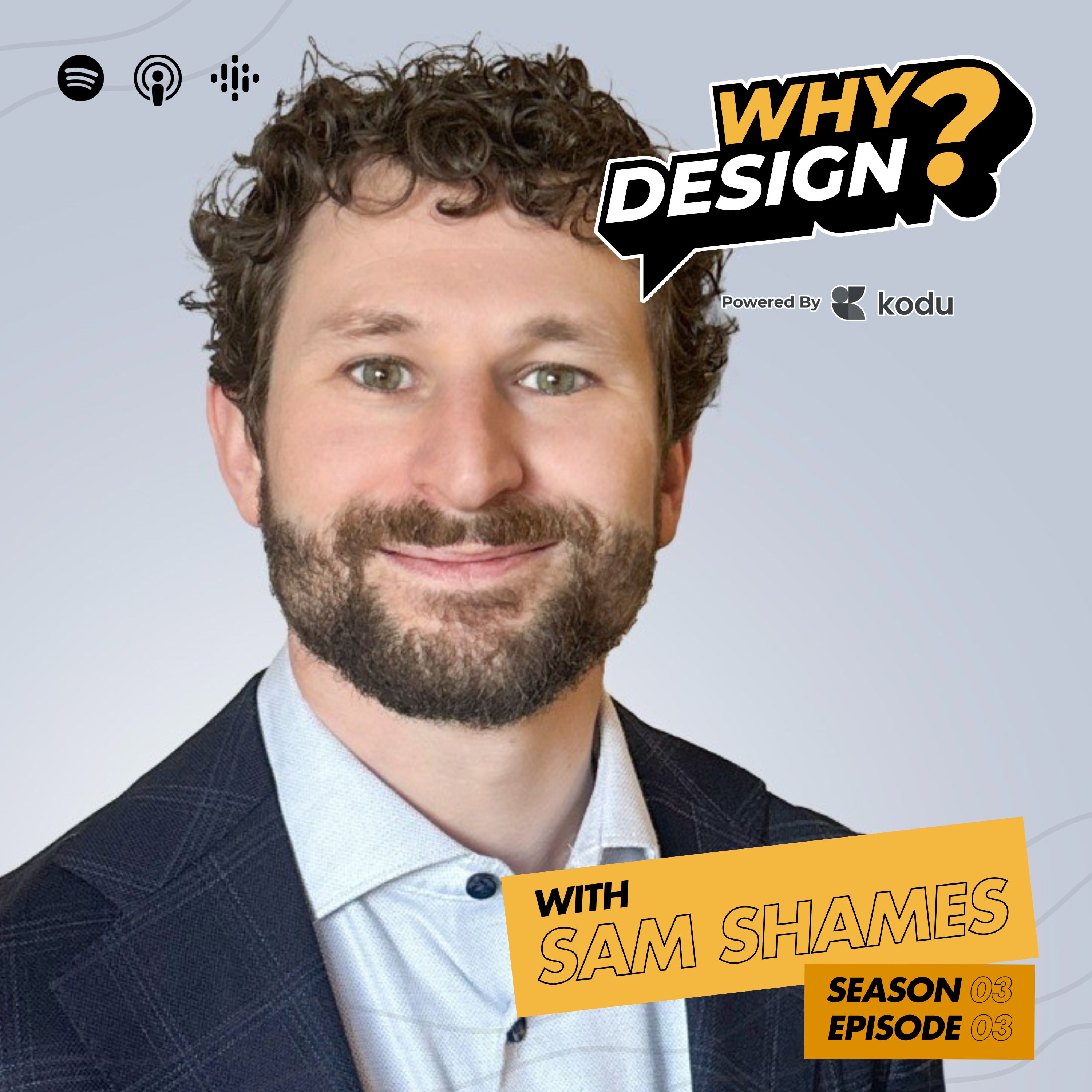
From Prototype to 200k Products: The Embr Labs Story with Sam Shames
45m 31s
Ember Labs, founded by Sam Shames after an MIT hackathon in 2013, developed a wearable device that heats and cools to regulate body temperature. What began as a prototype to win a $10,000 contest became a company after the idea went viral, generating thousands of customer inquiries. Despite initial optimism of a six-month launch, it took four years to reach Kickstarter due to the need to understand the market, validate the science, and iterate prototypes. The company sold over 200,000 units and is now preparing generation three, which uses AI to predict hot flashes for automatic cooling, a feature driven by customer needs. A pivotal moment was hiring an external CEO, Elizabeth Gausda, who shifted the focus from technology to building a sustainable business. Early user studies highlighted that design aesthetics were critical for adoption, leading to features like physical buttons for instant cooling. The device is used for about a million minutes weekly, addressing hot flashes, stress, and sleep issues, as well as conditions like dysautonomia. The subscription model improved cash flow and product development, allowing Ember to scale while keeping temperature regulation as a core wellness tool. The journey underscores the challenges of hardware startups, from manufacturing to team decisions, and the importance of customer feedback in driving innovation.
We did not know what we did know. And so we thought, oh, it's going to be six months. We'll have the product launched. It ended up taking four years to get from when we won the contest to the kick start. The market need was so strong that it kept pulling us forward. Hello, and welcome to Why Design. I'm your host, Chris White. And this is the first of three episodes I recorded in person while out in Boston, chatting with founders and product leaders who are building real things and solving real world problems in the hardware space. On this episode, I'm joined by Sam Shames, co-founder of Ember Labs, a company that spent the last decade developing wearable technology to help people regulate their body temperature. Sam started Ember while studying material science in engineering at MIT. What began as a late-night prototype in a hackathon has since grown into a fully-fledged business that sold well over 200,000 units and is now preparing to launch its third generation product, combining predictive AI with a circular subscription model. In this episode, we get into what it really takes to build a sustainable hardware company, navigating early manufacturing challenges, making tough team decisions like hiring an external CEO, and rethinking business models without losing sight of the original machine. If you're building or scaling a physical product, Sam's story is packed with honest lessons and insights that you'll want to hear. So let's get into it. Sam Shames, welcome to my design. We're here in Boston, out in Needham Heights, and recording the first of my trip to Boston in person. So great to have you on the show. Thank you for having me. Ember Labs is a company that's building wearable thermal technology, and you sold over 200,000 units. Recently made the shift to subscription-based model, which is quite rare in consumer wearables. You've had product operations, fundraising, and more. As a business, as a whole, so you've kind of made the shift from material science to overall business ops. That's what we all know. Hard, right? Certainly is. Thanks so much for having me. It's all to be here. You're very welcome. Very welcome. It's great to have you and thanks for making the trip. So why design? Where did it all begin for you? I'll see your more mechanical materials engineer. But how did you get into engineering in the first place? So growing up, I'd say I always liked math and science. And to my grandfather, he was a mechanical engineer. And he had woodworking tools in his basement. And it was always building things and would kind of take us under his wings, so to speak. So I had that exposure. And I think saw how cool it was to be able to kind of take an idea from your head and bring it into reality. And then it was lucky enough to get into MIT for undergrad and just to be in an environment surrounded by incredibly smart people who are all passionate about different things and building. And I think when you're in that environment, it really inspires you. And our company, it started as a prototyping contest. We, my co-founders and I, entered this prototyping contest with no plan of starting a company just with the goal of building something cool over the summer. And when we came up with the idea for a wearable heats and cools, we never could have imagined that it would lead to 12 years later having the company that we have. That's a wild ride, isn't it? So where did that idea for the temperature regulation that come from? So we entered this prototyping contest, not really knowing what our idea was. The goal was just, hey, can we win $10,000? That would be a huge amount of money pay for all the beer. We never need for the rest of the year. And we were brainstorming ideas in an over-air conditioned lab in June. And we kept having to put on sweat shirts as they comfortable. So we thought, this is crazy. Like, what if we could just heat and cool ourselves directly? Wouldn't that be a better way? So that was sort of the aha moment. And then we said, OK, well, let's try to make a wristband that heats and cools. We are familiar with the old lifestyle of running your wrist under cold water. And we thought, well, surely that can't work. Surely that isn't a good idea. And it turned out we ended up coming up with some key technological breakthroughs to how we heat and cool that made it much more effective. And that ultimately led us to the win the prototyping contest and start down this journey where we're still on. That's amazing. Do you recall the other competitors what Europe against? Was it a case of this one winner or was it a general winner? So it was maybe four or five other competitors. And I use that term pretty loosely. It was all people from our department. Everyone was friendly. Because you've done nothing else, right? And your professional career, then the business you started. So you've had to figure a lot of stuff along the way. So it's interesting. I wonder how many of those that started in the similar journey still go in 12 years later. Very few. I think we look at our quote unquote vintage of startup companies and that very rare to be going as long as we've had. And I think especially even more so for companies that are really creating new categories. And of course hardware companies as well. Yeah, absolutely. I mean, it's one of the biggest pitfalls I see from the recruiters lens. It's the easiest way to burn money as a startup is by having a lack of experience in how businesses run. They've been taken advantage of by suppliers, especially if you've no overseas. Because you just haven't built up that experience and know what stuff should cost. So where do you have all to? Where do you bargain? And we definitely did not have that experience. We feel really lucky that we met a lot of really kind and generous mentors through MIT and other places who really helped guide us in those early years. And there were certainly some close calls. But thanks to all the support we got, we were able to find that narrow path. So if there's anyone listening or watching that's there about to embark on a semi-journey or their considering kind of taking our approach type to the next level, is there anything that you wish you'd had known 12 years ago that you'd like to share with them now? Yeah, many, many things. I think that the first thing that comes to mind is that it's never too early to start thinking about manufacturing. The difference between a prototype and a product that you can manufacture at an acceptable cost is vast. And that the mistake people often make is they say, OK, we're going to work with a product designer. And a great product designer does not necessarily have experience with manufacturing. And the earlier you can figure out who your manufacturing partner is going to be, validate that they want to work with you, and then bring them into the design process. Ultimately, the faster you're going to get to market, the lower cost you're going to be, and the more likely you're going to be successful. Fantastic. Thank you for showing us. Start an MIT. You validated it on Kickstarter. I think you said it. And then you've grown into a full company over the years. It looks through those early days and from kind of academic Kickstarter to when it felt like I've got a real business here. Yeah. It kind of comes in stages. So we're doing this prototyping contest in this summer 2013. We win in October 2013. And we thought, great, we did it. What happened next was the idea went totally viral. One news office story by MIT. And I'm getting picked up by bloggers. And next thing you know, I'm doing an interview with Wired. From all that media attention, we started to get emails from thousands of people around the world saying two things. One, temperature is the biggest pain point in my life. And two, when can I buy this? So that was the moment I said, OK, hey, people want to buy this. We should start a company. And then six months later, someone's going to buy us. And how hard could it be? It ended up taking four years to get from when we won the contest to the Kickstarter. And we were really focused on three things during that time. One was understanding the market. So of the people who emailed us, who were these different segments of potential customers? What were their product requirements? And ultimately, which one could we best serve? Second is really understanding the science. Why is it that just heating and cooling this one spot actually can have an overall effect? Is it real or is it just placebo? And then third is actually doing iterative prototypes. And it took probably a dozen different prototypes to actually get to something where we felt like, OK, this is what the product needs to look like. Now we can begin the actual product design. And then, of course, manufacturing. So four years to get to Kickstarter, that was really the next moment when we said, OK, we really have something. Our goal was to do $100,000 in sales. We ended up exceeding that in the first couple hours of the campaign and finished at about $630,000 in sales. And after that, we basically were like, OK, we're a real business. We're generating revenue. And that took us into basically the first half of 2018. That was when we started to refit for filling those Kickstarter units. My co-founders and I looked around the table and we said, well, we always thought, OK, you launch the product, dot, dot, dot, you get acquired. We're now in the dot, dot, dot. We don't really know ourselves what kind of the next steps are as clearly, but we do have a sense. It's much more about building the business than building the technology. And our expertise is more of the technology.
So that's when we actually made the decision to work with a recruiter and to hire an external CEO. Oh cool. We interviewed dozens and dozens of candidates and we found Elizabeth Gausda who's still embers CEO today and she has just been absolutely transformational in the company and one of the best decisions we ever made was to bring her on. Well that's really interesting. It's, you know, the reason she started my founder's journey as well and I resonate with you just get stuck in to let's just deliver something. But then actually at some point you need to step back and what am I building? What does the future look like? Is it a sale? Is it? It's like, is it a big company, a small company? And that's the kind of thing that, you know, you need to take a lot of time to step back and think about or bring into one who has got the credibility there and the backgrounds to do that. So what do you think has been the biggest shift since taking on the CEO? I think initially it was going from thinking of this as like a project to a real business. And then I think second it was just really instilling that customer first mindset of saying, hey look at the end of the day if we do write by the customer and let them guide us, everything else we'll kind of follow. So I feel so fortunate personally to have really learned so much about actually building a business from Elizabeth and I think our whole team feels the same way. You know, when we joined we had just shipped a few thousand units today. It's well north of 200,000 devices. It's multiple generations apart, but a product and so much of that is from what we've learned from her. That's awesome. What do you think was kind of going off script a little bit here, but it's genuinely interesting. When you bought Elizabeth on, obviously you and your co-founder, you're seeing some control to someone else is kind of taking the baby and taking the business. So how was that? How did you kind of what was the hardest or the most challenging things about that transformation point with the business? I think the in some ways the hardest part was actually deciding that we needed to hire someone in the first place because it's that acceptance of, oh, we really need this help, we can't do it alone. And once we actually met Elizabeth, it was so clear through the recruiting process that she was the right person to meet the company and she just really worked hard to build trust and especially early on to really build consensus and really show her thinking that it's sort of very obvious that we wanted to really kind of give up that control because we didn't really have a clear sense of direction of what we needed to do. What was her background then? Did she launch all the lead hard work companies before? So she had quite a varied background across multinationals and startups. Her career started at Phillips in the Netherlands. Then she'd work doing mobile advertising startups, doing consumer web startups. So a little less on like consumer hardware startups, but both startup experience and multinationals experience. Awesome. I think I've been that exposure at the opposite ends and seeing kind of excess work in quite a lot of clients at the moment that go in from that transition from scrappy startup to let's just get something out to market to, okay, now we need to build a solid, credible revenue generating profit making business that's got legs. So sometimes the people in the business are always the right people for the next level as well because you'd like it or not, the culture is going to change as well as the business kind of scale. But it sounds like yeah, you've got a really good leader there. So let's talk about the hardware before it turns into a recruitment program. So you've said you've shipped over 200,000 units and come out to launch in generation three. So we kind of understand the big picture concept for generation three and we've talked about this publicly which is that we've developed AI to actually predict hot flashes so that the device can start cooling automatically. That's kind of one of our core use cases is today it's manually cooling hot flashes with the push of a button or with the mobile app. We have AI that can predict that. So that's really going to be the key feature into gen three. We haven't talked publicly about the launch timeline yet. It's not so we can go into. But we are pretty excited about the evolution of the product and as we thought about just how much of a leap we're able to go from gen one to gen two and how much we've learned and then feeling like we can deliver a similar leap from gen two to gen three. Yeah, so it sounds like the leap from gen one to gen three is absolutely huge. Absolutely. And you use case owners of helping to leave it at the symptoms of hot flashes. I guess in it's still a pain point of having a hot flash I need to push a button to reduce that time then or to avoid flatly is. Absolutely. Yeah, so the core experience for many of our customers is getting hot flashes 5, 6, 7, 8, 10 times a day, getting it at night and really just feeling very powerless and out of control. And so the ability to with the push of a button start getting that cooling relief and what's amazing is not only is it just a cold sensation on your wrist which just feels pleasant right if you're too hot and you feel something cold, you splash water on your face that feels good. But actually the way in which we're cooling which is in our patented waves of temperature where it's not a constant sensation, it's waves which you remember trying at the SCES. That application of temperature actually is signaling the brain to help balance the nervous system and actually stop a hot flash in its tracks because people don't realize that a hot flash is actually an over activation of the nervous system. That's really interesting. How did this all come about then in terms of the, you know, because it sounds like you've done a lot of research into this, the science behind it. From that initial kind of, well, we know there's a thing kind of let's build a pro's time to I'm guessing you've done countless user studies and. Yeah, absolutely. So many user studies at this point, we've been fortunate to do some clinical studies where kind of it all began was in that prototype in contest when we were basically trying it out. We thought it felt good and we started to tell people the idea and even then we'd get the question like does it work for hot flashes and of course like our first answer is like we don't know anything about hot flashes, but let's find out. So actually my mom and her friends are some of her first beta testers. So we were just kind of giving them prototypes, having them try it out, asking them lots of questions, using that to really understand some of the key product requirements. So for example, one of the initial insights was that the design was going to be as important as the functionality because this is aware of something that people are choosing to put on, it's visible. If it looks ugly or looks like a medical device, people aren't going to use it. And we saw that first hand when we would take, give someone an early prototype and they'd say well, it worked great, but I didn't use it. And they'd say why? But like have you seen it? Like I'm not going to put that out to the grocery store or anything like that. So we realized the design itself was, you know, the aesthetics were going to be very important. We realized that although there's a mobile app, it's really important for users to be able to basically start cooling as quickly as possible. And that led to like, okay, there needs to be physical buttons and like one button pressed to start cooling. So those are some of the key insights from those initial studies. At this point, you know, now we're very fortunate to also just get like user feedback in the field. And we're seeing customers use the product for about a million minutes every week. So we're really learning at a very rapid scale about how exactly the product is fitting into people's daily lives. Yeah. Yeah. I'm guessing because you've got that mobile app you're getting data constantly on you. So that's fantastic. That's fantastic. But no, that's wonderful. So is there a, is there one to envision more medical by a stand or more wellness or something else? Yeah, I think there's, you know, there's really elements of both, you know, broadly speaking, I think of temperature as a key tool for helping people feel their best. And it's incredibly safe. It doesn't have any side effects. So it doesn't need to be a regulated medical device in any way. It can be something that all of us just have the moments in our day when we feel too hot or too cold or we feel stressed or we feel like we're having trouble sleeping or feeling like hot flashes and, you know, that of course is where we get me very helpful. At the same time, there are users with more serious medical conditions who are benefiting. So, for example, folks with dysautonomia, which is a thermoregulatory disorder or MS or POTS, which is actually a symptom, can be a symptom of long COVID. Okay. So all those cases where just the body has a much more challenging time actually doing thermoregulatory activities. And that's where, you know, perhaps a different version that maybe has, you know, some different features could be a medical device. But, you know, I think our heart initial vision was always in the consumer space. We always thought, you know, how do we get this as far and why it's possible? We can make the product out of price that works for consumers. It's very high quality. It's low risk, low side effect. You know, why not just try to really empower people to use temperature as a health and wellness practice? Yeah. And also why make it harder for yourselves. That's the thing for you, Jack. Awesome. Let's talk about subscription.
and security and so you mentioned when we prepared for this, that the move into a subscription model was a game changer for you and in terms of, especially from cash flow and how you're building the products. So what pushed you towards a subscription model in the first place? Hey guys, just a quick one for me and then we'll get straight back to the episode. If you haven't felt like your pipeline is a computer or you're not quite sure where to go next in your design group and what you really want is to feel more in control of your business, your pipeline, your next move. Maybe you'd even be the person your peers or competitors look to and think. They're onto something that check out the why design community is full of founders, leaders, engineers and designers working hard where physical product development is shared in sites, done online and in-person meetings, collaborated on projects and helped each of them figure out what's working and what's not. If that sounds useful, head over to teamcoating.com/events. It's free, low pressure and genuinely made to people like you. Okay, let's get back to the episode. So a couple of things, you know, we had done very, very well selling devices. At the same time, we saw that when we sell someone a device, it's sort of a one-time transaction. We saw customers were continuing to use the product for multiple years and there was a sense in which there's a bit of a misalignment between the value creation and value capture and doing so in a way that just structurally made it very hard to continue to grow the business that you have to get new customers every month. And second, also just sort of limited our ability to continue to invest and make the product better, especially on the software side because without an ongoing revenue stream, you know, all of that is a cost center. So those elements together made us start to think about like, is there a model where we can really better have an ongoing relationship with customers that reflects how they continue to use the product, that aligns incentives so that, you know, we want to continue to invest in that relationship. And subscription was a natural fit. And of course, we'd seen, you know, over the years, more and more hardware companies are having a subscription component, you know, whoop obviously, or a ring, even eat sleep. So we kind of saw that playbook develop. You know, we looked at, of course, the software piece of the subscription, but we actually asked a question of, you know, can we do something even simpler to start? And that led us to the path of actually just a hardware subscription. So it's truly paying $20 a month to get ongoing access to a device with the ability to cancel and send it back. And when we started to reach out to customers and explore this model, we actually heard that the ability to pay a low monthly amount was a benefit of itself as opposed to paying upfront in the ability to cancel and send it back. And so those were actually two channel benefits that we could offer. And as we packaged those up with some things like a new device every two years, some discounts on accessories, some access to inclusive giveaways and promotions and content. We were able to come up with what we called the Embership subscription and we saw just immediate product market fit. So we launched that in 2024. And over the next eight months, we went from basically zero to 15,000 subscribers reaching about a four million ARR run rate. And, you know, really, as you said, started to not just see the benefits of this ongoing relationship with customers, but also the financial benefits of knowing that there's going to be predictable cash flows every month. They really helps us better make investments into R&D and into the continued improvements of the product. Yeah, because if there's, you know, economic issues or if by the product's not selling, you know, you've got less of a cliff edge. Yeah, I read the subscription and you can see, you can see, come in, so you've got a longer kind of kind of run way to do something about it. That's fascinating. So your customers clearly responded well to this. And you've started to build in circularity too, which gets the sheer fact that you're able to upgrade every two years. You're getting all the products back, you're able to recycle or refurbish products. How does that kind of, how do you make that work logistically? Yeah, so, you know, returns is something that people don't necessarily talk about in the e-commerce space and it's something we initially learn the hard way after launching when you suddenly get packages sent back to your office. And, you know, even if it's a small percentage, it can be a large number. And if you don't know what to do with them, they quickly pile up. So, you know, early on, we realized, okay, we need to have a, you know, refurbishment remanufacturing strategy. We were able to adopt the test quality tests we did in the factory for a refurbishment process and, you know, really saw some of the investments we made in product quality payoff in that we were getting devices back that could be refurbished and were fully functional. And, you know, it could of course be reused and resold at a discount. And so we had that kind of muscle. And then obviously the subscription business takes it to the next level because, you know, there's churn decay that obviously, and you want to basically continue to leverage those devices. And so we work to develop actually a tiered pricing model where that $20 a month price is actually for a refurbished unit. You can upgrade and pay $25 for a brand new unit. And so then as people cancel send it back, we can take those units and you bring them forward again. And what's great about that is it really just, you know, from a financial standpoint, maximizes the value of the asset. Yeah. You know, we've worked hard to make a product that lasts three, four, five years. And now we can really start to monetize it over time. And of course, you know, as we start to think about in the future, having a Gen 3, the Gen 2 becomes something that you can use at an even lower price point to help just get more and more folks into the system and say, you know, you could imagine a future where at some point Gen 2s may be available for $10 a month because they're fully amortized, depreciated assets that you know, are still working. And then you can really use to just try to, you know, get folks who maybe can't afford to pay 20 or want to try out something before they go to the latest model. What's the, what's the split then in terms of kind of latest versus the refurbished? We see about a 50/50 split for folks choosing new versus refurbished. And do you see many, do you get the choice to upgrade? You can just kind of switch up to the next kind of subscription if you've had refurbished for a few months, you know, actually. Let's go to the next slide. That's a very good question. I guess theoretically, not many people do, but you could then say, yeah, I want to start paying $25 a month. It'll be a manual processing after email, our support team. But yeah, that's definitely good. I put most people fine though, as you know, the refurbish are functionally identical. You know, we work really hard to make sure that they look good too. So I think most of the time people like wouldn't necessarily remember after a couple months that it was even refurbished. Yeah, and now I'm just thinking, is it a, say, they've got a refurbished Gen 1 as a, oh, this one's cheap. I'll try it out because we'll let it go to come. You're actually that's awesome. Let's see how great the next generation is. Yeah, we did, we stopped selling Gen 1 after Gen 2 came out, but I could see his situation where with Gen 3, we did continue selling Gen 2. So probably more likely in a few years. Yeah, oh, it's really interesting. Yeah, we get, we get, interestingly, how that data kind of comes out. So, um, so let's talk about, uh, the team and leadership and some lessons you've learned, we've kind of pushed on that earlier, but, um, what does the, the team look like today? I think you mentioned, we've practiced about 13 people. So for a, um, you know, did you say a four million turnover? Yeah, yeah, so we do have also device revenue. So we do still sell devices through our direct channels and wholesale. Yeah, the, you know, subscription business is just one revenue stream. So yeah, pretty good return on 13 time heads. You know, so what does the team look like now in terms of the, the structure, the, um, kind of the skill sets within? Yeah, so it's evolved over time. You know, there's a period of time when we were very heavy in the engineering side as we were really focused on getting the second generation to market, you know, more recently we were much more focused on the go to market as, you know, the product was pretty mature and we, um, you know, really needed to drive sales, drive customer acquisition. Um, so that's kind of where most of the folks have been more recently, um, but obviously still keeping the key manufacturing personnel to produce the product, keeping the software folks to continue to keep it fresh. Yeah, bro, and, um, I assume a fatty flat high rocket as well is not too much leadership. Is that the plans to, plans to scale as this next generation comes down the line, not leading question, obviously, but just curious. It's, yeah, for a business that's shipping so many units. Um, it's, yeah, certainly we hope to continue to be able to grow. And I think, uh, you know, I've said a really interesting time right now with the AI agents and how that fits into head count. But, um, you know, broadly speaking, there's clear benefits to scaling while also knowing that, you know, we do have, um, there's more market pressure on profitability. So we always try to say, like, it's probably not necessarily hiring ahead as much of a anticipated demand, but getting to, it would get to the point where, um, you know, we just can't keep up. Then obviously you have to go ahead count. Yeah, absolutely. Thanks.
What have you learned over the years then about hiring? Because you've started a business as a, as a whilst you're still a student, as opposed, you know. You haven't been through the classic kind of work of working for someone else, seeing problems amongst your colleagues, and then maybe going up into team leadership and then seeing the problems once you're team. You haven't had those good and bad experiences, as opposed it's all been. - Yeah, I'm a counsellor. - First on you. So what kind of, what have you learned over the years and about hiring and team dynamics? - Yeah, so been through many different hiring cycles, have made good hires, have made less good hires. Um, I think probably the thing that I've taken away most of all is that sort of like, actually working with someone for a small period of time is infinitely better than the most rigorous interview you only process. And, I think it's especially true in roles where you have not done it before, right? Like being good at interviewing is a very different skill than being good at a job. And so we tried to err more and more towards, you know, take home exercises and more towards, okay, can we pay you to be a consultant for a month? And you just get so much more conviction. You know, alternatively, if you do, if you've done the role before and you know, know exactly what you're looking for, then it's much easier to screen. And I think the second piece is, you know, the just the importance of sort of like referrals and that you can hire within your network or from people you trust, like that just leads to such a, you know, a higher conviction that the person you're getting is who they, who they say they are. - Massively, yeah, I don't know, I don't talk at Lafrey University a few weeks ago. And a bunch of soon-to-be grads and how they can help prepare themselves for the job market. And from my experience, and it's one of those stats, it goes around all the time. So there must be some truth in it, but, you know, from my experience, you know, roughly 10% of roles are ever advertised. - Yeah. - Anyway, and then suddenly when you should get up to leadership positions, there's fewer of them. Anyway, and if only 10% of those few are ever advertised, it's like, you haven't got any hope in finding them, but most after you were, well, through recommendation, because I can say you don't really know where you get until someone's been in post a few months, sometimes not even a year until they start kind of having an impact in the team. So it's, yeah, so it's a really, really tricky thing to get right. And looking back, are there anything that you wish you had done differently or any, you know, when you talk about kind of giving people tests, as it has been any kind of red flags there. - Yeah, things that you would reflect on. - Yeah, I think, you know, there's an element of trusting your gut. There's also an element too of maybe overweighting consensus that if you're hiring a role, obviously you wanna make sure that you get your team members involved, but if ultimately, they feel like the person who they would pick is not the person you would pick, yes, you'd be willing to say, okay, hey, I actually think someone else is, is the right person. And then I think it's really being very thoughtful in the initial onboarding. And, you know, if there's red flags, you gotta correct that right away. And then be willing to, you know, ultimately say, hey, this wasn't the right decision. And frankly, thankfully that has not been the case many times, but certainly, you know, no track record is this perfect. - Yeah, I think it's one of those, I think everyone needs to go through a few kind of failed highs where they didn't quite work out. You know, you have that kind of feeling, you could go wrong, but you know, things are, I've had it throughout my career where you've got all the people in the hiring panel that think that the person's fantastic and you think, okay, I'll go with their gut. You know, there's something in the economy or we'll give it a go and I'll do my best to make sure it works out. And then it doesn't kind of sometimes work. I think those experiences, in my experience anyway, at least help you make better decisions going forward. And I think without going through that pain, it's, you know, you're just riding your luck, I think, and where it comes from, but yeah, lessons from your kind of side of that. - Yeah, and I could put the agree that look at a certain point, you have to have some negative experiences to get the, you know, muscle memory. And you just kind of hope that, you know, you can kind of learn quickly and not make the same mistake twice. I will say that's probably another area where hiring Elizabeth made a huge difference if that she had just much more experience to really, you know, bring pattern recognition to areas and sort of help us. And she also just has an incredible intuition about people and emotional intelligence and is really like her snap judgments about folks that are just incredible. - Yeah, there's some people, I don't know, they just wish you could bottle that, couldn't you? (laughing) - Absolutely. Can you think of some of the moments where, you know, people have really impressed you at interview or an application and the things that maybe stood out as to why I'm guessing it form a, in the form of advice for anyone listening or watching the, you know, these things are kind of top 10. - It's a good idea. Yeah, I think, well, first off, if you can get a referral from someone who already knows, right, like that's, if someone who I really respect says, hey, you have to take a look at Fred, Fred's amazing, then, okay, great, you're pretty giving Fred the benefit of the doubt, you know, they've done something well. Then I think, you know, you can tell in some of these take home exercises, like, who, how much effort someone's putting in and, you know, the quality of the ideas. And I think what I've really tried to do is to get a better job of is going a little bit left deeper, right, as to say, okay, ask the first question, the follow-up question, and then the follow-up question there, and usually by that third question, you can have a pretty good sense of, you know, the depths of someone's knowledge. - Yeah, yeah, absolutely. The take home tests are a little bit contentious sometimes because, you know, asking someone to do work before you employed them, but I think it depends on how much time you expect them to put into it, and, you know, really, how else are you gonna do? - Yeah, absolutely. And we, you know, I completely agree. We always try to be very clear to say, hey, this is a one, we want to spend one hour on this, right? And to, you know, be clear about that time expectation. And, you know, I think the other thing that if takes themselves is, is like, look, the best people who ultimately want to work for a company, I think they would, they want to have that type of experience, right, 'cause it's any good interview is a bidirectional, right? You're interviewing them and they're interviewing you, and so if you think about, you know, for a company that you're really excited about, they ask you to show your work, you'd say, great, I'd really be, I'm thrilled to have this opportunity to show what I can do because it's a way for me to really prove value. And so I think that really helps, is that reminding you that, okay, this also is a benefit to the person the other side because that ideal candidate would want to do that work because they find your company so exciting. You know, of course, if it's gonna be 10 hours of work, you should pay them, but if you're asking someone to do one hour and you're clearly defined up front what the interview process is, you know, that, I think, really, you know, really goes a long way. And we always try to do that as to say, okay, initial screening at the end of that, if you're inviting someone on, you say, here's what the process looks like. It's follow up interviews with my colleagues, it's a take home exercise, it's, you know, one more thing. Yeah. So you don't want to just sort of like have a undefined open-ended process for you, sort of just like, you know, dragging someone through. I think that's the clear thing, it's a setting and managing expectations have been clear up front of what the process is. So you give people ample opportunity to either kind of agree to it, pull out, you know, because if it's not for them or challenge it, you know, but just kind of a one more, one more step, one more step. I've seen that kind of times over the years where you end up on the nates or nine step to the food process. And, you know, usually that's a sign that something's wrong with the company as well, right? If they can't make a decision about the interview, they probably also are not making decisions in a timely pace about key product features or about key marketing or about other things too, right? That's, you know, you have to ultimately be successful at a startup, especially yet to be comfortable making decisions with some ambiguity. Yeah. And, you know, that includes hiring. Absolutely, yeah. It's, I think a lot of the lot of companies, they forget that when they're interviewing, or when they're hiring, if you point an advert out and indeed, or one of the top boards will link to it, you know, there's potentially thousands of people seeing that out there. And every single person you interact with is gain some kind of exposure to your business and what, and then make a judgment on the culture and the character of the business. And if they're having a poor experience, you'll never know how many people they share that poor experience. And they're more likely to share their poor experiences. That's why you get lots of negative reviews on TripAdvisor, et cetera, because it annoys people. That's right. You're either a reviewer or something, because you're really annoyed, or you've had an excellent experience. - Very rarely. - Yeah. - Okay.
100%. But now, the thing about advertising, if that advert has been up so long, that's always a bad sign as well, because it just, it's those unanswered questions. Why is this role still open? It's been six months. Can I not make a decision or go? So, yeah, it's a very complicated thing. But anyway, we're going off in a recruitment round, but let's bring it back to Ember. So, 12 years in, Ember still evolving. Got some really exciting stuff coming up. What are you excited about most about the next, whether it'll have be Gen 3 products or things further down line or just generally business wise? Yes, obviously, the third generation super exciting. I mean, the AI that we've developed to predict hot flashes, that's something that customers have been asking for for years. So, to have kind of proven the technical capability, that's a huge milestone. That's the hardest part is to figure out, is this even possible? Obviously, productizing it is not easy, but that's easier than just trying to say, like, can we even do this? So, that's exciting. I'd say a broader piece of the, just sort of overall goal of continuing to scale. And like, we were always motivated by the idea of how can we help as many people who struggle with temperature to get relief and control. And that's always been the North Star. And it just feels like we're continuing on that journey. And it feels like with, ultimately, the third generation hardware, but even before then, we've got a real opportunity to just continue to just drive the market penetration, drive adoption, and to find new ways to help people become aware of the umber wave. And that it exists. Yeah, fantastic. And this is going to get a bit deep now. So, what kind of founder do you want to be in the next chapter? I think the type of founder that I want to be in the next chapter is ultimately one that puts a customer first in that doing so really creates the type of company that helps people bring out the best versions of themselves. Right? So, yeah, I mean, the fact that you guys what the founders that I admire the most do is they bring out the best in people and in doing so, they're able to really help kind of bring their vision for serving customers into the world. Love that. I'm very much kind of resonate with that. Be helpful, trying to give people great experiences and things happen for everyone involved in that kind of that chain. That's awesome. And then final question. Any reflections or advice of people that building hardware companies in 2025? I think building a hardware company is going to take longer than you think and you'll likely to take more capital than you think. And what seems to work best is if you can really focus on finding the market pull and letting customers really lead the process. I mean, when I think back to why we make it this far and why we've been successful, we started as, you know, completely unproven team with a completely new technology with a completely new market. So, it's like all of the risks. But what happened was just the market need was so strong that it kept pulling us forward. That like it was so clear that when people with hot flashes found out about the idea of a cooling bracelet, they wanted it. And they wanted it so badly that we were able to take our first prototypes and prove enough demand to get capital and use that to launch the product and they supported the first product. So, if you can really find that customer segment that has that strong need for your hardware, that's going to really increase your probability success. And then the second is to really build in the business model. Like the world in which we had launched a subscription model in Gen 2 from the beginning or Gen 1, the company would look very different. And it's I think pretty clear at this point that, you know, hardware companies in the consumer space need some subscription component to build a sustainable business. So, you can build that in from the beginning. I think you'll have a much higher probability of success. That's awesome. So, I'm going to spend an absolute pleasure sitting there with you and going through your journey and just dig it into that. So, thank you again for spending the time with me. My pleasure. This is so much fun. Thanks for having me. Thank you for listening to this episode of Why Design, Proudly powered by Codoo. If you got something out of today's conversation, I'd love it if you could leave a quick review or share the episode with someone who will find it useful. It really helps more people discover this show. And if you're working in hardware or physical product development, whether you're a founder, leader, engineer or designer, come join the Why Design Community. We're running events, sharing insights and collecting people of building great things. You can sign up at teamcodoo.com/events or just drop me another time. Thanks again and I'll see you soon.
Podcast Summary
Key Points:
Ember Labs started as a late-night MIT hackathon prototype for a wearable heating and cooling device, winning a contest in 2013.
The idea went viral after an MIT news story, generating thousands of customer inquiries, but it took four years from winning the contest to launching on Kickstarter.
Early challenges included understanding market segments, validating the science of localized temperature regulation, and iterating through a dozen prototypes.
The company sold over 200,000 units and shifted to a subscription model for generation three, which includes AI to predict hot flashes for automatic cooling.
A key decision was hiring an external CEO, Elizabeth Gausda, who transformed the company from a project mindset to a customer-focused business.
User feedback revealed that design aesthetics were as important as functionality, leading to physical buttons for quick cooling and a focus on wellness rather than medical regulation.
The product is used for about a million minutes weekly, helping users with hot flashes, stress, sleep issues, and conditions like dysautonomia or long COVID.
Summary:
Ember Labs, founded by Sam Shames after an MIT hackathon in 2013, developed a wearable device that heats and cools to regulate body temperature. What began as a prototype to win a $10,000 contest became a company after the idea went viral, generating thousands of customer inquiries. Despite initial optimism of a six-month launch, it took four years to reach Kickstarter due to the need to understand the market, validate the science, and iterate prototypes.
The company sold over 200,000 units and is now preparing generation three, which uses AI to predict hot flashes for automatic cooling, a feature driven by customer needs. A pivotal moment was hiring an external CEO, Elizabeth Gausda, who shifted the focus from technology to building a sustainable business. Early user studies highlighted that design aesthetics were critical for adoption, leading to features like physical buttons for instant cooling.
The device is used for about a million minutes weekly, addressing hot flashes, stress, and sleep issues, as well as conditions like dysautonomia. The subscription model improved cash flow and product development, allowing Ember to scale while keeping temperature regulation as a core wellness tool. The journey underscores the challenges of hardware startups, from manufacturing to team decisions, and the importance of customer feedback in driving innovation.
FAQs
It began as a prototyping contest at MIT in 2013, where Sam Shames and his co-founders created a wearable heating and cooling wristband. They won the contest and, after viral media attention, decided to start a company.
The idea came from brainstorming in an over-air-conditioned lab at MIT. They wanted a direct way to heat and cool themselves, leading to the concept of a wristband that could regulate body temperature.
It took four years. They focused on understanding the market, validating the science, and creating iterative prototypes before launching the Kickstarter campaign.
After launching the first product, the co-founders realized they needed to shift focus from technology to building the business. They hired Elizabeth Gausda, who brought experience from multinationals and startups, to lead the company.
The third-generation product uses AI to predict hot flashes and start cooling automatically, eliminating the need for manual activation. It aims to provide proactive relief for users.
The device uses patented waves of temperature on the wrist to signal the brain and balance the nervous system, stopping a hot flash. It goes beyond just a cold sensation to provide effective relief.
Chat with AI
Loading...
Pro features
Go deeper with this episode
Unlock creator-grade tools that turn any transcript into show notes and subtitle files.
 PodcastTranscript AI