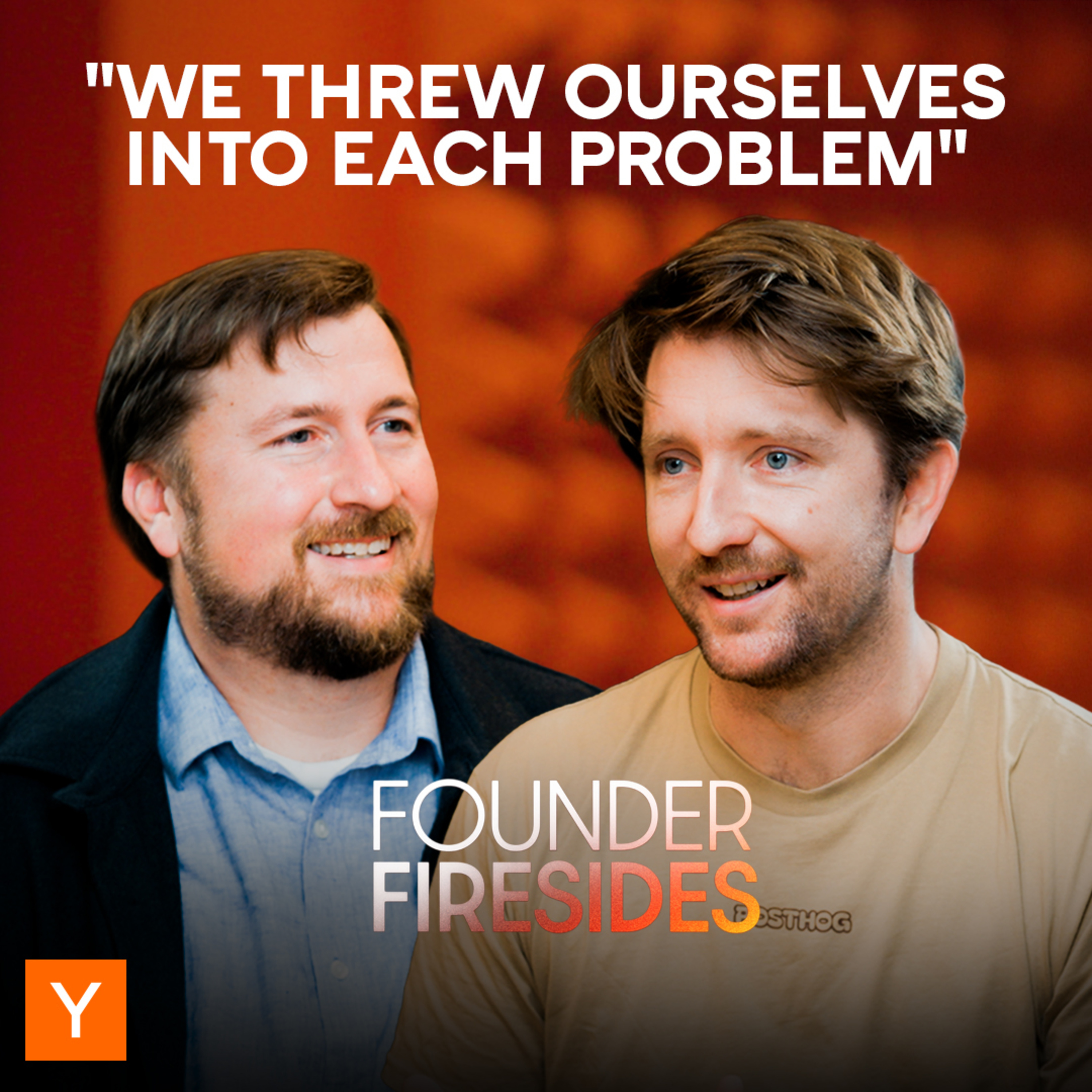
In just a few years, James Hawkins took PostHog from an idea hacked together right before YC's W20 deadline to a unicorn powering product analytics for thousands of teams.He joins YC's Brad Flora to talk about surviving six months of "pivot hell," why open-source analytics was the breakthrough, and how PostHog grew from fighting for its first users to launching full product lines—plus what he's learned about momentum, staying close to customers, and using transparency and humor to build a company that stands out.
Transcription
9488 Words, 50428 Characters
(upbeat music) I'm here today with James Hawkins, CEO and founder of Post Talk from the YC winner 20 batch. James is here hot off the news of raising a 75 million series E round of funding at a $1.4 billion valuation, making Post Talk the latest YC unicorn. Today, we're gonna talk about how Post Talk got started, how they pulled off what I think is one of the best YC pivots of the last decade, and how they use attention and humor to compete with not just other tech companies, but with everything out there for attention. Welcome, James. - Yeah, thank you for having me. - James, could you tell us what is Post Talk? Explain it to us a little bit. - Sure, so with YC, I always feel like this is how my homework being marked by the teacher. (laughing) We help users to debug their product, to ship features faster through kind of things like feature plans and so on, and we help people their kind of customer and product data in one stack. - And tell us a little bit about the state of the company, how big it is. You guys are pretty big these days. Give our viewers a snapshot of what's going on at Post Talk. - Sure, yeah, so we're about 160 people. We're around 300,000 customers across light free. I'm a little bit of free customers and paid. We have several thousand paid. We have, I think, 16 or 17 products kind of in production or in development, they're all at different kind of stages. And we've been, I guess like at the moment, the main thing we're doing, and the reason kind of what we did a little raising this year, we're pushing very hard on getting more products still out of the door. So instead of kind of going up market, we're going just across more of kind of the customer data that people are generating. And we're automating a ton of things through AI, which has been a long and arduous process. But we're starting to get to the point where it's starting to get proud of what we've achieved so far. But I still kind of feel like, we haven't got started yet. There's a lot more to go, which I don't think is a feeling all ever go, probably. But yeah, it's like really a lot of fun. And we're just starting to scale up pretty aggressively now, but we're thinking we started at 70 people this year. And so we're supposed to be about 200ish by the end of the year or something. So we're starting to get properly into kind of scale up, maybe at this point. So you've got this team, you've got all these customers, you have all these products that you're developing and improving on. But what was the initial product that post-tog started with? What was that, the first thing that you guys brought to market as post-tog? Sure, so yeah, the first thing it worked for us, we had a bunch of profits before, was self-hosted product analytics. Because we pivoted so many times, every time we had to set up product analytics over and over again, and we're just getting frustrated, having to implement it. I think we found that there was an awful lot of really strong competition. But we felt all the products were built for product managers to force engineers to go implement. But there's like reasonably technical, especially my co-founders are very technical co-founder. We're just going annoyed at like, oh, I can't, I want to write SQL, I want to see the data underneath. I would like to keep this in my infrastructure, so I don't lose data due to ad blockers. So we thought, okay, we think there's room for a self-hosted alternative. And we also, we spent some time 20 potential customers. And we found the core law of people that self built their analytics stack and were maintaining this kind of janky system, which we felt, if we can productize something like that, because new infrastructure, and we could see this working quite well. So yeah, we started with just open source products analytics on how can we use, we spent like the last four weeks of the batch desperately trying to get that out of the door. And then we pivoted, like we actually pivoted, we could iterate it or say afterwards. And now we're all cloud-based with multi-products, but that was the thing that landed for us finally. I think a post-tog, well, there's this meme among founders of pivot hell. And this is a thing that YC founders talk about a lot, where you're going from idea to idea to idea, and you're trying to find something that's going to work. And you guys not only came out of pivot hell, and have built this awesome company, but what you built was literally forged in the fires of pivot hell, right? Like while doing these pivots, you had this pain that only came because you were doing the pivots. You're trying to do them at a high level, setting up the analytics over and over again. Tell us a little bit about how you guys actually got to YC and started this journey of pivoting and finding startup ideas that might work. My co-founder, Kuwait, we used to work together. I wanted to have heard news that he was leaving. I'd also been thinking about leaving, and that kind of triggered me to get like, I want to do my own thing. So I made sure to grab him and instead of getting him to go off and work in another startup order, he thought, hey, let's just do our own thing. And when he was leaving, was he leaving to join another company? Was he leaving to start something? Yeah, I think he was actually trying to get a job at Facebook at the time. And he was doing an incremental career move. And I think I showed up being like, I think I have this idea that we'll probably have Port Marketfit for in a couple of weeks' time. Of course, of course, they all come. Yeah, and it's only a hope to give it a jump away. And then we can just see, I had like a, I created a list of problems. I'd encountered professionally thinking like, I should solve a problem of having myself. And we started doing through the list that we thought we wanted to bootstrap initially. So the two of us were just like working out of coffee shops. The main problem we found was every time we went to see a customer, we'd have a buy another round of coffee. And so we'd often end up getting like, whatever the coffee equivalent of waste it is basically. So eventually, we did this for about six months. And we worked through an average of one idea every like five, probably average about five or six weeks. Do you remember what any of those ideas were? Yeah. So the initial thing we tried to build was a sales territory management product. So I used to run a sale, I was VP of sales. And I felt that like in sales, you're literally wasting over 90% of your time because deals don't usually when, they don't usually close. Like they usually just float around and gradually get killed off. I mean, so if you get better at not focusing on deals that are closing, but on the ones that aren't closing and going a bit more ruthless using statistics to pull them out of people's pipeline and change the territory for the sales team is what I thought might work. And it was just kind of really complicated to build. And I think because I'm much more technical than a traditional sales leader would be, I just think we built some kind of complicated and I don't think I'll go to market. It was right or anything. Yeah, we had this idea, we built it. I think the thing that was important or the harshest that I learned was, my co-founder was building it. I was just trying to get interesting prospects to buy it from us. So I had about, I got through, I got about 15 sort of series B, C, D sales leaders queued up saying they wanted to use this. Well, they said they wanted to use it. We got the first version down in a couple of weeks, send them the link to create an account of the 15, 14 of them didn't even click the link. One click the link and then didn't create an account. And we're like, if it was like first, we should have read the Montest was that we hadn't done any of these interviews correctly. But I also, it made me feel that building for sales people or sales leaders in particular, I feel the signal to noise ratios pretty poor because they're really quite willing to hold up on quick calls and a very, very positive and kind of very friendly people. A little bit later, we kind of dawned on us that we think we'd be better because we're not very good at product. We're terrible at product initially because we're kind of bad. We need to deal with people that are what they say is close to what they'll do. And we felt that like natural problem solvery people like engineers or customer support people probably would be a better audience for us to work with because out of all the many variables, you can get wrong. Like it might be like, oh, your product's incredible, but you're terrible at explaining what it does. You'll still fail. And we thought, okay, one of the variables we can remove from this equation is the person being a little bit easier to read, basically. And so that was a big part of why we wanted to build something dev-tool-y later on was that solid fertilization, but yeah, that was the first thing that we went on. And so when you guys did Y-combinator, the product that you had was another pivot was having developers take surveys about technical debt when they would submit a pull request. And so you'd already done a few products by that point. You came into Y-C with another one. Did you guys have a, like, how did you kind of keep your spirits up or how did you track your trajectory? Did you feel you were getting stronger or better or closer to the target as you were going through these pivots? I like to think that was true. I'm not sure it was. We didn't reflect on that. We should have asked, like, are we actually going better each time round? I think we should have run a retrospective, basically. I don't think we actually were getting that much better each time. There are definitely some things that were consistently very important to us, though. Like, for example, we went for gas on each idea. Like, we didn't sort of, like, call it in. Like, we would go in person to every single customer that was remotely interested. We would go in person to go meet. Like, we started in England and then we came to San Francisco to do Y-C. Like, we'd catch, like, a bunch of trains and buses to get to a customer in some random place. Then, like, we would put the effort in to go really push it. Because then, kind of, what happens when we started charging for all of these products, you would find that, oh, I'm not failing this because I don't have a relationship, or I'm like, I'm kind of friendly with this customer at this point. And they still don't want to buy from us. This is a really good sign. This product isn't solving the problem. This really demonstrates some of it's nice to have. Like, in my previous job, we still can put, like, end price off for every millions of dollars a year. And I can remember multiple times thinking I'm having to work kind of as hard to sell a, like, $50 a month fast subscription. As I was to sell, like, $100,000 plus deal in my last job. I know that I've tried really hard. And so I can rule out one of the other variables, I guess, is like, are you actually trying as hard as you could be? And we were, I think that helps us feel confident enough to go, this just isn't working. So, yeah, we just, we worked very hard. And it looked, I don't know if it came out of being weird, like on LinkedIn, for example. I would talk about, like, hey, this is what we're up to. And it would be like, one week it was, like, some dev tool next week. It's a CRM thing, but we just didn't care, like, we just threw ourselves into each problem. There's an aspect of shamelessness that you have to have. Yeah, to just kind of keep up the momentum and keep trying and not get bogged down. I think it's easy to feel kind of lame, almost, like, yeah, you have friends who are, like, in investment banking, or they have these, like, proper careers, and we're doing something that just seems so kooky. But, like, that's the bit, I think that is a specific reason why most people don't run companies. Because that first bit is, like, all is so existential in the middle of the place. And I think we just have faith that if we just keep making the input, we're looking at it. It's like, are we making very regular real progress? So, all the ideas, we'd often at the start of the week, be like, okay, by the end of this week, what is the list of things? We will feel good if we get them all done. And it would be something like, okay, we want to do, like, 10 custom meetings, build these three big features. And we just held ourselves to account on the, like, very short cadence all the time. As people, I think we've got much stronger things, like, product, much later on. And once it's probably still good, sort of, take it off. But I think we were just, like, very, we just, yeah, put our heart into things. We're very fast. That was kind of what we needed, I think, realistically. You guys were working through these pivots, maybe getting better, maybe not, trying to be whole-hearted, trying to be consistent, trying to be really committed to the bit, maybe as a comedian would say, when you started with the open-source product analytics, what became the final pivot, what signals did you get early on, or signs that maybe this is it? Maybe we're really on to something. A month before YC demo day, tell us a little bit about how that unfolded. Yeah, so I think we're just slightly higher level of excitement about this idea ourselves. I think we had had a couple of ideas where, in our heart of hearts, we weren't that interested in them, like, we're kind of doing them, because we felt like we had to get something to work. Whereas I think this one, we had an office hours here, and I remember, and we're like, well, we're kind of thinking about building this thing that we'll do to, the time people are two things are important. We thought we wanted to capture all user data completely automatically. We don't want anyone to have to set up event tracking manually. We didn't realize someone had already built this, and that didn't turn out to be particularly important. But then the second thing, we're like, we want to be able to self-host this thing so that you can see the infrastructure. And we came out of the office hours going, ah, that's not the right framing. It's open-source product analytics. Then it's not just about it being your infrastructure. It's also just like a whole vibe. I think immediately we were like, we were very confident. I could see that really landing on hack and news. I mean, my background had both read it, and it just felt like the kind of thing you would see on the front page. So the excitement was a little bit higher for us. I do think it's a bad idea, though, to sometimes I see other founders that, like, I'm waiting for an idea that I'm excited about. But I think the reality is for us. We had to just build a bunch of things to find the thing we're excited about. What we didn't do was, like, set cross-legged on the top of a mountain, waiting for inspiration. So by trying a few things, we started going, ah, this idea just doesn't feel good, but we know that because we have tried it. You had to find something in the middle of what people want and what you're excited about. Yeah, exactly. And so I think doing stuff gives you much stronger. I think it's like a brown arms from Crate, but like doing stuff gives you much stronger signal and more information. And then I think when we started booking interviews, it was a little bit easier to get people to talk to us. But the big deal was on hack and news when it was just on the front page and had, like, it wasn't the best ever. Like, at the time, it was pretty good compared to what happened before. It was a good launch. You had a good hack and news launch. But if you look at it, like, so, like, 20, 23, 24, 25 vintage hack and news launches, it was very mediocre, but it was enough to get an initial audience. I think I, because I go back to people's little demo, they slides a lot of the times when helping batch founders figure out what they should say. So I pull up the post-talk slide every now and then. And I believe according to the slide, and I think it's true. It was the most upvoted dev tool hack and news post of the year. So pretty good. I remember being in the office hour. You'd probably showed the idea with a bunch of people. But I remember the first time I heard it and it just made a lot of sense. There were a bunch of product analytics companies out there, but no one had really gone all the way to make this truly developer focused by going open source. And so it just sounded like something someone should try. And I wasn't that surprised that it hit when the way it did, and was really excited for you guys at the time. So, okay, so you had this, you were starting to get some users. You had to go out and raise money for this thing at Demo Day. And you'd only been working on it for a few weeks at that point. What was that like? Like, how do you get your conviction up to go, you know, pitch investors about a product that's really only a month old at this point? It was a very mixed. We, at first, we felt really good. We're like, okay, it feels like we're going to have this done in like two days or three days. Slam dunk. Yeah, I think we're coming and going, like, yeah, we've had a really solid launch. I think we were still buzzing a little bit after like, oh, it's such a feeling of kind of relief that suddenly we've got something where I just instantly, the day we launched it, went from being a push basis to a pull basis, getting people interested. Like suddenly, it's just like, we're trying to service all these random problems and feature requests and stuff we can see coming in. And so we went out to raise, I think, very confident. Like, we thought we'd kind of be pushing quite a big valuation at the time. And I think we felt that we will have this done in just a few days. But the timing was horrible because it was 2020 in March. And the same week, basically, COVID went from being this somewhat niche thing to changing the world and everyone just suddenly pulled out. So we kind of went from feeling like, oh, we've got like all the fanciest VC firms in the world are interested in this thing to everyone's pulled out. And we're now doing like, we're trying to get angel checks for $5,000 a pop to try and get all the way up to like raising a few million dollars. This is going to take a long time. So it was very picky. And we also had a little stress over like we're in the US still. My wife was at home in Pregnant. And I was worried about getting stuck in America. And my co-founder left and because he was also worried about getting stranded over his thing, his visa and stuff. So there's just all this chaos kind of happening. We just kept plugging away, basically. I think it was very easy to, it would be very easy, I think, to get. Disheartened. And it was painful. But we just didn't, I guess we just kept going, was the main thing. And so we were doing angel checks, happily taking 5K off of people, until eventually we got a proper term sheet and that went to another one and then we got the round on very quickly. And then the market completely picked up like even just a few months later, I mean, I'm doing like a series of months after the seed round, who close. But I think the statistics is something like, I think we met 160 different firms in the seed round. I think for like, if I added up the total number of, number of firms I've met for the series A, B, C, D and E for like 20 in total, like 20 in total, it was by far the hardest round. We had to raise. But also we sucked it. It's not just them. Like we sucked it at pitching, we're trying to people please, I think, too much. And so we would be like, well, they're like, what are you going to do with money? And it's like, well, you know, we'll like kind of get some revenue, we'll build some features. Which is very vanilla feeling and we had a lot of people rejecting us because I felt we're too early, but the reality was it's like what we're dealing with a lot of these investors have never invested. At that time, they never invested in open source at all. Like the vast majority happen because it was quite and it was much more unusual then. And I started realizing that I don't even believe that we'd want to spend money across all these areas. Like we actually just want to go for all in on the open source project for a while. And I think that was a very bad advice for something that doesn't have competition that's making lots of revenue. So to be very careful with something like that. But we started getting much more opinionated and that's what we'll start with eventually landing. You're out of your mind if you think we're going to go big on like hiring a big sales team or trying to go into the enterprise or something. Like it's just about building this like nice big, inbound kind of community. We think is the, if we can't do that, nothing else will follow. And we need to really establish that property. So yeah, we've got much punch here. It's funny how that is. It's almost like investors are pretty agnostic on what the plan is so long as there's a plan. Yeah. And that you're really passionate about it and you've thought about it and you're ready to go execute on it. I think there's a lot of benefit, which is something like it's better to be different than right. I think that it's almost equivalent to here where I think it's, if you're trying to raise money, it's better to have a plan than it is to necessarily be like somewhat correct. But either very clearly right or wrong because you'll learn something from that. So that round was really hard. You talked to the 160 investors. It took months to get the money, okay? Fast forward to this latest round that you guys just raised. Obviously it's five years later. Things are very different. The company's in a very different place. You have revenue and customers. Does it like to raise a $75 million round? How is that relatable to folks that maybe are out there trying to raise the first money for their company? What's that experience like? Yeah. Perverse is easier. We spoke to one investor for this round. We raised from Pete 15. The song called "Chillender" is the main partner for daughter Anav. It's involved as well. The round before he tried to take part in, we only had just gotten to know him though. So we kind of felt that we wouldn't spend a bit longer with you before we'd raise with you basically. We didn't spend a little bit more time in them because we liked him as a person. They offered to do the next round preemptively and at first we thought it was a bad idea because we just felt we don't know how we would spend this. We haven't spent like the round before, the round before or almost, but then at the same time what was starting to happen was we were getting increasingly confident on AI. What actually happened was I went on vacation and read about some of the motives for why some of the co-founders built open-air in the first place and I thought the reasoning was really interesting. It was human type of brain. It's a physical unchecked. We can therefore build one. Basically. There's no technical reason we can't build the idea. Essentially. This is nerdy reading, but I think one of the specific differences between your brain and LM's today and I can't even conclude that there's a lot of things that could be built that I don't understand why they don't exist here. So I therefore think that AI will, I don't think it will flatten out. I think the rate of improvement may vary, but I think on a very long timeframe it will be incredibly important for the world. So I've got much more bullish on its importance and then thinking it will work and I can definitely see a path. I just spent some time reflecting with my guy around and I'm like, okay, how could this shake out? Basically, I should we change our strategy if we both believe this is this important. At the time we were thinking of building a CRM, a support platform, all kinds of other data, customer data oriented products and everything was kind of working, but we felt actually we can do so much more in the realm of product first so we can build a product autonomy out. So we want to go deeper within our products that help you understand what to build and so we wanted to work on, like at the moment we're working on a desktop app, for example, that ships poor requests based on your customer data. So we'll look across all your session recordings or your analytics or your error tracking or LM traces, go, hey, these are the issues we can see in your customer base. We literally fix them while you're asleep, here's the poor request. So instead of like, please build me this feature, the flow is poor based. So it's like, hey, we've built these features based on what's happening. We can just review, close, edit, merge them, depending on what you want to speed up development further. And we just were like, hey, let's just go, we want to be able to give all in on this idea. And so we raised to have just like the comfort and the confidence, so a lot of it's psychological, like I don't think we'll manage to spend it, but we want that's kind of the point. And it's like this means that we can just fully embrace our product strategy and take a bigger and just increase the size of swing that we're taking. Well, and it sounds like what you're saying is you're able to fully explore the implications of the original idea of post-site, which is understand what's happening in your product and what your users are up to. And there's all this stuff downstream of that. Like once you understand it, then you can do these things and take these actions. Yeah, because we start thinking like, okay, it's a bit like if you're trying, if your customer is like a painting that you're trying to understand, if you have one data type, it's a bit like seeing a painting, but only being able to see the color of blue. You're not going to get a nuanced understanding of a customer. Like, looks like they're not using this feature. We should email them to cross out on the new feature we've just built, but at the same time that other data might be telling you something conflicting, like they're really pissed off in support right now. And this is a terrible time to automatically send them an email or something. So we kind of felt like, and that's what a human would do today is you kind of look across your tools. And we thought, oh, we can basically just build something that does this. And so we set off trying to build basically a product manager. That's a physical thing. We can build it. Yeah, we don't want to build something that has like, that we can't conceive of. We want to build something that exists, but just like a better version. And we're like, well, there's a human product manager, has product market fit, like companies buy those, that is sort of where the idea came from. So instead of just building, because it normally has to actually had been one of the products have product market fit, that have custom data. We will build all of them. It's more convenient. But then we're just like, well, also like you could consider the team members and thinking about sales as part market fit and company, so just support, so just engineering. So you can be build those things now because it's now possible. I think it's going to be correct to that works, but you'll see. All right. All right. You mentioned to me before we started talking today that your head, this is like unexpectedly maybe you're having more fun than at any other point in the company so far. Yeah. And that is a little counterintuitive to people. A lot of founders say, oh, the early days are the most fun and they kind of look back nostalgicly. Well, why do you think you're having more fun now than ever before? The web feels much more leveraged now, which is quite entertaining. I think before you're so much of a focus, I was trying to get attention from people because you have no attention. But default, the world is very noisy. And so I'm just like sending emails and LinkedIn messages into the ether, basically. And it just feels like I'm doing awful lot of stuff that has no impact. Obviously, when you do that in the time of the little spark, it then needs to be fire, whereas now it feels like we're being computer game. We've just unlocked rocket launchers or something. So it's like, oh, we can go absolutely nuclear on this particular idea and really fully build it out in a way that would be very hard to, we're lucky enough to be able to build this because it involves having to have 15 or 16 products and also a bunch of AI stuff. And we need to be able to have the time to build this because there's been a remarkable work at like Intercom where they built thin. And we're trying to just analogous to that, I think, but it's not making post-stock work with kind of what a couple of products is trying to make it work across like 16 of them. I feel like we're going that much deeper than we've ever been, but it's enabled us to make a bet like that. Like I think similarly, if we were starting from scratch, trying to build what we're now trying to build would be impossible, I think, like space act or something is a much more grandiose idea. Like on day one, it's not building like the transportation for miles. It's like day one's like, we need to build actually relatively unambitious satellite launching business. I think we've sort of done quite a lot of the homework that means we're able to now do these type of big tests basically. I wonder how many products post-tog would need to have to be as grandiose as ambitious as SpaceX? Yeah, it's an interesting comparison. You know, you mentioned like having fun getting this work out there, like I know building in public is something that you're keen on. What does that look like as a CEO, is getting this attention, getting that spark and putting it out there and trying to start a fire? How do you think about that? Doing it in the open where people can see what you're up to and hear about it and follow along? Trust was the original reason for it. Like we just felt that even if you're offering like most of our users don't pay anything, like what the open source project in no one paid, but it still takes up, there's a cost. Like it's trust in terms of what they're doing in my data and also just time with setting this tool up. I think especially as software is getting quicker to build, there's more software appearing, it's getting just more and more competitive. I think it's become a step change more competitive with AI. And so we felt that the fundamental thing we have to achieve in marketing is we need to highlight how we're different because it's in a busy industry and then we need to build trust with users and the foundation of trust we felt was transparency. So instead of just having like a one-pager landing page, we're going to like really fully explain everything we can about who we are, what we're trying to do. I think that gave us the trust we needed. And we thought about kind of, I look through other hack and use launchers and just sort of summarize, like, okay, these are all the pieces of critique I can see. And so we're going to make sure we have transparent answers to these types. The questions would be things like, they don't have a clear business model. I don't think this is sustainable, for example, there's like this sort of inherent suspicion of ideas. And we thought, okay, let's just like think through these types of questions that we know that our audience developers would have and we'll just address them on the website. So we like, you know, we know how a pay problem would say, hey, this is how we think the pay problem is going to work in future. And that was from like day zero, you put some of those things in practice. Yeah. Like before we launched the hack and use. I think the other thing we realized from a content and like a marketing perspective was, I think experts writing about things is more compelling often than non experts. And if you look at like the front page of hack and use, there'll be like incredibly technically savvy people talking about very complicated topics put up to them. Sure. And I thought, man, I'm like, I'm not clever enough to get that, but I need to figure out a way to get us visible in hack and use is like the probably most popular place for our audience. And I thought, well, I'm the thing I'm actually an expert in is our business. And so I can write about what we're learning and doing. And so I feel like a really natural topic. So we write a blog post also doing the bitey badge, like shortly after the launch of what it's like leaving San Francisco. I remember that post. Yeah. And again, that was also viral. But I think a bit of a lot of trash because it humanized us underneath. I was like, put photos in of like we climbed up like Twin Peaks, for example, in the night at night. I think people need to realize that there are human beings, you know, in the same way that someone might be really aggressive online, but as soon as you meet in person, they're much more chill. It's the same sort of feeling. And we're trying to make that clear, like with all our products today. You can see like the literal engine is that we have every single team member on the team pages. You can see all the, so you can look at like product analytics. You can see the hands of the engine is building it. You can click their bio and read about like their pet cat, for example, so that they're people building this. The humanization, I think, is really important. It's done out basically. Yeah. It lets people know someone's at home. You go visit this house. There'll be someone there and you'll have a need interaction. I actually, I think about your moving to San Francisco post quite often over the years since because if you look at it, there's nothing that remarkable in the post. You got it on hacker news. People read it. They talked about it. It was discussed. And I think you're right. It's because you just showed some of your humanity behind this product that people could use and everyone's looking for ways to relate to folks like themselves. I remember when I read that, I thought, wow, they can climb up to in peaks and write about it and get developers to want to check it out. They've got, you know, this is going to go somewhere. Building in public is one of the ways that you guys are really connected with developers. I think another aspect of that, though, is humor and bringing a sense of like, "Merryment amusement" and maybe even a little chaos to how the post-hug message gets across. One of the manifestations of that was present all over San Francisco this last year with the crazy billboards that you guys put up. In my opinion, like, there's billboards all over the city. When people move to San Francisco, they're shocked by all the tech ads everywhere on all the billboards. But I don't think I've seen anyone do quite what you guys did with your marketing and so I thought it'd be really fun to just take a look at some of these together and get your take on what's going on here. So I guess this first one is about session replay, ostensibly, but it's also like an ad for tomato sauce and it's promoting the sweet taste of understanding. Where did you guys come up with this and what made you think to compare tomato sauce to session replay, for example? There are a few things. I think, by design, we wanted it to be different. Our grand theory of billboards was how interesting your brand is. If your brand's normally here, everyone's a bit more interesting on billboards. If you just look at companies seem to come out of their shell a bit more on billboards, then they do on their websites. Why do you think that is? I think they're trying to stand out, basically, but I think it's a bit like, yeah, this is going to sound harsh, but I think it's a bit like watching like a first grader play football, where they're going to dabble, but they're starting from a base of being a first grader, where it's like, we're already pretty weird online, so our billboards need to be bizarre. They need to be like totally out there, so we should lean harder into this, which we think will work because the whole point is it has to stand out in the environment. We need people to, we won't be able to talk about and see it here, and we're not trying to get a conversion. It's unlikely to decide to install SDK whilst you're driving your car down the freeway. Instead of trying to please everyone, we're not going to care about conversion. We are just going to try and raise awareness, and then the other thing I think that had struck us was, I'm actually doing a bunch of social stuff, we're like, oh, I can like spend the time to write a useful post based on something we're learning, and that will work reasonably well to get some, like if it's helpful, people will share it, but somewhat depressingly, if we write, like, if I just write something I think is funny, it can sometimes go a thousand times further in terms of reach. So from just trying to raise awareness, I think it has to be funny, and that's actually the primary thing we want to get across. And so yeah, we just really wanted to like crank as far as we could over on the like, ridiculous, slightly funny scale. It is a real skill. I think we've been trying very hard to, I think a lot of corporates or whatever do you like, corporate try hard, and it's very hard to not come up because you're obviously trying hard. But your stuff is almost the parody of corporate try hard, you've transcended corporate try hard. It's a very, like on Hacker News, for example, people talk about like on Hacker News, it's like trial by fire, basically, where there's unbelievable level of criticism, our marketing channel and Slack is like that too, where people like, your joke is just not funny. It has to be better. You look like you're trying, so it's, we were very heavy feedback culture in marketing. Let's talk about that. So before a post-tog tweet or billboard gets out into the wild, what is the incubation? Yeah. It's a very small number of people will be involved, like probably like three or four, and it is a very high trust direct place. And so we're really trying to get something that we think is genuinely, it might be sarcastic, or something that's genuinely funny to get onto a billboard, or a genuine, like just something that would make us laugh, or that we would want, we are kind of doing them for ourselves, like, is this something I think would be quite funny to see, it's sort of the bar. It feels like competing against B2B software, because like there's always like AI billboards that are quite similar to each other. But I think the reality is if you want people to pay attention, it's like no, you're competing with like what they're listening to on the radio, or what they're doing on the phone, or whatever else, and so the bar is so many times higher, and so it's sort of like, it needs to be like, at least in that realm, it's not just about being like doing a slightly better incrementally better job than other software companies, and which is like, I would know in New Year's interesting as Mr. Beast or something, but like, the mentality is like, I wish we need to be playing that game at least a bit more. We felt that we would make fun of adverts in general, and so we thought like, okay, we'll do like a very like Americana style, that's right, but we make it like it's like a 1950s thing, but for like AI software. So it tastes better than spaghetti, and you're done up here like the host of a like a 1950s food show, talking about your B2B, B2B disaster product. Okay, and so why 1950s Americana, like what, where's the appeal there? Yeah, I think you sort of say like, what's the most stereotypical kind of billboard ad you could imagine. I think you sort of would imagine you would go back to like, what's the origin of billboards? That's almost when you would look at them from a post-dip perspective, I think of like, oh, like back in the day, ads were kind of cool, they're like, funnier, better thought out, whereas now they've just got a bit deft of humans. Yeah, yeah. Or it's just like big words on a billboard with like no design element to the tool, and we thought like actually, let's try and make something kind of a little bit like warm feeling, and pretty stupid. Like I was wearing like a frilly frock. And what about the decision to put yourself in all the ads? Okay, so I was like, I don't even realize this is me, or they think they've got some like random middle-aged guy to tell off these ads, in the case it's probably fine. Yeah, we did a lot with hedgehogs, we did do some with hedgehogs as well, but we felt like, again, it's just not quite as edgy. It's hard to make it not feel like too professionally done almost, where it's like kind of kooky to have like a very average week of us in the ads or whatever, instead of like something that we could put tons of time into. It's too hard on yourself, James. I mean, I agree. Look, I think these are great. My wife gives me so much grief. I get so excited every time I see a post I get around the city, and my wife is like, oh, it's a spaghetti guys again, but it lets people know that someone's home, that there's actual people behind this and that they really care a lot. Even things down the details and the typography, like it sends a message, we are going to make a product that's also this well thought out, and it's also trying to get you what you need to the same level. Yeah, I think there's just like a level of signaling that you know what you're doing to pull off an ad like this, because it does show a level of sovereignty. It's like the website is similar in full process, so we're trying to demonstrate some of using our product that kind of get technology, or they like kind of just get me as a person a little bit better than like the face of this corporation. Let's talk about your website. I think you've got the best website of like any B2B company, maybe in the YC portfolio. I don't know, getting trouble for saying that, but it's incredible. Your website's awesome. What was the genesis of going in that direction? Because it wasn't always like that. You mentioned a little bit ago that early on you guys had a lot of back content, a lot of lore, on post-hog early on, but the website itself was still pretty typical static website with some information for a SaaS company. But now it's this whole experience, simulating, you know, using a computer in post-hog land. Where did this come from? I think a few things. I think we kind of since like 2021, your website is our sales team, like there was a single customer that wouldn't go through the website before they buy the product, and especially if it was a mature audience or a very self-serve. So I'm like, well, we should invest in this, like it's the, we don't have to hire a sales team. It turns out in the first few years or we had, but there's tiny, kind of like two people. And so, well, I think we can therefore justify spending like a ridiculous amount of effort on the website. The cost isn't that high, but like we can put the, it's kind of the energy really, because I think this will make us stand out. So I think a lot of people quickly 80/20 something, you can extremely quickly get to a polish website now. Like, you know, a day, you have a lot of polish website, so everyone just does that and they're like, cool, and done now. This is 80/20, then we've gone. And I'm like, well, like marketing to me is like, because we're in a busy industry is about standing out. And so there's no point doing 80/20, like there's, it's just a miss shot. It's like, actually, all of the rest of the website has come from like the last percent of effort, where it's like, no, we're going to go like so insanely far past what is normal that it is remarkable, which means that people will talk about it. And because when we talk to users early on, it turned out all of them are coming to us for people showing up because they'd heard about us online or someone who recommended us. And then we said, why did they recommend you? And it was all towards them one, low pricing, developer brand, and very technical support people, and we have literally just done those things. But it's like, hey, we can't just keep doing them as it is. We should be trying to crank the dial up further. So instead of building like three products, we should build like 300 products, how could that work? Or on the brand side, it's like, okay, post it kind of weird. It's like, it needs to be weirder still. Like, it needs to be so weird that it polarizes. Every day we'll get a whole bunch of people talking about that website, and we monitor all our brand mentions online, and it's going to be like, either this is literally the best thing I have ever seen. And we also get this website is atrocious. But we feel like we're polarizing it, largely in favor of our audience more. Like, I'm sure there's some people who are like, what? But we're happy to push so hard on the direction we think is something cool for our audience that the people that I'm really our focus are going to be okay, if they disproportionately hate it, basically. And then partly, the other thing that the phenomenon that was happening was it didn't just come from like a pure aesthetic perspective. We genuinely were trying to work out how do we build a website that fully documents and prices for like 15 or 16 products, but we also have a whole lot of other things we built that we think are useful. So for example, we have a cool developer jobs board, which is like a jobs board where the filters instead of being just like location or pay range or something are like, what kind of laptop do I get? Is the majority of the company developers, but the stuff that Ninja actually would be interested in there to think about it. Yeah. Yeah. And we feel this is like kind of fun project, but we're like, well, this is useful to our audience. So we have that in there. We've got some books that's quite popular for people to read and learn from, you can learn how everything works. I can actually pay people, like when we let people go, like everything is there. And so that's another thing. We have a newsletter with like more than 100,000 subscribers that's also in there. And so it just felt like the form of a website of just like a thing, lots of pages you scroll through. It felt like we're doing something more multi, much more multi-dimensional than that. That was the two things. It wasn't purely aesthetic. It was also from an experience that we actually thought it would be better reflect what we're doing. It's quite a complicated company, like, and again, it's tempting to be like, okay, we just have like a single landing page. We're like, one button, you click and nothing, not the information. This is not what our audience wants. You're kind of just like spitting in the eye of the idea of a funnel. It's almost like instead of a funnel that you're trying to push people through, you're just giving them a great piece of cheese to dig into and enjoy and savor. Well, we were wondering what happened to conversion rate and we're like, we're kind of new. This is going to tank the conversion rate. It's going to get, we're like, this is going to get much more traffic and the conversion rate is going worse. If we're ongoing, we have way more traffic and there's worse conversion rate. If I could like double our traffic and half our conversion rate, I would take that. And so we launched it kind of knowing that's pretty what would happen, but we did also think like, we think this is interesting enough that people will actually switch on for once online rather than just like, sort of like trying to rush to get to the button. And like, we also thought like, I mean, if a developer can't mark out how to click get started when there's already like three of them on the page, like, you know, that marginal person who maybe would have not converted like, you know, it just felt like you're playing like a weird game trying to appeal to that user. And so we think like of the marginal user, this would impress enough that they will convert despite the fact that conversion experiences are unusual. And so yeah, the conversion rate did, it didn't actually tank. It was like, maybe 10% ish, off-stop man, that we're going to do a post on it was worse. And we did like one experiment to change the flow slightly, now the traffic's much higher and the conversion rate is significantly higher to, so it's performing better from a conversion perspective, even though it's like, while be complicated. My favorite part of the website, you have this unhinged merch shop that has some deep cuts in it. And my favorite of the deep cuts is visitors can buy a signed photo of James and Tim, the founders of post-hugged, and it's sold out. Is someone actually came and bought? I think we sold one. Let me say. In fact, I love the yacht rock aesthetic of the photo by the way. Yeah. We had quite a few boating off-sites. This was supposed to represent Tim alignment, but I've think about it on the way here. And I was like, actually, I think the reason that feels funny is you go like, this is represent Tim and I being aligned and close together, but this is what aligned would be. Yeah. We're totally split. Or something else that is. Yeah. All right. Well, thank you so much for spending time with us today and talking us through all this. I know we have so many folks out there that follow the videos that we put out that are looking for ways to break through. And I think your point about like, you have to be remarkable is obvious, but overlooked so much today. And so thank you for sharing some of the ways that you guys have figured out how to try to stand out and be remarkable. And congratulations again on this latest round that you guys just raised. We're so happy for you guys excited you're at YC. Yeah. Thank you very much. Yeah. It was more than you mentally important to us to go through the program. So, yeah. If you're listening, like, go apply to YC. All right. Thanks for joining us today.
Podcast Summary
Key Points:
Summary:
Chat with AI
Loading...
Pro features
Go deeper with this episode
Unlock creator-grade tools that turn any transcript into show notes and subtitle files.
 PodcastTranscript AI