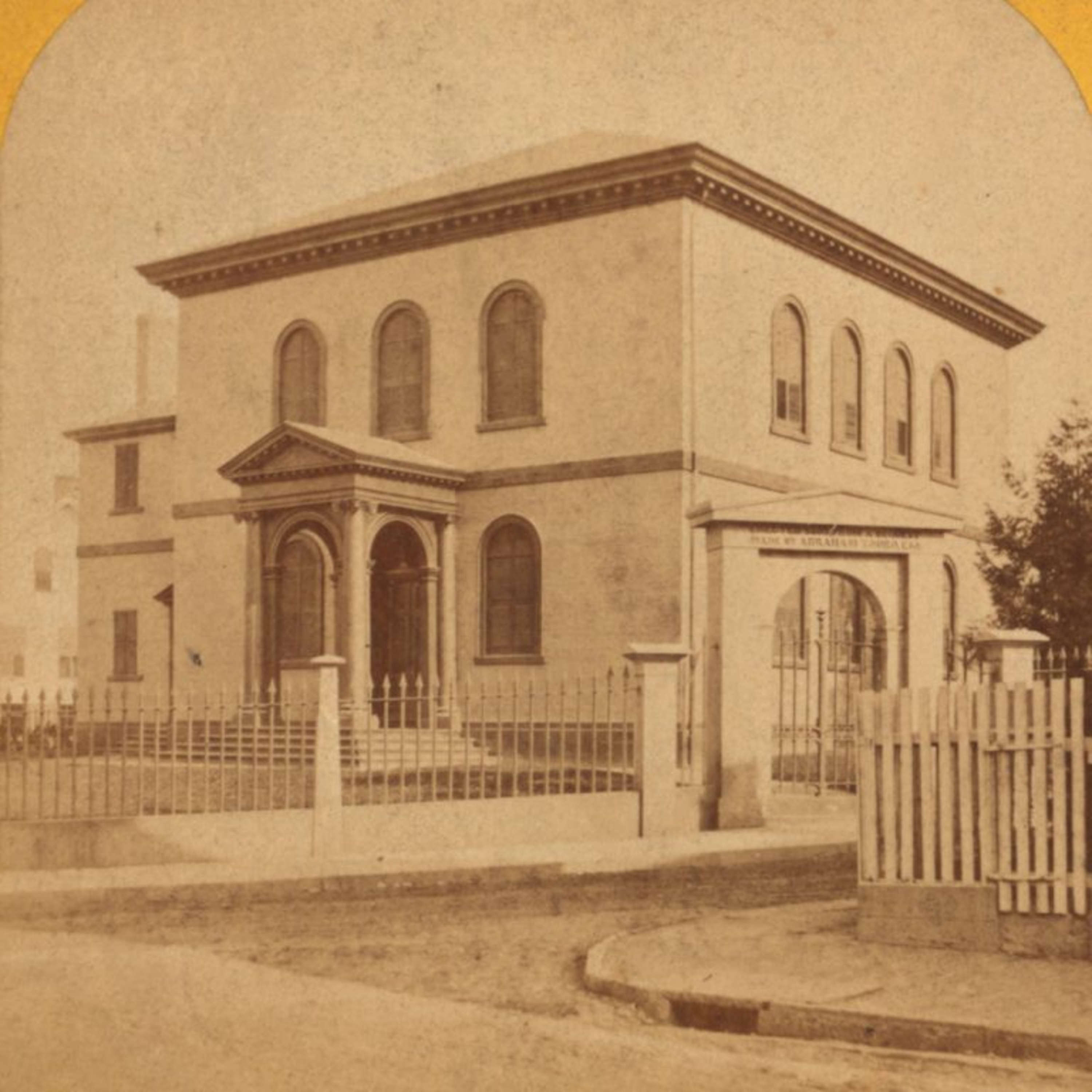
From Philadelphia to Newport: An Early American Teshuvah (1790)
from Classes by Mordechai Dinerman
74m 24s
In 1790, Moses Seixas of Newport, Rhode Island, and Manuel Josephson of Philadelphia corresponded about a halachic issue at the Touro Synagogue. Josephson wrote a responsum criticizing the synagogue’s practices, arguing they violated clear halacha. Both men also penned separate congratulatory letters to President George Washington that year, with Josephson representing Philadelphia and other communities, and Seixas leading the Newport community. Washington’s famous reply to Seixas rejected the concept of toleration, asserting that Jews’ rights were inherent, not granted by a majority. Josephson’s letter to Seixas, composed in 18th-century English with occasional Hebrew in Rashi script, defends his earlier criticism. He explains that the synagogue’s problems stemmed from necessity and community decline after British occupation, but insists the halachic points are straightforward, not matters of opinion. He cites authorities on reading from a Chumash when no Sefer Torah is available, arguing this depresses the congregation and delays acquiring a proper scroll. The letter, never fully printed before, offers a rare window into early American Jewish life, halachic awareness, and the challenges of maintaining tradition in a struggling post-war community. Josephson’s use of Rashi script, despite being Ashkenazi, shows his effort to connect with his Sephardic audience.
[Music] In 1790, Moses satius of Newport, Rhode Island, and Manuel Josephson of Philadelphia, corresponded with each other on a halachic question, with Josephson composing what is effectively a halachic chauva. Josephson raised concerns about the conduct of the Torah synagogue in Newport, arguing that elements of the service were not being properly observed and set out his reasoning in a letter. Their exchange provides an important window into the religious commitments and halachic awareness of early American Jews. It also stands as one of the earliest examples of her abinic-style chauva in the formative years of Jewish life in the United States. [Music] Two individuals who have a common denominator. First of all, multiple common denominators. First of all, both of them were Jewish. Second of all, both of them lived in the United States of America in the year 1790. Third of all, both of them had an interesting honor of penning letters to the first president of the United States, president of George Washington. After Washington was elected president, I think in 1789, so it was a normal thing that now all the different communities would issue letters of congratulation. And in the Jewish community, there was a discussion about who's going to offer this letter. There were multiple communities around six or seven different communities in different cities in the United States and who's going to write this letter. And so this was a conversation and a debate and a dialogue that went on for many, many months and then ultimately what happened was instead of one letter coming jointly from the Jewish community, there were three separate letters that came from the Jewish community. And yeah, if you're feeling of course, then yeah, that many people feel that way. So the one of the letters was written by the Jewish community in Savannah, Georgia. Another was written, and this is the most famous one, by the Jewish community in Newport, Rhode Island. And a third letter was written by Philadelphia, but representing four communities together, Philadelphia, New York, Charleston, and Richmond. So that would do these are the three letters offering congratulations to president George Washington and each writing in their own way what their hopes and aspirations are for the future. So I said that the two individuals that we're going to be talking about today have a common denominator that both of them wrote letters, wrote two of these letters were penned by two of these, the two individuals we're going to be looking at today. Number one, Mr. Moses Satius. Mr. Moses Satius was the Jew of Sephardic heritage and he is going to be the recipient of the letter that we're going to be reading today. He lived in Newport, Rhode Island and he was the leader of the community in 1790. And as a result, when Washington comes to Rhode Island, Washington made a state visit to Rhode Island in the summer of 1790. And the reason for that was because Rhode Island was the last state to ratify the Constitution. You did not need all states to ratify, you needed a majority, but Washington wanted that all of the states wanted ratification should be unanimous. Rhode Island held out until the 1790 and so in the summer of 1790 when Congress went for break, Washington went up to Rhode Island and that's where he met the different communities there including Moses Satius who read out this letter to him. And what's notable about this letter that Satius read out to him is that obviously Washington responds and he responds to all three communities, all three letters he responds. In his response to Satius, he lifts many of the lines that Satius put in there and he gave it back to him. And so now these lines are Washington's lines. And it's a very famous letter because Washington talks about the fact that it is now no longer that I don't have the exact lush in front of me but it is no longer that toleration is what we speak about. Meaning toleration is this model that there's the host, let's say the French or the Germans or the Russians and they'll tolerate the Jews and maybe they'll be very benevolent and tolerate them to a great degree and giving them a lot of things. And many Jews would have loved to have toleration. Like the problem was in toleration but what Washington does in this letter is he writes, we're not talking about toleration as if one class of citizens is giving rights to another, no, your rights are inherent just like our rights, just like we have rights here, you have rights here. So that's one of the lines that Washington has over there, there's also a famous line over there that the American government gives to bigotry no sanction and to persecution no assistance of our course. So that those words are from satius's letter to George Washington. Anyway, we're not here to talk about Washington's letter but I want to give you the background of who this Mr. Moses satius is and the fact that is that in the summer of 1790 he has this meeting with Washington present him this letter. Well, we're a few months before that right now and he's going to be the receiving end of the letter that we're going to be discussing here this evening. The composer of this letter, the one who wrote it, his name is Manuel Josephson. Manuel Josephson is a little bit of a different background rather than the background of a Jewish-pharate Portuguese heritage, converso and all that. Josephson is Ashkenazi Jew, he comes from Germany and he's living in Philadelphia. He's the one who wrote the letter from Philadelphia that represented those four communities that we spoke about before. Till 1776 he lives in New York City but when the British come and occupy New York, it's not a good place to be. So he moves to Philadelphia and it's at that point that he remains, that he remains over there. He is the one who's writing the letter that we're going to be reading today to Mr. Moses, the letter is written from Philadelphia on the 4th of February, 1790, dear sir, that's the opening of this letter. This letter was printed for the first time in 1920 in a Jewish academic journal, however not in full. In fact, as far as I can tell, it's never been printed in full. The some of the Halacha parts that come up in here when they were printing at a 1920, the people involved in that didn't find it all too interesting or relevant and so they were looking for more like the historical nuggets that are here and so they omitted it. As far as I can tell, I didn't find anyone who actually reproduced this letter in full but Barak Hashem, there's images of the manuscript that Professor Sarni asked them and he sent it to me and so I typed the whole thing out and we're going to go through it and we're going to learn a lot here. We're going to get a real life picture of what is going on in the United States of America in 1790, mostly a Newport Rhode Island. Now, Newport, again the Tural Synagogue is there and there was once a time that this was a flourishing place. In 1790 it's not flourishing at all. They also suffered a British occupation and it really gave that city a blow from which they never recovered and the Jewish community in 1790 was a shadow of what it was pre-revolution and that's going to be something that we're going to see throughout this letter. All right, so let's read what manual Joseph's in has to say. He says like this, "On the 22nd of December last, I was favored with your ablodging letter of the third of the same month." Okay, so I received your letter, meaning Moses' satius' letter, to which for the want of conveyance have not replied before. The want of conveyance means I haven't been able to respond. How am I going to get my letter from me to you? This is interesting because 1790 the war is over, how difficult is it to get a letter from Philadelphia to Newport? Apparently, it's difficult. And he's saying that I didn't really have a way of getting you this letter and that's why I never replied. It's true your brother-in-law Mr. Chiam Levy passed through but his day was social came to Philadelphia but his day was so short as to afford me time to take pen and hand this much for an apology. So in other words, he came to Philadelphia, he was here for such a short time. I didn't have the ability to write this letter and so that's the apology. Now the writing is in 18th century English and I pretty much left it that way. I just made minor changes to the punctuation here and there but you're going to see words that we no longer really use anymore but I feel that it's more inviting so to speak into their world by keeping it that way. All right, by your said favor you are pleased and informed that you had perused that part of my letter to our sister Mrs. Judah relative to some okay. So you are telling me that you read my letter to Mrs. Judah. So there was a lady named Mrs. Abigail Judah. By the way in this letter we're going to read all the who's who in the Portuguese Spanish Portuguese Jewish community in 1790. All the big last names we're going to have, Saceus is one of them. That's number one, Chiam Levy. Levy is another. We mentioned that before. Judah is another. So Moses had a sister named Abigail. Abigail married Judah and apparently Joseph and Manuel Joseph's in first writes a letter to Abigail and in this letter to Abigail what happens is he's condemning what the shawl, what the Tural Synagogue is doing in Newport and Moses reads it. He peruses it. Peruses it.
Today usually means reading it casually, then it meant actually reading it, "Yuno." So you read the letter about what? Some of the congregational matters and ceremonies in the practice where I did point out some improprieties and recommended an alteration. So Josephine is saying, "You got to change what you're doing in the shul over there." In answer there, too, you give a circumstantial detail of the situation of your congregation with the capricious and whimsical disposition of some of the individuals that compose it. So Moses now is like defending what's going on by him. He's like, "I saw you wrote to my sister here. Let me give you a d'invachevina what's going on." And he says, "The situation under your congregation." In other words, we know, I alluded to this before, 1790, not a good situation, not a lot of Jews living in Newport because of the war. He also alluded to the fact that there are some people who, I guess we would say, don't care all that much. Capricious and whimsical disposition are people who just do what they want essentially. And so therefore, they're not intending to follow halacha. I guess, and he's using that as part of the reason why he does what he does. Again, we don't know yet what's going on. As this letter will move on and continue, we'll understand what exactly the issue was there. At same time, you insinuate that to receive from an alter your present mode would be very impractical or at best, attend it with much difficulty. You're saying that it'll be very hard to change. Having been adopted not from choice, but from necessity. Nevertheless, if you were convinced that what I advanced on the subject was the result of mature deliberation, you would want an all-subscribed to my opinion. So, satius writes to Josephine that we can't really change what we're doing. But if what you wrote is coming from mature deliberation, so then we'll change. So in other words, what you wrote is you stand, you wrote. You didn't back it up with sources, you didn't make the argument. Yeah, so it didn't sound like it was mature deliberation. So, so therefore, we're not prone to listen to it. If, however, we knew it was coming from mature deliberation, then maybe we would listen. Okay, so now we get into the meat of the letter. And we are, Josephine now starts talking. These sentiments do me great honor and are highly flattering, especially in the apply manner, you will convey them to me. I shall therefore endeavor, and I flatter myself, to say that it's amply in my power to convince you that what I wrote is literally just and conformable to our oral law as deduced and digested from scripture. And by no means matter of my opinion of my own, you're making it sound like this is my opinion. It's not my opinion. Everything that I wrote is halacha. I wrote halacha. So my job is now to convince you, and I flatter myself that I'm going to be able to convince you that what everything that I wrote is clear halacha, oral law as deduced and digested from scripture. It's interesting that he's like being madgish to Moses, satius here, that by the way, this comes from the tyrants, rooted in the tyrants, rooted in scripture. One of the interesting things about the Spanish-Portrait, these community, this was to an answer, Daniel was to in London, it was to in Hamburg, all the places where they set up, were these Jews who had fled from, mostly from Portugal, and they set up these diaspora communities, and many of them were raised as Christians and grew up as Christians, and then ultimately the New World as well. They had a very strong desire to that the religion should be based in Tanakh, and in fact, the idea that there was sometimes a disconnect between what halacha said in Tanakh bothered them a lot. You could understand perhaps the fact that they were raised in a Christian society may have lent itself to that, more familiar with the Bible, and we're able to see in their educational system, answer them as well, you're able to see, there were many more teachings of Tanakh, whatever. So I want to be surprised if Josephine knowing this, writing to Saceus, is saying, by the way, it's rooted in scripture, usually when two Jews are conversing about a lachig matter, they don't need to go out of their way to stress that, but it could be that's why he's stressing that over here. Okay, for had that been the case, he goes on to say, if I would be saying my own opinion, then I should have written with a degree of difference, like I should have been more shy about what I'm writing, and I should have pointed out that we need to have mature deliberation and serious consideration, and I should have done that before I wrote. But the reason I didn't have to do that is because it's a pusher. All these matters in question are to be found in our law books. I did not hesitate to write as they presented itself to my mind, it's very simple, it's very straight forward. Permit me here to make a short digression by way of preliminary to the point in hand, so here is making a little bit of a Hock-Dumma. The letter in a few places actually, it's four sheets of paper, and in each, in the middle of the page, like kind of where folds, the letters are worn out. So that's why there's a number of places where it's a little, a little, a little, illegible over here. But anyway, what he gets into over here is that generally we know exactly what to do in terms of Allah, everything spelled out. If by chance there should arise a doubt concerning some matter or thing, which is not clearly or explicitly mentioned as it would be next and possible to provide against every minutia that might come to pass. So sometimes that happens. There's no way that Cholhanar al-Hara'alaqah would be able to cover every single scenario that's ever going to happen in human history. So when those doubts arise because of that, it is generally decided to solve by implication and comparison. So we basically take a parallel case that's similar, and we say, "Oh, if the Allah has like that." So let's use our minds and let's analyze and let's compare and then we could pass. Okay, so he's telling us how Saq works over here and is the business that in general comes before the Cholhan. Now this word I spelled with in Hebrew and in Nikud because that's exactly how he wrote it in the letters. So come before the Cholhan of a congregation and buy him the tournament. So normally when there's a suffix, there's something new comes up, you go to the rub, you go to the Cholhan. But the case in question is not of that class. For it is distinctly to be found in all our law books of the first reputation. So it's an open-and-shot case. Therefore, this actually doesn't even need a rough. This doesn't even need implication and comparison and all that that we spoke about, which is again why I didn't give you Mekairis and you don't really need mature deliberation or anything like that. So that's in terms of his Asqama. I want to point out one thing about the writing of the Hebrew. He's going to use Hebrew multiple times in this letter. And interestingly, most of the time he puts it in Nikud over here but the rest he drops the Nikudus after the first instance. But what's interesting is, and maybe I should have brought a copy in, he writes it in Rashi script. He writes what we call Rashi script. Now why do you write it in Rashi script? So the reason is, I think, because Rashi script is actually the Sardak cursive, which means that Jews from the Spanish Portuguese community, when they would learn how to write in cursive, they would learn in the Rashi script. The reason Rashi print, the reason what we call Rashi script, became that way, is because printers use that. And those printers that actually use that script for the first time were coming from Spain. They were using a font that they were very familiar with. And so they use that. What was that? >> [INAUDIBLE] >> Who? Yeah. So once I can say, here's the second point. If you look at it, this is my judgment, and I asked another person to look at it, it looks very primitive. And the Rashi sign is completely messed up, and he didn't actually do a good job. So the way I see it is, yeah, because he was Ashkenazi. He was actually not used to this, but he's writing to Moses Sace's. He's like, okay, I'm going to try to write it in a way that will work for him or for them or whatever it is. And so he tries his hand at writing and try it yourself. I'm not familiar with writing Rashi script and try, you'll see. It's actually not so easy to do. And I think that that's what happened over there. But anyway, if you're interested, I can send you an image. You can take a look, you'll see. It jumps out at you that some of the letters. This is not the way the slyard occurs to his supposed to look. And I think he was trying to write to his audience in a way that would resonate with them. And so that's sweet, that's sweet that he did that. Okay. Having thus much premised, Chanel proceeds to quote some authorities for the satisfaction of your good self and the rest of our brethren of your congregation whom God preserved and multiplied. So now I'm going into McCoyerus, basically. Okay. So let's, we still do not know what he was doing so wrong that Josephson is upset about. We don't know that. But again, as we read, it's going to become clear. Says Josephson, it is allowed by one of the Khachamim that in a place where there is no safe atere to read the parasha at synagogue from a Khamish, commonly called parasha book. So there is this idea that if you don't have a safe atere, you could read the parasha, you could do the weekly creusateura from a Khamish. But this is strongly controversial or controversial. And among the many other reasons assigned against it is the following. So why are those, there's a number of reasons why we don't like this idea, but here's one of them. That by prohibiting to read from a Khamish, the spirits of the congregation will be depressed because an uneasiness on a counter of which will animate them to probably purchase or get or require a safe atere as soon as possible that they may perform their duty according to the command. And he says, I'm quoting here from where the Torah, Erychheim, Eryktsis and Hebrew, Torah, Erychheim, Basiaisif, chapter 143, or as we call it today, Semen, Kuf, Mamm, Giml. So what does he say over here? There's three points he says over here. Number one, there are those who are a matter to read a Khamish when you don't from a Khamish when you don't have a safe atere. Number two, there are those who disagree. Number three, among the reasons that people disagree is because we want to make you suffer so to speak. You can't do it. Why? Because now when it finished Shakhir is, and as you're ready to sing by heben Sayahar, and especially if you're going to do it to famous Nighin, with this Rakshos, and you're like, you can't sing it. You can't sing a war because you don't have a safe atere. And we're not going to let you read for the Khamish. If we're going to let you read for the Khamish.
You're going to be emotionally satisfied. No, no, no, we want it to hurt. Like this, you're going to go home, and you're going to raise funds. Next week, it's going to be a seamstir-futator, and not going to say, "Tachron, everything's going to be wonderful." So that's the strategy. And it says, "Where is this coming from?" It says, "The coming from the tour, the Chayim, and the Bacey Asif, Semin, Coff, Mem, Gimol." So it sounds like that Emmanuel Josephson has a tour, knows how to read a tour, and is summarizing the tour over here. So, okay, I mean, I think generally it's an interesting question. Like what was the level of tour and knowledge among the Jews who were here in 1790? Now remember, it's, "Bechlau, when you talk about immigration coming to a new place, I can't say always, but generally speaking, the rule is that when you come to a new place, the first Jews that move to a new place are not the scholars." That's generally the way it works. Scholars are. Second wave, third wave, fourth wave, fifth wave, whatever. It is, and that's been a pattern throughout Jews, or the number one. Al-Akhazqama, the Qama, when you consider the fact that the bulk of the early arrivals that were Jewish to the new world were coming from the conversal community, where they, many of them, they were raised in families where they themselves were conversals. Their parents were conversals, and so therefore their education was limited in that way. And so it's what was the level of knowledge of Torah at that time. Well at least here we have, and it's interesting because he comes from Ashkaz. He comes from Germany. But we're able to see, he's quoting a Torah, and as you can see, he quotes it pretty accurately, and we'll look inside right now and see exactly what he's doing. He's able to understand, he firstly has a safer, number one, and number two, I doubt he's using it from memory. So he has a safer, and it's not the only safer he has, and he's understanding it, and he's able to turn that into relevant, sock information. Okay, so what's he talking about here? What's the Torah? He's quoting over here, what's the Dinn? So let's go there. But before we go there, just one thing. You already understand what's going on. In Newport, they were not reading from the safer Torah. In Newport, they were reading from the Khumash. Why will get there soon? They obviously had safer Torah. This was a congregation that existed from earlier in the 18th century. So they definitely had safer Torah, but we'll talk about it, we'll talk about it more as we move along, but at least we understand, we're beginning to understand what the problem was. Okay. So we can get in, the Khumash is the one who says it. We do not read from a Khumash in the shul, because this is uncommonly for the community. It's not a way to exhibit respect for the congregation. Now what does a Khumash mean in Tammudik time? So Khumash means exactly like safer Torah. It means exactly like safer Torah, never done. Instead of being all five books, it's one book. But everything else, the way it's written and the dindam, everything else is the same. How do I know? Because you have a Yoroshali that there's multiple ways of knowing this, but one of the simplest ways is the Yoroshali that says, "You're not allowed to take safer Torah and turn into Khumash." Okay. You are allowed to take a Khumash and turn into a safer Torah. So you see that we're basically dealing with this scroll. So question, can you divide it? Can you not divide it? So that's, you're not allowed to read the Khumash. It's covered at Sibri. You need to have all of the five books of Moses. Okay. But says the base Yisif on this in our Khayn Khufman, Gimmo, exactly where, where Joseph's and told us to look, says the base Yisif as follows. Of course, I've been to loyse. He brings on the big deloys. He's one of the commentators of the Rambams. His name was Rabshamah. The Benavra we lived in, the late 1200s, early 1300s in Spain. And he writes in Perek, "Tes of Hilke safer Torah." Meaning of the Rambams Hilke safer Torah, that Rabenumash shulam, there are a number of Rabenum shulams that I didn't spend time figuring out which one this is. Rabenum shulam says, "Hey, Khadayin, la Safer Torah." When a community does not have a Torah, mutter, leekers, Bukhamish, you're allowed to read the Khumash. The leek alameikh has shulah covered Sibri. Don't worry. The Gammara said, "You can't read the Khumash because of covered Sibri." What's the naqavatsib? Is there relevant now? Why? You say, it's not respect. What do you mean? I have no choice. If you're leaving the Safer Torah in the Ar-N-Koidage, you're saying, "Rabbaizai today, you guys are not deserving of the Safer Torah, we're reading from Khumash." That's not respectful. If you have no choice, you have no other choice. We know who they are. Rabenum shulam is called the Miktalos. Ah, now the second thing we learn is that some people forbid it. Who are the people who forbid it? Ah, Rabenum shulam says, "Rabenum shulam is called the Miktalos." Rabenum shulam is called the Miktalos. tells me that he wasn't so sure if
even knew what time it were, which tells us something about satius. And as we're going to move along, I think this picture is going to be rounded out a little more. Okay, so he's saying that he brought another quote that says, "You don't have someone who knows it Elaine, you bring it out, you figure it out. Where is this from?" See, says, it's from chapter 142 indeed. It's from the B.C.A.S. of Eurachine, Simon, Kothman B.S. Where does it come from? The B.C.A.S. of over there. Remember, B.C.A.S. is always quoting. It's an encyclopedia essentially. I mean, sometimes he's speaking in his own voice, but so much of the B.C.A.S. of is just bringing him a curse. And so here, he's bringing, "Mirain or Avra, this is where I'm going to throw in the author of the Truma's Hadasha, 13,14, and Germany." We are right like this. But yes, if she has a little doth, a little community, they have a minion. They don't have someone who knows how to read properly with the truck and with all the dictop, nirida, filo, aki, ikro, batayda, kamesh, yuked, and bitzibra, bivracha, kioh, khasa. Nonetheless, you bring up the terror, you read it the regular way, and you do a bracha. So he's quoting this accurately and it's point is. You're saying you don't have a guy to read it? Doesn't matter. The halacha tells us what you're supposed to do in this situation, why are you reading from a chomish, which is so controversial. Here's what halacha is telling us, what you're supposed to do. He then brings another quote. His third quote in this section is like this, in a congregation where the reader is not perfect in the congregation, in which case it is customary that some other person should read from a chomish and the chasen repeat after him from the safer. So this is what we call in modern language and untrzaugur. Care should be had that the pranta do not raise his voice too much, so it's not up here like two voices and he says, "ibid." So he's telling us that in the Torah, simin, orchai and simin, kufman, and bays is also this idea that if you're doing untrzaugur, make sure that you're not too loud so that we don't hear the untrzaugur. What does that prove? What that proves is that in your situation when you don't have a bakar, so you get an untrzaugur. No one said over there take a chomish. Well we said it. In other words, Jewish law accommodates for the idea that you don't have a bakar. And we deal with it and we work around it and we have a system for it and that's a system and you're taking a different route. And so therefore that's contrari talacha and it is not okay. A small note, I didn't find this last quote in the Torah in a r-chai and kufman bays and I couldn't stand all day looking for it but I didn't see it. Not in the base-case of not in the Torah, so I don't know where it comes from. The closest quote I found comes from the lavush, a simin, kufman bays. Now I don't know if he's quoting from the lavush, maybe he's quoting from somewhere else, maybe someone one day will point this out and show me what I missed. It's vays-sush. But let's read what the lavush says. You have a Yeshua that has a minion and no one there knows to read. Likres Batoyra, sorry I typed it wrong. Likres Batoyra, kalachab, bidiktuk of a time in. Nonetheless read from the Torah and the custom is that you put by the chazin, someone who reads the end of the time in the Torah, chomish. But the Batoyra, who's the Unterzager, should not do it because run. Why? So we only hear the chazin and we don't want to mix up the tibor because you can't hear two voices today called a la mishtane. So it's pretty close to what he was saying over here but again I didn't see the actual quote. All right, so oit chazan la moe to figure out what happened over there. He concludes this section by saying the preceding rules are corroborated by the renowned Rambha. My monides, he says. Yalachhazaka, Hilkhasavaterra. Okay, this I have no clue what this is. Rambha and Hilkhasavaterra to the best of my knowledge is not talk about Kriusatura. He talks about how you write a safe at Torah and so these issues about what do you do if you don't have someone who knows that a read and do you take it out and do you not take it out is not Hilkhasavaterra. And notice he didn't give a chapter number. Now there are two chapters in Hilkhas Vela with the Rambha does talk about Kriusatura. It's paragraph your base and paragraph good gimmel. However, I didn't find anything of this there except for that you now read from a khumish literally four words. You now read from a khumish. But all the other information that we're dealing with over here is there an exception to the rule and what if you don't have a safe at Torah and why can't you read from a khumish and what if you do own have someone who knows that Elaine and the untr is I didn't see any of that and the Rambha was again unless I'm missing something a gvasar. So I don't know exactly what happened over there. Okay, now let's continue in this letter. Now you can notice here that I divided this in sections. I just want to highlight that's my division. In the letter this is one long flowing narrative. He now says as follows. It cannot be expected that any authority can be produced which in plain terms prohibits the taking out of say for laying it by and instead there of read from a khumish. What's happening here? He's saying, okay, let me tell you the way what what what happened here. What happened here is a solace. In Newport they weren't just reading from khumish. Now we're getting more information. You know what they were doing? They got their value been so you are in with all the bells and whistles and they took the safe at Torah out and as going to become clear later the Minigrants fired as you do have a first they also did the have before Kyrgyzat Torah then they put the safe at dawn on the side and they read from the khumish. Now he condemned this as hey you're not I'll do it that was a letter that he wrote to Abigail. Abigail Judah, hey this is not okay you can't do this. And now he's explaining to most satias why not? Now remember most satias wrote him a letter saying hey why do you have a problem with what we're doing and everything like that. In that letter satias said bring me a mucker that says you're not allowed to take the safe at Torah out and put it on the beam and read from a khumish. That's what he said bring me a mucker. Tell me where it says it's like you know which verse in the in Tanakh tells me that you're not allowed to do. So he's like that's a fake expectation like you're you cannot be expected that I'm going to be able to produce an authority that in plain terms meaning he probably asked for it in plain terms prohibits a taking out a safe from a laying a bind instead they're of read from the khumish. I say it can't be expected that it didn't should be produced why because it cannot be supposed such a thing whatever happened who in the right mind like why would that even ever get codified like why would you do it for as above shown it is scarcely allowed to read from a khumish where there is no safe at there much less can be supposed it will be done where there are many. So I showed you that when there is no safe at the tari in ala taikar a khumish so that this is where we get into comparison. Kaalvachoymer if you have a safe at the tari how much more so you can't take it out schlep it out put it on the side and do from a khumish so like the answer to the question is I can't give you chapter reverse the point but let's think about this in a more sophisticated way. He continues and says to transcribe the various authorities respecting the subject which are all of the same import would swell this to the size of a pamphlet rather than the contents of letter. So if you want to bring all the macawitas that prove that it's not okay to do what you're doing then it would stop being a letter and it would turn into a conscious by the way he got pretty close to producing a conscious. I therefore flatter myself that the forgoing quotations also applies to convince that the mode you follow is not only wrong in theory but common reason explodes the practice. Okay now I had to go to to Claude and ask the word explode how is this word used in the 18th century because I we don't talk about common reason exploding a practice. So I didn't check it up any further but what it told me was that explode was used then very commonly to say reject you don't blow up a practice I don't know I never heard anyone talk that way is it they said it means reject the rejected. Well I hear you okay say his point is what he's saying is it's wrong in theory but also common reason now he's like now he's invoking common sense to say that what you're doing is wrong now common sense has a place in in halacha so now he's going to actually bring a mucker that common sense plays a role in abstract it let's see what he says it is that was with this with this view that one of the most ancient and much revered authors lays down the following general rule in these words is that one of the most revered and ancient authors now there's no I doubt most most most most satius knew who this revered and ancient author was because he's going to quote now from the Archeschein now this call from the Archeschein I was suspicious maybe it's in the base Joseph which he clearly has access to but it's not and base is a very very well known safer in the 1700s Archeschein already is not such a well known safer in 1700s really interesting that he quotes it here he's going to quote it later as well and now we're getting a little bit of a picture of Josephine's library we know that he had a not sure about his rhomba by the way I don't know if he had a rhomba in fact maybe he did not but we know he had a tour with the base Joseph and we know he had a Archeschein so what's the Archeschein so let's actually instead of reading his he gives the Hebrew and he translates it into English for the benefit of most satius let's just jump to the actual quote Archeschein over here is talking about the halacha that we read parches ache re moe's James Kipper morning and the question is why what is the reason so parches the reason we're reading ache re moe's is because of the avoid of the client what all what he did on young Kipper so it's very appropriate but there are additional reasons that were already said in the times of the dishoin of why we're doing this so one of the reasons he says over there is that we learn different lessons of how careful we need to be from sin now here it gets a little interesting because one second what was the sin what did they do and so there's multiple opinions of what let me clarify we're talking about opens with Akraemosh Nebenei are literally this opening word so that that's the message is there the message is not only in the avoid of the m Kipper which is later but in the opening Akraem but in the opening Akraemosh Nebenei are and they died for a reason why they died they parched because of the sin now what was the sin so according to one of the views the sin was they went into the they went into the michael and shesuei and they were already inebriated they were intoxicated this was not okay so he wants to make a point that you learn from here that you have to use even if something isn't a command
But if your logic tells you that you shouldn't be doing it, even if there's no command, God's coming after you. And that's an important thing to know on your own, Kipper, because you need to do Chuvan, those things. And it may not be an Issa or Mammish, but if logic dictates that you're not allowed to do it, so then you need to do Chuvan, so how do I remind a Jew about that? I bring this Akhra Emotion A-Bani-A-R. Why? Because Shuiya'in is a Sula-Miktosh. Where was there a command? There was no command. In fact, where's a command? It's after. Right? And we say, "Why?" And that's how we know. Had we know that Shuiya'in is a Sula-Miktosh, because right after that story, in Parshashmini, that's when Aran is told, "I'm a Shaker Al-Tasht." Oh, so if you're told now why you're punishing them for going in Shuiya'in, "Ella Ma, you don't need a command." Also have a command. Now it's a command, so it's holy and now it's an additional way we're able to connect Hashem, and it's a special thing, but you didn't need that to know not to do it, he says. "Waf, Divery'a-Mich-Suiya'in, Iqn-Su-Lem-A-Cinush-Shani-Sahar-Asa." If you say that the sin was drinking, well, there was no command. The Nukh-Haloma means that, so we derive from here, Shafi'ilu, Bidvan-Shallah, and Ninsab-Ahm, Azhar-A-Mavou-Araz, even where we do not have a clear prohibition, Qisha-Sahar-Maira-Layam, if logic tells us that we shouldn't be doing the activity, Yeishloy-Oin-Ish-Gaud-On-Loy-Ish-Maham, there's gonna be a big, big punishment. If one isn't careful of this, just like with Nudav-Anna-Viu. By the way, this is an interesting topic, standalone topic, about what role does Seh-Hul play in terms of determining what's right and what's wrong, but there are other examples of this. So, for example, there's a famous passage of the Khis-Kuni, where the Khis-Kuni asks, "How come the Dora-Mabou was punished?" They were not commanded. At least he doesn't see a clear and open command in the stories of the Torah that they were commanded on the things that they violated. And so he wants to know, "Yeah, you can say the same thing about Ka'ayy, yeah? I don't know if the Khis-Kuni does, I don't remember." But the Khis-Kuni definitely brings up the issue of the Dora-Mabou, and what he does is he says, "You know why they were punished?" Because people know. People know that you're not allowed to do it. And we're held responsible for that. And so these are kind of sources that lend themselves to the idea that, because there's another narrative, another narrative is that you can never use logic at all to determine right and wrong, don't even start. It's all divine command, and once you start with logic, you end up in a checkmate. Here we see it's actually a little more nuanced. There are some sources that lend themselves to the other narrative, income, acclaimate to get into unifying it into one whole. So why is he bringing this here? He's bringing this here because he wants to end this piece by saying that it's not only wrong because of the sources I brought, it's wrong because this just makes no sense. And so that's why you shouldn't be doing what you're doing. All right, now he continues here, and in the next piece he's going to give a solution of what they should be doing. You say that Mr. Rivera, more on him in a minute, reads Hebrew perfectly. Surely then, it can't be so mighty a task for him to read from the safer a few chapters occasionally. All right, a few comments on this. Number one, Rivera reads Hebrew perfectly. Okay, what about the other people? So is it that Rivera's the only person who reads it? That's why he's the only one who's like being discussed as the potential Balkara? Or maybe the other ones do read Hebrew, but not so good, not so well. Okay, but that's just an hour learning that's a Jews of Newport. Don't have a fluent Hebrew reader at this time. Is that what this is? Or maybe Mr. Rivera is like the designated chast. And like he does everything cause unrelated and he's not going to let anyone else. And so maybe that's why it's focusing on him. But maybe theoretically, I don't know, I tend to think more of the first way. I tend to think more of the first way, but I'm not entirely sure. Okay, that's number one. Number two, the other ROV here, he says. So it's a big deal. He could read from a safer a few chapters occasionally. So unless the English language has changed occasionally doesn't sound like to me. This means every Shabbos. So are we seeing here that they're actually not convening every Shabbos? Which will not be surprised because as we're moving along. This is a community that was hurt by the war. A lot of Jews left. There aren't a lot of people there and maybe they're actually not convening. Well, maybe they're only convening once in a while. And that may be hinted at the word over here. I'm sure there are other sources that would shed light on these questions. Okay, comma report says him a man of understanding and docility. Okay, use that word, pull that out later today, say docility. Okay, open to learn. So he's a person whose understanding he's open to learn. He was bred to strict rules of Judaism. All right, so this guy is a very from Jew and doubt not, which means no doubt has imbibed the sentiments of his much respected and worthy father of honored memory to keep up and support our whole religion and worship in every respect as much as possible. He had a father. This Mr. Rivera, there was a famous man who lived in Newport. His name was Jacob Rodriguez Rivera. Jacob Rodriguez Rivera was from the founders of the Newport Tural synagogue and he died in 1789 a year before this correspondence and he was a passionate Jew. And his son is Mr. Rivera by the same name Jacob and he's the the potential balkyrie all the year and the point is he grew up in such a home with such a passionate father who literally just passed away a year ago that there's no doubt that he would be able to do this type of job. So let's just put him up as a balkyrie. I therefore have no doubt that on his being made acquainted with the proceeding passages, like if you teach him what I told you, which show that the reading of the partial from the safer is so essential and strictly commanded by our laws that he will not hesitate to perform that part of the service, especially when it can be done so easily by means of a prompter. Get him a lunch or zogger or if that should not be agreeable, if you don't want to do that, to read the words, although without the time in, would still be preferable to your present mode. So you have a very simple thing that you could and should be doing and this is what he wants him to do. Now what happens over here is let's move into the next section. I shall now endeavor to solve your question. So he's now going to quote from Saceus' letter where Saceus wrote him the following. Why is it more wrong to take out a safer without reading from it at Shabbos and Holidays than on Kipper night and Oshana Robble? Okay. So what happened? What happened over here is that in Josephson's letter to Abigail, Judah, he wrote, "You've taken a safer task." So firstly it's wrong for all the reasons that. Secondly, there's another issue that we didn't even discuss yet. That is, you're bringing a tater out and you're not using it. And that's a problem. You can't do it. If you're bringing a tater out, you need to read from it. So Saceus writes to him what are you talking about? You're in Kipper, Colnidre, we take tater out, we don't read from him. And Oshana Robble, we take the safer tater out when doing the shin is and we don't read from him. So clearly it's okay to take a tater out and not read from him. So now he's asking this. This is a question that he's asking. This becomes a long mini essay that Josephson writes back to him, all about men, Huggins, and the difference between men, Huggins, and dinners. And it's actually not even entirely clear how this is answering the question. On the one hand, a lot of the material is really interesting because he talks about what is the reality in America? What's going on in terms of the level of knowledge and people? And there are some very interesting quotes in here. But at the same time, it's very long-winded. And it's hard to even understand where he's trying to go with a lot of this information. The answer that I think he's giving comes all the way if you go further up to where is it? If you go on to page 10 in the handout. Okay, actually page 9 of the handout, the last paragraph. It is not much approved to take out a safer unless for the purpose of reading their from. So he generally says, "You're not allowed to do that. I stand by that. You're not allowed to take out a safer unless you're reading, though no positive prohibition against taking them out at the several times before mentioned. It's not an "issur." Therefore, the ancient great congregations have established such customs as a foreset amongst themselves and keep up to them. So therefore, that's how the minig developed that we take it out of Shana Rabah, that we take it out Kolnir, because not an absolute "issur." Nevertheless, the famous law writer, Koln Balah Turim, from which he quoted, "From whose extensive works we derive almost a whole of our laws." So we see he's a big fan of the Torah. By him collected from Titus, Maitsha, and properly digested, like digested, not in the sense of eating, but like a digest. So I'll book a. See, he organized all of the Torah, as also a great part of our customs, Anarman Hagen, as under the head of customs and ceremonies of Sukus, the following words. Say, he brings the following when it comes to Sukus. And he says, he quotes here from Tura-Arahian Simeon Tuf-Raj-Samaach, where he's talking about the Haishinus. And he brings the Rasag, the Torah does, although Josephson admits that it's the Rasag. He doesn't just like. He did that before, where he admitted the fact that it was coming from another rabbi. He doesn't want to complicate things. But what is the Rasag saying, the Torah brings this? That you know when you should do your Haishinus after the Aft-Tura. In other words, not the way we do it after Shahras. Do Kri-Satura, do the Aft-Tura, the Se-F-Tura is out. Great, now do why so that we shouldn't take the Se-F-Tura out for no reason. That's what Rasag says, and the Torah brings it. Then the Torah says, but it's not the minute. So what do you see from here? What you see from here is, is it right to say, you don't take a Tura out for no reason, it's definitely right. It's brought in Adah. Is it an absolute. Is it? No, it's not an absolute answer, which is why you're allowed to, if there's a compelling reason. And I guess
would say, there's a compelling reason called nether. There's a compelling reason by Hoshinus. So in that case, it's because it's not an insurmountable thing to do it. But it's a thing, it's a thing, you can't make light of it. And the reality is that you don't have a compelling reason. You don't have a compelling reason. And therefore, you shouldn't be doing it. That seems to be his answer to that particular, to that particular question. Before I quit this subject, must notice the great stress you seem to lay on exhibiting the safer expanded, as is as if of great moment. Moses satius, when he wrote, "Yeah, we want to do this. We want to take the turret, even though why? Hagva." They wanted that moment where you lift the turret and you show it to all the people. And so this is, see, says you will be pleased to observe that such exhibition, although universally practiced, is but a secondary ceremony to the reading from it and signifies that the congregation to take notice of this is the law from which we are about to read or have read, the pointed lesson or portion of for the day. It's only a minute. It's a minute that here is a taura that we already read from, one minute, or that we will read from the swerdich minute as he's going to get into in a second. Now, he has to clarify, because he's worried that satius is good. What is it? We do it before. We do it after. We only do it before. What do you talk about after? I say or have read, because this exhibition is performed in many congregations after the reading is finished. And in a different mode, in different congregations, different monog--which is not my press on purpose to describe, I don't want to get into it. Only that it is never done unless, as such, times when the safe air is to be read or has been read as F. or said. So, Hagva only happens if you're reading the taura. You're not read. So firstly, Hagva is not so important. So, don't have the serious not-fish for Hagva. Number one. And like what's more important is the creed, which is a din. And this touches a little, although he's not so clear, in the five pages that we skipped, which is a lot of interesting material, one of the things he's doing there is he's teaching satius about the diversity in the din and the minute. And like here, there's confusion. You're basically saying, "I'm not going to do creed as a taura, but I'm going to shut the taura out because of the minute of the Hagva." He's like, "Number one is only a minute, so you don't really need to have this serious not-fish for it." And number two, the whole minute is connected to the crea. This is a taura you read, or this is a taura you're going to read, but if you're not reading it, then you don't have Hagva. Or to use it, you're sheeveshlingo. It's the chalois of Hagva. It doesn't take effect. You don't have a Hagva here. Okay. She says, "So we do this every day, except on the face of Tishabov in the morning service, when that ceremony is admitted. We don't do Hagva, Tishabov Shakhras. We don't do the Hagva Tishabov Shakhras. So the MS is, this is an interesting, this is an interesting Maiza. So we see this a little in the Shalus of Shuvah's Knessas, Khtolah, Semen, Lama, Zahe. This is the Rabbi, Hayme, and Ivisti. He passed away in 1673. And this Shuvah is dated to Manachem of Toth, Lama, and Bays, which is 1672. Ismir. He writes, "Minego, Eulah, and Bates, Pa, of Shaloy, Lassis, Hachama, Se, Fetah, or Beshachras. Kvasha, Nauy, Meshachra, Yama." We don't do Hachama, Se, Fetah, or Hachras, of Tishabov, he says. And he says, "This is a minego, Eulah, which means that in Ismir, the Ottoman Empire Jews are not doing Hachba." Although I met Sasi, Darf, I said, "Shum, say, for my own bala, I mean exact. Where does this minne come from? There's no source." The Efsha, Shannagul, K, Mishun, Darf, Khmase, Fetah, or Nis, Kisim, Kham, maybe because it shows joy. The Lafi, Shad, Iisi, Jikach, minne, Kpasha, Makhal, and Makhal, am a Khawemus. Because I see it's so common, but it's so wrong. So I see, I'm here, I say, Shamin, Iq, with Tosu. It's a mistake. The Royal of Adloy, Shah-aqama, say, "Shaysh, Iisi, and then he goes to bring all the sources, how important Hachba is, you must do it." But, Hachba, in Hakti, Poi, Ismir, Bekeil, Ip, Tosh, a Portugal, the Portuguese Jews. He was the rabbi, I guess, of the Portuguese community in Ismir. Lahakim, Asevert, Taira, Af, Tesp, Av, and Shachras, and he signs, Chayim, then you throw, benavisti. Ismir, Manachem, which is Manachem of Tosu, Lam, and Bayes, 1672. So apparently, it was probably common in the Portuguese communities, the diaspora, not to do, and that's what, that's what Josephson is saying. Although it is also the case, that Josephson is Ashkenazi, and he makes it sound like his universal, that no one does, Hachba. And Tosh, I didn't see, I didn't do extensive research, I didn't see yet a mucker from the Ashkenazi, and that some people are not doing it. And I don't know what the bottom line is, what the different communities are doing today. So anyway, that's an interesting data, I got, that comes up. Last paragraph of this section, "Sforum are now, and then taken out on some extraordinary occasions of great salundin, that occur in large congregations, which the explain would be too tedious, but never expanded on those occasions." So I don't have time, basically, to explain how sometimes we take out a sefatera, like by, I don't know exactly what them and hug them, but by, I have to say, "Fatera, you take out a sefatera." Or if the ruler would come, there was a minute to take out the sefatera, and there were other things like that, it's like, "I don't want to get into that, but the bottom line is, this is not something we take lightly, only when there's a real minute to back it up, there's no real minute to back it up over here, and so therefore, this should not be happening." So it's a shame that we didn't have the ability to read those paragraphs before, I do want to tell you that one of the big things he talks about here is how Americans Jews don't have men hug him, and in Europe this men hug him, you walk into our shul, everyone knows exactly how it's done, you can't change nothing. He describes how in America, the people are like, "Whoa, a minute, whatever it is, and one class and comes, he establishes one set of men hug him, he moves on, then the next guy comes and says, "What? That guy doesn't know what he's talking about, he has to do it differently, and then all of a sudden, the men hug him change, and he talks about the fluidity of men hug him in American shul, both Ashkenazi and Sparidik, and he talks about it as coming from a degree of lack of knowledge, of lack of knowledge. I don't know if it's coming from apathy also, that I'm not sure, but he describes that great length, so some people are interested in those paragraphs from a historical perspective because of the comparison between Europe and America, so you can have a chance to look at that later, you may enjoy some of the lines over there. Okay, now all of this was centered around one halakhic issue, the one halakhic issue was the Minig in Newport, if you can call it a Minig, to take out the sefatera and read from the Khomeesh on Shabbos when they would have a Minig. But there was another question that came up that Josephson is now going to give an answer to. I do really observe what you are pleased, which means you chose to say, respecting the blowing of Shifer. Here's another issue, a Misa about the Shifer. Your reasons for not performing that Solomon strictly enjoys service, so this is something you didn't have to do Shifer, are beyond that a great way. So you didn't do, or you don't want to do it or you're not going to do it, that's not clear. It looks like last year they didn't blow the Shifer, that's what it looks like, meaning Russia, China, 1789 in Newport, the Shifer was not sounded. So he says, "There's no dind to be found that insists on blowing a Shifer where there is none." Yeah, you didn't do anything wrong, because there's no dind that says, I don't know what it sounds like. Of course there's no dind that says, "You don't have to blow a Shifer if you don't have one, because how could you?" Right, what would you say? You have to blow a Shifer when you don't have it? But he's like, "You didn't have a Shifer, so okay, so I'm not so, didn't have it." No dind that says, "You have to blow a Shifer when there is none." Okay, but there are strong injunctions to procure one of past we've got to get one. And that is a duty and combat on every son of Israel to hear the sound of it at the appointed time, say, meaning like, which is, or namely, Russia's China. The blowing at all other times is no more than a minute, custom. So like, the other times that we blow, for example, the end of Yom Kippur, that's a minute, so he's letting him know. By your letter it appears you have instructed Mr. David Lopez. So Lopez is another one of these big hot-shot names of Sphardic Jews in America during the colonial period and in the revolutionary period. Aaron Lopez was a very, very famous one, and Mr. David Lopez is related to him in some way. So Aaron Lopez traveled to Hamburg. Hamburg is one of these cities that has a Sphardic Spanish Portuguese synagogue. You have one in Prague, you have one in Hamburg, you have one in London, you have one in Amsterdam. And so he's going there, probably for business reasons, and you asked him to bring a shiver. And that fully complies with the force that in Jumkin. Great, you did the ha-ha. You sent a shl-i-a-to-get you a shiver. In the interim, if it should not arrive in time against the next season, remember he's writing in the winter. So if it's not going to be here by the coming Russia's China of 1790, I doubt not, you might procure the loan of one from New York. So you can borrow one. There's a congregation here in New York. They presumably have an extra shiver. So you can borrow from them. It's really interesting because basically, the idea that you can buy one in America is just an on-start. The idea that anyone here knows how to make a sh- I mean there are animals here, right? But the idea that anyone here knows how to make a shiver is not even discussed. And not only that, in Manhattan, they have two or three. Fine, so they'll lend you one, but they're not going to sell you because they need to have all their shivers. So you really have a serious judec market over here. And they're sending a guy to Hamburg now, of course. He went there for business. But they hope to get a shiver from Hamburg. Just a little picture of only judec world was around in those days. Okay, nay, I think they should have the shiver factory in a tsunami. Where was, what do they call living legacy or something, something like that? Okay, nay, which means moreover, the cracked one you have might be made to answer in case of need. So now we're understanding what happened. Why don't they have a shiver? Shiver got cracked. Now how did the shiver get cracked? How did that happen? So I don't know. Should I make up a story? I'll leave it alone. Okay, and say for the one.
of a good one. So in other words, if you the want meaning if you don't have a good one, you could use the one that has a crack. How? There are many rules laid down how to manage in case of a shifer is crack or otherwise defective to make it fit for use. But those rules are so precise and difficult that I shall admit to mention them except one, which appears the easiest to be performed and it is as follows. And here he quotes it, "If the crack is lengthways and not too large, so that by winding a strong packing thread around it, the crack does close and it sound be the same as it was before it was cracked. It is lawful to use it but not otherwise." And stopping the crack with bees or sealing wax or anything else is deemed lawful. So here he seems to be quoting Denim from Shokhanarach, "Simm in Tofkov Pae-Vav" or "Han Tofkov Pae-Vav" that talks about the cracks in shifer and how to close them up. And I wasn't eyeing too much into this but he seems to be giving them the aids of how to fix it. Essentially he decided he doesn't want to get into it much but he does give them a recipe for how they could move on. But we're not done yet because it was also an issue with the person blowing the shifer. The problem is here key lines are illegible because these key lines are illegible. It's hard to understand what exactly it was going on over here. But he's talking about the blower and he says that we are ashamed from the goi and he writes it in Hebrew, "Gibble-Vav, you would men." So somehow this blower were ashamed for the goi by having him the baltukkaya. But with this difference in your favor that you are not ashamed, "Okay, I don't know what the next few lines mean." If no other could be found then such profligate which means some morally corrupt person as you describe it, "I should not hesitate to suspend that part of the service for once until a person a good character would undertake to practice and perform rather than have a stigma cast on us and be derided not alone by goi but also by pious and well thinking you hood him." This is interesting. Till now he's quoting open dynum in Shulkhunar, in the fore. And in fact you don't need to be a rav to say anything that he said to him now. There's dynum about, for example, if you go to La'alochis of Talmud, it's not about Pasqin, the vicinity of his rav, his rav is alive without a shus. But then the place could say, "But I met Burmurim if it's a real psaq." But if you're just quoting a dyn from Shulkhunar, if someone asks you what, brok it, you make it a cookie, you'll add a toe. And by extension all other things in that category, everything that he said so far is pretty much what brok it, you make it a cookie. So he wasn't really pasqin, but now he, mu, he slid over very casually into the rav of psaq. And now again, I don't know the details over here, but there was a case of someone who is of ill repute and he says, "Okay, we're going to cancel Shulkhunar. You're not going to hear Shulkhunar because it's going to be a Khilashem." And he says, "In such suspension, I think myself quite justifiable by its scriptural text, Psalm 119, "Ais asasha may fairytale saha." The true translation of meaning we're of is there's a time to work for or serve the Lord by making void his laws. There's ais asasha shem, sometimes for asshem. You work for him and you do what he wants, how by a fairytale saha. Now this is not the psaq of the psaq. The simple psaq is aisasha shem. We, this is an emergency. Why is an emergency? Because they're a fairytale saha. Because so many people are going against the law, so now it's aisasha shem. Khazal darshan in this way. Khazal, I'm rashing on the psaq says, an example of al-Yobahara qar-mel, where he broached, "Huhtay khutay khutay khutay bordak carbonata de basehan." It's aisasha shem. How he fairytale saha that we're going to break the taira and why? Because of the emergency moment. So he brings that here and he says, "Of this we have several instances of recording in scripture. I just mentioned one, two lengthy at this time to enumerate." So again he realizes that he doesn't want to go on too long over here. But this is a real psaq then to say you're not going to hear shay for a rashasha shem because of the khil al-Yobah shem. Okay? I'm not- (inaudible) (inaudible) Well, there's two issues here. One issue over here is whether you have a shay for or not. Now the other issue is you have a balka kair or not. So again, the shay for is like it's good you sent for hamburger and yeah you can fix the shay for, but yeah you're going to have to get a good balka kaira and it looks like it was last year meaning it looks like in 1789 that the guess, rashasha in 1789 they did not sound the shay for a new port for two reasons. Number one, they only had a crack shay for. Number two, now by that that wouldn't have stopped them because they would have, number two they weren't happy with the balka sas or as old as they did. So he says, "But again a crack shay for, first they get a new one and fix it. But again the balka kair, I actually think you did what's right." That's interesting, this is a real, so there's a broader conversation over here, I guess we'll have it right now just for 40 seconds and that is what's the first American shawar? What's the first shawar written by a poisek in America? So I'm not going to say this is mommiesh the first because you have to go look and look at other rabbinic writings and then what if someone wrote in one letter, you know, a din, you know said chavis by the way this week starts at 742 so are we going to count that as a shawar? So you have to actually sit down and go through all the halakic writing that exists among Jews at the time and make an determination. So this definitely could be of the first. You have so unclearly scholarly in Josephson, number one, and number two, this is, this is not just quoting a din of a year, he actually gave this new port of stock about this issue in terms of the blowing of the shawar. So maybe this is the first, maybe this is the first, I don't know, it's definitely of the first. Chavis written on American soil by an American scholar, two of fellow American Jews. Okay, let's continue. I can't avoid to say a word in justification of Mr. Uriah Hendricks, we're almost finished. Mr. Uriah Hendricks is a well-known figure. He in fact was the president of Shiairis Israel here in New York and he was a new port and he didn't come to shul and Moses satius is very upset that he didn't come to shul. So he says over here, basically, Josephson justifies it and he says, yeah, because you run a non-halakic, you're not running it properly. So I actually also wouldn't have come. It looks like that there was an attack there where he said he didn't want to come because he didn't want to give a donation. It looks like satius wrote that because if you look at what Josephson writes over here, I will not venture to say in defending his conduct that there might not have been a small tinnet of parsimony mixed with it. So I'm not going to be shul that there was parsimony which means "kamsanos". So I think Moses satius wrote him, he didn't want to come because he didn't get an aliyah by his chumish and then you're going to have to give a donation and he didn't want to. That's going to cost him a lot of money. So he says, I'm not going to get that but at the end of the day he was writing that show up because I also wanted to show it up because the way you. I wouldn't have shown up because of the thing. Yeah. He then moves on to say another few things on this. He's going to summarize this briefly. It comes back at the end of the letter and is like, by the way, if you leave the Sanctuary inside and you read from a chumish, you only solve half the problem that you didn't take the Sanctuary out but that's not the way to go. So don't fix it that way. You need to fix it in the way I told you before. So that's. And then he says, another point. You need aliyahs. People need aliyahs. And he says a very interesting line. Look at the last line in the paragraph before the box where it says, moreover, it is recommended that every Uhudi ought endeavor to be called to the say for at least once a month impossible. Okay, I'll be honest with you. I never heard of this. That there's an Indian together in aliyah every month. And he says, you're taking that truss away from the people. So is it a thing? The answer is yes. It is a thing. So aliyahs, Dividas lived in the 1500s. He's famous for writing the Raysha's Chachma but he has another say for Kulta's Chachma. And over there he writes that a person should get an aliyah once a month. You're connecting your soul to the eight Chachma and that's the way you connect Hashem and that's a Pasek Atomat, Vakin Bashamat, Kacham. Chachma. You get it through your monthly aliyah. Now, he's living in Ericsson, Surah on the 1500s. But this is quoted in the say for Yosuf Oymitz, which was in Germany. I don't remember the dates right now of Yosuf Oymitz but it's the 1600s of our Coal Corrective of the Managama Frankfurt. We've quoted a few times. Joseph's coming from Germany, so he would have been aware. I mean, this was in the year in Germany and is another say for the Javithyor has it also. Aliyah one to month. So this was definitely in the year in the 1600s in Germany and the Joseph knew it and so he's making a mention of it to him. I think I'm going to speak to the Gabboyam about bringing this back because I think it's going to be good for income. So that's it. Okay, he then gets into the donations. It looks like there was a question over there. Is it like, can you do away with the donations in shul and Joseph and tell him, yeah, it's a minute. If you don't want it, you could do away with it. And that's there. And now let's read the end of the letter. Okay. I doubt not. You will agree with me that it is full time to close for the present, the subject, the congressional field. In simple English, let me translate this. I think you want this letter to end already. And if that I have here in advance should prove satisfactory, it will afford me, afford me no small pleasure. So if I did a good job and you like it, I'll be happy. I have however to apologize for my drawing out this letter to such unreasonable length, which is occasioned partly as you will please to observe by rendering into English most of the authority cited. So you're going to be happy. I translate into English. So kind of it's because of your anamaret. So that's why the letter is long. Okay. And partly by such illustrations as I conceived requisite to throw some light on those customs and ceremonies as are not generally known. So I will start that again, because some things are not generally known. I have to give you that information.
Above all, my desire to return measure for measure. What does that mean? Is he saying that satius' letter to him was very long? It sounds like that, right? You gave me a long letter, so I'm having to come essentially and doing me the connected me to and I'm giving you a long letter. And must request that you will be pleased to excuse any inaccuracies or I have to Google this totology, which means when you write a double language. That may have escaped me, which your friendship and politeness leads me no room to doubt of being readily complied with. OK. A paragraph about a man named Henriquez, which we are going to skip, as no more room is left on the paper, it literally is at the bottom of page four here. Must of necessity conclude with adding that Mrs. Josephson, meaning his wife and Arnees, return their best thanks for your friendly salutations and offer theirs to your good self, Mr. Satius, your good mother, and rest of the family. And believe me, with sentiments of great regard, dear sir, your esteemed friend and humble servant, manual Josephson. Ladies and gentlemen, we perhaps read the first chauvo composed in America, maybe not the first. But it's definitely of the first. And it's very interesting. It sheds light on what is going on in Newport at the time, what people know, what they don't know, what's the level of knowledge, what's the level of observance. I do think you see a desire of-- I want to get-- we want to get this right. Like we want to do the right thing. There isn't this-- like, oh, we want to throw this away. No, we want to do what's right. There was a reference to capricious people, who-- that's kind of more like we just do whatever we want. But most of Satius comes across as very sincere. He wants to do it right. But some Jews do not have a lot of knowledge. I'm reminded of a-- in Taufschlalam-Idi-Gimel, the Shazar, who is the president of the time, came to the river. And he was talking about the Soviet Jews who came out of the Soviet Union and came to Israel. And he's going to be saying, for an asagresous, Shrekli-Hama-Ratsis. You hear the audio? He's speaking in his Yiddish. Agres-Huna-Shrekli-Hama-Ratsis. And he was trying to say something positive. And nonetheless, I love these people, because they're loyal and they're dedicated. So the river says, "An asham-Shutem." And the river says that I heard from the Fidegreba that we should say, "An asham-Shutem," instead of "am-A-Ratsem." "Am-A-Ratsem" is a little pejorative. "An asham-Shutem" is less pejorative. Moreover, in Kabbalah, Pshitus is a Mala. Pshitus is like your higher, your God, the way he's before categorization and before Svidis and everything like that. And that conveys the idea that An asham-Shutem are connected on a very high level to the Abyssal the way he transcends all the systems that he put in place or whatever. Conversation continues. "Am-A-Ratsim." "Am-A-Ratsim." "Gum-N-E-G-A-Ratsim." I think they're not corrected in three times, if I recall correctly, whatever. So I'm reminded of that when I see this. I think the American jewelry that comes across over here in this correspondence is An asham-Shutem. People are trying to get it right. And yeah, it's a little window into that. So I wanted to share that with you. And I want to conclude, because in the beginning, we spoke about the letters of that, the Jewish community sent to George Washington. And his response, so I quoted a few things from Washington's response, but I want to give you the ending of his letter. We're gonna conclude with the ending of his letter. This is the ending of Washington's letter to the community in Newport 1790, just a few months after this whole thing. So the ending goes like this, "May the children of the stock of Abraham who dwell in this land continue to merit and enjoy the goodwill of the other inhabitants. While everyone shall sit in safety under his own vine and victory, and there shall be none to make him afraid." So at the end of their Washington is using a puzzle from Mika, that's actually talking about Mashiach, that will dwell each takas gafnai and takas te in Asai and they're in Madrid. There'll be no one to make them afraid. So that's a beautiful blessing from Washington and let us hope that we continue seeing that here in this land, at Biazgoel Sadek. - Amazing. (upbeat music)
Podcast Summary
Key Points:
In 1790, Moses Seixas of Newport and Manuel Josephson of Philadelphia exchanged letters about halachic practices at the Touro Synagogue in Newport, with Josephson writing a responsum.
Both men also wrote separate congratulatory letters to President George Washington in 1790, representing different Jewish communities, and Washington’s famous reply rejected “toleration” in favor of inherent rights.
Josephson’s letter to Seixas criticized the synagogue’s conduct, arguing that the issues were clear halacha, not personal opinion, and rooted in scripture and oral law.
The letter discusses the difficulty of sending mail between cities, the decline of Newport’s Jewish community after British occupation, and the use of Hebrew in Rashi script by Josephson, an Ashkenazi Jew writing to a Sephardic audience.
Josephson cites halachic authorities on reading the Torah from a Chumash when no Sefer Torah is available, arguing this is a clear legal matter.
Summary:
In 1790, Moses Seixas of Newport, Rhode Island, and Manuel Josephson of Philadelphia corresponded about a halachic issue at the Touro Synagogue. Josephson wrote a responsum criticizing the synagogue’s practices, arguing they violated clear halacha. Both men also penned separate congratulatory letters to President George Washington that year, with Josephson representing Philadelphia and other communities, and Seixas leading the Newport community.
Washington’s famous reply to Seixas rejected the concept of toleration, asserting that Jews’ rights were inherent, not granted by a majority. Josephson’s letter to Seixas, composed in 18th-century English with occasional Hebrew in Rashi script, defends his earlier criticism. He explains that the synagogue’s problems stemmed from necessity and community decline after British occupation, but insists the halachic points are straightforward, not matters of opinion.
He cites authorities on reading from a Chumash when no Sefer Torah is available, arguing this depresses the congregation and delays acquiring a proper scroll. The letter, never fully printed before, offers a rare window into early American Jewish life, halachic awareness, and the challenges of maintaining tradition in a struggling post-war community. Josephson’s use of Rashi script, despite being Ashkenazi, shows his effort to connect with his Sephardic audience.
FAQs
Moses Satius was a Sephardic Jewish leader of the Newport, Rhode Island community in 1790, while Manuel Josephson was an Ashkenazi Jew from Philadelphia. They corresponded on halachic matters and both wrote letters to President George Washington.
Josephson criticized the Torah synagogue in Newport for improper observance of services, specifically arguing that reading the weekly Torah portion from a Chumash (book) instead of a Sefer Torah was not allowed according to Jewish law.
It provides insight into the religious commitments and halachic awareness of early American Jews, and is one of the earliest examples of a responsa-style letter in the formative years of Jewish life in the United States.
Instead of one joint letter, three separate letters were sent: one from Savannah, Georgia; one from Newport, Rhode Island (by Moses Satius); and one from Philadelphia representing New York, Charleston, and Richmond (by Manuel Josephson).
Washington replied by quoting many of Satius's own lines, including the famous phrase that the government 'gives to bigotry no sanction, to persecution no assistance,' emphasizing that rights are inherent, not a matter of toleration.
Josephson, an Ashkenazi Jew, used Rashi script (Sephardic cursive) to communicate effectively with the Sephardic audience in Newport, though his handwriting was noted as primitive and imperfect.
Chat with AI
Loading...
Pro features
Go deeper with this episode
Unlock creator-grade tools that turn any transcript into show notes and subtitle files.
 PodcastTranscript AI