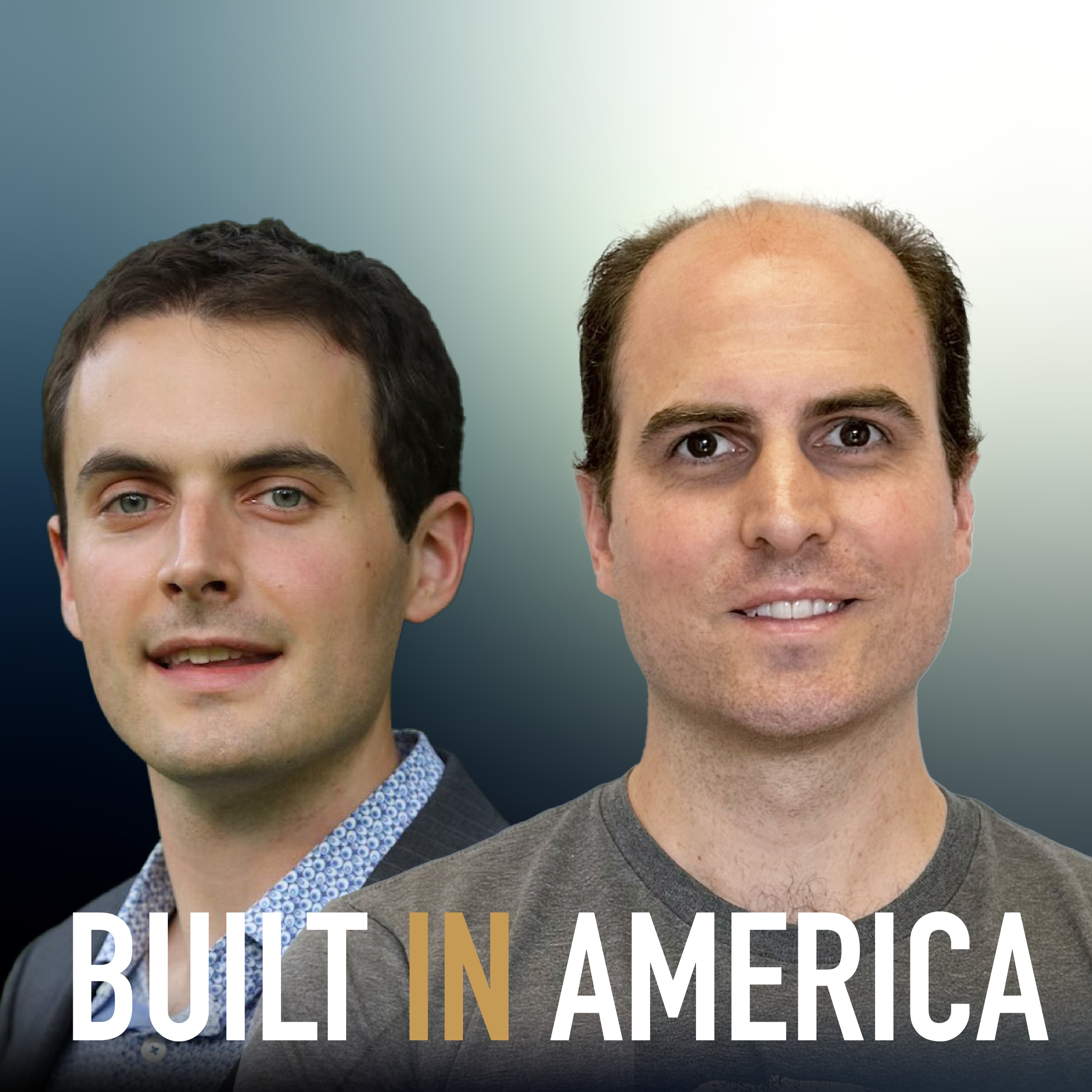
From Middle School Friends to Fintech Founders: Kelly Littlepage & Stephen Johnson of OneChronos
34m 6s
Steven and Kelly, lifelong friends and co-founders of One Chronos, discuss their journey from middle school rebels to entrepreneurs tackling inefficiencies in capital markets. Their company is a U.S. equities trading venue that functions as an Alternative Trading System (ATS), utilizing a combinatorial auction model to match orders rather than listing them. This approach aims to reduce market friction, which they argue creates trillion-dollar inefficiencies, ultimately helping institutional traders achieve better outcomes and positively impacting households through vehicles like pension plans. They built the business with a third co-founder, Richard, who brought industry relationships, while Steven and Kelly focused on product and technical development. Funding began with Y Combinator, followed by Green Visor, and they intentionally avoid investment from market participants to maintain neutrality. The founders stress a careful, sustainable scaling strategy, cautious hiring, and aligning with long-term investors. They reflect on the importance of working on passionate, intellectually engaging projects and recognizing progress over time, rather than chasing fleeting trends.
All right, guys welcome back to the Little America. We have two awesome families here. This is Kelly a little page and Steven Johnson their lifelong, really good friends and co-founders of one cast. Steven Calibate could run the bomb. Thanks so much for having us on there. Yeah, I appreciate it. Steven Kelly, uh, having two friends and being co-founders of turning a large platform out of New York City is no easy task. Uh, tell us a little about one of our, and also your relationship that he has started. Yeah. So they're kind of related. It turns out, uh, I've known Steven since our middle school days. And we're just talking about this. Uh, it's really like Steve was very busy trying to gain the system in middle school and I was very busy actively fighting the system in middle school and on. So you kind of bonded over really the facts that, um, when certain rules and constraints don't make sense, you just felt the need to do something about it. So, whether that's, uh, yeah. Or our little causes back then have turned into bigger causes now, basically, and, uh, rewiring capital markets is one of them. Yeah, in the early days of middle school in high school, I was adamant about not doing homework. I would bend over backwards to avoid, uh, to avoid homework at all costs. And that was kind of my, the thing I saw wrong with the world then was homework. And, um, I think we matured a little bit and now it's, uh, you know, we started tinkering with and Kelly was working in the world of trading and, um, specifically outdoor trading and equity markets and other markets and, um, kind of saw the evolution of electronic occasion in stock trading and 4x and all that. And, you know, we, we kind of bonded over working in very separate industries, but, um, just very fascinated with this, this evolution of electronic trading and seeing how things were being done in a way that didn't really make any sense to us. Uh, it seemed like we had just taken the same process that was running for hundreds of years, um, called the Lyndon order book that stock exchanges and just put it all on computers. And, uh, there were a lot of side effects to that and we kind of got to brainstorming on how we would apply the different skill sets we were developing in our careers to solving those problems. Steven Kelly, there's always a union needs every partnership, right? If you redefine Kelly's not genius, well, that be an intelligent, well, just in the same thing. Oh, that's a very tricky one because, uh, Kelly is very multiple multidisciplinary. So, like, you could ask Kelly any question and you will have the entire Wikipedia answer, um, and then go much deeper into it and feels that you really don't expect. But I would say one is just on the technical creativity side. So being able to solve problems in ways that almost nobody else would think of. Yeah, and it's, it's funny, since I would say very similar things about Steven, one thing that he really spikes on is foreign languages and really was solving like encyclopedic knowledge of the history and language and everything else. And as far as how that translates over to business, um, sees really good at remembering and getting all the details, right? Remembering people and interactions and just in general. Kind of working through situations that we've everyone feeling happy and good after the interaction. So we'll superpower of this. The reason why I asked that right is, uh, a lot of people today, we joined partner of tips and are seeing across their work with a thankful investor potentially. They're always looking at how the partnership formed and how each skill set is growing in the business based off each partner get that and start them, right? And oftentimes people want to go build a business. They have to have formed a really good team around and then finally the depth set slide. And on you guys started pumping together one crudos, what are a part of, you know, the business, you need you guys find deposits and you guys will be able to fill and build this venture. That would be our third co-founder, Richard stuff. And so, uh, Rich had a great career on the sell side. He was a partner of our Goldman Sachs before he left to join us on this. And I, I had a certain kind of role in access of connections for a very specific type of trading in the industry going into this. Rich is someone that is, uh, really rounded us out as a business in terms of he's seen a lot. He's done a lot and he knows a lot of people versus speaking for myself anyway, like I was fairly heads down on the trading side. So getting someone that had those industry relationships and was comfortable being out there spending time on it while Steve and I could focus on building the product and the technical side of this was very helpful to the business. And now the business owners and transform you as they're quite mature now, you know, if you're defined, uh, we copied today in one sentence, tell us what best and how you're making your impacts of society. Yeah, the one sentence right now is where US equities trading venue. So we're just like nice here in Aztec, the differences we don't list orders, we just matched them and we're something called them ATS. The impact of the society that we're making is we help institutional traders better realize their investment goals and that has a lot of triple down effects to American households for one case pension plans. So people vastly underestimate the extent to which even small amounts of market friction can create a trillion dollars of inefficiency in the economy. And that's the problem that we're going after with one coronos. Yeah, a lot of it is about hammering out inefficiencies and this type of option that we run called a smart market or specifically a combinatorial option is a lot a lot of that is about getting rid of bidding inefficiencies and strategies that result in transactions that are mutually beneficial and could could happen, but they don't happen because of market friction. And this is a thing that exists in every single marketplace, we chose to start with US equities for a bunch of reasons, but one of the reasons is that it's very mature as a marketplace that has a really clean regulatory framework. Participants in the industry are used to connecting to many different trading venues trading destinations. So it was a great place to do wasn't it and still is a great place to prove out the model while still adding a ton of value to the way to the trade today. I mean, you know, starting a company like this is, you know, a massive uplift and sure takes capital to go build something out like that. Yes, I'm all more straight straight by the biggest bench district in the world, walk us through I guess it started the operating process at all formed. Yeah, so the very early days of the company, we were just focused on building. We figured that we would get to kind of an initial idea of what our garden market was before raising anything and the first one in the door was white combinator, which was very helpful. Obviously it's great as a forcing function, both for really getting focused on the company, but raising thereafter and we're there fortunate to partner with the Bentech focus VC firm called green visor to do our seed after white. It's kind of why see is no easy task, right? You're pitching in front of the same opens the world and you know, massive amount of competition in there. What do you think? You know, they saw and you guys first, you know, the thousands of applicants like those during them public per week. Yeah, why see is very focused on the founding team as opposed to just the idea or progress or traction or anything like that. I think they saw they saw hope in the two of us and that we were coming from different disciplines and that we had a lot of the boxes checked as far as what was needed to go after this very ambitious idea. We actually got rejected the first time we implied the white combinator and one of the partners there Jared gave us some advice that we ended up taking, which was basically you need to figure out a way to demonstrate progress on this very long and arduous mission building an ATS or a stock exchange is not something you can do in a couple months get an MVP out there. Get quick feedback. The customer base would not tolerate any level of failure, right. These are these are the world's largest financial institutions that are direct customers. So first of all, there's not very many of them. You can't really afford to churn. So the product has to be right on day one and it's also critical infrastructure. Right. So you can't really afford mistakes. So it takes a long time to build the technology takes a long time to get regulatory approval. And that's kind of foreign to a lot of Silicon Valley investors. So we had to figure out a way to make it more bite sized problems that solved along the way. And so the second time we applied we we got in at like Kelly said, YC was was very helpful in getting the the first seed round done. One thing that separates us from other trading venues is that we haven't taken any investment from market participants and that's very intentional and it's because we want to stay a neutral venue and not have any of the incentive issues or agency issues that might come from. Being a trading venue powered by some specific bank or some specific broker, etc. There's a lot of signaling risk and and that's kind of what we want to avoid, but it made it a more uphill battle to raise capital from investors that are just not as default familiar with this deep in the weeds, capital markets infrastructure. And business like yours is probably constant need a raising capital. There's always continuous rounds ago to do so. There is always a develop team. You have to build up more of the infrastructure of the product itself. There's massive complex mathematical theories here. As you go through the journey of continuing raising capital orders from the best lessons that you tell listeners today when building a product that massive scale like you guys have to be mindful of. Yeah, so one thing that we think a lot about is we're trying to engineer for a good outcome in the WhatsApp sense of a good outcome where you have a very small number, very specific individuals building up product that results in a net big company that now touched the slides of billions of people globally. It's not that we're trying to get to a big company head count wise and that also plays into our philosophy on kind of we've raised capital when we've needed to to grow. But we are very focused on effectively bootstrap and going forward. So we will continue to invest in expansion, but kind of on the sustainable base. Right, which is even when we're in this motion now, something that we're very focused on those long term relationships as measured by some of the folks that have joined the cap table more recently were people that we've known for five years or longer before. So I don't think there's ever a point at which that relationship building exercise can or should end even though we're not focused now on raising now or in the foreseeable future. Stan, talking about scale, you know, business like this has, you know, all of them are not a scale. If you think about it, right, you're, you're doing a global team. And you don't know that you're the one face is all that then scale seven, you know, one, the hundred and the whole night, you can still set there for actor. I do, I do progress, you know, your level of scale by a team, the infrastructure building company, you know, having the right tools in place. But I'm certain that you're not moving in a pace or a state velocity. I think set you up for, you know, a deconstructive mess. Yeah, it's a, it's a really challenging question because there are so many dimensions on which you have to scale anything from the technology itself at the core of our matching system is a by definition unsolvable computer science problem. Commitorial options are the optimization we have to run is very computationally expensive and we have to find fast ways to solve it. So our options run in 30 milliseconds, which is a tiny amount of time to run an optimization process. So that's one form of scaling that will always be with us is just finding faster and faster approximations as we get more and more orders and more and more different types of financial instruments. And non financial instruments that we support trading in the one that we probably think about more now is just scaling the company itself were about 45 people now globally. And that's up from when we launched two and a half years ago, almost three years ago now we were about nine. So we've definitely had to scale our corporate infrastructure to deal with the additional headcount and make sure that the culture we're not redlining the culture of the company too hard. We're very, very cautious and careful about hiring, I would say this is very much not a bloodstailing type of company to Kelly's point about what's that scale before we never need to be a company with 10,000 people in it, even when we've taken over the world, so to speak, there's there's no need to have that kind of headcount. But at the same time, hiring too fast is in my opinion, the easiest way to kill a company. So we're trying to be very careful as careful as we can while still meeting our growth targets. >> Stephen Kelly, I'm a lot of founders that come in the pottery, you know, I've raised a bunch of VCE and then there's this CSAP they're always playing with, which is, you know, profitability and then growth and investing back to the R&D and I understand the difference in the two and knowing how they go and make sure you're satisfying and that's yours and also what's the company as you keep building this company today in the early stages where you are now, I didn't manage that. So really starts with 311 to your cap table and this is something that we've similarly been very dogmatic about from day one is we are looking for investors that are building for the long term and for the massive outcome on this. So part of getting to the long term is being long term greedy in terms of the way that you build a business like this is very much what Steve's describing where it's this incremental deliberate approach. And that historically, especially during the zero interest rate period to not map well to the mental model of a lot of VC investment, which was a if it's working, you can insert cash and make it work faster versus there are some very structural aspects of growing a market like this that the money doesn't really help with directly. So when we think about how you deploy capital effectively it's really hey, where can we, where can we start the process on something that's going to be a longer build and hit maybe one year, two years or even five years down the road. And how much should we spend on that and kind of a bet sizing framework like really thinking as a trader, thinking as a poker player in a way about you're making decisions under uncertainty here. And the size of your bet needs to be commiserate with that. So that's that's kind of how we've that's how we've approached this problem. But really I would say that in the entrepreneur in the space, it starts with your investors, you just have to be aligned with them on what their interests are. But we found you as well. Stay grounded when doing when do an adventure at this scale, look, you're talking about, you know, try to call it that you get, you know, 70, 100 extra turn to investors. This is VC turns everyone wants a moonshot or quality in New York, they're really at 1000 miles an hour. And then sometimes you look up, you're like, wow, I just, I just had 10 years just fly by me and she ever even like blinks and you have this realization moment that a lot of people in New York are just trying to go build the next biggest thing out. But I was taking a moment to really free, but I think there's a lot of much there should be a huge balance. It can even do. And what do you think the best pragmatic approach in doing so when bullied something is not speaking for myself, I don't, I don't know if I am successful at stopping and taking a breather. It's something that I consciously have to work on, especially so I have a two-year-old kid, which leaves very little space for between that and one chronos, right? That leaves very little space for taking a breather. I think one, one thing though is I think it's important to kind of look back from where you are today versus what was happening a year ago. And appreciate how unrecognizable things can be. So it's very apparent for us now with just even things like our office space where we're running out of desks in our office space. So Kelly and I are sort of spending some of our time looking at new offices here and so. And those kind of moments make it a little easier to appreciate how much has changed over the past year or two. The only thing I would add to that from my side is it's very easy to do if you're working on something that you really care about as a product. And I've forced myself at times to work on things that I realize are good businesses, good opportunities, whatever you want to call it, but not something that I kind of intellectually cared about. And it's just it's different. It's I think that takes a lot more discipline. So the lazy thing that I've done anyway is just say I'm never really going to work a day because every day is working on something that is fun for me. Yeah, what's that in that little bit? A lot of people tend to jump into endeavor jobs because there's a monetary outcome on the back end of that without having a true passion behind it as well. And there's this phrase where he showed you a statement of interesting people and not worry about the outcome because you just focus on those through control cables. Something pretty miraculous will happen out of that, right? Obviously you can hear as a friend, since middle school, you guys are intellectually stimulated by you're going with something today. You have great investment in your cow cable. It seems like you guys have a lot of things set for you in the right direction if you're looking at it from the sidelines. I'm sure there are probably times when you're fast where you're working on things that maybe you were just square-packing around bowling those opportunities and it looked good from afar because you want it to early. They're probably the right thing to go do on ball spirit. And then what was that pivot for you guys understand the difference between the wake up moment when you're like, hey, when I'm looking on today, subsads and I want to go leave that and go work on something that I actually care about. And a lot of people have this dichotomy today when building something and you're so deep into, you know, where your path of business and you wake up, you're like, this fucking sucks. Like, I don't want to do this anymore. And you start a new business with your best grade that you know, it's the most full and that years are stoning them. And that's a loaded, you know, question you guys, but I think what I'm trying to get here is you all go down to paths and times or climb a hill and then you go to the top of the hill and you realize it's not the hill that you want to climb. And the hardest part about that is walking down the fucking hill and climbing up a new hill. Right. What was that moment for you guys? Yeah, it was it was pretty different. I think for us and a lot of companies where we very much did not sit down and say, we want to start a company. Let's come up with an idea and figure out what we want to do. It was very much the opposite of that. It was the slow boil over many years of us brainstorming and just talking about the technologies we were using our respective jobs and sort of how those would apply to solving some of these capital markets problems. And it took years of sort of very gradual iteration on the idea until there was kind of a boiling point where a lot there was a lot of luck involved career wise where Kelly and I were both kind of looking at what we were going to do next in our own respective careers at the same time. As capital markets were like the concept of high frequency trading was becoming more widely known and that was a big topic in the industry and that sort of opened a door for us to that and many other market timing things opened a door for us to actually start this company at a time when we were both luckily at a good stopping point in our prior careers. And part of it was in the works for a long time and part of it was just luck of timing. The timing front on my side is like, I've been really fortunate in that professionally. I've really liked everything that I've done. Everything's been its own fun, interesting challenges and way, but I don't really think that anything has come close to one chronos in the sense that you're building something very deliberately. It was a bit of a different journey for us and at that ideation really goes back to us seeing this problem realizing it was a little bit whatever you want to call it. Prisoners to remember tragedy of the common situation where there wasn't necessarily someone that was going to come along and fix it for us. And we're just kind of standing here being like, right, well, I guess we're going to do this. The afterthought was, hey, how do you make this commercially successful and viable? And I shouldn't actually call on afterthoughts more like we're starting with such a big market that's your earlier point. The exercise is basically, hey, if we, if we build something that does what we think a new auction format can do in this market, then the money will come as opposed to sitting there and trying to figure out exactly how we make that happen up. You guys have a look at what you're building today and the context of this one says this has really changed my perspective of how I'm building things today is. I, I'm Sam. I'm here today at 33 and I thought story that 75 years old. I'm looking at myself at the age of 30th grade today and what I'm working on and all the daily actions that I'm producing for my future. So and knowing and am I making the proper actions today, that will be proud of over the next 40 to 50 years. If you were to pass forward yourself 50 years today and let's say you guys were extinct off this earth, what do you think people would say about you and one front ups? Yeah, that's a pretty one. And so I guess a sort of slightly different flavor to the question is looking at it today instead of 50 years from now. And I think it's the same kind of the same thought exercise for me, which is basically if the company went to zero today and just evaporated. What I still have thought it was worth it to do this and that's I guess actually going back to your point about stopping and taking a breather. That is one that I do subconsciously or consciously pretty regularly. And to me, the answer is always been yes, like it was, it was obviously worth it to just have gone through this experience and been along for the ride. Now, hopefully that doesn't happen and hopefully in 50 years, we're still doing this or we're still kind of watching what pros from the sidelines or something. But you know, I think that's that's like that's my mental framework for it is if if if I knew that it was going to disappear, you know, I'd still be happy to have done it. Yeah, I feel completely the same way, but the legacy that we're trying to lead for this is like being the company that builds the smart markets that operate the real economy. And I think that's that is a lifetime of work. That's a 50 year build. And I want that to be our legacy and what people would say about us is that this is the company that actually did that. When I'm when I'm ideating companies today or looking to go acquire company, I would do a couple things that kind of more of a sales and marketing hat on my head when I go about doing this. And one of the first questions I always ask is like what's the guarantee in every business and the rationale for asking that is you look at FedEx, you know, we'll ship it to you overnight guarantee. Well, we're down those tweets. We're going to see in 30 minutes or less and there are certain games that created messaging around companies that set them apart, right. If you put a guarantee on your company today, rule that look like that's a really interesting one. Why the guarantees that we do make is that these types of markets effectively can do no worse than the existing market structure. And I really mean that in the optimization sense of it where the way that we optimize these outcomes as we lower bound by what's something that looks like the existing market would produce as an outcome. And then the way that we match trades is no worse than that. So I want to say at the guarantee that one Chronos will make in the future is that we're very value aligned with every economic participant in this system where we only make money if they get good outcomes. Yeah, and one one I would add to that and this this might be too literal of an answer or two in the weeds, but it's a very important guarantee that we make and it's a very mathematical guarantee, which is this feature or product that we call expressive bidding, which allows people to express trades across multiple instruments, so multiple stocks at the same time. It's something like I only want to buy a if I can also sell the at the same time and the same auction in some predefined ratio, those are guarantees that we enforce mathematically and it may sound obvious that those are guarantees that are made maybe not, but it's very new to the world of trading. This is not really something that's been done before typically those types of trades, if you're moving from a portfolio to another portfolio or trying to trade a basket of stocks, there's some risk that you're going to trade some of the basket at a price you like, but then the market moves on you and the rest of the basket. Not going to like price and the trade may or maybe maybe doesn't even make sense anymore to keep doing so those that's that's the way that things work today is there some risk involved in this called legging risk in executing multiple trades and multiple stocks at the same time and we completely remove that risk at least for trades on our venue and that's a very important guarantee that. So the that we make across all of our all the many asset classes that we hope to that we hope to embark on was let's talk about risk for a second and let's let's buy for Kate one. The real estate market has you know it's nothing down right now interest rates are so really high the start market was down a lot last month now it's pushing back up you know crypto has been up and down as well. A lot of volatility one certainty today and if I could ask your unsolicited advice today on you know where you think things are going. Where would you de-risk your assets today for your unsolicited vice buggy point of the world would you give on you know if it's probably what I kind of I focus on like controlling what you can control. And for us that means continuing to grow the business there is the assets question of like what is the safe harbor these days and I think like might be a somewhat controversial opinion but if there is an inflationary environment the safe harbor is growth and continuing to invest in growth. It's really hard to say that anything else is going to be a specifically correct long bet so control as you can control in our case that's the business and other people's cases various situation specific but unfortunately I'm not aware of any magic bullet asset to a drop your money and in the risk. And if someone finds that please shoot me and you know consumer vastly simplify life you just disappoint all of us here. We're working hard on smart markets but no magic bullets over here see what you think yeah I mean I was going to say even if even if I had the magic bullet were regulated broker dealer and were not allowed to give the advice anyway unfortunately don't have the answer on especially in these rough seas out there on what direction things are going to head. Now it's there and this as we wrap up the broadcast I have a few like philosophical questions I would like standards for ability to make really big. But I sometimes lose sight of like what the point of life is laws of building a really big company and then you know making sure that we appreciate this a little thing they're going on light as well and you feel that building a company this massive will. Unfortunately make use after price other important things of light that you would just have more time walk and if you look back in 10 years it would be those things yeah there's there's no question that there's. Not as much time for things like hobbies that are unrelated to your job when you are starting or running a company but if the company is something that you would be doing is a hobby anyway that's at least that's at least a. Nice to have and that is exactly the case for me and I think for Kelly as well one one thing that we are clinging to. With our diamond hands at this company is just writing code every day we grew up playing around the computers and you know both studied computer science in one form or another and I've always worked with computers and and that's one thing I will I will give up with my last breath is. Is writing code every day so manage to keep it manage to keep the passion going on on that at least yeah similar answer the one thing I would add is. Kind of goes back to my earlier point about being long term greedy where I think the long term greedy solution to building big companies like this is you are smart about your physical health you take time to take care of yourself you take time to take care of your family you're there for the stuff that matters because you understand that doing that's. Well actually does maximize your output over an extended period of time so certainly not like there are situations pretty directly have to sacrifice being in place a instead of place be. But overall I'm very happy with the work life balance that we've been able to maintain here as a company. Yeah I mean you know the focus is when years I put together especially last year bullets up this set there's a there's a quote from Paul are lucky that he released the long notice you know see him find their volume. And it's the quote I want I want to read us out loud you guys and get your thoughts on this says at some point in business and life in romance you got to commit to a lot of my peers in tech industry do not. You're always pursuing everything with optionality keeping your options open they ensure that they're going to jump from option to option if they don't commit to path they're going to fail out at any today. There's so much abundance of opportunities in the straffins of what you're building where there's any objects that you're right as well as the deviate you from the plan that you are building today. You'll prevent yourself from going from option to option insane focus of that you have to be very dogmatic about taking what the company focuses and only doing stuff in that. And we do constantly find good business opportunities that we would call a side quest basically and we have to look at them and say that's a great idea for someone else to do that someone else is money to make because it doesn't actually fit within what we're doing. We are fortunate though that the mandate that we have which is to build these smart markets that will pull it for eight into the real economy and eventually touch pretty much all aspects of the financial ecosystem. It's broad enough that I wouldn't say there's too many creative itch is going on scratch right now. Yeah. One of the one of the most important things we track as a company is how many active bets do we have at any given time and are we spreading ourselves to thin or are we not spreading ourselves enough across these different industries. We could be going after different marketplaces we could be building it's challenging because some some things like you know European equities or derivatives in the US have a very long lead time to get regulatory approval. So we're constantly looking at we're constantly investing in some things that have that may come to fruition six months from now and things that are going to take two and a half years of maybe it's just one or two people working on it over that. Two and a half year period but trying to schedule things out reasonably in a way that there's we're not launching five different products within two months of each other. It's quite a juggle and it's it's not an easy one but it's something that we're very methodical about and that we try to be as quantitative as possible about. You know, as he has brought a massive amount of knowledge about those podcasts, I generally appreciate the time you guys have put in here and you know the platform to get your building. We're going to be able to find more about one chronos and more about Stephen Kelly. Yeah, info at onepros.com definitely feel free to reach out and we are hiring across a bunch of different roles. So a career is at onepros.com if if this sounds like a company you'd be interested in working at. We got a lot of fun business problems and we got a lot of fun deep tech problems. So whatever side of the spectrum you're on come join us. There you go. That's a blog. Thanks for listening to Built an America, a podcast for those who have built it and made it. If you enjoyed today's episode, please be sure to subscribe on Apple Spotify YouTube so that you never miss an inspiring story. You can follow me on LinkedIn, Instagram and Twitter @vsamamoo for more insights on building and buying business. I hope you enjoy these stories so much that they inspire you to take action. With that in mind, check out my cohort, Built an America, a qualified network of individuals looking to buy great business on Main Street. I'm the CEO of a holding company, The Pave, where we buy great paving business. And after several acquisitions, I discover that acquisition growth is the new oil and buying business has changed my life forever. If you want to learn more about how we acquire business, check out Built an America.co and sign up for my weekly newsletter for exclusive resources and tips to help you buy and scale your next business. Thanks again for joining me and I'll see you next week.
Podcast Summary
Key Points:
Steven and Kelly, co-founders of One Chronos, have been friends since middle school and bonded over challenging systems, which evolved into addressing inefficiencies in capital markets.
Their company operates as a U.S. equities trading venue (an ATS) that uses a combinatorial auction model to reduce market friction, aiming to improve efficiency for institutional traders and benefit entities like pension plans.
They emphasize a deliberate, long-term approach to growth, cautious hiring, and maintaining neutrality by avoiding investment from market participants, with initial backing from Y Combinator and Green Visor.
The founders highlight the importance of working on intellectually stimulating problems, aligning with patient investors, and scaling sustainably while focusing on product and technical development.
Summary:
Steven and Kelly, lifelong friends and co-founders of One Chronos, discuss their journey from middle school rebels to entrepreneurs tackling inefficiencies in capital markets. S. equities trading venue that functions as an Alternative Trading System (ATS), utilizing a combinatorial auction model to match orders rather than listing them.
This approach aims to reduce market friction, which they argue creates trillion-dollar inefficiencies, ultimately helping institutional traders achieve better outcomes and positively impacting households through vehicles like pension plans. They built the business with a third co-founder, Richard, who brought industry relationships, while Steven and Kelly focused on product and technical development. Funding began with Y Combinator, followed by Green Visor, and they intentionally avoid investment from market participants to maintain neutrality.
The founders stress a careful, sustainable scaling strategy, cautious hiring, and aligning with long-term investors. They reflect on the importance of working on passionate, intellectually engaging projects and recognizing progress over time, rather than chasing fleeting trends.
FAQs
OneChronos is a US equities trading venue that operates as an ATS (Alternative Trading System). It aims to reduce market friction and inefficiencies in capital markets, which can create trillions in economic waste, by using a smart market model to facilitate mutually beneficial transactions that otherwise wouldn't occur.
The founders, Kelly and Steven, have been friends since middle school. They bonded over a shared tendency to challenge rules that didn't make sense. Their professional experiences in trading and technology led them to identify inefficiencies in electronic trading, which inspired them to co-found OneChronos.
Kelly excels in technical creativity and solving problems in unconventional ways. Steven has deep expertise in languages, history, and detailed interpersonal interactions. Their third co-founder, Richard, brought extensive industry relationships and sell-side experience from his career at Goldman Sachs.
The company first joined Y Combinator, which helped them focus and refine their approach. They then raised a seed round from Green Visor, a fintech-focused VC firm. They intentionally avoided investment from market participants to maintain neutrality as a trading venue.
OneChronos focuses on sustainable, deliberate growth rather than rapid headcount expansion. They prioritize long-term relationships with investors and are cautious about hiring to preserve company culture. Technically, they continuously optimize their matching system for speed and efficiency.
They adopt a long-term, 'greedy' approach, making calculated bets on future projects while ensuring capital deployment aligns with structural growth needs. This involves careful decision-making under uncertainty, similar to a trader or poker player's mindset.
Chat with AI
Loading...
Pro features
Go deeper with this episode
Unlock creator-grade tools that turn any transcript into show notes and subtitle files.
 PodcastTranscript AI