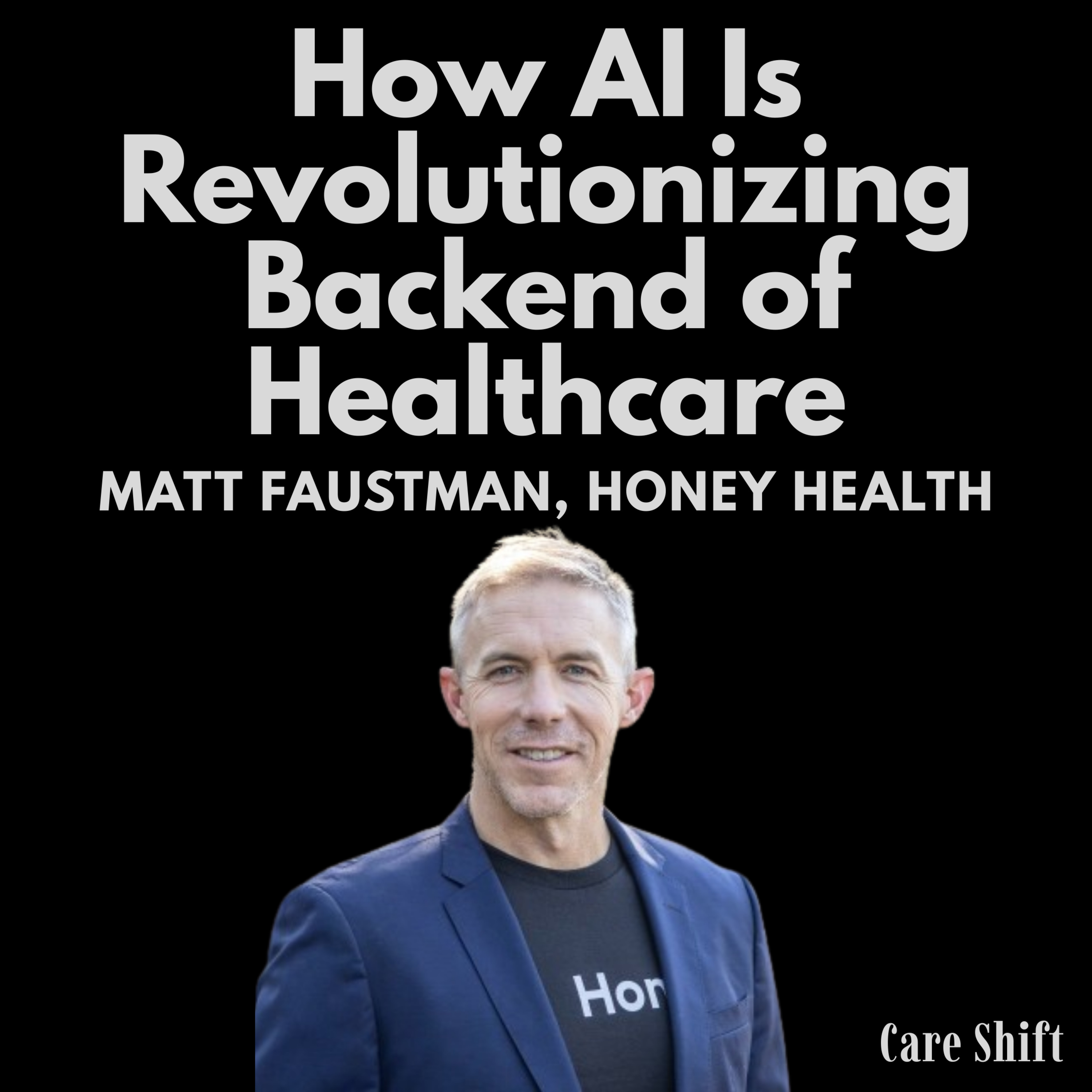
From LinkedIn Exit to Healthcare AI: Matt Faustman on Building the Backend of Care
47m 23s
Matt Faustman, founder of Honey Health, discusses how personal experiences with type 1 diabetes across his family motivated him to tackle healthcare's administrative inefficiencies using autonomous AI agents. The company focuses on automating back-office tasks like fax management, data reconciliation, prior authorizations, and referrals, which often delay patient care and overburden providers. Faustman highlights that chronic administrative bottlenecks, such as his week-long struggle to obtain insulin, underscore the need for streamlined workflows. He envisions AI reducing costs, improving operational margins, and enabling care scalability, with broader adoption of autonomous AI expected by 2026-2027. He views the entry of large AI firms into healthcare as a positive development that validates the market and enhances toolkits for specialized solutions. For founders entering healthcare without networks, Faustman advises proactive outreach, including cold contacting providers, to build initial traction and distribution.
(upbeat music) - This is Kair Shift with me, Southwick Veloconti, and I am so excited about our guest today. Matt Faustman founded Honey Health to revolutionize health care's administrative back office with autonomous AI agents. And the company has raised over 7.8 million in seed funding from top investors like Pellion Ventures. Previously, he co-founded Upcounsel at the innovative online marketplace for legal services that was acquired by LinkedIn. - Matt, it's amazing to have you on today. So thank you for being here today. - Yeah, thanks for having me, it's great to be here. - Yeah, I mean, I want to go kind of right in. And you know, as a podcaster myself, I should pretty much have like the kind of title of being a master of stocking. But you know, I saw you and your brother were kind of grew up together and both were diagnosed with type one diabetes. And what specific personal experiences with diabetes finally puts you into building in healthcare after Upcounsel? - Chronic disease is really central to Honey Health. You know, all the founders founding team, we either directly deal with chronic disease every single day or we have family members that do. And that actually is what sparked our curiosity into taking, you know, what we've built from a technology and product perspective at Honey Health into the healthcare industry. But you're right, like I was diagnosed with type one diabetes 10 years ago, my brother 30 years ago, my dad actually was diagnosed 40 years ago. So we've lived with it for as long as I can remember. And we've been in and out of the hospital, doctor's offices a lot. And you know, through that experience and you know, my co-founder and our founding team have very similar stories. We have seen how the mounting amount of administrative work in the back office was really slowing down our care and also impacting our providers and their ability to scale care and just like operate successful businesses. You know, not too long ago, I actually had to check into the emergency room just to get insulin. I had had a, you know, box of my insulin sitting in the car for too long, so it got cooked. When that happens, you actually can't use insulin anymore 'cause it effectively dies. And so I had to get a refill. That refill first had to go through a fax, which is at the bottom of like 10,000 faxes. Then over the weekend had to get a prior off. So it sat behind a huge queue. And then the following week, it had to go through a refill process and it was the bottom of like a thousand refills. So what should have taken 24 hours or less to get an additional refill took almost a week. So I had to check into the emergency room just to get a vial of insulin that I could use just to, you know, stay normal. Unfortunately, everybody has stories like that, but it really impacted our teams, again, curiosity when it came to looking at why are these things happening and getting into kind of these trenches and the piping of the back office that really impact care and providers at the same time. - I'm curious, did you and your brother both have different experiences kind of growing up with type one diabetes where maybe he had a harder time and you had an easier time, or was it both hard for both of you? Like how was the experience? And even for your father, like how is all of that kind of stacked up kind of going into going into it? - Getting diagnosed with a chronic disease is hard end of the day, right? But we all got diagnosed at different phases of our lives. And so it impacted us and impacted kind of the world around a very different way, right? So my brother was actually diagnosed when he was nine or 10 years old, right? So juvenile diabetes. When you get hit with diabetes as a kid, right? That really impacts your life because now there's all of these additional things that you need to take into account while you're still maturing as a little kid, right? So it becomes an exercise in managing that condition both as a kid but also as a family, right? Like I was a part of helping my brother to really cope with this. So that's very, very hard to be diagnosed as a juvenile diabetic. I was diagnosed in my 30s, right? So very different phase of life, right? I'm much more independent. I have a lot going on in my life. Actually I got diagnosed a week before my first daughter was born, right? And we were in the middle of my last company. So a lot of different types of stresses and things going on. Luckily I had my dad and my brother who had been diabetic for many, many years. And so I had an immediate community that I could reach out to and help me cope with initially getting started with insulin and CGMs and these types of things. So I was already very familiar with it, but now you have to manage that along with everything else that's going on in your life as an adult. And that can be really challenging, especially when you need to keep your blood sugars at a, you know, in a pretty tight band just to keep your mind functioning well and clear and managing everything else around you. Going into honey health, what were those biggest back office frustrations? And as you mentioned, you've been in these situations just recently where you couldn't even get immediate insulin that what are these frustrations like for your customers right now? And what are they leaning in? What are those looking like? - One of our hypotheses when we went into honey health was that the back office is this big continuous workflow. It's all interconnected in one way or another. And there are just different nodes of work that exist in that workflow. And so from day one, we believe that in order for us to really free the staff in the back office, we needed to be taking on multiple nodes so that we could free up their day because most of the back office staff is not just doing one thing. They're doing two, three, four things throughout the day across that back office in order to make all of it really flow for the purposes of supporting care, payments, et cetera. Some of the bigger nodes in there, and this is often where we'll start with our customers is first and foremost, the facts inbox, right? Information coming in, going out of the organization is a lot that happens when facts is actually coming. It kicks off new workflows. It brings in new information that needs to get acted on. So that right there is a huge bottleneck when it comes to reconciling all of the data that exists within the MR and these workflows. Other big areas are, again, folks around data, needing to go out and grab data that exists outside of your MR, right? Whether that be records from another health system, data from medical devices or from labs or from imaging, and a lot of this is not automatically sent. In fact, very little that is automatically sent into the MR. And that results in wild goose chases every morning before patient visits to go and grab that data. Now, once you help to right size the data in the MR, moving in and out fluidly for the team, then you start to open up other kind of bigger pain points, whether that be refills, prior authorizations, referrals, but they're all connected, right? In this one continuous workflow in the back office. Yeah, the moment you brought that up, the first thing that came into my mind is referrals and referral systems were kind of coming from a primary and then going into a more of a specialized physician office. It's also still ugly. How has that kind of shaped honey in general when it comes to going into back office and things like that? Our referral, we call AI staff, right? This is one of our newer additions to our back office family. And it really takes over where the fax AI leaves off, but it's also able to pull in referrals from other sources within the organization. This is really critical for an organization and for patients, right? Because what's, I guess the worst case scenario is a referral comes into a specialist when your primary has recommended them and you don't hear these things for days. Take chronic condition when you're diagnosed or take something in a chronic condition like diabetes. When you're diagnosed and you get referred to a provider, don't hear from them. That's a pretty big miss, right? So when it comes to referrals, our goal here is to ingest that referral, make sure it's processed within the org and there's a lot of back office that has to happen to get that set up, make sure it's the right fit and then get something initiated with the patient within the day, if not a lot sooner. So our goal here is to make sure that we're bringing in that referral, making sure it's the right fit for the organization, insurance, condition, et cetera, and then getting an outreach to that patient initiated right away. That's great for the patient. It's also great for the business, right? Referrals slip through the cracks all the time, all the time just because someone is not constantly monitoring the fax inbox as those referrals come in, needing to set up everything inside the EMR and then kicking that off for the schedule as you've been. Those are just a few of the many steps are involved when we think about bringing in a referral. So it is one aspect of the back office that directly impacts both patients but also the financial performance of the organization. - How do you see AI agents kind of reshaping the entire healthcare back office now and then like maybe in one to two years like in a short period of time? - So I think one of the-- - These in the honey health exists, right? The massive is that administrative work for organizations and the costs to address that administrative work have just continued to rise. In fact, they've been running rampant for, especially the last five to 10 years. To make matters worse, it's never been harder to find and retain back office talent. You're just seeing so much friction that's happening in the back office of healthcare right now, whether it's large hospital systems or small independent practices. You're just seeing people leave the profession altogether and not come back. They're going out and seeking other opportunities. So this creates both bottlenecks and also these massive gaps that exist in the back office. So this creates a huge opportunity for AI to fill those gaps and allow organizations to manage all of that back office work and to cost associated with it. That unlocks a couple of things, right? It unlocks care scale that allows them to actually see more patients without all of the administrative work that goes with it. It also unlocks healthier businesses, right? And unlocks better margins. And when any service-based industry sees improved margins, they invest in better services, better products, better technology, and that's great for everyone. Okay. And now I think you reach what's the big unlock of the next couple of years. And this is where autonomous AI, I think is really going to shine. And I think really unlock some of these massive improvements that we've been looking for in the back office. What I mean by autonomous AI is that you don't have to tell it what to do every two seconds. You don't have to have a human in the loop at multiple stages in the automation. And very few people are actually using true autonomous AI that is just logging in or going and doing the work on its own without a human in the loop and then delivering the end result. Starting to see glimpses of it, right? Cloud code, cloud code work where you can have it go out and do these things, long processes, and deliver the work of it yet. When you're able to truly move to autonomous AI, which I believe, in 2026, we will see a huge leap forward and more healthcare organizations moving towards that, certainly in 2027. But when you're actually able to do that, you really start to free up your team, especially your back office team, to work on other things that are higher priorities, to work on things that are not just about manual tedious processes, and that can unlock a lot for these organizations. - Yeah, and we just saw the rollout of chat GPT Health and Thropic Health, and I wanted to get your tates on like, you know, they're coming out and saying, okay, we can build a solution for healthcare providers as well when it comes to the back office and you know, prior off, potentially, and things like that. How, and to be blunt, is that going to be, to be her harmful for you guys? Like, where did you guys see this as a picture coming in when it got launched? - Actually, we were really excited about it, because what it's effectively doing is giving organizations like Honey Health more tools in our, you know, our toolkit, right? As we think about how are we going to accomplish certain actions across all of the EMRs that we work with, all of the various platforms that we work with, it just gives us more firepower, right? Whether it's of doing the faxes, whether it's doing prior authorizations, whatever it may be. So for us, we were actually really excited about it. The other thing that starts to unlock is individuals and organizations becoming more used to the idea of autonomous AI, right? Open AI and Thropic have helped to open up the market, right? And everyone has become used to the idea of AI handling certain things, right? Largely because we have had chat to BT and Thropic are clawed in the hands of so many people. So now when someone says, oh, I now want to use AI to automate this or do that, it's less of a question in people's minds because we're now used to the idea. So as they continue to push, for example, the idea that we can now automate certain things inside healthcare, right? That opens up the market, it gets everyone more used to the idea that these things are actually possible so that when companies like us and many others approach these healthcare providers with the idea, AI can now automate in this aspect of your workflow or your front office or back office, it's less of a exercise in trying to convince them that it's possible, right? That's good for any company that's in this space. - So many founders I've spoken to have actually been the opposite and saying they were worried about these guys coming into their space and they expected it, but I wrote a sub-stack on this recently of how these guys are actually going to be beneficial to most startups when it comes to maybe using them as an API source or getting into most kind of practices or providers in general. And so that was like a common thing that I've seen. I don't know if you've seen the same thing where a lot of people were rapidly scared at first, but maybe now kind of adapting as we speak, but you know. I think if you are just doing a wrapper on top of any of these models and then delivering that, I think there is concern. Like I think that will be easily displaced and I think you'll have these individual users or operators at these companies just going straight to cloud co-work or open AI and building your own solutions and saying well why am I paying all these expensive fees basically for just a wrap? And I think this is not just in healthcare, but I think it's so many different industries. If you are going deep within those industries and you're adapting your product to the necessary requirements of that organization. For example, within healthcare, security, compliance, huge things, and you're building your ecosystem of connections, partner products, where you're bringing data in from at a really deep level, I think it becomes less and less likely that you get displaced by any of the bigger organizations that are building kind of horizontally and really broad. And instead you can look at them and say, oh, the fact that they now are able to do XYZ, great, let's go leverage either the API or the technology and bring that into our product suite. And I think there's lots of great analogies as you look back on the previous SaaS revolution or the build up in SaaS that we saw over the last couple of decades, lots of great examples of organizations that went really deep and built out these ecosystems and were really hard to displace, even by some of the bigger players, whether it be Google or Microsoft or whatnot. - Yeah, and do you think, you know, going vertical is pretty much the move in coming into the future or do you think there's still move for horizontal players to play in, what is that look like for founders building in this space? - Good question. Some of the advantages I think today in building vertically are that you have a really clear idea of the customer that you're building for and their specific problems. And then you can also go deep, which creates a better, I think, experience for those customers. And you can also build defensibility in terms of either the data or the networks that you're effectively building up for that particular product. That being said, and while I think you start, start really narrow and then expand from there, there are definitely use cases that can extend beyond just a single vertical, right? And I think you will definitely see organizations because you can rapidly build in this world or you can build so quickly that will try to extend to adjacent verticals once they have traction and what. Alisa, I think is a pretty interesting example and probably one that will really test this, right? They started in real estate, my wife is in real estate and real estate investment and management. And when I told her about Alisa, I'm moving into healthcare, she was really shocked because she's used to getting their cold emails in her real estate business. Now they're moving into healthcare. So we'll get to see from this perspective of managing customer calls or patient calls or patient communication or you know, tenant communication, we'll get to see whether or not that translates to another really big vertical. And so I think the jury is still out. They have a ton of money that they can put to work here. They have a really great team. So we'll see and maybe that creates a playbook for others to jump into other verticals where the pain point is really visceral in that other vertical as well. Cool. So let's start with the niche going to the vertical but now another common thing is founders don't have a network is specifically in healthcare to get that first maybe practice or the first doctors are, you know, the common thing I hear is, oh, I don't have any doctors to work with for pilots. I don't know who to go to. What is your advice if it going to conferences is that one of the biggest unlocks or you know, what is your take on that? Well, you and I both didn't come from healthcare, right? And launched companies recently within healthcare. And so building up that network initially is both a problem and it's also, it's a really important problem that you have to solve really. You know, one of the biggest pieces of advice that I give to founders is that, you know, the second you have any amount of product market fit or understanding that your product actually can work for your ideal customer profile, you need to quickly start thinking about distribution, right? And so initially building up your product, getting early distribution, getting that network started is really important. What we did outside of asking, you know, my endocrinologist and my primary care doctor, who those were literally the first two people that I called, I built up, a list of couple hundred doctors and organizations and I started cold emailing and cold calling them. Now, I have that kind of in my blood. I built sales organizations before, I built marketing organization before. So the idea of just picking up the phone and calling someone and asking for their thoughts on a particular product or problem. I don't really have a lot of issues with and I'm very comfortable with doing that. So for me, it was just very blunt force. Let's go after and try and talk with individuals that I think would be open to talking about this. Now, we also targeted individuals that are online talking about these problems, right? So it wasn't just a blind list that we put together. I was finding, you know, physicians and operations leaders that were very prominent or speak a lot on LinkedIn or Instagram or we're on TikTok. Like I intentionally reached out to them because I felt like they would be more open to talking with a founder about here are the problems that exist in the back office. So we definitely were very deliberate about who we were going after. I think you can find individuals in any industry, right? Any vertical that would be willing to talk with a founder if you're genuinely asking for their advice, right? People are pretty open to that when you're seeking them out as an expert and then hopefully build up a good relationship with those people. You keep them updated with what you're doing and then when you release your first product, right? A certain percentage of those people you contacted may become your early pilot customers. So that's the way that we got started and if you're comfortable with that idea, I highly recommend that for founders that are going in verticals where they don't initially have a network built out. If you do have a network built out, it's an amazing advantage and allows you to move really quickly, really fast. - Yeah, how do you find these practices to call call? Like you mentioned hundreds, do you go online, find their numbers, call their office manager or find part to say, okay, go and talk to an office manager? What was your protocol in that steps? I use a lot of open AI actually to go like deep research. It had just come out and so I actually had it go out and looked for certain types of practices and then I matched that up with individuals that I had found on Instagram and LinkedIn and TikTok. So a lot of research went into identifying 100, 200 individuals that I could reach out to and then I matched that up with the results that were coming back from deep research. - And now you're in the start, you just raise the seat out of near 7 million and there's amazing years ahead for honey and you guys are just at the beginning. Like what are the, I guess the coming milestones for you guys in 2026 and on? - So there are two big themes that are driving our team right now. The first one is to have the absolute best autonomous back office platform and a sentence. The second is to have a world class go-to-market team and operation and brand. So those two things are really the driving force for what we do every single day and every single team member is focused on one, one of those two kind of themes. So when it comes to really big milestones, what does that look like? So the first and foremost, it's continuing to improve our current family of AI staff to make sure that they're taking on more of the back office within specific workflows, whether that be workflows, whether that be the facts, whether that be refills, prior operations, referrals, but then also introducing new AI staff. So for us in 2026, we'll start to release certain AI staff in RCM and other areas that are huge or they represent huge swaths of manual work for the back office and really either slow them down or make processes hyper inefficient. On the go-to-market side, a lot of our goals are oriented around the enable to hit certain milestones in terms of customers that we're working with, the number of customers, and the brand that we're building around those relationships, namely extremely high trust, right? Especially as you move towards a world of autonomous AI, you need to be able to deliver a product and have a brand which represents kind of the trust that you have an employee that they're going to come in and get this work done in the background without you having to monitor them all day long, right? That's a lot of trust that we put into employees to be able to come in day in and day out to deliver that to us. We need to make sure that when it comes to the back office, honey health is synonymous with high trust within the back office and the work just gets done like a staff member basically. Those two teams really drive everything, our objectives, what we work on every single day throughout 2026 and likely will, you know, extend beyond 2026 for the next few years. - Interesting. So you or your founding team don't really come from a healthcare background, but have had chronic illnesses in the past and still dealing with them. Has this played as an advantage or a disadvantage when you enter the healthcare industry? - Yeah, it's a great question. So it's both, right? So the clear disadvantage is that we don't have a network built up that we can quickly leverage to bring a product into the market, right? So that's one of the clear disadvantages. There's also things we just don't know, right? About, and this is really, especially a day one, right? When you jump in, there are certain things that you, you just don't know about how things operate, you don't know as much about the customer, their pain points, et cetera. So those are learning curves and those are work curves that you have to scale really fast, right? And healthcare is a unique animal, right? It is complex, there's lots of intricacies to it. So as a founder, you have to figure out a way of scaling both the learning curve and especially the network curve as fast as you can. And we have spent thousands of hours, basically, trying to make sure that we are leveling up what we know and our own networks within healthcare to make sure that we're not falling behind. The advantage, though, right, especially when you look at our team, right? Which, you know, our expertise really is in building world-class products and building AI-driven products. Is that we also aren't bound by what's already happened in healthcare, right? We can approach problems with a really fresh perspective and with the guys of, we know what's possible with AI because of what we've already built, right? And our expertise there. And being able to take that and bring it into healthcare and say, actually, this problem that a lot of people say isn't possible to solve, it's very solvable. And here's the solution for it, right? So being able to approach those problems with a fresh perspective and not bias based on what's been tried and what's been going on in healthcare for many years is actually a pretty big advantage. And beyond healthcare, you've seen founders come into new verticals or enter into verticals they had no experience with and solve these types of problems really well because they were bringing that fresh perspective and they were able to build massive companies as a result of that. - And, you know, you brought a good point. Like, for example, RTN, building that stuff can get really complex and if you're not in healthcare or dealt with that, it's really hard to understand how that kind of all plays out and it can be very complex. How did you learn all of this information like the jargon in healthcare? Did you kind of have advisors or did you have customers kind of tell you like how did that look? - I think this can look different for every founder, right? I love to talk to people. So, you know, similar to how we got started and I just started cold calling and cold emailing individuals, I made it my weekly mission. And it's still part of what I do every single week actually is connecting with experts in certain areas of healthcare and having discussions with them. Now, I try and add value to those conversations in terms of my background with product and AI but then I'm trying to learn from them whether that's generally about healthcare or about certain aspects that are really in the weeds whether it be RCM or we were doing this a lot when it came to launching our referral AI staff. But I love talking with and absorbing information from real experts in a specific area and listening and learning from them. So, a lot of my personal learning curve has just come from connecting with building relationships with and having ongoing discussions with experts. And every week, I'm learning something new about something we're already doing, something we're in the middle of working on and something that maybe probably won't be relevant for like a year or two, but at least it helps to fill in the pieces as you're building that either mental map or a road map for yourself across our two major themes which is product and go to market. - So, what is your recommendation for founders to get real traction fast? Get that pilot, get that L.O.I. Like, what is your recommendation to get some type of traction to show to early potential customers and what is your recommendation for them? - Well, are we talking about truly just getting an issue? So, there's a few layers there. There's getting your first customer. Then there's traction for investors, right? That can all depend on stage. First, and I think this is for any early stage team. You need to really have clarity around who you are building for. Who is the customer, right? And I'm talking at an almost individual level, right? Not just going building for hospitals, right? That's too broad. I am building for the VP of clinical operations at an appendent hospital that has this series of facets, right? And then you need to be hyper specific about the problems you're solving, right? And that's just going to create a series of hypotheses that you and your team can start building around, right? Once you have that, then you need to go find 10 to 20 people or more that fit that profile and then start interviewing them, right? You need to have a group of people that are informing what you were building first or the problems that you were prioritizing first, right? And that will help you to go back and refine your list, et cetera. Ideally, they're giving you information, they're giving you expertise about what to build. And by the way, you may have to go back to the drawing board several times as you were doing those interviews and figuring out, okay, what is really the problem that we are solving? And you need to get really in the weeds on that problem statement to the point to where you'll probably end up with a list of 10, 15 different problems and we're prioritizing them, right? Through that iteration of what's the hypothesis in terms of what we're building, then going back and doing interviews and check-ins with this many network that we've built, you can likely convert one of those folks into a pilot, right? And I think you can apply that not just in healthcare, but I think you can apply that to many different types of B2B early stage products. The nuance of healthcare is that if you're selling into bigger organizations, massive healthcare systems, right? Building that network can be much more challenging, right? So if you already have a baked-in network because of your background, it makes that exercise much easier. But in converting that first person to a pilot is a longer journey, right? And there's a lot more navigating the system in order to get that first pilot signed. And there's tons and tons of founders that have talked about this and getting pilot signed with big health systems. But I think generally, I think if you can be specific, I can have a lot of clarity around who you're solving for and what those problems are. And then build an early network of folks that can opine on that. You likely can convert one of those, you know, 5%, 10% into a pilot customer. - Do you plan to work with payers too as well or is it just going to be with these practices and clinics? - That's a great question. So our AI staff is already logging into payer portals, right? And so we're not working with them directly in a sense that we're selling to them. But we are definitely already interacting with all of these surfaces that payers have for providers to do everything from benefits checks to prior authorizations to checking on claim status. I think at some point, there will definitely be an interaction directly with payers, especially as you see the build up of AI on the payer side and the build up of AI on the provider side. At some point, they're just going to start talking directly to one another. That is going to happen in the next, at least the next decade. So at some point, we'll have an interaction with a more direct interaction with those payers. What that looks like from a, what value are we offering to those payers and whether or not we are charging for that, TBD on what that looks like. But I do see a world where we are having much more direct interactions, much more efficient interactions with payers because of the build up on AI on both sides. And by the way, I think there's a lot of different areas, especially as we're exchanging information and documentation in healthcare, where you will see that, whether it's the build up of these various AI platforms on medical device side, the lab side within various types of portals and areas where providers have to go to actually get their work done. So you will see the build up of AI in all of these different areas. And then eventually they'll just start talking to each other. - I'm assuming you've spoken to many players before and what are they looking for if you're seeing? So because many early stage founders, they're James pretty much work with payers. I mean, that's where the biggest cash pay is. What have they been looking for overall that you've seen with your initial conversations with them or you've seen other founders kind of speak to about? - Yeah, to be clear, we haven't had extensive conversations with payers, enough to where I could pine on what are the visceral pain points that they're experiencing. The one anecdote I can give you is this is that they know there is this build up of AI on the provider side. And they're trying to figure out how to handle that and how to manage it. I'll give you an example. Over the last two years, there's been an explosion of AI that is calling payers, right? And this is flooded their phone systems. And so for them, you know, you have some payers that are just going to start blocking AI calls or routing them down certain pathways. Others are building up their AI call centers to basically start interacting with and talking to these AI callers. So I do think they are thinking about that and how they are going to live in a world where a lot more is being automated on the provider front. But outside of that, we haven't had a ton of interactions with payers to where I could tell you what their top end points are as we think about the next few years. - And I met one of the general partners at Tower Ventures mentioned that payers are going through so much pressure now. And using AI has been such a significant advantage in general for what they're kind of looking at, automating a lot of the terrible work that they have to deal with and actually getting into conversations with founders and things like that. So it makes complete sense. And now going back though to kind of like honey health and you'll work at up council and things like that. There had to be many times you've thought about quitting or even failing. I mean, you've probably failed a lot. I mean, coming from so much of my background. What were those, and specifically maybe speaking on honey health have been those pitfalls that you've had that made you want to quit? - I think at various stages of kind of the early company face, there are going to be different things which will really push you as a founder, right? And I think one of them, well, by no means did we get anywhere close to quitting, but one of the areas that created a lot of stress, like we were many sleepless nights, is the pursuit of product market fit, right? 'Cause unless you can get an early assemblance of that, like you're not going anywhere, right? That's ground zero. And that can be really tedious, especially if the first thing that you work on doesn't immediately take off. The second thing doesn't take off. The third thing, right? We iterated through a lot of different prototypes and products and conversations back and forth with these early customers and early pilots until we found something that really started to take off. And it took a while for us months for us to iterate through those. And it was very stressful in terms of doing that because you start to think yourself, well, what if this version doesn't work, right? Then where do we go from there? And sometimes you don't have the answers, right? And I think that unknown sometimes can be definitely a little scary. And that's why having a really good team and having, I think, a very mentally strong team can be a huge advantage, right? 'Cause there are gonna be days where you fail and you say, I don't know what's next. And then your co-founder is able to say, well, listen, we heard this from a customer, let's try this, right? And then there'll be days where they're having a bad day and you're able to help push them forward. So I think those early days of finding product markets that are definitely testing on a founding team. And thankfully, we were able to navigate through that and ultimately find something that our customers were really kind of pulling at. Of like, yes, give me this, not only that, but I am willing to pay you a significant amount of money to solve this problem. And once you hit that, it's great. And then you just have to continue to work to keep that as you expand your customer base, as you expand your product, et cetera. - You mentioned having a great team and a lot of founders when it comes to hiring want to obviously hire a plus talent, but that's been getting much more difficult. - What were kind of like your experiences with hiring? Have you made a lot of any bad hires or any good, like what was the definition of having a bad hire and a good hire? - Your founding team is so critical. It's, I can't stress that enough. It's not just about finding someone that can do something, right? It's about finding real partners that are phenomenal in a particular area, right? So as an example, you know, my co-founder, Shao is the best product-minded engineer I've ever worked with. And he's phenomenal, and about as good as it gets when we think about where autonomous AI is going to go. Me, I built go-to-market teams, marketing, sales, and I also have been in product positions in several different companies now. So for us, we both were able to kind of represent the best when it came to the kind of those early, you know, early motions. I was very lucky in the sense that Shao and I actually work together for many years at LinkedIn, right? And our founding team all met while at LinkedIn and in Microsoft. So for us, we locked out in the sense that we all had an opportunity to work together, we got all had an opportunity to build together and see how the other, the others really thought about, you know, how we were doing something and also resolve conflicts as they come up. So we were really lucky in that sense that we met at a world-class organization and ultimately decided to work together. You brought up a lot of great points there, kind of, maybe potentially working on multiple other projects with potential co-founders before you kind of go into full dive into a startup with that person because you're locked in for, you know, 10 plus years, you know, with them. How important has it been finding a good partners? Have you had any businesses before or any experience working with anyone bad where it just didn't go well and the sinking wasn't really there? So I have been very lucky that when it came to co-founders, ultimately I was able to partner with incredible individuals that were amazing at what they, what they did and we had great partnerships. But I think your question actually is an important one. In every single scenario, we had done prior work together and so we had the opportunity to see how the other person worked and whether or not that was someone that we wanted to go into business with at a really, you know, really intimate level, like you are more or less married to your founders for a very long time assuming you all stick together, right? So if you have prior experiences with individuals, it's great and you look at amazing founding teams, they often have backgrounds together, right? They've worked together on one or two or multiple things together over time. To the extent that you can build up that track record with your founding team, it does make a difference. I think, and there are definitely examples that buck that guidance, right? Folks that met through friends and they ultimately were able to make it work together. I have found very successful founding teams, whether it's myself or organizations that I've partnered with, advised or invested in, where that prior experience or having some experience with your founding team leads to more successful founding teams. - Amazing. Dude, it's amazing to have you on the show. And I enjoyed this so much. It was a pure joy to have you. - Yeah, likewise. - Yeah, thank you so much for being here. - Yeah, thanks for having me. It was a great conversation. I always love talking to other founders about these things and especially, you know, what's happened in healthcare right now is so exciting. So it was great to dive into some of that.
Podcast Summary
Key Points:
Matt Faustman founded Honey Health to address administrative inefficiencies in healthcare using autonomous AI agents, inspired by personal and family experiences with type 1 diabetes.
Key back-office pain points include fax management, data reconciliation, prior authorizations, and referrals, which delay care and burden providers.
Autonomous AI can streamline workflows, reduce costs, improve margins, and allow staff to focus on higher-value tasks, with significant adoption expected by 2026-202
The entry of major AI players like OpenAI and Anthropic into healthcare is seen as beneficial, as it validates the market and provides tools for specialized vertical solutions.
Building a network in healthcare requires proactive outreach, such as cold contacting providers, even without prior industry connections.
Summary:
Matt Faustman, founder of Honey Health, discusses how personal experiences with type 1 diabetes across his family motivated him to tackle healthcare's administrative inefficiencies using autonomous AI agents. The company focuses on automating back-office tasks like fax management, data reconciliation, prior authorizations, and referrals, which often delay patient care and overburden providers. Faustman highlights that chronic administrative bottlenecks, such as his week-long struggle to obtain insulin, underscore the need for streamlined workflows.
He envisions AI reducing costs, improving operational margins, and enabling care scalability, with broader adoption of autonomous AI expected by 2026-2027. He views the entry of large AI firms into healthcare as a positive development that validates the market and enhances toolkits for specialized solutions. For founders entering healthcare without networks, Faustman advises proactive outreach, including cold contacting providers, to build initial traction and distribution.
FAQs
Honey Health is a company that uses autonomous AI agents to revolutionize healthcare's administrative back office. It aims to reduce administrative burdens that slow down patient care and hinder providers from scaling their operations efficiently.
The founders, including Matt Faustman, have direct or family experience with chronic diseases like type 1 diabetes. Frustrations with administrative delays, such as taking a week to get an insulin refill due to back-office inefficiencies, sparked their interest in applying technology to healthcare.
Key frustrations include managing fax inboxes, which kick off critical workflows, and the manual effort required to gather external data like lab results. These bottlenecks delay care and create administrative overload for staff who handle multiple tasks.
Honey Health's AI staff ingests referrals, ensures they are a good fit for the organization, and initiates patient outreach quickly—often within the same day. This reduces missed referrals and improves both patient experience and business performance.
AI agents will fill staffing gaps, reduce rising administrative costs, and enable care scale. Autonomous AI, which operates without constant human input, is expected to become more prevalent by 2026-2027, freeing teams to focus on higher-priority tasks.
Honey Health sees it as beneficial, as it familiarizes the market with AI automation and provides more tools. By focusing deeply on healthcare-specific needs like security and compliance, they believe they can leverage these technologies rather than be displaced by them.
Chat with AI
Loading...
Pro features
Go deeper with this episode
Unlock creator-grade tools that turn any transcript into show notes and subtitle files.
 PodcastTranscript AI