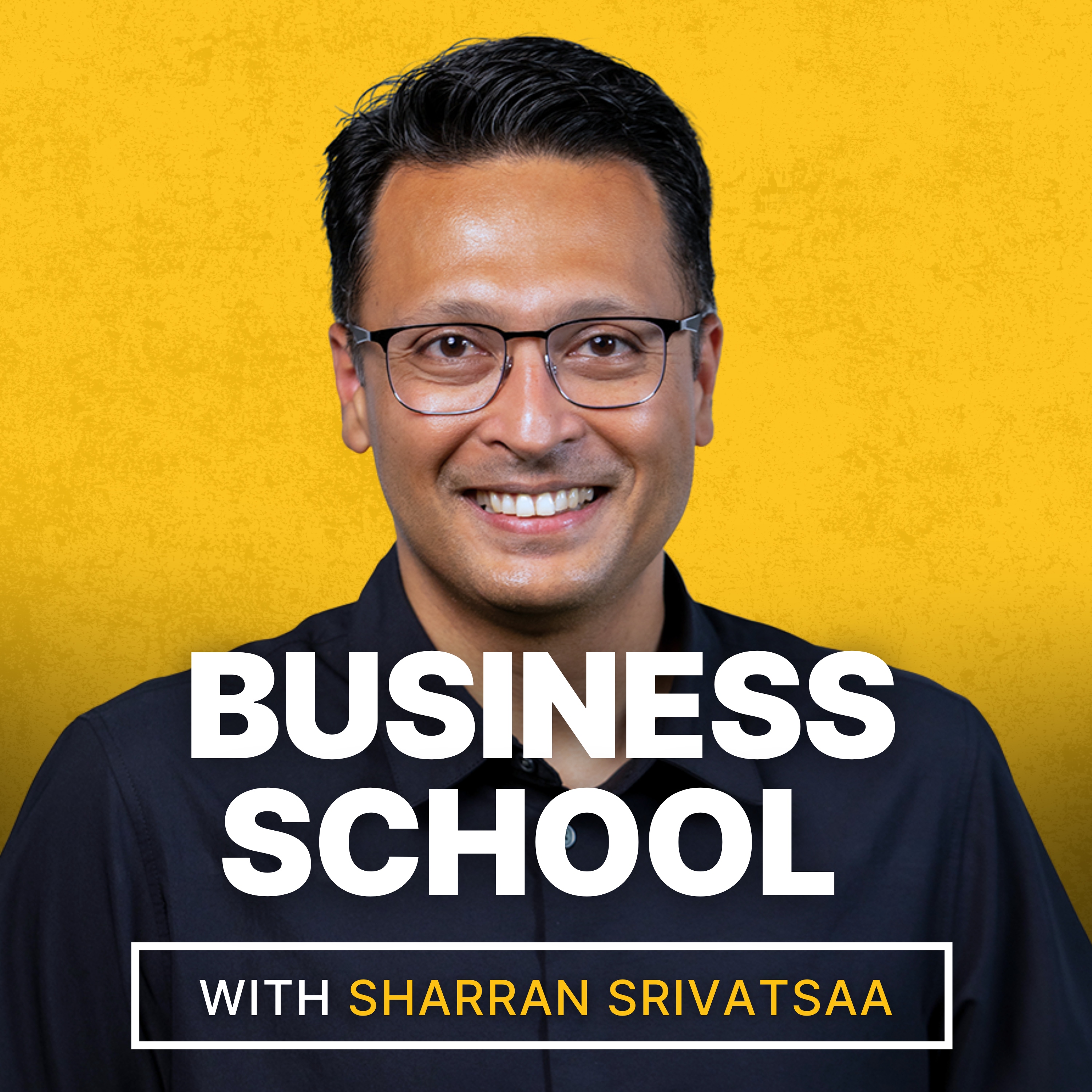
From Gambling Debts to Copywriting Millions with Justin Goff
52m 24s
In this podcast interview, Justin Goff shares his journey from making $72 in high school by surfing the internet to becoming a copywriting millionaire. His first real online success came after a gambling debt forced him to create a sports picks website, where he made $149 after six months of trial and error. A pivotal moment occurred when he abandoned short, hype-avoidant sales pages after a failed product launch, embracing Dan Kennedy’s direct-response principles: long copy that addresses skepticism and focuses on the reader’s interests. Goff stresses that effective copy must convert cold traffic to be scalable; a responsive list alone won’t sustain growth. He also champions daily email communication as a single, focused vehicle to build trust and authority with a curated, high-quality audience. By personally inviting 150 ideal prospects to his list, he grew it to only 2,000 people but sold 140 seats at $2,000 each from just 900 subscribers. This approach, rooted in relationship-building over volume, allows him to command premium prices and maintain influence. Goff’s key advice: reverse-engineer your list based on your high-ticket offers, prioritize quality over quantity, and use daily, personal emails to create bonds that drive exceptional conversions.
So, how do you influence skeptical people? How do you actually tell good stories? Is there a formula? Hey, this is Sharan and today, I'm excited to bring you an awesome interview with Justin Goff, a truly rags-to-rich story from a really humble guy, copywriting millionaire, online marketing ninja, and we actually talk about what do you do to influence skeptical people? How to have a single focused vehicle to be in front of your audience every single day? The formula for actually telling good stories and specifically what not to do. And we even talk about why most of your leads suck and how to fix it. We even finish up with the ROI on coaching and how you can use it to benefit your life and actually collapse time and by speed in your success. If you do anything online and if you want that unfair advantage, this is an awesome episode for you, so get ready for some mind-blowing stuff with Justin Goff. One thing is for certain, just because it's tried and true doesn't mean it's working right now. So the big question is this, where can you learn what is working right now? The strategies, the tactics, the psychology, and the exact how to. How to go your business. How to blow up your personal brand and supercharge your personal growth. That is the question and this podcast will give you the answer. My name is Sharon Trivata and welcome to Business School. So Justin, everyone talks about making money online and I love if you could kind of think back on to kind of the first couple of times you made some money online and you knew actually, like, oh my goodness, this is real, this works. Could you kind of think back to that time and is there a story that comes to mind on the early days where the Goffman made money online? Yeah, so I actually had a couple different forays into kind of making money online. The first was in high school. It actually Craig Balantine did the same thing. There was this program called All Advantage. This is like back in the, I don't know, probably like 97, 98, 99 somewhere there. They would pay you to surf the internet. So this is back when I had AOL at my house. I'm on my parents' like dial up modem and for people who don't understand that, that means nobody can call your house. Nobody had cell phones back then. So I'm sitting on a dial up modem for seven, eight hours a day, like just surfing the internet and getting paid for it. I remember actually I heard about this from a kid in my school and he told me he was making money doing it. So I started doing it and I had no idea what the hell I did not believe it was going to work. But I remember like a month later I got a check in the mail for like 72 bucks and I was just like stunned and me being kind of the entrepreneur slacker that I am. I immediately figured out how to use this bot that would like surf the internet for me so I didn't have to actually sit there and do it. So I didn't have enough of that program like basically fell apart like a week later, got shut down and what's really interesting to me now, I just saw this as like a loophole. I was like, oh, this is like this loophole that you can make money. It didn't even occur to me that there was like other things I could have done online to make money. Yeah. So that was like the first time I ever made a dollar online and I honestly never did a damn thing after that until probably four years later when I was in college. When I was in college I started making websites. I basically had like a $1,200 gambling debt that I couldn't pay. It was a real big poker player. It was a real big sports bet. I was actually pretty good at it. I paid my way through about, I don't know, half of my college doing that. Wow. But then in like every 20 year old kid I got super cocky and started betting a lot more money than I had. That's kind of where everything went wrong. And I wound up owing this guy. His name was Gabe. He was six foot eight, 280 pounds. I owed him like $1,200 that I did not have and Gabe was not happy and Gabe wanted his money. So I had this bright idea that I was going to create a website and sell my sports picks on it. I had seen like other people do this and I was like, oh, I could do that. I was actually good at picking games. I was like, I could do this. But I knew nothing about marketing. I knew nothing about setting up a website. I used this like pre-made website builder that this is like before WordPress. This is before click funnels. Before anything that looks even decent, it was the ugliest thing on earth. And I basically spammed forums for like six months trying to get people like by my sports picks. And the funny thing is I was just too stupid to realize like what I was doing wasn't working. I just kept doing it and doing it and doing it. And eventually though, I remember some time around Christmas goes back in my parents' house. I was in place. I was in college. I was home for winter break. And I was on the computer. And I remember I had a PayPal notification, had no idea what it was. I opened it up. And some guy bought $149 worth of my college basketball picks. And I remember just like jumping up and down, screaming, running around the room like, I was joke now like I've had days where I've made two, three, four hundred thousand dollars. But I still remember more about that day when I made a hundred forty nine bucks that I do about any of those other days. Like you said, that was the first time it was like real. I just been putting in six months of hard work and just, it's just seemed like a pipe dream. It didn't seem like it was real. I had heard other people had made money online. But it's not actually like happens for you. And you're like, oh, wow. Like, this isn't just the dream. Like, I might not have become a millionaire, but this could be somewhere I could actually make some money on. So that's kind of how I got started. Yeah. And, you know, based on which audience you talk to, most people don't know that in the world of marketing, copywriting, especially converting, you know, we'll use terminology here that my audience may or may not get, but converting cold traffic, like you are the king. Literally, you're the boss. You're the king. And, but for most, like when I talk to business owners, and how many websites have you been to, lighting pages have you been to, and because everyone thinks that, oh, it's just words on a page that someone just needs, like I just need to have some random brochure copy on my page. And it'll, as long as the graphics look good, this will work. And I bet you've seen so many pages on that you're thinking, oh my gosh, there's so much opportunity here. I'd love for you to like, when did it click for you that there was like, copy as a vehicle as a medium of influence? When did it actually click for you that that actually existed? And I love your story about like your first cold offer, and we'll talk about that. But I want to know, like when did you realize that, hey, there's the copy matters and what you put on the page matters. And what did that click for you? So back around like 2008 or so, I kind of, I got into the fitness, infoproduct space. So I had this idea. So I was working out with this personal trainer. And he had me on like a paleo diet and we were doing kind of CrossFit style workouts. And this is before paleo and CrossFit like really blew up. And I was getting great results. So I remember like talking to him, I'm like, man, I feel like this would sell really well if we made like an ebook about it. And I kind of got into that space and I looked at what everybody was doing. And I remember looking at everything, just thinking like, this is so like, hypey and why would anyone buy any of this stuff? It makes no sense. These sales pages are so ugly. And my business partner at the time who was the personal trainer, he had been using direct response in his gym to get people into the gym. And he's trying to sell me on direct response. I just like, wouldn't not hear it. I'm like, it just looks terrible. I was like, nobody's going to fall for that shit. And so basically for about a year and a half, we built up like a blog. We tried to generate readers that way. We tried to sell things with kind of these basic, I don't know, e-cats. We had to come half sales page kind of things. And I remember that kind of crowning moment was, we had worked on this one program for a long time and we were going to launch it around New Year's since New Year's is whenever everybody tries to get in shape. And we had a list of, not a huge list, but it was probably 10, 12,000 people at the time. And we promoted this new product to our list for like four days during New Year's and we literally made four sales. And I remember just thinking like, oh my god, there's got to be a better way to do this. And that kind of took me back to the drawing board and I started looking at all the other websites that I thought were way too much copy and I thought they were selling too hard and all this. And I started to realize, am I right? There's got to be a reason they're doing it this way because all these guys are doing it and they all seem to be pretty damn successful. So there's got to be a reason that they're doing it. And so around this time, my partner at the time, I finally was a little open to direct response. He gave me a big box of Dan Kennedy DVDs. He's like, go watch this. It's all about copywriting. It's all about selling. He's like, I think it'll help. Oh my god. So I put it in my DVD player and this is like, Dan Kennedy unedited. Like it just straight 12 hours of tape. Like nobody. I'm just talking to the conference. But by the end of it, not even by the end of it, within like 40 minutes, I was just like, oh my god, I get it now. Yeah. Because everything I was trying to do was actually completely wrong and he just started talking about it.
talking to people and copy like you would talk to a friend, started talking about focusing on what they're interested in, not what you're interested in, talking about why you need a lot more copy because the person reading this is incredibly skeptical. And yeah, it is a lot of copy, but the people who are really interested and are gonna buy, they're gonna read 20 pages of the copy. One page of copy doesn't cut it. Just all the big principles of copywriting and conversions came from that. And that really was the thing that kind of flipped the switch. And I was like a true believer in copywriting and direct response and kind of performance marketing. - Yeah, you, so you probably don't remember this. And I think it was you and I, Jason Capital, Dan Log, and I think there was one more person in that room. I can't remember who. It was cool, I mean, a few years ago we were hanging out. And when I went back to my office the next day, I wrote down like what I learned the day before. And I wrote down three things that you probably don't even remember that you said, we're done three things that you said. The first thing you said to me was, if it doesn't convert on cold copy, I don't really care. And on cold traffic, I don't really care. And I was like, well, really? I have a super responsive 30,000 person list. I can sell anything to this list. And you're like, yeah, if it doesn't convert on cold copy, you'll never scale it on cold traffic. And I said, okay, that's interesting. The second thing I wrote down, which like I know this from memory, 'cause that's I wrote it down. The second thing you basically said was, hey, yeah, the opt-ins interesting, but if you have a list that doesn't have customers, like your customer list is the list. Everyone can get opt-ins from freebie e-book downloads. Like your list is a customer list, regardless of what it is if they're whipped out of credit card and they paid for something. Now I believe that they're your list. And like those, and the third thing that you told me which you can go into at some point is you said, you said to me, you're like, hey, why are you, why I don't know why people think about getting into advertising or getting into building a new product when they don't really do any research on who else is already buying advertising to that product. You're like, dude, I can show you in two minutes whether this is gonna work or not and like with one Google search. And I was like, who is this guy? And what, I would never forget those three things 'cause now I'm just like, I still sell a lot off my list. And the one thing I wanna ask you is this like that day, like three and a half, four years ago, you told me about, hey, to build this relationship with your list, the daily emails are super powerful. And you weren't even doing it that religiously at that time. Like you've really emptied up in recent, in the recent days. But I took that to heart. Like I've been writing a daily email to my list every single day or very close to it for the last three and a half plus years. And probably the biggest gift you've given me was from that, to talk to me about the cadence of like, people have these lists, people buy these customer lists or opt in lists, et cetera. And then they have zero relationship with their list. What are some of your thoughts around? Like, is it a daily email? Is it email marketing? Can you still talk to them without selling them? Like what would you do when someone has a list to build that relationship with that list? - Yeah, I'm glad you brought that up. I'm a huge believer that you need to be, you need to find one main focus that you're gonna be in front of your people or your audience or your crowd every single day with. So for me, like you said, that's the daily email for me. Mostly because in our industry with a bunch of, I talked a bunch of successful business owners, successful copywriters, they're all reading email. They all check email every single day. So it's a very normal thing. Other people do like Craig Valentine does the same thing with Instagram. So Craig's main kind of focal point with his business as Instagram. And it could be whatever you want. It could be YouTube for you. It could be whatever. But I'm a huge believer that you need to have one that you put all your focus into or that's like kind of the most important for you. And like you said, building that relationship, it's, it's, and I'm sure you've seen this too. It solidifies you as an expert so much and keeps you in front of people and on the front of their mind, like more than anything. I mean, I don't really even take on clients anymore for copy projects. I get 10 to 15 times the amount of solicitations for copy projects now that I ever did when I was like full-time writing, simply because I'm on people's minds every single day. Yeah, to me, like, in building that real, real relationship. So that's the thing. Like it, it's not easy to write an email every single day. I mean, in my takes, maybe 35, 40 minutes to do, I put a lot of thought into it. But I've kind of figured out it's the most important thing I can do for my business, especially my business where I'm not in like a bizopnitch or a keto weight loss niche where somebody's gonna be interested and then three weeks later they'll be gone. Like I'm dealing with real business owners and real copywriters who I know two years from now, they're still gonna be doing this. So they're gonna stay on my list. And if I can build a real actual bond with them and get them to like me, get them to trust me, get them to know stuff about me outside of just me teaching conversions and me teaching copywriting stuff, that's really what builds a bond. So, and you'll kind of notice with my list, like I really don't promote a lot. Like maybe once I'm on top of promote something and then when we're doing like our events and stuff, like that, I'll promote those. But to me, it's really all about that relationship. And if you do it correctly, like you'll see our first live event we did, my email list was 930 people at the time. We sold 140 seats at $2,000 a seat from that email list. - It's awesome. - To me, that was even, I did a little consulting day with Frank Kern, kind of getting his, just like a second set of eyes on how we were promoting it. And he gave me some really good feedback. And I remember him like digging into it and he's like, "How big's your email list?" I was like, "Oh, 940 people." And he's like, "jaw hit the ground." He's like, "You sold 140 seats to 900?" I'm like, "Yeah." He's like, "What the hell are you doing?" And I was like, "I don't know. This is really like me, I guess." Yeah, I mean, that's the power of having, a, having the right people and be communicating with them every day in a way that they actually look forward to and actually increases that bond. - But let's, if you can talk about that, that would be just tactically how, so you've done a really good job of almost, you know, having people, you know, semi-applied to get on your list, which is very cool. - Not semi-applied, I got to apply. - Yeah, I mean, it was almost like, when I, when I, when I, when it first came out, I think Craig sent it to me or, or, I don't know who sent it to me when you just were launching. And it was, it almost felt like the early gmail invitation, right? You're like, "Hey, I've got like four of these, like don't mess up this, you know, you can get on Justin's list." How does someone go from the thought process of, hey, I need to just get more opt-ins, get more opt-ins, get more opt-ins, whatever they may be, let me figure out my next PDF download or whatever I'm giving away to. How do I get the, the right person on my list? So what are, what are a couple of thoughts that come to mind to kind of guide people on, is it quality versus quantity? And if it is quality, how do you, how do you try to find that right avatar to get on your list? - Yeah, I, I kind of reverse engineer mine. So I was very intent on selling high ticket, whether it was coaching, masterminds, live events, stuff like that. And for, for, to buy that kind of stuff, you need quality business owners who are doing serious volume, seven, eight, even nine figures a year. You're just kind of newbie's not gonna be signing up for a $35,000 mastermind. So that was my goal from the beginning, is just to do high ticket stuff. And that's really where my expertise lies. Anyways, I built a $23 million company, all the companies that I help in terms of consulting are all anywhere from 10 to $400 million kind of direct response companies. So my expertise is there. I know that's who I wanted to work with. I know that's who I wanted on my list. Yeah, that's really how I built it from the beginning. And what's kind of funny is, literally when I built it from the beginning, I personally emailed 150 people that I knew I wanted on the list. And I was just like, hey, I'm starting this email. I mean, this wasn't even like a group email. I literally wrote out an email to 150 different people. It was like, here's what I'm doing. If you wanna be on the list, let me know, just say yes or no. And I'll, I'll add you to it. So the list started with like 100, literally 140, 150 people that I just personally emailed. It's not that big today. It's only, I don't know, 2000 people now. But like I said, a lot of that revolved around what I knew I wanted to sell to those people. If I was gonna be selling $47 U-Books or $9 lead gen type things, I'd be much more interested in just getting 20,000 people on my list. - Right, gotcha. - Yeah. - But I knew from the get-go that I wanted to do a high ticket. I wanted a real quality business owners. I wasn't really going out through the biz up niche stuff like that. So yeah, I really just basically reversed engineer that and that's something anybody could do. - Yeah. If you were to tactically coach like a, so I have a few kind of business owners that I work with that I mentor and a lot of them came to me through my list and don't even know who they are. They reply saying, "Hey, Sharon, "can you teach me how to write email?" And I'm like, "I, this is weird." I'm not a writer, Bye.
But I write stories. I just write what's going on in my life. And so, but it seems to take, it takes you, and you are a, I mean, you're a boss, and it takes you 35 to 40 minutes to write an email. The average kind of business owner who wants to build and grow their list, or have their relationship with their list, they want to write as well. Shy of hiring a kind of copywriter to write in their voice every single day, if they want to write, what would be some kind of daily writing strategies that they could either get into a state to write or do you curate topics and then do you build on them? Do you, some thoughts around how can I tactically get a daily email out without it feeling like it's a two hour process? - Yeah, so I thought to you a great question. So let's take a, let's take a niche like, I don't know, let's say like a financial advisor. If you were, if I was a financial advisor and I had a bunch of, I don't know, people who make good money on a list, you even if it was only like a couple hundred people, and I wanted to start writing a daily email, I really started with two premises. One is either the idea that, or the point that I want to make in the email, or the second one is if I have a really good story, and I might, this is a great story. Now I just got to figure out a point to kind of put on to it, because people love when you tell stories, but the story has to have a point to it. You can't just, (laughs) - Yeah, just tell a story for the hell of it. So I'll give you a good example. So let's say in, let's say in the financial advisor niche, so a big issue could be telling a nightmare story of like a client of yours who, I don't know, let's say they, basically waited too long, didn't save enough money. Now they're 62 years old and they're panicking and they're working a second job at Kroger because they didn't save enough money. Those types of stories, especially like very personal ones, if you're telling a, you don't have to like, mention the guy's full name, but if you're telling a personal story like that, connect extremely well, because a lot of the fears that, or a lot of the things that are happening to that guy, are the same fears that a lot of people on your list have. - Yeah. - And then let's say if you're targeting like a, a really like wealthy crowd, you could tell a story about, you could tell kind of more of a positive story. Let's say a buddy of yours who, you started managing his money and instead of him having to wait till 65 to retire, he retired at 55 now, him and his wife, Logan Costa Rica, and they got a 45 foot boat and he's sitting on the beach all day drinking mojitos and you're like, it sounds pretty damn good. So I mean, the type, like I said, you either start with the story or you start with the point you wanna make, and really the interesting thing is like, the big thing most people get wrong is they just try to teach and there's no entertainment value in there. There's no storytelling. It's kind of like reading a textbook when you're in like fifth grade. - Yeah. - And no one is interested in that. I see people do this. I'm on a ton of like weight loss and health list and I'll see some of these in there breaking down for two pages, the differences between visceral fat and brown fat and I just like, you know, personal trainers don't even care about that. So yeah, I mean, they really wanna hear, they wanna see inside your life, which is one of the things you kinda mentioned before we were on this call. Like, you notice on like social media and stuff and with your emails, like the stuff you talk about that's really has nothing to do with your business. People are just kind of voyeuristic. They love to see what's going, like some of the emails I've written about, my dogs and emails I've written about my relationship, my parents and stuff like that. I get hundreds of responses to those. And then I've written some before I'd go in depth on some like copyrighting tactic that can make them millions of dollars and it just crickets. - Well, it's so fascinating to say that. So, you know, these, I'd say most of the entrepreneurs that I don't do a lot of coaching consulting 'cause yeah, I have enough time running my businesses. But there's an insane joy when you can work with like a eight, nine-figurator from Norton. It's very lonely at the top for them. They have no one to really talk to. So, you kinda become their private advisor in this process and I don't talk about it at all. But so, one of the things that he was asking me, he says, and I'm not a pro writer. I just write to my list because I want great engagement with my list. I don't, at some point when I choose to sell them something, I'll have something to share. But my dad, I never shared this with you. My dad is a, used to be a professor of English literature at college and he did that for like 25 years. It didn't pay any money and then he stopped doing that and then he went at the advertising niche. And that's how, like I was born in like, in a one bedroom apartment where my dad and mom were the locked-up media agency. So, I got to see all of that. My dad always told me this, super cool guy, he would always answer every question with a story. And it's like so fascinating. And he's like, "Shron, the easiest way is, if you want to learn to develop your stories, don't answer any questions that you're being asked." Like, anytime Justin asks you a question, you could only answer with a story. You do that for three days. Literally, you have enough stories for five years. And that's kind of stuck with me. So anytime, like I get a question on Instagram or something, I answer with a story in my head. I'm like, "Oh, cool. That's a really great email because I can just tell, I got a question, I can just tell the story. It's not as well written, but I can just tell the story. How do you come up with, like, your story, like I think it was today, your story about how, and you've hammered this home so often, which is, everybody doesn't think like you work like you, by like you, and we've fallen the trap so many times. I'd love for you to talk about, like, that is so, if there's any lesson that, you know, there's a big kind of Justin golf lesson, that's a good lesson for me, right? Because we think we're gonna, they're gonna buy, like us, think like us, and you told the story about your parents, who they're still on dial up, use AOL, and merely use their credit cards. And so how often do you share, how do you get into that, how do you get into that mindset of saying that person is not like me, and how can I think like them? - Yeah, for one of the things I do when I'm going through stuff on a website, whether that's the copy, the checkout page, the conversion, whatever, you go, you have to go through it in the mindset of the person that you're trying to sell to. So if you're selling to a super tech savvy 30 year old crowd, and you're kind of an entrepreneur in the tech space, they probably think pretty similar to you. But if you're selling to a big broad kind of swath market, maybe like Bizzop or Health or Financial or whatever, and the people in there are 50, 60, 70 years old, they're completely different than you are. I mean, I'm always reminded of this with my grandma, she's 85, 86 now, something like that. And I call her every once in a while, when I have some stuff for like, when I was writing a health copy a lot, I used to call her all the time, and we'd talk for like an hour and a half, and I would just pick stuff out of what she said all the time. I still remember the one call really, really well, she was very, very nervous because she had this charity thing that she had to go to in like four weeks, and she was like, I've been walking up and down the stairs every day, trying to get my steps in, she's like, I'm getting ready for this charity event. I'm like, not putting two and two together. I'm like, what do you talk about? She's like, well, at the event, there's three flights of stairs I have to go up to get there. I was like, I remember that hit me over the head like, that would never even occur to me. I was a 36 year old guy that I'd be worried about three sets of stairs. And for her is like the only thing I don't mind for the last month. And when you talk to a bunch of people who are in their 70s and 80s, which are a lot of the people I'd buy, health supplements, getting up and down stairs is a huge thing for them. And they literally will sometimes not go to restaurants or the events or things like that, if they have like multiple flights of stairs or there's not an elevator or crap like that. But like I said, that's something that you're writing that sales page as a 35, 36 year old guy, that isn't never gonna dawn on you. So you really have to get into that mindset and you really have to know your customer, you have to know the buyer by actually talking to them. Most people kind of try to, I don't know, assume they know who the buyer is. And like you kind of said, that goes back to the mistake a lot of people make, which is just assuming the buyer is kind of like you. But you think about going back to that 67 year old buyer, they don't buy a lot of stuff online. It's a big deal to buy stuff online. They're worried about their credit card being used. They would love, they would much rather go into a store and buy something, all that kind of stuff. That me and you who probably ordered three things a day and the Amazon guy is showing up every single day, we don't think twice about it. But that's kind of the power of truly knowing the fears and the anxieties and kind of the worries that are inside your customers. So I remember, I don't know if you remember this, you did, so this was maybe a couple of years ago and you were doing some, for just for your list, you did a couple of website audits and I threw mine up and you kind of to give me when I was just launching one of our companies, you gave me some feedback on the conversion and then there's other guy put up his site and like you didn't say anything,
for like a minute, you were just reading. And then you said, "Did this is all pretty good? I would just increase your font." Because you're like, you're selling to people that are 60 plus. And this is like, Ariel, eight. I can't even read it. And like, it was so, it was so crazy. I was like, didn't you really just say that? But it's so spot on because you're selling, he goes, the person can't even read what you're saying. And I was like, this is, it's so amazing how I think you've put yourself in their shoes so often that I think you can, you are really good naturally at getting into their shoes, which is amazing. I don't do it every day. So I'm not as good at it as you are. And you were teaching that. I thought that was awesome. Thanks, Bob. Let's talk about it. I love you kind of when you, early on, when you first got cold traffic to convert. That's, you know, you can tell that like 14 times. And I still like, love to hear it. Just talk about when one of your first cold offers started to convert. And you're like, "Oh my gosh, this is pretty cool." Yeah. So this is back in 2010. I had been doing that fitness site for a while. We had a blog. We had kind of like an email list. We were doing it. And then I decided to basically try to get it to convert on cold traffic. So I started making a BSL. I started putting it together. And then I basically had what I call the week from hell where my whole life fell apart in the span of about four days. So at the time I had a consulting client who made up around about 90% of my income. I was doing a lot of like SEO for him. I was doing some some copy stuff. And basically his, what do you just pay him each month, basically paid all my bills. And I was kind of in this spot where I was just content. I wasn't really pushing myself. I was making like decent money. So that happened. He dropped me like two days after this. My girlfriend who I'd been dating for like three years. And I was like planning on marrying and proposing to. We lived together and she like came home from work that night and told me that she didn't want to be with me anymore. And then literally that same night I was a huge Cleveland Cavs fan because I grew up right near Cleveland. This is the same night that LeBron said he was going to leave Cleveland and go to my Emmy. So got my heart broken twice at one night and lost all of my income. There's all, like I said, in the span of like three or four days. So what's interesting is it was like after that, I was really, really doubting myself as an entrepreneur. I basically just kept thinking I was like, well, maybe these last couple of years I just got lucky. Maybe I actually really don't know what I'm doing. Because I had maybe I don't know a month worth of living expenses left. And I really started like making plans to do other stuff. I thought about getting a real job working at like a econ agency. I actually thought about moving back on my parents for a while. Yeah, all that stuff was kind of on the table. And what's funny is I had too much pride to like tuck my tail between my legs and my go back and loo my parents. So yeah, I basically had back against the wall. And I just decided to go all in on this offer that I created. I was like, I'm just sitting on this thing. I've never actually put up an offer to try to run it on culture. I have no idea if it'll work or not. And I went all in and within, I don't know, a week. I got the thing up and I was just like, I'm gonna test some Facebook ads at it for like 10 bucks a day. I just had no money. I think I took out a credit card to just like put all the ads spend on. I started like 10 bucks a day. And I remember after a couple days, it made a sale. And then like a couple more days, it made a sale. It wasn't profitable. It wasn't even breaking even. But like there was potential there. I saw sales coming in. So I started tweaking some stuff. I was tweaking like the lead on it. I was tweaking the ads and trying to dial those in. And then after a while, I got to the point where like I was spending a hundred bucks a day. And like I was kind of breaking even. And I remember thinking in my head, I was like, oh, I could see the scale in this to like spending 500 bucks a day pretty easily. It doesn't seem like it'd be that much more work. Like it's just kind of scaling up. And then as it kept going, the conversions, I got better. Like I said, I doubt the ads in better. I got the targeting and all that stuff on the ads a lot better. And eventually what from a hundred bucks to 500 bucks to a thousand to eventually capping out my Facebook account at the time was that five thousand a day. And I got it to five thousand a day. When I was spending five thousand a day, I was bringing in about seven thousand revenue. So I was banking like 1500 to two grand a day profit. And I remember just going crazy. Like I couldn't I thought I hit the lottery. And basically in the span of about three months, I went from being a month away from being dead broke. So I think I made like 103 grand in profit in three months. And that really changed everything for me. Not only in terms of like giving me the capital to like, okay, I can keep going after this and keep buying ads and keep building this up. But really more than that was like just the reassurance that I actually did know what the hell I was doing. I wasn't I didn't get lucky before. I wasn't some like guy who just kind of stumbled into this for three or four years. And I don't know who yeah, like I was just getting lucky for a couple of years. I actually did know what I was doing. So for me, just kind of the confidence of that really changed everything. And then that offer went I it didn't really well for a year, I don't know, a year and a half. Then me and that partner ended up kind of having to follow. But I think I know making like 200, 300 grand off it, which like I said, really, really changed everything. So, so the first question that comes to mind for me, you know, kind of knowing you watching what you do is what did that? What did that do for kind of like your mindset around money, like your story around money? Because I bet that, you know, you went, you was a, it was almost barbell, right? Like you had a very polarizing you went from having your back against the wall to creating cash. It's got to have changed the way you your relationship with money. How did did it or did it not or what is what's kind of your relationship with money from that time till today for all that you've done? Yeah, so I've had a very interesting relationship with money. I grew up in a very blue collar kind of household. I'm from a little town in Ohio right near Cleveland called Sondusty. It's like, I don't know, 10,000, 15,000 people, like one of those Midwest small cities. A dad works in a factory where they make conveyor belts. My mom has had every job from waitress to preschool teacher. And they have very blue collar beliefs about money, which were ingrained in me. Some of which are good, like a lot of like work ethic and stuff like that. But then a lot of them that are actually really bad. I remember by the time I was like 17 thinking that rich people were just like the scum of the earth. And like every problem in the world was because of rich people. What's funny too is because what was rich in kind of our town is like I look at now. And I'm like, I mean, it was like a lawyer making a hundred grand a year. And I like that was a big, big, big deal. And I look at that now. And I'm like, that's like that's kind of like middle class nowadays or upper middle class. But yeah, kind of getting away from a lot of the bad money beliefs I had. Like one of my biggest ones was if you sell something, you're winning in the other person's losing. Like you're somehow taking something away from them. That was a big one that held me back for a long time. Another huge one, which I know a lot of people struggle with is kind of like taking more than your fair share. Where it's like if I make 500 grand this year, instead of making a hundred grand, I'm somehow taking more money than kind of my fair share. And other people are missing out on that money. I'm not sure if you can relate to that. But I know, I know, I know a lot of people definitely relate to those kind of thoughts about money. I mean, for me, once I start to make money, the rest thing is when you have no money, money is like everything. It's the only thing you could think about. And then what you have is really it's not a big deal. You become a lot more comfortable with it. You become a lot more just kind of like loose, which is actually much better for your attraction for money, I believe. Because you're not so tight and you're not so and you're okay with like you just kind of get more used to money, just kind of flow into you naturally and people willing to pay you big sums of money. And like I said, the more the more natural and the more kind of you're comfortable with accepting money coming to you, I think makes a huge difference. How does somebody say think about who you are now? And if you were to talk to and this is not being me being kind of you know, Ru and saying are weird, saying hey, like what would you tell ten, you know, just in 15 years ago? That's not what I mean. But literally there are, there is a Jimmy somewhere in Akron, Ohio who grew up in a suburb who was, you know, in a similar place. How do you, how do we get a message to Jimmy that, hey, try this or do this, that may open your mind a little bit? To me, the biggest thing I feel like that changes people's minds is seeing it firsthand. I don't think anything. Two years ago, two of my buddies, basically who have normal jobs, one one
worked at Abercrombie and Fitch, Foulding Close, the other was a financial advisor. And we met and they were asking me about what I did and they kind of had this idea of like, they wanted to make money online too. But I remember originally just kind of thinking like, I don't really feel like Senator mentoring these two guys for free. But they were really dedicated, which was very different than the majority of people. I'm sure you've had this before. You try to give somebody advice and (laughs) give you a million dollar advice and they don't do a damn thing. Yeah, so that kind of started and I remember, I remember kind of it's all I was like, I'll teach you how to write email copy. I was like, I have all these companies that always email me looking for email copy writers. I was like, I bet you I could get you guys to the point where you could start making money within three or four months if you know how to write email copy. And what's funny is to me, that seemed very, very normal. It's a them, it seemed like this huge pipe dream. They were kind of blindly following because they knew how successful. And I put them on this program, they had to write like two or three emails every single day. They had to send them to me, I'd give them feedback on stuff. And what's interesting is just kind of having me there though and being immersed with me and kind of seeing how I thought and how I saw things like money and business and stuff, really changed the way that they saw everything. Like they thought it was insane that they could make $3,000 a month from a client writing emails. And then they started to see me getting paid $50, $150,000 to do a consulting project. And like mine just kind of like the reality of what they thought was possible. It was just like shattered. So yeah, to me, it's really seeing it firsthand and being around it, I think it's probably the biggest thing for a lot of people because you can read about it and you can read about how to do things. But when you're actually around it and immersed in it, you really do start to kind of like take a little bit of that on and soak it in. And it does change. I really do believe it changes your kind of belief so what's possible on kind of a deep level. - So what's amazing is not only have you done stories like that, that's not one off. You've done several kind of, both given your time, freely to friends. You've also people hire you as a coach to help them with stuff. You and Steph and have a great coaching program as well. But you put your money where you're at. There's like you hired a coach to help you. And what was that? What was that shift? When did, how did that decision come about where you said, okay, I think I need, I think I need a little help. - Yeah, so I've had a couple of good coaches that have been really huge for me. The first one I hired, business wise, was David Doich, who's a really famous A-Lost Copywriter. He's written, I mean, he's been doing this for 20, 30 years. It's huge, huge winners all over the place. And back at, basically, I think it was like 2014. I was basically stuck at making like 200 grand a year for like four years. And I was a pretty good copywriter. I wasn't great. And I started reach out to some friends. I was like, who do you know? That's a really good copywriter that I could hire to coach me. I know I'm good, but I want to be a great copywriter. And one of my friends mad at the email, he's like, do you know David Doich? I was like, yeah, I know him, but I don't know him, no him. He's like, yeah, he'll do some coaching. Why don't we all connect you with him? So I started chatting with David and he kind of bets me out to see if I'm real. And sends me an email back and he's like, all right, he's like, we'll do two calls a month. I'll give you feedback on everything you're writing. Bubble Bon, he's like, here's, here's where you to wire me the money. It's $25,000 for the year. And I'm average bill, I got a shit. (laughing) I'm not a money. And I remember kind of like thinking I was like, man, and like, if this goes wrong, I'm not gonna be destitute, but that's a lot of money to lose. And actually, I remember for a bit thought about seeing if I could somehow figure out a way for my business at the time, not me personally paying for it, but like my business that I had with my other partner and thinking about them paying for it. And then I got to thought of it more. I was like, no, if I just sack up and spend the money myself, I'll be much more likely to fall through on it. There's no way I can kind of weasel out of it or miss calls or anything like that. So I did that and it was funny 'cause within about 30 minutes on the first call, I was like, oh my God, this guy knows more about copywriting and what works than I've learned in the last like seven years trying to learn this shit on my own. Yeah, it was a great, great relationship we had for probably year and a half, two years where he coached me, he gave me feedback. My writing got insanely better. I was able to pump out a couple of different offers that worked on cold traffic. That would have honestly would have never happened if it wasn't for David's feedback and all that. And yeah, my income, I went from, I broke that plateau, I went from making like 200 grand a year. The next year I made like 750, the year after that I made like 2.2 million. And that was literally like, you look at the ROI on that $25,000 coaching thing. It's like, yeah, I do that every day now. The thing I've kind of learned with coaching, if you get the right coach, the ROI on it is, yeah, it can be expensive, but you can't look at it from the expense. You have to look at it from the ROI. That's a big, big mistake a lot of people make. Like, I have a guy who does my tax strategy, who I remember the first time he told me what he cost. So he basically, it's like 25 grand up front and then five grand a month. And I'm used to paying like a CPA like, I don't know, a couple hundred bucks to do my tax. That's right. And I remember the thing I'm like, why the hell would anybody pay that? And then he did like my initial audit and saved me, I can't remember what he saved me, but it was like $200, $300,000 in taxes. And I'm like, oh, yeah, that's okay. That makes sense now. So yeah, you really have to focus on the ROI when it comes to a coach. And you have to find the right coach. I get people coming to me all the time who want to hire me. And I'm very straightforward and honest to them. Like a guy tried to hire me the other day who does a lot of high ticket sales stuff. I'm like, I could probably help you. I'm sure I could help you with a lot of stuff, but I don't specialize in high ticket lead gen and then selling them on the phone. And I was like, go find a guy who does that and can teach you that same with like E-commerce. I know some about E-commerce could help you with your landing pages, but go find a guy who's built a $10 million E-commerce business and work with him. - Yeah. Yeah, I'd say if I could, you know, I think when we were in the mastermind, we talked about this. If I could talk to a little 10 year old, 15 year old, 20 years ago self, literally that would be, just get the right coach sooner and the trajectory just changes so fast. Otherwise, you just, you think you're good enough just learning everything on your own. And we are, but you know, but it just takes time. That's all it is. It's just if time's not an issue, well, you don't need a coach. And it's literally like I tell my dad that he's like, hey, I don't really, I don't really want to get any better at swimming that fat. As long as I'm water safe, I'm good. But he's like, listen, you're not that, you've got two kids now. You may want to take a couple of lessons because you're just buying speed on that, which is, which is super powerful. So, Justin, what do you, outside of kind of copy and conversion, if there are any, you've talked to me about like non, kind of non-fiction stuff that you read and the stuff that you do outside of like the business stuff, any ideas or thoughts for the audience on fictional books to read or movies that you've watched of giving you inspiration that's like really flipped your mindset to be naturally better what you do at work. - So I actually have gone, this is not the answer you're looking for. I've gone the opposite way in recent years because I used to be a, kind of almost like a reading addict. I would read a lot. I would never even allow myself to, like if I was gonna watch Netflix, I forced myself to read a book while I was watching Netflix. So then I felt like I was like accomplishing something. Which is a problem with a lot of entrepreneurs 'cause we always feel like, if I allow myself, I will be a work of all, I'll work from 8 a.m. to 8 p.m. and I'll keep doing stuff. Like I said, if I'm reading a book, I couldn't just read a normal fiction book. I would be reading something about advertising. I'd be reading something about copy your mindset or whatever it is. For me honestly, one of the biggest things in the last two years that I've really switched is just allowing myself to do things that I simply enjoy and that have no effect whatsoever on my business. Like one of the things I truly enjoy, I live in Austin, there's a park by my house called Zilker. I'll go to Zilker and literally just sit there for an hour or a walk with a friend for an hour. And when it's nice out, I truly enjoy doing it. I know other people like, I used to feel really guilty watching TV. Now I've gotten to the point where I'm like, yeah, if I wanna watch, I don't know, an hour of Mad Men or an hour of the sopranos before I go to bed, I'm perfectly okay with doing that and not feeling like I need to.
to be doing something that improves my business. Because especially when you're an entrepreneur like, you know, there's always something you could be doing. You could be in there checking ads, you could be checking, you could be writing the next promo for something that there's a million things you could always be doing. If you don't learn how to really like shut it off and actually have something other than your business, I feel like you're gonna get burnout pretty quick. - Yeah, that's awesome. And so where are working people get more of you? How can they find more of what you're working on? And we have a lot of, you know, entrepreneurs, business owners, if they, how do they kind of plug into the, the golf world? - Yeah, so the best thing you like you mentioned, my daily email, that's really where I communicate everything to, the people on my list and the people that follow me. So if you just go to Justin123.com, you'll see the application there. And it is an application, there's like five or six questions there. So if you're kind of a serious entrepreneur, marketer, whatever, you got a good chance of getting in. And yeah, you just apply in there. And basically if you get accepted within like, I don't know, a dare to, you start getting the emails that I send out each morning. - Yeah, I'll link them all up on the show notes, but Justin Mann, hey, ever since the first time I met you, you just dropped gems without even you knowing that you do it. And I still remember like our first meeting like was yesterday. I can't thank you enough for the stuff that you do. I read your stuff every day and your, your awesome inspiration. Most importantly, thanks for making time to be on. Really appreciate it. - Yeah, thanks for having me, man, appreciate it. (upbeat music) - Hey, Chiron, I have a cool gift for you. I took some of my best ideas from the last 20 years and created a five day MBA. It's quick connection pact that you could listen to on the go just like this podcast. And I wanna give it to you for free. Just as a thank you for listening to the show. No fluff, no gimmicks, just pure actionable ideas for you to use instantly. You can grab it right now at businessschoolshow.com. That's businessschoolshow.com. (upbeat music) [BLANK_AUDIO]
Podcast Summary
Key Points:
Justin Goff’s first online money was $72 from a program called All Advantage in the late 1990s, which sparked his entrepreneurial drive.
He later created a sports picks website to pay off a gambling debt, making his first $149 sale after six months of persistent, untrained effort.
A key turning point was realizing that long, direct-response copy—not short, hype-free pages—converts skeptical audiences, inspired by Dan Kennedy’s teachings.
Goff emphasizes that copy must work on cold traffic to be scalable; a responsive list alone is not enough for growth.
He advocates for daily email communication to build deep relationships with a high-quality list, even if small, rather than focusing on quantity of opt-ins.
His high-ticket business model (e.g., selling $2,000 event seats to a 900-person list) proves that quality and trust outweigh list size.
Summary:
In this podcast interview, Justin Goff shares his journey from making $72 in high school by surfing the internet to becoming a copywriting millionaire. His first real online success came after a gambling debt forced him to create a sports picks website, where he made $149 after six months of trial and error. A pivotal moment occurred when he abandoned short, hype-avoidant sales pages after a failed product launch, embracing Dan Kennedy’s direct-response principles: long copy that addresses skepticism and focuses on the reader’s interests.
Goff stresses that effective copy must convert cold traffic to be scalable; a responsive list alone won’t sustain growth. He also champions daily email communication as a single, focused vehicle to build trust and authority with a curated, high-quality audience. By personally inviting 150 ideal prospects to his list, he grew it to only 2,000 people but sold 140 seats at $2,000 each from just 900 subscribers.
This approach, rooted in relationship-building over volume, allows him to command premium prices and maintain influence. Goff’s key advice: reverse-engineer your list based on your high-ticket offers, prioritize quality over quantity, and use daily, personal emails to create bonds that drive exceptional conversions.
FAQs
Talk to them like a friend and focus on what they are interested in, not what you are. Use detailed copy because skeptical readers need more information to be convinced, not less.
Focus on building a real relationship with your audience through daily communication, like emails. Share personal experiences and insights to create trust and keep yourself top-of-mind.
Send daily emails that focus on adding value and bonding, not just selling. This solidifies you as an expert and keeps you on people's minds, leading to higher conversions over time.
Most leads are low-quality because you focus on quantity over quality. Reverse-engineer your ideal customer—for high-ticket sales, target serious business owners by personally inviting them to your list.
Coaching can collapse time and speed up success by providing proven strategies and feedback. It helps you avoid mistakes and learn what works right now from experienced mentors.
Research if others are already buying advertising for similar products. A simple Google search can show you if there is existing demand, saving you time and effort.
Chat with AI
Loading...
Pro features
Go deeper with this episode
Unlock creator-grade tools that turn any transcript into show notes and subtitle files.
 PodcastTranscript AI