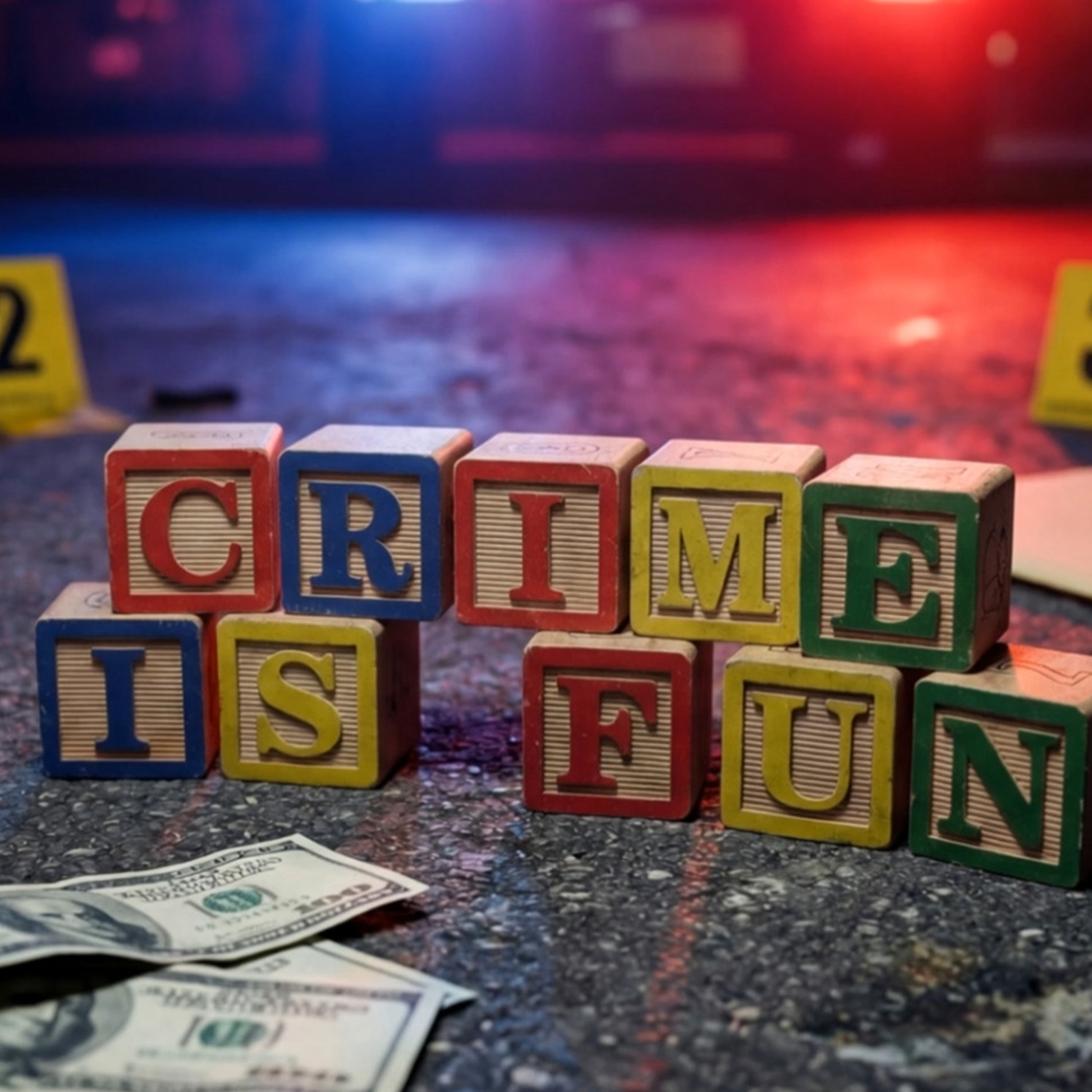
From Elite Soldier to Bank Robber… True Stories of Warriors Who Used Their Skills for Crime
37m 35s
This episode of *Crime is Fun* explores the intersection of elite military training and criminal behavior, highlighting real cases where military members—particularly from special operations units—have committed crimes using their tactical skills. From Navy sailors engaging in base-level robberies to Army Rangers planning a high-speed bank heist with AK-47s and getaway cars, the stories reveal how training in stealth, precision, and social engineering can be misapplied. A key case involves the "Kangaroo Bandit," a former Marine who robbed over 100 banks in California, using his discipline and mixed-race appearance to evade capture. Another case features Green Beret Gabriel Brown, who robbed banks and businesses in Florida, using a military-grade smoke grenade during a heist. A senior Army warrant officer stole valuable night vision goggles by forging documents, while soldiers in Afghanistan stole $200,000 in funds meant for reconstruction, falsely claiming it was gambling money. The episode also notes ongoing incidents, like a 2025 case where two veterans attempted to rob a Ranger compound, only to be caught with weapons and extremist materials. While the military teaches advanced skills for combat and mission success, these cases illustrate that no training can replace impulse control or moral judgment. Ultimately, even the most elite operatives fall to human flaws—greed, addiction, or poor decisions—when they choose to operate outside the law. The central message: government training gives you access to tools, but it cannot teach you to resist the pull of crime.
What if your government has trained you to be really good at gaining access to pretty much any type of building? You've learned really cool stuff like using an IV fluid bag to make a breaching charge extra fine. You've learned to pick locks using everyday objects. You've learned to get inside any car and make it run without having access to the keys. You've learned to blend into your environment and socially engineer people to do whatever you want them to do. Now imagine if you didn't care about manmade laws. Welcome to episode 4 of Crime is Fun. Before we start I just want to say I don't encourage crimes in any way, shape or form. But you know dang well listening to crime stories is kind of fun. Some might call that gallows humor maybe even morbid curiosity. In the first responder world we have a little saying, "Lafso you don't cry." If you're a fan of laughing and not crying, you can watch or listen to Crime is Fun on YouTube, Spotify or Apple Podcasts. Today we're going to talk about HICE committed by military members and dudes in special operations. What is special operations? Special operations are high risk, highly specialized missions carried out by elite military or law enforcement units trained to handle situations most conventional forces are unequipped for. These operations are usually fast precise and often conducted by small teams and dangerous or denied environments. Focusing on things like counter terrorism, hostage rescues and targeted raids. The idea isn't just to fight, it's to solve critical problems quickly, quietly and with its little margin for error is possible. So dudes like Navy Sills, Army Rangers, Green Bray, Delta Boys, Marine Raiders, Air Force PJs, basically all those dudes that love writing books. Last week was supposed to be just about animal crimes but I kept finding crazy stuff that happened in the deep, dark, dangerous Australian bush. We talked about a psychopath sucking turtles and a dingo eating a baby. This week we're talking about rogue special operations dudes and military bank robbers. I know a lot of special operations dudes, all of them dangerous people but none of them criminals. Except for one, Mr. Ballon. That's right, the guy who tells crime stories like me but with less cursing. You know what he's guilty of? He's guilty of being too damn entertaining. He's criminally good at storytelling. I bring him up because funny enough him and I were in Seal School at the same time back in 2011. Obviously he became a seal and I dropped out on 11-11-11 so I could go home and play the Elder Scrolls Skyrim. Thinking about that time in my life is actually the inspiration for this episode. You see buds are basic underwater demolition/seal training takes place in San Diego, California. Not too far from San Diego is Tijuana. Tijuana is a party town. What do young sailors like to do? That's right, party. If you are an insanely in-shaped bud's trainee who is full of testosterone, piss, and vinegar, then you really like to party. Trust me, I know. Unfortunately my bud's class couldn't go to Tijuana because a bud's trainee right before we got there allegedly strangled and stabbed a hooker to death in Tijuana. Well then he strangled and stabbed another one who lived to tell the tell and tell police what happened. There's always one sailor who ruins the fun for everyone. Him and his buddy ended up being charged in Mexico with murder and attempted murder which could carry a 20-50 year sentence. I don't know what became of them and I can't really find anything on the internet about it for all we know, they're still chilling in a Mexican prison. I remember being around 6, 7, 8 years old and idolizing the badass spec-ops dudes and all the R-rated movies that I shouldn't have been watching. I mean not just the spec-ops dudes, pretty much anyone and uniform, you know, we always wanted to be them. We would get sticks that look like guns and chase each other around. Because back then we had Arnold and Commando and Predator. We had Stallone and Brambo and Demolition man. We can't forget the man, the myth, the legend, Chuck Norris and Delta Force, Rest in Peace Brother. They were the heroes they could do no wrong but boy was I mistaken. Turns out when you train a man to expertly steal or strategically transfer equipment to alternative locations, sometimes they decide to do it for a personal monetary gain. The first introduction to crime in the military was actually pretty damn funny. As a 19 year old I was scared to death of getting in trouble so it kind of blew my mind when a guy I worked with got kicked out for enjoying the smell of cocaine. We actually do have random drug tests in the military all the time and in those tests a senior person has to watch the pee actually come out of your body. The one dude I was just talking about got caught because he bought a fake painter, filled it up with someone else's urine, then during the test did something with it to where he sprayed pee all over the place. The senior observer now covered in pee kind of noticed something was wrong. I don't know if you guys knew this but the military and you know especially the Navy in general where I served, especially the aircraft carriers are ripe with crime. Aircraft carriers aren't really just ships, they're small self-contained cities floating in the ocean. With thousands of crew members on board they have everything from medical facilities to food services, aircraft operations and living quarters all packed into a single moving structure. They can launch and recover dozens of aircraft while sustaining life at sea for months, making them less like a bow and more like a fully functioning city that just happens to move. A moving city is going to have what you might ask, that's right, crime. Aircraft is pretty huge on carriers, anything not knelt down will be stolen by someone. Of course there's still a black market for alcohol and other substances. One thing that I do remember being big was prostitution, apparently there's a lot of lonely people on the ocean. I was acquaintances with a Navy PR or a parachute rigger, also known as a stitch bitch. They were really good at stitching things. He told me women on ships would pay him to sew a Velcro flap onto the backside of their coveralls so they could conduct their business quickly in a dark corner of a ship and be on with their day. Just what I want, a crusty sea donkey. I'm not going to get too much into boat crime or deployment crime for that matter. War crimes are a whole other video. Before we get into the cool, high speed spec ops guys doing the crime, there's one more little Navy sailor story incident that I wanted to cover. When I was on Norfolk Naval Base in 2009, a couple of guys took their car, which was registered with the base police, and did an armed robbery on the base movie theater. Yeah, genius crime. It's almost like on a base with nuclear powered submarines and nuclear powered aircraft carriers, and the most advanced Navy in the world, there are cameras everywhere. Well, something similar to what I just talked about happened again on Norfolk Naval Base in 2016. At around 2 a.m. on November 17th, the sailor named James Frederick Cooper was on watch duty in a building on Norfolk Naval Base. 2 a.m. on Norfolk Naval Base is when people like to take kitchen sinks, throw them through the McDonald's front window, and pass out drunk while making french fries. This guy was just on watch duty. Basically, watch duty is where military members walk around or sit at an assigned building, kind of like a security guard. They make sure there's no fires, break-ins, or anything going wrong. James had just separated from his wife a week earlier so he was under a little bit of stress. He had promised his wife that he would send her some money, but being a lower ranked enlisted man meant funds were a little tight. He thought to himself, "Maybe I could use Navy financial assistance, perhaps a personal loan from the Navy Federal Credit Union on base." Maybe even ask a fellow shipmate for a small loan? Ah, screw all that noisy thought. James abandoned his watchpost, put on a ski mask, stuck a gun in his waistband and drove over to a nearby MWR. MWR stands for Moral, Welfare, and Recreation. It's a rec center that sailors can go to to kill time by playing video games, watching a movie, or ping-pong, maybe get a game of pull-in instead of going off base and marrying a dancer named Destiny, or buying a Dodge Challenger at 73% APR. Inside the MWR, there were three sailors playing video games in between their shift. It's 2016, so my guess would be on, uh, they're playing Overwatch, Dark Souls 3, or Witcher 3. All which released in 2016, what a good year for video games. Anyways, James allegedly walks up into the MWR like he owns the place and starts waving a gun around. He orders the other sailors to hand over their wallets and cell phones, which, of course, they do. James actually managed to avoid authorities all day after the daring robbery. I'm guessing three young, broke-enlisted guys at the MWR didn't yield the payday of the century, so James starts scheming again. He started rubbing his two brain cells together and thought, "Need money? Bank have money. Bank near base." So around a PM, James robs an off-duty cop at the Navy Federal Credit Union. It's all called on camera, another brilliant robbery accomplished. Police arrest him shortly after, he fights police and catches another charge. In 2018, James had a jury trial where they found him guilty of the
off-base robbery and a couple of misdemeanors. He was acquitted of the own base robbery due to insufficient evidence and the jury recommended 20 years in prison. Okay, I'll stop rambling about fake painters, floating brothels and mouth-breathing robbers. Let's get into why you click the title, a little bit of special operations crime. Let's go back to August 7th, 2006, a Bank of America into Kalma Washington is going about its normal everyday business, went out to nowhere for armed men burst through the doors. These men are wearing balaclavas and soft body armor. They're all carrying guns. The employees freeze in terror. This is a bank robbery. The head robber points as Glock 19 at the frightened employees as two other robbers cover the entrance of the bank with AK-47s. They're making sure no one gets in or out, or if the cops show up, they're going to make sure that they have a bad time. The second in command jumps on the bank teller counter, just like in an action movie, and points his Springfield XD 9mm at the employees. He instructs the tellers to load up a duffel bag with $20, $50, and $100 bills. The robber is very cautious of anti-theft devices, so he explicitly tells the teller, "No die packs, no pre-recorded serial numbers, and no bait money." One of the guys covering the front door yells "one minute" as the duffel bags are being stuffed with handfuls of cash. No alarms have been set off, no one is causing trouble for the robbers. The four men have complete control of the bank. One of the AK-47 dudes yells "two minutes" and all four men collapse to the front door and exit the bank. The robbers run down an alley beside the bank, jumped into a waiting getaway car, and sped down the street before police could even get close to the bank. They just got away with $54,000 for now. There's a saying in militaries all over the world, and that is, proper planning and preparation prevents piss poor performance. Sometimes no matter how good you are at storming through a door, dominating a room and stealing thousands in cash, the feds still might come knocking. For young bank robbers understood the close quarters battle principles of speed, surprise, and violence of action. What they felt to realize though is they had left the front license plate on the getaway car. Yeah. On the same day as the robbery, a man was walking around downtown Tacoma, probably on a lunch break or something, when he just so happened to see four armed men wearing masks bailed out of a silver 2001 Audi A4 across the street. He watches as these men carrying AK-47 sprinting down an alley near the bank. The man thinks to himself, well that's not something that you see every day. He writes down the plate number on the front of the car and passes it along to police when they show up. Police weren't able to catch the robbers in the act, they weren't even able to catch them down the road while still in possession of all the money. They were able to catch them two days after the robbery owned Fort Lewis. The feds rolled on the base and found the getaway car sitting behind a fence at the 75th Ranger Regiment Compound. On the day of the robbery, the entire company was granted a two week furlough. This means they were all out visiting family for a couple weeks. The owner of the getaway car, Alex Bloom, wasn't there at the time, but his roommate was and boy did he spill the beans. The roommate told the feds that Bloom and another private named Chad Palmer had been discussing doing a job. The roommate also said he saw them in possession of AK-47s, grenades, and large amounts of cash the day after the robbery. The robbers weren't being very conspicuous about any of the stuff they were doing. After hearing the roommate statement, authorities secured a search warrant for the barracks that Bloom and other robbers were living in. Inside the barracks quarters, the feds found everything they needed to arrest two of the bank robbers. These geniuses had left behind Bank of America money bans. The clothes used in the robbery, the guns used in the robbery, and thousands in cash. Two days after the robbery, on August 9, they arrested Bloom, the getaway driver. He admitted that he was paid $10,000 to drive the other guys. Shortly after his arrest, Bloom dropped all of their names. Turns out the three Rangers involved had hired two additional civilian friends from Canada to be in the robbery. All five young men were tracked down within a week and arrested. They were all charged with a slew of crimes related to our bank robbery. Summer, one of the dudes living in the Ranger Berks, called a bunch of other firearms-related charges, including four counts of possessing an unregistered machine gun for the fully automatic AK-47s. He also got three counts of possession of a hand grenade that he had stolen from the Army and one count of possession of a homemade bomb. It kind of sounds like if things went sideways in the bank, they were ready to use explosives against police. The five bank robbers were in custody, but the investigation and the craziness wasn't quite over. There were a couple more arrests made after that. Two more Rangers were arrested in connection with the robbery. One of them was holding weapons and explosives for the robbers, but claim he didn't know about the bank job. The other one told the Feds that he had actually helped plan the bank job. He stated the head ranger Summer had planned to use the money to start a biker gang and challenge the hell's angels and British Columbia for control of the drug trade. This whole case just keeps spiraling. Summers, the mastermind behind the robbery, claims he put the bank job together to protest atrocities that he had witnessed in Iraq. The Army, hearing all this, launched an investigation and found zero evidence of war crimes. Summers who was in Canada pending extradition went on the run, but was called after some confusion due to him gaining 90 pounds since the robbery to hide his identity. Canadian Feds were confused because this fat guy wasn't the fit ranger from the description. Everyone in the bank robbery ended up with 10 plus years in prison, except for Summers the mastermind. He got sentenced to 24 years initially. Shortly after going to prison, he made a shift out of a piece of exercise equipment and tried to kill another inmate. Then right after that, he offered an undercover FBI agent 20 grand to kill assistant US attorney Michael Dionne, the guy who prosecuted the bank robbery case. Needless to say, he's not getting out of prison, like ever. That one could have seriously turned into a situation like the bank robbery in the movie "Heat", which is one of the top five movies of all time. If you're listening to me ramble about crime being fun, there's a good chance you know what I'm talking about. The escape scene after the bank robbery has been used in military training as a prime example of effective urban warfare, tactical team movement, and proper weapon handling during a retreat. The actors and technical specialists on set of that movie were special operations dudes surprisingly enough. If you've never seen "Heat", then you're wrong, go watch it right now. Anyways, a little bit of greed and some cool training led them young Ranger boys straight to prison. They're not the only ones with some discipline and training to volvictim to that sweet, sweet, free bank money. While this next guy isn't exactly special operations, he is definitely elite at robbing banks. You guys ever hear of the kangaroo bandit? He's a marine who has claimed to rob over 100 banks in Southern California. Dude has an incredible story and you can find him all over YouTube breaking down movie highs like I break down body camera footage on my main channel. Let's talk about Kane Vincent Dyer. Kane grew up dirt poor in Oakland, California. His family barely had enough to survive, but he says he was happy because he didn't know any better. They were part of an ultra conservative church where physical and sexual abuse were pretty common. His dad was in and out of prison for petty crimes and struggled with heroin addiction. His mom worked three jobs just to keep food on the table. Kane is mixed raced, something he later said helped him avoid capture. This is because witnesses described him wildly different like dark skinned white, light skinned black, Puerto Rican, Brazilian and sometimes even Middle Eastern. At 17 he joined the United States Marine Corps. The military gave him structure, training and camaraderie he never had at home. He found purpose, discipline and a brotherhood. Kane served honorably for roughly 8 years until around 25 years old when he was medically discharged after suffering a serious injury. During his time in the Marine Corps he became known as a hard charging marine. He was aggressive, disciplined and fully immersed in the ways of the warrior. His training would later play a huge role in both his crimes and his eventual redemption. After leaving the Marines, Kane got married and had three kids. His little family moved to Southern California where he found work using his military skills, doing diplomatic and corporate protection. Life was stable for the ex-military family men until a relative from Oakland showed up needing a place to stay one day. Kane being the nice guy that he is, gave him a place to stay. While living with Kane though, the relative got mixed up with some pretty bad people. His relative was in charge of picking up trucks from the Mexican border and dropping them off in different locations in the United States. You can probably guess what was inside of the trucks. One day some dudes showed up, it came door demanding a hundred and eighty
$30,000 are they kill the relative. This is because the relative had lost a truck full of dope. These dudes that showed up made it clear they knew where Kane lived and threatened his wife and kids too. Kane did a little bit of research and realized these weren't street punks. This was a serious Mexican cartel. He couldn't fight or shoot his way out of this one. Go back and listen to Crime is fun episode 1 to hear about what the cartels do to people that they don't like. Kane didn't want to be dissolved in a vat of assets so he made a deal to pay the cartel dudes $15,000 a week until the debt was paid off. Week 1 he called in every favor. He called his friends and family borrowed as much as he could, scraped it together, but he was still short. The cartel dudes were a little bit lenient with him so they gave him a 1 week grace period. By the second Thursday though he still had almost nothing. The cartel bros suggested he robbed someone to start moving drugs for them. Kane refused both. He didn't believe in robbing random people and moving drugs was how the mess started in the first place. That night Kane couldn't sleep due to the stress of possibly pissing off the cartel and having his face cut off are set on fire by a flamethrower while tied to a tree. To take his mind off of things he got in his car and drove around town for a bit. Everywhere he looked he saw banks with giant mental signs screaming "Solution!" He stopped outside of a bank of America, peered through the windows and thought, "Is this even possible?" He had a wife and three beautiful kids to protect. Robbing a bank he decided was the best option available. The next morning he found a Washington Mutual Branch walked in and successfully walked out with thousands of dollars without firing a shot. Kane says he robbed six banks back to back in a short period of time and within a month he had paid off the entire $180,000 in debt. He said the cartel never bothered him again after that. He has zero regrets about the first six. He says it was worth it to save his family members' lives. He says he was just looking out for his children and he doesn't feel bad about it, but Kane got addicted to robbing banks. After the debt was paid he just kept going over the next two years. Roughly like 99 to 2001 he claims he robbed more than 100 banks across California. The FBI believes the real number is a little bit lower though, closer to 24 to 30 confirmed or strongly suspected. Either way, that's a shitload of banks and he became one of the most prolific bank robbers in US history. Here in the name Kangaroo Bandit because he wore a backpack on his chest like a Kangaroo pouch. He'd stuffed cash into it while keeping one hand free for his gun, pretty smart tactics. Surveillance footage showed him being aggressive and brazen, he was flashing his weapon, shouting obscenities, striking fear into tellers and customers. Turns out though he wasn't even using a real gun, he went to a costume shop and got a fake one. He figured getting arrested for attempted bank robbery wasn't nearly as bad as hurting another human being. For a bank robber it seems like he's kind of a nice guy. He used his marine honed discipline to plan entries and escapes, blend in and move quickly. His mixed race appearance helped a lot. Like I said earlier, witnesses gave wildly different descriptions making him hard to pin down. At one point he was featured on America's most wanted but the public descriptions varied so much it didn't lead to an immediate arrest. Eventually greed and drug addiction caught up to him. He was separated from his wife and he missed watching his kids grow up so in 2001 he turned himself into the FBI. He pled guilty to six bank robberies and in May of 2002 at age 31 he was sentenced to nine years in federal prison followed by five years of supervised release. While in prison Kang got clean, reflected hard on his life and decided to turn things around. After serving his time, he became a life coach and mentor for people leaving prison. He started security and investigative consulting firm and now he works as an expert commentator on heist documentaries. He's even been in talks for a TV show about his life. His series on the YouTube channel Insider where he breaks down heist movies is super freaking cool. I watched a couple of them today, he uses his bank robbing experience to critique movies like The Town, Point Break and Heller Highwater, which is one of my favorite movies of all time. Taylor shared and can't keep getting away with writing bangers like that. So far we've gone over ranger bank robbers and a marine bank robber in both situations they use their confidence and speed to completely take over a building without hurting anyone. Hey if they can pull it off, I bet a green beret sniper could too. Gabriel James Brown Jr. enlisted in the army at 17 years old with his mind set on one goal to become a special forces soldier more commonly referred to as a green beret. Brown made it through the grueling special forces training and even went to sniper school. He did multiple combat tours in Iraq and Afghanistan then got an honorable discharge in 2007. After the army, he decided he wanted to help people so he enrolled in nursing school in Tampa. From this time he started hanging out and smoking weed with a felon named Dekwan the Christian. Brown straight up did stereotypical behavior that mom and dad tell you to avoid. You know like you better not hang out with the wrong crowd and smoke the devil's lettuce. Well everyone guess what happened after he started hanging out with a felon while smoking the jazz cabbage. Dayquan the felon convinced Brown the decorated green beret to start robbing businesses with him. Not nursing school calls money and he didn't have enough so like any well-adjusted veteran he listened to the felon and started robbing banks and other businesses. Starting in December of 2012 and stretching in the February of 2013, Brown went on a two week armed robbery spree across Florida. He had at least ten businesses, banks to cell phone store and an insurance company. Insurance company seems like such a weird spot to hit like I feel like they don't keep very much cash on hand. Then again he was getting blasted off drugs with a felon so his decision-making probably wasn't that great around that time. He wasn't terribly sloppy about robbing these places either. On January 18, 2013 he robbed two businesses on the same day in the Tampa area. Didn't on February 5, 2013 he walked into a TD bank branch in Auburndale wearing a surgical mask dark-coded sweatshirt, gloves and jeans. He calmly ordered everyone to the ground, pointed a gun at the tellers and handed them two small bags. While they stuffed the bags with cash he stayed cool and collected. When he had $19,127 he whipped out an actual M83 military smoke grenade, tossed it into the lobby for cover and disappeared in a cloud of smoke. It's actually the first time I've heard of a smoke grenade being used in a bank robbery it's kinda neat. He also robbed a Metro PCS store January 18, taking $600 in cash plus 29 cell phones and accessories worth about $2,300. The total haul across the crime free was around $20,000. I don't know about you guys but I went and tossed my life away or the rest of my life away in prison over some cell phone cases and 29 iPhones. Like I said a minute ago the crime free got on 20 grand. After being a green beret sniper with an honorable discharge I feel like he could have just went and worked for a private security company babysitting millionaires for a couple hundred K a year. But whatever, Dayquan the felon told him he should probably rob a fucking Metro PCS. Dayquan the felon's genius planning gets better here in a minute. Police eventually linked Brown through surveillance video into witness description from the cell phone robbery. He must have smoked himself stupid because he was using his personal vehicle that was registered to him for the robberies. The cops scared a warrant for a GPS tracker on Brown's car to get as much intel on him as possible. The day after planning the tracker, on February 6, 2013, they caught him during a traffic stop on US 90 in Santa Rosa County. In the car they found the gun, disguises, and 16 grand and stolen bank cash. They unadmitted everything on the spot. They caught his criminal mastermind partner Dayquan not long after. See police were going through Brown's phone and saw him talking about loaning the felon, a gun, and a flashbang to rob a Papa John's. What a stupid ass conversation that must have been. Hey bro, I got a big score coming up, a hundred and twelve dollars in cash and a large pepperoni. I'm gonna need an assault rifle into flashbang, can you loan me some? In court, he told investigators the robberies were feeding that same adrenaline addiction he got from combat. PTSD and substance abuse came up in the trial, but the judge wasn't buying it as a full excuse. Brown pled guilty to multiple counts of armed robbery and brandishing a firearm. The mandatory minimum was 32 years to life, but the judge took his military service into account and gave him just five years in federal prison. I think he should be out around now and hopefully he's doing better for himself and not hanging around people who go high speed, low drag, operator mode on a Papa John's. Next up, not every Green Bray crime happens after they leave the army. Take Chief Warren Officer 2 Brian Craig Allen, a property book officer with the third special forces group at Fort Bragg. This was a senior Warren Officer who was in charge of tracking and signing for every piece of sensitive equipment in the unit. [BLANK_AUDIO]
In 2018 and 19, Alan used that exact position to steal 43, PSQ-20 enhanced night vision goggles. These aren't the quad nides, but they're not the cheapo and zi, they're on the civilian market right now that go for around 16,000 bucks a pop. CW2 Alan just saw an easy way to run off of these things. What he did was falsified the unit's property books, forged the other soldier signatures on transfer receipts, and made it look like the NVGs had just been moved to a fake unit. He diverted and sold some of them to a military surplus store owner right outside of brag. Of course he's going to get caught when a bunch of PSQ-20s started popping up for sell right all for brag. When the feds called up Alan pled guilty to theft of military property, conspiracy, and aggravated identity theft. In July 2020, he was sentenced to 25 months in prison, plus $250,000 in restitution. Crazy stuff, because this isn't some low level private. This is one of those mythical chief warrant officer twos that you never see. Dude was a senior warrant officer in one of the army's premier special forces of battalions, using his insider access to knowledge of the system to rip off his own unit. Not just that, but he was blue falconing the other SF dudes by signing their names on the missing nods. And then there's a straight up cash grab from inside a war zone. I know I said no war crimes or deployment crime this video, but we're on the special forces dudes I had to bring this one up. In 2009 and 2010, five soldiers from the third special forces group, the exact unit that we just talked about dude was still in nods from, were deployed together in Afghanistan. While there, they stole approximately 200 grand from the commander's emergency response program and other counterterrorism informant funds. That means this was all money that was supposed to go to the local sources and reconstruction projects. They falsified receipts, converted the cash into postal money orders and military post offices, milled at home to family, are carried it back in their luggage at the end of the deployment. When investigators started asking questions, the soldiers lied and claimed the money was from gambling winnings. All five eventually pled guilty to conspiracy and receiving stolen government property. They were sentenced in 2014 with terms ranging from several years over a decade depending on their roles. Not long after that, Southern California got its own stylish little problem known as the hipster bandit. This one was William Conn Robertson the second. He was a 27 year old former army sniper who served in both Iraq and Afghanistan. William liked banks also. Between roughly 2015 and 2016, he robbed at least eight banks plus two attempted robberies in San Diego, Orange and Riverside County. Most of his hits were inside grocery stores where they had the little bank branch he would quickly walk in and give the tellers a note that said, "Give me the money." According to reports, he blended right in with his trendy clothes, stubble, and youthful looks. I don't know who wrote this shit that he looked trendy. I was researching him and he's wearing fedores. He looks like a reddit moderator. You know, like tips fedora, "Hello my lady, give me the bank money." No dye bombs this time. The FBI even nicknamed him the hipster bandit and put up a $20,000 reward. He got caught in 2016 after a year long crime spree. Turns out the same guy who once used precision shooting skills in combat was now using that calm under pressure mindset to walk into banks and walk out with cash. He pled guilty and went away for it. "Hey, let's go back to Fort Bragg, which if you didn't know is the home of the Green Bray's, Delta, and a whole lot of elite units." In late 2008 and early 2009, multiple soldiers from Fort Bragg got busted for bank robberies in Fayetteville. Bro, army guys really freaking love robbing banks even when they're in. So Fayetteville, R.S. Medal of Honor recipient and congressman Brandon Herrera calls it "Fayette Non." One pair, "Prelindness," I know my god this name. "Prelindness. Prelinds. Prelinds so Andre Conner and Lewis Edward Rodriguez pled guilty to attempted armed bank robbery using a firearm during a crime of violence and related charges." Another completely different set of 82nd airborne privates were hit with similar charges for robbing RBC-Cintura bank branches. One of them, Christopher Bernard Jackson, called eight-and-a-half years behind bars. They weren't really masterminds, they were young soldiers who figured their base access and some basic training, made them slick enough to hit local banks kind of like that first sailor we talked about. I don't know what their thought process was like, "Ooh, I did a lot of pushups in bootcamp. I'm sure I can get away with robbing a bank." And to just show this nonsense is still happening today, even in 2025, we've got the case out of joint-based Lewis McCord, home of the 75th Ranger Resume. In June 2025, two veterans, Charles Ethan Fildz and Levi Austin Frakes, both 27 years old, were caught trying to still military gear straight from a Ranger compound. So they snuck onto the 75th Ranger Regiment compound, they were masked up, they were dressed in Ranger fitness gear, probably wearing Ranger panties, which are the most comfortable shorts on earth. Anyways, another Ranger on the compound spotted them and thought something's kind of fishy, started talking to them, so they beat his ass with a hammer and then pulled out a knife on them. Take them thought back and got control of the hammer, but the thieves still managed to grab some helmets, a body armor, and comms equipment before fleeing. Police figured out who it was pretty quick and raided their place in Lacey Washington State. They found a two-year theft scheme plus all sorts of skinheads stuff like Nazi flags, white supremacist literature, dozens of guns, explosives, and more stolen military gear. The whole thing reads like a bad mix of theft, assault, and stolen valor going super dark. They're facing federal charges for robbery, assault, and theft of government property. So there you have it folks, from Rangers treating a bank of America like a kill house to a marine turning into the kangaroo bandit because the Mexican cartels got upset. To green berets, smoking out bank lobbies and senior warrant officers cooking the books on night vision goggles worth more than most houses. At the end of the day, no matter how elite the training, no matter how many doors you've kicked in or how good you are at blending in, disappearing or making people do what you won't, greed and stupid decisions will find a way to screw you over. Proper planning and preparation prevents pissport performance until that little voice in your head goes, but what if I could buy a hellcat and put a pack of menthols in it? And then you're the guy leaving the front license plate on the getaway car, are tossing a real military smoke grenade in a TD bank like its Fallujah. Are trying to shift someone in prison after stealing hand grenades to throw it to cops? If there's one take away from all these stories, it's this, the government can teach you every trick in the book to get anywhere, but they can't teach you impulse control once you're out. And when that high speed, low drag operator brain decides manmade laws are optional, the feds usually still win in the end. I appreciate y'all hanging out with me while I rambled about military criminals for this episode of Crime is Fun. If you laughed instead of cried, hit the subscribe button, leave a review, tell a friend and follow me on YouTube or any of your favorite podcast streaming services, don't nut out.
Podcast Summary
Key Points:
Elite military personnel, including special operations units like Rangers and SEALs, have training in high-risk infiltration, lock-picking, and stealth, which can sometimes be misapplied to criminal behavior.
Several military members have committed bank robberies, using their training in speed, precision, and disguise—such as wearing masks, using fake weapons, or planning escape routes—to execute crimes with minimal violence.
Despite elite training and access to resources, military personnel have been caught in crimes ranging from armed bank robberies and theft of military equipment to smuggling and exploiting vulnerabilities in base security, often due to greed, addiction, or poor judgment.
Summary:
This episode of *Crime is Fun* explores the intersection of elite military training and criminal behavior, highlighting real cases where military members—particularly from special operations units—have committed crimes using their tactical skills. From Navy sailors engaging in base-level robberies to Army Rangers planning a high-speed bank heist with AK-47s and getaway cars, the stories reveal how training in stealth, precision, and social engineering can be misapplied. A key case involves the "Kangaroo Bandit," a former Marine who robbed over 100 banks in California, using his discipline and mixed-race appearance to evade capture.
Another case features Green Beret Gabriel Brown, who robbed banks and businesses in Florida, using a military-grade smoke grenade during a heist. A senior Army warrant officer stole valuable night vision goggles by forging documents, while soldiers in Afghanistan stole $200,000 in funds meant for reconstruction, falsely claiming it was gambling money. The episode also notes ongoing incidents, like a 2025 case where two veterans attempted to rob a Ranger compound, only to be caught with weapons and extremist materials.
While the military teaches advanced skills for combat and mission success, these cases illustrate that no training can replace impulse control or moral judgment. Ultimately, even the most elite operatives fall to human flaws—greed, addiction, or poor decisions—when they choose to operate outside the law. The central message: government training gives you access to tools, but it cannot teach you to resist the pull of crime.
FAQs
Special operations involve high-risk, highly specialized missions conducted by elite military or law enforcement units. These missions often include counter-terrorism, hostage rescues, and targeted raids in dangerous or denied environments, requiring precision, speed, and stealth.
Yes, several military personnel committed bank robberies. For example, a Green Beret sniper used military training to plan and execute armed robberies with tactical precision, including using a smoke grenade for cover. Others used disguises, forged documents, or exploited access to commit crimes like stealing night vision goggles or diverting funds.
In 2006, four armed men robbed a Bank of America in Tacoma, wearing balaclavas and carrying guns. They escaped with $54,000 and left a getaway car with the license plate visible. The robbers were later arrested after a roommate confessed to their involvement, and all were charged with various crimes, including possessing unregistered weapons and explosives.
Kane Vincent Dyer, known as the Kangaroo Bandit, robbed over 100 banks in Southern California. He used military discipline and a mixed-race appearance to blend in, avoiding capture. After paying off a cartel debt, he continued robbing banks for two years until he turned himself in, pled guilty to six robberies, and was sentenced to nine years in prison.
Chief Warrant Officer 2 Brian Craig Allen falsified property records, forged signatures, and diverted 43 PSQ-20 night vision goggles from his unit to a military surplus store. He was convicted of theft, conspiracy, and aggravated identity theft and sentenced to 25 months in prison.
Yes, five soldiers from a special operations unit in Afghanistan stole approximately $200,000 from the commander’s emergency response program and falsified receipts to hide the theft. They converted the money into postal orders and carried it home, later pleading guilty to conspiracy and receiving stolen government property.
Chat with AI
Loading...
Pro features
Go deeper with this episode
Unlock creator-grade tools that turn any transcript into show notes and subtitle files.
 PodcastTranscript AI