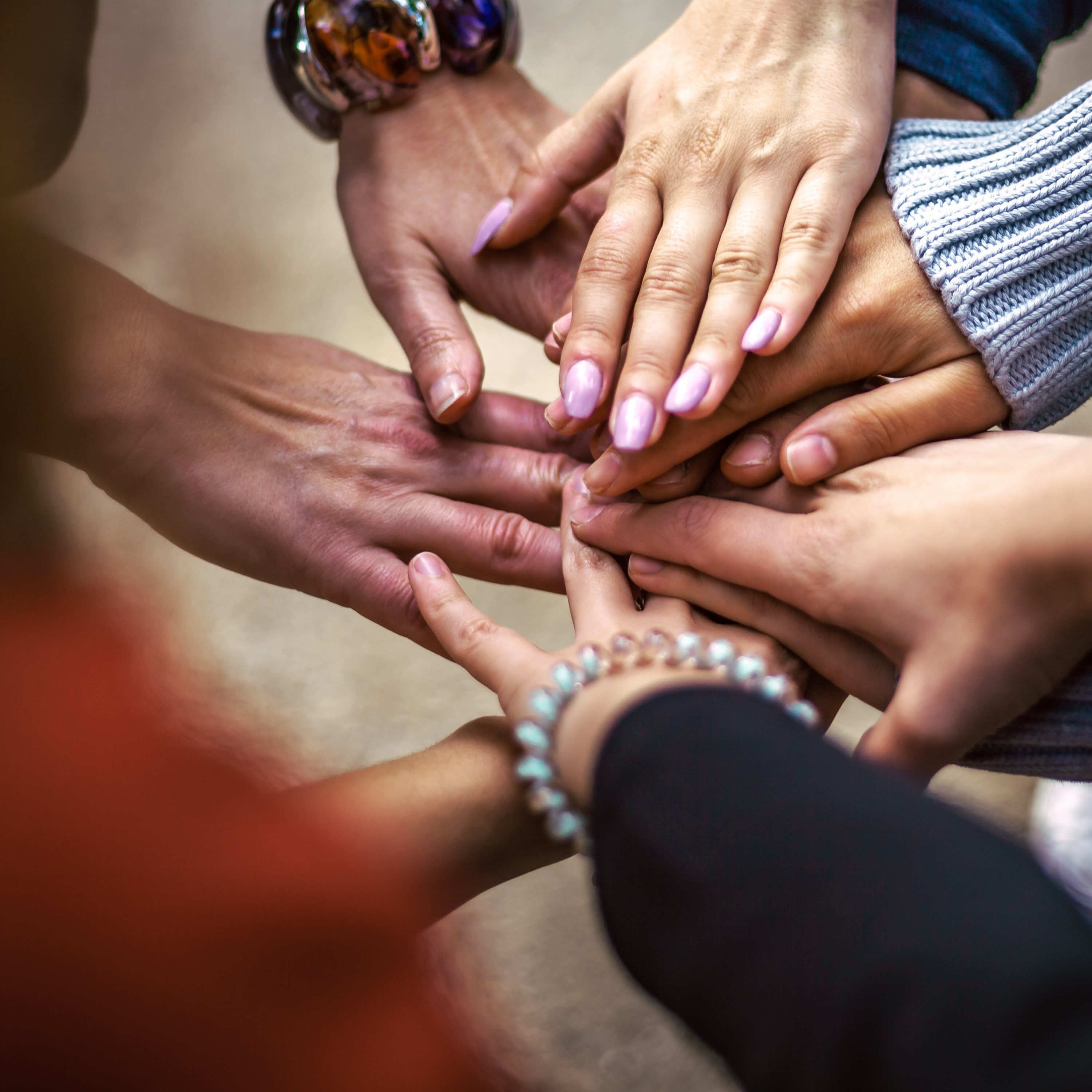
Diane Martinez, an educator at Western Carolina University, redefines community engagement by emphasizing personal connection over formal service. Drawing from her own experiences—beginning with a childhood visit to a nursing home and later a lifelong struggle with finding meaningful involvement—she argues that traditional models of community service create hierarchies and emotional distance by positioning individuals as saviors of the vulnerable. Instead, she advocates for a relational approach where people engage as equals, fostering mutual support and genuine human connection. She highlights everyday, low-key actions—like walking neighborhoods, babysitting, or helping at animal shelters—as authentic, long-lasting forms of community involvement that do not require formal organizations or recognition. Martinez critiques social media participation as superficial and ineffective, stressing that true engagement involves deep personal interaction. She urges educators to move beyond checklist-based volunteerism and instead encourage students to reflect on their motivations and interests, fostering sustainable, meaningful relationships within communities. This shift not only deepens personal growth but also strengthens community bonds through authenticity and reciprocity.
Welcome to Voices in Between, the podcast with international voices on education and diversity.
This is Christoph Knoublow meeting educational experts and discussing perspectives in between
ideas of true and false.
Welcome everybody to a new episode of our podcast Voices in Between.
We have a very special guest today again. This is Diane Martinez from Western Carolina University
and she's going to talk about the term community engagement and community connection. Diane, welcome.
Thank you. So yeah, so at Western Carolina University, I teach technical and professional communication.
And I would say that one of the things, one of the classes that I teach that means a lot to me and is one of the reasons why I'm here in Germany now is environmental writing.
It's one of those things that I want to teach people not just how to write about the environment and nature, but also how to become involved in activities that involve the environment.
So I guess what I'm choosing to talk about today is this whole idea about community engagement, which moves into community connection simply because I find that connection between the environment and people wanting to get involved especially now, especially with all of the activism that's going on.
So I think that the first person who I truly admired who influenced me in the sense of thinking about others was Harriet Tubman.
I was in elementary school and just and I thought that the world was no longer in need of such brave people, but you know, I also, because I was so young, I also thought that if the world ever got that bad again, like I wanted to be brave, like Harriet Tubman.
And so she was somebody who just kind of got me into this mode of thinking about other people. Up to that point, I will even be on that a little bit. I had let a pretty sheltered life in the sense that I hardly ever left my neighborhood.
We just, just not what we did back then, I was not aware of life beyond the 5 or 10 blocks from where I live. And it wasn't until 7th grade that I was introduced to this whole idea about community service and the nuns took us down to a nursing home and told us to just talk with the people in the nursing home.
And I was just on fire when I went there because I was so excited, the old people in the homes, they were making such a fuss about us. They were, you know, almost fighting over who got to talk to you.
And so it was just, it was really exciting. And so I went home and I was just thrilled and I couldn't wait to go back the next week. And so yeah, when we went back the next week, I brought that same energy, that same fire with me.
And just like within a few minutes of walking in the home, it was quickly extinguished because I was told that one or two of the people that I had talked to you the previous week, one had died and one could no longer be seen.
And so it was, it was something that my 12 year old brain just could not get around this whole of roughness of death. And I never went back. I just couldn't, I couldn't deal with that.
And so the nuns told me not to worry. There were plenty of other people in the community that needed help and that I could serve.
And so I tried, like my whole life, I've had these bouts of wanting to be involved in the community in some way.
I don't know if you want to call it activism or if you want to call it engagement, but somehow I always wanted to be involved in the community.
And I did, I volunteered and I looked into organizations like after school programs, the Rotary Club, PTA, I even taught English for a while, but to be honest, like nothing ever fit and nothing ever stuck.
I either felt out of place with the organization, the people in the organization, or I felt out of place with the work. And so I just, I never stayed with anything very long.
And although kind of late in my life, a few years ago, I hit on something that to me has made a difference ever since. And it's something that I share with my students as well. And that's the idea of approaching community engagement with the idea of connection instead of that word engagement and involvement.
And I think it's one because if you see yourself going into a relationship where you are helping somebody else, then you are basically an outsider coming in and you're setting yourself up to like save other people.
And so when you go into a relationship with this idea of I'm coming in and I'm going to help and I'm going to serve, then it also sets up a hierarchy and it lends itself to labels like I'm going to help the poor or the homeless or the unfortunate, you know, the less fortunate.
But if you come to community engagement with the idea of connection, I think what's more important there is that you've taken a closer look at yourself and you've decided that this is something that I want to do and you're going into the relationship as equals meeting in the middle, so to speak.
And so I think that that definitely makes a big difference at least it has for me because things have stuck now that I am doing that instead of looking at formal, formal organizations or, you know, what somebody else has already established.
I'm looking at things that I can do myself.
And so I don't know, I just I also feel like that's one of the things too is that if you're looking for that personal connection, then you don't always have to go through a formal organization.
I think those those organizations serve a really good purpose in a community and they're fine for some people and but it just seems like whenever I talk to students about community engagement, they think about working at the soup kitchen or handing out food at the food pantry.
And those things are vital, I mean, we need those in the community, but they're not the only way to help.
And I think that that's the main thing is just letting people know it's okay that you don't have to go through a formal organization.
You don't have to even be formally recognized in your community connection if that's what you, you know, choose to do there.
So I think it's important first of all to reflect on what it is that you're interested in and what it is that you want to get involved in and why you're doing it.
Unfortunately, I've met a lot of people where it's a check box for a college application or for a course. And if that's what it is, then, you know, that's your business and you should do whatever you want to do. But I think you might want to think about what it is that, you know, you're giving and what you're getting if you're entering into the relationship like that.
And the other thing I want to say too is that this whole idea about social media being used for community engagement, liking a post, I think that's supporting a cause, but it's not community engagement.
So I don't know. For me personally, I don't think that that's something that you can kind of count as community engagement. If that's the way you kind of want to look at it. But like I said, I think it's important to look at this connection that you can make with somebody else.
And there is many ways to connect with individuals in your community as there are people in the community because we are all individuals. Like I said, if you are somebody who works best with some kind of formal organization, then you should go ahead and do that.
I mean, I've done that too. I care about voting and politics. And so I signed up to, you know, to help people sign up to vote and also to work elections. But I have found more to do in the sense of that's kind of off the grid, so to speak.
And I've seen other people do it too, like when it comes to the environment, my neighbors, they take these walks on Sundays and you can always see them walking around the neighborhood with a trash bag and one of those like little claws that you can pick up the trash with.
And, you know, they're not getting any formal recognition. This is not through formal organization. They're just doing it. If it comes to kids and you like kids, you can, you know, after school programs and churches, they always need somebody to help out with the kids and babysitting.
And that's something that I did. I, you know, ran into a couple who were business owners and they were working long hours and their kids, you know, we're getting dinner really late. They weren't able to do their homework. So I took the kids for two days a week.
And what was really interesting in that relationship was not just because I cared about those people, but what I found within two weeks was that it was very lonely.
time in my life and they eased the loneliness and actually got me out of the
loneliness and so it was actually really one of those like give-and-take kind of
relationships and the same can be said for animals you would be surprised at how
many animal shelters do not have the staff who can walk dogs they have the staff
to be able to take care of dogs but not like walk the dogs and again what a great
way to kind of like ease loneliness not just for the dogs but like for yourself to
so I guess what I'm trying to say here is that I think it's important that you
know to find someone or something in the community that interests you and that
you connect with it like I said it's not necessarily looking for that
engagement but looking for a connection an actual personal connection
something doesn't have to already exist in the community like I said through
more organization you can make that connection yourself and I feel like these
are some of the most transformative activities that can take place within a
community because those relationships are authentic and they have a
profound effect on others as well as ourselves and they often last a lot
longer too do you see any ways for the education sector to become more
connected or engaged to the community yeah I mean I do think that that the
education sector is one of those things where it can introduce you to this
idea of community engagement but I think it needs to go beyond this idea of
getting credit for a class or being a checkbox for something like I said with
my experience you know just them even taking me into the nursing home that was
my first experience and from there I you know did all kinds of trial and error
but I did things on my own so I do think that if anything it's the idea of
introducing people into the things that they can do in a community but I think
it should be also left open for this whole idea about connection and actually
ask students to be more reflective instead of just rushing out and saying oh
I'm going to volunteer 12 hours for this book fair you know that kind of thing
Diane thank you so much for these new insights into community connection
community service community engagement it's great having you here thank you very
much thank you nice to be here thanks
thanks so much for listening look and forward to meet you back on voices in
between
Podcast Summary
Key Points:
Diane Martinez emphasizes shifting from "community engagement" to "community connection" as a more authentic and sustainable approach to involvement.
Her personal journey began with a childhood experience at a nursing home, where she felt excited but overwhelmed by the reality of death, leading her to avoid formal service for years.
She argues that traditional models of community service often create hierarchies and label people as "helpless," while connection fosters equality and mutual support.
True community connection can happen outside formal organizations through personal actions like walking neighborhoods, babysitting, or helping at animal shelters.
Social media support, such as liking posts, does not constitute genuine community engagement and lacks the depth of personal interaction.
Students and educators should reflect on their motivations and personal interests before entering community activities.
These personal, reflective connections are more meaningful, lasting, and transformative than formal volunteering.
The education sector has a role in introducing students to community involvement but should promote reflection and individualized connection over checklist-based service.
Summary:
Diane Martinez, an educator at Western Carolina University, redefines community engagement by emphasizing personal connection over formal service. Drawing from her own experiences—beginning with a childhood visit to a nursing home and later a lifelong struggle with finding meaningful involvement—she argues that traditional models of community service create hierarchies and emotional distance by positioning individuals as saviors of the vulnerable. Instead, she advocates for a relational approach where people engage as equals, fostering mutual support and genuine human connection.
She highlights everyday, low-key actions—like walking neighborhoods, babysitting, or helping at animal shelters—as authentic, long-lasting forms of community involvement that do not require formal organizations or recognition. Martinez critiques social media participation as superficial and ineffective, stressing that true engagement involves deep personal interaction. She urges educators to move beyond checklist-based volunteerism and instead encourage students to reflect on their motivations and interests, fostering sustainable, meaningful relationships within communities.
This shift not only deepens personal growth but also strengthens community bonds through authenticity and reciprocity.
FAQs
Community engagement often involves helping others in a hierarchical, service-based way, while community connection emphasizes mutual, equal relationships built on shared values and personal interactions.
Her visit to a nursing home in seventh grade sparked a passion for community service, though the emotional impact of death caused her to withdraw. This experience taught her the importance of personal, reflective engagement over formal service.
She argues that meaningful connections can be made through everyday actions—like walking the neighborhood or babysitting—without needing formal recognition or institutional structures.
No, Diane believes that social media support, like liking a post, shows support for a cause but does not constitute true community engagement or connection.
Self-reflection helps individuals understand their motivations, values, and what they truly want to contribute—leading to more authentic and lasting connections with the community.
Yes, Diane emphasizes that personal connections—such as walking dogs, helping with homework, or spending time with neighbors—can create deep, lasting bonds that go beyond institutional involvement.
Chat with AI
Loading...
Pro features
Go deeper with this episode
Unlock creator-grade tools that turn any transcript into show notes and subtitle files.
 PodcastTranscript AI