From Beatles break-up to John’s murder, a look at Paul’s transformation
45m 3s
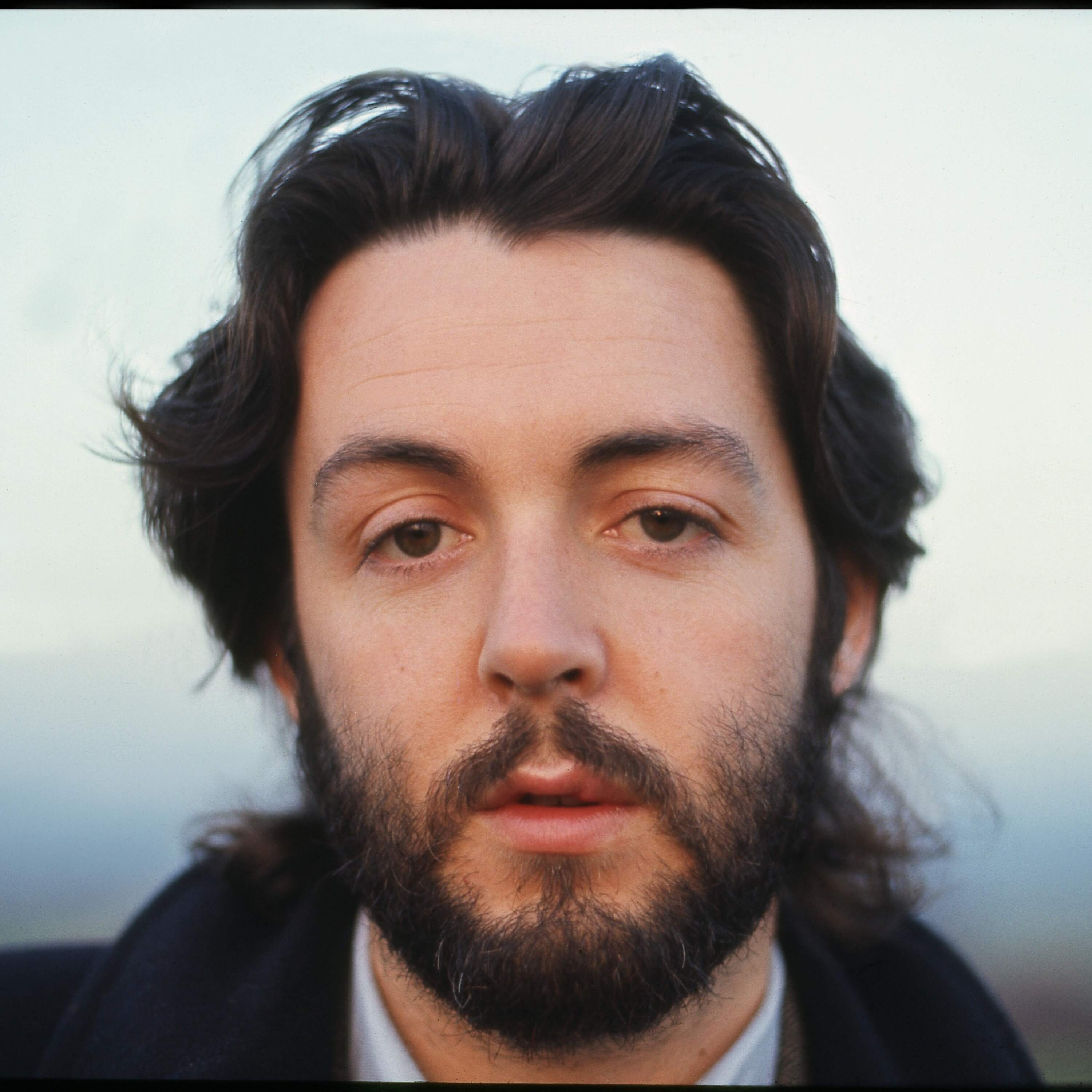
The documentary "Man on the Run," directed by Oscar-winning filmmaker Morgan Neville, chronicles a pivotal and often overlooked period in Paul McCartney's life following The Beatles' breakup in 1969. At age 27, McCartney grappled with a profound identity crisis after the band that defined him since his teens dissolved. The film immersively explores this era using rare, intimate archival footage—much of it from Linda McCartney—and audio-only interviews to maintain a present-tense feel. It depicts McCartney's retreat to a remote Scottish farmhouse with his new family, where he began writing songs as a form of therapy, leading to his solo album and the creation of Wings. The narrative complicates the public perception that blamed McCartney for the split, revealing his grief and his efforts to keep the band together. It also traces his deliberate, gradual return to performing, starting with unannounced university gigs to rebuild his confidence away from The Beatles' colossal shadow, and examines his enduring, brotherly connection with John Lennon despite publicized tensions. The film ultimately portrays McCartney's journey to redefine himself as an artist and individual beyond the legacy of the world's most famous band.
Support for NPR and the following message come from the William and Flora Hulett Foundation, investing in creative thinkers and problem solvers who help people, communities, and the planet flourish. More information is available at Hulett.org. He also directed documentaries about Fred Rogers, Anthony Bourdain, and Orson Wells, as well as many prominent musicians, and has won an Oscar, Emmy, and Grammy. Morgan Neville spoke with Fresh Air's Anne Marie-Baldonado. Chances are Morgan Neville has made a documentary about music that you love. He won the Academy Award for Best Documentary Feature and the Grammy for Best Music Film for 20 feet from Stardom, his portrait of the backup singers whose voices help define rock-and-pop music while remaining largely invisible. His latest film is about one of the most visible musicians, Paul McCartney. If I hear someone damning Paul McCartney, I tend to agree with them. So when everyone was saying I broke up the Beatles, and I was just overbearing and all of that, I kind of brought into it. I thought that's the kind of bastard I am. It leaves you in this kind of no man's land. But the truth, John had come in one day and said he was leaving the Beatles. He said it's kind of exciting. It's like telling someone you want a divorce. The film, "Man on the Run" covers a time in McCartney's life that isn't often the focus. His life around the breakup of the Beatles, he was newly married to Linda McCartney, and he was trying to figure out who he was as a musician and as a person, without his partnership with John Lennon, without the band that defined him since he was a teenager. Morgan Neville got access to previously unseen archival footage. We see McCartney in home movies with his young family, in the remote farmhouse in Scotland where they retreated. We see him working on his early post-Beatle songs, and on the road, and on stage with his new band Wings. You may think you already know a lot about the Beatles, but chances are, you'll still learn from "Man on the Run," which features new interviews with McCartney, his daughters, John's son, Sean O'Neill, and other heavyweights like Mick Jagger. Morgan Neville's other music documentary subjects include Ferell, Yo-Yo-Ma, Hank Williams, Bono, Keith Richards, and Johnny Cash. Morgan Neville, welcome to Fresh Air. Hi, great talking to you. Can you tell us about some of the archival materials that you had access to? I mean, it's crazy how much rare footage there was, a lot of it never seen before. Some home movies capture very intimate moments. Yeah, I mean, the good thing is that Paul married a photographer. Linda McCartney, she not only took photos of everything, but they had home movie cameras, and they documented a lot of their life. Even though they were living this rural farmer's life in Scotland, they sure took a lot of photos and footage of it, and the texture of that life was just amazing to kind of see what they created and live in that world. And it's part of the decision I made to not have on camera interviews to do it all with audio, was that the archive was so amazing that I just felt like I could be immersive in it. Right, you had new interviews that you did with people, including Paul McCartney. You spoke to him a bunch of times, but we don't see them on screen. We just see the archival footage. Did anything else go into that decision to keep it audio-based? I mean, a few different things. It's like the two of us talking right now, you know. There's nobody else here. It's just us. You know, we can have this casual conversation, and it's intimate, and it's just different when you put cameras in people's faces. And on top of that, in filmmaking, when you don't have older people looking back on their 50-year younger self, then the film becomes less retrospective and more present tense. So suddenly, the film is a time period you're living through, and you never break that spell. And I kind of loved what that did in the story telling. And on top of that, I said to Paul, you know, is there a moment at the very end where we see you today? And he said, "I don't want to be an old person and a young person's story." And I thought that was very wise, and I couldn't argue with it. So I completely understood. Near the beginning of the film, you put text on the screen that reads, "Fall 1969. John quits the Beatles, but nobody knows. Paul disappears. He is 27 years old." And that struck me as something, you know, we have to remind ourselves. The Beatles are the biggest band on the planet, and Paul is 27 years old. They've recorded all the music that is ever going to be Beatles' music. By that point, they're such young men. It's incredible to realize how much they had done by that time. And Paul has only known being a Beatles. I mean, since he was 15, that was his life. So, when you go through that, it's hard to even imagine what it would have been like going through being a Beatles. Nobody had ever done it before, since maybe Elvis. But the Beatles and what they did and how they shape culture, it was just unimaginable before or since. And here he is, a 27. And he's the one that wanted to keep the band together. John Lennon says it in the documentary, but Paul's the one that's really kind of pushing to get them to keep making music. And just in 1969, they record Let It Be, but that's January of '69. He gets married. They record Appy Road, the, you know, in the spring and early summer. It comes out in August. He has a baby, Mary in August. The Beatles break up in September and he moves to Scotland by October 1st. So, when you're functioning like that, and then suddenly you just hit a wall and it's over, there's just a sense of grief. And I think that is absolutely what Paul was dealing with. And that's the moment I went to begin the film, you know, which is Paul is just suddenly at a loss to know anything about himself. Who am I if I'm not a Beatles? And now he's a father and a husband. And he says, in the first interview he gives with a release of McCartney One, when they ask, what are you going to do now that you're not a Beatles? And he said, my only plan is to grow up. And I thought, well, that's a great place to begin a film. Well, Paul ends up being the band member that announces that the band has broken up, even though John was the first person to sort of announce it to the group internally. And he has to do it publicly because he wants to move on, because he wants to make music. And he ends up being the person like on paper that causes the breakup. Oh, yeah. You know, that was kind of the idea that the public had that Paul was the one who sued the other Beatles. And he quit the Beatles as the headlines say because he announced it first, even though, you know, John had left the Beatles. But, you know, just the PR side of it was a nightmare. And I think Paul hated having to go through that. You know, I mean, this was an incredibly painful period of time, which is why I don't think he's talked about it much. As the band was breaking up, Paul and Linda moved to a small farmhouse in Scotland. Let's hear a little bit from the film, which features archival footage of Paul and Linda singing and descriptions of the farm. It was just as if we've been plonked into this new life and we just have to figure it out. And I say, well, let's just go get lost. Just get away and go back to the beginning. We'd had a baby, Mary, and then we've had a five-year-old. So I adopted her and I started making music again. I love doesn't get. That's a scene from the film, "Man on the Run." Yeah, so was at this point where he started writing music again. And what did Paul, from your interviews, what did you learn from Paul about that process? I came starting to write on his own. I mean, he had been writing Beatles songs somewhat on his own, but he was writing them for the Beatles. So now he wasn't. Now he was writing them for Paul McCartney, well, who's Paul McCartney as an artist? He has an acoustic guitar and an upright piano. So he's starting to figure this out. Really, in the beginning, he's just experimenting. He gets
a four-track machine installed in his house, which now that's very common. It has been for a while, but back then nobody had a four-track machine. Paul would take the microphones and plug them directly into the back of the machine with no mixing board. To make these little charts of how to record songs, sometimes he'd just be improvising. Just singing about what his life was, which was his new family, his wife, the farm, and he starts writing all of these songs, which, as Paul says in the film, it's the best form of therapy that there is, because song is where you get to understand how you feel. The songs tell you and help you process how you're feeling. He ends up putting together this whole batch of songs very casually until, at the very end, he has the idea for one more song, which is the song "Maybe I'm Amazed," which he goes into Abbey Road and does a proper job on, I guess, though he plays all the instruments himself still at Abbey Road. But I think he knew that song, needed special treatment. Well, let's hear a little bit of that song. Here's "Maybe I'm Amazed." "Maybe I'm Amazed" to where you loved me all the time, and maybe I'm afraid of the way I loved you. "Maybe I'm Amazed" to where you moved me out of time, and hung me online. "Maybe I'm Amazed" to where I really need you. "Maybe I'm Amazed" to where you loved me all the time, and hung me online. [music] "Maybe I'm Amazed" from Paul McCartney's solo album, released in 1970. What did Paul McCartney tell you about writing this song in particular? I think that there's something in that in the film. Yeah, I mean, the song is really a thank you to Linda. You know, and again, it's so interesting. You know, because Linda has always been a very two-dimensional character in the world, because she didn't give many interviews at all, and she was vilified, you know, as Yoko was vilified. And it's interesting that, you know, John and Paul both married these very strong women who were artists in their own right. Linda was a photographer, who were a little older than them, who were divorced and already have children. And they start making families and music with them. So they become partners because they needed some kind of ballast for themselves. And, you know, Linda becomes kind of the center of his life, you know, both as his wife, as a musical collaborator, which is really her role as kind of his first audience. Let's talk about the formation of the band Wings after playing with Linda. Paul decides to bring in musician, Denny Lane, and other musicians to start recording. And it seems like Paul wants to be in a band again, you know, he wants to play. And just a reminder that, you know, the last Beatles tour ended in 1966. After that, essentially, they were playing music in studios. So as Paul starts Wings instead of playing big stadiums, they go on a bus and tour universities. They would just show up and play. Yeah, it was a van. It was a van, you know, with a U-Haul trailer with their gear in the back and they would drive around England and show up at universities and say, you know, we've got Paul McCartney in the car. Do you fancy him playing at lunch? And they wouldn't believe him and then they'd walk outside and Paul would be sitting in the car and they'd say, "Okay, yeah, we'll do that." And for 50 Pents, students would come and watch Wings. This is the first Wings tour. Now, this is an idea Paul had actually pitched to the Beatles. You know, Paul, I think more than any of the other Beatles loved performing and missed performing. It was something that he still loves. He's still tours. It's just shows that Paul loves that relationship with a live audience. And he feels like that's the ultimate destination of a song. That a song is written privately, somewhere. It's recorded. It's listened to. But then when it's delivered face to face with an audience, that's its final place. So, Paul's the one that, from the beginning, is thinking, "How do I start playing again?" You know, and touring with the Beatles at the end was impossible. You know, they're playing for stadiums of screaming girls. And they couldn't hear themselves. You know, it was just, it was madness. So, you know, Paul gradually puts a band together, largely because he needs a band to perform with. And just starts playing slightly larger venues. You know, he's getting offers from the beginning to go play "Metism Square Garden." But he's playing small theaters in England and Europe. For years, avoids going back to America because he knows America is kind of the place where it has to be fully actualized. You know, whatever his band is and whatever this tour is, it has to be big. And so he spends years kind of building back towards that point. But by starting at like bar/university level first, working it out there. Exactly. And, you know, so he starts wings, you know, with Denny Lane, who had been in the Moody Blues, who he knew, and a couple other musicians, Denny Siwell and Henry McCulloch, who had played with Joe Cocker. And they were a great band. But these guys initially thought, "Oh, we're going to be in Paul McCartney's new band." And Paul kept saying, "You know, I'm just going to be the bass player and we're all going to be in it together." And so they end up moving up to his farm in Scotland and, you know, hanging out with sheep and, you know, kind of living this rural life. And Paul's resisting playing big shows for a long time. And it's part of what starts to cause the friction in wings right from the beginning. The 1973 Wings album, "Ban on the Run" is more successful and causes the band to tour the world. It's a different lineup at this point. But wings becomes a touring band and Paul starts performing for large numbers of people. And, you know, I can imagine being Beatles fan in the 70s wanting to hear Paul play Beatles songs at a wing show. And then being disappointed to not hear any because, you know, when they first started, he wasn't doing that. But eventually he did start playing them. Here's another scene from the documentary with a bit of a news broadcast at the time and then an interview with Paul. The McCartney show is getting two on-core calls a night and the highlight every concert is yesterday. At one time in Wings tours, Paul refused to do any Beatles songs. Now with most of their legal troubles behind him, McCartney was comfortable selecting Beatles tunes for the Wings show. I'll tell you the truth, it was too painful. It was too much of a kind of trauma. It was like reliving a sort of weird dream during a Beatles tune. That's a scene from the film "Ban on the Run". It's interesting what Paul says there about playing Beatles songs. I don't know if that's a new interview or an archival one, but I was wondering what Paul says about that transition now. Yeah, I mean, it was, that is an archival interview. You know, that Paul, not just in the live shows, which, you know, he doesn't do Beatles songs for a while, then finally, when they're doing the big global tour in the mid 70s, he puts in a handful of Beatles songs in the middle of the set. You know, which people are all just waiting for, dying to hear the songs played live. But, you know, Paul is consciously trying not to do Beatles music, Beatles sounding music, particularly in his first few records. You know, self-consciously taking songs that sound too much like the Beatles and changing them or not recording them. So, he's running away from that shadow. He's trying to find distance. And, I mean, that's why I call that "Ban on the Run" is that it's a shadow you can't escape from. But it's something that he feels like he has no choice but to try and find that separation. And, you know, I think what you see in the documentary also is that every concert, every interview, all people are wondering, "Are the Beatles going to get back together? Would you ever play another show? Would you make more music?" You know, people are still just comparing everything constantly to the Beatles. Even when Paul goes to play for a couple of nights in Madison Square Garden every night they're having live Beatles broadcasts. Will John show up? You know, I mean, on the hour it is a news story that people just can't accept wings as wings. They are always going to measure it against the Beatles. and for Paul.
hugely frustrating, you know, saying, you know, can't I prove myself on my own? You know, and it's just something that he, he grapples with throughout the entire decade until, until everything changes. Well, let's take a short break here and then we'll talk some more. My guest is Oscar Grammy and Emmy Award-winning documentary filmmaker Morgan Neville. His new documentary is called Paul McCartney, Man on the Run, about Paul McCartney after the breakup of The Beatles. More after break, this is Fresh Air. This message comes from Sports in America with David Green. The world of sports is filled with stories that go beyond the highlights of the game. Join former Morning Edition host David Green for Sports in America from WHYY and PRX. A weekly show featuring in-depth conversations with Star Athletes, Coaches, Parents, and the millions of fans whose lives are touched by the game. Hear about the personal and transformative moments that make fans want to stand up and cheer each week on Sports in America with David Green. Listen wherever you get your podcasts. Support for NPR and the following message come from the William and Flora Hewlett Foundation, investing in creative thinkers and problem solvers who help people, communities, and the planet flourish. More information is available at Hewlett.org. I think the public always felt so invested in Paul McCartney and John Lennon's relationship. And people often have the opinion that during the 70s, John and Paul were at odds. But your film complicates that and reminds people that they were in touch throughout this time. Yeah, I mean they were both at odds but also connected. I think obviously at the beginning of the 70s they're all just trying to separate. So there's a distance, they all want to feel the difference. And of course, then with the business troubles, they are just increasingly tense with each other. Certainly in the press, always trying to kind of pit them against each other. And Paul writes a song called Too Many People on Ram, which has some kind of veiled references to people preaching practices. Talking maybe about John's kind of lecturing and his kind of political activism in a way that's maybe too much. And John comes back with a song called How Do You Sleep, which is not veiled, which is a very harsh, almost kind of character assassination song. And saying the only thing you did was yesterday. And it's tough, but then you see even at that moment that there's still just almost fighting like brothers. I used several clips in the film where even when they're fighting John refers to Paul's as best friend or as his brother, that they had this connection that allowed them to do that. And they would still, particularly as the business stuff started to settle down, they would get together more and more. Paul always had this deep connection to John, which I saw. I didn't know how Paul would be talking about John. And he loved talking about John. In fact, when I went to Paul's house for one of the interviews, I was led in into his house. They said, "It'll be back in a while." And so I'm just kind of looking around Paul's living room. You're standing in Paul McCartney's living right? Yeah, by myself. And I look on the wall, and there's a drawing by John. And Paul comes in and I said, "I just noticed you've got this John drawing." He said, "Oh, let me show you something." And we go on the hallway. And there are many drawings by John. And he said, "I was sitting across from John when he drew some of these." And I just felt like this would be a good home for them here. And he just was staring at them with such love that I got the chills. John was his best friend. It will always be his best friend. And so to talk about John is to keep him alive and keep him in his heart. And I think the complication of it is something that all of us, you know, are trying to pack, but it's something that underneath everything has to be loved. You interview Paul's daughters and John's son, Sean. And they talk in touching ways about those years and how they would get together. Can you share some of the things that you learned from those interviews? Yeah, that their memory of visiting each other, the times that the families got together were very warm. You know, Mary, Paul's daughter talks about going to visit the Lennon Onos at the Dakota and how warm it was. Sean told me stories, even other stories that aren't even in the film, just about times, even later, when Paul and Linda would come. And particularly how Linda was such a you know, Paul and Yoko obviously had history at times, but how Linda was the one who could always make it smooth and loving and and remind them of that. But I think that stage of their relationship was something that meant a lot to them. I mean, Paul, you know, it's told the story many times that, you know, they'd later on when John was not recording music in the late 70s and kind of becoming the house husband, you know, that they would talk about, you know, baking bread and, you know, very domestic kinds of things. You know, and John had a new young son at that point. And so I think being fathers, being older, you know, that some of those some of those frictions just melted away. You know, there was often criticism of Paul's solo albums and his work with Wings, but there's also a sweet moment when Sean Lennon talks about how worn their copy in their house of McCartney's first solo album was. So, you know, even though you also feature in the documentary footage of John publicly, maybe criticizing or saying that the music could be better, um, Sean in an in an interview with you reveals that actually the album got a lot of play in their house. Yeah, which I love that detail, you know, and and I'm sure of it, you know, and and vice versa for Paul with John's music. You know, I think they were always paying attention to what they were doing. And, you know, otherwise you see people asking John about Wings albums and and John, you know, becomes more generous with time and kind of understanding. And he knows Paul's a musical genius that he has the capability of writing great music. Yeah, I mean, one thing that's for sure throughout the documentary is like, how prolific he is. It's crazy. It's almost like he just needs to. It's like constantly coming out of him. Yeah, I mean, puts out 10 records in 10 years. Um, but on top of that, he's doing all kinds of side projects. Um, I mean, he is somebody who needs to be doing something. I asked him about it, you know, I said, are you a workaholic? And what he said to me is, well, you don't work music. You play it. So, I think I'm a playaholic. And and I think that's true. I mean, to this day, Paul McCartney is probably making music today, you know, and every day. I mean, that's what he still does because that's that's how he expresses himself. And and I get that, you know, I, you know, if I was Paul McCartney, I'd make music every day too. My guess is documentary filmmaker Morgan Neville. His new documentary is called Man on the Run about Paul McCartney after the breakup of the Beatles. More after a break, this is Fresh Air. The film also covers Paul's first public reaction to the murder of John Lennon in 1980, which is something that was misinterpreted maybe at the time. Can you talk about that? Yeah, I mean, the kind of public perception of it was that Paul had been kind of confronted by news crews on the sidewalk in London the night after John had been killed. And Paul had just come out of a studio and they're saying, what do you think? And it's his first public statement. And he says, you know, it's terrible, you know, it's a drag, isn't it? And then he gets in a car and leaves. The headlines in the newspaper the next day in England were, it's a drag says McCartney about Lennon's murder. And it's, you know, perceived widely as very insensitive. In the documentary, Stella Paul's daughter told me a story I've never heard of Paul actually getting the call that morning from America about John's death.
and the biggest reaction she had ever seen in him walking outside and just being emotionally devastated. And then we see the footage of the news crew footage and Sean then unpacks it in this very kind of, you know, loving way of kind of understanding that Paul, like all of them, like the world was completely in shock and unable to process just the tragedy of it. I mean, I think it took Paul, you know, many, many, many years to process that loss. I mean, I think for everybody, you know, even for myself. But Sean then says, you know, for him, for all of them, it was the real growing up moment. It was the moment where nothing would ever be the same again. And it wasn't. I mean, it's why I chose Dan to film there is I think, I think Paul completely changes at that moment. I think the Paul McCartney of today begins at that moment in a way that no longer is Paul running away from his past and trying to reconcile who he is as a solo artist or his wings or his the Beatles. He can just be Paul and from that moment on, wings are no more. He never records or tours with him again. He starts recording his Paul McCartney. He starts working with George Martin again and Ringo and just kind of embraces all of it. And he doesn't have to, doesn't have to create a wall between himself and that past. And we're talking about how he obviously hadn't processed the information in that moment when he's interviewed. But, you know, it's like 35 years later. No, 45 years later. And in some of the interviews you did with him, it seems like he's still processing him. Without a doubt. I mean, I think in a way, Paul making this documentary was a way of coming to terms with that whole period because I think he had buried a lot of his feelings about this period just because they were painful. And I think putting the film together, talking about it, you know, and having these deep conversations about it and then watching whether other people said about it. I'm sure for him hearing what Sean said about it and understanding, you know, where Paul was in that moment is so kind of so loving that I know this film makes Paul emotional because I've seen it and he's told me that and showing him the film for the first time. He just, he was very emotional and very touched and then he keeps watching it, you know, almost immediately. He said, I want to show it to my whole family. And so he arranged this screening with his entire family, including his, you know, grandchildren, all the grandchildren and extended family friends. He invited me and my family and it was an incredible, incredible night because we screened the film, you know, I'm sitting behind all the grandchildren and one of them says, I've never heard my grandmother's voice before, meaning Linda, which I just found so touching. And then one of the other grandchildren said later, I didn't know grandpa went to jail because I guess they don't talk about Paul's Japanese pot bust around the family reunions. But, but again, I feel like what he went through in that decade was hard to explain and I think this film helps Paul explain it even to people he loves. Can I ask a little bit about your next film, a documentary called "Lorn" about Lord Michael's the creator mastermind behind Saturday Night Live and so much other comedy. You produced a documentary series about SNL last year to mark the 50th anniversary and for SNL fans or even just casual fans, they're great documentaries that break down the audition process, casting process, what goes into writing the show. That series is wonderful and features so many interviews with cast members and staff. But the new doc is about "Lorn" himself. How did that film come about? It's interesting, I've not talked about this at all because it hasn't come out yet, but I'll tell you that I met with Lauren about several years ago and knowing a couple of years before the 50th anniversary that they wanted to do some documentary kind of thing. Lauren said, "Think about it." Very quickly I said, "Well, what you should do is a series of different films." Rather than trying to kind of chapterize the story of SNL or just do endless clip shows, they've done that a lot. I said, "Well, why don't we make standalone little films?" I said, "Why don't you come to New York on a show week next week and pitch me?" So I think I'm going into a meeting with Lauren Michaels at "Saturday Night Live" and I walk into his office and there are 15 people in there and it's all the senior writers and senior producers at "Saturday Night Live." He said, "Okay, Morgan, you've got some ideas to tell us." Suddenly I'm pitching a room of people who are very used to being pitched ideas. That's their norm. That's their norm. That's their normal condition. I'm not Will Farrell. I'm like, "Okay." I go and I pitch a bunch of ideas. Like a dozen ideas. One of them is a documentary about Lauren. Anyway, I finished this pitching really for like 20 minutes I go. At the end of it, I sit down and nobody says a word and I turn to Lauren and say, "What do you think?" He turns to one of the producers who looks like she does not want to be called upon and she says, "Garoline, what do you think?" She said, "Why thought there are some good ideas?" She said, "Well, I think I'm going to do some small talk and then the meeting is adjourned and I walk out and I turn to one of his producers and say, "What just happened?" He said, "Oh no, he thought it was great." I had that story I've heard all the cast members say about, "Did I get the job or not?" Once we actually got into what the films would be, he said he was open to doing a Lauren documentary. He said, "If I'm going to do the Lauren documentary, it can't be part of this project and you can't have anything to do with it." So we separated it from the herd from those other documentaries and it grew into this bigger feature that I'm doing with focus features and it's coming out in April. I'm very proud of that film. I mean, it could not be more different from the Paul McCartney film, but that's kind of what I like. I'm kind of a method director where I'm trying to have the subject tell me how to tell this story aesthetically and emotionally and in every other way. And Lauren, it's about trying to make a film about the Wizard of Oz. Well, a man on the run has such great archival footage. What can you give us a preview about some of the kinds of footage that you have for Lauren? So there's great kind of early footage and everything else. But the thing that really was working the best was just being allowed to shadow him more and being in the meetings and understanding how the sausage is made and understanding how does somebody like Lauren, how's he blasted 50 plus years now? What is it that he's doing or seeing? And I think the film does really capture Lauren in a way that makes you understand something deeply about who he is and his perspective on culture. But it's so different because Paul is such an intimate story. And I feel like the Lauren story starts as a nature documentary where he's this rare bird I'm trying to film and he's constantly escaping me and I'm just trying to get a little closer and a little closer. And that was the experience of making the film over a couple of years, was just building up enough trust to get closer and closer to finally get a glimpse of what's inside. Lauren and his natural habitat. Yeah, exactly. I can't wait for that one. Morgan Neville, thank you so much for talking with us. Absolutely, great talking to you. Morgan Neville spoke with Fresh Airs and Marie Bull D'Nato. His documentary "Men on the Run" is available on Amazon Prime Video. His next documentary, "Lorn" about Lauren Michaels, comes out next month. After we take a short break, our jazz critic Martin Johnson will review a newly discovered 1982 concert recording by Art Blakey and the Jazz Messenger. It's been released as an album titled "Stressborg 82." This is Fresh Air. Long before jazz studies were staple in many college curricula,
drummer art Blakey ran one of the most prestigious and demanding universities of jazz. His band. Alumni of his groups from Wayne Shorter in the 50s to Witten Marseilles in the 80s could fill the programs for a week's worth of all-star concerts. Blakey's 1982 band, which formed shortly after both Wynton and his brother, Branford Marseilles, left, is less celebrated, but a newly discovered concert recording makes a case for its greatness. That live recording has been released as an album titled Strasbourg 82. jazz critic Martin Johnson says, "You can hear the maturation of the players and the growth of the band." There have been so many extraordinary iterations of our Blakey and the jazz messengers that some remarkable additions have tended to get overlooked. I think that's the case with the 1982 band. Yet like most Blakey bands, it featured future stars, in this case Trumpeter Terrence Blanchard, who's lately found renowned as an opera composer and alto saxophone astounding Harrison, who's become an elder statesman of traditional New Orleans music. The band featured some stellar players who's renowned never-crantz-ended jazz officiant auto-circles, like pianist John Yoneal, heard there on the opening track, and here's a bit of his solo. By the early 80s, the messengers had been an institution for decades, and the new players could create their sound from the lineage of their instrument. Here, on the Benny Goulson Classic, a long came petty, we can hear Blanchard echoing legendary predecessors Freddie Hubbard and Lee Morgan, with just a hint of 70s Blakey stalwart Woody Shaw. And we can hear the band increase the urgency of the tune. Originally a springtime walk in the park, it's now a chilly rush hour commute home. [music] The messengers were still a paragon of soulful, hard-popping jazz, but they were looking in new directions, and they found it with 81, a staple of Miles Davis's second quintet. It's Lucer and more laid back, but a good fit for tenor saxophone-spilly pairs who likely grew up loving those Davis bands. [music] I heard this particular band a lot. I graduated college in 1982 and went to rent for my Manhattan apartment in a mirror of $140. I had time to immerse myself in the jazz scene. Blakey was everywhere. The downtown jazz clubs, uptown hangouts, outdoor shows, today's virtuosals must marvel at the itinerary. It meant that the band could shadow box on Blakey war horses like Blues March and Monon, and fight the past to a draw. Those tunes were crowd pleasers, but the real fun was in the newer wrinkles. Pressboard G8-2 shows that the Blakey bands never stop pushing the envelope. Martin Johnson writes for the Wall Street Journal and Downbeat. He reviewed Strasbourg G82 featuring a newly discovered 1982 live recording by Art Blakey and the Jazz Messengers. Tomorrow on Fresh Air, our guest will be actor Del Roy Lindo. He's earned his first Oscar nomination after 50 years in film and theater for his role as a blues musician in Ryan Kugler's film "Cinners." I hope you'll join us. To keep up with what's on the show and get highlights of our interviews, follow us on Instagram at NPR Fresh Air. Fresh Air's executive producer is Sam Brigger, our technical director and engineer is Audrey Bentham. Our interviews and reviews are produced and edited by Phyllis Myers and Rebouldinato Lauren Crenzel, Theresa Madden, Monique Nazareth, Thia Chaliner, Sison Ycundi, Anna Bauman, and Nico Gonzalez Whistler. Our digital producer is Molly Seving-Nesper. Roberta Shorock directs the show, our co-host is Tanya Mosley. I'm Tariq Rose. More information is available at Hewlett.org.
Podcast Summary
Key Points:
The documentary "Man on the Run" focuses on Paul McCartney's life immediately after The Beatles' breakup, exploring his personal and professional identity crisis.
Director Morgan Neville uses extensive, previously unseen archival footage and audio-only interviews to create an immersive, present-tense narrative.
The film details McCartney's retreat to a Scottish farm with his new family, his therapeutic songwriting process leading to solo work and Wings, and his struggle to escape The Beatles' shadow.
It highlights his complex, enduring bond with John Lennon and the public perception that unfairly blamed McCartney for the band's dissolution.
The documentary shows McCartney's deliberate effort to rebuild his career from small, intimate performances back to large-scale success on his own terms.
Summary:
The documentary "Man on the Run," directed by Oscar-winning filmmaker Morgan Neville, chronicles a pivotal and often overlooked period in Paul McCartney's life following The Beatles' breakup in 1969. At age 27, McCartney grappled with a profound identity crisis after the band that defined him since his teens dissolved. The film immersively explores this era using rare, intimate archival footage—much of it from Linda McCartney—and audio-only interviews to maintain a present-tense feel.
It depicts McCartney's retreat to a remote Scottish farmhouse with his new family, where he began writing songs as a form of therapy, leading to his solo album and the creation of Wings. The narrative complicates the public perception that blamed McCartney for the split, revealing his grief and his efforts to keep the band together. It also traces his deliberate, gradual return to performing, starting with unannounced university gigs to rebuild his confidence away from The Beatles' colossal shadow, and examines his enduring, brotherly connection with John Lennon despite publicized tensions.
The film ultimately portrays McCartney's journey to redefine himself as an artist and individual beyond the legacy of the world's most famous band.
FAQs
The documentary focuses on Paul McCartney's life after the breakup of The Beatles, exploring his personal and musical journey as he redefines himself without the band.
The film includes previously unseen home movies and footage from Paul and Linda McCartney's life in Scotland, offering intimate glimpses into their family and creative process during that period.
This approach creates a more immersive, present-tense experience, allowing viewers to feel like they are living through the time period without breaking the spell with retrospective visuals.
He began experimenting with a four-track machine at his farmhouse, writing songs inspired by his new family life, which he described as a form of therapy to process his emotions.
It was a thank-you to Linda McCartney, reflecting her role as his emotional anchor and collaborator during a transformative time in his life.
They started by touring universities in a van, playing small, impromptu shows to rebuild a live performance connection away from the massive scale of Beatles tours.
Chat with AI
Loading...
Pro features
Go deeper with this episode
Unlock creator-grade tools that turn any transcript into show notes and subtitle files.
 PodcastTranscript AI