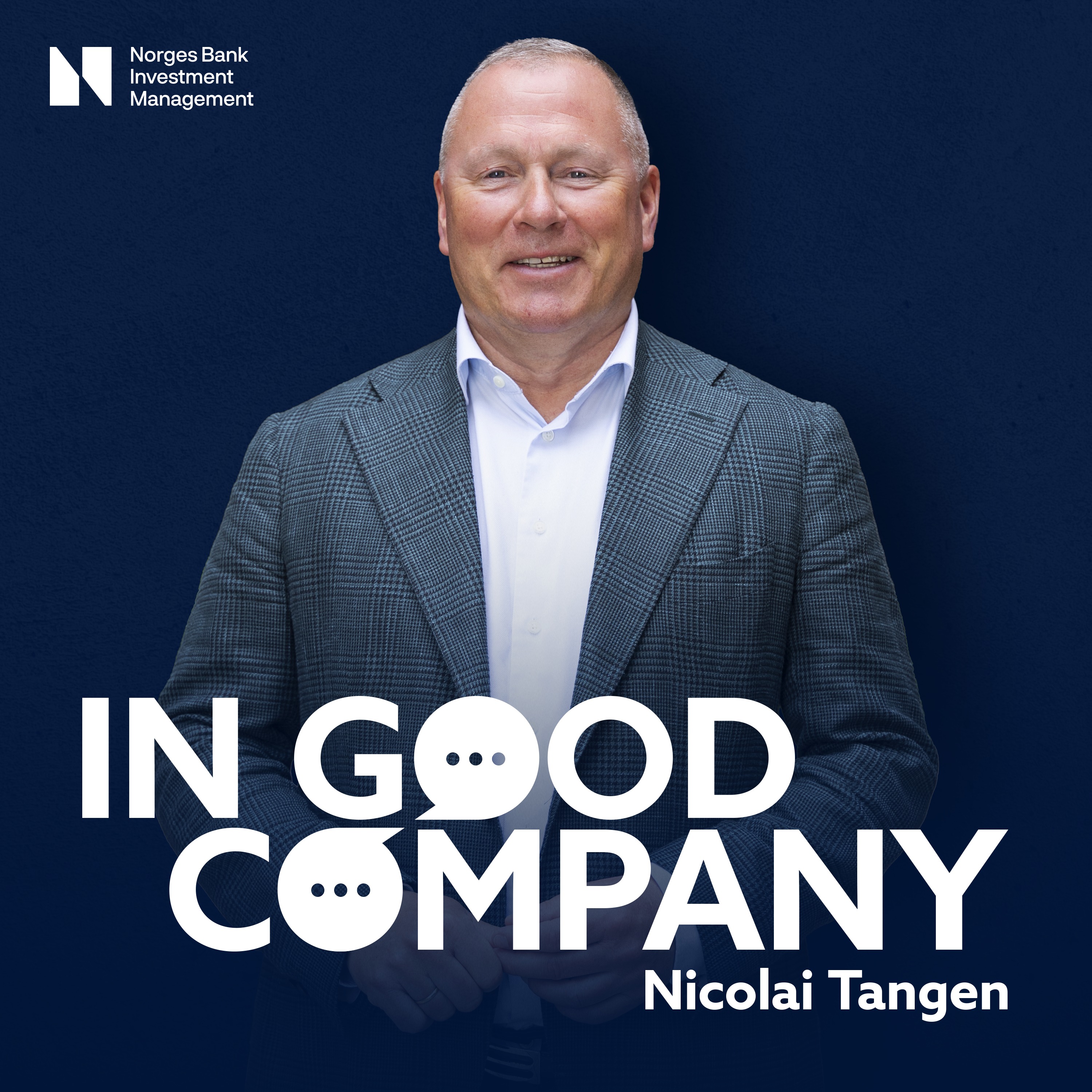
Speaker 1Hi everyone, and welcome back to a Friday Wrap-Up. I'm still Marta Skår.
Speaker 2I'm Nikolaj Tangen.
Speaker 1And this week we will talk about relationships in the modern world, because you spoke to Spencer Raskoff, he's CEO of Match Group, the company behind Tinder and Hinge.
Speaker 2Absolutely. Really fun. And it's interesting because it's the kind of stuff that everybody is concerned about. And we had a lot of input beforehand from people in the organization. And my, do people have opinions about the dating and the dating apps? Another thing which is kind of fun is that he previously ran his own podcast. He was the founder of Zillow, which is a big real estate portal and an online system in the US. And it's kind of fun when you interview people who run their own podcasts, because it's just a different type of dynamics. They are typical. They are typically a bit more snappy, shorter answers, they interrupt back and forth like that. And you'll see the similar type of thing when we interview Scott Galloway, which is coming up soon. We saw the same with Adam Grant and so on. So it's just kind of fun.
Speaker 1Great. Before we start this off, I want to take you a bit back in time. Imagine you are in London. You actually are in London today as well. But it's in year 1695. And then you pick up the vehicle newspaper and there you read this ad. And it says "a gentleman about 30 years of age that says he has a very good estate would willingly match himself to some good young gentlewoman that has a fortune of £3,000 or thereabout, and he will make settlement to content." Do you know what this is, Nicolai?
Speaker 2I think that probably was the first, you know, personal ad.
Speaker 1It is the first ad to find a partner that we know about, at least. And then you zoom forward. Like more than 300 years later. How many of us use the modern version of this?
Speaker 2Well, probably more than, I mean, it's like more than half and increasing, you know, a lot. I think in my mind, what is interesting is that we are now very reliant on it. I've seen the stats more than 40%, I think it's 45% of young men between age 18 and 25 have never approached a woman in person. And so we now do it online. The other thing which I think is interesting is that actually marriages, which started with online dating, last longer. The divorce rate is lower. And so these algorithms for sure have value, you know?
Speaker 1Yeah, they do. And talking about that, because this whole business model is built around an algorithm, and he explained the algorithm as a deck of cards. It's quite the opposite of these old contact ads that had very little.
Speaker 2Basically, the advice he's giving, and of course, you need to listen to the podcast to figure this one out, but you need to put in a lot of context. The more you put in, the better it is. You need to have a lot of pictures of yourself, never have the same sweater on in several pictures, always surround yourself with a lot of friends, because nobody want to date a loser. So you want to date into a person who's got already a lot of friendships. And of course, dog is good. Put in a dog.
Speaker 1You also mentioned that you got a lot of input from the organization. Because you wrote this post to the organization that you met your wife back in the dinosaur age, so you haven't really used it, or you haven't used it. What kind of tip did you get from the organization?
Speaker 2Well, we got all kinds of questions. I think an interesting thing is, is it really in Tinder's best interest to match people early or late? If you match them early, you lose out on business revenues. What he is saying is that. But the quicker you can match people, the better it is, because then there are rumors that this is a really, really good app. And that is more valuable than actually keeping subscribers on for a long time. So that's at least what he is saying. Of course, they never give the amount of women and men. They don't give percentages. I suspect there are fewer women than you think on these apps. But hey, that's a number they don't want to give.
Speaker 1Yeah, I noticed that. And an interesting part to me is also how they. How they adapt to changing human behavior. And you kind of alluded to it when you said that people want to be more social. He said that Jen said they don't even like the word date. They see it as a job interview. They use social scientists to try to adapt to this. Have you reflected on the learnings from what he's saying here?
Speaker 2Well, I think it's interesting. Clearly a very strong trend towards kind of double dates. That you are couples meeting other couples. And that trend was. Was first established in Norway. And has been very strong. It's an interesting phenomenon, right?
Speaker 1Yeah, sure is. And then he took over the firm in 2025. And you also talked to him about that. And what he did back then. He says that he thought the firm had too short-term focus. He focused on the people, the products, and then the profit. How important is that for a long-term success of a company?
Speaker 2For sure, we see that. In so many companies, you really need to go in and work on the culture. Work on motivation, why they are there. Just look at everything from scratch. And then, of course, also look at technology. It's kind of the same thing as we did in the oil fund back when I took over. You go in, you figure out what part of the culture is it that you want to work with? What are your priorities? Don't have too many at the same time. And don't go too fast. And then, of course, work on technology as well, which is what we've done to a very, very large extent.
Speaker 1Yeah. And then one thing I find funny is that you ask him quite a lot of questions that he clearly do not expect. And you tend to do that. Try to come with some surprising questions. What do you get out of a conversation when you do that?
Speaker 2Well, you get away from pre-rehearsed answers. And if they haven't got that particular question before, then they're not going to get it. They really need to think and you get a more honest response. There were some things that I had expected them to have answers for which we didn't have. So clearly the data mining, there is a lot of scope further on data mining. Some companies are really good at data mining. I remember we had a podcast with Zalando, the online retailer. They can basically look at the colors trending in each city in Europe, for instance. So which color is trending up in Milan? Which color is trending down in Berlin? I think that's really interesting. And so when I asked him, you know, is facial hair trending up or down? Well, you need to listen to the podcast to hear his answer. But if you are a man and you are wondering whether you should have facial hair or not, you need to listen to that one.
Speaker 1Okay, so moving over to talk about the markets and what's going on in the fund. You're in London this. What are you up to?
Speaker 2Well, we have had the executive board visiting us in London. It's been really, really great. We've had several days of internal presentations. We have showcased the great people. We have talked about some of the dilemmas we have, both in terms of active management, active ownership. And we also had some great external speakers to highlight some of the things we're doing. So it's been very good, a very, very engaged executive board. So that's been great. Very good. I've also had several, what we call portfolio manager debrief. We sit down for an hour with the various portfolio managers and we go through how they work, their methodology, their portfolio, how they see the upside, downside and so on. That's really one of the most exciting things that I'm doing. Also visited Cambridge University. I love visiting universities, spend time with young people and was interviewed by one of my. two-time favourite journalist, Gillian Tett at the Financial Times. So it's been an exciting week.
Speaker 1To dig a bit deeper down into the portfolio manager debriefs. This is something that some other companies also do. What's the purpose of doing them?
Speaker 2Well, the purpose is to look at methodology because when you are a portfolio manager, you will go through periods of good performance and bad performance. And it's important to be consistent with your methodology throughout these periods. And the more consistent you can be with methodology, the less stressful day-to-day results should be. It's a tendency to be stressed and a bit depressed when you go through periods of underperformance. But the more you can focus in on the process itself, the better it is. And it's nice to talk to people about it because it can be frustrating sometimes and it can be a lonely job, you know?
Speaker 1Yeah, for sure it is. And this is something we then do on a regular basis. And talking about AI because there's been a lot of news around AI agent and how they also made it into the consumer market. Metamuse is one example of that. Agents with this app can basically run your life, right? Book doctor appointments, buy products, etc. It's early days, but how do you see this could impact the established industries?
Speaker 2Well, we've had a couple of news items this week. weak, which can upset industries. Metamuse can upset the banking industry in that it will make people more agile and more opportunistic in how they place their money and so on. So that could upset that. Also interestingly, SpaceX bought some new spectrum, which again can have implications for mobile phone companies. So the technology development and the potential dislocations here in many industries is just accelerating. Moving on
Speaker 1to the last segment here. Raskoff, he grew up around music and his father actually was a tour producer for Rolling Stones and U2. And then his only visit to Oslo was with Stones in 1990. Have you seen some of this band live?
Speaker 2I have not seen Rolling Stones, but I have seen U2 and incredible, incredible. That music is not the main thing in my life. I'm, you know, you can kind of split music in two parts. According to the specialists, you have the artist specific music and then you have the mood music. I'm more into mood music, particular parts of the day. I put on some, you know, I have my barbecue music in the summer. I have my, you know, after having been out on a trip in the forest type music, you know, five in the afternoon in front of the fireplace kind of music. So I'm all that kind of guy. I don't particularly care who plays it, but I'm more into music. So I'm more that kind of guy. So less about
Speaker 1the artist and more about the mood.
Speaker 3That's the way it works for me.
Speaker 1I actually grew up around music. I played the flute and my first real job was as a flute instructor. And you could earn a lot more money doing that than running around with a newspaper. So it's funny how like, yeah, music can really shape your life in many ways. Absolutely. Then you're in London, as we just talked about. Are you up to something interesting this weekend?
Speaker 2Well, I'm seeing the Bayeux tapestry. And the Bayeux tapestry is a big thing, of course. It's normally in Bayeux, in Normandy. It's now lent to British Museum and to the UK. And it's a big thing. It's nearly impossible to get a hold of the tickets. And I think it's kind of funny because normally you can go and visit this tapestry in Bayeux. And the artists, there were hardly any people there. And then they move it to London and make a big fuss out of it. And it's hot as, you know, as hot as it can be. The same thing with Titian, the painter, you know, you can go and see Titian in the National Gallery all the time and no people in front of the paintings. And then you make a Titian exhibition and suddenly it's red hot.
Speaker 1I understand. Okay. Thank you, Nikolaj.
Speaker 3Happy weekend. And to you. Thank you.
 PodcastTranscript AI