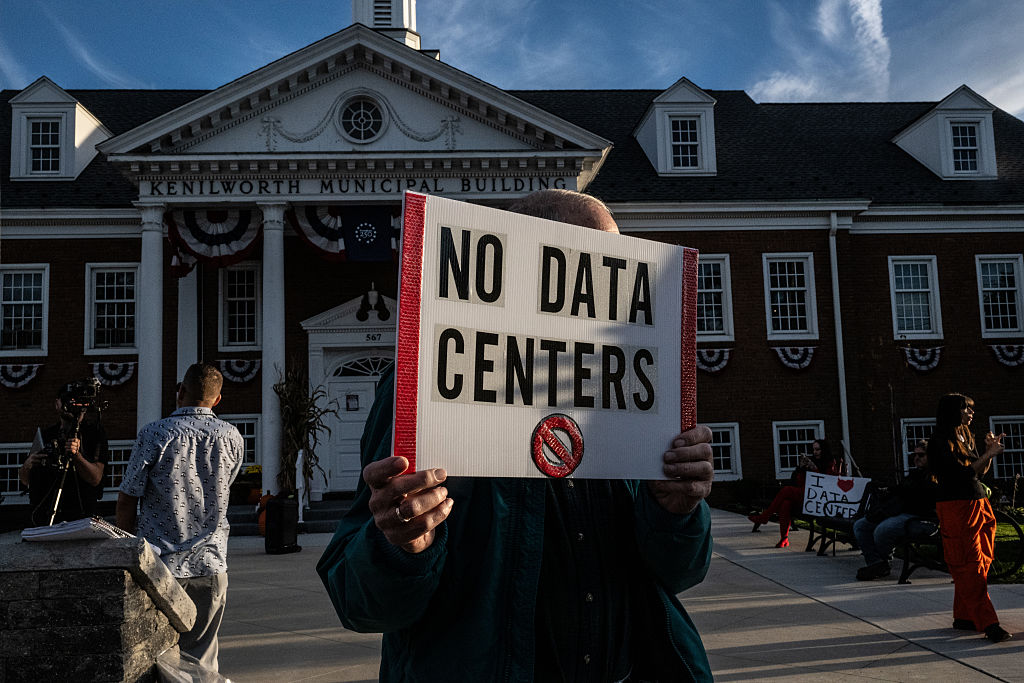
On this Friday, October 30, 2026, Albert Moeller of *The Briefing* addresses a growing cultural and moral conflict: widespread American opposition to data centers and artificial intelligence, driven by concerns over aesthetics, energy use, and local impact. However, he highlights a troubling paradox—many of these protestors are financially dependent on AI-driven investments, especially through public pension funds that have seen massive gains from AI-linked stocks. This financial overlap creates a form of unintentional hypocrisy, where those criticizing the technology are also beneficiaries of its economic success. Moeller draws a parallel to past technological shifts, noting that each era requires societal adaptation, including new rules and ethical boundaries. He emphasizes that Americans, especially Christians, must navigate this reality with wisdom, recognizing that technological progress is inescapable and deeply interconnected with daily life. The discussion extends to cultural issues like Halloween, where churches face decisions about participation due to pagan symbolism, and to broader concerns about conspiracy theories and anti-Semitism, which he warns are dangerous and biblically condemned. Ultimately, Moeller stresses that while politics and technology shape our world, salvation cannot be found in political or economic solutions—only in faith, moral discernment, and a commitment to truth. He concludes by urging Christians to engage in honest, Scripture-grounded conversations about complex moral choices in a fallen world.
It's Friday, October 30, 2026. I'm Albert Moeller, and this is The Briefing, a daily
analysis of news and events from a Christian worldview. You know, many people aren't just
aware of what amounts to a level of moral hypocrisy they may not even intend. And I
just want to tell you, sometimes Christians can fall into that category. So on this Friday,
it's a good thing, perhaps, that we think about how to avoid that kind of inconsistency or even
accidental hypocrisy. Now, what brings this to my attention right now? Well, it's an issue that
has been really developing in recent weeks and months, and it is now developed in a very strange
way. And even as I've been traveling around the country just over the last few days, even having
conversation on airplanes and in airports and all the rest, it is clear that many Americans on the
right and on the left have decided they want to put an end to data centers.
They want to put an end to much of this. They're very concerned about these data centers and about
artificial intelligence and the use of these kinds of facilities, lands, the transformation
of old facilities into this kind of data processing use, data center use. You just go down the list.
The development of new centers and all the rest. Now, the reason why I find this very interesting
is because a lot of the people who tell me this and are very concerned, they tell me how concerned
they are about this. And I don't doubt that, by the way.
I think just given the level of information, a lot of Americans have been given,
knowing that many of these data centers, they are ugly in many ways. In many cases,
they're not attractive at all. In some cases, they fail to employ as many people as the company
had indicated would be the case. And in other cases, the big danger is that they're so power
hungry. They use up so much of the energy availability. And so there are people,
quite understandably, in some states in particular, who are afraid that if a
comes between, say, lighting their neighborhood or the data center, the data center is going to win.
Okay. Now, the reason why I think many people aren't thinking about this very carefully is
they're getting all this information on their smartphone. They're really cataloging all of
this, getting all of this, even chatting about all of this in a format that requires the very
digital capacity that these data centers are going to preserve and expand. And the reality
is that the average American is using more and more bandwidth all the time.
And yet there's another dimension to this, which is far beyond the consumer use. And that is the
fact that we are in a very tight international situation in which the United States has real
enemies. And one of the biggest questions right now is who is going to dominate in the artificial
intelligence and in the digital space. And let me just take the obvious. I think most people,
most Americans, and certainly that means American Christians understand that if a communist power
like China, if it gains the upper hand in all of this. It will be a disaster for the cause of liberty and human rights and democracy in the United
States, all over the world. And so I have long predicted that the way this is going to be
adjudicated eventually is that Americans are going to have to come to terms with the fact that we have
to have this capacity. But you know what? Communities have the right to demand certain
rules be followed. And yes, that may mean that we all have to pay a little more for the data or,
you know, who knows how that's going to work out. But it is like so many other information
transformations, technological transformations in which you don't see a way out of this except you
have to find a way out of this. But this also reminds us that, you know, we're far more
interconnected with this than we sometimes allow ourselves to think. We all use now so much more
data than we did just a matter of two or three years ago. And you say, well, how do you know
that? I know that because of the consumption levels that are reported and sold. And furthermore,
I know that when you get your next smartphone,
you don't want one that's less powerful. You want one that's more powerful. You don't want
slower internet. You want faster internet. And by the way, if that's true because you want it
for your business, it's even more true when you think about the geostrategic and geopolitical
and military context. Just think about Ukraine. Ukraine has been in the headlines recently after
the Russian invasion and the war that's been going on now for years because they didn't have
adequate digital access.
To one of the main technologies that has helped to preserve and protect Ukraine over against Russia
that became an international issue. And that's going to come down to some of the same questions.
The reason I raise it today, however, is because of a very interesting article that appeared in
the Wall Street Journal that raises an issue I knew was going to have to be raised. That is the
pension funds, the long-term investments for the retirement accounts for Americans. You may know
that those accounts, basically after the COVID crisis,
were often subpar in terms of where their numbers have to be in order to have an adequate margin,
adequate safety, in order to be absolutely certain they'd be able to pay out to their
retirees and their investors and all the rest, 401k funds and pension funds and all the rest.
But over the last, say, 24 months, most of those funds have made significant gains. And guess what?
Virtually 100% of those gains are coming from artificial intelligence and such things as the
data centers. And so a lot of the people out there protesting, using their smartphones to
communicate with one another, also are receiving their retirement and investment checks coming from
in the last couple of years, coming from that very business they're now protesting. In other words,
they're protesting businesses in which they are effectively part owners. It's actually even worse
than most people think. As the Wall Street Journal says, hundreds of state and local public employee
funds lean on this AI sector's gains. As the article states,
the artificial intelligence boom is driving a wedge through America's multi-trillion dollar
public pension system. AI-crazed markets have turbocharged hundreds of state and local public
employee pension funds, whose combined assets have grown from $5.8 trillion in 2023 to $7.3
trillion in June, according to the Federal Reserve. Quote, across 13 of the largest funds
that manage their investments in-house, a basket of domestic AI-linked stocks fueled $138 billion
in paper gains between the end of 2022 and June. Okay, listen to this. Quote, but while those pensions
were racking up AI-fueled returns, officials from many of those same states have begun to throw up
barriers to data centers and are criticizing the industry in the final stretch of the midterm
campaign. The pushback has left fund managers and boards scrambling to gauge the risk of one of the
most polarizing industries in the United States. End quote. Now, just in terms of something almost
like a biblical parable, what I want to say is that there's a lot of people out there who are
to see is that you have now lots of Americans protesting the big bad businesses that they think
are offending them on this score. Meanwhile, when you look at who is actually gaining financial
strength and investments from those same businesses, it's some of the same people who say
they want to bring these businesses basically to heel. Now, as I say, this is something like
a parable, and I raise it not to castigate folks for having a position on this. I actually think
that some kind of settlement is going to be necessary.
Let me just state that the national security needs of the United States of America are so
pressing, I can just tell you one way or another, those needs are going to have to be met. Furthermore,
I think almost as pressing, certainly to most Americans, is going to be their own access to
all this data processing and data storage and digital technology. Americans aren't saying,
I need less. They're filling their homes with even more digital technologies, and I think
everyone knows this is going to have to lead to an expansion.
I think it's really clear that there need to be rules and limits put into place that will protect
communities and protect, well, let's just say everything we care about. And so previous
technological revolutions have led to the same kinds of big questions and dislocations. And in
those previous technological revolutions, we finally figured out how to create something
like a safe car, how to build something like a safe road. What is the right of imminent domain
with government? Where is the government allowed to put a road?
Where is the government not allowed to put a road? The bottom line is, by the time the car became
absolutely central, the car and the truck, to American public and private life, at the same
time, we had to have roads, and the government had to figure out a way to do that, let's just say,
better and more fair rather than worse. But I do think it's just really interesting. I'm not going
to read more from the article, even though it's a half-page article in the print edition. It is
really interesting that eventually, and this could be,
pretty quick, actually, some of the very people who are leading the protests against these data
centers are going to find out from their own, let's just say, pension funds, that this is actually a
big issue in which they are personally involved, whether they recognize it or not. One other thing
about this, by the way, this has always been a danger in the market. When you have these massive
funds and you have these massive pension funds in particular, is that no one would know much about
what exactly is going on in the market. And so, you know, there's a lot of people who are
in those funds. Now, there are people who are watching, and there's supposed to be federal
regulators who are watching and all the rest. But the fact is, the vast majority of Americans
just want to know that check's coming in the mail. But actually, as I say that, I hear myself,
that's something of an anachronism. Very few checks are mailed these days. Instead,
it requires digital transmission that requires this kind of data processing capacity. And well,
we're back to where we started. Just in terms of the big worldview importance of this,
I just want to point out that two things really loom large. One of them is that every
massive technological change, brings all kinds of complications. And many of these just appear
insoluble. But one way or another, society has to figure a way to solve them nonetheless.
The other thing is that when you look at a lot of this, you also realize that the average American
doesn't have much say in this. The average American doesn't manage the mutual fund,
just receives that check or at least the promise one day of that check. And the reality is, by the
way, that if you say, well, I'm not in one of those funds, I don't have that kind of fund,
I don't have an IRA, I don't have a pension. Well, let me tell you what, if you're a taxpayer to the
United States of America, you are in this whether you like it or not, because government is.
Christians have had a way of understanding this for a very long time. It's called moral realism.
It's based in an Augustinian understanding of what life is like in a fallen world. In a fallen
world, until Jesus comes.
Everything is fallen. We just need to try to move towards the maximizing of righteousness
and the minimizing of unrighteousness. But the moment we think we have eliminated unrighteousness,
well, at that stage, let's just admit it, we're fooling ourselves.
Okay, let's turn to questions. And as always, I'm just fascinated by the questions that get
sent in. And I knew this question was going to come up because Saturday's Halloween. So I just
knew this was going to come.
And sure enough, a pastor, he identifies himself as a pastor of a small rural church in central
Washington state. And his community has an annual harvest festival. And he said he thought this was
appropriate since it's a farming community. Quote, however, this harvest festival looks more like a
Halloween alternative. How should churches approach Halloween each year? Should we offer
an alternative? Should we not acknowledge the day at all? Should we celebrate Reformation Day?
What would you suggest churches do around this day? And he goes on, I appreciate this. He said,
I will not hesitate to say this.
Today is the least favorite day of the year. I look forward to your response. End quote.
Okay. I have so many thoughts about this. I'm going to try to order them, organize them
in a way that might be helpful. Number one, even when you look at the old harvest festivals in
terms of Western civilization, even when you look at the medieval roots of these harvest festivals,
not only in the ancient pagan world, but even in the medieval world,
there was often a lot of paganism in terms of the harvest, in terms of their celebration.
And I don't just mean paganism. I mean, there was a lot of paganism in terms of their celebration.
There was a lot of pagan ideology in the background, because there were certainly
Christians who knew that this was God's gift, and they were thankful to God. Let's not get to
the Puritans yet, but you understand that that was a part of Christian testimony throughout the ages.
But these harvest festivals, especially, say, in the heart of Europe, they often came
with so much cultural background from the pagan era that those pagan ideas sometimes continued.
And by the way, you can draw a direct line from some of that to some of the symbolism,
and you could say even the iconography.
of Halloween in the United States today. And so, in other words, even as, well, let's just say,
as a commercial enterprise, Halloween is newly explosive. And even as I think the cultural
controls are off, and even more horrifying stuff is being kind of mainstream, the reality is that
throughout most of Western civilization's history, Europe and in North America, there has always been
a pagan element lurking back there, you know, maybe slightly in the background, maybe just
surface, but maybe not. And then you also have this weird issue of so many Christian parents
dressing the little girls as witches and the little boys as goblins and all the rest. And again,
that just goes back to that continuation of a medieval pattern, which I think is,
I just don't think that's wise. I'll just say, I don't think we should want our daughters to be
witches, or frankly, our sons either. You understand it's a complicated age. I guess
you have to say that. But when it comes to these dark things, we don't really want that.
But when you say harvest festival,
in this context, I think that what this pastor in, he says, Central Washington State, I think that
a part of what's going on is that in almost every one of these harvest festivals, someone's going to
show up thinking it's Halloween. But then this pastor is also asking, you know, should we not
participate in these things and instead, you know, organize an alternative? Well, I think a lot of
churches do that. I think it's a very good thing that a lot of churches do that. And it's not just
churches. I know of a lot of communities where Christian
parents get together. And maybe it's all kinds of different groupings of Christian parents,
especially with really younger children, they get together. A lot of churches about 30 years ago in
the evangelical world started scheduling an event on Halloween night for kids and teenagers just to
create a safe place. And, you know, you can do this up in such a way that it can be a very
attractive and fun event. I also will tell you, there are other Christians who want to take their
kids trick-or-treating because they want to get to meet the neighbors. It's a very rare opportunity
in many ways to get to meet neighbors. It's a very rare opportunity
to get to meet neighbors. You know,
this is one of those things that's very morally complicated. I appreciate the fact this pastor
knows you can't escape the theological issues. You just can't. I really love his question,
by the way, should we celebrate Reformation Day? Absolutely. Absolutely. So I'm going to take that
as something of a separate question. Yes, celebrate Reformation Day, you know,
nail the 95 theses to the wall. I mean that metaphorically, I think. But you understand
what I'm saying is I think yes to a lot of these things. I think this pastor's sensitivity
his theological concern is incredibly well placed. And I can't tell you exactly what you should do in
this setting. I can't tell you exactly what your church should do or the members of your church
should do. I think it's a great thing for you to lead a conversation with parents and others
about how you can maximize your Christian witness and preserve your Christian integrity in the midst
of all of this. But one of the things I would say is we shouldn't be surprised by pagan people
acting pagan. And so I will say, I think very sadly, Halloween is actually an honest
expression for some people. Now, let me just say that on this issue, I always receive a lot of
questions. And one of the things I just want to remind Christians is that the Christian concern
about Halloween is of longstanding. So it's not just like all of a sudden in the last several
years, things have gotten so much worse that Christians are now asking questions they didn't
ask before. Christians are asking questions about this going all the way back into the
medieval era, certainly in the modern age. But this comes with a renewed urgency precisely because
I think things are turning far more ghoulish and far more dark even in that world. And that just
raises the concern. By the way, in summary in all this, I think one of the most important things a
Christian church can do is get Christians together to talk about how to be faithful
in a context. And location by location, the context may be somewhat different,
even event by event. I really trust that Christians can reason on the basis of
Scripture and think these things through. I received a question from a listener. And this
is evidently a father. He says that at the end. But he talks about a conversation he had with a
friend and colleague. He says, this person is a Christian, is very intelligent and professionally
accomplished, and yet somehow has been consumed with conspiracy theories, says mostly on Israel,
explaining world events through unfounded fact-absent hearsay. And he says, my plan
with this friend is to overall focus our discussions on the truth of the Bible and
perhaps includes a citing Romans 11 and the truth that God's not giving up on Israel and the Jewish
people. And then he says, quote, I like your advice on what regular people can do to promote
truth and reduce the growing trend of conspiracy. And this is where the father, the father role comes
in, because in parenthesis, he says, which especially as a father is concerning. Oh,
I really, really appreciate that. That just underlines the urgency. I can just tell you
that that parenthetical phrase, which especially as a father is concerning, I think is from a
Christian perspective, just very, very important. And I respect this question all the more. Let
me just say that we are prone to conspiracy theories. We are all prone to conspiracy theories.
Some of us are more prone than others to conspiracy theories. Let me just tell you why
conspiracy theories are so powerful. It is because there are real conspiracies. Okay, so that's the
problem. The problem is that not all conspiracy theories are false. Okay, so let's just say that
what this questioner is asking about are illegitimate conspiracy theories. So these are not true. And
actually, I love the fact this listener is saying, it's pretty obvious these things are not true,
but people want to believe in them anyway. Anti-Semitism plays a big part in this. And this
has been a very, very ugly story going all the way back to the ancient world, erupting in horrible
ways in the medieval world. And let's just say the 20th century and the lies and the libels against
the Jewish people that really were fuel for the Nazi regime in Germany. And so as we see this,
we're talking about here are false conspiracy claims. And again, I'm not saying there are no
conspiracies. I'm just saying that what you have as a problem, as a contagion in society,
is the idea that what really rules all the events of the world is some kind of hidden motion and
hidden will, hidden motivation in a hidden conspiracy. And oftentimes, this is anti-Semitic.
Now, let me just say that I think one of the very important things this questioner raises rightly
is how Christians should think about
a conspiracy theory that centers on, let's just say, the Jewish people or the state of Israel.
Now, let's just remember that when we're talking about the state of Israel, we're talking about a
state. And just like the United States of America is a state in terms of being a government.
As a sovereign state, it's a moral actor. And sometimes Israel does bad things, just like
sometimes the United States of America does bad things. That doesn't mean the United States of
America is illegitimate. It certainly does not mean that Israel is illegitimate, particularly given
dangerous position and one of the most dangerous areas of the entire globe. But I respect that.
fact that this letter writer is actually looking at the fact that there's a long tradition of these
anti-Semitic conspiracy theories, and he wants to answer it with Scripture. And let's just say,
I think you're exactly on the right thing. God is not finished with the Jewish people. There
are promises made to the Jewish people. But let me just say that even as someone who holds to
Reform theology, I do not believe that that requires us to understand that all the promises
given to Israel have been transferred to the church. We understand the covenant promises of
salvation and exactly how Paul lays this out in the central chapters of the book of Romans.
But that same apostle Paul makes very clear that God is not finished with the Jewish people.
And I think that's something this letter writer says quite accurately. We need to affirm that.
We as Christians, I believe, have a responsibility to the Jewish people.
So I appreciate this letter writer. Let me just say the conspiracy theories are all around us.
I think we need to identify anti-Semitism when we see it. And we're not making the claim that
there are no evil. We're not making the claim that there are no evil. We're not making the claim that
there are no evil plans and there are no conspiracies in the world. But that one is often
used to vilify a people. And the scripture is just really clear about the consequences of that kind
of vilification. Okay, but next I want to turn and I'm going to do something I normally don't do.
And that is name, that is give you the name of the person who wrote this particular letter. And it's
important in this case because the letter writer is the Honorable Tom Oliverson, MD, who's the chair of the
Texas House Republican Caucus. And I mentioned him on a recent edition of the briefing talking about,
let's just say, the concerns about James Talrico, the Democratic nominee for the Texas Senate race.
And in this case, Dr. Oliverson writes saying, I heard your briefing where you mentioned my
comment regarding James Talrico. You asked the right question about my choice of words,
performative theater. What I meant was that James is disingenuous. His words and his positions are
always crafted to the audience, changing with the needs of the moment.
The one exception to this, he says, that he has seen is that he truly believes that the radical
socialist version of Jesus Christ he has created in his mind is in fact the authentic Jesus.
I am glad to hear from this legislator. I am glad that he wrote me directly. And let me just say
that I'm glad we're in full agreement with the meaning of what he said.
He says that when he used the phrase performative theater, he meant that James Talrico is
disingenuous. And at the time, that's exactly what I thought he meant. I appreciate hearing from him.
I appreciate hearing from this legislator. And we share the concern. And let me just say,
I've dealt with theological liberals virtually my entire adult life. And especially on issues like
this, disingenuous is a mild way of putting it. Okay, very little time remaining. And this is
really a continuation of the same issue. I heard from a young man in Texas. He says, I'm voting in
the Texas Senate election. And he says, you know, the two candidates, he says, I cannot vote for
Talrico due to his, I'll just say his liberalism, his ideology, but I'm conflicted on voting for Ken
Paxton due to his sexual character, his immorality. He says, I remember reading articles from the
nineties of you calling out president Bill Clinton for his immorality. So what do I do in this
election? Because whatever I vote for, there's going to be something immoral that I'm going to
be voting for either theological heresy or unrepentant adultery. Please respond back. Thank
you. Let me just state, and I want to say this as clearly as possible. I appreciate this young man
writing this from Texas. And I want to say there is no way around the moral complexity that you
lay out so well.
We live in a fallen world and sometimes we are left with very, very difficult choices in dealing
with the issue of Bill Clinton. It was not a situation in which he was running against someone
in which there were equal concerns going back to say president George H.W. Bush. There are always
concerns about a candidate, but nowhere near, you know, let's just say level concerns that also,
by the way, continued not only in the 1992 election, but the 1996 election. And the one
I want to add is that elections come in a context and elections have consequences. The context has
consequences. One of the big issues is who's going to control the United States Senate. And so what
in the world is going to happen in terms of legislation for the entire country based upon the
composition of the United States Senate? Let me just say that is an unavoidable question. I leave
it to your informed conscience. And I know, but by the way, this young man wrote this letter. He has
a Christian conscience. He's struggling with that Christian conscience. You have to do what you
believe is right. And that's what I want you to do. And I want you to do what you believe is right.
In a situation in which you have two unacceptable candidates, unfortunately, one of them is going to
be elected. And I would just encourage you to pray about how you think that through. I will tell you,
for me, it would be a very easy decision simply because I could never vote for what I know James
Tallarico would be legislating for. I'm just going to end for today by saying all this complexity,
and it's going to come, I think, in even greater volume in elections ahead. I think all this
at this point, conservative Christians had better be very much convinced that politics is really
important, but there is no salvation by politics. That much is abundantly clear. Thanks for listening
to The Briefing. For more information, go to my website at albertmuller.com. You can follow me on
X or Twitter by going to x.com forward slash albertmuller. For information on the Southern
Baptist Theological Seminary, go to sbts.edu. For information on Boyce College, just go to
boycecollege.com. I'll meet you again on Monday for The Briefing.
you
Podcast Summary
Key Points:
Americans are increasingly protesting data centers and artificial intelligence due to concerns about their aesthetic impact, job creation, energy use, and perceived threat to local communities.
This opposition is paradoxical because many protesters are financially受益 from AI-driven gains, particularly through pension funds and retirement investments that have grown significantly due to AI sector performance.
The rise of AI has dramatically expanded digital infrastructure, including data centers, which are now essential for national security, global communication, and even military operations like Ukraine’s defense.
A key irony is that the very people protesting AI and data centers are part-owners of the businesses generating the profits that fund their retirement accounts, creating a moral and financial inconsistency.
The issue reflects broader technological transitions where society must balance innovation with ethical and communal limits, much like past technological revolutions required new rules for safety and fairness.
Christian perspectives emphasize moral realism—acknowledging that human efforts to eliminate sin or evil are limited—and highlight the importance of discernment in navigating complex cultural and political issues.
Churches face difficult decisions about Halloween, with concerns over pagan symbolism and cultural contamination, but many are responding with safe, faith-based alternatives that preserve Christian integrity.
Christians are also challenged by the spread of conspiracy theories, especially those with anti-Semitic undertones, and are called to affirm the ongoing covenant with Israel through Scripture and moral responsibility.
Summary:
On this Friday, October 30, 2026, Albert Moeller of *The Briefing* addresses a growing cultural and moral conflict: widespread American opposition to data centers and artificial intelligence, driven by concerns over aesthetics, energy use, and local impact. However, he highlights a troubling paradox—many of these protestors are financially dependent on AI-driven investments, especially through public pension funds that have seen massive gains from AI-linked stocks. This financial overlap creates a form of unintentional hypocrisy, where those criticizing the technology are also beneficiaries of its economic success.
Moeller draws a parallel to past technological shifts, noting that each era requires societal adaptation, including new rules and ethical boundaries. He emphasizes that Americans, especially Christians, must navigate this reality with wisdom, recognizing that technological progress is inescapable and deeply interconnected with daily life. The discussion extends to cultural issues like Halloween, where churches face decisions about participation due to pagan symbolism, and to broader concerns about conspiracy theories and anti-Semitism, which he warns are dangerous and biblically condemned.
Ultimately, Moeller stresses that while politics and technology shape our world, salvation cannot be found in political or economic solutions—only in faith, moral discernment, and a commitment to truth. He concludes by urging Christians to engage in honest, Scripture-grounded conversations about complex moral choices in a fallen world.
FAQs
Many Americans are protesting data centers due to concerns about their visual impact, energy consumption, and potential harm to local communities. They also worry about the concentration of digital power and its effect on local resources and infrastructure.
A significant portion of growth in U.S. public pension funds over the past two years has come from investments in artificial intelligence and data centers. This means that people protesting these industries may also be beneficiaries through their retirement accounts.
Yes, it can appear contradictory. Many individuals are part-owners of these industries through pension funds, creating a tension between moral objections and personal financial interests, which highlights the need for honest self-reflection and accountability.
Moral realism, rooted in an Augustinian worldview, teaches that the world is fallen and that we must continually strive to minimize unrighteousness. It reminds Christians that complacency in moral progress is dangerous and that society must keep evolving in ethical awareness.
Churches should consider offering alternatives to Halloween, especially in communities with strong Christian values. This allows for safe, faith-based activities that avoid pagan symbolism while still engaging children and families in positive ways.
Yes, it is appropriate. Celebrating Reformation Day honors the Protestant Reformation and the restoration of biblical truth. It can be a meaningful way to affirm core Christian beliefs and values.
Chat with AI
Loading...
Pro features
Go deeper with this episode
Unlock creator-grade tools that turn any transcript into show notes and subtitle files.
 PodcastTranscript AI