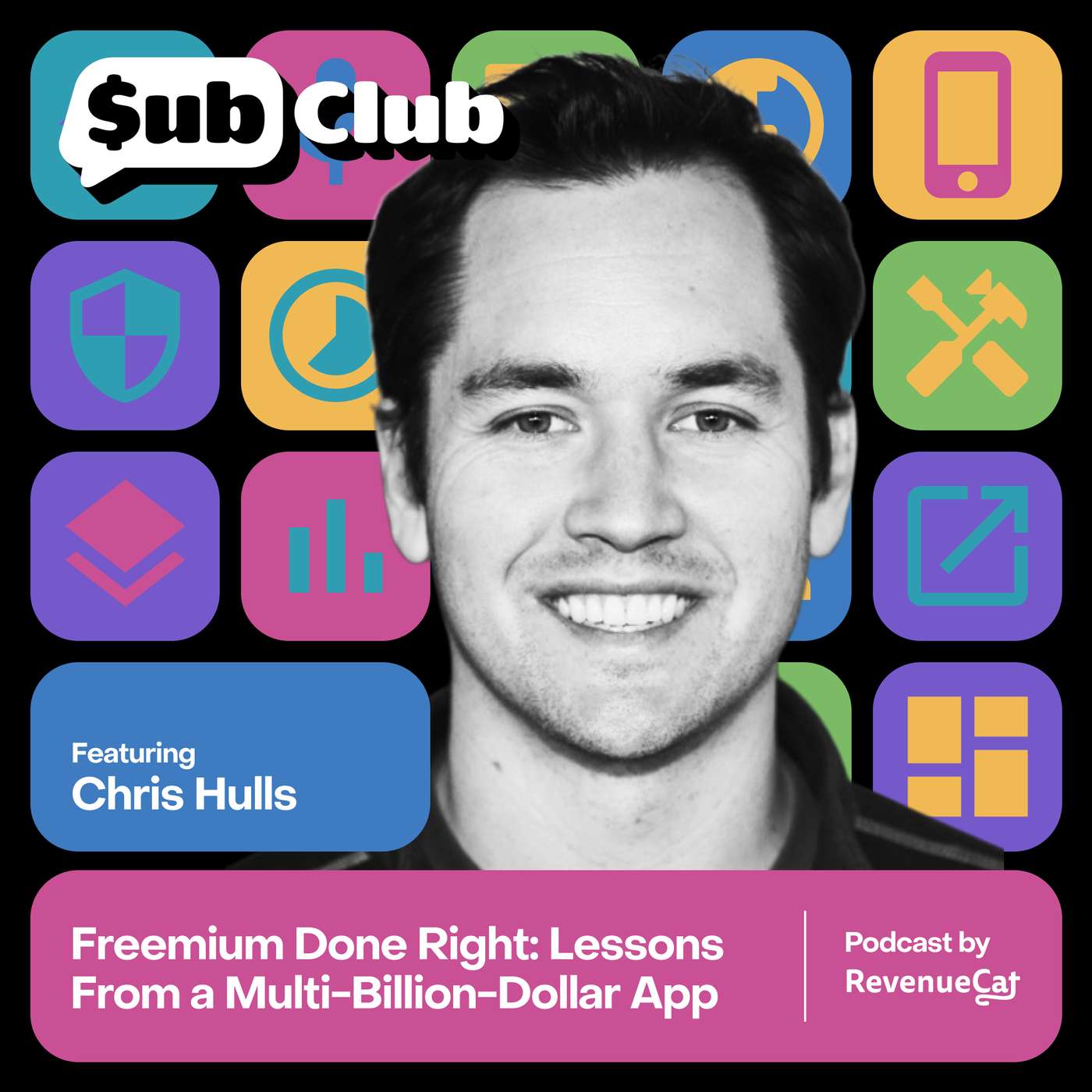
Freemium Done Right: Lessons From a Multi-Billion-Dollar App — Chris Hulls, Life360
56m 31s
The Subclub podcast highlights the best practices for app businesses, with a recent episode featuring Chris Holes, the founder of Life360. The discussion delves into freemium models, emphasizing the importance of offering real value to free users while providing paid features that attract subscribers. Chris shares insights on the evolution of Life360 from its founding concept during Hurricane Katrina to becoming a successful subscription app with over 80 million active users and a substantial revenue growth. The conversation touches on the challenges of maintaining a balance between free and paid features, the importance of not tricking customers with deceptive tactics, and the need for transparency in product changes. Chris also mentions the development of a "bill of rights" for free users within Life360 to ensure a user-centric approach and to safeguard core features that differentiate the app from competitors like Apple. The discussion underscores the challenges faced by larger companies in maintaining user focus and avoiding extractive practices as they grow.
Transcription
12304 Words, 65095 Characters
Welcome to the subclub podcast, a show dedicated to the best practices for building and growing app businesses. We sit down with the entrepreneurs, investors, and builders behind the most successful apps in the world to learn from their successes and failures. Subclub is brought to you by RevenueCat. Thousands of the world's best apps trust RevenueCat to power in app purchases, manage customers, and grow revenue across iOS, Android, and the web. You can learn more at RevenueCat.com. Let's get into the show. Hello, I'm your host, David Bernard, and with me today, RevenueCat CEO, Jacob Biting. Our guest today is Chris Holes, founder and CEO of Life 360. On the podcast, we talk with Chris about how to do freemium the right way. Drafting a customer bill of rights to guide product decisions, and why blindly following AB test results can lead to short-term gains, but undermine your business long-term. Hey, Chris, thanks so much for joining us on the podcast today. Thanks for having me. And Jacob, always nice to have you with me today. I'm super excited to talk to the founder of Life 360. I was at a party, Easter party on Sunday, and I literally sell somebody's in Life 360. I was like, there's like 360. So here we are. Was it a mom? It was a youth, like somebody, maybe 21 years old. I was like, it's still happening. That is happening more and more. We were not complaining. As we were talking before the podcast, Life 360 is kind of one of the slept on giants of the subscription app industry. You know, it's not mentioned in the same breath as a Strava, a Doolingo and some of those, but it is an incredible company. And I just checked this morning, you're on the NASDAQ and Australian stock exchange with a 1.8 billion USD market cap, huge, successful story in the subscription app space. So I did want to kick off. You've been on a lot of other podcasts and kind of given the full story. I listened multiple of those. We can put links in the show notes if people want to hear kind of the whole founding story and all that. But I wanted to get to summary of it. And then we could dive deeper into the nuts and bolts of building a great subscription app business like you have. So what was the founding story? Yeah, I'll go to the very quick version and hit on a few things are more specific to subscription. So very quickly, the early idea was Hurricane Katrina, help families reconnect after big emergencies. I had that idea in college about 20 years ago. I've been doing the company for 18. We've had our one and only pivot in the early days as to what we're doing now, which was something much bigger. Facebook was getting big for friends. LinkedIn is getting big professionals. We thought, like, let's go after families. That part of our pitch is very cliche, but our take was different than everyone else, which was based on our belief that mobile would become ubiquitous, which obviously has, but it was actually controversial way back then. People didn't think teens would be using smartphones. Those are the number one reason VCs passed on our seed round. I think it's something of productivity tool. But our insight was that location was so central to many communications and safety is something people you'd pay for, but actually tying into freemium business models. We figured out that daily communication, utility, good free engagement platform paired with safety, that people pay for, that really was our secret monetization sauce. If you go on either end, you can have problems. So we're now up to over 80 million active users, 400 million this year revenue, growing very quickly. International taking off in about 600 employees. So that was like 2008 or so. When did the first app come out? 2008, I think. Maybe launch 2009 or something. We were a launch app on Android. Okay. Which David's point of view being like a sleeper giant. Do you think that's part of the reason is that you've kind of been like iOS has fine friends baked in. And if you're a full iOS family, that you might be your tool choice. We actually do better in iOS every region. Surprisingly, really. I mean, maybe not that's surprising to me, but I think like the tech press tends to have a still like an iOS bias, right? If it's not Apple, they tend to overlook things. And I always wondered if that was think that's it. I think we are an example of being in an unannoyed category from a VC standpoint. Now that we're a public, it's kind of a different ballgame. But I think for whatever reason, VCs just assumed our category was not a real one, and it was a feature, not a platform. And I still sometimes wonder why we are kind of still relatively speaking so under the radar. I don't really mind because we have almost no competition, which is weird. Yeah, I also not to get too much about stock, but you guys have one of these rare stocks that's kind of not looked totally battered over the last decade or five years or so. And I always feel like the over focused on companies like they tend to just swing around with the wins of the market. Yeah, I mean, we've swung, but we never were overvalued. So it's more frustrated. We were trading at 1x revenue at the peak of the dull dreams for no good reason, maybe 2x revenue, whatever it was, but it was weird. But people overlook companies that are not in hot verticals. I think location now is finally becoming a thing that people are not creeped out by, but I think people are almost only bad parents and bad families use location chairings. It's creepy. I think that was more. Yeah. Oh, oh, right. Just like the concept of like spying on your kids. But yeah, I think I mean, I think about it now. I have a I have a six year old, and I'm like, I'm gonna chip her. I'm gonna know where she's at until she's 17 and 360 days, like years old. You know what I mean? But it's not actually that invasive. Honestly, it's better if you use it properly, you can give your kids more freedom and not worry. The real helicopter parents are the ones that are like following them around and interfering with their activities. We're sort of just saying go have fun, and then we're actually a way to give kids more freedom if use appropriately. We have a big enough user-based. Some parents do go over the top, and I feel bad about that. But you also exist in like an amazing place that like revenue cat does too, which is like because Apple's fine friends is so verticalized and like just has no interoperability, it creates an opportunity for a business like like they're 60 to become a platform because it's not locked into these like phones, right? It's like, there's a lot of conversations now about antitrust and these platform being locked down. Sometimes the lockdown actually creates opportunities for companies to like, you know, overcome that lockdown, which is your case. I feel good about that for our long-term, specifically in Europe, but surprisingly, we do weigh better in these iOS heavy regions. And actually to tie it back to your earlier point, I think most of the world has not woken up to location sharing. It's many years behind, and I think it was fine, even though fine my launch five years after we were out, it really helped us because it reduced the stigma that was there. So as of now, we actually see it the inverse where someone's using fine my, they've got over the hump that this is a real need. And then we're just so much better for our vertical that it doesn't hurt us. That could change. We don't want to be sensitive to that drink or own cool aid. Apple could get better. They are getting better. They're waking up to location. But yeah, historically, I think it's actually interesting for smaller startups that Apple in your space with a mediocre product can actually be a good thing. It's so much easier to be like, it's fine my butt better, right? I can't imagine how you guys pitch before that be like, it's a penopticon for your family. It was kind of hard, honestly, because that's people did not understand. It was just for anyone under I'm 41, so I'm kind of on that tipping point, but anyone under 30 probably doesn't realize just what the attitudes to location or when it came out. I mean, I'm 37 and I remember when like you couldn't even have a phone to know where people were. If you weren't at your home at the landline, like you were you were unfindable, you know? I'm that changed in a decade. It's crazy. And people set cell phones were invasive because you could never just, you're always going to be findable. And relatively they were, right? Like he went from untold find unfindable to now I could call you in any time. And you know, it's more the relatives that freak people out. But I don't think anybody who uses these like location technologies in their family can say they're not like valuable and life enhancing itself. Yeah. I mean, life is a double-edged sword with most technologies, but you can't put the toothpaste back in the tube and right? People are going to use it. Yeah, you're not going to get people off the internet. And we have Luddites and Mennonites and Amesh. We've all made decisions not to embrace technology. And that's genuinely okay. But you do you, but we can't stop AI as an example. It's wishful thinking. So you can get in a whole other tangent there. But it's like we're creating AI race because we know if we stop the other guy, I'll do it. And so it's just going to keep going. So I think that's just a general theme of life. Well, you've hit on like five different topics. I want to go deeper on. But the first one I wanted to go a little deeper on was you mentioned the freemium product. And I think this is something that a lot of folks get wrong and struggle with. If you want to become a big app, you almost have to be pretty much have to be freemium. You have to have some experience that's going to retain users who don't pay. And then, you know, to build a great recurring subscription business, you've got to have features that people are willing to pay for. Beginning to balance just right where you don't ostracize the free users, but they still have a really fantastic experience. But then you have paid features that actually attract people to spend. So how have you thought about this and how have you structured the freemium over time and then have that evolved? It's one of the things that we locked in on early on and just haven't really deviated at all. And now we're 18 years into this thing. But ignore our early couple of years. We're just trying to figure things out. We didn't know what we were doing and the industry was nascent. But what we realized was to your point, we will only succeed as a business if we're freemium. I'm not a pierced at all in that regard. But our belief was that location was going to be huge. All the carriers were offering competing products. And back in the day, also the younger entrepreneurs probably be surprised like AT&T and Verizon, like if they had a product, there's a threat to you. And how could we compete with these giants? And so we we felt like the only way you can do that was giving away a better product for free. And that is what over the top, meaning just going directly the app stores onto the carriers. I don't know if people still use that terminology. I haven't heard that in a while. We're all dating ourselves. Yeah, we kind of felt like we had to. And so our view is roughly like, let's not even worry about monetization until we hit 10 million active users. We probably pushed it later than most people in that was somewhat arbitrary. But also in the early days of subscription, it was way harder to get people to sign up. And there was no enough purchase. There weren't even push notifications. So it was a different era. But the general view was for a product like ours, which we correctly identified would actually be a commodity. Find my came out later, like locations everywhere. We would be dead in the water if we tried to or charge for our products early on. Now we actually probably could. There is some conversation like, when do we go to harvest mode? I would not be the right CEO for that. Some sort of a product purist. But we can talk about a little bit later. But I think once you have someone on a subscription, you can actually really, really squeeze them if you want to. We haven't done that. I don't think that's we're trying to build a product in brand and platform that people love, which means you want to keep a pretty big, that's a viral product, right? So like, we want, we need people to love us. And we need to feel like a really good deal. And we've been fortunate. Our user base is so big now. We have a lot more flexibility. But going back to the original question, our founding story was around safety in Hurricane Katrina. But we very quickly rise out of sight, out of mind. And so you talk about these things and people would want to, oh, like, we used that. We pay for it. People say, yes, but they wouldn't. So the thing we realized with location, that was like a 10 time a day. Use case. And people actually will pay for safety. But they need to be reminded of it and can't forget about it. So we basically locked on the strategy of free location, pay for safety. And it was the combo of the thing that engages you, keeps you top of mind, brings you back again. And then peace of mind that people pay for. And they're not BS piece of mind, like stuff people actually use. And now we do limit some of the free features, like location, history and all that. But the general theme, more and more challenge to get bigger, like the core has to give real value to our customers, not kind of fake value, like real, real value forever, for free. Period. And we actually recently just wrote a bill of rights for our free user, because it's so easy to chip into that, especially because we have the brand and platform. And then you're never going to know if you pushed it too far with data when you have 600 employees. And you've got like a mandate from public markets to increase revenue. And like it's easy to be like extractive versus like value creative, right? Get it. We're like bigger yet, the more specialized people get. And it's just very hard to keep that focus. And it's a bit religious because I think people push on me like, well, we did this thing. Look at the retention. It's fine. See, like you're not being data driven. Like smart people might disagree. But for what we're trying to do, there's a gustal defect. And like you just, at some point, you've taken this away, you've taken that away, you've taken that away. And I don't think we would ever just fall off a cliff. I think we would just see that people are using find my more and the prior strategy of just being a whole lot better is not quite working. And people aren't raving about us because they're just feeling chipped away at. Nobody runs a holdout group long enough to see the cumulative effect of that. Well, I don't think you can hold out the holdout group long enough because I would agree any one feature you run the holdout group and it doesn't do anything. You need to run a holdout for a half a decade. And with 20 features in a bucket and it's coming over time. So it's almost impossible. So we made a free user bill of rights. That's a, that's a recent thing. I'm curious if it will work. Is it for internal purposes only? Are you sharing it with customers too? It's not secret, but it's, it's internal. So it's kind of like, Hey, this is our constitution period. Do not argue with a constitution. They, it's hard. That sounds too kind of. It's more, and we can always revisit it. It's not sure. Oh, you can. Yeah, I'm trying not to be that top. So it's more like this is just the lifeblood of who we are. This is a thing that unless it's going to formally changed at the kind of exact level, got to believe the religion. I think a lot of like product people and the trenches are not all that religious to use the word again about what they think it, but you know, they just, if you give them some guardrails and say like, Hey, this is what we want to do. Helps to harmonize like a bigger broader strategy. So asked me in the year if it worked. I don't know. Can you give an example of what some of the rights are on the bill? One is just the start of the most important. Like we've basically the location history, the core map, location history and place alerts, they must be free. Doesn't mean we can't move the payout wall a bit, but like real value there, no deceptive tactics around them in dark patterns is another one. I can probably fold up, but the real anchor is all just around like the free is lifeblood. Do we are? These are the things that differentiate us from Apple and don't touch them. We don't trick our customers. We're very transparent. When we do changes, we're going to notify people, not spring it on them, because it's, if you're going to be testing it, really app like whatever, but we're trying to build this kind of bigger thing. You can't jerk people around in the same way. Yeah, I mean, you think of like how Apple, you know, manages product or historically, like they have a very, like, it's a very coherent vision about how they interact with their customers and market and bring things. I have a similar version. I've never made it public to the team. I probably should, but I call it, I have a doc of hot dogs. Like the cost go hot dog story. He'll never change the price. Yeah, the dollar 49. Yeah, yeah, yeah. It just like doesn't matter for losing margin. It doesn't matter. It's always going to be a dollar 49. And so I have a list of those. I have a list of things that we will never touch kind of for me and Miguel more than anything. But I think it's important to write those down or otherwise. Yeah, you're right. It's like the, even you write them down, though, it's just that it's very, very hard. I don't think the purity is a bit of a religious belief. Yeah. Well, somebody else, somebody has to enforce it to some degree, right? Like somebody has to be like, wait, like did this violate? I assume you don't have a court system within life through 60. So somebody has to be like monitoring. No. I think the bigger thing, those what do we exude as a company? And it's definitely easier for a small start as to be user centric. And you get bigger. The pressures get bigger and bigger. Little off topic. One thing I think young entrepreneurs might not realize when they think about like product managers or product, they think about people of probably craftsmen who build stuff. It's companies get bigger. Product managers are, they often aren't builders at all. They're kind of like aligning on strategy. They might be more process people. So it's been interesting that later stage companies like a product managers might not even be able to build a darn thing. Doesn't mean they're bad, but the craft changes. They're certainly going to bring a different set of like personal values, right? To the process of building stuff. That's something you touched on there or something. I've actually been talking a lot more about privately. And a few times even on the podcast is that these dark patterns, you know, as you said, tricking users, any one tactic and isolation could maybe be justified. Oh, you know, the call to action button doesn't really say exactly, you know, doesn't say subscribe. It says continue. And it's like, well, I mean, that's kind of an industry standard thing. Now it's like people get it. They still have to go to the Apple flow or, you know, the price. I've been seeing more and more apps put the price further and further away from the call to action button. And those are really like really subtle. And it's like any one of those, it's like, that's not a dark pattern. That's not really tricking users. But when you start stacking up a lot of these growth hacks, one after the other, after the other, I think people are underestimating what it feels like to the people going through the app. And to your point earlier, you don't see that in the data because you still get the convert, you don't see that in the short term. You see that over like you're saying you'd need to do a five year hold out to really understand how users feel about your brand and product. Theoretically, you do the holdout practically. You couldn't because again, like you're changing 30 different things. And so you could say we're going to keep the app from 2025. And we're going to a version we don't change at all to the version of 2030. But then what about all the improvements there? So you're never going to be able to tease it out. And so it's not about being data driven. I actually think you're being more data driven to acknowledge the limits of data. And so many people think they're being data driven by looking at first order data, even with a flimsy understanding of significance sometimes, right? And be like, oh, it's a 10th is a 10th of a point. And the significance calculator says it's six sigma or whatever. And you're just like, well, let's think about it. We actually haven't had that problem in terms of looking at data for whatever reason. One of my pet peeves, I'm actually going to send this interview to him. I'm glad we're doing this because it's kind of all my thoughts. I can send to our team and just get my internal comms for the for life 360 team. Yes. Exactly. This will actually be a bit of internal comms. I hate when we do tests based on percent of user base. I hate it. Oh, like on just on a subset of the user race. I mean, no, that we instead of N, we do percent. We're testing this with 50% of people, 10% of people, 2% of people. And I say for our size base, where we can, you can round us to 100 million. And then people say, well, we need 20% to get statistical significance. Well, that's 20 million people. So are you saying a company that doesn't have 2,000 people, they just literally can't test? I still see this happen again and again and again and again. And I think what it does do is actually stop people from doing smart tests. Because if you want to do like a painted door test, paint a door for dual nose, like it's basically fake. You click on it breaks. You have made some graceful failure. You should be able to do that 100 people or 10 people and they say, well, then we're not going to get enough predictive power. But I'm kind of okay and a painted door that you get like 70% certainty. Yeah. Well, you get enough predictive power if it's a powerful enough change. 100 people with a big change, you'll see it. Yeah. Exactly. Or enough to just be like, if we're just going to paint a door, then we'll do the real test. But this idea that we need to, like people need to really understand what they're testing and when. So sure, if we're trying to like change some header or some tax. Yeah, low risk for a lot to everyone and you're kind of okay kind of picking up a 0.1% thing. But if you're trying to try something really new or build a lot, like do the paint a door to 100 people. But don't tell me we're going to do it 1% then you're showing it to almost a million people. Yeah, the percent is getting much bigger, right? But I think people just assume 1% small 50 is big. And there are times you want to do like if you're doing a rollout, we do do like 1, 5, 10, 50. Because that's more server traffic and. Well, because you're on your way to 100, right? Yes, exactly. If we're on our way, but I call that is a rollout, not a test. And again, if it's in if it's like email headline copy, sure, like do the presents, because it really doesn't matter. But what are you testing? Why? What's the right methodology? Like think critically. Think first principles don't just follow a playbook, but I guarantee I'll show this internally. And then I'll go back to say we need to test 1% and get a put in the bull rights. No, no, no, no, no, no, no, no, no, no, no, no, no. I do it like, what am I, how am I going to react to this? They want to do like not me, but the customer and the Rick Rubin method, right? You just like close your eyes. The famous producer who just doesn't play any instruments, doesn't really do it. He just like kind of feels it and like knows what to do. Every great consumer founder I've worked with has always had a really both like emotionally empathetic, like ability, but then also like, they're very analytical about that. You know what I mean, they can like put themselves mechanically into the mindset of many different people. And like when I was working consumer, I sometimes found there's so many voices that like individual conversations can sometimes be misleading because like there's a lot of variance and behaviors. And like, it's very unlikely that you personally are all that close and characteristic to the person that you're selling to. And sometimes I think that connection can be, so I say I started B2B company then your force to like be in the room with you all the time. It's actually been a benefit because it's a little bit easier, but I was in the same place as you when I was in consumer. Like I think it's still good. I think like and also like I don't know if you all do surveys and stuff like that. You know talking about like extending beyond just like pure like A, B test, SIG, statistical significance on a binomial experiment, just sending a survey to those hundred people that hit the broken door and being like, you know, I see if you get any responses. I think they're all good and you just need to know why and you don't do it just because and you're really thoughtful about it. And you don't overly kind of like saying this is the way other than our villa rights. You don't don't argue with that one. But jokes aside maybe up to these are the things that just who we are and but we're being very self-aware of it. These are the artifacts of religious faith because we believe they're quarter who we are and these are the things we test and this is how we think about it. With those free users, how do you think about monetizing them and what has been the path of monetizing them? I know most recently you have been working on an in-house ad network. But have you shown ads this whole time or like ads are new? We have some really ugly banners in the home screen that make me want to buy genuinely the physical reaction every time I see them. We just got to subscribe, Chris, then they go away. But as a part of the user experience, the free user experiences, I removed ads from my side project app because the user experience of them were so bad and I went to a hard paywall because it really is part of the user experience. Yeah, so how going back to just the fuzziness of data, the team, do the holdout group and show that the ads didn't hurt anything at all. I think that data was actually valid but do that 20 times, you don't know, but we decided the upside was worth it and we are trying to start this new business and that over time we can evolve the ad product to something that customers actually love or don't even realize it's an ad. So the banners we have, they're horrible, I hate them, I've challenged the team like can we find in like a year, can we not have ugly banners, but really pushing every day like show that you care about the customer, show you want these gone, we've done some really cool ones. Like when you land it and airport now to like pay David, welcome to SFO, do you need Uber? One tap. Did you do that deal directly like with Uber? We did. Yeah. We have another one we're announcing, which is very similar where it's not, it's actually good for the customer and people probably know it's an ad, but it's not interrupting the workflow and if you actually want to interact with the ad, it's adding value. I think the company that did that the best, nothing to the subscription, but credit karma and credit card ads, yeah, you don't even know it's an ad, right, you're just using their website. Well, I think maybe you do, but like for people who don't know credit karma, it's basically you give all your very personal, sensitive information, including your social, they match you with credit card offers and your credit score is X, you live here, this is you want points, you want travel, whatever, this is the best card cashback, they just match you with cards. So it's 100% lead gen, everything they match you with is an actual ad, but to the customer, you are actually getting matched with the product and service that is good for you. And so I think that's very different than spamming someone and all that. I'm going back to Bill of Rights, we said we will not, that's actually in our Bill of Rights, I forgot all their point, it was tied with advertising, we will not get in the way of the job to be done with an ad. Sure, I know full screen interstitial 30 seconds to close. Yeah. What are the ads that upset you so much, then? It's not not the Uber at the airport ones, it's seem, no, that one's great. I genuinely think I can look someone the eye with a straight face and say, I actually think that's giving you value because if you used to want that one tap, it's not hurting at all. So we just have these banners, they're just more than like banners are only good for brand impressions, they don't really drive performance. So and you don't get to control probably using an ad exchange or something like what brands get pulled in. We are doing that, but we have our own ad unit that does force people do a little bit to make it look there. That was one of those just some arbitrary lines we did as well, but these are all like things you only get to do when you have as many users as life 360, right? Like if you're a random app, you don't have the leverage to do this. Yeah, exactly. You would not be able to, no, you don't have that choice. So you see, you never like just installed Google ad mob and just let Google serve. I think we did, but we put our own ad unit and we did some testing around it and it's just we're using it. At some point, we could actually allow more of that, but the performance is actually capped, like put the product back on and like try to think about it's actually good for users and the holy grail for us, they're going to the credit karma equivalent is insurance products for driving because we know how you drive and to look who wants to give your data insurance company. First off, most people don't care about sharing data as much as that's like this very kind of like tech bubble press group, like most consumers think that Amazon and Google are like recording everything you say and doing already and they say they don't like it, but it's lost cause. Yeah, it's a lost cause to them and not that they think they ever really cared. Actually, I think enjoy complaining about it from my perception. I think that just, well, things people say they care about, they're not lying, but what do people actually take action on? We want to be straight with our users, but if we were like, I think people, this is inherently bad thing without thinking about it, but imagine if like, hey, Jacob, you are in the top five percent of drivers, you absolutely should give your insurance data to insurance companies. You will be saving money in here. We can help you. And if we're like, David, you're in the bottom 10 percent, you should never, ever give your maybe sub driving. Yeah, or hey, you to DUI, we're going to match you with the DUI specialist, like I don't know, we, that's actually the thing, the hard to ensure people. That's the use like we're actually helping you with your data and it's going to be an ad. But think how good that is is not us being sneaky or like whatever, like truly, if you're a top driver, why should you be paying to subsidize all the bad ones? That will not feel like an ad when that happens, but it will be, it'll be a lead gen experience. Yeah, very similar to credit karma, right? Like except for instead of the finance data, you're taking a location and transport data. Believe it or not, credit karma is now moving into that same lineup because they can see. So if you use the credit karma app, you could do that with the driving now. Infer some insurance like profile stuff to you. They're doing the exact same thing and it's not bad for customers, it's good for customers. And so we eventually want to get there and only about one in eight of our families are paid. So if we get equivalent performance, sorry, if you get one eighth performance of monetizing free users, we've essentially doubled a revenue and then we get the virtuous flywheel of more to spend on marketing, more to spend on R&D and then just put more daylight between us and our competitors. And you said it's a fairly recent. When did you all start playing with ads as a revenue generation thing? About a year ago. Okay. Wow. So like post after publicly listing and all of that. The only revenue before that was all subscriptions, like an app. Essentially. There's some others more or less significant revenue, I guess. So that's interesting is because like, which is a 17 year, so 16 years, no ads. Yeah. We did have some stuff. We were trying to move it into the insurance space with all state, but it was sort of, so we did have a sliver of the product. Now these ugly ads, I mean, we didn't really, we still haven't got it to where we wanted. But in terms of like the kind of traditional ads and only bit of that bit over a year. And you have another vector that you have to think about as a family focused app that kids and teens are going to be in this app. How do you think about keeping that whole experience, including the ads family-friendly ads? We don't serve ads to people on a certain age and we eliminate huge categories. We still had a few that have crept in, but we have a team that looks at it and we have a public Slack channel or a public from the company Slack channel for reporting ads and it's been okay. It really challenged the team to like get rid of the dumb banners. Yeah. And a lot of what we also want to do is we did use to monetize by selling data. We never had a single instance of misuse as far as we can tell, but that kind of got the target on it from press and regulators. So we stopped selling raw data, but basically all that was doing those helping people target ads. I personally like targeted ads. I think it's a good thing. I kind of joke that the only time I don't like it was like if my wife's using the computer I get a yoga pants ad. That's not from location. I think that's usually just IP address and NAT stuff than it is. Target ads are good. Like I'd rather relevant ads and actually kind of like if I search for a certain product that I'm not ready to buy, I know for the next week, I'm going to get their 10 competitors. And so we wanted to do location based, we wanted to empower location based advertising. And so we would do these contracts with third parties where they would get our, they would get deidentified, which is different than anonymized data feeds. So it's like raw, like the GPS points, we'd filter out like, we try to filter out sensitive locations, but people say, well, in theory, someone could I guess hack the data or breach your contract and from the third party, I mean. Yeah. And then find out who you are and do bad things and in theory that was true, but it's very normal to let third parties have your data like Google, you guys as an example, like you have a percentage. It's a good example of how it's more the feeling of it and the spirit of it than it is the literal like what's being shared. I knew like four squares SDK used to monetize that way as well. There's a lot of companies that would monetize that way. Was the decision just like it wasn't worth the PR and like the explaining and all that stuff for the revenue or what was the decision to stop doing it. So we were able to pivot a bit and then think longer term, which actually comes back to the ads piece where our users never cared, but we didn't want to keep getting a wave of bad press and regulators and FTC and all that. Like they were actually all the ones you work with were fine, but it was just kind of constant scrutiny that we didn't need and our view is that we could we can move into doing bigger things in ways that would not spark that iris. We have one partnership with a company that does aggregated data and aggregated is very different than even de-identify I'm getting a little less oteric in the words, but like now it's good for this audience. They're good. They're good. Yeah, but to kind of go down this as complete raw data with names, which has always been known. No, there's de-identified, which is raw data, but no names or emails. There's anonymize, which is scrambled in a way where there you truly can't find anything period period period. And aggregated, which is even further, which is we're kind of lumping you together with a whole bunch of stuff. So we now have a partnership where we do sell our aggregated data for insights through a company called Placer.ai, I think we get like 20 something million year from them. And it's basically if you are a re, I'm going to give one use case, you're a retailer. I want to know where people came from. They came to my store, what roads that they drive on, where do they live. We do it aggregated so you build it, it's by a census block. So 72% of people come from this census block and whatever come from this one, but there's no raw GPS line all that and we still had the press takes wipes at us. This is actually something that frustrates me about the way Apple operates. Their privacy stuff is very ivory tower. It's like there can't be any possible way for one bit of data to leak in our like ad tracking, you know, SK ad network and things like that are so ivory tower design versus like the practicality of a needle in the haystack is not worth a Facebook building a whole infrastructure around finding a needle here and a needle there that might happen to leak. Yeah. I mean, well, actually incentivizing more privacy, violating systems outside of Apple, right? So limiting, if we're truly worried about data, like I think we are kind of moving to this singularity and the high of mind and all that, you should be really scared that these giants are the ones that have all of it with complete control and like don't you want like kind of the rebel alliance of smaller companies kind of all using it and sharing it. So there's a very weird and arbitrary distinctions like somehow if it's all within your bucket, it's completely fine. But the second you do a hook to somebody else, you're somehow being super dangerous and risky. Very fair to their side there. I think there is some truth that in like every new industry, there's a wild west emerges. And so I actually remember the first time I met with a number two guy at Disney in like 2011 or 12 and we were just young at the time. We were very, very small. We built this really cool tool where you actually went right to Disney like, look, here's the person. Look, here's where they live. And like we walk and watch the lines. But it was before there's any regulation at all and we weren't even we weren't even thinking about the downstream implications like, Oh, look, here's the guy going to house and like let's really live. But we just knew. So I do think that some regulation makes sense. But oftentimes happens to early and it just really often favors the giants and where the point actually kind of helps us because we can we can have all the lawyers and yeah, do with it, right? 600 people lots of lawyers. You can figure it out right and navigate it. Yeah, it's true. It's these are like really interesting because I think there's a lot of I don't know. It's funny you mentioned the selling the data or the selling the data story. It's very because I thought about this problem for us. And actually I didn't know I read in a bill rights, but this is something I wrote down early is like, we're never going to do that. Not because like I'm all that moral about it. But because I knew it would probably be a press issue and like I just didn't want to make it a temptation. Like we could still I could probably find double our revenue tomorrow if I like we started selling all of the revenue cat stuff, but I don't want my customers to have to think about that and we're just never going to do it. You know? But there's no right or right or wrong answer. Well, we have said as we will always be transparent and that any data product we have will use it myself. Then I have. I never popped up and I actually opt in to cross that tracking. I like being targeted with ads. I'm always like a lot. Please. And I'm not like a big deal or anything, but like I have certain more people more people after me than the average person just from like the user base of millions. I get all sorts of weird crazy death threats and things and I genuinely do. But I'm not worried about my data being out there because the crazy dude is not going to be buying data. I just don't. It takes a lot of agency. It's easy to send a tweet. It's a lot harder to like, you know, actually hunt somebody down. What individual without millions of dollars could find a way to buy raw data and then I just don't even know how you'd go about that. I'd have to set up a fake company for a stuff to buy it and then then I'd have to commit fraud. Then I have to become a data engineer, which I am not or find some I find myself having these conversations often internally to not related to this exact question, but around like, I don't know, maybe it's a contract we're signing and it's like the lawyers say we can't sign this thing and it's like, can we just like line up the conditional probabilities? Like they would have to all fire for this to like go wrong. Anyway, I'm pro data. I think we should be allowed and open to do more. If we didn't have as as liberal and then as a personal data, but like let's say like copyrighted data for instance, and like we would not have the world of LLMs that we've invented or been able to put together in the last few years. If we didn't have a society where like information was pretty, and then there's obviously there's questions about the exact legalities, but like I think we could all argue it's probably a net good thing that this thing was created being like LLMs and AI and right, if we had strangled it, we might not have ever ever invented. There's this really good. I forget where I heard of this. Somebody got Lama 3 running on like a Windows 3.1 machine, which implies like we could have had this since the 90s. Do you know what I mean in theory? But in theory, I mean if you can run the model forward pass, you could you could train it. You just need more computers and probably existed at the time. You could have maybe like just guessed weights until you found the right one, but but anyway, yeah, I don't know. They're interesting ethical questions and I think something our users are thinking about and like revenue got to like we're quite aware of the, we've always been focused on subscriptions. I still think that's, and it sounds like you too, that's probably best if somebody will pay for your product. Like that's the best way to make money because it's very aligned. I don't know just to not exactly pushing on that. I'd be careful about saying best and like what are you trying to do? What's best for you? And I don't think there's a one size fits all and even some of the more growth hacky come like, I think a very valid subscription strategy too is like not exactly freemium, but it's basically give people a teaser and there's been your implicit premium birds. They so we just not a one size fits all things. So I for us, it made a lot of sense because we had a very, very, very natural engagement platform with the upsell, but what if we didn't and. Right, I guess it's conditioned on that there's enough people who will pay, right? It's better that your app exists and is profitable and is sustainable than it is that you use like one specific monetization method over another, right? Yeah, exactly. There could be what are you trying to do? What are the, what are the specific unique attributes about your model? Because I think at some point, if our, if we get like this insurance thing working that I'm excited about, like maybe we get rid of the subscription model all together and we give everything away for free because if we can be the next like all state or state farm, give it all away for free. Yeah, erode your own margins before somebody else does, right? Yeah, we're just like just cement our reach and that is actually something we've talked about it, but it's sort of different stages of the company. You'll shift your strategy and we couldn't have monetized the data or done in turns early on because you have the user base first because it only works and you have a big user base and you have to fund yourself and so, you know, this evolved and we were 18 years in and it's still evolving. So I was going to ask just off of that, like, yeah, I mean these are kind of like problems you only get the privilege to think about when you've been in it for this long and I have to think like there's not too many, it's hard to find CEOs even in like breakout successes and stuff that goes 17 years and it sounds like you still got energy and ideas and stuff like what has it been like committing to this project for as long as it has and like what keeps you like still energizing excited to dream about becoming an insurance company for example. And the early days just really just I'm going to kind of lock jaw don't quit and very persistent. Money was a big factor for me, honestly, didn't grow up with a lot of it weren't broke, but like stability and locking that in and yeah, as my wealth level has increased and with money out of the company, it's it's hard to keep it going with very few people like whether you love radio on musk or Steve Jobs or whatever, like they it was never about the money for them or it was just about this deep, deep, deep drive to maybe it's to win, maybe to make the world a better place, maybe it's just to build stuff, I actually don't have that. So this is not my forever and only thing and I kind of fell into it, but I have a lot of loyalty to our team to our investors and so I've I've always had until I really feel like I'm not needed I'll stay and I have been trying to actually get less operational these days and try to focus on the stuff that I'm more passionate about and do less of the things that kind of wear me out. Yeah, but even if you're not leaving, like that's something you need to as a CEO be doing all the time, right? You like always need to be layering and or leveraging and repeat the lead because then it gives you the time to like have the crazy stupid ideas and things you know time spent time on that stuff. And it gets harder and harder as you get bigger and look at like I remember for long time Facebook was buying up a lot of like seed and series A startups that didn't quite break out on their own the idea is that you're going to get these very entrepreneurial high agency people to start new product lines of Facebook. Does any break out nor like Instagram maybe would be the one I would I'd say well they bought Instagram. But that was a 1.1 billion acquisition. But oh yeah, they paid for more than just the team. Yeah, and just letting them giving them a budget to build new products and I don't think any actually made it in their own right. I think they got some really good talent into other parts of Facebook, but it's very, very hard for companies to do new things that get bigger. It's almost a lot of nature and it's frustrating how much you slow down, but it's also hey, the only reason we're here is because of these laws of nature because in in a weird theoretical sense, shouldn't the big guys just suck up every piece of opportunity? They have lots of money and momentum and users, but it's it's just not how the world works. What do you do to like kind of fight those laws in nature internally like bills of rights, like things like that. I like to just go and blow things up sometimes. I'm order magazine smaller. I am not a natural kind of graceful leader. I kind of just smash stuff a lot and I know they're in theory is a better way. Like I think the best way to lead is clearly like be the inspirational person, be kind of really collected and like have the master plan execute, make people feel good. Clearly that's the best. And I think it does exist and some CEOs I think are like like that. I look up to people like read Hastings and all that like good good human being composed, thoughtful, not overly erratic. I think the second best though is just sheer brute force and just like get shit done. Elon's probably an extreme example of that. You're making a value judgment there though. Why do you think it's not the best? I mean, so many things just can't get built with that mentality because I think it wears out the person doing it and it wears out the people around them. And so I think let me I'll go to the third best when you come back. The third best is I think we're big companies fail which is just bureaucracy where they think they're doing it. They're doing the surveys. They're like making sure everyone's heard, but then you get this thing word like any one person can say no, but you need 12 people to say yes, then you just grind to a halt. So I have been very much a leader in the number two category and I'm trying to get better at moving up the chain. And this is a sort of an abstract framework. I'm not necessarily like no one's in one bucket or the other, but willingness to pick fights is a lot of the reason I'm still here. I must enjoy it a little bit. Not internally. I don't. A little of the results I guess at least, right? I think people really misinterpret that about me. I don't like conflict. The only time I like conflict is when I feel like someone like I can truly put you in a bad person bucket. So like when people sue us like patent roll, I just like when you're righteous, yeah, then it's really fun. Yeah, I can let out my righteous anger, whatever that means. No, I actually deeply, deeply dislike conflict and I have to have all sorts of strategies to get around. It's reflexively, I'm tough, so it's like I'm not cowering, but it doesn't. It takes my energy versus gives it and I hate firing people with a passion and my strategy on that is if someone's not working like an exec, I will tell the board it's not working. I don't feel like I'm telling you now to put myself in uncomfortable position. So when you ask me in a month, is it fixed or is it not? I'm going to have a shitty conversation either way. Either they're either fixed the problem or I'm going to look really, or I'm going to look really bad to our board that I'm not making tough decisions. So I think you can manage your own psychology by putting yourself between a rock and a hard place intentionally. The point about like sort of process, death by process, right? I think applies at a lot of levels. I think like we kind of touched on it with the experimentation conversation as well. It's like I think sometimes you can to it to a fault ignore the intuitive and the obvious and sort of the common sense in lieu of like, oh, we have to do it the right way because there's too much at stake or like whatever. And it turns out that like, especially for compounding businesses like life 360 or like revenue cat or like ones that have brands and sort of like repeatable motions, it's very unlikely you're going to do one wrong action that's going to like, you know, maybe you could in a position as a CEO, but even then if you did something so off the rails like the board would take care of it and the company would be back on, you know, the next day, I think people following a trap of that is like, hey, it's like, it's so easy for me to mess up that like I should just avoid that at all costs, right? Yeah, we haven't solved that one fully because we do have a few things like we have life safety related features that really can't break. We have to be the best at location and part of what we do is like doing it without killing a battery. So part of one of our challenges, like I actually think killing someone's battery is it's a one way door, not a two way door. So we're not like a social network and they'll never, even if you fix the bug, they will forever feel like you're killing the bad and we still have that from a few handfuls of battery bugs. Yeah, just think about the from a product mission perspective, like somebody's really unsafe if their phone's dead, you know what I mean? Like they can't even call 911. So it has been a hard one for us where we still have some fear, I think, to ship. So we are saying these are the things that can't break. These are things that can't even go back to like tests, like paying the door, do it 200 people. Don't worry about craftsmanship, like don't be stupid, but it's very hard to have nuance communication at scale. And so that's why I think you do get these pros, like we really do need to be fanatical about location and battery not breaking for us. And that needs to be a big problem when somebody breaks or regresses that, like that has to be like the people feel it when we call it guilty till proven innocent, like jump in, like we're going to chase ghosts, 80, 90% of the time, but the one time he caps something is probably going to the ER, right? It's like us an uptime, right? Anything for us as a sort of reliability related, I don't care if it's a one in a hundred that it's a thing, we have to chase it or I won't be able to sleep. The time I've seen Jacob the grumpy us around outages and issues that I mean, but those are our can't break situations. If I started the game over, I don't know if I do a critical infrastructure company, I might make different choices. But I think it's similar going back to the size of scale, like the average employee is not going to have that same passion around it, because it's a bystander effect on the person that can't be the bystanders of CEO and the founders, but then you get the processes to try to acknowledge the reality that people aren't going to have the same passion as you. And then you get the processes that just expand and expand and expand. And so we definitely have gone through that with like, because we got bigger, we needed a scalable way of not breaking location. And I think we've flipped way too heavy towards kind of like too much focus on program management and things. But it's just a very, very hard trade off. Yeah. And it's still, I imagine you like every probably incremental hundred employees, you have to kind of like revisit these things, they just keep cropping up or it's deja vu every day. But I think that's part of part of the, just part of it. I think that never ends. I see it when I look at like Toby, Shopify, like it seems like he's still fighting some of the same demons that I feel like I'm fighting now, I'm probably you're fighting to it. I mean, I think that's the, we talk about just doing stuff, like for people making apps, right? Like just try stuff. Just do stuff. Don't let your fears of, you know, breaking things or fears of, you know, whatever, like throw to a hundred people, break, you know, forget about craftsmanship, just get it out there. And like it applies to a corporate process. It applies to like product management, like just like sort of entropy can be a very, very useful thing to insert into systems. But sometimes that can take in the other way. And I see that too, which is like one of my things I see, I think that's good advice for founders, but I do say, oh, get it out there, get learnings, but you still need to have a strong intention about what you're trying to do. So like for us, like big North Star vision, they had to build things in chunks, but we had a feature that failed last year and it was a bummer because like, I mean, the team was just looking at two week horizons. And there's sort of a North Star where they're trying to go, but I think we just got in our own way around like testing too much. And so it's, it's, there's a lot of nuance in this. I think some people are naturally good at it. I think founders usually, the ones that get funding and all that, like if you've made it to even series A, you're probably have some level of outlier gift there, not like 0.01 percent or outlier, but you're pretty good because you were able to have that intuition around what people want and how to build things, but the average person who's kind of come up through a different track, they just don't have those skills in the same way. They have other skills. I don't think I would have been promoted up to the chain. Oh God no. For me, like I was in my, I was the highest I was ever going to get. Yeah. So I think I would have probably had to have been on a sort of like the super IC path or start my own thing because I think I would have, I think the people think there's this linear path from IC to CEO or whatever, but the skill sets chunk very, very differently. It's kind of their channels, right? Like a lot of, they don't, they don't all terminate in the same place. Yeah. Everyone's completely orthogonal. So I think you can be a good CEO and a bad manager. I'm legitimately not a very good manager. Plenty body. But yeah, same boat. Same boat. Yeah. I mean, it goes to the point. There would be a lot more than, there's really like, I looked this up today because I was doing some research, but there's really like 3000 or so companies listed publicly, at least on the NASDAQ. There would be a lot more than 3000 if everybody was good at this, right? Everybody had this skill and it was easy. So it's just the way of it. I don't know, I think these, everybody's just like nuance and just applying a combination, right? Of like the data, your intuition, input from customers, like you can't just have to all take it all in and feel like when you set up orgs and you specialize and stuff, it kind of goes in the opposite direction of that. Or you have to like create like really good information flow or culture, probably is the right word of religion, whatever to like induce that. I don't think anyone's fully solved it. You can look at a few companies, but it's very, especially for product focus, consumer product focus ones like very, very, very few are able to maintain craftsmanship at scale or craftsmanship plus rapid innovation, you can get the trade-offs are tough or stability and speed. It's easy to be stable if you're not doing anything. Yeah. I always feel like I'm not sure those are completely or thought, you know what I mean? There's like no physical reason, but there seems to be strong correlation that they don't often align. Yeah, I do think the ultimate cliche answer to all this is just higher, really good people and be ruthless about that and I'm also very hard to do and then it's gotten a lot easier because we've had this market downturn and now they eye everything's a bit easier so you can run leaner. But if I go back to some of the VC advice from we started in a very different era, it all holds true today in the vast majority of it is just team, team, team, team, team. Yeah. Which culture is like one of these things like that helps that. You know, without you and every single interview closing, sure, but it is so hard. I think it sounds easy, but like it's not, it's not like the hardest, it's probably the hardest part. Yeah. The people, yeah, always husband. Miguel says that my co-founder says all the time, he's like computers are easy, like it's the people that are hard. Products easy to some degree too. I guess products more people, but yeah, then when do you want homogeneity versus diversity of things? And I'm not talking in like an identity sense and more saying like the people who really want to do a, b tests and iterator, usually not kind of the really craftsman oriented people who have vision around it. And they're both important skills and it's, you need both, but then that makes it harder to kind of have that, especially early on, you don't have a kind of essential theme around who you are. Creates a lot of tension too, right? Like when people have like somewhat different values, but I hope is the point of mission, right? Like if we can all agree we're on the same mission and then it can be resolved and the tension is good, right? Like tension in art and most things like can actually improve the outcome to some degree. But in theory, but if you kind of go back to the early paypal guys, we want everyone who thinks the same way and acts the same way because we just, especially early on, it was not the time and place to kind of like have differing views is like we're all thinking the same way on the mission. It was super fun to be a fly on the wall listening to two CEOs, and I think a lot of our audience will be interested to know because they're either working for someone like you or aspire to be a executive at a larger company or grow to your size. So I think getting those kind of insights and getting into your head a little bit is super interesting. I was fascinated. But I will say, I want you to introduce to me to somebody else and your team who can go talk about the 10 other topics we have signed up for today. I'm sure and we have, we have lots and going back to the different functions like we have some very good people who are very focused on optimizing subscriptions and they're not necessarily would even claim to be the people that would be the kind of the big product thinkers. But when you're at the scale, we have hundreds of millions of revenue like small improvements and doing things the right way really, really do matter and even kind of flows that would, I don't even have looked at that. How do you cancel save flows and like if someone's about to turn, it's not really about the vision, but like these are real levers to help and like how do you make sure, yeah, that all because someone's credit card goes bad. What do you do? And like how do you have a nice way of reminding someone what they're losing? That's in very, very different the vision side, but very important. Awesome. Well, I threw a wrap up. Anything you wanted to share, we're going to share a link to the cruise page, but maybe listening to this podcast, somebody's not going to jump right into applying to a VP direct report. No, that he says that the right people will. That's the whole point, David. No, that's true. Haha. I'm getting less operational these days. So it's, you don't have to deal with me as much as you would have in the past. Our COO Lauren has been taking on so much for me and she's amazing. If someone does want to join, we're growing very quickly. We are very focused on just having the best team. We've been under the radar for a very long time, but now that we're in this world where it's not down to the go-go days, we're almost like a defensive growth stock. We grow very predictively, we're very profitable, very limited marketing budgets. And we also have been very focused on the free user, so we have a lot of room to grow because we have not been one of those companies that have gone to the aggressive harvest mode prematurely, which is probably some of the stuff we could talk about in another conversation. Yeah, that's one of the things that I wanted to get to, and again, we'll just have to have a different conversation with somebody else on the team. But you have a huge vision, and you're already expanding into new verticals. So most people, myself included, think about life 360 as, like, keep tab on my kids. And my son's on Android now, so I've been meaning to install it because I can't get a track on his location. Now that he's off the, find my ecosystem. Which have a very big vision, and they're expanding into elder care. Like he said, there's just so much opportunity. So even though you're already at a $2 billion valuation-ish, there's massive headroom. So it's like, come for the family location sharing stay for the world domination. Yeah. Something like that. Well, jokes aside, we want to be the super app for families, and it's the closest network we all have. And from the time you have little kids, aging parents, there are a lot of needs that we think we can solve, and the Trojan horse that I think people are only realizing that a location in and of itself is a boring commodity, but we have a app that I think parents are going to make 22 times a day. So we have so many touch points, and we have this data that really opens up a lot, and we're excited about the next chapter. Yeah. Fascinating company. Well, thanks so much for joining us in for opening up so much about how you think about things. So thanks. Thank you for having me. Thanks so much for listening. If you have a minute, please leave a review in your favorite podcast player. You can also stop by chat.subclub.com to join our private community.
Podcast Summary
Key Points:
The Subclub podcast focuses on app businesses, featuring successful entrepreneurs and builders.
RevenueCat is the sponsor of the podcast, catering to app developers for in-app purchases and revenue growth.
The podcast episode features Chris Holes, founder of Life360, discussing freemium strategies and product decisions.
Summary:
The Subclub podcast highlights the best practices for app businesses, with a recent episode featuring Chris Holes, the founder of Life360. The discussion delves into freemium models, emphasizing the importance of offering real value to free users while providing paid features that attract subscribers. Chris shares insights on the evolution of Life360 from its founding concept during Hurricane Katrina to becoming a successful subscription app with over 80 million active users and a substantial revenue growth.
The conversation touches on the challenges of maintaining a balance between free and paid features, the importance of not tricking customers with deceptive tactics, and the need for transparency in product changes. Chris also mentions the development of a "bill of rights" for free users within Life360 to ensure a user-centric approach and to safeguard core features that differentiate the app from competitors like Apple. The discussion underscores the challenges faced by larger companies in maintaining user focus and avoiding extractive practices as they grow.
FAQs
The Subclub podcast is dedicated to best practices for building and growing app businesses.
The podcast features entrepreneurs, investors, and builders behind successful apps sharing their experiences.
RevenueCat powers in-app purchases, customer management, and revenue growth for apps across iOS, Android, and the web.
Life 360 started with the idea of helping families reconnect after emergencies like Hurricane Katrina. Its focus is on providing safety through location services.
Freemium models help retain users and attract paying customers by offering valuable free features and compelling paid options.
Life 360 offers free core features like location history and place alerts while monetizing safety features to ensure a balance for users.
Chat with AI
Loading...
Pro features
Go deeper with this episode
Unlock creator-grade tools that turn any transcript into show notes and subtitle files.
 PodcastTranscript AI